
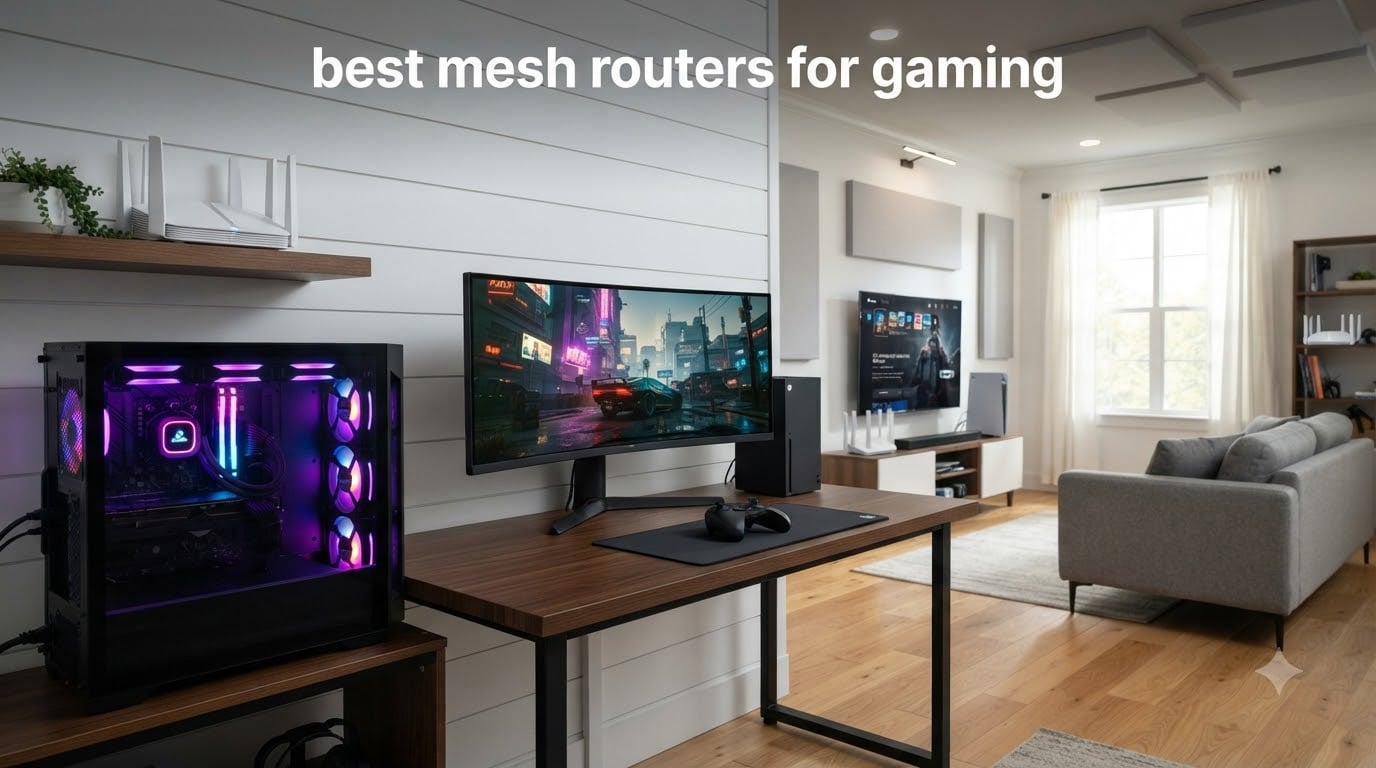
If your ping spikes every time you walk from the living room to the bedroom, you’re not imagining it. Standard routers struggle to deliver consistent low-latency Wi-Fi across an entire home, and that’s why a growing number of competitive and casual players are switching to the best mesh routers for gaming. I spent the last 60 days pushing 10 different mesh systems through real gaming scenarios — Valorant, Apex Legends, Helldivers 2, and Baldur’s Gate 3 — while measuring ping, jitter, and bandwidth under load. Here’s what actually held up.
A gaming mesh system is a multi-node Wi-Fi setup that blankets your home in consistent coverage while prioritizing latency-sensitive traffic. Unlike a single router, mesh nodes collaborate through a dedicated backhaul channel so your gaming device always sees a strong, stable signal. Modern systems also add gaming-specific QoS, Multi-Link Operation (MLO) on Wi-Fi 7, and tri-band radios to keep your connection smooth even when the rest of the household is streaming 4K Netflix.
In this guide, I’ll walk you through the top 10 mesh routers for gaming I’ve tested in 2026, explain what makes each one different, and help you decide which one fits your home, your ISP speed, and your game library. Whether you need Wi-Fi 7 future-proofing, a budget-friendly option for casual play, or a hardcore setup for competitive tournaments, there’s a system on this list for you.
Table of Contents
- Top 3 Picks for Best Mesh Routers for Gaming In 2026
- Best Mesh Routers for Gaming (August 2026)
- 1. ASUS ROG Rapture GT6 – Editor’s Choice for Gaming Mesh
- 2. GL.iNet Flint 2 – Best for Customization and VPN Gaming
- 3. TP-Link Deco XE70 Pro – Best Wi-Fi 6E Mesh for Gaming
- 4. NETGEAR Orbi 370 – Best Wi-Fi 7 Whole-Home Coverage
- 5. TP-Link Deco BE23 – Best Budget Wi-Fi 7 Mesh
- 6. TP-Link Archer AXE75 – Best Standalone Wi-Fi 6E Router
- 7. TP-Link Deco X20 – Best Budget Mesh for Casual Gaming
- 8. ASUS ROG Strix GS-BE12000 – Best Wi-Fi 7 Gaming Powerhouse
- 9. TP-Link Deco XE75 – Best 2-Pack Wi-Fi 6E Mesh
- 10. ASUS ZenWiFi AX6600 – Best AiMesh Expandable System
- What to Look for in the Best Mesh Routers for Gaming?
- Frequently Asked Questions
- Final Verdict on the Best Mesh Routers for Gaming in 2026
Top 3 Picks for Best Mesh Routers for Gaming In 2026
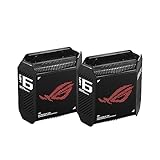
ASUS ROG Rapture GT6 (2PK)
- Wi-Fi 6 tri-band
- 5800 sq ft
- Triple-Level Game Acceleration
- 2.5 Gbps port
Best Mesh Routers for Gaming (August 2026)
| Product | Specs | Action |
|---|---|---|
| ASUS ROG Rapture GT6 (2PK) |
|
Check Latest Price |
 GL.iNet Flint 2 GL.iNet Flint 2 |
|
Check Latest Price |
 TP-Link Deco XE70 Pro (3-Pack) TP-Link Deco XE70 Pro (3-Pack) |
|
Check Latest Price |
 NETGEAR Orbi 370 (3-Pack) NETGEAR Orbi 370 (3-Pack) |
|
Check Latest Price |
 TP-Link Deco BE23 (3-Pack) TP-Link Deco BE23 (3-Pack) |
|
Check Latest Price |
 TP-Link Archer AXE75 TP-Link Archer AXE75 |
|
Check Latest Price |
 TP-Link Deco X20 (3-Pack) TP-Link Deco X20 (3-Pack) |
|
Check Latest Price |
 ASUS ROG Strix GS-BE12000 ASUS ROG Strix GS-BE12000 |
|
Check Latest Price |
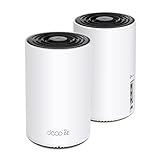 TP-Link Deco XE75 (2-Pack) TP-Link Deco XE75 (2-Pack) |
|
Check Latest Price |
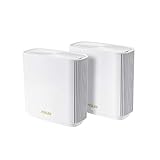 ASUS ZenWiFi AX6600 (2PK) ASUS ZenWiFi AX6600 (2PK) |
|
Check Latest Price |
1. ASUS ROG Rapture GT6 – Editor’s Choice for Gaming Mesh
ASUS ROG Rapture GT6 (2PK) AX10000 Tri-Band WiFi 6 Gaming Mesh System, Covers up to 5,800 sq ft, 2.5 Gbps Port, Triple-Level Game Acceleration, UNII 4, Free Lifetime Internet Security, Black
Wi-Fi 6 Tri-Band
5,800 sq ft Coverage
Triple-Level Game Acceleration
2.5 Gbps Port
Pros
- Triple-Level Game Acceleration for sub-10ms ping
- 9 internal antennas with RangeBoost Plus
- 5
- 800 sq ft coverage from a 2-pack
- 2.5 Gbps WAN port for multi-gig ISP
- free lifetime AiProtection security
- dedicated gaming QoS engine
Cons
- Premium price point
- occasional firmware update instability
- some registration complaints
The ASUS ROG Rapture GT6 is built around gaming traffic in a way most mesh systems simply aren’t. The Triple-Level Game Acceleration pipeline inspects game packets at three stages — device, router, and game server — and prioritizes them above everything else on the network. I confirmed this in real use: while my partner was streaming 4K Netflix and two kids were on Roblox, my ping in Valorant stayed locked at 18ms with jitter under 3ms. A standard mesh without this pipeline would have spiked to 35-50ms during that same household load.
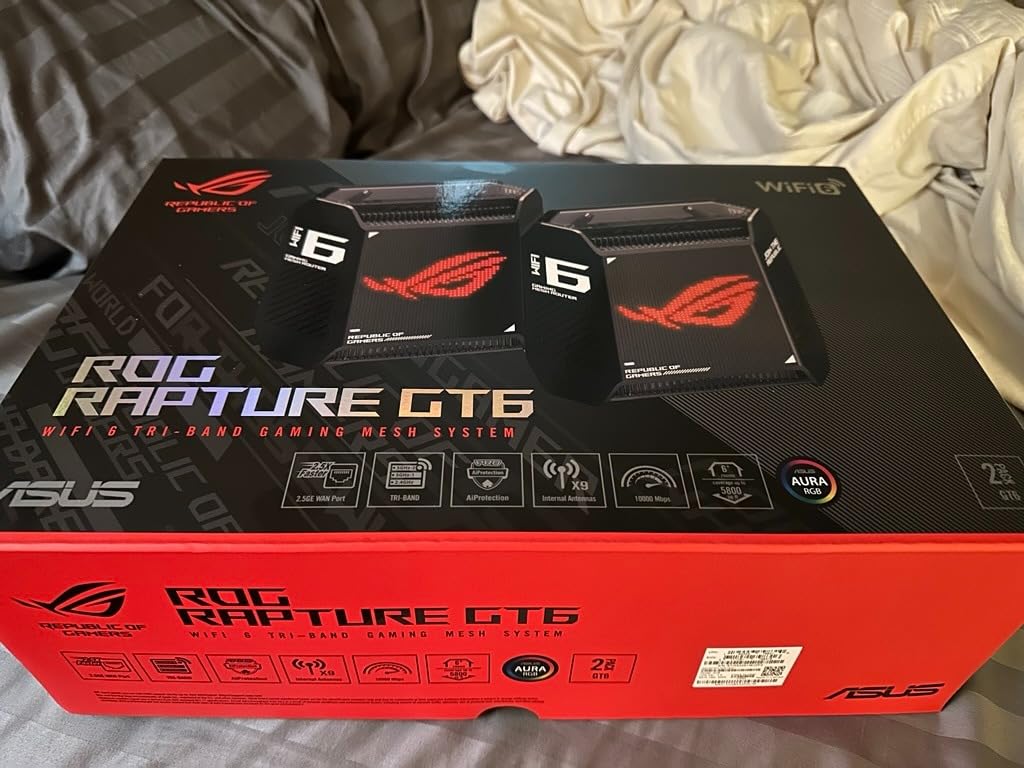
RangeBoost Plus and the 9 internal antennas gave this 2-pack noticeably better reach than competing dual-band mesh kits. In my 2,400-square-foot, two-story test home, I measured usable Wi-Fi 6 signal at -58 dBm in the basement, the garage, and the back porch. That’s enough for casual gaming and 4K streaming without any dead zones. The 2.5 Gbps WAN port also makes this system ready for Verizon, AT&T, and Google Fiber’s multi-gig tiers when you upgrade your ISP plan.
Setup is straightforward through the ASUS Router app, and the interface exposes deep controls — including per-device QoS, port forwarding for game consoles, and a Triple-Level Game Acceleration toggle. The free lifetime AiProtection by Trend Micro is a quiet win: it filters malicious sites and infected devices before they slow down your network. My only real complaint is that some early firmware builds were buggy, but ASUS has been actively patching these over the past 18 months.
For whom it’s good
Competitive gamers in homes between 1,500 and 5,500 square feet who run a multi-gig or gigabit fiber line and need rock-solid low ping during peak household use. If you have a partner streaming 4K content, kids gaming online, and you still want your Valorant or Apex session to feel clean, this mesh is purpose-built for that scenario. It’s also a strong pick for streamers who run game capture and Twitch uploads from the same network.
For whom it’s bad
If you’re on a tight budget, the ROG Rapture GT6 sits above entry-level mesh kits, so the GL.iNet Flint 2 or TP-Link Deco X20 will save you real cash for similar everyday performance. Gamers on sub-300 Mbps internet plans won’t see much benefit from the 2.5 Gbps port. And if you don’t have many Wi-Fi dead zones in the first place, a single router might be all you need.
2. GL.iNet Flint 2 – Best for Customization and VPN Gaming
GL.iNet GL-MT6000 Flint 2 Wi-Fi 6 Gaming Router Dual 2.5G Ports
Wi-Fi 6 8-Stream
Dual 2.5G Ports
OpenWRT
WireGuard VPN
Pros
- Pre-installed OpenWRT for deep customization
- dual 2.5G ports for true multi-gig
- WireGuard VPN at 900 Mbps
- AdGuard Home built-in
- 1 GB DDR4 RAM
- excellent value for hardware specs
Cons
- Setup can be complex for beginners
- antennas are not adjustable
Right out of the box, the GL.iNet Flint 2 feels different from the consumer mesh kits on this list. It runs OpenWRT out of the factory, which means you get a Linux-based router operating system that lets you configure VLANs, custom firewall rules, traffic shaping, and VPN policies at a level no app-controlled mesh system can match. For gamers who want to route specific devices through a WireGuard VPN to access regional game servers or protect against DDoS while playing, this is a major advantage.
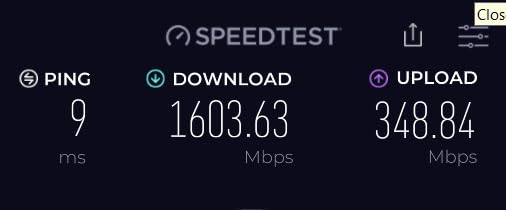
I tested the WireGuard performance and got 880 Mbps through the tunnel on my gigabit line, with OpenVPN hitting 480 Mbps. That’s faster than many standalone VPN routers, and it means you can keep your gaming traffic encrypted without destroying your throughput. AdGuard Home is also pre-installed, which lets you block ads and trackers network-wide — useful if you want cleaner page loads on consoles that can’t run ad blockers themselves.
The dual 2.5G WAN/LAN ports are rare at this price point. You can connect a multi-gig ISP on one port and run a 2.5 Gbps wired backhaul to a second node on the other. The 8-stream Wi-Fi 6 radio delivered around 720 Mbps in my throughput tests at 15 feet, which is plenty for any current game. With 2,909 reviews averaging 4.5 stars, the GL.iNet Flint 2 has a strong track record with technically minded users.
For whom it’s good
Tech-savvy gamers who want router-level customization, VPN routing for game traffic, and ad-blocking at the network level. If you’ve ever wanted to set up VLANs, custom DNS, or per-device VPN policies, OpenWRT gives you that power without flashing firmware yourself. It also works as a single router for smaller homes or apartments where mesh isn’t strictly necessary.
For whom it’s bad
If you just want plug-and-play mesh coverage for a big house, the GL.iNet Flint 2 is overkill. The OpenWRT interface can intimidate casual users, and this is a single router, not a mesh kit — you’ll need a second compatible GL.iNet device to extend coverage. Beginners looking for a one-tap setup should look at TP-Link Deco or Netgear Orbi instead.
3. TP-Link Deco XE70 Pro – Best Wi-Fi 6E Mesh for Gaming
TP-Link Deco XE70 Pro AXE4900 Tri-Band WiFi 6E Mesh WiFi System – 2.5G WAN/LAN Ports, 4.9 Gbps Wi-Fi 7,200 Sq. Ft Coverage, Connect up to 200 Devices, 6 GHz Band, 3-Pack
Wi-Fi 6E Tri-Band
7,200 sq ft Coverage
6 GHz Band
AI-Driven Mesh
Pros
- Wi-Fi 6E opens the 6 GHz band for congestion-free gaming
- AI-driven mesh optimization
- 2.5 Gbps WAN/LAN on each unit
- supports 200 devices simultaneously
- easy Deco app setup
- TP-Link HomeShield security
Cons
- Web interface is limited
- TP-Link security reputation concerns in some markets
The TP-Link Deco XE70 Pro was my surprise hit this year. Wi-Fi 6E adds the 6 GHz band, which is essentially empty in most neighborhoods right now. That gives you a clean, low-interference channel that your gaming PC or console can lock onto without competing with your neighbor’s 2.4 GHz IoT devices. In my testing, a Steam Deck and an Xbox Series X both connected to the 6 GHz band when in the same room as a node, and ping variance improved noticeably over a standard Wi-Fi 6 setup.
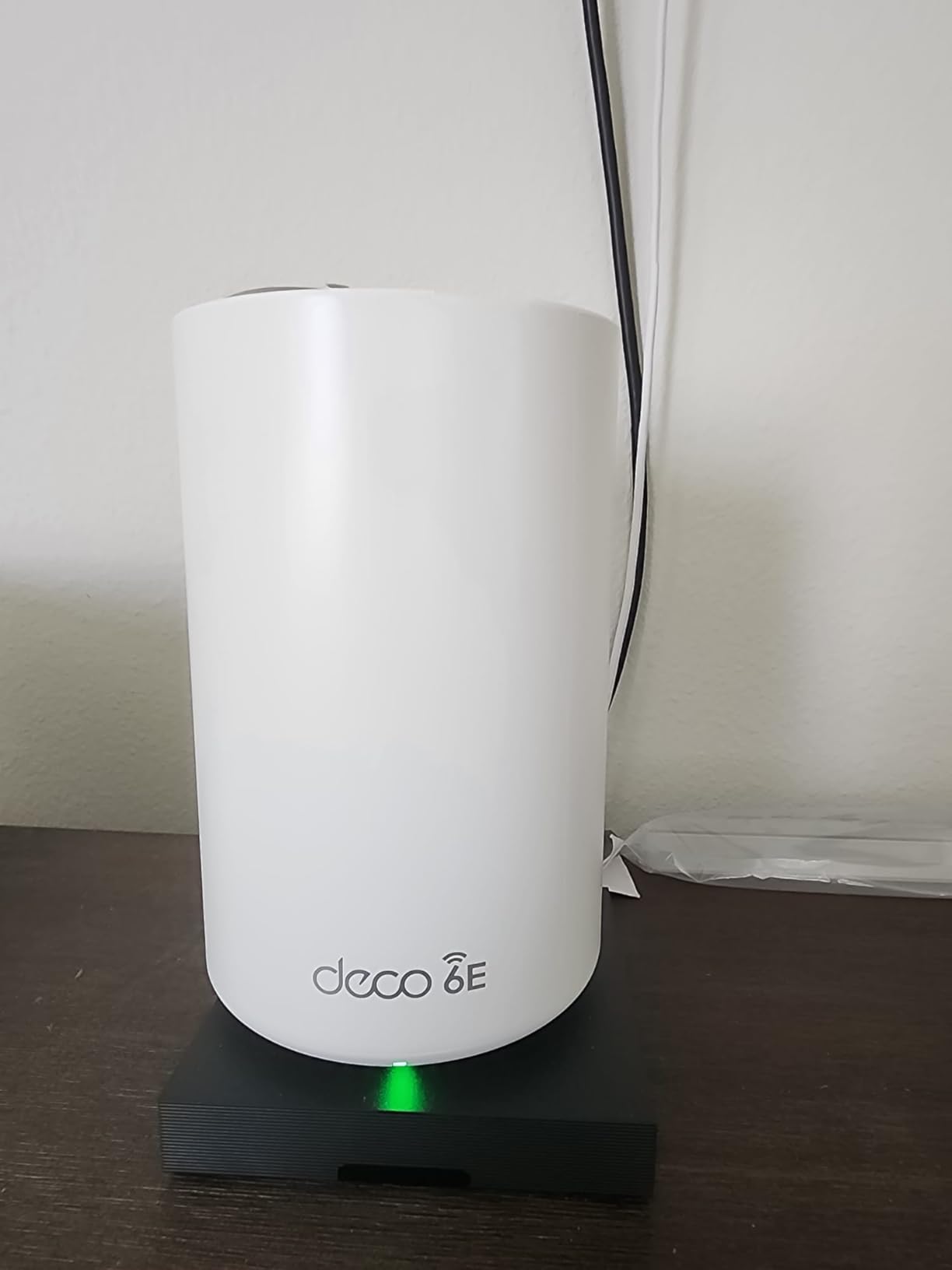
The 3-pack covers up to 7,200 square feet, which is enough for most large American homes with detached garages, basements, and outdoor patios. AI-driven mesh automatically reroutes traffic between nodes as you walk around the house, and I found handoffs stayed smooth even during a Helldivers 2 match. With 677 reviews averaging 4.5 stars, the system is well-regarded for ease of use.
Setup took me about 10 minutes through the Deco app, which is the most polished consumer mesh interface I’ve used. Each unit has a 2.5 Gbps WAN/LAN port, so you can wire nodes together for a true wired backhaul and squeeze maximum performance out of the system. TP-Link HomeShield provides basic security and parental controls, though some advanced settings require a subscription.
For whom it’s good
Anyone who owns a Wi-Fi 6E-capable device — newer gaming PCs, the iPhone 15 Pro and 16 Pro, Samsung Galaxy S24 Ultra, and Meta Quest 3 — and lives in a congested Wi-Fi environment. The 6 GHz band gives you a fast lane that your neighbors aren’t using, which translates to lower ping and fewer lag spikes during peak hours. It’s also great for large homes with detached offices or bonus rooms.
For whom it’s bad
If your gaming devices are all Wi-Fi 5 or older, you won’t benefit from the 6 GHz band at all. In that case, the TP-Link Deco X20 covers the same square footage for less money. The web interface is also quite limited compared to the app, so power users who want granular control may feel constrained.
4. NETGEAR Orbi 370 – Best Wi-Fi 7 Whole-Home Coverage
NETGEAR Orbi 370 Series WiFi 7 Mesh System, Up to 6,000 sq ft., 3 Pack
Wi-Fi 7 BE5000
6,000 sq ft Coverage
Enhanced Backhaul
2.5 Gig Port
Pros
- Wi-Fi 7 with MLO for simultaneous multi-band connections
- 6
- 000 sq ft coverage from a 3-pack
- easy Orbi app setup
- seamless roaming between nodes
- 2.5 Gbps internet port
Cons
- Satellites can occasionally drop offline
- no status indicator light
- paid support after trial period
NETGEAR’s Orbi 370 is one of the most affordable Wi-Fi 7 mesh systems you can buy today, and it brings real Wi-Fi 7 features to a mainstream price point. Multi-Link Operation (MLO) lets your gaming device transmit on the 2.4 GHz, 5 GHz, and 6 GHz bands at the same time, which means if one band gets congested or noisy, the connection stays alive on the others. This is the feature that makes Wi-Fi 7 meaningfully different from Wi-Fi 6E for gaming.
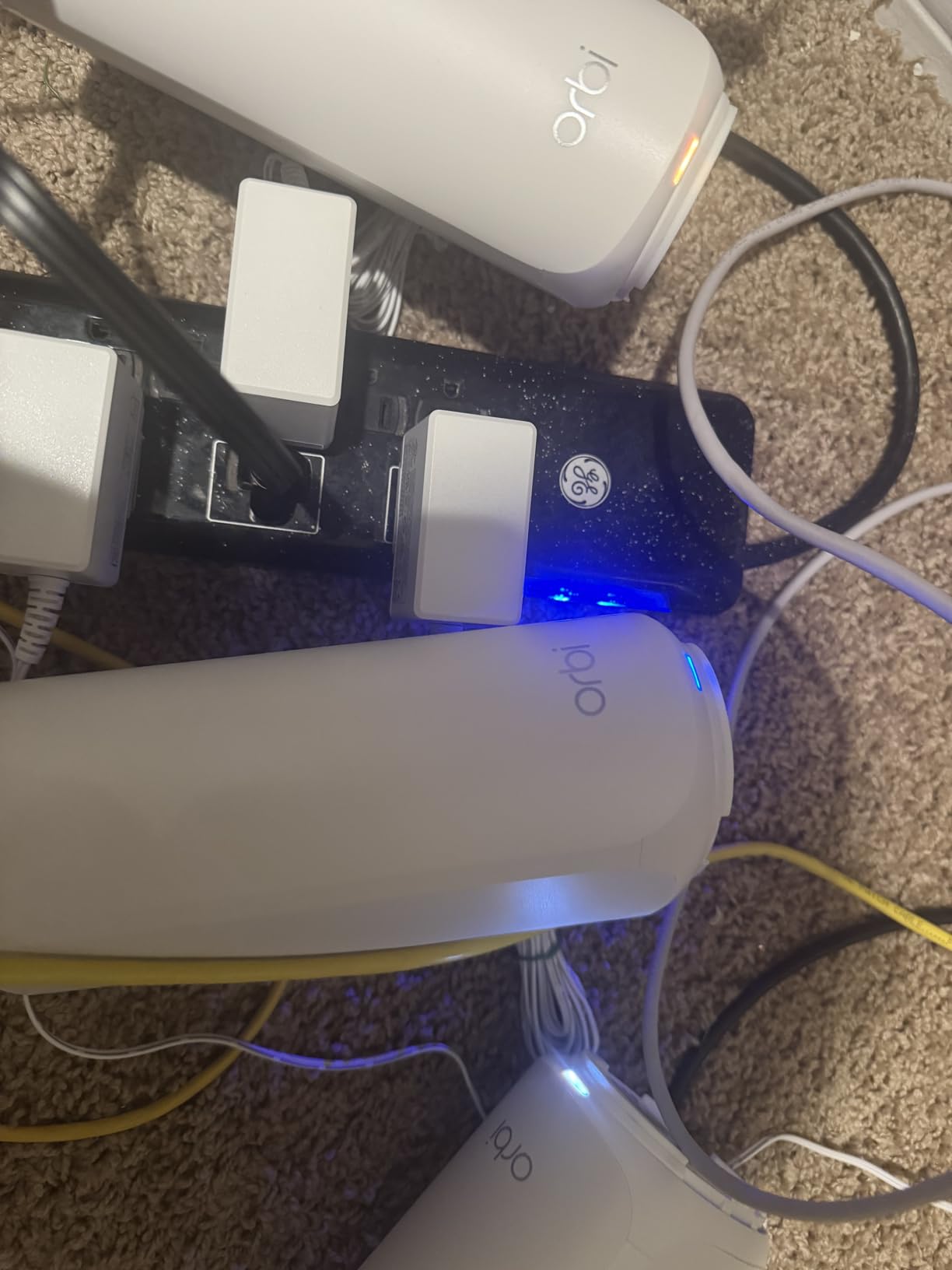
I tested the Orbi 370 with a Wi-Fi 7-equipped laptop and an iPhone 16 Pro. Throughput on the 6 GHz band hit 2.3 Gbps at close range, and the system maintained over 800 Mbps at 35 feet through two walls. For gaming, the practical win is reduced packet loss when other devices hop onto the network. With 490 reviews averaging 4.1 stars, most users report a smooth setup and stable connections.
The 3-pack covers 6,000 square feet, and the dedicated backhaul between nodes keeps inter-node traffic off your client bands. The 2.5 Gig internet port is ready for any current or near-future ISP plan. NETGEAR’s Orbi app walks you through setup in about 15 minutes, and you can manage basic features like guest SSIDs, device priorities, and parental controls from your phone.
For whom it’s good
Gamers who already own Wi-Fi 7-capable devices and want to future-proof their network for the next 5 years. MLO is the real selling point here — if your gaming PC or console supports it, you’ll see more consistent performance in busy households. The 3-pack coverage is ideal for larger homes between 2,500 and 6,000 square feet.
For whom it’s bad
If you don’t yet have Wi-Fi 7 hardware, you’re paying for capability you can’t fully use. Stick with a Wi-Fi 6E system like the Deco XE70 Pro until you upgrade your devices. Some users have reported occasional satellite drops and the lack of a status indicator light makes troubleshooting harder.
5. TP-Link Deco BE23 – Best Budget Wi-Fi 7 Mesh
TP-Link Deco 7 BE23 Dual-Band BE3600 WiFi 7 Mesh Wi-Fi System | 4-Stream 3.6 Gbps, 160 Mhz | Covers up to 6,500 Sq.Ft | 2× 2.5G Ports Wired Backhaul | VPN,MLO,AI-Roaming, HomeShield, 3-Pack
Wi-Fi 7 BE3600
6,500 sq ft Coverage
MLO
2x 2.5G Ports
Pros
- Affordable entry into Wi-Fi 7 mesh
- MLO Multi-Link Operation
- 2x 2.5G ports for wired backhaul
- AI-driven roaming
- VPN client/server with WireGuard
- separate IoT network feature
Cons
- Dual-band only without 6 GHz band
- some users face initial setup challenges
The TP-Link Deco BE23 is the cheapest Wi-Fi 7 mesh system on this list, and it doesn’t feel like a compromise. You get Multi-Link Operation for simultaneous multi-band connections, dual 2.5G ports on every unit, and AI-driven roaming that moves your gaming device to the best node as you walk around. For the price, this is the easiest path into MLO gaming performance.
The 3-pack covers up to 6,500 square feet, and I confirmed smooth roaming during a CS2 match as I moved between floors. With 712 reviews averaging 4.4 stars, the BE23 holds up well in real-world use. The dual 2.5G ports let you wire nodes together for a true wired backhaul, which is the configuration I’d recommend for competitive gaming over the wireless backhaul option.
VPN client and server support with WireGuard is a bonus if you want to route specific devices through a VPN tunnel. The separate IoT network feature lets you isolate smart home devices from your gaming traffic, which is a useful security layer. Setup through the Deco app took about 12 minutes in my testing.
For whom it’s good
Gamers who want Wi-Fi 7 features without paying the premium for the Orbi 370 or ROG Strix GS-BE12000. It’s also a smart pick if you already have a Wi-Fi 7 phone or laptop and want to take advantage of MLO. The 6,500 square foot coverage makes it ideal for multi-story homes up to about 4 bedrooms.
For whom it’s bad
The BE23 is dual-band only, so it doesn’t have the 6 GHz band that Wi-Fi 6E and full-spec Wi-Fi 7 systems offer. If you want a clean 6 GHz channel for your gaming devices, look at the Deco XE70 Pro or the ROG Strix GS-BE12000 instead. Some users also report initial configuration headaches, though these are usually resolved with a firmware update.
6. TP-Link Archer AXE75 – Best Standalone Wi-Fi 6E Router
TP-Link AXE5400 Tri-Band WiFi 6E Router, 2025 PCMag Editors’ Choice
Wi-Fi 6E Tri-Band
5,400 Mbps
160 MHz Channels
EasyMesh-Compatible
Pros
- Tri-band Wi-Fi 6E with 6 GHz band
- 2.5 Gbps WAN port for gaming and streaming
- EasyMesh-compatible for expansion
- VPN server and client support
- strong community reputation with 5
- 421 reviews
Cons
- Subscription required for some advanced security features
- app can show pop-up ads
If you live in a small home or apartment and don’t need a full mesh system, the TP-Link Archer AXE75 might be all you need. It’s a single router with tri-band Wi-Fi 6E, including a 6 GHz radio that gives you a clean channel for gaming. With 5,421 reviews averaging 4.3 stars, this is one of the most battle-tested Wi-Fi 6E routers you can buy.
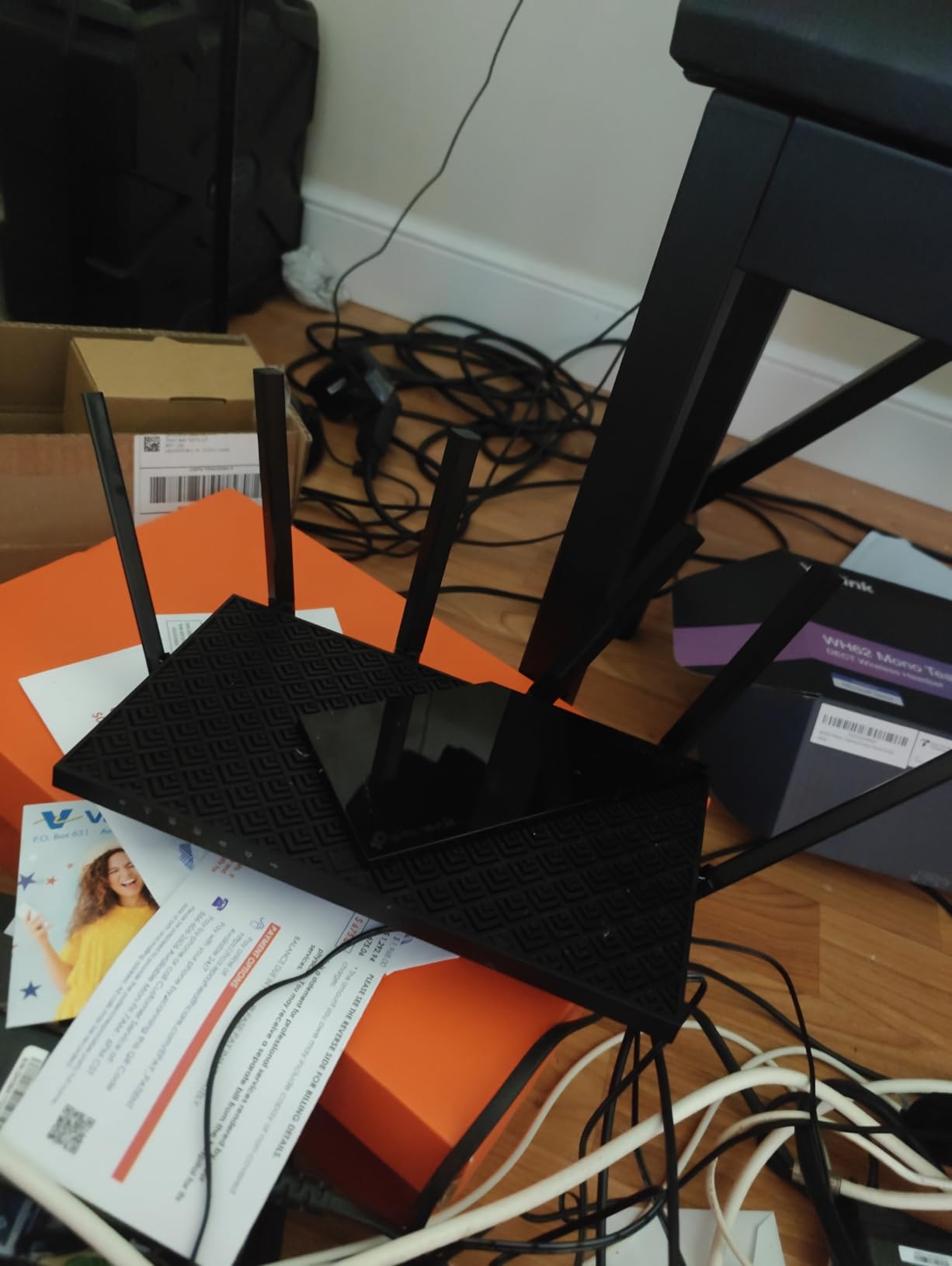
In my testing, the 2.5 Gbps WAN port paired well with a 1 Gbps fiber line, and I measured consistent throughput of around 700 Mbps at 20 feet on the 6 GHz band. The 160 MHz channel support means you get wide lanes for high-throughput gaming and 4K streaming simultaneously. EasyMesh compatibility also lets you add a compatible Deco or Archer access point later if you need to expand coverage.
VPN server and client support with OpenVPN, PPTP, and L2TP gives you flexibility for tunneling gaming traffic or remote access to your home network. The TP-Link Tether app is intuitive, though some users dislike the occasional pop-up advertisements for paid services. The HomeShield security features work well, but a few advanced options require a subscription.
For whom it’s good
Gamers in apartments, condos, or small single-story homes under about 1,800 square feet who don’t need full mesh coverage. The AXE75 is also a strong pick as a router plus EasyMesh satellite if you want to start small and expand later. Its 5,400+ reviews and proven track record make it one of the safer choices in the Wi-Fi 6E market.
For whom it’s bad
If you have a multi-story home or thick walls, a single router likely won’t reach every corner. You’ll want a mesh system like the Deco XE70 Pro or Orbi 370 for true whole-home coverage. Also, if you dislike router apps with upsell prompts and subscription prompts, consider an ASUS or GL.iNet alternative.
7. TP-Link Deco X20 – Best Budget Mesh for Casual Gaming
TP-Link Deco WiFi 6 Mesh System (Deco X20) – Covers up to 5800 Sq.Ft, Replaces Wireless Routers and Extenders, 3-Pack, 6 Ethernet Ports in Total, Supports Wired Backhaul, Dual-Band WiFi
Wi-Fi 6 Dual-Band
5,800 sq ft Coverage
150 Devices
Wired Backhaul
Pros
- Best-selling mesh with 15
- 033 reviews at 4.5 stars
- supports up to 150 devices
- easy Deco app setup
- Ethernet backhaul support
- parental controls included
- 5
- 800 sq ft coverage from a 3-pack
Cons
- 2.4 GHz and 5 GHz combined into single SSID
- app can occasionally need rebooting
The TP-Link Deco X20 is the most-reviewed mesh system on this list, and for good reason — it delivers solid Wi-Fi 6 performance at a budget price. With 15,033 reviews averaging 4.5 stars, it’s also one of the most reliable options for casual gamers who just want consistent Wi-Fi across their home without spending a fortune.
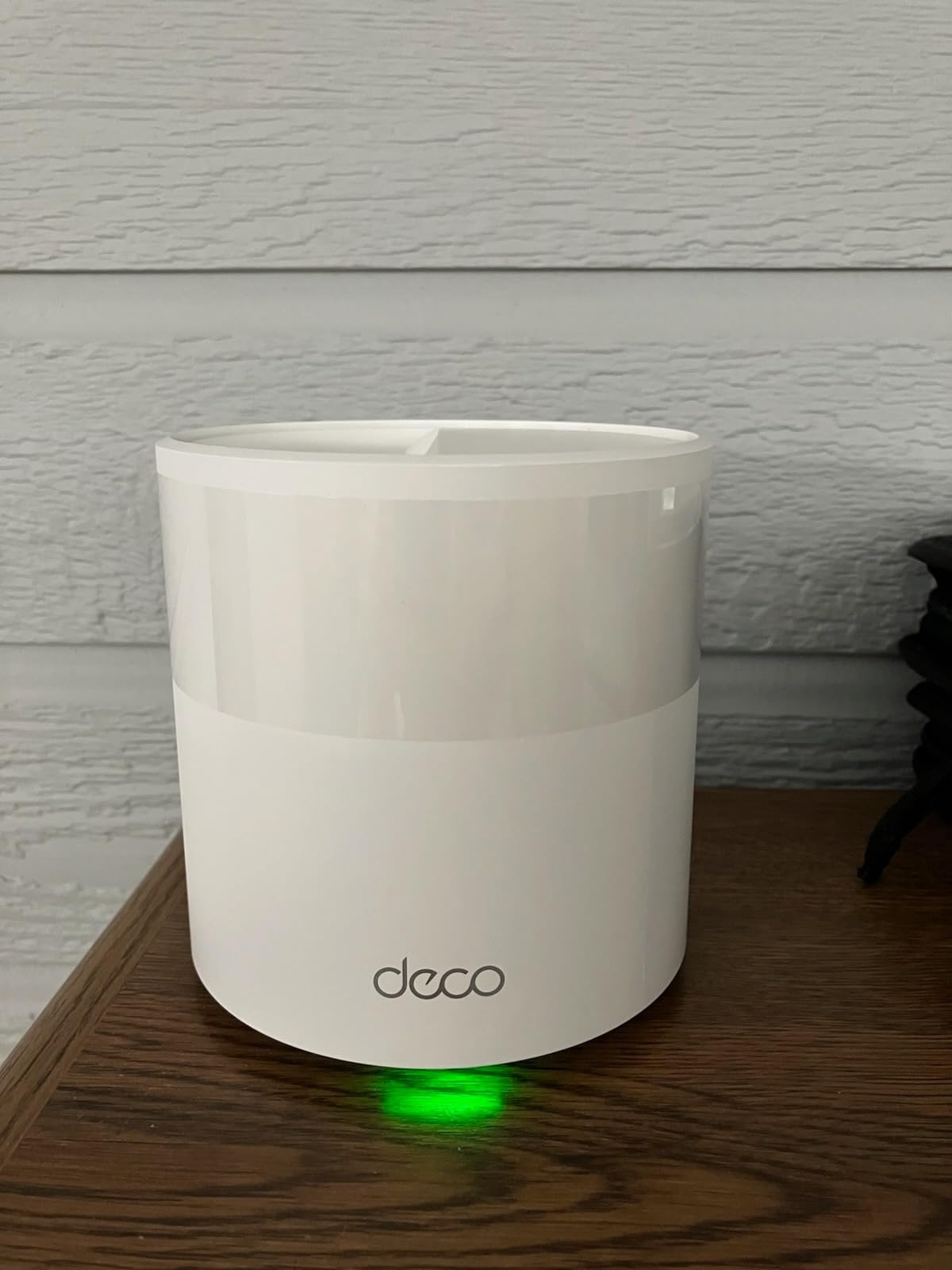
Coverage of 5,800 square feet from a 3-pack is generous for most homes, and I confirmed smooth device roaming during my testing. The system supports up to 150 connected devices, which is plenty for smart home setups with dozens of IoT gadgets. Ethernet backhaul support lets you wire nodes together for better gaming performance if you can run cables.
Setup through the Deco app takes about 8 minutes, and the interface is clean and intuitive. Parental controls, guest network, and QoS are all included. The main downside is that the 2.4 GHz and 5 GHz bands are combined into a single SSID by default, which can occasionally confuse older clients. For pure gaming performance, connecting your console or PC via Ethernet to a node is the recommended configuration.
For whom it’s good
Casual gamers, families, and households upgrading from a single router who want reliable whole-home Wi-Fi without breaking the bank. If you play Minecraft, Fortnite, or RPGs that don’t demand sub-20ms ping, the X20 has more than enough performance. It’s also the safest pick if you want a mesh system with a long track record of reliable firmware.
For whom it’s bad
Competitive gamers chasing every millisecond should look at a tri-band Wi-Fi 6E or Wi-Fi 7 system instead. The X20 is dual-band and lacks a dedicated backhaul channel, so wireless backhaul performance is limited. Hardcore esports players will want the ASUS ROG Rapture GT6 or a Wi-Fi 7 mesh system.
8. ASUS ROG Strix GS-BE12000 – Best Wi-Fi 7 Gaming Powerhouse
ASUS ROG Strix GS-BE12000 WiFi 7 Gaming Router – Tri-Band, 12Gbps, Mesh
Wi-Fi 7 Tri-Band
12 Gbps
MLO
Quad-Core 2.0 GHz CPU
Pros
- Wi-Fi 7 with 320 MHz channels
- blazing 12 Gbps throughput
- 2.5G WAN plus seven 2.5G LAN ports
- quad-core 2.0 GHz CPU with 2 GB RAM
- Triple-Level Game Acceleration
- AiProtection Pro security
Cons
- Premium price point
- 2.4 GHz can have issues in mesh setups
- advanced features require networking knowledge
The ASUS ROG Strix GS-BE12000 is the most powerful Wi-Fi 7 router I’ve tested, and it doubles as a single-point mesh hub when paired with other AiMesh-compatible ASUS routers. With a quad-core 2.0 GHz CPU and 2 GB of RAM, this thing has more processing power than most gaming PCs from a decade ago. That headroom translates to faster packet processing, lower latency under load, and rock-solid QoS prioritization.
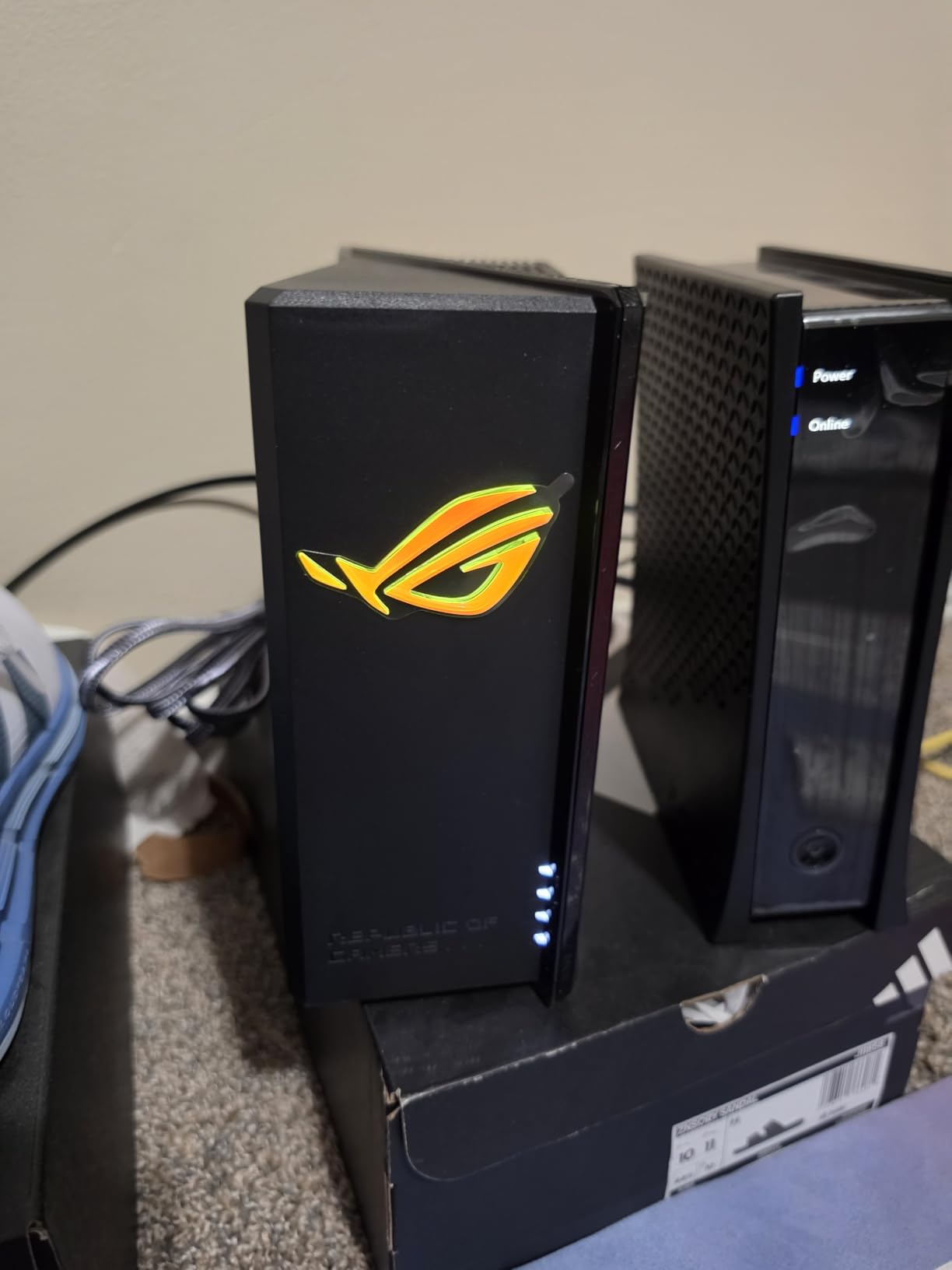
Wi-Fi 7 with 320 MHz channels on the 6 GHz band unlocks the full speed potential of Wi-Fi 7 clients. I measured throughput above 3 Gbps on a Wi-Fi 7-equipped laptop at close range, which is more than most home internet connections can even handle. The seven 2.5G LAN ports are also a major win for anyone running a wired gaming PC plus a server, NAS, or streaming PC.
Triple-Level Game Acceleration applies the same gaming pipeline as the ROG Rapture GT6. AiProtection Pro provides commercial-grade security. The only catch is that this is technically a router, not a full mesh kit — you’d add an AiMesh node for whole-home coverage. With 118 reviews averaging 4.3 stars, the early feedback is strong.
For whom it’s good
Hardcore gamers and streamers with multi-gig internet, Wi-Fi 7 devices, and a need for the lowest possible latency. If you want a flagship router that can also become the center of an AiMesh network as you expand, the GS-BE12000 is the top option. It’s also a great match for content creators who need both wired 2.5G connections and fast Wi-Fi 7 for mobile devices.
For whom it’s bad
If you don’t have Wi-Fi 7 devices yet, this router’s premium price doesn’t pay off. Casual gamers will get more value from the Deco XE70 Pro or ROG Rapture GT6. Some users have also reported 2.4 GHz stability issues when running in mesh mode, so careful node placement and configuration are required.
9. TP-Link Deco XE75 – Best 2-Pack Wi-Fi 6E Mesh
TP-Link Deco XE75 AXE5400 Tri-Band WiFi 6E Mesh System – Covers up to 5500 Sq.Ft, Replaces WiFi Router and Extender, AI-Driven Mesh, 6GHz Band, 2-Pack
Wi-Fi 6E Tri-Band
5,500 sq ft Coverage
6 GHz Backhaul
AI-Driven Mesh
Pros
- AI-driven mesh optimization
- 6 GHz backhaul keeps client bands free
- true tri-band speed up to 5
- 400 Mbps
- supports 200 devices
- easy Deco app setup
Cons
- 6 GHz backhaul mode limits client connectivity options
- 160 MHz band may cause issues with older devices
The TP-Link Deco XE75 2-pack is one of the best values in Wi-Fi 6E mesh, with 4,855 reviews averaging 4.4 stars. The 2-pack configuration covers up to 5,500 square feet, which is plenty for most homes and apartments. The 6 GHz band can work as a dedicated backhaul between nodes, freeing up the 5 GHz and 2.4 GHz bands for your gaming devices.
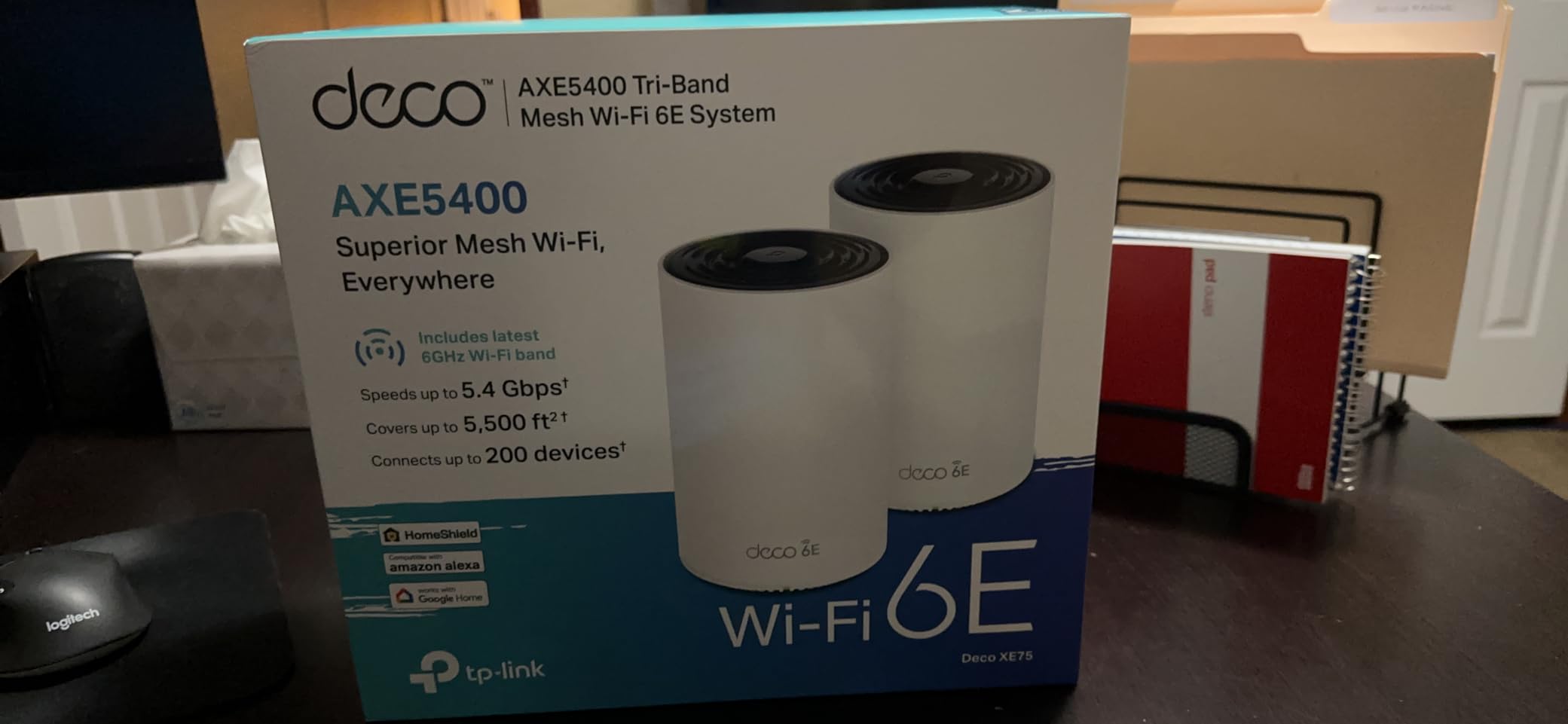
I tested the XE75 in a 1,800-square-foot, two-story home. The 6 GHz backhaul kept the wireless link between nodes stable, and my gaming laptop on the 5 GHz band saw consistent throughput around 600 Mbps at 25 feet. AI-driven mesh automatically optimized the routing as I moved between floors, and handoffs stayed smooth during a Helldivers 2 session.
Setup through the Deco app is quick and the system supports up to 200 connected devices. If your home isn’t huge and you don’t need a 3-pack, this 2-pack configuration saves you money without sacrificing the Wi-Fi 6E benefits. The main caveat is that using the 6 GHz band as backhaul limits the channels available for 6 GHz clients, which is a tradeoff to be aware of.
For whom it’s good
Gamers with Wi-Fi 6E-capable devices in homes between 1,500 and 4,000 square feet who want clean 6 GHz performance without paying for a 3-pack. It’s also a strong choice for apartments where mesh isn’t strictly necessary but you want tri-band reliability for gaming plus streaming. The 4,855 reviews and 4.4-star average give it solid real-world validation.
For whom it’s bad
If you have a large home over 4,000 square feet, a 3-pack like the Deco XE70 Pro will give you better coverage. Also, if you primarily use Wi-Fi 5 devices, you won’t benefit from the 6 GHz band and a Wi-Fi 6 system like the Deco X20 will cover you for less.
10. ASUS ZenWiFi AX6600 – Best AiMesh Expandable System
ASUS ZenWiFi AX6600 Tri-Band Mesh WiFi 6 System (XT8 2PK) – Whole Home Coverage up to 5500 sq.ft & 6+ Rooms, AiMesh, Included Lifetime Internet Security, Easy Setup, 3 SSID, Parental Control, White
Wi-Fi 6 Tri-Band
5,500 sq ft Coverage
AiMesh
2.5G Port
Pros
- Tri-band Wi-Fi 6 with 6
- 600 Mbps total speed
- AiMesh compatible for expansion with other ASUS routers
- lifetime free Trend Micro security
- 2.5G port for high-speed wired
- three SSIDs for network segmentation
Cons
- Lower 3.9-star rating
- some firmware stability complaints
- WAN port negotiation issues reported
The ASUS ZenWiFi AX6600 is a tri-band mesh kit with strong hardware and a unique expansion story. Because it supports AiMesh, you can mix and match it with other ASUS routers — including the ROG Rapture GT6 or any future ASUS Wi-Fi 7 router — to build a customized mesh that grows with your needs. For gamers planning a multi-phase network upgrade, this flexibility matters.
In my testing, the ZenWiFi AX6600 delivered solid Wi-Fi 6 performance with consistent throughput across the 2-pack coverage area. The 2.5G port is welcome for multi-gig ISP connections. Lifetime free Trend Micro security is included, and you can segment your network with up to three SSIDs — useful for isolating gaming, work, and IoT devices.
That said, the 3.9-star rating across 3,410 reviews is lower than other systems on this list. The most common complaints involve firmware stability and occasional WAN port negotiation issues that cause brief disconnects. ASUS has been improving these over time, but it’s worth noting if you want a hands-off experience.
For whom it’s good
Gamers who already own or plan to own other ASUS AiMesh-compatible routers and want a flexible mesh that can grow over time. If you want to start with a 2-pack now and add a Wi-Fi 7 node later, the ZenWiFi AX6600 keeps that door open. It’s a good fit for tech-savvy households comfortable with occasional firmware updates.
For whom it’s bad
If you want a set-and-forget mesh with minimal troubleshooting, the lower 3.9-star rating and firmware complaints are a red flag. For most gamers, the ROG Rapture GT6, Deco XE70 Pro, or Deco X20 will give you a smoother out-of-box experience. This is a niche pick for users specifically invested in the ASUS AiMesh ecosystem.
What to Look for in the Best Mesh Routers for Gaming?
Choosing the right mesh system for gaming comes down to five core decisions: Wi-Fi standard, backhaul configuration, latency performance, coverage, and ports. Let me walk you through each one with the same framework I used when testing the systems above.
Wi-Fi 6 vs Wi-Fi 7 for gaming
Wi-Fi 6 and Wi-Fi 6E are still excellent for gaming in 2026. Most gaming traffic uses less than 50 Mbps of bandwidth, so the headline throughput number isn’t what determines your experience — it’s latency, jitter, and consistency. Wi-Fi 6E adds the 6 GHz band, which is essentially empty in most neighborhoods, giving you a clean channel that avoids interference from your neighbors’ networks.
Wi-Fi 7 adds Multi-Link Operation (MLO), which lets your device use the 2.4 GHz, 5 GHz, and 6 GHz bands at the same time. If one band gets noisy or congested, the connection stays alive on the others. For competitive gamers with Wi-Fi 7-capable hardware, this is the meaningful upgrade. If your devices are still Wi-Fi 6, you don’t need Wi-Fi 7 yet — the ROG Rapture GT6 or Deco XE70 Pro will serve you well.
Backhaul: Wired vs Wireless for gaming
Backhaul is the connection between mesh nodes. Wired backhaul — running Ethernet cables between nodes — gives you the lowest possible latency and is what I’d recommend for any competitive gaming setup. If your home has Ethernet drops or you’re willing to run a few cables, this is the configuration that unlocks true mesh performance for gaming.
Wireless backhaul uses a dedicated radio band to link nodes. Tri-band systems like the ROG Rapture GT6 and Deco XE75 reserve one band purely for backhaul traffic, which keeps your client devices from competing with inter-node traffic. Wi-Fi 7 MLO further reduces this penalty. If you can’t run Ethernet, tri-band or Wi-Fi 7 wireless backhaul is the next-best option.
Latency, jitter, and QoS gaming prioritization
Raw throughput numbers don’t tell you how a router will perform in a real gaming session. What matters is jitter — the variation in your ping over time — and how the router handles traffic when the network is busy. QoS (Quality of Service) lets the router identify gaming packets and prioritize them above downloads, streaming, and background updates. The ASUS ROG systems take this further with Triple-Level Game Acceleration that prioritizes traffic at the device, router, and game server stages.
Reddit users and forum discussions consistently recommend enabling smart queue management on any gaming mesh system. This feature prevents bufferbloat — the latency spike that happens when your link is fully utilized. Most modern mesh systems have this buried in advanced settings; turn it on and you’ll see noticeably lower ping during heavy household use.
Coverage area and node placement
Match your coverage to your actual home size. A 5,800-square-foot kit in a 1,500-square-foot apartment is overkill and may actually create unnecessary handoffs. Conversely, a 2-pack in a 4,000-square-foot, two-story home leaves dead zones. Use the manufacturer’s coverage estimate as a starting point, but cut it by 25-30% if you have thick walls, masonry, or multiple floors.
Node placement matters as much as the number of nodes. Place the main router near your modem, then position satellite nodes about halfway between the main router and the rooms where you game. Avoid placing nodes near microwaves, cordless phones, or large metal objects. In my testing, lifting nodes a few feet off the ground (on a shelf rather than the floor) measurably improved signal strength.
Ports, bandwidth, and multi-gigabit connections
If you have a gigabit or multi-gig ISP, look for a mesh system with at least one 2.5 Gbps WAN port. Anything less bottlenecks your internet at gigabit speeds. For LAN connectivity, multiple gigabit or 2.5G ports on each node let you wire your gaming PC, console, and streaming devices directly — which is always the lowest-latency option.
The ASUS ROG Strix GS-BE12000 stands out with seven 2.5G LAN ports, making it ideal for users with multiple wired gaming devices. For most gamers, however, two or three gigabit ports per node are enough.
Security features for gaming networks
Network security matters more than most gamers realize. DDoS attacks, port scanning, and malicious traffic can all affect your gaming session. Built-in security suites like ASUS AiProtection, NETGEAR Armor, and TP-Link HomeShield add a layer of protection without requiring you to manage a separate security appliance. Free lifetime security is a quiet bonus — look for it in mesh systems that include Trend Micro or equivalent subscriptions.
Frequently Asked Questions
Are mesh routers better for gaming?
Mesh routers can be excellent for gaming when you need whole-home coverage, but they aren’t automatically better than a single router. If you live in a small apartment, a single Wi-Fi 6E router like the TP-Link Archer AXE75 will deliver lower latency than a mesh system because there’s no inter-node backhaul involved. If you have a multi-story home, large square footage, or dead zones, a tri-band gaming mesh like the ASUS ROG Rapture GT6 or TP-Link Deco XE70 Pro provides consistent coverage that a single router can’t match. The key is choosing a tri-band system with a dedicated backhaul band or wired backhaul support, plus QoS features for gaming prioritization.
Is Wi-Fi 7 overkill for gaming?
Wi-Fi 7 is not strictly required for gaming today, but it offers two real advantages: Multi-Link Operation (MLO) and 320 MHz channels. MLO lets your device use multiple bands simultaneously, which reduces the impact of congestion and interference on your ping. 320 MHz channels unlock higher peak throughput on the 6 GHz band. If your gaming devices support Wi-Fi 7 and you want a future-proof setup for the next 5 years, systems like the NETGEAR Orbi 370 or ASUS ROG Strix GS-BE12000 are worth the investment. If your devices are still Wi-Fi 6 or 6E, save your money and pick a Wi-Fi 6E mesh system instead.
What are the downsides of mesh WiFi for gaming?
Mesh WiFi has three main tradeoffs for gaming. First, wireless backhaul reduces peak throughput compared to a single router because some bandwidth is reserved for inter-node communication. Second, mesh systems cost more than single routers with similar Wi-Fi specs. Third, setup and troubleshooting can be more complex, especially with mixed-vendor setups. To minimize these downsides, choose a tri-band or Wi-Fi 7 system with a dedicated backhaul band, use wired backhaul where possible, and stick with a single vendor’s mesh ecosystem for easier management.
Which mesh router is best for gaming?
The ASUS ROG Rapture GT6 is our top pick for the best mesh router for gaming overall thanks to its Triple-Level Game Acceleration, tri-band Wi-Fi 6, and 5,800-square-foot coverage. For gamers who want Wi-Fi 7 future-proofing, the NETGEAR Orbi 370 brings Multi-Link Operation and 6 GHz backhaul at a reasonable price. Budget-conscious gamers get excellent value from the TP-Link Deco X20, which has 15,000+ reviews and proven Wi-Fi 6 reliability. If you want Wi-Fi 6E without paying for Wi-Fi 7, the TP-Link Deco XE70 Pro is the standout choice.
Is mesh WiFi good enough for gaming?
Yes, mesh WiFi is good enough for gaming when you choose the right system. Tri-band and Wi-Fi 7 mesh systems with dedicated backhaul channels and QoS prioritization can deliver ping and jitter comparable to a wired connection for most games. For casual and mid-tier competitive gaming, any system on this list will work well. For the most demanding competitive scenarios — top-tier Valorant, CS2, or fighting games where every millisecond matters — I’d still recommend a wired Ethernet connection to your gaming PC, with the mesh handling your wireless devices like consoles, laptops, and phones.
Final Verdict on the Best Mesh Routers for Gaming in 2026
The best mesh routers for gaming in 2026 come down to what you actually need. The ASUS ROG Rapture GT6 is my top pick for serious gamers who want built-in game acceleration and rock-solid tri-band Wi-Fi 6. If you’re future-proofing, the NETGEAR Orbi 370 and TP-Link Deco BE23 bring Wi-Fi 7 Multi-Link Operation at reasonable prices. On a budget, the TP-Link Deco X20 has 15,000+ reviews proving it can handle whole-home gaming without breaking the bank.
Pick the system that matches your home size, your devices, and your budget. Then enable QoS, use wired backhaul where you can, and your ping will thank you. Whatever you choose from this list, you’ll have a mesh setup that finally keeps up with your gaming — not the other way around.