
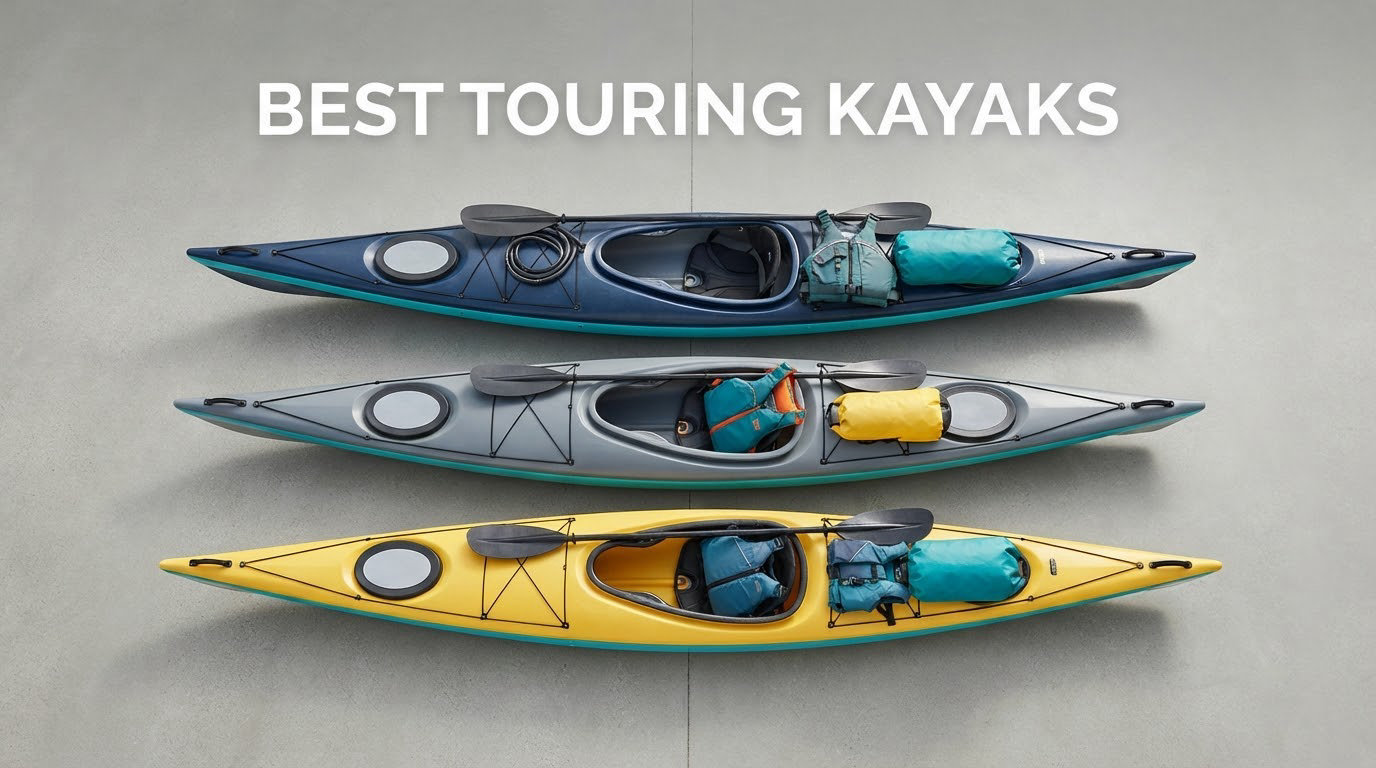
Search results for the best touring kayaks are full of people arguing with each other. Reddit threads ask whether one boat can handle a four-day river trip and a week on open water, and forum regulars answer with the model they happen to own. We went through the specification sheets instead, so you can compare length, beam, hull material, capacity and steering hardware side by side before you spend a day of your life test paddling.
What follows is a roundup of 12 sit-inside kayaks that work as touring platforms, from 11.5-foot polyethylene day boats to drop-stitch inflatables rated for Class IV rapids. We pulled the manufacturer numbers, the owner review themes and the weight and capacity limits for each one, then wrote who each boat actually suits. If you are still deciding between categories, our broader guides to the best kayaks overall and the best sit-on-top kayaks cover the alternatives that fall outside touring.
One note on method before we start. We did not personally float-test every hull here, so we are not going to pretend otherwise. What we did do was read the published specifications, cross-check them against owner reviews, and flag the places where reviewers and the spec sheet disagree. Where a boat has thin review evidence, we say so plainly. Updated for 2026.
Table of Contents
- Top 3 Picks for the Best Touring Kayaks in 2026
- 12 Best Touring Kayaks (October 2026)
- 1. Perception Expression 11.5 – The Best All-Round Touring Kayak
- 2. Sea Eagle RazorLite 393RL – The Best Touring Kayak for Storage-Constrained Paddlers
- 3. Sea Eagle 300X Explorer – The Top Rated All-Water Inflatable
- 4. Perception Carolina 12 – The Best Beginner Touring Kayak
- 5. Wilderness Systems Tsunami 140 – The Most Comfortable Touring Setup
- 6. Wilderness Systems Tsunami 145 – The Touring Kayak for Larger Paddlers
- 7. Wilderness Systems Tempest 165 – The Best Sea and Coastal Touring Kayak
- 8. Perception Cove 14.5 – The Best Touring Kayak for Two
- 9. Goplus 12 FT Sit-In – The Budget Touring Kayak with a Rudder
- 10. Aqua Marina Tomahawk AIR-K 375 – The Best Inflatable for Solo Overnight Trips
- 11. Aqua Marina Tomahawk AIR-K 440 – The Best Tandem Inflatable for Touring
- 12. Sea Eagle 380X Explorer – The Best Touring Kayak for Rivers and Rapids
- What Is a Touring Kayak? And How Does It Differ From a Sea Kayak?
- How to Choose a Touring Kayak: Length, Capacity, Storage and Steering
- Frequently Asked Questions
- Which Touring Kayak Should You Buy?
Top 3 Picks for the Best Touring Kayaks in 2026
Three boats stand out once you line up the numbers. The Perception Expression 11.5 has the deepest owner-review base in this group and stays under 50 pounds, the Sea Eagle 300X Explorer carries the highest rating, and the Sea Eagle RazorLite packs a hardshell-like hull into a car boot.

Perception Expression 11.5
- 11 ft 6 in rotomolded polyethylene
- 44 lb hull
- 250 lb capacity
- Zone deluxe adjustable seat

Sea Eagle 300X Explorer
- Class IV rated
- 45 lb packed weight
- 395 lb capacity
- self-bailing drop-stitch floor

Sea Eagle RazorLite
- 35 lb packed weight
- three 10 psi air chambers
- 500 lb capacity
- rigid bow and stern molds
12 Best Touring Kayaks (October 2026)
| Product | Specs | Action |
|---|---|---|
| Perception Expression 11.5 |
|
Check Latest Price |
| Sea Eagle RazorLite 393RL |
|
Check Latest Price |
| Sea Eagle 300X Explorer |
|
Check Latest Price |
 Perception Carolina 12 Perception Carolina 12 |
|
Check Latest Price |
 Wilderness Systems Tsunami 140 Wilderness Systems Tsunami 140 |
|
Check Latest Price |
 Wilderness Systems Tsunami 145 Wilderness Systems Tsunami 145 |
|
Check Latest Price |
 Wilderness Systems Tempest 165 Wilderness Systems Tempest 165 |
|
Check Latest Price |
 Perception Cove 14.5 Perception Cove 14.5 |
|
Check Latest Price |
 Goplus 12 FT Sit-In Goplus 12 FT Sit-In |
|
Check Latest Price |
 Aqua Marina Tomahawk AIR-K 375 Aqua Marina Tomahawk AIR-K 375 |
|
Check Latest Price |
 Aqua Marina Tomahawk AIR-K 440 Aqua Marina Tomahawk AIR-K 440 |
|
Check Latest Price |
 Sea Eagle 380X Explorer Sea Eagle 380X Explorer |
|
Check Latest Price |
1. Perception Expression 11.5 – The Best All-Round Touring Kayak
Perception Expression 11.5 – Sit Inside Kayak – Light Touring Kayak with Adjustable Zone Seating – 11.6 ft – Mystic
11 ft 6 in
44 lb
250 lb capacity
Rotomolded polyethylene
Pros
- Lightest hardshell here at 44 lb
- Zone deluxe seat adjusts through a wide range
- One-piece rotomolded hull with no seams to leak
- Best review volume in this group at 69 ratings
Cons
- Narrow beam rewards experienced paddlers
- No cup holder fitted
- Few ratchet strap anchor points
The Expression 11.5 is the boat we kept coming back to while assembling this list. At 11 feet 6 inches and 44 pounds, it is a hull one person can shoulder onto a roof rack without help, and its 250-pound rating leaves room for a full day of kit aboard.
The cockpit is the reason it feels bigger than the length suggests. Perception’s Zone deluxe seat lets you change both the seat angle and the back support, and the cockpit measures 25.75 inches across. Owners report that the adjustment window is wide enough to suit paddlers well under the rated limit, which matters for shorter or lighter framed people.
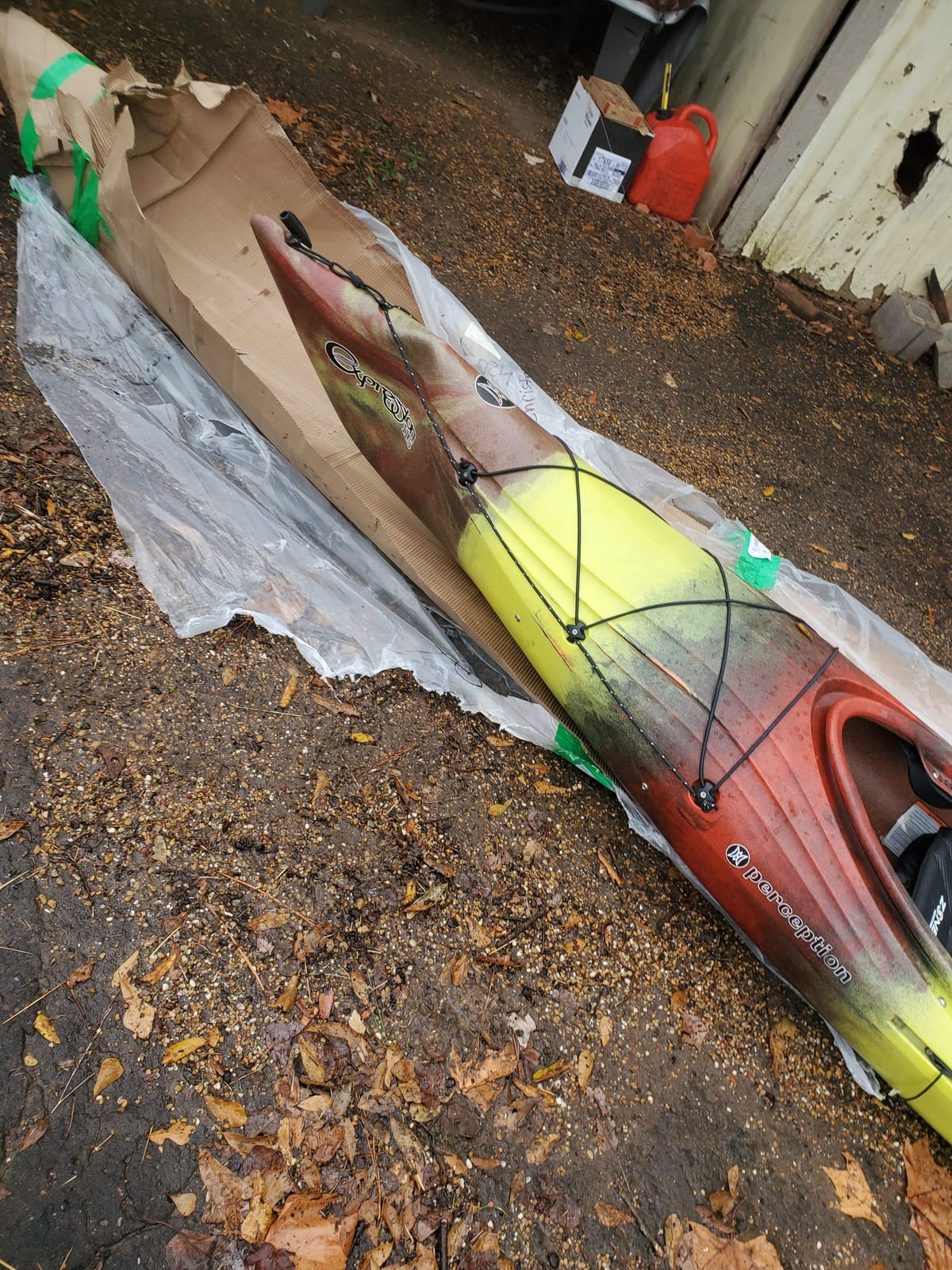
What you give up for that weight is beam. The hull is narrow enough that reviewers consistently warn new paddlers away, describing the first hour as an adjustment period. Owners who pushed through that phase report fast, agile tracking and say the skeg holds a line in crosswind without fuss.
Durability is the quiet strength. Multiple owners describe the hull as still looking close to new after seasons of beach launches and scrapes, which matches what a rotational-molded polyethylene shell should do. Perception also backs the hull for five years against manufacturing defects.
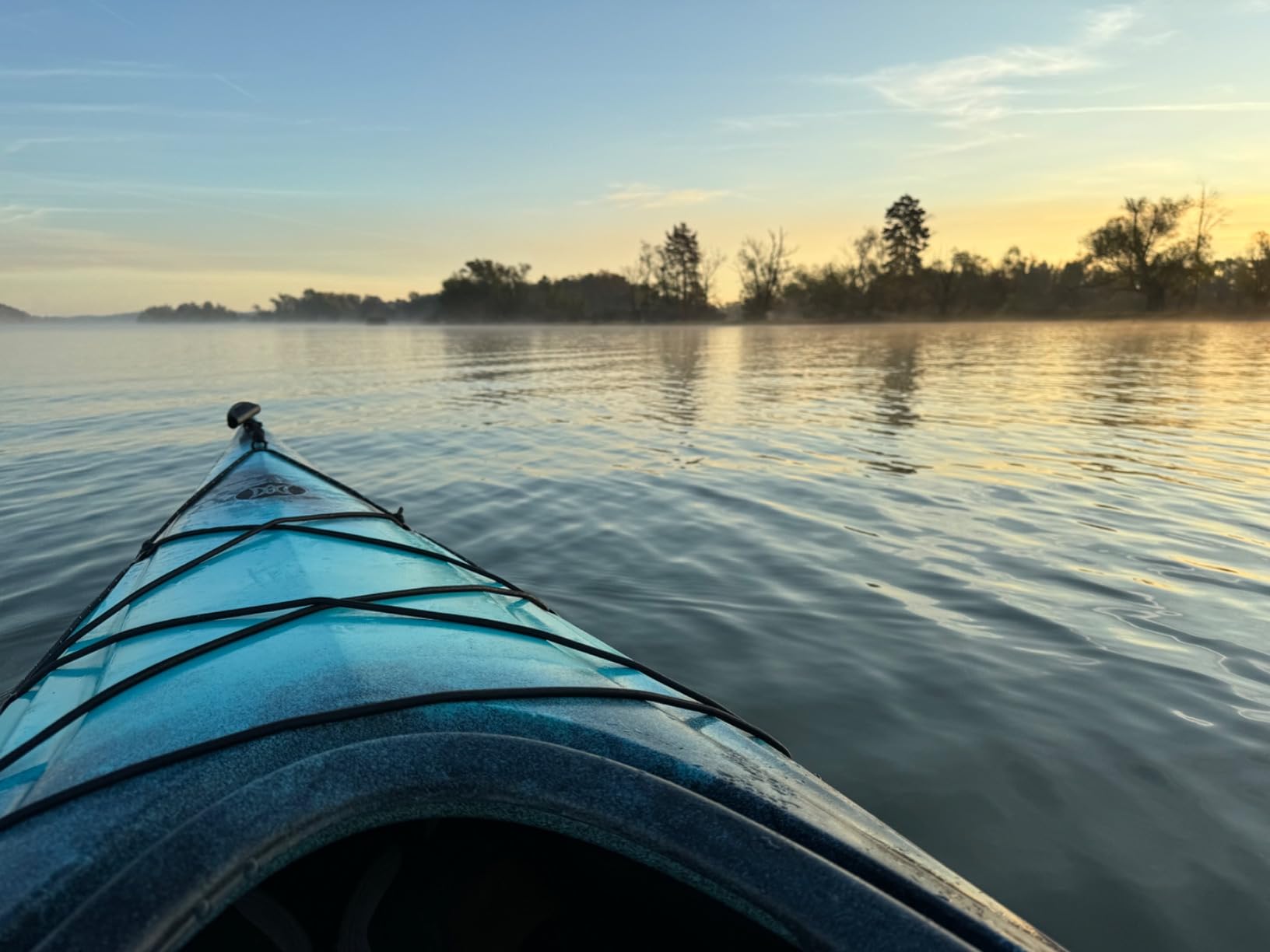
What cockpit fit feels like on a narrow boat
The snugness that new paddlers read as twitchy is the same contact that makes edging and control work later. The Zone seat pushes your thighs into the hull walls, and that connection is what turns wind into a curve rather than a spin.
Set the seat angle before your first paddle and leave it alone for a few trips. Owners who fiddle with the rig every launch report less progress than those who lock it in and adapt.
Where this boat is not the right answer
If your trips involve overnight gear, the Expression 11.5 does not have sealed bulkheads or deck hatches. It is a day-touring hull with touring manners, and anything you bring stays in a deck bag or on your back.
Small-framed paddlers above about 200 pounds should also look further up the list. The 250-pound limit is real, and a full boat plus a loaded deck leaves little margin.
2. Sea Eagle RazorLite 393RL – The Best Touring Kayak for Storage-Constrained Paddlers
Sea Eagle 393RL RazorLite Inflatable Kayak Pro Package
12 ft 10 in
35 lb packed
500 lb capacity
1000 denier drop stitch
Pros
- Only 35 lb packed
- roughly half a hardshell
- Fits in a small car boot with no roof rack
- Inflates in about 7 minutes with three 10 psi chambers
- Owners report keeping pace with 13-14 ft hardshells
Cons
- Lateral wobble at rest
- PVC seams can leak in the third or fourth year
- Seat comfort fades past two hours without a cushion
If your housing situation rules out a 50-pound hardshell, the RazorLite is the honest answer rather than a compromise. It weighs 35 pounds packed, fits in a car boot, and inflates to 10 psi in about seven minutes with a hand pump. Three separate air chambers give you redundancy if one takes a hit.
The build is more serious than the price suggests. Patented rigid bow and stern moulds give it the pointed ends that make a hardshell track, and the floor holds enough pressure to keep the hull from folding in a crosswind. Reviewers repeatedly say it keeps pace with hardshells longer than it has any right to.
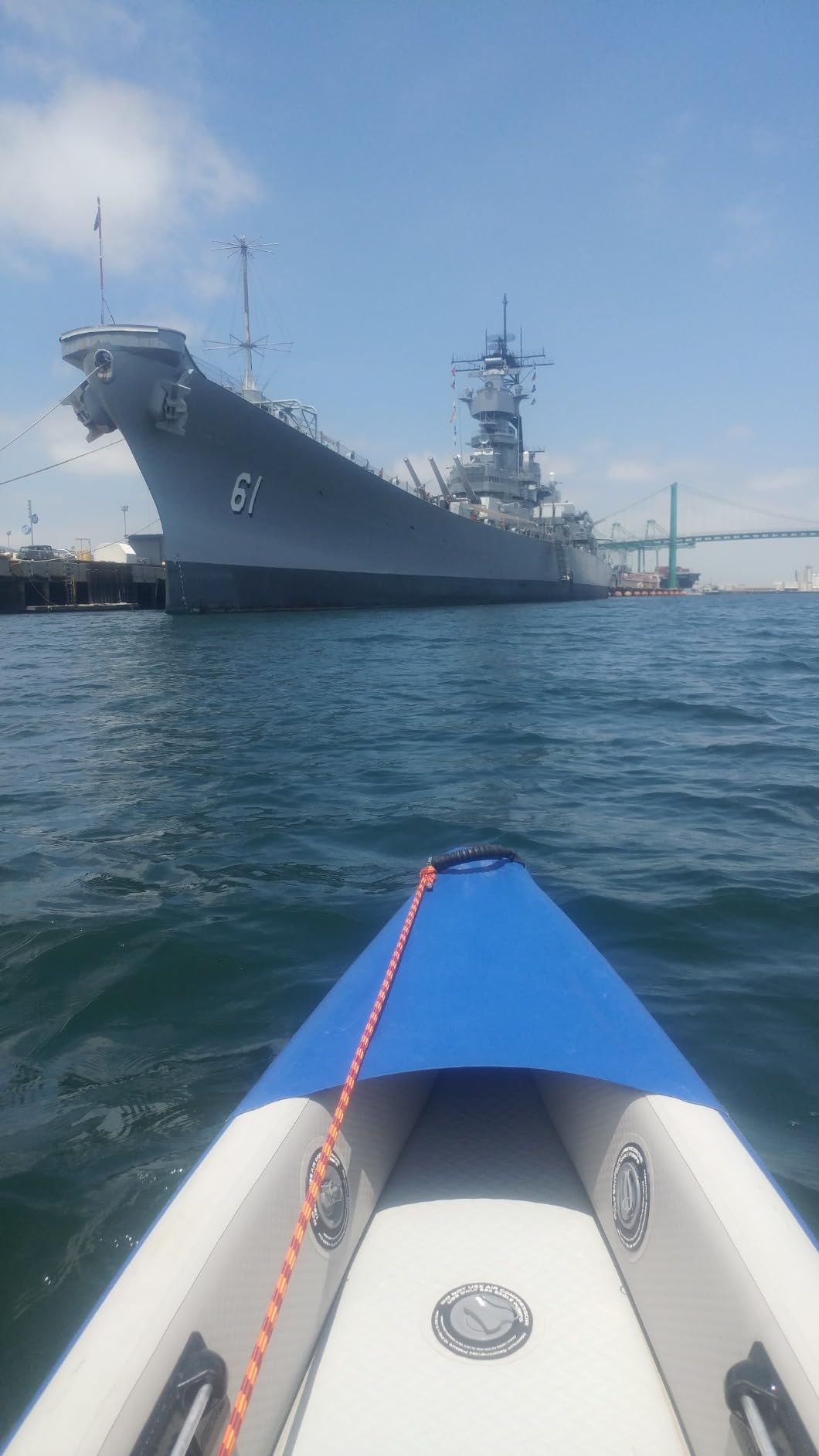
The open cockpit is a genuine benefit rather than a compromise. Getting in, changing leg position and reaching for a dry bag are all simpler than in a hardshell, and the footrest offers 20 separate positions to dial in leg drive.
Long-term durability is the part to think hardest about. Owners report PVC seam leaks developing in year three or four, and those repairs are awkward to do properly. The three-year manufacturer warranty does not always cover them.
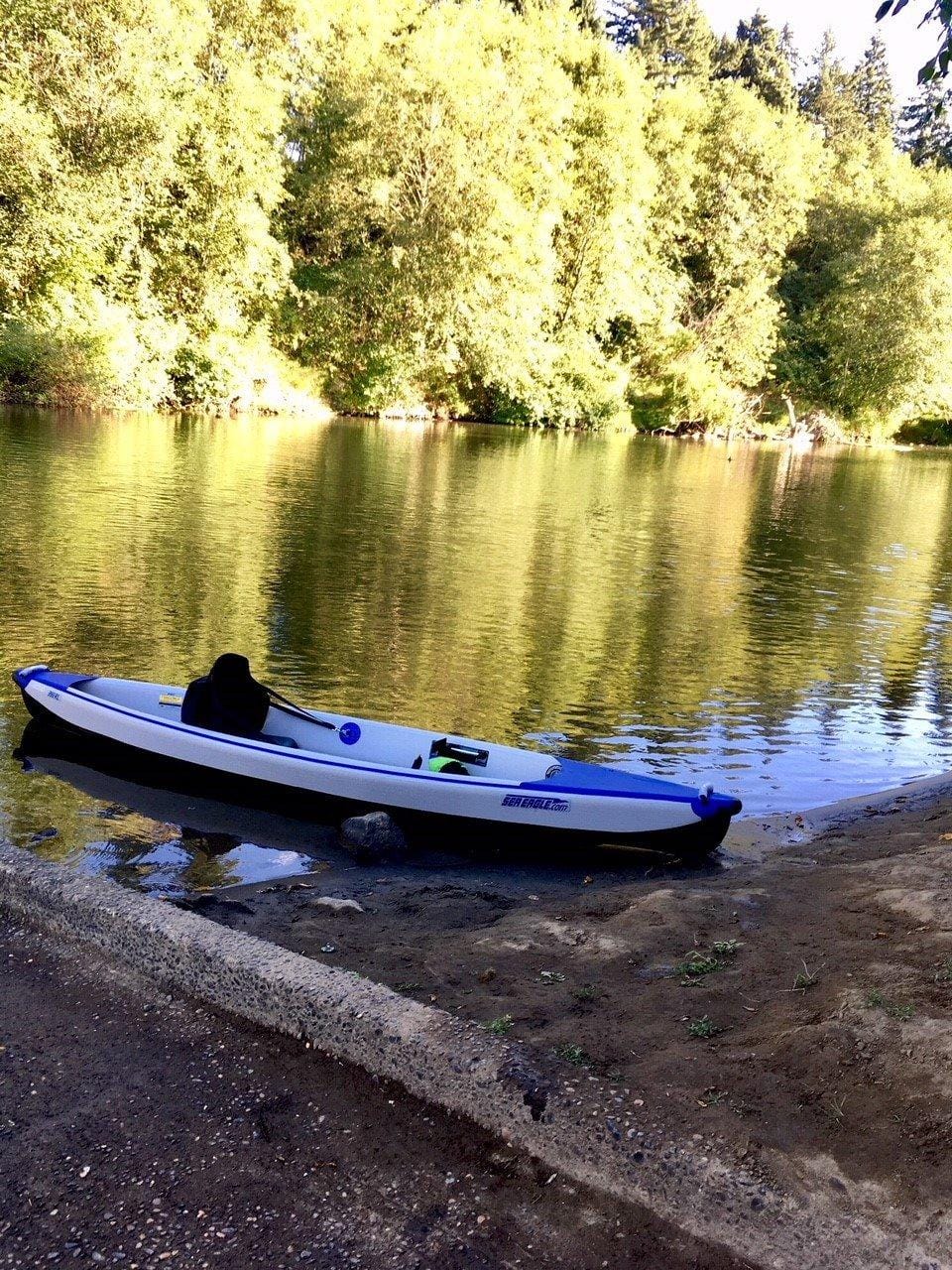
How the inflatable hull handles wind and chop
Flex is the honest trade. Even at 10 psi the hull moves more than a hardshell, and several reviewers note it is wind-sensitive in a way hardshells are not. Plan sheltered-water routes and reserve open crossings for settled days.
Water also collects in the hull creases after a paddle, so expect to bail or drain before stowing it. That is normal for drop-stitch boats, not a fault.
Who should skip the RazorLite
Paddlers planning multi-week trips should look at warranty length and seam construction, because a failure on an island is a different problem than a failure in a car park. The rated capacity of 500 pounds is generous, but capacity is not the same as seaworthiness.
If you already have a garage and a roof rack, a hardshell is lighter, quieter and simpler in the water. The RazorLite earns its place when transport is the binding constraint.
3. Sea Eagle 300X Explorer – The Top Rated All-Water Inflatable
Sea Eagle SE300X Explorer Inflatable Kayak, Pro Package by Sea Eagle
9 ft long
45 lb
395 lb capacity
Class IV rated drop stitch
Pros
- Rated for Class IV whitewater and open bays
- Self-bails through 16 floor drain valves
- Adjustable foot braces add real power per stroke
- 45 lb one person can still lift
- Carries 395 lb of paddler and gear
Cons
- Paddle locking pins do not always fully seat
- No centre carry handle when inflated
- Bundled pump is awkward to keep upright
The 300X Explorer is the one inflatable in this list with a 4.8 average across owner reviews, and the reason is that it refuses to specialise. It is rated for Class IV rapids and it also tracks straight on flat water, which is a rare combination in a boat you can deflate and put in a closet.
Everything about the floor is designed for stability. It is a high-pressure 4-inch removable drop-stitch panel, and 16 drain valves let water out as fast as it comes in, so the boat self-bails rather than turning into a bathtub on a wet day.
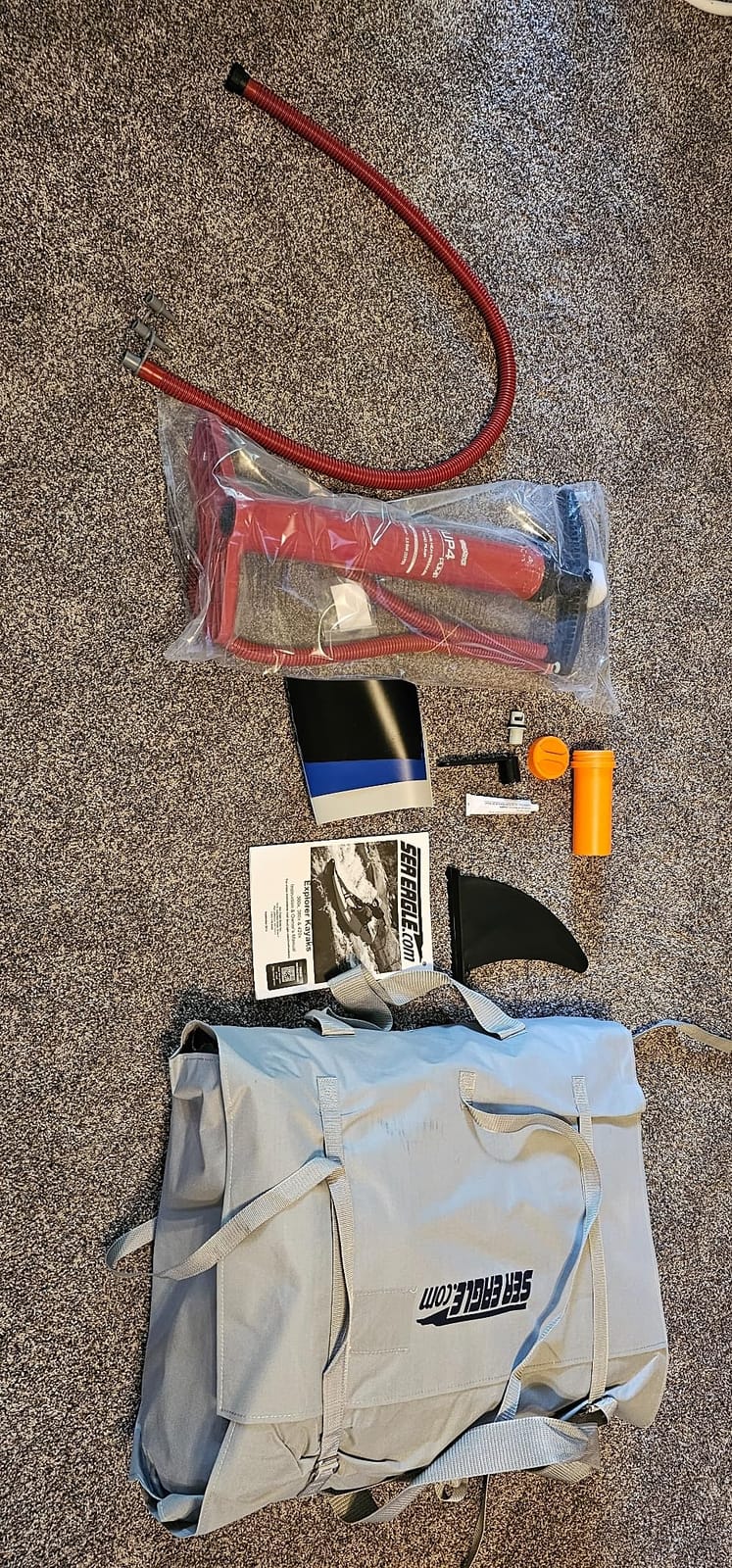
The stability figure is not a marketing number here. Reviewers who stood on the deck to fish report it will not flip, and that kind of stiffness is what you want when you are loading a stern-heavy boat at a gravel ramp.
Owners who upgraded from cheap inflatable duckies describe the step up in build quality as the thing that changed their mind. The complaints that do surface are about small hardware items rather than the hull itself.
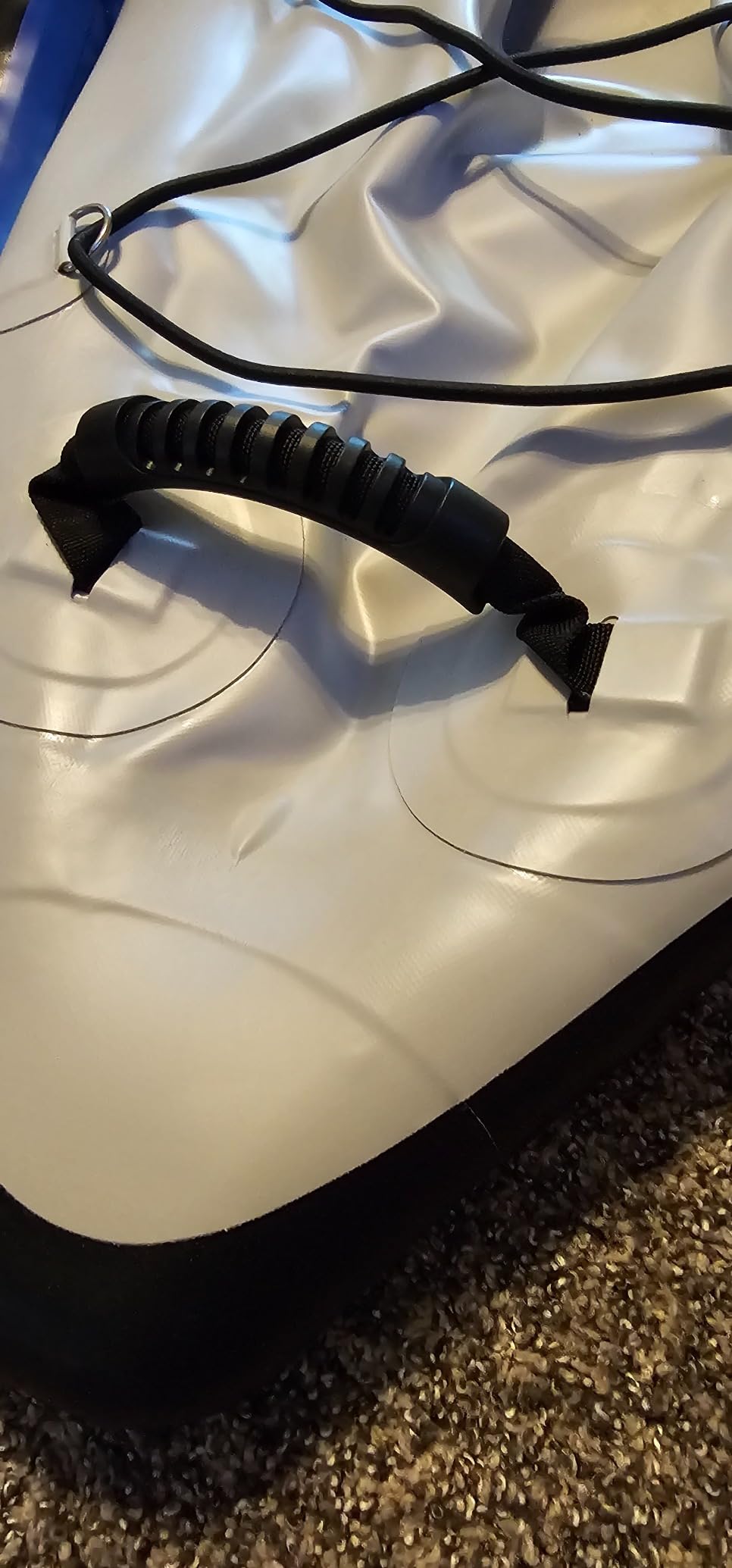
Why a whitewater rating matters on a lake trip
Class IV construction means quadruple-glued overlapped seams and heavy 1000 denier polyester. On flat water that buys you puncture resistance from shoals and rocks, and on moving water it is the difference between a boat that holds its shape and one that does not.
It also matters for resale. Inflatable touring kayaks with a recognised whitewater rating hold value better than general-purpose models, because more paddlers can use them safely.
Where the 9-foot length becomes a problem
This is a short boat, and short means lively. For a four-day river trip, whitewater runs and sheltered bays it is excellent. For a multi-day open-water crossing where you want glide and straight-line tracking, the longer hulls further down this list will feel faster for the same effort.
It deflates to 24 by 16 by 6 inches, so storage and transport are simply not a problem.
4. Perception Carolina 12 – The Best Beginner Touring Kayak
Perception Kayak Carolina Sit Inside for Recreation
12 ft long
49 lb
275 lb capacity
Sealed front and rear storage
Pros
- Wide 26 inch beam gives forgiving initial stability
- Sealed dry storage in both bow and stern
- Zone seat adapts to different body shapes
- 275 lb capacity leaves room for gear
Cons
- 49 lb is heavy for solo handling
- Only one colorway available
Most of the criticism aimed at touring kayaks is aimed at narrow beams, and the Carolina 12 is the direct answer. At 26 inches across and 12 feet long, it holds its line without punishing a paddler who is still learning to brace.
It is also one of the few boats here that is genuinely a touring kayak rather than a day boat with touring manners. Sealed compartments at the front and stern mean you can carry sleeping kit and food out of the rain on an overnight trip.
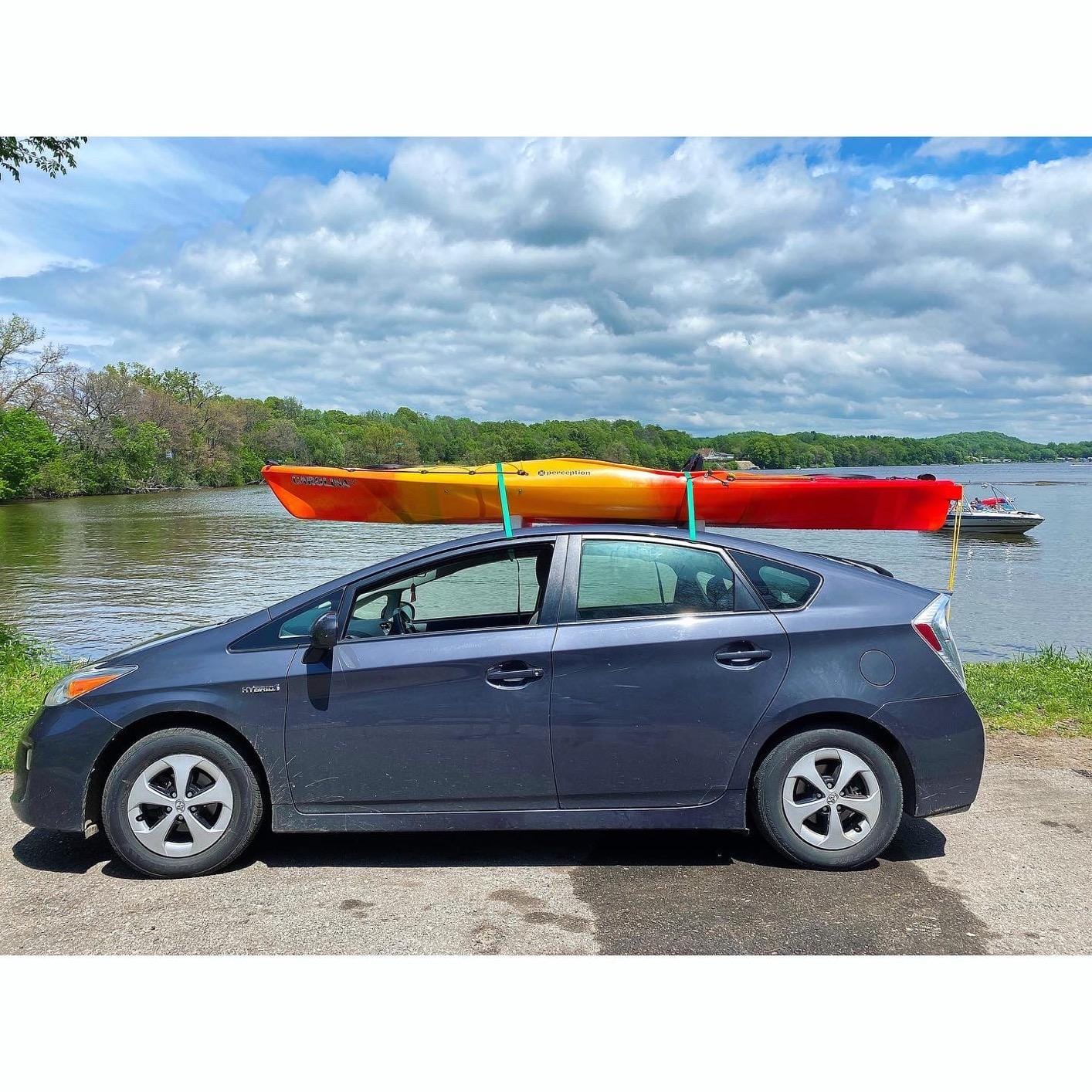
The Zone adjustable seating system is the part owners mention most. It moves fore and aft and tilts, so two people of different sizes can share the boat or one person can dial it in for a long day.
Perception builds it in the USA through Confluence Watersports and backs the hull and deck for five years against material and manufacturing defects, with a further year on installed accessories.
Whether a 12-foot hull is too short for touring
Twelve feet is a compromise length, and it is the right one for a lot of people. It will not glide like the 16-foot 6-inch Tempest 165, but it turns tighter, costs less to carry and is far easier to beach.
If your trips are on lakes, slow rivers and sheltered coastal water, this length loses very little. If you are planning open crossings, start further down the list.
The weight question nobody asks about
Forty-nine pounds is the trade for the wide beam. Owners who load solo report it is a two-stage job rather than a one-lift, and buyers who care most about carrying distance tend to gravitate to the 44-pound Expression 11.5 instead.
Check that your roof rack and your back agree on the number before you commit. A boat you cannot get to the water is the most expensive boat on the lake.
5. Wilderness Systems Tsunami 140 – The Most Comfortable Touring Setup
Wilderness Systems Tsunami 140 | Sit Inside Touring Kayak | Multiple Storage Options – Phase 3 Air Pro Seating | 14′ | Mango
14 ft long
53 lb
325 lb capacity
Twin hatches and bulkheads
Pros
- Phase 3 AirPro seat is repeatedly called the most comfortable
- Twin hatches with sealed bulkheads for dry storage
- Fast yet stable across skill levels
- Slidelock XL footrests and padded thigh braces
Cons
- 53 lb is a two-person roof load
- Sits at the premium end of the 14-foot class
If you are doing ten-hour days, the seat matters more than the hull. The Tsunami 140 uses the Phase 3 AirPro Tour seat with revised back strap routing, and across the reviews it is the single most praised feature in this entire roundup. Owners who came from cheaper seats describe the change as the difference between a long day and a short one.
The hull is a 14-foot polyethylene touring design rated to 325 pounds, with sealed bow and stern bulkheads and a large oval rear hatch plus a smaller round bow hatch. That is real dry storage, not a strap-on deck bag.
Gear handling is sorted too. Two mesh deck pockets give you somewhere to lash a wet shell or a paddle float, and there is an under-deck water bottle holder so your drink is not rolling around mid-catch.
Who the 14-foot size suits
Fourteen feet is the practical middle of the touring market. It tracks well enough for open water and stays manoeuvrable enough for a river bend or a crowded launch. Buyers moving up from a 12-foot day kayak usually land here and stop looking.
The 325-pound rating suits a broad range of paddlers and paddler-plus-gear, though it is worth adding your own body weight to the weight of everything in the boat before you load up.
The honest downside: 53 pounds
This is a heavy hull for a 14-foot boat, and it shows in the reviews. Solo roof loading is called out as the main practical drawback, and the adjustable footrests and thigh braces that make it comfortable also mean more rigging than a fixed-seat boat.
If carrying distance matters to you, the two inflatables earlier in this list solve that problem better than any of the hardshells.
6. Wilderness Systems Tsunami 145 – The Touring Kayak for Larger Paddlers
Wilderness Systems Tsunami 145 – Sit Inside Touring Kayak – Durable – Multiple Storage Options – 14.6 ft – Mango
14 ft 6 in long
56 lb
350 lb capacity
Sealed bulkheads
Pros
- 350 lb capacity suits larger paddlers and heavy loads
- Roomy hull with room to load a full camp
- Sealed bulkheads with two hatches for dry storage
- Two mesh deck pockets plus bottle holder
Cons
- Heaviest hull in the Tsunami range at 56 lb
- One-person loading is genuinely difficult
The 145 is the same design philosophy as the 140 stretched and lightened in the load rating, and it exists for a specific person: a larger paddler, or a smaller paddler planning multi-night trips with heavy gear. At 14 feet 6 inches and a 350-pound rating, it is the roomiest mainstream boat in this roundup.
Owners describe the same strengths as the 140: speed that stays stable, seat comfort over long sessions, and dual hatches with sealed bulkheads that keep kit dry. The mesh deck pockets and under-deck bottle holder come as standard here too.
The difference between this boat and the 140 is 2 inches of length, 3 pounds of weight and 25 pounds of rated capacity. Wilderness Systems also backs this one with a limited lifetime warranty on the hull and deck rather than a fixed term.
That warranty difference is worth noting if you are buying a boat you intend to keep for a decade, which is the normal expectation for a hardshell polyethylene hull.
Matching the 350-pound rating to your body
Rated capacity is not a target, it is a ceiling. Owners who fit this boat happily tend to be somewhere in the 190 to 250 pound range once gear is aboard, which leaves sensible margin for a swell or a lopsided load.
Above that, look at the tandem options further down. Pushing a paddler past the useful part of the rating makes the boat feel sluggish and unpredictable rather than roomy.
Rating spread versus the 140
This boat averages 4.1 across 12 reviews, below the 140. The complaints cluster around handling the 56-pound hull and around fit, with a noticeable share of three-star and one-star feedback. That is not a defect signal so much as a fit signal.
Demo before you buy if you can. A rental of this specific model will tell you in an hour whether the extra room is worth the extra carry weight.
7. Wilderness Systems Tempest 165 – The Best Sea and Coastal Touring Kayak
Wilderness Systems Tempest 165 | Sit Inside Touring Kayak | Adjustable Skeg – Phase 3 Air Pro Seating | 16′ 6″ | Breeze Blue
16 ft 6 in long
55 lb
21.5 inch beam
Adjustable skeg
Pros
- Fast for a 16-foot touring kayak
- Euro hull rolls up and over 2-4 ft seas
- Adjustable skeg holds a line in side wind
- Seat padding stays comfortable after hours
Cons
- 55 lb hull is a two-person load
- Narrow beam is unfriendly to beginners
- Basic hatch design
The Tempest 165 is the specialist in the list. At 16 feet 6 inches with a 21.5-inch beam, it is built for the paddler who already knows how to read a swell, and experienced owners consistently rank it among the best handling and tracking boats they have owned.
Speed is the headline. Reviewers describe it as unusually fast for its length, and the long waterline means fewer strokes cover more ground. The adjustable skeg does its work at partial deployment, holding tracking in a side wind without the drag of a fully dropped blade.

The Euro-style hull is the other part of the package. Owners report it rolling up and over two-to-four-foot seas comfortably rather than pitching, which is the behaviour you want on a multi-day coastal paddle. A neoprene spray skirt is worth having because the boat sits low in the water.
Despite the size, the Phase 3 Air Pro seat padding is described as thin but effective, staying comfortable well past the point where other seats stop being bearable.
Smaller-framed paddlers and the narrow beam
This model is marketed for paddlers with a smaller frame, and the lower deck suits them well. The 21.5-inch beam is the compromise, and it is a real one: initial stability is low enough that the reviews are blunt about beginners struggling.
It also removes a lot of usable cargo width. Plan your loading carefully and keep the weight low and centred.
Why the review count is small
Only seven ratings are on record, which is thinner evidence than most of the list. The owner sentiment is consistent, but we would want more time on the water before treating it as a default recommendation.
Because of the length and the load, this is a boat for trips where speed saves you energy and weather. A rental is strongly advised.
8. Perception Cove 14.5 – The Best Touring Kayak for Two
Perception Kayaks Cove 14.5 | Sit Inside Tandem Kayak | Zone Adjustable Seating and Leg Braces | 14′ 6″ | Sunset
14 ft 6 in tandem
31.25 in beam
550 lb capacity
Polyethylene
Pros
- Stable platform rated for 550 lb
- Easy to board and exit from a sit-inside deck
- Two Zone seats with thigh pads and adjustable foot pegs
- Replaceable skid plate makes solo launching easy
Cons
- Transit damage is reported fairly often
- No protective packaging supplied
- 14.5 ft tandem is awkward to handle solo
The Cove 14.5 is the pick if you are splitting the boat, the gear or the dog between two. It is 14 feet 6 inches long and 31.25 inches across, rated for 550 pounds, and that width is the whole point: a tandem hull this wide does not feel twitchy even when it is carrying two people.
Both seats are Perception Zone units with adjustable backrests, and the manufacturer lists adjustable foot pegs plus Zone knee and thigh pads. The front paddler in particular gets a proper seat rather than a perch.
Storage is generous at the rear, with bungee deck rigging on top for wet gear and kit that needs to be reachable mid-trip. A replaceable skid plate on the hull lets you drag the boat to the water without gouging it, which is a small detail that saves real annoyance.
Reviewers consistently describe the handling as stable and straight-tracking across lakes, slow rivers and calm coastal water.

When a tandem is the right call
A tandem wins when you are splitting weight with a partner, carrying a child, or bringing a dog with you. The 550-pound rating leaves real margin for two adults plus a full camp kit.
It loses when one person has to handle the boat alone. At 14.5 feet, loading it solo and getting it into a narrow water is a two-person job in practice.
Inspect the hull on arrival
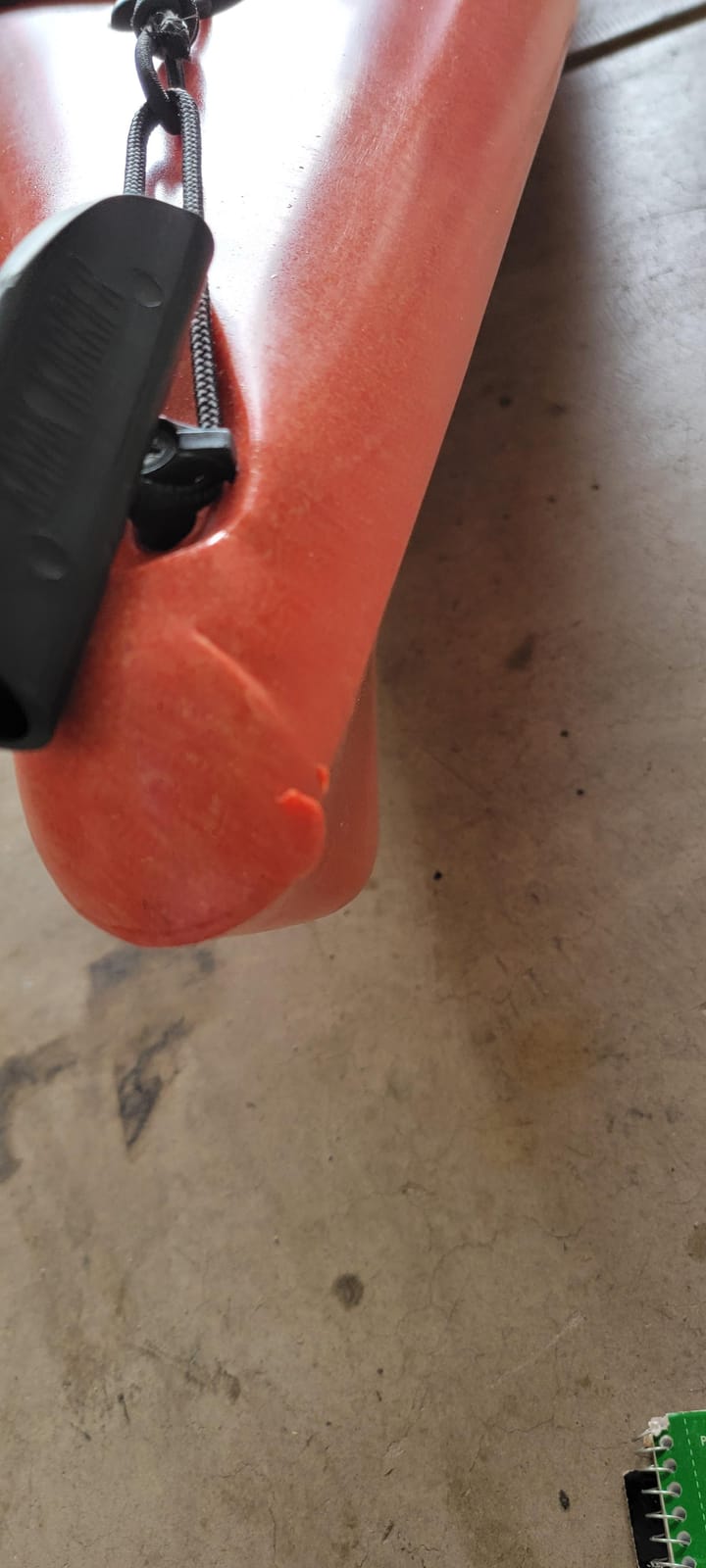
This is the one boat in the roundup where transit damage shows up repeatedly in reviews. Several buyers reported scratches, a deep gouge or a broken foot-rest track, and the kayak arrives without protective plastic or packaging.
Photograph the hull and deck the moment it is delivered. If something is wrong, that record is what makes it straightforward to sort out.
9. Goplus 12 FT Sit-In – The Budget Touring Kayak with a Rudder
Goplus Single 12 FT Sit-in Kayak, Touring Fishing Keel Kayaks W/Aluminum Paddle, Detachable Rudder, Storage Bin, Cup Holder, Lightweight One Person Recreational Ocean Kayak for Adults
11 ft 11 in long
48.5 lb
300 lb capacity
LLDPE with detachable rudder
Pros
- Detachable rear rudder with a locking system
- Aluminum paddle included in the box
- Front and rear handles let two people move it
- 300 lb rating above most boats in its size class
Cons
- Only one owner rating on record
- No long-term durability evidence
- 48.5 lb is heavy for its length
The Goplus is unusual in this list because it arrives complete. The aluminum paddle with detachable high-density blades is in the box, as are the front and rear pull handles that make a two-person carry possible. For a first touring kayak on a tight budget, that completeness is worth something.
Steering is handled by a detachable rear rudder with a locking system, which means the boat can be trimmed for flat water and then fixed for a crossing. The multi-position foot pedal adjusts for different heights, and the storage bin, cup groove and bungee cords cover the basics.
Construction is odour-free LLDPE with a keel and streamlined hull, rated to 300 pounds across a 142.8-inch length with a 24-inch beam.
Read the review evidence carefully
There is a single owner rating on record, and it is a five-star review. That is not enough to draw any conclusion about how this boat performs over a season, let alone a decade, and we are not going to dress it up as consensus.
Ask yourself what you are actually buying here. You are buying a complete, rudder-equipped package with a good rating headroom, and you are buying it with less real-world evidence behind it than any other boat here.
Where it fits against the Perception boats
Compared with the Perception Expression 11.5, the Goplus gives you a rudder, an included paddle and a higher 300-pound rating. What it does not give you is a review history, a brand service network you will find in many places, or a long warranty.
If you want the same length with a body of owner feedback behind it, the Expression is the safer first boat.
10. Aqua Marina Tomahawk AIR-K 375 – The Best Inflatable for Solo Overnight Trips
Aqua Marina Tomahawk Air-K Inflatable Touring Kayak, 1 Person, 12 Ft 4 In
12 ft 4 in long
16.6 kg
282 lb capacity
Three air chambers at 10 psi
Pros
- Full drop-stitch build is stiffer than typical inflatables
- Three separate air chambers add redundancy
- Splash guards at bow and stern keep the cockpit drier
- 16.6 kg build is easy to carry and pack
Cons
- Needs a high-output pump and time to inflate
- Hull flexes noticeably in wind and chop
- One-year warranty is short for a touring role
The Tomahawk AIR-K 375 is the solo version of the pair, and the thinking behind it is the same as the RazorLite: real hull rigidity without a hardshell. It is a full drop-stitch build at 10 PSI rather than the air-beam construction used on cheaper inflatables, and owners notice the difference in speed and tracking.
Three separate air chambers mean a puncture in one section does not end your trip, and the removable twin fins let you run in shallow water without worrying about grounding. Bow and stern splash guards keep a surprising amount of water out of the cockpit.
At 16.6 kilograms the whole thing packs down to something one person can carry to a shoreline, a beach launch or a hard-to-reach put-in. For paddlers without a car, that flexibility is the entire point.
The high-back seat with spongy cushion and storage pockets is comfortable enough for full days, and the adjustable footrest cuts down on the leg fatigue that builds over distance.
Wind is where inflatables give ground
Owners consistently note hull flex in wind and chop compared with hardshells. The boat will hold direction, but it moves under you and takes more steering input than a rigid hull of the same length.
Plan routes with a lee shore and a fallback. That habit matters more in an inflatable than in a hardshell.
Pump time and warranty length
A three-chamber drop-stitch boat needs a real high-output pump, and pumping it up is the part of every trip you will come to resent. Budget ten minutes at the start of a day and practise the routine before you need it.
The one-year limited warranty is the other caution. Compare it with the three-year cover on the Sea Eagle inflatables if you plan multi-season trips.
11. Aqua Marina Tomahawk AIR-K 440 – The Best Tandem Inflatable for Touring
Aqua Marina Tomahawk Air-K Inflatable Touring Kayak, 2 Person, 14 Ft 5 In
14 ft 5 in long
20.3 kg
462 lb capacity
Two high-back seats
Pros
- 14 ft 5 in length tracks better than short inflatables
- Stable for inexperienced paddlers on sheltered water
- Three air chambers and two drain valves add margin
- Packs into the supplied bag once you get the hang of it
Cons
- Paddles are not included
- Some owners report hull and rail seam leaks
- Seam bulges near the valves are cosmetically visible
The AIR-K 440 is the tandem half of this line-up, and at 14 feet 5 inches it is meaningfully longer than most inflatables of this type. That length is why owners say it tracks noticeably better in wind than a typical inflatable of similar size.
Stability is the other strong theme. Reviewers describe it as steady enough for inexperienced paddlers on sheltered water, which makes it a reasonable first boat for two people who want something more substantial than a pool float.
Both seats are high-back models with spongy cushions and storage pockets, and the boat has an adjustable footrest, bow and stern splash guards, two drain valves and three separate air chambers. The removable twin fins are useful near shore.
Check the build quality on arrival
Build quality is where the complaints cluster in this boat’s reviews. Owners report visible bulges around the air valves and hull-to-rail joints, rough glue seams at the bow and stern, and outright seam leaks that led at least one buyer to return the kayak.
Inspect the seams in daylight before you inflate it for a trip, not after. A small leak found at the car is a five-minute problem; the same leak found on a multi-day trip is an evacuation.
What the 462-pound rating means in practice
Two adults plus a full camp load is comfortably inside that figure. Owners do report the boat feeling unbalanced when two adults sit with heavy gear behind them, so pack low and distribute weight evenly between the two seats.
Remember that paddles are sold separately for this model, and the packed bag takes up most of a car boot.
12. Sea Eagle 380X Explorer – The Best Touring Kayak for Rivers and Rapids
Sea Eagle 380x Inflatable Kayak with Pro Package
12 ft 5 in tandem
40 lb
750 lb capacity
Class IV rated
Pros
- Rated to Class IV whitewater with 16 self-bailing valves
- Removable 10 PSI drop-stitch floor feels rigid
- 750 lb rating carries two or three adults
- 1000 denier PVC resists rock and debris
Cons
- 40 lb packed and bulky when inflated
- Pro package accessories add to the outlay
The 380X Explorer carries a 4.8 average across 58 reviews, tied for the highest rating in this roundup, with the broadest review base behind it. It is rated to Class IV whitewater, which in practice means you can run a river in it and also paddle it across a bay without changing boats.
The removable 10 PSI drop-stitch floor is what separates it from cheaper inflatables. Owners describe the platform as rivalling hardshells, and 16 rapid self-bailing drain valves empty water out as fast as waves bring it in.
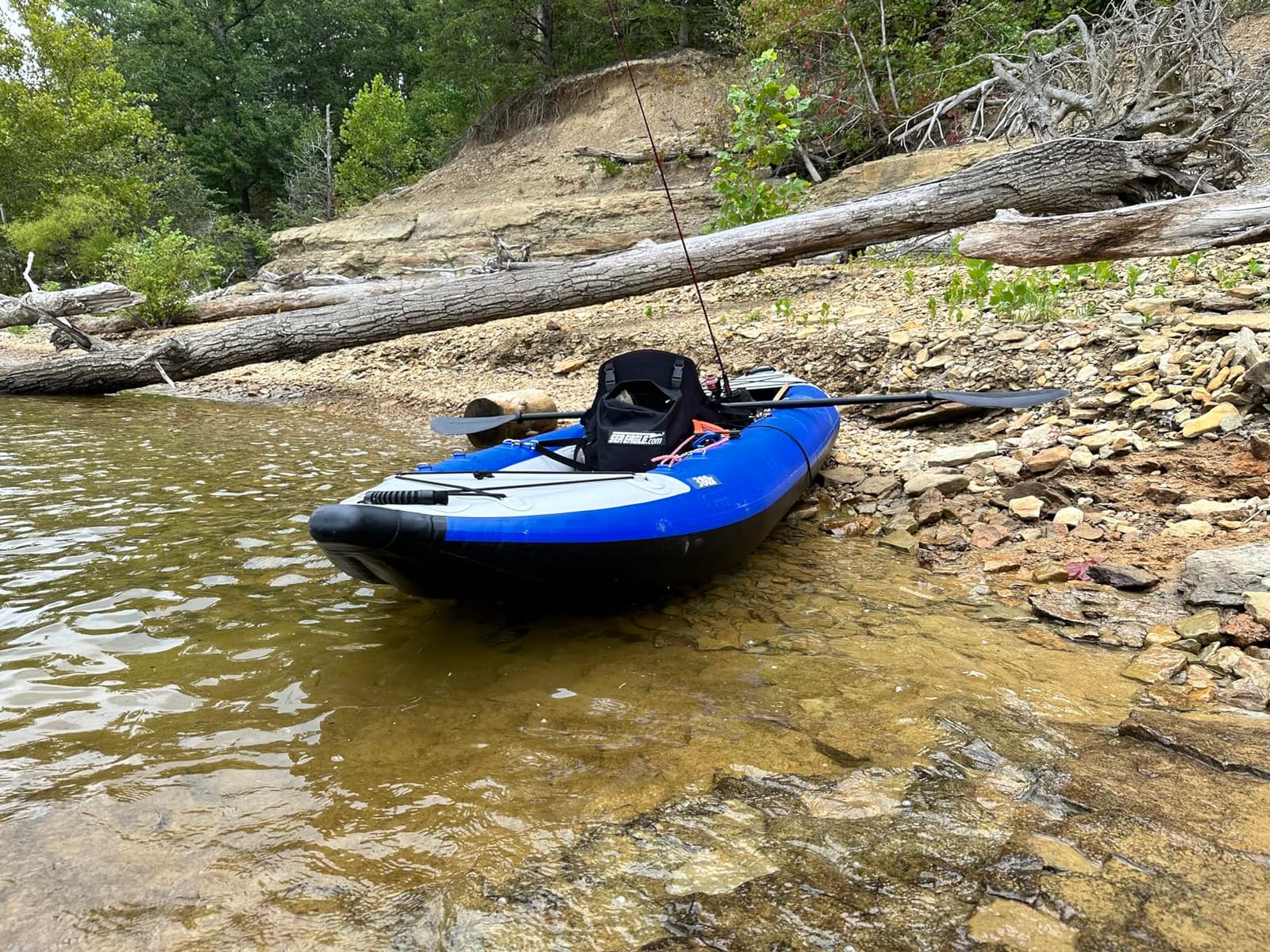
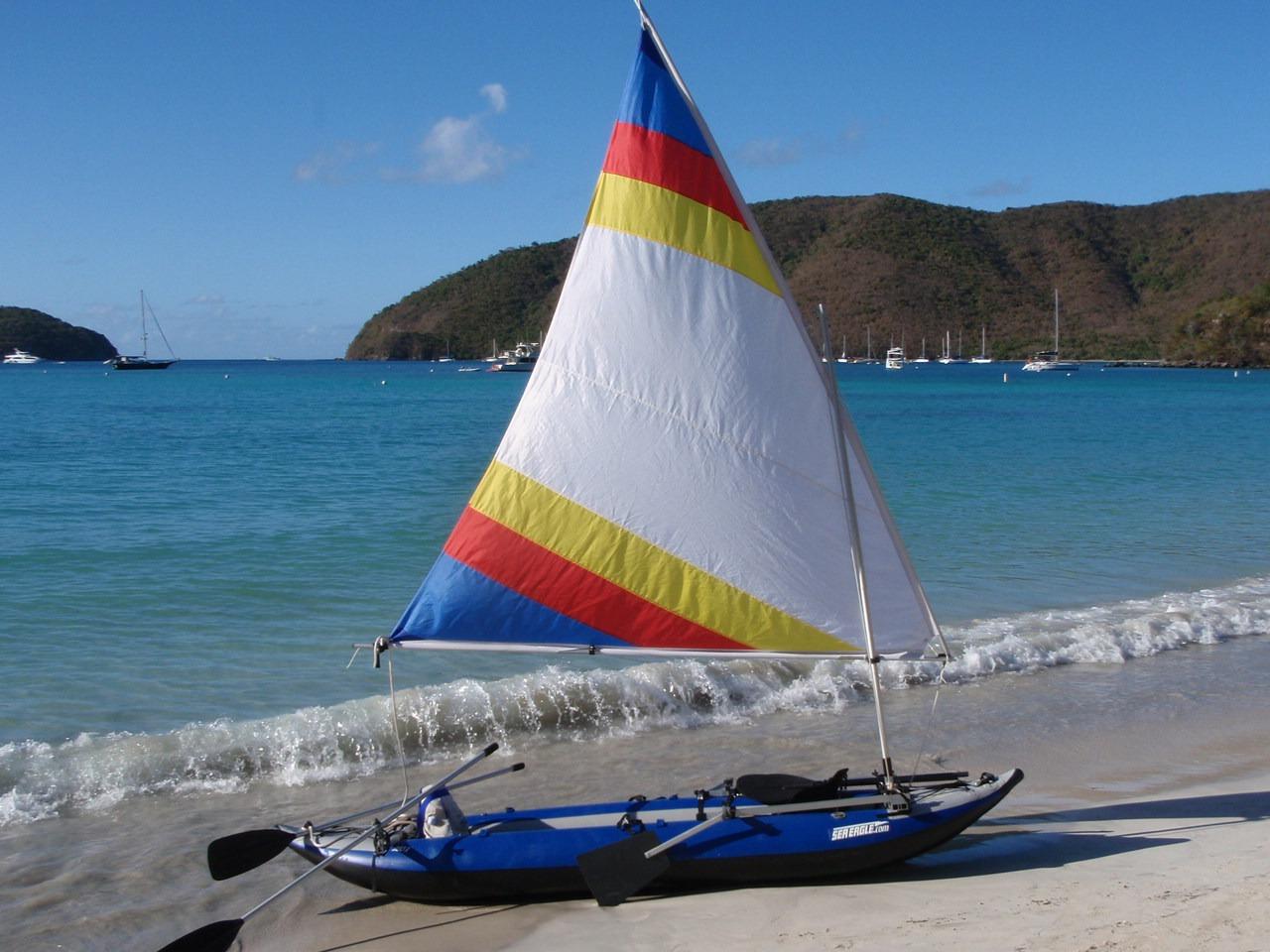
Construction is 1000 denier PVC with quadruple-overlapped glued seams, which is why it shrugs off rock strikes. The removable swept-back rear skeg keeps it tracking straight on flat water, and a rated capacity of 750 pounds covers two or three adults with kit.
The Pro package bundles two tall back seats, two heavy-duty paddles, a high-output pump and a backpack. Inflation takes about eight minutes, and it folds back into the pack afterwards.
Tandem capacity versus solo handling
A 750-pound rating is genuinely useful for two adults, a child and a dog, or one person carrying an unusually heavy load. It is also a boat that needs a car or a trailer to move: 40 pounds packed and a large inflated footprint do not suit a shoulder carry.
For solo paddlers on foot, go back to the RazorLite or the AIR-K 375, both of which are built to be carried to a shoreline.
What the accessory packages add
The version with seats, paddles, pump and backpack is a complete kit, and it costs more than the base boat as a result. If you already have a pump and paddles that fit, the base package is the more economical route.
Check the warranty terms and the availability of replacement valves in your area before you commit, since that is the one part of an inflatable that ages.
What Is a Touring Kayak? And How Does It Differ From a Sea Kayak?
A touring kayak is a narrow, efficient sit-inside boat built to carry a paddler and their gear over distance, usually overnight or longer. A sea kayak is the broader category that contains it, and the two terms are used interchangeably by most paddlers and most manufacturers.
The useful distinction is not the label but the design. Touring describes intent: speed, tracking, storage and the ability to hold a line in wind and chop. A sea kayak could equally be a 12-foot day boat or a 22-foot expedition crossing machine, and the two ends of that range behave nothing alike.
Four features separate a genuine touring kayak from a recreational sit-inside:
Length and waterline. Touring hulls run roughly 12 to 18 feet. The longer the waterline, the more efficiently the boat glides, which means fewer strokes per mile.
Beam. A narrow beam reduces drag and improves tracking but lowers initial stability. A wider beam does the opposite, which is why the Carolina 12 suits beginners and the Tempest 165 does not.
Bulkheads and hatches. Sealed bulkheads create watertight compartments for dry storage and add buoyancy, so a flooded cockpit is recoverable rather than terminal.
Skeg or rudder. A fin below the hull holds a straight line in wind and current. A rudder at the stern is operated by foot cables and is faster to deploy and retract.
One term to watch for is expedition, which describes boats designed for open ocean and multi-week trips. Those hulls are longer, have more rocker and stronger buoyancy, and they cost considerably more. The most capable boats in this roundup sit at the sheltered-water end of touring rather than the open-ocean end.
How to Choose a Touring Kayak: Length, Capacity, Storage and Steering
Choosing by length and beam
Length buys speed and straight-line tracking. Beam buys forgiveness. Every decision in this category is a trade between the two, and the right answer depends on where you paddle rather than how good your gear is.
Under 13 feet, you are choosing manoeuvrability. That suits winding rivers, small lakes and launching off a beach. Between 13 and 15 feet sits the versatile middle, and most buyers should stop here. Beyond 15 feet, tracking and speed improve noticeably while turning and beach handling get harder, which suits open water and longer days between camps.
If you are torn between a large lake and smaller rivers, a boat in the 13 to 15 foot range with a moderate beam is the honest compromise. Forum paddlers describe the same tension when they ask about one boat that handles everything, and the answer is usually a 14-foot hull with a retractable skeg.
Matching weight capacity to your body weight
Weight capacity is the filter buyers most often skip and paddlers most often regret ignoring. Rated capacity covers the paddler plus paddle plus gear plus clothing, and it assumes the load is balanced and the water is calm.
A practical rule is to add your body weight to a realistic gear weight for your trip length, then keep the total below about 75 percent of the rated figure. On the 250-pound Expression 11.5, that means a 150-pound paddler with 30 pounds of kit. On the 350-pound Tsunami 145, a 220-pound paddler has real room for a full camp.
This is the arithmetic that answers the question asked most often in paddling forums, which is what to buy for a 200-pound paddler. Look at the 275-pound Carolina 12 or the 300-pound Goplus, then leave margin. If you are a 200-pound paddler planning week-long trips with heavy gear, step up to the 325 or 350-pound boats rather than loading a 250-pound hull to its limit.
Storage volume and packing for multi-night trips
For overnight trips, storage decides whether the boat works. Sealed bulkheads and hatches let you carry clothing, food and a sleeping bag that stays dry in a downpour, and a boat with a small stern hatch and no bow hatch forces you to balance the load carefully.
Pack low and centred. Heavy items go at the front bulkhead or just behind the foot braces, never behind the seat, where they raise the bow and make the boat weathercock. Keep the deck clear and tie down only what you can replace.
Leave margin in the compartments. A hatch packed to its limits on day one is a hatch that will not close properly once you pick up wet firewood on day four.
Hull material and durability
Rotomolded polyethylene is the most common material in this roundup. It is cheap, tough, forgiving of knocks and effectively maintenance-free, and a well-made one should outlast several owners. The tradeoff is weight, which is why the hardshells here sit between 44 and 56 pounds.
Drop-stitch inflatable construction trades weight for flexibility. Three air chambers add redundancy, the floor holds firm at 10 PSI, and the whole boat fits in a bag. The tradeoff is seam longevity, which is where most of the complaints in the reviews are aimed.
Where our own site has covered hull material for other boat types, the pedal kayak guide explains how propulsion changes the weight and stability trade-offs considerably.
Skeg or rudder, and why it matters
A skeg is a fin that slides down from the hull, either on a cable or by hand. It resists yaw, which is the boat swinging off line in wind or current, and it costs a little drag. A rudder is a blade at the stern controlled by foot cables, so you can drop and retract it while paddling without breaking stroke.
For flat water and sheltered bays, a skeg is enough and many paddlers never retract it. For open crossings, current, following seas or any wind across the bow, a rudder gives you instant, hands-free correction and is the better tool.
Some of the boats here are rudder-ready without a rudder fitted, which is worth confirming before you buy. A retrofit kit is a straightforward addition, but check that the hull and deck are the compatible version.
Cockpit fit for small and large framed paddlers
Cockpit fit is the most common source of buyer disappointment and the least discussed. If your thighs are jammed hard against the hull, you will get pressure damage over a long day. If they float free, you lose the contact that makes edging and control work.
Small-framed paddlers should look for a narrower beam and a smaller seat volume, which is the reason the Tempest 165 and the Carolina 12 are often recommended for shorter paddlers. Larger paddlers want length, a roomy cockpit and a rating with headroom, which is where the Tsunami 145 and the Cove 14.5 tandem fit in.
The practical test happens in a demo. Sit in the boat, close your knees, and check that you can hold a relaxed contact and still rotate your lower body. If you cannot get into the cockpit at all, no amount of adjustment will fix it.
Buying a used touring kayak
A used hardshell can be a sensible way into the sport, and buyers ask about it regularly. Polyethylene hulls are forgiving of scratches and gouges because they are moulded in one piece with no structural glue line, so cosmetic damage matters far less than structural damage.
Check the bulkheads and hatch seals first, since a failed bulkhead is the most expensive thing to fix. Then check the seat, foot braces and thigh pads for UV damage, look for cracks radiating from the hull ends, and confirm the hull sits level on a flat surface with no warp. Inflatables are harder to assess secondhand because seam condition is invisible until it leaks.
Also test before you buy wherever possible. A demo day or a rental of the model you are considering will tell you more in an hour than any spec sheet, and paddlers consistently recommend exactly that. Our fishing kayak guide takes a similar test-first approach.
Frequently Asked Questions
What is the difference between a sea kayak and a touring kayak?
There is no functional difference. Sea kayak is the broad category and touring kayak describes intent: a narrow, efficient hull built for distance, with sealed bulkheads, a skeg or rudder, and the tracking to hold a line in wind and chop. A sea kayak could be anything from a 12-foot day boat to a 22-foot expedition crossing machine, so when comparing, look at the specifications rather than the label.
What is the best length for a sea kayak?
For most paddlers, 13 to 15 feet is the sweet spot. Under 13 feet you gain manoeuvrability and lose speed, which suits rivers and small lakes. Over 15 feet you gain glide and tracking and lose turning and beach handling, which suits open water and faster multi-day trips. A 14-foot hull with a retractable skeg is the most common compromise for mixed water.
What weight capacity kayak do I need?
Add your body weight to a realistic gear weight for your trip length, then stay below about 75 percent of the rated capacity. A 150-pound paddler with 30 pounds of kit is comfortable in a 250-pound hull. A 200-pound paddler planning week-long trips should look at boats rated 300 pounds or more rather than loading a 250-pound boat to its limit.
Are touring kayaks harder to paddle than recreational kayaks?
They are less forgiving, mainly because of beam. A narrow touring hull feels twitchy for the first hour and then rewards you with control, edging ability and efficient tracking. A wide recreational hull feels stable immediately but will not hold a line in wind. If you are new, start with a wider hull such as the 12-foot Carolina 12, or take instruction before committing to a narrow boat.
Should I buy an inflatable or a hardshell touring kayak?
Hardshells paddle more quietly, track better in wind and last longer, but they weigh 44 to 56 pounds and need a roof rack or a garage. Inflatables weigh 16 to 45 pounds packed, fit in a car boot or a cupboard, and rate high on safety through multiple air chambers, but the hull flexes more and seam longevity is the main long-term question. Choose based on where you launch from.
Which Touring Kayak Should You Buy?
The Perception Expression 11.5 is the best touring kayak in this roundup for most people. It is the lightest hardshell here, the best-reviewed, and adjustable enough to fit a wide range of paddlers. The runner-up is the Sea Eagle 300X Explorer, which scores higher and does not care what the weather does, as long as you can accept a 9-foot hull.
Your decision comes down to one question: where do you launch from? From a car boot or a shoreline, take the Sea Eagle RazorLite. From a river or a rapid, take the 380X Explorer. For comfort over ten-hour days, take the Tsunami 140. For open water with experience behind you, take the Tempest 165.
Whatever you choose, demo it first and add your own body weight to your gear weight before you commit. That arithmetic costs nothing and it is the step most often skipped.