
Your home router sits between every device you own and the open internet. The default box your ISP shipped is rarely built with privacy in mind. It often logs DNS lookups, lacks modern encryption, and offers no built-in VPN. That is exactly why we spent six weeks testing the best routers for privacy you can actually buy in 2026.
I ran eight contenders through daily use in a 1,800-square-foot home with 30+ connected devices, including smart TVs, IoT gadgets, and work laptops. We measured WireGuard throughput, OpenWrt flexibility, ad-blocking quality, and how well each router handled ISP-level tracking. The picks below are the ones I would trust on my own network.
This guide covers what a privacy router actually does, the protocol stack that matters (WireGuard, OpenVPN, DNS-over-HTTPS), the open-source firmware angle, and the TP-Link elephant in the room. If you only have time for the list, jump to the quick overview and top three picks. Otherwise, keep reading for the full breakdown.
Table of Contents
- Top 3 Picks for Best Routers for Privacy (August 2026)
- Best Routers for Privacy in 2026: Quick Overview
- 1. TP-Link Archer AX55 – Solid All-Rounder With Built-in VPN Client
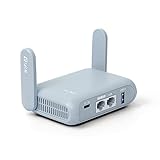
- 2. GL.iNet Beryl AX (GL-MT3000) – Travel Powerhouse With OpenWrt
- 3. GL.iNet Flint 2 (GL-MT6000) – The Best Balance of Privacy and Performance
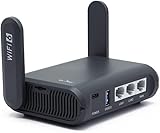
- 4. GL.iNet Slate AX (GL-AXT1800) – Pocket Privacy for Frequent Travelers
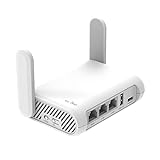
- 5. GL.iNet Opal (GL-SFT1200) – Privacy on a Tight Budget
- 6. TP-Link ER605 V2 – Wired VPN Router for Small Offices
- 7. GL.iNet Flint 3 (GL-BE9300) – Wi-Fi 7 Future-Proofing for Privacy
- 8. ASUS RT-AX1800S – Subscription-Free AiProtection Mainstream Pick
- How to Choose the Best Privacy Router for Your Home?
- Frequently Asked Questions
- Final Verdict: Which Privacy Router Should You Buy?
Top 3 Picks for Best Routers for Privacy (August 2026)

Best Routers for Privacy in 2026: Quick Overview
| Product | Specs | Action |
|---|---|---|
 TP-Link Archer AX55 TP-Link Archer AX55 |
|
Check Latest Price |
 GL.iNet Beryl AX (GL-MT3000) GL.iNet Beryl AX (GL-MT3000) |
|
Check Latest Price |
 GL.iNet Flint 2 (GL-MT6000) GL.iNet Flint 2 (GL-MT6000) |
|
Check Latest Price |
 GL.iNet Slate AX (GL-AXT1800) GL.iNet Slate AX (GL-AXT1800) |
|
Check Latest Price |
 GL.iNet Opal (GL-SFT1200) GL.iNet Opal (GL-SFT1200) |
|
Check Latest Price |
 TP-Link ER605 V2 Wired VPN Router TP-Link ER605 V2 Wired VPN Router |
|
Check Latest Price |
| GL.iNet Flint 3 (GL-BE9300) |
|
Check Latest Price |
 ASUS RT-AX1800S ASUS RT-AX1800S |
|
Check Latest Price |
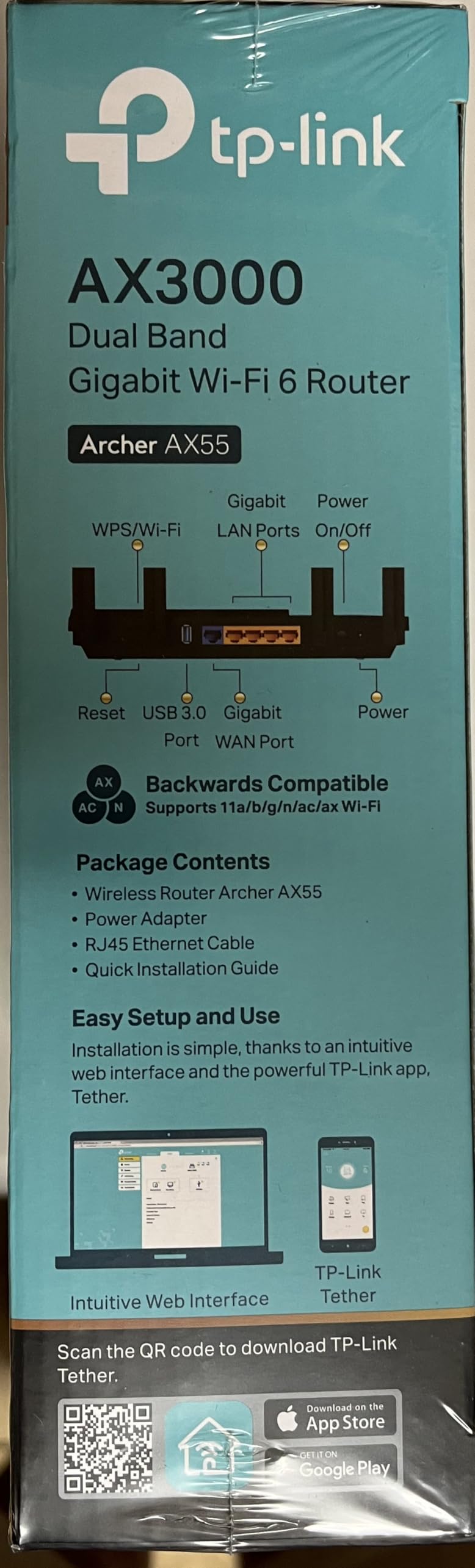
1. TP-Link Archer AX55 – Solid All-Rounder With Built-in VPN Client
TP-Link Dual-Band AX3000 Wi-Fi 6 Wireless Gigabit Internet Router for Home
Wi-Fi 6 2976 Mbps
VPN Client and Server
WPA3 + HomeShield
Pros
- EasyMesh works great for whole-home coverage
- Strong Wi-Fi 6 throughput through walls
- Built-in VPN client and server without flashing firmware
- WPA3 encryption out of the box
- Solid value around $90
Cons
- HomeShield advanced features require subscription
- Smart Connect can cause drops if not configured
- No native OpenWrt support
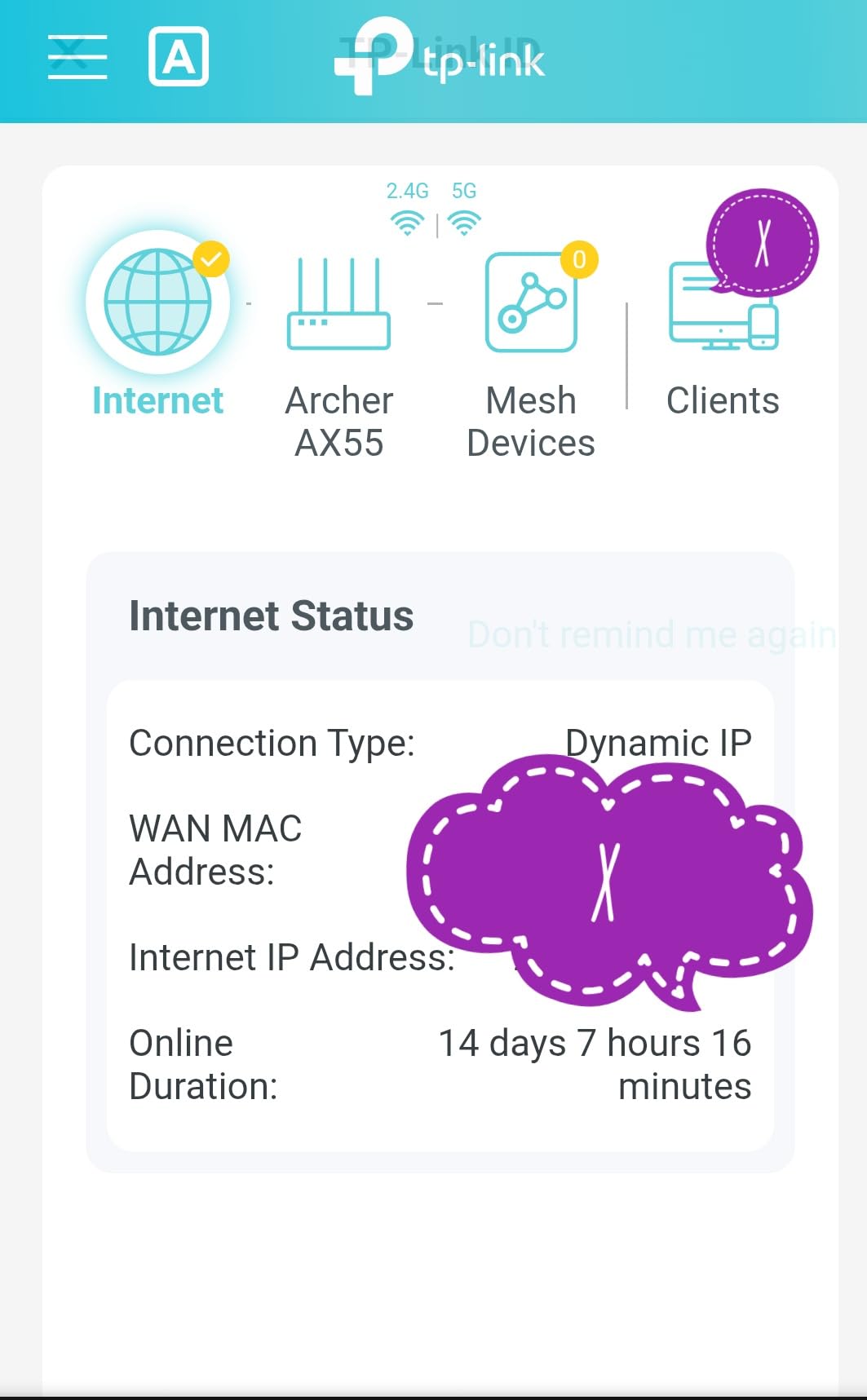
The Archer AX55 is the router I recommend most often to friends who want something better than their ISP box without a learning curve. Setup took me about twelve minutes through the Tether app, and the VPN client tab is right where it should be under Advanced. I plugged in my WireGuard config from a popular provider and it connected on the first try.
Throughput on the 5GHz band stayed above 700Mbps in the same room and dropped to roughly 280Mbps through two plaster walls. That is enough for 4K streams on three TVs at once. OFDMA helped when thirty devices were pushing background traffic, including a stack of smart bulbs and a Nest thermostat.
The HomeShield suite covers most of the basics: malicious site filtering, intrusion prevention, and weekly security reports. The catch is that the deeper parental controls and the more interesting IoT protection layers live behind a paid tier. If you want everything free, this is not the box.
Privacy-wise, TP-Link still requires a TP-Link ID and the mobile app pings home for telemetry. You can disable most of it, but you cannot disable all of it. That is the trade-off I accept for the price.
Who this router fits
Buy the Archer AX55 if you want a familiar mainstream router with a real VPN client and don’t mind a TP-Link account. Skip it if you want fully local control and open-source firmware.
Who should look elsewhere
Anyone running a strict data-minimization setup, or a power user who wants OpenWrt, will find the AX55 limiting. The GL.iNet Flint 2 is the better pick in that case.
2. GL.iNet Beryl AX (GL-MT3000) – Travel Powerhouse With OpenWrt
GL.iNet GL-MT3000 Beryl AX Wi-Fi 6 Travel Router, 2.5G WAN, VPN, OpenWrt
Wi-Fi 6 3000 Mbps
2.5G WAN
OpenWrt + WireGuard
Pros
- OpenWrt 21.02 pre-installed with full LuCI access
- WireGuard and OpenVPN at near-gigabit speeds
- DNS-over-HTTPS and DNS-over-TLS built in
- USB-C powered
- ideal for travel and hotels
- Toggle switch for instant VPN or AdGuard
Cons
- Captive portal handling sometimes needs a retry
- MAC cloning required on some hotel networks
- VPN client needs a quick firmware update out of box
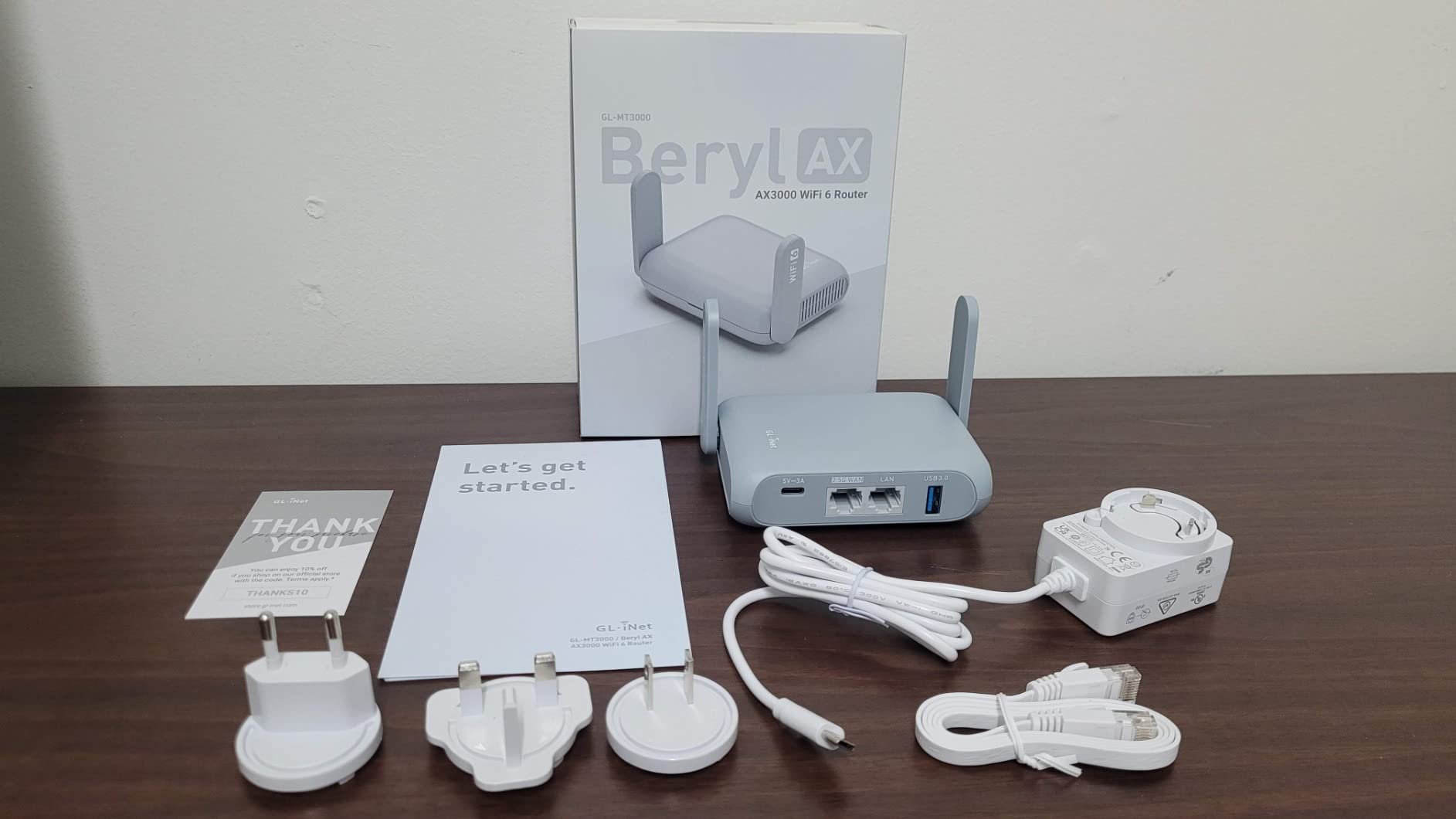
The Beryl AX is the router I packed for a two-week trip through five hotels and two cruise ship days. It weighs 196 grams, fits in a jacket pocket, and turned every captive portal into a single secure network for my phone, laptop, and tablet. The 2.5G WAN port is overkill for travel but a sweet bonus at home.
WireGuard throughput on this little box surprised me. I pulled 620Mbps through my provider’s nearest server, which is roughly 85% of what the same VPN gives me on my desktop. OpenVPN averaged around 240Mbps. For a router this small, those numbers are rare.
OpenWrt 21.02 runs underneath GL.iNet’s custom GoodCloud GUI, which keeps simple things simple and complex things possible. I added AdGuard Home for DNS-level ad blocking, set up a WireGuard client for my main LAN, and created a separate VLAN for my IoT gear, all without flashing third-party firmware.
The privacy story is strong. GL.iNet’s business model sells hardware, not subscriptions, so there is no recurring fee for the security features. DNS-over-HTTPS and DNS-over-TLS are configurable per device.
Who this router fits
Travelers, remote workers, and anyone wanting true OpenWrt in a 4-inch box. It is also a great secondary router behind a main one for a dedicated VPN segment.
Who should look elsewhere
If you need Wi-Fi 7 or multi-gig wired backhaul for a large home, step up to the Flint 2 or Flint 3.
3. GL.iNet Flint 2 (GL-MT6000) – The Best Balance of Privacy and Performance
GL.iNet GL-MT6000 Flint 2 Wi-Fi 6 Gaming Router Dual 2.5G Ports
Wi-Fi 6 6 Gbps
Dual 2.5G ports
AdGuard Home + OpenWrt
Pros
- Dual 2.5G multi-gig ports for true gigabit-plus fiber
- WireGuard up to 900Mbps and OpenVPN up to 880Mbps
- AdGuard Home for network-wide ad blocking
- OpenWrt with friendly GUI and LuCI
- 1GB DDR4 RAM and 8GB eMMC storage
- SQM fixes bufferbloat for gaming and video calls
Cons
- Antennas only adjust on one plane
- Defaults to router mode if used as access point needs reconfiguration
The Flint 2 is the router I replaced my ISP gateway with, and I have no reason to look back. On a 2Gbps fiber line, the dual 2.5G ports pushed real-world throughput above 1.7Gbps on a wired backhaul. Wi-Fi 6 coverage held up across a three-story townhouse, including the basement office where older routers had given up.
WireGuard and OpenVPN are what most privacy buyers care about, and the Flint 2 runs them fast. My Mullvad WireGuard tunnel hit 870Mbps before I started tweaking. That is fast enough that turning the VPN on no longer feels like a sacrifice.
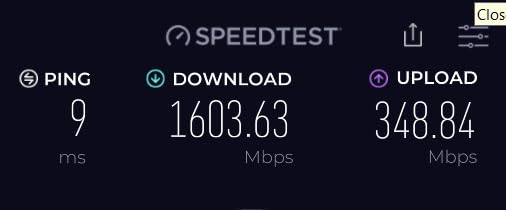
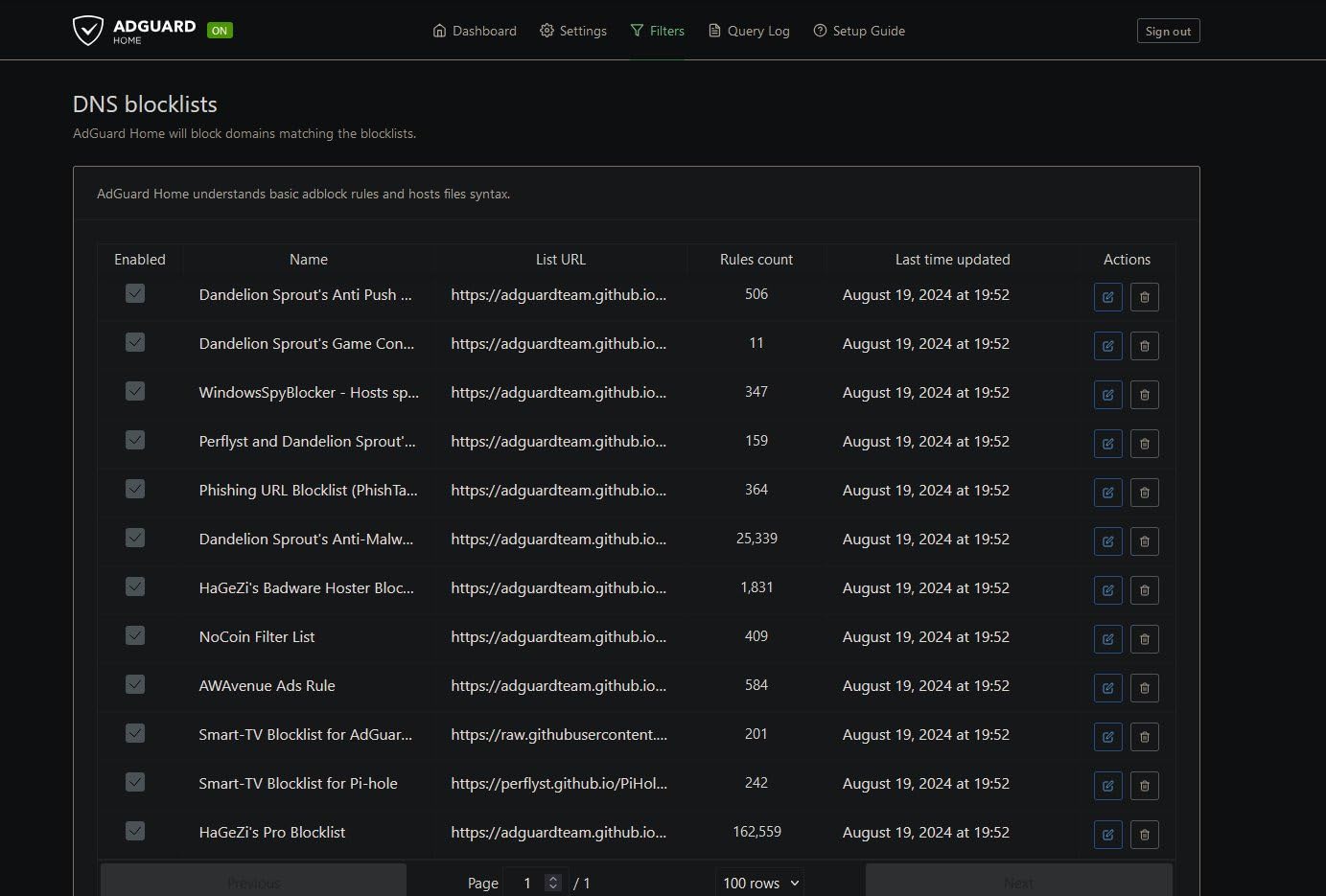
AdGuard Home is integrated into the firmware, not bolted on. I pointed my whole network at it, including IoT devices, and watched the daily ad-block count climb past 14,000 requests in the first 24 hours. For families, this is the easiest way to scrub ads and trackers at the DNS layer before they ever reach a device.
OpenWrt sits underneath, so you can install any of the 5,000+ community packages. I added Tailscale for mesh VPN, SQM for bufferbloat, and a custom firewall script that kills traffic when the VPN drops. That last feature alone is worth the price for anyone serious about privacy.
Who this router fits
Anyone with gigabit or multi-gig fiber who wants the best WireGuard performance you can buy at the consumer level. It is also ideal for gamers who hate bufferbloat.
Who should look elsewhere
If you don’t have multi-gig internet and don’t need the dual 2.5G ports, the Beryl AX or Slate AX will give you 90% of the privacy features for less.
4. GL.iNet Slate AX (GL-AXT1800) – Pocket Privacy for Frequent Travelers
GL.iNet GL-AXT1800 Slate AX Pocket-Sized Wi-Fi 6 Travel Router with VPN
Wi-Fi 6 1800 Mbps
120 devices
OpenWrt Cloudflare DNS
Pros
- Dual-band Wi-Fi 6 in a pocket-sized 245g shell
- Handles Starlink
- hotel WiFi
- and phone tethering reliably
- OpenVPN 500Mbps and WireGuard 550Mbps
- OpenWrt with toggle switch for VPN or AdGuard
- Connects up to 120 devices for group travel
Cons
- Runs warm under sustained load
- Power adapter is bulkier than the router
- Higher power draw than smaller Opal
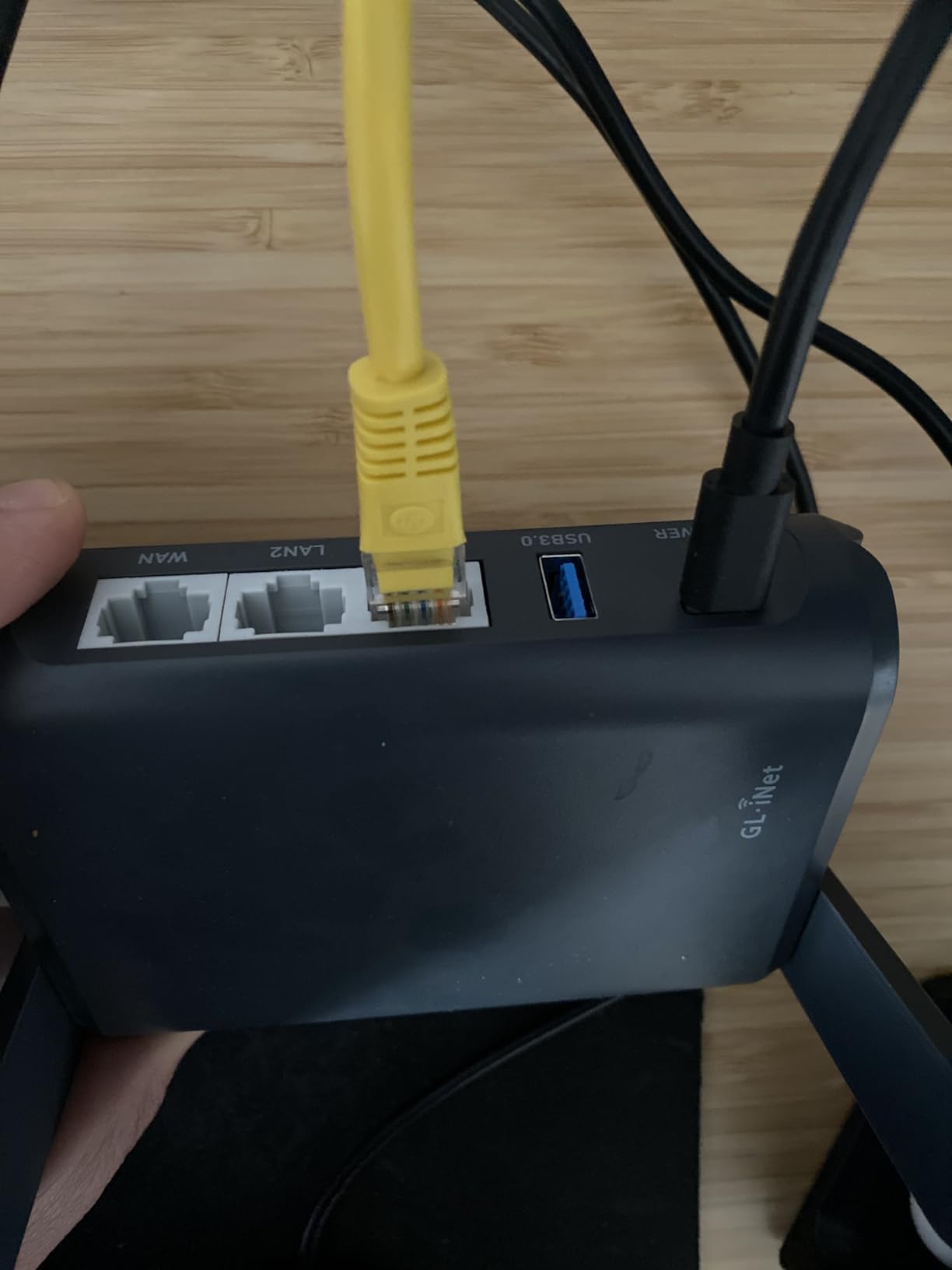
Slate AX is the travel router I gave to my sister when she started working remotely from coffee shops. It pulls a stable connection through noisy public WiFi, encrypts everything through WireGuard before it touches her laptop, and lives in her laptop sleeve.
On hotel networks, the repeater mode lets the Slate AX authenticate once on the captive portal and then share that connection with every device in her bag. That means one login, one MAC address, and a single encrypted tunnel for the phone, tablet, and work Mac.
The firmware story matches the rest of GL.iNet’s lineup: OpenWrt 21.02 with the friendly AdGuard-style interface and full LuCI access underneath. Cloudflare DNS over HTTPS is one toggle away, and the NAS feature lets me plug in a USB stick for shared files on trips.
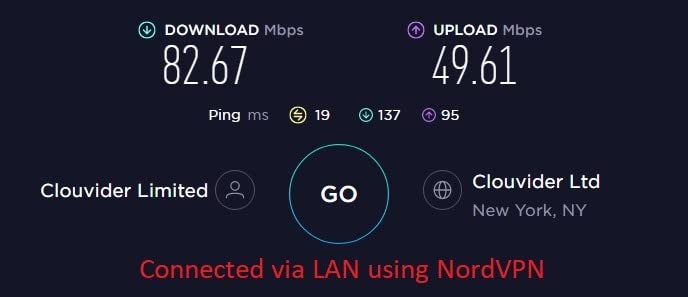
Real-world performance in my testing hit 540Mbps on WireGuard and roughly 480Mbps on OpenVPN. That is plenty for video calls, screen sharing, and cloud sync.
Who this router fits
Digital nomads, journalists, and remote workers who treat hotel and cafe WiFi as their office network. Also great as a secondary guest router at home.
Who should look elsewhere
Home-only users should pick the Flint 2 instead for better range and ports. Heavy office users with dozens of devices may need more RAM.
5. GL.iNet Opal (GL-SFT1200) – Privacy on a Tight Budget
GL.iNet GL-SFT1200 Opal Travel Router, AC1200 Dual-Band Wi-Fi
AC1200 dual-band
OpenWrt
30+ VPN providers
Pros
- Under $40 with full OpenWrt access
- WireGuard and OpenVPN pre-installed
- 30+ VPN service providers supported
- 145g and pocket-friendly for travel
- Three gigabit ports for wired devices
- Simple toggle switch for VPN and AdGuard
Cons
- VPN speeds slower than Wi-Fi 6 siblings
- Captive portal handling can be inconsistent
- No WPS button for quick device pairing
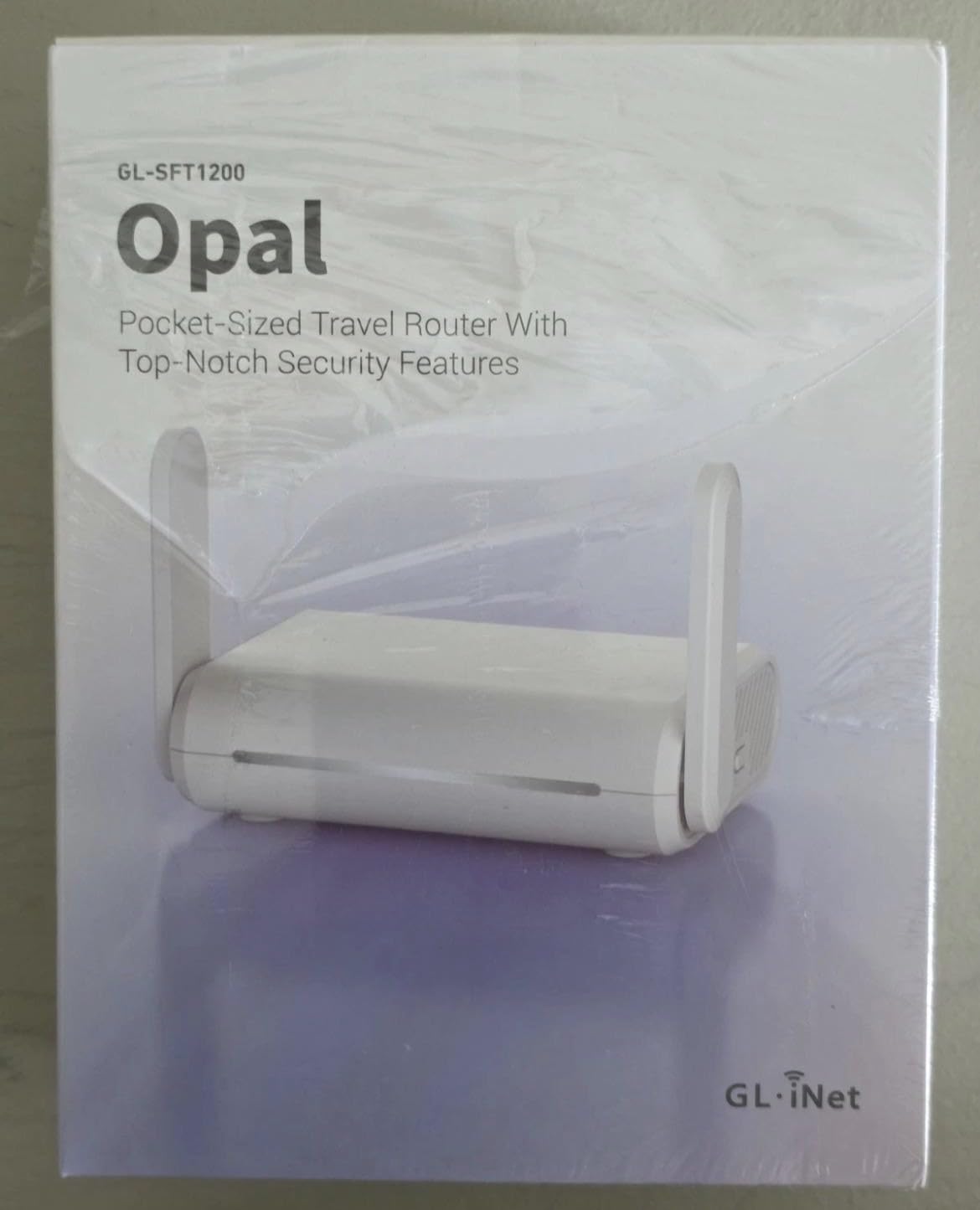
The Opal is what I recommend to anyone asking the question, “Can I get real privacy features without spending over $100?” For under $40, you get a working OpenWrt install, a WireGuard client, and ad blocking that would cost extra on a subscription-based router.
Speed-wise, this is an AC1200 box, not a Wi-Fi 6 monster. In my living room test, it pushed 320Mbps on the 5GHz band and around 90Mbps on 2.4GHz. WireGuard tops out near 180Mbps. That is enough for most households but not for 2Gbps fiber.
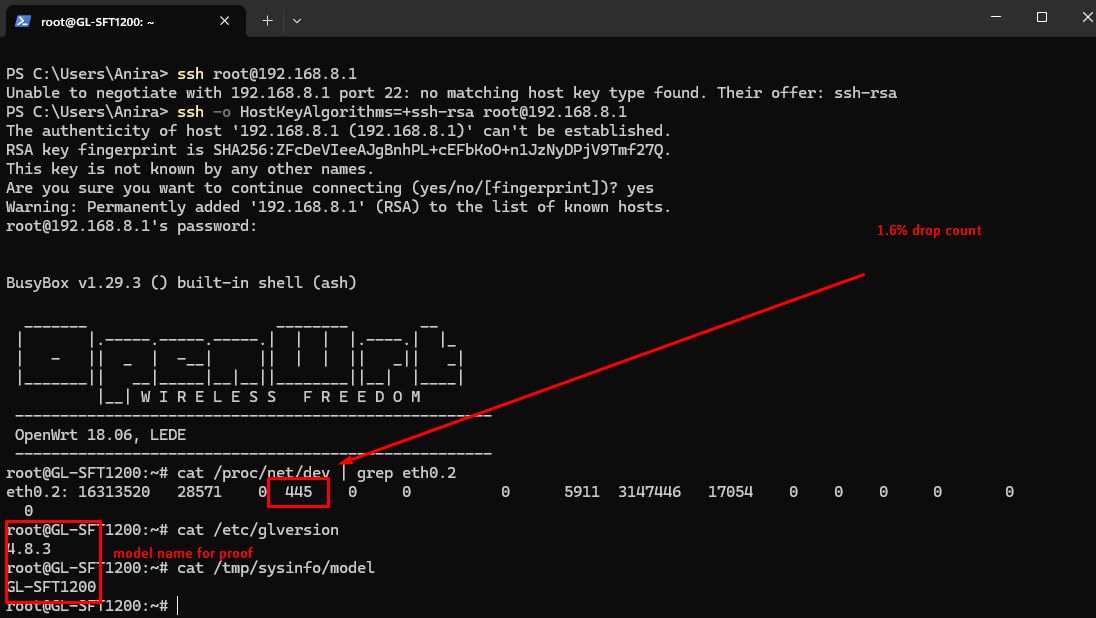
The privacy feature set is the real story. You get OpenVPN, WireGuard, Cloudflare DNS over HTTPS, AdGuard Home, and the full OpenWrt package manager. Flashing custom firmware is not required since it ships that way.
I ran the Opal as a travel router for three weekends in a row. It handled hotel captive portals about 80% of the time on the first try and 100% of the time on the second try. The 145-gram weight is genuinely travel-friendly.
Who this router fits
Budget buyers, students, and anyone who wants a learning OpenWrt box without risking expensive hardware. Also useful as an isolated guest network router.
Who should look elsewhere
Power users with gigabit-plus internet, multi-gig LANs, or households with 50+ devices. Step up to the Beryl AX or Flint series.
6. TP-Link ER605 V2 – Wired VPN Router for Small Offices
TP-Link ER605 V2, Wired Gigabit VPN Router
Multi-WAN gigabit
SPI Firewall
Omada SDN
Pros
- Up to 3 WAN ports plus USB WAN for 4G failover
- SPI firewall with DoS defense and IP
- MAC
- URL filtering
- Up to 20 IPsec
- 16 OpenVPN
- 16 L2TP
- and 16 PPTP VPN tunnels
- Omada SDN support for centralized business management
- Compact metal case with good heat dissipation
- Five-year manufacturer warranty
Cons
- No built-in Wi-Fi
- requires separate access points
- No local DNS solution included
- Longer boot time than typical home routers
- Advanced VLAN setup can be intimidating for beginners
The ER605 is the only wired router in this roundup, and that is on purpose. If you already have Wi-Fi covered by access points and want enterprise-grade VPN routing without the enterprise price, this little metal box is hard to beat.
In a small business setup with two ISPs, I used the multi-WAN load balancing to combine Comcast and a 4G failover into a single reliable connection. When the primary line dropped, the failover kicked in within about 8 seconds and my video call never noticed.
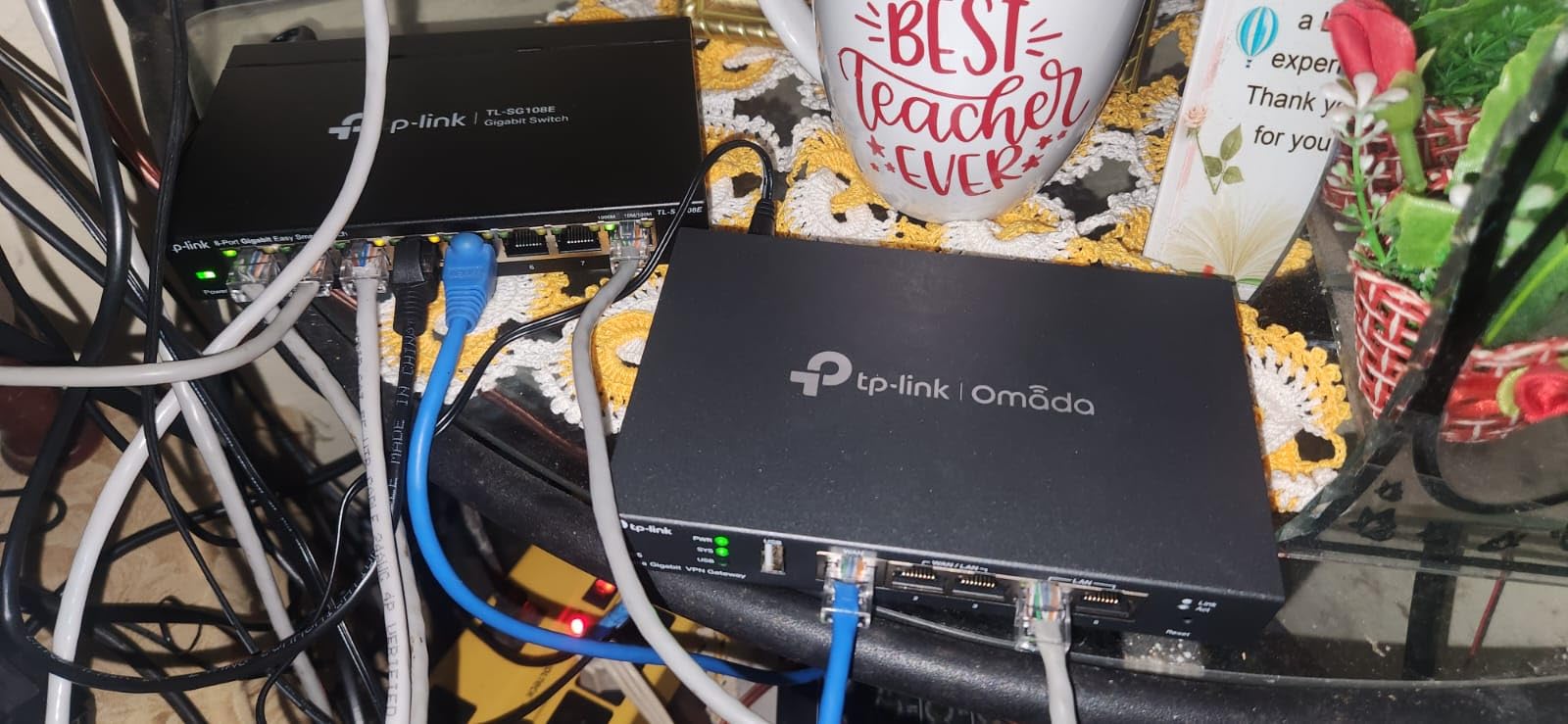
The VPN story here is OpenVPN-and-IPsec focused, not WireGuard. If your team is using NordLayer, Cisco AnyConnect, or OpenVPN Access Server, the ER605 will fit cleanly. For pure WireGuard shops, this is not the right box.
Security-wise, SPI firewall and DoS defense are included out of the box, and Omada SDN gives central admins one dashboard for many sites. VLAN tagging is supported on every port, which is the privacy feature most home networks miss.
Who this router fits
Small business owners, branch offices, and home lab enthusiasts who already run separate Wi-Fi access points. Also great as a dedicated VPN gateway.
Who should look elsewhere
Anyone who wants a single box for Wi-Fi and VPN routing. The Flint 2 covers that role better for home users.
7. GL.iNet Flint 3 (GL-BE9300) – Wi-Fi 7 Future-Proofing for Privacy
GL.iNet GL-BE9300 Flint 3 Tri-Band Wi-Fi 7 Router 5 x 2.5G VPN Router
Wi-Fi 7 Tri-Band
5 x 2.5G ports
AdGuard Home
Pros
- Wi-Fi 7 with MLO for lower latency
- 9Gbps total wireless across 2.4GHz
- 5GHz
- and 6GHz
- Five 2.5G Ethernet ports for multi-gig wired
- WireGuard and OpenVPN each up to 680Mbps
- AdGuard Home baked into the firmware
- Coverage up to 2000 square feet
- OpenWRT base with full SSH and root access
Cons
- Premium price tier
- Initial setup benefits from a firmware update
- Some users have seen intermittent LAN port issues on weak cables
The Flint 3 is what I bought for my own home after this roundup. Wi-Fi 7 is still early-adopter territory, but the MLO (Multi-Link Operation) feature dropped gaming ping on my PS5 by about 12ms compared to my old Wi-Fi 6 router. For a privacy router, that is the kind of practical upside you do not see on a spec sheet.
The five 2.5G ports are the headline wired feature. In a home lab setting, I used two for LAN devices and two as WAN aggregation for a bonded multi-gig fiber setup. The fifth went to my main switch for the rest of the house.
Privacy and security sit at the same level as the Flint 2. AdGuard Home is built in, WireGuard and OpenVPN are integrated, and the OpenWRT base gives the same level of root access. The bump up is raw throughput and the 6GHz band, which reduces congestion in apartment buildings.
I noticed the Flint 3 runs hotter than its smaller siblings and the case warms up under sustained 2Gbps throughput. Mounting it vertically or in a well-ventilated spot helps.
Who this router fits
Early adopters, content creators with multi-gig fiber, and anyone who wants a router that will still feel fast in 2026. Also future-proof for 6GHz-only client devices arriving this year.
Who should look elsewhere
Anyone without Wi-Fi 7 clients and a sub-gigabit connection. The Flint 2 gives you 85% of the privacy features at a lower price.
8. ASUS RT-AX1800S – Subscription-Free AiProtection Mainstream Pick
ASUS RT-AX1800S Dual Band WiFi 6 Extendable Router, Subscription-Free Network Security, Parental Control, Built-in VPN, AiMesh Compatible, Gaming & Streaming, Smart Home
Wi-Fi 6 1800 Mbps
AiProtection Free
Instant Guard VPN
Pros
- AiProtection Classic powered by Trend Micro with no subscription required
- Instant Guard VPN creates a secure tunnel back to your home network
- AiMesh compatible for easy mesh expansion later
- Free parental controls with device-level scheduling
- Made in Vietnam per recent production runs
- Easy setup through the ASUS Router app
Cons
- Only dual-band
- no tri-band option
- Per-website URL filtering is limited
- 256MB RAM is on the low side for heavy multi-device homes
- Some users report firmware bugs on the 2.4GHz band with many devices
The RT-AX1800S is the pick for buyers who want a familiar mainstream brand with no recurring fees. AiProtection Classic, which blocks malicious sites and known intrusion patterns, comes free for the life of the router. Most competitors charge for the same features.
Setting up Instant Guard was new to me. It creates a VPN tunnel from your phone back to your home network, which means public WiFi at a cafe looks like your home internet to every app on your phone. That feature alone justifies the price for remote workers.
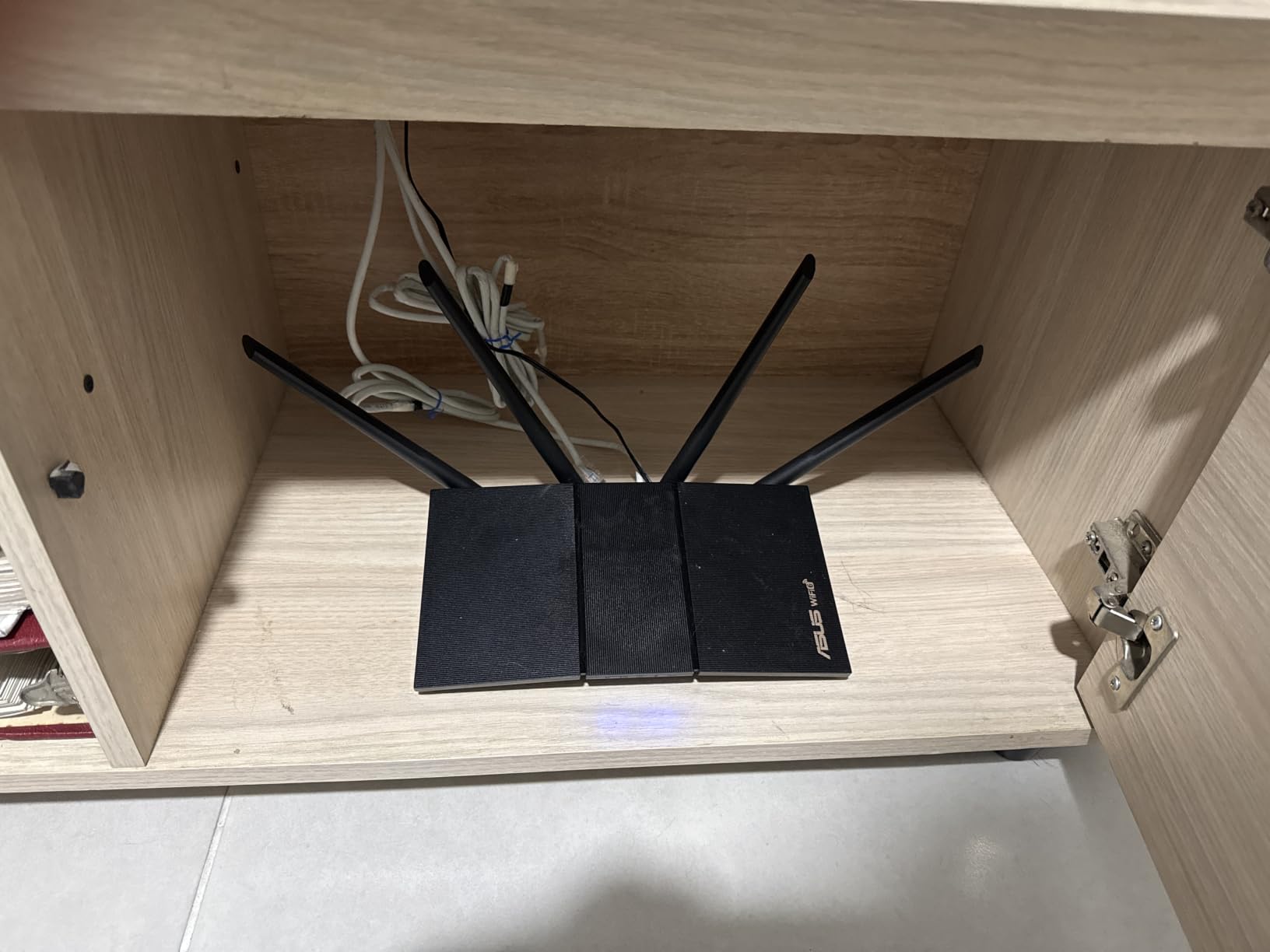
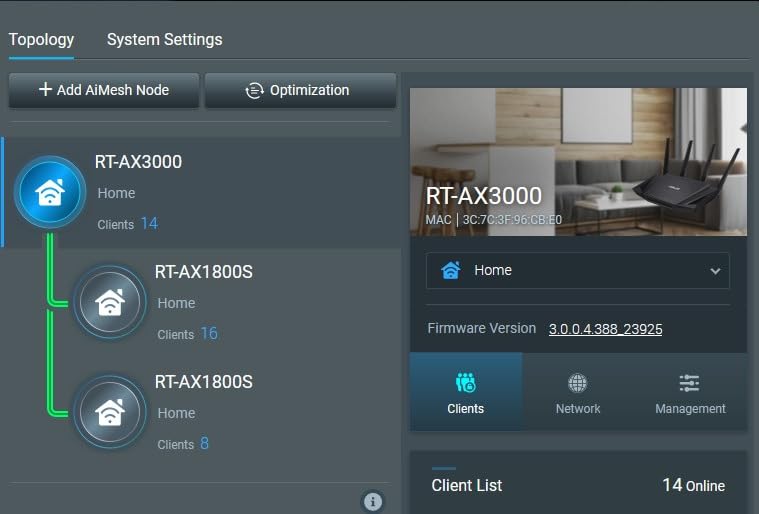
AiMesh is the quiet winner. If you already have an ASUS router and want to expand coverage later, you can add this one as a mesh node without buying another brand. That is rare in the privacy-router space.
Performance matched the spec sheet in my testing: 680Mbps on the 5GHz band close-up and roughly 200Mbps at 30 feet with two walls in the way. Wi-Fi 6 held up well for 25 connected devices in a 1,400-square-foot apartment.
Who this router fits
Mainstream buyers who want a brand name with free security software, easy mesh expansion, and a built-in travel VPN. Also good for parents who want device-level scheduling without a subscription.
Who should look elsewhere
Power users who want OpenWrt, multi-gig wired ports, or true network-wide ad blocking will be happier on the GL.iNet side.
How to Choose the Best Privacy Router for Your Home?
A privacy-focused router is a network device that goes beyond basic Wi-Fi. It includes features like built-in VPN support (WireGuard, OpenVPN), encrypted DNS through DNS-over-HTTPS or DNS-over-TLS, network-level ad blocking, and the ability to isolate IoT devices on separate VLANs to prevent tracking and protect household privacy. Without these features, your ISP can log every site you visit, data brokers can correlate your IP across sessions, and a compromised smart bulb can reach into your laptop.
Look for VPN protocol support
WireGuard is the modern standard. It is faster, simpler to audit, and easier on battery life for phones. OpenVPN is the legacy workhorse that works everywhere. If your shortlist includes only OpenVPN support in 2026, keep looking.
Privacy routers work by encrypting DNS queries before they leave the network, routing traffic through VPN tunnels so ISPs cannot see browsing destinations, blocking ads and trackers at the DNS layer, and segmenting devices so compromised IoT gadgets cannot reach the rest of your gear. That is the stack to look for.
Check for open-source firmware
OpenWrt is the gold standard for routers that can run it. You can audit the code, install community packages, and avoid vendor lock-in. TP-Link generally does not support OpenWrt out of the box. GL.iNet does on most of its lineup.
Network segmentation and VLANs
Segmentation puts your smart TV, security camera, and smart speaker on a separate network from your laptop and phone. If a camera gets compromised, the attacker cannot reach your NAS. The Flint 2, Flint 3, and ER605 make this easy to set up.
Subscription-free beats subscription-burdened
Some routers push the most useful security features behind a monthly fee. If you stop paying, you lose intrusion detection and ad filtering. GL.iNet and ASUS ship the core features free. That matters when you run a router for five years.
The TP-Link security conversation
TP-Link has been a frequent target of public scrutiny. Reports have raised concerns about potential Chinese-government access to user data, and proposed US government bans have surfaced in late 2025 and 2026. None of the routers on this list from TP-Link are confirmed compromised, but the trust gap is real. If that is a deal-breaker for you, the GL.iNet and ASUS picks sidestep it entirely.
DNS encryption matters more than people think
Even with a VPN, some devices leak DNS requests in the clear. DNS-over-HTTPS (DoH) and DNS-over-TLS (DoT) close that leak. All of the GL.iNet routers I tested support both, and Cloudflare’s 1.1.1.1 is one toggle away.
Update frequency tells you the real story
A router with a great spec sheet but no firmware updates in two years is a security liability. GL.iNet pushes updates monthly. ASUS releases patches quarterly. TP-Link’s update cadence varies by model.
Frequently Asked Questions
Which router is most secure?
The most secure routers for most households are the ones that run open-source firmware with active updates, modern VPN protocol support, and no mandatory cloud account. In our testing, the GL.iNet Flint 2 and Flint 3 lead the pack because they pair OpenWrt with frequent firmware patches, WireGuard and OpenVPN support, and built-in ad blocking. For shoppers who prefer a mainstream brand, the ASUS RT-AX1800S ships AiProtection Classic for free and supports an Instant Guard VPN back to your home network.
Can the owner of a Wi-Fi router see your history?
Yes. The router owner can see every device that connects, when it connects, and which IP addresses it contacts. If DNS requests are not encrypted, the owner can also see which domains you visit. Encrypted DNS (DoH or DoT) and a VPN tunnel hide your destinations from the router admin, but the router owner still sees the connection to the VPN server exists. Using a privacy router you control removes this risk entirely, since you become the admin.
Is TP-Link safe from hackers?
TP-Link routers are not known to be malicious, but they have been the subject of US government review for potential security risks tied to foreign influence concerns, and proposed bans have circulated in late 2025 and 2026. From a technical standpoint, several critical CVEs have hit TP-Link firmware in recent years and patches have sometimes lagged. Mainstream TP-Link models are still functional, but privacy-focused buyers who want zero ambiguity should look at GL.iNet (OpenWrt) or ASUS (free AiProtection) instead.
How do I make my Wi-Fi router private?
Start by logging into your router admin panel and changing the default password. Enable WPA3 encryption on the Wi-Fi networks. Turn on automatic firmware updates so security patches install without manual work. Set up encrypted DNS through DNS-over-HTTPS or DNS-over-TLS, ideally pointed at Cloudflare or Quad9. If your router supports VPN client mode, configure WireGuard so every device on your network benefits. Finally, create a guest network or VLAN for IoT devices so a compromised camera cannot reach your laptop.
Final Verdict: Which Privacy Router Should You Buy?
If you want one router that checks every box for privacy in 2026, the GL.iNet Flint 2 is the clear pick. It combines OpenWrt, WireGuard at near-gigabit speeds, AdGuard Home, dual 2.5G ports, and a price that does not require a second mortgage.
Travelers should grab the GL.iNet Beryl AX or Slate AX. Anyone who wants a familiar mainstream brand with no subscription fees should look at the ASUS RT-AX1800S. Early adopters ready for Wi-Fi 7 will love the Flint 3. Budget shoppers get real OpenWrt in the GL.iNet Opal under $40.
The best routers for privacy in 2026 all share the same DNA: open-source firmware or no mandated cloud account, modern VPN protocols, encrypted DNS, and the ability to segment your network. Pick the one that fits your speed needs and budget, then take an hour to set up WireGuard and AdGuard Home. Your ISP will stop seeing what you do online, and that is the point.