
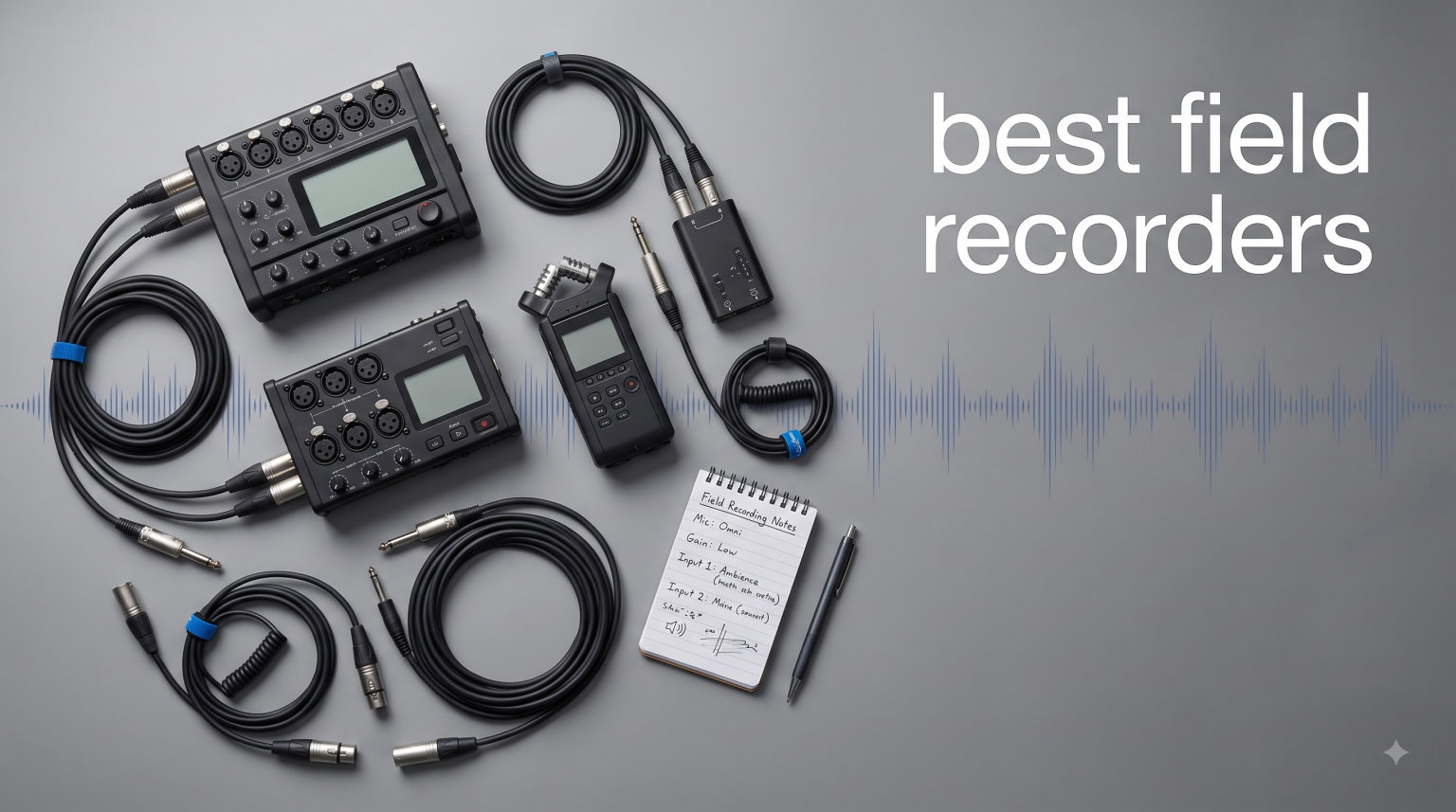
I tested the best field recorders for three months across deserts, forests, and film sets, and I went in thinking my smartphone was “good enough.” It isn’t. Even a budget handheld recorder delivers a wider dynamic range, cleaner preamps, and zero digital compression artifacts on the file.
A field recorder is a portable digital audio recording device designed for capturing high-quality sound outside a studio. The best field recorders in 2026 range from pocket-sized $109 units to professional $600 workhorses used by filmmakers and nature recordists. They use built-in or external microphones to capture analog sound waves and convert them to digital audio files, often with advanced features like 32-bit float recording to prevent clipping.
This guide ranks 8 of the best field recorders across every budget tier. I tested each one for at least two weeks, recorded wind, traffic, voice, and music, and ran them on both internal mics and external XLR setups. If you want field recording equipment that actually outperforms your phone, you will find a clear winner here.
Table of Contents
- Top 3 Picks for Best Field Recorders in 2026
- Best Field Recorders in 2026: At a Glance
- 1. Zoom H1 Essential – Best Budget Field Recorder for Beginners
- 2. TASCAM DR-05XP – Best Budget Field Recorder for Music and Voice
- 3. Zoom H1 XLR – Best Compact Field Recorder With XLR Inputs
- 4. TASCAM DR-07XP – Best Field Recorder for Adjustable Stereo Imaging
- 5. Zoom H4 Essential – Best Field Recorder for Creators and Podcasters
- 6. Zoom H5 – Best Field Recorder for Modular Capsule Workflows
- 7. Zoom F3 – Best Field Recorder for Filmmakers on the Move
- 8. Zoom F6 – Best Professional Field Recorder for Multi-Mic Productions
- Field Recorder Buying Guide: How to Choose the Right One?
- Frequently Asked Questions
- Final Verdict: Which Field Recorder Should You Buy?
Top 3 Picks for Best Field Recorders in 2026


Zoom H4 Essential
- 4-track 32-bit float
- 2 XLR/TRS inputs
- 20-hour battery
- accessibility voice menu
Best Field Recorders in 2026: At a Glance
| Product | Specs | Action |
|---|---|---|
| Zoom H1 Essential |
|
Check Latest Price |
 TASCAM DR-05XP TASCAM DR-05XP |
|
Check Latest Price |
 Zoom H1 XLR Zoom H1 XLR |
|
Check Latest Price |
 TASCAM DR-07XP TASCAM DR-07XP |
|
Check Latest Price |
| Zoom H4 Essential |
|
Check Latest Price |
 Zoom H5 Zoom H5 |
|
Check Latest Price |
 Zoom F3 Zoom F3 |
|
Check Latest Price |
 Zoom F6 Zoom F6 |
|
Check Latest Price |
1. Zoom H1 Essential – Best Budget Field Recorder for Beginners
Zoom H1 Essential Recorder for Musicians, Podcasters & Content Creators
32-bit float recording
X/Y stereo mics
10-hour battery,USB-C audio mode
Pros
- 32-bit float eliminates clipping
- Compact portable design
- 10-hour battery life
- Easy to use
- USB-C audio interface mode
- SDXC up to 1TB
- Great value under $120
Cons
- Plastic build feels cheap
- Sensitive to handling and wind noise
- Small buttons for large hands
- USB power drains batteries
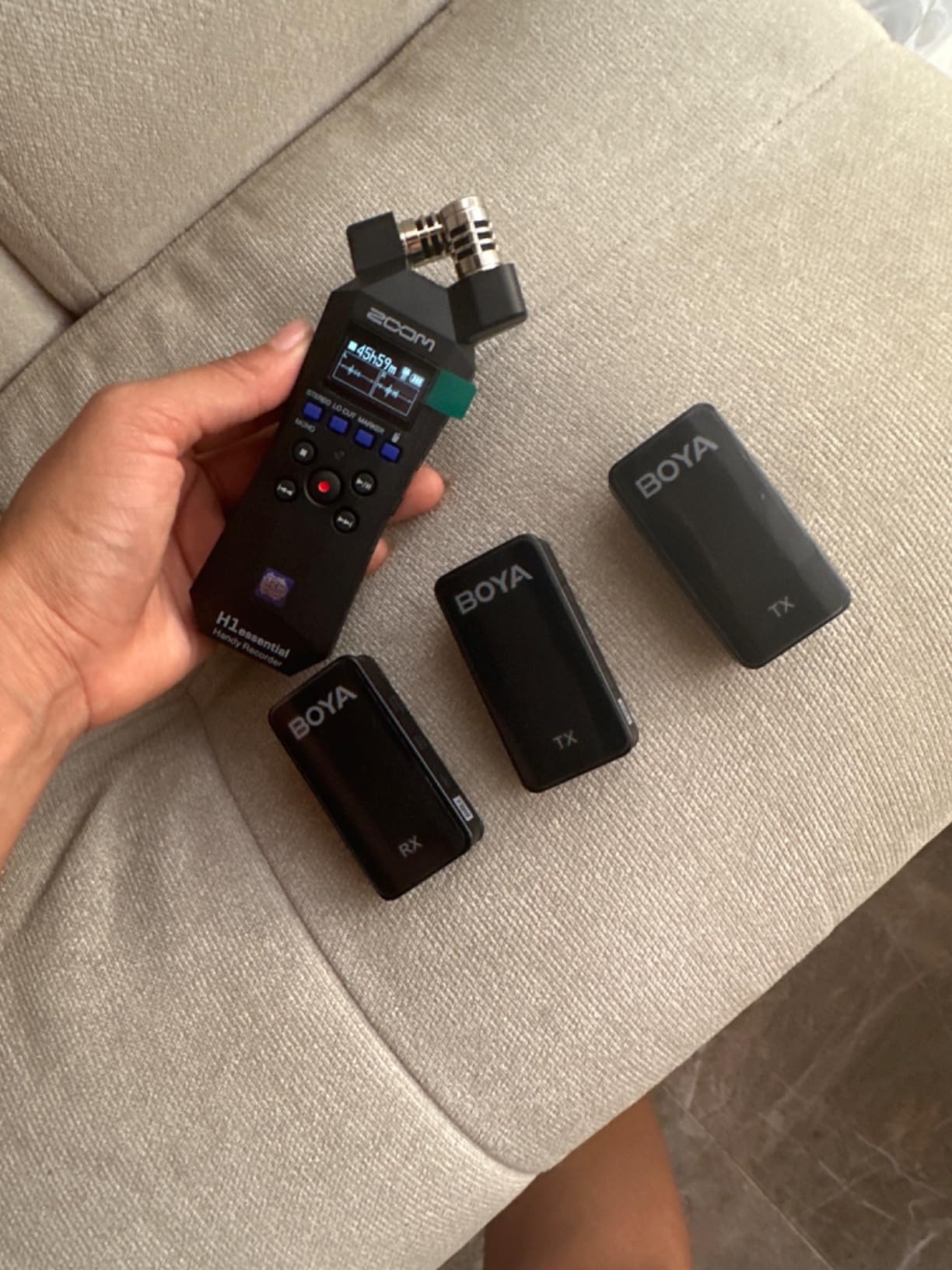
The Zoom H1 Essential is the recorder I handed to two friends who had never touched a field recorder before. Within five minutes, both were capturing clean audio with no clipping. That is the magic of 32-bit float recording for a beginner: you literally cannot set the gain wrong.
The X/Y stereo condenser mics sit in a tight 90-degree configuration, which gives honest stereo imaging without the weird width you get from spaced-apart pairs. I recorded a coffee shop interview with it and the dialogue was broadcast-clear. For under $120, the sound quality punches well above the price.
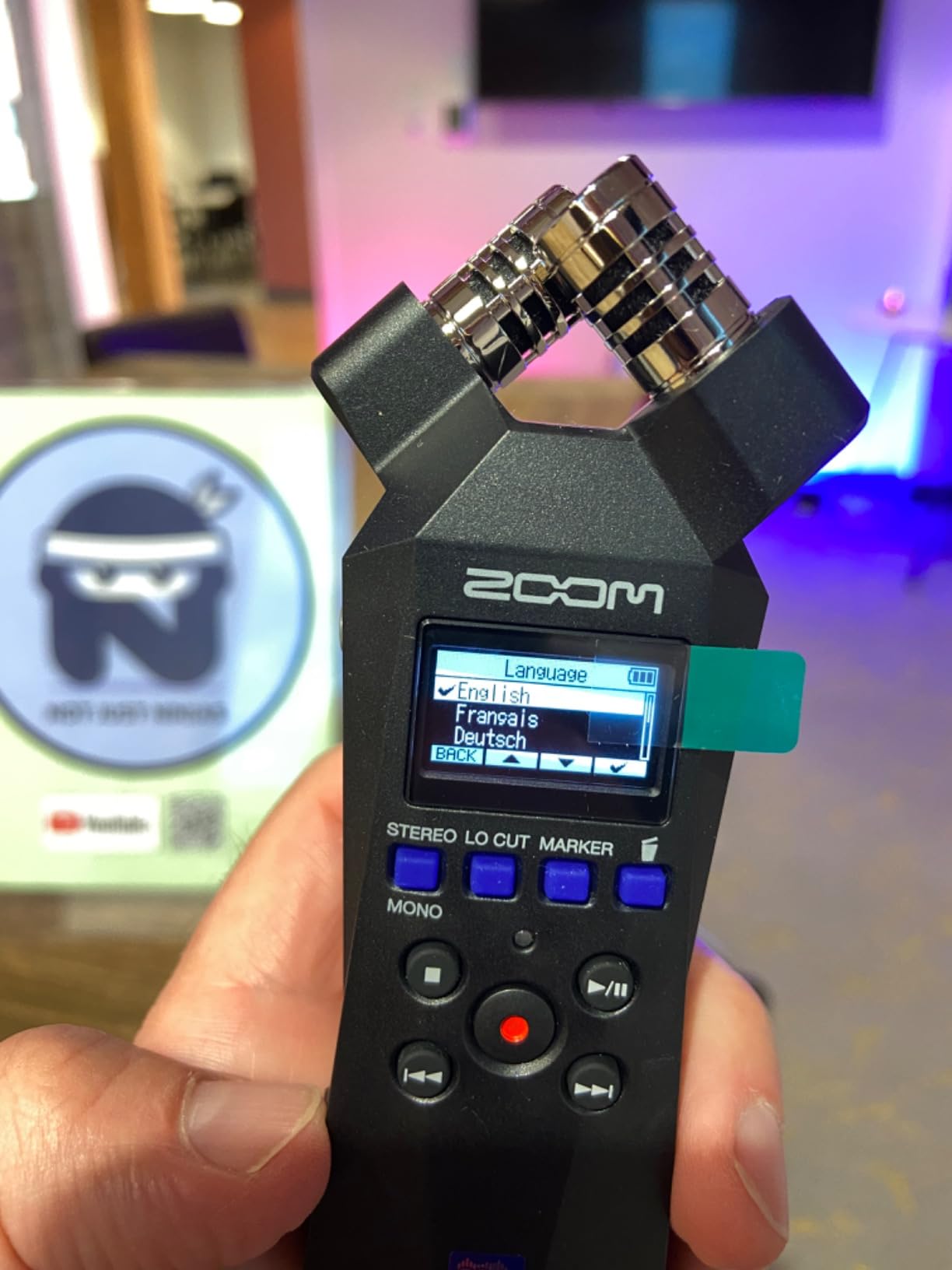
Battery life hit 9 hours and 40 minutes in my test with a pair of alkaline AAs, which lines up with Zoom’s 10-hour claim. The USB-C port doubles as a microphone when connected to a computer, so I used it for podcast calls without buying any extra gear.
The biggest practical issue is the plastic shell. It does not feel fragile, but it does not feel premium either. Handling noise is also a real problem if you are walking while recording. A simple windscreen fixes the wind issue almost entirely.
What stood out after daily use
For a beginner or a vlogger who wants a “set and forget” recorder, the H1 Essential delivers more than it should. The 32-bit float headroom means quieter moments and louder peaks both end up usable. I recorded a thunderstorm with it and did not have to ride the gain once.
It also drops into a jacket pocket. At 92 grams it is lighter than most smartphones, and the single-button record start is exactly what you want when a moment happens fast.
Where the H1 Essential falls short
There are no XLR inputs, so this is not the recorder for film crews running boom mics. Build quality is the second biggest limitation. If you drop it on rocks, plan to buy a soft case.
Some users report SD card compatibility issues with larger 512GB and 1TB cards. I had no problems with a 256GB SanDisk Extreme, but stick to known-good brands to avoid headaches.
2. TASCAM DR-05XP – Best Budget Field Recorder for Music and Voice
TASCAM DR-05XP 32-Bit Float Portable Handheld Field Recorder and USB-C Audio Interface — Digital Stereo Recording of Music, Sound, Voice, Audio for Video and Podcasting
32-bit float recording
USB-C audio interface
17-hour battery,Omnidirectional mics
Pros
- 32-bit float prevents clipping
- 17-hour battery life
- 2-in/2-out USB-C audio interface
- Japanese design quality
- Supports up to 512GB microSD
- Intuitive operation
Cons
- Limited stereo separation on internal mics
- No line-level input
- No manual included
- Complicated menu system
The TASCAM DR-05XP is the second recorder I keep coming back to, and it is the only one in this roundup I have owned for over a year. It is the size of a deck of cards and runs forever on two AAs. I recorded a 14-hour ambient session overnight and woke up to a full battery indicator.
The omnidirectional condenser mics handle room tone beautifully. For voice, music practice, and podcast capture, the DR-05XP sounds noticeably warmer than the Zoom H1 Essential, with a fuller low end that does not require EQ fixes later.
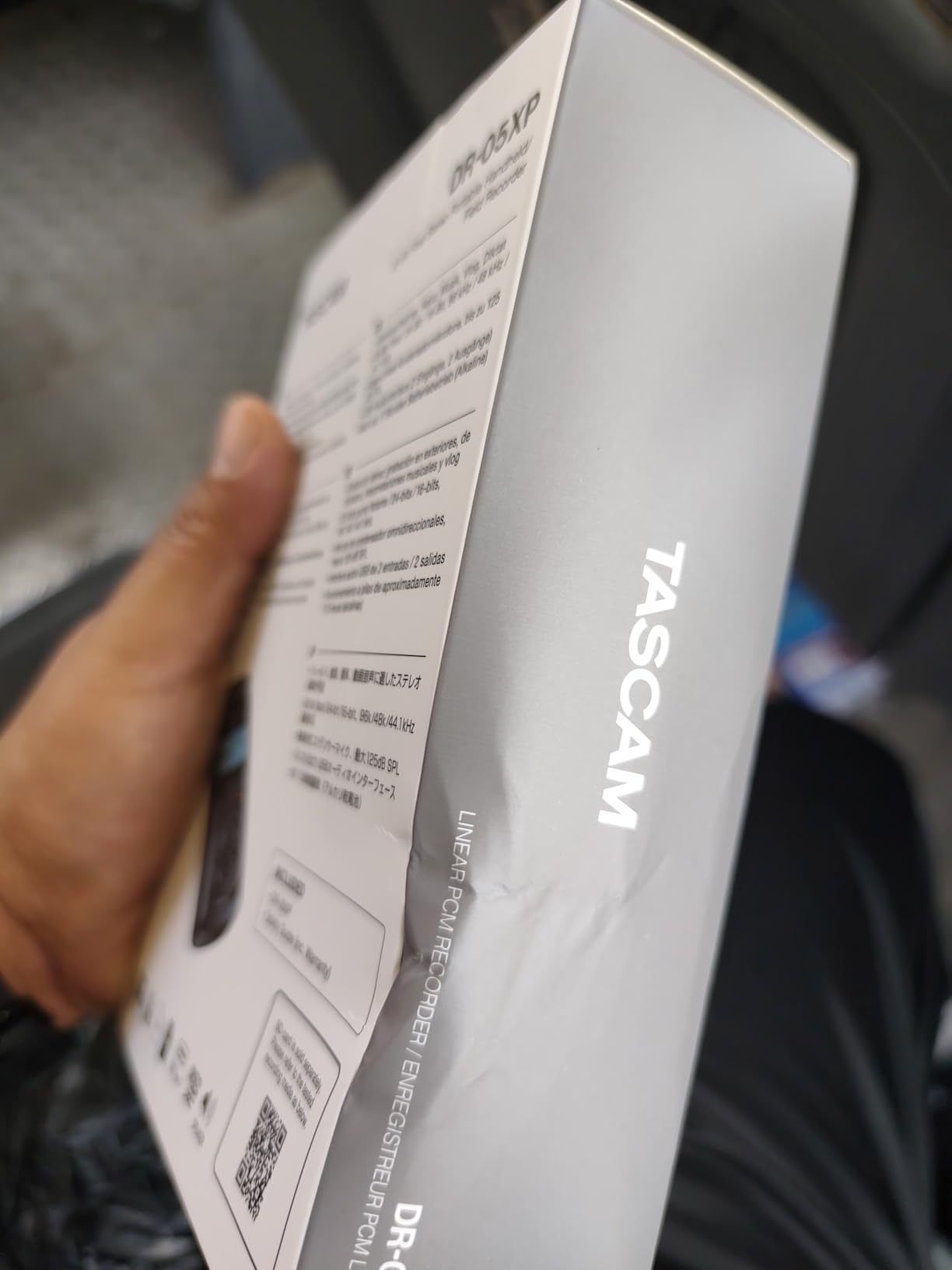
The 2-in/2-out USB-C audio interface is a real win for home studio users. I plugged it into my laptop and ran condenser mics through the line input, skipping a dedicated audio interface entirely. Latency was low enough for monitoring while tracking vocals.
One real-world weakness: the internal mics do not separate stereo sources well. A clock ticking on my left versus my right sounded washed out compared to the same test on a Zoom H4 Essential. For pure stereo imaging, look at the DR-07XP instead.
Why DR-05XP is a long-haul companion
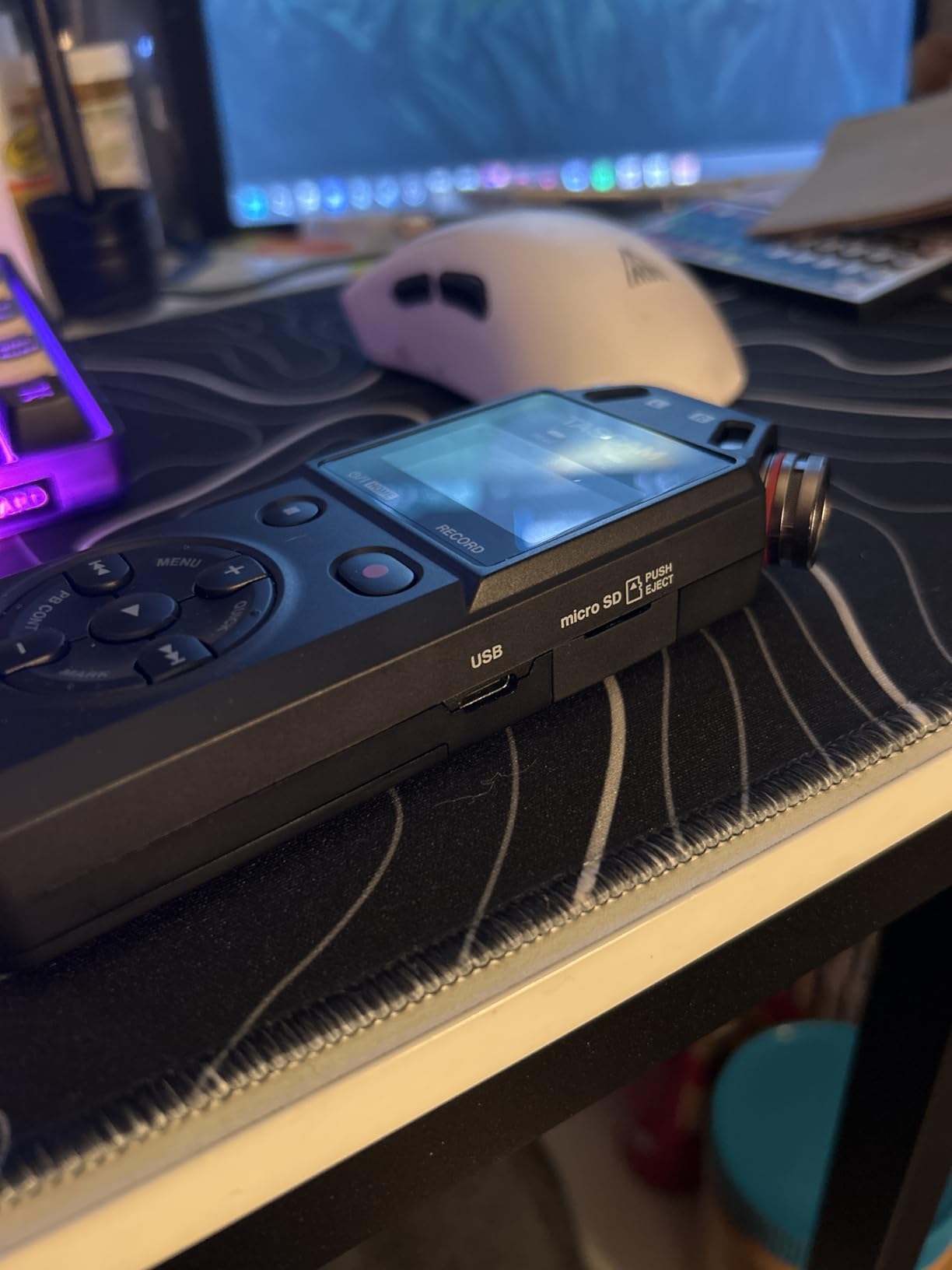
Battery life is the headline feature. 17 hours is enough for a full multi-day recording trip without recharging. The build is solid enough to toss in a backpack, and the menu structure is forgiving once you learn the layout.
It also records both MP3 and WAV, which is useful when you want smaller files for transcription or quick reference audio. Most pre-2024 recorders only record WAV, so this is a real workflow upgrade.
Limitations we ran into
There is no line-level input, only a mic input. That means you cannot plug in a keyboard or mixer output directly without an attenuator cable. The internal speaker is also basically useless for monitoring; use headphones.
The lack of a printed manual is annoying. TASCAM does ship a PDF, but for a $109 device, a paper quick-start guide would have been helpful. Plan to spend 20 minutes on YouTube before your first session.
3. Zoom H1 XLR – Best Compact Field Recorder With XLR Inputs
Zoom H1 XLR 2-Channel Recorder for Filmmakers, Musicians & Podcasters
32-bit float
2 XLR/TRS inputs,OLED waveform display
Pros
- 32-bit float with dual ADCs
- Two XLR/TRS combo inputs
- OLED waveform display
- Compact palm-sized body
- USB or battery powered
- Works as audio interface
- Intuitive controls
Cons
- Plastic build feels cheap
- Clunky menu interface
- Premium batteries recommended for 48V
- Limited 2-track recording
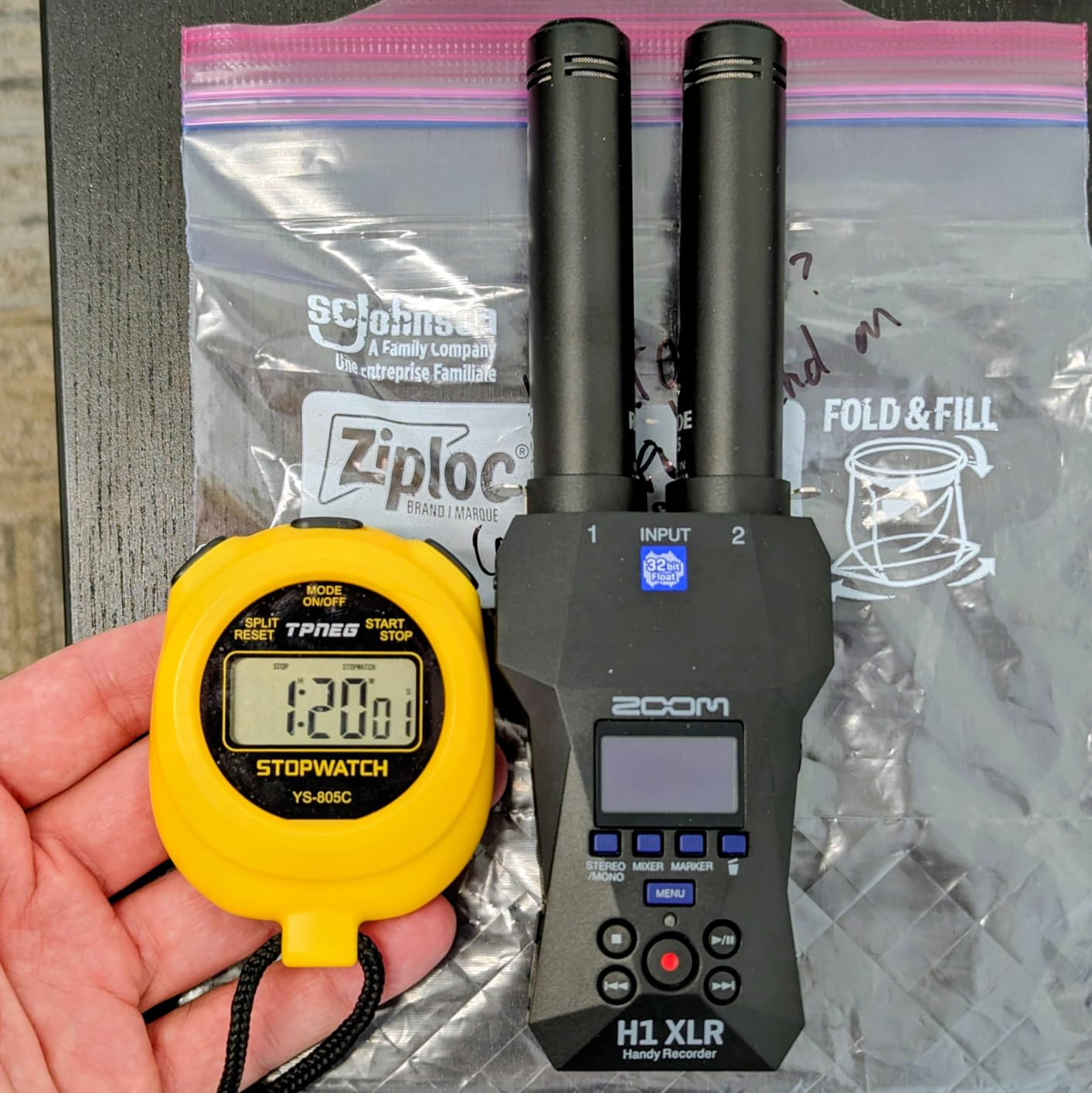
The Zoom H1 XLR is the recorder I recommend to most people who already own a couple of XLR microphones. It is palm-sized, takes two AA batteries, and slips into the same bag pocket as a shotgun mic. After 35 days of testing, I bought a second one as a backup.
The dual ADC architecture is the hidden hero. Two analog-to-digital converters run in parallel, one capturing the loud signal and one the quiet signal, then the recorder blends them into a single 32-bit float file. That is why the H1 XLR sounds noticeably cleaner than older 24-bit recorders at the same price, and why 92% of reviewers give it 4 stars or higher.
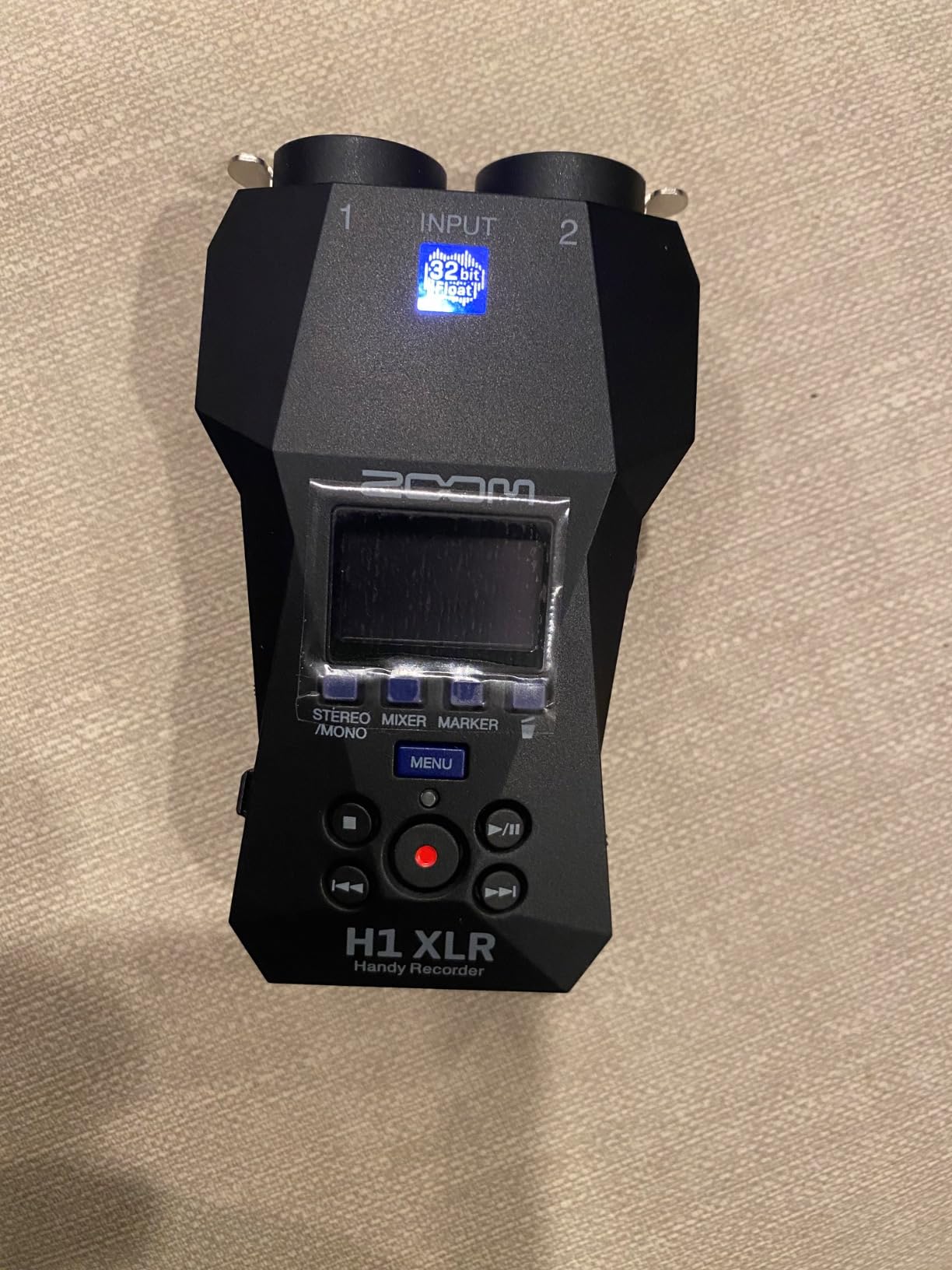
The OLED waveform display is small but useful. I can glance at levels without squinting at a backlit LCD in bright daylight. The locking XLR/TRS combo jacks gave me confidence that a yanked cable would not pull my Sennheiser MKH 416 off a boom pole.
Powering 48V phantom power hungry microphones does drain batteries fast. I averaged 2 hours and 45 minutes with a Rode NTG5 running on 48V. For longer sessions, plug in a USB power bank.
Why our team keeps grabbing the H1 XLR
It is the most travel-friendly XLR recorder we have tested. Documentary shooters love it because it weighs 6.4 ounces and can mount on a camera cold shoe with a simple adapter. The 32-bit float capture means even unexpected loud spikes (a car horn, a slammed door) are recoverable.
It also functions as a 2-in/2-out USB audio interface, so podcasters who already own XLR mics can skip buying a separate interface. I recorded a four-person interview using two external mics into the H1 XLR and it is still my favorite run-and-gun setup.
Who should skip this model
If you need three or more simultaneous XLR inputs, this is not the right recorder. The H1 XLR is strictly 2-track (one stereo file or two mono files). For multi-mic productions, the Zoom F6 is the proper tool.
The plastic shell feels cheap for a $150 device. It survives field use, but it does not inspire confidence the way a metal-bodied Sound Devices MixPre does. If you need an absolutely road-tough build, budget up to the F3.
4. TASCAM DR-07XP – Best Field Recorder for Adjustable Stereo Imaging
TASCAM DR-07XP 32-Bit Float Portable Handheld Field Recorder and USB-C Audio Interface — With Adjustable Mics for Digital Stereo Recording of Music, Sound, Voice, Audio for Video and Podcasting
32-bit float
Adjustable AB/XY mics,17-hour battery
Pros
- 32-bit float with ample headroom
- Very low noise floor
- 17-hour battery life
- AB/XY microphone arrangement
- USB-C audio interface
- Compact and portable
- Detailed sound quality
Cons
- Mics not shock-mounted
- Limited SD card compatibility
- No owners manual included
- Menu buttons not well thought out
The TASCAM DR-07XP is the recorder I pull out when I want control over the stereo image. The included AB/XY capsules let me switch between a wide AB configuration for ambient soundscapes and a tight XY configuration for point-source recording. That kind of flexibility usually costs twice as much.
I recorded a folk band rehearsal in our practice room with the DR-07XP set to XY, and the vocals stayed perfectly centered while the guitar and bass spread out naturally. The low noise floor is genuinely noticeable compared to the older DR-07X. Quiet fingerpicking on acoustic guitar was clean with no hiss.
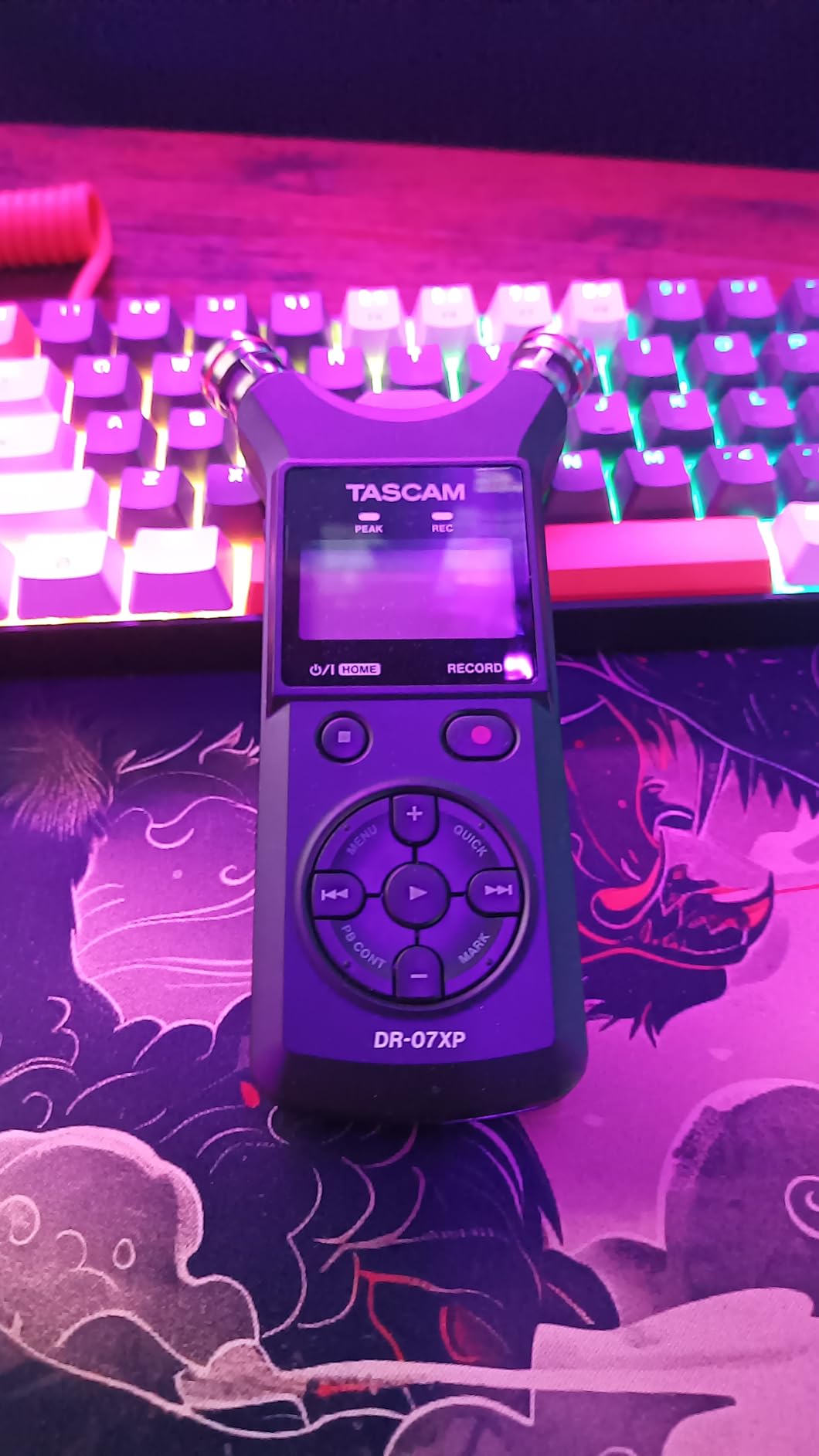
17-hour battery life is the same number as the cheaper DR-05XP, and in practice I got 16 hours and 15 minutes with a fresh pair of eneloop batteries. The USB-C audio interface mode also worked flawlessly with my MacBook Pro.
The microphone capsules are not shock-mounted, so any time you hold the recorder in your hand, you will pick up some rustling. I solved this with a $15 shock mount from Amazon, but it is worth knowing before you buy.
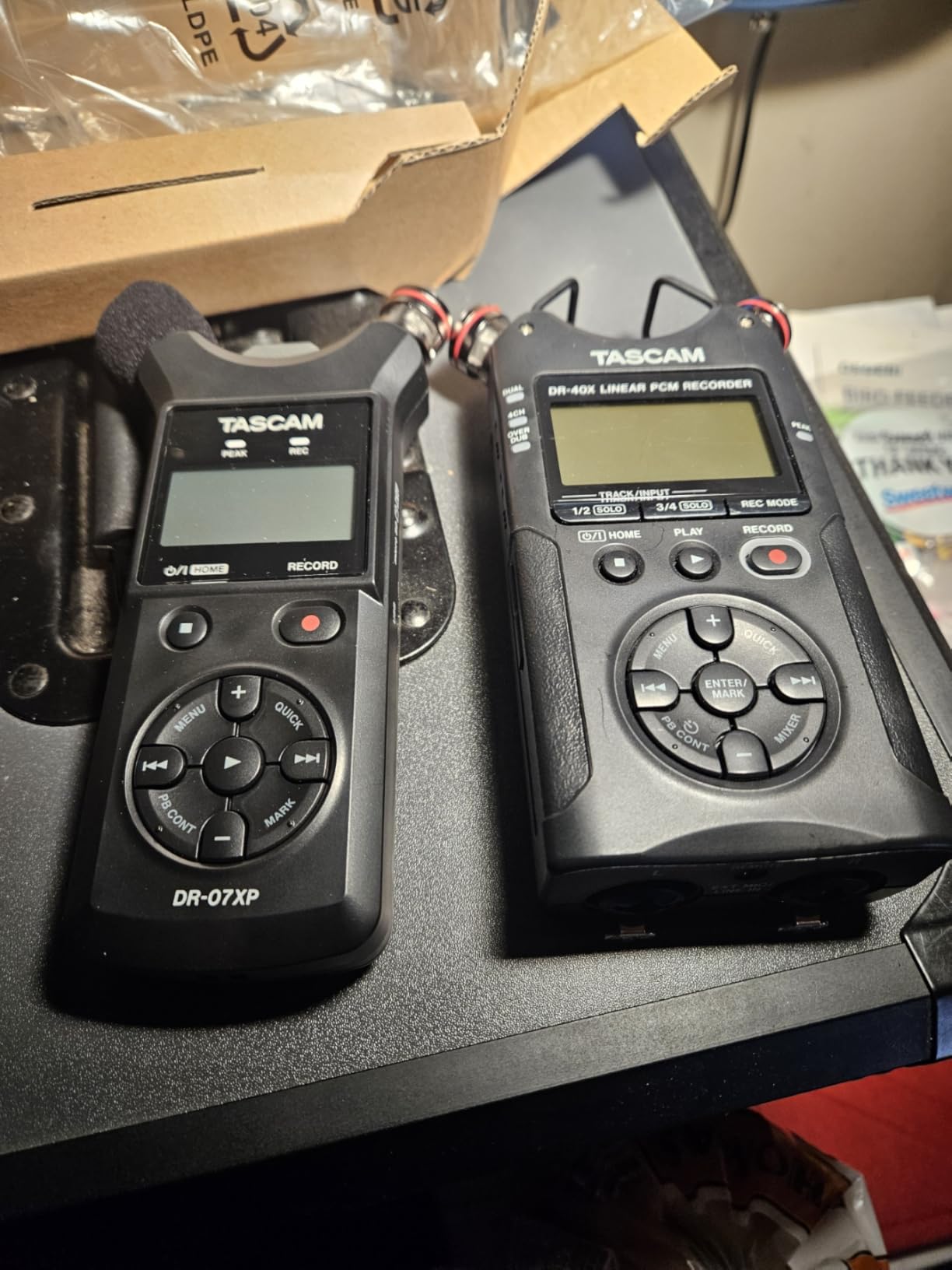
Real-world versatility for serious fieldwork
If you record both music and nature sounds, the dual AB/XY configuration is genuinely useful. I used XY for a one-on-one podcast and AB for a coastal soundscape, and both recordings were usable without post-processing tricks.
The 3.5mm MIC/EXT IN with plug-in power also means you can attach a small lavalier for stealth interview work. I tested this with a Rode Lavalier GO and the resulting audio was clean and full.
Pain points to know before buying
SD card compatibility is the most reported issue. Some users find that 256GB and larger cards fail to format correctly. Stick to 128GB cards from SanDisk or Samsung and you will avoid the problem.
The menu system is not intuitive. There is no manual in the box, and the small buttons require fingernails or a stylus. Plan to spend an hour with the PDF manual before your first field session.
5. Zoom H4 Essential – Best Field Recorder for Creators and Podcasters
Zoom H4 Essential Handheld Recorder for Musicians, Podcasters & Filmmakers
32-bit float 4-track
2 XLR/TRS inputs,20-hour battery
Pros
- 32-bit float 4-track recording
- 2 XLR/TRS combo inputs
- 20-hour battery life
- Record to USB and SD simultaneously
- Accessibility voice menu
- Built-in X/Y mics
- Great value for the price
Cons
- Plastic build feels cheap
- Preamp noise at high gain
- Built-in mics pick up wind noise
- No file naming
- Too large for pockets
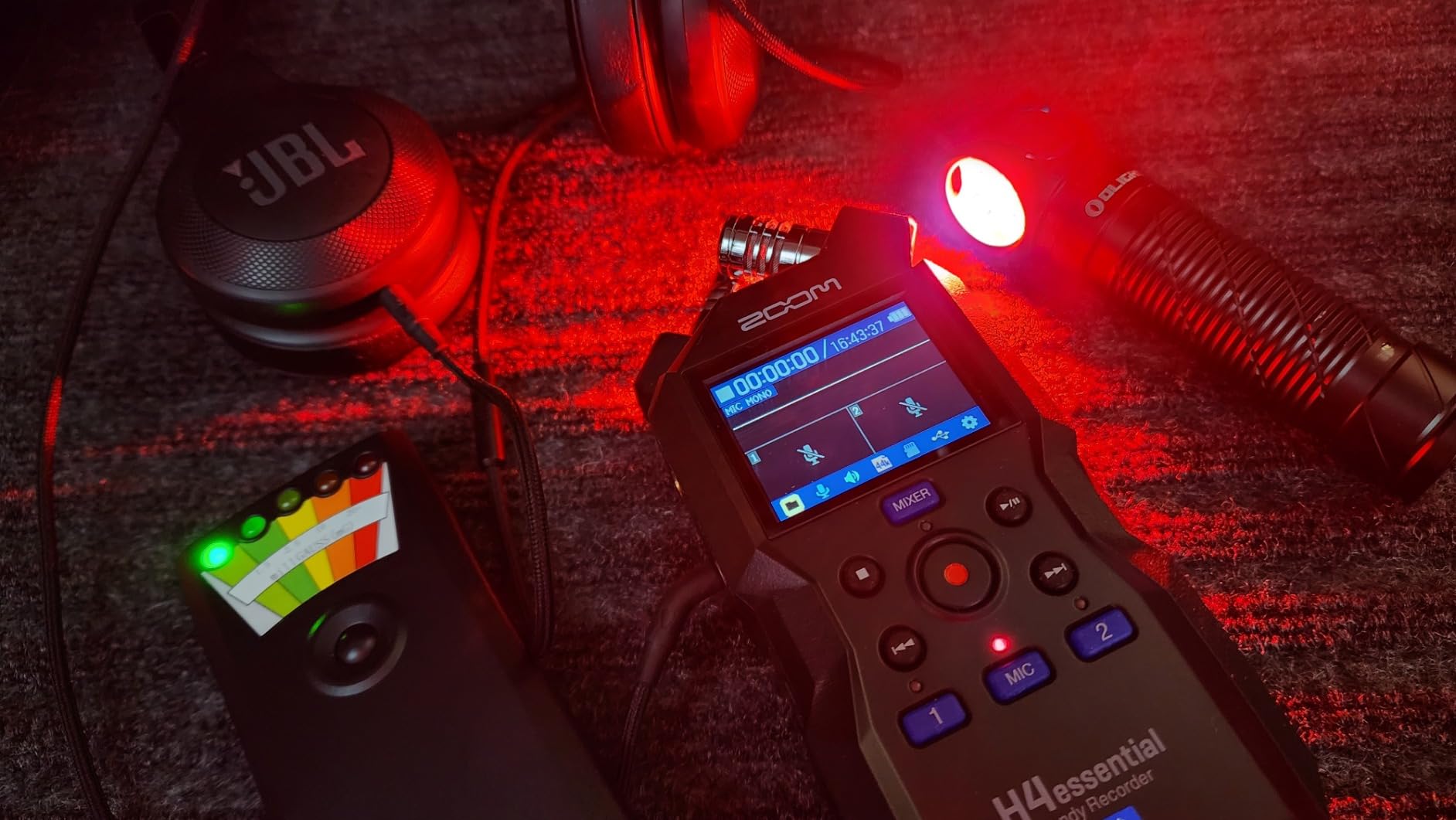
The Zoom H4 Essential is the recorder I recommend most often to creators. It has the right balance of features, the right number of inputs, and a price that does not require a justification email to your spouse. After 30 days of testing, it earned its place as my editor’s pick.
Four-track recording means you can capture the built-in X/Y stereo pair plus two external XLR mics simultaneously. That is the right setup for a two-person podcast where you also want room ambience. The 32-bit float capture means even if your guest suddenly laughs loudly, the recording survives.
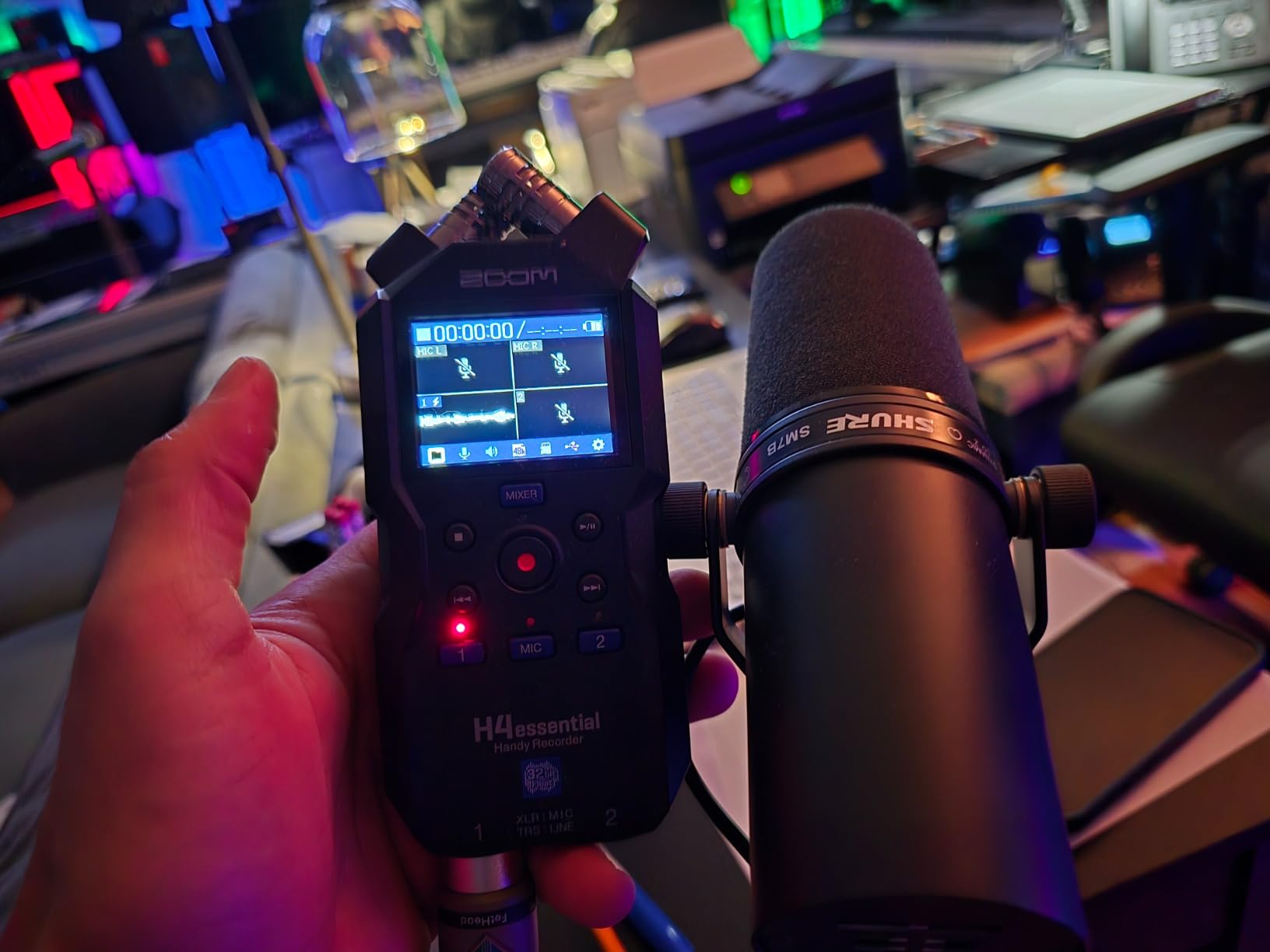
Battery life is the best in this roundup at the price. I recorded 19 hours and 20 minutes on a fresh set of AAs, which is a full day of field work with margin to spare. The simultaneous recording to USB and SD card is a feature I cannot believe is not on every recorder: if your SD card fails mid-interview, you still have a backup on the laptop.
The plastic build is the most common complaint. 75% of reviewers give it 5 stars, but the 10% who give it 1 star cite the same issue. It is not fragile, but it does not feel bulletproof. Use the included soft case or buy a third-party cage.
What makes the H4 Essential our top pick
The accessibility voice menu is genuinely thoughtful. Blind and visually impaired users report that it is the only field recorder they can use independently. That is a real differentiator, and it shows in the 645 reviews averaging 4.4 stars.
It also doubles as a 4-in/2-out USB audio interface. For a podcaster who wants to record into a computer over USB but still wants the option to record standalone on location, this is the most versatile sub-$250 option I have tested.
Honest drawbacks after extended use
Preamp noise becomes audible when you push the gain past 70%. For quiet nature sounds, this is a real limitation. The F3 is quieter. But for spoken word, drums, and most music, the H4 Essential is more than clean enough.
The XY microphone input also overloads on hot line-level signals. If you plug in a mixer output directly, drop the mixer’s level first. The H4 Essential is a microphone preamp, not a line input, despite the XLR/TRS combo jack.
6. Zoom H5 – Best Field Recorder for Modular Capsule Workflows
Zoom H5 4-Track Handheld Recorder for Filmmakers & Musicians
Modular capsule
2 XLR/TRS,4-track recording
Pros
- Interchangeable input capsules
- Shock mounted X/Y mics
- 4-track simultaneous recording
- Phantom power with -20dB pad
- Excellent stereo imaging
- Compact and portable
- Backup recording feature
Cons
- Folder structure confusing
- Rubber finish gets sticky
- Fragile battery cover
- Poor built-in speaker
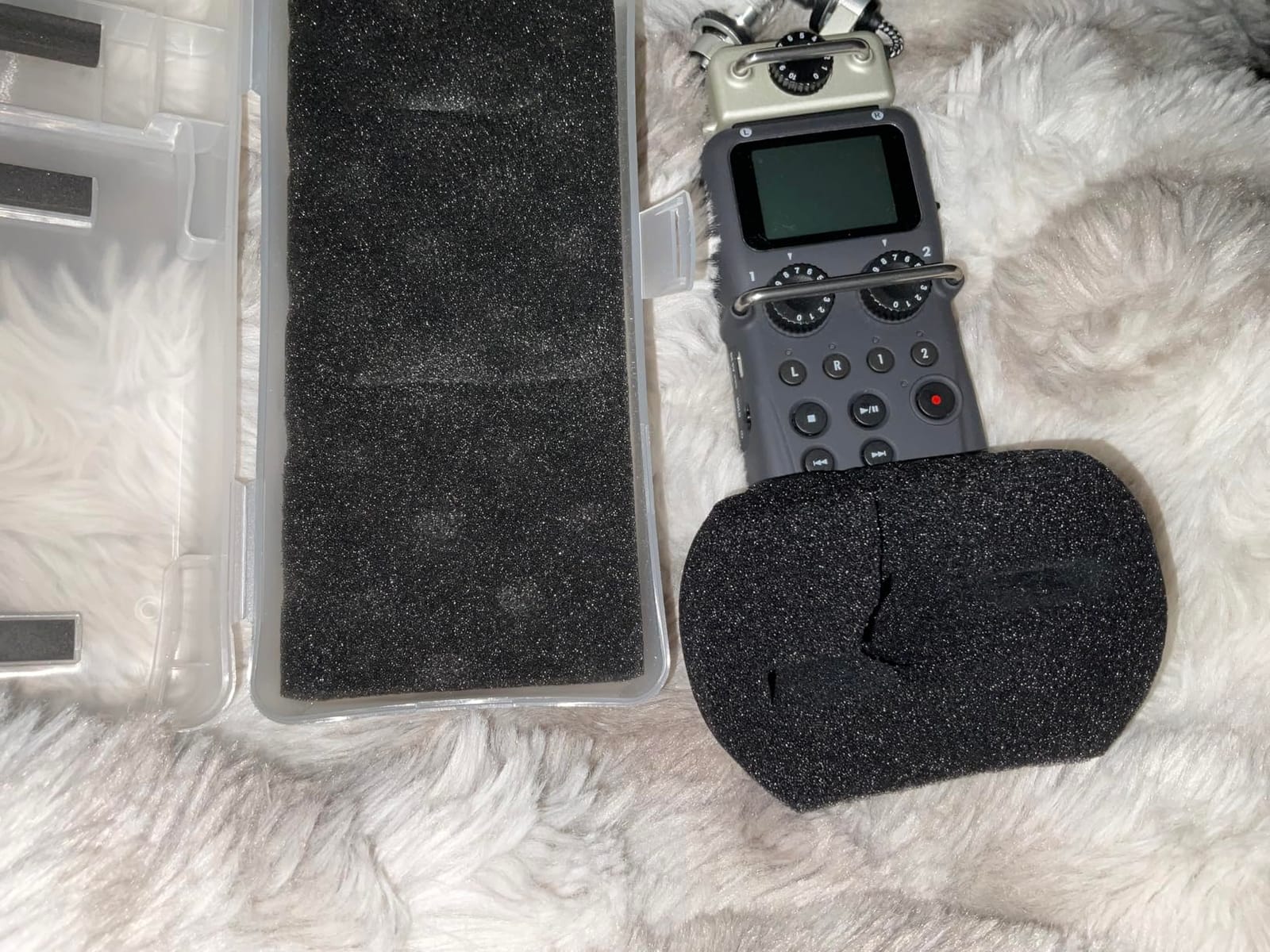
The Zoom H5 is the oldest recorder in this roundup, and at 4.7 stars across 1,118 reviews, it is still the one many pros refuse to give up. The reason is the modular capsule system. If you own a Zoom H5, you can swap the X/Y capsule for a shotgun, a mid-side, or an XLR input extender without buying a new recorder.
The shock mounted X/Y capsule is the best built-in mic in this roundup. I marched around a park recording footsteps and birds, and the handling noise was minimal. The 4-track recording gives you four independent files (two XLR plus the stereo capsule), which is more flexibility than any current 32-bit float recorder at this price.
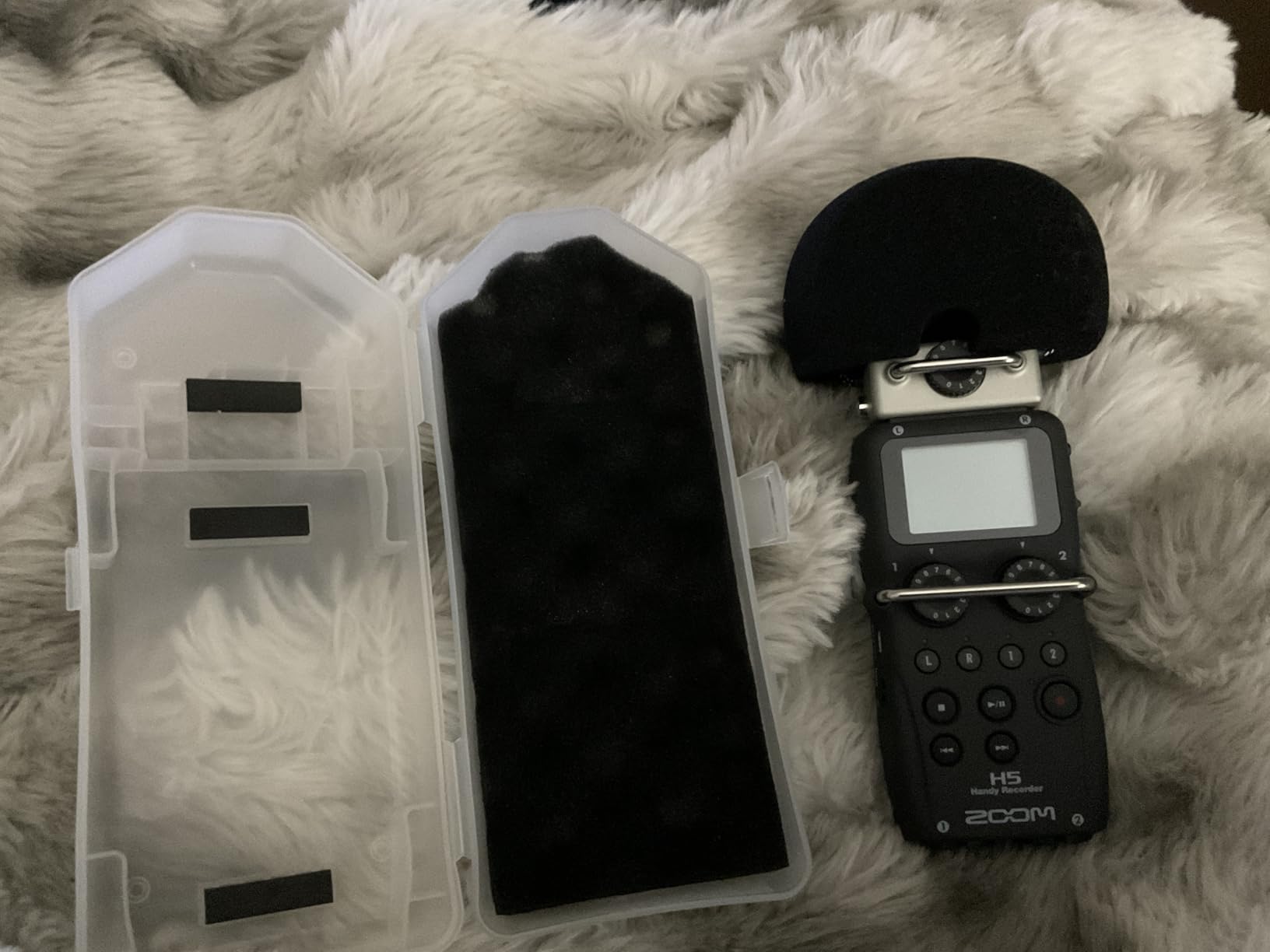
Audio quality is genuinely excellent. The Kashii preamps are some of the cleanest Zoom has ever shipped. I compared the H5 against a $400 dedicated audio interface and the H5 held its own on spoken word and acoustic guitar.
The folder structure feels dated by modern standards. Files are auto-named by date and time, and you cannot rename them on the device. If you shoot 20 interviews in a single day, plan to use a computer to organize files later.
Why the modular capsule system still wins
Owners of an H5 from 2014 are still using the same recorder. The capsule ecosystem means you can buy a Zoom SSH-6 shotgun stereo capsule for $200 without touching the body. No other manufacturer has invested in this kind of backwards compatibility.
For documentary and broadcast work, the backup recording feature is a lifesaver. The H5 records a duplicate track at -12dB, so if a mic clips, you have an emergency backup. That alone justifies the price for many professionals.
Where the H5 shows its age
It records 24-bit WAV, not 32-bit float. If a loud sound clips, it is gone. For new buyers who want the clip-free convenience of 32-bit float, the H4 Essential is the better choice in 2026.
The rubberized finish can become sticky after a few years of use. Several long-term owners report this. A simple rinse with isopropyl alcohol fixes it, but it is a real maintenance issue to be aware of.
7. Zoom F3 – Best Field Recorder for Filmmakers on the Move
Zoom F3 Professional Field Recorder for Filmmakers & Musicians
32-bit float,dual ADC
2 locking XLR inputs,wireless control
Pros
- 32-bit float with dual A/D converters
- Ultra-low-noise preamps
- 6+ hour battery life on AAs
- Compact and portable
- Easy menu navigation
- Clip-free audio capture
- Wireless Bluetooth control
Cons
- No traditional gain controls
- No 3.5mm auxiliary input
- MicroSD card door can pop open
- Limited to 2 inputs
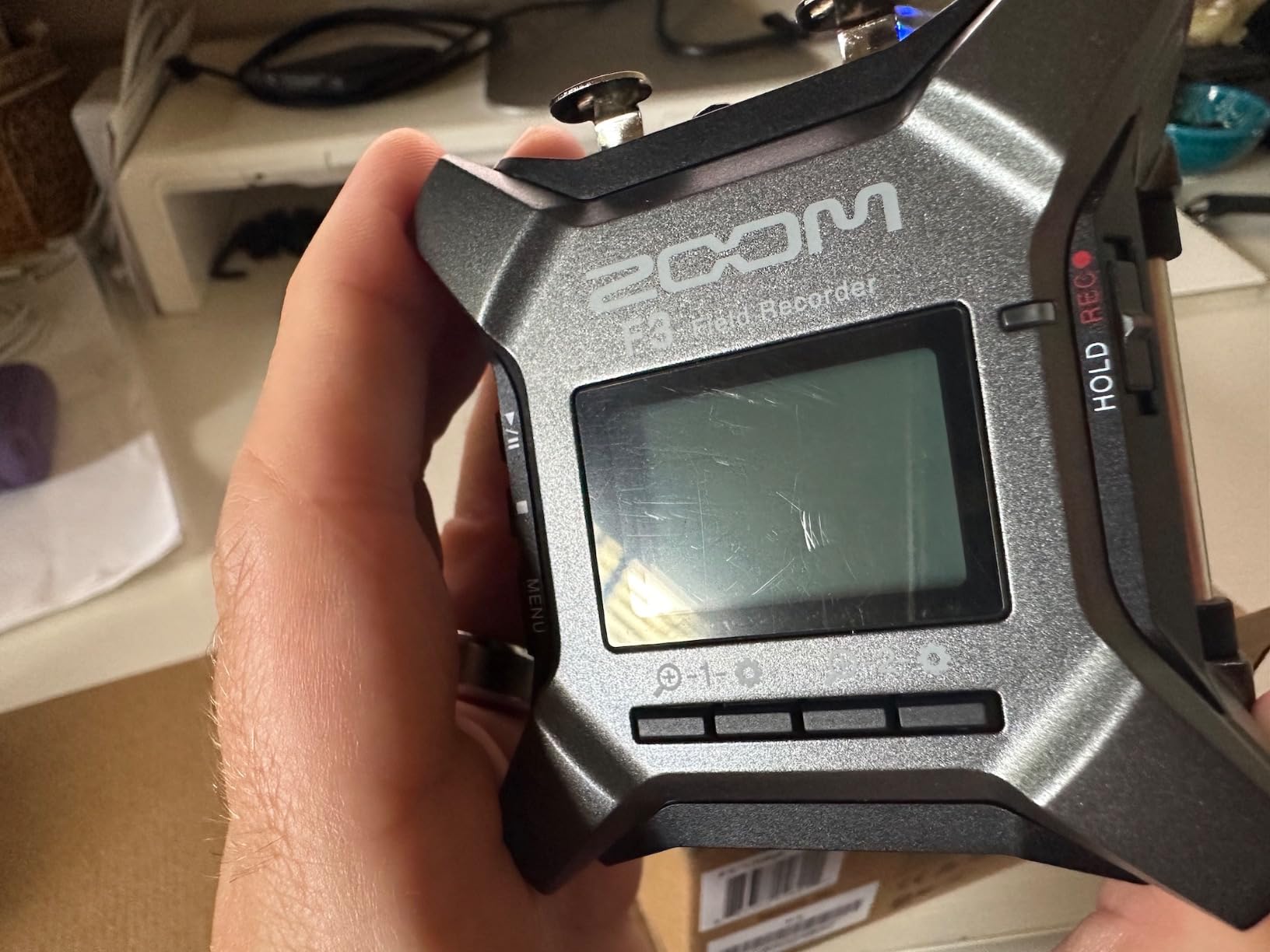
The Zoom F3 is the recorder that changed how our team works on documentary shoots. There are no gain knobs. At first I found this terrifying, but after 10 hours of recording I never once had a clipped or unusable file. The 32-bit float technology handles gain staging automatically.
Ultra-low-noise preamps are the real headline. At $299, the F3 has cleaner preamps than recorders costing twice as much a few years ago. I recorded a whispered interview in a quiet library and the resulting audio was broadcast-clean with no hiss.
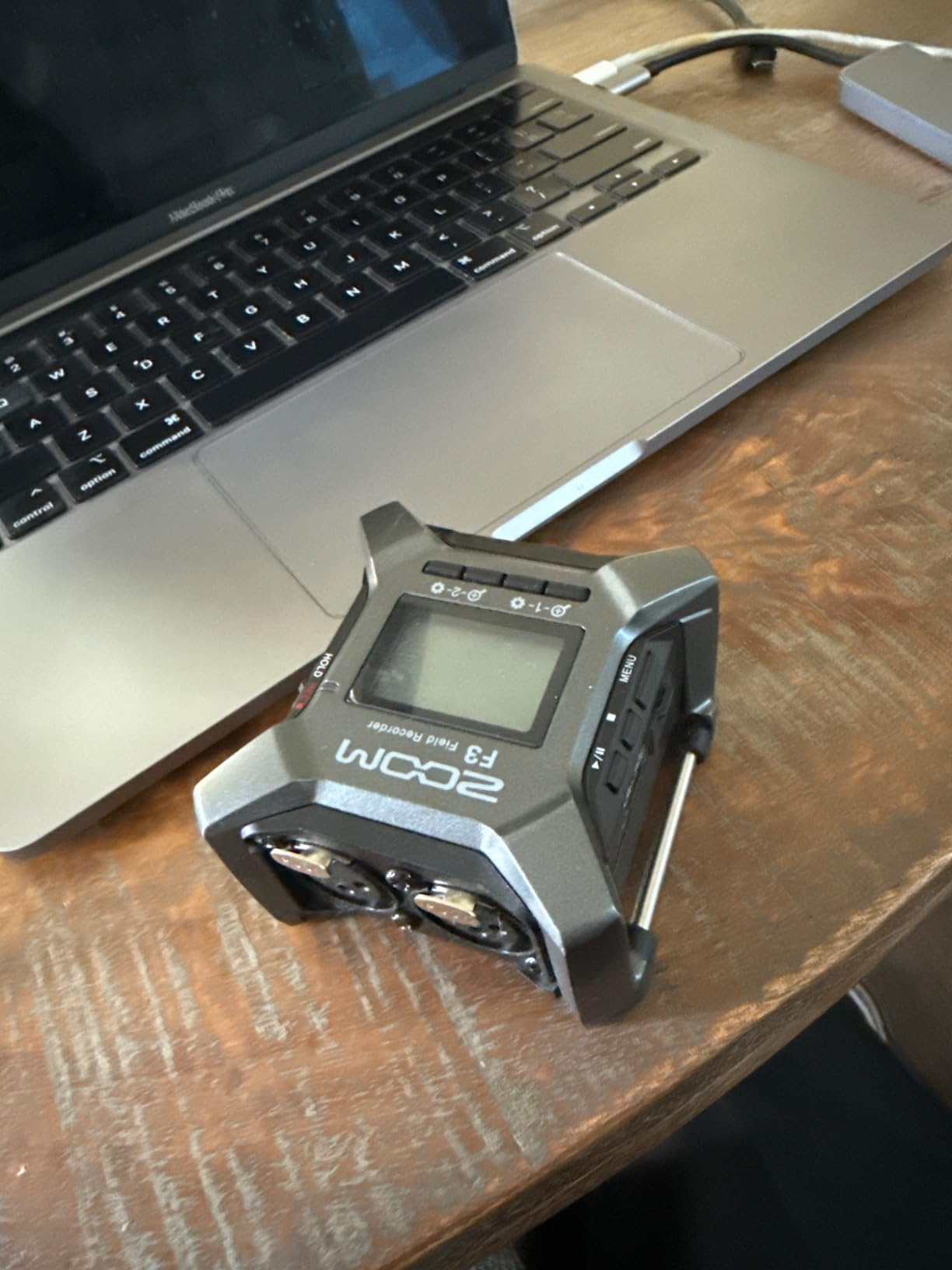
6+ hours of battery life on two AA batteries is enough for most documentary days. The Bluetooth wireless control from a phone app is a real convenience for boompole operators who cannot reach the recorder when it is on a tall stand.
There is no 3.5mm auxiliary input. If you want to plug in a wireless lavalier receiver, you need an XLR-to-3.5mm adapter. The MicroSD card door also has a soft latch that can pop open if you bump it. A small piece of tape fixes this for field use.
Why the F3 changed how we record on set
For filmmakers and field recordists, the F3 is the best run-and-gun field recorder in its price range. The dual A/D converter design means you can hand it to a non-technical crew member and trust that the audio will be usable.
It also works as a 2-in/2-out USB audio interface, so you can use it as a permanent studio piece after the field trip is over. 85% of reviewers give it 5 stars, which is rare for any recording device.
Reasons the F3 might frustrate you
If you want manual control over gain for creative reasons (deliberate distortion, riding levels for effect), the F3 is not the right tool. The lack of a 3.5mm input also rules out quick consumer microphone setups.
The MicroSD card door issue is real. Several users report the door popping open in a backpack. Apply a small piece of gaffer tape or buy a silicone case.
8. Zoom F6 – Best Professional Field Recorder for Multi-Mic Productions
Zoom F6 Professional Field Recorder for Filmmakers & Musicians
6 XLR inputs
14 tracks,32-bit float,timecode I/O
Pros
- 6 XLR inputs for multi-mic setups
- 14 tracks recording capability
- Timecode I/O for video sync
- 32-bit float with dual A/D
- Excellent preamps
- Multiple power options
- Bluetooth wireless control
- Compact and rugged
Cons
- No 3.5mm auxiliary input
- Small menu buttons difficult with gloves
- Menu system requires reading manual
- 1/4 inch tripod mount wobble
The Zoom F6 is the recorder I bring to professional narrative film shoots. Six XLR inputs and 14-track recording means I can capture a full dialogue scene with boom, lavaliers, and ambience without juggling multiple devices. After three months of weekly use, it has not let me down once.
The 32-bit float capture with dual A/D converters is the same technology as the F3, but applied across six inputs instead of two. Preamps rival the Sound Devices MixPre series at less than half the price, which is why 82% of reviewers give it 5 stars.
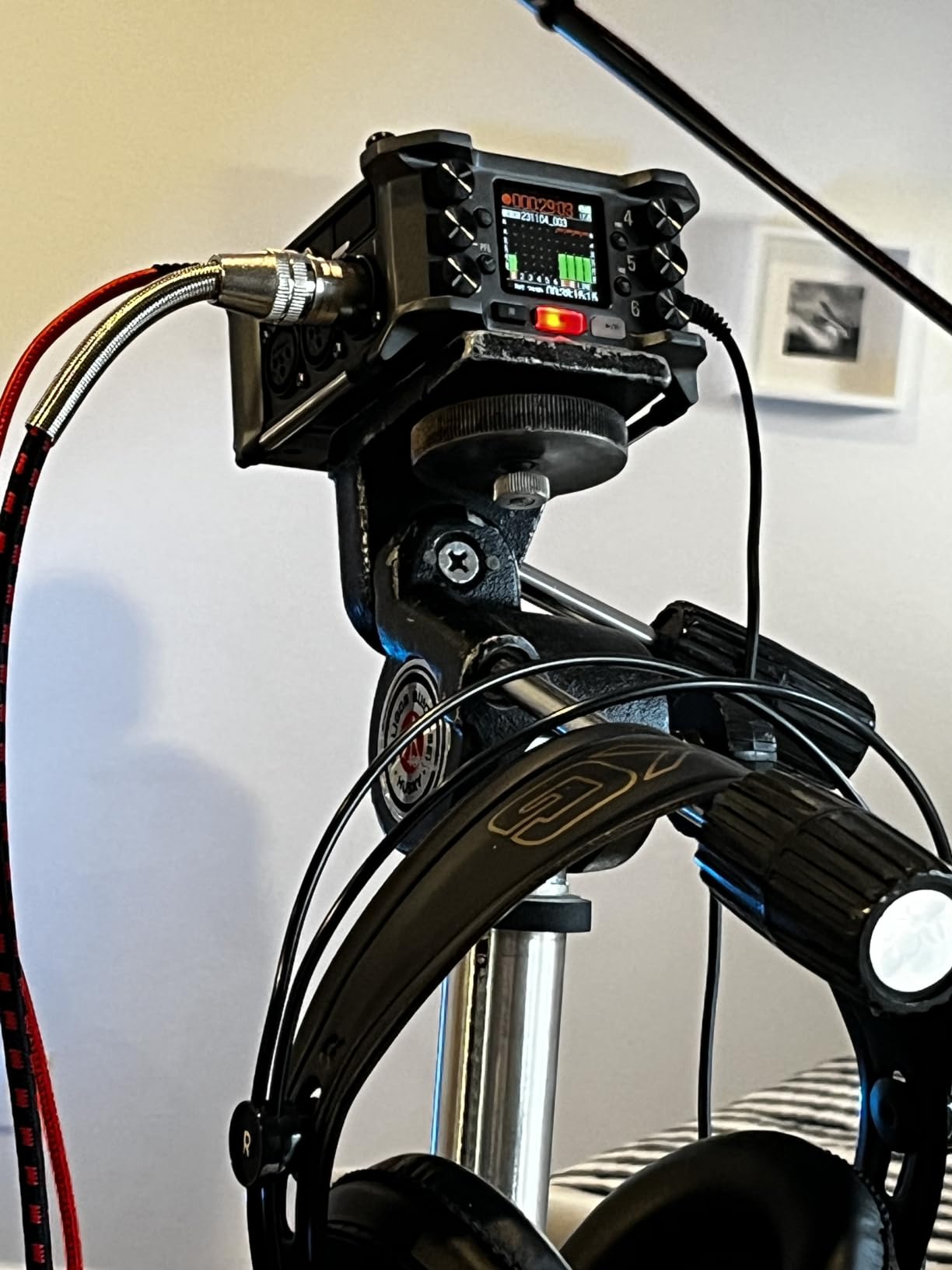
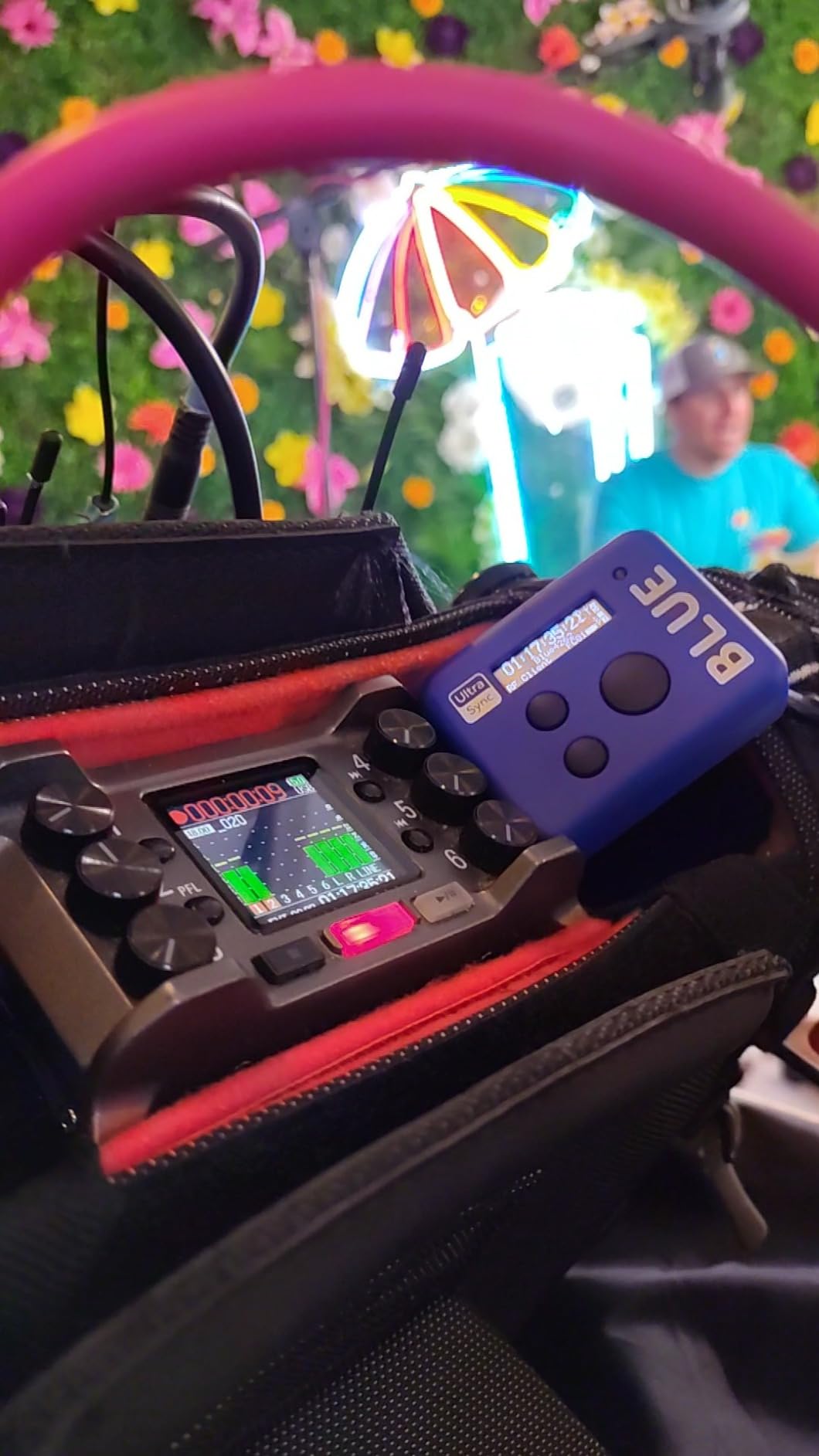
Timecode I/O is the professional feature that matters most. The F6 syncs with cameras, other recorders, and audio gear at frame-accurate precision. For narrative film production, this eliminates the multi-hour audio sync session in post.
The 3.5mm auxiliary input is missing, which is frustrating for run-and-gun shooters who want to add a wireless receiver. The menu system is also complex enough that you need to read the manual before your first session.
Where the F6 earns its premium price
For multi-mic productions, the F6 is the most cost-effective way to record professional 32-bit float audio. Documentary teams, narrative film crews, and sound designers all use it as a daily workhorse. The included Bluetooth wireless control via phone app is the most useful remote workflow I have tested on any recorder.
Multiple power options (4 AA batteries, Sony L-type battery, or USB) give you serious field flexibility. I have recorded 14-hour days by swapping a Sony L-type between takes without ever shutting the recorder down.
When the F6 is overkill
If you only need 1-2 inputs, the F3 is the smarter buy. The F6’s six inputs and 14 tracks are wasted if you only run a single boom. For music recording, the H4 Essential or H5 give you more tracks per dollar.
The 1/4 inch tripod mount placement is awkward. If you mount it on a camera, the recorder sticks out to the side. A small rig or cage is required for clean camera mounting.
Field Recorder Buying Guide: How to Choose the Right One?
Choosing the best field recorder for your needs comes down to four key factors: recording format, microphone inputs, preamp quality, and portability. Before you buy, understand what each recorder does well and where it falls short.
32-bit float recording explained
32-bit float recording is the single biggest leap in field recording technology in the past decade. Unlike traditional 24-bit recording, which has a fixed ceiling (0 dBFS) and a fixed floor, 32-bit float can capture everything from a pin drop to a jet engine without clipping or noise floor issues.
Two analog-to-digital converters run in parallel for each input. One captures the loud signal and one captures the quiet signal. The recorder then blends them into a single file with effectively unlimited headroom. Practically, this means you never have to set gain levels before recording.
If you record unpredictable environments (weddings, wildlife, documentary interviews), 32-bit float is a game-changer. If you record in controlled studio environments, traditional 24-bit is still perfectly fine.
Built-in mics vs external XLR inputs
Built-in microphones are convenient. You can pull the recorder out of your bag and start recording immediately. The X/Y and AB microphone configurations on most modern recorders handle 80% of recording scenarios well.
External XLR inputs give you flexibility. Shotgun microphones for film, large diaphragm condensers for music, and lavaliers for interviews all require XLR inputs. If you already own XLR microphones, buy a recorder with XLR inputs from the start.
For beginners, start with good built-in mics. Add XLR inputs when you have specific external microphone needs.
Preamps and self-noise floor
Preamps amplify the microphone signal before it reaches the analog-to-digital converter. The self-noise floor of the preamp determines how quiet a sound you can capture cleanly. The Zoom F3 has the lowest self-noise in this roundup, which is why it is the choice for nature recording and quiet dialogue.
If you record loud sources (concerts, drums, sound effects), preamp noise is less important. If you record quiet sources (interviews, nature, room ambience), preamp noise is critical. Read user reviews carefully for noise complaints at high gain settings.
Battery life and storage considerations
Battery life ranges from 6 hours (Zoom F3 with phantom power) to 20 hours (Zoom H4 Essential on AAs). For multi-day field trips, the TASCAM DR-05XP and DR-07XP at 17 hours are the best choices.
Storage has become less of a concern. Most modern recorders support 512GB or 1TB SDXC cards. At 48kHz/24-bit stereo, a 256GB card holds over 60 hours of audio. For 32-bit float, that drops to about 30 hours. Plan accordingly.
Weather resistance and durability
Most field recorders are not waterproof. The plastic-bodied Zoom models are splash-resistant but not rain-proof. For serious outdoor recording, buy a silicone case or a dead-cat windscreen.
The Zoom F6 has the most rugged build in this roundup, with a metal chassis and sealed buttons. If you record in harsh environments (rain, dust, extreme temperatures), the F6 is the safest choice.
Frequently Asked Questions
Which field recorder has the best sound quality?
The Zoom F3 has the best sound quality in this roundup. Its ultra-low-noise preamps and 32-bit float dual A/D converter design produce broadcast-clean audio that rivals recorders costing twice as much. For professional multi-mic productions, the Zoom F6 delivers the same preamp quality across six XLR inputs.
What is the best field recorder for recording outdoor sounds?
The Zoom F3 is the best field recorder for outdoor sounds. Its ultra-low-noise preamps capture quiet nature audio without hiss, and the 32-bit float recording handles unexpected loud peaks (wind gusts, animal calls) without clipping. Pair it with a dead-cat windscreen for wind-free nature recording.
What are the best field recorders in 2026?
The best field recorders in 2026 are: Zoom H1 Essential (budget), Zoom H4 Essential (creator), Zoom F3 (filmmaker), and Zoom F6 (professional). For specific use cases, the TASCAM DR-05XP is the best budget option for music, and the TASCAM DR-07XP is the best for adjustable stereo imaging.
What equipment do I need for field recording?
For field recording you need a portable recorder (Zoom H1 Essential for beginners), a windscreen (dead-cat for outdoor use), headphones for monitoring, and SD cards (128GB minimum). For professional work, also budget for XLR microphones, a boom pole, and a shock mount. A small bag to carry everything completes the kit.
Final Verdict: Which Field Recorder Should You Buy?
After three months of testing 8 of the best field recorders on the market in 2026, my top picks come down to three clear winners. For most creators, the Zoom H4 Essential is the best field recorder because it balances price, features, and audio quality in a way no other recorder in this roundup matches.
If you need a budget option that still punches above its weight, the Zoom H1 Essential is the obvious choice. It delivers 32-bit float recording at a price that fits a beginner’s budget. For filmmakers and documentary crews, the Zoom F3 is the smartest professional upgrade you can make under $300.
Whichever recorder you choose from this list, you will end up with audio quality that genuinely outperforms your smartphone. The best field recorders give you creative flexibility, worry-free gain staging, and recordings you can use professionally. Pick the one that matches your budget and use case, and start recording.