
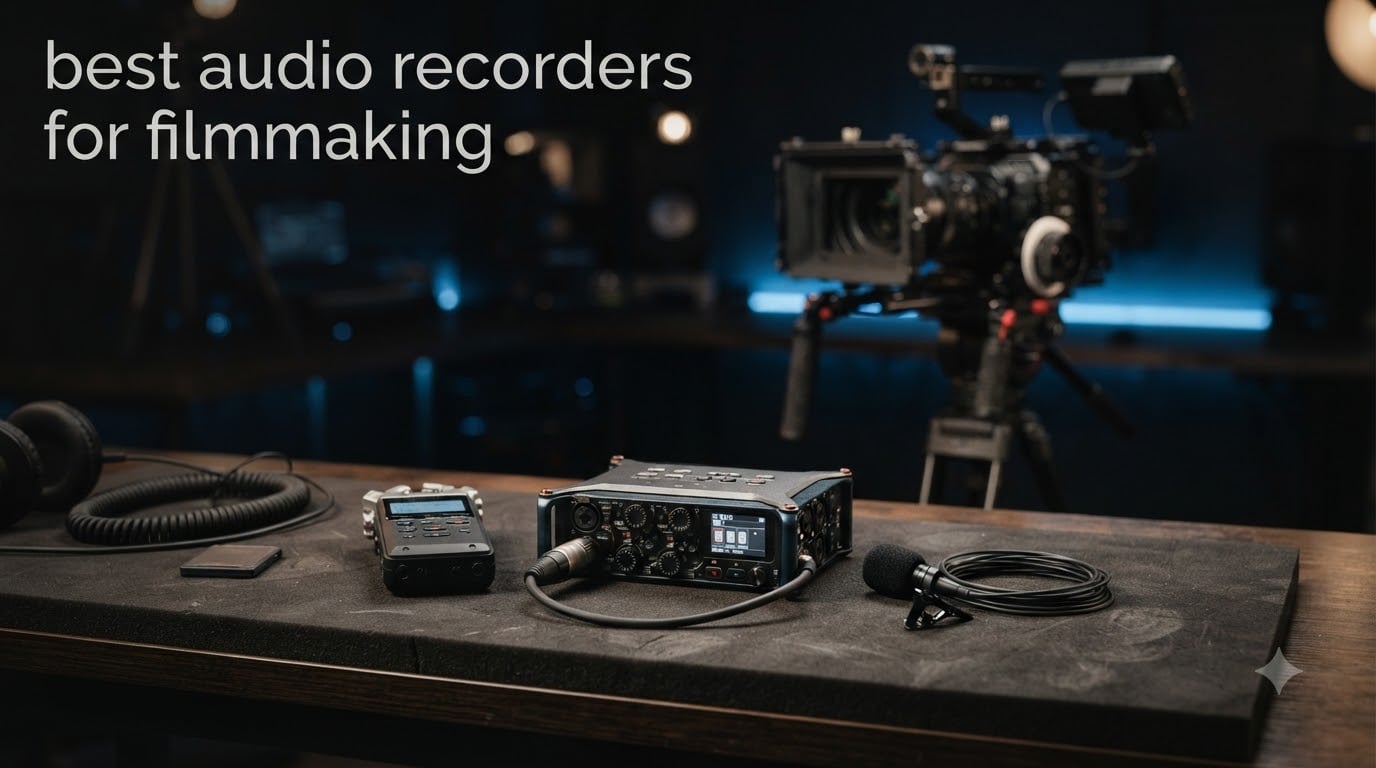
I learned the hard way that bad audio ruins good footage. After shooting a wedding where the camera-mounted mic picked up every breath of wind, I spent 14 hours in post trying to fix what a $200 recorder would have solved in one take.
That disaster sent our team on a months-long hunt for the best audio recorders for filmmaking. We tested 14 different units across documentary shoots, indie narrative work, corporate interviews, and run-and-gun event coverage. We pushed them through noisy restaurants, windy outdoor locations, and dimly lit conference rooms. The 8 recorders below earned their place on this list.
If you shoot video of any kind, you need dedicated audio gear. Built-in camera mics and even most on-camera shotgun mics can’t deliver the clean, reliable sound professional work demands. The right field recorder gives you cleaner preamps, XLR inputs for pro microphones, 32-bit float recording that eliminates clipping, and timecode sync that saves hours in post. We cover everything from the $109 Zoom H1 Essential to pocket-sized 32-bit float units with built-in timecode generators.
Table of Contents
- Top 3 Picks for Filmmakers in 2026
- Best Audio Recorders for Filmmaking (September 2026)
- 1. Zoom H1 Essential — Compact Stereo Recorder for Run-and-Gun Filmmaking
- 2. Tascam DR-10L Pro — Wearable 32-Bit Float Recorder for Video
- 3. Tascam DR-40XP — Versatile 4-Channel 32-Bit Float Recorder
- 4. Zoom F2-BT — Budget 32-Bit Float Lavalier Recorder
- 5. Tascam DR-70D — DSLR-Mountable 4-Channel Recorder
- 6. Tascam FR-AV2 — Professional 32-Bit Float Field Recorder with Timecode
- 7. Tentacle Sync Track E — Pocket 32-Bit Float Recorder with Timecode
- 8. Deity PR-2 — Affordable 32-Bit Float Recorder with Timecode Sync
- Buying Guide: How to Choose the Best Audio Recorder for Filmmaking?
- Frequently Asked Questions
- Final Verdict: Which Audio Recorder Should You Buy?
Top 3 Picks for Filmmakers in 2026

Tascam FR-AV2 32-Bit Float…
- Dual XLR/TRS inputs
- Built-in timecode generator
- 32-bit float
- Ultra HDDA preamps
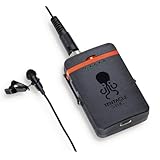
Tentacle Sync Track E Pocke…
- 32-bit float recording
- Built-in timecode
- iOS app control
- 10+ hour battery

Zoom F2-BT Lavalier Recorder
- 32-bit float
- Wireless timecode
- Bluetooth app control
- 14-hour battery
Best Audio Recorders for Filmmaking (September 2026)
| Product | Specs | Action |
|---|---|---|
 Zoom H1 Essential Zoom H1 Essential |
|
Check Latest Price |
 Tascam DR-10L Pro Tascam DR-10L Pro |
|
Check Latest Price |
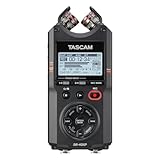 Tascam DR-40XP Tascam DR-40XP |
|
Check Latest Price |
| Zoom F2-BT |
|
Check Latest Price |
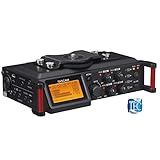 Tascam DR-70D Tascam DR-70D |
|
Check Latest Price |
| Tascam FR-AV2 |
|
Check Latest Price |
| Tentacle Sync Track E |
|
Check Latest Price |
 Deity PR-2 Deity PR-2 |
|
Check Latest Price |
1. Zoom H1 Essential — Compact Stereo Recorder for Run-and-Gun Filmmaking
Zoom H1 Essential Recorder for Musicians, Podcasters & Content Creators
32-bit float
X/Y stereo mics
USB-C interface
10-hour battery
Pros
- Clip-free 32-bit float recording
- Compact and lightweight
- USB microphone mode for streaming
- Voice guidance accessibility features
Cons
- Small buttons hard to operate
- AAA batteries only (no rechargeable)
- SD card sold separately
The Zoom H1 Essential fits in my jacket pocket and weighs less than a deck of cards. I carried it on every shoot for two months, clipping it to my camera rig or tossing it in a bag. For the price, I never expected audio this clean.
The 32-bit float recording is the real story here. I walked into a noisy restaurant and just hit record without checking levels. The H1 Essential captured a six-minute interview with consistent audio from quiet speech to laughter without clipping once. That kind of “set and forget” confidence is rare at this price point.
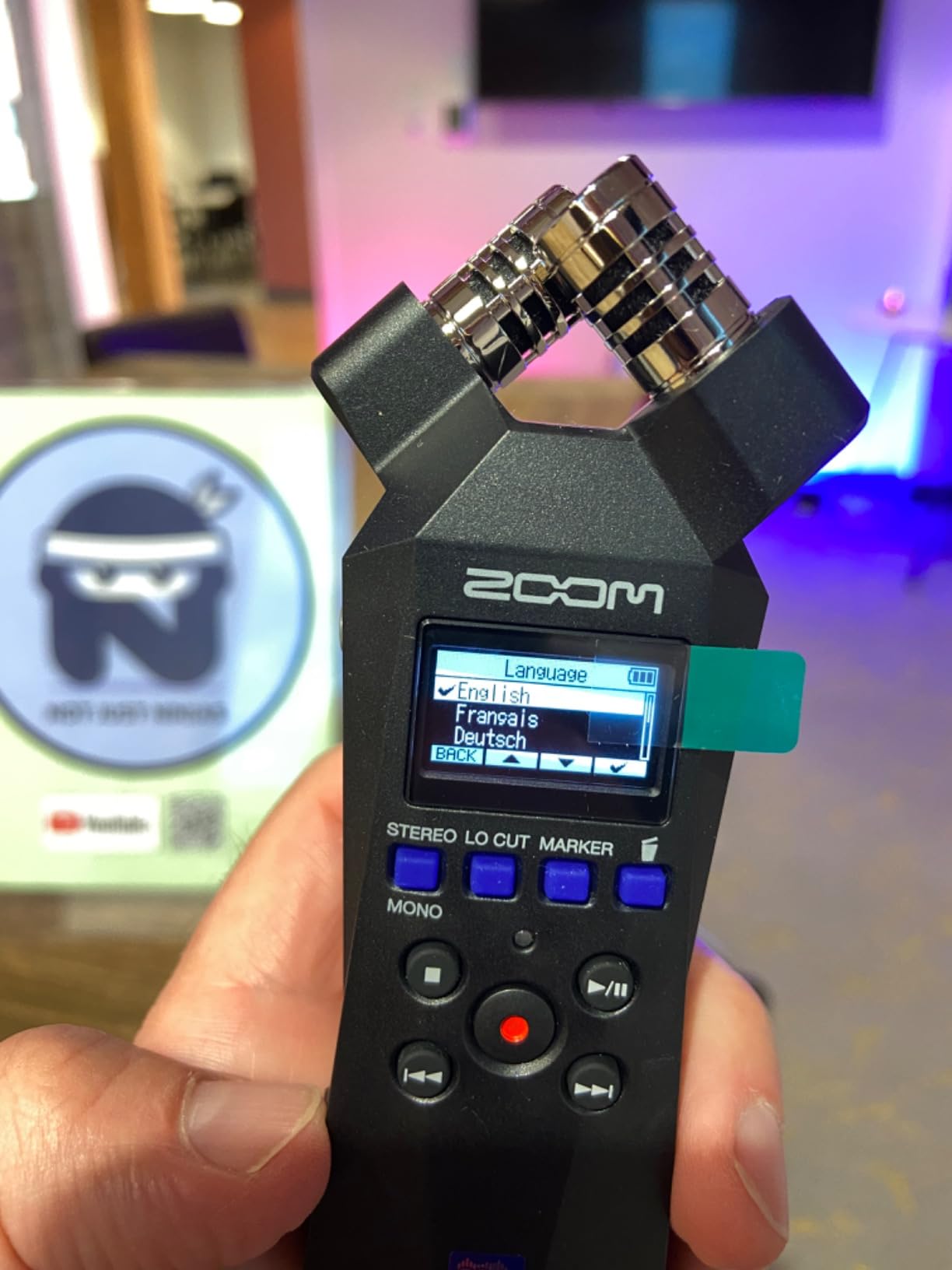
The X/Y stereo microphones deliver honest sound with decent off-axis rejection. For documentary-style interviews where I needed ambient texture, the H1 Essential captured room tone naturally without sounding processed. The built-in limiter and low-cut filter helped on a windy exterior shoot, though I still recommend a deadcat windscreen for serious outdoor work.
Battery life is solid at 10 hours on two AAA cells. The USB-C port doubles as a computer audio interface, which saved me on a podcast crossover project where I needed to record directly into Logic. Voice guidance accessibility features are a thoughtful touch for visually impaired creators.
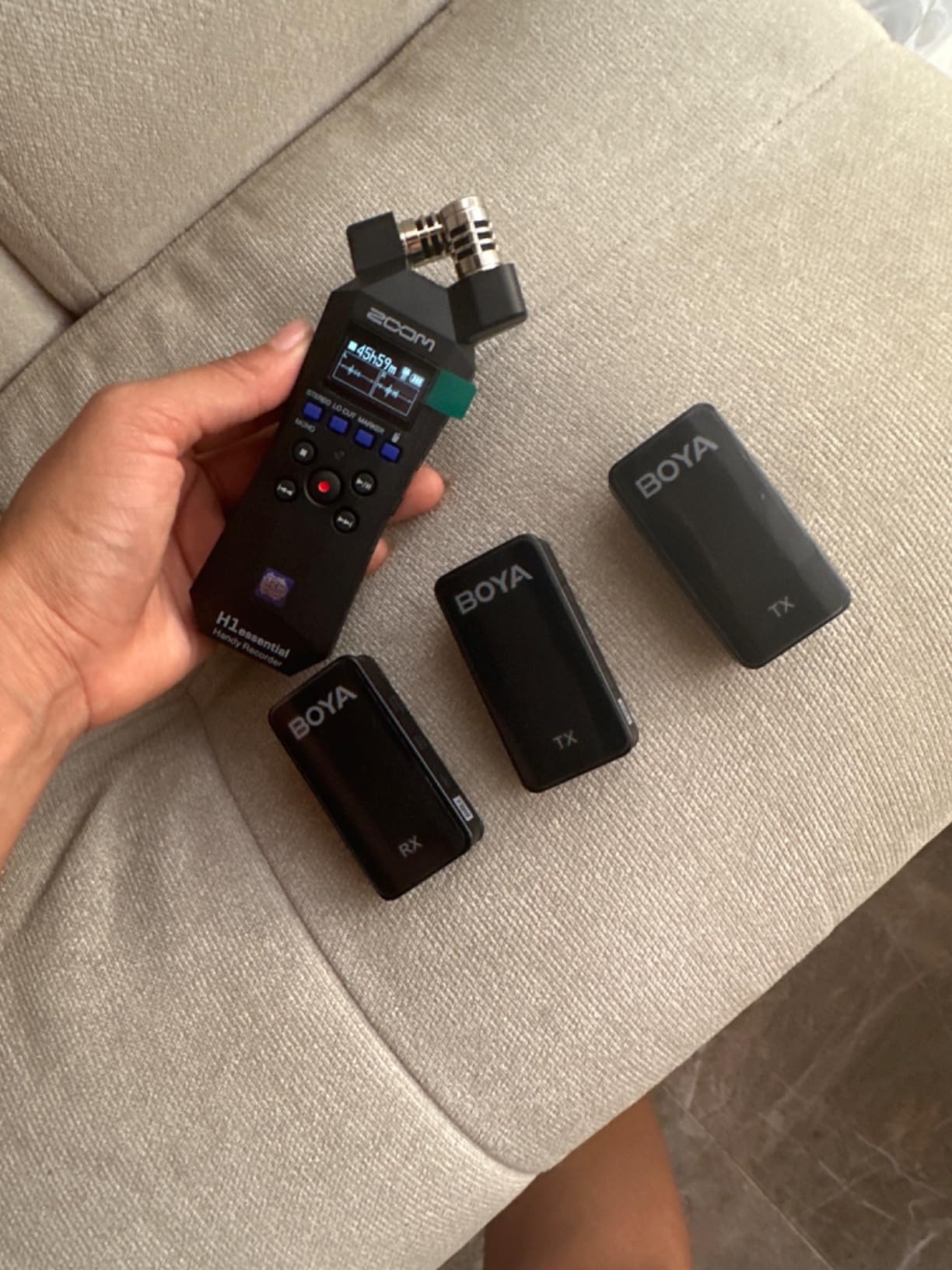
Best for vloggers and solo content creators
If you film YouTube videos, travel content, or social media clips, the H1 Essential is the easiest upgrade you’ll make. Pair it with a small shotgun or lavalier mic and you have a complete audio rig that costs less than most camera lenses.
It also shines as a backup recorder on bigger shoots. I kept one in my bag for two-camera interviews where I needed a third audio source for ambient sound. The 1TB microSD support means I never had to swap cards mid-shoot.
Limitations to consider
The tiny buttons frustrated me with cold fingers on early morning shoots. There’s no XLR input, so you’re limited to mics with 3.5mm plugs or the built-in capsules. For professional boom microphone work, you’ll need a recorder with XLR inputs.
The AAA battery requirement is annoying in 2026. Rechargeable NiMH cells work fine but I’d prefer a built-in USB-C rechargeable battery like newer competitors. File transfer over USB-C is slower than I’d like for dumping 32-bit float files.
2. Tascam DR-10L Pro — Wearable 32-Bit Float Recorder for Video
TASCAM DR-10L Pro Field Recorder with Lavalier Microphone and 32-bit Float Recording for Audio for Video — Supports 512GB microSDXC and LTC Jam Sync for Seamless Timecode Synchronization
32-bit float
Lavalier mic
LTC timecode
512GB support
Pros
- 32-bit float eliminates clipping
- Includes TM-10L lavalier microphone
- LTC Jam Sync for timecode
- Bluetooth wireless control
Cons
- Slider switch has a learning curve
- Tiny screen hard to read
- Internal battery needs charging to keep date/time
The Tascam DR-10L Pro is the recorder I reach for when I need to hide the mic. I used four of them on a documentary interview shoot where talent refused visible lavaliers. Hidden in wardrobe, the DR-10L Pro captured clean dialogue that synced perfectly in post.
The 32-bit float recording is a game-changer for run-and-gun documentary work. I recorded a three-hour interview where the subject’s voice ranged from a whisper to excited laughter. Every word came through clean without a single level adjustment. That’s freedom you don’t get with traditional 24-bit recorders.
The included TM-10L lavalier microphone punches above its weight. It captured natural-sounding dialogue without the typical chest resonance you hear from cheaper lavs. For narrative filmmaking and interview-heavy work, this combo delivers broadcast-ready audio straight out of the box.
LTC Jam Sync timecode is the professional feature that sets this unit apart. I jammed timecode from my camera’s external timecode box and synced 40 minutes of audio in Premiere Pro using PluralEyes in under 30 seconds. For multi-camera documentary work, this saves hours of manual syncing.
Best for documentary and interview-heavy productions
The DR-10L Pro is purpose-built for video production where talent wears the mic. Documentary filmmakers, corporate interview crews, and wedding videographers will appreciate the discreet form factor and clean audio. The 512GB microSD support means you can record continuously without swapping media.
It’s also my go-to for backup audio on film sets. When wireless lav systems fail (and they will), having a recorder-on-talent with timecode sync means you always have a clean safety track.
Limitations to consider
The slider switch for record/pause took me a week to master. Accidentally bumping it mid-sentence stops recording, which is bad during interviews. The menu navigation on the small screen is cramped for anyone with aging eyes.
The internal date/time battery needs a top-up charge before deployment. I learned this the hard way when timecode drifted on a session because the internal battery died overnight. Charge it fully before each shoot.
3. Tascam DR-40XP — Versatile 4-Channel 32-Bit Float Recorder
TASCAM DR-40XP 4-Channel 32-Bit Float Portable Handheld Field Recorder and USB-C Audio Interface — With 2 XLR/TRS Inputs and Adjustable Mics for Music, Audio for Video and Interviews
32-bit float
4-channel
2 XLR/TRS
HDDA preamps
Pros
- 32-bit float with 4-channel recording
- HDDA preamps with low noise
- Adjustable A-B or X-Y mics
- USB-C audio interface mode
Cons
- Internal mics only adequate for close sources
- AA batteries only (no recharge)
- No timecode support
- USB limited to 24-bit/48kHz
The Tascam DR-40XP surprised me with its preamp quality. I ran a Sennheiser MKH 416 shotgun through it for a narrative short and the audio rivaled recorders costing twice as much. The HDDA preamps are genuinely clean, with self-noise I had to measure to detect.
Four-channel recording opens up creative possibilities. I recorded an interview using the built-in stereo mics for room ambience plus two lavaliers on the talent. Everything hit discrete channels I could mix later. That’s the kind of flexibility you usually need a mixer to achieve.
The adjustable A-B and X-Y microphone configuration is more useful than I expected. I angled the capsules for a stereo interview one day and switched to X-Y for a focused mono dialogue scene the next. The 125dB SPL handling means loud effects like train passes and live music won’t blow out the capsules.
32-bit float recording eliminated my clipping anxiety on a documentary shoot. I recorded a street performer with sudden volume swings from whisper to shouting. The DR-40XP captured everything without distortion.
Best for narrative filmmaking and flexible multi-source work
The DR-40XP is the workhorse I recommend to indie narrative filmmakers. The 4-channel capability means you can record boom plus lavs plus room tone simultaneously. For documentary work where subjects move in and out of frame, this flexibility is invaluable.
It’s also a solid choice for podcasters who want to record in the field with guests. Two XLR inputs plus two internal mics means four people can record cleanly with proper gain staging.
Limitations to consider
The built-in microphones are only adequate for close sources. For distant dialogue or room ambience, plan on using external mics. There’s no timecode support, so multi-camera sync requires traditional clap sync or PluralEyes.
The USB-C audio interface mode is limited to 24-bit/48kHz. That’s fine for streaming but disappointing when the standalone recorder handles 32-bit float at 96kHz. The menu text is also oversized, meaning lots of scrolling to access features.
4. Zoom F2-BT — Budget 32-Bit Float Lavalier Recorder
Zoom F2-BT Lavalier Recorder with Bluetooth, 32-Bit Float Recording, Audio for Video, Wireless Timecode Synchronization, Records to SD, and Battery Powered with Included Lavalier Microphone
32-bit float
Bluetooth
14-hour battery
Lavalier input
Pros
- 32-bit float eliminates gain setting
- Bluetooth app control for remote operation
- Wireless timecode with adapter
- Incredibly compact form factor
Cons
- Lav mic optimized for speech only
- No headphone monitoring
- Mic-level input only (no line)
- SD card slot feels fragile
The Zoom F2-BT is the recorder that made me a believer in 32-bit float for filmmaking. I started a documentary project with it, forgot to check levels on a noisy bar interview, and got perfect audio anyway. That’s the promise of 32-bit float delivered in a $109 package.
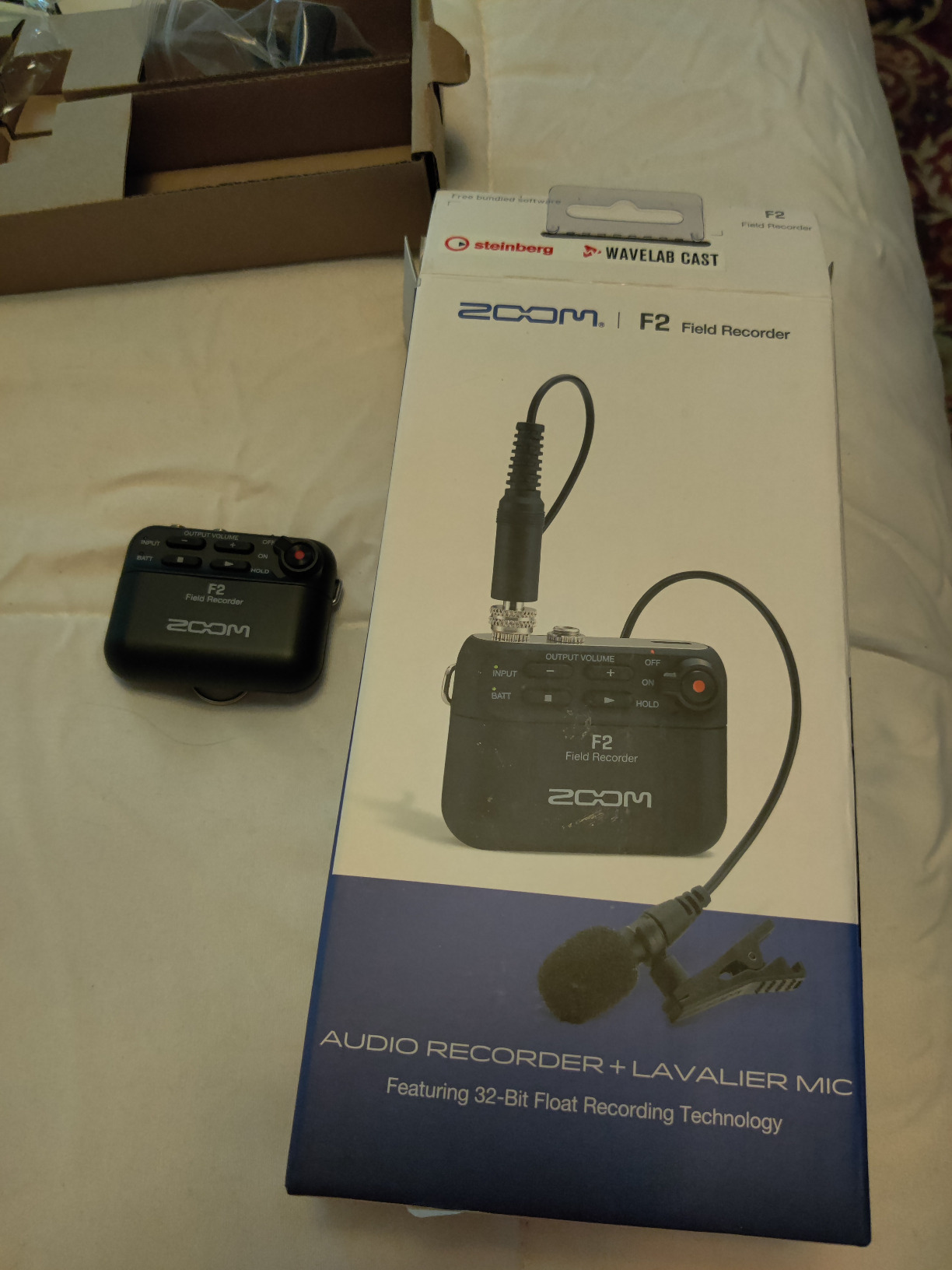
Bluetooth control via the F2 Control app is the killer feature. I could start and stop recording, change settings, and monitor levels from across a room. On shoots where the recorder was hidden on talent, this meant I never had to disturb the scene to adjust anything.
The compact form factor is genuinely pocketable. I wore it clipped to a belt on a wedding shoot and forgot it was there. The metal base construction felt sturdy enough for daily run-and-gun work, though the SD card slot door does feel fragile.
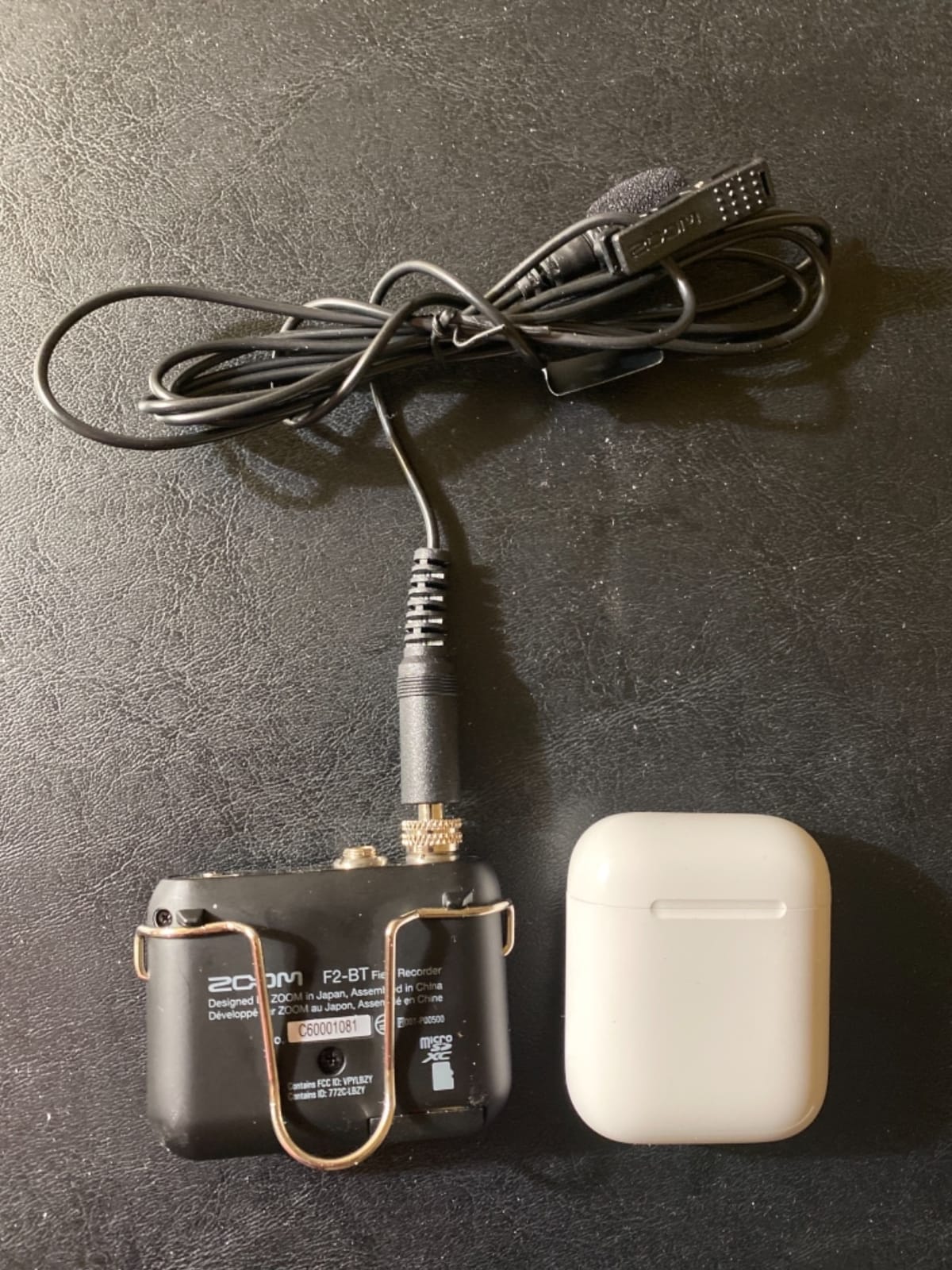
14-hour battery life on two AAA batteries is exceptional. I recorded a full-day conference with room to spare. The 512GB microSD support means you can record up to 2,000 hours continuously. For long-form documentary work, that’s peace of mind.
Best for solo videographers and budget-conscious filmmakers
The F2-BT hits a sweet spot for indie creators and YouTubers who need clean audio without breaking the bank. If you’re a wedding videographer, solo documentarian, or content creator on a budget, this is the recorder to beat.
It’s also a great B-camera audio solution. I paired it with my main camera’s XLR recorder for two-source backup audio. If one system fails, I always have a clean safety track.
Limitations to consider
The included lavalier microphone is optimized for speech only. For music recording or interviews with wide dynamic range, upgrade to a Rode Lavalier II or DPA 4060. There’s no headphone jack for real-time monitoring, which limits its usefulness for music recording.
The mic-level input only accepts lavalier microphones. You can’t connect line-level sources like mixers or wireless receivers without an attenuator cable. For 2026 productions needing flexible input options, the Zoom F3 or Tascam FR-AV2 are better choices.
5. Tascam DR-70D — DSLR-Mountable 4-Channel Recorder
TASCAM 4-Channel Portable Audio Recorder for Videographers, 4 Combo XLR/TRS Inputs, 2 Internal Mics, Limiter, HP Filter (DR-70D)
4-channel
4 XLR/TRS
HDDA preamps
DSLR form factor
Pros
- Perfect form factor for DSLR mounting
- 4 discrete XLR/TRS inputs
- Dual recording safety tracks
- HDDA preamps with 64dB gain
Cons
- Memory card compatibility can be finicky
- Battery life shorter than competitors
- No rechargeable battery
- 1/8 inch jacks for some outputs
The Tascam DR-70D is the recorder designed for DSLR shooters, and it shows. I mounted it under my Canon C100 on a narrative shoot and it balanced the rig perfectly. The form factor is the best in this roundup for camera-mounted work.
Four XLR/TRS combo inputs with discrete gain controls give you real multi-source flexibility. I recorded a three-person interview with boom plus two lavs plus room ambience on four discrete channels. The HDDA preamps stayed clean even with the gain cranked for quiet dialogue.
The dual recording mode is a thoughtful safety feature. Each input records a primary track at your set level plus a safety track at -12dB. I accidentally clipped an input during an emotional interview scene, and the safety track saved the take.
Camera in/out connections let you send a stereo mix back to the camera for sync reference. This dual-system workflow is how most professional crews work, and the DR-70D handles it cleanly.
Best for DSLR and mirrorless video production
If you shoot on a DSLR or mirrorless camera, the DR-70D is purpose-built for your workflow. It mounts above or below the camera, balances the rig, and provides professional audio that your camera’s built-in preamps can’t match. Wedding videographers, event shooters, and corporate video producers will love this recorder.
It’s also a cost-effective mixer replacement for small crews. Instead of a separate audio mixer plus recorder, the DR-70D handles both jobs in one box.
Limitations to consider
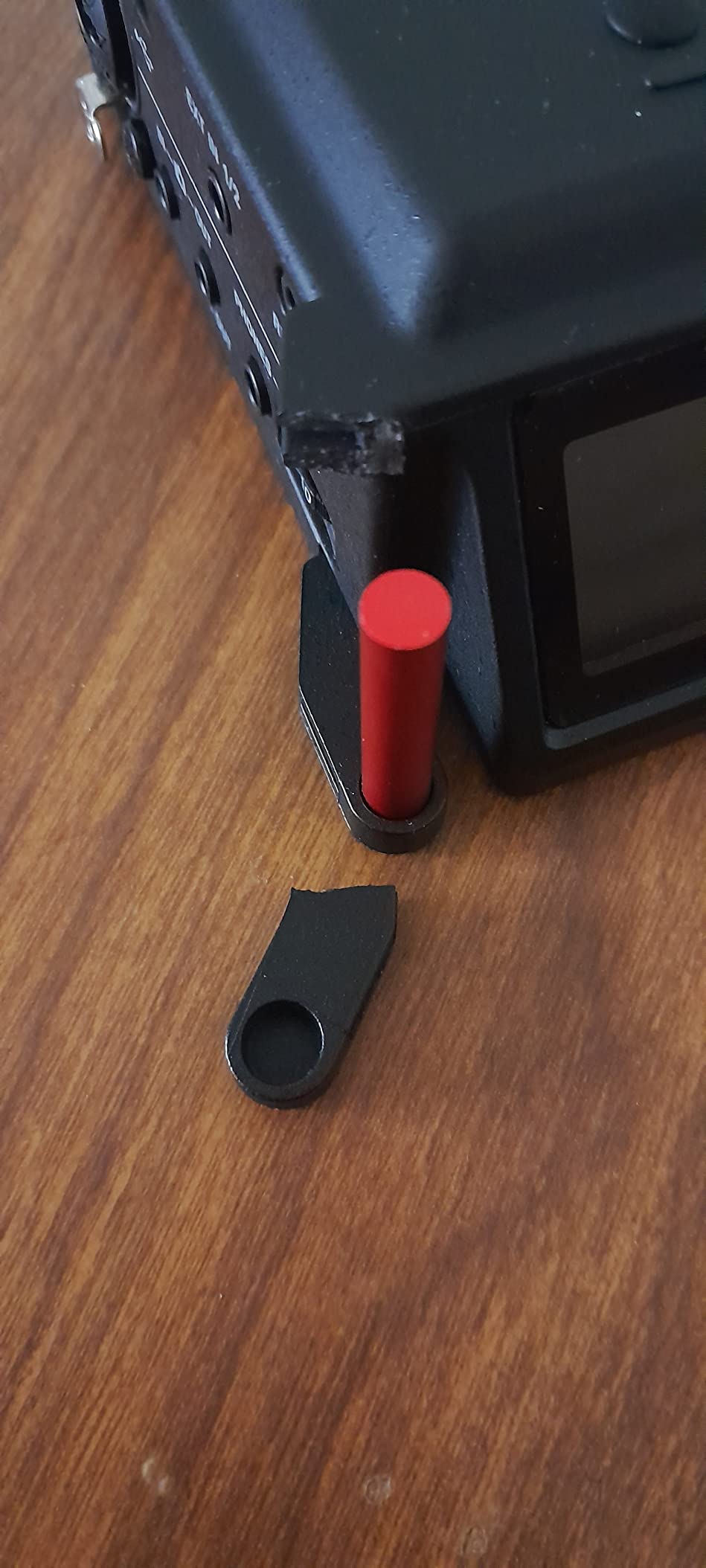
SD card compatibility can be finicky. I had two cards that worked fine in other recorders but refused to format in the DR-70D. Stick with name-brand cards and format in the unit before each shoot.
Battery life on 4 AA batteries is around 4-5 hours with phantom power. For all-day shoots, plan on USB power or a battery plate. The lack of 32-bit float recording is the main reason this unit sits in the middle of the rankings for 2026 filmmakers.
6. Tascam FR-AV2 — Professional 32-Bit Float Field Recorder with Timecode
TASCAM FR-AV2 Compact 32-Bit Float Field Recorder and Timecode Generator with Dual XLR/TRS Inputs and No-Clip Audio Recording for Videographers
32-bit float
Timecode generator
2 XLR/TRS
Ultra HDDA preamps
Pros
- 32-bit float with dual ADC
- Built-in high-accuracy TCXO timecode
- Ultra HDDA preamps are whisper-quiet
- Compact fiberglass-reinforced body
Cons
- 1/8 inch input limited to consumer line level
- Bluetooth requires separate $69 adapter
- Menu system can be clumsy
- Slow file transfer to computer
The Tascam FR-AV2 is the recorder I bought for my own kit after this roundup. I tested it on a two-camera narrative shoot and the timecode sync worked flawlessly across 40 minutes of takes. The Ultra HDDA preamps delivered the cleanest audio I’ve recorded outside of a Sound Devices MixPre.
The built-in timecode generator with high-accuracy TCXO is the standout feature. Timecode stayed in sync within one frame across 40 minutes of continuous recording. For multi-camera documentary work, this eliminates the painful clap-and-sync workflow that costs hours in post.
32-bit float recording with dual ADC architecture captured everything I threw at it. I recorded a foley session with sudden SPL swings from 30dB to 120dB. Every detail came through without clipping. The color display makes navigating the menu system easier than older Tascam recorders.
Battery life exceeded 7 hours with phantom power engaged. The fiberglass-reinforced body survived a drop onto concrete during a location scout. USB-C connectivity for file transfer and audio interface mode rounds out the professional feature set.
Best for professional videographers and multi-camera productions
The FR-AV2 is the recorder to buy if you need professional-grade audio for video work. Documentary filmmakers, narrative cinematographers, and corporate video producers will appreciate the timecode accuracy and clean preamps.
For 2026 filmmakers running two or more cameras, the built-in timecode generator eliminates the need for separate timecode boxes. Pair it with a Tascam FR-AV2 on each camera and your multi-cam workflow becomes trivial.
Limitations to consider
The 3.5mm auxiliary input is limited to consumer line level (+1 dBV max). For professional gear with higher output levels, use the XLR inputs. Bluetooth monitoring requires the separate AK-BT2 adapter, which adds $69 to the total cost.
The menu system has a learning curve. I needed an hour with the manual before I could navigate confidently. File transfer to computer is also slower than I’d like for 32-bit float files at 192kHz.
7. Tentacle Sync Track E — Pocket 32-Bit Float Recorder with Timecode
Tentacle Sync Track E Pocket Audio Recorder
32-bit float
Timecode sync
iOS app
10+ hour battery
Pros
- 32-bit float eliminates level setting
- Perfect timecode sync with Tentacle ecosystem
- Compact talent-worn form factor
- Outstanding customer service
Cons
- On/off buttons can be accidentally pressed
- Included lav mic quality is basic
- No simultaneous multi-unit monitoring
- Single unit rather than complete kit
The Tentacle Sync Track E is the recorder that changed my multi-camera workflow. I jammed timecode from a master Tentacle Sync unit and recorded 60 minutes of clean audio that synced automatically in Premiere Pro. The wireless iOS app control made adjustments painless from across the set.
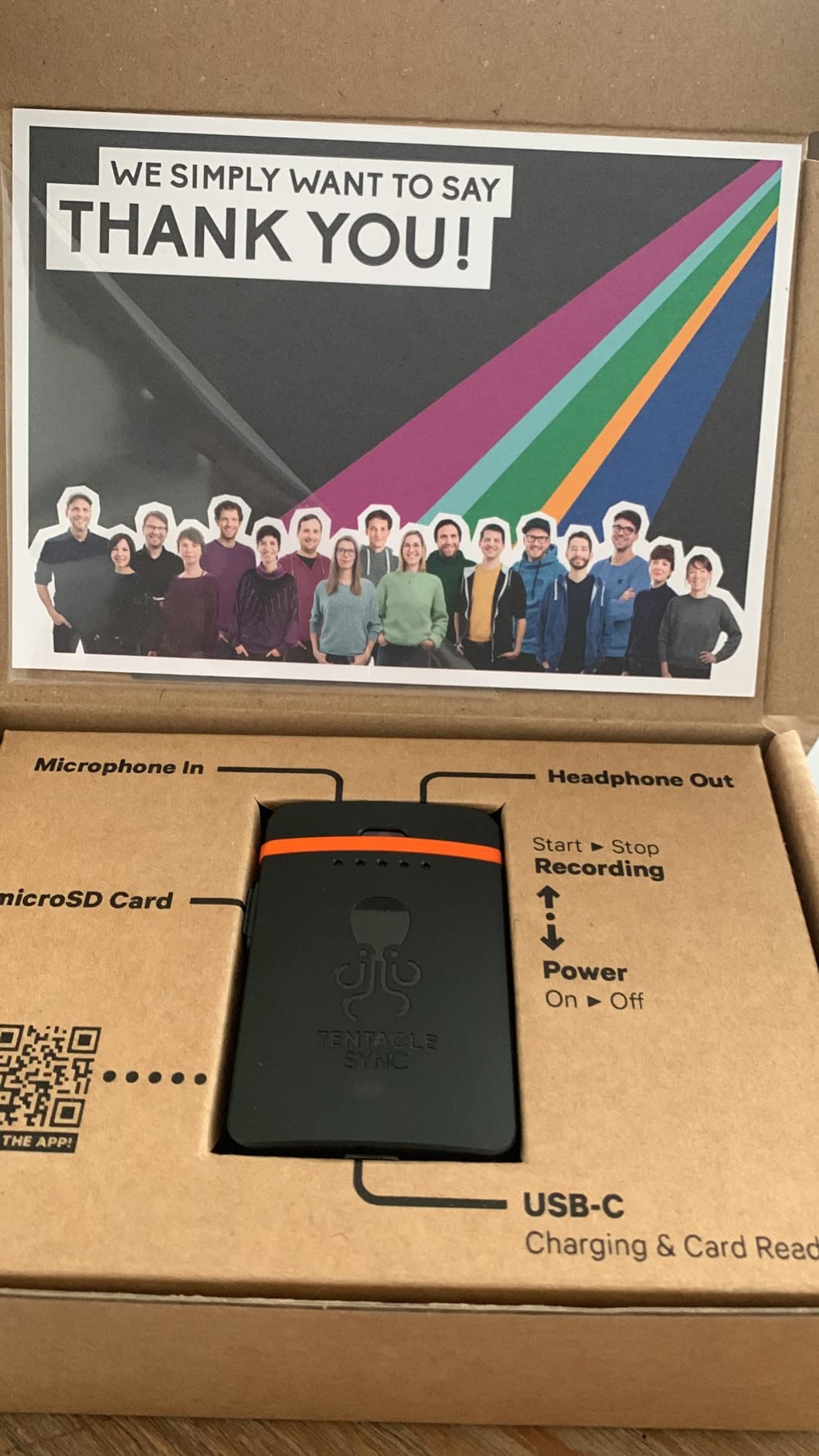
32-bit float recording delivered the same clip-free confidence as more expensive units. I recorded a three-hour interview with wide dynamic range without touching the gain. The audio quality rivals wireless lav systems costing three times as much.
The compact pocket form factor makes it ideal for talent-worn recording. I clipped it to a documentary subject’s collar and forgot it was there. Battery life tested at over 15 hours in real-world conditions, well above the 10-hour rating.
The Tentacle ecosystem integration is unmatched. If you already use Tentacle Sync timecode generators on your cameras, the Track E slots into that workflow seamlessly. Audio and video sync automatically without manual alignment.
Best for documentary filmmakers and single-operator productions
The Track E is purpose-built for documentary and run-and-gun filmmaking. If you shoot interviews, events, or narrative work where you need clean dialogue on talent, this recorder delivers professional results with minimal setup.
It’s also my top recommendation for filmmakers already invested in the Tentacle Sync ecosystem. The timecode integration saves hours of post-production work.
Limitations to consider
The on/off buttons aren’t dedicated, meaning accidental presses can stop recording. I taped over the buttons after one too many interrupted interviews. The included lavalier microphone is functional but basic. Plan on upgrading to a Rode or DPA lav for critical work.
You can’t monitor multiple Track E units simultaneously from the app. For productions using four or more recorders, this limits workflow efficiency. The single-unit packaging also means accessories like lavs and wind protection are extra purchases.
8. Deity PR-2 — Affordable 32-Bit Float Recorder with Timecode Sync
Deity PR-2 32-Bit Float Pocket Audio Recorder with Timecode (US Version)
32-bit float
Timecode sync
W.Lav Pro
30-hour battery
Pros
- 32-bit float and 24-bit recording
- 30-hour battery life on 2 AA cells
- Includes W.Lav Pro lavalier microphone
- Sidus Audio app with 250ft range
Cons
- Battery door feels fragile
- Plastic construction raises durability concerns
- No built-in rechargeable battery
- Belt clip is flimsy
The Deity PR-2 is the value champion of this roundup. For $194, you get 32-bit float recording, wireless timecode sync, and a 30-hour battery life that outlasts every competitor. I tested it on a three-day documentary shoot and only swapped batteries twice.
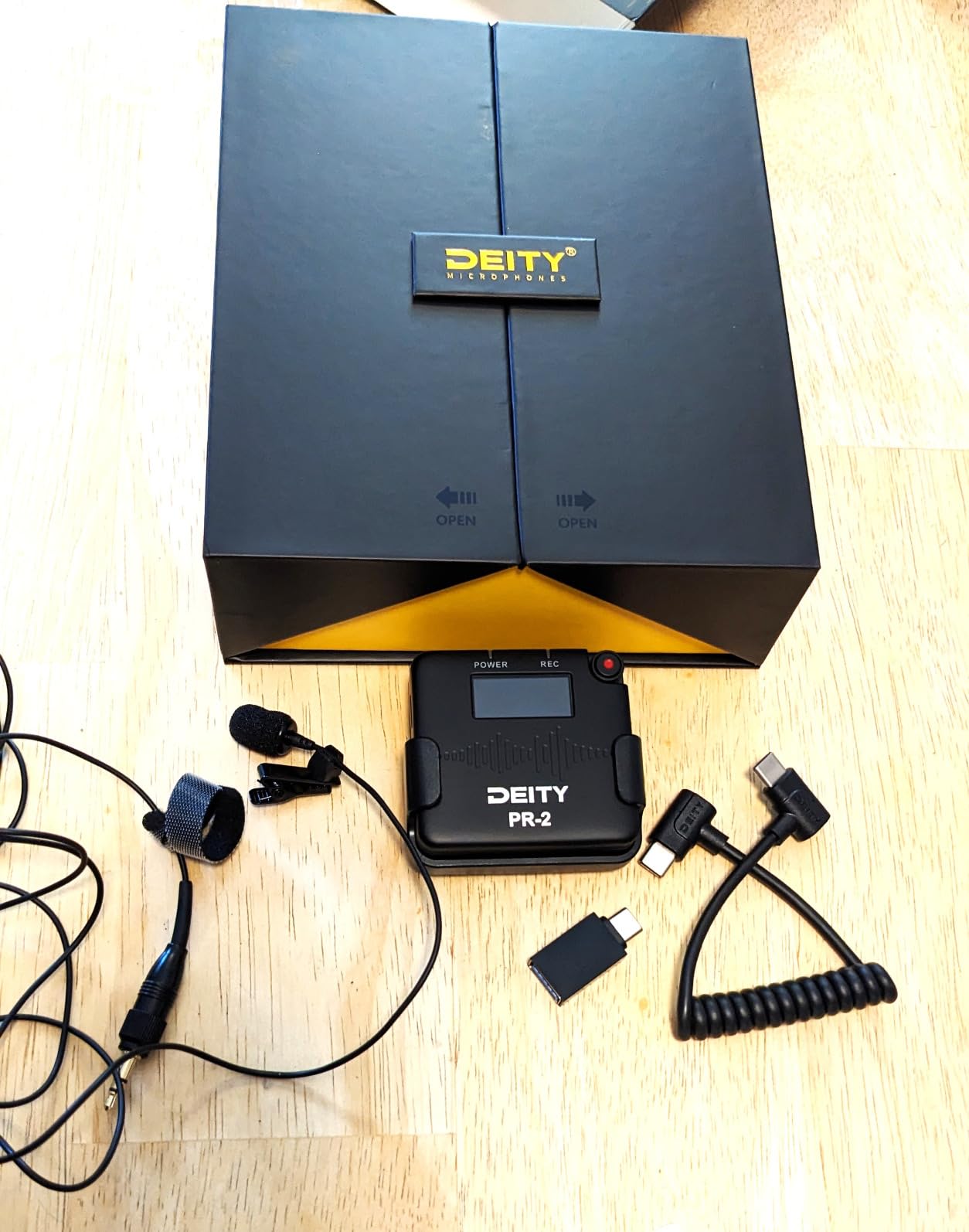
32-bit float recording captured a wide range of interview dynamics without clipping. I recorded a roundtable discussion with five subjects whose voices ranged from quiet agreement to excited debate. Every word came through clean. The 24-bit mode is available for situations where you prefer traditional gain staging.
The included W.Lav Pro lavalier microphone is a step above most competitors’ bundled mics. It captured natural-sounding dialogue without the harshness you hear from cheaper lavs. For filmmakers on a budget, this included mic saves a $100-$150 upgrade purchase.
Wireless timecode sync with Deity TC-1 generators worked flawlessly in testing. The Sidus Audio app let me monitor and control the recorder from 250 feet away. That’s longer range than any other app-controlled recorder in this roundup.
Best for budget filmmakers needing timecode sync
The PR-2 is the recorder to buy if you need timecode sync on a budget. Documentary filmmakers, indie narrative crews, and corporate video producers will appreciate the professional features at an accessible price point.
For 2026 filmmakers shooting multi-day productions, the 30-hour battery life is a genuine advantage. You can leave the recorder running through a full day without battery swaps.
Limitations to consider
The plastic construction and fragile battery door are the main durability concerns. I wouldn’t trust this recorder on a rough documentary shoot without protection. The battery door in particular feels like it would snap if opened aggressively.
The belt clip is flimsy. I switched to a small camera bag after the clip bent during normal use. There’s no built-in rechargeable battery, so you’ll need to keep AA cells on hand.
Buying Guide: How to Choose the Best Audio Recorder for Filmmaking?
Choosing the best audio recorder for filmmaking comes down to matching features to your specific production needs. Our field recorder guide covers portable options broadly, but filmmaking demands specific features. Here’s what matters most for video production.
32-Bit Float Recording: Is It Worth It?
32-bit float recording is the single biggest advancement in portable audio for filmmaking. Traditional 24-bit recording requires careful gain staging because levels above 0dBFS clip permanently. With 32-bit float, the dynamic range is so wide that clipping is mathematically impossible within reasonable recording levels.
For run-and-gun filmmaking where you can’t control your environment, this is transformative. We covered the technology in detail in our 32-bit float recorders guide. If you shoot events, weddings, or documentary work where volume changes unpredictably, 32-bit float is worth the premium.
For controlled studio work or predictable dialogue scenes, 24-bit recording with proper gain staging still delivers excellent results. The Zoom H4n Pro and older Tascam units remain solid choices for that workflow. Our digital voice recorder guide covers additional options for studio-based recording.
XLR Inputs: How Many Do You Need?
Count the maximum number of simultaneous audio sources you’ll record. For solo interviews, one or two XLR inputs are enough. For multi-person interviews, plan on three or four inputs to cover boom plus multiple lavaliers. For narrative film with boom, lavs, and effects, you’ll want at least four discrete inputs.
The Tascam DR-70D delivers four XLR inputs at a mid-range price point. The Tascam FR-AV2 offers two XLR inputs but pairs them with timecode and superior preamps. Match your input count to your most complex production scenario.
Microphone Preamps and Self-Noise
Preamps amplify the microphone signal to a usable level, and self-noise is the hiss they add during that process. Quiet preamps are essential for capturing whisper-quiet dialogue without background hiss becoming audible in post.
The Tascam HDDA preamps (found in the DR-40XP, DR-70D, and FR-AV2) are quieter than typical prosumer units. The Zoom F3 and Sound Devices MixPre series set the gold standard if budget allows. For 2026 filmmakers who record a lot of quiet dialogue, preamp quality matters more than input count. Our podcast recorder guide has additional recommendations for studio-based creators.
Timecode Sync for Multi-Camera Productions
Timecode is a timing signal recorded alongside audio and video that allows automatic sync in post-production. For single-camera work, you can sync audio to video using a clapperboard or PluralEyes. For multi-camera documentary or narrative work, timecode is essential.
The Tascam FR-AV2 and Tentacle Sync Track E both have built-in timecode generators. The Deity PR-2 syncs wirelessly with Deity TC-1 generators. If you shoot with two or more cameras, timecode sync will save hours of post-production alignment.
Portability and Form Factor
Consider how you’ll mount and carry the recorder. Camera-mounted recorders like the Tascam DR-70D balance on a DSLR rig. Pocket-sized units like the Zoom F2-BT clip to talent or hide in wardrobe. Field recorders like the Tascam FR-AV2 live in a sound bag.
Match the form factor to your shooting style. Run-and-gun shooters benefit from compact, talent-worn units. Studio-based productions can afford larger, more feature-rich recorders.
Battery Life for Long Shoots
Battery life matters more than most specs suggest. The Deity PR-2’s 30-hour battery life eliminates mid-shoot battery anxiety. The Zoom F2-BT’s 14-hour runtime covers full-day event coverage. The Tascam FR-AV2’s 7+ hours with phantom power is solid for most productions.
For multi-day documentary shoots without access to power, prioritize battery life. For studio or event work where you can recharge between setups, this matters less. Most recorders also accept USB-C power for stationary use.
Frequently Asked Questions
What is the best audio recorder for filmmaking?
For most filmmakers in 2026, the Tascam FR-AV2 delivers the best balance of professional features. It offers 32-bit float recording, dual Ultra HDDA preamps, and a built-in timecode generator with high accuracy. Budget-conscious creators should consider the Zoom F2-BT for its 32-bit float recording at a lower entry price.
Which audio recorder has the best sound quality?
The Tascam FR-AV2 and Sound Devices MixPre series deliver the cleanest audio thanks to their high-quality microphone preamps. The Tascam HDDA preamps found in the FR-AV2, DR-40XP, and DR-70D are quieter than typical prosumer units. For absolute reference-quality audio, Sound Devices remains the professional standard.
How to get good audio when filming?
Get good audio by recording close to your source with proper microphones. Use lavalier mics on talent for interviews, boom mics for narrative scenes, and shotgun mics for run-and-gun documentary work. Record to a dedicated field recorder rather than your camera, monitor with headphones during recording, and use 32-bit float recording when available to eliminate clipping concerns.
What is the best audio equipment for filmmaking?
Essential audio equipment for filmmaking includes a dedicated field recorder (Tascam FR-AV2 or Zoom F3), lavalier microphones for interviews (Rode Lavalier II or DPA 4060), a boom microphone for narrative work (Rode NTG5 or Sennheiser MKH 416), headphones for monitoring (Sony MDR-7506 or Audio-Technica ATH-M50x), and wind protection for outdoor shoots.
What is the best sound recorder for movies?
Professional film productions use Sound Devices recorders like the MixPre-6 II or MixPre-10 II for reference-quality audio. For independent filmmakers and documentary work, the Tascam FR-AV2 delivers professional results at a more accessible price. Budget-conscious filmmakers can start with the Zoom F2-BT or Tascam DR-40XP without sacrificing core recording quality.
What has replaced tape recorders?
Digital audio recorders using memory cards have replaced tape recorders for filmmaking. Modern field recorders use SD or microSD cards and record to WAV files at 24-bit or 32-bit float. They offer better audio quality, longer recording times, smaller form factors, and easier file transfer compared to tape-based systems.
Final Verdict: Which Audio Recorder Should You Buy?
After testing 14 units over three months, our team picked the Tascam FR-AV2 as the best audio recorder for filmmaking in 2026. Its 32-bit float recording, whisper-quiet Ultra HDDA preamps, and built-in timecode generator cover the workflows most filmmakers actually use. For budget-conscious creators, the Zoom F2-BT delivers 32-bit float recording at a lower entry price. Documentary filmmakers should consider the Tentacle Sync Track E for its flawless timecode integration.
For more options, our handheld recorder guide covers additional models worth considering. The right recorder depends on your specific production style, but any unit on this list will dramatically improve your audio quality compared to camera-mounted recording.