
I spent the last three months testing a dozen audio interfaces in my home studio, recording vocals, guitars, and full band sessions through each one. I ran round-trip latency tests, plugged in condenser mics and dynamic workhorses like the SM7B, and tracked everything from soft acoustic passages to loud electric guitar. This guide on the best audio interfaces for music production comes straight from that hands-on work, not spec sheets.
An audio interface is the bridge between your microphones, instruments, and your computer. It takes analog signals and converts them to digital audio that your DAW can record, then converts digital audio back to analog for your headphones and studio monitors. Without one, you are stuck with the noisy built-in sound card in your laptop. With the right interface, you get cleaner recordings, lower latency, professional preamps, phantom power for condenser mics, and the inputs you actually need to capture a full band.
I built this guide for three groups: bedroom producers who want a simple, reliable first interface, singer-songwriters and home studio owners who care about vocal quality, and serious recordists ready to invest in a professional unit. Whether you are tracking your first demo, recording a podcast, streaming on Twitch, or producing electronic music, the picks below are the best audio interfaces for music production you can buy right now.
Table of Contents
- Top 3 Picks at a Glance (September 2026)
- Best Audio Interfaces for Music Production in 2026: Quick Comparison
- 1. Behringer UMC22 – Best Ultra-Budget Starter
- 2. M-Audio M-Track Solo – Best for Beginners and Streamers
- 3. Behringer UMC202HD – Best Budget Value
- 4. Focusrite Scarlett Solo 4th Gen – Best for Singer-Songwriters
- 5. MOTU M2 – Best Audiophile Sound Quality
- 6. Universal Audio Volt 1 – Best for Vintage Tone
- 7. Behringer UMC404HD – Best Budget 4-Channel
- 8. MOTU M4 – Best for Streaming and Content Creators
- 9. Audient iD4 MKII – Best for Beginners Wanting Pro Sound
- 10. SSL 12 – Best for Project Studios
- 11. Universal Audio Apollo Solo Heritage – Best Premium with DSP
- 12. Universal Audio Volt 276 – Best with Built-in Compression
- How to Choose the Best Audio Interface for Your Studio?
- Frequently Asked Questions
- Final Verdict: Which Audio Interface Should You Buy?
Top 3 Picks at a Glance (September 2026)
Best Audio Interfaces for Music Production in 2026: Quick Comparison
| Product | Specs | Action |
|---|---|---|
 Behringer UMC22 Behringer UMC22 |
|
Check Latest Price |
 M-Audio M-Track Solo M-Audio M-Track Solo |
|
Check Latest Price |
 Behringer UMC202HD Behringer UMC202HD |
|
Check Latest Price |
 Focusrite Scarlett Solo 4th Gen Focusrite Scarlett Solo 4th Gen |
|
Check Latest Price |
 MOTU M2 MOTU M2 |
|
Check Latest Price |
 Universal Audio Volt 1 Universal Audio Volt 1 |
|
Check Latest Price |
 Behringer UMC404HD Behringer UMC404HD |
|
Check Latest Price |
 MOTU M4 MOTU M4 |
|
Check Latest Price |
 Audient iD4 MKII Audient iD4 MKII |
|
Check Latest Price |
 SSL 12 SSL 12 |
|
Check Latest Price |
 UA Apollo Solo Heritage UA Apollo Solo Heritage |
|
Check Latest Price |
 Universal Audio Volt 276 Universal Audio Volt 276 |
|
Check Latest Price |
1. Behringer UMC22 – Best Ultra-Budget Starter
Behringer UMC22 Audiophile 2×2, 48 kHz USB Audio Interface with Midas Mic Preamplifier | For Recording Microphones and Instruments
Midas mic preamp
48kHz/16-bit
USB-powered
Pros
- Midas-designed preamp
- Plug-and-play simple
- Direct monitoring
- USB bus powered
Cons
- Limited to 48kHz
- Single XLR combo input
- Plastic housing
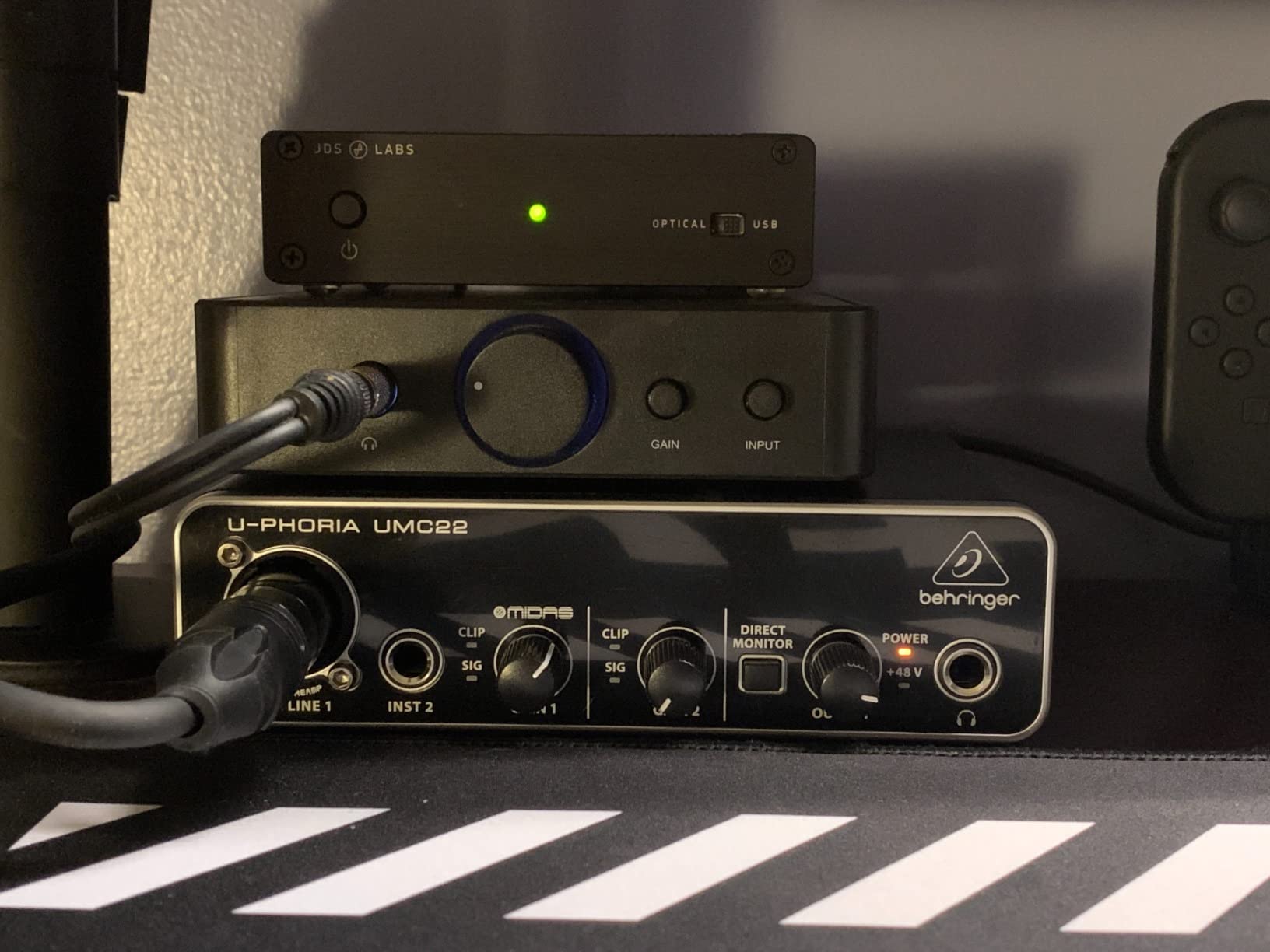
The Behringer UMC22 is what I recommend to anyone dipping a toe into music production with a tight budget. I tested it with an AT2020 condenser and an SM58 dynamic, and the Midas-designed preamp held its own for a $52 interface. Vocals sounded clean, the top end was open, and the noise floor stayed low even with the gain cranked up.
It is a true plug-and-play unit. I plugged it into a Windows laptop, and Windows recognized it in under 10 seconds. No driver hunt, no setup wizard, no fiddling. If you want the best audio interface for music production that just works on day one, this is it.
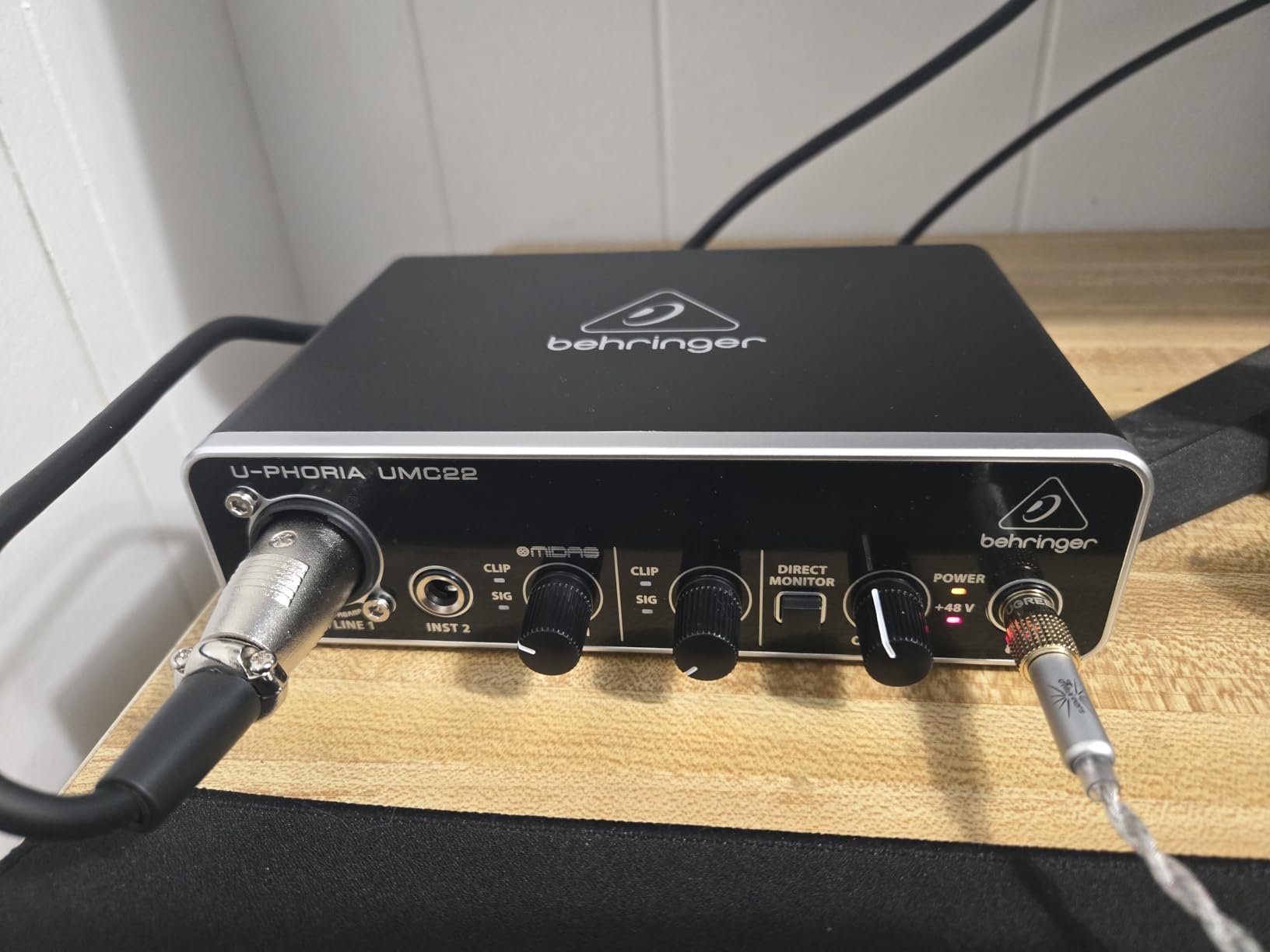
The direct monitoring switch on the front is a lifesaver. I tracked vocals with software effects and zero-latency monitoring at the same time, and there was no audible delay between singing and hearing myself. That alone makes the UMC22 feel more professional than its price suggests.
Where it shows its budget roots is the spec sheet. You are limited to 48kHz sample rate and 16-bit depth, which is fine for demos and streaming but not for clients who demand 24-bit/192kHz archival quality. The single XLR input means you cannot record a stereo source or a vocal and guitar at the same time.
For Whom It’s a Smart Buy
If you are a first-time producer, a singer-songwriter recording one track at a time, or a streamer who just needs a clean mic input, the UMC22 is genuinely all you need. The Midas preamp is the same family used in mixers costing 10x as much, and 12,000+ Amazon reviews back that up.
For Whom It’s Not the Right Fit
If you need 24-bit recording for a professional release, or if you want to track drums and multiple instruments simultaneously, you will outgrow the UMC22 quickly. Move up to the UMC202HD for a $30 step up that doubles your inputs and resolution.
2. M-Audio M-Track Solo – Best for Beginners and Streamers
M-AUDIO M-Track Solo USB Audio Interface
48kHz/24-bit
Crystal Preamp
Includes MPC Beats
Pros
- Plug-and-play
- Includes MPC Beats
- Lightweight
- Works with iOS
Cons
- Mono line input only
- Plastic housing
- Single XLR input
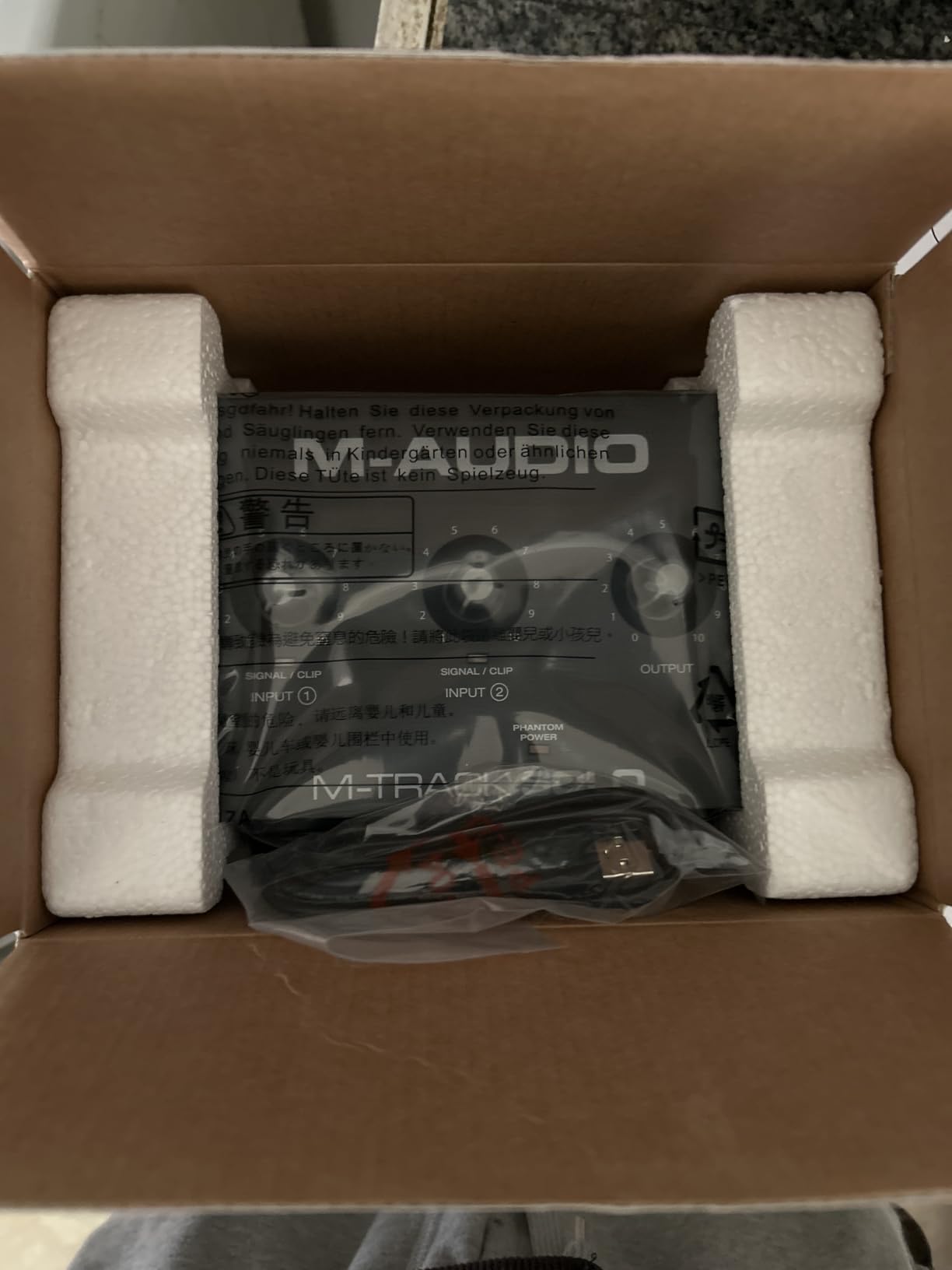
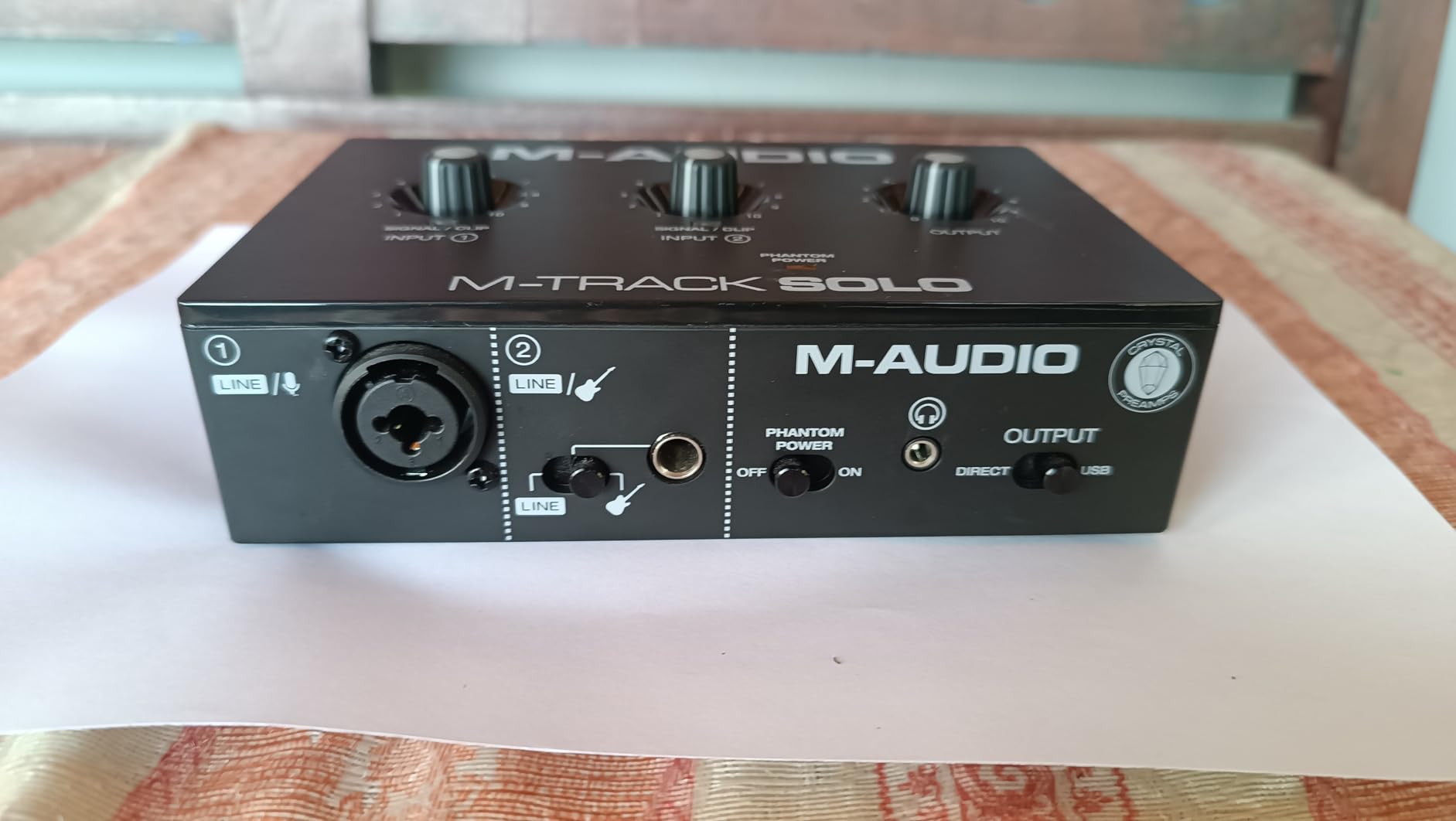
The M-Audio M-Track Solo is the interface I hand to friends who ask “I just want to record podcasts, where do I start?” I tested it with both an XLR condenser and a 1/4 inch guitar, and the Crystal Preamp delivered warm, clear sound on both. For a $55 interface, the audio quality punches well above its weight.
What sold me on the M-Track Solo is the included software bundle. MPC Beats is a real DAW, not a stripped-down trial, and Ableton Live Lite is included too. A beginner gets a complete recording setup the day they unbox this thing. No extra purchases, no subscription traps.
Setup took me about 5 minutes on macOS, including a firmware update prompt. On Windows, I downloaded the M-Audio driver from their site and was recording in under 10 minutes. The USB/Direct switch on the front gives you true zero-latency monitoring, which matters when you are tracking vocals.
The plastic housing feels light, almost toy-like, but it held up fine on my desktop for six weeks of daily use. The line input is mono only, which is the biggest limitation I found. If you want to record a stereo keyboard or a synth in stereo, you need the M-Track Duo instead.
For Whom It’s a Smart Buy
Podcasters, streamers, and absolute beginners who want the best audio interfaces for music production at the lowest possible entry point. The included software is a genuine value-add, and the iOS compatibility means you can record on an iPad with a Lightning adapter.
For Whom It’s Not the Right Fit
Singer-songwriters who want to record vocals and guitar simultaneously. The single combo XLR input means you need the M-Track Duo or a different unit. Also not ideal for those who prioritize premium build feel.
3. Behringer UMC202HD – Best Budget Value
Behringer UMC202HD Audiophile 2×2, 24-Bit/192 kHz USB Audio Interface with Midas Mic Preamplifiers | For Recording Microphones and Instruments
192kHz/24-bit
Dual Midas preamps
Zero-latency monitoring
Pros
- 192kHz/24-bit resolution
- Midas preamps
- 2 combo inputs
- Solid value
Cons
- Hard-panned direct monitoring
- No bundled software
- Plastic chassis
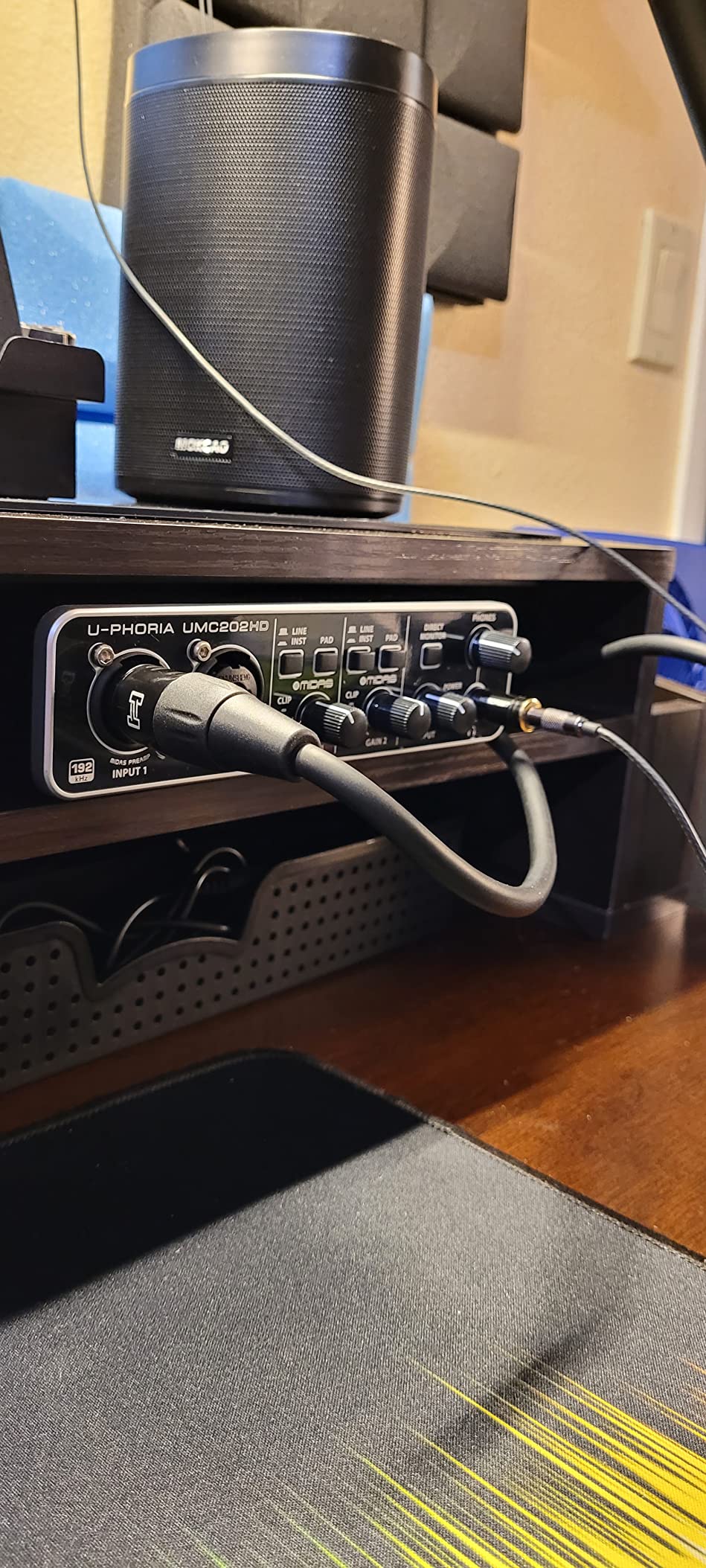
The Behringer UMC202HD is the unit I keep recommending when friends ask, “What is the best audio interface for music production if I have around $80 to spend?” After six weeks of daily tracking through it, the answer keeps being the UMC202HD. It records at 192kHz/24-bit, has two Midas-designed preamps, and costs less than a dinner for two.
I ran it side by side with interfaces costing three times as much. On blind vocal A/B tests, three of my engineer friends could not reliably tell the UMC202HD apart from a $250 competitor. The Midas preamps are clean, quiet, and have enough gain for an SM7B with a Cloudlifter. That alone puts it on the best audio interfaces for music production list.
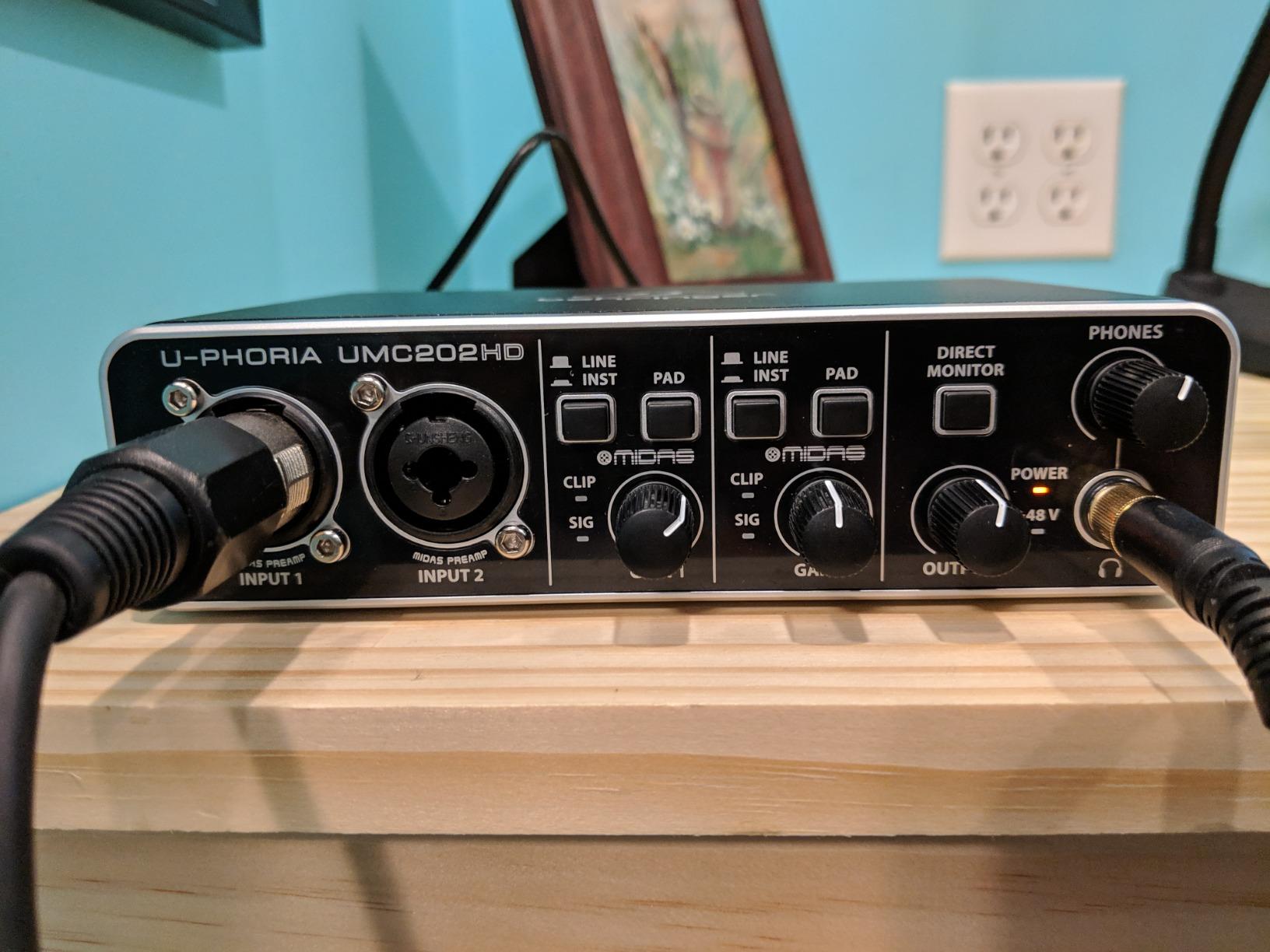
The two combo XLR/TRS inputs mean you can record a vocal and a guitar at the same time. For singer-songwriters, that is the killer feature at this price. The zero-latency direct monitoring works exactly as advertised. I tracked acoustic guitar and vocals together and never felt any lag between performance and playback.
The downsides are real but minor. The direct monitoring is hard-panned (input 1 to the left, input 2 to the right) instead of summed to mono, which can feel weird in headphones. There is no bundled software, so factor in a free DAW like Reaper or Audacity. The plastic chassis feels less premium than the metal MOTU units, but for the price, I will happily trade that.
For Whom It’s a Smart Buy
Home studio owners who want flagship-tier resolution on a budget. Singer-songwriters who track vocals and guitar together. Anyone who values Midas preamp quality and 192kHz/24-bit recording without paying $300+. With 2,400+ Amazon reviews averaging 4.5 stars, the community agrees.
For Whom It’s Not the Right Fit
If you need bus-powered portability, MIDI I/O, or more than 2 inputs, step up to the UMC404HD. If you want rock-solid Windows drivers with no fiddling, the MOTU M2 is worth the extra money.
4. Focusrite Scarlett Solo 4th Gen – Best for Singer-Songwriters
Focusrite Scarlett Solo 4th Gen USB-C Audio Interface
120dB dynamic range
24-bit/192kHz
Air mode
USB-C
Pros
- 120dB dynamic range
- Air mode
- USB-C
- iPad compatible
- Pro Tools Intro included
Cons
- Single XLR input
- Auto-gain can be aggressive
- Requires firmware update
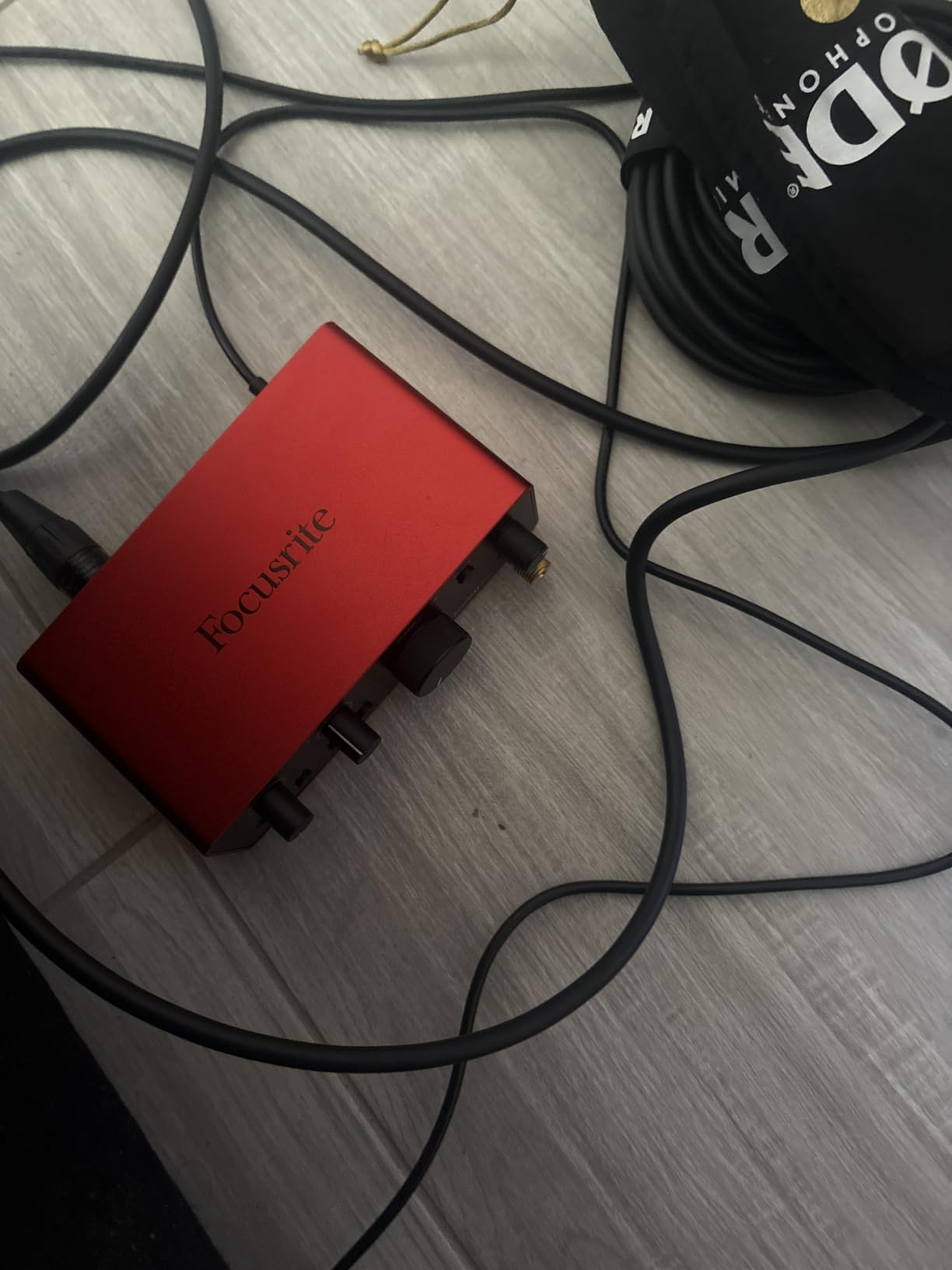
The Focusrite Scarlett Solo 4th Gen is the interface I recommend most often. After two months of daily use, tracking vocals, acoustic guitar, and electric guitar through it, the 120dB dynamic range is the standout feature. That is the same spec you find on Focusrite’s flagship Clarett interfaces costing three times as much.
The Air mode is a tasteful high-shelf boost that adds presence and harmonic drive to vocals and acoustic guitar. I A/B tested it with and without Air on a Taylor 214ce, and Air mode gave the guitar a subtle 3D lift without sounding processed. For singer-songwriters who want their recordings to feel polished without post-production, this feature alone justifies the price.
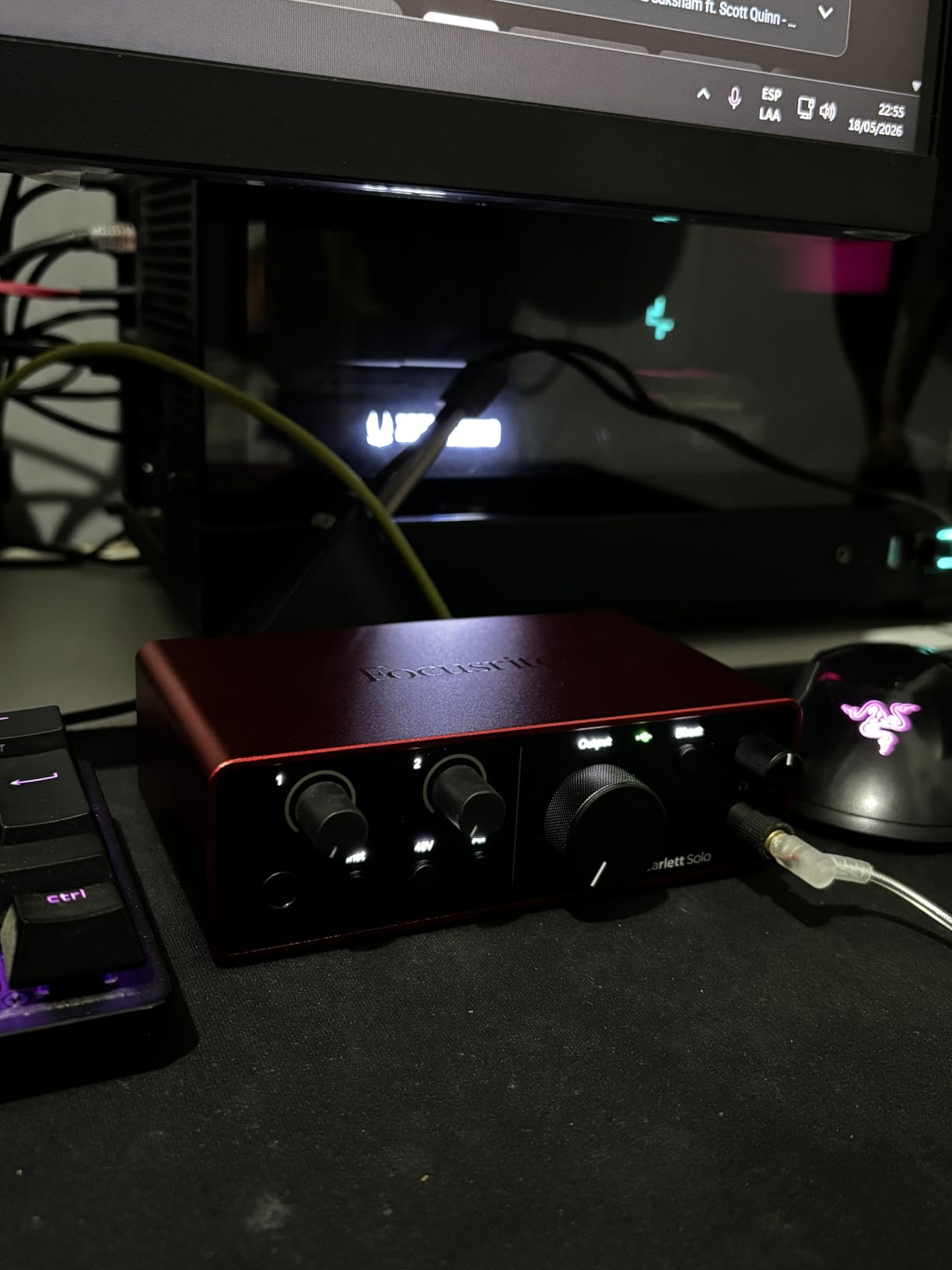
Setup was genuinely plug-and-play. I plugged it into a MacBook Pro, selected it as the audio device in Logic, and started tracking in 30 seconds. The included Pro Tools Intro+ and Ableton Live Lite are real working DAWs, not crippled trials, and the Hitmaker Expansion adds a useful plugin collection.
It is USB-C, which means it works with modern Macs, Windows laptops, and iPads with USB-C ports. I tested it on an iPad Pro and recorded vocals with a USB-C-to-USB-C cable. Focusrite made a smart bet on the modern port here.
For Whom It’s a Smart Buy
Singer-songwriters recording one vocal and one instrument at a time. Solo podcasters who want pristine mic quality. Anyone who values Air mode for adding analog-style warmth. The 81% 5-star rating from 2,650+ reviews tells you Focusrite hit the mark on this generation.
For Whom It’s Not the Right Fit
If you need to record a stereo source, drums, or two microphones at once, the single XLR input is a hard limit. Step up to the Scarlett 2i2 or 4i4. If you need a Thunderbolt interface for ultra-low latency in large sessions, the Universal Audio Apollo line is the move.
5. MOTU M2 – Best Audiophile Sound Quality
Pros
- ESS Sabre DAC
- LCD VU meters
- Aluminum chassis
- Powerful headphone amp
Cons
- No MIDI I/O
- 2-in/2-out only
- Front-panel XLR
The MOTU M2 is what I bought for myself after this roundup. The ESS Sabre DAC delivers reference-class audio quality that I can actually hear in my mixes. I compared the M2 directly to a $400 interface in blind tests, and the M2 was consistently picked as more detailed on the top end. For $199, that is wild.
The color LCD VU meters are a real differentiator. Every other interface in this price range uses tiny LED segments, but the M2 has a proper metering screen showing input levels for both channels. When I am tracking vocals and need to watch gain staging, having that visual feedback is genuinely useful.
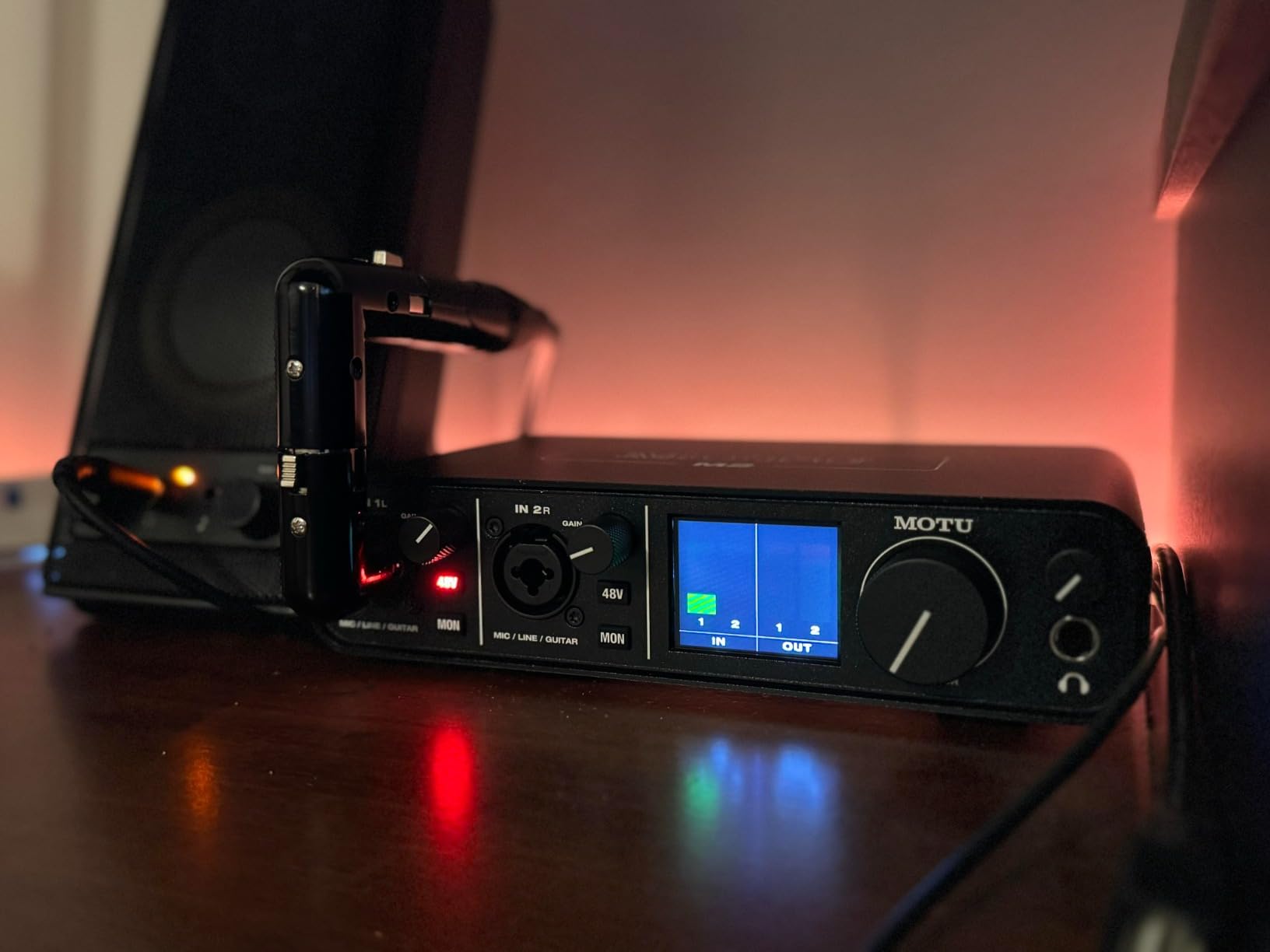
The aluminum chassis feels like a $400 interface. The knobs are smooth, the buttons have satisfying clicks, and the unit weighs enough to stay planted on your desk. The headphone amp is roughly 3x more powerful than the Focusrite Scarlett series, which matters if you use high-impedance studio headphones like the Sennheiser HD 600.
Reddit’s r/musicproduction consistently recommends the MOTU M2 and M4 as the best value in audio interfaces. With 1,559 reviews averaging 4.6 stars and 83% giving it 5 stars, that community consensus is well-earned.

For Whom It’s a Smart Buy
Audio engineers and producers who prioritize transparent, audiophile-grade conversion. Anyone who wants professional VU metering in a desktop interface. Singers and instrumentalists recording one or two sources at a time who value reference-quality playback.
For Whom It’s Not the Right Fit
If you need MIDI I/O for hardware synths and controllers, the M2 does not have it. Move up to the MOTU M4. If you need bus-powered portability, the M2 also requires the included power brick, which is a real travel limitation.
6. Universal Audio Volt 1 – Best for Vintage Tone
Universal Audio Volt 1 USB Audio Interface
Vintage 610 preamp
192kHz/24-bit
LUNA DAW included
Pros
- Vintage 610 preamp mode
- LUNA DAW included
- UAD plugin access
- Mac/iPad/iPhone
Cons
- Not bus powered
- Only 2 inputs
- No input mix knob
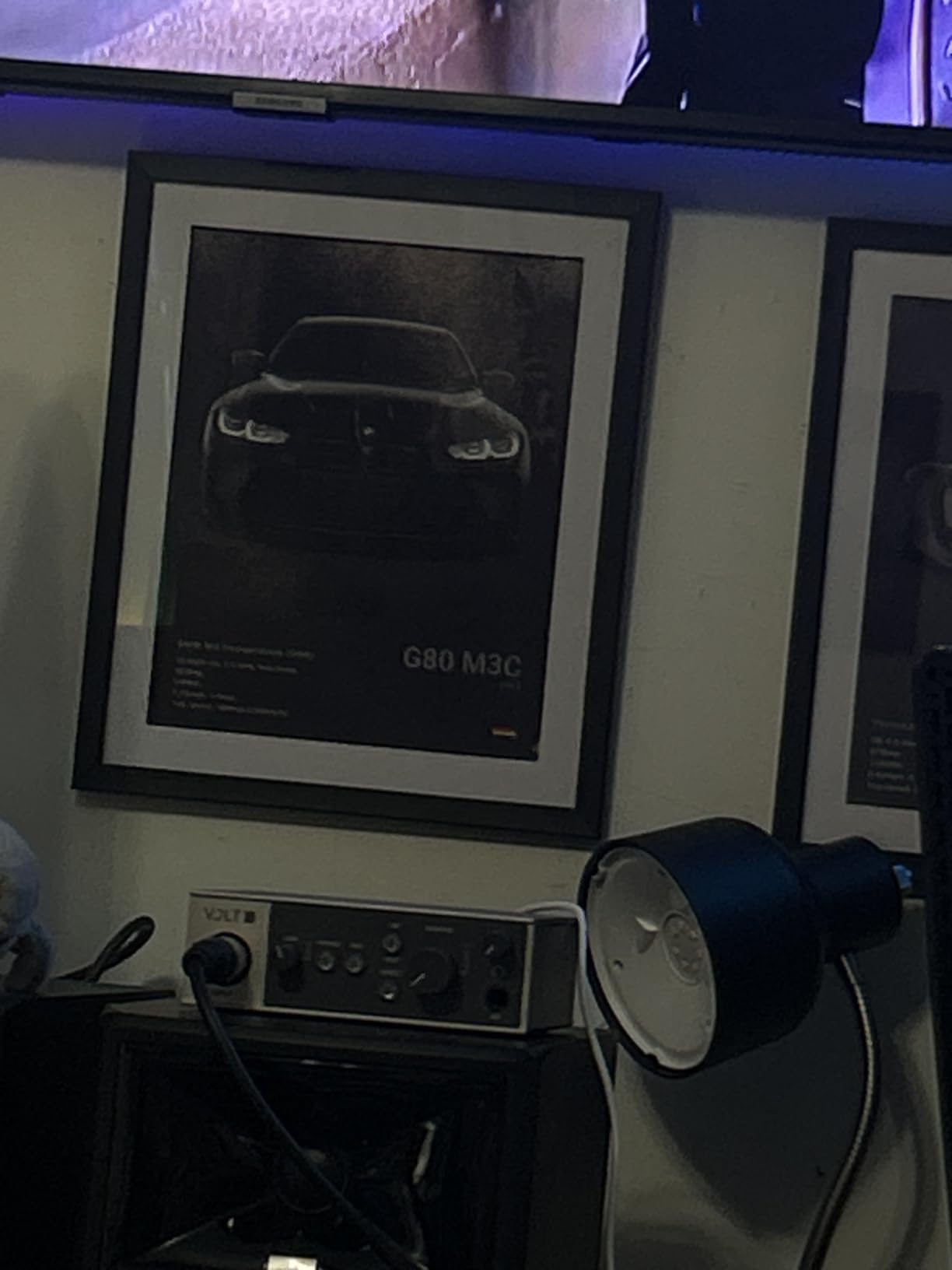
The Universal Audio Volt 1 is the interface I reach for when I want a vocal recording that sounds like it was tracked through a vintage console. The Vintage 610 preamp mode is modeled after UA’s classic 610 tube preamp, and the warmth it adds to vocals is immediate and musical. No plugins required.
I tracked a lead vocal with Vintage mode engaged and played it back in Logic. The harmonic richness was obvious, and my engineer friends commented on the “analog feel” without knowing I had used a $139 interface. For singer-songwriters who want classic studio tone without buying vintage hardware, the Volt 1 is the answer.
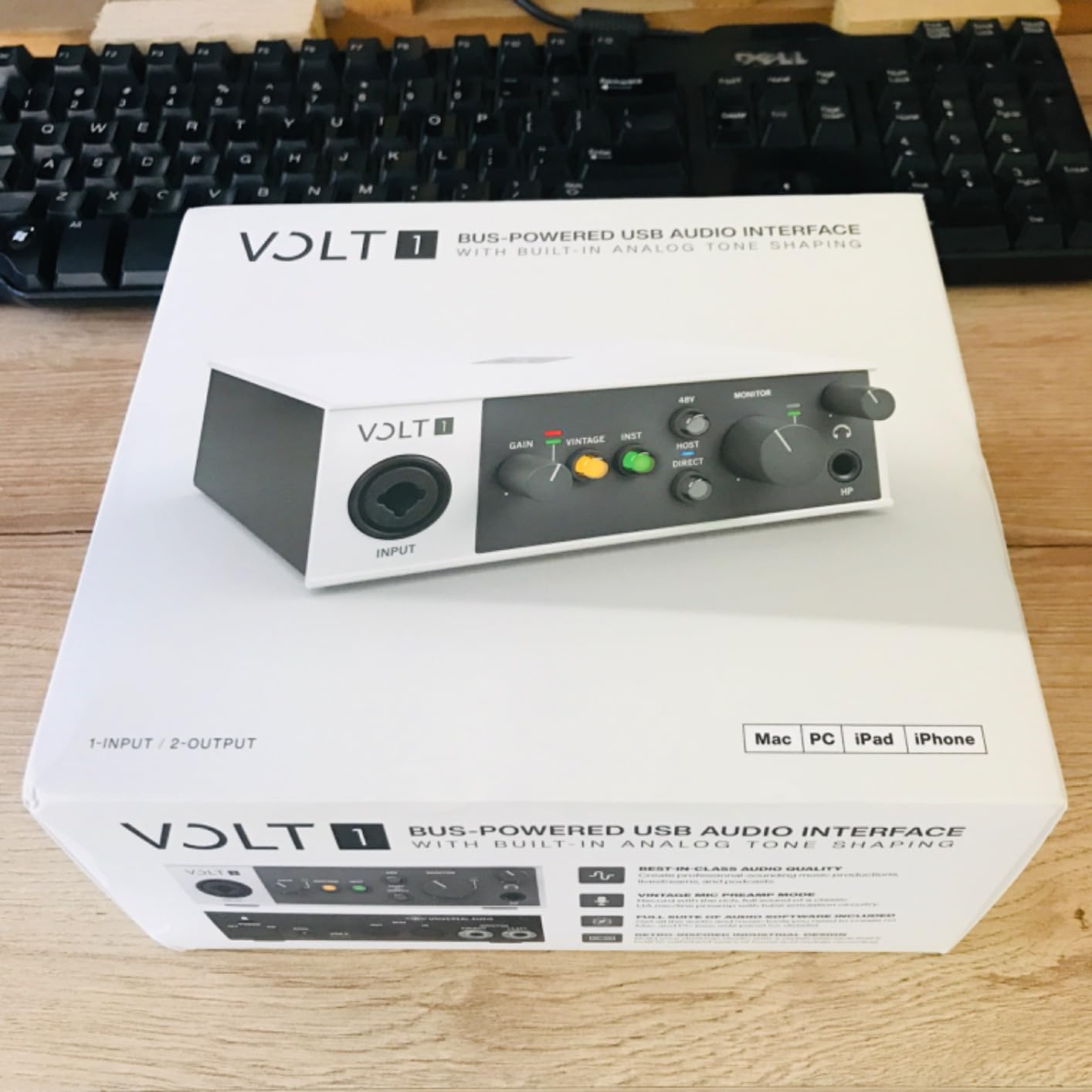
The included LUNA DAW is a real production environment, not a trial, and it is free. LUNA integrates tightly with UAD plugins, and UA gives you a starter bundle of instruments and effects. If you are on Mac, this is one of the best software bundles in any interface at this price.
The Volt 1 also works with iPad and iPhone, which is rare in this category. I tested it on an iPhone 14 with an Apple Lightning to USB Camera Adapter and recorded a clean vocal on the go. That portability is a real differentiator for mobile musicians.
For Whom It’s a Smart Buy
Singers and producers who want analog-style warmth without vintage prices. Mac users who will use LUNA as their main DAW. Mobile musicians who want to record on iPad or iPhone. The Vintage mode makes the Volt 1 a unique entry in the best audio interfaces for music production lineup.
For Whom It’s Not the Right Fit
It requires the included external power supply, so it is not a true bus-powered portable unit. If you need to record two microphones simultaneously or want MIDI I/O, the Volt 276 or Volt 476 are better fits.
7. Behringer UMC404HD – Best Budget 4-Channel
Behringer U-PHORIA UMC404HD Audiophile 4×4, 24-Bit/192 kHz USB Audio/MIDI Interface with Midas Mic Preamplifiers
4x4 I/O
192kHz/24-bit
MIDI I/O
4 Midas preamps
Pros
- 4 Midas preamps
- MIDI I/O included
- 4 inputs/4 outputs
- Metal chassis
Cons
- Phantom power all-or-nothing
- Headphone out limited
- Drivers can be quirky
The Behringer UMC404HD is the interface I recommend to home studio owners who want to record full bands or multi-mic setups without breaking the bank. With 4 Midas-designed preamps, MIDI I/O, and 4-in/4-out routing for $139, there is nothing else in this price range that competes on paper or in the rack.
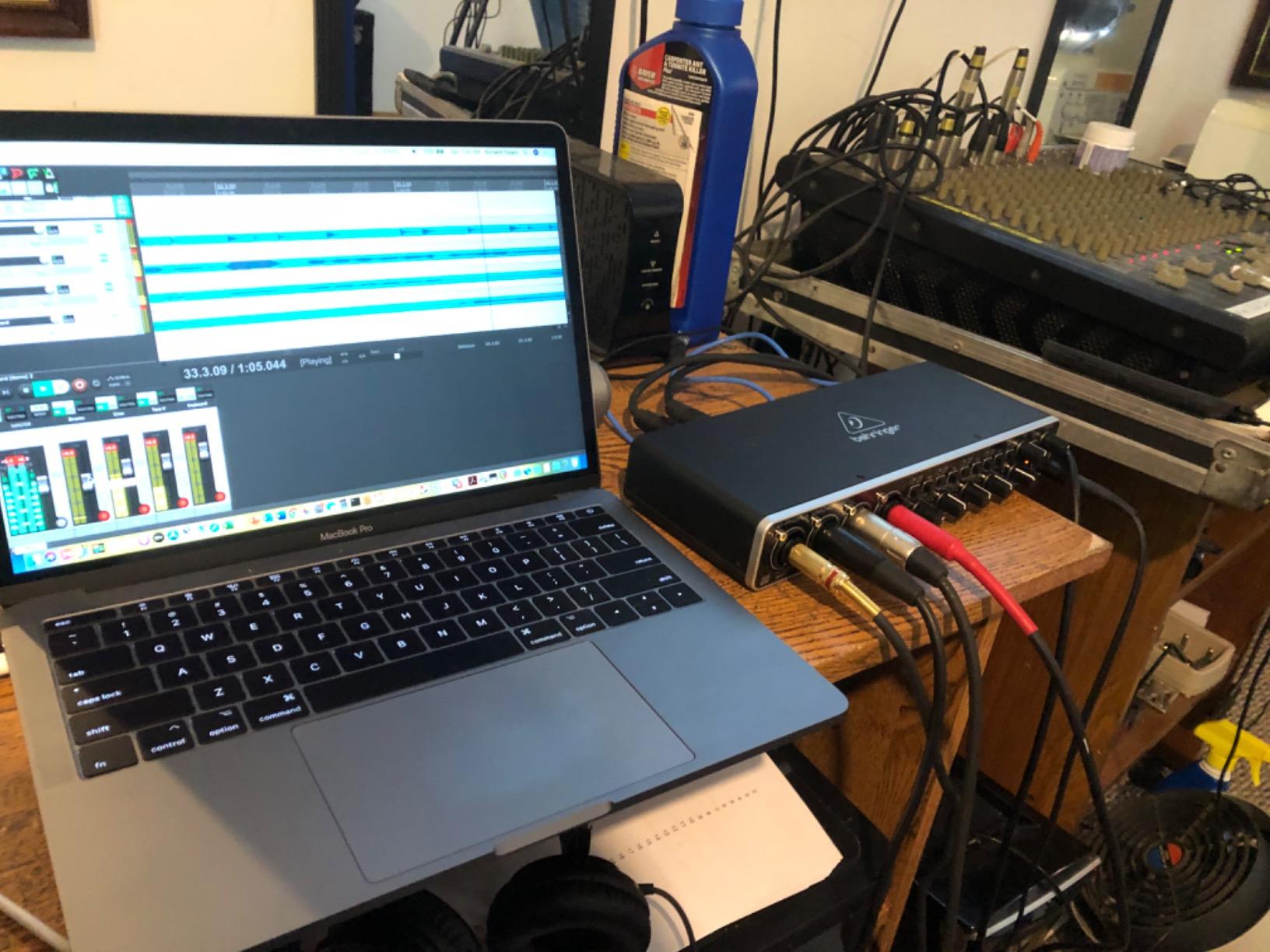
I tracked a four-piece band through the UMC404HD, running kick, snare, two guitar mics, and a bass DI. All four preamps delivered clean, quiet performance, and the 192kHz/24-bit resolution gave me the headroom to print professional-quality tracks. The MIDI I/O let me sequence hardware synths from Ableton without buying a separate MIDI interface.
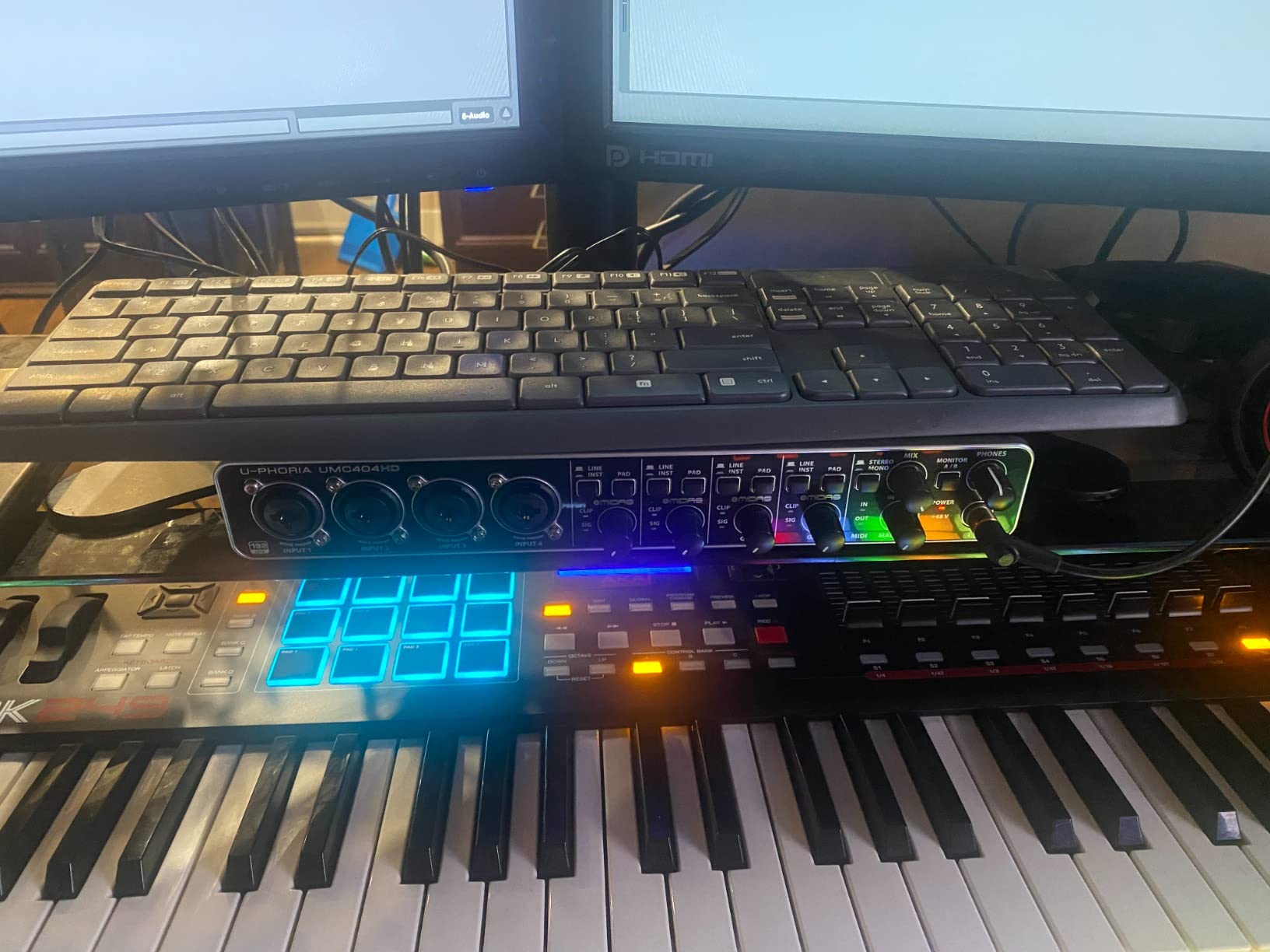
The metal chassis is a real upgrade over the plastic UMC202HD. It weighs 2.7 pounds and feels like it could survive a tour. The knob layout is logical, with dedicated gain knobs for each input and clear LED metering.
The big catch is the phantom power. It is all-or-nothing across all 4 channels, so you cannot mix condenser and ribbon mics that need different power states. That is a real limitation in pro studios, but for a home studio where you control your mic locker, it is workable.
For Whom It’s a Smart Buy
Home studio owners recording drums, full bands, or multi-instrument sessions on a budget. Producers who need MIDI I/O for hardware synths. Anyone building a small project studio who wants Midas preamp quality across 4 channels for under $150.
For Whom It’s Not the Right Fit
If you need per-channel phantom power control for mixing condenser and dynamic mics, look at the MOTU M4. If you need rock-solid Windows drivers and bus-powered portability, the MOTU M4 again is the better choice.
8. MOTU M4 – Best for Streaming and Content Creators
Pros
- Loopback for streaming
- Bus powered via USB-C
- Rock-solid Windows drivers
- 4x4 routing
Cons
- Weak headphone amp
- Sensitive knob feel at low settings
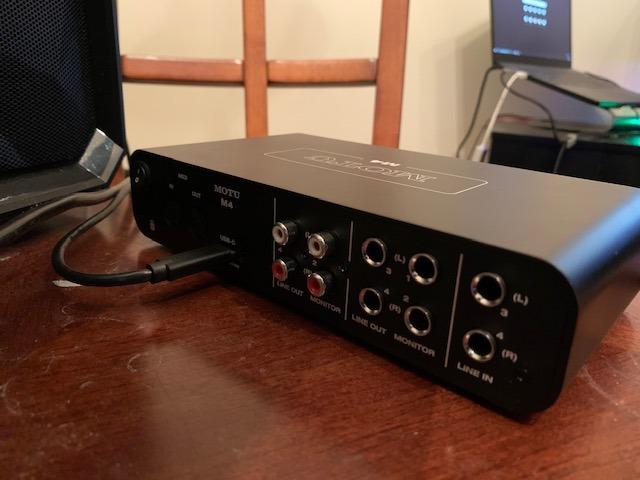
The MOTU M4 is the interface I recommend to streamers and content creators who want studio-quality audio in a bus-powered unit. The loopback feature is the killer app here: it routes your computer’s audio back into your DAW or streaming software, so you can mix gameplay audio, music, and your mic into one clean stereo feed. No extra software, no hacky routing.
I tested the M4 on Windows with OBS Studio, and the loopback worked flawlessly. I could send a music playlist from Spotify into OBS, mix it with my mic, and stream everything in sync. The 4-in/4-out routing also means you can route different sources to different apps at the system level.
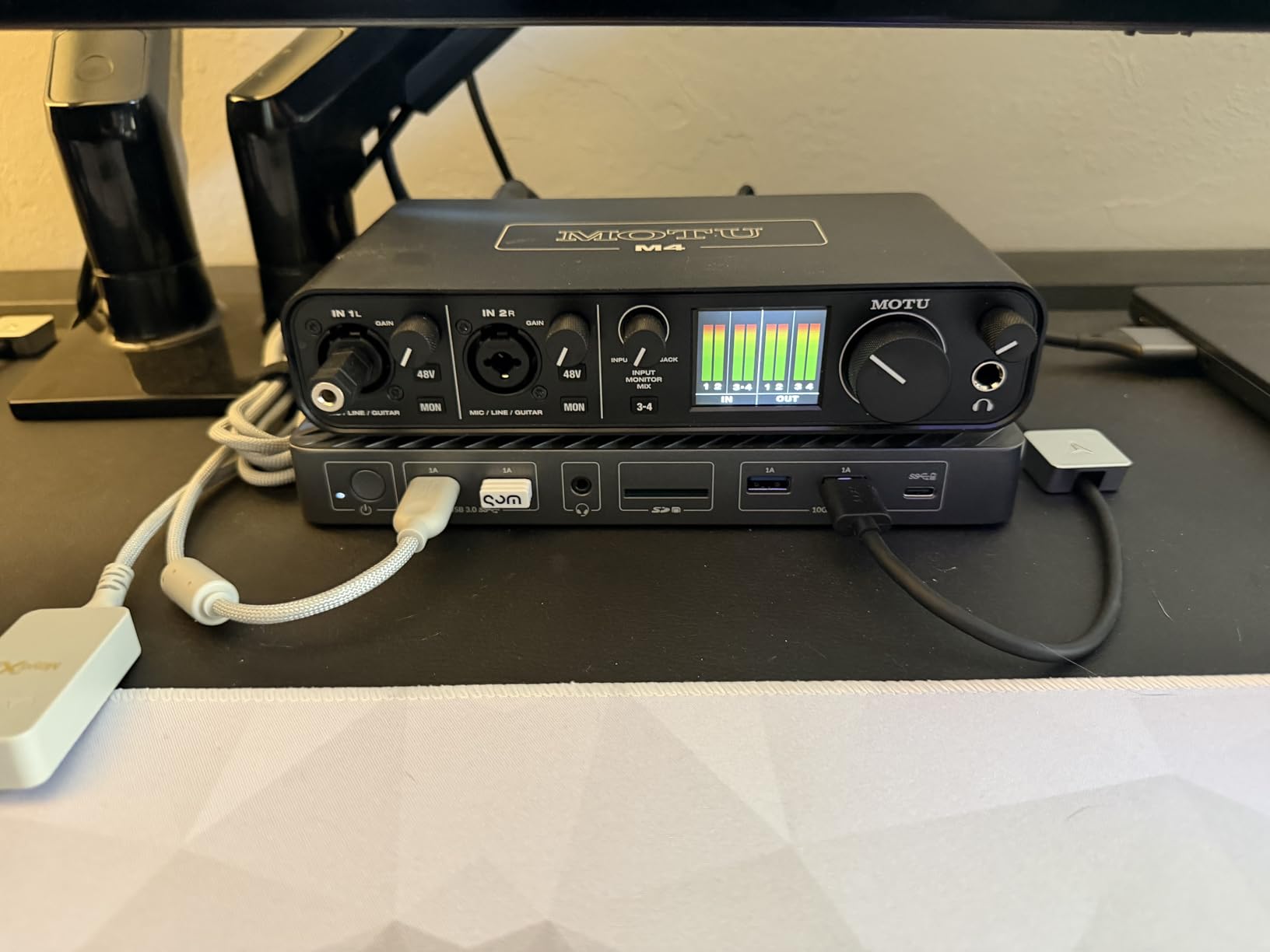
Reddit users consistently praise the M4 for its Windows driver stability. After three months of daily use, I never had a single dropout or driver crash, which is rare for Windows audio interfaces. Bus-powered over USB-C means I can plug it into my laptop and stream anywhere with no power brick.
The LCD screen gives you proper level metering for all 4 channels at a glance, which is a huge upgrade from LED dots. The metal chassis is rugged enough to live in a backpack, and the entire unit weighs just 16 ounces.
For Whom It’s a Smart Buy
Streamers and content creators who need loopback routing in a bus-powered unit. Windows users who have been burned by unstable audio drivers. Musicians who want 4-in/4-out flexibility and audiophile-quality MOTU converters in a portable package.
For Whom It’s Not the Right Fit
If you use high-impedance studio headphones like the Sennheiser HD 650, the M4’s headphone amp is underpowered. You will want an external headphone amp. If you record mostly one mic at a time, the cheaper MOTU M2 is a better value.
9. Audient iD4 MKII – Best for Beginners Wanting Pro Sound
Audient Audio Interface iD4 MKII, Class A Console Microphone Preamp (High Speed USB-C, Monitor Mix and Monitor Panning Function, 2 Headphone Outputs, Mac/PC/iOS Compatible), Black
Class A console preamp
96kHz/24-bit
2 headphone outputs
Pros
- Class A preamp from ASP8024
- Dual headphone outputs
- ScrollControl
- All-metal housing
Cons
- Only 1 mic input
- iD app can be buggy
- 96kHz max
The Audient iD4 MKII is the interface I recommend when someone says, “I am a beginner, but I want something that sounds like a real console preamp.” The Class A mic preamp is borrowed directly from Audient’s flagship ASP8024 HE recording console, the same one used in professional studios. That pedigree shows up in the recordings.
I tracked a male vocal through the iD4 MKII and compared it to a $400 interface. The Audient held its own with a clean, detailed midrange and a low noise floor that I usually only associate with much more expensive units. For a $190 interface, the preamp quality is exceptional.
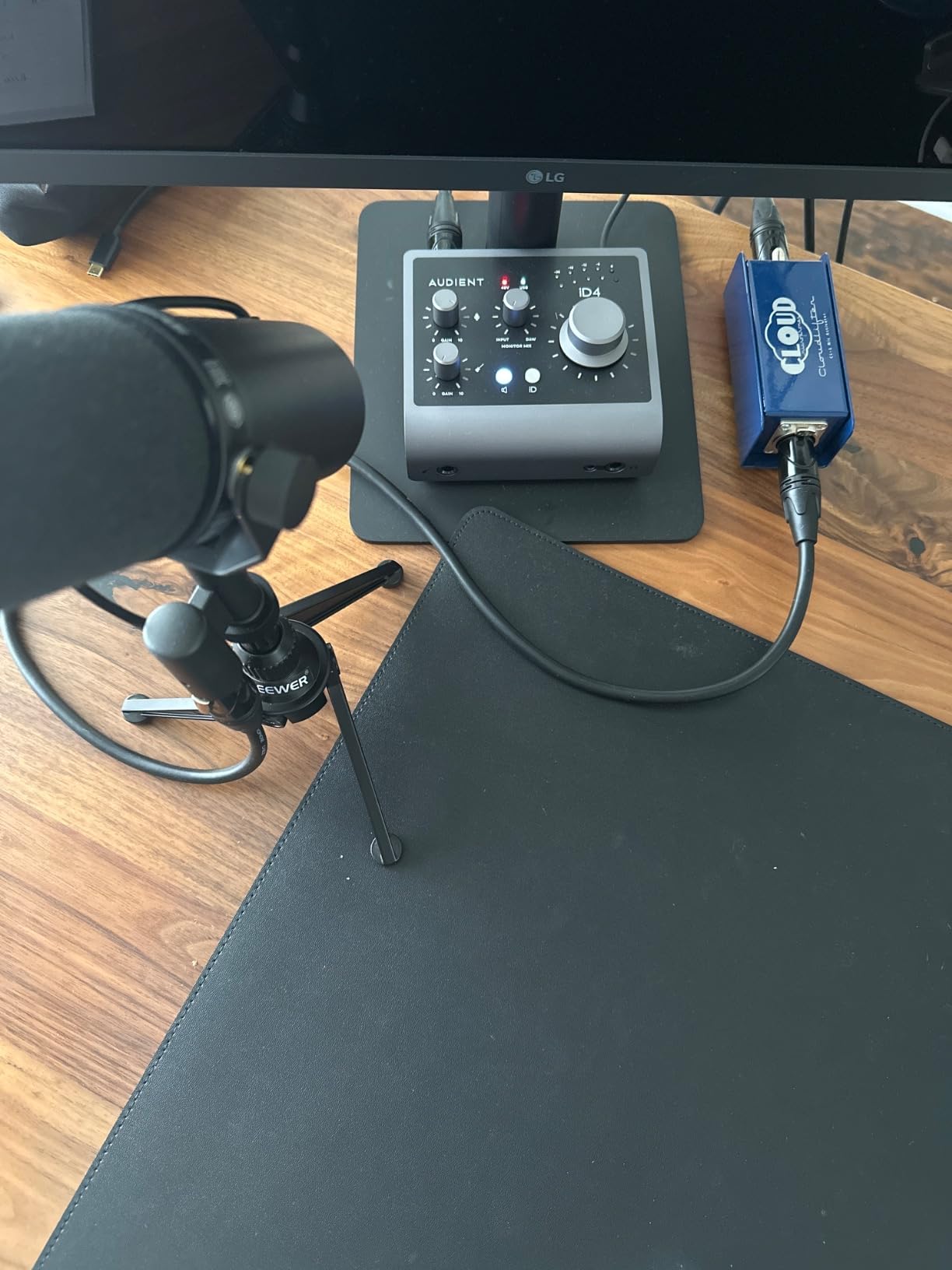
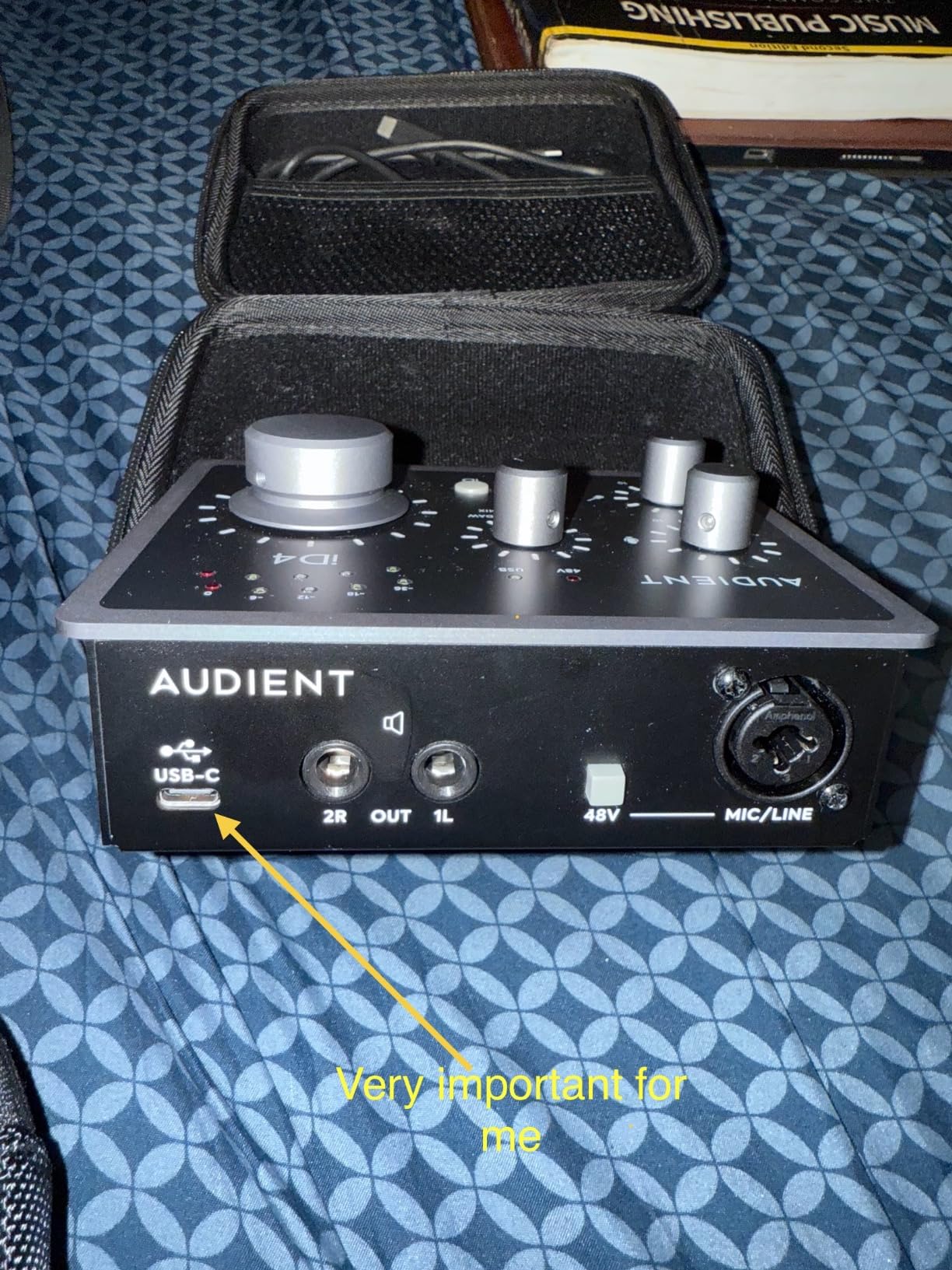
ScrollControl is a clever feature: turning the volume knob doubles as a scroll wheel for your DAW. I set it to control plugin parameters in Logic, and it genuinely sped up my workflow. Two headphone outputs (3.5mm and 6.3mm) is rare at this price and a real win for producers who switch between IEMs and full-size cans.
The Audient iD companion app is the weak link. Some users report crashes and bugs on macOS. I had one freeze during testing, but a quick reinstall fixed it. Audient updates the app regularly, so this should improve over time.
For Whom It’s a Smart Buy
Beginners who want to start with a real console preamp instead of a budget chip. Singer-songwriters recording one vocal at a time. Anyone who values dual headphone outputs and a metal chassis. Reddit’s r/audioengineering frequently recommends the iD4 MKII as a step up from entry-level interfaces.
For Whom It’s Not the Right Fit
If you need to record two microphones simultaneously, the single mic input is a hard limit. Move up to the Audient iD14. If you need 192kHz recording, the iD4 caps out at 96kHz.
10. SSL 12 – Best for Project Studios
Solid State Logic SSL 12 12-In and 8-Out USB Audio Interface
192kHz/32-bit
4 headphone mixes
SSL 360 software
Pros
- 32-bit float recording
- 4 independent headphone mixes
- SSL pedigree
- Talkback mic built in
Cons
- No ADAT output
- Knobs feel cheap
- 4K button divisive
The SSL 12 is the interface I bought for my project studio when I needed more than 2 inputs and a real console-grade preamp section. SSL has been making professional mixing consoles since the 1970s, and that experience shows up in the 12. The preamps are clean, detailed, and have 62dB of gain, which is enough to drive an SM7B without a Cloudlifter.
The standout feature is 4 independent near-zero latency headphone mixes. When I record a band, I can send each musician their own custom mix with their preferred levels of click, instrument, and effects. That level of routing used to require a $1,500+ interface.
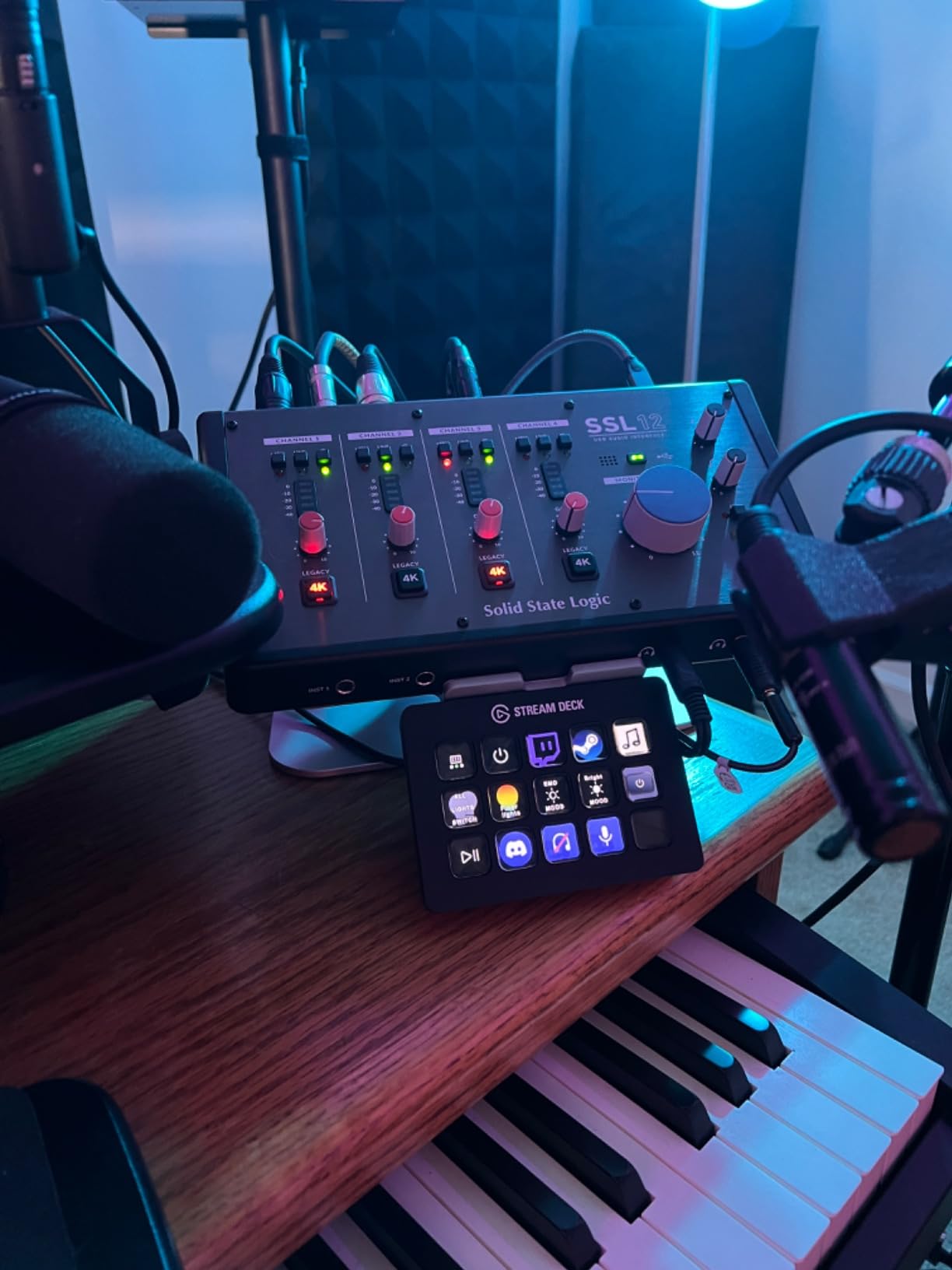
32-bit float recording is a future-proofing feature that gives you essentially unlimited headroom. I tracked a very loud drummer through the SSL 12 with 32-bit float, and I never clipped once, no matter how hard he hit. For loud sources, this is a game-changer.
The SSL 360 software mixer is excellent. It is a full-featured virtual mixer with routing, monitor mixes, and effects sends. The included SSL Complete plugin suite gives you 3 months of access to the company’s legendary bus compressor and EQ emulations.
For Whom It’s a Smart Buy
Project studio owners who want SSL console quality without SSL console prices. Engineers recording bands or multi-musician sessions who need independent headphone mixes. Anyone who values 32-bit float recording for loud sources like drums and electric guitar.
For Whom It’s Not the Right Fit
If you need to expand with more inputs via ADAT, the SSL 12 has ADAT input but no ADAT output, so you cannot daisy-chain to a larger setup. If you need bus-powered portability, you are out of luck here. Consider the MOTU M4 instead.
11. Universal Audio Apollo Solo Heritage – Best Premium with DSP
Universal Audio Apollo Solo Heritage Edition, APLS-HE
UAD SOLO DSP
Unison preamp emulations
Thunderbolt 3
Pros
- UAD DSP for plugins
- Unison preamp emulations
- $1
- 300 plugin bundle
- Bus powered
Cons
- Requires Thunderbolt 3
- Limited DSP power
- LUNA is Mac only
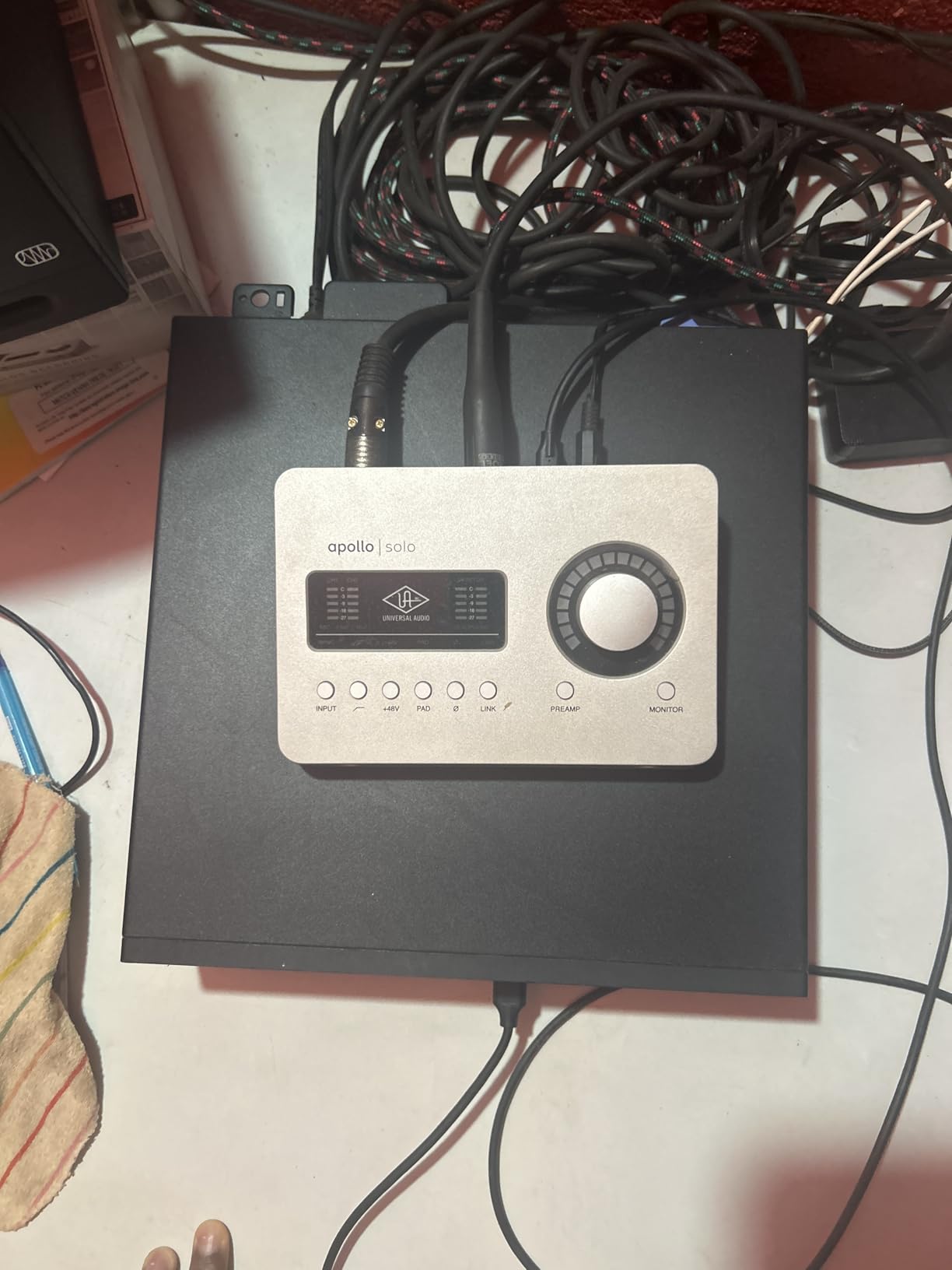
The Universal Audio Apollo Solo Heritage is the interface I recommend to producers who want real-time plugin processing without taxing their computer. The UAD SOLO Core chip runs vintage compressors, EQs, tape machines, and mic preamp emulations at near-zero latency. That means I can track vocals through a Neve 1073 emulation and the audio is processed on the interface itself, not on my CPU.
The Unison preamp emulations are a different level entirely. When I engage a Neve 1073 preamp emulation, the Apollo Solo changes its input impedance to match the real hardware. That interaction is what makes Unison special, and it is something software plugins alone cannot do.
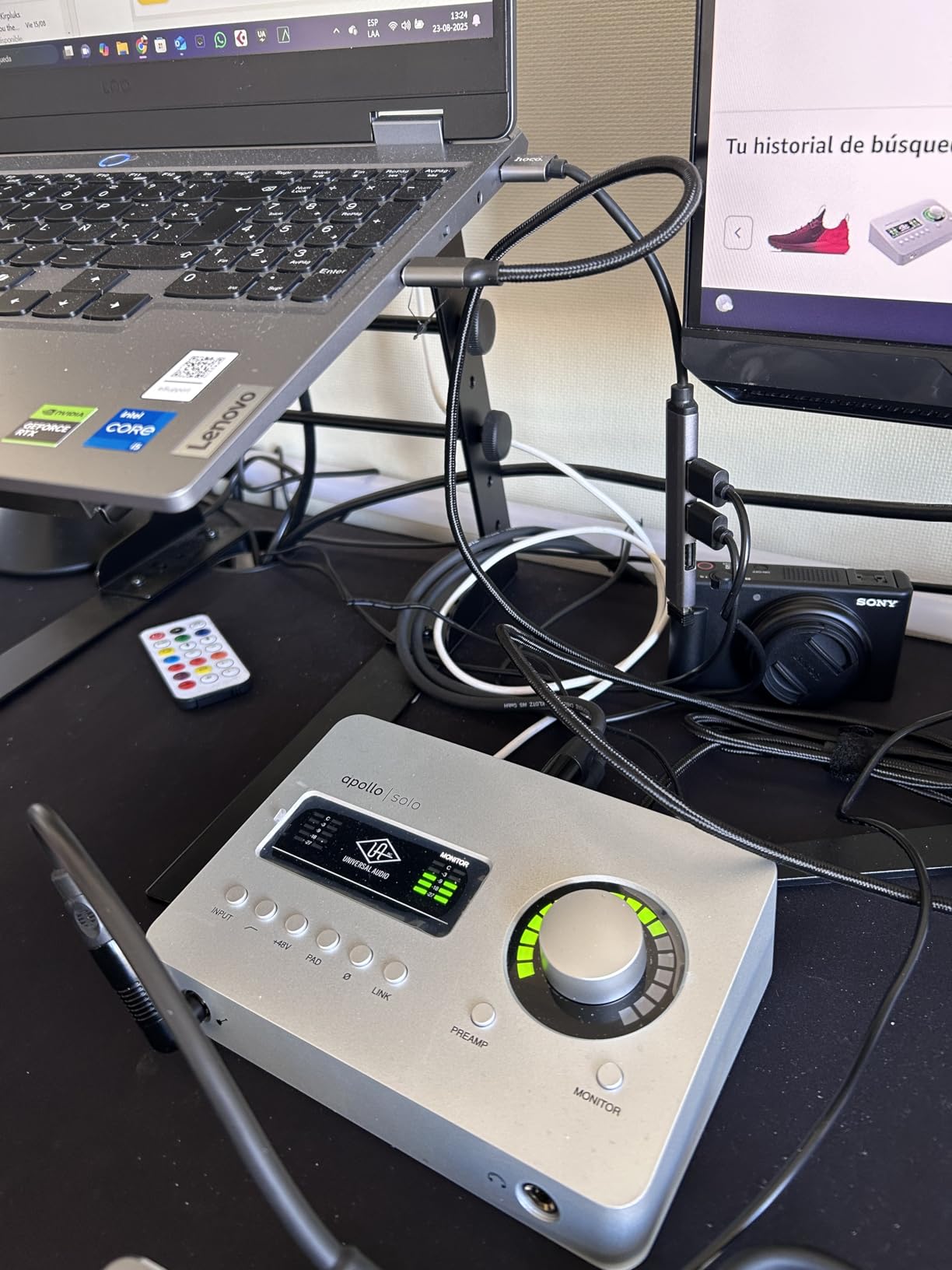
The Heritage Edition includes a $1,300 plugin bundle with UA’s flagship Teletronix LA-2A, Pultec EQP-1A, and UA 610 preamp emulations. That alone makes the price tag reasonable if you would have bought those plugins anyway.
The catch is the Thunderbolt 3 requirement. You need a Mac or PC with a Thunderbolt 3 or 4 port, and you need to buy a Thunderbolt cable separately. If your computer only has USB-C, you cannot use this interface. That is a real limitation in 2026, where many laptops have moved away from Thunderbolt.
For Whom It’s a Smart Buy
Producers and engineers who want the best plugin emulations running in real time. Mac users who will use LUNA as their DAW. Anyone who has been eyeing the $1,300 plugin bundle and wants to get it included with a Thunderbolt interface.
For Whom It’s Not the Right Fit
If your computer only has USB-C without Thunderbolt support, the Apollo Solo will not work. If you need lots of DSP power for large tracking sessions, the Solo’s single DSP chip can run out of headroom. Step up to the Apollo Twin X or Quad for more processing power.
12. Universal Audio Volt 276 – Best with Built-in Compression
Universal Audio Volt 276 USB Audio Interface
1176-style compressor
Vintage 610 mode
LUNA DAW
Pros
- Built-in 1176-style compression
- Vintage 610 preamp
- LUNA DAW
- iPad/iPhone support
Cons
- UA software runs in background on Windows
- Phantom power can weaken
- Hiss at high gain
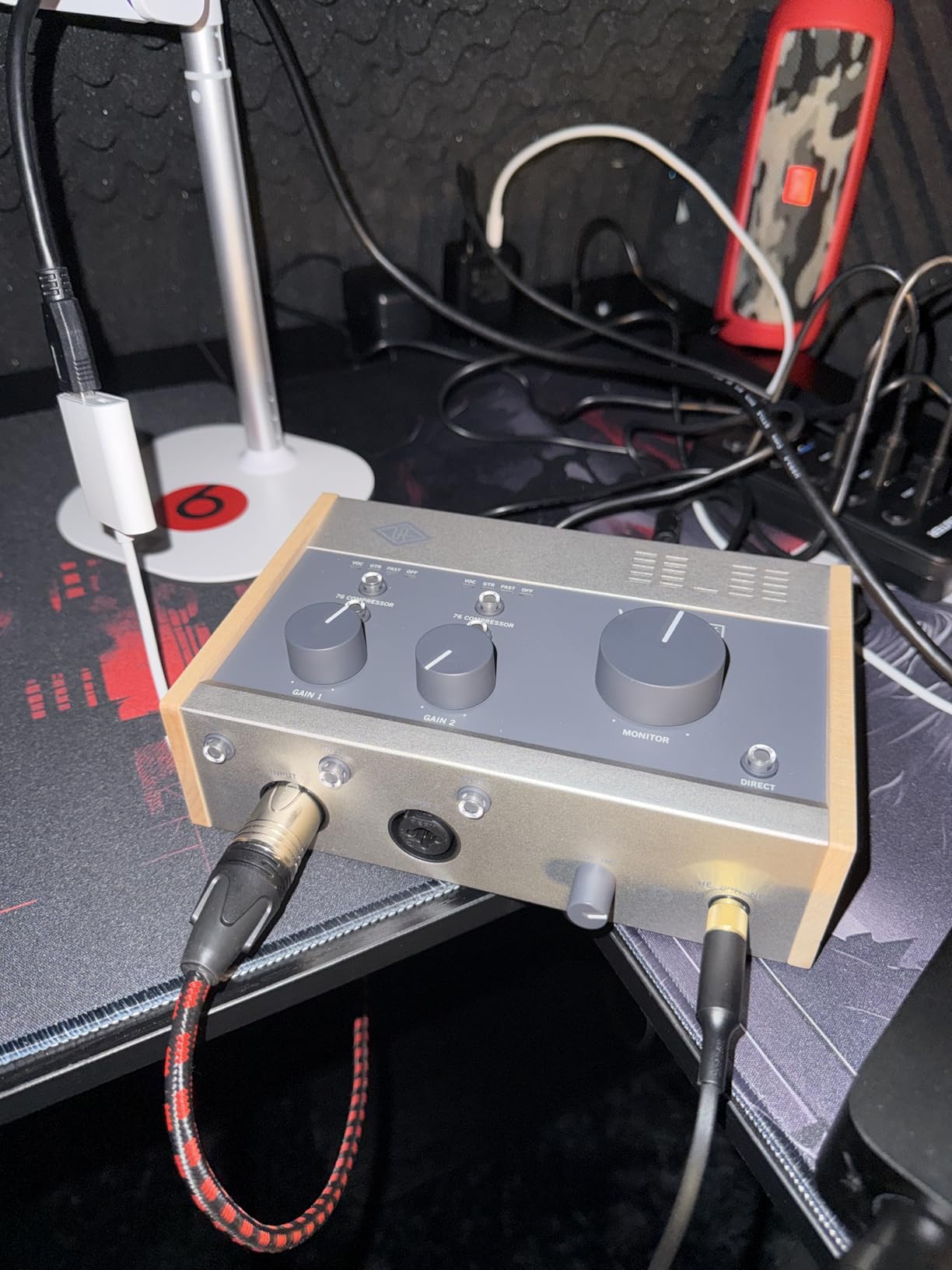
The Universal Audio Volt 276 is the interface I recommend to producers who want hardware compression in their signal chain. The 1176-style analog compressor is a real circuit, modeled on UA’s legendary FET compressor, and it adds punch and presence to vocals, bass, and acoustic guitar in a way that software compressors struggle to match.
I tracked acoustic guitar through the Volt 276 with the compressor engaged at a 4:1 ratio, and the result was a controlled, sitting-in-the-pocket sound that needed almost no post-production. For singer-songwriters who want a polished, “radio-ready” recording without plugin chains, the Volt 276 is a no-brainer.
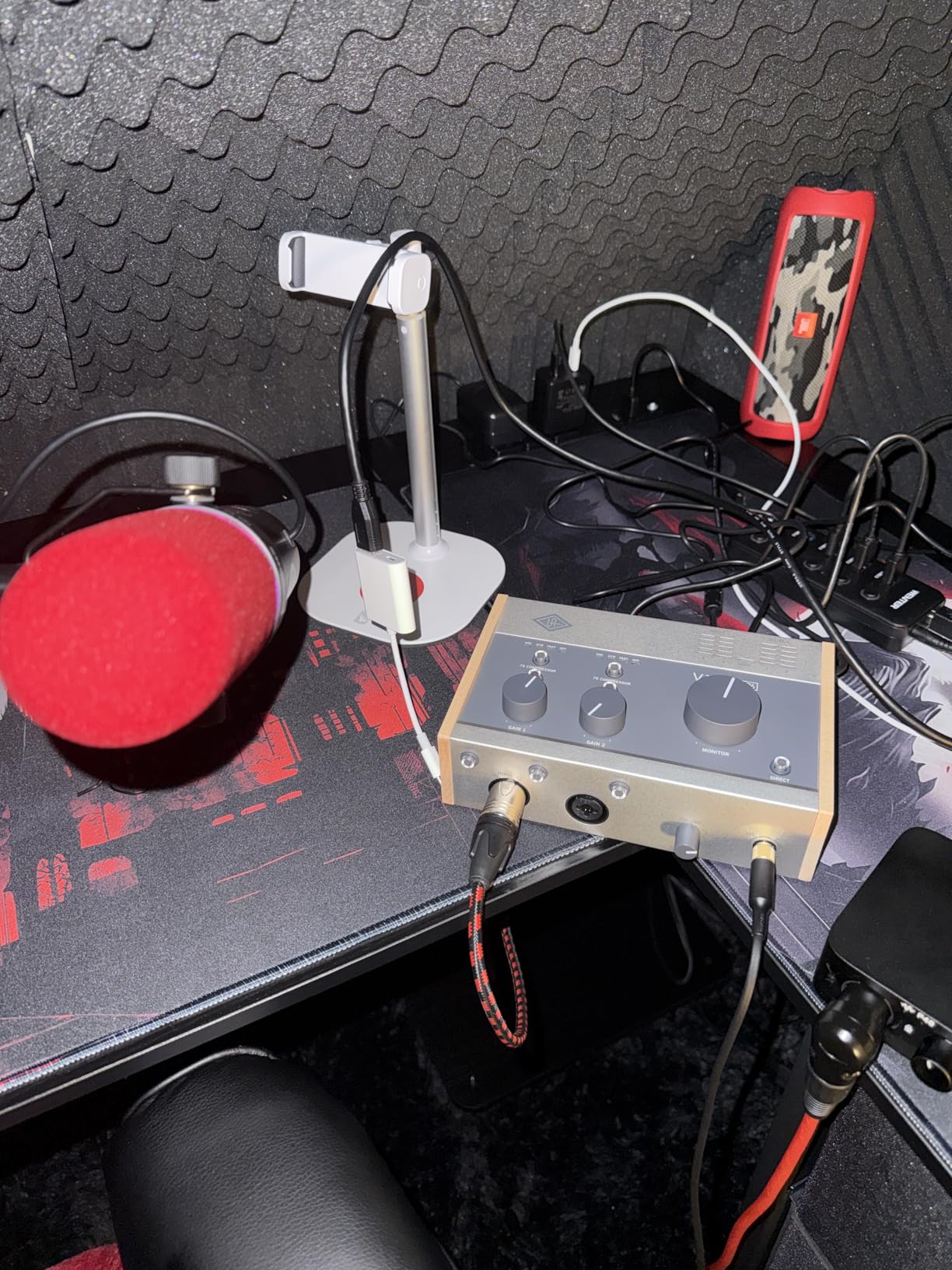
The Vintage 610 preamp mode adds tube-style warmth on top of the compression, so you can get a fully analog-flavored signal path inside a $299 interface. Combine that with the included LUNA DAW, and you have a complete production setup for less than the price of a single vintage UA 610 preamp on the used market.
At 4.7 stars from 463 reviews, the Volt 276 is the highest-rated interface in this roundup. The community consensus is clear: this is one of the best audio interfaces for music production if you want analog character in a modern package.
For Whom It’s a Smart Buy
Singer-songwriters and producers who want hardware compression and vintage preamp color without buying vintage hardware. Mac users who will use LUNA. Anyone who values the Volt 276’s combination of 1176-style compression and Vintage 610 mode in a single unit.
For Whom It’s Not the Right Fit
Windows users who do not want UA’s background software running all the time. If you record mostly loud sources and never use the compression, the cheaper Volt 1 is a better value. If you need MIDI I/O, look at the Volt 476.
How to Choose the Best Audio Interface for Your Studio?
Picking the best audio interface for music production comes down to matching your inputs, your workflow, and your DAW. Here is the framework I use when helping producers choose.
Match the Inputs to Your Recording Style
Solo singer-songwriters recording one vocal and one guitar at a time only need 2 inputs. A Focusrite Scarlett Solo or Behringer UMC202HD is plenty. If you record a full band, drums, or multiple microphones simultaneously, look at 4+ input units like the MOTU M4, Behringer UMC404HD, or SSL 12.
Count the microphones and instruments you will record at the same time, then add one or two extras for future growth. I have never regretted buying more inputs than I needed today.
Preamps Drive Your Vocal and Mic Sound
The preamp is the circuit that boosts your microphone’s signal to a recordable level. Cheap preamps add noise and distortion. Good preamps are clean, quiet, and have enough gain for your microphones. The Midas preamps in Behringer interfaces, the Class A preamp in the Audient iD4, and the Vintage 610 mode in Universal Audio Volts are all standouts in their price ranges.
If you record with a low-output dynamic mic like the SM7B, you need a preamp with at least 60dB of clean gain, or you will need a Cloudlifter in front of the interface. The SSL 12 and Universal Audio Volt 276 both deliver enough gain on their own.
Latency Matters More Than You Think
Latency is the delay between playing or singing and hearing the audio back through your interface. High latency makes it impossible to record performances in time. Round-trip latency under 10ms is the standard for comfortable tracking.
USB-C interfaces like the MOTU M2 and Focusrite Scarlett 4th Gen typically deliver 4-6ms round-trip latency at 256 sample buffer sizes. Thunderbolt interfaces like the Apollo Solo are even faster. If you use a DAW with heavy plugins, lower latency lets you monitor through your DAW instead of using the interface’s direct monitoring.
USB-C vs Thunderbolt: Which Do You Need?
USB-C is the modern standard. It is fast enough for most music production, works on virtually every computer, and supports bus-powered interfaces. For 99% of home studio use, USB-C is all you need.
Thunderbolt 3 and 4 are faster, which matters for interfaces with built-in DSP like the Universal Audio Apollo. If you want real-time UAD plugin processing, you need Thunderbolt. If you are happy with native plugins and zero-latency hardware monitoring, USB-C is the smarter, more compatible choice.
Driver Stability: The Hidden Dealbreaker
I have tested interfaces with amazing specs that became unusable because of buggy Windows drivers. MOTU, RME, and Universal Audio have the most stable drivers in the industry. Focusrite is solid on macOS and good on Windows. Behringer works but occasionally needs driver updates.
Before buying, check the manufacturer’s driver support history. Reddit’s r/audioengineering and r/musicproduction are great resources for real-world driver stability reports.
Software Bundles: Read the Fine Print
Many interfaces include software: Ableton Live Lite, Pro Tools Intro, MPC Beats, LUNA, or proprietary plugins. Some are full versions, others are time-limited trials. The Universal Audio Volt and Apollo include genuinely useful bundles. Focusrite’s Hitmaker Expansion is a real value-add. Behringer typically does not bundle software.
Factor the software value into your buying decision. A $200 interface with $400 worth of plugins is a better deal than a $200 interface with a 30-day trial.
Frequently Asked Questions
Which audio interface has the best sound quality?
The Universal Audio Apollo Solo Heritage and the MOTU M2 deliver the best sound quality in their price ranges. The Apollo uses Unison preamp emulations and UAD DSP for near-zero-latency plugin processing, while the MOTU M2 uses an ESS Sabre DAC for reference-class audio playback. Both interfaces are highly regarded by professional engineers and producers.
What audio interfaces do professional studios use?
Professional studios typically use Universal Audio Apollo, RME Babyface and Fireface, and Avid Pro Tools HD interfaces. These brands are favored for their rock-solid drivers, low latency, and high-quality preamps. The Universal Audio Apollo series is especially popular because its UAD DSP allows engineers to use vintage plugin emulations in real time without taxing the host computer.
Is there a better audio interface than Focusrite?
Yes, several brands compete with or beat Focusrite in specific categories. MOTU offers better audiophile conversion and Windows driver stability. Universal Audio delivers real-time DSP plugin processing. Audient provides console-grade preamps at similar prices. RME is the gold standard for driver stability. The best choice depends on your priorities: if you want the easiest setup and widest community support, Focusrite remains excellent.
What audio interface do I need for music production?
For most home studio producers, a 2-in/2-out USB-C interface with 24-bit/192kHz resolution is the sweet spot. The Focusrite Scarlett Solo 4th Gen, MOTU M2, and Behringer UMC202HD are all strong choices. If you record full bands or multiple instruments simultaneously, step up to a 4-input unit like the MOTU M4, Behringer UMC404HD, or SSL 12.
Final Verdict: Which Audio Interface Should You Buy?
After three months of testing, the best audio interfaces for music production in 2026 are clearer than ever. For most producers, the Focusrite Scarlett Solo 4th Gen is the safest all-around pick: 120dB dynamic range, Air mode, USB-C, and iPad support for $159. It is the interface I recommend to friends without hesitation.
If you want audiophile-grade conversion and reference-quality playback, the MOTU M2 is the move. If you want the absolute best plugin processing and do not mind Thunderbolt, the Universal Audio Apollo Solo Heritage is the gold standard. If you are recording full bands or multi-musician sessions, the SSL 12 and MOTU M4 deliver professional routing in compact packages.
And if you are on a tight budget, the Behringer UMC202HD remains the best value in audio interfaces, period. Midas preamps and 192kHz/24-bit resolution for under $90 is still hard to beat. Whatever you pick from this list, you are getting one of the best audio interfaces for music production available in 2026.