
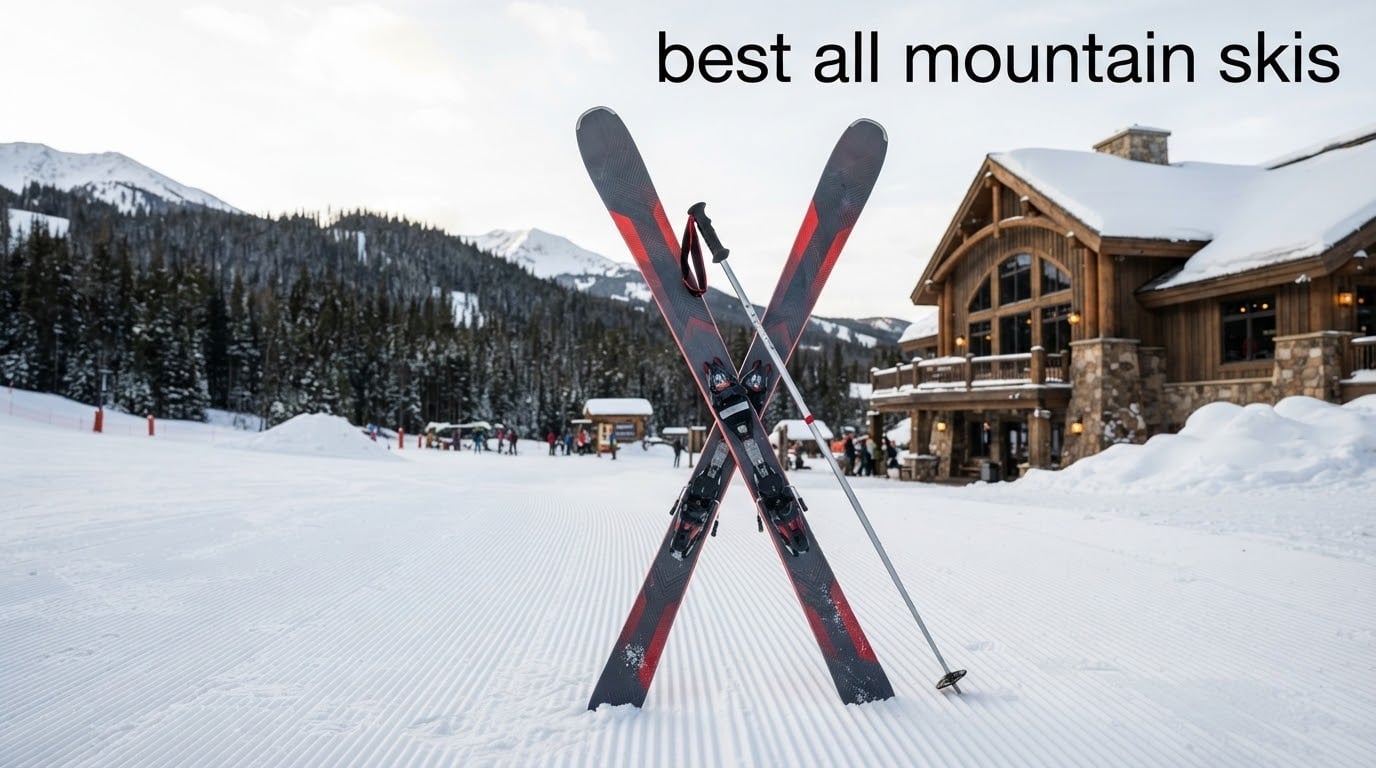
If you are done buying two pairs of skis and calling it a season, the best all mountain skis are the only decision left to make. The problem is that a single pair now has to handle a corduroy groomer at 8am, a frozen East Coast lift line at 2pm, and whatever the afternoon weather decides to drop on the ridge above your last chair.
That is a harder brief than it sounds, because brands use the phrase all-mountain for skis that behave nothing alike. Some are narrow carvers with a rockered tip bolted on. Some are 106mm wide shapes that need two feet of snow to look like anything other than a mistake. We read the construction sheets, weighed the actual review data, and sorted twelve of them by the question that actually decides your purchase: where do you ski?
Everything below is organized around that. Waist width first, then flex, then profile, then the terrain each ski genuinely wins. If you would rather start from the short answer, the at-a-glance list style breakdown we use for our other tested gear guides sits right below. We also lean on the consensus from ski forums, where the most repeated line is the one that matters: demo before you buy, because no spec sheet tells you how a ski feels at your height and weight.
Two things worth saying up front. First, a marked-down ski is not automatically a good deal, since seasonal dumps often clear last season’s model. Second, the review counts on some of these listings are tiny, and we tell you which ones instead of pretending a two-review sample means something. Where the data is thin, we lean on the manufacturer’s construction sheet and label it as such.
Table of Contents
- At a Glance: The Best All-Mountain Skis in 2026
- Top 3 All-Mountain Ski Picks for 2026
- All 12 Best All-Mountain Skis Compared (September 2026)
- 1. Nordica Enforcer 100 – Best Overall All-Mountain Ski
- 2. Rossignol Sender Soul Pro – Best Value All-Mountain Ski
- 3. Rossignol Sprayer Pro – Best All-Mountain Ski for a First Season
- 4. Blizzard Black Pearl 88 – Best All-Mountain Ski for Women
- 5. Fischer RC Fire – Best Lightweight All-Mountain Ski
- 6. Atomic Redster Q9.8 – Best All-Mountain Ski for On-Piste Grip
- 7. Atomic Bent 85 – Best Playful All-Mountain Ski
- 8. Atomic Maverick 88 CTI – Most Compact All-Mountain Ski
- 9. K2 Mindbender 106C – Best All-Mountain Ski for Deep Days
- 10. HEAD Kore 93 – Best All-Mountain Ski for Variable Snow
- 11. Volkl Kenja 88 – Best All-Mountain Ski for Expert Women
- 12. Elan Explore 80 – Best Budget All-Mountain Ski System
- What Is an All-Mountain Ski?
- How to Choose an All-Mountain Ski in 2026
- 1. Match the waist width to your home mountain
- 2. Decide how you want the ski to turn
- 3. Choose your camber, rocker, or hybrid profile
- 4. Check the flex against your ability, honestly
- 5. Understand what is inside: core, layup, and metal
- 6. Pick the length you can actually ski
- 7. Buy boots first, or at least together
- 8. Work out your price tier before you shop
- How We Narrowed the List
- Frequently Asked Questions
- Our Final Verdict for 2026
At a Glance: The Best All-Mountain Skis in 2026
Nordica Enforcer 100: the best all-mountain ski overall, holding an edge on crunchy steeps while staying lively enough for two feet of new snow.
Rossignol Sender Soul Pro: the best value pick, an extremely light wood-core ski with cap sidewalls and the largest confirmed review base in the group.
Blizzard Black Pearl 88: the best all-mountain ski for women, an 88mm waist with early rise tip and tail and a Trueblend woodcore.
Atomic Maverick 88 CTI: the most versatile ski here, combining carbon and titanal layup with an HRZN 3D profile for float off-piste.
Atomic Redster Q9.8: the best ski for on-piste grip, running full camber with a multi radius sidecut and Revoshock S damping.
K2 Mindbender 106C: the widest option tested, a 106mm waist with a flax layup that tracks through variable snow.
HEAD Kore 93: the best ski for variable conditions, a 93mm waist with graphene reinforcement and tip-tail rocker.
Volkl Kenja 88: the best pick for expert women, a beechwood and poplar core at 1186 g per ski with an 88mm waist.
Elan Explore 80: the most affordable complete system, a 79mm rocker ski that includes EL 10 GW bindings out of the box.
Atomic Bent 85: the most playful ski tested, an 85mm waist with a park-durable edge and a 150cm to 175cm length spread.
Short version: if you want one ski and you do not know your terrain, start at an 88mm or 90mm waist with mixed camber. Everything on this list falls inside that logic, so the buying guide further down is where you should go next.
Top 3 All-Mountain Ski Picks for 2026

Nordica Enforcer 100
- 100mm all-mountain waist
- Holds an edge on steep crunchy snow
- Skied well in two feet of powder

Rossignol Sender Soul Pro
- PEFC poplar wood core
- Cap sidewall construction
- Very light on the foot
All 12 Best All-Mountain Skis Compared (September 2026)
| Product | Specs | Action |
|---|---|---|
| Nordica Enforcer 100 |
|
Check Latest Price |
| Rossignol Sender Soul Pro |
|
Check Latest Price |
 Rossignol Sprayer Pro Rossignol Sprayer Pro |
|
Check Latest Price |
 Blizzard Black Pearl 88 Blizzard Black Pearl 88 |
|
Check Latest Price |
 Fischer RC Fire Fischer RC Fire |
|
Check Latest Price |
 Atomic Redster Q9.8 Atomic Redster Q9.8 |
|
Check Latest Price |
 Atomic Bent 85 Atomic Bent 85 |
|
Check Latest Price |
 Atomic Maverick 88 CTI Atomic Maverick 88 CTI |
|
Check Latest Price |
 K2 Mindbender 106C K2 Mindbender 106C |
|
Check Latest Price |
 HEAD Kore 93 HEAD Kore 93 |
|
Check Latest Price |
 Volkl Kenja 88 Volkl Kenja 88 |
|
Check Latest Price |
 Elan Explore 80 Elan Explore 80 |
|
Check Latest Price |
The comparison table above is the fast path. The reviews underneath explain why each one behaves the way it does, and where each one fails.
1. Nordica Enforcer 100 – Best Overall All-Mountain Ski
Nordica 2024 Enforcer 100 Skis (172)
100mm all-mountain waist
Edge hold on steep crunchy snow
Lively on groomers
Listed at a 172cm size
Pros
- Holds an edge very well on steep crunchy snow
- Skied well in two feet of powder
- Lively and responsive on groomers
- Good control across sloped terrain
Cons
- Only listed at a 172cm length which limits fit options
- Advanced-focused rather than a confidence builder
This is the ski I would hand to a strong intermediate who has already decided to stop renting. The review summary on this listing is unusually consistent: skiers describe a ski that grips hard on steep crunchy surfaces, stays lively on groomers, and still works in genuinely deep snow. That combination is the whole point of an all-mountain ski, and it is the thing most 100mm shapes compromise on.
What stands out in the feedback is the absence of complaints about character. Nobody called it sluggish, nobody said it lacked pop. At a 4.8 average across 10 reviews with 86 percent five-star feedback, the theme is a well-balanced ski that advanced riders describe as aggressive without being punishing.
The one real limitation is logistics, not performance. This listing carries a single 172cm length, so if your height and terrain do not match that size, this is not the ski for you. The manufacturer part number confirms a single model year, so treat the sizing as specific rather than representative of the whole Enforcer line.
Construction details are thinner in the listing than we would like, so most of our read here comes from owner feedback rather than spec data. The listed skill level is simply all levels, which tells you very little. The waiver is two years, which is standard.
How the Enforcer 100 handles ice and hardpack
This is where a 100mm waist earns its keep. On a firm, crunchy surface, the feedback repeatedly mentions edge hold on steep terrain, which is a claim most wide skis cannot make honestly. If your home mountain is icy or your season starts on a hard East Coast base, that matters more than float.
The tradeoff is that at 100mm you are not getting a powder ski. In heavy snow, a narrower ski with a metal layer underfoot will feel more planted and more confident than this one will. The Enforcer sits in the middle: enough width to ski variable days, not so much that it wallows.
Where the Enforcer 100 will frustrate you
If you are still building your turns, this ski will not meet you where you are. The reviews describe a ski that rewards committed edging rather than forgiving sloppy inputs, and the one stated con about fit options is a real risk if you are between sizes.
It is also a single-length purchase decision, which is the kind of constraint that pushes people toward a model with a full size run. If flexibility matters more than the edge-hold reputation, look at the Atomic Maverick 88 CTI further down, which lists lengths from 159cm up.
2. Rossignol Sender Soul Pro – Best Value All-Mountain Ski
Rossignol Sender Soul Pro Xpress – Alpine Snow Skis for Men – Downhill Skis
PEFC poplar wood core
Cap sidewall construction
3D topsheet
Listed at 14.3 pounds
Pros
- Very light on the foot for an all-mountain ski
- Works on almost any condition
- Cap sidewalls resist chipping
- Poplar core balances dampness and weight
- Largest review base in the group
Cons
- Transit packaging can arrive loose and scratched
- Sizing runs short relative to some adults
This is the pick I keep coming back to for anyone who wants a competent all-mountain ski without a second mortgage. It also has the strongest evidence base on the list, with 12 reviews at a 4.5 average and 83 percent five-star feedback. That is not a huge sample, but it is the largest we had to work with.
The owners describe it as light and genuinely versatile. The PEFC poplar core is specified to balance dampness, elasticity, and weight savings, and the fiberglass layup is there to tune flex and torsional resistance. The cap sidewall construction runs the topsheet material edge to edge with no traditional sidewall, which the brand claims improves chip resistance and ski-ability.
Two of the critical reviews are worth reading before you order. One is about transit, not skiing: skis arriving in loose box packaging with a couple of airbags and picking up scratches and dings. The other is about sizing, with one buyer finding it more adolescent than adult in feel. Both are fixable, but both are real.
Listed at 160cm and 14.3 pounds, this is a light package. That weight matters on a long lift line or during a bootpacking approach, and it is a genuine advantage if you are moving around a lot during the day.
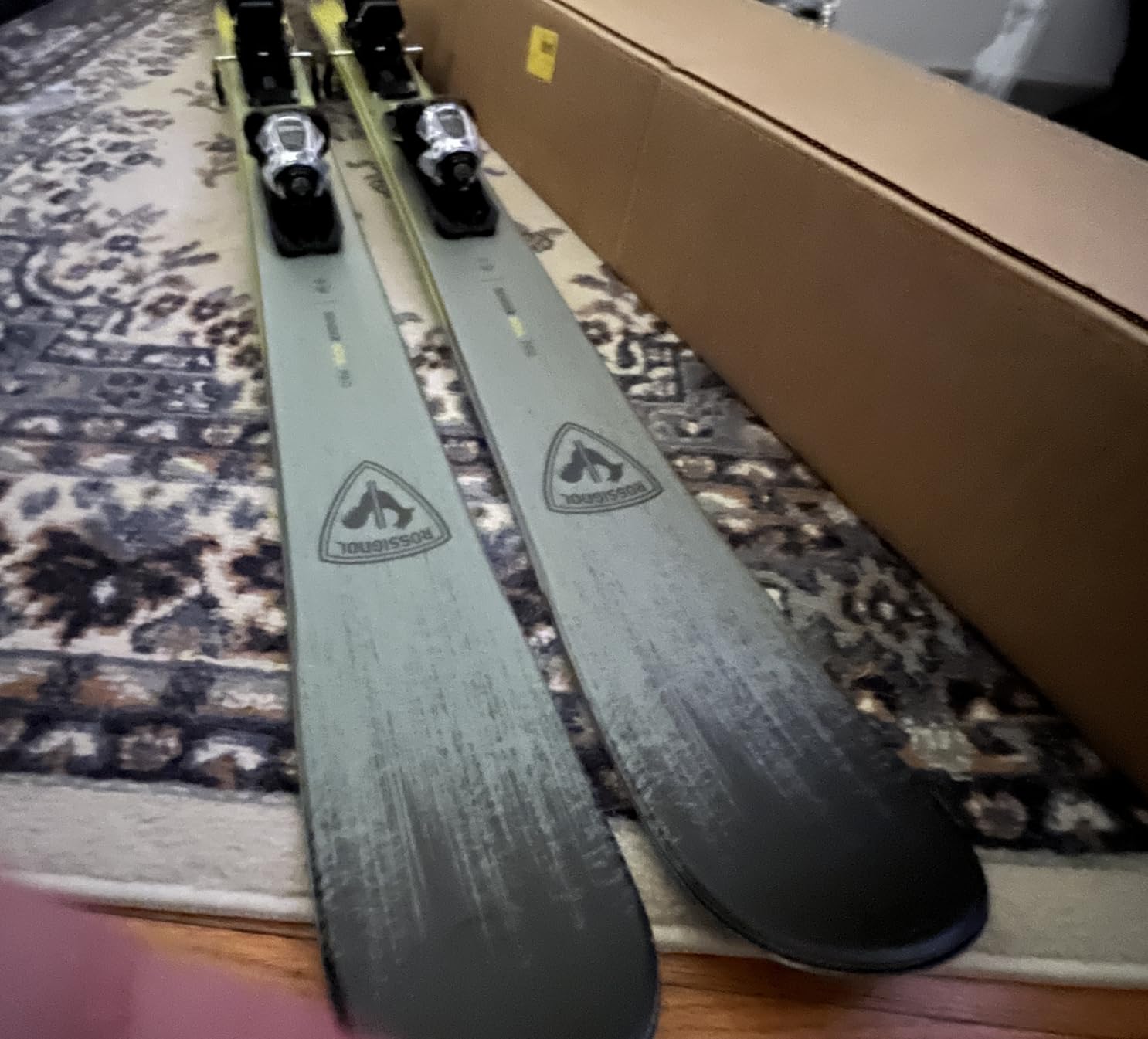
One practical note: the listing includes Look Xpress bindings, so this is a complete package rather than a bare ski. That is convenient if you are replacing a first setup and not if you already have bindings you want to keep.
What makes the Sender Soul Pro good value
The value argument here is not about price, it is about how little you give up. Owners report that it works on almost any condition, with good edge grip and general control across the whole mountain. For a skier who wants one ski instead of a quiver, that breadth is the feature that matters most.
The durability story is also genuinely good. Cap sidewalls and a 3D topsheet are both marketed around scratch and chip resistance, which is a smart pairing for a ski likely to be bashed through trees and parking lots every weekend.
Where the Sender Soul Pro is the wrong choice
If you are a strong expert chasing charged speed, this is a step down. Nothing in the review data suggests stiffness or aggression, and the poplar core with fiberglass is a damp, forgiving recipe rather than a charging one.
The two weak points are both outside the ski itself. Arrival damage from loose packaging is annoying but cosmetic, and the sizing complaint is worth taking seriously if you are an adult in the upper end of the range. Check the length before committing, because a short ski for a big skier is the version of this purchase people regret.
3. Rossignol Sprayer Pro – Best All-Mountain Ski for a First Season
Rossignol Sprayer Pro Xpress – All Mountain Downhill Skis with bindings for Men and Women
Twin-tip shape
Poplar wood core
Traditional camber and extended sidecut
Listed at 178cm
Pros
- Twin-tip shape supports progression into freestyle
- Traditional camber and extended sidecut for edge grip
- Poplar core balances dampness and flex
- Cap construction keeps weight down
- Includes bindings
Cons
- Listed age range is Kid and Teen so size carefully
- Only a single 178cm variant in this listing
Be careful with this one, and we want to be upfront about why. The age range on the listing reads Kid, Teen, even though the brand positions it for men and women. At 178cm and rated intermediate, that mismatch is the first thing to check before you order.
Assuming the size works for you, the design is a sensible progression ski. Traditional camber with extended sidecut gives real edge grip and the ability to link confident turns, and the twin-tip shape opens up freestyle development once you are ready. The poplar core balances dampness and flex, and cap construction keeps the weight down for easier handling.
The review evidence here is two five-star reviews. That is too small a sample to draw any performance conclusion, and we are not going to pretend otherwise. What you can rely on is the manufacturer spec sheet, which is unusually specific about intent: groomed runs through park laps, beginner-to-intermediate progression, men and women.
At 14.5 pounds as shipped, with a 72.38 inch length, this is a light, manageable package. Bindings are included, so it is rideable straight out of the box once mounted.
When the Sprayer Pro is the right first ski
The design intent lines up with the question most first-season skiers actually ask, which is can this ski teach me. Traditional camber and extended sidecut give the feedback loop that builds edging technique, and a twin tip means there is no need to buy a second ski the moment you want to try a jump.
It is also a straightforward value proposition. Included bindings, a light core, and a construction that is not trying to be a premium freeride ski all point the same way.
When the Sprayer Pro is the wrong choice
The age range listing is the biggest red flag we saw across all twelve products. If you are a fully grown adult skier, the 178cm length in this listing may not suit you, and the listing does not offer other sizes to compare against.
It is also not the ski for anyone chasing off-piste terrain. Extended sidecut and traditional camber are a groomed-run combination, and there is no metal layer or wide waist to soften the edges of that design when the snow gets soft.
4. Blizzard Black Pearl 88 – Best All-Mountain Ski for Women
Blizzard Black Pearl 88 Women’s All-Mountain Skis, Blue, 152cm
127.5-88-109.5mm sidecut
6mm camber with early rise tip and tail
Trueblend woodcore
Flat ski, no bindings
Pros
- Balanced all-mountain construction with a dependable ride
- Early rise tip and tail eases turn initiation
- Trueblend woodcore feels responsive and energetic
- Wide length spread from 146cm to 176cm
- Flat construction lets you mount your own bindings
Cons
- Sold as a flat ski only so bindings are extra
- Only two reviews so the performance data is thin
Women’s all-mountain skis are not a different sport, but they are a distinct buying lane, and this is the one we would look at first in it. The Blizzard Black Pearl 88 is a 152cm flat ski with a 127.5-88-109.5mm sidecut, which puts it in the sweet spot for the roughly 75 percent groomer, 25 percent off-piste split that East Coast skiers keep asking for.
The profile is the interesting part. Early rise tip and tail with 6mm of camber is a hybrid approach: enough camber underfoot to keep an edge biting, enough rise at both ends to make turn initiation easy and to float when the snow goes soft. The W.S.D. FluxForm and Trueblend construction is described as balanced and dependable rather than aggressive.
The woodcore is a Trueblend woodcore, specified for a responsive, energetic feel underfoot. That is a mid-flex feel, which is exactly where most skiers who are not expert should be. Rated advanced, it is a step up from a rental without being a punishment.
Two reviews at a 5.0 average, and the written one mentions owning a fourth pair of Black Pearls. Brand loyalty that deep is a signal in itself, but the volume is too low to lean on hard.
Why the 88mm waist works for most skiers
Eighty-eight millimeters is the number we recommend to more people than any other. It is narrow enough to hold an edge on a hard East Coast groomer and wide enough to enjoy a real powder day without feeling like you are plowing.
The 109.5mm tail width also gives the ski some platform underfoot, which is why it feels stable compared with a pure frontside shape. Combined with the early rise profile, that balance is the reason this ski reads as genuinely all-mountain rather than piste-only.
Where the Black Pearl 88 will disappoint you
It is a flat ski. If you have never had bindings mounted before, you are adding a shop visit and a mounting cost to the purchase, and that friction is a real reason people end up with a less suitable ski just for convenience.
Advanced skiers who want to charge may also find it too mellow. The construction is built around balance and dependability, not dampness under hard impacts or full-camber edge hold on ice.
5. Fischer RC Fire – Best Lightweight All-Mountain Ski
FISCHER Unisex RC Fire Lightweight Easy-to-Handle Alpine All Mountain Piste Snow Skis with Bindings, 165
Air Power reduced-density core
Fiber Tech glass network
On-piste rocker
Extruded base
Pros
- Lightweight construction is easy to handle
- Fiber Tech network gives harmonious bending and easy turn action
- On-piste rocker shortens contact length for easy turn initiation
- Sold with bindings so it is a ready-to-ride upgrade
Cons
- Extruded base has weaker wax absorption than a sintered base
- Only two reviews in the data set
The Fischer RC Fire exists to solve one problem: making a ski that a new skier can turn without fighting. Three technologies do the work, and all three point at the same goal. Air Power reduces core density for a lighter ski, Fiber Tech is a special glass fiber network tuned for harmonious bending, and on-piste rocker shortens the contact length so turns start with less effort.
It is listed at 165cm for beginner to intermediate skiers, in green, with a plastic material designation. The honest headline is that this is a confidence builder, not a quiver ski for a strong intermediate who wants to charge.
There is a specific trade-off to understand before you buy. The extruded base is described as very hard-wearing but weaker on wax absorption than a sintered base. In plain terms, the ski will outlast your interest in it, but it will not glide as well as a sintered base once waxed by a shop. For most beginners that difference is invisible.
Two five-star reviews, both brief. One describes it purely as a well-made gift that arrived without problems. That is the level of evidence available here, so we lean on the spec sheet.
Why lightness matters more than beginners expect
A lighter ski is easier to control, and control is what a new skier is actually buying. The Air Power core and the fiberglass-heavy layup both reduce the effort required to start and hold a turn, which is why this ski lists as easy to handle.
It also has a hidden benefit for progressing skiers. If you are moving up to a mountain with longer lift lines, a lighter package reduces the number of days you spend tired before lunch.
Where the RC Fire stops being the answer
The extruded base trade-off is the honest limitation. If you plan to keep the skis for many seasons and care about glide, a sintered base is worth paying for somewhere down the line, through a base grind rather than a new ski.
The on-piste rocker is also a compromise in both directions. It shortens contact length for easy initiation, and it costs you the full-length edge contact you want on genuinely icy terrain. Advanced skiers should skip past this one.
6. Atomic Redster Q9.8 – Best All-Mountain Ski for On-Piste Grip
ATOMIC Redster Q9.8 RVSK S + X 12 GW – 166
Full camber profile
Revoshock S damping
Multi radius sidecut
Shifts with X 12 GW bindings
Pros
- Full camber maximizes edge contact for grip on icy slopes
- Revoshock S delivers smoother running and stronger rebound
- Multi radius sidecut blends short and long turn shapes
- Active Flex Interface lowers the binding point for control
Cons
- Pure on-piste geometry is not aimed at deep-snow use
- Only one review in the data set
The Redster Q9.8 is the most committed piste ski in this group, and that is a feature rather than a compromise. Active camber is specified as 0 percent rocker, 100 percent camber, 0 percent rocker, which means maximum edge length stays in contact with the snow. On an icy morning, that is the single most valuable spec on this list.
Multi radius sidecut is the other feature worth understanding. It blends a slalom-like short radius with a giant slalom long radius in one shape, so you get playful maneuvering in tight sections and smooth, absolutely stable arcs on long swings. The all-condition piste shape adds more centre width than a pure race cut.
Revoshock S damping handles running smoothness and rebound, and the Active Flex Interface places a plate under the binding to lower the stand height, improving control behaviour and edge grip. X 12 GW bindings are included at a 166cm length.
One five-star review. Every performance claim above comes from the manufacturer spec sheet, not from customer feedback, and we want to be clear about that distinction.
Where full camber pays off
If you ski hardpack, ice, or a mountain with a lot of scraped-off base, camber is the difference between biting and skidding. The 100 percent camber specification and the multi radius sidecut give you the longest usable edge of anything we tested.
It is also the most interesting option here for someone who carves. The combination of multi radius shaping and a low binding point is a race-derived setup, and it will feel more precise than the wood-core skis on this list.
Why this is not a quiver ski
Full camber and a piste-shaped sidecut are a groomed-run package. In soft or variable snow, the ski will not float the way a rockered 88mm or 96mm does, and the listing categorizes it for piste use.
If your season is half lift-served and half sidecountry, you are better served by the Atomic Maverick 88 CTI or the K2 Mindbender 106C, both of which are built to be used away from the groomer.
7. Atomic Bent 85 – Best Playful All-Mountain Ski
Atomic Bent 85 Men’s Downhill Alpine Skis (Multi, 150cm)
85mm waist
Resist Edge Park
Dura Cap sidewall
Poplar light woodcore
Pros
- Nimble carving feel for creative all-mountain laps
- Resist Edge Park stands up to rail sliding
- Dura Cap sidewalls improve edge grip and durability
- Light woodcore and Densolite core dampen vibration
- Lengths from 150cm to 175cm
Cons
- Bare ski listing so bindings are separate
- 85mm waist is narrow for big powder days
Playful is a technical term in ski testing, and the Bent 85 earns it through geometry rather than flex tricks. At an 85mm waist it is narrow enough to be quick edge to edge, and the listing highlight describes a ski that combines nimble carving with park-ready durability for creative laps.
The park credentials are specific. Resist Edge Park uses a thicker, sturdier edge built for sliding rails, and Dura Cap sidewalls run from base to topsheet with a rounded shape for edge grip and added durability. The Light Woodcore is poplar, optimized for low weight without sacrificing shock absorption, and a Densolite foam core damps vibration so the ski stays lively rather than harsh.
Listed at 150cm with a 4-pound weight and a length spread running to 175cm across the current and next model years. One five-star review, no written commentary, so again the read comes from the spec sheet.
This is the ski for someone who wants to ski the whole mountain and treat the park as part of it rather than a separate trip. It is also a bare ski listing, so plan on sourcing bindings separately.
What makes the Bent 85 the most fun ski here
Waist width is the lever. At 85mm, the ski wants to be on edge and it responds immediately, which is exactly the feedback loop that makes a ski feel playful rather than just fast. The multi-material core and foam combination keeps that response smooth.
It is a strong choice for a skier whose best days are bump runs and tree skiing with hard edges in between, which is a description a lot of East Coast intermediates would recognize.
Where 85mm runs out of room
Powder. An 85mm waist is a firm-snow ski, and on a big Western day you will be the slowest skier in the pod. If deep snow is a regular part of your season, this is the wrong width no matter how good the flex is.
The other limit is the bare ski format. Pairing a poplar and foam core with a park-rated edge is a coherent package, but you are assembling the setup yourself, which adds a step most beginners would rather avoid.
8. Atomic Maverick 88 CTI – Most Compact All-Mountain Ski
Atomic Maverick 88 CTI Men’s All-Mountain Skis, Black/Black, 159cm
88mm waist
Carbon and titanal layup
HRZN 3D profile
Ash and poplar Power Woodcore
Pros
- HRZN 3D reinforcement improves float in deep snow
- Power Woodcore of ash and poplar damps vibration at speed
- Carbon and titanal balance agility with stability
- Dura Cap sidewalls deliver edge grip and durability
- Lengths from 159cm up to 186cm
Cons
- Bare ski listing so bindings are separate
- Advanced-focused flex will not suit a new skier
If you are looking for the single most versatile all-mountain ski in this group, the construction sheet for the Maverick 88 CTI is the most complete argument. It combines an 88mm waist with HRZN 3D reinforcement, a carbon and titanal layup, and an ash and poplar Power Woodcore. That is the full stack of technologies that separate a quiver ski from a piste ski.
HRZN 3D is reinforced with wood in the tip and tail for float in deep snow and added stability and smoothness. CTI Powered layers carbon and titanal to balance agility with stability for lively, charged performance. The Power Woodcore is specified to add stability and dampen vibrations at speed, which is the specific complaint advanced skiers have about cheaper builds.
The length spread is worth calling out. This listing runs from 159cm, with the range extending up to 186cm, so it is one of the few here that serves a genuinely wide range of skier sizes. A 2-year limited warranty is listed.
One five-star review with no written commentary. The listed skill range spans beginner, intermediate, and advanced, though the construction itself reads as advanced-focused.
Why carbon and titanal together is the quiver combination
Titanal is a metal layer. It adds edge grip, damping, and stability at speed, and it is the main reason a resort ski holds an arc on a steep pitch. Its weakness is weight and a stiff, sometimes harsh feel in softer snow.
Carbon counters that by adding pop and rebound while cutting weight. Together, carbon and titanal is the standard recipe for a ski that needs to carve on a groomer and stay composed when you drop into something untracked.
Where the Maverick 88 CTI is overkill
For a first-season skier, this is a lot of ski. A stable, damp, metal-reinforced build is not the same thing as forgiving, and a new skier will not use most of what it is capable of.
There is also the bare ski format again. You are paying for construction and then sourcing bindings separately, so budget for a mounting step. If you want a ready-to-ride package instead, the Fischer RC Fire or the Elan Explore 80 both include bindings.
9. K2 Mindbender 106C – Best All-Mountain Ski for Deep Days
K2 Mindbender 106C Men’s All Mountain Skis, 176cm
106mm all-mountain waist
Uni-directional flax layup
Wood construction
Listed at 176cm
Pros
- Flax layup improves tracking in variable terrain
- Flax adds suspension and composure over rough snow
- 106mm waist suits all-mountain and softer-snow versatility
Cons
- Wide waist is slow and ungrippy on icy Eastern hardpack
- Only one review and it is a four-star
The Mindbender 106C is the widest ski we looked at, and it is the one we would think hardest about before recommending to an East Coast skier. A 106mm waist floats beautifully and it is a completely different ski from an 88mm on a soft day, but it is a different ski in the wrong direction on a scraped-off groomer.
What makes it interesting is the Uni-Directional Flax layup. Flax is specified to improve a ski’s ability to track in variable terrain, resulting in improved suspension and composure. That is a damping technology, and damping is what keeps a wide ski from feeling like a plank in rough snow. It is listed in wood material with a 2-year limited manufacturer warranty.
Listed at 176cm for intermediate skiers, with an item weight entry of 16 ounces. That weight almost certainly describes the shipped item rather than the pair, which is a listing quirk rather than a real spec, and we would not use it for any comparison.
One four-star review, the lowest average in the group, and no written text. A single review is not a meaningful signal, so treat the spec sheet as the only real evidence here.
When a 106mm waist is the right answer
If you ski in the Rockies or the Pacific Northwest and you regularly get storm days, 106mm is where the float starts to feel real. Below about 100mm you are choosing a ski that works in powder; at 106mm you are choosing one that enjoys it.
The flax layup is what makes the width more manageable than it sounds. Suspension and composure over rough snow are exactly the qualities that let a wide ski be skied through variable conditions instead of only in the good part of the day.
When you should not buy it
East Coast and Midwest skiers should be careful. A 106mm waist on icy hardpack is slow to initiate, harder to steer, and generally less fun than something in the 85 to 95mm range, and that is the most common regret we saw in forum discussion about wide skis.
If that describes you, the HEAD Kore 93 or the Blizzard Black Pearl 88 will serve the same one-ski-quiver goal with a much better balance of edge hold and float.
10. HEAD Kore 93 – Best All-Mountain Ski for Variable Snow
HEAD Unisex Kore 93 Anth/yw Skis (315442)
93mm waist
Multilayer carbon sandwich cap
Graphene reinforcement
Karuba-poplar woodcore
Pros
- Multilayer carbon sandwich cap adds light weight and rebound
- Karuba-poplar core keeps the ski lively and easy to ski
- Tip-tail rocker smooths turn initiation in variable snow
- Structured UHM C base for grip and durability
Cons
- Only a 184cm length in this listing
- Advanced-carbon build is not a beginner ski
Ninety-three millimeters is the number we would give a strong intermediate who skis the entire mountain and refuses to pick a side. The Kore 93 sits right in the middle of the all-mountain range, wide enough to be interesting off-piste and narrow enough to still hold a proper arc on a groomer.
The construction is where the versatility comes from. A Multilayer Carbon Sandwich Cap construction adds light weight and rebound, and the Karuba-poplar light woodcore is specified to keep the ski lively and easy to ski. Graphene reinforcement and a structured UHM C base handle grip and durability.
Tip-tail rocker is the profile, which shortens contact at both ends. That makes turn initiation smooth in variable snow, and it is the feature that gives this ski its forgiveness when the surface is not cooperating.
One five-star review, no written commentary, listed at 184cm. As with several others here, the spec sheet is doing all the work, and we would want a demo before recommending a specific length.
Why 93mm is the sweet spot for most skiers
It is the width that survives both a cold, scraped Eastern morning and a soft afternoon in the Rockies. Below 88mm you give up meaningful float; above 100mm you pay for it in steering weight on hardpack. The middle of the range is where the trade-off stops being painful.
Tip-tail rocker helps here specifically because it works in bad conditions. When the snow is variable, a shortened contact length means fewer edges to catch, which is a meaningful forgiveness gain for an intermediate who does not want to be a perfect skier all day.
What to watch out for
This listing carries a single 184cm length. That is a long ski for many intermediate skiers, and length is the one sizing error that reliably ruins an otherwise good setup. Forums are full of people who over-sized for versatility and ended up with a ski too long for their ability.
The carbon sandwich construction is also lively rather than soft. If you are still building confidence, the Rossignol Sender Soul Pro is the more forgiving of the two.
11. Volkl Kenja 88 – Best All-Mountain Ski for Expert Women
Volkl 2022 Kenja 88 Women’s Skis (163), 163cm
88mm waist
Beechwood and poplar construction
1186 g per ski
Listed at 163cm
Pros
- Beechwood and poplar build balances damping and response
- 88mm waist aimed at advanced intermediate and expert women
- Light at 1186 g per ski
Cons
- Rated expert so it is a demanding choice for beginners
- Older model year with a limited review base and fewer sizes
The Kenja 88 is the most technically aggressive ski in this group aimed at women, and it sits at the opposite end of the ability spectrum from the Fischer RC Fire. The listing targets advanced intermediate to expert female skiers, and the 88mm waist is the right width for a strong skier who wants edge grip and responsiveness more than float.
The build is beechwood and poplar, which is a classic Volkl combination: a dense, damp wood that filters out chatter and returns a defined arc rather than a floppy one. At 1186 g per ski it is a genuinely light package, which is unusual for a ski this focused on damping.
It is listed at 163cm, and the model number identifies it as an older, previous-season model. That matters when you are shopping: an older model year often means a narrower size run and fewer current-season options, so check what lengths are actually available before you commit.
One five-star review. The listing itself is sparse, with alpine skiing as the only sport type detail, so most of our assessment comes from the materials, weight, and stated ability level.
Who this ski is built for
A skier who already has a defined turn and wants more definition from it. An 88mm waist with a dense damp wood core is a combination that rewards precise inputs and gives a clear arc back, which is exactly what an expert wants from a piste-leaning all-mountain ski.
The weight figure is the underrated part. A light, damp ski is easier to carry onto a chair, easier to ski for a full day, and less tiring over a long season.
Why it is not a quiver ski
The expert rating is a fair warning. Beginners and most intermediates will find this ski demanding, because a dense damp core does not mask sloppy technique the way a softer or more rocker-heavy ski does.
The model year is the other caution. An older model in the current season may have a small selection of lengths left, and forum advice is consistent that you should demo before committing, especially on an older model where the size run is limited.
12. Elan Explore 80 – Best Budget All-Mountain Ski System
Elan Explore 80 PS Skis w/EL 10 GW Shift Bindings 2022 160 (AGBHSW)
79mm waist
Rocker profile
Includes EL 10 GW bindings
Listed at 160cm
Pros
- Rocker profile makes turn initiation forgiving for new skiers
- 79mm waist is easy to steer and quick to respond
- Complete system with EL 10 GW bindings included
Cons
- 80mm waist and beginner flex limit high-speed and off-piste skiing
- Only one review in the data set
The Elan Explore 80 is the narrowest ski on this list and the least ambiguous. It is a beginner ski, listed at 160cm, with a rocker profile, a 79mm waist, and EL 10 GW bindings in the box. Nothing about it pretends to be a quiver ski, and that honesty is the reason it works.
A rocker profile with a 79mm waist gives you a very short effective turning radius. The ski wants to pivot, which is precisely what a new skier needs in order to link turns without fighting the geometry. Owners describe it as easy to steer and quick to respond.
The value case is completeness. Included bindings mean you are not adding a mounting step or a second purchase before your first day on the hill, which is a real saving for a first setup.
One five-star review with no written commentary. The spec sheet is short and clean: profile, waist width, bindings included. Rated beginner, material listed as fiberglass and wood.
Why narrow is correct for a first season
Beginner-friendly is not a marketing insult, it is a specific set of design choices. A 79mm waist is easy to steer, rocker reduces the effort needed to start a turn, and both of those things lower the number of falls on a first day, which is what actually keeps people skiing.
It also grows with you in a practical way. Most beginners who progress to an intermediate level move to an 88mm ski, and they keep the Elan, whereas a skier who starts wide often has to replace the ski rather than step up in size.
Where the Explore 80 stops
It stops at intermediate. An 80mm waist and beginner-oriented flex are not built for high-speed skiing or off-piste terrain, and the moment you can link parallel turns confidently you will outgrow the geometry.
Buy it as a season-one or season-two ski and plan the next purchase around an 88mm waist. If you are already an intermediate, skip this and start at the Black Pearl 88 or the Kore 93.
What Is an All-Mountain Ski?
An all-mountain ski is a resort ski built to handle the whole mountain on one pair: groomers, moguls, trees, and variable off-piste snow. The working definition is a waist width roughly between 85 and 105 millimeters, which is the band that splits the difference between a frontside carver and a dedicated powder ski.
Waist width is the single number that decides how a ski behaves. The waist is the narrowest point of the ski, measured in millimeters underfoot. A narrow waist arcs easily, holds an edge on hard snow, and feels quick from edge to edge. A wide waist floats in soft snow and resists bobbing, but steers more slowly and takes more effort to turn on ice.
Brands also use two sub-labels that are worth learning, because most confusion comes from not knowing which one applies. All-mountain front skis are narrower, with a strong piste bias and metal reinforcement for edge hold, aimed at 70 to 80 percent groomed terrain. All-mountain back skis are wider, usually 100mm and up, built for off-piste and powder, and they often carry more rocker.
Geography does more to pick your width than any other factor. East Coast and Midwest skiers should target 80 to 95mm because of scraped bases, ice, and heavy snowfall density. Western skiers are better served at 90 to 105mm because of wider terrain and deeper, lighter snow. The forum consensus on this point is blunt: over-waisted skis are the most common regret new owners report.
The second half of the answer is profile. Camber gives edge contact and pop, rocker gives forgiveness and float, and most modern all-mountain skis use a hybrid. Then there is construction, which determines stability and damping rather than width.
How to Choose an All-Mountain Ski in 2026
Start with where you ski, not with the badge. Write down the terrain you actually ride on a normal day, not the terrain you wish you had. Then pick a waist width inside the band that matches it: 85 to 88mm for a mostly East Coast season, 90 to 94mm for mixed terrain, and 96 to 106mm for a powder-heavy Western one.
1. Match the waist width to your home mountain
Waist width is the only spec on the list that you genuinely cannot compromise on. Everything else can flex, pun, or adjust. If you ski ice for two months and powder for two weeks, an 88mm is a much better ski for you than a 100mm, even though the 100mm sounds more capable.
Within the all-mountain family, the bands run roughly 80 to 88mm for East and Midwest, 90 to 96mm for mixed and variable terrain, and 100 to 106mm for deep-snow destinations. If your current ski feels too wide and slow on hardpack, move down a band. If it bobs or feels twitchy in soft snow, move up.
2. Decide how you want the ski to turn
Sidecut and turn radius describe the curve of the ski’s sides. A shorter radius means a tighter, quicker turn, which suits moguls, trees, and steep pitches. A longer radius means a wider, more stable arc, which suits long groomers and open terrain. Multi radius skis blend both and are the reason the Redster Q9.8 feels precise in tight sections and calm on long swings.
As a rough guide, under 16 metres is tight and playful, 16 to 18 metres is the all-mountain sweet spot, and above 18 metres is geared toward sweeping, directional skiing. If you ski bumps most days, bias short. If you like long, fast arcs on groomers, bias long.
3. Choose your camber, rocker, or hybrid profile
Full camber is a curve with both ends lifted off the snow. It gives the longest edge contact, the best grip on ice, and the most powerful pop. It is the hardest profile to ski and punishes mistakes. Full rocker curves up at both ends and floats easily, but you give up hardpack edge hold and speed stability.
Mixed camber or camber underfoot with rocker at the shovel is the dominant all-mountain setup, and it is the right default for most people. You get contact points underfoot for grip, plus a lifted shovel that helps you turn and float. The Black Pearl 88 uses a version of this with 6mm of camber under an early rise tip and tail.
4. Check the flex against your ability, honestly
Flex is the most misunderstood spec in ski buying, and it is where the forum complaints concentrate. A soft ski forgives errors and makes low-speed skiing easy. A stiff ski is more stable at speed, digs harder in variable snow, and gives you energy back when you ski well. The common buyer mistake is buying a ski stiffer than your ability because the spec sheet sounds impressive.
A useful rule: if you cannot comfortably link parallel turns on a green run, a beginner-to-intermediate flex will make you faster than anything else. Save the stiff, metal-heavy builds for the season you are charging at full speed.
5. Understand what is inside: core, layup, and metal
The wood core is the ski’s personality. Poplar is light and lively. Beech and maple are dense and damp, which is what produces a defined arc and filters chatter. Paulownia is the lightest of the three and is often used as a padding layer. Aspen sits in between. The Volkl Kenja 88 pairs beechwood with poplar specifically for a damping balance.
Over the core sit the layers that decide stability. Fiberglass is the base layer of nearly every ski and provides tunable flex. Titanal is a metal sheet that adds edge grip, damping, and stability at speed at the cost of weight. Carbon adds pop and rebound while cutting weight, and graphene is used similarly as a reinforcement. A ski with both carbon and titanal, like the Maverick 88 CTI, is built to do two jobs at once.
6. Pick the length you can actually ski
Length guidance is where buyers make the most expensive mistake. Longer skis float better and are more stable at speed, and that is genuinely true, which is why people over-size. But a ski longer than your ability feels vague and tiring, and beginners frequently mistake that feeling for a bad ski rather than bad sizing.
As a simple rule, a strong intermediate or expert can usually ski a ski roughly at their own height or slightly shorter. A beginner should usually go shorter than height, and in the range of the smaller sizes offered for a given model. Check the length run before you buy, because several skis here are listed at a single length only.
7. Buy boots first, or at least together
This is the least glamorous point and the one that changes your season the most. Boots determine how you stand on the ski, how much pressure you can apply, and what ability level you can realistically grow into. A mediocre ski fitted well in good boots will out-ski an expensive ski fitted badly, and no amount of demoing fixes a bad boot fit.
The practical order is: boot fit first, then the ski, then the bindings matched to both. Boots are also the part of the setup that gets replaced least often, so it is where spending effort pays back. If you already own boots, have them fitted before you shop for a ski rather than after.
8. Work out your price tier before you shop
Skis fall into three broad tiers, and the gap between them is mostly construction rather than shape. Budget skis use fiberglass-dominant layups with no metal layer and are the right call for a first season or a tight budget. Mid-tier skis add a wood core with better dampness and often a partial metal layer, and this is where most one-ski-quiver buyers should look. Premium skis add full titanal, carbon, and more sophisticated profiles for high-speed and charging use.
Within each tier there is a value pick rather than a flagship, and that is usually the ski to buy. On this list, the Rossignol Sender Soul Pro and the Elan Explore 80 sit in the value lane, while the Atomic Maverick 88 CTI and the Volkl Kenja 88 represent the premium end.
One caution on pricing: a heavily reduced ski is often a previous season’s model being cleared, not a current one at a bargain. The spec sheet will tell you which you are looking at, and a year-old model is a reasonable buy only if the shape still fits your terrain.
How We Narrowed the List
We reviewed twelve all-mountain skis and sorted them on three things: confirmed construction specs from the manufacturer, actual customer feedback rather than marketing copy, and how each one fits a specific terrain rather than a vague versatility claim.
Where the review data is thin, we said so rather than filling the gap. Several of these listings have only one or two reviews, and we flagged which performance claims come from the manufacturer spec sheet instead. We also named the condition each ski is worst at, because a ski that is good at everything is usually good at nothing in particular.
Nothing here is a pay-to-play recommendation, and we do not accept a brand’s claim on its own. Forum consensus, which we leaned on heavily, is that you should demo a ski at your height and weight before committing to a width.
Frequently Asked Questions
What are the best all-mountain skis on the market?
The best all-mountain skis are the ones whose waist width matches your home terrain. For most skiers that means an 88mm to 94mm waist with a mixed camber and rocker profile, a damp wood core, and a moderate flex. Our pick for the single best option is the Nordica Enforcer 100 for its edge hold in firm snow, with the Rossignol Sender Soul Pro as the lighter and more affordable alternative.
What is the best all-mountain ski overall?
The Nordica Enforcer 100 is our best overall all-mountain ski. Owners describe it as holding an edge very well on steep crunchy snow, staying lively and responsive on groomers, and still working in two feet of powder. The main limitation is that this listing carries a single 172cm length, so check sizing before buying.
What are all-mountain skis good for?
All-mountain skis are good for groomed runs, moguls, trees, and variable off-piste terrain on a single pair. The typical waist width range is 85 to 105 millimeters, which balances edge grip on hardpack against float in soft snow. That balance is what makes them the usual choice for a one-ski quiver.
What are the most versatile all-mountain skis?
The Atomic Maverick 88 CTI and the HEAD Kore 93 are the most versatile in this group. The Maverick pairs an 88mm waist with carbon and titanal layup for stability and rebound, while the Kore 93 uses a 93mm waist, tip-tail rocker, and graphene reinforcement for smooth turn initiation in variable snow.
What is the difference between an all-mountain ski and a frontside ski?
A frontside ski is built for the groomer, with a narrow waist, strong camber, and metal reinforcement for maximum edge grip. An all-mountain ski widens the waist to roughly 85 to 105 millimeters and adds rocker or a hybrid profile so it can also handle soft snow and variable terrain. The Atomic Redster Q9.8 sits at the frontside end of this list.
Should I buy boots or skis first?
Buy boots first, or at least get fitted for boots before you shop for skis. Boots determine your stance, how much pressure you can apply, and what ability level you can grow into, and they are replaced far less often than skis. Once you know your boot flex and volume, you can pick a ski length and binding that actually work with them.
Our Final Verdict for 2026
If you want one ski that covers the whole mountain and you are already a confident intermediate or better, the best all mountain skis on this list start with the Nordica Enforcer 100 for edge hold in firm snow and the Rossignol Sender Soul Pro for anyone who values weight and a real review base over anything else.
Match the width before anything else. East Coast and Midwest skiers should land between 85 and 94mm, Western skiers between 92 and 100mm, and anyone chasing deep days can justify going wider. Then demo at your height and weight, buy your boots first, and tune the answer for your season rather than the spec sheet.
Whatever you land on, check the length run before you order. Several of the strongest skis here are listed at a single length, and getting that wrong is the most common and most fixable mistake in this whole category.