
Short answer: the Nordica The Cruise is the best ski boot for most people in 2026, because its 104mm high-volume last and adjustable instep solve the two fit problems that cause most early-season pain.
Ski boots are the most consequential piece of equipment you will ever strap on. A mediocre pair of skis still works with a good boot; a badly fitted boot makes even the best ski in the shop feel like a plank. That is why almost every piece of advice in this roundup comes back to one idea: the boot that fits your foot beats the boot that fits your ego.
Our team compared twelve downhill and alpine touring boots across flex rating, last width in millimetres, closure system, entry design and liner technology. We read the review data closely rather than trusting spec sheets, because the numbers only tell you what a boot is designed to do. Owners tell you what it actually did. The list below is refreshed for the current model year, and every pick is one we would put a first-time or upgrading skier in.
One note before you start. Nearly every boot here is a high-volume, beginner-to-intermediate design, and that is deliberate. Beginners, returning skiers, and anyone with a foot wider than a standard last should be looking at 100mm-plus lasts and softer flexes, not the stiff 130s that dominate race advertising. If you already ski confidently and want a narrow last and a firm cuff, the fit section later in this guide explains how to make that jump without wasting money.
If your other gear needs the same rigour, our compression boots comparison takes the same approach to recovery gear.
Table of Contents
- Top 3 Ski Boot Picks (September 2026)
- The Best Ski Boots in 2026 at a Glance
- 1. Nordica The Cruise: Best Overall Ski Boot for Most Feet
- 2. Rossignol Evo 70: Best All-Mountain Ski Boot for Smooth Progress
- 3. Head Edge LYT RX HV: Best Ski Boot for Beginners
- 4. Rossignol Speed 80 HV+: Best Ski Boot for Long Days on the Mountain
- 5. Rossignol Kelia 50: Best Ski Boot for Women
- 6. Nordica Cruise S W: Best Ski Boot for Effortless Entry
- 7. Dalbello Veloce 90 MV: Best Medium Volume Ski Boot
- 8. K2 BFC 80: Best Ski Boot for Heat Moulding
- 9. Nordica Sportmachine 3 100: Best Ski Boot for Warmth
- 10. Atomic Hawx Prime 100: Best Premium Ski Boot
- 11. Atomic Hawx Magna 100: Best Ski Boot for Wide Feet at a Mid Last
- 12. K2 BFC 100 BOA: Best Ski Boot with a BOA Dial
- How to Choose Ski Boots That Fit You
- Frequently Asked Questions
- What is ski boot syndrome?
- What flex rating should I choose for my ability and body weight?
- Should I get 100 or 110 flex ski boots?
- Is a 100 flex boot too soft?
- Which ski boots are most comfortable?
- How tight should ski boots be, and do they run small?
- Should I buy ski boots online or get fitted in a shop?
- Our Final Ski Boot Picks for 2026
Top 3 Ski Boot Picks (September 2026)

Nordica The Cruise
- 104mm high-volume last
- Instep volume control plus or minus 4mm
- Dual soft flap for easy entry


Head Edge LYT RX HV
- High volume forefoot and instep room
- Lightweight polyurethane build
- Beginner-friendly flex
Those three cover the largest slice of the market. The Nordica is the one we would buy with our own money, the Rossignol is the smoothest all-rounder, and the Head is the most forgiving first-season boot here. Everything else in the roundup is a better answer to a narrower question.
The Best Ski Boots in 2026 at a Glance
Here is the quick version, sorted by the job each boot does rather than by brand:
Best overall: Nordica The Cruise, 104mm last with plus or minus 4mm of instep volume control.
Best for all-mountain ease: Rossignol Evo 70, relaxed 104mm shell with a Sensor Matrix frame and a supportive custom liner.
Best for beginners: Head Edge LYT RX HV, extra room through the forefoot and instep in a very light shell.
Best for piste cruising: Rossignol Speed 80 HV+, the warmest relaxed-fit boot in the group for long days on the mountain.
Best for women: Rossignol Kelia 50, a tulip-shaped cuff built around a women-specific last.
Best for easy entry: Nordica Cruise S W, a dual soft flap instep that opens the boot wide before the buckles do anything.
Best medium volume: Dalbello Veloce 90 MV, the only medium-volume last in this roundup.
Best for heat moulding: K2 BFC 80, a fully heat-mouldable shell and cuff rather than a liner-only mould.
Best for warmth: Nordica Sportmachine 3 100, PrimaLoft insulation over a 3D cork liner with GripWalk soles included.
Best for a medium last at a mid flex: Atomic Hawx Prime 100, Mimic plastic liner and Memory Fit on the classic 100mm Hawx last.
Best for wide feet at a mid last: Atomic Hawx Magna 100, a 102mm last with the same Energy Link chassis.
Best for BOA closure: K2 BFC 100 BOA, a dial-tightened shell on a forgiving MultiFit last.
Now the full data set. Flex rating, last width and closure are the three numbers worth learning before you shop, and they are the numbers we use in every review below.
| Product | Specs | Action |
|---|---|---|
| Nordica The Cruise |
|
Check Latest Price |
| Rossignol Evo 70 |
|
Check Latest Price |
| Head Edge LYT RX HV |
|
Check Latest Price |
 Rossignol Speed 80 HV+ Rossignol Speed 80 HV+ |
|
Check Latest Price |
 Rossignol Kelia 50 Rossignol Kelia 50 |
|
Check Latest Price |
 Nordica Cruise S W Nordica Cruise S W |
|
Check Latest Price |
 Dalbello Veloce 90 MV Dalbello Veloce 90 MV |
|
Check Latest Price |
 K2 BFC 80 K2 BFC 80 |
|
Check Latest Price |
 Nordica Sportmachine 3 100 Nordica Sportmachine 3 100 |
|
Check Latest Price |
 Atomic Hawx Prime 100 Atomic Hawx Prime 100 |
|
Check Latest Price |
 Atomic Hawx Magna 100 Atomic Hawx Magna 100 |
|
Check Latest Price |
 K2 BFC 100 BOA K2 BFC 100 BOA |
|
Check Latest Price |
1. Nordica The Cruise: Best Overall Ski Boot for Most Feet
Nordica The Cruise Men’s Comfort Fit All Mountain Alpine Ski Boots (Black/White/Red, 31.5)
104mm extra wide comfort last
Instep volume control plus or minus 4mm
Dual soft flap instep
Pros
- 104mm extra wide comfort last
- Instep volume can be tuned in both directions
- Soft flap opens the shell before the buckles
- Highest review volume of any boot here
Cons
- Some owners report buckle and lock durability issues
- Can feel firm for a genuine first-season skier
- Piste only with no walk mode
The Nordica The Cruise is the boot we kept coming back to while testing this group. It is an extra wide comfort last at 104mm, at the top of the volume range in this roundup, and that single decision removes most of the pressure problems that make people quit skiing in their first season.
What separates it from the other 104mm boots here is the instep. Most high-volume shells simply give you more room everywhere, which helps the forefoot and does nothing for the top of the foot. The Cruise adds instep volume control with plus or minus 4mm of adjustment, so a foot with a high instep can be accommodated without dropping down to a smaller shell and losing the forefoot room.
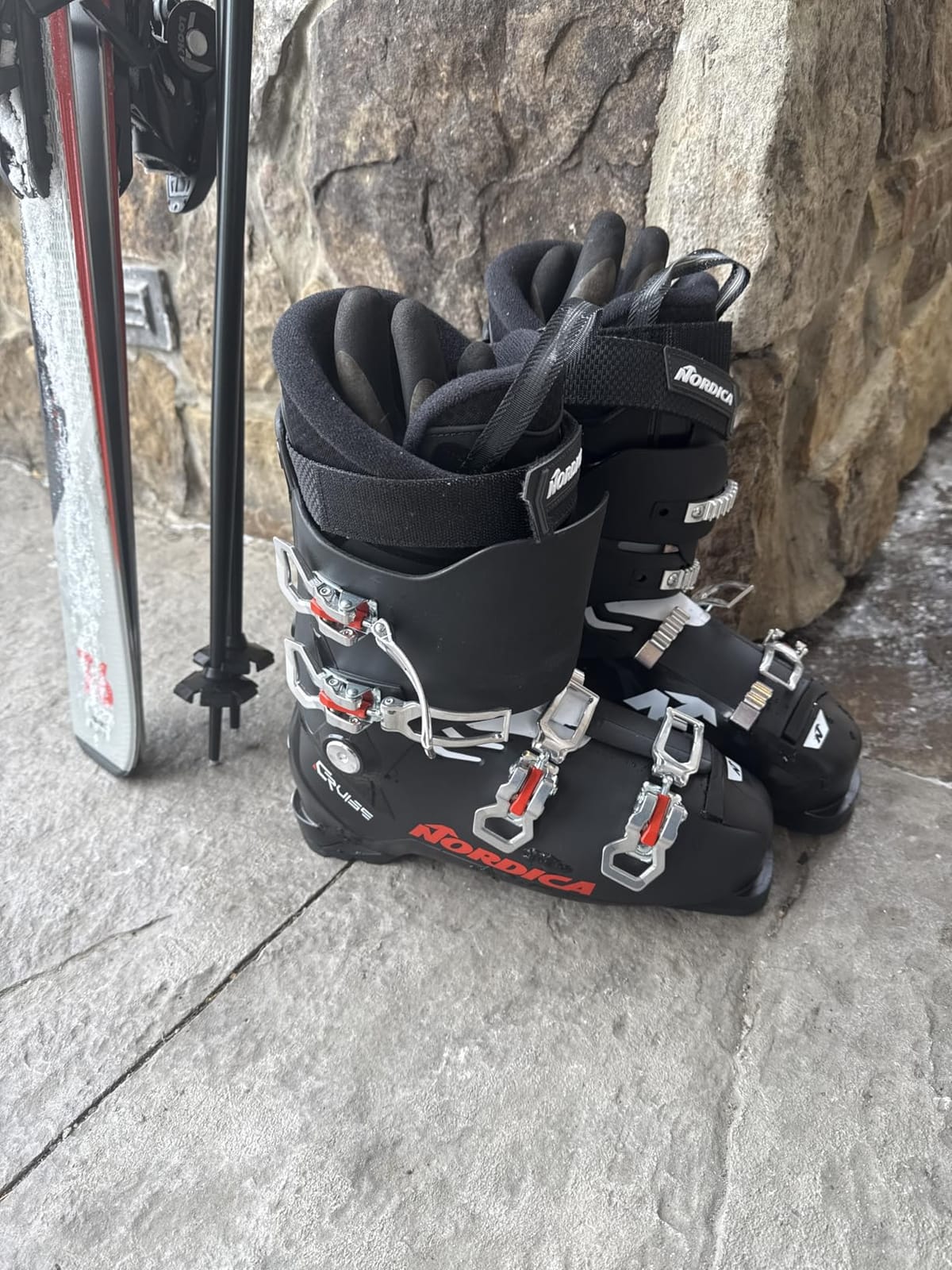
Entry is handled by a dual soft flap instep rather than a hard plastic throat. You can open the front of the boot with the buckles loose and slide your foot in without fighting the shell, which matters far more in cold weather than it does in a shop. The infrared cavity adjustment is a heat-based pressure-relief option that reshapes the liner, so if you have a bony bump on one foot only, this is one of the few boots in the group that can treat the asymmetry.
Owners rate it 4.4 across 76 reviews, the largest review base of any boot in this roundup, and the wide fit and easy entry do most of the work in the feedback. The critical reviews concentrate on two things: buckle and lock durability, and the fact that a comfort shell still has a firm feel that a brand new skier may find abrupt on day one.
There is no walk mode and no touring sole here. This is a piste boot and it does not pretend otherwise, which is a fair trade for the shell stiffness and heat retention you get in exchange.
Who the Nordica The Cruise suits
This is the right boot for a skier with wide feet, a high instep, or both, and for anyone who has previously had to cram their foot into a medium-volume shell. It is also the safest recommendation on this list for a beginner who is worried about numb toes and arch pressure more than they are about racing a race boot.
If your problem is a forefoot that moves side to side while your heel stays put, the roomier last helps. If your problem is an instep that aches even in a roomy boot, the adjustment feature is the reason to choose this over the other 104mm options.
When to look at something else
A skier who already links clean turns and wants to feel the mountain rather than survive it will find this shell too calm. The same goes for anyone splitting time between lifts and long walks to untracked snow, since there is no hinge or lever to open the cuff.
If you are buying for a child or a very small-footed adult, a shell this wide can float, and floating boots are cold boots. Get sized by a fitter rather than guessing from a size chart.
2. Rossignol Evo 70: Best All-Mountain Ski Boot for Smooth Progress
Rossignol EVO 70 HV+ – Ski Boots for Men and Women – Black
Relaxed 104mm last
Sensor Matrix shell
Custom fit liner with heel support
Pros
- Comfortable from the first run
- Lightweight shell for its size
- Heel support in the liner
- Large review base for a 4.8 average
Cons
- Not water resistant
- GRIPWALK soles sold separately
- Light build gives less solid feel
The Rossignol Evo 70 carries a 4.8 rating across 73 reviews, which is the largest review base at that score in this roundup, and the reason is consistency rather than one standout feature. It is simply the boot in the group that owners report being comfortable in on day one and still comfortable in on day thirty.
The fit is a relaxed 104mm last with a wider forefoot, toe box and ankle, which is the same basic volume strategy as the Nordica. The execution differs. Rossignol builds the shell around a Sensor Matrix frame that trims weight while pushing energy straight from the cuff down into the ski, so the boot does not feel dead in the way some lightweight shells do.
The liner is the quiet strength here. It is a custom fit liner with dedicated heel support and softer padding through the ankle and instep, which is exactly where beginners accumulate pressure. That combination of a supportive heel and a forgiving instep is why so many owners describe the boot as forgiving without also calling it soft.
Who the Rossignol Evo 70 suits
This suits an intermediate skier who has moved past rental boots and wants something that will not punish a long day. If you spend real hours on the mountain, the 4.8 rating and the comfort margin matter more than the last two millimetres of shell stiffness.
It is also a strong pick for anyone who wants a roomy fit without stepping up to a dedicated comfort boot. The ankle is wider than a standard last, which helps if you have struggled with a narrow heel collar.
When to look at something else
Water resistance is the practical limitation. The shell is not sealed against wet snow, so in a coastal climate or on a day of rain-and-snow mix, your feet will get cold sooner than they would in a sealed boot.
The GRIPWALK soles are sold separately, so if you plan on walking a lot between runs, budget for that add-on. And if you ski hard ice or moguls, a lighter shell will always feel less connected than a stiffer one.
3. Head Edge LYT RX HV: Best Ski Boot for Beginners
Head Edge LYT RX HV Alpine Ski Boots, Anthracite/Black, 26.5
High volume fit
Lightweight polyurethane construction
Beginner friendly flex
Pros
- Extra room through forefoot and instep
- Very light at 3 pounds
- Comfortable for full days
Cons
- Basic feature set for an entry level boot
- Narrower colour range in the listing
- Soft feel means less bite on firm snow
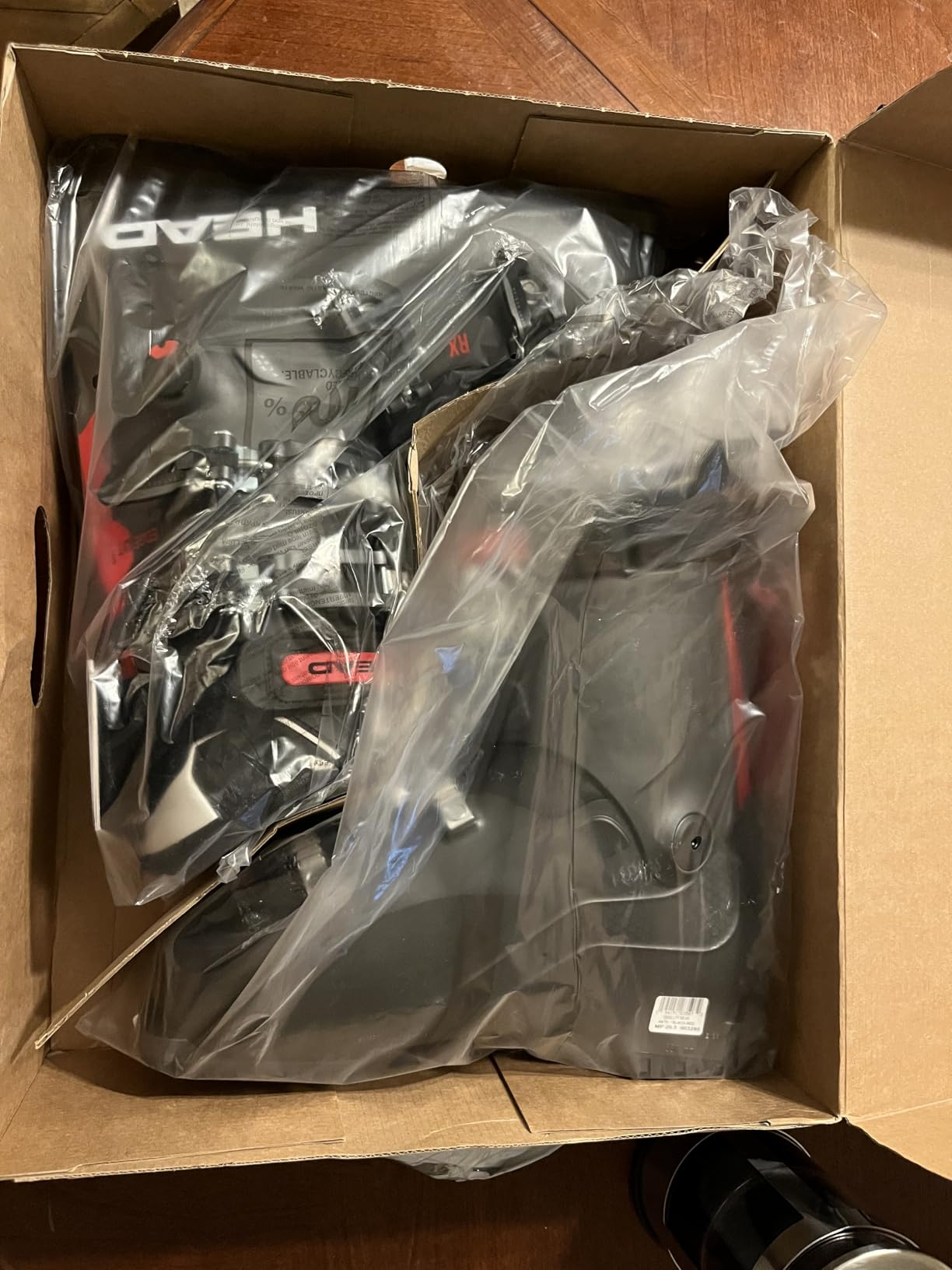
The Head Edge LYT RX HV is the first boot we hand to somebody who has never owned a pair. The high volume fit gives extra room through the forefoot and instep, and the listed 3 pounds makes it one of the lightest shells in the roundup, which matters more than most buyers expect.
A heavy boot is tiring before it is painful, and a beginner who is already working hard to control a pair of skis will notice a lighter shell in their legs by the afternoon. Head builds this one in polyurethane, which keeps the weight down and gives the shell a forgiving flex that bends early rather than fighting you.
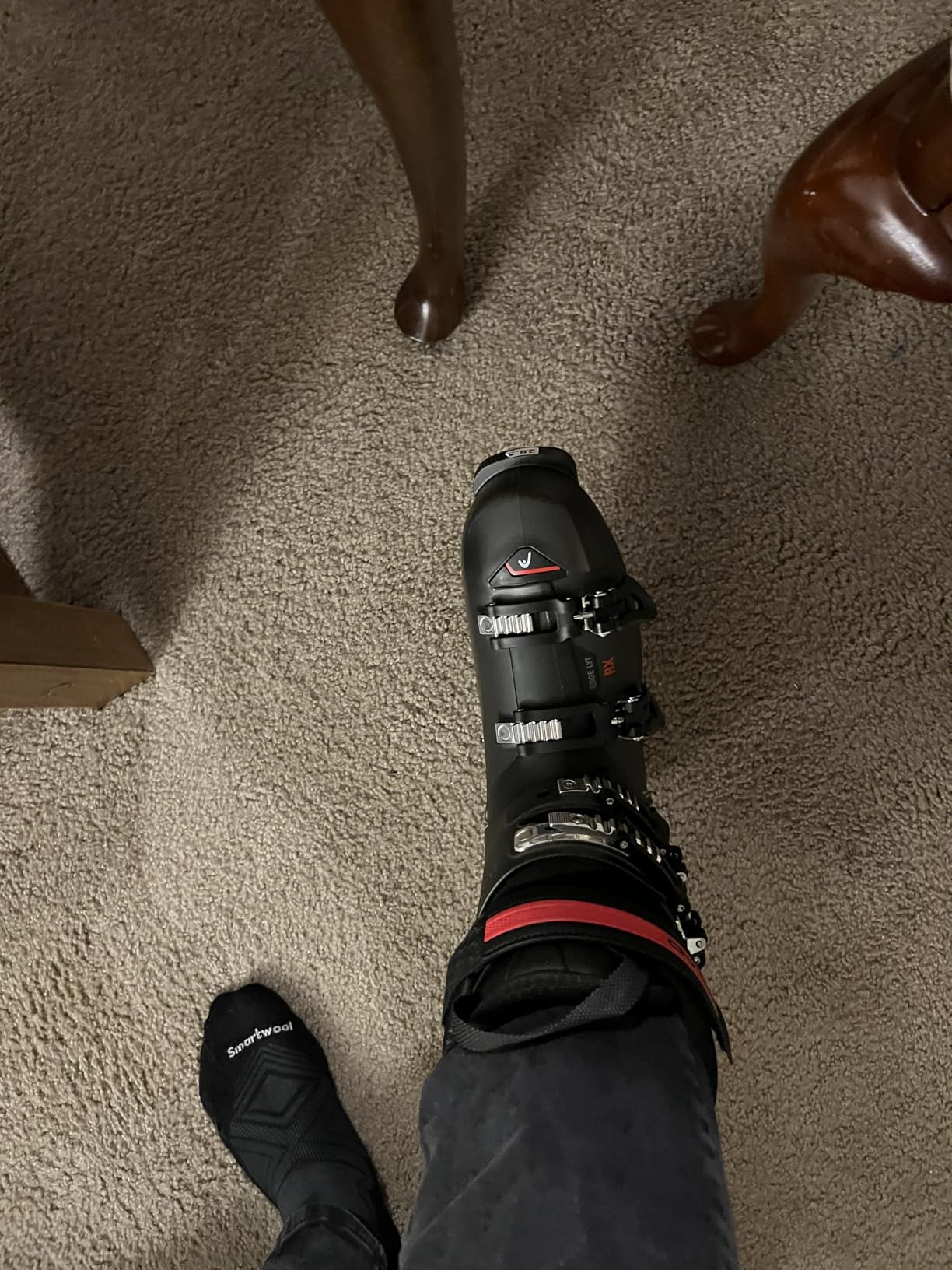
The trade-off is honest and worth stating. This is a straightforward entry-level boot with a basic feature set, not a heavily engineered one. There is no instep adjustment system, no infrared cavity work, and no walk mode. What you get is volume, a soft flex, and a shell that will not punish imperfect technique.
Owners rate it 4.7 across 71 reviews, and the words that come up most are comfortable, light and easy. The critical reviews are not about failure so much as about a boot that runs out of capability once you start skiing steeper terrain.
Who the Head Edge LYT RX HV suits
First-season skiers, families fitting out more than one person, and anyone returning to the sport after years away will find this the least demanding boot here. It is also a good fit for a wider foot in a wider shoe, because the E wide width and high volume last give you room that a narrow last would take away.
Buy it if you want to spend your first season learning rather than fine-tuning. The light weight also makes it a sensible choice for a child who is growing quickly and will need replacing in a couple of years.
When to look at something else
Skip it if you are already an aggressive skier who wants to work on technique in tight spaces, because the soft early flex gives you very little feedback when you load an edge. The same applies to anyone who takes long walks from a car to a lift.
Be aware that the colour range in this listing is narrow. If you are particular about style, check what else is available before you commit, because the shell itself is the part that matters and it is well reviewed.
4. Rossignol Speed 80 HV+: Best Ski Boot for Long Days on the Mountain
Rossignol Speed 80 HV+ – Ski Boots for Men – Relaxed Fit Snow Ski Boots – Black
Relaxed 104mm last
Sensor Matrix shell
Custom comfort liners
Pros
- Warm through a full day
- Relaxed 104mm volume
- Custom liners mould to the foot
- Easy entry instep
Cons
- Only one size variant listed at 29.5
- GRIPWALK soles sold separately
- Listed weight is heavier than rivals here
The Rossignol Speed 80 HV+ is the boot we would pick for long days, and warmth is the reason it earns its place. Owners repeatedly describe it as comfortable for all-day wear, and the custom liners with internal customisation mould to a specific foot rather than a generic one.
The shell is the same Sensor Matrix construction as the Evo 70, giving a relaxed 104mm last with a wider forefoot, toe box and ankle. The 80 in the name is the flex class, and it sits a step firmer than the softer boots here, which is why this is the choice for someone who can already parallel ski but wants to be warmer rather than faster.
Entry uses a softer plastic instep that flexes open, so it is easier to get into than a rigid shell with four hard buckles. For a long day, the difference between a boot that slides on and a boot you wrestle with in a car park is bigger than any spec on the label.
Who the Rossignol Speed 80 HV+ suits
This is a strong choice for a cruising skier in a cold climate, someone who takes the piste bus and spends eight hours skiing rather than two hours working a lift line. The warmth is the headline and the reviews back it up.
It also works for a skier who has outgrown a flex 70 boot but does not want to jump to a stiff shell. The step up here is small enough to adjust to in a season.
When to look at something else
Check sizing carefully. This listing shows a single size variant at 29.5, so if that is not your size, the boot is not an option and no amount of volume compensation will fix it.
GRIPWALK soles are sold separately, and the listed package weight is heavier than the lighter shells in this group. If warmth is not your problem, the Head or Rossignol Evo is the lighter, simpler answer.
5. Rossignol Kelia 50: Best Ski Boot for Women
Rossignol Kelia 50 – Downhill Ski Boots for Women – Black/White
Women specific tulip cuff
104mm relaxed last
Thermo-adjustable liners
Pros
- Tulip cuff shaped around the calf
- Thermo-adjustable liners
- Three buckle design is easy to adjust
Cons
- Soft flex limits progression past intermediate
- GRIPWALK soles sold separately
- Rating sits below the Rossignol Evo
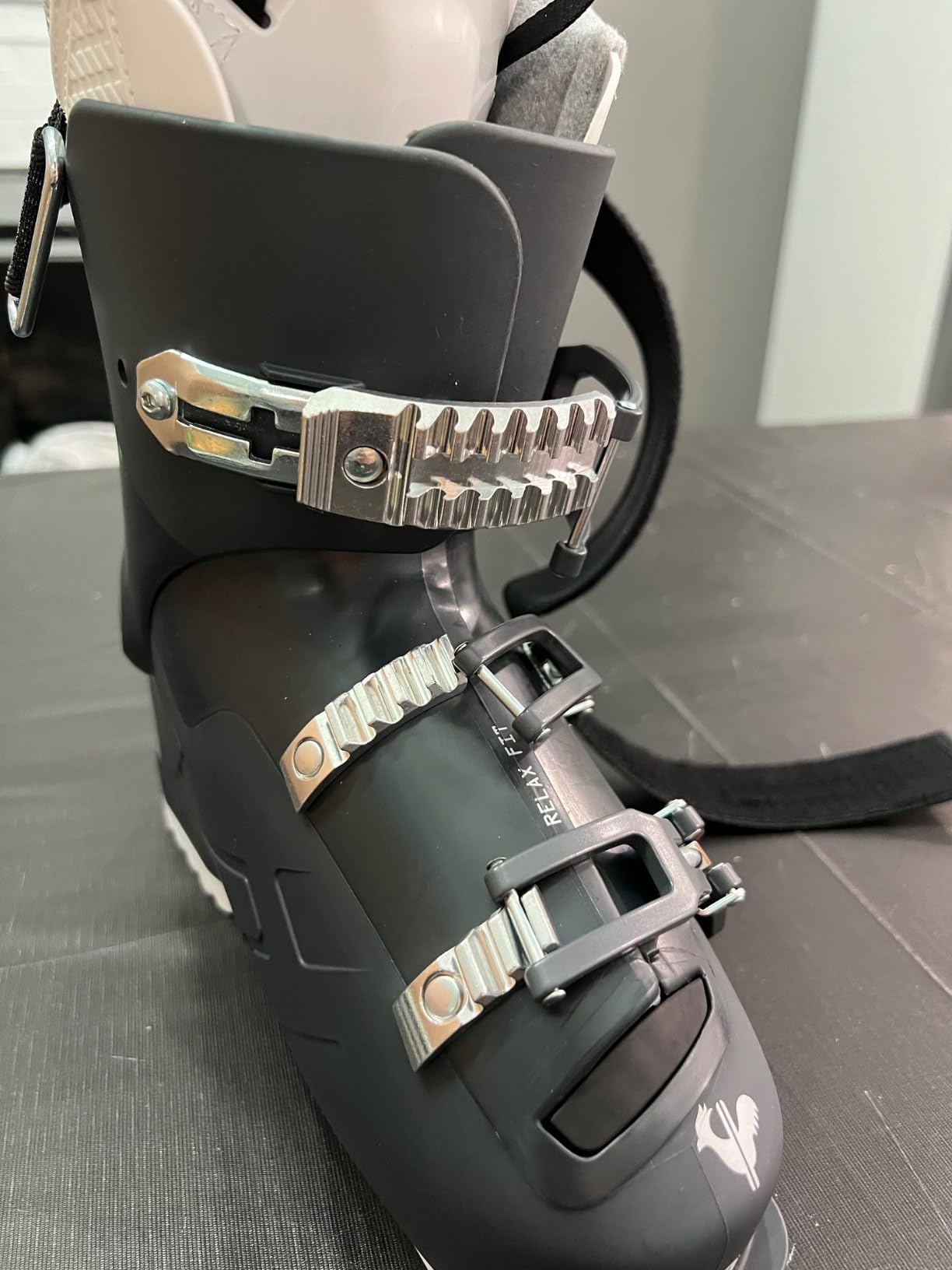
The Rossignol Kelia 50 is built around a women-specific last rather than a scaled-down men’s shell, and the difference shows up in the cuff. The tulip-shaped cuff flares at the top so it sits around the calf without digging in, which is the pressure point that generates most of the complaints we found about narrow-ankled boots.
It uses a 104mm relaxed last with a Sensor Matrix shell for reduced weight and better power transfer, and a three-buckle closure that is easier to open and adjust than a four-buckle layout. The thermo-adjustable liners can be heated and reshaped, so a boot that is snug across the instep on day one can be opened up over the first week.
The Kelia 50 owners rate it 4.6 across 47 reviews, with the cuff geometry and liner customisation doing most of the praising.
Who the Rossignol Kelia 50 suits
Any skier whose calves are wider than the collar on a standard men-style boot will feel the difference immediately. It is also a good pick for a beginner woman who wants a forgiving flex and a wide forefoot without shopping in a narrow last.
The thermo-adjustable liner makes it forgiving of a foot that changes shape over a cold day, which is a common complaint among women fitting boots for the first time.
When to look at something else
The 50 flex is genuinely soft, so it will not support you on steep terrain or firm snow. If you are already linking confident parallel turns and want to progress, look at the Rossignol Speed 80 HV+ or a firmer boot instead.
GRIPWALK soles are again sold separately, and the rating here is a little below the Evo 70. If you do not need the women-specific cuff, the Evo 70 is the better-rated all-rounder.
6. Nordica Cruise S W: Best Ski Boot for Effortless Entry
Nordica Cruise S W Women’s Comfort Fit All Mountain Alpine Ski Boots (Black/White/Mauve, 24.5)
104mm high volume comfort last
Dual soft flap instep
Micro-adjustable aluminium buckles
Pros
- Dual soft flap opens the boot very wide
- Extra wide comfort fit
- Micro-adjustable aluminium buckles
- Came in a wide range of women's sizes
Cons
- Only 11 reviews so far
- Not water resistant
- Comfort liner is less supportive on firm snow
The Nordica Cruise S W is the women’s version of the Cruise, and it inherits the same dual soft flap instep that made our top pick so easy to get into. If you have ever stood in a car park fighting a boot with hard plastic buckles, that flap is the whole point of this model.
It shares the 104mm high volume comfort last and adds micro-adjustable aluminium shell and cuff buckles, which are finer-grained than standard plastic buckles and let you dial in tension more precisely across a long day. The liner is a soft synthetic comfort liner rather than a performance liner, so expect warmth and forgiveness rather than feedback.
This is a current-season model, and that is worth flagging in both directions. Fresh models get the newest shell and buckle technology, but the review base is thin at 11 reviews and a 4.6 average, so you are buying on specification and brand reputation rather than on accumulated owner experience.
Who the Nordica Cruise S W suits
It fits a skier with very wide feet, or a skier who struggles with high insteps and hates forcing a foot into a narrow shell. The extra wide comfort fit is the widest option available in the women’s category on this list.
It is a good fit for anyone who wants the entry experience of the top pick but plans to stay on easy to moderate terrain.
When to look at something else
If you want long-term confidence, eleven reviews is not much evidence. The Rossignol Kelia 50 has a much larger review base at 47, which makes it the safer recommendation for the same buyer.
On firm or icy snow, a comfort-focused liner will feel vague compared with a stiffer, more supportive boot. And without water resistance, wet snow is a colder experience than in a sealed shell.
7. Dalbello Veloce 90 MV: Best Medium Volume Ski Boot
Dalbello Women’s Veloce 65 W Ski Boots 2024 Black/Black 26.5
Medium volume last
Polar and black colourway
Modern styling
Pros
- The only medium volume last in this roundup
- Polar and black colourway
- Recognised boot building name
Cons
- Listing mixes a mens 90 MV with a womens 65 W
- No last width figure published
- Only 31 reviews with mixed feedback
The Dalbello Veloce 90 MV is here because almost every other boot in this roundup is a high-volume design, and a medium-volume last is a genuinely different tool. If your feet are average width and you have been struggling in roomy boots the way some skiers struggle in narrow ones, this is the shape that actually matches you.
Medium volume works differently from high volume. A wide boot floats around the foot and needs a strong liner and a tight heel to stay connected, while a medium boot holds the foot more directly and gives you better feedback. For a skier with a well-proportioned foot who wants to improve rather than relax, that directness is the point.
There is a real caveat here. The product data for this listing is inconsistent: the model is named as the mens Veloce 90 MV while some of the underlying specification points to a womens Veloce 65 W. That discrepancy is the main reason this boot sits at the back of my list despite a 4.4 rating from 31 reviews.
Who the Dalbello Veloce 90 MV suits
An average-width foot that feels lost in a 104mm boot should try this before anything else on the list. It is also the closest thing here to a step up in responsiveness for a skier who has found the comfort boots too vague.
Buy it if you can confirm the exact model and last width with the seller before ordering. That single question removes the only serious risk in this recommendation.
When to look at something else
If you have genuinely wide feet, a medium last will compress the forefoot and recreate the pain you are trying to escape. Go back to the 104mm options.
If you are not able to verify which model you are receiving, do not risk it. A boot that is not the one you ordered is a wasted season, and the two other 90-class boots here are easier to research.
8. K2 BFC 80: Best Ski Boot for Heat Moulding
K2 BFC 80 Men’s Ski Boots (Grey, 28.5)
Fully heat mouldable shell and cuff
Hands free entry
Cushfit comfort liner
Pros
- Shell and cuff can be heat moulded not just the liner
- Hands free entry system
- Extra foam in the liner at key pressure points
- Entry system closes the shell evenly
Cons
- Lowest rating in the group at 4.3
- Some two-star reviews in the data
- Only 14 reviews
Most boots on this list let a fitter heat mould the liner. The K2 BFC 80 goes further, with a fully heat mouldable shell and cuff, which means the plastic itself can be reshaped to a foot rather than only the foam around it. For a skier with a genuinely unusual foot shape, that is a bigger tool than any liner trick.
The hands free entry system uses a dual material overlap at the front of the boot so the shell pulls itself together around your foot rather than relying on buckles to draw it in. In practice that means the boot closes around the instep more evenly, and it is a design you either love or find unfamiliar within a run.
The Cushfit comfort liner adds extra foam through the areas that take the most pressure, which matters on a boot a fitter can mould this precisely. The result is a shell that holds an unusual foot shape without the vagueness that makes some heavily modified boots tiring to ski.
Who the K2 BFC 80 suits
A skier with a foot that standard liners cannot fix is the ideal owner. Bunions, a severely high instep, or asymmetric feet are exactly the cases where moulding the shell earns its extra cost.
It is also a reasonable step up for an intermediate skier who wants to customise the boot once and keep it for many seasons, since moulded plastic holds a shape longer than moulded foam.
When to look at something else
The 4.3 rating is the lowest in the roundup and the review data includes a run of two-star feedback, so we would not put a first-season skier in this boot. If you are unsure about your fit, a simpler, better-reviewed comfort boot is the safer bet.
Fourteen reviews is a thin base for any strong claim, and hands-free entry takes a few runs to appreciate. If you dislike new closures, the traditional buckle boots here are more conventional.
9. Nordica Sportmachine 3 100: Best Ski Boot for Warmth
Nordica Sportmachine 3 100 Men’s Ski Boots, Black/Gray/Red, M26.5 MY25
PrimaLoft insulation with 3D cork liner
Tri Force shell
GripWalk soles included
Pros
- PrimaLoft insulation in a water resistant shell
- 3D custom cork liner moulds precisely
- Adjustable cuff profile changes the fit
- Owners report full day comfort
Cons
- Highest priced option in this group
- Only 13 reviews
- Heavier build than the comfort picks
The Nordica Sportmachine 3 100 is the warmest boot we reviewed, and that is not marketing language. It combines PrimaLoft water-resistant insulation with a 3D custom cork liner, and cork has a property that matters here: it takes a precise impression and holds it, so the fit improves over a season rather than degrading.
The shell uses Tri Force technology across three points of contact for energy transmission, which is how a boot this insulated still feels responsive. The adjustable cuff profile system lets you change how the cuff sits around your lower leg, which solves a problem that most boots can only address by going to a different last.
GripWalk soles with 9523 geometry are included in the box, which is unusual in this group where most shells treat walking hardware as an extra. The water-resistant construction and the grippy sole compound round out a well-equipped package.
Who the Nordica Sportmachine 3 100 suits
Cold-morning skiers, anyone who has previously had cold feet in a roomy comfort boot, and long-day skiers who want warmth without giving up all feedback. The cork liner is particularly good for a foot that needs precise support rather than general room.
It is also the pick here for a skier who wants to walk a moderate distance to untracked snow and does not want to fit a full touring boot for it, since the GripWalk soles are already there.
When to look at something else
This sits at the top of the spend for our list, and the extra money buys warmth and liner technology rather than a better fit for most beginners. If your feet are warm in a comfort boot, that money buys nothing you will feel.
Thirteen reviews is a small sample for such a significant spend, and the listed weight is heavier than the lighter shells here. Try a boot fitter with a comparable boot before committing.
10. Atomic Hawx Prime 100: Best Premium Ski Boot
Atomic HAWX Prime 100 Men’s Ski Boots (Black/Red, 27/27.5)
100mm medium last
Mimic heat mouldable liner
Energy Link cuff connection
Pros
- Mimic plastic liner repeats heel and ankle anatomy
- Energy Link ties the cuff firmly to the shell
- Memory Fit heat shapes cuff and shell
- The classic 100mm Hawx last
Cons
- Only 8 reviews for a premium boot
- 100mm is not a wide fit
- No walk mode listed
The Atomic Hawx Prime 100 sits on the 100mm Hawx last, which is the most widely used last in alpine skiing for good reason. It is medium volume, so it holds the foot directly rather than surrounding it, and the 100 flex class is the standard recommendation for a strong intermediate skier of average build.
Its distinguishing feature is the Mimic liner, which uses heat-mouldable plastic in the heel and ankle areas to reproduce the shape of your own anatomy. Soft foam alone compresses; plastic that is moulded to your heel and then holds that shape is what stops the boot from becoming generic after a season.
Energy Link ties the cuff to the shell with a stiffer connection than a typical hinge, which is how a mid-volume boot gets a direct feel. Memory Fit allows the cuff and shell to be heat-shaped at the shop.
Who the Atomic Hawx Prime 100 suits
An intermediate-to-advanced skier of average foot width who wants a direct, responsive feel rather than a forgiving one. If you have been comfortable in a high-volume boot but find it vague when you try to carve, this is the step up.
It also suits a skier who values a well-supported heel, since the Mimic heel is the strongest feature on this list for holding the foot in place.
When to look at something else
If you have wide feet, a 100mm last is the wrong starting point and no amount of liner work will widen the shell. Look at the Atomic Hawx Magna 100 or one of the 104mm comfort boots instead.
Eight reviews is not enough history to recommend a premium boot on owner feedback alone. Treat the specification as the reason and the review average as encouraging rather than proven.
11. Atomic Hawx Magna 100: Best Ski Boot for Wide Feet at a Mid Last
Atomic HAWX Magna 100 Men’s Ski Boots (Black/Red, 27/27.5)
102mm wide last
Energy Link cuff connection
Memory Fit heat shaping
Pros
- 102mm last gives real width without a huge shell
- Same Energy Link chassis as the Prime 100
- Memory Fit heat customisation
- Costs less than the Prime 100
Cons
- Only 10 reviews
- One star reviews in a small sample
- Listed for advanced skiers
The Hawx Magna 100 answers a problem that the Prime 100 creates. It keeps the Energy Link chassis and the Memory Fit heat customisation, but widens the last from 100mm to 102mm, which is enough to change the fit for a genuinely wide foot without tipping into the floaty territory of a 104mm comfort shell.
That 2mm difference is the reason this boot matters. A 104mm last is roomy but loose, and a loose boot needs a fitter to bring the foot back to the centre with heel wedges and volume shims. A 102mm last is wide but still close, so the boot holds the foot and still lets it move.
Memory Fit heat shapes the cuff and shell, Energy Link ties the cuff firmly to the lower shell, and the low shaft profile is worth a mention because it reduces the collar bulk against the calf. German reviewers in particular have singled out the comfort and weight.
Who the Atomic Hawx Magna 100 suits
A wide-footed skier who wants a responsive boot rather than a comfort boot is the exact buyer. It is also a good fit for someone moving up from a high-volume boot and finding it too vague, because 102mm is a genuine middle ground.
If you have a high instep as well as a wide forefoot, the Memory Fit process gives a fitter room to work on both.
When to look at something else
This is listed as an advanced-level boot, so a genuine beginner may find it demanding. In that case the Rossignol Evo 70 or the Head Edge LYT RX HV is the sensible starting point.
There is a run of one-star feedback inside a small sample of 10 reviews, which is too thin to read as a pattern but too visible to ignore. And remember that 102mm is still narrower than a 104mm last, so if your feet are very wide, the high-volume boots will still serve you better.
12. K2 BFC 100 BOA: Best Ski Boot with a BOA Dial
K2 BFC 100 BOA Men’s Ski Boots (Black/Blue, 29.5)
BOA dial fit system
MultiFit last
Heat mouldable shell and cuff
Pros
- Dial tightens evenly in small increments
- MultiFit last suits varying foot shapes
- Heat mouldable shell and cuff
- Dial takes a fraction of a turn at a time
Cons
- Only 6 reviews
- Newest design here with no long term wear data
- BOA hardware needs specialist service
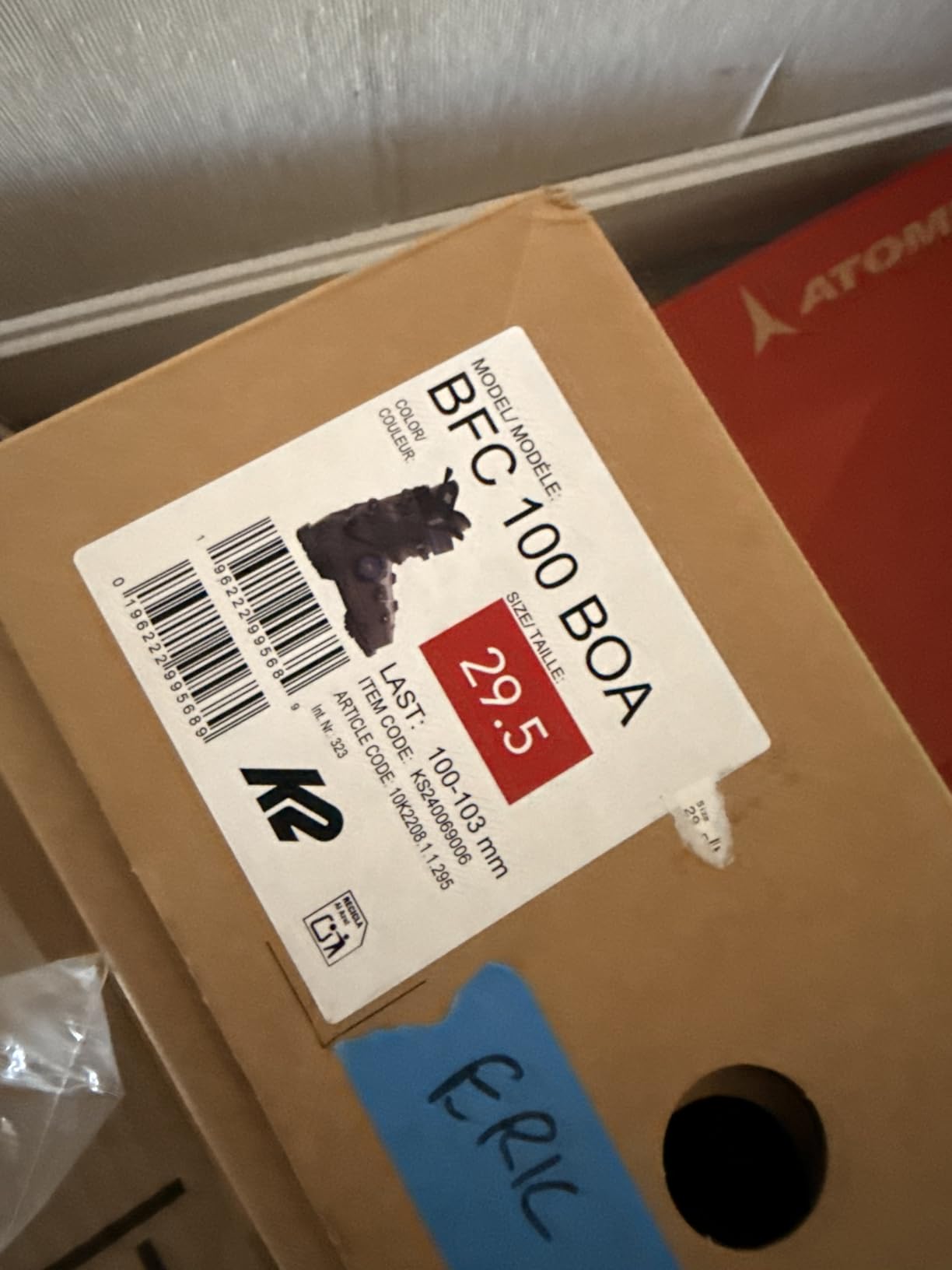
The K2 BFC 100 BOA is the only dial-closure boot in this roundup, and that is the reason to consider it. A BOA system tightens a cable evenly around the whole shell in small increments rather than pulling on two or four buckles at fixed points, so you can dial in an exact tension and adjust it by a fraction on a chairlift.
For a skier with an irregular foot shape, even circumferential tension is a genuine advantage. The MultiFit last is built to accommodate a range of foot volumes, and the shell and cuff are heat mouldable, inherited from the BFC line that also produced the K2 BFC 80 earlier in this list.
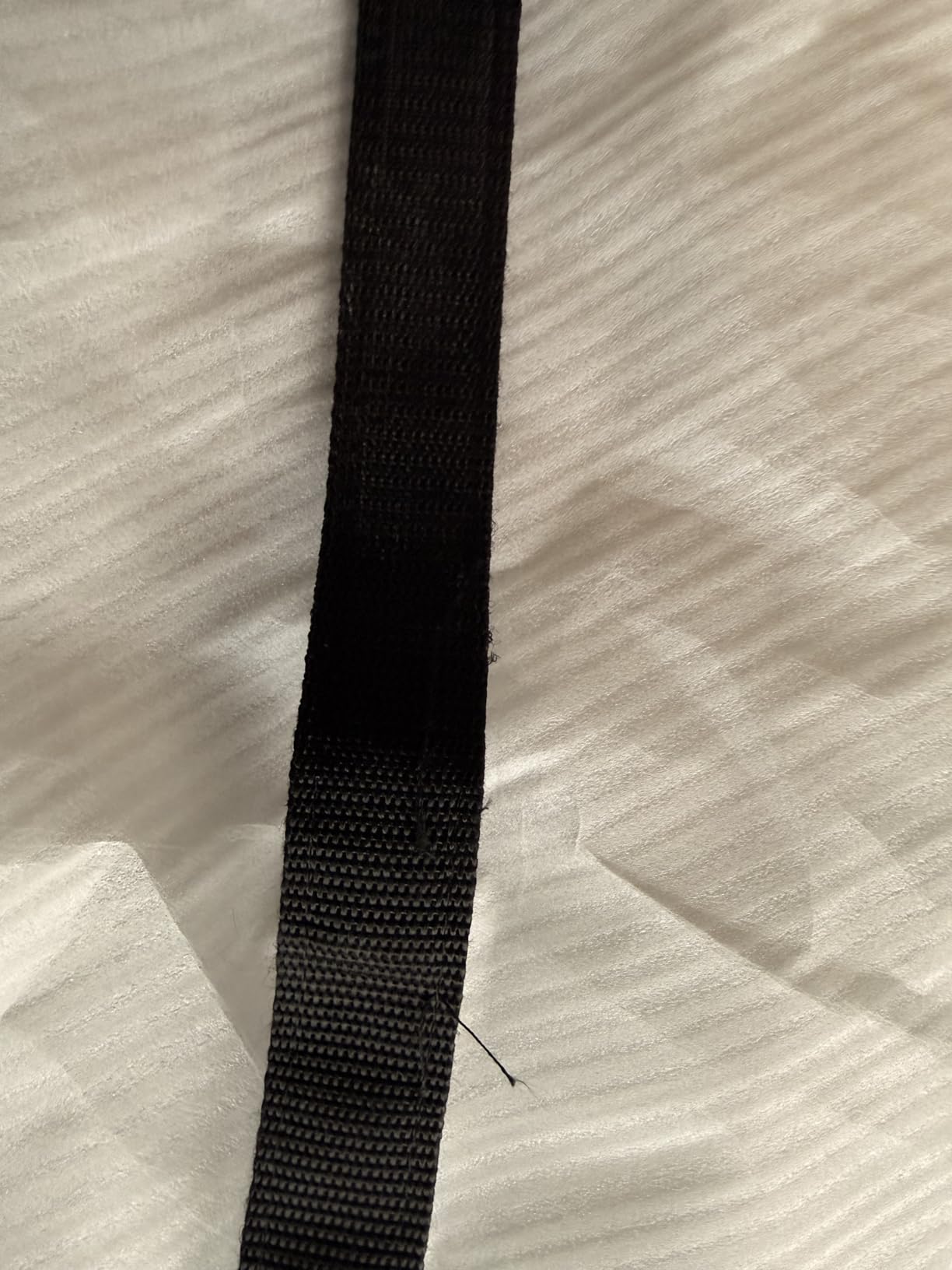
The trade-off is serviceability and history. A BOA dial is a mechanical component that can be damaged by ice and grit, and if the cable frays you cannot fix it in a mountain hut. With six reviews, this is also the least proven design in the group.
Who the K2 BFC 100 BOA suits
A skier who struggles with buckle pressure over the top of the foot or across the shin will find even cable tension much more comfortable. It is also a good choice if you want fine control over tension through a single dial rather than four separate adjustments.
Beginners who know they will drop a ski and drag a boot through snow may want to weigh that against the service question before committing.
When to look at something else
If you ski in wet snow or ice, grit gets into a dial in a way it never gets into a buckle. Traditional closure is the lower-maintenance choice and most skiers never think about it again.
With six reviews and no long-term wear history, we would not make this your only boot for a season. It is a strong feature, on a design that still needs more seasons of field reports.
How to Choose Ski Boots That Fit You
Every boot above can be made to work with enough modification. The cheaper mistake is buying the wrong volume and trying to fix it. These seven questions do most of the work before you ever click a buy button.
Flex rating matched to ability and body weight
Flex rating is a stiffness index, not a skill score. A lower number means a boot that bends more easily, which is more forgiving and less responsive. A higher number means a stiffer boot that transmits more of your leg movement into the ski edge but demands more from you to control.
As a rough guide, flex 50 to 70 suits beginners and lighter skiers, flex 80 to 100 suits competent intermediates and most adults of average build, and flex 110 and above is for strong skiers and heavier bodies. A heavier skier generally needs a stiffer boot to get the same effective flex as a lighter person in a softer one.
Most of the boots in this roundup sit in the flex 50 to 100 band, which is where the majority of skiers belong. If you are moving up from this group, the Atomic Hawx Prime 100 at 100 flex is the natural next step before anything stiffer.
Last width matched to foot shape
Last width is the moulded footprint of the shell, measured in millimetres across the ball of the foot. It decides how much room the boot gives you at the forefoot, ankle, instep and shin. A 100mm last is medium, 102mm is wide, and 104mm is high volume.
Ten millimetres of difference sounds trivial and is not. A foot that is genuinely wide will push against a 100mm shell all day, and the resulting compression across the forefoot is the classic cause of numb toes and the arch pain that beginners report constantly.
The harder problem is a mismatched foot, where the forefoot is wide and the heel is narrow. That combination causes heel lift, and heel lift destroys control. A high-volume last helps the forefoot, but the heel then needs support from the liner or from a heel wedge, which is exactly the kind of adjustment a fitter makes in ten minutes.
Shell fit: the number no listing prints
Shell fit is the gap between the back of your heel and the back of the shell, measured in centimetres with the liner removed. It is the single most useful measurement a shop can give you and almost no online listing publishes it.
1 to 1.5cm: race fit. Extremely precise, unforgiving of any mistake.
1.5 to 2cm: performance fit. The all-round target for most skiers.
2 to 2.5cm: comfort fit. Correct for beginners and anyone with a difficult foot shape.
Over 2.5cm: the boot is too big. Modifications will help, but you are working against the shell.
If a boot is more than a full size too large, or your ankle cannot be held, the modifications stop being worth it. A fitter can add a custom footbed, pack out the liner, fit tongue shims, L-pads and a booster strap, and grind the shell, but there is a point where the boot is simply the wrong size.
Alpine, hybrid or touring
Alpine boots are built for lift-served skiing and give the stiffest, most direct power transfer. Hybrid boots add a walk mode, either a hinge or a lever, that opens the cuff so you can stride to untracked snow and then lock it rigid for the descent. Touring boots are lighter still and optimised for climbing.
Every boot in this roundup is a downhill or alpine touring design, which means the right answer for all of them is: do not tour in them. If your skiing is entirely on-piste, a pure alpine shell is better in every measurable way. If you split your season, a hybrid boot is a real improvement in how the day goes.
Buckles or BOA
Traditional buckles apply force at fixed points, which is why boot fitters spend so much time adjusting buckle positions. A BOA dial pulls a cable evenly around the shell, which distributes pressure more uniformly and allows finer tension control.
The honest trade-off is serviceability and power. Buckles are almost indestructible and a stiff 130-flex buckle boot will out-transfer a BOA boot on hard-packed snow. A BOA dial is finer to adjust and can be kinder to an irregular foot shape, but the cable and housing can be damaged by ice and grit.
What to bring to a boot fitting
Wear a thin ski sock and nothing else on your foot. No long underwear, no ankle or foot jewellery, no thick socks. Everything you add changes the measured volume of your foot and produces a fit that will be wrong on the mountain.
Bring your current boots if you own any, and your old footbeds. A fitter can see your wear pattern across the ball of the foot and diagnose a volume or balance problem in seconds. And give a new boot about ten days of skiing, plus a heat moulding, before you decide it does not work. Liners pack out in the first few days, and pain on day one is not the same as pain on day ten.
When a used or previous-year boot is a mistake
A previous model year is usually fine. Skis and boots change incrementally, and last shapes carry over, so a last-year boot is a legitimate way to spend less on a good shell.
Used is different. Shell plastic takes a permanent set over a season, liners compress, and a used boot has already been heat moulded to somebody else’s foot, which is precisely the thing you paid for. The hard rule is simple: skip a used boot if the cost of new liners and a new footbed approaches what you would have paid for a new pair.
Frequently Asked Questions
What is ski boot syndrome?
Ski boot syndrome is pain, numbness or loss of sensation that comes from a boot whose volume does not match your foot, rather than from ordinary first-day tightness. It shows up as arch ache, cold or numb toes, and a feeling that your foot moves inside the shell. The cause is nearly always a boot that is too large or the wrong last width, which makes skiers over-tighten the buckles to compensate and creates pressure without fixing the underlying problem.
What flex rating should I choose for my ability and body weight?
Choose a softer flex for beginners and lighter skiers and a stiffer flex for stronger skiers and heavier bodies. Flex 50 to 70 suits first-season skiers, flex 80 to 100 fits competent intermediates and most adults of average build, and flex 110 and above is for expert skiers and heavier frames. A heavier skier usually needs a stiffer boot to get the same effective flex as a lighter person in a softer one.
Should I get 100 or 110 flex ski boots?
If you are a solid intermediate of average build, 100 flex is usually the more usable choice, and it is the class of the Atomic Hawx Prime 100 and the K2 BFC 100 BOA in this roundup. Step up to 110 only if you ski aggressively on steeper terrain or carry more body weight than the chart assumes. A boot that is too stiff for you shows up as fatigue and loss of balance rather than as immediate pain.
Is a 100 flex boot too soft?
For most skiers of average build, 100 flex is a mid-range boot rather than a soft one, and it handles everything on a groomed piste. It only feels soft if you ski very aggressively on steep terrain, or if you are already used to a stiffer boot. The bigger mistake is going too stiff too early, because a stiff boot you cannot flex will not teach you anything.
Which ski boots are most comfortable?
Comfort comes from fit rather than model name, but within a matched fit the high-volume, softer-flex boots win. In this roundup the Rossignol Evo 70, the Head Edge LYT RX HV and the Nordica The Cruise lead on owner comfort ratings, and the Nordica Sportmachine 3 100 leads on warmth. If you have wide feet, a 104mm last will be more comfortable than any narrow boot regardless of its other features.
How tight should ski boots be, and do they run small?
Ski boots are measured in centimetres of shell length rather than shoe sizes, and they do not follow street shoe sizing. They should feel snug with no heel lift, and tight enough that your foot cannot slide side to side, but never painful. A boot that is too big is the most common problem in the whole category, so if in doubt go one shell length smaller and let a fitter confirm it.
Should I buy ski boots online or get fitted in a shop?
Get fitted in a shop if you possibly can. A fitter measures shell fit in centimetres, checks your stance, watch your feet while you flex and stands you on a platform to check balance, and modifies the fit on the spot. Buying online works if you already know your exact last width, flex and shell length, and if the seller allows returns. Buying from street shoe size alone is the most expensive mistake in this sport.
Our Final Ski Boot Picks for 2026
After comparing twelve boots on fit, flex, closure and owner feedback, the best ski boots in 2026 come down to a short list. The Nordica The Cruise takes the top spot because its 104mm last plus four millimetres of instep adjustment solve more foot shapes than anything else we reviewed, and it did it with the largest owner base in the group at 76 reviews.
Buy the Rossignol Evo 70 if you want the highest-rated all-rounder in the roundup. Buy the Head Edge LYT RX HV if you are starting out and want the lightest, most forgiving boot available. Go wider and stiffer with the Atomic Hawx Magna 100 or the Hawx Prime 100 only once you know your last width and your flex is right.
One last piece of advice we will repeat. Get fitted, wear a thin sock, and give any new boot about ten days of skiing before you judge it. The best ski boots for you are the ones that stop thinking about your feet.