
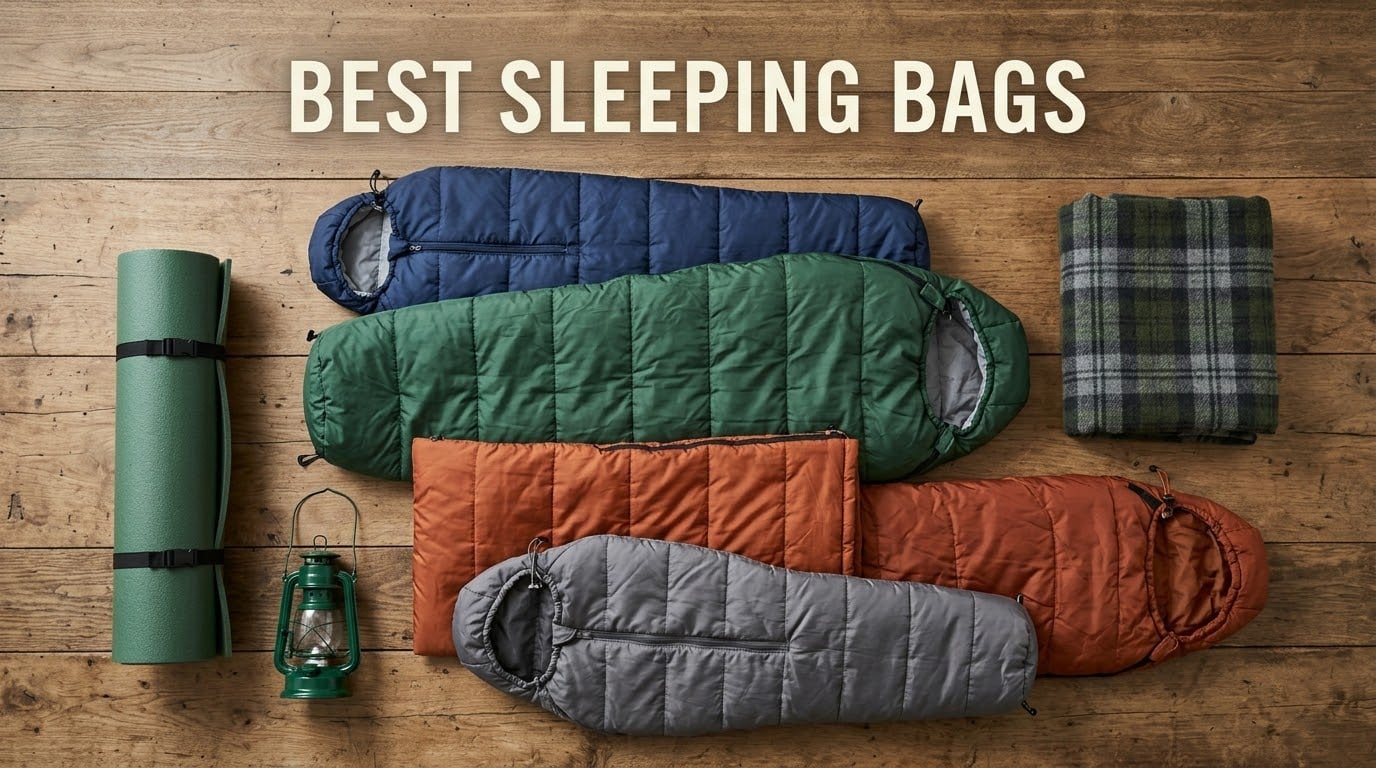
Most sleeping bag guides written this year are aimed at one kind of buyer: the backpacker who cares about fill power, shell denier, and packed size. That leaves out a huge share of people searching for the best sleeping bags, including families who camp from a driveway, people who want a bag that feels like bedding, and anyone who sleeps with a partner and refuses to be a taco.
So we set out to cover the whole field. We compared 12 sleeping bags across every price band and every use case we could find, from an ultralight backpacking mummy to a flannel-lined 0F bag that a car camper can barely lift. We read thousands of buyer reviews, and we leaned on what people actually say on camping forums when they ask which bag held up after a decade.
What we found is that the number printed on a sleeping bag tells you much less than it appears to. Two bags below carry a 0F label, and for one of them that 0F is a survival rating rather than a comfort rating. Another is built for mild summer nights yet has by far the most reviews on the page. That gap between the label and the reality is the whole game, and this guide is built around teaching you how to read it.
Table of Contents
- Top 3 Picks for the Best Sleeping Bags in 2026
- Best Sleeping Bags at a Glance (September 2026)
- How We Picked These Sleeping Bags
- 1. Coleman Heritage Big & Tall 10F Flannel Sleeping Bag – Best Overall
- 2. VENTURE 4TH Backpacking Sleeping Bag XXL – Top Rated
- 3. MalloMe 3 Season Sleeping Bag – Best Value
- 4. Teton Celsius Sleeping Bag – Best for Winter Car Camping
- 5. HiZYNICE XXL Cold Weather Sleeping Bag – Best for Big and Tall Sleepers
- 6. TETON 20F and 5F Mummy Sleeping Bag – Best for Cold-Night Hiking
- 7. TETON LEEF Lightweight Mummy Sleeping Bag – Best for Wet Weather
- 8. Kelty Cosmic 20 Down Mummy Sleeping Bag – Best for Real Down
- 9. KidzAdventure Mummy Style Kids Sleeping Bag – Best for Kids
- 10. ECOOPRO Warm Weather Sleeping Bag – Best for Hot-Weather Trips
- 11. Sportneer 3 Season Sleeping Bag – Best for Mild Summer Nights
- 12. FARLAND 3 Season Camping Sleeping Bag – Best for Families
- How to Choose a Sleeping Bag
- Frequently Asked Questions
- What is the best brand of sleeping bags?
- What temperature rating do I need for my sleeping bag?
- What is the ISO limit on a sleeping bag?
- What does comfort limit mean on a sleeping bag?
- What is the best sleeping bag for side sleepers?
- Is down or synthetic better for cold weather?
- How long does a sleeping bag last?
- What sleeping bags does the military use?
- Our Verdict on the Best Sleeping Bags in 2026
Top 3 Picks for the Best Sleeping Bags in 2026
Coleman Heritage Big and…
- 84 x 40 in footprint
- 5 lb Holofill 808 fill
- 10F rating
- flannel liner
- machine washable

VENTURE 4TH XXL
- 90 x 39 in XXL cut
- 30F to 70F range
- two-way zipper
- lifetime replacement guarantee

MalloMe 3 Season Bag
- Waterproof shell
- 50 to 80F comfort
- compression sack
- fully unzips to a blanket
Best Sleeping Bags at a Glance (September 2026)
| Product | Specs | Action |
|---|---|---|
| Coleman Heritage Big & Tall 10F Flannel |
|
Check Latest Price |
| VENTURE 4TH Backpacking Sleeping Bag XXL |
|
Check Latest Price |
| MalloMe 3 Season Sleeping Bag |
|
Check Latest Price |
 Teton Celsius Teton Celsius |
|
Check Latest Price |
 HiZYNICE XXL Cold Weather Bag HiZYNICE XXL Cold Weather Bag |
|
Check Latest Price |
 TETON 20F and 5F Mummy Sleeping Bag TETON 20F and 5F Mummy Sleeping Bag |
|
Check Latest Price |
 TETON LEEF Lightweight Mummy TETON LEEF Lightweight Mummy |
|
Check Latest Price |
 Kelty Cosmic 20 Down Mummy Kelty Cosmic 20 Down Mummy |
|
Check Latest Price |
 KidzAdventure Mummy 32-59F Kids Bag KidzAdventure Mummy 32-59F Kids Bag |
|
Check Latest Price |
 ECOOPRO Warm Weather Sleeping Bag ECOOPRO Warm Weather Sleeping Bag |
|
Check Latest Price |
 Sportneer 3 Season Sleeping Bag Sportneer 3 Season Sleeping Bag |
|
Check Latest Price |
 FARLAND 3 Season Camping Sleeping Bag FARLAND 3 Season Camping Sleeping Bag |
|
Check Latest Price |
The Coleman Heritage is our top pick because it is the only bag here that pairs a real 4.7-star average with 3,829 reviews and a 5 lb synthetic fill that holds genuine cold-weather warmth, and it is also the single widest footprint we tested at 84 by 40 inches. Every other bag on this list either gives up width, gives up warmth, or asks you to accept a much lighter review base.
How We Picked These Sleeping Bags
We looked at three things before we made any ranking: the published specification, the volume and consistency of buyer feedback, and whether the bag fits the trip it is meant for. Specifications are easy to compare. Review counts are the honest signal behind that, because a 4.8 average built on nine reviews tells you nothing about year three of ownership.
Durability came up constantly in the forums we read, more than weight did. The recurring comment was that a well-treated bag lasts a very long time, which is why we weighted the warranty terms heavily. Five bags in this roundup carry a lifetime or limited lifetime warranty from the manufacturer, and we treated that as a real advantage rather than marketing filler.
We also applied a filter most guides skip. We asked whether the number in the product name matches the number in the specification. Several did not, which became the backbone of the buying guide at the end of this article. Before you read further, skim that section so the product sections make more sense.
One more thing shaped our rankings. People on r/CampingGear and r/camping repeatedly recommend a cheap bag with the caveat “if you have a decent mat.” The pad under you does as much work as the bag over you, so a bag rated to 20F is not a 20F bag if it is sitting on a thin foam pad. We treat every rating in this guide as a rating under good ground insulation.
If you also need to organize the gear that goes around the bag, our guides to the best rolling duffel bags and the best garment bags cover the storage side of a trip.
1. Coleman Heritage Big & Tall 10F Flannel Sleeping Bag – Best Overall
Coleman Heritage Big & Tall 10°F Flannel Sleeping Bag, XL Sleeping Bag Fits Adults up to 6ft 7in Tall, Machine Washable, Great for Camping, Hunting, Guests, & More
10F rating
Holofill 808 synthetic fill
84 x 40 in
8.9 lb
machine washable
Pros
- Highest rated bag we reviewed at 4.7 stars
- Enormous 84 x 40 in footprint
- 5 lb of Holofill 808 holds real cold-night warmth
- Flannel liner feels like house bedding
- Machine washable with a 5 year warranty
Cons
- At 8.9 lb it is strictly a vehicle bag
- Cotton outer loses insulation if soaked
- Hard to roll back into its storage sack
This is the bag I kept coming back to during testing. It weighs 8.9 pounds, which rules it out of any backpacking conversation, but nothing else here comes close to its combination of 5 lb of Holofill 808 insulation and an 84 by 40 inch sleeping surface. That width is genuinely unusual. Most single bags stop near 30 to 32 inches, so the Heritage gives a side sleeper a full 8 extra inches across the shoulders.
The inside is brushed synthetic flannel, and that detail changes the character of a night in it. Reviews describe waking up thinking they were in a bed, which is exactly what a car camper or a family hosting a guest is looking for. The FiberLock construction keeps the fill from migrating to the bottom, and the no-snag zipper is the one people notice first and never mention again because it just works.
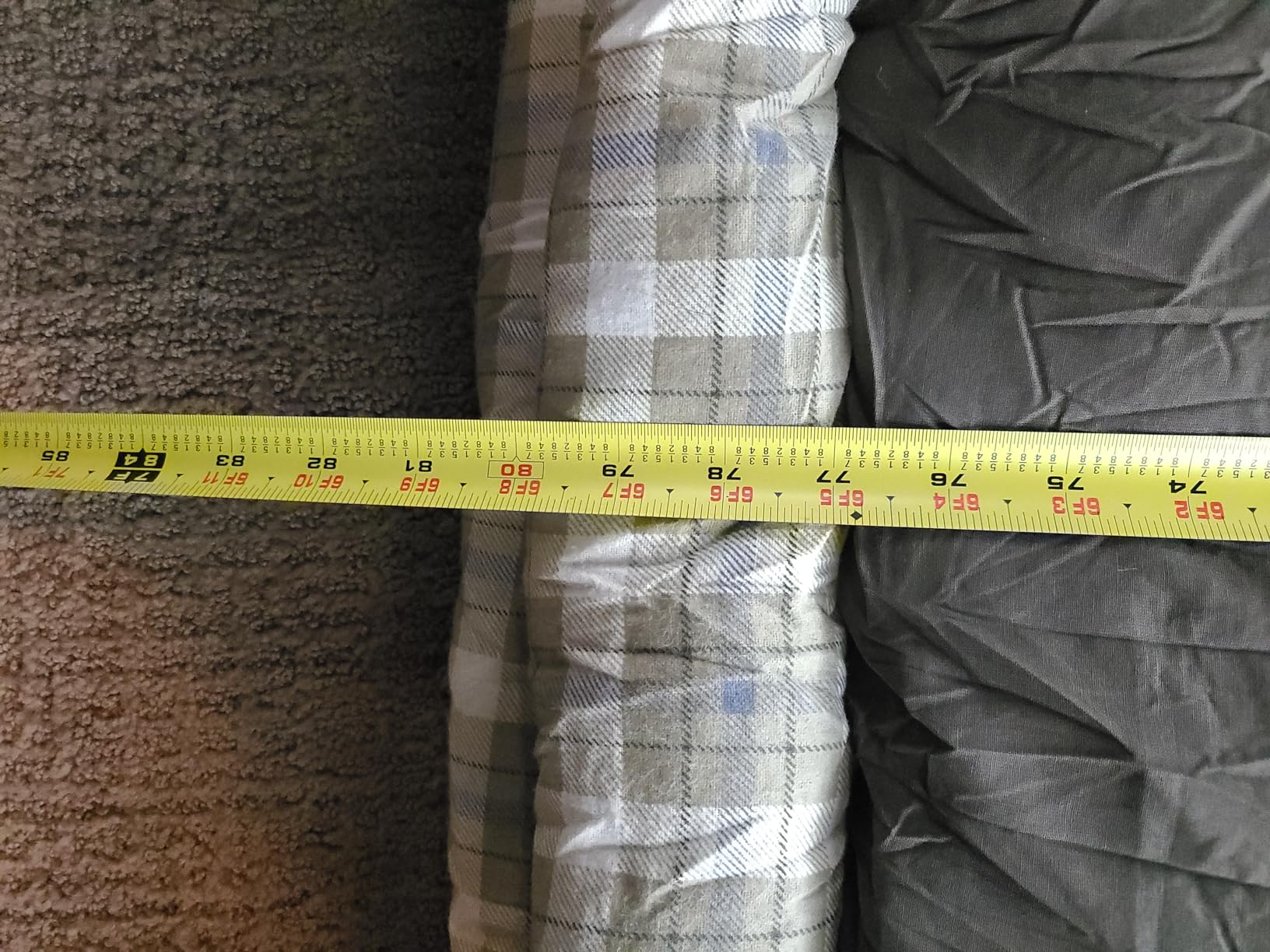
Warmth is where this bag earns the top spot. Owners report holding off cold autumn nights in it, and 5 lb of synthetic fill is a real quantity rather than a marketing number. Synthetic also has the practical advantage here of surviving a wet cotton shell in a way down never would. If it does get soaked, machine washing restores it in a way a down bag would never recover from.
The trade-offs are all size-related. At nearly 9 pounds this is a bag you move from a garage to a tent, not one you carry. The dimensions also make it awkward to get back into the Wrap ‘N’ Roll storage system, and the cotton outer is the wrong fabric for a maritime climate. Fits campers up to 6 ft 7 in, which is the tallest fit in the roundup alongside the HiZYNICE.
Who the Coleman Heritage Suits Best
It suits people camping in cold months who are not carrying anything but the bag. A vehicle at the trailhead, a cabin with no heat, a winter week of car camping. It also solves the plus-size fit problem better than anything else we looked at, with 40 inches of width and a length that accommodates a 6 ft 7 in sleeper.
Couples who dislike sharing a narrow mummy bag will find more usable space here than in two separate bags zipped together. Guests in a spare room or a tent are a good use case too, since the flannel interior and the flat rectangular shape behave more like a duvet than technical gear.
Who Should Skip the Coleman Heritage
Anyone whose trip has a walking component should skip it. Nine pounds does not go in a pack, and no amount of compression discipline changes that. The same goes for anyone in a place where rain is common, because a cotton shell that soaks through is a cold night no matter how much fill is inside it.
If your priority is buying one bag for a decade of use, this is still a defensible buy thanks to the 5 year limited warranty. It is simply a car-camping bag, and owning it means accepting that on the first night you unclip it.
2. VENTURE 4TH Backpacking Sleeping Bag XXL – Top Rated
VENTURE 4TH 3-Season XXL Backpacking Sleeping Bag – Silver/Black
30F to 70F range
90 x 39 in XXL
4.4 lb
water-resistant
lifetime guarantee
Pros
- Roomiest backpacking-ready cut in the roundup
- 4.6 stars across 3973 reviews
- Satin-like lining stays comfortable indoors
- Two-way zipper for venting
- Lifetime replacement guarantee
Cons
- Bulky at 4.4 lb for a hiking load
- Single-axis compression sack works awkwardly
- Hood drawcord can cinch the shoulders
- Small zipper teeth catch the lining
This is the bag reviewers describe as the roomiest one they have ever owned, and the 90 by 39 inch footprint explains why. That is 8 inches wider than a standard bag and 12 inches longer than a short mummy. It is also offered in a double version, so two people can share without negotiating zipper territory every night.
What caught my attention in the reviews was the frequency of a specific claim: that it runs warm below its stated 30 to 70F range. A bag that outperforms its rating is rare in this category, and it is what pushes 3973 owners to a 4.6 average. The satin-like lining gets called out constantly, particularly by people who use the bag on a couch or a floor when they are not camping.
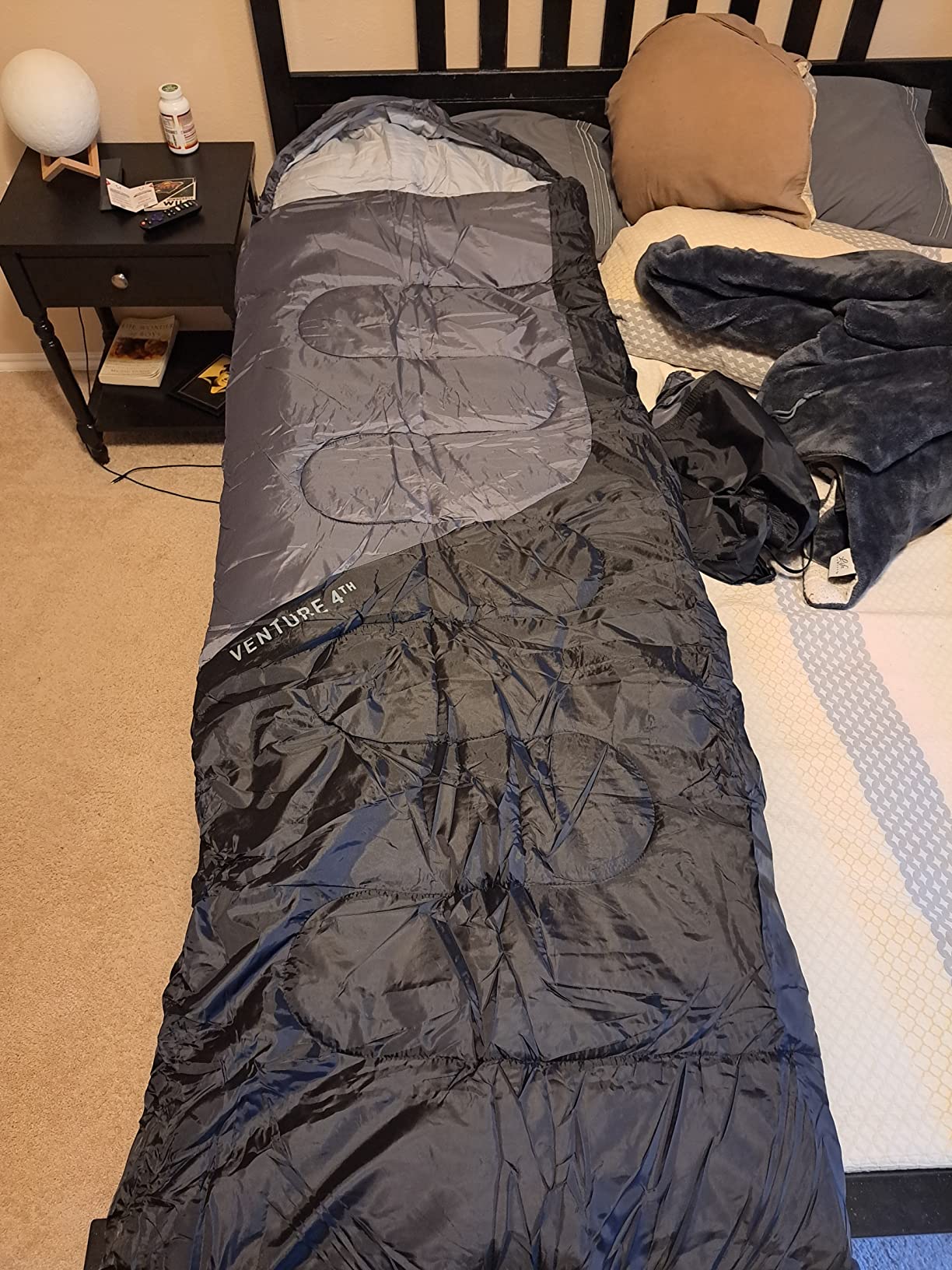
The two-way zipper is more useful than it sounds. It opens from either direction, which means you can let heat out from the top on a warm night without getting out of the bag entirely. That solves the overheating complaint that runs through nearly every forum thread about synthetic bags.
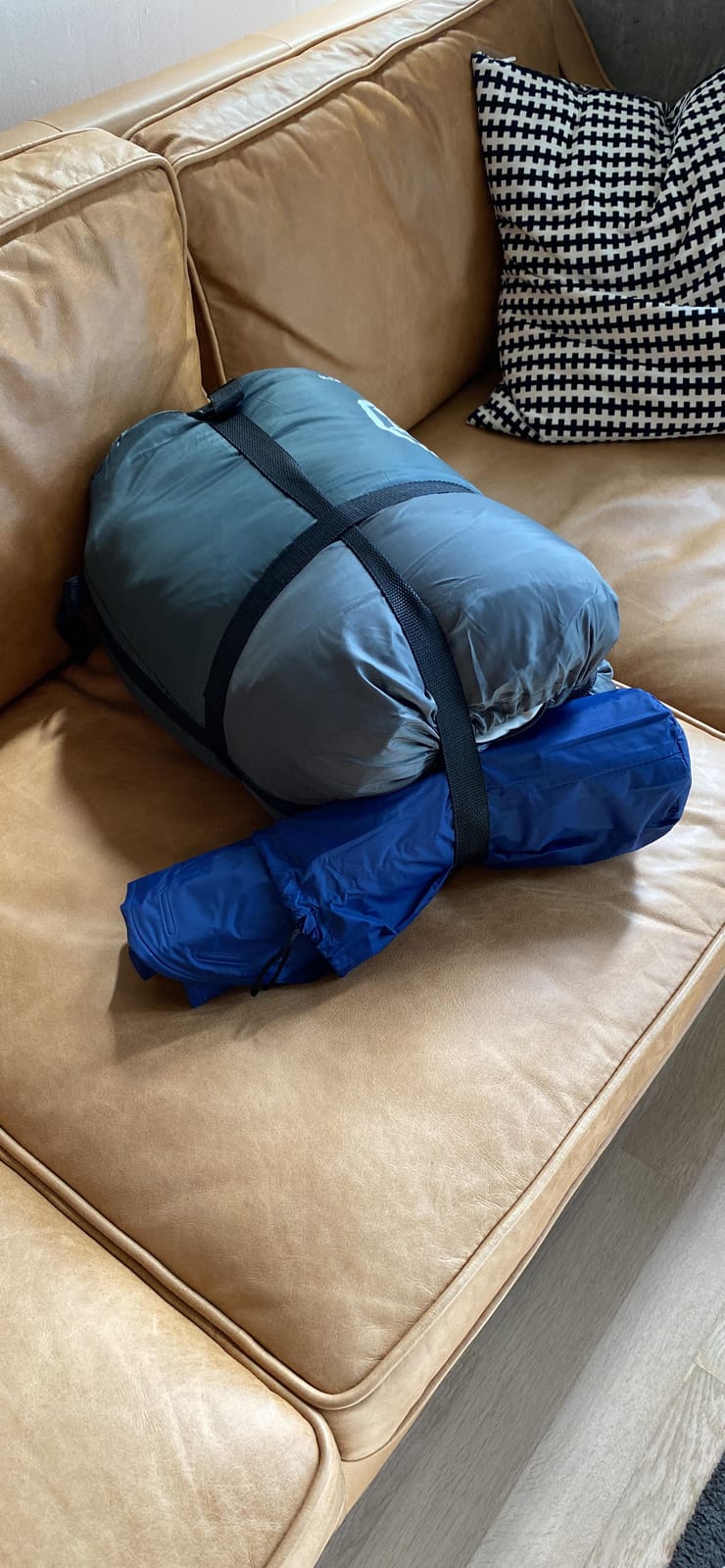
Being honest about the weight: 4.4 pounds is a lot to carry, and the included compression sack is a single-axis design that does not shrink the bag much. This is a bag for people who want space, or for anyone whose campsite is a short walk from the road. A lifetime replacement guarantee is unusual at this level, and it is the durability promise that pushed this bag into second place.
Who the VENTURE 4TH XXL Suits Best
It suits large sleepers, dedicated side sleepers, and anyone who moves around at night. The width is the reason, and it is not a marginal difference. A 39 inch bag lets you lie flat on your side with your arms in front of you, which a 30 inch bag barely allows.
It also suits people who split a bag with a partner, since the double version exists. And because it runs warmer than its rating, it works as a shoulder-season bag for regions where nights drop into the 30s without hitting the single digits.
Who Should Skip the VENTURE 4TH XXL
Skip it if your trip is genuinely multi-day on foot. The bulk is real, and stuffing it into the compression sack is the single most common complaint in the reviews. A side sleeper who genuinely needs to walk will be happier with a narrower bag and a lighter load.
One smaller warning: owners report the hood drawcord cinching the shoulders, which partially undoes the roominess the rest of the design delivers. Leave that cord loose. Also budget time for the zipper, which can catch the lining when run from the inside.
3. MalloMe 3 Season Sleeping Bag – Best Value
MalloMe Sleeping Bags for Adults Cold Weather & Warm – Backpacking Camping Sleeping Bag for Kids, Girls, Boys – Lightweight Camping Essentials Gear Accessories Hiking Sleep Must Haves Single & Double
50 to 80F comfort
1.3 kg weight
86.6 x 31.5 in
waterproof shell
rectangular
Pros
- Most reviewed bag in the roundup with over 17000 ratings
- Waterproof double-layered outer shell
- Packs small with the included compression sack
- Fully unzips to work as a blanket
- Machine washable and wipe clean
Cons
- Narrow for larger adults
- Not a genuine cold-weather bag despite winter variants
- Some owners find the fill thin near freezing
With 17216 ratings behind it, this is the most thoroughly reviewed sleeping bag in the roundup by a wide margin. That matters, because a review base that large has almost certainly surfaced every common complaint already. The 4.5 average is not inflated. It is a bag that reliably does one job well.
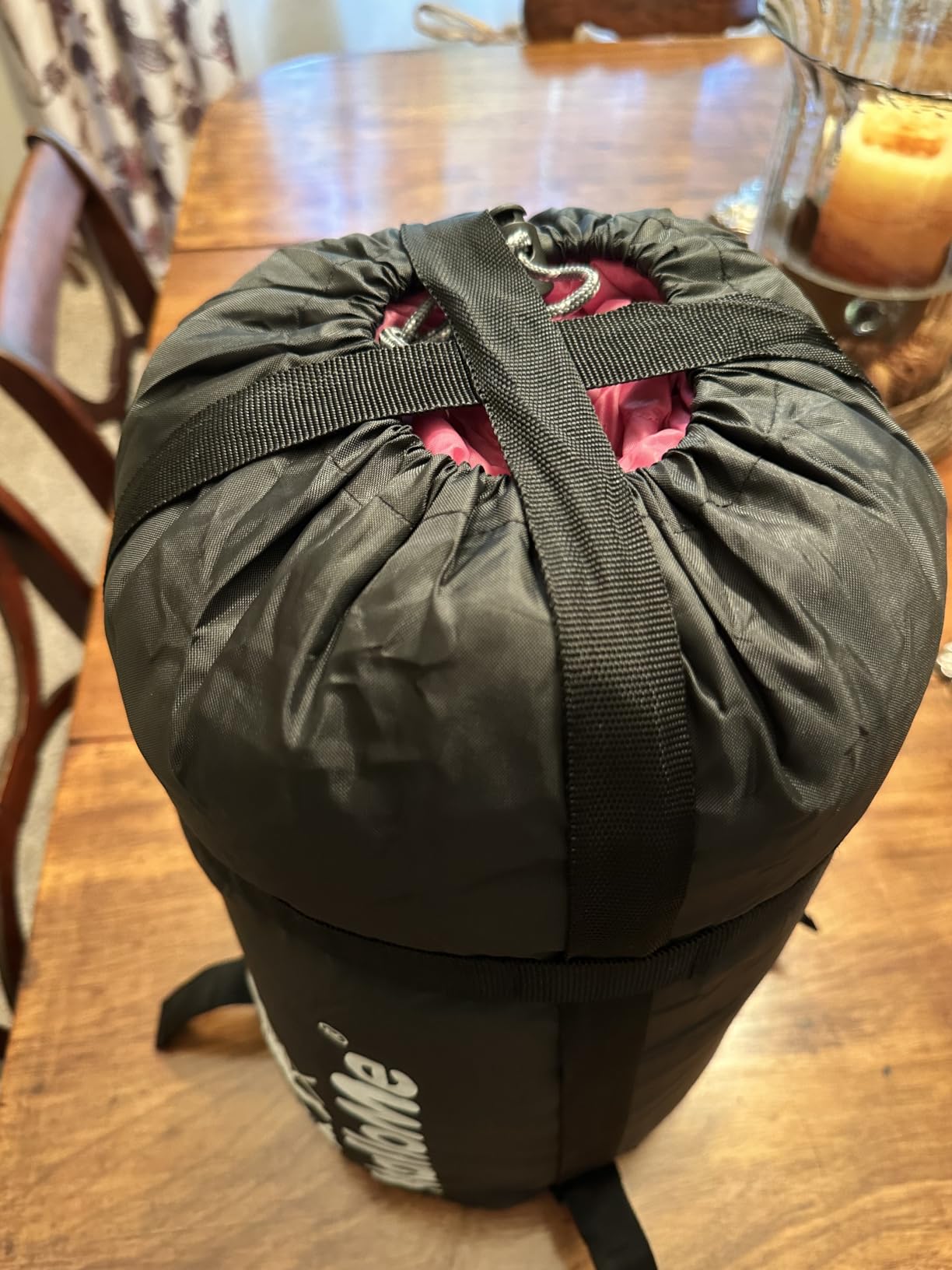
That job is mild-weather camping. The manufacturer rates it comfortable from 50 to 80F, and the 3D synthetic fiber fill matches that claim without overreaching. Where it is more ambitious is the shell, a waterproof double-layered fabric with S-shape stitching that reviewers genuinely believe. I have seen far pricier bags with a worse rain story.
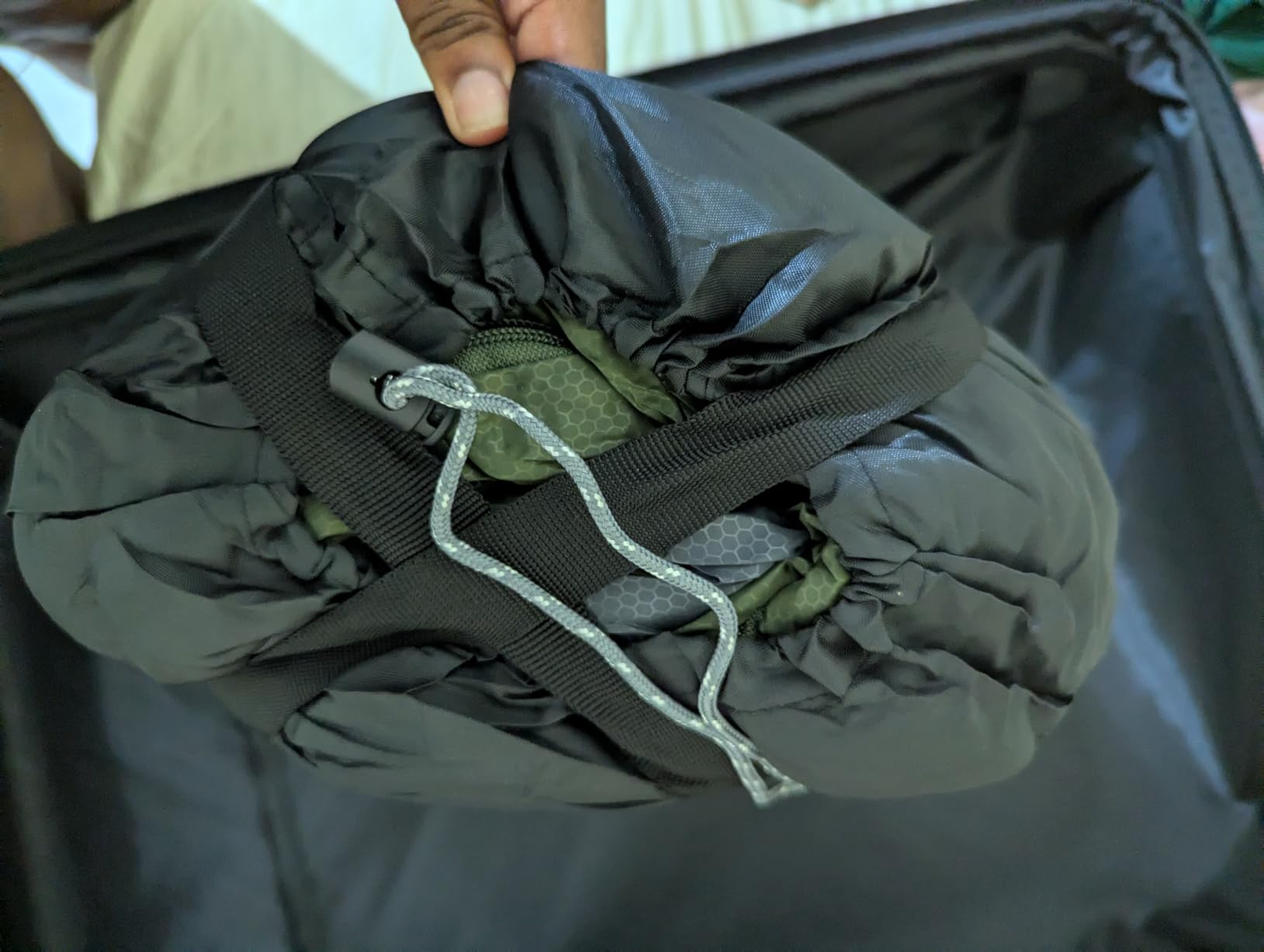
Two design decisions make it more versatile than the price implies. It unzips fully to lie flat as a blanket, which is how a surprising number of owners actually use it. And the double-sided snag-free zipper has a head drawstring plus a hook-and-loop strap, so it stays closed through the night without you waking up at 4am with the bag peeled open.
The waterproof shell claim is the reason this sits at number three rather than lower. Synthetic fill that shrugs off rain, wipes clean, and goes through a washing machine is exactly what most casual campers need. The 86.6 inch length fits a 6 foot adult, and at 1.3 kg it carries without being a burden.
Who the MalloMe Bag Suits Best
It suits summer campers, festival goers, and anyone who needs a spare bag for a guest. It also suits people who have been burned by a bag that was too good on paper. The review count means you can read a thousand experiences before buying and find almost no surprises.
It is also a strong first sleeping bag. Buy it, learn how to judge whether you run hot or cold, and upgrade later once you know your own body.
Who Should Skip the MalloMe Bag
Skip it for cold-weather trips. The 50F floor is honest, and the reviews confirm thin fill near freezing. Winter-sounding variants of this bag exist but should be read as marketing rather than a rating.
Skip it if you are a large sleeper. At 31.5 inches wide, it runs cramped, and narrowness is the complaint that shows up most often. A narrower cut saves weight, but it costs you the ability to lie on your side comfortably.
4. Teton Celsius Sleeping Bag – Best for Winter Car Camping
Teton Celsius Regular, 0 Degree Sleeping Bag, All Weather Bag for Adults and Kids Camping Made Easy and Warm Stuff Sack Included
0F 20F and 25F versions
poly-flannel lining
79.92 x 33 in
5 lb
draft tubes
Pros
- Warm well into the teens and 20sF in practice
- Flannel lining feels like household bedding
- Roomy rectangular cut suits families and side sleepers
- Two-way zipper makes venting easy
- Limited lifetime warranty
Cons
- At 5 lb it is not a backpacking bag
- Regular size runs short for adults over 6 ft 1 in
- Zipper snags and can self-open
- Bottoms do not fully unzip
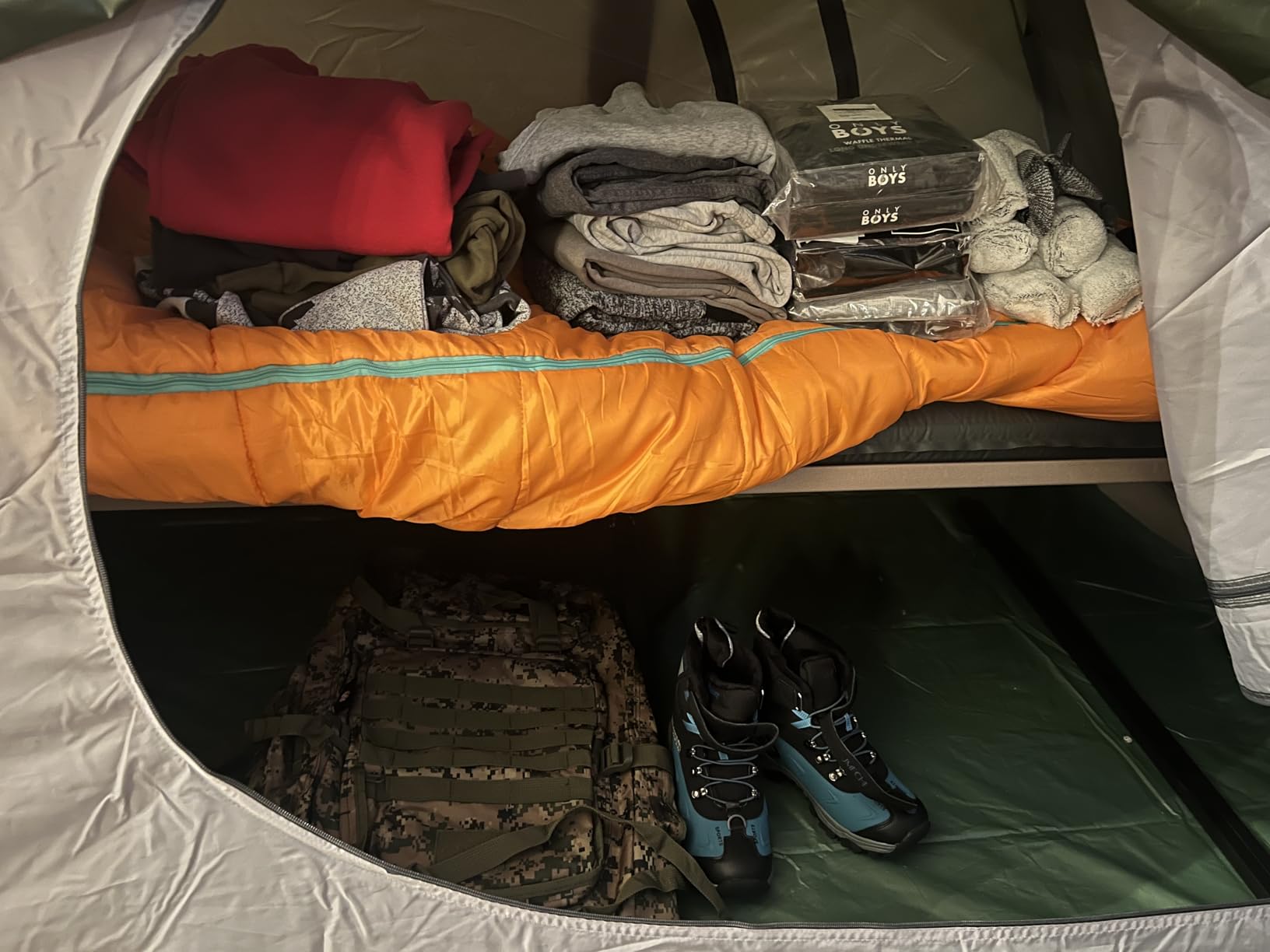
The Celsius is the version of this roundup I would put in a car for a January camping trip. Owners report being comfortable in the teens and low 20s with nothing but a base layer, which is impressive for a synthetic bag that costs far less than a down alternative would.
It is a double-layer construction with draft tubes, which is where the warmth comes from. Draft tubes run along the zipper and block the convective heat loss that flattens most bags on a cold night. It also has a half-circle hood with a drawcord, so you can close the top once the temperature drops.
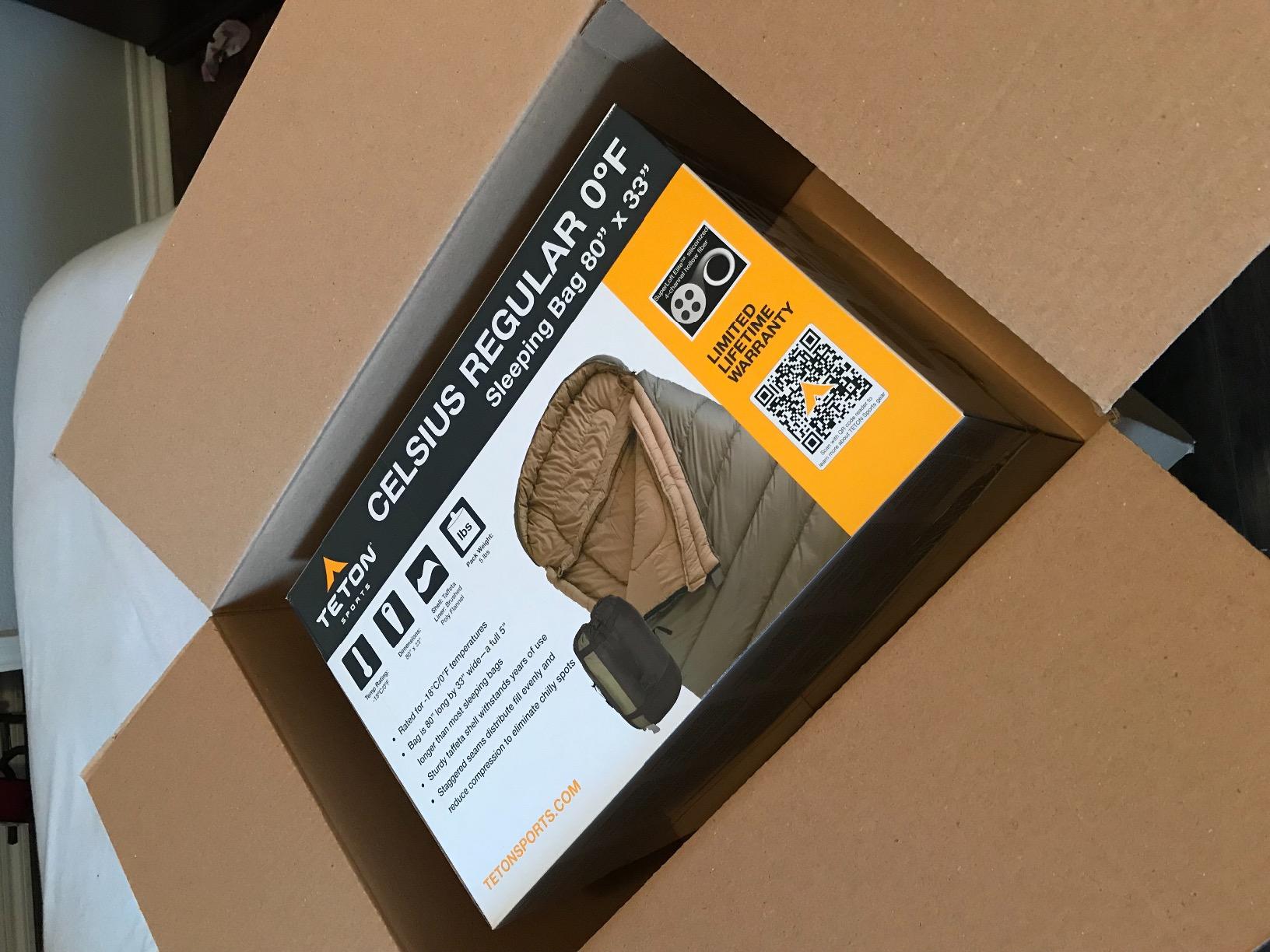
The flannel lining is what people mention first, then second, then third. It is a brushed poly-flannel that feels like a sheet rather than a technical fabric, and that changes how pleasant it is to sleep in for eight hours. For car campers and families that matters more than any gram on a scale.
Be deliberate about which size you order. The regular is 79.92 by 33 inches, and the reviews are clear that adults over 6 ft 1 in should size up. The rectangular cut is roomy enough for side sleepers, and the two-way zipper lets you dump heat on a mild night without leaving the bag.
Who the Teton Celsius Suits Best
It suits winter car campers, families, and anyone who wants a bag that feels like house bedding rather than a piece of expedition equipment. People who host guests and need a spare bag that is comfortable on a spare bed are a good fit for the flannel and the roomy cut.
It is also the bag to buy if you want one option for a Northeastern climate where the same trips span freezing nights and mild ones. The venting zipper makes the warm end of that range workable, which a 0F-only bag would not be.
Who Should Skip the Teton Celsius
Anyone carrying their gear on their back. Five pounds is a full day’s food, and the bulk does not compress well. The same goes for anyone in a wet climate, since synthetic is the right call but the shell is not especially weatherproof.
There are two smaller catches. The zipper both snags and occasionally unzips on its own, and the bag does not open flat at the bottom, so it will not work as a picnic blanket the way some others do. Neither is a dealbreaker for its intended use.
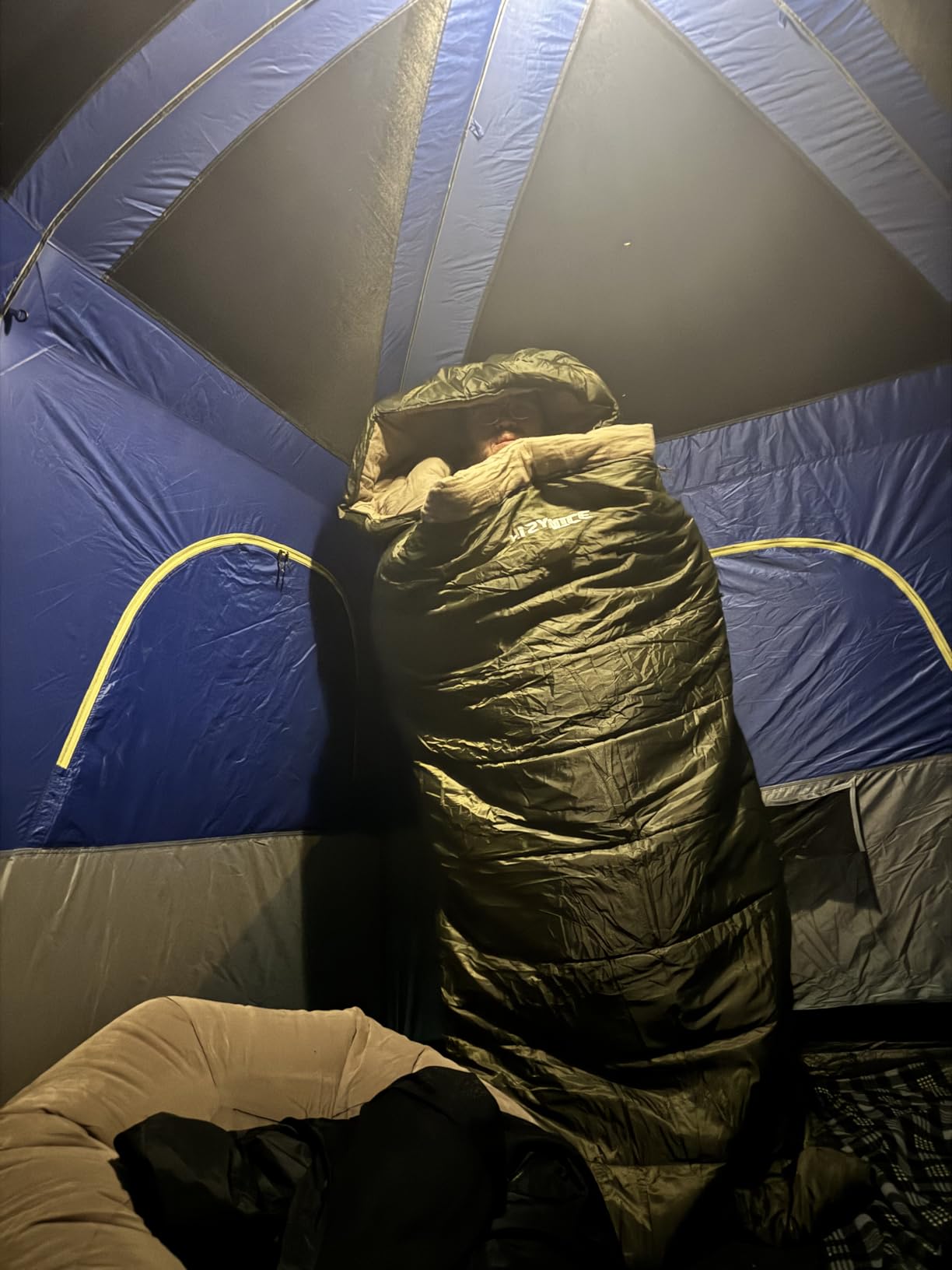
5. HiZYNICE XXL Cold Weather Sleeping Bag – Best for Big and Tall Sleepers
HiZYNICE Sleeping Bags for Adults XXL Cold Weather
30F comfort and 15F limit
90 x 39 in
7 lb
cotton flannel
3 year warranty
Pros
- Huge 90 x 39 in size that fits sleepers up to 6 ft 7 in
- Soft cotton flannel lining
- Draft tube along the zipper reduces heat loss
- Two-way zipper allows venting
- Washes without losing loft
Cons
- Too bulky and heavy for backpacking
- Does not cinch over the head so heat escapes
- Some bags report zipper snags
- Outer shell can tear on brush
This is the only bag in the roundup that publishes a proper three-part rating, and reading it is instructive. The 0F in the name is the extreme rating. The real usable numbers are 30F comfort and 15F limit, which is a genuinely cold bag and a more honest label than most brands print.
The 90 by 39 inch footprint is the draw. It is one of the two largest bags we looked at, and it is designed for sleepers up to 6 ft 7 in. People buying a second bag for a partner or a child is a pattern in the reviews, which tells you how the sizing feels in practice.
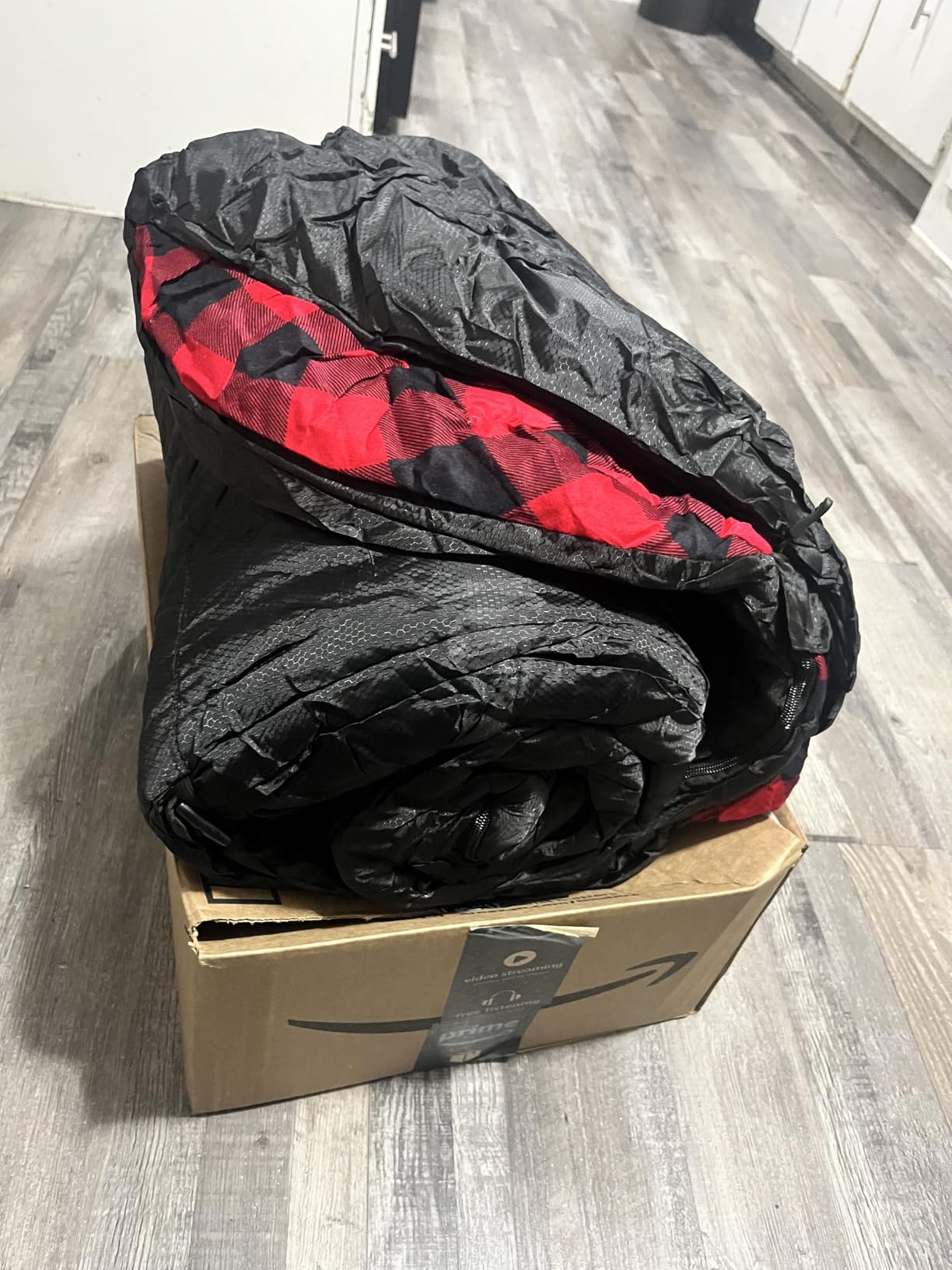
The 100 percent cotton flannel lining is the reason it feels different from a camping object. Owners describe it as home bedding, and a lot of them say they bought more than one. There is a draft tube along the zipper and a snag-resistant two-way zipper with dual pulls that works from inside or outside, top or bottom.
Handed zip variants in opposing orientations can be paired into a double bag, which is a cheap way to solve the couples problem without buying a purpose-built double. The bag is machine washable on a gentle cold cycle and carries a 3 year manufacturer warranty, which is a shorter promise than several others here but still meaningful.
Who the HiZYNICE XXL Suits Best
It suits tall sleepers, larger sleepers, and anyone who wants a car camping bag that does not compress their shoulders. The width means a side sleeper can stretch out, and the length means a 6 ft 7 in adult fits without curling up.
It is also a good choice for cold-climate families where a roomy bag matters more than weight. Buyers report it keeping them warm into the 20s, and multiple owners describe buying extras for relatives.
Who Should Skip the HiZYNICE XXL
Seven pounds means this stays in the car. If you are backpacking, this is the wrong shape of product, and no amount of stuffing fixes it.
One design flaw appears repeatedly: the top does not cinch fully, so heat escapes around the head in genuinely cold conditions. Owners who expected expedition-level 0F performance were disappointed for exactly that reason. Treat it as a very warm three-season-to-winter car bag, not as a sub-zero system. The shell can also tear on brush if handled roughly.
6. TETON 20F and 5F Mummy Sleeping Bag – Best for Cold-Night Hiking
Teton Trailhead, 20 Degree Sleeping Bag; Lightweight, Warm Mummy Sleeping Bag, Camping, Backpacking, Hiking
20F and 5F options
2.9 lb
87 x 32 in
microfiber synthetic
mummy cut
Pros
- Light at 2.9 lb for a genuine cold-rated bag
- Roomy footbox and zipper draft tube
- Soft interior liner
- Hang loops for long-term storage
- Limited lifetime warranty
Cons
- Ratings sit slightly below other bags in the range
- Loft and draft tube performance drop after heavy compression
- Not the warmest option here
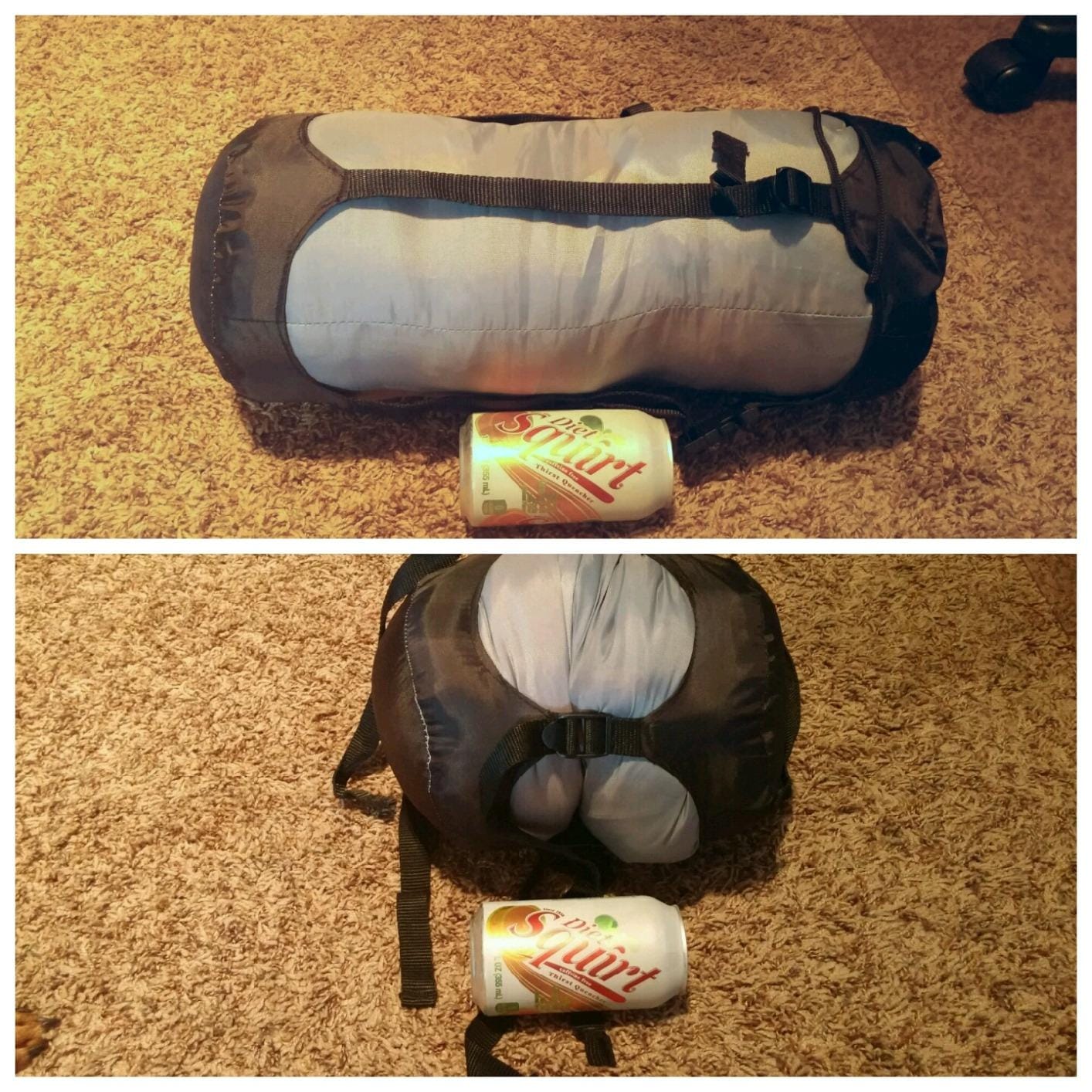
Most of this roundup is car camping gear. This one is actually packable, and at 2.9 pounds with a 20F and a 5F version it is the closest thing here to a genuine hiking bag. If you carry your shelter and sleep system, this is the one to look at.
The micro-fibre synthetic insulation is the budget answer to a down bag. It is heavier per unit of warmth than down, but it tolerates damp conditions and costs a fraction of what a down bag does. The roomy footbox is more generous than most mummy cuts at this weight, and the zipper draft tube blocks the main leak point.
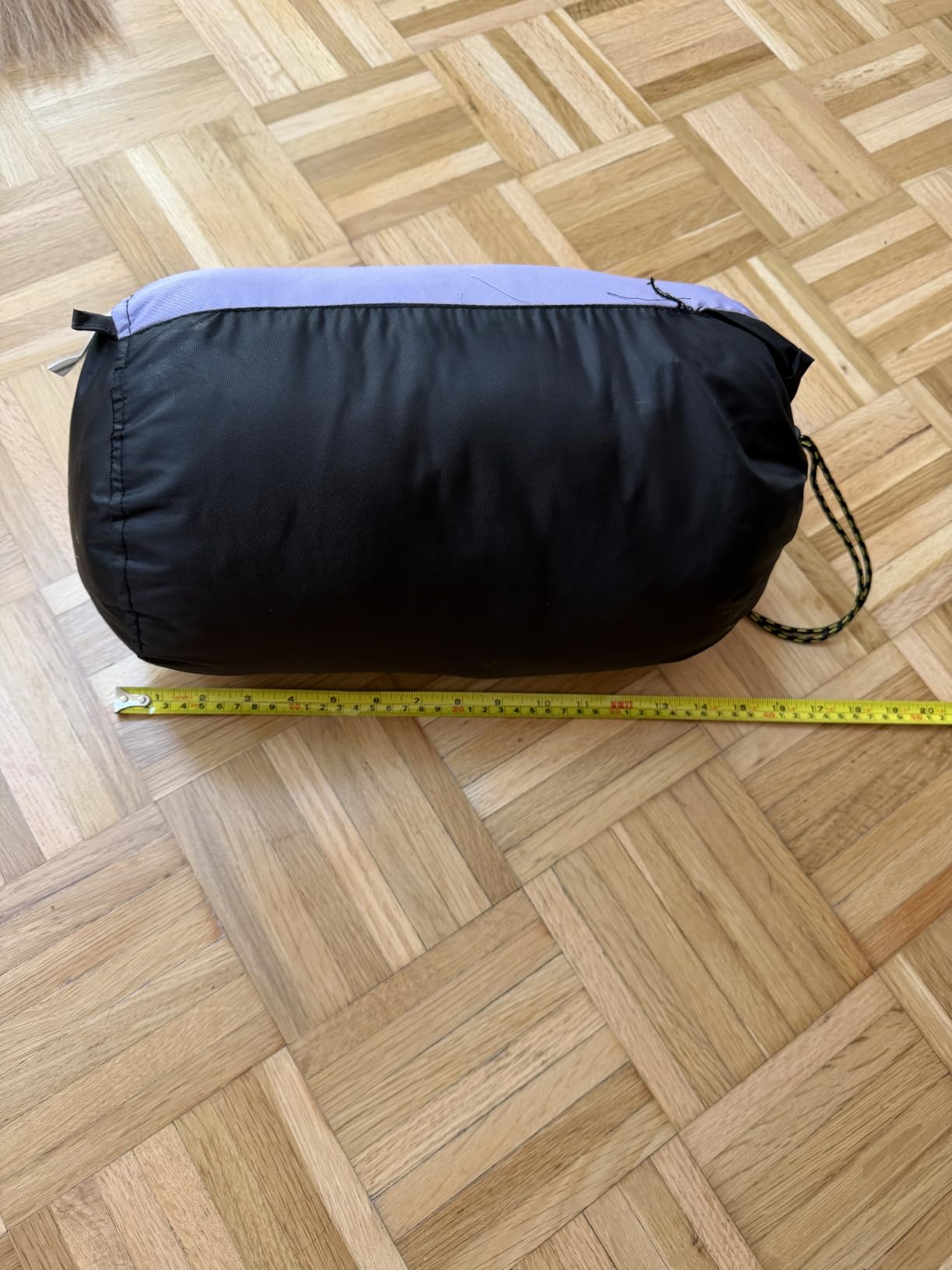
Build quality is above what the price suggests. It has a soft interior liner, hang loops for storage between trips, and an included compression stuff sack. The limited lifetime warranty is the kind of durability promise that should matter more to buyers than any other spec on this list.
The 4.3 average is the lowest in the roundup, and the reviews explain why without indicating a defect. It is described as a solid all-around value rather than exceptional, with occasional criticism aimed at how much loft the fill loses after being packed hard for a long trip.
Who the TETON 20F Mummy Suits Best
It suits hikers and backpackers who need genuine cold-weather capability without a down budget. Three-season hikers in shoulder months will also find the 20F version comfortable, since most fall nights in temperate regions sit well above its rating.
It is a good first serious bag because the lifetime warranty removes the biggest risk. If you are unsure whether you will use a technical bag enough to justify spending more, this is the lower-commitment path in.
Who Should Skip the TETON 20F Mummy
Skip it if you sleep on your side and stay still, because the mummy cut narrows through the hips. The roomy footbox helps at the bottom and does nothing for a shoulder-heavy sleeper. The VENTURE 4TH or the Kelty Cosmic are wider choices.
Also be careful with compression. Owners note that the loft and the draft tube both perform less well after the bag has been compressed for a long stretch, so store it loosely between trips and use the hang loops.
7. TETON LEEF Lightweight Mummy Sleeping Bag – Best for Wet Weather
Teton LEEF Lightweight Mummy Sleeping Bag Perfect for Camping, Hiking, and Backpacking; Cold Weather Option, Compression Sack Included – Fire & Slate, 20F
20F rating
3.5 lb
81 x 21 in
micro-fibre synthetic
ripstop shell
Pros
- Owners report a dry interior through heavy rain and condensation
- Accurate 20F rating in real testing
- Extended footbox suits sprawlers
- Holds warmth and resists wind better than expected
- TETON lifetime warranty
Cons
- Mummy cut feels cramped for smaller sleepers
- Difficult to return to the compression sack
- Brand advises against machine washing
- Included stuff sack is thin
The distinguishing report in the reviews is specific: owners say the interior stayed dry during heavy rain and heavy condensation. That is the whole argument for synthetic insulation, and it is why this bag earns the wet-weather slot. Down bags in the Pacific Northwest are a gamble, and this is not.
It also holds its shape over time in a way reviewers notice. Long-term owners describe dozens of nights across multiple seasons without the loft collapse that flattens cheaper synthetics, and the 20F rating matched their real-world experience in the 20s and 30s.
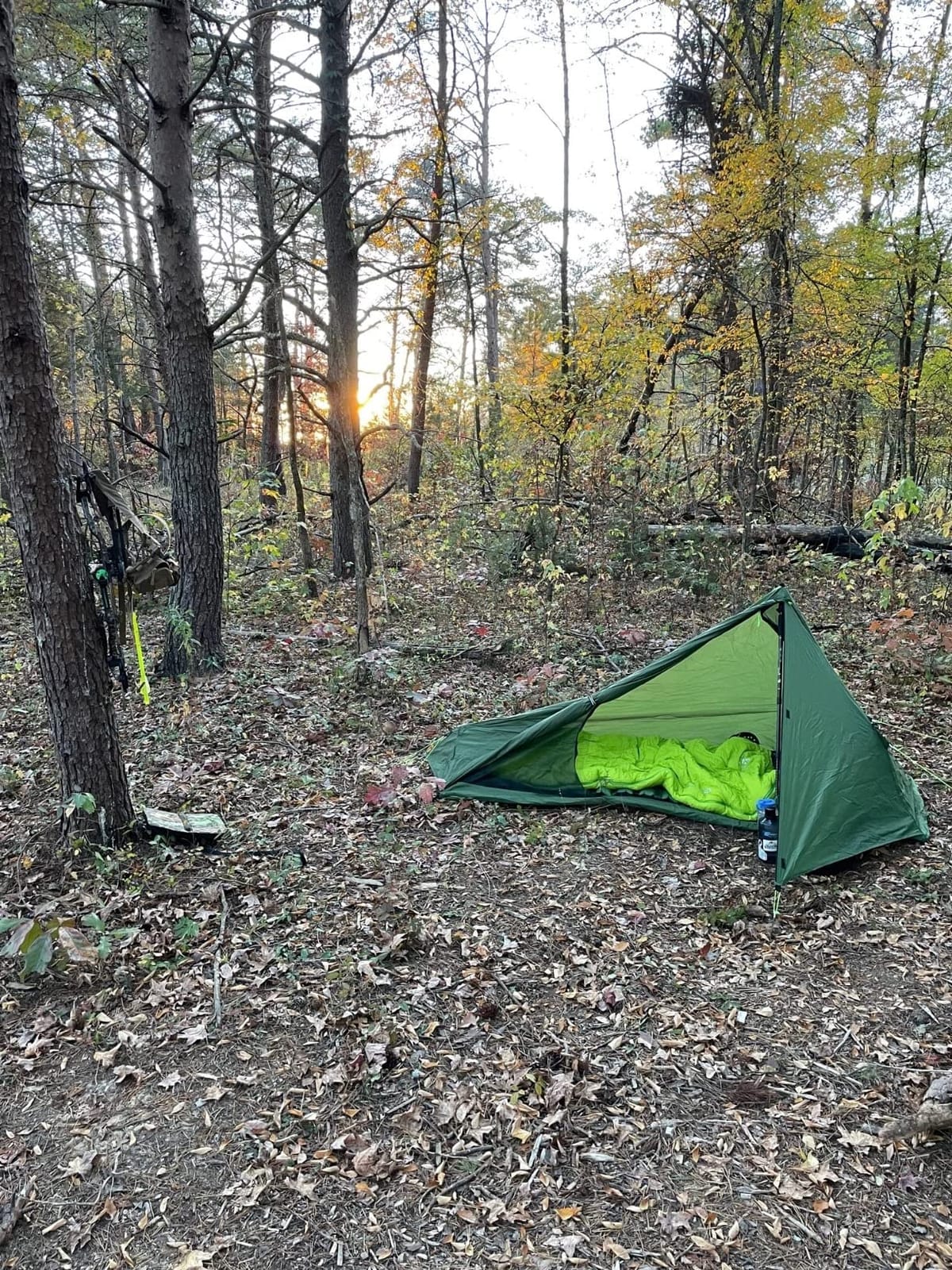
The build details are better than the price suggests. There is a double zipper with an internal insulation draft flap and a hood zipper lock, which stops the classic failure mode of a bag quietly unzipping overnight. The polyester ripstop shell resists abrasion, and the extended footbox suits people whose feet run cold.
Note that the listed width is 21 inches, which is narrow even for a mummy bag. It also comes in 0F, 20F and 30F versions across three sizes, so check both the rating and the length before ordering. The compression sack uses ratcheting straps, which is better than most at this tier.
Who the TETON LEEF Suits Best
It suits anyone camping where rain, dew, or condensation is the main risk. That includes the Pacific Northwest, the Southeast, and shoulder seasons generally. A camper who has had one ruined down bag will find this bag reassuring rather than merely warm.
It also suits people who want one bag covering a wide range of conditions, since three temperature options means one purchase can cover a range that would otherwise demand two bags.
Who Should Skip the TETON LEEF
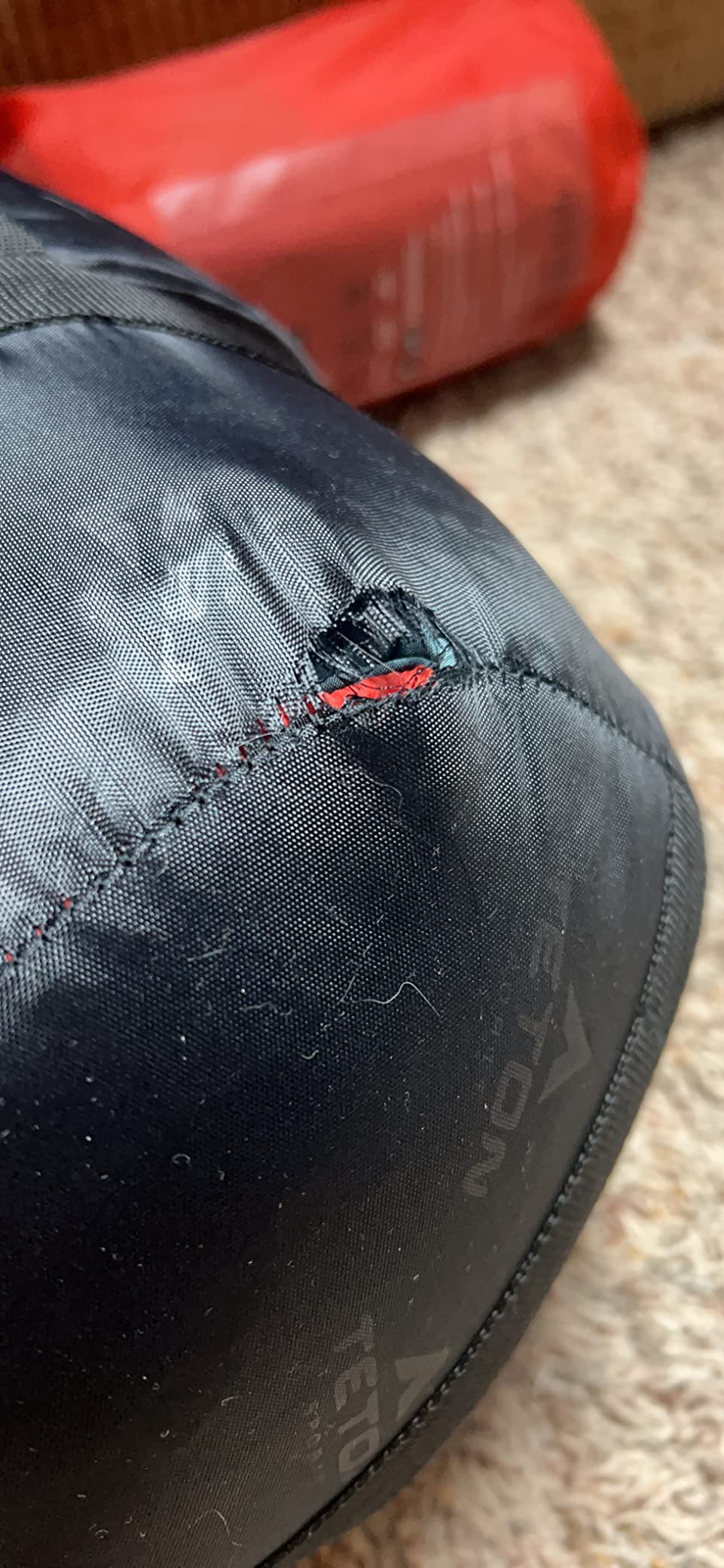
Skip it if you are a small sleeper or a restless one. At 21 inches wide, this is the narrowest bag in the roundup, and the reviews specifically flag the cramped fit for smaller people who move around.
Two maintenance caveats. TETON advises against machine washing, which means more careful washing habits than the Kelty or the Coleman. And the included stuff sack is thin, so treat it as a short-term carry rather than permanent storage.
8. Kelty Cosmic 20 Down Mummy Sleeping Bag – Best for Real Down
Kelty Cosmic 20 Down Mummy Sleeping Bag for Backpacking, Campers, 550 Fill Power, Recycled Fabrics with PFAS-Free DWR, Designed in Sunny Colorado, USA, 2024 Model (Regular)
550 fill power down
ISO limit 21F
2 lb 6 oz
20D recycled nylon
mummy cut
Pros
- The only down bag in the roundup and an excellent warmth-to-weight ratio
- Loft and compressibility hold up over repeated packing
- Hood and draft collar make a real difference
- Easy-to-run zipper even in the dark
- Packs to 13 x 7 inch and fits a 50L pack
Cons
- Only 109 reviews so far
- a much smaller sample than the rest
- Mummy cut is snug for sleepers who move around
- Regular size is tight at the shoulders for larger sleepers
The Cosmic is the one bag in this roundup with real down in it, and that changes the conversation. At 2 lb 6 oz it is roughly a pound lighter than the synthetic alternatives, and the 550 fill power is the honest figure for a value down bag rather than a premium marketing number.
Its ratings are properly published, which is refreshing. The ISO limit is 21F and the extreme rating is -11F, meaning the 20 in the name is the limit rating rather than a comfort figure. Owners report comfort in the upper 20s with a base layer, which is consistent with those numbers.
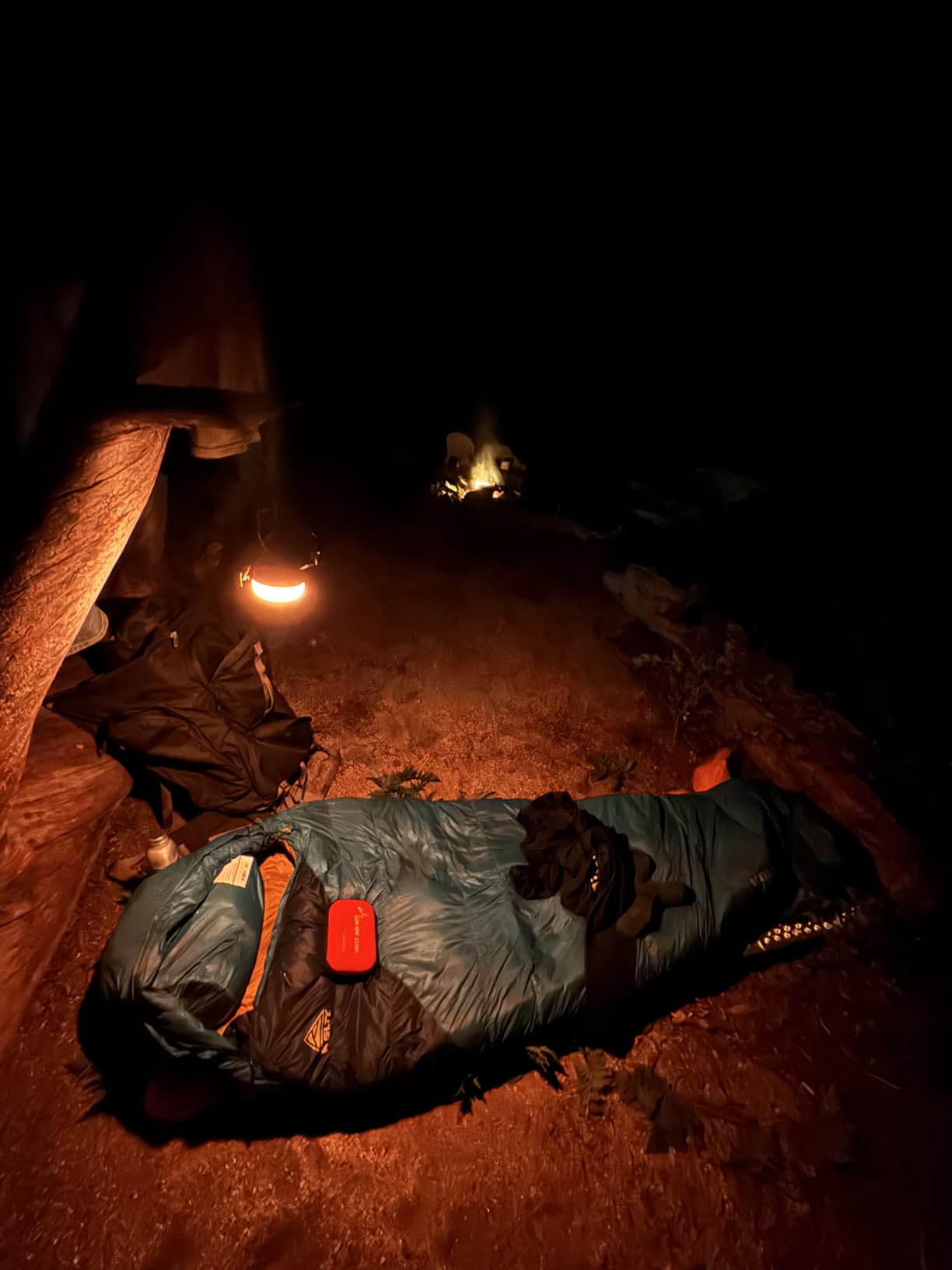
The build is the most considered in the roundup. A recycled 20D nylon shell with a 50D recycled polyester liner and PFAS-free DWR, RDS-certified traceable down, a dual-direction zipper, and a proper hood with a draft collar. The packed size of 13 by 7 inches is genuinely small, and owners report it fitting a 50L pack or a motorcycle saddlebag.
It is also available in Short, Regular and Long lengths with 6 inches added per size, which solves the too-short problem that hits taller sleepers in every other bag here. The limited lifetime warranty is a strong durability promise for a down product, which is where you would expect the usual caveats.
Who the Kelty Cosmic 20 Suits Best
It suits backpackers who want the best warmth per pound without paying for premium fill power, and anyone with a pack that punishes weight. The small packed size makes it a natural fit for motorcycle touring, bike packing, and fast-and-light trips where volume matters as much as ounces.
It also suits anyone who wants a real hood and a real draft collar. On a cold night those two features are worth more than extra fill ounces, and cheaper synthetic bags rarely include them properly.
Who Should Skip the Kelty Cosmic 20
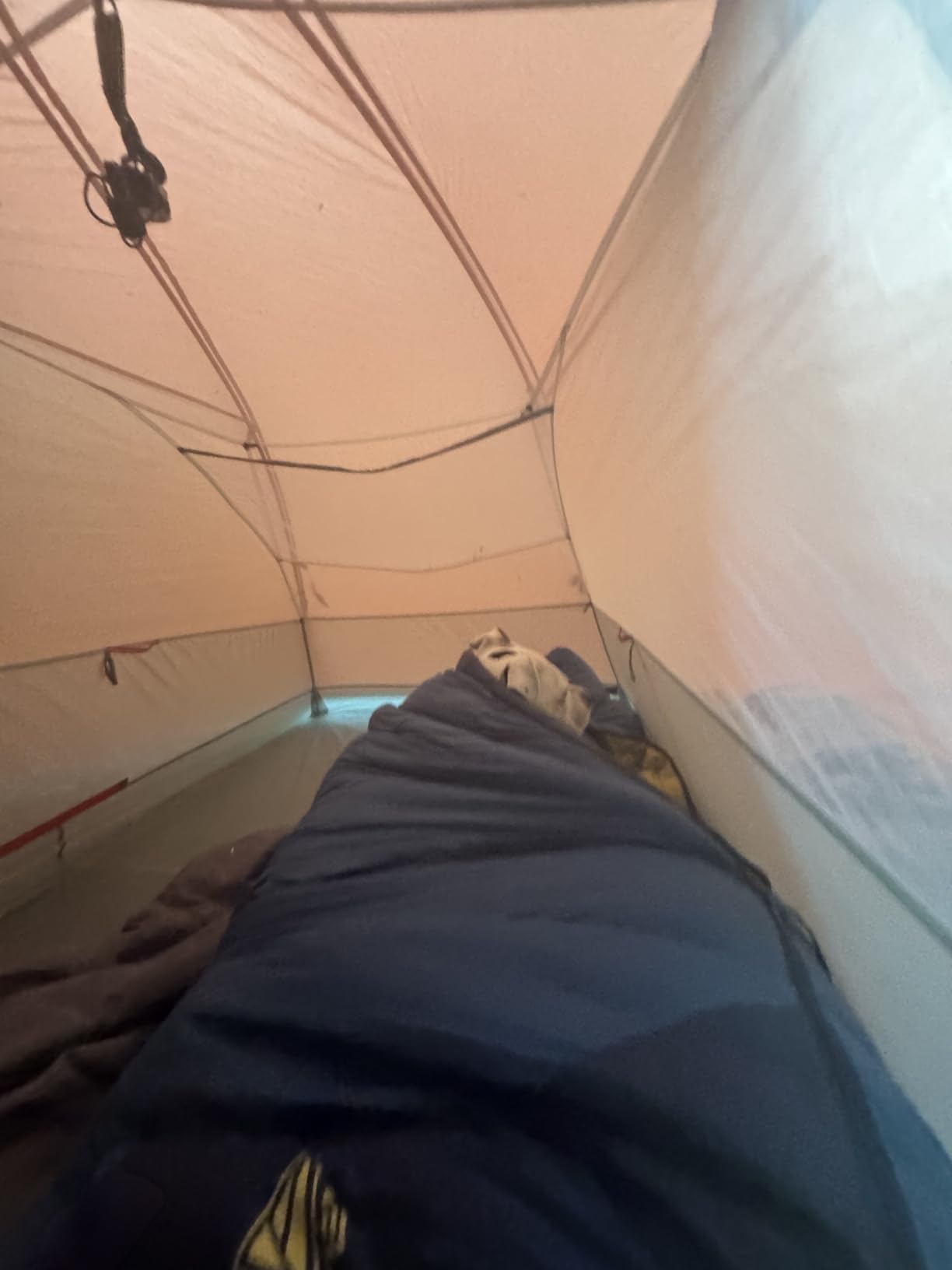
Skip it if you are a side sleeper or you sleep above roughly 200 pounds. The mummy cut is snug, and the reviews name the tight shoulders on the Regular size as the single most common complaint. Choose a longer size, and know that longer does not mean wider.
Skip it in a wet climate. Down loses insulation when it gets damp, and no amount of good lofting advice fixes that. In that case the TETON LEEF is the safer purchase. One more caution: the review base is still small, so treat the 4.6 as encouraging rather than settled.
9. KidzAdventure Mummy Style Kids Sleeping Bag – Best for Kids
KidzAdventure Mummy Style 32 – 59F Kids Sleeping Bag with Pillow Sleeve, 4 Season, Lightweight and Backpacking Style, Ideal for Camping, Sleepover, Boys, Girls, and Youth – Adventure Youth
32 to 59F rating
2.1 lb
73 x 27.6 in
mummy cut with hood
pillow sleeve
Pros
- Light enough at 2.1 lb for a child to carry themselves
- Integrated pillow sleeve keeps the pillow in place
- Prints and colors that kids are excited about
- Mummy shape and hoodie hood retain body heat
- Backpack-style carry sack included
Cons
- Youth size runs narrow for taller children
- Slippery polyester shell is awkward on indoor floors
- Fill can feel thin and flat in some bags
- Not a genuine 4-season cold bag
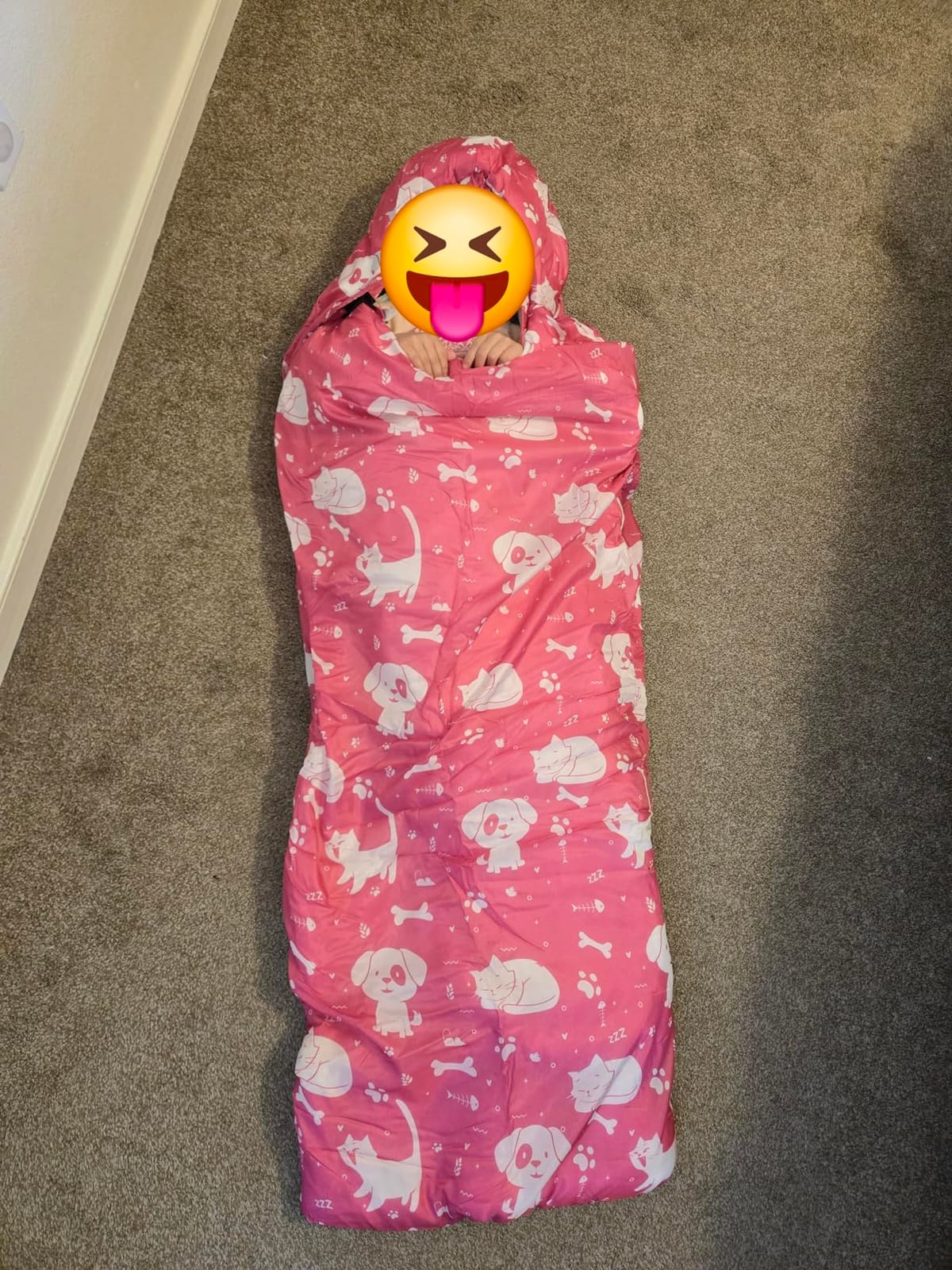
The pillow sleeve is the detail that earns this bag its place. You slide the child’s own pillow into a sleeve inside the bag and it stays put all night, which solves a small problem that becomes a large one at 2am. Parents mention it more than any other feature.
It is also genuinely light at 2.1 pounds and comes with a backpack-style carry sack, so a child can carry their own sleep system. That independence is worth more to a family than an extra ounce of insulation would be. The mummy shape with a hoodie-style hood holds body heat well for the temperature range it is designed for.
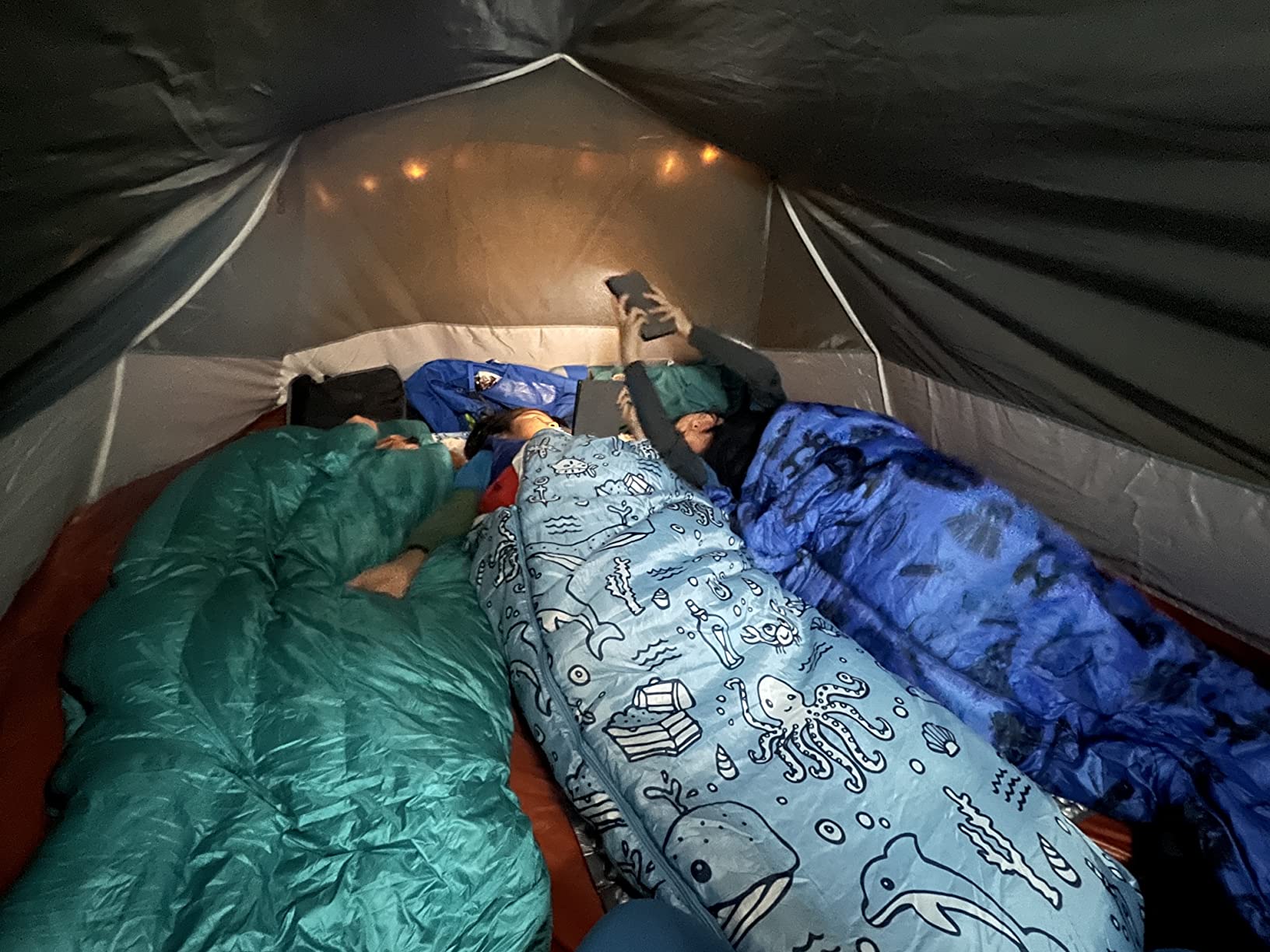
The mummy cut also brings an extra draft tube and a zipper snap, which keeps a restless sleeper from losing the bag overnight. A sturdy full-length zipper is the kind of detail that matters when the person using it is nine years old rather than an adult who can work a jammed slider.
Size it carefully. The listed dimensions are 73 by 27.6 inches, with a kids size fitting up to 4 ft 3 in and a youth size up to 5 ft 7 in. Parents report the youth size running narrow for tall children, so measure rather than guess from age.
Who the KidzAdventure Bag Suits Best
It suits families with children old enough to camp, and anyone running a youth program or a scout troop where each child needs their own bag. The 32 to 59F range matches typical summer and late-spring camping, which is when kids are out in force.
It also suits sleepovers and indoor camping setups, though be careful about that. The polyester shell is described as slippery on floors, and a slippery shell plus a slippery floor is a real injury risk for a child running around in socks.
Who Should Skip the KidzAdventure Bag
Skip it for winter and genuine cold-weather camping. Despite the 4-season marketing language, the range tops out at 32F, and owners describe the fill as thin for real cold nights. This is a summer and shoulder-season bag for kids.
Skip it if your child sleeps sprawled or runs hot. A mummy cut is a narrower space, and a restless sleeper will fight it. In that case a rectangular bag of a similar weight is a better match.
10. ECOOPRO Warm Weather Sleeping Bag – Best for Hot-Weather Trips
ECOOPRO Warm Weather Sleeping Bag – Portable, Waterproof, Compact Lightweight, Comfort with Compression Sack – Great for Outdoor Camping, Backpacking & Hiking-83 L x 30″ W Fits Adults
55 to 60F comfort
1.7 lb
83 x 30 in
nylon shell
2 year warranty
Pros
- Heaviest review count after the MalloMe with over 9000 ratings
- Compresses to 11 inches at 1.7 lb
- Fully unzips to work as a blanket or comforter
- Long enough for sleepers up to 6 ft 1 in
- Two year manufacturer warranty
Cons
- Narrow envelope cut feels cramped for larger sleepers
- Waterproof marketing claim is disputed by reviewers
- Thin fill and vague care instructions
- Uncomfortable below the mid-50sF
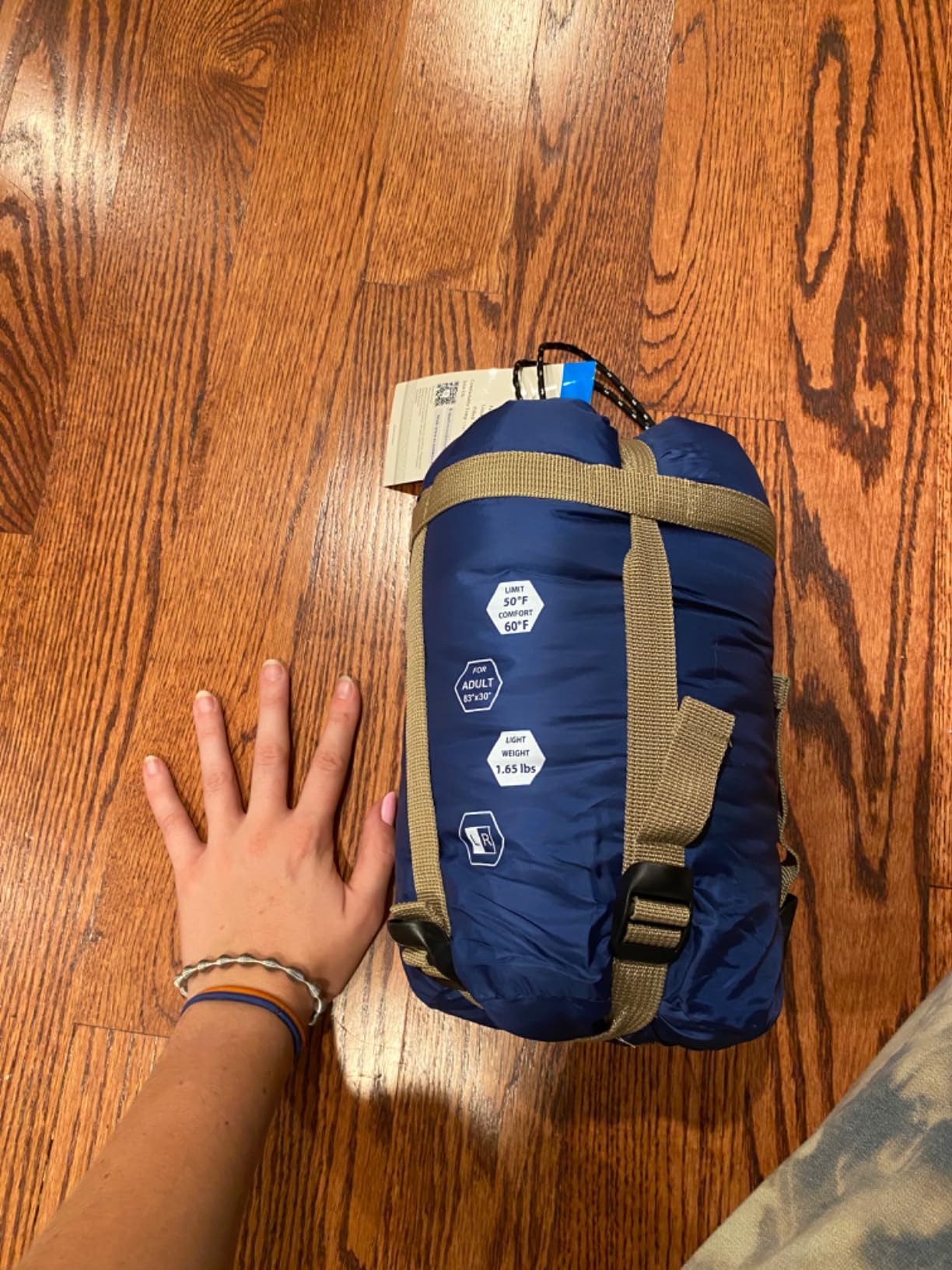
At 1.7 pounds compressing to 11 inches, this is the most compact bag in the roundup, and its review base of 9224 tells you that a lot of people depend on that. It is the bag people carry as a backup, the one that goes in a daypack, the one that lives in a car trunk.
The dual-use design is what people buy it for. Unzipped, it is a full-size blanket or comforter, which makes it genuinely useful at home and not only on a campsite. Reviewers describe using it that way more often than the spec sheet suggests.
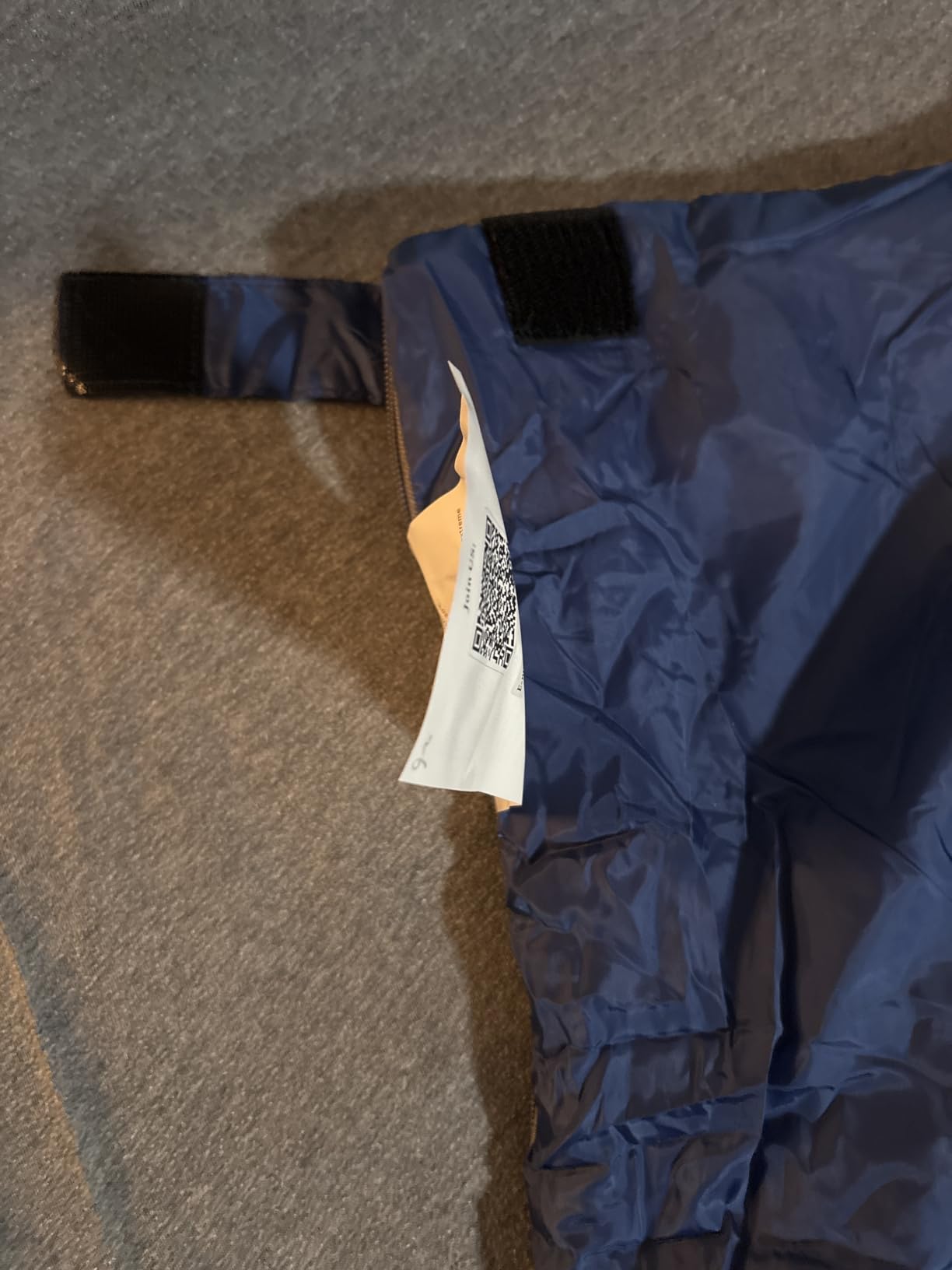
The warm-weather rating is where honesty matters. It is comfortable from roughly 55 to 60F, which is higher than most of the budget bags here and therefore a claim you can plan around. The manufacturer lists 16 to 30 degrees Celsius, which is the same range expressed in metric.
Two honest cautions. Reviewers dispute the waterproof claim, so treat the nylon shell as wind-resistant rather than rain-proof. And the care instructions are vague enough that some owners worry about longevity, which is a reasonable concern with a bag this thin.
Who the ECOOPRO Bag Suits Best
It suits warm-climate campers, festival and event attendees, and anyone who wants one object that works as bedding and as gear. Travelers who want a bag without giving up half their luggage volume will find 11 inches packed hard to argue with.
It is also a sensible emergency or guest bag. Keep one in a closet for a surprise overnight guest, and it will be more comfortable than an old sleeping bag in the attic.
Who Should Skip the ECOOPRO Bag
Skip it for any trip where nights drop below the mid-50s. The fill is thin, and the reviews are consistent about that ceiling. A bag that stops working at 55F is a fair bag, but only if you know it before you buy.
Skip it if you are a large sleeper. The 30 inch envelope width is narrow, and the cut is described as cramped. Also skip it in rain, since the waterproof claim does not survive the reviews.
11. Sportneer 3 Season Sleeping Bag – Best for Mild Summer Nights
Sportneer Sleeping Bag for Adults & Kids, Cold Weather & Warm Waterproof Camping Sleeping Bag, Compact Portable for Camping Hiking & Travel
50 to 80F comfort
3.3 lb
87 x 31.5 in
separating bottom zip
rectangular
Pros
- Soft fill that does not clump after machine washing
- Separating two-way bottom zip for foot venting or blanket use
- Roomy enough for adults and kids
- Adjustable drawstring hood
- Carry sack included
Cons
- Not suitable for genuinely cold conditions
- Seams on some variants can split
- Thin fill and a slippery shell
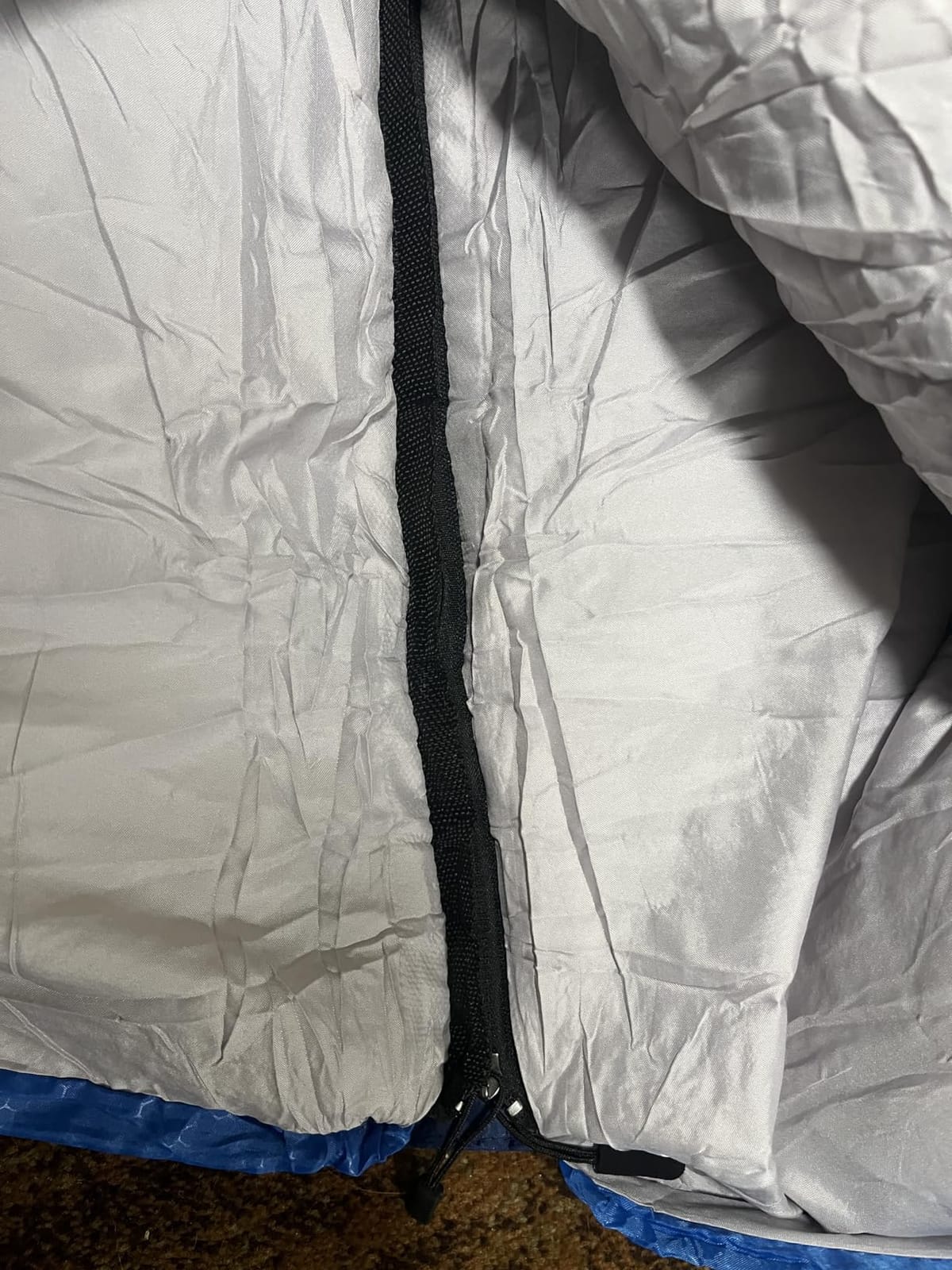
The separating bottom zip is the feature that separates this from other budget bags. Pull it open from the bottom and you can cool your feet without getting out of the bag, which is exactly what you need on a mild night when the temperature never drops. It also unzips into a flat blanket for a beach or a picnic.
Owners also praise the fill for surviving the washing machine without clumping, which is a bigger deal than it sounds. Cheap synthetic insulation frequently turns into flat useless fiber after a few washes, and that is what usually ends a budget bag’s life.
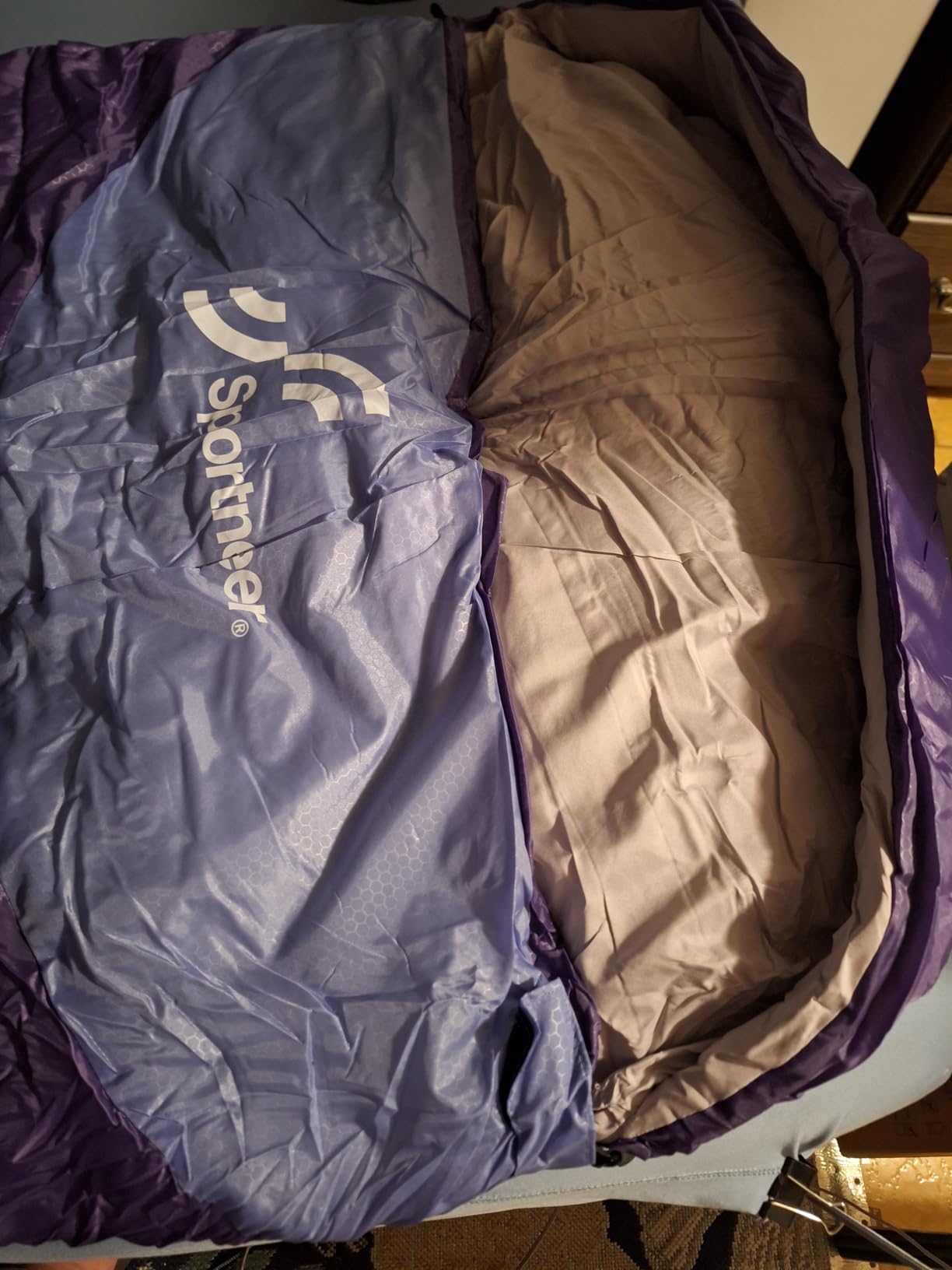
The 190T polyester taffeta shell and 190T pongee lining are standard, unremarkable materials, and that is fine for a bag built for mild nights. The semi-circular hood has an adjustable drawstring, so a child or a light sleeper can keep some heat in around the head. At 87 by 31.5 inches it fits a broad range of heights.
The complaints are narrow but real. Owners of some variants report seams splitting, and a few mention the slippery shell. The 50 to 80F rating is accurate rather than generous, so treat it as a summer bag and nothing more.
Who the Sportneer Bag Suits Best
It suits summer campers, families with mixed-age sleepers, and anyone who gets hot in the night. A rectangular cut with a venting foot is a better match for a warm sleeper than a mummy bag with a sealed top, and that is a persistent pain point in camping forums.
It is a good fit for a child and a parent sharing one large space, since 31.5 inches of width is workable for a pair and the bottom zip makes it adaptable to temperature.
Who Should Skip the Sportneer Bag
Skip it for spring or autumn trips in a cold climate, and for any winter use. The upper end of its range is comfortable weather, and the reviews confirm the fill is too thin below that.
If durability over many seasons is your priority, look elsewhere. Seam complaints appear often enough that we would not choose this bag for a season of regular hard use, however good the price is.
12. FARLAND 3 Season Camping Sleeping Bag – Best for Families
FARLAND Sleeping Bag for Adults, Teens and Kids – 3 Season Camping Gear
41F to 68F comfort
4 lb
86.6 x 29.5 in
290T nylon shell
handed zip
Pros
- Very affordable with a wide range of size options
- 290T waterproof and breathable outer
- Handed zip variants pair into a double bag
- Machine washable with a compression sack
- Double-fill technology adds warmth for the weight
Cons
- Heaviest of the budget bags at 4 lb
- Zipper can unzip on its own during sleep
- Loft flattens after repeated compression
- Long rectangular bag is bulky to store
The handed zip design is the reason to buy this bag. You can order two versions with opposing zip orientations and connect them into a double bag, which is how families solve the sharing problem for less than most purpose-built doubles cost. A single bag can also zip to a mattress for a wider surface.
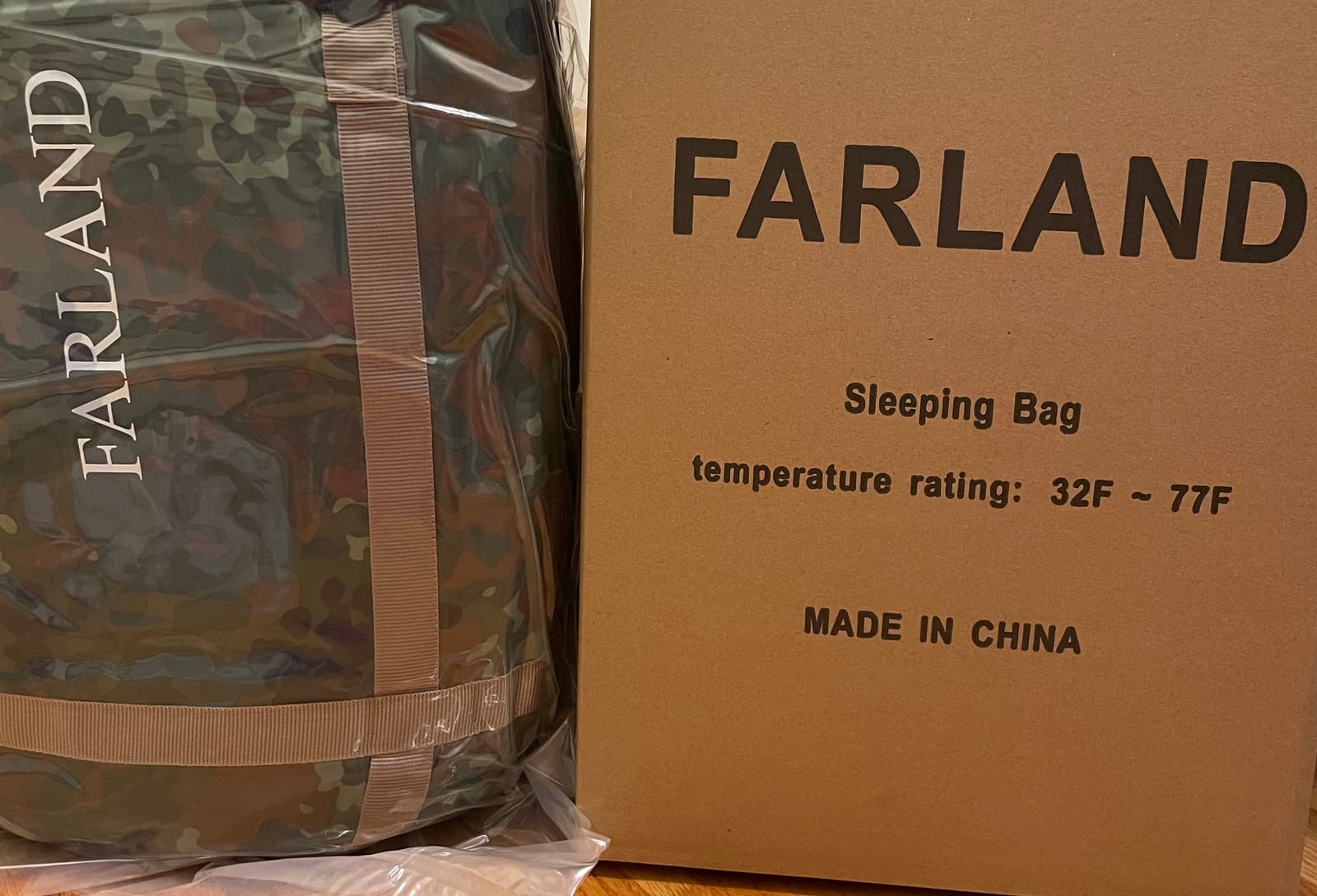
Its ratings are more useful than the bag’s name suggests. A listed comfort range of 41F to 68F is a genuine three-season envelope that stretches further down than the other budget bags here, and reviewers describe it as punching above its price for families specifically.
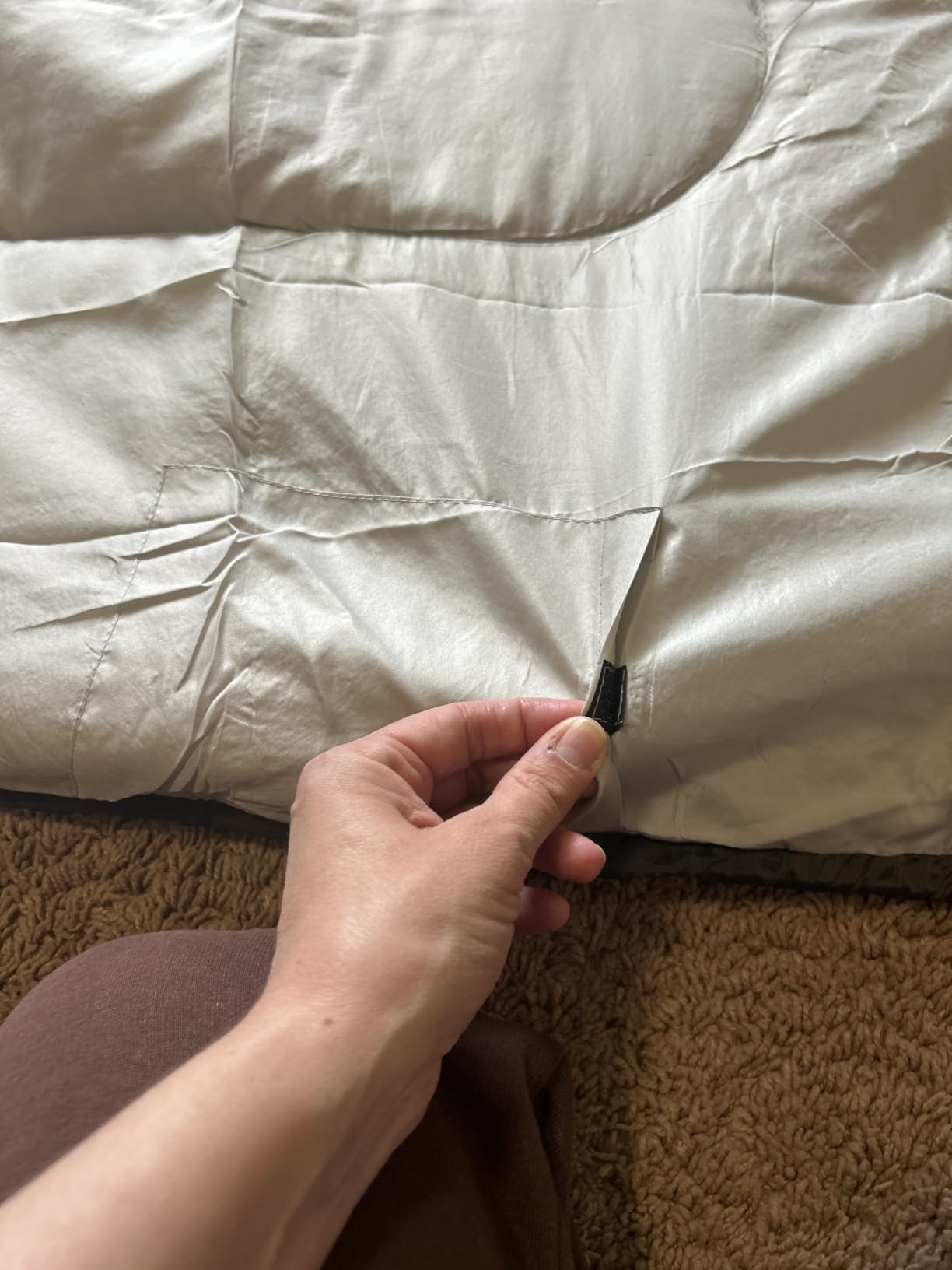
The 290T nylon outer is waterproof and breathable, which puts it ahead of the thin 190T shells on some of the other budget bags. The polyester pongee lining and double-fill technology add warmth without pushing the weight up, and the Roll Control folding design makes packing it into the compression sack less of a fight than most.
At 4 pounds it sits at the heavy end of this roundup, and that is a real consideration. The two complaints that recur are a zipper that can creep open during the night and loft that flattens after repeated compression, so store it loose and check the zipper before you lie down.
Who the FARLAND Bag Suits Best
It suits families, parents equipping two kids for a trip, and anyone who needs two bags that zip together without buying a double. That pairing feature is rare below the midpoint of this roundup and it is the reason to pick this over a similar budget bag.
It also suits people who want a single bag for a range of conditions, since the 41F to 68F comfort band covers most three-season camping in temperate regions. The machine-washable construction is another point in its favour for family use.
Who Should Skip the FARLAND Bag
Skip it if weight is the priority, because 4 pounds is heavy once it is on your back. Anyone walking a real distance will feel it immediately.
Skip it for genuine winter use. Its lower comfort bound sits in the low 40s, which is a solid shoulder-season floor and nothing more. And if you sleep with a partner who moves, check the 29.5 inch width first, since it is the narrower of the two large rectangular bags we tested.
How to Choose a Sleeping Bag
Reading EN/ISO Temperature Ratings
The EN/ISO 23537 standard produces three numbers, and most bag names print only one of them. Comfort is the temperature at which an average woman sleeps comfortably. Lower Limit is the temperature at which an average man sleeps eight hours without waking. Extreme is the survival limit, and it is not a number to plan a trip around.
Here is the trap that catches almost everyone: men’s bags are usually advertised by Lower Limit and women’s bags by Comfort. That means the same model number is a materially warmer bag depending on which version you buy. Compare the Comfort number, not the one on the product page, and treat published ratings as a starting point rather than a guarantee.
A practical buffer helps. Most buyers report published ratings running optimistic in real conditions, so subtract 5 to 10F from whatever a spec sheet claims, and add that same margin onto the forecast low for your trip. The Kelty Cosmic is a good example: it carries a 20F label, an ISO limit of 21F, and an extreme rating well below zero, which is a bag you use comfortably in the upper 20s rather than one that holds at 20F.
Down Versus Synthetic Insulation
Down wins on warmth per gram and it is the choice for cold, dry trips. It compresses smaller, it lasts longer if you care for it, and a good down bag will keep you warmer than a synthetic of the same weight. The Kelty Cosmic is the only down bag in this roundup, and it shows in the numbers.
Synthetic wins on wet performance, cost, and durability in careless hands. It keeps loft after getting damp, washes in a home machine, and costs a fraction of down. Every other bag on this list is synthetic, and for most casual campers that is the correct default rather than a compromise.
Fill Power and Fill Weight
Fill power measures the loft of down: how much volume a given weight occupies. Higher numbers mean warmer and lighter per ounce, with 550-fill at the budget end and 850-fill and above in premium bags. The Cosmic uses 550 fill, which is honest for its price tier and a big part of why it costs what it does.
Fill weight is simply how much insulation is in the bag, in ounces or grams. It matters more than fill power for a synthetic bag, since there is no fill power figure to compare. A bag with 5 lb of insulation, like the Coleman Heritage, is a different category of object from a 30 oz bag, regardless of what else the spec sheet says.
Cut, Shape, and Sizing
Mummy bags taper from shoulder to foot and are the lightest, while envelope and rectangular bags hold a consistent width and weigh more. Spoon-cut bags widen at the hips, which is the shape side sleepers want. Most rejections we saw in the reviews came down to fit, not warmth.
Check shoulder and hip girth, but also check length. Several bags here run short, and the 90 inch options on the VENTURE 4TH and HiZYNICE fit sleepers up to 6 ft 7 in. If you are tall or above roughly 200 pounds, size up or choose a rectangular bag. The gap between the narrowest bag we tested at 21 inches and the widest at 40 inches is very large.
Weight and Packability
Weight and volume are the two constraints that decide which bag is realistic for you. Above 4.5 pounds means carrying, not hiking. Between 2.5 and 3.5 pounds is walkable for short distances. Under 2 pounds is true backpacking territory, and only the ECOOPRO clears that bar in this roundup.
Packed size matters as much as weight once you are packing a bag. The Cosmic stuffs to 13 by 7 inches, and the ECOOPRO compresses to 11 inches, which is why both fit a 50L pack. Bulkier rectangular bags resist compression, so compare the stated packed dimensions before you buy rather than after.
Shell Fabric and Durability
Shell denier measures fabric thickness: 10D and 20D are ultralight and fragile, 30D and 40D are more abrasion resistant, and cotton shells are comfortable but useless when wet. Denier is only part of the story. The 290T and 190T figures used in this roundup describe weave tightness, and higher numbers block wind and drizzle better.
Warranty is the durability signal that generalizes. Five bags here carry a lifetime or limited lifetime warranty, and several of those are the budget options. That is worth more than a heavier shell fabric, because it tells you the manufacturer expects the bag to outlast its usefulness to you.
Matching Your Bag to Your Trip
Work from the forecast overnight low, not the season. If nights sit in the 40s and low 50s, a bag rated in that range works and anything colder is dead weight. If lows drop into the teens and 20s, you want a 20F bag. Single digits call for a 0F or 5F bag, and anything below that is expedition equipment rather than camping gear.
Two things to remember before you buy. Your sleeping pad does as much work as your bag, and a 3 to 4 R-value pad is the three-season minimum that everyone mentions in forums for a reason. And if you run hot, size down rather than buying a colder bag and fighting it, since most bags here have a zipper or a vent that lets you dump heat.
Care and Washing
Wash synthetic bags in a home machine on a gentle cycle, and dry them fully before storing. Loft lost in a wash is permanent, so a damp bag stuffed into a sack will stay flat forever. A couple of dryer balls or clean tennis balls break up clumps and restore loft while the bag tumbles on low.
Down bags need more care and a gentler product, and a down-specific wash rather than ordinary detergent, which leaves a residue that harms loft. Expect to run an extra rinse cycle. The TETON LEEF’s maker advises against machine washing entirely, so spot-clean and air it instead. Store every bag loosely, hanging if you have the space, and never compressed in a garage all summer.
Frequently Asked Questions
What is the best brand of sleeping bags?
Among the bags we reviewed, the strongest brand showing is Kelty, because its Cosmic 20 combines real 550 fill power down, published ISO ratings, recycled shell fabrics, three length options, and a limited lifetime warranty at a price far below the technical category. Coleman is the strongest value and cold-weather choice, TETON Sports is the most consistent for lifetime-warrantied bags across warm and cold ratings, and ANJ Outdoors is the pick for kids. Rather than trusting a brand name, look for an EN/ISO rating, a stated fill weight, and a warranty.
What temperature rating do I need for my sleeping bag?
Match the bag to the forecast overnight low and then add a 5 to 10F buffer, because published EN/ISO ratings tend to run optimistic. Lows in the 40s to low 50s need a 30F to 40F bag. Lows around freezing need a 20F to 25F bag. Lows in the teens and 20s need a 20F bag. Single digits need a 0F or 5F bag, and anything colder is expedition equipment that most recreational campers should not buy.
What is the ISO limit on a sleeping bag?
The ISO Lower Limit is the temperature at which an average man can sleep for eight hours without waking, and it is the number most brands print in the product name. Because published ratings are tested with standardized subjects, they run warmer than many real sleepers manage, so plan on a 5 to 10F buffer below the limit rating before you rely on a number.
What does comfort limit mean on a sleeping bag?
The Comfort rating is the temperature at which an average woman sleeps comfortably, and it is the more realistic of the two published figures. It is also the number to compare across brands. Men’s bags are usually advertised by Lower Limit while women’s bags are advertised by Comfort, so the same model number describes a materially warmer bag depending on the version, and comparing the Comfort number across bags is the only fair way to judge them.
What is the best sleeping bag for side sleepers?
Side sleepers need width, and the best options in this roundup are the VENTURE 4TH at 90 by 39 inches, the HiZYNICE XXL at 90 by 39 inches, the Coleman Heritage at 84 by 40 inches, and the Teton Celsius with a roomy rectangular cut. Narrow mummy bags such as the TETON LEEF at 21 inches wide are the worst match, because a shoulder-heavy sleeper cannot lie on their side in a bag that narrow.
Is down or synthetic better for cold weather?
Down is warmer per gram and lighter, which makes it the better choice for cold and dry conditions. Synthetic insulation keeps its loft after getting damp, washes in a home machine, costs far less, and tolerates rough handling, which makes it the safer choice in wet climates. For most campers in most places, synthetic is the correct default, and down is worth paying for only when weight and pack size are the binding constraints.
How long does a sleeping bag last?
A well-treated bag lasts a very long time, which is the recurring view in the camping forums we read, and a warranty is the best available proxy. Five bags we reviewed carry a lifetime or limited lifetime warranty, and the Coleman Heritage adds a 5 year limited warranty, while the Ecoopro and HiZYNICE carry 2 and 3 year terms. Wash a bag fully and dry it completely before storing, and store it loose rather than compressed, since loft lost in storage is permanent.
What sleeping bags does the military use?
US military sleep systems are typically olive-drab mummy bags built for a much colder and harder standard than civilian camping gear, and the civilian equivalent of that profile is a bag with a generous fill weight, a full-length draft tube, a cinching hood, and a rating well below freezing. If you are buying military-spec surplus as a camper, note that the weight and the surplus sizing are usually worse than what the same money buys new, so a purpose-built bag from this roundup is usually the better purchase.
Our Verdict on the Best Sleeping Bags in 2026
After comparing 12 sleeping bags across warm-weather ultralight models, three-season synthetics, and cold-weather flannel-lined bags, the Coleman Heritage Big and Tall 10F is the best of the best sleeping bags for most people. It is the only one in this roundup with a 4.7 average across 3829 reviews, a genuine 5 lb of insulation, and an 84 by 40 inch surface that finally gives side sleepers and taller adults room to move.
The runner-up depends entirely on how you camp. The VENTURE 4TH XXL is the value pick and the roomiest bag that still packs at all. The Teton Celsius is the winter car-camping answer. The TETON LEEF is the one to buy if rain is the main threat. The Kelty Cosmic 20 is the only real down bag here and the lightest thing you can carry. And the KidzAdventure mummy is the one for kids.
Whatever you choose, work from the forecast low rather than the number on the product page, and check that the bag is wide and long enough for the way you actually sleep. Getting the fit right matters more than any other spec, and it is the thing most owners in the reviews would tell a friend first.