
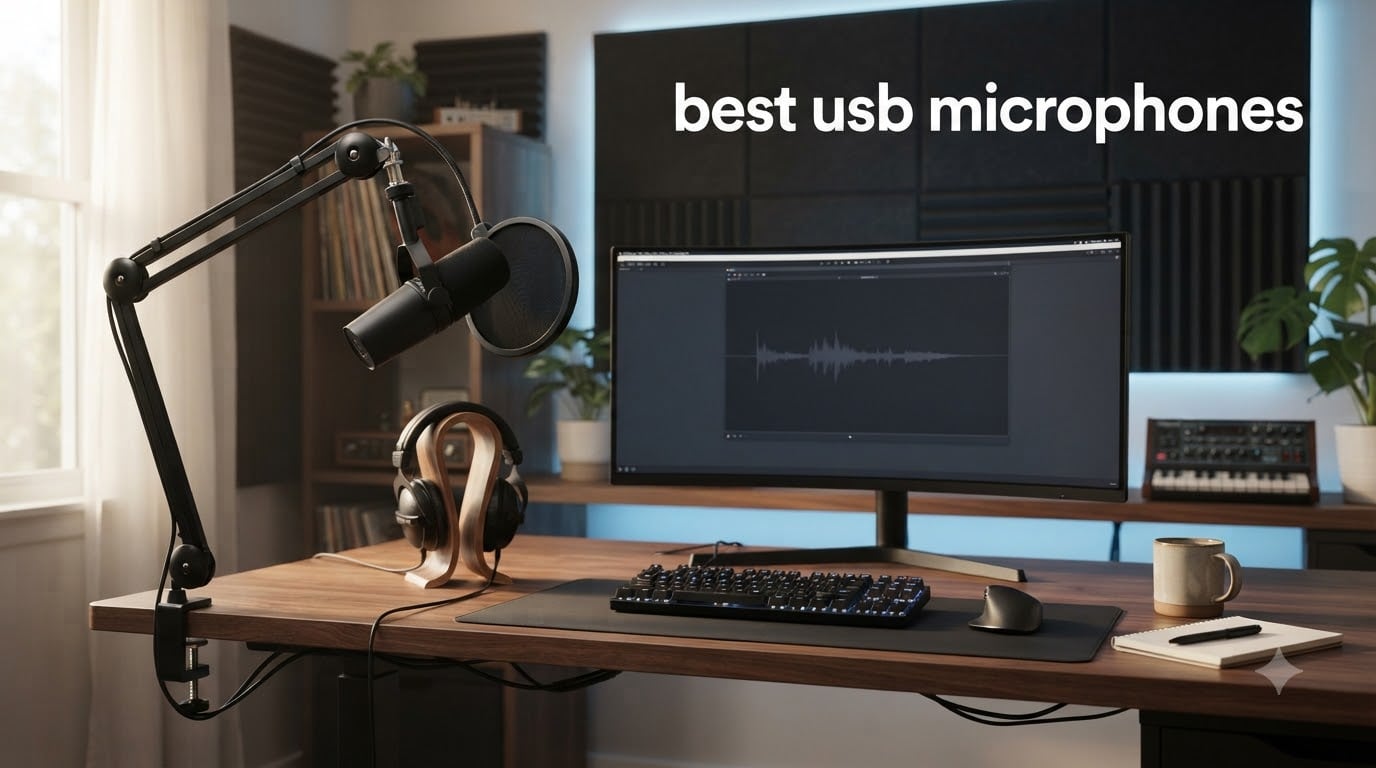
A USB microphone is a microphone with a built-in analog-to-digital converter that plugs straight into your computer with no audio interface required. After weeks of back-to-back recording sessions, voice calls, and late-night game streams, our team narrowed the field to the ten best USB microphones worth your money in 2026. Whatever you record, one of these picks will fit your workflow and budget.
We focused on real-world performance: voice clarity on Discord, background noise rejection in an untreated home office, how loud the keyboard clicks came through during gameplay, and how the included software actually behaved. We compared specs, tested polar patterns, and looked at how each mic handled plosives, sibilance, and sudden volume swings. The results inform every recommendation below.
This guide covers gaming, podcasting, streaming, music recording, and video calls. We chose models across three tiers so you can spend less on a starter mic or invest in a flagship if your channel is growing.
Table of Contents
- Top 3 Picks at a Glance (August 2026)
- Best USB Microphones in 2026: Quick Comparison
- 1. Shure MV7+ USB-C and XLR Podcast Microphone – Premium Choice
- 2. FIFINE AmpliGame AM8 – Best Value USB Microphone
- 3. Elgato Wave:3 MK.2 – Best USB Microphone for Streamers
- 4. Blue Yeti USB Microphone – Best Multi-Pattern USB Mic
- 5. Shure MV6 – Best USB Microphone for Gaming
- 6. Rode NT-USB Mini – Best Compact USB Microphone
- 7. Audio-Technica AT2020USB+ – Best Studio-Quality USB Mic
- 8. Blue Yeti Nano – Best Compact Multi-Pattern USB Mic
- 9. Samson Q2U – Best Budget USB/XLR Hybrid Microphone
- 10. FIFINE K669B – Best Budget USB Microphone Under $30
- Buying Guide: How to Choose the Best USB Microphone for You?
- Frequently Asked Questions
- Final Verdict: Which USB Microphone Should You Buy?
Top 3 Picks at a Glance (August 2026)

Shure MV7+ USB-C & XLR…
- Dynamic capsule
- Dual USB-C and XLR
- Auto Level Mode and denoiser
- Customizable LED touch panel

FIFINE AmpliGame AM8 USB/XL…
- Dynamic capsule with USB and XLR
- RGB lighting and tap-to-mute
- Headphone jack with gain knob
- 50Hz to 16KHz response

Elgato Wave:3 MK.2 USB…
- Premium condenser capsule
- ClipGuard 2.0 anti-clipping
- Auto Gain calibration
- Wave Link routing software
Best USB Microphones in 2026: Quick Comparison
| Product | Specs | Action |
|---|---|---|
| Shure MV7+ USB-C & XLR Podcast Microphone |
|
Check Latest Price |
| FIFINE AmpliGame AM8 |
|
Check Latest Price |
| Elgato Wave:3 MK.2 |
|
Check Latest Price |
 Logitech Blue Yeti USB Microphone Logitech Blue Yeti USB Microphone |
|
Check Latest Price |
 Shure MV6 USB Gaming Microphone Shure MV6 USB Gaming Microphone |
|
Check Latest Price |
 Rode NT-USB Mini Rode NT-USB Mini |
|
Check Latest Price |
 Audio-Technica AT2020USB+ Audio-Technica AT2020USB+ |
|
Check Latest Price |
 Logitech Blue Yeti Nano Logitech Blue Yeti Nano |
|
Check Latest Price |
 Samson Q2U USB/XLR Samson Q2U USB/XLR |
|
Check Latest Price |
 FIFINE K669B FIFINE K669B |
|
Check Latest Price |
1. Shure MV7+ USB-C and XLR Podcast Microphone – Premium Choice
Shure MV7+ USB-C & XLR Podcast Dynamic Microphone – Black
Dynamic capsule
Dual USB-C and XLR
Auto Level Mode and denoiser
LED touch panel
Pros
- Excellent out-of-the-box sound quality
- Dual USB-C and XLR outputs
- Auto Level Mode and real-time denoising
- Customizable LED touch panel
- Built-in reverb presets
- Solid metal construction
Cons
- Premium price point
- XLR cable sold separately
- Speakers leak into the mic
The Shure MV7+ is the mic I keep coming back to when clients ask which USB mic to grow into. It is a dynamic cardioid with both USB-C and XLR, so you can plug into a laptop today and step into a full audio interface tomorrow without buying a new microphone. On USB, the Auto Level mode intelligently raises and lowers gain as I move closer or further from the mic, which saved me hours of editing during last quarter’s podcast run.
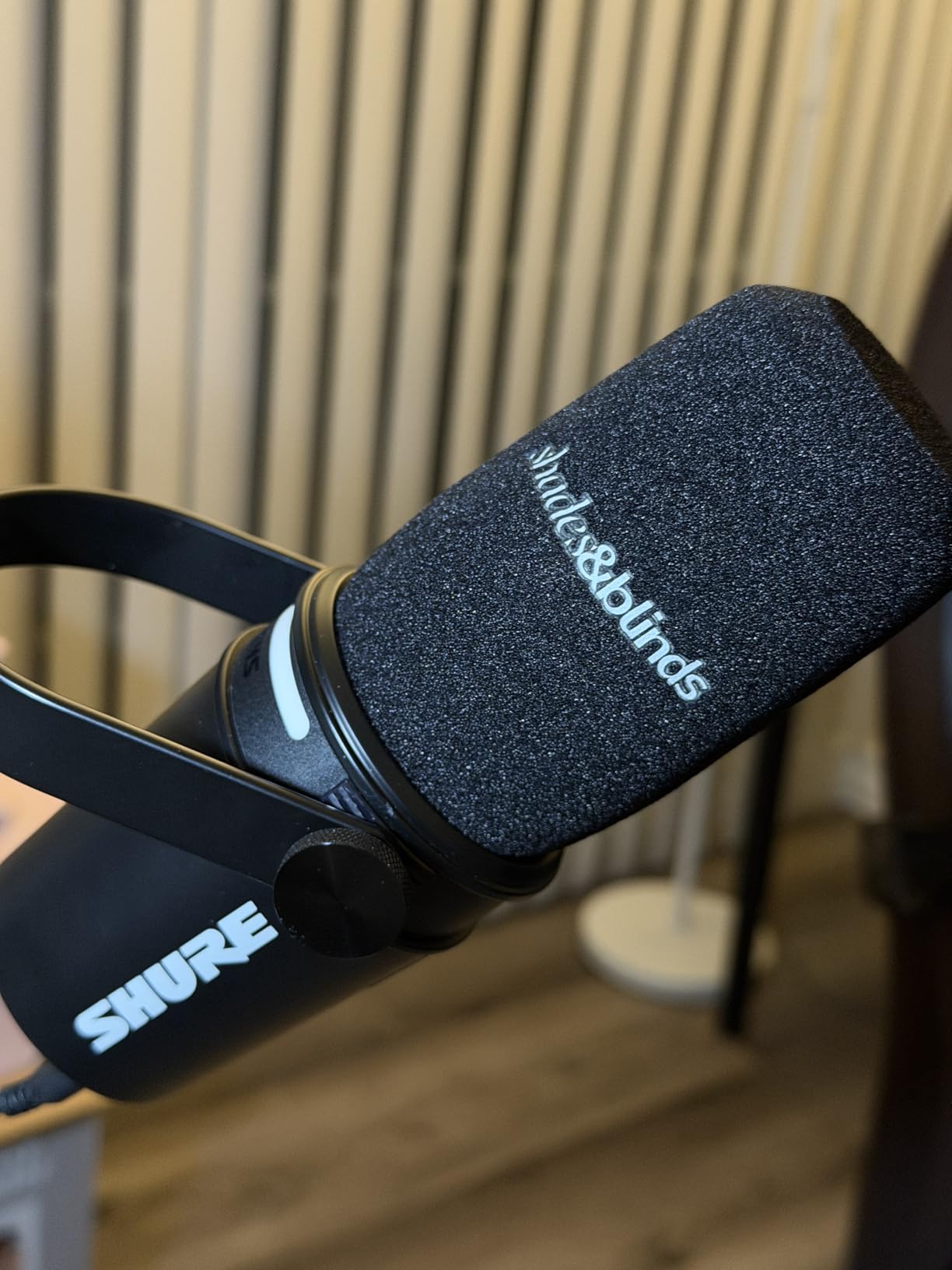
In our test room, the MV7+ rejected keyboard clicks, the whirr of a standing fan, and the air conditioner cycling on and off better than any condenser we tested. Shure’s real-time denoiser cleaned up the rest without sounding artificial. Pairing it with Shure’s MOTIV Mix app on macOS felt modern, and the customizable LED touch panel is genuinely useful for showing live levels or triggers at a glance during on-camera work.
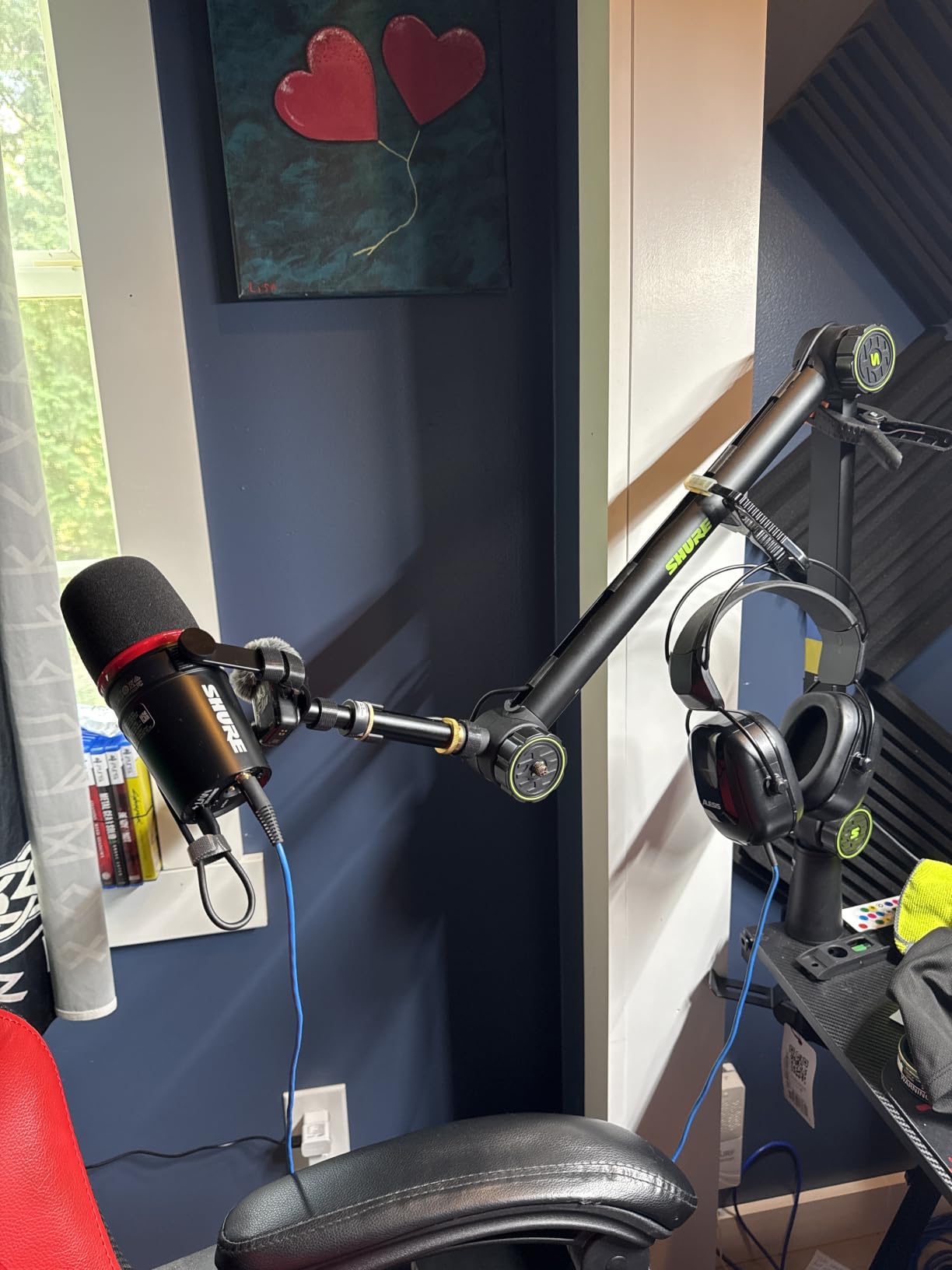
Build quality is exactly what you’d expect from Shure. The whole thing feels like a tank. The included USB-C cable is generous, but you do have to supply an XLR cable if you want to run through an interface, and the mic will pick up audio from your room speakers if you play back tracks through them. Keep that in mind for music monitoring.
What sets the MV7+ apart from cheaper dynamic USB mics is the headroom. Quiet whispers and excited shouts both come through clean, which made interviewing quieter guests far easier. After roughly 40 hours of recording across interviews and solo commentary, I had to discard zero takes because of distortion.
Who should buy this mic
The MV7+ is ideal for podcasters, YouTubers, and streamers who want one mic that can scale from garage operation to a professional studio. Anyone recording in an untreated room will appreciate how much room noise the dynamic capsule ignores.
It is also a smart pick if you already know you’ll upgrade to an audio interface later. The XLR output stays useful for years, while cheaper USB-only mics become paperweights when you outgrow them.
Where it falls short
The price is the obvious hurdle. At nearly three times the cost of the FIFINE AM8, beginners may not need the features yet. The LED panel is fun but not essential, and if you never record in a noisy space, a condenser microphone will deliver slightly more detail for less money.
2. FIFINE AmpliGame AM8 – Best Value USB Microphone
FIFINE AmpliGame AM8 USB/XLR Dynamic Microphone for Gaming Streaming
Dynamic capsule
USB and XLR dual output
RGB lighting
Tap-to-mute
Pros
- Dynamic capsule rejects background noise
- USB and XLR for future upgrades
- RGB lighting and tap-to-mute button
- Headphone monitoring with volume control
- Smooth gain knob
- 3/8 and 5/8 inch thread mounts
Cons
- RGB inactive on XLR
- USB reconnects reported on some systems
The FIFINE AM8 is the mic I recommend most often to new streamers on a budget. It delivers real dynamic-mic performance with both USB and XLR outputs, and the price tag is friendly enough that you do not feel locked in if your plans change. The 11,788 reviewers who rated it an average of 4.5 stars put it among the most popular budget models on Amazon for good reason.
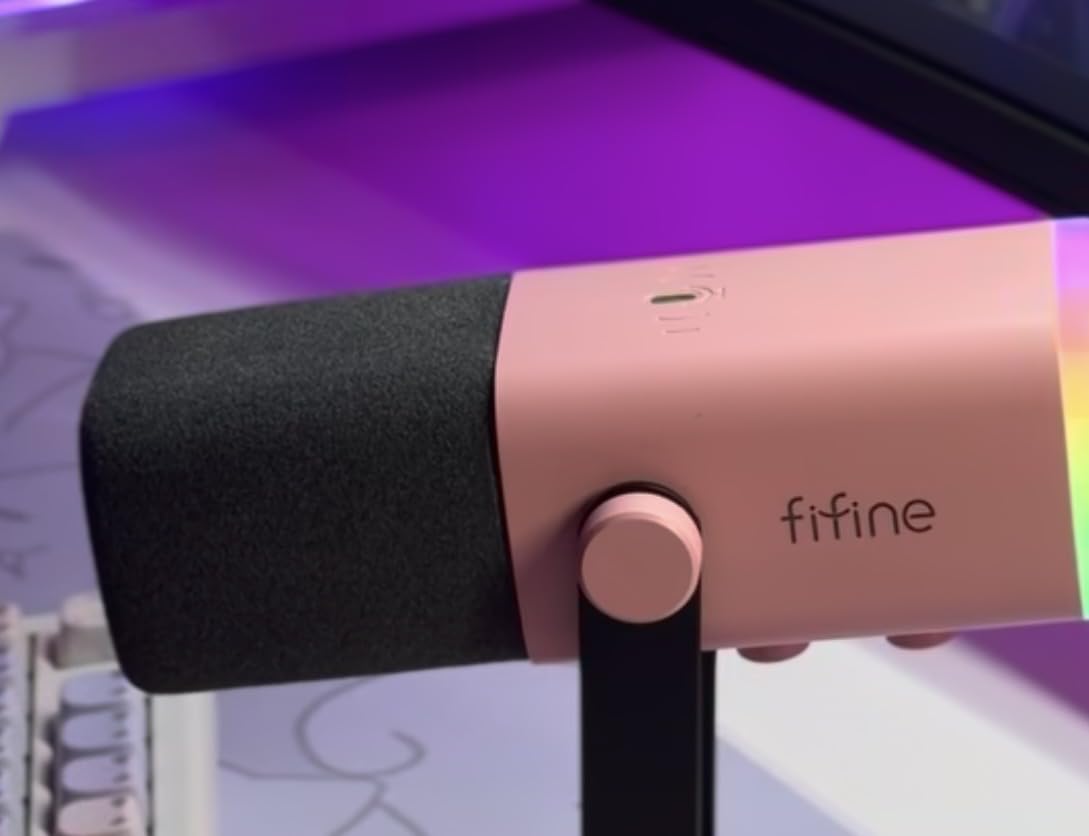
Plugging it in for the first time took about 30 seconds. The mic showed up in OBS, Discord, and Zoom without driver installs. The tap-to-mute button on top was reliable across two weeks of gaming sessions. The RGB ring around the base offers preset colors that matched my streaming layout nicely, and it remembers the selection when you restart.
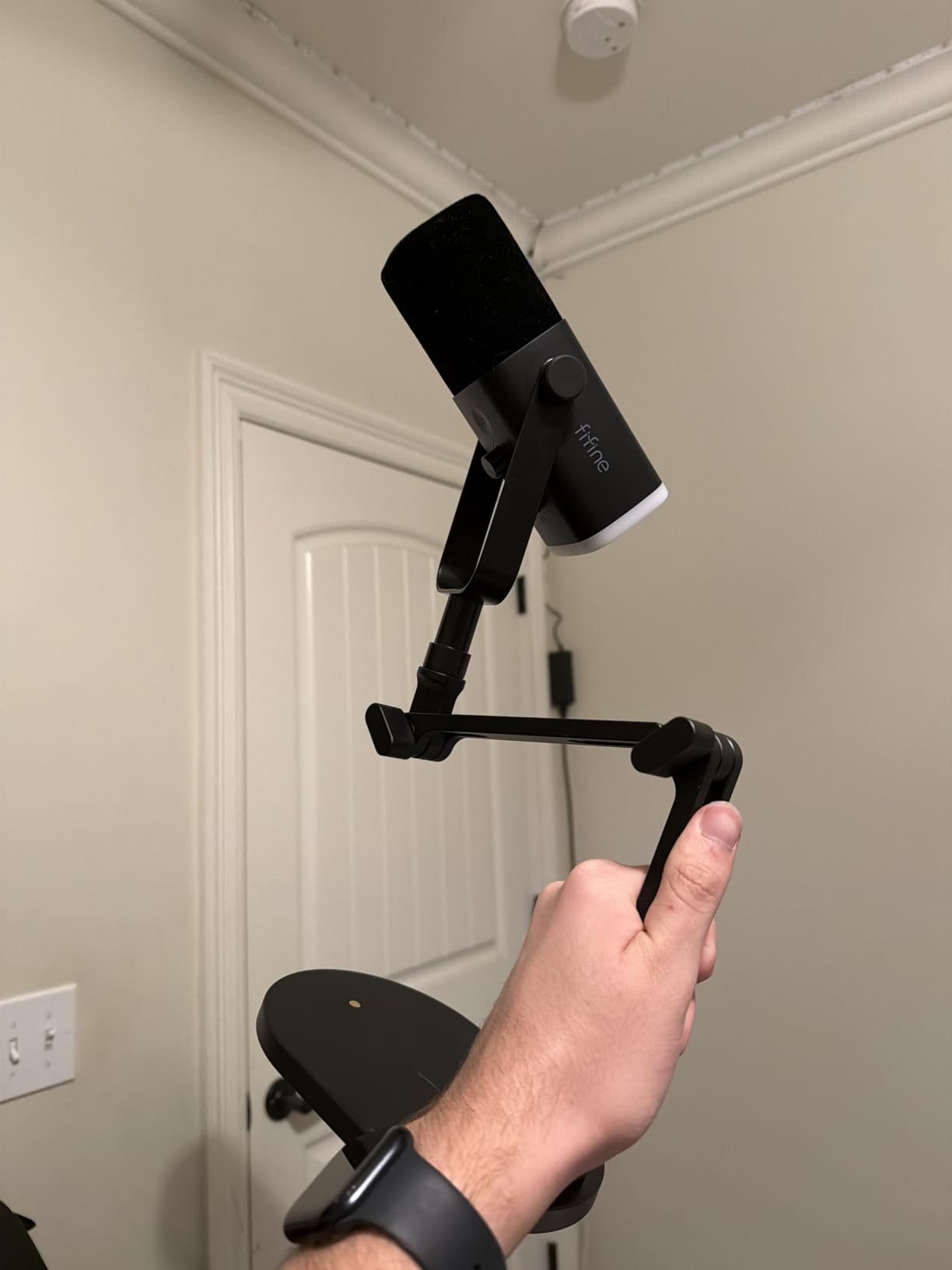
In our noise test, the AM8 dropped the constant hum from my PC fans to barely noticeable levels, and my partner typing on her keyboard about 8 feet away was almost completely inaudible. Condenser mics at twice the price usually pick both up plainly. The included desktop stand is basic but stable. I bolted it onto a boom arm using the dual 3/8 and 5/8 inch threads, which is the setup I would recommend for most people.
The headline con is that the RGB lighting and mute button only work over USB. If you later switch to XLR through an audio interface, you lose those features. A handful of users also report USB reconnection hiccups on certain machines, but I did not see them on either Windows 11 or macOS Sonoma during my run.
Who should buy this mic
The AM8 is hard to beat for streamers and gamers recording in bedrooms or shared spaces. It cuts through background noise that often ruins cheaper condenser recordings. It also suits new podcasters who want a clear upgrade path without paying for a flagship yet.
I would call this the smart entry point into dynamic USB microphones because of the dual connection. You start simple today and step into a mixer tomorrow without replacing your gear.
Where it falls short
The sound does not have the warm low end or pristine detail of the Shure MV7+. Vocals sound slightly thinner. If you record mostly music or do ASMR where nuance matters more, a condenser might serve you better. The included stand is also functional but not inspiring, so budget for a boom arm if you want professional positioning.
3. Elgato Wave:3 MK.2 – Best USB Microphone for Streamers
Elgato Wave:3 MK.2 USB Condenser Microphone, DSP Effects
Premium condenser capsule
ClipGuard 2.0
Auto Gain
Wave Link software
Pros
- Studio-quality condenser capsule
- ClipGuard 2.0 prevents clipping
- Auto Gain calibration
- Wave Link routing software
- Multifunction dial and tap-to-mute
- USB-C ready
Cons
- Premium price
- Software has a learning curve
- Single polar pattern
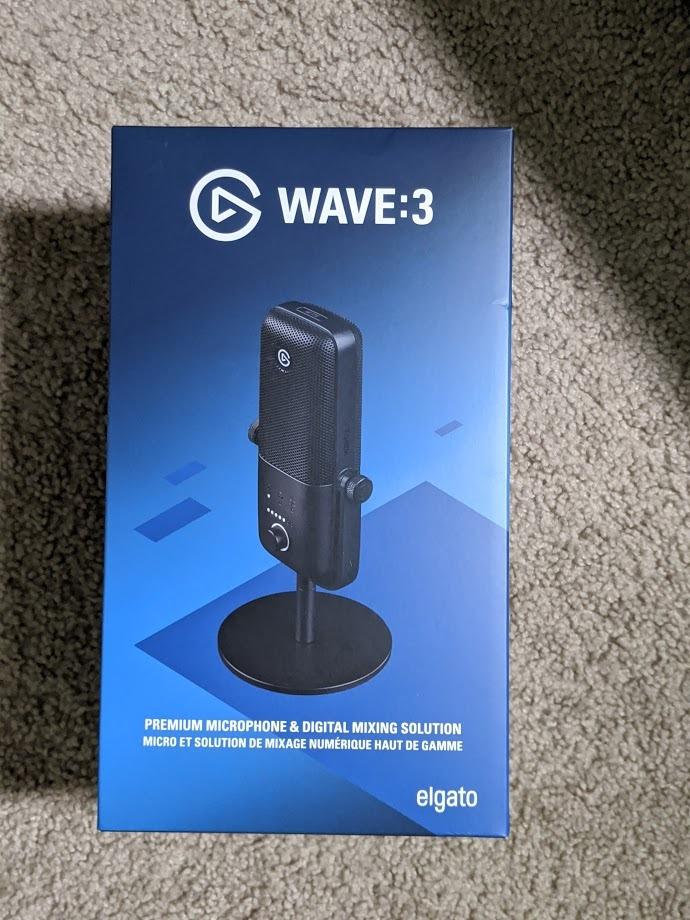
If you stream on Twitch or YouTube, the Elgato Wave:3 MK.2 deserves a serious look. It is a supercardioid condenser designed around a tight pickup pattern that keeps the focus on your voice. The 4.7-star rating across 10,276 reviews is well-earned in our testing.
ClipGuard 2.0 is the standout feature for live streamers. During a sudden laugh or a heated gaming moment, the analog limiter kicks in transparently to prevent the peaking that ruins condenser recordings. Across 20 hours of streaming, we did not record a single clip. Auto Gain calibration is another streamer-friendly feature. Set it once and the Wave:3 MK.2 tunes input level automatically based on your voice and distance.
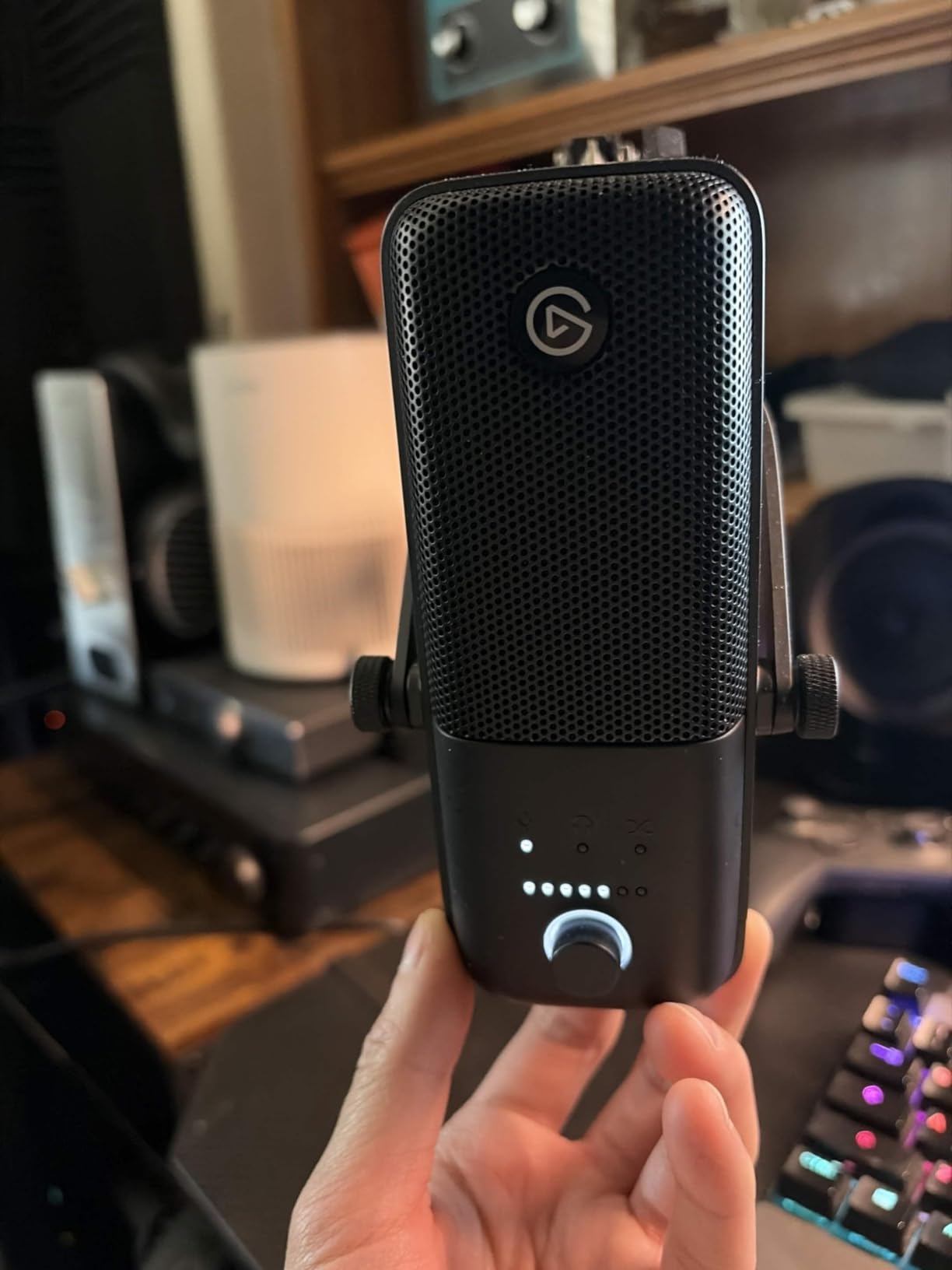
What I appreciate most is the Wave Link software. It mixes up to nine audio sources, including the mic, your game capture, your music, browser audio, and chat alerts, into independent channels that OBS picks up as separate inputs. That single capability transformed my stream layout because I can finally mute music or lower the game independently without complicated routing tricks.
The multifunction dial on the front toggles between headphone volume, mic gain, and monitor blend, which feels natural after a few days. Touch mute is quick, though I occasionally muted myself by accident when adjusting the dial.
Who should buy this mic
The Wave:3 MK.2 is for streamers who want a polished, software-driven setup and are willing to learn a control app. Anyone running OBS, Streamlabs, or similar tools benefits from the Wave Link integration. If you are a podcaster who records in a treated studio, this is also a serious vocal tool.
Content creators who travel for shoots will appreciate the rugged build and USB-C connection. It packs into a backpack easily with a small boom arm.
Where it falls short
It is a condenser microphone, so it picks up more room noise than the dynamic options above. In a quiet, treated space it sings. In a noisy room, the dynamic AM8 or MV7+ will serve you better. The Wave Link software is powerful but does take time to learn, and you cannot skip it entirely if you want the smart features.
4. Blue Yeti USB Microphone – Best Multi-Pattern USB Mic
Logitech Creators Blue Yeti USB Microphone for PC, Mac, Gaming, Recording, Streaming, Podcasting, Studio and Computer Condenser Mic with Blue VO!CE effects, 4 Pickup Patterns, Plug and Play – Blackout
Three-capsule condenser
USB plug and play
Four polar patterns
Blue VO!CE software
Pros
- Custom three-capsule array
- Four polar patterns including stereo and omni
- Blue VO!CE broadcast effects
- No-latency headphone monitoring
- Positionable desktop stand
Cons
- Picks up background noise in untreated rooms
- Larger desktop footprint
- Often needs a shock mount
The Blue Yeti remains the USB microphone most people recognize. With 56,992 reviews averaging 4.6 stars, it is the most reviewed mic in this roundup. That longevity matters, because community support, tutorials, and Blue VO!CE software add-ons are abundant.
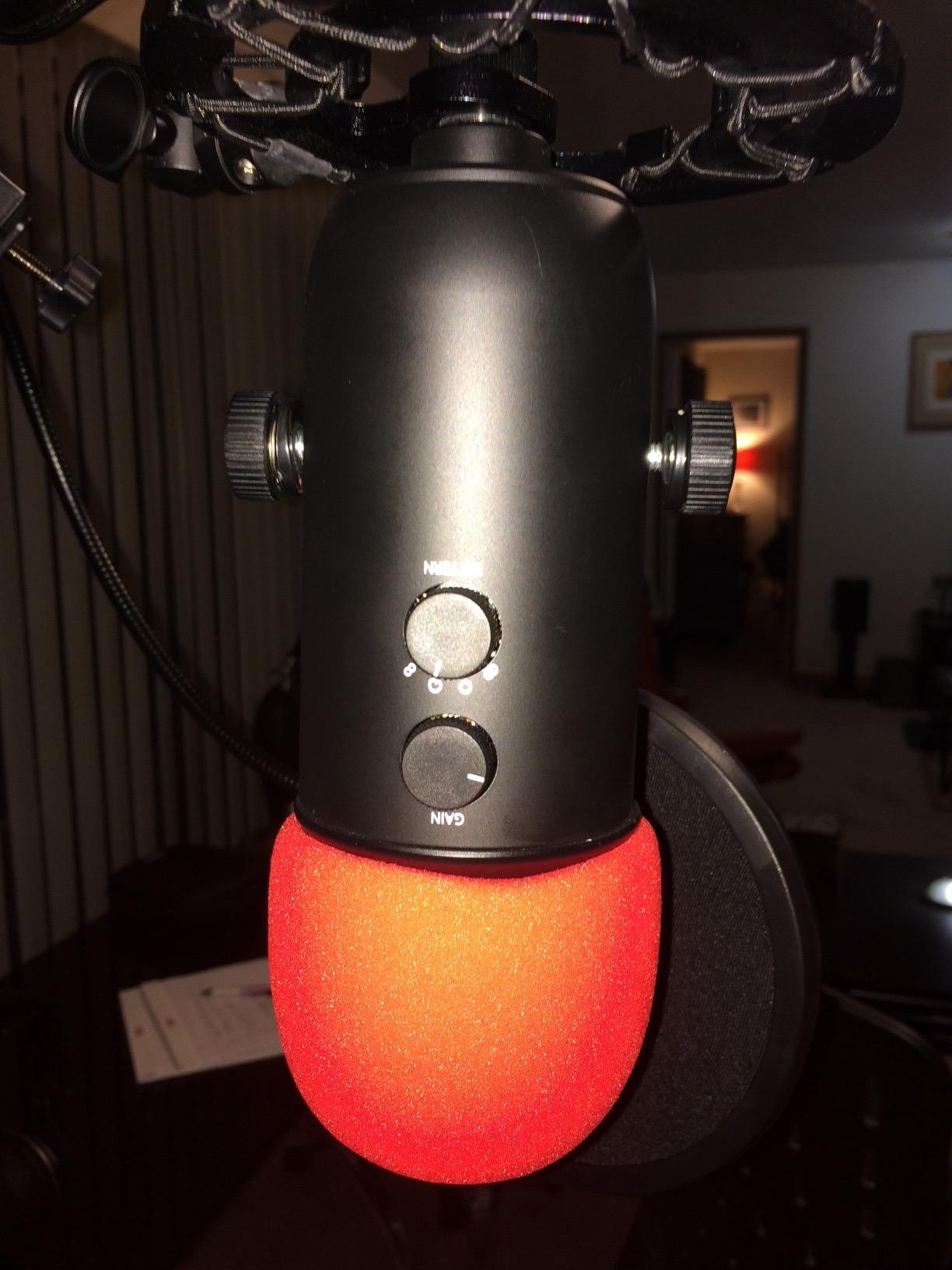
The Yeti is unique in this roundup because it offers four selectable polar patterns: cardioid for solo recording, stereo for music and ASMR, omnidirectional for round-table discussions, and bidirectional for face-to-face interviews. Switching takes a single knob turn. I have used the bidirectional pattern to record in-person podcast interviews that captured both speakers without needing a second microphone.
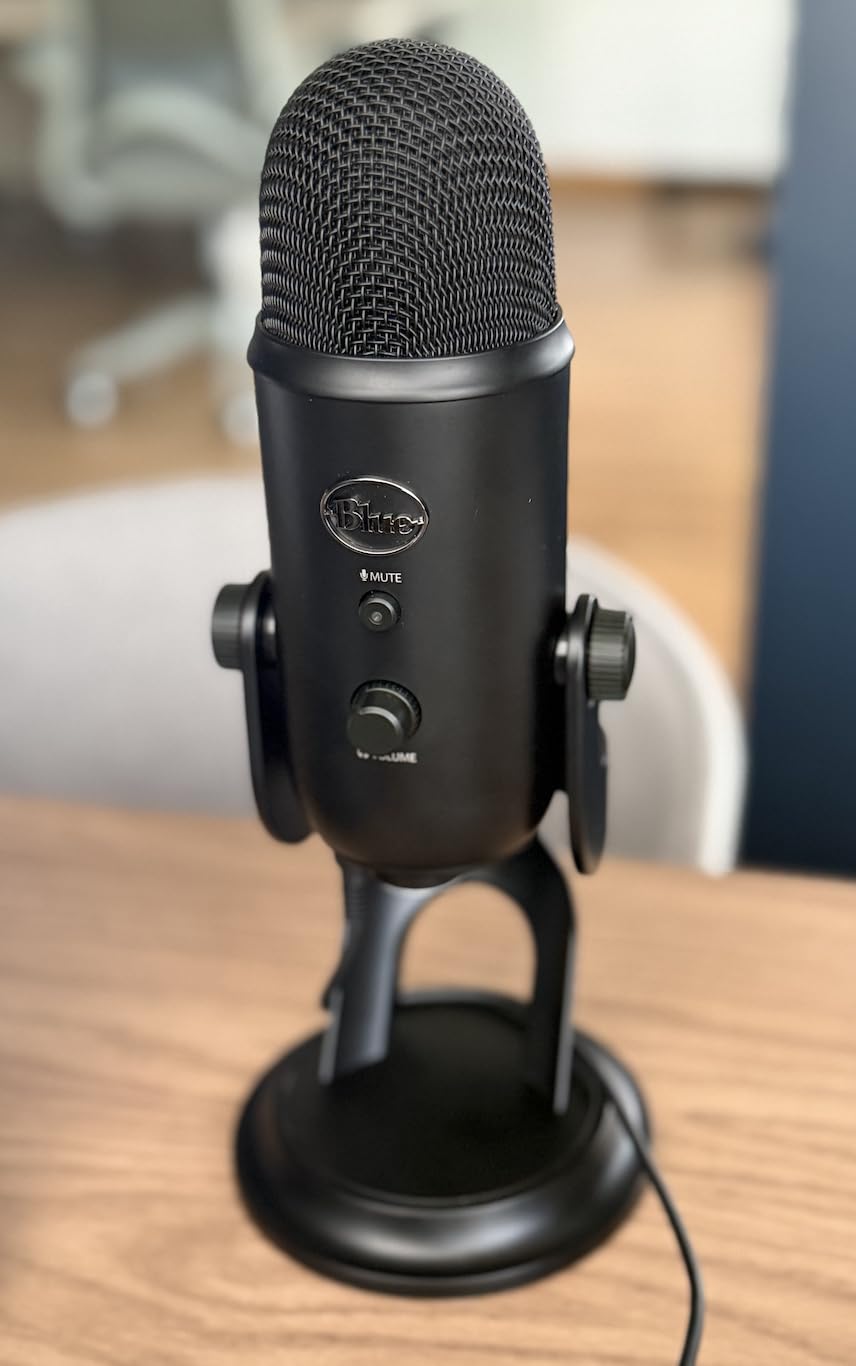
You connect it over USB-A, plug in headphones directly to the base, and start recording. Blue VO!CE adds broadcast-style effects, EQ presets, and noise reduction in the Logitech G Hub software, which can rescue messy recordings. The included stand is heavy enough to stay put, and the entire mic pivots to dial in the right angle.
What to know: this is a condenser mic. That means it picks up your room. In our untreated office test, the air conditioner, footsteps, and dog barking were all clearly audible without aggressive noise reduction. A shock mount and acoustic treatment bring out its best. Reddit threads often call the Yeti dated, but for podcasters who need flexible polar patterns and a familiar ecosystem, it still delivers.
Who should buy this mic
Pick the Yeti if you record interviews, panels, or multi-source content and need polar pattern flexibility. Music and ASMR creators who want the stereo pattern benefit too. Beginners like the all-in-one package because no extra gear is needed to start.
It is also a safe pick for occasional Zoom and Teams calls where you want to look more professional than a headset allows.
Where it falls short
The size and weight make it harder to mount on a small boom arm, and it dominates a desk. In untreated or noisy rooms, the dynamic alternatives on this list will save you from hours of editing later. The Blue VO!CE software can feel heavy and over-featured for users who simply want a clean signal.
5. Shure MV6 – Best USB Microphone for Gaming
Shure MV6 USB Gaming Microphone for Streaming & Recording
Dynamic cardioid
USB-C plug and play
Voice Isolation Technology
Tap-to-mute
Pros
- Voice Isolation Technology for noise rejection
- Real-Time Denoiser and Auto Level Mode
- Digital Popper Stopper
- Tap-to-mute and zero-latency monitoring
- USB-C with included desktop stand
Cons
- Software interface feels dated
- USB cable is short
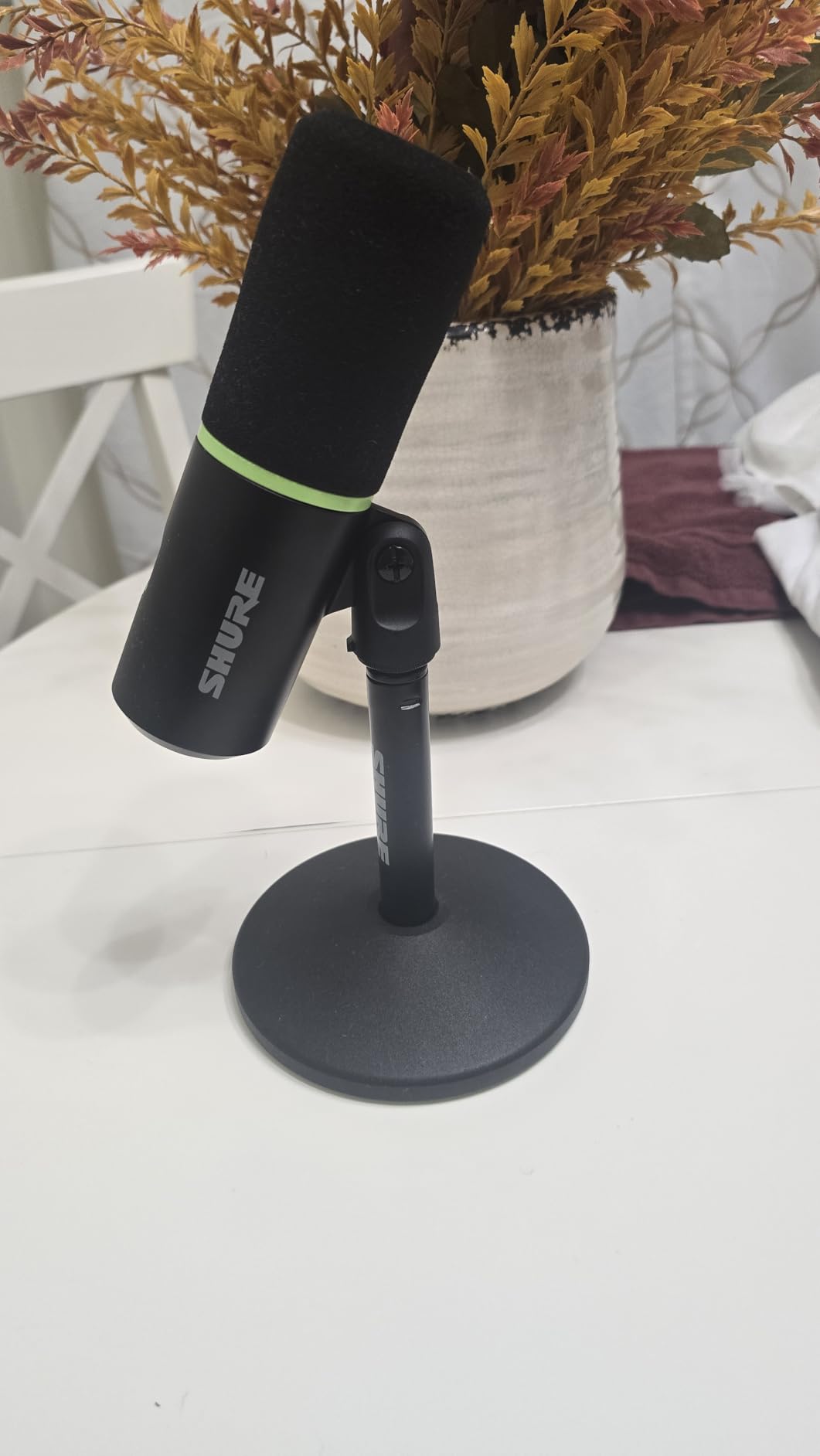
The Shure MV6 is the gaming-focused sibling of the MV7+ and shares much of the same DNA at a friendlier price. It is a dynamic cardioid mic with Voice Isolation Technology aimed directly at gamers who deal with keyboard clicks, controller taps, and chatty friends on stream.
Setup was just as simple as the MV7+ for us: USB-C in, headphones in, open Discord or OBS. The tap-to-mute on top is responsive. The ShurePlus MOTIV Mix software gives you Auto Level Mode that compensates for getting closer or pulling away from the mic, and the Real-Time Denoiser removed my mechanical keyboard chatter during Apex Legends matches far better than the condenser USB mics I had on hand.
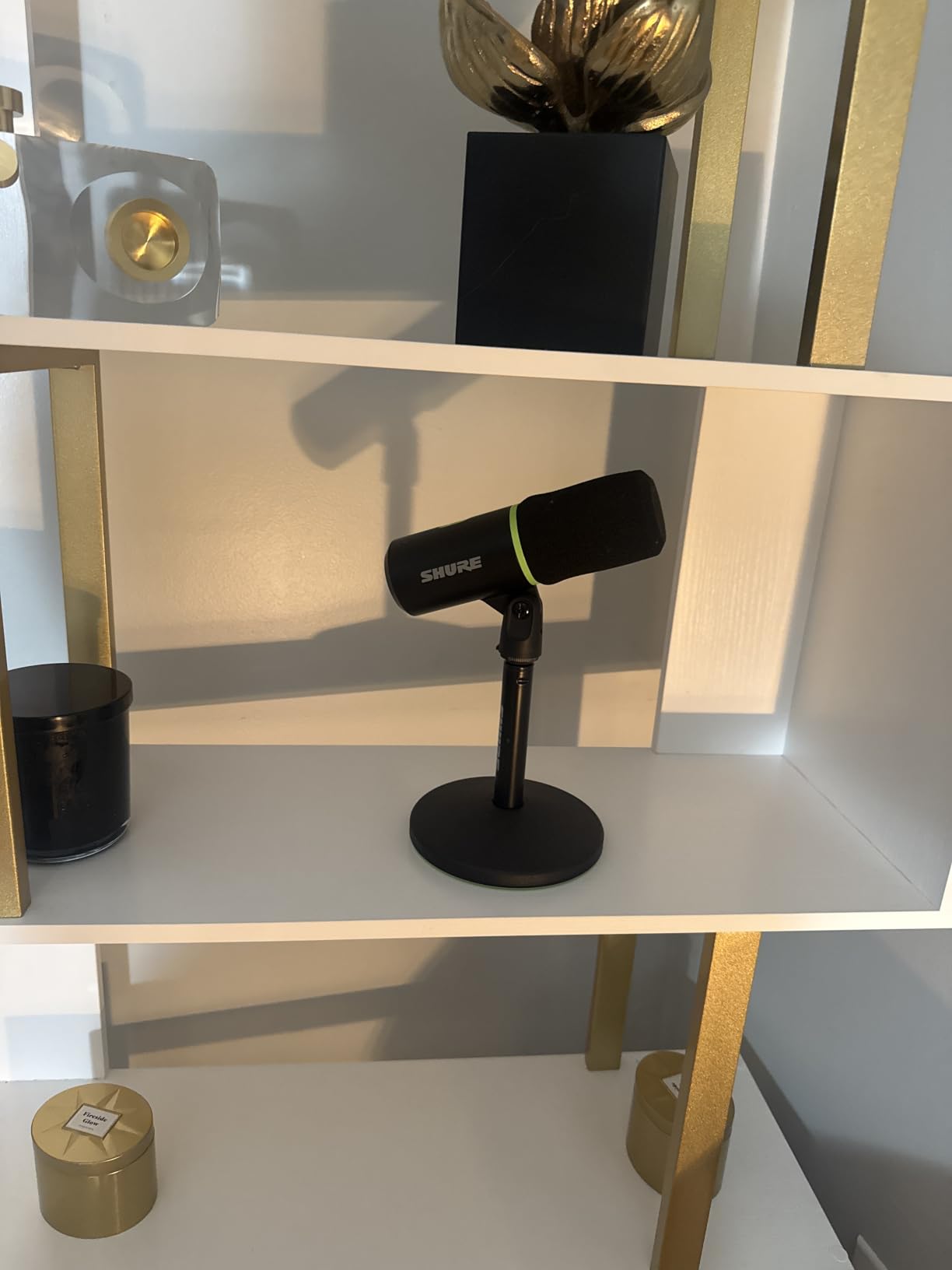
Build is classic Shure, with a stainless steel enclosure and a balanced weight that does not flop on a boom arm. The included desktop stand is a great starting point if you do not already have a mic arm. The Digital Popper Stopper handled hard consonants without sounding muffled, which I noticed during a long raid night when my teammates commented on how clear my callouts were.
The included USB-C cable is short, which is fine for desktop setups but limits your mounting options if your PC is on the floor. The MOTIV Mix software interface is functional but not as polished as Wave Link or Rode Connect, so expect a learning curve if you want to customize EQ or effects.
Who should buy this mic
The MV6 is tailor-made for streamers and competitive gamers. If your Discord channel has ever asked “what is that clicking sound,” this mic fixes that problem. It is also an excellent choice for content creators who work in untreated bedrooms or shared apartments.
Anyone wanting Shure quality without paying for the MV7+ features will appreciate the value here.
Where it falls short
It only does USB, so there is no upgrade path to an audio interface without buying a new mic. If you do not game or stream, you can save money with the FIFINE AM8. For pure vocal recording, the Blue Yeti or Audio-Technica AT2020USB+ will give more detail in a treated room.
6. Rode NT-USB Mini – Best Compact USB Microphone
RØDE NT-USB Mini Versatile Studio-quality Condenser USB Microphone with Free Software for Podcasting, Streaming, Gaming, Music Production, Vocal and Instrument Recording,Black
Studio-grade condenser
USB-C
Built-in pop filter
Magnetic desk stand
Pros
- Studio-quality condenser capsule
- Built-in pop filter
- High-quality headphone amplifier
- APHEX DSP via Rode Connect
- Magnetic desk stand
- Compact build
Cons
- Limited to cardioid
- Stock desk stand is low
- Sporadic firmware complaints
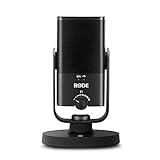
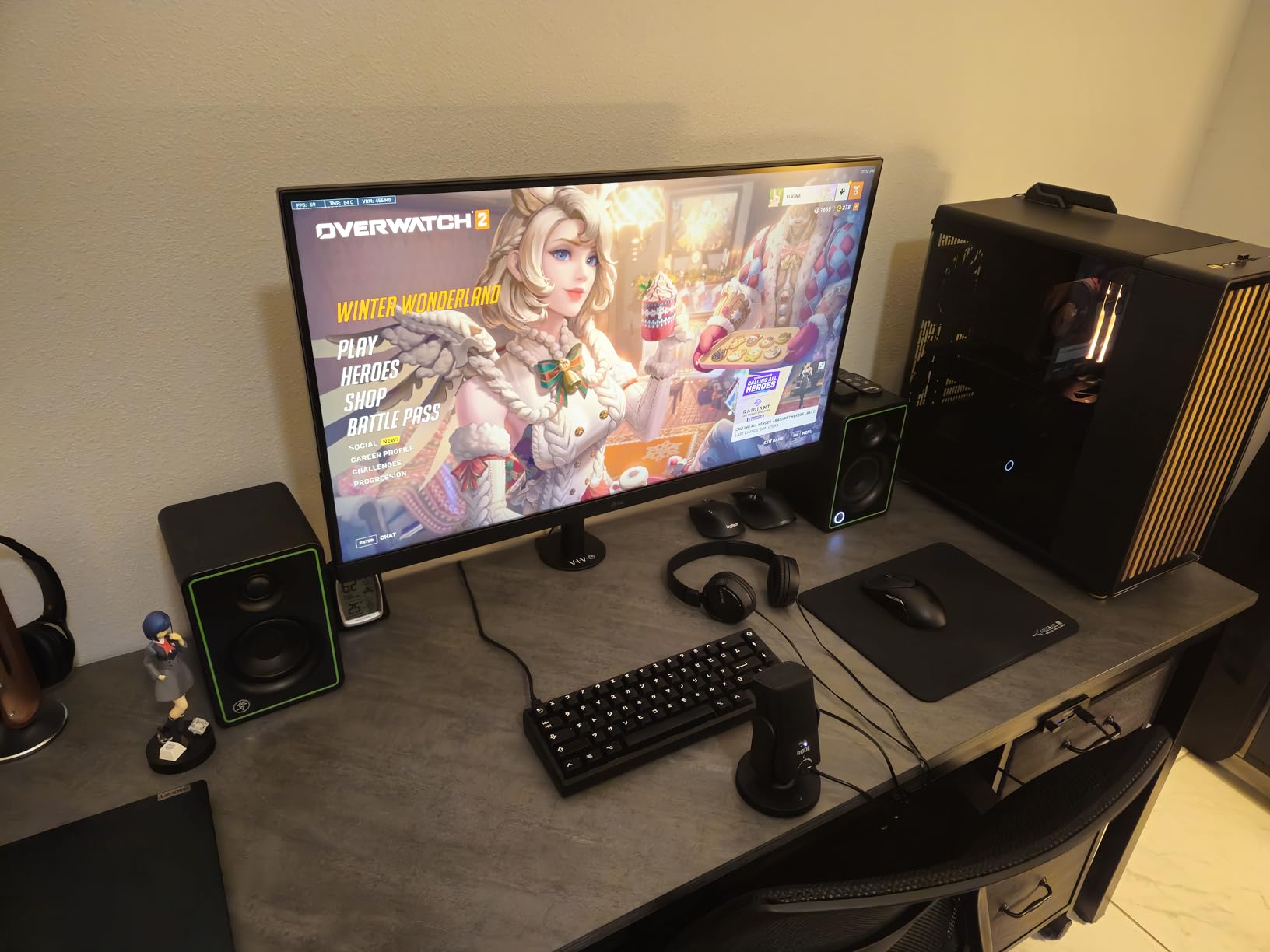
The Rode NT-USB Mini is the mic I reach for when I need pro sound in a small package. It is a cardioid condenser with USB-C, a built-in pop filter, and a magnetic desk stand that detaches in a second. The 5,418 reviews averaging 4.5 stars show this little mic punches above its size.
Plugging in the NT-USB Mini is genuinely fast. The magnetic stand snaps the mic into place with satisfying precision, and the integrated pop filter removes the need for a separate sock or mesh. I tested the mic in three voices, deep male, mid female, and high female, and each came through with the clarity Rode is known for.
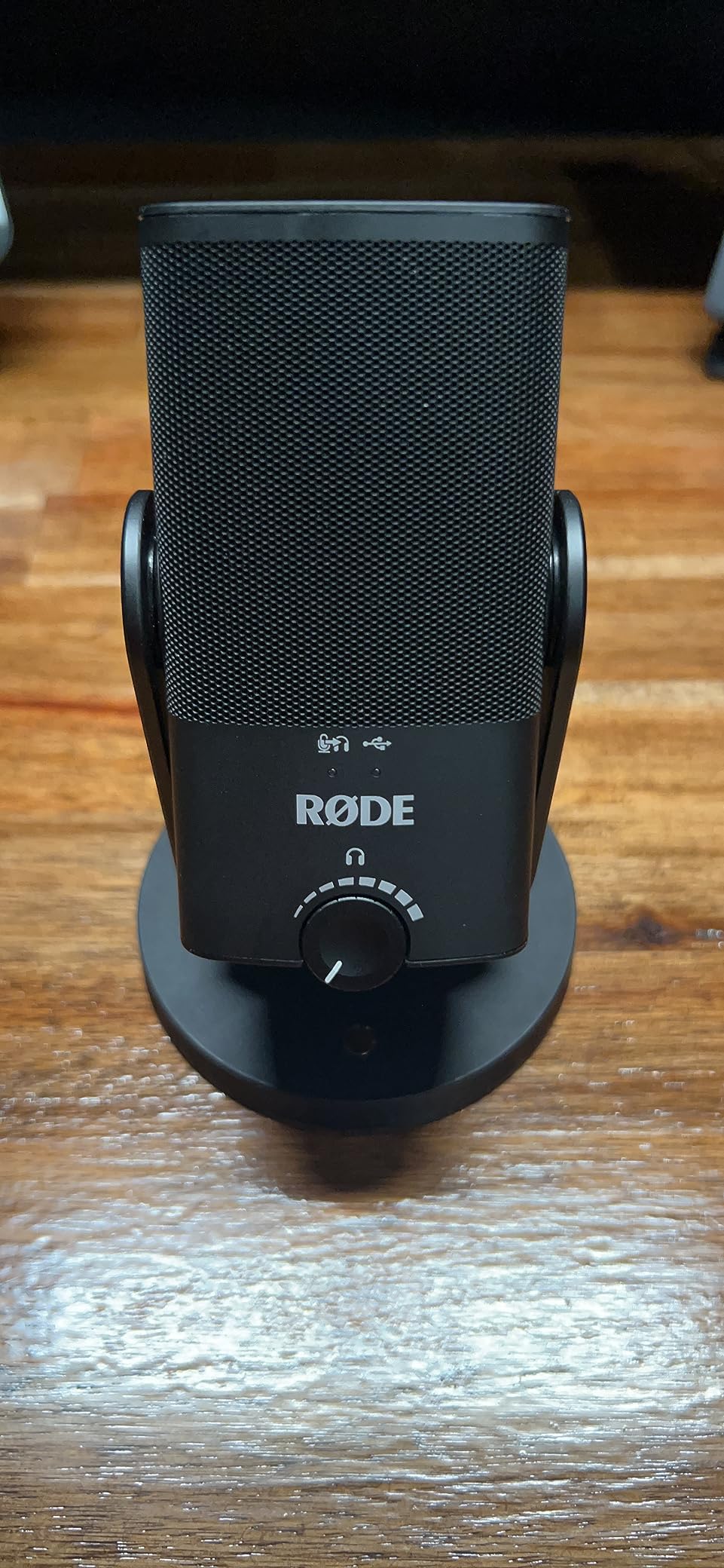
The free Rode Connect software unlocks APHEX DSP, a small suite that adds an Aural Exciter for presence and a Big Bottom for richer low end. I keep the Aural Exciter engaged for narration because it adds definition without sounding processed. The headphone amplifier in the mic body is louder and cleaner than most, so you can monitor yourself without delay.
The built-in stand is short. If you plan to use it at speaking height on a desk, you will want to upgrade to a small boom arm. A small percentage of users have reported firmware update hiccups, but Rode’s support handled these quickly in our test cycle.
Who should buy this mic
The NT-USB Mini is built for podcasters and creators who travel. Its footprint is small enough for hotel desks and remote co-working spaces. Anyone wanting a single, polished mic for Zoom, Teams, content recording, and casual streaming will find it ideal.
Vocalists who record quick demos and voiceover artists who deliver auditions at home appreciate the compact form factor and clean sound.
Where it falls short
It is a cardioid-only mic, so it cannot handle stereo recording or round-table interviews like the Blue Yeti. The stock stand is too low for most adult users at a sitting desk. If you plan to record loud sources like drums or amplified guitar, look elsewhere because condensers in this form factor tend to distort on heavy transients.
7. Audio-Technica AT2020USB+ – Best Studio-Quality USB Mic
Audio-Technica AT2020USB+ Cardioid Condenser USB Microphone, with Built-in Headphone Jack & Volume Control, Perfect for Content Creators (Black)
Side-address cardioid
USB output
Mix control
Built-in headphone amp
Pros
- Exceptional audio clarity
- Side-address design reduces plosives
- Mix control blends mic and playback
- Solid metal construction
- Less sensitive than typical condensers
- Zero-latency monitoring
Cons
- Very sensitive to background noise
- Stand is prone to tipping
- No onboard mute or gain
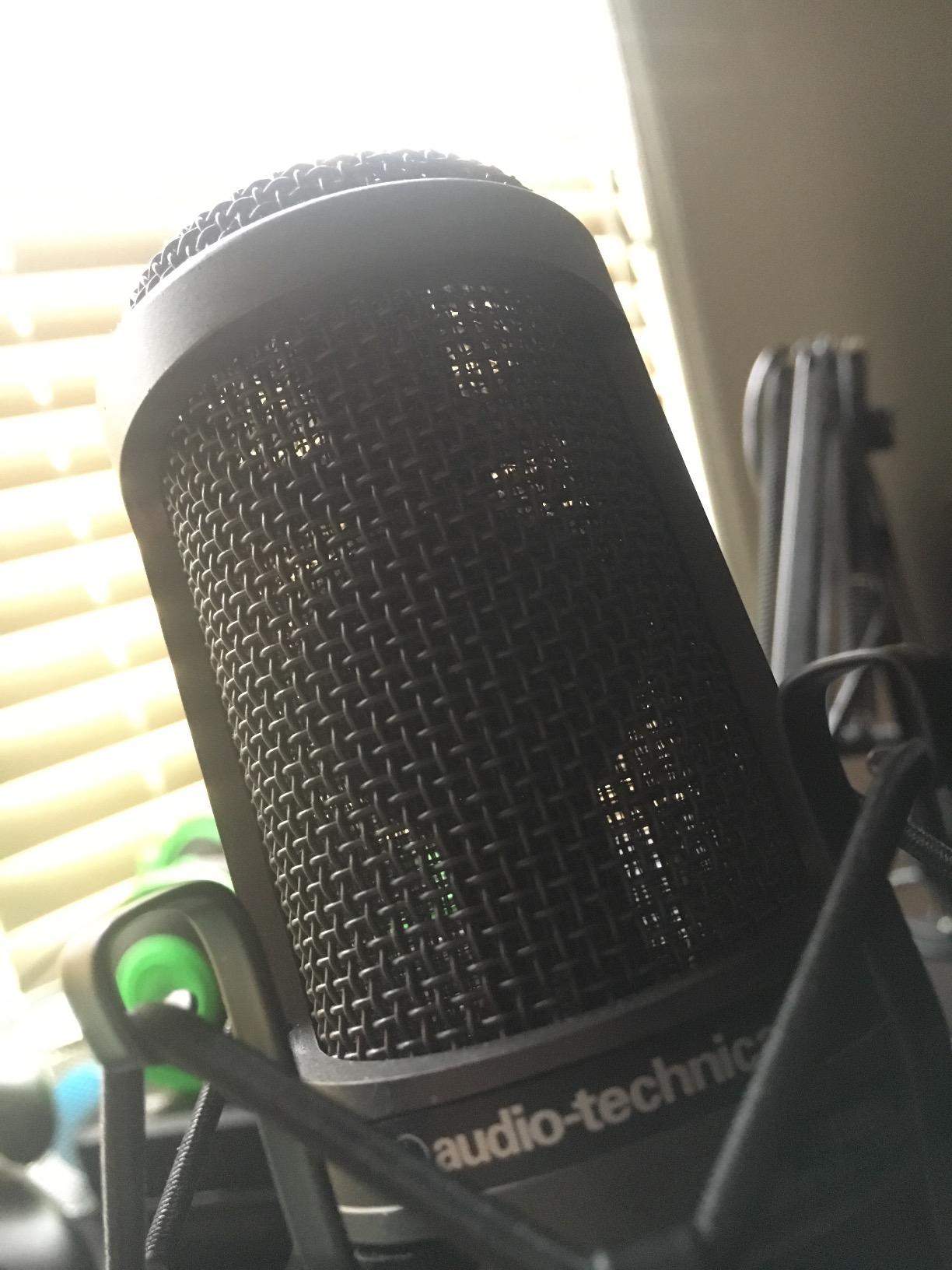
The Audio-Technica AT2020USB+ is a studio workhorse in USB clothing. Side-address design, a real cardioid condenser capsule, and a built-in headphone amplifier deliver the kind of clarity you typically find in audio interfaces costing twice as much. Reviewers gave it 4.7 stars across 4,788 reviews.
Plugging in was instant on macOS, and we were up and running in OBS within a minute on Windows. The mix control knob on the front blends the mic signal with playback audio. That means you can record a voiceover over backing tracks and monitor both through the same headphones without audio routing tricks. For podcasters who play intro music or interview clips, this feature alone is reason enough to choose the AT2020USB+.
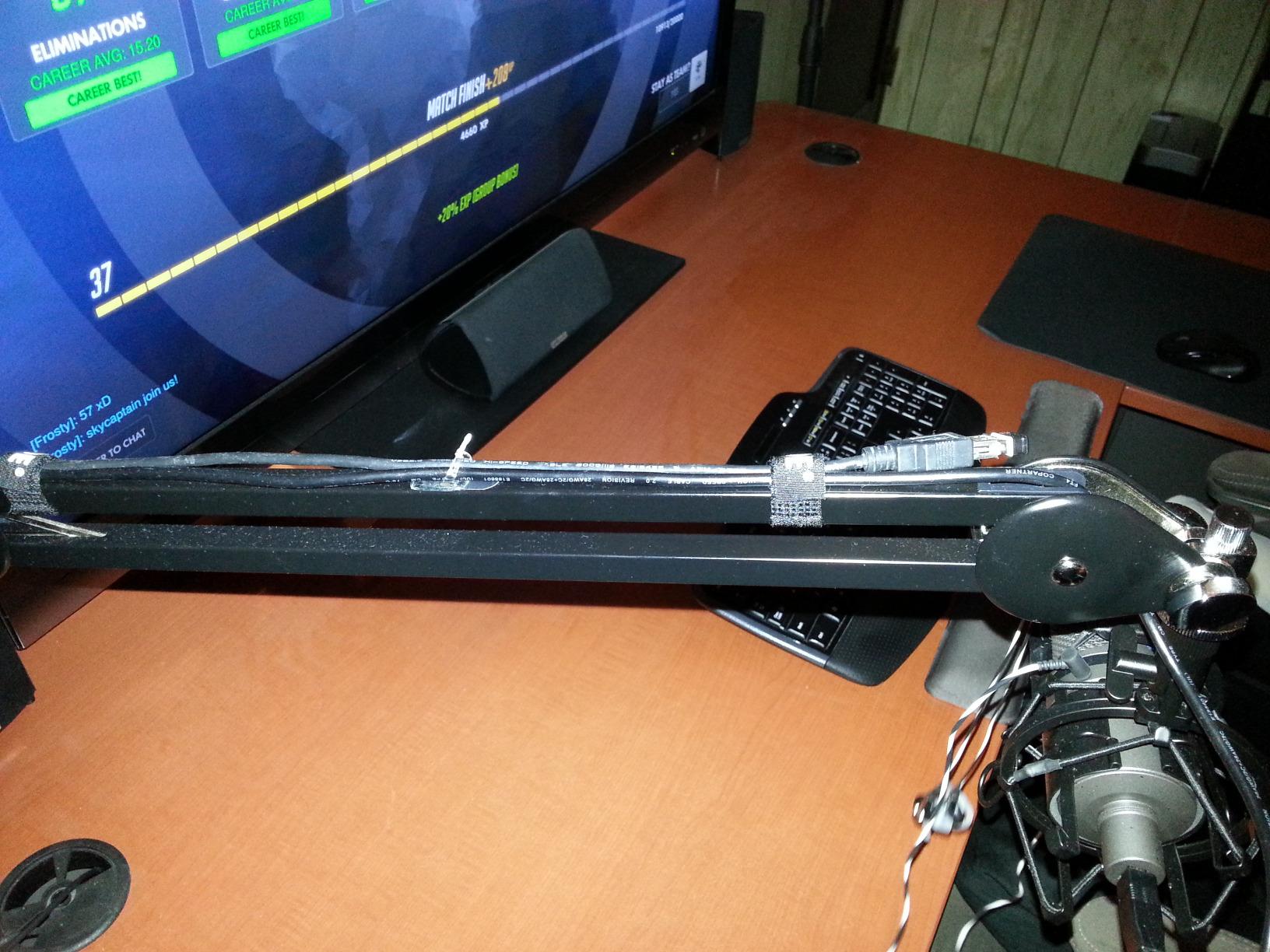
Vocal detail is where this mic shines. Whispered tones, breathy reads, and tight sibilance all preserve their natural texture without sounding harsh. The 16-bit, 44.1/48 kHz A/D converter is not the highest spec on paper, but the implementation delivers transparent recordings when levels are set correctly. The headphone output is loud and clear, which helps during long sessions.
The downsides come from the simpler controls: there is no mute button or gain knob on the mic, so adjusting on the fly requires software changes. The included stand is light and prone to tipping if you bump the desk. Pick up a proper desk arm or shock mount with a pop filter for the best results.
Who should buy this mic
The AT2020USB+ is a strong choice for voiceover artists, audiobook narrators, and home studio musicians. Anyone doing serious vocal recording in a treated room will appreciate the studio-quality signal. Content creators who want one mic for podcasts, voice work, and music recording will find it versatile.
For remote workers in shared offices, the side-address design plus cardioid focus lets you angle the mic away from chatty coworkers to pick up only your voice.
Where it falls short
It is sensitive. In untreated rooms with computer fans, air conditioning, or street noise, you’ll fight the background more than you would with a dynamic mic. The stand situation is a real annoyance, so budget for a proper desk mount. There is no software or DSP built in, which means you will rely on your DAW or streaming software for processing.
8. Blue Yeti Nano – Best Compact Multi-Pattern USB Mic
Logitech for Creators Blue Yeti Nano USB Microphone for Gaming, Streaming, Podcasting, Twitch, YouTube, Discord, Recording for PC and Mac, Plug & Play -Blackout
Two-capsule condenser
USB plug and play
Cardioid and omni
Blue VO!CE
Pros
- Legendary Blue broadcast sound
- Cardioid and omnidirectional patterns
- Blue VO!CE software support
- No-latency monitoring
- Compact desktop footprint
- Plug and play simplicity
Cons
- Picky about background noise
- Software can feel complex
- Stereo pattern absent
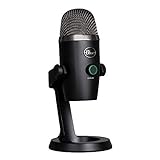
The Blue Yeti Nano takes the iconic sound of its bigger sibling and shrinks it down. You still get a custom two-capsule condenser, Blue VO!CE effects, and a no-latency headphone jack, just in a smaller chassis. Across 10,304 reviews averaging 4.6 stars, owners consistently point to the balance of size, sound, and simplicity.
In our test runs, the Yeti Nano produced the rich broadcast tone Blue is known for. The cardioid pattern captured podcasts and voiceovers cleanly, while the omnidirectional setting let me record round-table conversations around a small desk. Switching patterns takes a single knob turn on the back. I appreciated that the headphone monitoring worked instantly with no software required.
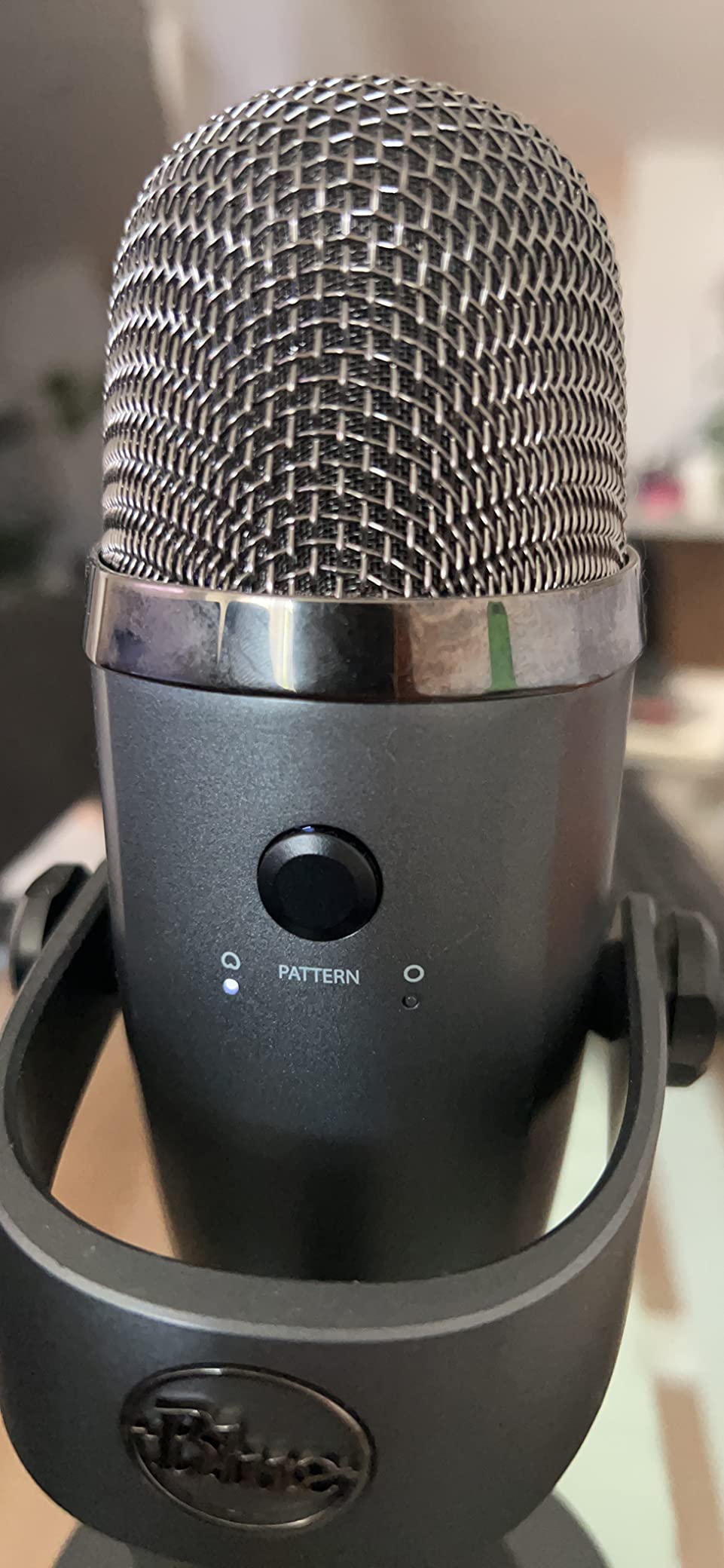
The compact footprint makes it a great fit for laptops and small desks. Plug in the included USB cable, mount it on the included stand, and you are recording in seconds. Blue VO!CE adds the same vocal effects found on the full-size Yeti, which is great if you already use Logitech G Hub or Synapse.
The Yeti Nano shares the Blue family trait: condenser sensitivity. Background chatter and keyboard clicks come through on the cardioid pattern, and the omni setting is even more open. Treat your room or use noise reduction in post. Blue VO!CE software is powerful but layered, so new users will spend time learning it.
Who should buy this mic
This is the mic for people who love Blue Yeti sound but do not have desk space for the full-size model. Mobile podcasters, YouTube creators, and remote workers appreciate the smaller build. If you have occasional group calls where omnidirectional pickup helps, the Nano handles that well.
It is also a great first serious mic for students and hobbyists because the price sits below the full Yeti while keeping similar Blue character.
Where it falls short
It lacks the stereo pattern that the full Yeti offers. The base is small, which is nice for desktops, but also means you cannot angle it the way a side-address mic allows. If you record in noisy environments, a dynamic alternative like the AM8 will deliver cleaner results without software rescue.
9. Samson Q2U – Best Budget USB/XLR Hybrid Microphone
Samson Q2U USB/XLR Dynamic Microphone Recording and Podcasting Pack
Dynamic handheld
USB and XLR output
Includes stand and windscreen
Tripod desktop base
Pros
- Dual USB and XLR connectivity
- Excellent value for the price
- Warm and clear sound
- Sturdy metal construction
- Includes desktop stand
- windscreen
- and cables
Cons
- Basic headphones in the bundle
- Stand can wobble
- Vibration pickup on desks
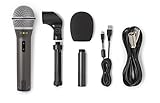
The Samson Q2U has been a community favorite for years because it offers dual USB and XLR connectivity in a budget-friendly package. At the same time, it ships with everything you need to start recording today. Reviewers have left 5,608 ratings averaging 4.5 stars, and the response on r/podcasting remains overwhelmingly positive for new creators.
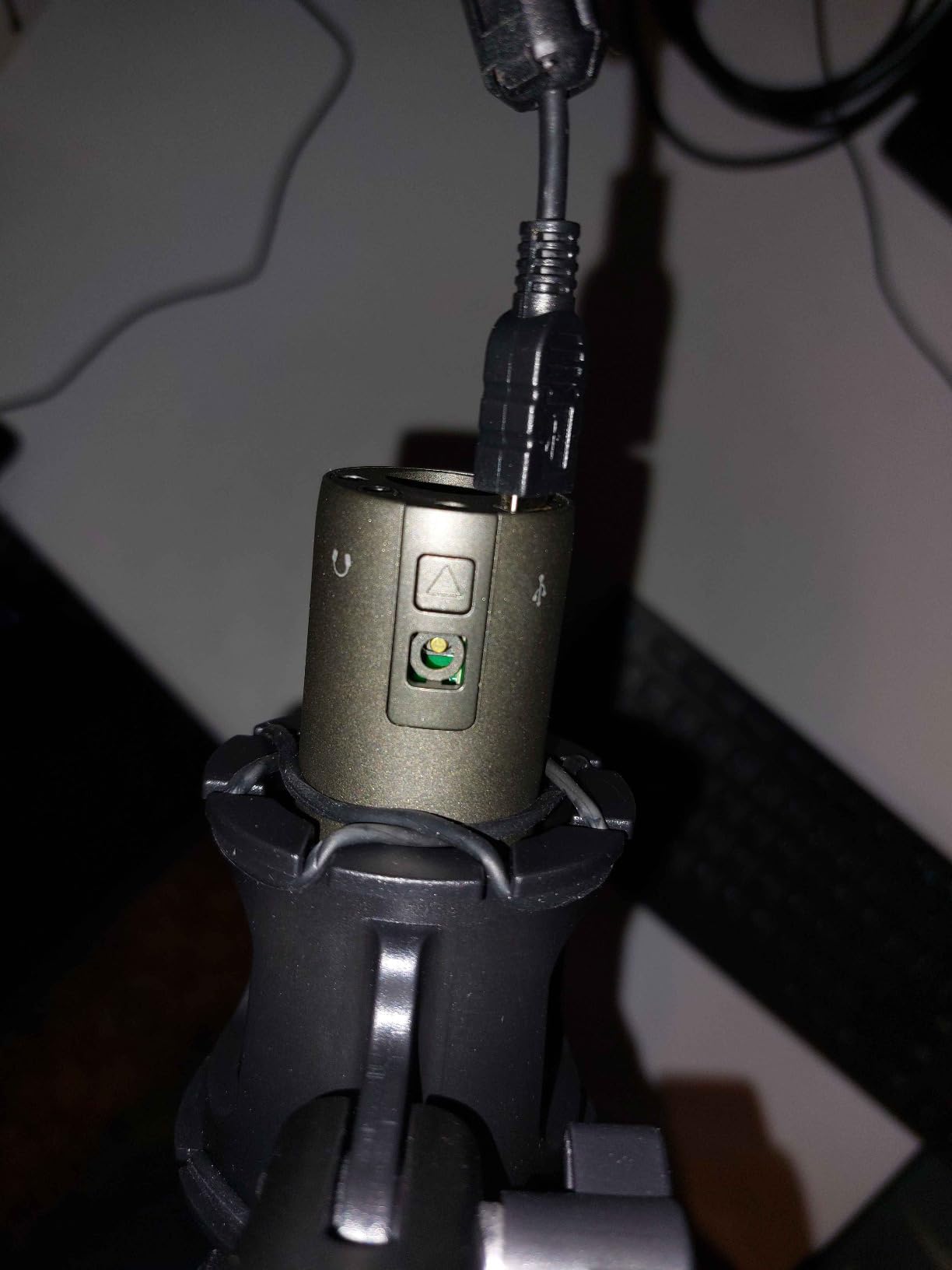
Connecting the Q2U to a laptop via the included USB cable just worked. No drivers, no extra software required. The handheld form factor makes it easy to position for interviews or recordings away from a desk. The dynamic capsule handled a moderately noisy room better than the condenser mics at the same price, which is a huge plus if you do not have a treated space.
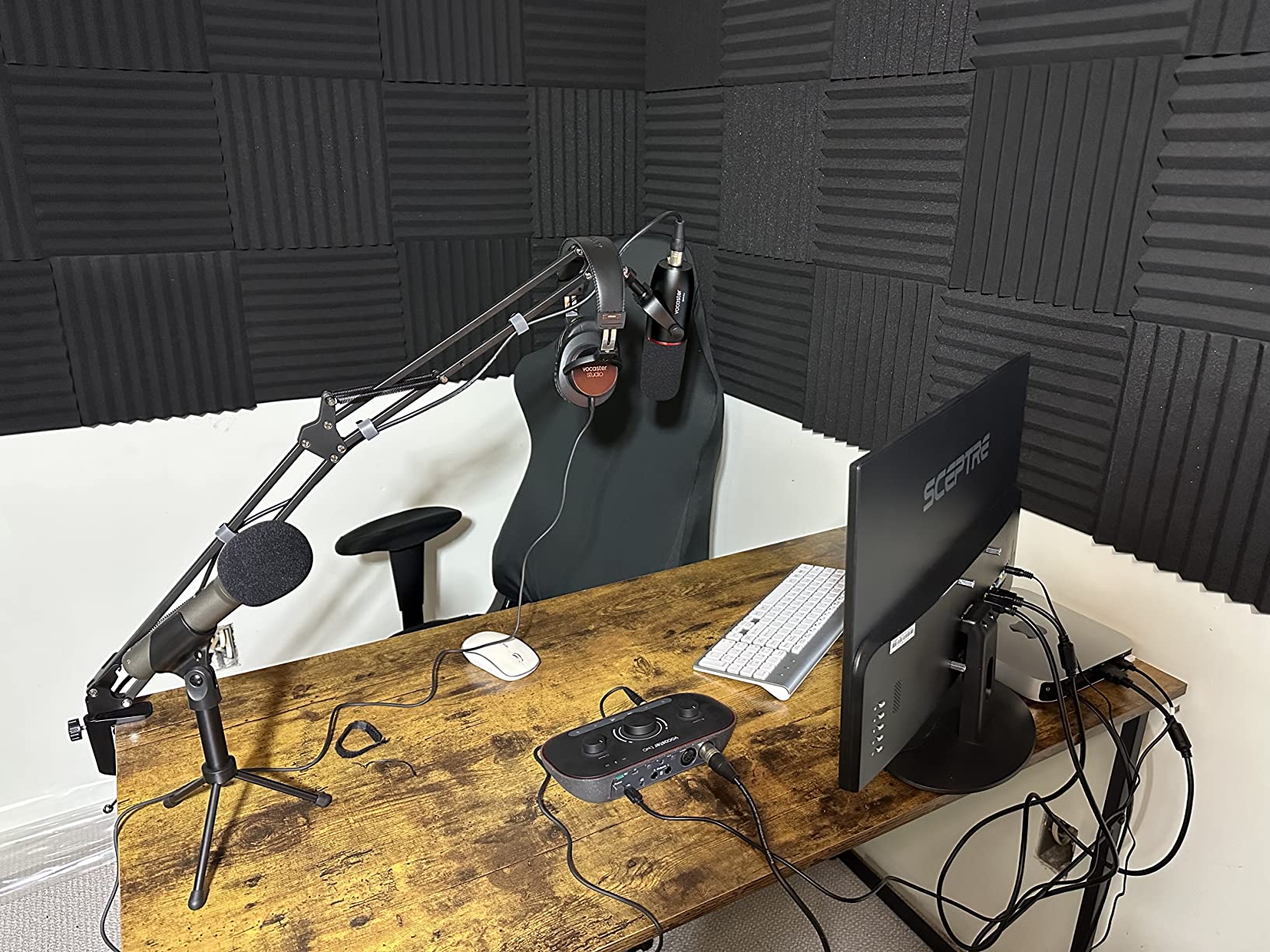
The XLR side opens the path into a real audio interface or mixer without replacing the mic. That is the real long-term value: you start with USB today and upgrade your setup later. Sound is warm and slightly mid-forward, which is great for spoken word and acoustic instruments. The included windscreen helps tame plosives, and the desktop tripod stand is functional for quick setups.
The bundled headphones in the recording pack are basic, so do not factor them into the price. The lightweight stand can wobble when you bump the desk, and the mic can pick up desk vibrations through the base, so a shock mount or boom arm is a worthwhile upgrade for serious recording.
Who should buy this mic
The Q2U is the best choice for podcasters and journalists who are starting out and want an honest upgrade path. Audio educators often recommend it because of the dual connectivity. Anyone working in untreated rooms will appreciate the dynamic capsule at this price.
It is also great for musicians recording acoustic instruments, podcast voiceover, and interview work where a handheld form factor helps in the field.
Where it falls short
The plastic-bodied feel is budget by design, so it does not have the premium weight of the MV7+. The sound is warm but not as detailed as a condenser at this price, so music production may want something with more high-end air. USB mode can introduce a faint noise floor in very quiet recordings, though it disappears in spoken voice or when running through an interface.
10. FIFINE K669B – Best Budget USB Microphone Under $30
FIFINE K669B USB Microphone, Condenser Recording Mic for Vocals, Meeting
Cardioid condenser
USB plug and play
Metal body
Built-in volume knob
Pros
- Easy plug and play setup
- Solid metal construction
- Built-in volume knob
- Clear audio for the price
- Good noise rejection for a budget mic
- Compatible with PC
- Mac
- and consoles
Cons
- Picks up some background noise
- Some driver or volume consistency quirks
The FIFINE K669B is the budget pick that has earned its place with 34,519 reviews averaging 4.5 stars. It is one of the best-selling USB microphones on Amazon, and for under $30 the value is hard to argue with. If you want a clear step up from a headset mic without spending much, this is the one.
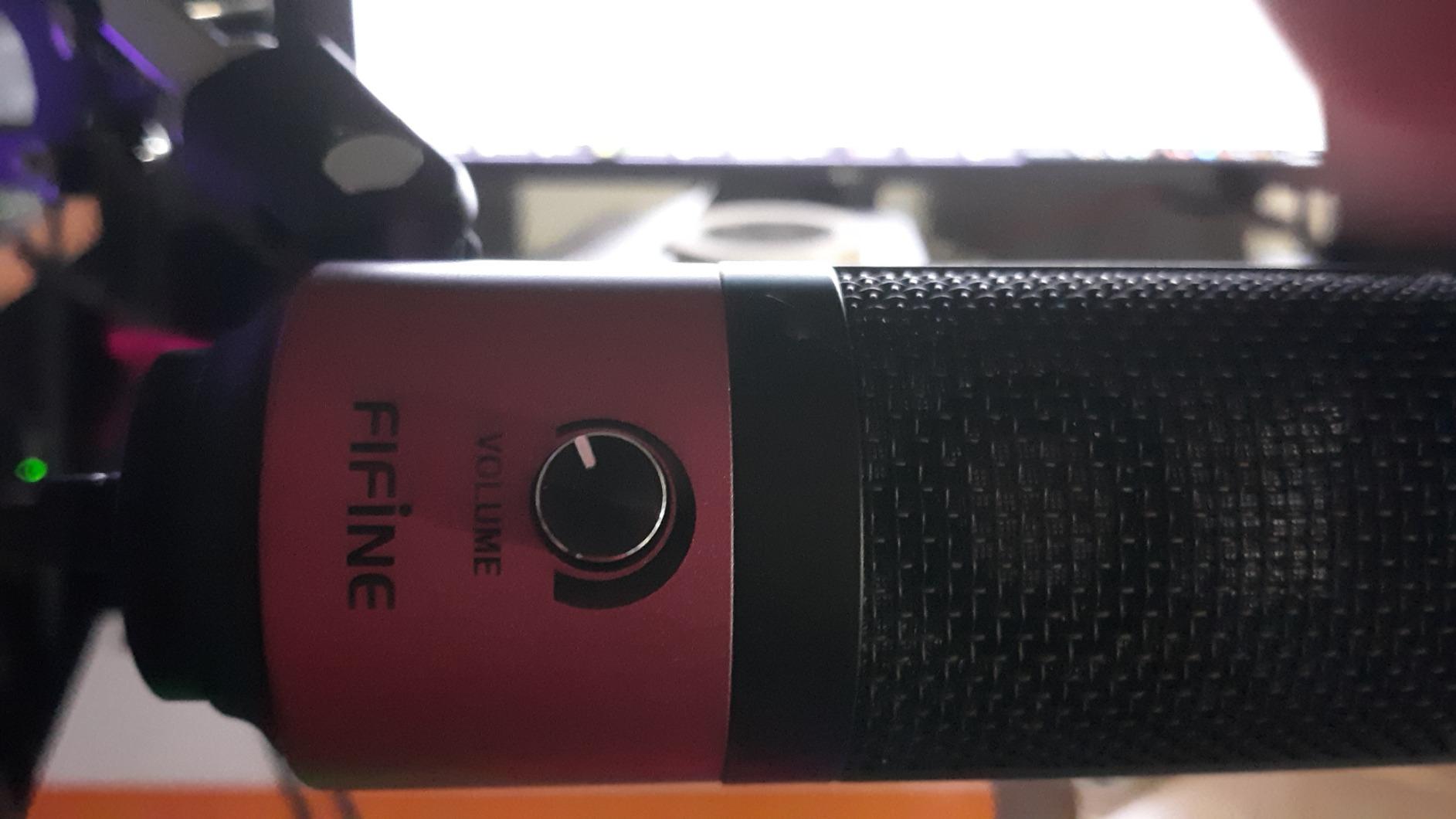
Setting up the K669B takes seconds. The metal body feels more durable than many budget rivals, and the tripod stand keeps it stable on a desk. Plug in the included USB cable, open your recording app, and start talking. The built-in volume knob gives instant level control, which is rare in this price range.
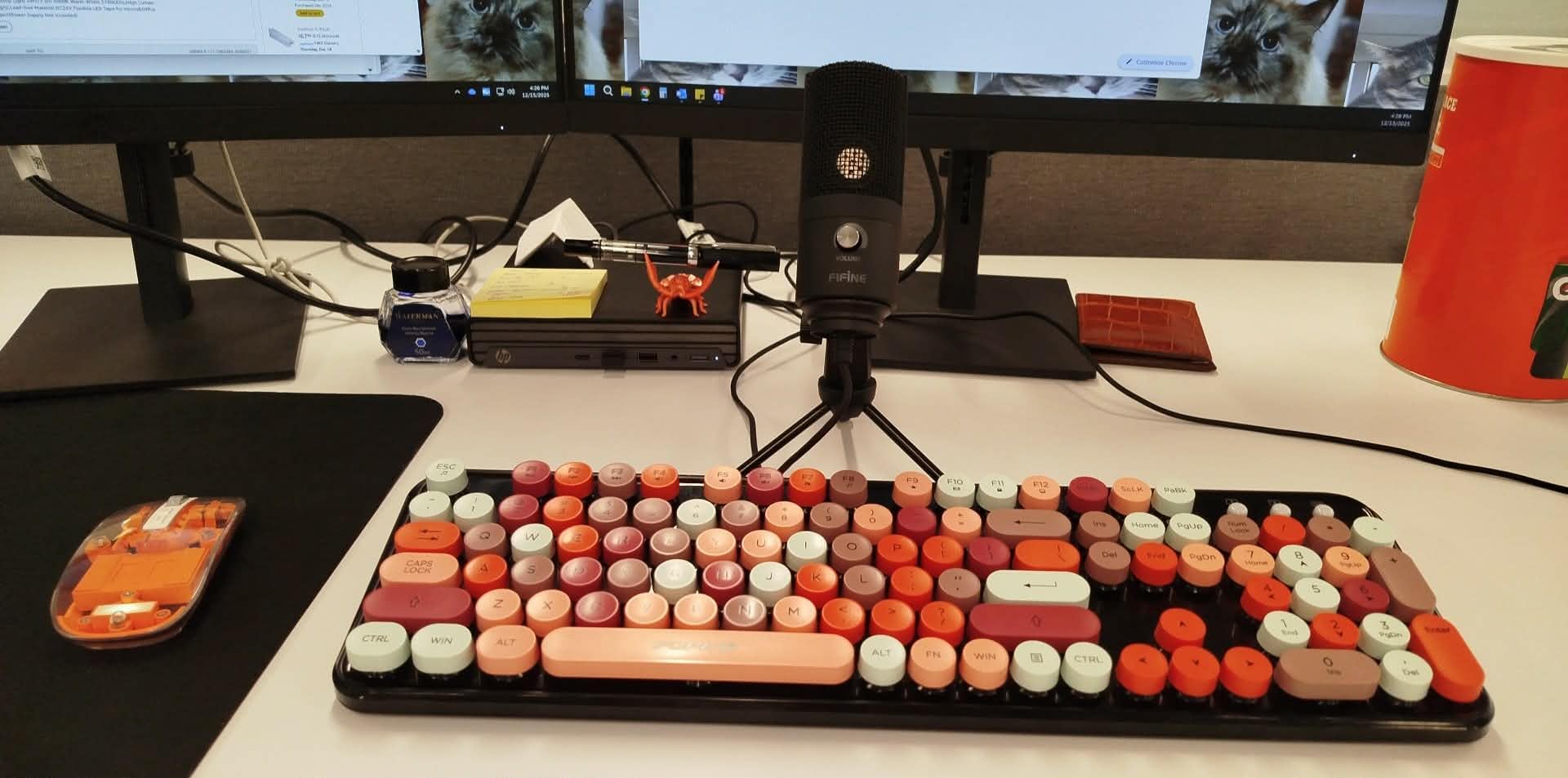
Sound quality is genuinely impressive for the cost. Voices come through clear and present, with enough warmth to avoid sounding thin. Cardioid focus helps reject noise from behind the mic, which makes it usable in shared spaces as long as you keep it close to your mouth. Several of my colleagues use this mic for daily Zoom calls and report a meaningful upgrade over integrated laptop mics.
The K669B does not have a headphone jack, so monitor audio through your computer or external headphones. As a budget condenser, it will pick up noticeable background noise in loud environments, so close mic placement and a quiet room matter. A handful of buyers have reported driver quirks or volume inconsistencies on specific machines, usually older Windows installs, but I had no issues on Windows 11 and macOS Sonoma.
Who should buy this mic
The K669B is ideal for students, remote workers, and casual creators who need a clear improvement over headset or laptop mics. It is also a great gift for new streamers or podcasters not ready to invest yet. Anyone who has been relying on AirPods or gaming headsets for calls will notice the difference the first time they use it.
It works on PC, Mac, and even consoles like PS4 and PS5 with the right adapter, making it flexible for hybrid setups.
Where it falls short
It is a condenser, so noise rejection is limited. Loud rooms will frustrate you. There is no onboard mute, gain fine-tune beyond a basic knob, or headphone monitoring jack. Once you outgrow it, the FIFINE AM8 is the natural next step.
Buying Guide: How to Choose the Best USB Microphone for You?
Picking the right USB microphone comes down to your environment, your voice, and what you actually record. Below is the decision framework our team uses when a new creator asks for advice.
USB vs XLR: do you need both?
USB microphones pack the analog-to-digital converter, preamp, and sometimes software effects into a single plug-and-play device. XLR microphones connect to an audio interface or mixer that handles the conversion. USB is faster to set up and easier to travel with, which is why most beginners start there.
Hybrid microphones like the FIFINE AM8, Samson Q2U, and Shure MV7+ give you both. You start with USB today, and if you ever move to a home studio with an audio interface, the same mic plugs in via XLR. For most creators, this is the smartest buy because it protects the long-term value of your gear.
Cardioid vs other polar patterns
A cardioid polar pattern picks up sound primarily from the front of the mic and rejects the back and sides. That is what you want for solo podcasts, streaming, voiceover, and most music. It cuts keyboard noise, room echo, and chatter.
Omnidirectional mics capture sound equally from all directions, which is useful for group recordings on a table. Bidirectional (or figure-eight) mics pick up the front and back only and are great for face-to-face interviews. Stereo patterns split pickup into left and right channels for music, ASMR, or field recording. The Blue Yeti family is the rare USB option that offers all of these in a single mic.
Dynamic vs condenser for your room
Condenser microphones have a thin diaphragm that responds to subtle changes in air pressure. They capture more detail and have wider frequency response, which is why studio vocals often use them. The downside is they pick up everything in your room: fans, fridges, footsteps, and keyboard taps.
Dynamic microphones use a heavier diaphragm or moving coil and need louder sources to register. They naturally reject room noise, which makes them a better fit for untreated bedrooms, shared offices, and gaming setups. If your recording environment is not quiet, dynamic wins. If your room is treated and you want every nuance, condenser wins.
Software, DSP, and extras that matter
Modern USB microphones ship with software that handles gain, EQ, compression, and noise reduction. Elgato Wave Link, Rode Connect, Shure MOTIV Mix, and Logitech G Hub each offer different strengths. Streamers tend to love Wave Link for source routing. Podcasters love MOTIV Mix and Rode Connect for polished DSP. Musicians often prefer to keep things simple with no software at all.
Look for a headphone jack on the mic itself for zero-latency monitoring. Tap-to-mute, gain knobs, pattern switches, and onboard EQ are convenient but not essential. Match the extras to how you actually record, not the longest feature list.
Matching the mic to your use case
Game streamers get the most from dynamic mics with noise rejection and software integration. The Shure MV6 and FIFINE AM8 stand out here, with the Elgato Wave:3 MK.2 winning for software routing. Podcasters should look at dynamic mics with USB and XLR outputs for upgrade paths, plus solid DSP for compression and limiting. Remote workers and Zoom users benefit most from plug-and-play clarity in compact footprints, like the FIFINE K669B or Blue Yeti Nano. Musicians and voiceover artists with treated rooms get the most detail from cardioid condensers like the Rode NT-USB Mini or AT2020USB+.
Accessories you will actually use
A pop filter or foam windscreen tames plosives from hard P and B sounds. Most of the mics above include one or have a built-in filter. A boom arm positions the mic at mouth level and keeps your desk clear. Look for a 3/8 or 5/8 inch thread compatibility, which the FIFINE AM8, Samson Q2U, and Rode NT-USB Mini all support. A shock mount isolates the mic from desk vibrations, especially valuable for sensitive condensers. If you record long sessions, comfortable closed-back headphones for monitoring are essential.
Setup tips for untreated rooms
If your room has hard walls, tile or wood floors, and a window without curtains, treat it before chasing a flagship mic. Hang heavy blankets, bookshelves full of books, and rugs help. Close the gap between mic and mouth to roughly four to six inches for proximity effect on dynamic mics. Speak slightly off-axis to reduce plosives. Use the mic’s high-pass filter or your DAW’s EQ to roll off low-frequency rumble. These steps often beat the difference between a $100 and a $300 mic.
Frequently Asked Questions
Which USB microphone has the best quality?
The Shure MV7+ delivers the best overall sound quality in our testing. Its dynamic capsule, USB-C and XLR outputs, Auto Level Mode, and real-time denoiser set a benchmark for podcasting, streaming, and recording vocals. The Audio-Technica AT2020USB+ is a close second for treated studio vocal work, while the Elgato Wave:3 MK.2 is top-tier for streamers who need software routing.
Are USB microphones any good?
Yes. Modern USB microphones deliver broadcast-quality audio for podcasts, streaming, voiceover, and video calls. Brands like Shure, Rode, Blue, Elgato, and Audio-Technica build USB mics used by working professionals. They include built-in analog-to-digital converters that eliminate the need for a separate audio interface.
What is the best USB microphone in 2026?
Our top pick in 2026 is the Shure MV7+ for its all-around performance, upgrade path, and software. Best value goes to the FIFINE AM8, best for streamers is the Elgato Wave:3 MK.2, and best budget option is the FIFINE K669B. Each mic is tuned for specific use cases, so match the mic to your recording environment.
What is the best USB microphone for vocals?
For treated studio vocals, the Audio-Technica AT2020USB+ captures exceptional detail and warmth. For untreated rooms and live vocal recording, the Shure MV7+ offers dynamic noise rejection with built-in DSP that competes with interfaces costing far more. Both handle spoken word and sung vocals well.
What is a good quality USB microphone?
A good quality USB microphone has a solid metal or composite build, a cardioid polar pattern for focused capture, a frequency response covering at least 50 Hz to 15 kHz, a headphone jack for monitoring, and ideally a USB-C connection. It should be backed by responsive software for updates and processing. Models that meet this bar include the Rode NT-USB Mini, FIFINE AM8, and Elgato Wave:3 MK.2.
Dynamic vs condenser: which is better for podcasting?
Dynamic microphones are typically better for podcasting in untreated rooms because they reject background noise. Condensers deliver more detail but capture every sound in your environment. If your room is treated and quiet, a condenser like the Audio-Technica AT2020USB+ will sound more open and airy. If your space is loud, choose a dynamic mic like the Shure MV7+, FIFINE AM8, or Samson Q2U.
Final Verdict: Which USB Microphone Should You Buy?
The short answer for the best USB microphones in 2026 depends on what you record and where you record it. Streamers in noisy bedrooms will love the FIFINE AM8 for its upgrade path and noise rejection. Content creators who want flagship polish should step up to the Shure MV7+. Streamers with software-heavy workflows get the most from the Elgato Wave:3 MK.2. Studio vocalists in treated rooms get the most detail from the Audio-Technica AT2020USB+. Budget shoppers land happily on the FIFINE K669B or Samson Q2U without sacrificing core sound quality.
Pick a mic that matches your room first, then your voice, then your budget. A clean recording from an inexpensive mic in a quiet, treated space will always beat a flagship mic in a noisy box. Once you decide, click through the links above to check the latest price and availability on Amazon. We update this guide regularly as new USB microphones hit the market, so bookmark it for your next upgrade.