
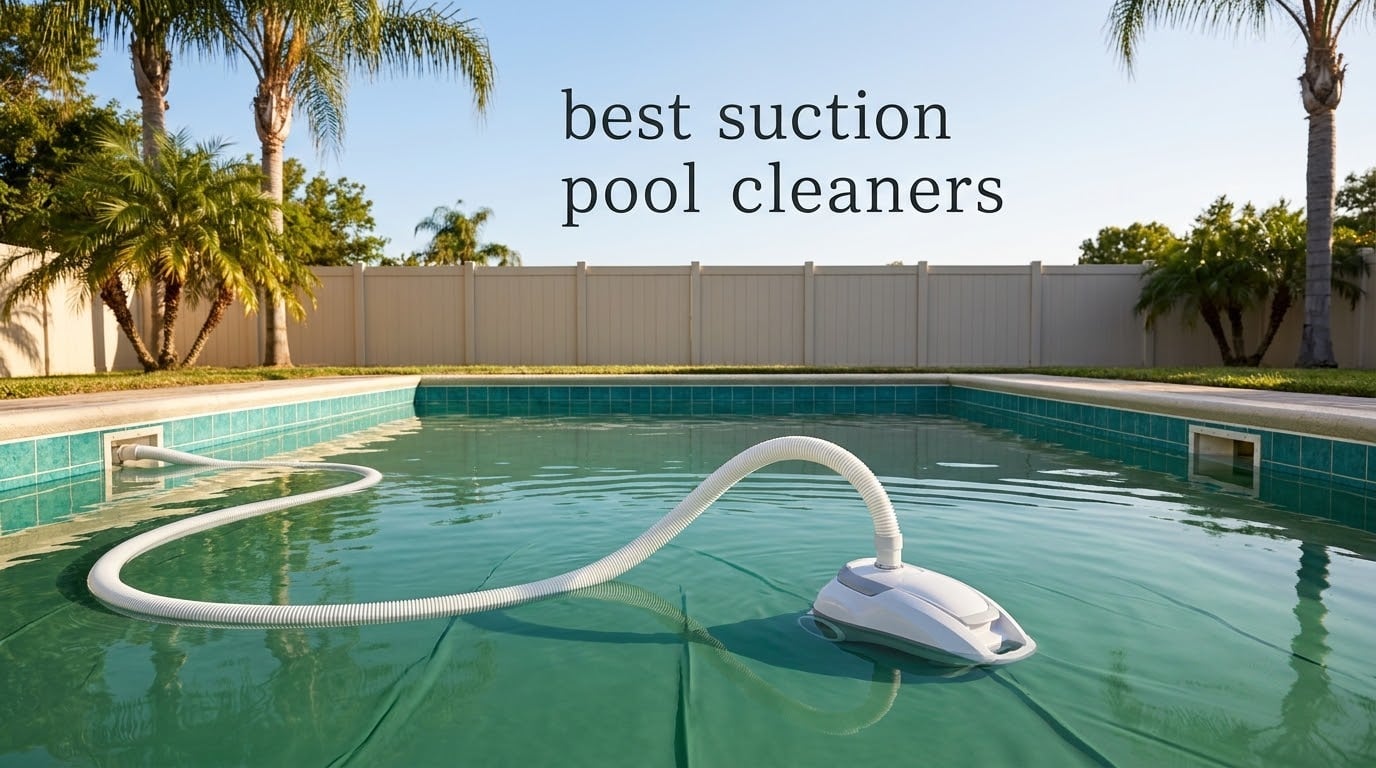
A suction pool cleaner is the most economical way to put automatic cleaning on a pool without moving up to a robotic cleaner. It is a self-propelled unit that plugs into your skimmer or a dedicated suction line, and your pool pump’s suction does everything: it drives the machine around the pool and pulls debris into the skimmer basket where it settles until you empty it. There is no battery, no cable, and no second electrical circuit.
That simplicity is exactly why the category still works. A robotic pool cleaner is more thorough on walls and waterline, and it needs no pump running. In exchange, you step up to a much higher entry cost and you own a small computer with a filtration system attached. A pressure-side cleaner is the middle ground, using the return jet pressure plus a separate booster pump to move around.
For our 2026 roundup we looked at ten suction-side cleaners built for real residential pools, in-ground and above-ground, and judged each one on the things that actually decide whether it works: how it attaches, what it needs from your pump, whether it climbs, how it gets stuck, and whether you can still buy parts for it in five years. Every manual rating and review count below is copied straight from the listing, not estimated.
Table of Contents
- Top 3 Picks for Best Suction Pool Cleaners (October 2026)
- Best Suction Pool Cleaners in 2026
- 1. Zodiac MX6 – Cyclonic Suction and the Deepest Review Base
- 2. Zodiac G3 – Three-Step Setup and a Two-Year Warranty
- 3. VINGLI Suction Cleaner – The Budget Pick With Ten Spare Hoses
- 4. Hayward PoolVac XL – AquaPilot Steering for Larger In-Ground Pools
- 5. Hayward Poolvergnuegen 2-Wheel – The Highest-Rated Climber in the Group
- 6. Pentair Kreepy Krauly Lil Shark – The Above-Ground Specialist
- 7. Hayward Navigator Pro – SmartDrive Steering With a 40 Foot Hose
- 8. Zodiac Ranger – One Moving Part and Zero Hammer Noise
- 9. Pentair Kreepy Krauly Kruiser – Wide Mouth, One Moving Part, Repairable
- 10. U.S. Pool Supply Octopus – Runs on a Half Horsepower Pump
- How to Install a Suction Pool Cleaner Without Guessing the Flow
- Why Suction Pool Cleaners Get Stuck and How to Fix It
- Suction vs Robotic vs Pressure: Which One Should You Buy?
- How We Picked the Best Suction Pool Cleaners
- Frequently Asked Questions
- The Best Suction Pool Cleaner for Your Pool
Top 3 Picks for Best Suction Pool Cleaners (October 2026)

Zodiac MX6
- Cyclonic turbine downforce
- X-Trax grip for wall climbing
- Hydraulic X-Drive navigation
- Works with variable-speed pumps

Zodiac G3
- 36-fin adhesion disc
- Wheel deflector for tight corners
- 39 foot feed hose
- Two-year warranty

VINGLI Suction Cleaner
- Cleans walls and floor
- Wheel deflector for corners
- Ten 3.3 foot replacement hoses
- One year warranty with free parts
Best Suction Pool Cleaners in 2026
| Product | Specs | Action |
|---|---|---|
| Zodiac MX6 |
|
Check Latest Price |
| Zodiac G3 |
|
Check Latest Price |
| VINGLI Suction Cleaner |
|
Check Latest Price |
 Hayward PoolVac XL Hayward PoolVac XL |
|
Check Latest Price |
 Hayward Poolvergnuegen 2-Wheel Hayward Poolvergnuegen 2-Wheel |
|
Check Latest Price |
 Pentair Kreepy Krauly Lil Shark Pentair Kreepy Krauly Lil Shark |
|
Check Latest Price |
 Hayward Navigator Pro Hayward Navigator Pro |
|
Check Latest Price |
 Zodiac Ranger Zodiac Ranger |
|
Check Latest Price |
 Pentair Kreepy Krauly Kruiser Pentair Kreepy Krauly Kruiser |
|
Check Latest Price |
 U.S. Pool Supply Octopus U.S. Pool Supply Octopus |
|
Check Latest Price |
1. Zodiac MX6 – Cyclonic Suction and the Deepest Review Base
Zodiac MX6 Suction-Side In-Ground Pool Cleaner, Cyclonic Suction
Hose: 32 feet
Body: 40.4L x 14.8W x 9.9 inch
Cyclonic turbine downforce
1 year limited warranty
Pros
- Cyclonic turbine gives strong and even suction across the floor
- X-Trax tread grips for climbing and cornering
- Works with variable-speed and low-flow pumps
- Easy flow-control calibration at setup
- No extra electricity cost and no bag to empty
Cons
- Needs a skimmer or dedicated suction line connection
- Flow adjustment is required for best results
- One-year warranty is short against some rivals
The MX6 is the suction pool cleaner most people end up with, and the reason is volume of ownership data. With more than 9,000 reviews, you can read about almost every pool shape, surface and pump setup before you buy, which is a real advantage when the machine is going to sit in your pool unsupervised.
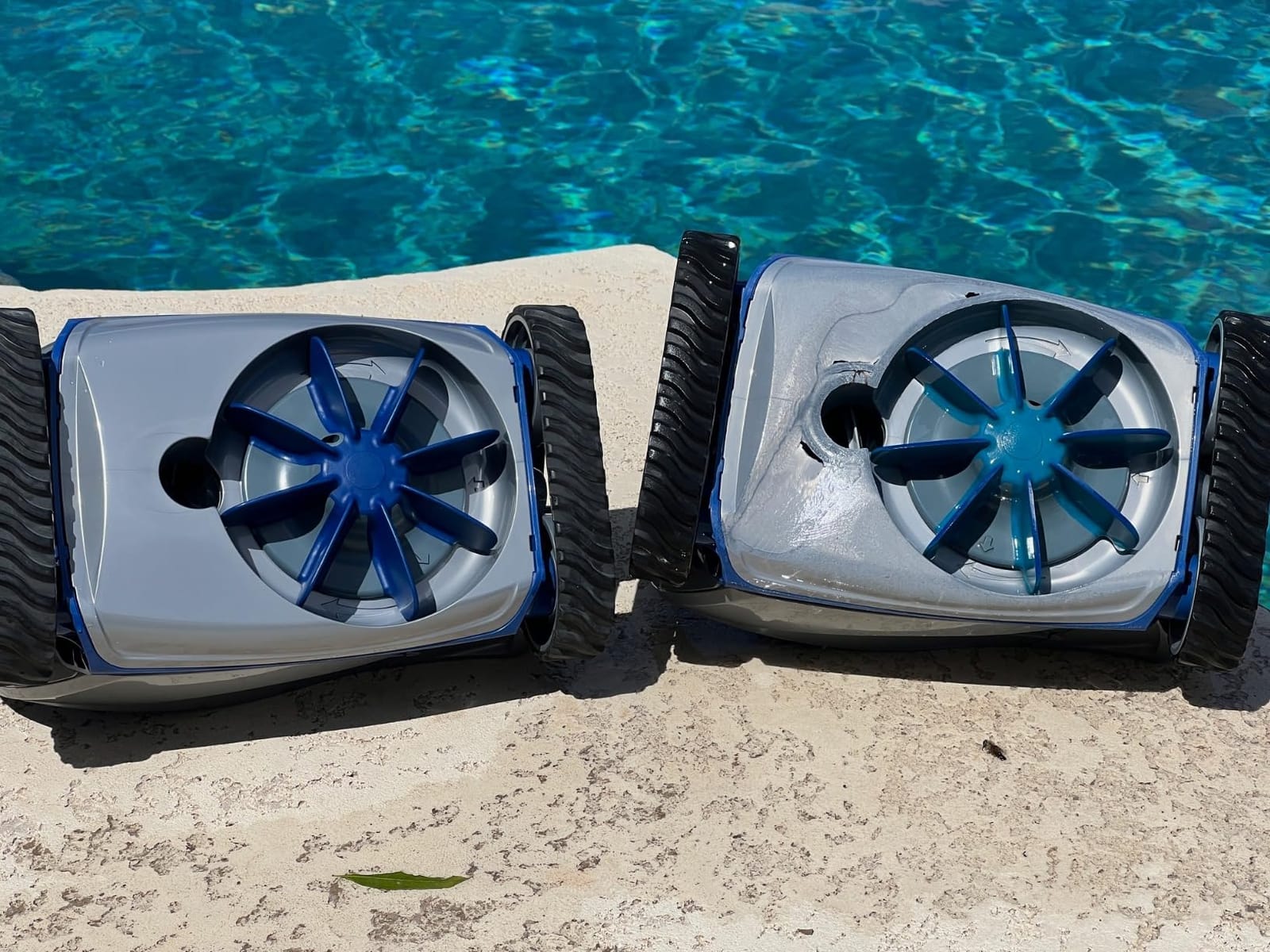
Mechanically it is the most interesting design here. A cyclonic turbine pulls water into a chamber and spins it, and that spinning action creates downforce that holds the machine on the floor and gives it something to grip with on a wall transition. X-Drive navigation uses the same hydraulic suction to run internal gears, so there is no motor, no cord and no electronics to fail.
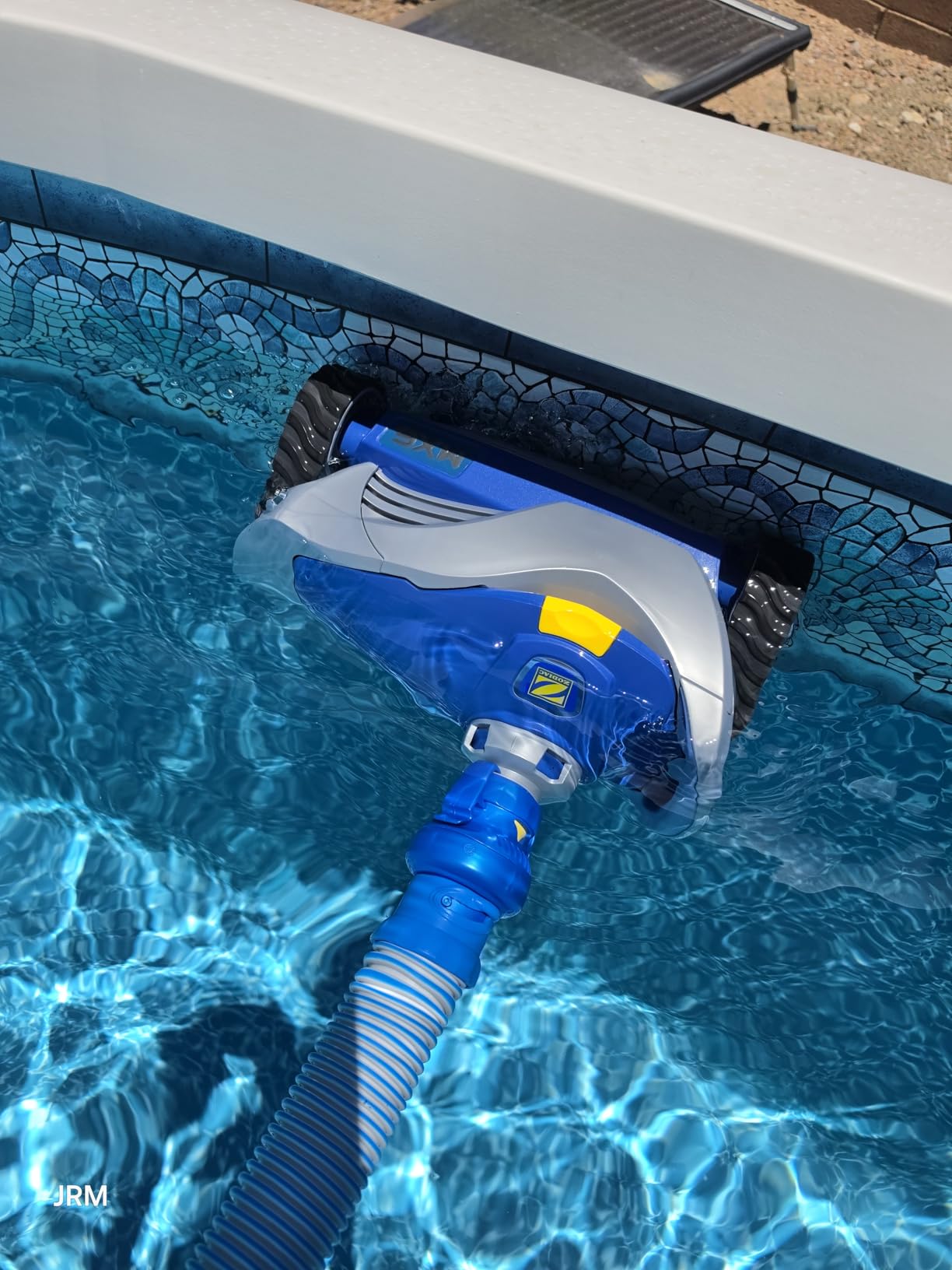
What it is not is maintenance-free. The included hose is 32 feet of twist-lock, which is fine for a typical in-ground pool but tight for the longest rectangle on a large property. The single-year manufacturer warranty is also the shortest we saw on a premium unit, so budget for wear parts early.
Users consistently credit two things: the wall climbing, which the X-Trax tread pattern handles better than most rivals, and how easily the flow control is dialed in once you know what you are doing. Get the flow wrong and the machine will sit in one spot or race along the floor without lifting debris. That one adjustment is the difference between a good and a disappointing experience.
How it behaves in a real pool
In a rectangular in-ground pool with a moderate leaf load, the MX6 covers the floor reliably and gets up onto the walls without needing a thruster. On vinyl liner, gunite and fiberglass surfaces reviewers report no scuffing or liner marking. In a pool with a deep-end transition, expect it to work the slope and the coves rather than doing a truly even pattern.
What you give up by choosing it
You are accepting the shortest warranty in the premium group and a plastic body with no removable bumper to swap. You also need somewhere to hang the skimmer lid or close the suction port, because the machine pulls hard enough that a loose lid will flutter. If your pool is very long, budget for extra hose sections rather than stretching the included 32 feet.
2. Zodiac G3 – Three-Step Setup and a Two-Year Warranty
Zodiac G3 Suction-Side Inground Vacuum Pool Cleaner
Hose: 39 feet
Body: 24L x 12W x 24 inch
36-fin adhesion disc
Two-year warranty
Pros
- Two-year warranty is the longest we found
- Three-step setup with no complicated calibration
- 36-fin disc grips the floor and climbs reliably
- Wheel deflector handles tight corners
- Compatible with low-flow and variable-speed pumps
Cons
- Only one moving part
- so navigation is limited
- Needs a skimmer or dedicated suction line
If the MX6 is the enthusiast’s suction pool cleaner, the G3 is the one you hand to a friend who just wants it to work. Setup is genuinely three steps: attach the disc, fit the wheel deflector, connect the hose, and you are in the water. There is no fine-tuning procedure, and the 39 foot feed hose is among the longest here.
The single disc does the adhesion work. Thirty-six fins on a flat plastic disc create enough grip to travel over the floor and up a wall without suction changing shape, which is why owners report steadier wall coverage than they get from treaded-wheel designs. A 4.4 rating across more than 6,500 reviews puts it at the top of this group on satisfaction.
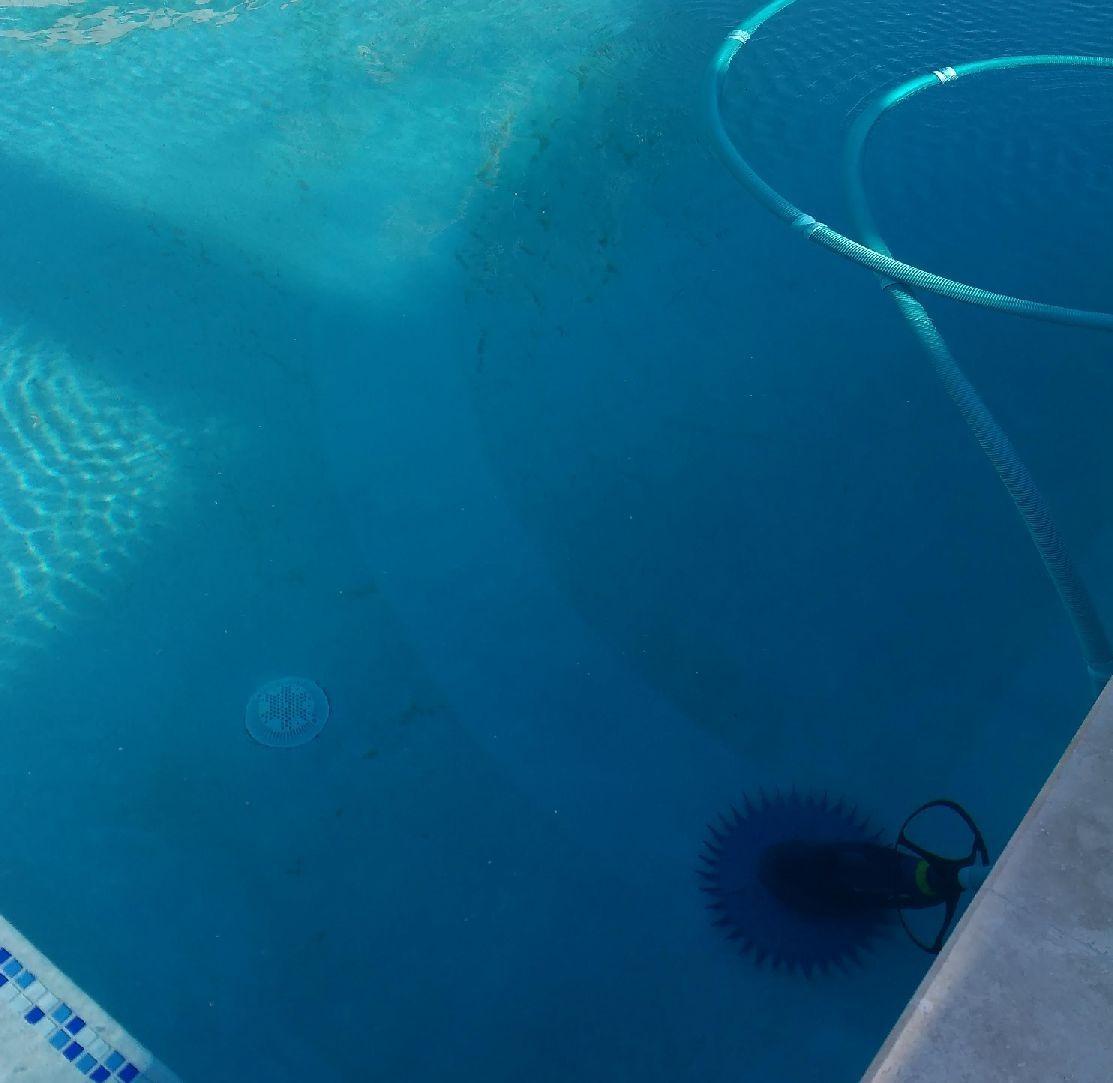
The tradeoff is honest: one moving part means no complex navigation. This machine will not negotiate a ledge or work its way out of a deep corner the way a tracked or programmed-steering model can. In a pool with unusual geometry, that limitation shows up. In a straight rectangular pool, it is barely noticeable and the machine runs for years.
For surface compatibility, reviewers run the G3 on vinyl liner, fiberglass and gunite without complaint, and the fin disc is gentle on liner. The built-in deflector is also credited with avoiding hang-ups on lights, drain covers and fittings, which are the three things that strand most suction cleaners.
Where it fits best
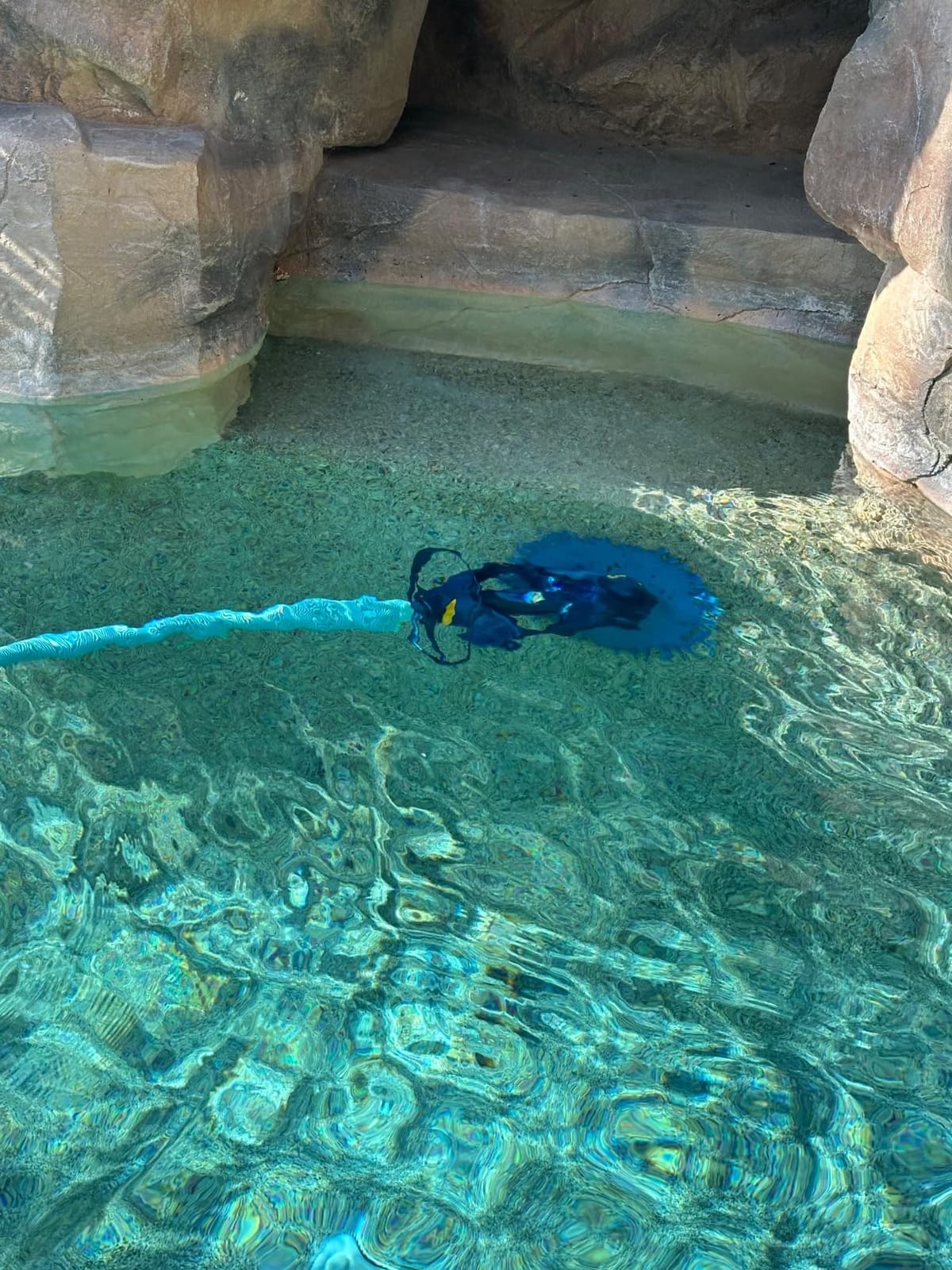
This is the choice for a standard rectangular in-ground pool up to a large family size, especially if you want the longest warranty in the category and you would rather not spend an afternoon calibrating flow. It also suits owners with low-flow or variable-speed pumps, since it is explicitly designed to run in that range rather than needing full pump output.
Where it falls short
Skip it if your pool has a deep-end ledge, a spillover, or an irregular shape that demands route planning. Because there is a single moving part, you also will not get the wall-crawling aggression of the treaded models. And if your instinct is to never touch the machine again, note the G3 still expects a weekly skimmer basket empty and a quick debris check.
3. VINGLI Suction Cleaner – The Budget Pick With Ten Spare Hoses
VINGLI Suction Pool Cleaner, Automatic Wall-Climbing Vacuum -Navy Blue
Hose: 33 feet in 10 sections
Weight: 10.3 pounds
One year warranty, free parts
Pros
- Simplest route to automatic cleaning without a pump upgrade
- Ten 3.3 foot replacement hose sections included
- Adjustable weights and regulator valve let you tune it
- Quiet with no hammer noise
- Works on above-ground and in-ground pools
Cons
- Needs at least a 3/4 HP pump or 1700 gallons per hour
- Weight and valve adjustment required for best results
- Air must be bled from the hoses before first use
The VINGLI is the most affordable route to automatic cleaning we found: it does the basic job on a modest pump, and it ships with more replacement hose than most competitors include in the box. Ten 3.3 foot sections add up to 33 feet, and if one cracks you already have a spare rather than a parts order.
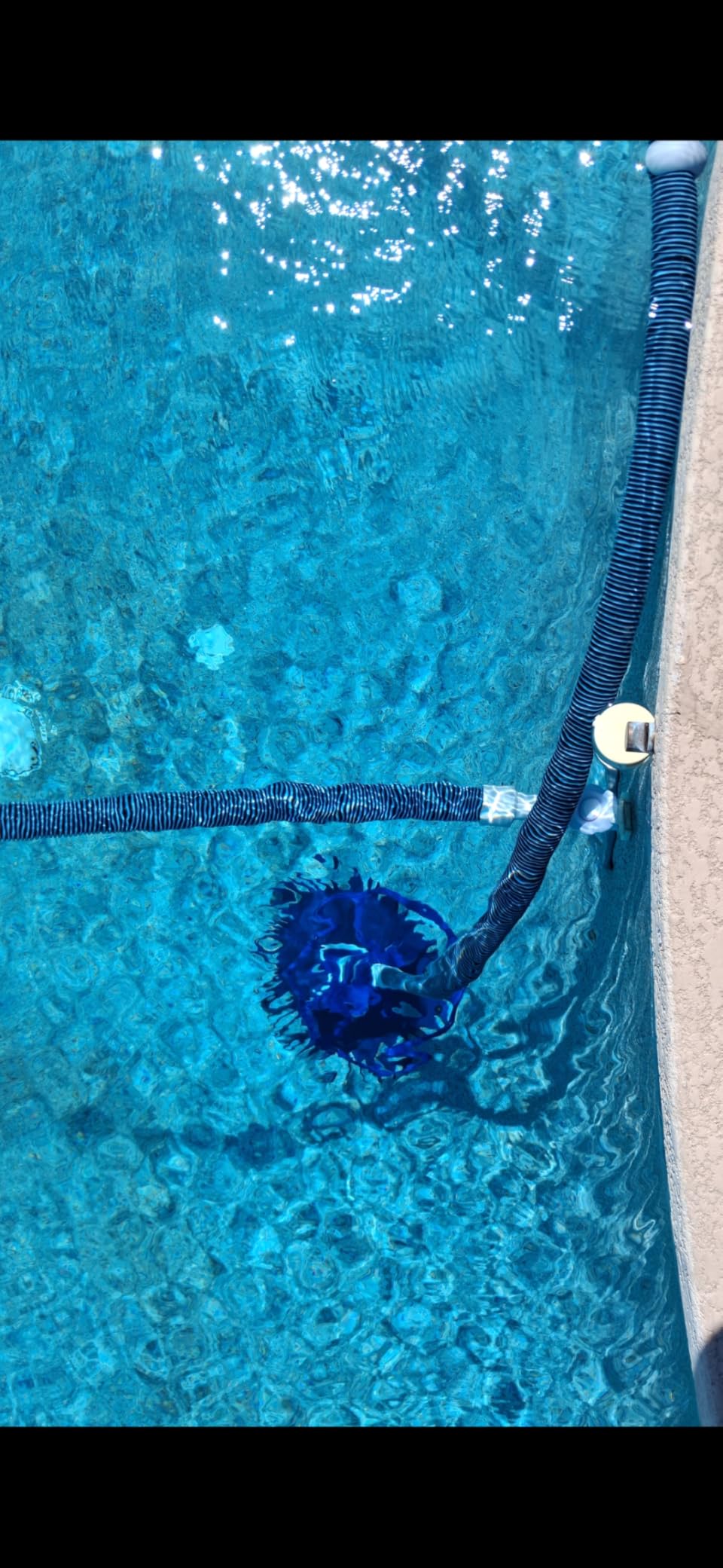
It is a two-wheel design with a wheel deflector, and both adjustable weights and a regulator valve let you set the machine for your pool. That tuning matters more than the instruction sheet admits. Too light and the machine floats too high to pick up settled debris; too heavy on a shallow floor and it grinds. Reviewers who spent ten minutes with the regulator are the ones reporting strong, even pickup.
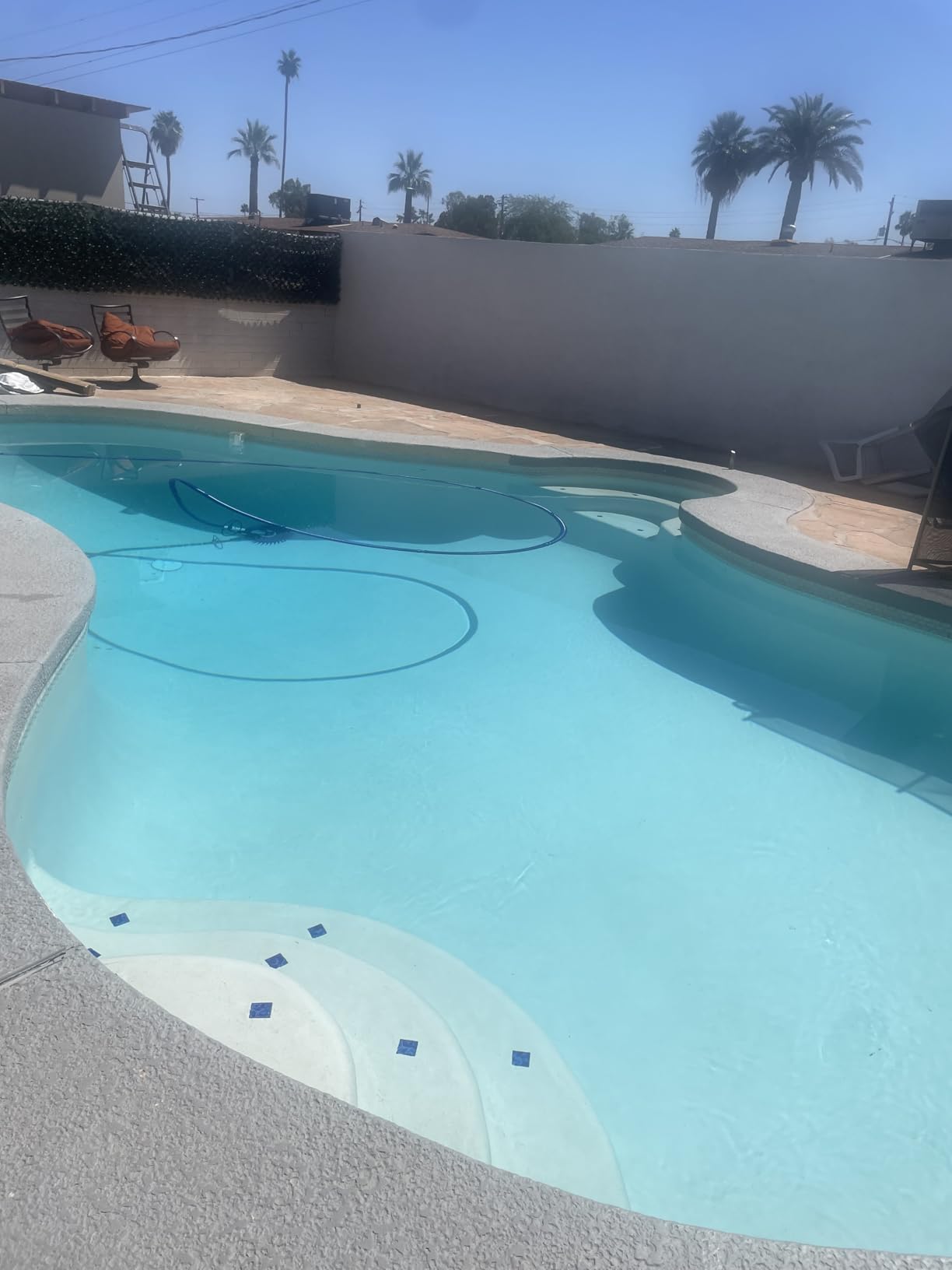
Two hard limits to know. It needs a real pump behind it, at least 3/4 HP or 1700 gallons per hour of flow, which rules it out for many above-ground setups with small filter pumps. And because the intake uses a diaphragm, that membrane is a wear item; if suction fades, check the diaphragm before blaming the pump.
Assembly and air bleeding are required before the first run, and hose sections connect more easily after being dipped in water. Neither is difficult, but it is a first-afternoon task. After that, the scuff-resistant hose design and quiet operation mean it can run through the night without the flapper hammer noise that makes some owners hate their own pool equipment.
Who gets the most out of it
Best for an in-ground pool owner with a decent pump who wants automatic cleaning on a tight budget, especially anyone who has already had to replace a hose once and does not want to do that again. Above-ground pools with strong pumps work too, since the manufacturer lists both pool types.
When to spend more instead
Move up if your pump is smaller than 3/4 HP, if you need it to be truly hands-off, or if you want the kind of coverage a tracked machine gives on walls. The one-year warranty is standard rather than generous, though the free replacement parts for broken components soften that more than the length suggests.
4. Hayward PoolVac XL – AquaPilot Steering for Larger In-Ground Pools
Hayward PoolVac XL Suction Pool Cleaner for Inground Pools up to 20 x 40 ft
Hose: 40 feet
Body: 12L x 13.6W x 8.5 inch
Weight: 18 pounds
AquaPilot programmed steering
Pros
- AquaPilot preprogrammed steering gives repeatable coverage
- 40 foot hose suits longer in-ground pools
- Connects to a suction port or skimmer in under 10 minutes
- Vacuums into your filtration so there is no bag to empty
- Runs quietly
Cons
- Wall climbing needs flow adjustment on some setups
- Can stall at a low step or drain
- Some bearing failures reported within months
The PoolVac XL is built around a simple idea: rather than random travel, it follows preprogrammed steering patterns so the same pool gets cleaned the same way each run. AquaPilot is that pattern system, and it is why this model shows up for larger rectangular pools where a random walker leaves corners behind.
The wing-and-skirt design does the debris work. Instead of a bag, everything goes to your existing filtration, and the 40 foot hose is the joint-longest here, which is meaningful if you have a pool plus a deep end plus a long run of patio between the equipment pad and the pool. Setup is under 10 minutes with no tools, and it runs quietly enough that it does not disturb the poolside.
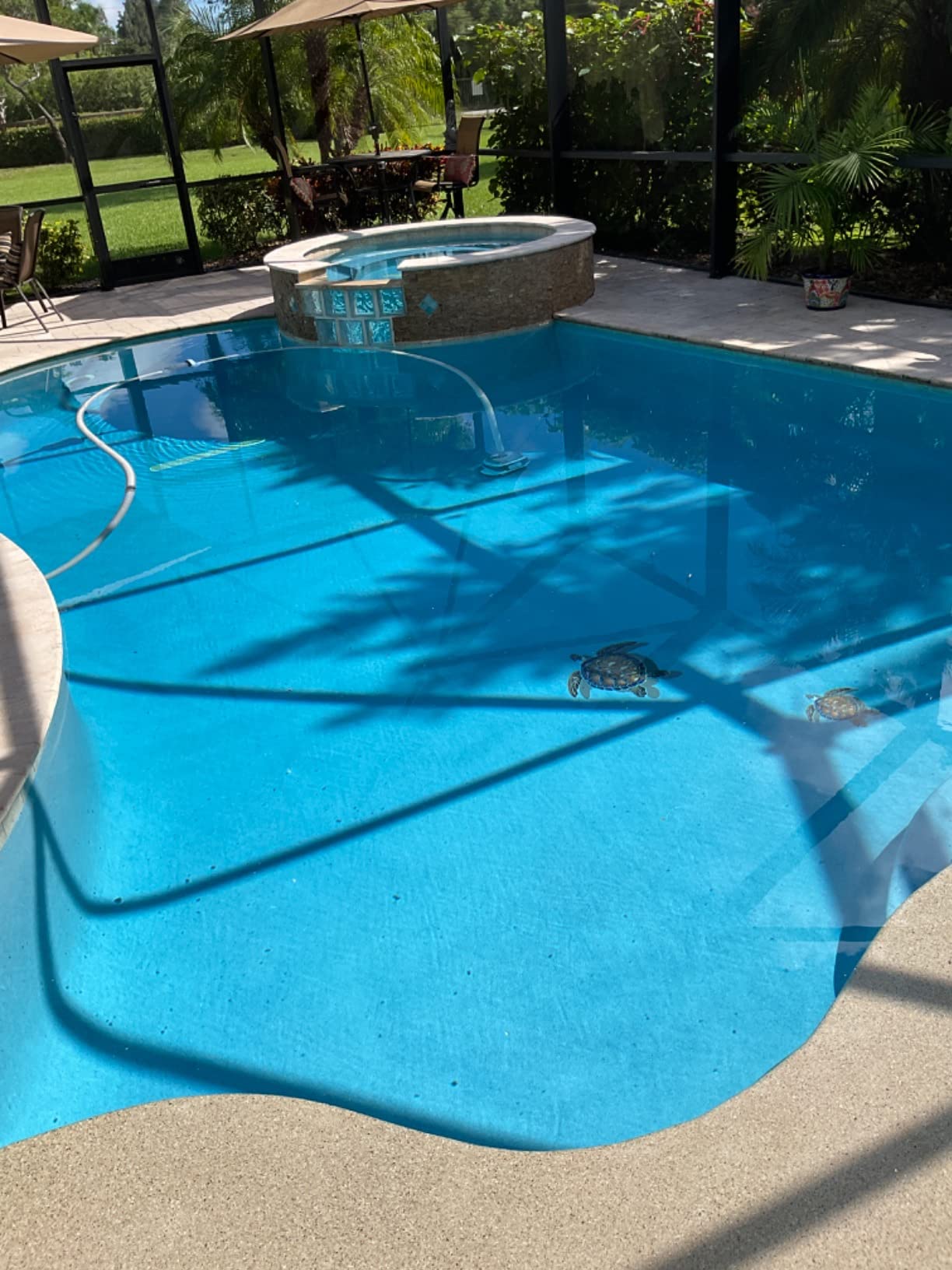
Durability is the mixed part. Plenty of long-term owners describe replacing wear parts on an older unit and carrying on for well over a decade, and the brand has a deep parts catalog behind it. Against that, some units have reported bearing failures in the first months. If you buy this one, plan on keeping spare bearings and a drive belt on hand rather than treating it as disposable.
It also needs a dedicated suction port or a skimmer, and the machine draws enough flow that a variable-speed pump set too low will leave it under-powered at the walls. In a pool with a sharp step, expect occasional stalls until you adjust the flow and check the skirt clearance.
What good looks like with this one
You get an even, repeatable floor pass and a machine that works without a booster pump or extra electrical feed. For a large in-ground pool with long sides and a deep end, the 40 foot hose removes the extension problem entirely. Reviewers also like that there is nothing to empty except the skimmer basket.
The catch to weigh
This is a mechanically complex cleaner with many moving parts, and complex internals are exactly what forum owners warn about when a unit eventually fails. If you are not comfortable opening the housing, favor a one-moving-part design instead. And if your pool has aggressive leaf drop, budget for frequent basket cleaning.
5. Hayward Poolvergnuegen 2-Wheel – The Highest-Rated Climber in the Group
Hayward Poolvergnuegen Suction Pool Cleaner (2 Wheel) Pools up to 16 x 32ft
Hose: 33 feet
Body: 11.1L x 7.9W x 8.3 inch
4.6 rating from 1965 reviews
Pros
- Highest owner rating among the picks here
- Patented turbine vanes shed debris before they clog
- Patented tire treads climb and turn well
- Adjustable roller skirts hold suction on uneven surfaces
- Pre-programmed steering with wheel reversal
Cons
- Rated for pools up to 16 by 32 feet only
- Two-wheel chassis is less stable than a four-wheel version
- Positioned at the premium end of the category
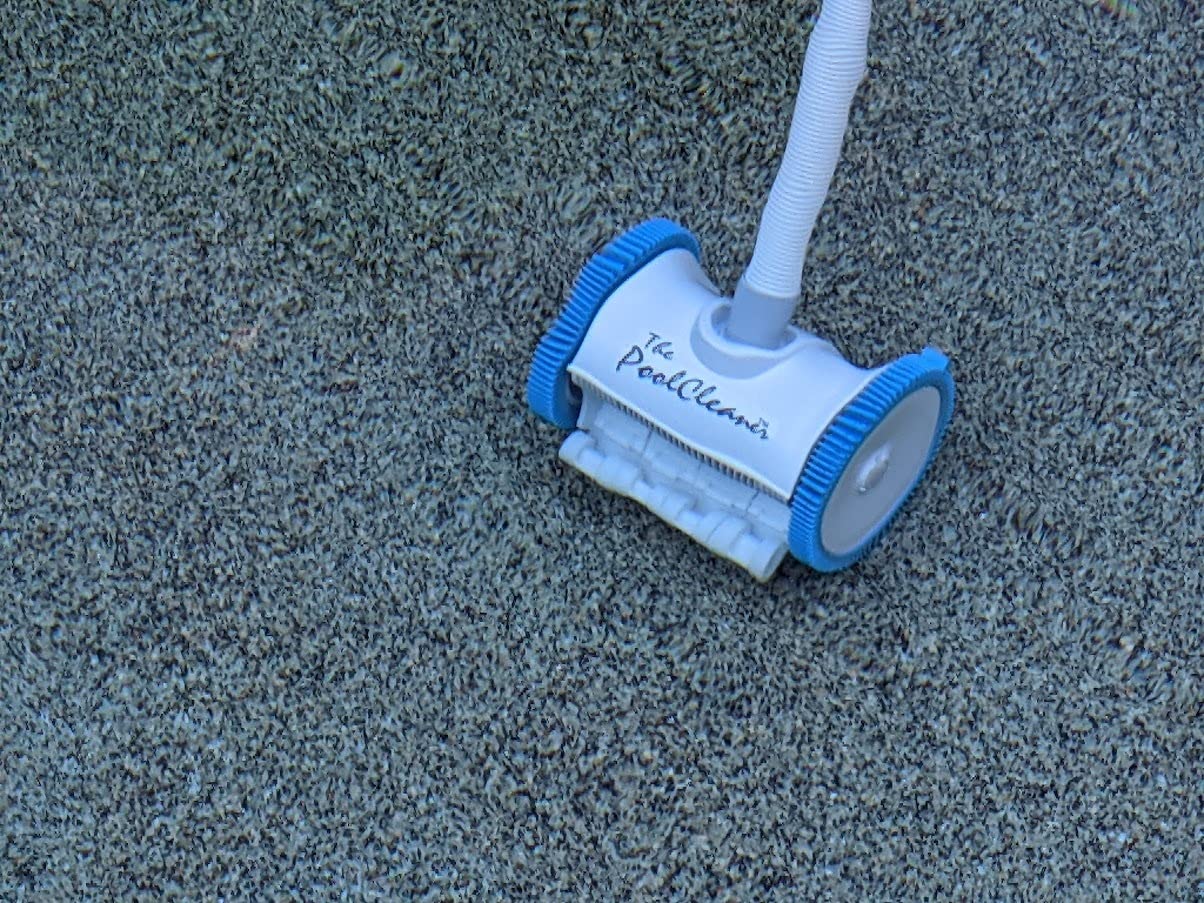
At 4.6 stars this is the highest-rated cleaner we covered, and the rating reflects a specific strength: climbing. The patented tire treads are the reason. On a wall transition, the treads bite and the machine keeps climbing instead of losing traction and sliding back down, which is the most common failure mode on cheaper treaded designs.
The turbine vanes are the other half of the story. Rather than letting a leaf or a plastic toy wedge against a flat plate, the vane geometry keeps moving debris along and away from the intake. Adjustable roller skirts then maintain contact pressure over uneven floors, so pickup stays consistent whether the machine is on flat tile, a slope, or a step.
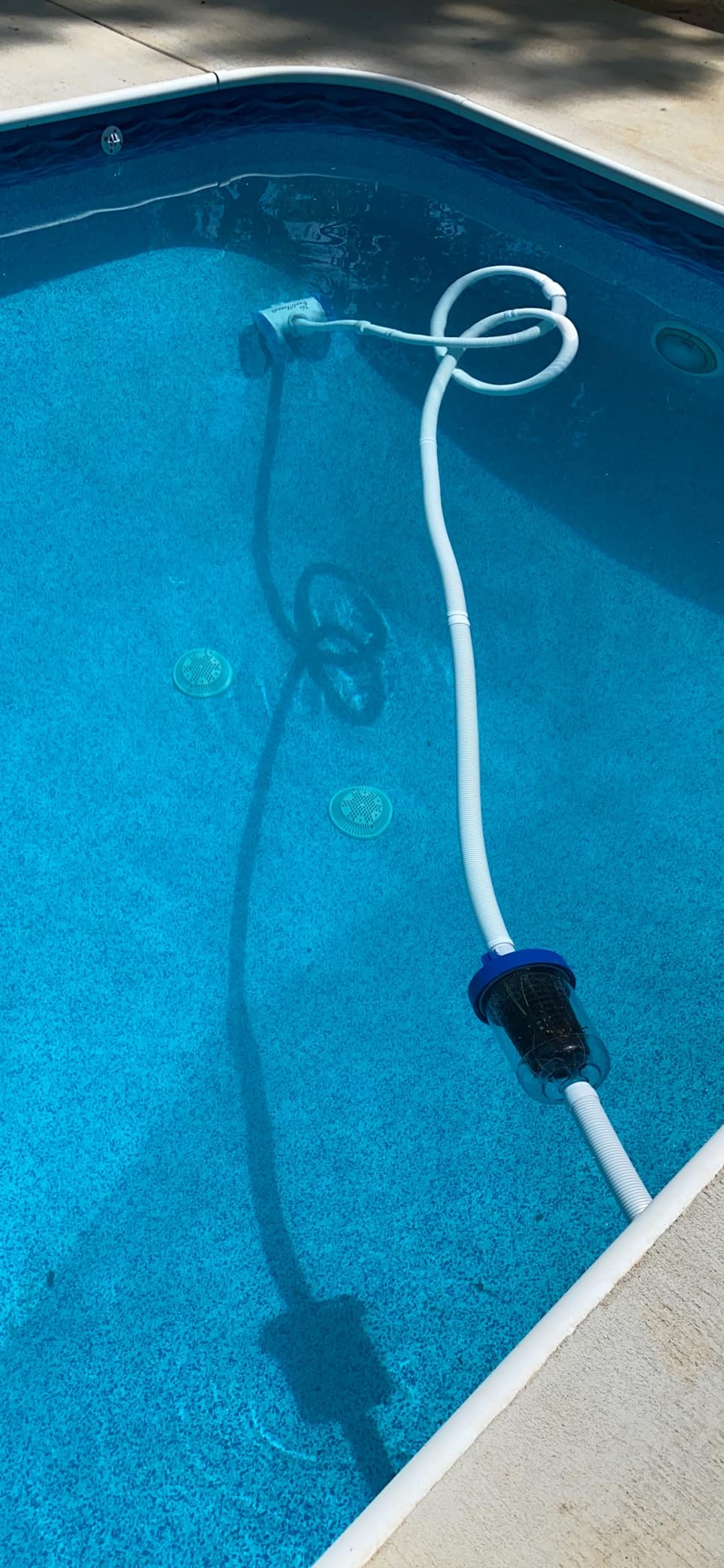
Pre-programmed steering sequences with periodic wheel reversal mean the machine changes direction on a set schedule rather than wandering, which is how it covers the waterline and steps without getting wedged against a ladder. Reviewers consistently report good waterline scrubbing on this model, which is a hard test for a suction unit.
The constraint is size. This configuration is rated for pools up to 16 by 32 feet. That is a genuine mid-size in-ground pool, and anything larger will leave coverage gaps at the far end. The two-wheel chassis also carries less lateral stability than a four-wheel version, so if your floor is steep or your pool is long, size up before you order.
Why owners rate it so highly
It is the cleanest combination of traction and intake hygiene we saw. Treads for grip, vanes for clog resistance, skirts for constant seal, and reversing steering to escape obstacles. That is a machine that still behaves well after a season of leaves without needing a rebuild.
Where it does not fit
Two situations rule it out. Large pools beyond its rating will not get full coverage, and a pool with tight, awkward corners can expose the two-wheel stability limit. If either applies, the Hayward Navigator Pro covers bigger water, or the Zodiac MX6 offers tracked traction in a smaller footprint.
6. Pentair Kreepy Krauly Lil Shark – The Above-Ground Specialist
Pentair 360100 Kreepy Krauly Lil Shark Above Ground Pool Cleaner
Hose: 32 feet
Body: 43.5L x 6.25W x 12 inch
Weight: 12.9 pounds
Installs in the pool skimmer
Pros
- One of only two picks here built for above-ground pools
- Installs directly in the skimmer with no fittings
- Adjustable 10 inch cleaning path widens or narrows coverage
- Brush ring scrubs the floor while vacuuming
- Adjustable swivel steers around steps and ladders
Cons
- Not for in-ground pools at all
- Second-lowest owner rating here at 3.9
- Durability feedback is mixed among long-term owners
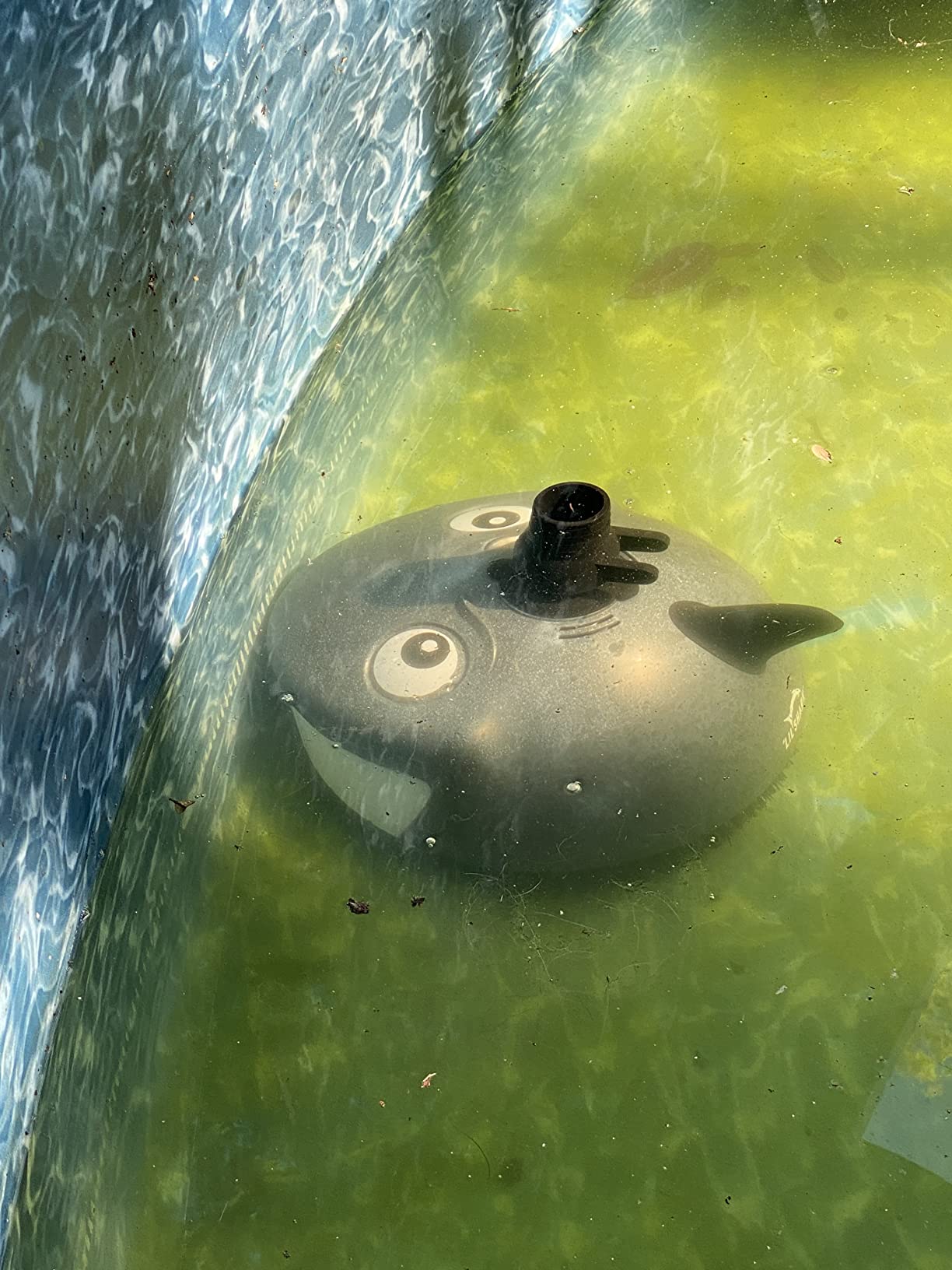
Almost everything on this list assumes an in-ground shell, a skimmer with a suction port and a deep-end transition. If your pool is an above-ground frame, the Pentair Lil Shark is one of only two picks here designed for that job rather than adapted to it, and the difference shows in the install time.
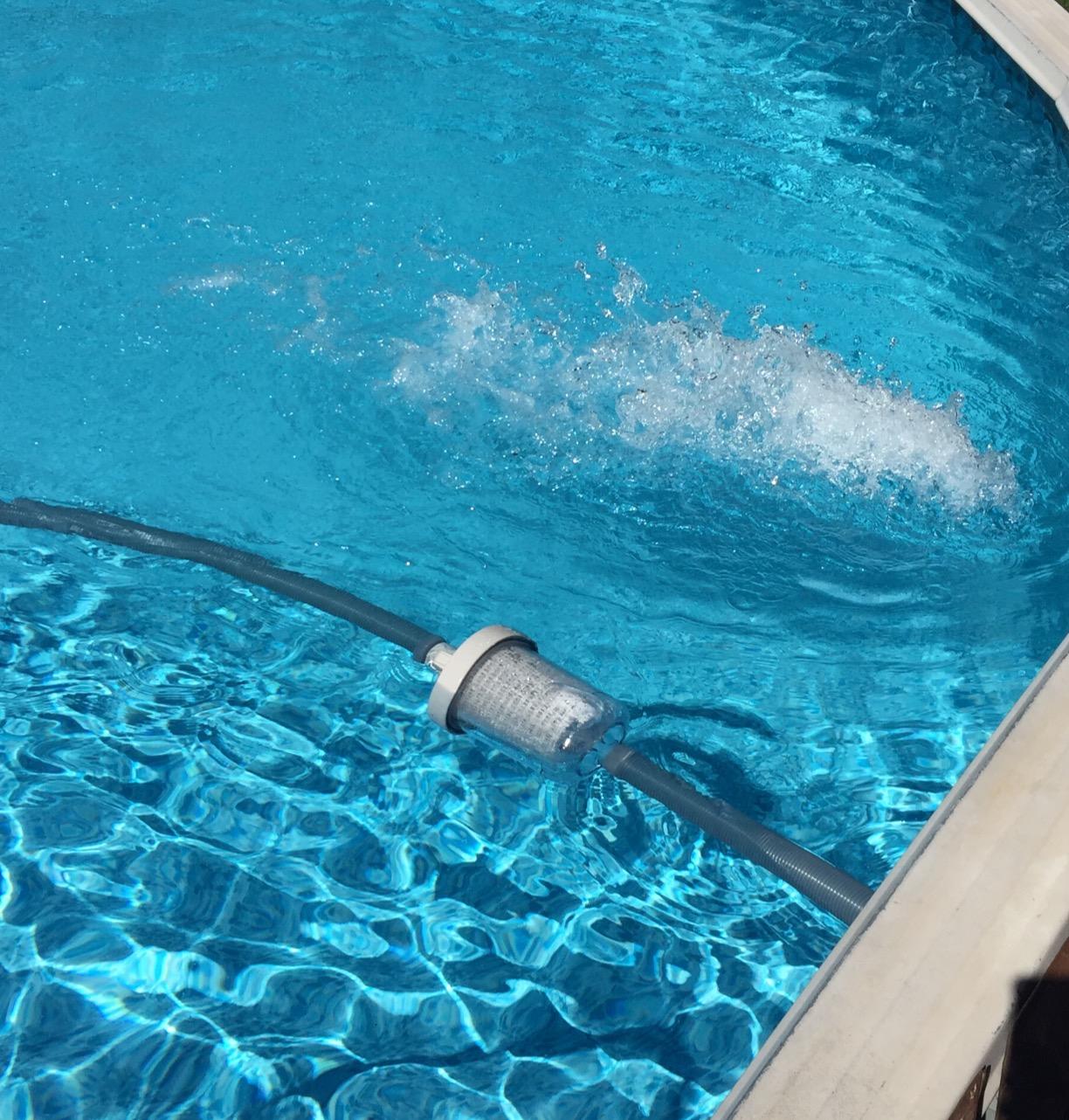
It drops into the skimmer. No suction port fitting, no weighted hose, no regulator calibration. The brush ring scrubs the liner while the machine vacuums, and the 10 inch cleaning path is adjustable, so you can narrow it for a narrow wall or widen it for a fast floor pass. The swivel and oscillator impact bumper do the turning.
The honest limit is the rating. At 3.9 it is the second-lowest score here, and durability feedback from owners is genuinely mixed, with some long-term users reporting units that hold up and others replacing them sooner than expected. Above-ground liners also flex more than a cured in-ground shell, so a brush ring is working harder here than the same ring would in a gunite pool.
Long-term owner sentiment in pool forums tends to favour this style of machine for a specific reason: simplicity. A pool owner with a Pentair Kreepy Krauly unit described it as a simple internal design that is easy to fix, and the Krauly family is the same product line. That is not a guarantee about this specific model, but it does reflect how owners think about Pentair cleaners in general.
Check your frame before you order
Confirm that your above-ground pool has a skimmer with enough flow to drive the unit, and that the hose run from skimmer to the far end of the pool is within the included length. If your setup has a return fitting instead of a skimmer, this machine is the wrong shape for the job and the Zodiac Ranger is built for the same scenario.
What you should know first
Do not expect in-ground performance. There is no deep end, no wall climb worth speaking of, and no tracked traction. You are buying basic automatic floor scrubbing for a flat pool floor, which for many above-ground owners is the entire requirement, and the hands-off install is the part you will notice every week.
7. Hayward Navigator Pro – SmartDrive Steering With a 40 Foot Hose
Hayward Navigator Pro Pool Suction Cleaner for Inground Pools up to 20x40ft
Hose: 40 feet
Body: 13.6L x 12W x 8.5 inch
Weight: 5.1 pounds
SmartDrive programmed steering
Pros
- SmartDrive preset turns produce consistent coverage
- Vacuum wings and skirt pull in debris well
- Very quiet during a full cycle
- Ten-minute tool-free setup
- Works with an existing filtration system and no booster pump
Cons
- All-plastic build means parts replacement every 1-2 years for some
- Some units stop reversing after a few weeks
- Replacement parts can be pricey
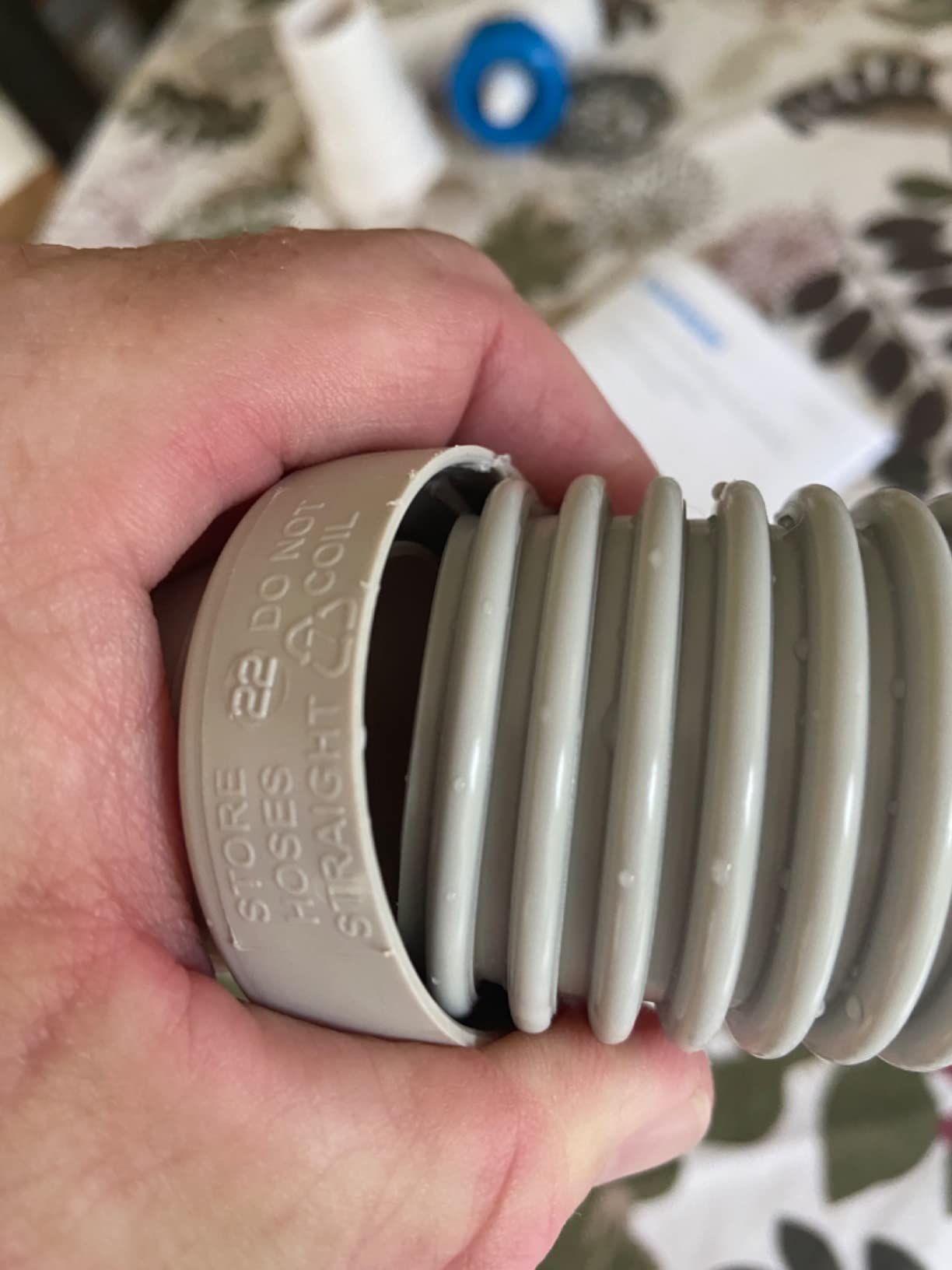
The Navigator Pro is the long-hose, long-run option. Forty feet of feed hose means you can reach a pool that is separated from the equipment pad by a long stretch of yard, which is the situation that makes owners buy extra hose sections they did not plan for. Both vinyl and gunite variants exist under the same model family, so surface matching is straightforward.
SmartDrive steering is the preprogrammed system here, with preset turns that produce a repeatable route. In practice, owners report that the pattern is predictable enough to trust, which matters when you are not watching the pool. The vacuum wings and skirt give it solid pickup on the floor, and an adjustable sensitivity setting lets you tune how hard it drives at the walls.
It is among the quietest designs here, and that is not marketing filler. Owners with the unit running through the night describe it as not disturbing poolside use, which is a real difference from designs with a flapper that hammers the flow control.
The weakness is build life. All-plastic construction and plastic gears mean some owners are replacing parts on a one to two year cycle, and a few units have stopped reversing direction within weeks of arriving. The brand itself has a long history here, with earlier models reported running 15 to 20 years, so this reads as a change in the current production rather than a design flaw.
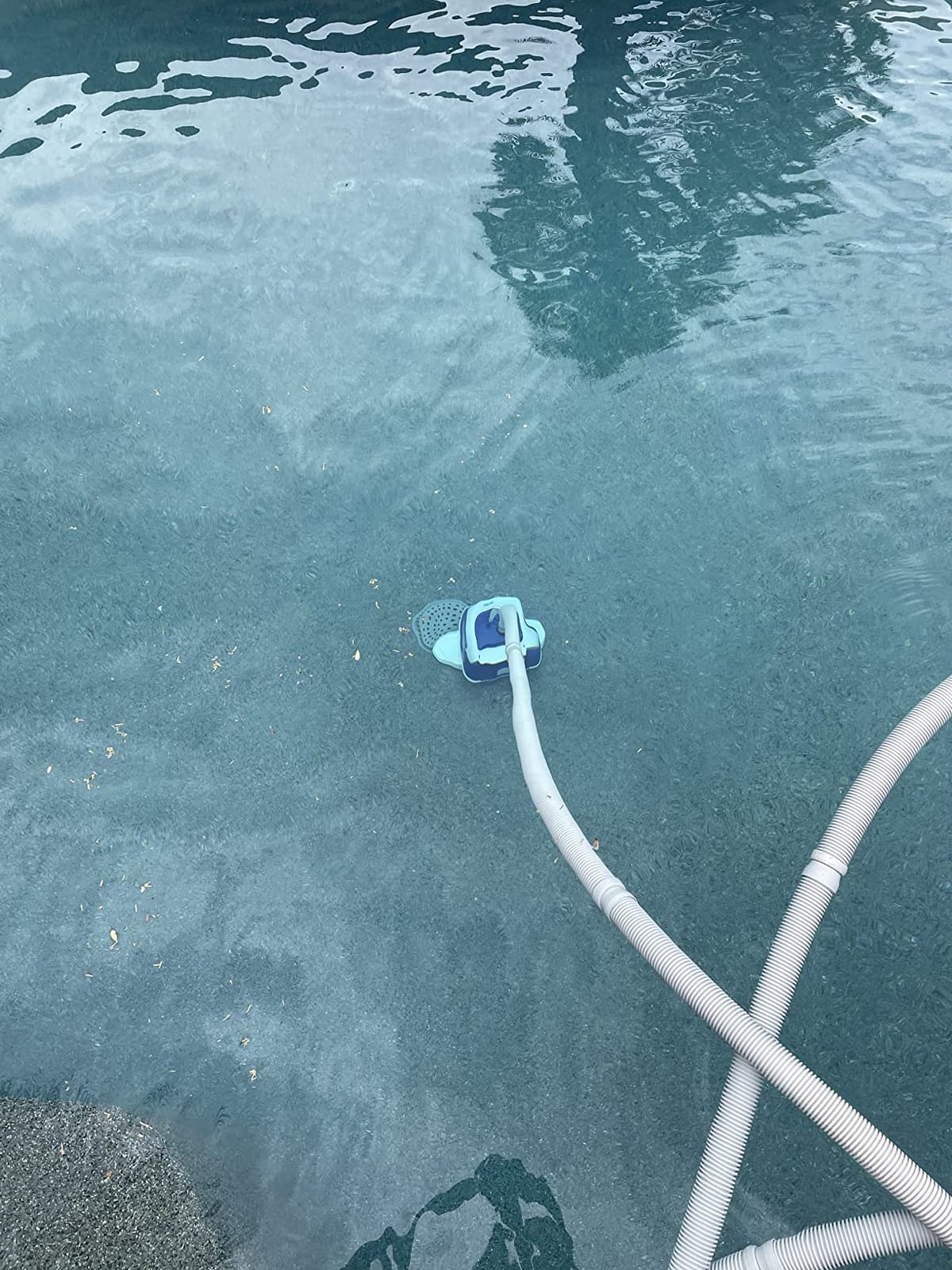
Best-case scenario
A large in-ground pool, a long run to the equipment pad, and an owner who wants predictable coverage and quiet operation more than aggressive wall climbing. In that pool, the 40 foot hose and the programmed turns do most of the work for you.
Budget for the downside
Set aside money for wear parts in year two, because the all-plastic build points that way, and check that replacement components are available for your exact model before you commit. Owners who dislike servicing anything should pick a one-moving-part design such as the Zodiac G3 or the Pentair Kruiser instead.
8. Zodiac Ranger – One Moving Part and Zero Hammer Noise
Zodiac Ranger Suction Side Automatic Above-Ground Pool Cleaner
Hose: 32 feet pre-assembled
Weight: 15 pounds
Cleans dished bottoms up to 72 inch
One year warranty
Pros
- Comes pre-assembled with 32 feet of feed hose
- One moving part means almost nothing to service
- Deflector wheel prevents catching on steps and ladders
- Flowkeeper valve self-adjusts the flow
- Quiet operation with no flapper noise
Cons
- Above-ground pools only and not for in-ground shells
- Not intended for soft-sided or Intex-style walls
- Only a one-year manufacturer warranty
The Ranger is the simplest machine in the group, and simplicity is a deliberate choice rather than a cost-cutting shortcut. One moving part means one thing that can wear. Everything else is a moulded shell, which is why the same design has stayed sellable for years and why parts, when you finally need them, are simple and inexpensive.
It arrives pre-assembled with 32 feet of feed hose already attached, so setup is a matter of plugging it in. The Flowkeeper valve and Insta-Skim self-adjusting flow control respond to the pool’s own suction, which removes the single most common suction-cleaner complaint: a machine that will not move because the flow was set wrong.
The deflector wheel is the anti-stuck hardware. It is shaped to ride over steps, ladders and corners rather than catching on them, which is the specific problem that strands most of its competitors. The AG disc lets it glide along the bottom and up the sides of a dished frame, and it handles dished-out bottoms down to 72 inches.
Why owners like it
There is almost nothing to break. When it stops working, the likely answer is a hose blockage, a dirty skimmer basket or a plugged filter, and all three are fixed with a garden hose and five minutes. That simplicity is the trait pool owners repeatedly say matters most after a few seasons of ownership.
What you give up
It is for rigid-walled above-ground pools, and the manufacturer rules out soft-sided frames. If your pool is in-ground, this is simply the wrong category of machine. The one-year warranty is also the shortest legal standard, though the low part count means replacements are simple when they come.
9. Pentair Kreepy Krauly Kruiser – Wide Mouth, One Moving Part, Repairable
Pentair K60430 Kreepy Krauly Kruiser Automatic Inground Pool Cleaner
Hose: 32 feet
Body: 40L x 20W x 12 inch
Weight: 18 pounds
One moving part, built-in bumper
Pros
- One moving part and a built-in bumper mean little to service
- Wider intake mouth handles both large and small debris
- Quiet operation for its class
- Long brand history with established parts supply
- Flow is straightforward to adjust
Cons
- Requires trial and error on flow and hose weight
- Can stall in tight spa and step corners
- Will lodge on a main drain if set up badly
The Kruiser is the in-ground version of the Pentair philosophy that owners in pool forums rate most highly: a simple internal design that is easy to fix. One moving part, a built-in bumper rather than detachable wings, and a wider intake mouth that takes both a full leaf and a grain of sand. There is nothing sophisticated in here, and that is the feature.
Two wear items carry the maintenance load, and owners name them the same way: the vacuum seal and the foot pad. Both are replaceable, both are cheap, and both are things a person with basic tools can change at the poolside rather than shipping the machine to a shop. For a purchase expected to last years, that is the difference between a repair and a replacement.
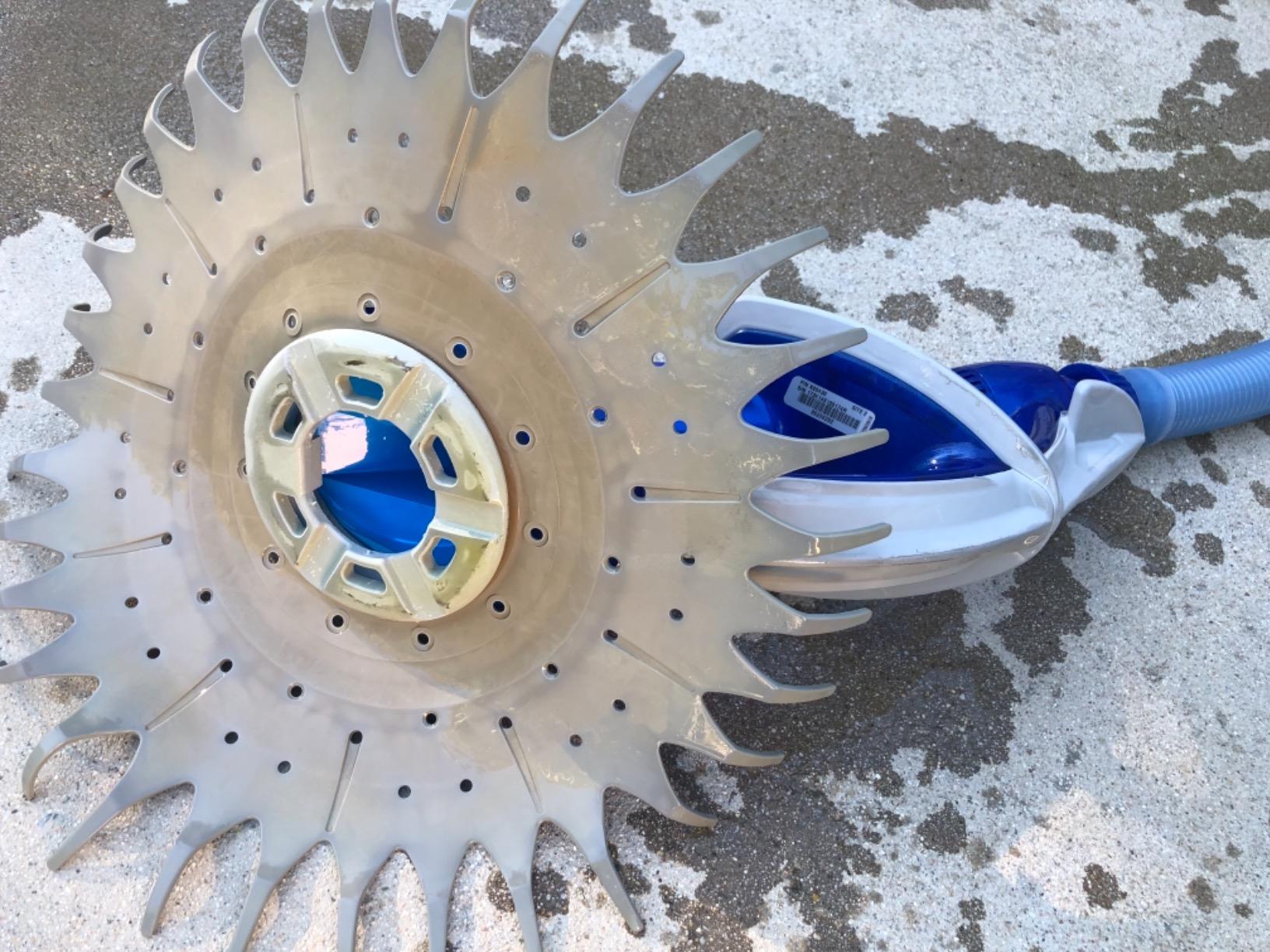
The wider mouth is a genuine step up for mixed debris. Suction pool cleaners usually degrade as they fill, and a wider throat resists that longer, which shows up in pools with a mix of leaves, twigs and fine grit rather than a single debris type.
Setup is where this model asks for patience. Reviewers describe it as trial and error: adjust the water flow, add or remove hose weight until it tracks along the floor instead of parking in the deep end, and check that the skirt is not dragging. Do that work once and owners report steady performance.
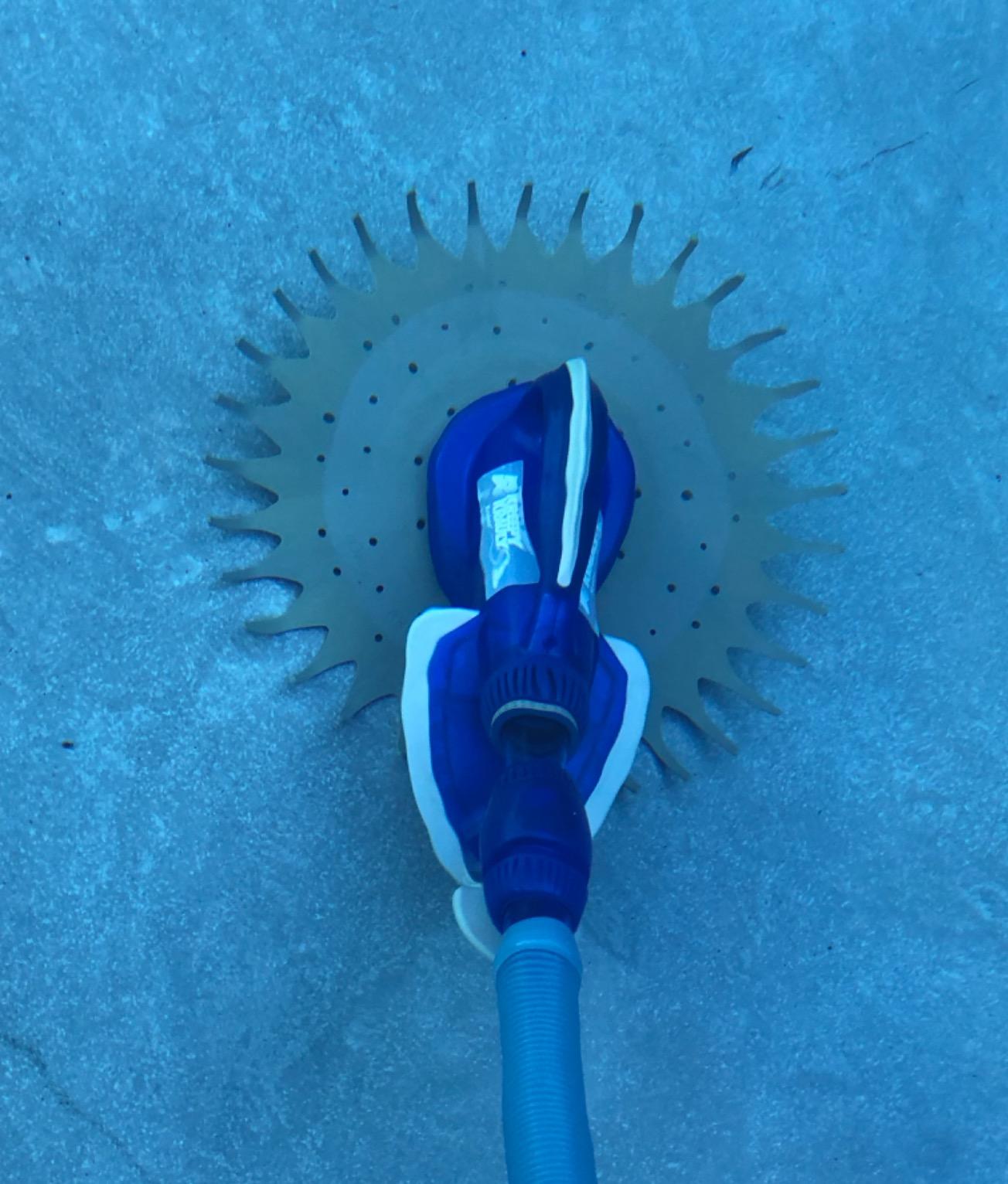
The case for simple internals
When something breaks on a one-moving-part cleaner, there is usually one part to swap, and it is a known part from a brand with a supply chain that has been around for decades. That is why repairability keeps coming up as a top selection criterion in owner discussions, and why this pick is worth a look even when a tracked competitor looks more capable on paper.
Where the setup work matters
Pool steps, spa corners and main drains are the trouble spots. A cleaner that stalls there is not broken, it is mis-tuned, so allow an afternoon for flow and hose-weight adjustments before judging the machine. In a pool with a deep end, spend that time up front or the machine will keep parking at the bottom.
10. U.S. Pool Supply Octopus – Runs on a Half Horsepower Pump
U.S. Pool Supply Octopus Suction Pool Cleaner, Inground Automatic Pool Vac
Hose: 33 feet in 20 sections
Weight: 15.8 pounds
Minimum 1/2 HP pump
Pros
- Lowest pump requirement in the group at 1/2 HP or 1000 gallons per hour
- Replacement diaphragm included in the box
- Long-life diaphragm removes the hammer noise a flapper makes
- Twenty hose sections let you cut the run to fit
Cons
- Lowest rating in group at 3.6/5
- Not for soft-wall or vinyl-lined pools
- 19 percent of reviews are 1-star
- indicating quality concerns
The Octopus exists for a specific problem: a pool with a small pump that cannot drive anything else on this list. At a minimum of 1/2 HP or 1000 gallons per hour, it has the lowest flow requirement of any suction pool cleaner we covered, by a wide margin. That single number decides it for a lot of above-ground and small in-ground setups.
Instead of the flapper that hammers the flow control in older designs, it runs a long-life diaphragm membrane, and a replacement is included. Owners specifically call out the silence, plus a deflector wheel that keeps it off the ladder rails and step lips. Twenty spiral-wound hose sections across 33 feet is the most flexible run we saw, since you can cut the length to match your pool.
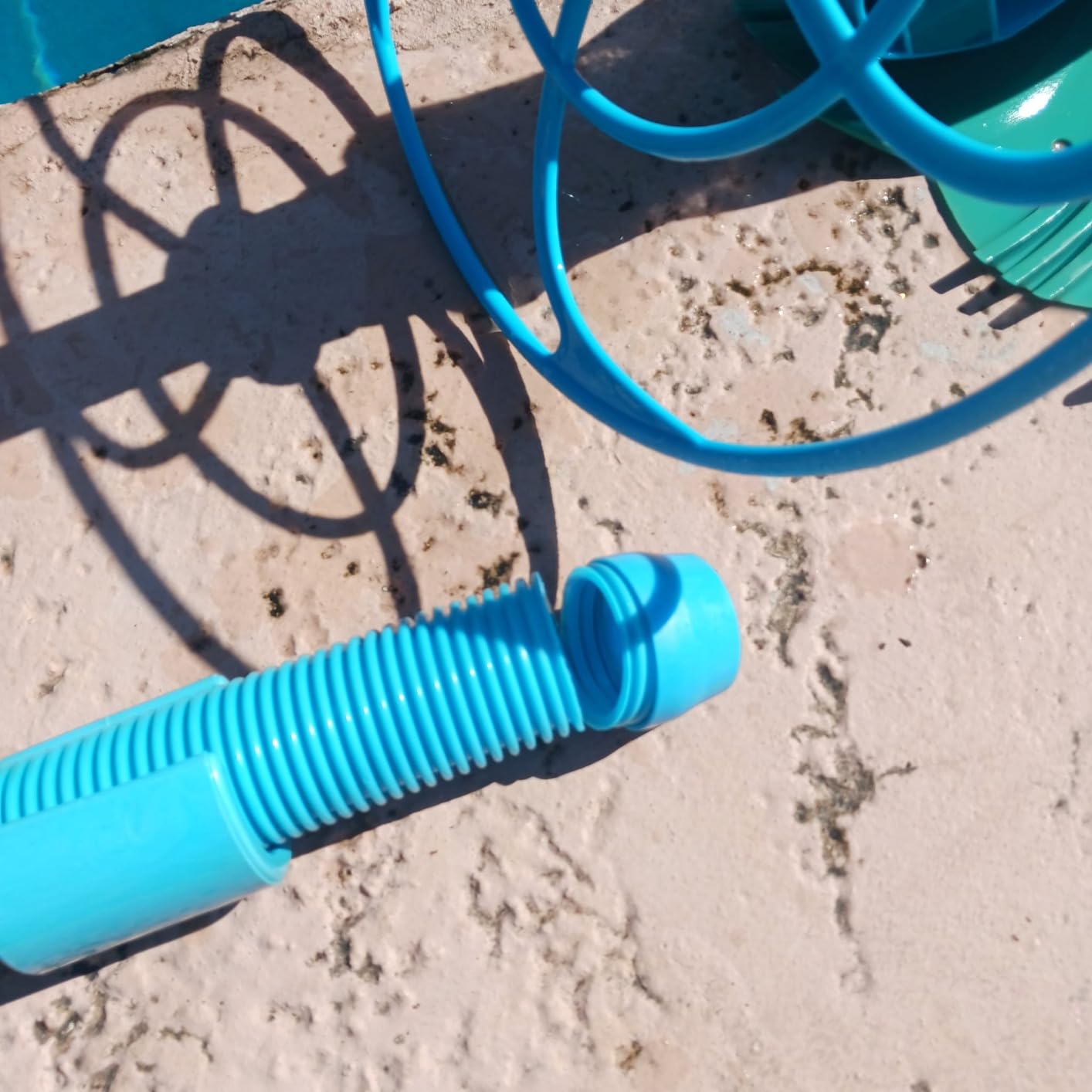
Be clear-eyed about the rating. At 3.6 this is the lowest-scoring cleaner here, and the review breakdown shows a meaningful share of one-star feedback, which points at durability rather than function. It also rules out soft-wall and vinyl-lined pools, so check your shell type before buying. Hose sections connect more easily if you dip them in water first.
Given how few options you have at this flow level, the calculus is straightforward. If your pump is too small for anything else, this is one of the few realistic automatic options, and a spare diaphragm in the box means the most likely failure is already handled.
Where the low flow requirement pays off
Above-ground frames with modest filter pumps, small in-ground pools, and any setup where adding pump capacity is not on the table. If you have already tried a stronger cleaner and it sat motionless, the problem was almost always flow, and this one is designed around that constraint.
What you accept for it
The lowest owner rating of the ten, the widest spread in sentiment, and an exclusion for soft-sided and vinyl-lined pools. If your pump can handle a stronger machine, one of the mid-range picks will give you better long-term odds, and if it cannot, the Octopus is a workable answer with a clear limit on how much you should expect from it.
How to Install a Suction Pool Cleaner Without Guessing the Flow
Almost every complaint we found traces back to installation, not to the machine. Ten minutes of setup determines whether the cleaner covers the pool or sits in a corner, and the steps are the same for all ten picks.
Pick your suction source. You have two options. A dedicated suction port gives the strongest, most consistent pull and does not clog the skimmer, but it needs a line plumbed into the pool wall with a vacuum release fitting. Using the skimmer is free and needs no plumbing, but the basket fills with debris faster and you must close the skimmer lid so the unit does not suck air.
Match the hose to the pool. A cleaner typically covers about 1.5 times the hose length in pool surface, so a 33 foot hose is reasonable for a pool with a 20 foot diagonal plus a deep end. Longer is safer than shorter, and most units here ship with sections you can add or leave out.
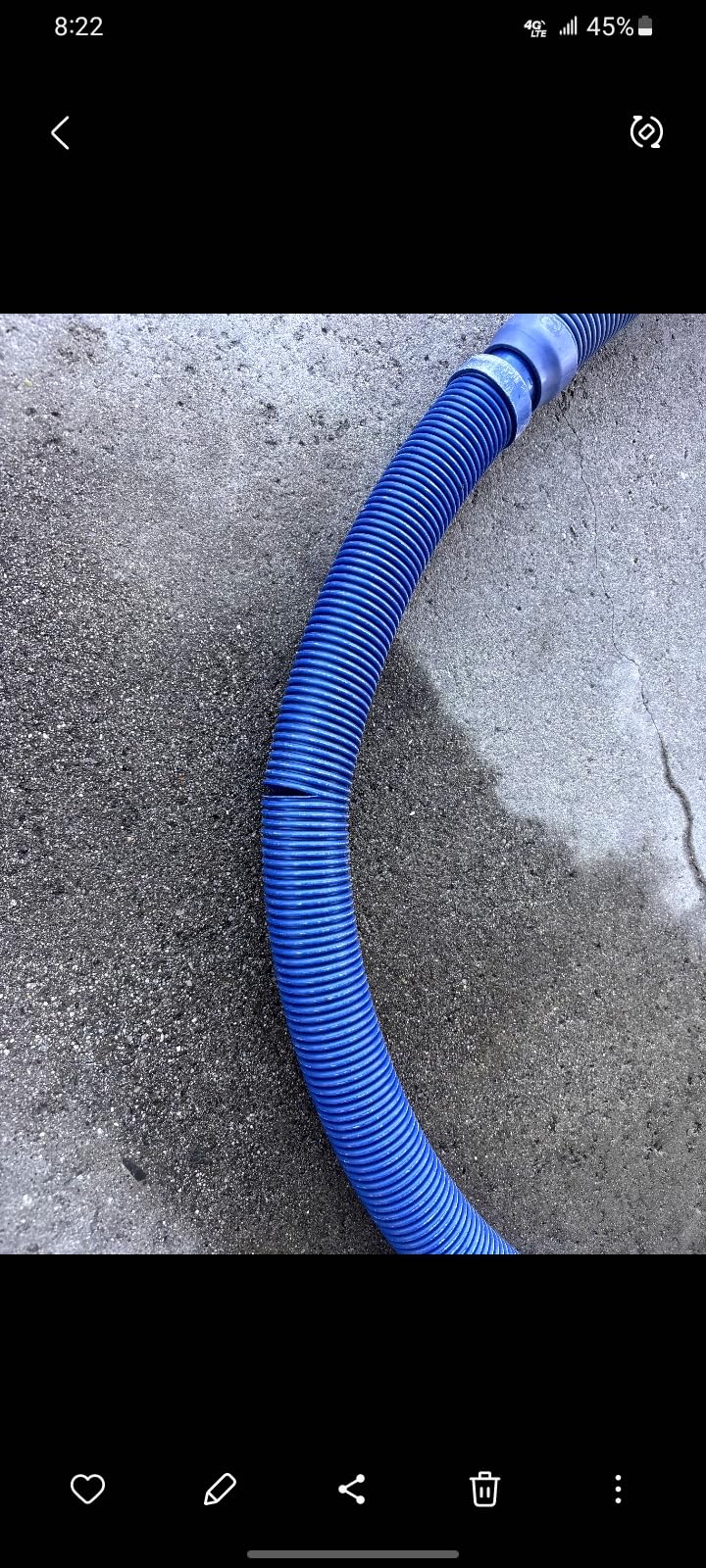
Bleed the air out first. Fill every hose section with water before connecting, or hold the end under the pool until it stops spitting. Air in the line reduces suction enough to make a good machine look broken.
Set the flow, then trim the skirt. Start the pump, then open or close the flow control in small increments until the cleaner travels across the floor instead of racing or stalling. If it grinds or drags, loosen the skirt screws a quarter turn. An over-tightened skirt is the single most common self-inflicted fault.
Finally, do a supervised 30-minute run before you trust it overnight. You will learn where it stalls while you can still do something about it.
Why Suction Pool Cleaners Get Stuck and How to Fix It
Getting stuck is the objection that decides most purchases, and it is usually a setup or hardware problem rather than a defect. The three places it happens are the main drain, step corners, and ladder rails.
Main drains. A drain cover that is flush or a low-profile main drain lets the skirt seal flat and the cleaner stop dead. Check for a raised anti-stuck deflector under the drain cover, and if your model has an adjustable skirt, drop the skirt height a little so an air gap breaks the seal. Some owners also shorten the hose by one section, which reduces the vacuum holding the skirt down and lets the machine break free.
Step corners and coves. A cleaner’s skirt catches on the lip where a wall meets the floor. Machines with a dedicated deflector wheel, such as the Zodiac G3, the Zodiac Ranger and the Octopus, are designed to ride over exactly these edges, which is worth weighing if your pool has a full-width step or a deep-end transition.
Ladder rails and pool toys. Rails are the classic trap. If the ladder is plastic and can be removed between cleanings, remove it. If it is steel, no suction cleaner will reliably avoid it every cycle, and that is a case for a robotic unit that navigates around obstacles instead of ploughing into them.
One more cause worth naming: a full skimmer basket or a dirty filter starves the whole system of flow. Empty the basket and backwash the filter before you start diagnosing hardware.
Suction vs Robotic vs Pressure: Which One Should You Buy?
The short answer: suction wins on cost and simplicity, pressure sits in the middle, and robotic wins on coverage and hands-off convenience. Which one is right depends on two things you know better than any list does, namely your pool’s debris load and how much poolside time you actually want to spend.
Choose suction-side when you have an in-ground pool with moderate debris, an existing skimmer or suction port, and a willingness to empty the basket once a week. It is the most affordable automatic option in mechanism terms, draws no extra electricity, and the parts stay available for a long time. It is the wrong choice if you never want to touch the pool again, or if your pool sits under heavy tree cover.
Choose pressure-side when you want automatic cleaning without the extra pump wear of a suction unit. A pressure cleaner rides the return jet, usually with a booster pump, and pushes debris into a bag or your filter. Pool owners who switched from a suction cleaner to a pressure-side unit often describe being much happier with the change, and that is a common migration when pump wear becomes the sticking point.
Choose robotic when walls, waterline and coves are the priority, when debris includes fine sand and dust, or when you want the pool cleaned while the pump is off. You give up the lower entry cost and add a filtration system, battery or cord to maintain, and you get navigation that steers around obstacles instead of driving into them.
As for what service companies use, they are typically still manual vacuums on a pole for a scheduled visit, because a human can spot a problem a machine cannot. If you are undecided, book one professional clean and watch which surfaces they spend time on.
How We Picked the Best Suction Pool Cleaners
Our criteria were deliberately practical. We looked at how the cleaner attaches to a pool, what it demands from your pump, how it behaves on walls and in corners, what reviewers say about the failures, and whether the parts are simple enough to replace.
That last point came straight from owner discussion. Across pool forums, the trait owners praise most is not feature count, it is a simple internal design with cheap, easily replaceable parts, and the trait they complain about most is a complex mechanism that turns a small failure into a dead machine. A roughly five-year service life is the expectation owners bring to this category, which is why we treat these as long-term purchases rather than disposables.
Ratings and review counts are reproduced exactly as published on each listing, and we did not round or adjust them. Where a product draws heavy criticism, we have said so plainly, including on two picks that are strong performers with well-documented wear points.
One thing we did not do is rank on cost, because it moves with the season. What we did weigh was value per season of ownership, which is a different question and the one that actually matters over five years.
Frequently Asked Questions
Are suction pool cleaners any good?
Yes, for most residential pools. They are the most affordable automatic option in mechanism terms, they add no electricity cost because they run on your existing pump suction, and they empty debris into your filtration rather than a bag. The trade-offs are that the pump runs while they work, the skimmer basket fills faster, and they can stall on drains and corners. For an in-ground pool with moderate leaf load, they do the job well.
Which is better, robotic or suction pool cleaner?
Robotic is better for walls, waterline, coves and fine sand, and it cleans while the pump is off. Suction is better on cost, simplicity and repairability, and its parts stay available for a long time. A robotic cleaner carries a much higher entry cost and adds a filtration system to maintain. Pick robotic if you want zero poolside time; pick suction if you already have a working skimmer and will empty the basket weekly.
Do suction pool cleaners need a booster pump?
No. That is one of the main advantages over a pressure-side cleaner. A suction unit draws from the suction side of your plumbing, where the pump is already running, so a booster pump is not required. Several of the picks here are also designed to run on low-flow and variable-speed pumps. What you do need is a pump with enough flow for the cleaner, which is why the low-flow Octopus exists.
Why does my suction pool cleaner get stuck?
The usual causes are a flat seal on the main drain, a skirt catching on a step lip, and a ladder rail. Fix drains by checking for a raised anti-stuck deflector and loosening the skirt a quarter turn so an air gap breaks the seal. For steps, choose a machine with a deflector wheel. For rails, remove the ladder between cycles or move to a robotic cleaner. Always empty the skimmer basket and backwash the filter first, since low flow looks like a mechanical fault.
Can a suction pool cleaner be used on a vinyl liner pool?
Yes, and most of the picks here run on vinyl liner without complaint. Look for a fin disc, treads or a skirt that will not drag, and check the surface variant before buying, since some models come in separate vinyl and gunite versions. Avoid models listed as not for soft-wall or vinyl-lined pools, and do not over-tighten the skirt, which can crease a liner over time.
Is a suction pool cleaner worth it compared with a robotic?
A suction cleaner carries a far lower entry cost and draws no extra electricity, but it ties up the pump and needs a weekly basket empty. Over roughly five years of ownership, community expectations treat either type as a multi-season purchase. If your pool has heavy sand, algae or a lot of wall and waterline to scrub, the robotic upgrade is worth the jump; for moderate debris it is not.
The Best Suction Pool Cleaner for Your Pool
The Zodiac MX6 is our top suction pool cleaner in 2026 because it pairs the strongest climbing hardware in the category with the deepest review base, which means fewer surprises once it is in your pool. The Zodiac G3 is the easier, longer-warrantied alternative for a standard rectangular in-ground pool. Above-ground owners should look at the Pentair Lil Shark or the Zodiac Ranger depending on whether they have a skimmer or a rigid wall, and very small pumps point to the Octopus.
Whichever you choose, spend the first weekend on flow control and a supervised run. That single hour decides whether you have a machine you trust or one that collects dust in the equipment pad. Start with the comparison table above, match the pick to your pool type, and check your pump’s flow before you order.