
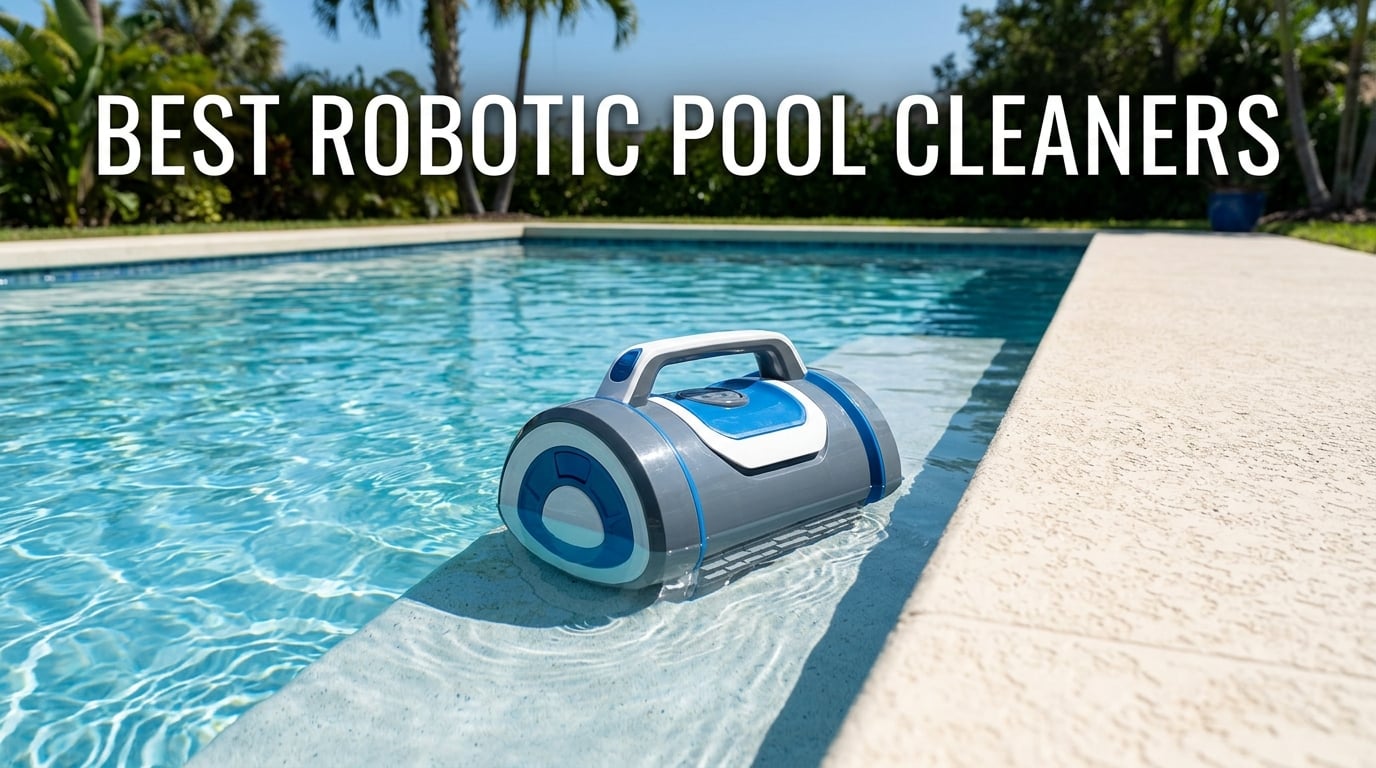
If you want one machine that handles the floor, walls and waterline of a mid-size in-ground pool without you dragging a hose around, the Dolphin Nautilus CC Plus is the safest all-round answer. It has more owner reviews and a longer track record than anything else in this guide, which matters more in pool robots than in most product categories.
Are robotic pool cleaners worth it? For most in-ground owners, yes, and the math is simple. A weekly service visit, or the two to three hours a week you would otherwise spend vacuuming, both disappear. The break-even is usually one skipped service visit. The exception is a very small, rarely used or fully screened pool, where a hose vacuum takes five minutes and a robot is dead weight in the shed.
What follows is a full ranking of the best robotic pool cleaners for 2026, covering corded and cordless, in-ground and above-ground, budget through premium. I ranked these on published specifications, on the consistency of owner feedback, and on the failure modes owners actually report, rather than on feature counts. Where a robot has a known weakness, such as a tendency to hang up on steps, I say so instead of burying it.
One note on how this page reads. Pool robots get described with a lot of marketing vocabulary that does not mean much. If you are new to the category, the word robotic can also mean something entirely unrelated in audio software, which is the subject of our guide to fixing a robotic-sounding mic in OBS. Down here, robotic just means a self-propelled vacuum with an onboard filter.
Table of Contents
- Top 3 Picks for the Best Robotic Pool Cleaners in 2026
- Best Robotic Pool Cleaners (October 2026)
- 1. Dolphin Nautilus CC Plus: Best Overall Corded Robot
- 2. Dolphin Escape: Best for Above-Ground and Small In-Ground Pools
- 3. Dolphin Premium 20: Best Set-and-Forget Corded Machine
- 4. WYBOT C1: Best Cordless Value for In-Ground Pools
- 5. WYBOT C2: Best for Fine Debris and Waterline Work
- 6. WYBOT A1: Best Budget Cordless for Flat Above-Ground Floors
- 7. Aiper Scuba S1: Best for Long Single-Cycle Runtime
- 8. Aiper Scuba V3: Best for AI Vision and Wireless Docking
- 9. Aiper Seagull SE: Best Lightweight Starter Robot
- 10. Beatbot Sora 70: Best Full-Coverage Robot That Skims the Surface
- 11. Winny A1 Cordless: Best for Scheduled Unattended Runs
- 12. Seauto Track Drive Robot: Best Mid-Tier Value with Sonar Mapping
- How We Picked the Best Robotic Pool Cleaners
- Corded vs Cordless: Which One Suits Your Pool
- Pool Type, Size and Surface: Getting the Match Right
- Filtration, Debris Types and Waterline Cleaning
- Saltwater vs Chlorine Pools: What Changes
- Runtime vs Pool Size: The Math Most Buyers Miss
- What to Avoid for Your Pool Type
- Total Cost of Ownership Over Five Years
- Feature Glossary: Navigation, Micron Filters and Swivel Cables
- Frequently Asked Questions
- Is Polaris or Dolphin better?
- What is the best robotic pool cleaner according to consumer reports?
- Which robotic pool cleaner is the best value for money?
- Are robotic pool cleaners worth it?
- How long do robotic pool cleaners last?
- Should I get a corded or cordless robotic pool cleaner?
- Why is my robotic pool cleaner stuck?
- Final Verdict on the Best Robotic Pool Cleaners
Top 3 Picks for the Best Robotic Pool Cleaners in 2026

Dolphin Nautilus CC Plus
- Covers in-ground pools to 40 ft
- 2 hour plug-and-play cycle
- Top-load filter basket
Dolphin Escape
- Works above ground and in-ground
- Oversized bag-free debris cartridge
- HyperGrip tracks with 24V motors

WYBOT C1
- Cleans floor walls waterline and steps
- Triple motors climb 45 degree slopes
- Up to 160 minutes on a 4 hour charge
Best Robotic Pool Cleaners (October 2026)
| Product | Specs | Action |
|---|---|---|
| Dolphin Nautilus CC Plus |
|
Check Latest Price |
| Dolphin Escape |
|
Check Latest Price |
 Dolphin Premium 20 Dolphin Premium 20 |
|
Check Latest Price |
| WYBOT C1 |
|
Check Latest Price |
 WYBOT C2 WYBOT C2 |
|
Check Latest Price |
 WYBOT A1 WYBOT A1 |
|
Check Latest Price |
 Aiper Scuba S1 Aiper Scuba S1 |
|
Check Latest Price |
 Aiper Scuba V3 Aiper Scuba V3 |
|
Check Latest Price |
 Aiper Seagull SE Aiper Seagull SE |
|
Check Latest Price |
 Beatbot Sora 70 Beatbot Sora 70 |
|
Check Latest Price |
 Winny A1 Cordless Winny A1 Cordless |
|
Check Latest Price |
 Seauto Track Drive Robot Seauto Track Drive Robot |
|
Check Latest Price |
1. Dolphin Nautilus CC Plus: Best Overall Corded Robot
Dolphin Automatic Robotic Pool Vacuum Cleaner, Wall Climbing Scrubber Brush, Smart Navigation, Ideal for In-Ground Pools up to 40FT in Length – Nautilus CC Plus
Corded in-ground unit to 40 ft
2 hour plug-and-play cycle
9.45 kg
Top-load filter basket
Pros
- Wall-scrubbing power works across pool shapes and surfaces
- Active scrubbing brush clears debris with no manual effort
- Top-load filter basket is simple to remove and rinse
- Plug-and-play 2 hour cleaning cycle
- Long-established brand with a large installed base
Cons
- Corded design requires a nearby outlet and cable management
- Scrubbing brush is fixed rather than independently adjustable
The Nautilus CC Plus is the machine most pool owners end up with, and after reading thousands of owner accounts the reason is unremarkable: nothing about it is exciting and almost nothing goes wrong. You plug in the supply unit near the pool, drop the robot in, press a button, and two hours later the floor is clean.
At 4.3 stars across 13955 reviews it is by a wide margin the most-reviewed robotic pool cleaner in this roundup. That number alone is not a quality score, but it is a useful signal about parts availability and support, because a brand with a huge installed base keeps filters, brushes and impellers in production long after a small competitor disappears.
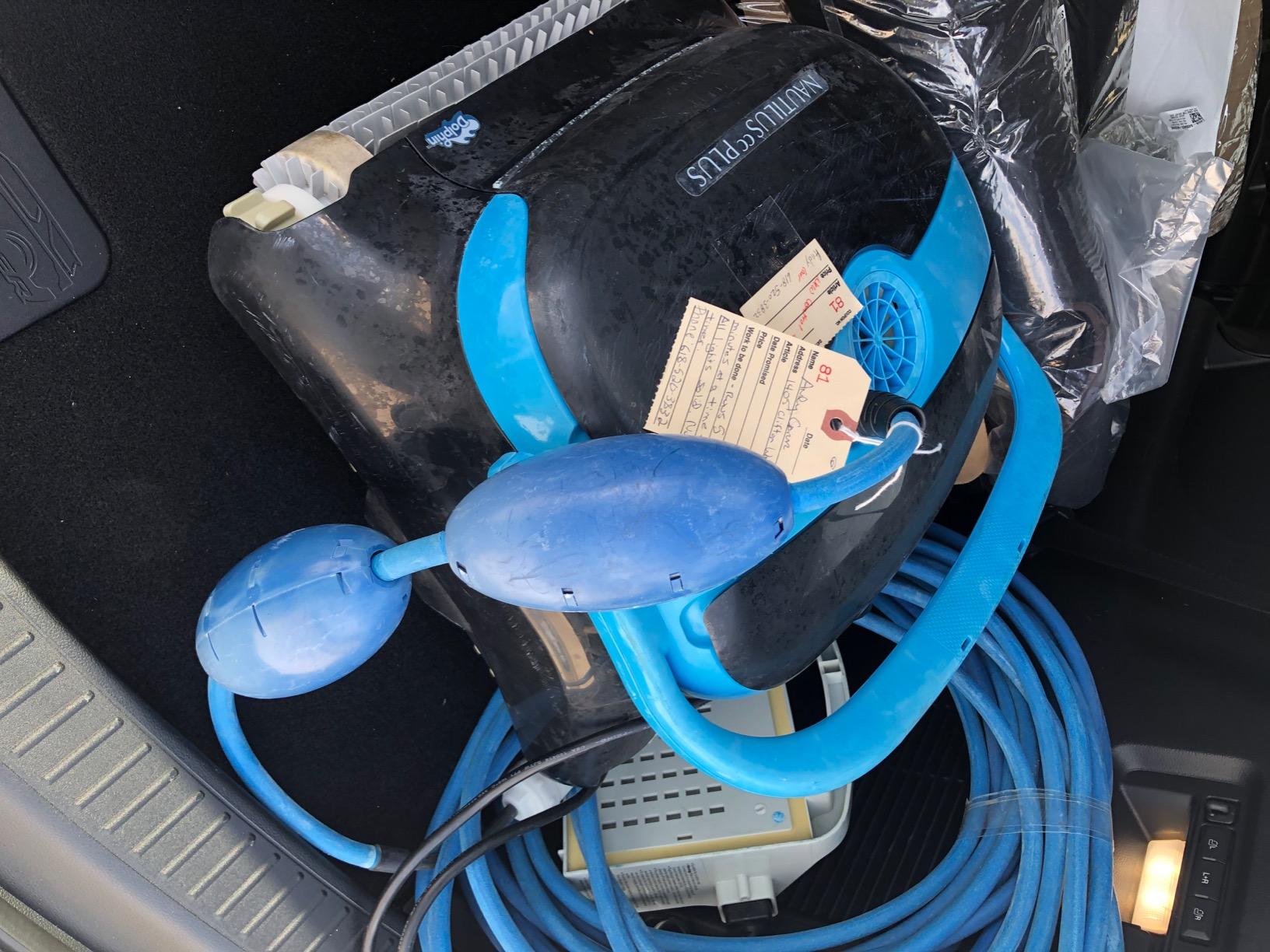
Where it earns its reputation is wall climbing and the active scrubbing brush. The brush rotates against the floor while the unit moves, which is what actually lifts embedded sand and grit rather than just sucking up what is sitting loose. On a pool with steps, a deep end or a sun shelf, the difference between a rotating brush and fixed rubber fins is obvious on the second or third run.
Specs are deliberately plain: 22.2 inches long, 17.6 wide, 12.9 high, 9.45 kg, AC/DC power, rated for in-ground pools up to 40 ft in length. The top-load filter basket lifts straight out of the back, which means you rinse it in about fifteen seconds without tipping the whole unit onto its side.
It ranks #1 in Robotic Pool Cleaners on Amazon’s Patio, Lawn and Garden category and sits just over a thousand in the broader category, which is a reasonable proxy for how many people are running one right now.
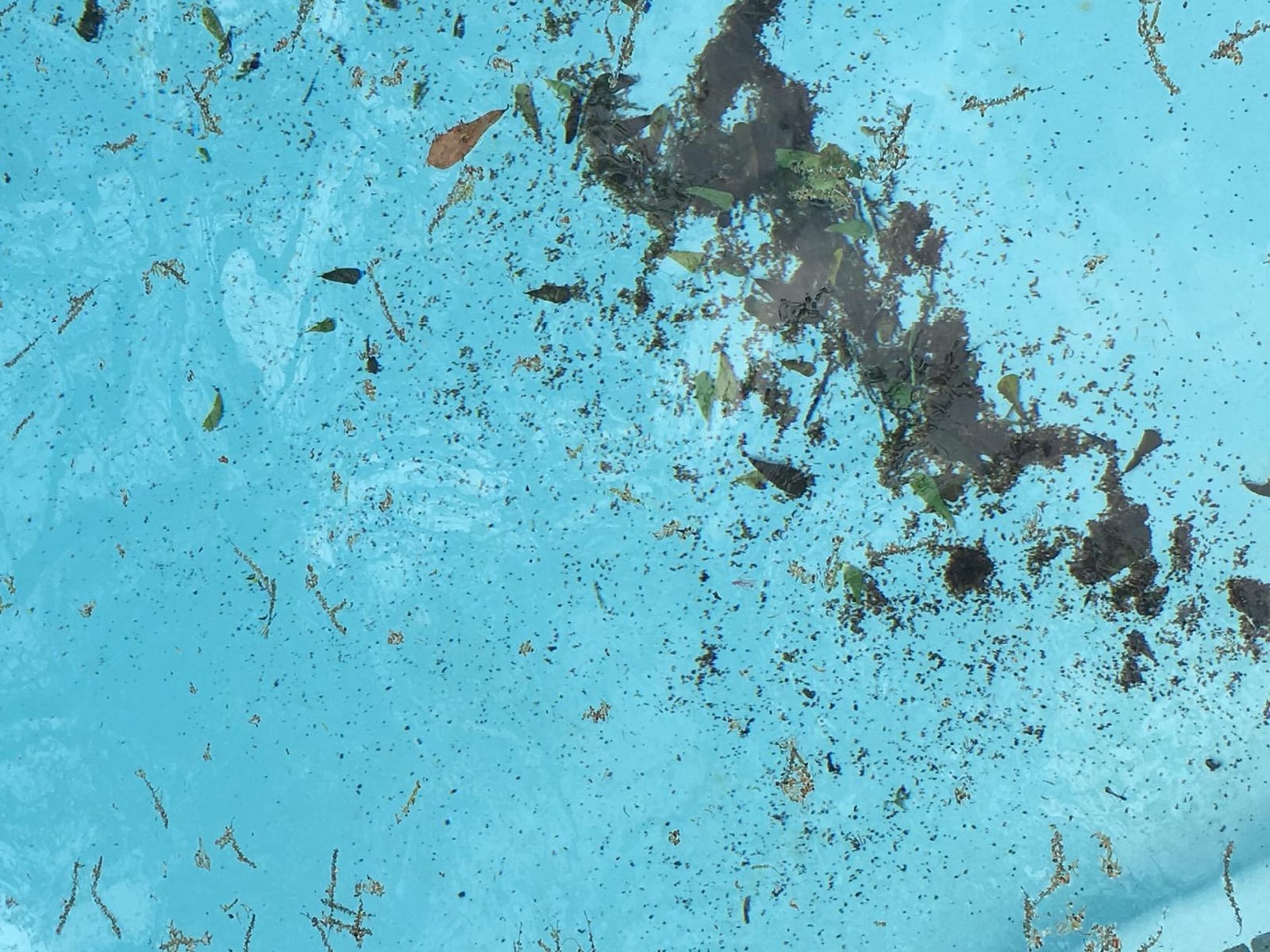
What you need to know before you buy it
The cord is the whole trade-off. A 40 ft rated robot means roughly 40 ft of cable plus slack, so your GFCI outlet needs to sit within about 60 ft of the deep end and ideally near a path you can run the cable along. Run the cable through a cable protector strip, or the robot will drag it across the deck edge on every cycle and eventually work through the insulation.
Because it is corded, you also need somewhere to store the supply unit out of the weather when the pool is closed. It is water-resistant, not waterproof, and a caddy keeps it off the ground.
Where it falls short
The scrubbing brush is fixed. You cannot raise it out of the way for shallow water or delicate plaster finishes, so on a pool with a shallow sun shelf you may end up scrubbing a surface you did not intend to touch. This is not a defect, but it is a limitation of the design.
It is also the largest unit here in raw terms at 9.45 kg, which matters if you are recovering it from a deep end with one hand on a slippery deck. The recovery cable on most corded models is a manual pull, so plan the outlet position to make the pick-up end shallow.
2. Dolphin Escape: Best for Above-Ground and Small In-Ground Pools
Dolphin Escape Robotic Pool Cleaner (2026 Model) — Massive Top-Loading Filter, Dual Motors, HyperBrush, HyperGrip Tracks, Smart Navigation — for Above Ground & In-Ground Pools up to 33ft
Corded, above ground or in-ground to 33 ft
HyperGrip continuous tracks
10.91 kg
Bag-free debris cartridge
Pros
- Works on both above ground and in-ground pools up to 33 ft
- Oversized top-loading filter cartridge holds much more debris than bag units
- Track drive climbs over obstacles that stop wheeled cleaners
- Independent of pool pump and booster pump
- Lightweight at roughly 14 lb with quick water release
Cons
- Float can make the unit pop a wheelie or ride up on direction changes
- Some units have had power supply and cord durability problems
Most above-ground owners get burned twice. First, by a robot that cannot handle the vinyl liner and ribbed side walls, and second, by a unit that is too powerful for the shallow end. The Escape is the pick in this roundup that addresses both, which is why it is the first choice for a steel-wall or inflatable pool.
It is rated for any pool shape in vinyl, fiberglass or gunite up to 33 ft, and the HyperGrip continuous tracks are the reason. Tracks distribute weight across a wider contact patch and climb steps and liner seams that stop a wheeled unit dead. The 24V DC dual motors push 4000 GPH of filtration through an oversized cartridge that holds 60 percent more debris than a bag-style filter.
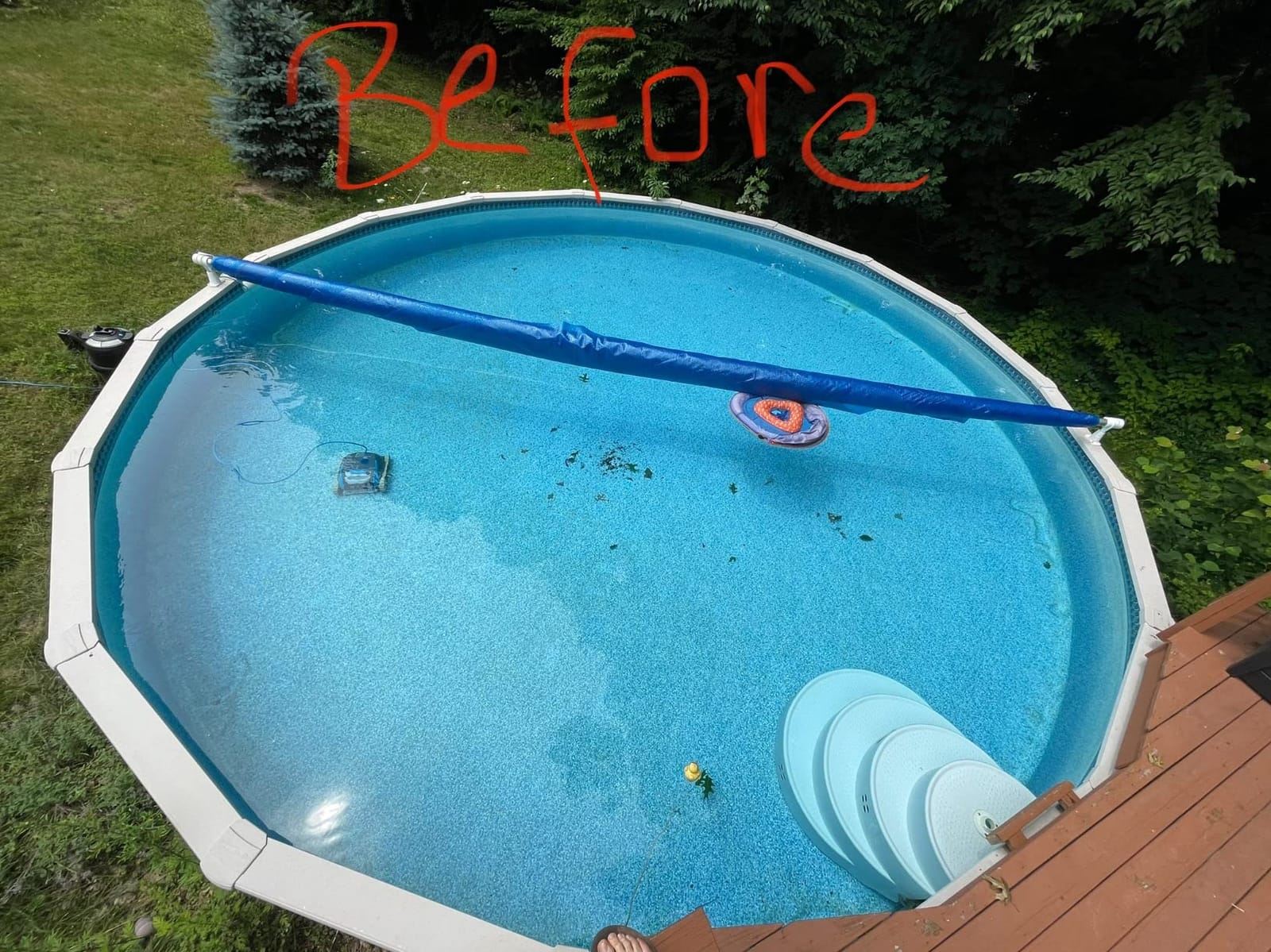
Being bag-free is a genuine quality-of-life upgrade. There is no bag to replace annually and no risk of a fine bag splitting and returning grit to your pool. When the cartridge is full, you pull it out, hose it off and put it back.
SmartNav 2.0 scanning navigation is an upgrade over the random-path behaviour of budget units, and the HyperBrush handles the scrubbing. It runs independently of your pool pump and booster pump, so the cleaning time is genuinely its own and not limited by filtration rate.
At 4.2 stars across 1526 reviews, with 67 percent five-star ratings, this is well regarded but not universally loved. The review data points to two specific friction points rather than general dissatisfaction.
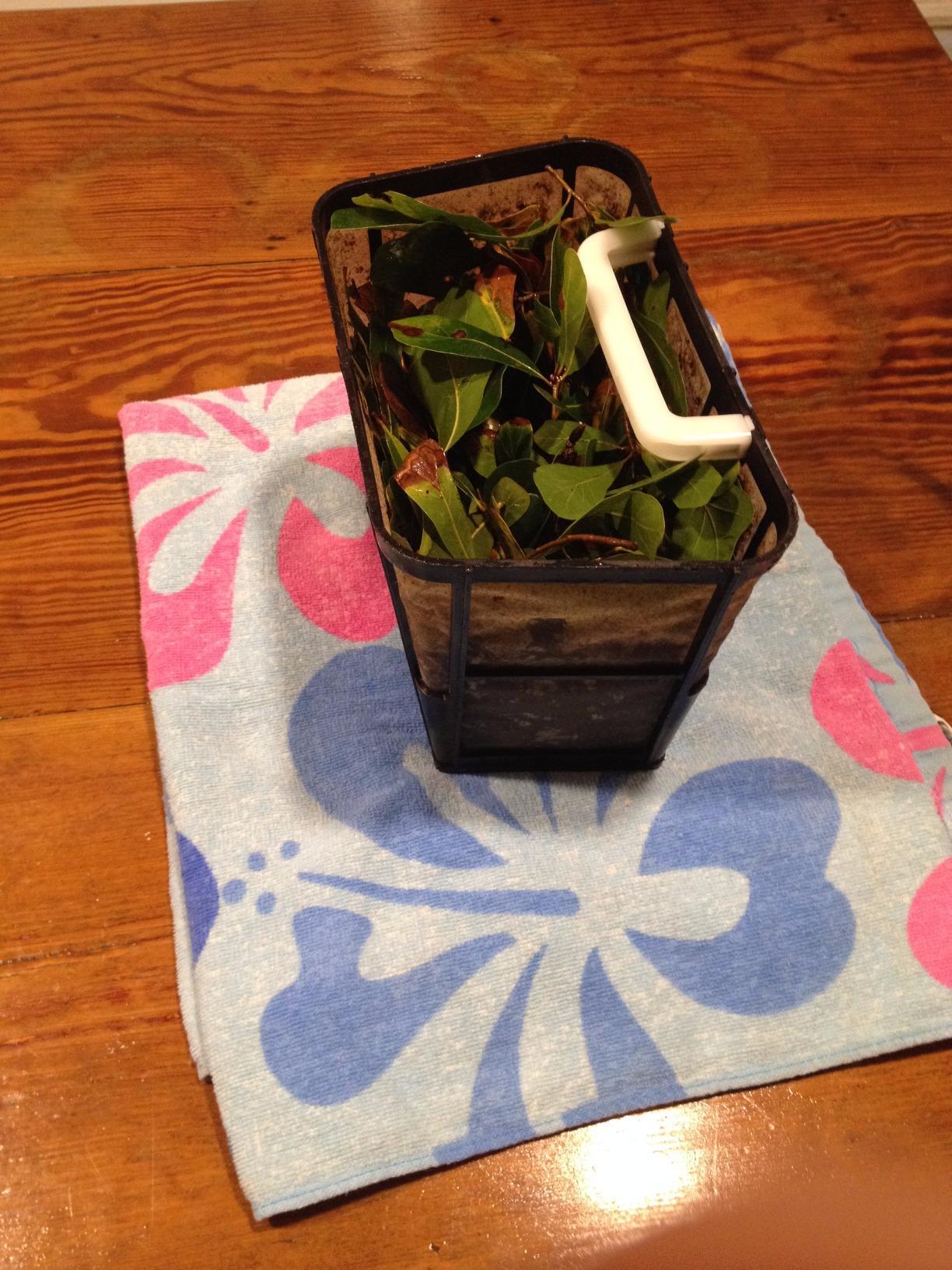
What you need to know before you buy it
The floating buoy is the first thing to understand. It keeps the unit retrievable at the end of a cycle, which is a genuine convenience on an above-ground pool where you cannot easily reach down. The trade-off is that the buoyancy can make the robot lift a wheel or ride up the side on a hard direction change. Owners who accept that behaviour tend to be happy; owners who expect a machine that stays flat on the floor tend to be annoyed.
The 33 ft rating also sets a hard ceiling. If your above-ground pool is 34 ft or longer, this is the wrong unit and you should look at the WYBOT C1 or the Seauto instead, both of which cover larger footprints.
Where it falls short
Several owners report cord or power supply failures after a season or two, which is the most common complaint in the review set. This is worth factoring into any durability calculation you do.
It is also the heaviest pick in the roundup on a per-pound basis for above-ground pools, at 10.91 kg. Lifting it over a pool wall is fine. Lifting it out of a deep end on a narrow deck is not, and that is where the lighter budget units pull ahead.
3. Dolphin Premium 20: Best Set-and-Forget Corded Machine
Dolphin Premium 20 Robotic Pool Vacuum Cleaner
Corded in-ground to 33 ft
2 hour cycle
10.55 kg
Wall climbing with active brush
Pros
- Point-and-shoot operation: plug in
- drop in
- hit the switch
- Scales pool walls and grabs fine particles along vinyl seams
- Cleans noticeably better than comparable Polaris units in owner tests
- Runs a consistent two hour cycle and stops when done
Cons
- Mapping is incomplete
- leaving a few missed spots
- 50 ft cord is only long enough for some pool house layouts
- Several owners report power supply box failures and tripped breakers
The Premium 20 does the same job as the Nautilus CC Plus for people who do not want to think about mode selection or app connectivity. Plug it in, drop it in, and it runs a two-hour cycle and stops. That simplicity is genuinely the feature, and owners who value low fuss rate it highly.
It climbs walls, runs an active scrubbing brush and uses the same easy-access top-load filter basket layout as the rest of the Dolphin corded range. Point and shoot is the accurate description. There is nothing to configure and no phone to pair.
Physically it is a 10.55 kg unit with a gray shell, rated for pools up to 33 ft. The manufacturer part number places it directly in the Maytronics premium corded line, and the efficiency labelling is about cycle time rather than electricity draw.
Owner reports consistently praise cleaning power and wall climbing, and several specifically compare it favourably to comparable Polaris machines on the same pool. If you already own Polaris equipment and are cross-shopping, that comparison is worth reading closely.
Be aware that the evidence base here is much thinner. 113 reviews at a 4.0 average is a small sample compared with the Dolphin models above it, so treat the star figure as less reliable than the average suggests. A 4.0 average is also the lowest among the Dolphin units in this roundup.
What you need to know before you buy it
Cord length is the practical constraint. At 50 ft, it is only sufficient for certain pool house layouts, particularly where the outlet is tucked around a corner from the pool. Measure your longest run before ordering, and add a poolsaver type slack allowance rather than assuming the straight-line distance will do.
Mapping is incomplete, which shows up as a few consistently missed spots, usually in one corner or around a step. On a rectangular pool with clean geometry this is easy to live with. On a freeform pool with a sun shelf it is more noticeable.
Where it falls short
Several owners report power supply box failures and tripped breakers, and this appears often enough in the reviews to be worth calling out. If your GFCI outlet is on a long run or shares a circuit with a pool heater, have an electrician confirm the load before you rely on it.
There is no waterline-specific mode and no scheduling. If you want the robot to run while you are at work without you being there to start it, this is not the machine.
4. WYBOT C1: Best Cordless Value for In-Ground Pools
WYBOT C1 Cordless Robotic Pool Vacuum for Inground Pools, Professional
Cordless in-ground to 1618 sq ft
Triple motors, 45 degree climbing
160 minute runtime
Bluetooth app control
Pros
- Strong cordless value for in-ground pools under 1600 sq ft
- Triple-motor drive climbs 45 degree slopes and walls
- Gyroscope navigation reduces missed spots versus random-path budget bots
- App control with scheduling mode selection and OTA updates
- Long 160 minute runtime on a single charge
Cons
- Some spotty areas remain after a single cycle
- Fine filter must be rinsed frequently to keep suction up
The C1 is the cordless unit to beat for in-ground pools under about 1600 square feet. At 4 stars across 956 reviews it carries far more review volume than any other cordless machine at this level, and gyroscope navigation is the specific reason it outperforms cheaper random-path robots in the same class.
Coverage is genuinely four-in-one: floor, walls, waterline and steps. The triple-motor system climbs 45 degree slopes, which covers the transition wall of most in-ground pools. Runtime is up to 160 minutes on a 4 hour charge, and the rated ceiling is 1618 sq ft with depths to 9.86 ft.
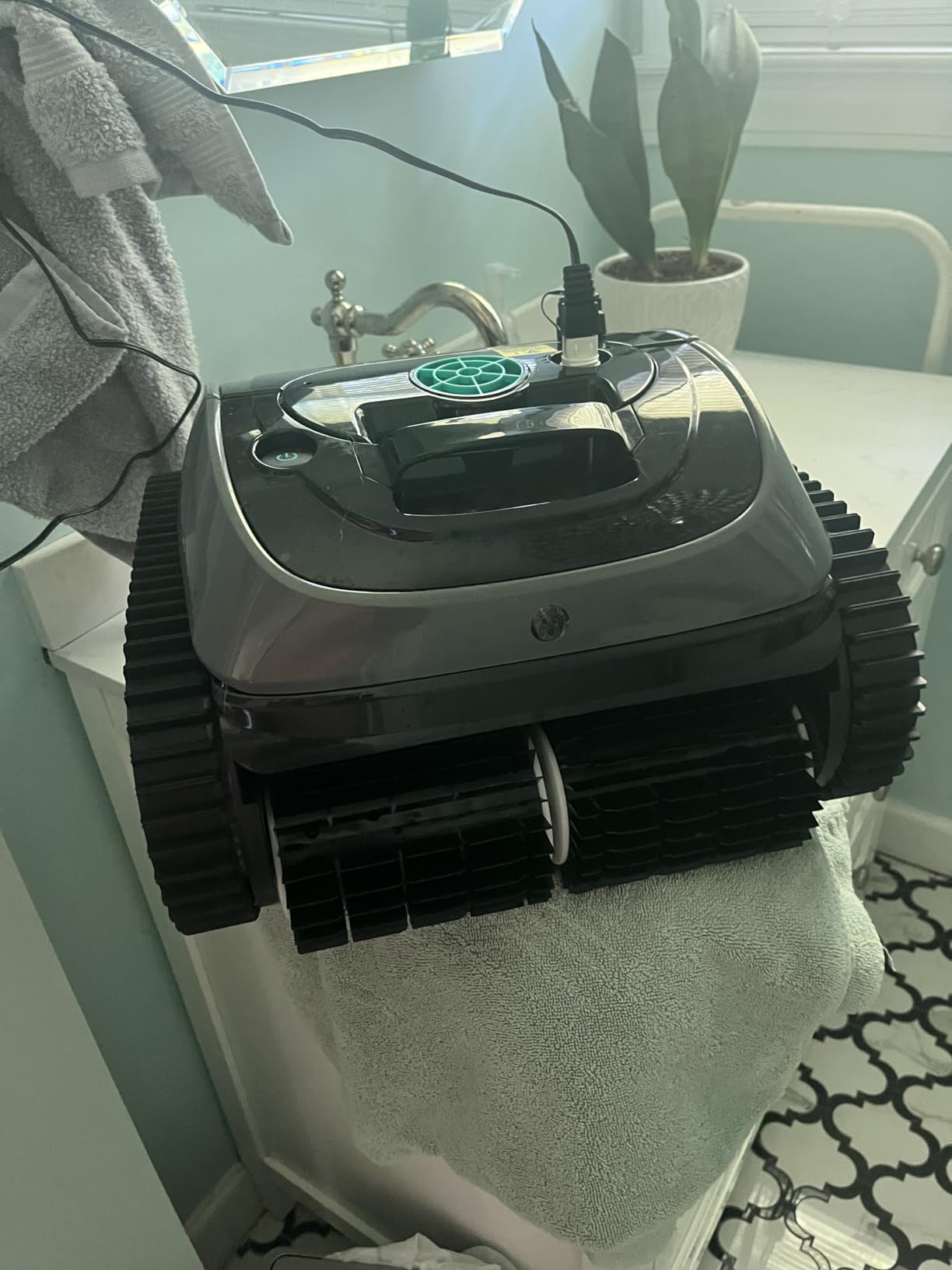
The app matters more than usual here. Scheduling, mode selection and over-the-air firmware updates all run through the WYBOT app, and OTA updates mean the robot can improve after you buy it. In a category where navigation software is where the remaining headroom is, that is a real advantage.
With 61 percent five-star ratings, the 4.0 average is held back by a specific pattern rather than general unhappiness. Two issues recur: occasional missed patches after one cycle, and filter upkeep.
This is also the machine most often recommended in pool-owner forums for the value tier, and it is the cordless answer that comes up repeatedly when owners ask for wall and waterline coverage without a cord to manage.
What you need to know before you buy it
Runtime versus pool size is the number to check honestly. 160 minutes covers a 1618 sq ft pool in ideal conditions. If your pool is at the top of that range, has a deep end, or carries a heavy leaf load, plan on a second cycle or a recharge between the shallow and deep ends.
The gyroscope navigation follows N-Path and S-Path lines rather than building a true map. This is meaningfully better than random wander because it is repeatable, but it is not the same thing as laser or camera mapping, and it is the direct cause of the missed spots owners mention.
Where it falls short
Suction drops quickly if the filter is not maintained. Rinsing the cartridge after every run in a leaf-heavy pool is not optional if you want consistent pickup, and that maintenance habit is what separates owners who rate it highly from those who do not.
It is also a 4 hour charge. That works fine if you run it overnight on a schedule, and works badly if you want to do two full cycles in one day.
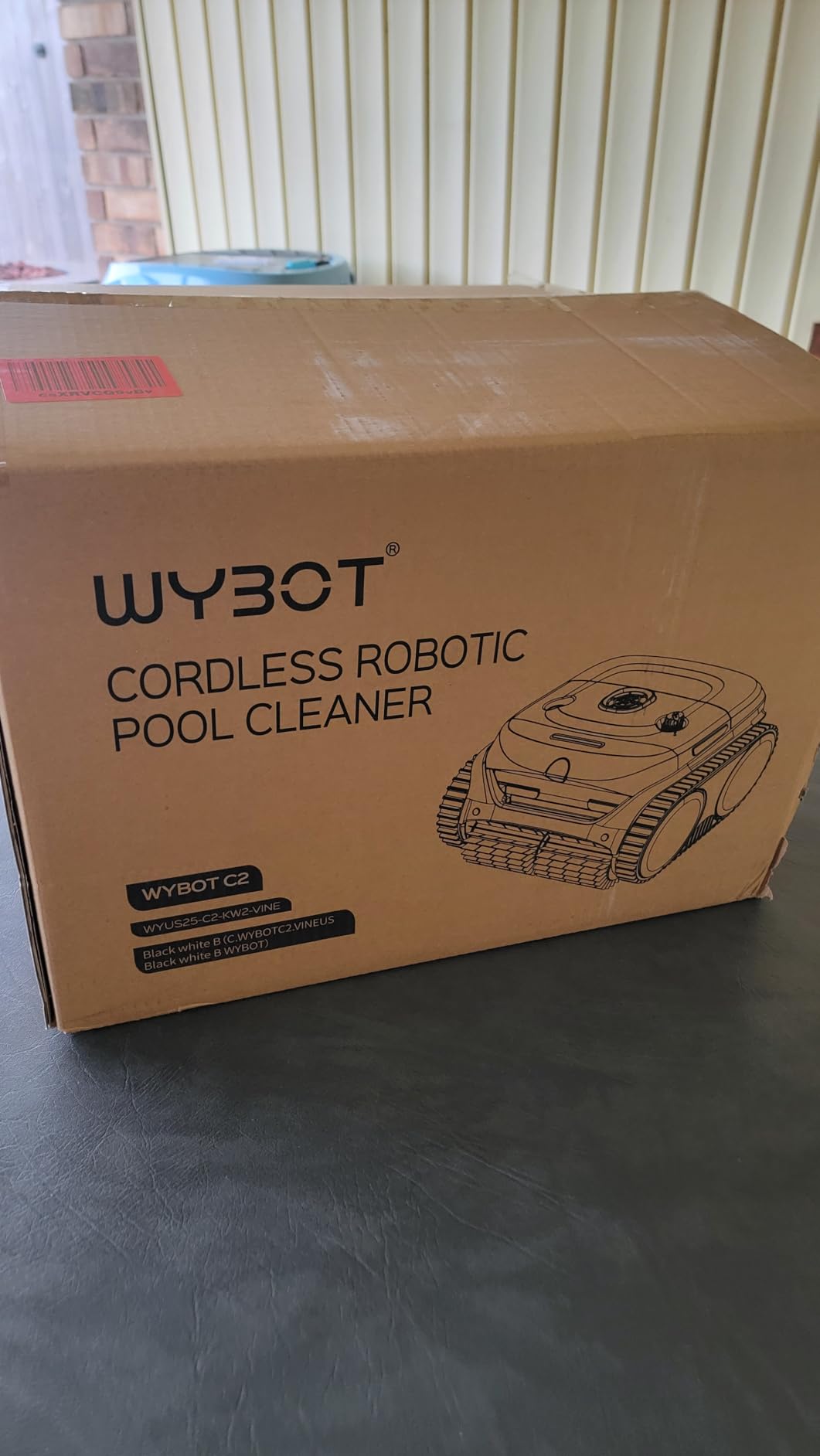
5. WYBOT C2: Best for Fine Debris and Waterline Work
Wybot C2 Cordless Pool Vacuum for Inground Pools, Robotic Pool Cleaner
Cordless, 10 micron plus 180 micron filtration
180 minute runtime
24 lb
7 modes with auto park
Pros
- Highest average rating in this roundup at 4.6 with 77 percent five-star ratings
- Dual filtration captures both bulk debris and ultra-fine sediment
- Wall and waterline cleaning is notably good for a cordless unit
- App scheduling
- seven modes and auto park make it hands-off
- Comes with a recovery hook for retrieval
Cons
- Heavier than the C1
- so the extra filter cartridge adds bulk
- Bluetooth app link drops underwater
- so modes must be set on land
- Pattern-based rather than true mapping
- so a second pass may be needed
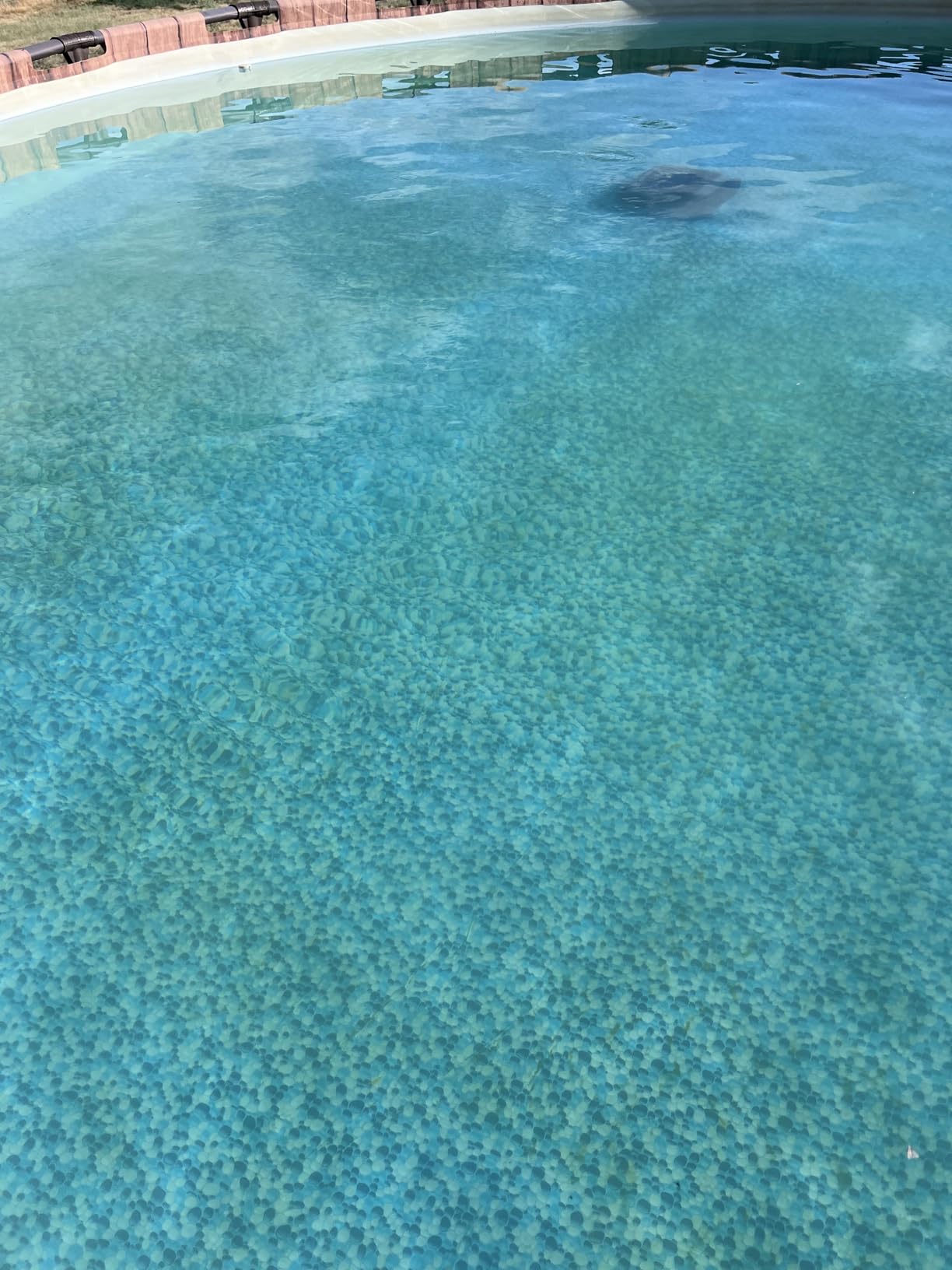
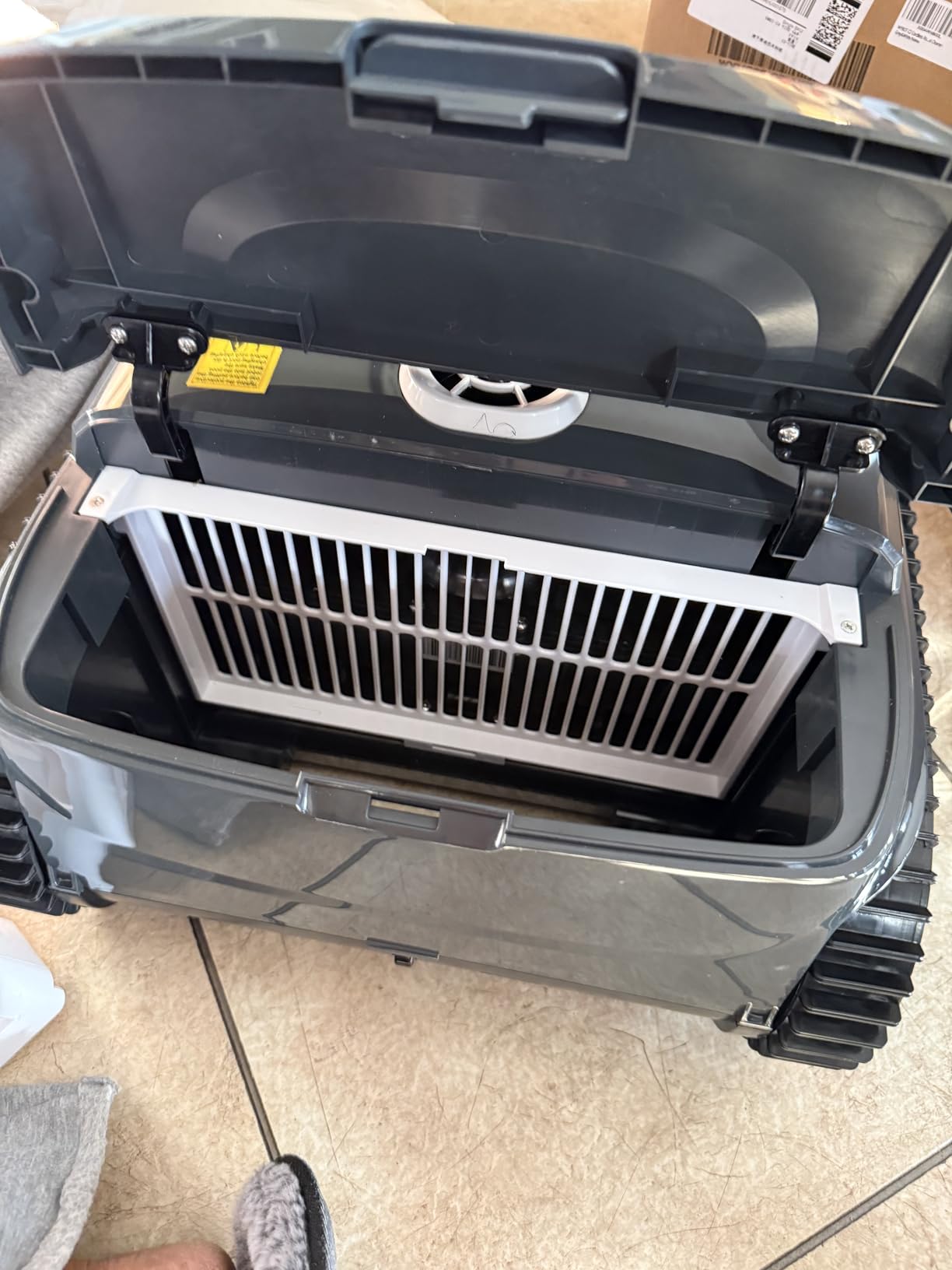
The C2 is the pick if your problem is fine particles rather than leaves. Silt, dust, pollen and plaster dust all sit in the 3 to 10 micron range, and a coarse mesh filter lets most of it pass straight back through into the water. Dual filtration with a 10 micron ultra-fine layer over a 180 micron primary is what separates this from the pack.
At 4.6 stars across 372 reviews it holds the highest average rating in this roundup, with 77 percent five-star ratings. The clustering of high ratings is meaningful here, because fine-debris performance is easy to verify visually: you either have clear water or you do not.
Three brushless motors handle wall and waterline scrubbing, and reviews single out that waterline work as unusually good for a cordless unit. Runtime reaches 180 minutes and the rated coverage is 2152 sq ft per cycle, which is a large jump from the C1 and covers most residential in-ground pools in one pass.
Seven cleaning modes, app scheduling and auto parking at the pool edge make it close to hands-off. The 3 litre capacity means fewer mid-cycle emptying stops than most competitors at this size.
Bluetooth control is the practical quirk. The link drops underwater, which means every setting must be chosen on land before launch. Owners who discover this on day one find it irritating; owners who know it in advance treat it as a two-minute pre-flight step.
What you need to know before you buy it
Weight is the practical downside at 24 pounds. The extra filter cartridge is a large part of that. If you have a deep end and plan to recover the unit by hand, budget for a pool hook or a skimmer net rather than assuming you can lift it out one-handed.
Navigation is gyroscope pattern-based, not true mapping. On a simple rectangular pool that is effectively invisible. On a freeform pool with a sun shelf, a spa spillway or a deep-end ledge, plan on a second pass. This is the most common caveat in the reviews.
Where it falls short
Bluetooth dropping underwater is a real usability cost, and it is also why the auto-park feature matters more than it would otherwise. You need to know where the robot ended up before you go hunting for it with a net.
It is one of the heavier cordless units here, so if lifting weight is a factor in your decision, compare it against the WYBOT A1 or the Aiper Seagull SE before committing.
6. WYBOT A1: Best Budget Cordless for Flat Above-Ground Floors
WYBOT A1 Cordless Pool Vacuum Robot for Above Ground Pool, Greyblue
Cordless, above ground to 1100 sq ft
2280 GPH suction
130 minute runtime
Floor only
Pros
- Effective dual-layer filtration for a floor-only machine
- Cordless design with no hoses
- cords or pump hookup
- Self-parks near the wall for easy retrieval
- Light enough to lift one-handed out of the water
- Handles sand
- fine dust and medium leaves well on flat pools
Cons
- Floor only: no wall
- waterline or step climbing
- Movement is random rather than mapped
- so paths can be missed
- No app connectivity
- button-led cycle options only
- Larger leaves can block the suction opening
The A1 is the honest entry point for a flat above-ground pool where the floor is sandy or dusty. At 4.5 stars across 163 reviews, owners describe it accurately: it is a weekly floor-maintenance tool, not a full pool cleaner, and the ones who understand that are happy with it.
Suction is 2280 GPH, which is more than several larger machines in this roundup, and the dual-layer filtration pairs a 180 micron precision filter with a textured foam layer that catches the fine stuff the mesh lets through. Runtime is 130 minutes with a rated ceiling of 1100 sq ft.
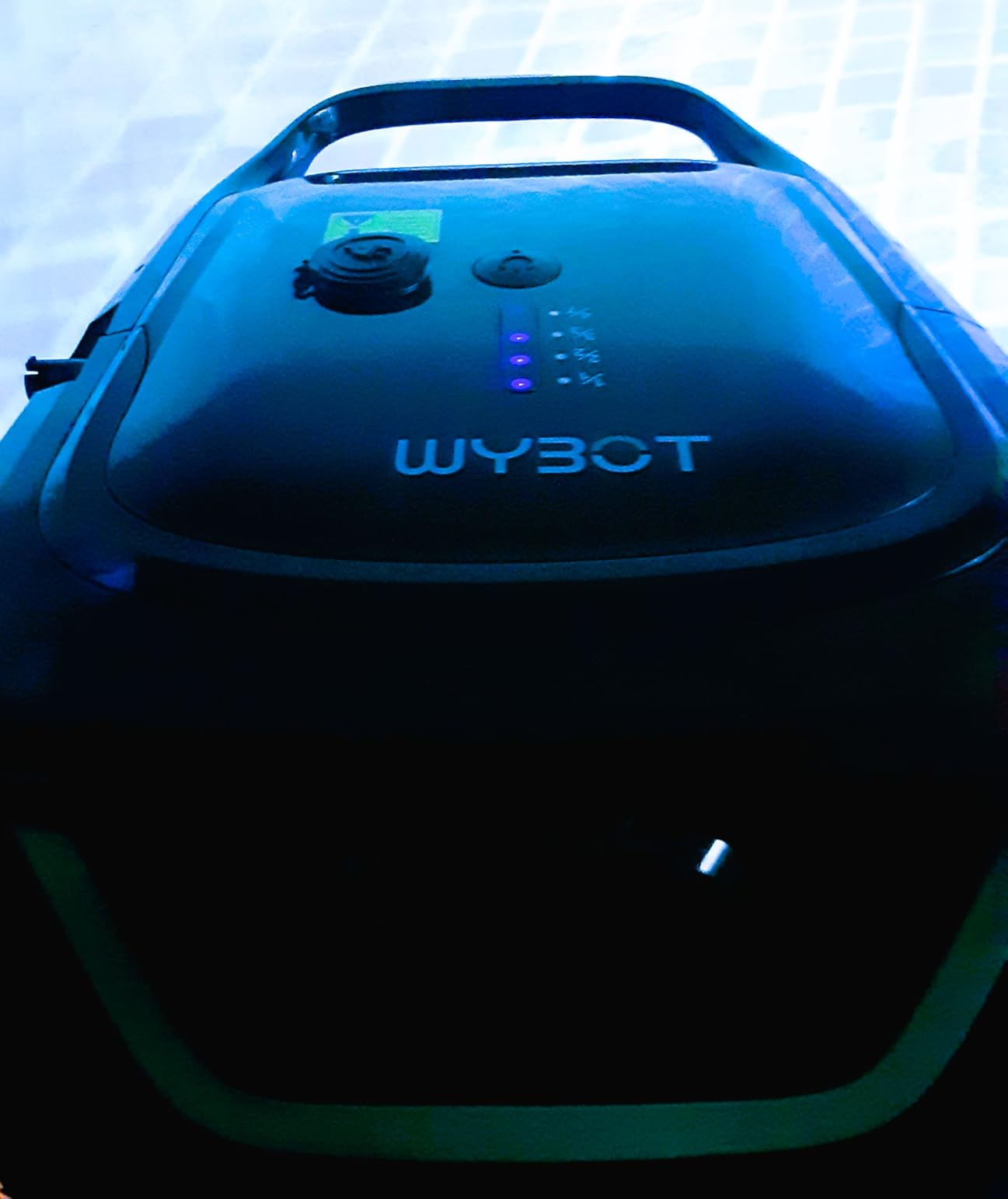
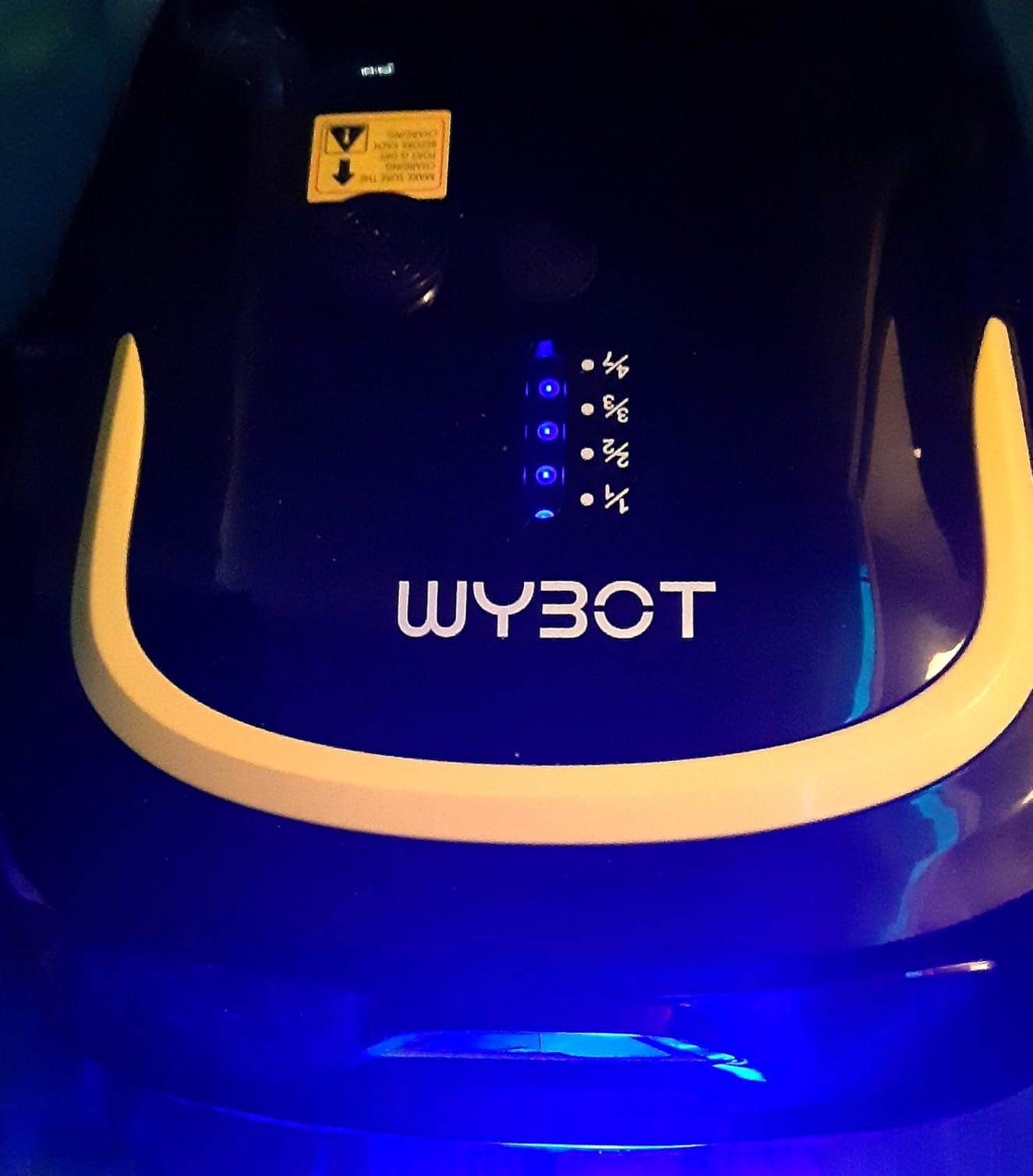
Two practical details make it pleasant to own. It self-parks at the pool wall on low battery, so you are not sweeping the floor with your hands at the end of a cycle. And it weighs 369 g for the battery pack, which is why owners describe it as liftable with one hand.
There is no app. Cleaning cycle options are chosen with buttons, which is either a relief or a disappointment depending on what you expected.
Edge cleaning pause at the pool walls is a nice touch that budget units rarely include. The robot pauses at the perimeter to concentrate suction where debris collects against the wall.
What you need to know before you buy it
Floor only is the headline limitation, and it is absolute. No wall climbing, no waterline scrubbing, no step climbing. On a flat above-ground pool with gentle walls that is fine. On an in-ground pool with a deep-end wall, it is not.
Movement is random with no mapping, so a spot can be missed on any given run. On a small pool this matters less than it would on a large one, because the random path tends to cover the same small area more than once over a 130 minute cycle.
Recharge is 2 to 3 hours, which is fine for weekly use on a schedule and awkward for more than one cycle a day.
Where it falls short
Larger leaves can block the suction opening. The intake is sized for sand and grit rather than whole leaves, and a blocked intake usually means stopping the cycle to clear it rather than waiting for it to clear itself.
There is no way to schedule it remotely. If unattended running is the goal, look at the Winny A1 with its 7-day timer, or the WYBOT C1 with app scheduling.
7. Aiper Scuba S1: Best for Long Single-Cycle Runtime
(2026 Upgrade) Aiper Scuba S1 Robotic Pool Cleaner, 270 Min Runtime, Floor/Wall/Waterline/Shallow Area Cleaning, Ultra-fine Filter, Smarter Navigation, High-Precision Sensors, App Support-Black
Cordless, 270 minute eco runtime
3 micron plus 180 micron filter
17 lb
11 sensors, 2 year warranty
Pros
- Very long 270 minute eco runtime for hands-off cleaning
- Dual filtration with a replaceable 3 micron ultra-fine filter
- Eleven sensors and WavePath paths give good systematic coverage
- App scheduling
- including weekly custom cleaning plans
- Caterpillar treads handle slopes and wall climbing
Cons
- Some owners report it getting hung up in corners or on steps
- Fine filter needs frequent rinsing in dirty pools
Runtime is the number that decides this one. Up to 270 minutes in eco mode, and 180 minutes in the other modes, on a 112 Wh lithium-ion battery that recharges in 3 hours. That is the longest single-cycle figure in the roundup apart from the Beatbot Sora 70, and it is what lets the S1 finish a large pool in one pass without a mid-cycle recharge.
Eleven high-precision sensors running dual-path algorithms, combined with a WavePath cleaning pattern and adaptive navigation, give more systematic coverage than the random wander of the budget units. It also carries a two year warranty, which is exactly the purchase driver pool owners keep citing in forum threads.
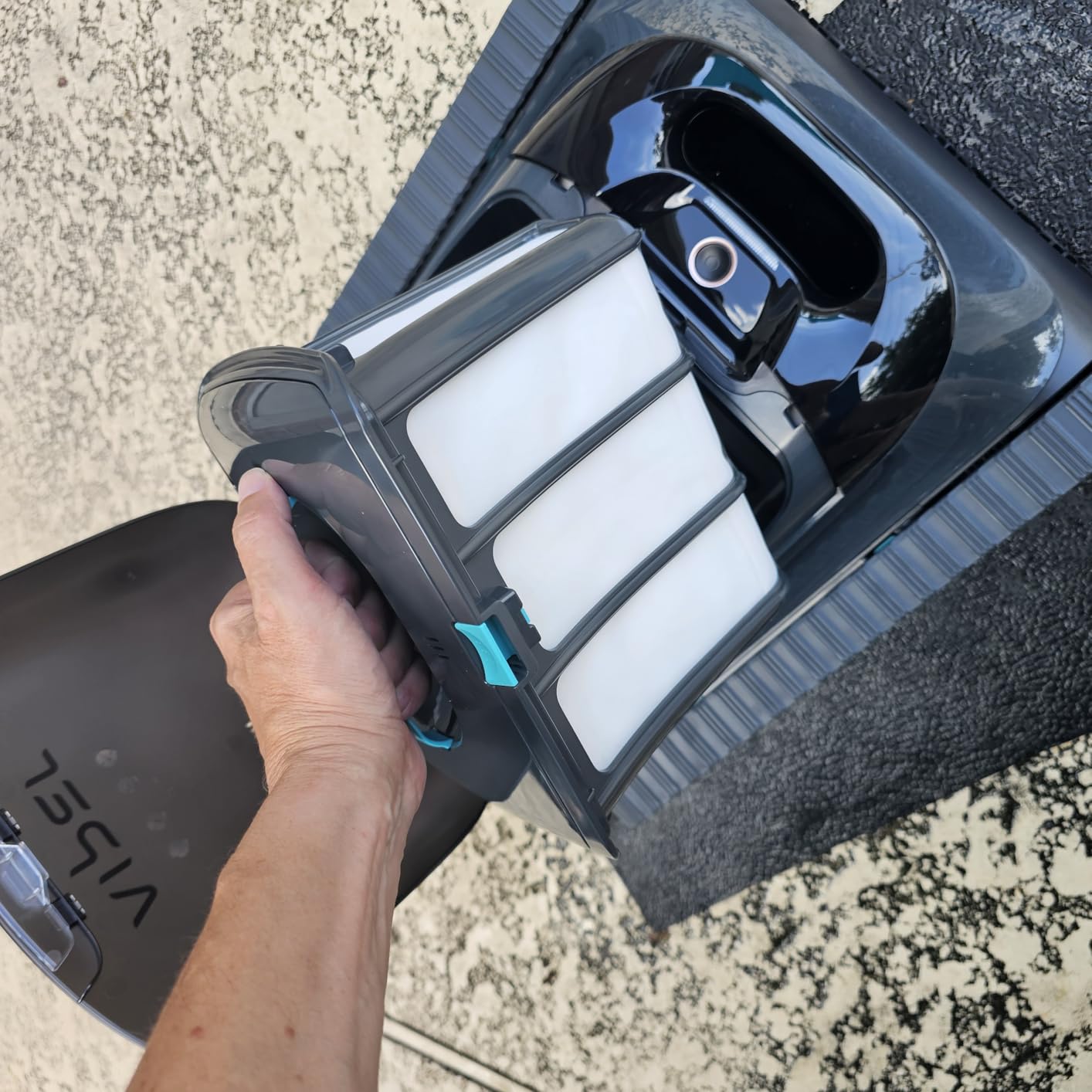
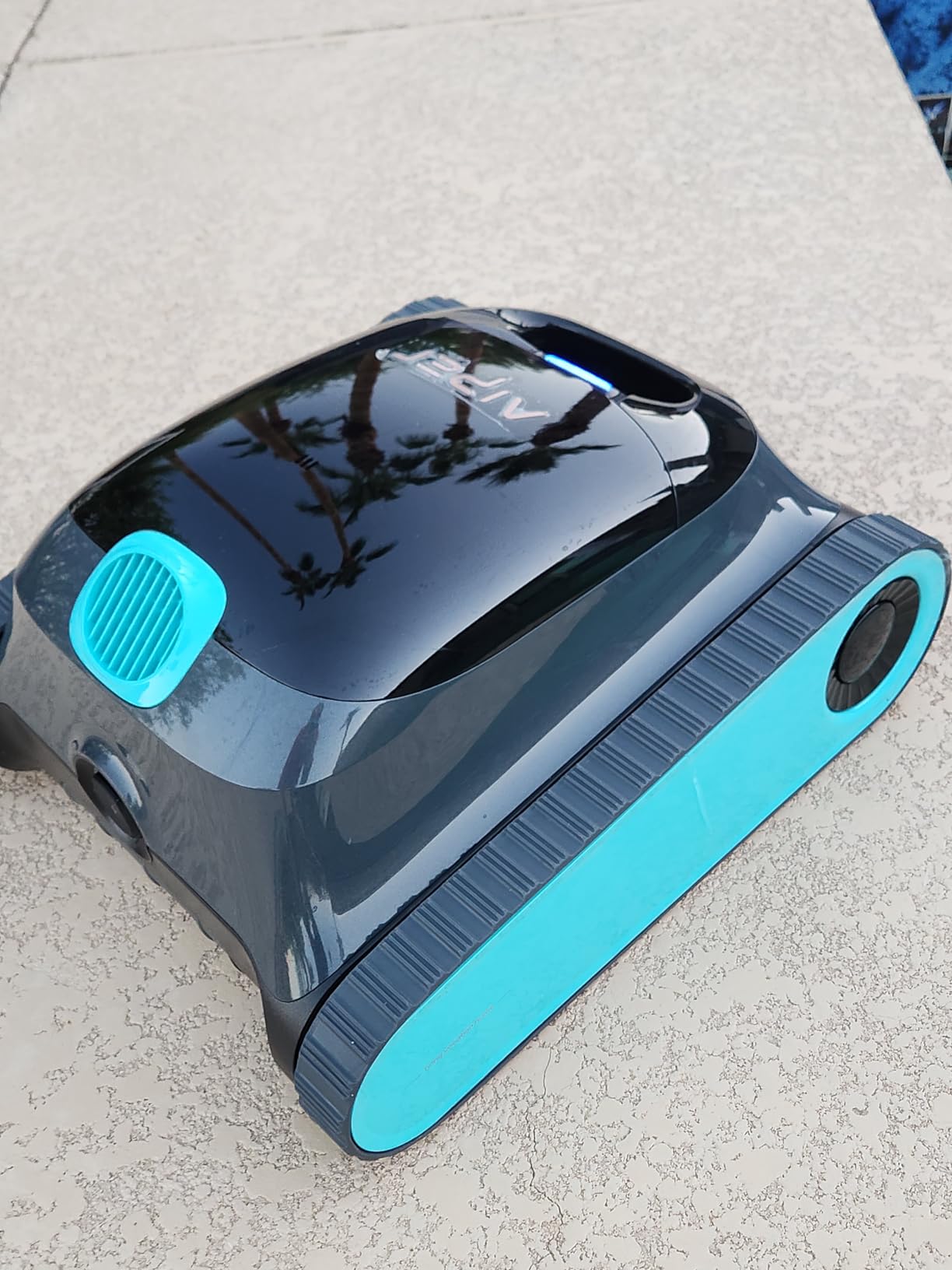
Filtration is dual-stage: a 3 micron ultra-fine filter that is replaceable, plus a 180 micron standard filter. Having the fine filter be a replaceable part rather than a fixed element is the detail that matters for five-year ownership, and it is one of the reasons the running cost works out over time.
Caterpillar treads handle slopes and wall climbing, and the four-zone coverage list is floor, walls, waterline and shallow areas. Shallow-zone cleaning is unusual in this price class and useful for steps and sun shelves.
It ranks #4 in Amazon’s Suction Pool Cleaners category with 813 reviews and 65 percent five-star ratings, which is a solid, well-populated review set rather than a thin one.
What you need to know before you buy it
The recurring complaint is navigation hanging up. Owners report the unit getting caught in corners or on steps and needing a nudge or a second run. This is not unusual for a unit with no true mapping, and it is worth weighing against the 270 minute runtime, because the runtime advantage disappears if the robot spends part of it stuck in a corner.
Weight is 17 pounds, which puts it mid-range for lifting. Plan on a recovery hook rather than a one-handed lift from a deep end.
Where it falls short
The 3 micron filter needs frequent rinsing in a dirty pool. It is a fine filter and fine filters clog; that is what they are for, but it makes the maintenance habit non-negotiable if you want to keep the suction rating up.
App support adds a dependency. The scheduling and weekly custom plans are genuinely useful, but a robot you cannot command when the app is having a bad day is a different experience from a pure one-button machine like the Dolphin Premium 20.
8. Aiper Scuba V3: Best for AI Vision and Wireless Docking
AIPER Scuba V3 AI Vision Cordless Robotic Pool Cleaner, Grey
Cordless, 20 debris types detected
3 micron MicroMesh
8.2 kg body
Wireless dock
Pros
- Light cordless design that is easy to lift out of the pool
- Wireless charging dock needs no drying or connector handling
- Strong pick-up on fine particles
- hair
- sand and pine needles
- Waterline parking makes retrieval far easier than bottom parking
- App and AI modes add real value once firmware is updated
Cons
- AI vision mode sometimes skips obvious debris and can get stuck on drains
- Cannot be stopped or mode-changed while in the water
- Firmware updates are slow and the in-app manual is awkward to navigate
- Replacement MicroMesh filter is needed after extended daily use
The Scuba V3 is the only pick here with a camera. A single front-facing AI camera identifies more than 20 debris types, feeding an AI Patrol System and cognitive Navium planning that produces weekly autonomous cleaning schedules. Whether that vision is a net positive is the central argument about this machine, and the review data is genuinely split.
At 4.0 stars across 473 reviews with 63 percent five-star but 15 percent one-star, this is the most polarised product in the roundup. That pattern is informative. A unit with ordinary shortcomings produces middling ratings. A unit with a feature that helps some pools and hurts others produces a bimodal distribution.
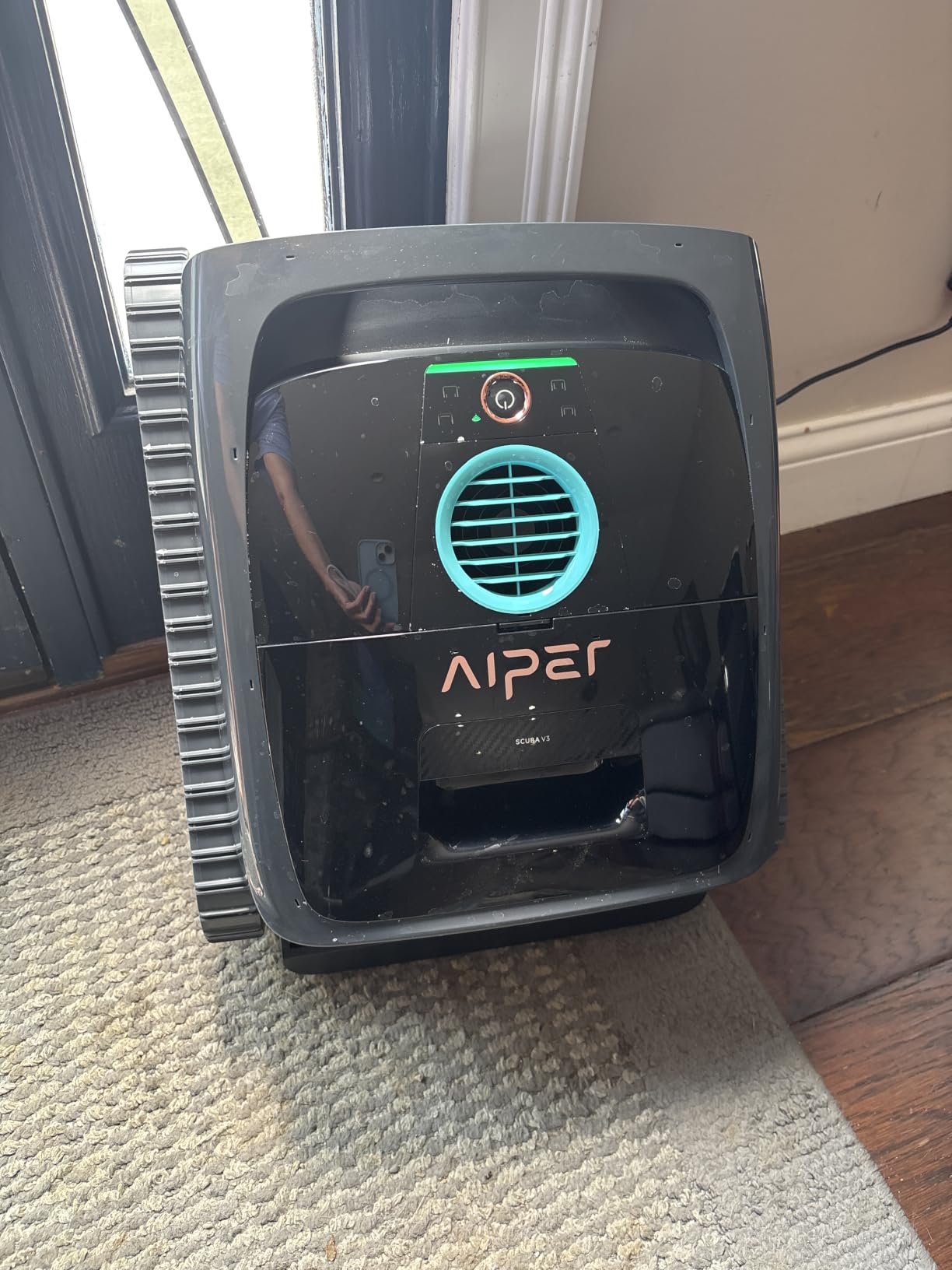
What owners consistently praise is the physical design. At 8.2 kg it is the lightest cordless unit in this roundup, and the wireless charging dock has no exposed connectors, which means there is nothing to dry, no contacts to corrode and no cable to manage. The dock also has no installation requirement.
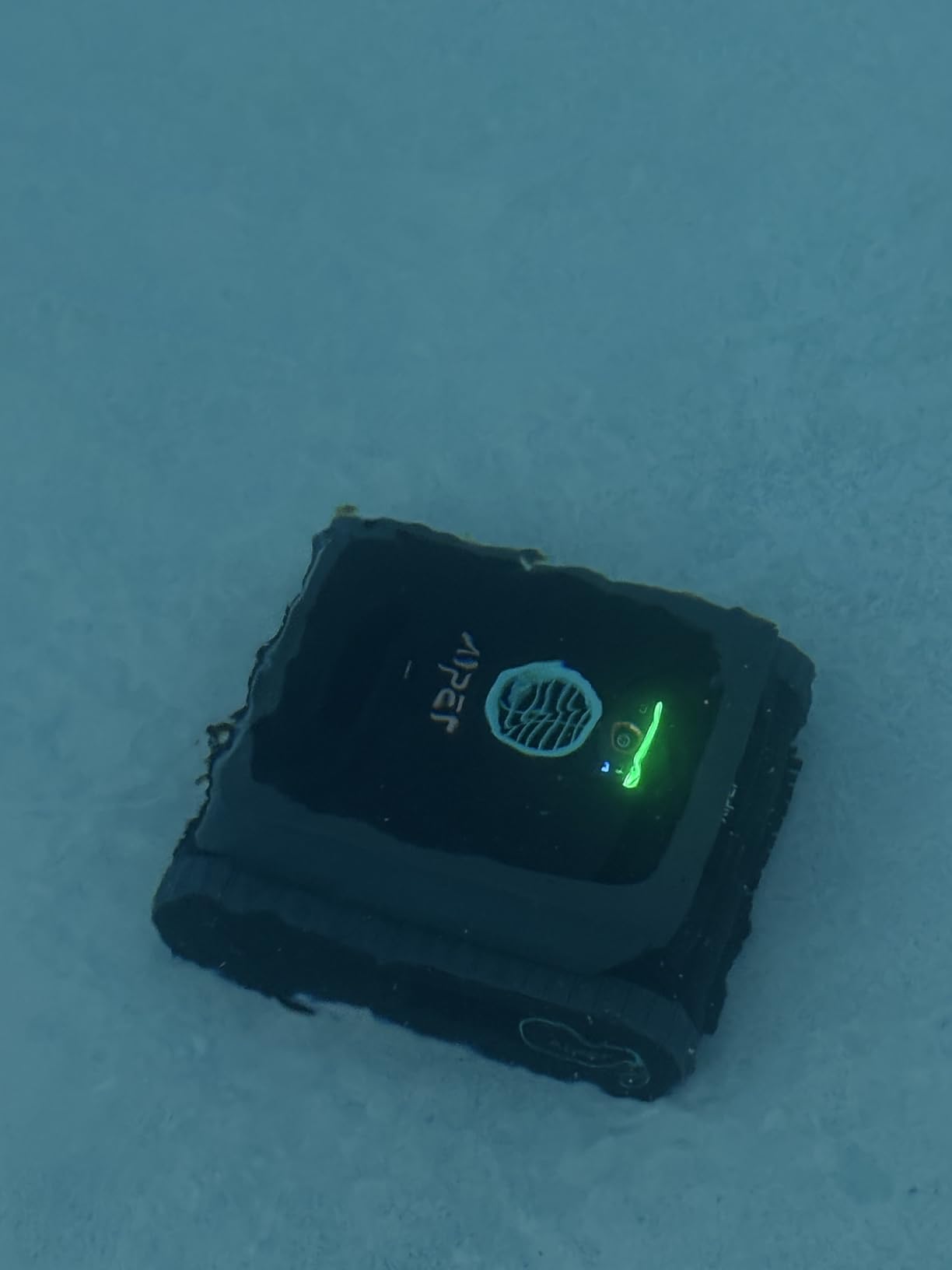
Waterline parking is a quietly excellent feature. Instead of finishing on the bottom where you cannot see it, the unit parks at the waterline and the app notifies you, so retrieval takes seconds rather than a sweep of the pool with a net.
Pick-up on fine particles, hair, sand and pine needles is reported as strong, backed by MicroMesh multi-layer filtration at 180 micron plus 3 micron.
What you need to know before you buy it
You cannot stop it or change modes while it is in the water. That is a hard limitation of the design, and it means the pre-flight configuration step is mandatory rather than optional. Set the mode on land, then launch.
Firmware matters here more than with any other pick. Reviews specifically note that the AI modes add real value once firmware is updated, and that the in-app manual is awkward to navigate while updates are slow. Buy it, update it fully, then judge it.
Where it falls short
The AI vision is not reliably better than pattern navigation. Reviewers report the camera skipping obvious debris and the unit getting stuck on drains, which is precisely the failure mode you would hope a vision system would prevent.
The replacement MicroMesh filter is needed after extended daily use, and the 149.76 Wh battery with a 4 hour charge means daily operation is a commitment rather than a casual habit. Aiper’s after-sales support is repeatedly singled out as excellent, which is worth noting given the servicing complexity.
9. Aiper Seagull SE: Best Lightweight Starter Robot
2026 AIPER Seagull SE Cordless Robotic Pool Vacuum for Above Ground Pools
Cordless, flat pools to 860 sq ft
1320 GPH suction
7.5 lb
100 minute runtime
Pros
- Suits sand
- dirt and small leaves on flat pools
- Self-parking at the wall with a retrieval hook makes it easy to find
- Lightweight 7.5 lb body with fast drainage for handling
- Simple one-touch start
- no app required
Cons
- No wall
- waterline or step cleaning; floor only
- Random movement with no mapping or sensors
- so a spot may need a re-run
- Plastic lid locking tabs are reported to snap off
- Does not retain very fine particles well
The Seagull SE exists for a specific situation: a flat above-ground pool under 860 square feet where you currently use a hose vacuum once a week. For that job it is hard to argue with. 1320 GPH of suction pulls sand, dirt and small leaves, and at 7.5 lb with fast water drainage it is the easiest unit here to get in and out of the water.
There is one genuinely unusual feature. A built-in chemical dispenser adds purification treatment as it cleans, which is a niche benefit for anyone running a small pool without a separate dosing system.
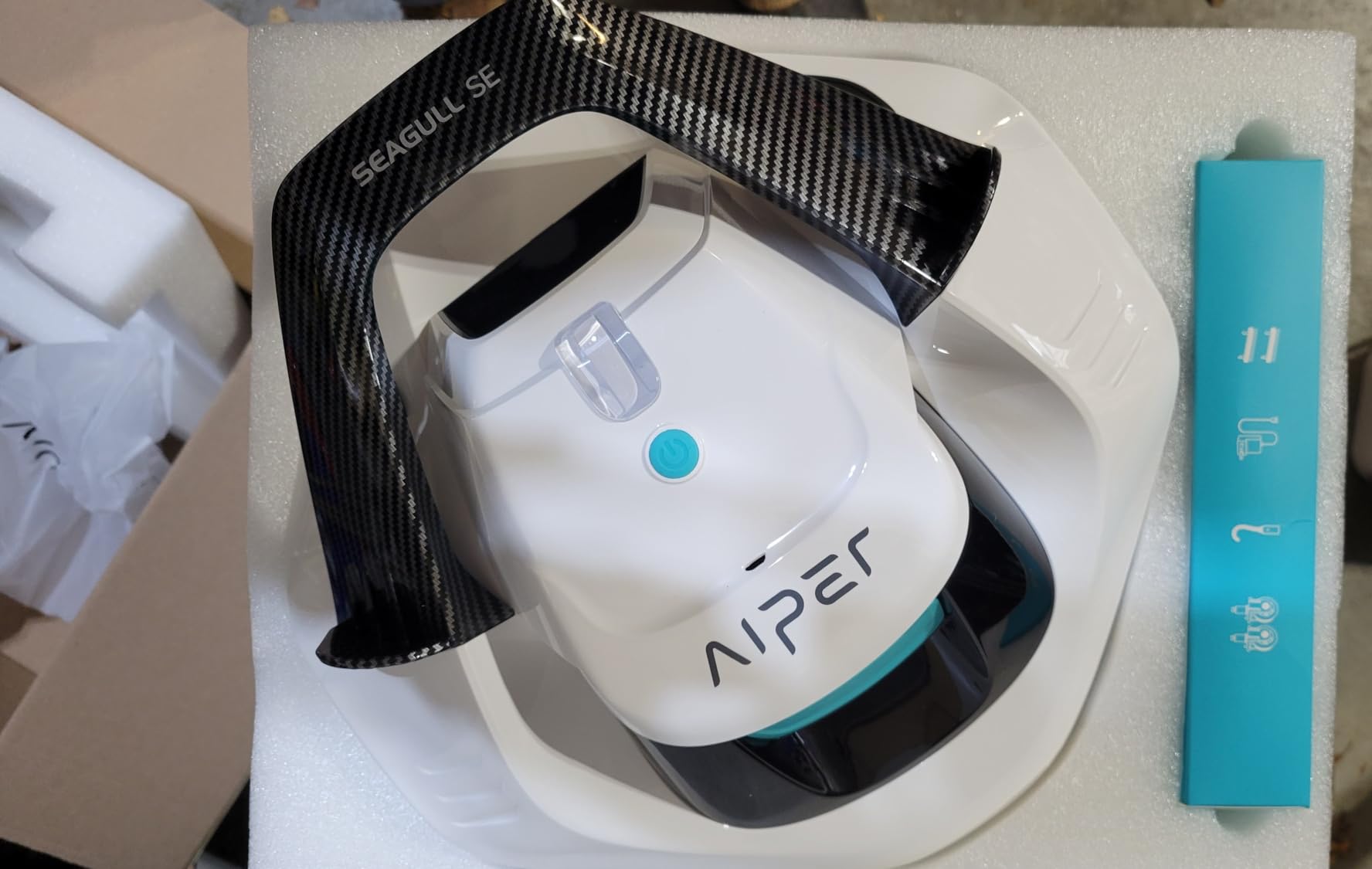
Self-parking at the pool wall with a retrieval hook is the detail that makes it pleasant. The 4-colour LED status indicator shows cycle state at a glance from the deck, and one-touch start means no pairing, no app and no account.
At 4.2 stars across 257 reviews with 63 percent five-star ratings, the review pattern is consistent. Owners explicitly set their expectations correctly, describing it as a no-frills bottom cleaner, and rate it accordingly.
Runtime is 100 minutes, which comfortably covers the rated 860 sq ft flat-pool ceiling. The 45 Wh battery is the smallest in the roundup and the reason the body is so light.
What you need to know before you buy it
Floor only, with no wall, waterline or step cleaning. That is a hard limit and it makes this the wrong unit for any pool with a deep end or a deep-end wall, however small the footprint.
Random movement with no mapping and no sensors means a spot may need a re-run. On an 860 sq ft pool that is a minor irritation, because the cycle is short enough to just run it again.
Fine particles are not retained well. If your water goes cloudy with dust or pollen rather than filling with leaves and grit, step up to a unit with a foam or ultra-fine filter layer such as the WYBOT A1.
Where it falls short
Plastic lid locking tabs are reported to snap off, which is a build-quality flag on an otherwise simple machine. It is not a safety problem, but it is an annoyance that shows up when you are cleaning the filter in the wet.
There is no app, no timer and no remote start. Every cycle starts with you standing next to the pool pressing a button. For a weekly manual-replacement job, that is fine. For anything more frequent, it is not.
10. Beatbot Sora 70: Best Full-Coverage Robot That Skims the Surface
Beatbot Sora 70 AI Navigation Pool Vacuum Robot Full-Coverage Pool Cleaning
Cordless, surface plus full coverage
6800 GPH suction
5 hour runtime
22.9 lb
Pros
- Capable of full surface plus submerged coverage
- JetPulse surface jets push leaves and floating debris into the intake
- Very high 6800 GPH suction picks up heavy debris in one pass
- 5 hour runtime covers 3200 sq ft per charge
- Parks at the surface
- drains itself and stays afloat for one-touch retrieval
Cons
- Heavy 22.9 lb unit to lift out of the pool
- Sits at the top of the category price tier
- App control is required to change modes
Surface skimming is the single most common unmet request in pool-owner discussions, and the Sora 70 is the answer in this roundup. Every other pick here works the submerged part of the pool. This one also cleans the water surface, using JetPulse dual water jets to push floating leaves and debris into the intake rather than letting them sink and become next week’s problem.
Coverage is genuinely full: surface, waterline, floor, walls and shallow areas down to 8 inches. Shallow-zone cleaning matters on sun shelves and tanning ledges, which is where debris collects in a pool most people do not clean by hand.
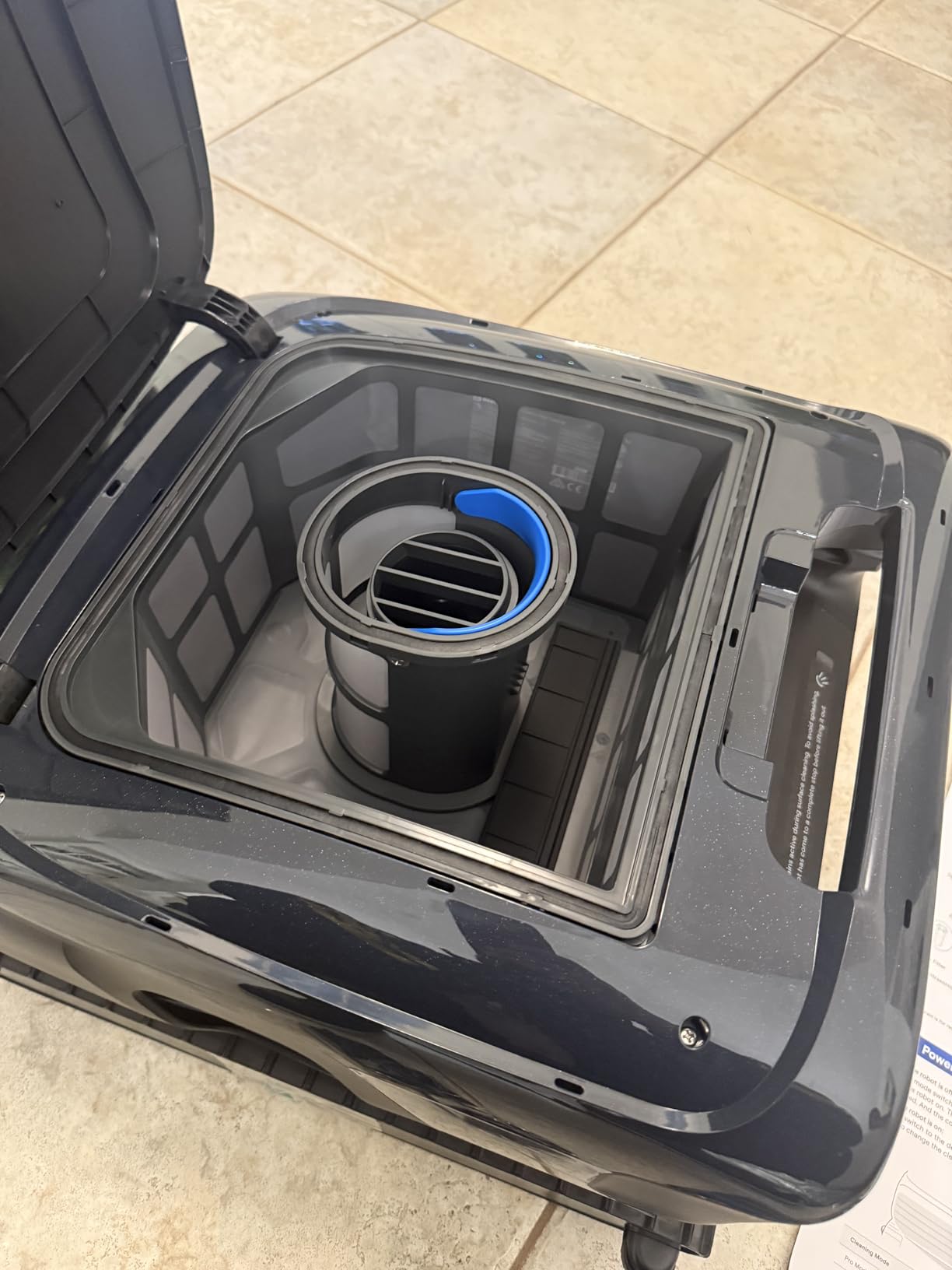
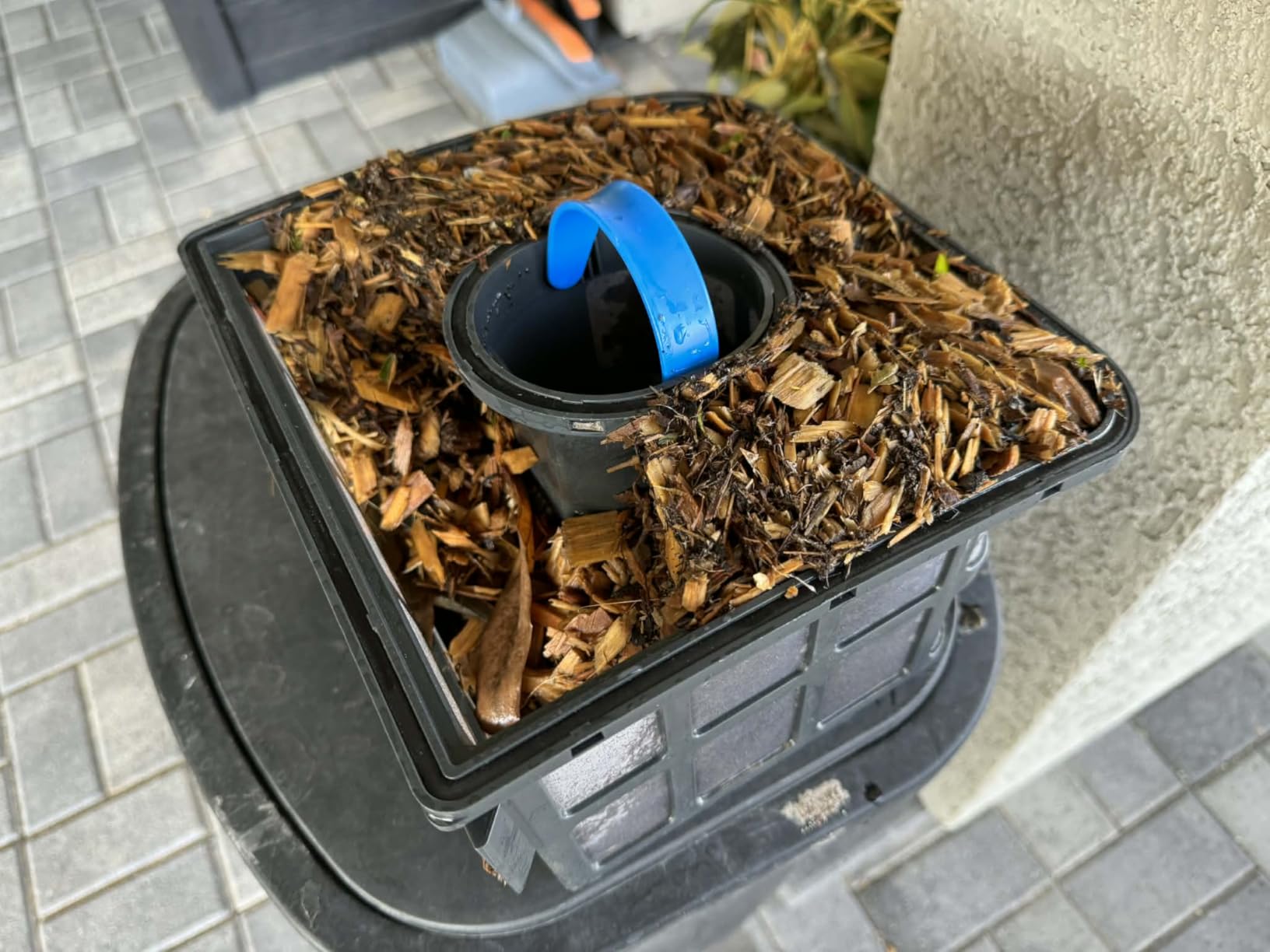
The numbers behind it are the highest in the roundup in several columns. 6800 GPH of HydroBalance suction, a 203.04 Wh and 10,000 mAh battery, up to 5 hours of runtime and 3200 sq ft of coverage per charge. That capacity figure is larger than most residential in-ground pools need.
Retrieval is the best-designed system here. Smart surface parking means the unit finishes floating at the surface, drains itself and stays there, and one-touch app retrieval brings it to the edge. On a corded model you are hauling 20-plus pounds out of a deep end by hand. Here you are scooping a floating disc.
Warranty is listed as 3 Year Protection, which is the longest coverage commitment in this roundup. Charging takes 4.5 hours on a 10,000 mAh pack.
What you need to know before you buy it
It weighs 22.9 lb, the heaviest pick in the guide, and the 6 litre capacity plus large battery are where that comes from. Surface parking mitigates it, but if you have a narrow deck with no clear path to the water, plan the retrieval route before you buy.
App control is required to change modes. There is no button fallback for mode selection, which is a real dependency if you want to override a plan without your phone.
The JetPulse system is the reason this unit sits at the top of the category. If your debris problem is submerged grit rather than floating leaves, a mid-tier unit with strong fine filtration may serve you better.
Where it falls short
The price tier is the obvious limitation, and it is not a small step up from the mid-range. Buyers on this model are paying for surface coverage and runtime, not for better floor cleaning than a mid-tier corded unit delivers.
At 310 reviews and a 4.2 average with 67 percent five-star ratings, the review base is thinner than the mid-tier picks. That is normal for a premium unit, but it means you are relying on a smaller evidence base than the headline rating alone suggests.
11. Winny A1 Cordless: Best for Scheduled Unattended Runs
WINNY POOL CLEANER-A1 Cordless Robotic Above Ground Pool Vacuum(Black)
Cordless, above ground to 1100 sq ft
7 day timer, 4 cycles
2140 GPH
7.7 lb
Pros
- Strong suction that lifts fine sand as well as leaves
- Edge cleaning pause gives pool corners extra attention
- Cordless with self-parking and quick 2.5 hour recharge
- 7-day programmable cleaning timer for unattended runs
- Lightweight 7.7 lb body with a 3.5L debris basket
Cons
- Does not climb walls or scrub the waterline
- No path mapping
- so a second run may be needed for full coverage
- Rinse the filters often in leaf-heavy pools to keep suction up
The Winny A1 is the pick for anyone who wants the robot to run on its own during the week without opening an app every day. A 7-day programmable cycle timer with up to 4 scheduled cleaning cycles is unusual at this level, and it is the single feature that separates it from the WYBOT A1 despite similar floor-only capability.
Suction is strong for the size. Dual motors deliver up to 2140 GPH with an edge cleaning pause that gives pool corners dedicated attention, which is where debris migrates and where a floor-only robot can look ineffective.
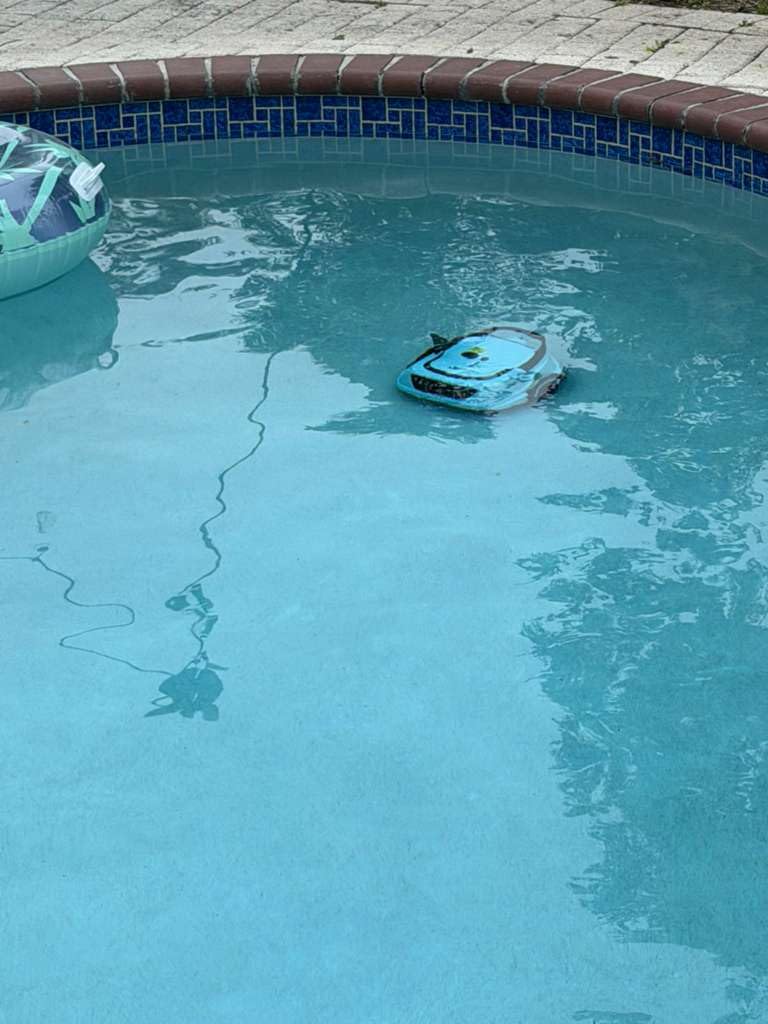
Filtration is 180 micron fine mesh plus a textured foam layer, the same dual-layer approach as the WYBOT A1, and the 3.5L debris basket holds a reasonable amount for a pool of this size. The 0.5 gallon capacity rating refers to the basket.
At 7.7 lb it is one of the lightest units here, and the 2.5 hour fast recharge means it is usable more than once a day if your pool needs it. Control is offered through an app, a push button and a remote, which is the most flexible control set in the roundup for a budget unit.
It carries a limited 2-year manufacturer warranty, which is better than most units in the budget cordless class.
What you need to know before you buy it
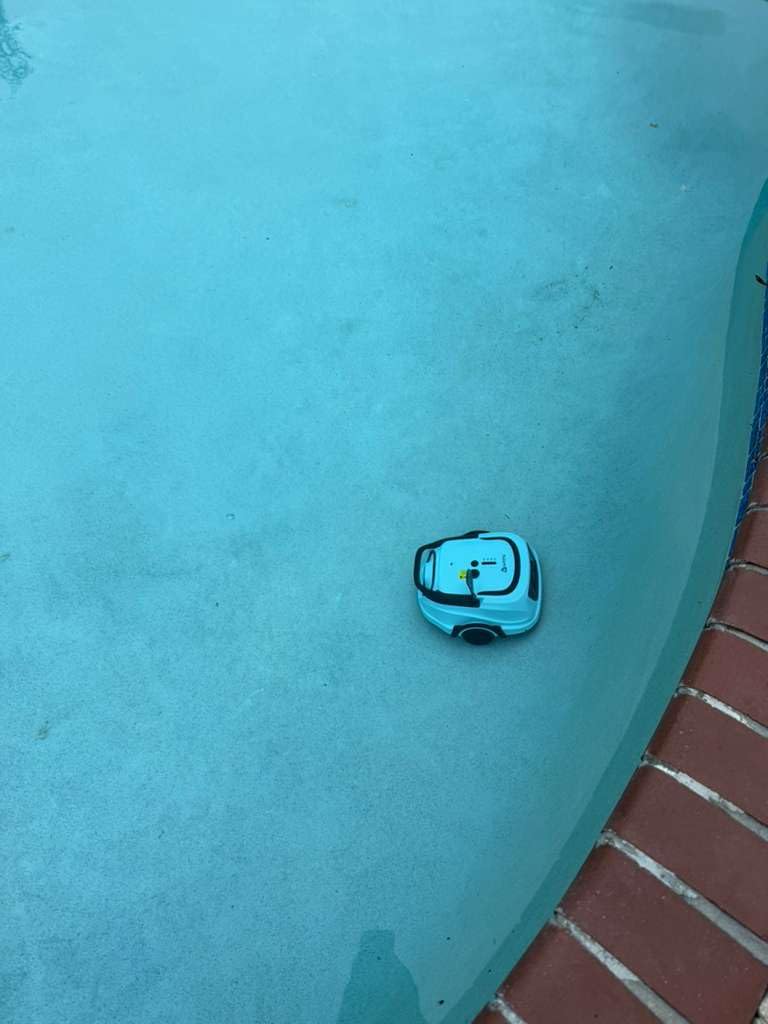
Floor only. It does not climb walls or scrub the waterline, so it belongs with the WYBOT A1 and the Aiper Seagull SE as a pool-bottom tool rather than a complete cleaner.
There is no path mapping, so a second run may be needed for full coverage. The edge pause and the 130 minute runtime mitigate this, since the robot spends proportionally more time in the areas that need it.
The evidence base here is the thinnest in the roundup at 84 reviews. The 4.4 average with 70 percent five-star ratings is encouraging, but 84 reviews is not enough to be confident about long-term failure patterns, and you should assume you are buying without a clear picture of the repair history.
Where it falls short
Filters need frequent rinsing in leaf-heavy pools to keep suction up. This is the most common maintenance complaint across the whole floor-only category, not a fault unique to this model.
It is listed as AC power with a rechargeable 50 Wh lithium-ion pack at 14.8 volts, which is a slightly unusual specification for a cordless unit. In practice it behaves as a cordless machine with a dock or plug-in recharge, but confirm the charging arrangement with the listing before ordering.
12. Seauto Track Drive Robot: Best Mid-Tier Value with Sonar Mapping
Cordless Robotic Pool Vacuum, Pool Cleaner with Track Drive & Sonar Navigation, 180W Brushless Motor, Wall & Waterline Climbing, 150-Min Runtime, for Inground & Above-Ground Pools up to 2150 Sq. Ft.
Cordless, in-ground to 2150 sq ft
Sonar navigation and mapping
150 minute runtime
19.8 lb
Pros
- Track drive grips drains
- steps and uneven floors better than wheeled bots
- Sonar navigation reduces redundant passes and overlap
- Truly one-touch: press the button and drop it in
- Three modes covering floor
- wall and full coverage
- Wall and waterline climbing at a mid-tier price point
Cons
- No app connectivity
- push-button control only
- Some reports of getting hung up on pool fittings and drains
The Seauto is the value pick for anyone who wants tracked drive and wall climbing without moving up a tier. An industrial-grade track drive gives it traction over drains, steps, corners and uneven floors, which is the single most common mechanical advantage tracks have over wheels in this category.
Sonar-based navigation maps the pool and optimises cleaning paths, which is a step above gyroscope pattern lines and a step below camera vision. Reviewers credit it with fewer redundant passes and less overlap than similarly priced wheeled cleaners. Rated coverage is 2150 sq ft with a 150 minute runtime, and dual 180W brushless motors are sealed to IP68.
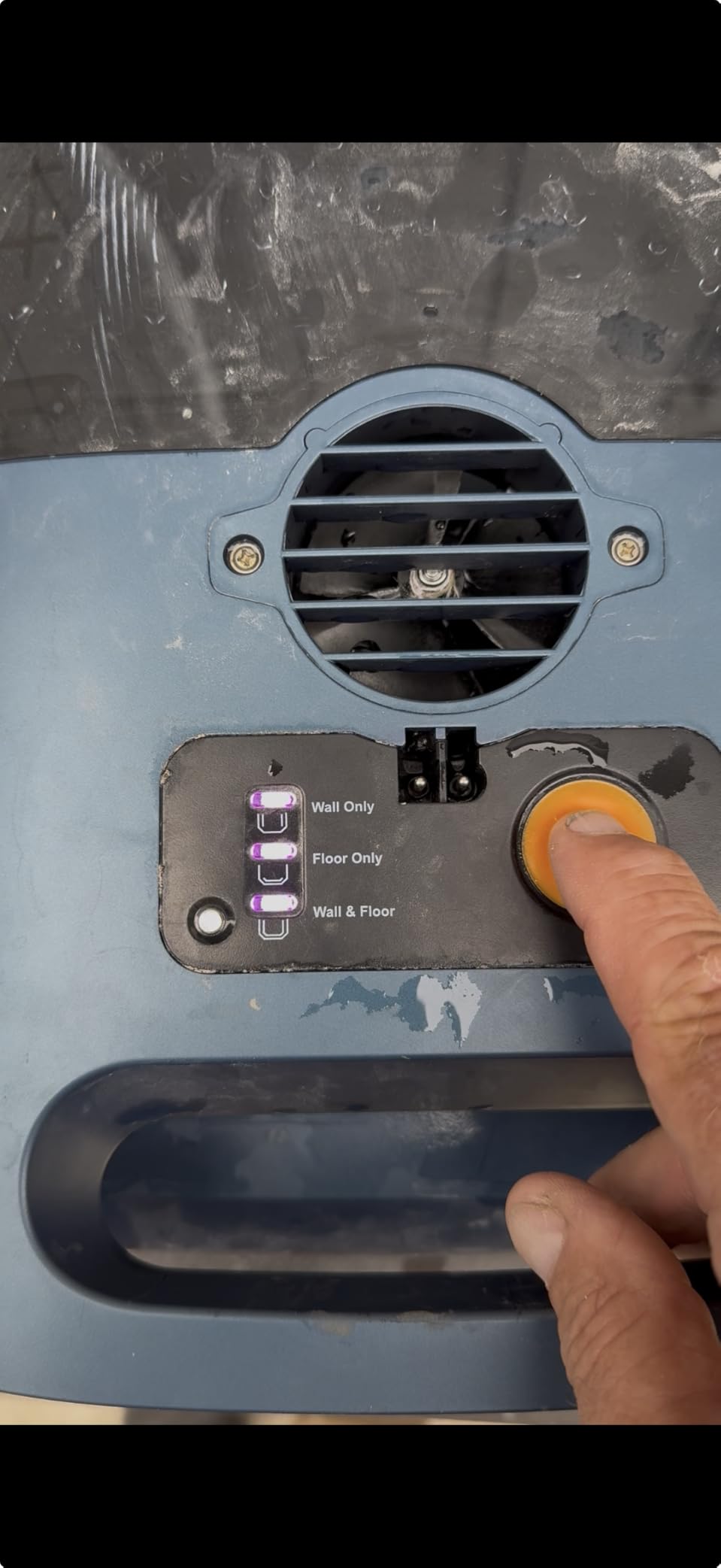
Operation is genuinely one-touch. Press the button and drop it in, with no pairing, no account and no programming. Three modes cover floor, wall and full coverage, which is the minimum useful set. A 3 hour recharge is normal for the class.
At 4.2 stars across 434 reviews with 71 percent five-star ratings, this is a well-populated review set for a unit without a major brand name, and the ratings concentrate at the top, which usually means consistent rather than variable performance.
It runs on a 168.48 Wh lithium-ion pack, which is a large battery for this class and helps explain the 19.8 lb weight.
What you need to know before you buy it
No app connectivity. Control is a push button only, so there is no scheduling and no remote start. If you want the robot to run on a timer while you are away, this is not the unit, and the WYBOT C1 or the Winny A1 both handle that.
Reported difficulty with drains and fittings appears in the reviews, and this is the geometry problem that most often gets robots stuck. Tracks improve traction, but they do not stop a suction intake from being swallowed by a main drain cover.
The listed dimensions of 5.3 by 3.3 by 2 inches do not match the physical size of a pool robot and appear to describe a component or a packaging measurement. Do not use them to plan storage.
Where it falls short
Limited warranty. This is the one area where the unbranded mid-tier tier consistently gives ground, and warranty length is a purchase driver that pool owners raise repeatedly.
Part availability is the other risk. Once this unit is out of warranty, the practical question is whether a replacement filter cartridge or drive belt is still produced. Brands with large installed bases win that comparison reliably.
How We Picked the Best Robotic Pool Cleaners
These rankings are an editorial synthesis, not a controlled lab test. I did not put twelve robots in a single pool on a fixed schedule and count debris. Anyone who tells you they did that for a full season is describing something that does not exist in consumer testing, and you should discount the rest of their claims accordingly.
What the ranking is built on is published specifications, the density and consistency of owner feedback, warranty length, and the frequency of specific reported failure modes. Where reviews disagree, I looked at the pattern across all of them rather than the most dramatic individual account.
Five criteria carried most of the weight, and they are listed in the order I applied them. First, pool fit, meaning whether the unit is rated for your pool type and length. A robot that is wrong for the pool is wrong no matter how good it is. Second, the failure rate reported for the cable, power supply, battery or drive train. Third, filtration fineness relative to the debris type. Fourth, coverage, meaning whether it handles floor, walls, waterline and surface. Fifth, warranty length and parts support.
Two honest limits. Review counts vary enormously, from 84 to 13955, and a 4.6 average across 372 reviews is a smaller sample than a 4.3 average across 13955, even though the first number looks better. And no roundup can tell you how a robot will handle your specific geometry. A pool with a sun shelf, a spa spillway and a deep-end ledge is a different job from a rectangular pool with a flat floor.
One last bias to name. This page earns a commission on purchases. That does not change the ranking criteria, but it is why the product buttons are there.
Corded vs Cordless: Which One Suits Your Pool
The corded versus cordless question generates more forum threads than any other in this category, and the reason is that people keep asking for a feature list when they need a decision rule. Here is the rule.
Buy corded if you have an in-ground pool over about 1600 square feet, heavy leaf fall in autumn, or you plan to run the robot daily through peak season. A corded unit gives you unlimited runtime, lower cost per year over its life, no battery degradation, and no 3 to 4 hour charging gap in the middle of a busy weekend. The trade-off is cable management and a supply unit that must live somewhere dry.
Buy cordless if your pool is above ground, smaller than roughly 1100 square feet, or if you refuse to run a cable from your outlet to the deep end. You get no cable to trip over, no supply unit to store, and a unit light enough to lift out with one hand. You also need to accept a fixed runtime and a charging schedule.
There is a defensible contrarian position worth knowing about, and it comes from a specialist retailer. For small pools, a corded unit can be cheaper over its life than a cordless one, because the consumables on a cordless unit, replacement filters and eventually a battery, add up faster than a corded unit needs replacing parts. If you run a small pool for five years or more, compare the two on total cost rather than on purchase price alone.
One further consideration: battery safety. Cordless units use lithium-ion packs ranging from 45 Wh on the lightest machine here to 203 Wh on the largest. Store a charged unit away from direct sun and high heat, do not leave it in a hot poolside shed, and retire a pack that is swollen or physically damaged rather than testing it.
The community consensus worth knowing is that durability outranks peak cleaning power. In forum discussions, Dolphin and Maytronics machines come up repeatedly as the durability choice, and warranty length is cited as an independent reason to prefer them. That points to a corded Dolphin for anyone whose priority is the machine still working in year five.
Pool Type, Size and Surface: Getting the Match Right
Match the rated maximum pool length to your actual pool length, and buy the next size up rather than the exact fit. A unit rated to the last inch of your pool is a unit that will be finishing its cycle when it reaches the far end. Most buyers who return robots are returning them for being slightly too small, not slightly too large.
For above-ground pools, the surface matters more than for in-ground. Vinyl, inflatable and steel-wall pools all have ribbed sides and liner seams that trap debris. A unit with a track drive, such as the Dolphin Escape, handles those transitions far better than a wheeled floor-only machine. The WYBOT A1 and the Aiper Seagull SE are designed for flat above-ground floors and are excellent there, but they will not climb anything.
For in-ground pools, the risk is geometry, not size. Deep-end walls, sun shelves, spa spillways and steps are where robots get stuck, and that recurring question, why is my robot stuck, has a short answer. Tight corners and ledges catch the body, a flat bottom gives navigation nothing to reference, a tangled cable anchors the unit, a low battery strands it mid-pool, and a filter overwhelmed by debris kills suction until it is rinsed.
Preventive measures are unglamorous and effective. Use a caddy to manage cable slack, size the filter basket to your debris load rather than your pool size, and keep the pool chemistry in range, because a scaled waterline is a surface no robot will scrub properly.
On surface type, vinyl, fiberglass and gunite are all within scope for every unit in this roundup. Vinyl liner deserves one specific caution: confirm the unit is liner-safe and avoid models with a fixed aggressive brush setting if your pool has a delicate finish.
Filtration, Debris Types and Waterline Cleaning
Filtration fineness is the specification that most directly determines whether your water ends up clear, and it is the one most buyers skim past. Filter fineness is measured in microns, and lower is finer. A 180 micron mesh catches leaves, twigs, pebbles and hair. It does not catch silt, dust, pollen or plaster dust. A 10 micron or 3 micron layer does.
This explains a common complaint that buyers find confusing. A robot can complete a full cycle with a coarse basket, fill it visibly, and leave the water cloudy, because fine particles were never captured. They wash back through and settle. If your problem is cloudiness rather than debris, match the filter to the problem, not just the pool size.
By debris type, the matching is straightforward. Heavy leaves and pine needles need bulk capacity and suction, so favour large baskets, high GPH figures and wide intakes. Sand and silt need fine filtration. Pet hair and fine organic debris need a foam layer plus strong suction. Algae film on the waterline needs a brush that actually rotates against the surface.
Waterline cleaning deserves its own note because it is where oil, sunscreen and algae film collect, and it is the band most visible when you look at a pool. A unit that does not climb walls will never clean it, no matter how good its floor performance is. Of the picks here, the corded Dolphins, the WYBOT C1 and C2, the Aiper Scuba S1, the Seauto and the Beatbot Sora 70 all handle walls and waterline. The WYBOT A1, the Aiper Seagull SE and the Winny A1 do not.
Flow rate, quoted in gallons per hour, is a related figure. Higher flow means debris is moved faster and the filter captures more per pass. The range in this roundup runs from 1320 GPH on the Seagull SE to 6800 GPH on the Beatbot Sora 70, and the difference is visible on heavy debris loads.
Saltwater vs Chlorine Pools: What Changes
Saltwater changes almost nothing about your robot selection, which surprises people who assume the two systems behave differently. The motors, brushes and housing are the same, and the suction path is the same.
Two practical differences are worth noting. First, salt crystallises as water evaporates, and it settles on every surface including the robot. Rinse the unit with fresh water after each cycle rather than letting it dry in place, especially the filter cartridge and the cable connector, and store it indoors between uses. This applies to chlorine pools too, but salt makes it more visible.
Second, if your pool uses a salt chlorine generator, be consistent with the robot’s schedule. Running the robot before the generator cycles is generally the better order, because the generator raises pH slightly over a cycle and fresh water cleaning is more effective before that happens.
The real buying decision for a saltwater owner is unchanged. Match pool type, match debris, match filtration to the problem. No unit in this roundup is marked saltwater-specific, and none needs to be.
Runtime vs Pool Size: The Math Most Buyers Miss
Runtime is the number cordless buyers check first and the number that most often disappoints. Published runtime is a best-case figure measured on a short cycle in clear water with light debris, and your pool will not present those conditions every time you run it.
Here is how to do the arithmetic. Divide your pool’s surface area by the coverage figure the manufacturer claims, then compare the result to the rated runtime. The Beatbot Sora 70 claims 3200 sq ft per charge, so almost any residential in-ground pool is covered in one pass. The WYBOT C2 claims 2152 sq ft per cycle, which covers most in-ground pools up to about 20 by 35 ft. The WYBOT C1 claims 1618 sq ft, which is comfortable for a 16 by 32 ft pool. The WYBOT A1 and the Winny A1 claim 1100 sq ft, which suits about 15 by 24 ft. The Aiper Seagull SE claims 860 sq ft for flat pools.
Now adjust downward for reality. A deep end means the robot spends part of the cycle climbing and scrubbing rather than travelling, which cuts effective coverage. Heavy leaf fall means the filter fills early and the unit spends time recovering suction. Winter conditions, when the water is cold and the robot moves more slowly, reduce runtime further.
The practical rule is to buy for at least one and a half cycles of coverage. If your pool sits near a unit’s rated ceiling, a second cycle is a real possibility, and on a 4 hour charge that changes how you use the machine. On a 2 to 3 hour charge, a second cycle is easy and the constraint largely disappears.
Charging time is the number to pair with runtime. The Aiper Seagull SE at 45 Wh is light partly because its 100 minute runtime matches an 860 sq ft ceiling. The Seauto carries a 168.48 Wh pack and still charges in 3 hours. The WYBOT C1 takes 4 hours to reach its 160 minute runtime, which is the worst ratio in the roundup and the one to plan around.
What to Avoid for Your Pool Type
Premium features are not universally useful, and paying for the wrong one is the most common way people end up disappointed with an otherwise good robot. The list below is organised by pool type because the waste is specific.
If you have a small above-ground pool under 1100 square feet with a flat floor, avoid app connectivity and mapping. You do not need seven cleaning modes on a pool that takes 90 minutes to clean, and the Winny A1 shows you can get scheduled runs without a companion app. Also avoid wall-climbing claims at this size, because a flat-bottomed pool has nothing to climb and the money is better spent on a bigger filter.
If you have a large in-ground pool with heavy leaf fall, avoid cordless. This is the clearest case in the guide. Leaf season means multiple cycles a day or a filter that is full before the run ends, and a fixed runtime with a multi-hour recharge is the wrong architecture for that job. A corded unit with a large basket is the right tool, and the Dolphin Nautilus CC Plus is built for exactly this.
If your pool is freeform with a sun shelf, a spa spillway and a deep-end ledge, avoid cheap gyroscope-only navigation. Pattern navigation in complex geometry is where missed corners and stuck units come from. Either spend up for the Sonar mapping on the Seauto, or accept that you will be nudging the robot and re-running it.
If you have a pool with a waterline you actually need cleaned, avoid any floor-only unit, however good its suction rating. The WYBOT A1, the Aiper Seagull SE and the Winny A1 are all excellent floor machines and none of them will touch the waterline. Budget for that separately or choose a wall-climbing model.
If you are tempted by a high-end model for its AI features, avoid the vision units unless you will actually supervise them. The Aiper Scuba V3 cannot be stopped or mode-changed while in the water, and its camera has been reported to skip obvious debris. If your cleaning is a scheduled routine rather than a supervised one, a simpler scheduled unit is the better purchase.
If you plan to keep a robot past year three, avoid limited warranties on unbranded units. Parts availability after warranty is the real longevity test, and it is the one factor no specification table covers. A 3 year protection plan on the Beatbot Sora 70 is a meaningful part of what you are buying there.
Total Cost of Ownership Over Five Years
Purchase price is the least informative number in this category, because the cost differences between units are recoverable over a few years and the parts differences are not. Here is how the running costs actually break down, in the order they hit you.
Filters are the first and most consistent consumable. Every unit in this roundup uses a cartridge or basket that needs rinsing most cycles and replacing annually at most. The relevant question is not price but replaceability. The Aiper Scuba S1 has a replaceable 3 micron ultra-fine element, and the Aiper Scuba V3 uses a MicroMesh cartridge that is a consumable after extended daily use. A unit whose fine filter is welded in rather than replaceable is a unit whose suction degrades from year two onward.
Brushes are the second. A rotating scrub brush wears whether or not the pool is dirty, and brands with long production runs keep replacement brushes available for years. This is another quiet advantage of the large installed base on the Dolphin models and a genuine long-term cost risk on newer unbranded units.
Power supplies and cables are the third, and this is where corded units are exposed. Multiple owners of the Dolphin Escape and the Dolphin Premium 20 report cord or power supply box failures after a season or two. That is a repair cost that can rival a replacement unit, and it is the single biggest reason to check what your warranty actually covers on the supply unit as opposed to the robot body.
Batteries are the cordless equivalent. Packs in this roundup range from 45 Wh to 203 Wh, and lithium-ion packs degrade with heat and cycle count. The realistic assumption is one pack replacement somewhere in years four to six on a daily-use cordless unit, and no pack at all on a corded unit. If you run a robot daily, this is a genuine long-term cost difference rather than a rounding error.
Caddies and covers are the forgotten line. A corded unit needs a dry, covered place for its supply unit. If you do not have one, you will improvise something that shortens the life of the electronics. Cordless units store anywhere and need less.
Electricity is the smallest line and the most misunderstood. A low-voltage robot uses roughly a tenth of the electricity a booster pump would for comparable cleaning work, and cordless units use less still. Over a season this is real money but it will not decide your purchase.
The practical conclusion is to weigh replaceable parts and warranty length more heavily than the entry figure. A unit with a replaceable fine filter and a three-year plan is cheaper over five years than a cheaper unit with a welded filter and a one-year warranty, even if the first one costs more on the day.
Feature Glossary: Navigation, Micron Filters and Swivel Cables
Product pages lean on jargon. These are the terms that actually tell you something about performance.
Anti-tangle swivel cable is a mechanical feature on corded units that lets the cable rotate as the robot turns, so it does not wind up into a knot around the unit. If your corded robot repeatedly stops and reverses for no reason, the cable is wrapping. A swivel is the difference between a robot that runs unattended and one you have to watch.
Micron filtration is filter fineness. A 180 micron mesh catches leaves, twigs and hair but lets silt through. A 10 micron or 3 micron layer catches fine particles, pollen and dust. Fineness is the specification most worth comparing when your problem is cloudy water rather than visible debris.
Waterline cleaning is scrubbing the band where the water surface meets the wall, where sunscreen, oil and algae film collect. It is the most visible band in a pool and the one floor-only units never touch.
Navigation types come in four tiers. Random path is the cheapest and covers unevenly. Gyroscope pattern navigation follows repeatable lines and is clearly better. Sonar mapping builds an actual map and reduces overlap, as on the Seauto. Camera or AI vision detects debris and adapts, as on the Aiper Scuba V3, with the most variable real-world results.
Self-parking means the robot returns to a known location at the end of a cycle so you can find it. Bottom parking helps if you have a net. Surface or waterline parking, as on the Beatbot Sora 70 and the Aiper Scuba V3, is the best version, because the unit floats where you can see it.
Track drive means continuous tracks instead of wheels. Tracks spread weight over a wider area and climb steps, liner seams and uneven floors that stop wheeled units. The Dolphin Escape, the Aiper Scuba S1 and the Seauto all use them.
IP68 sealing on motors and electronics indicates dust-tight and submersible protection. It is a durability specification rather than a performance one, but it is a fair signal about how the manufacturer expects the unit to be used.
Robotic skimmer refers to a surface-only device that collects floating debris before it sinks, which is a different product category from a submerged robot. Only the Beatbot Sora 70 in this roundup performs both jobs in one unit, which is the specific reason it sits at the premium end.
Frequently Asked Questions
Is Polaris or Dolphin better?
Dolphin is generally stronger on filtration options and warranty length, and it has a much larger installed base, which means filters, brushes and impellers stay available for years. Polaris tends to lead on wall-climbing drive trains and mechanical simplicity. Forum consensus repeatedly favours Dolphin and Maytronics for long-term durability, and warranty length is a purchase driver independent of brand. Both ship corded models only in this roundup.
What is the best robotic pool cleaner according to consumer reports?
We could not verify a Consumer Reports robotic pool cleaner ranking, so we will not claim one. Based on published specifications, owner feedback volume and reported failure rates, the Dolphin Nautilus CC Plus is our overall pick: 4.3 stars across 13955 reviews, rated for in-ground pools up to 40 ft, with a two hour plug-and-play cycle. Judge any roundup, including this one, by its stated methodology and its willingness to name failure modes.
Which robotic pool cleaner is the best value for money?
For in-ground pools, the WYBOT C1 is the value pick: 160 minutes of runtime, four cleaning zones including steps and waterline, triple motors that climb 45 degree slopes, and gyroscope navigation, across 956 reviews. For flat above-ground pools under 1100 sq ft, the WYBOT A1 gives 2280 GPH suction and 130 minutes of cordless runtime. The WYBOT C2 leads on fine debris with 10 micron filtration.
Are robotic pool cleaners worth it?
Yes for most in-ground owners, and the break-even is usually one skipped pool service visit. A robot replaces weekly vacuuming that otherwise costs two to three hours of your time. They are not worth it for very small, rarely used or fully screened pools where a hose vacuum takes five minutes, or when the main problem is floating debris, because most robots do not clean the surface. Only the Beatbot Sora 70 in this roundup skims as well as it vacuums.
How long do robotic pool cleaners last?
About five years on average, longer with rinsing after each cycle and dry indoor storage. Longevity tracks warranty length and parts availability more closely than it tracks cleaning power, which is why pool owners repeatedly favour Dolphin and Maytronics. Budget for a power supply or cord replacement on corded units, and for a battery replacement on heavily used cordless units, somewhere in years four to six.
Should I get a corded or cordless robotic pool cleaner?
Corded for large in-ground pools, heavy leaf fall, or daily running, because you get unlimited runtime, no battery degradation and no charging gap. Cordless for above-ground pools, pools under about 1100 sq ft, and anyone who does not want to run a cable from the outlet to the deep end. For small pools run over many years, a corded unit can cost less overall because the cordless unit’s filters and eventual battery add up faster.
Why is my robotic pool cleaner stuck?
The usual causes are steps and ledges, tight corners and deep-end walls, a completely flat bottom that gives navigation nothing to reference, a cable wound around the body, a battery that ran down mid-cycle, and debris filling the filter until suction dies. Prevent most of it with a caddy for cable management, a filter basket sized to your leaf load, and clearing steps of loose objects before the cycle starts.
Final Verdict on the Best Robotic Pool Cleaners
The Dolphin Nautilus CC Plus is the best robotic pool cleaner overall, and it wins for a reason that is easy to overlook in a spec sheet race. Fourteen thousand reviews, a two hour cycle, wall climbing with an active brush and a filter basket that takes fifteen seconds to rinse. It is not exciting and it is not the cheapest, and it is still the machine most people end up owning.
For above-ground pools and small in-ground shapes, the Dolphin Escape with its tracks and bag-free cartridge is the safer fit. For cordless, the WYBOT C1 covers the most ground for the money, and the WYBOT C2 is the one to buy if your problem is fine particles. The Aiper Scuba S1 wins on single-cycle runtime and a two year warranty. If floating leaves are your problem, the Beatbot Sora 70 is the only unit here that skims the surface as well as it vacuums the floor.
Whatever you choose, the habits matter more than the machine. Rinse the filter after every run, keep it out of the sun when it is not working, and size it to your pool rather than to the cheapest listing. Those three habits decide whether you still like the robot in year five, which is the number that actually matters.