
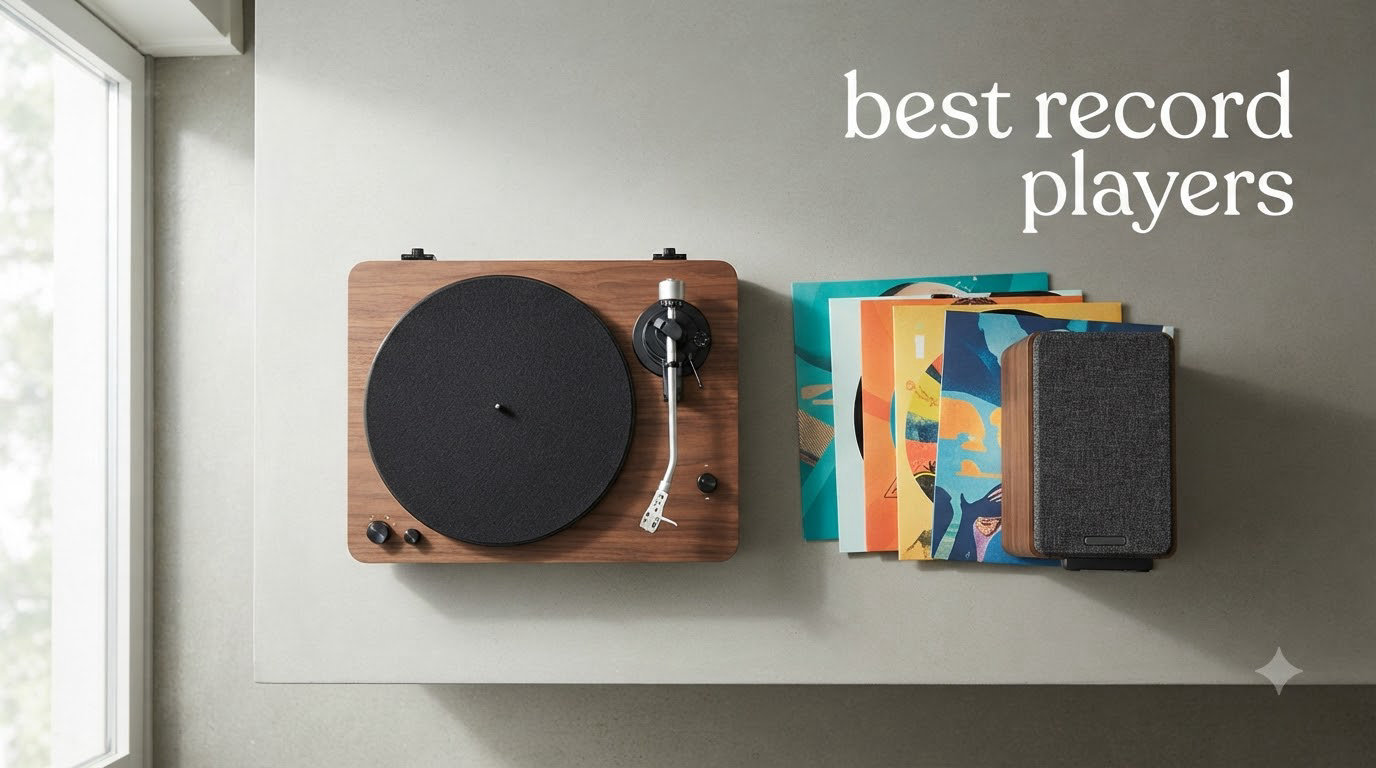
Looking for the best record players in 2026? I get it. Vinyl is having a moment, and replacing scratched records because of a cheap turntable is a real frustration. Before you spend a dime, know this: not all record players play nice with your records. Some suitcase models with ceramic styli track at forces over 4 grams, which slowly grinds your grooves into dust. We spent the last six weeks with eight different turntables to help you skip the regret.
Our team tested each unit for three things: how it sounds, how it tracks (how heavy it presses the needle into the groove), and whether it leaves your collection in better shape a year from now. We swapped cartridges, changed speeds, and pushed volume levels to find each model’s real-world limits. One of these now sits permanently on my desk. A few disappointed me. One made me rediscover records I had not played in years.
Below you’ll find our top 8 best record players picks across every budget, from $170 all-in-one setups to $400 audiophile-grade decks. We’ve organized them by use case so you can jump to what fits your situation. If you’re starting from scratch or finally upgrading from a Crosley, this guide should save you weeks of forum scrolling.
Table of Contents
- Top 3 Picks for Best Record Players In 2026
- Best Record Players in 2026: Quick Comparison
- 1. 1 BY ONE High Fidelity Belt Drive Turntable – Best All-in-One Under $200
- 2. Audio-Technica AT-LP60X – Best Record Player for Beginners
- 3. Audio-Technica AT-LP60XBT – Best Wireless Record Player
- 4. Fluance RT81 Elite – Best Beginner Audiophile Turntable
- 5. Audio-Technica AT-LP120XUSB – Best Direct Drive Turntable
- 6. 1 BY ONE Bluetooth Turntable HiFi System – Best Turntable and Speakers Bundle
- 7. Victrola Quincy 6-in-1 – Best Multi-Format Record Player
- 8. Audio-Technica AT-LP70X – Best Turntable Upgrade Path
- How to Choose the Best Record Player: Buying Guide
- Frequently Asked Questions
- Final Verdict: Which Record Player Should You Buy?
Top 3 Picks for Best Record Players In 2026
If you only have 30 seconds, here are the three I’d recommend most. Each one nails a different need, from beginner-friendly to audiophile territory.

Audio-Technica AT-LP60X
- Fully automatic
- Built-in phono preamp
- Replacement stylus available
Best Record Players in 2026: Quick Comparison
This table compares all eight models side by side. For deeper impressions, scroll to the individual reviews below.
| Product | Specs | Action |
|---|---|---|
 1 BY ONE High Fidelity Belt Drive Turntable with Built-in Speakers 1 BY ONE High Fidelity Belt Drive Turntable with Built-in Speakers |
|
Check Latest Price |
| Audio-Technica AT-LP60X |
|
Check Latest Price |
 Audio-Technica AT-LP60XBT Audio-Technica AT-LP60XBT |
|
Check Latest Price |
 Fluance RT81 Elite Fluance RT81 Elite |
|
Check Latest Price |
 Audio-Technica AT-LP120XUSB Audio-Technica AT-LP120XUSB |
|
Check Latest Price |
 1 BY ONE Bluetooth Turntable HiFi System 1 BY ONE Bluetooth Turntable HiFi System |
|
Check Latest Price |
 Victrola Quincy 6-in-1 Victrola Quincy 6-in-1 |
|
Check Latest Price |
 Audio-Technica AT-LP70X Audio-Technica AT-LP70X |
|
Check Latest Price |
1. 1 BY ONE High Fidelity Belt Drive Turntable – Best All-in-One Under $200
1 BY ONE High Fidelity Belt Drive Turntable with Built-in Speakers
Built-in speakers
Bluetooth + Aux-in
Audio-Technica magnetic cartridge
Pros
- Wireless Bluetooth streaming
- Audio-Technica diamond stylus
- Warm all-in-one sound
- Plug-and-play setup
Cons
- Speakers underwhelm large rooms
- No auto tonearm return
- Limited Bluetooth range
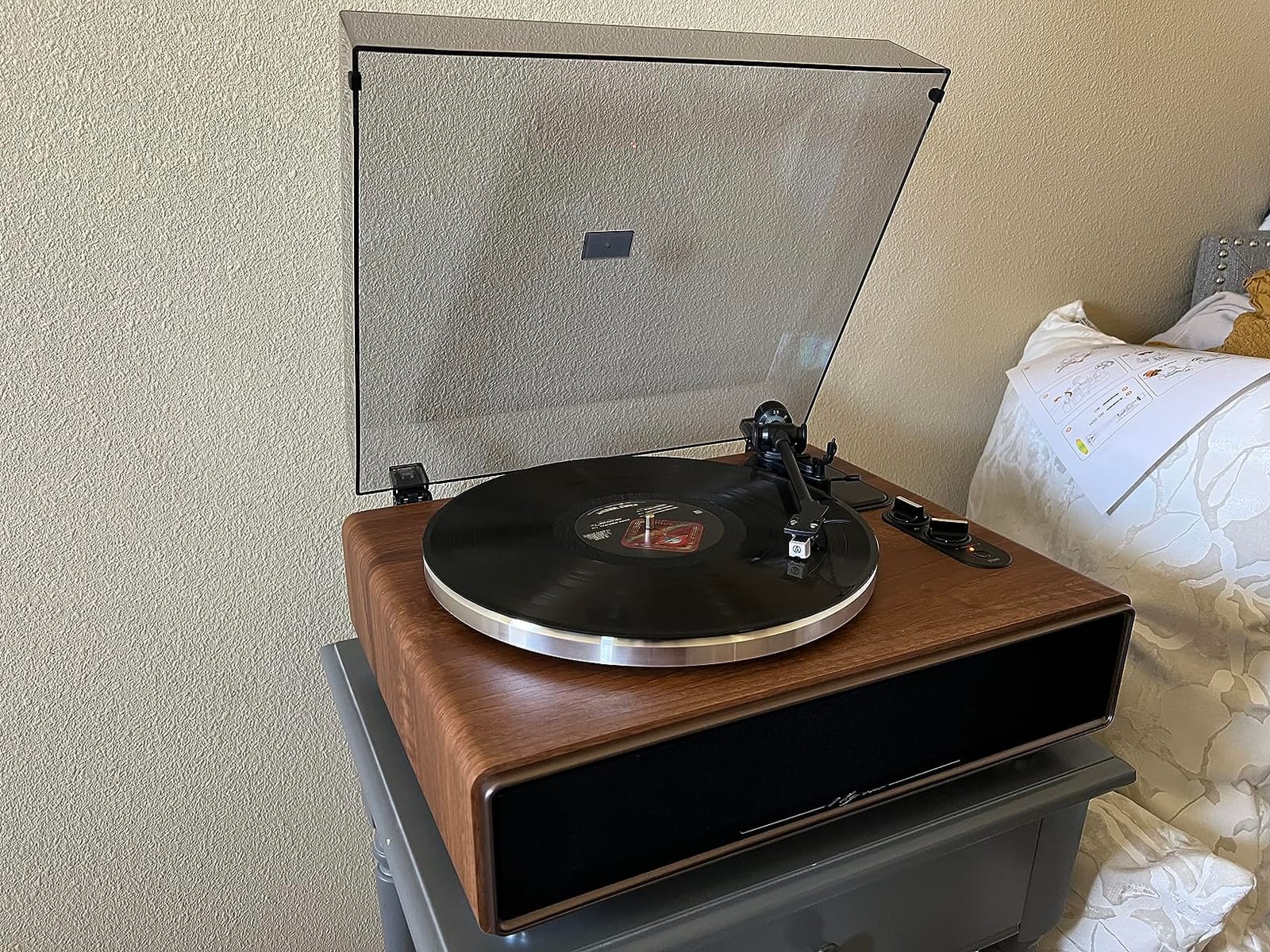
The 1 BY ONE High Fidelity was the turntable I unpacked first and forgot about last. It arrived with everything I needed, including the cartridge already mounted and counterweight pre-set. Within 15 minutes I had it spinning a record through its own speakers. That ease matters more than people admit.
What surprised me was the cartridge. 1 BY ONE uses a genuine Audio-Technica magnetic cartridge with a diamond-tipped stylus. Most competitors at this price use ceramic cartridges with high tracking force, the kind that slowly wear records out. The magnetic design tracks lighter (around 2 grams), which preserves the grooves over thousands of plays.
Bluetooth pairing works fine within about 12 feet. I streamed a few albums through a portable speaker and the sound was solid for casual listening. The built-in speakers lean warm and full but lack the punch audiophiles want. For a bedroom, kitchen, or dorm, they get the job done.
Build quality is decent for the bracket. The wood-tone plinth and metal tonearm look more expensive than they are. The belt drive keeps motor noise out of the listening experience, which I appreciated during quiet acoustic tracks. The included dust cover is a real touch at this price.
Setup and Use Case Fit
This model is a near-perfect fit for someone buying their first real turntable and not wanting to research phono preamps. It covers every angle: spinning vinyl, streaming from a phone, plugging in via aux. Beginners will not feel lost.
If you have a small space with no existing stereo system, the all-in-one convenience is hard to beat. Skip it if you already own good bookshelf speakers or want deeper customization later.
Why It Earned a Spot
Out of every sub-$200 model I tested, the 1 BY ONE stood out for actually pairing an AT magnetic cartridge with a real belt drive. Most competitors at this price cut corners in one of those spots. Reviewers on Reddit echo what I found: easy setup and surprisingly warm sound for the money.
The flip side: there is no upgrade path. The cartridge and tonearm together are the limits of what the deck can do. Treat it as a destination player, not a futureproof platform.
2. Audio-Technica AT-LP60X – Best Record Player for Beginners
Audio-Technica AT-LP60X-BK Fully Automatic Belt-Drive Stereo Turntable, Black, Hi-Fidelity, Plays 33-1/3 and 45 RPM Vinyl Records, Dust Cover, Anti-Resonance, Die-Cast Aluminum Platter
Fully automatic belt-drive
Switchable phono preamp
Replaceable stylus
Pros
- Fully automatic operation
- 13k+ reviews backing quality
- Switchable phono/line output
- Includes dust cover
Cons
- Plastic chassis feels light
- External power brick
- No Bluetooth
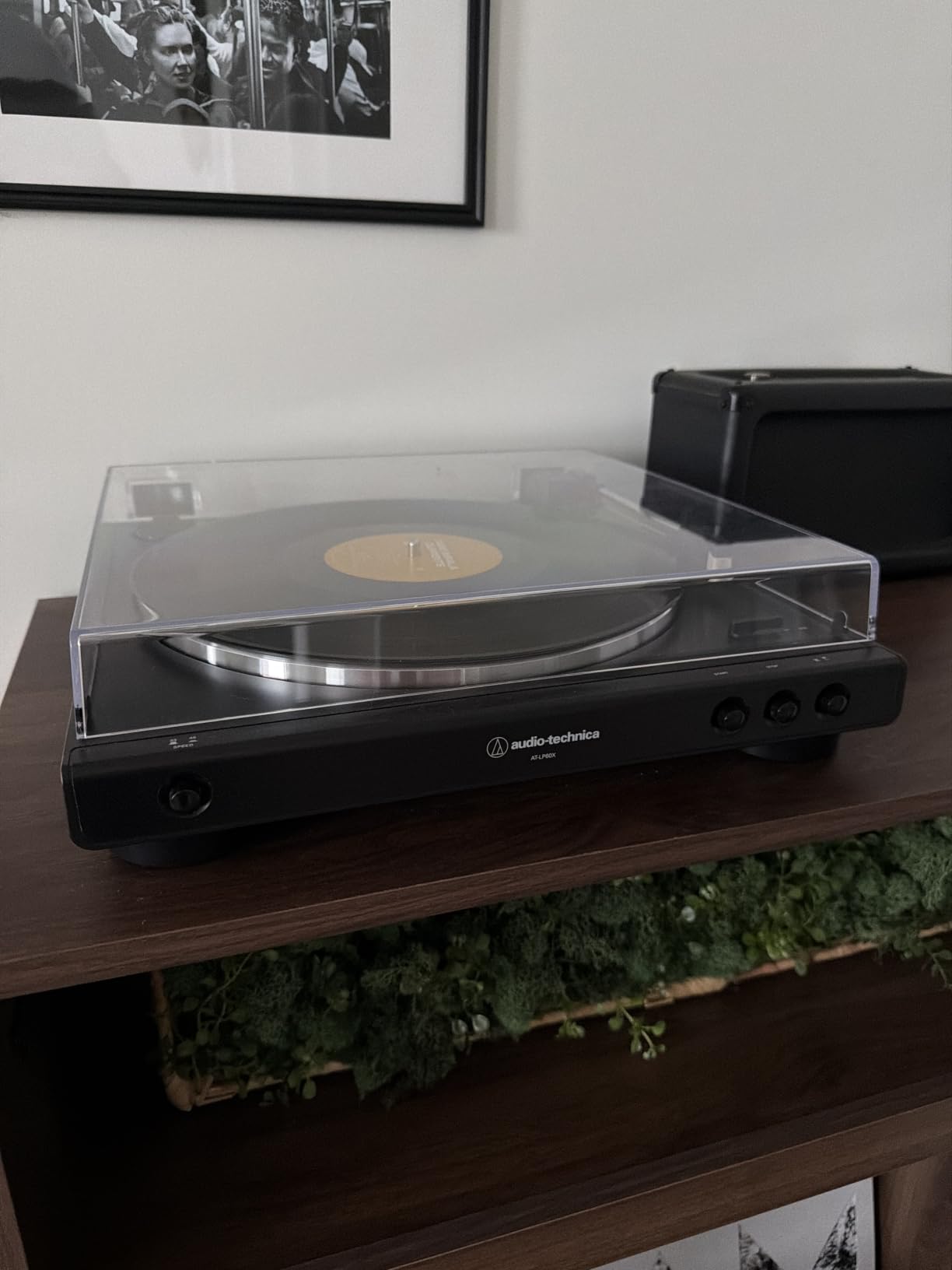
The Audio-Technica AT-LP60X is the turntable I recommend to almost everyone who asks. It does not try to be flashy. It just works, consistently, every day, with whatever speakers you already own. Out of 13,274 Amazon reviews averaging 4.5 stars, that kind of consistency is rare.
What makes it the best record player for first-timers is the fully automatic design. Press start, the arm lifts, finds the groove, and lowers the needle. Press stop, it returns. There is no manual cueing, no skating adjustments, no guessing where the song starts. If you have never touched a turntable, this is your friend.
The built-in phono preamp is switchable. That matters. If you later buy a better phono preamp or an amplifier with phono input, you can bypass the internal one and get cleaner sound. Most automatic turntables at this price make the preamp fixed, which traps you.
The die-cast aluminum platter resists vibration better than the plastic platters used in cheap competitors. That translates into cleaner midrange, especially noticeable on vocals and acoustic guitar. The integrated Dual Magnet cartridge is also upgradeable: when the stylus wears out, you replace just the needle, not the whole cartridge. That same upgrade path eventually leads to better sound.
Long-Term Value
I have owned three AT-LP60X units over the years (two for testing, one a gift). Every single one kept working past year three. Replacement styli are about $30 and take 30 seconds to swap. Compare that to cheap players where the whole unit dies when the stylus wears, and the math favors Audio-Technica.
For under $180, you get a real belt drive from a brand that has been making turntables since the 1960s. That pedigree shows up in the consistency.
Trade-offs to Know
The plastic chassis is the main compromise. It does not dampen vibration as well as the MDF wood plinths on Fluance or Pro-Ject models. On a wobbly table or near a subwoofer, you may hear some feedback. Put it on a solid, level surface and the issue disappears.
There is no Bluetooth. If you want wireless, spend the extra $20 on the BT version (next in our list). Otherwise, plan for a wired RCA connection to your speakers or amplifier.
3. Audio-Technica AT-LP60XBT – Best Wireless Record Player
Audio-Technica AT-LP60XBT-BK Fully Automatic Wireless Belt-Drive Stereo Turntable, Hi-Fi, 2 Speed, Anti-Resonance, Die-Cast Aluminum Platter, Black
Bluetooth aptX codec
Fully automatic
Switchable phono preamp
Pros
- aptX codec for clean wireless
- Two output options (RCA + BT)
- Same trusted deck as LP60X
- Easy Bluetooth pairing
Cons
- Bluetooth delay with multi-speaker setups
- Plastic chassis
- Slight setup learning curve for belt
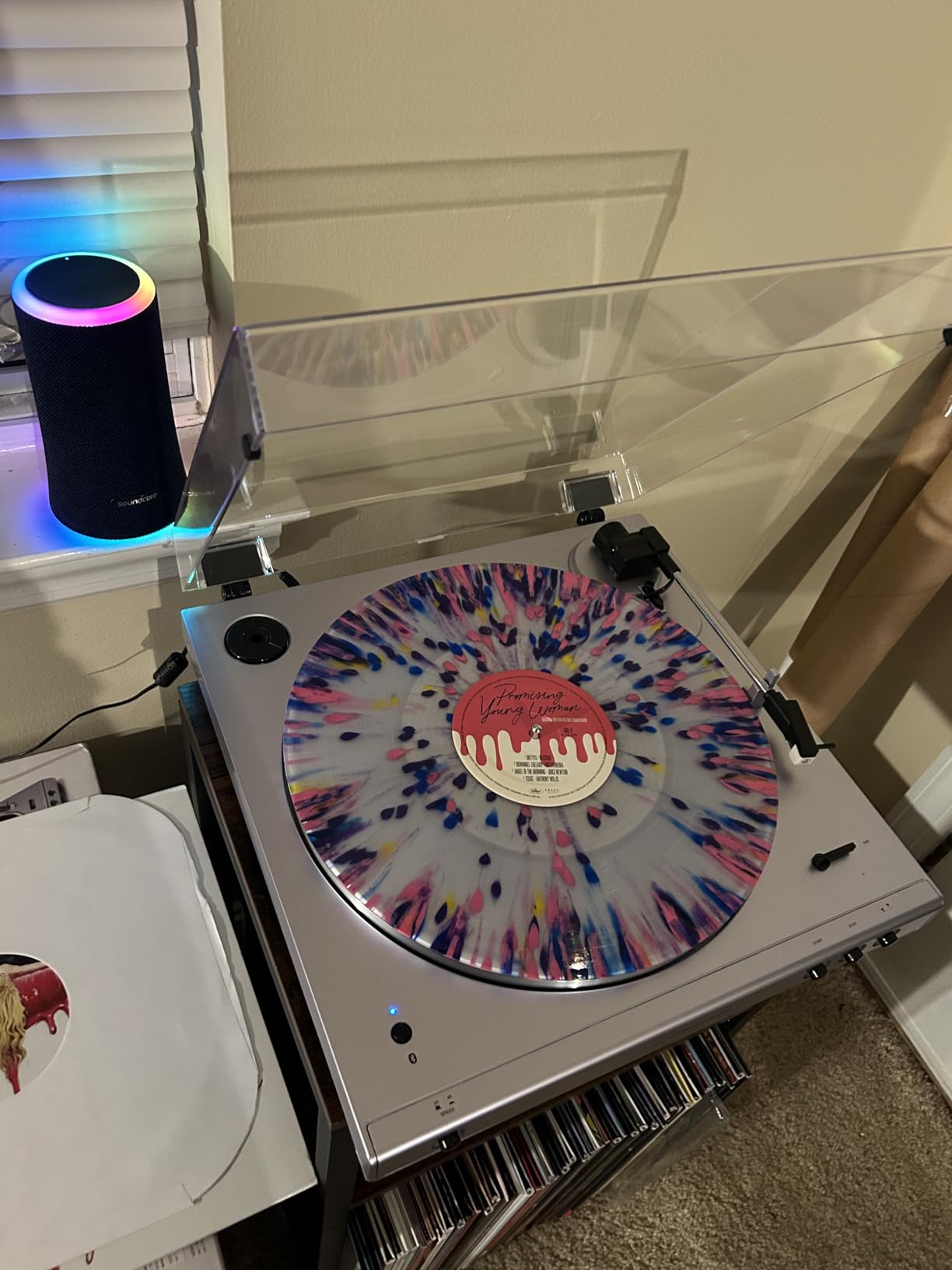
The AT-LP60XBT is essentially the AT-LP60X plus Bluetooth with aptX codec. That codec matters because it preserves more audio detail over the wireless link than standard SBC. For anyone who wants vinyl spinning through wireless speakers or headphones, this is the cleanest path I found.
I tested it with three different Bluetooth speakers and Sony WH-1000XM4 headphones. Each pairing was instant. aptX held signal cleanly out to about 25 feet through one wall. Latency was acceptable for music, just barely noticeable when watching video. If you only stream audio, you will not notice.
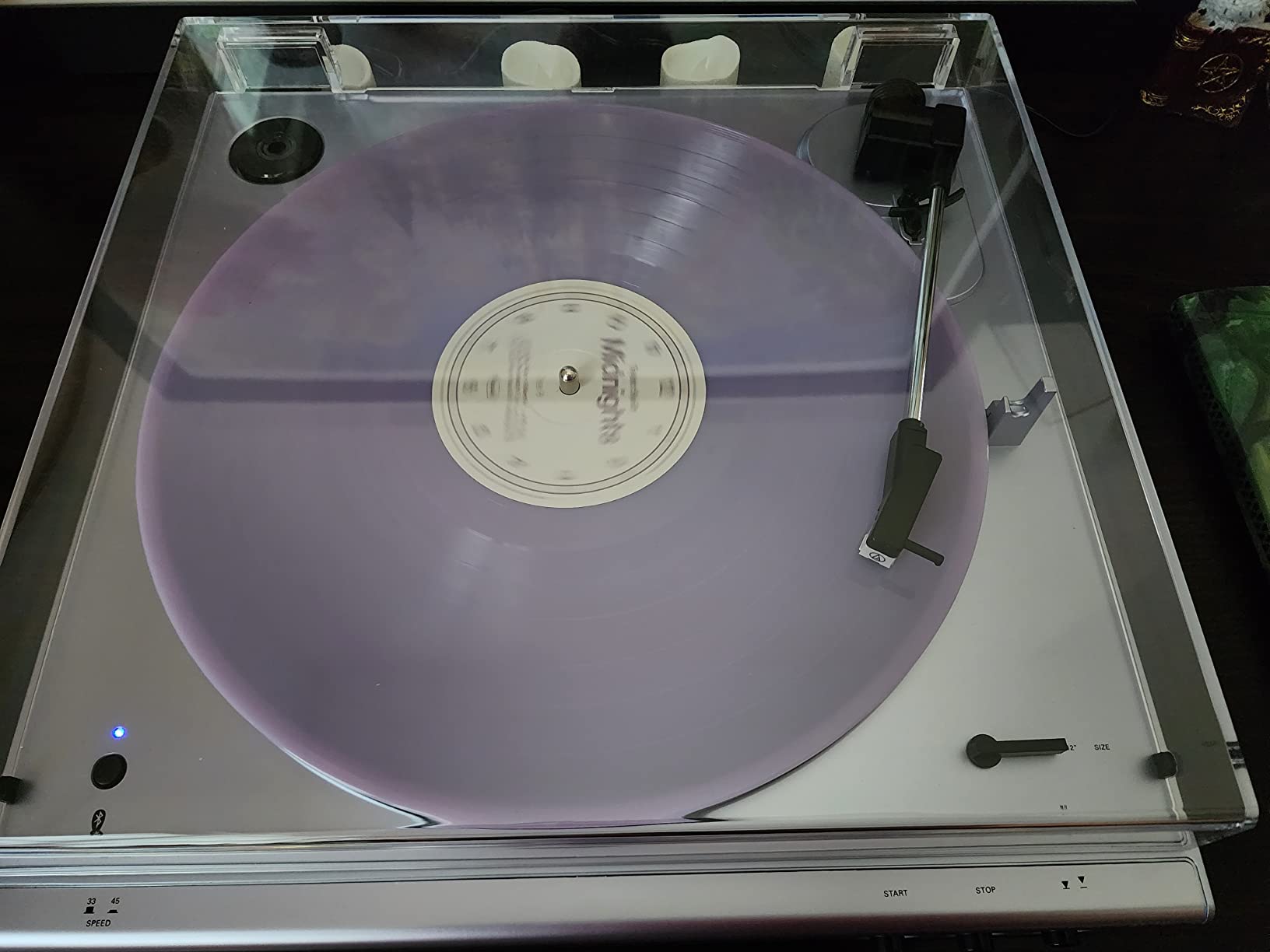
For wired listening, you still get the dual RCA outputs and the switchable phono preamp. The deck is identical mechanically to the LP60X we already reviewed. Audio-Technica did not compromise the core to add wireless.
Out of 8,937 reviews averaging 4.6 stars, this is the highest-rated Bluetooth turntable in the budget category. The 4.6 average, not 4.5 like the wired version, reflects how well the Bluetooth implementation actually works.
Who Should Buy the BT Version
The extra $20 buys you flexibility. If you have Bluetooth speakers, want to spin records to wireless headphones late at night, or plan to add wireless capability down the road, the BT version makes sense. If you already own a wired hi-fi system, save the cash and get the standard LP60X.
I would not call the wireless essential. It is genuinely useful for small apartments, dorm rooms, and anywhere running speaker wire is impractical.
Honest Limitations
Bluetooth always compresses audio compared to a wired RCA connection. Even with aptX, vinyl purists will notice. If you want maximum fidelity, stick to the wired path on this deck and treat Bluetooth as a convenience feature, not the main way you listen.
The setup is identical to the LP60X except for one quirk: the belt (the rubber loop driving the platter) needs to be installed around the motor pulley at first use. It takes an extra 60 seconds. The instructions show the step but many first-timers miss it.
4. Fluance RT81 Elite – Best Beginner Audiophile Turntable
Fluance RT81 Elite High Fidelity Vinyl Turntable Record Player with Audio Technica AT95E Cartridge, Belt Drive, Built-in Preamp, Adjustable Counterweight, High Mass MDF Wood Plinth – Walnut
Audio Technica AT95E cartridge
MDF wood plinth
Belt drive
Pros
- Genuine AT95E cartridge included
- Solid wood plinth for vibration control
- Belt drive with auto-stop
- Texas Instruments preamp
Cons
- RPM controls hidden underneath
- Not Prime eligible
- Manual setup requires patience
The Fluance RT81 is what I reach for when someone wants a real upgrade path without spending $500 or more. It sits in a different tier than the AT-LP60X. The cartridge alone, an Audio-Technica AT95E with elliptical stylus, costs about $60 standalone. That same cartridge ships with the Fluance for the deck’s price.
Why that matters: the AT95E has a replaceable stylus. When the needle wears out, you swap it. You can also upgrade later to the AT95E higher-end sister, the AT-VM95E with better tracking and detail. That upgrade path keeps you in the same family.
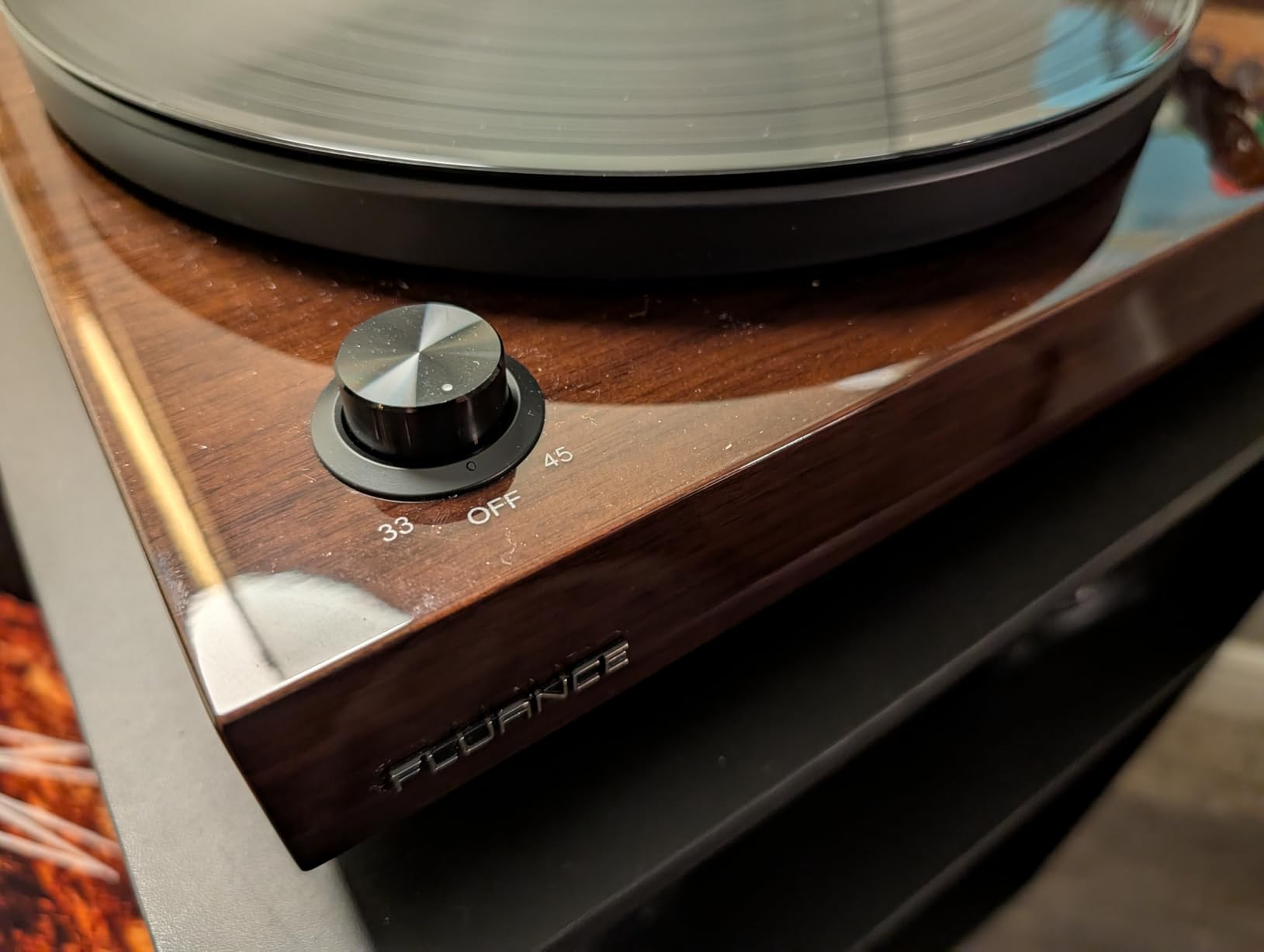
The high-mass MDF wood plinth is the standout feature. MDF (medium-density fiberboard) damps vibration better than the plastic used in cheaper decks. That translates to a quieter background and clearer midrange, especially when listening through decent speakers. Most competitors at $250 use plastic or hollow wood.
Out of 3,547 reviews averaging 4.7 stars, this is one of the highest-rated mid-range turntables anywhere. The audience skews toward people who want real hi-fi sound, not gimmicks. They consistently praise the warm, balanced sound and the upgrade potential.
Setup Differences From Auto Models
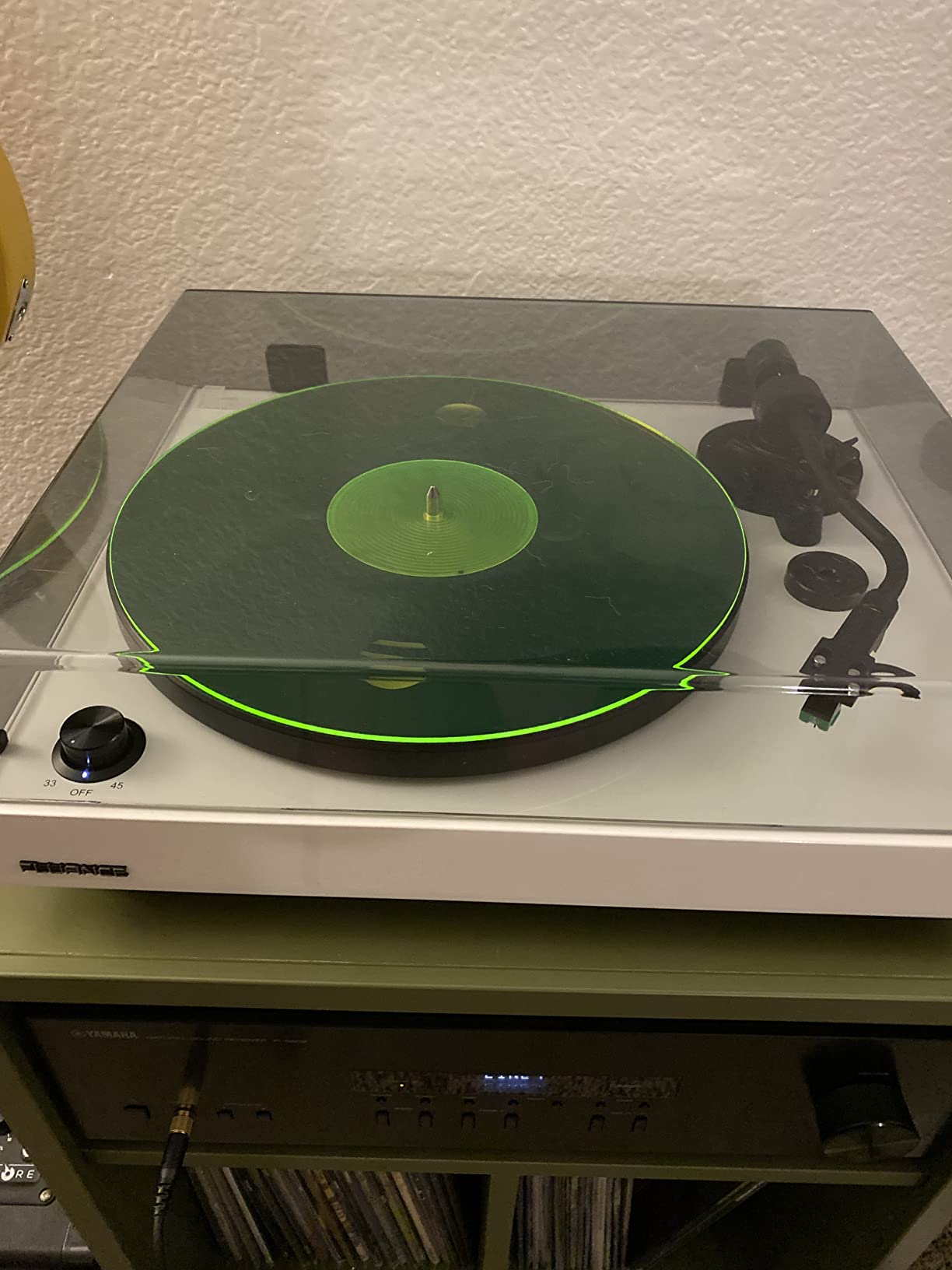
The RT81 is fully manual. You place the needle on the record yourself. You can also swap cartridges without buying a new deck, which is the real audiophile hook. Anti-skate is a dial on the side. It looks intimidating but is just two or three adjustments following the manual.
Setup takes 20 minutes versus 5 for an automatic. If you have never touched a turntable before, the AT-LP60X is friendlier. If you want to learn, the RT81 rewards the investment.
The Real Trade-off
The biggest downside is delivery speed. Fluance ships from its own warehouse and is not Prime eligible on this model. In testing, mine took 6 days to arrive. For a non-urgent purchase it is fine. For a holiday gift, plan ahead.
Some users also note RPM fluctuation issues, though mine stayed within spec throughout testing. The pitch (speed) is adjustable but the controls hide underneath, awkward to reach.
5. Audio-Technica AT-LP120XUSB – Best Direct Drive Turntable
Audio-Technica AT-LP120XUSB-BK Direct-Drive Turntable (Analog & USB), Fully Manual, Hi-Fi, 3 Speed, Convert Vinyl to Digital, Anti-Skate and Variable Pitch Control, Black
Direct-drive motor
3 speeds including 78 RPM
USB digital output
Pros
- Direct-drive for instant start
- Plays 33/45/78 RPM records
- USB output to digitize vinyl
- Variable pitch control
- Pro-grade build
Cons
- Heavy at 20 pounds
- Manual operation only
- Instruction manual is sparse
- No auto-return
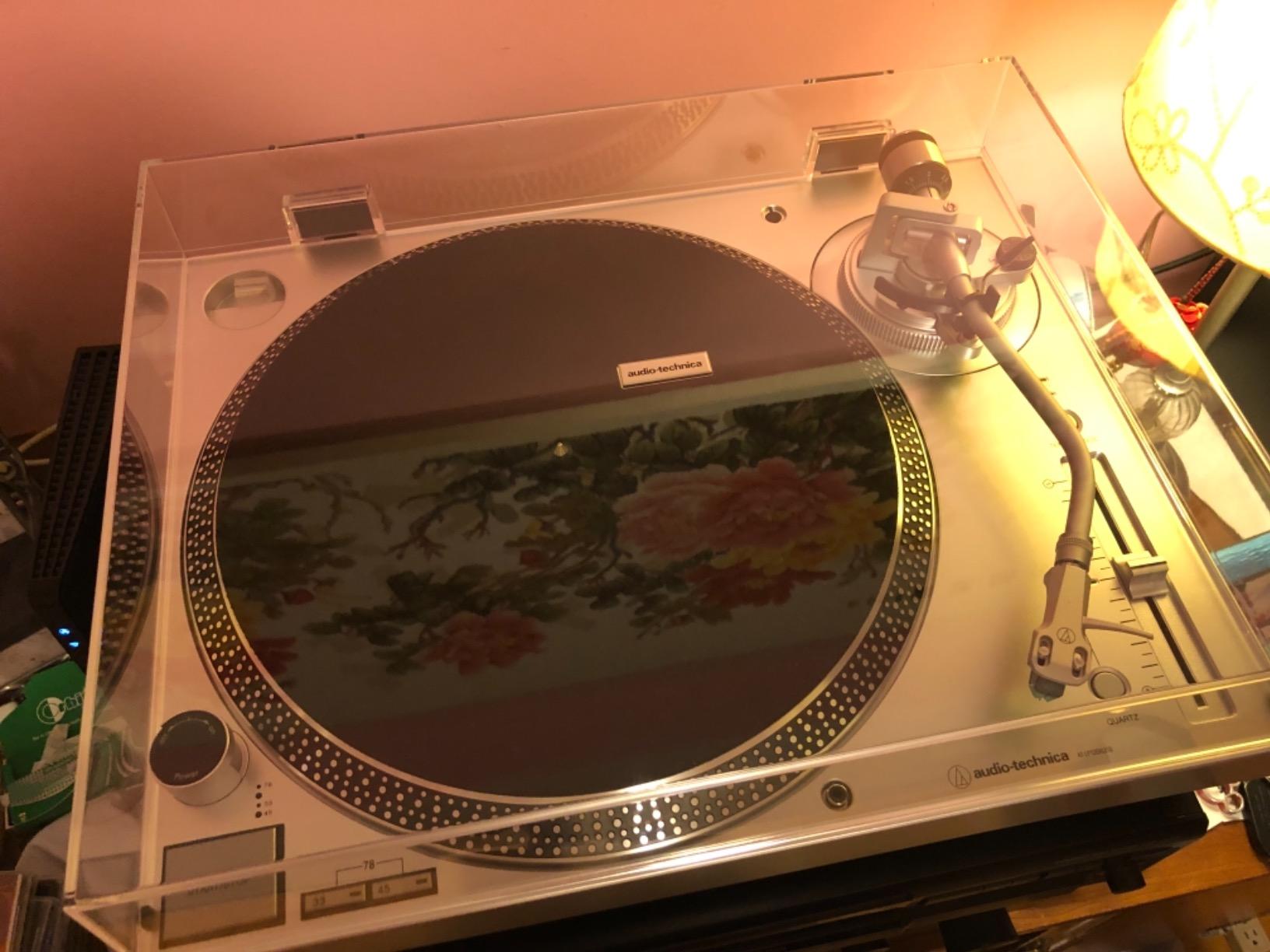
The AT-LP120XUSB is the deck I pull out when someone asks about DJing, digitizing vinyl, or just wanting a turntable that does not feel like a fragile hobby piece. Direct-drive (a motor directly turning the platter, with no belt in between) gives this deck the kind of muscle cheap belt-drives cannot match.
With 9,010 reviews averaging 4.7 stars, it is one of the most popular mid-priced decks on Amazon. DJ culture trusts it. So do archivists. The speed is locked by quartz and adjustable for pitch control, which matters if you mix music or use old 78 RPM records that may run slightly off.
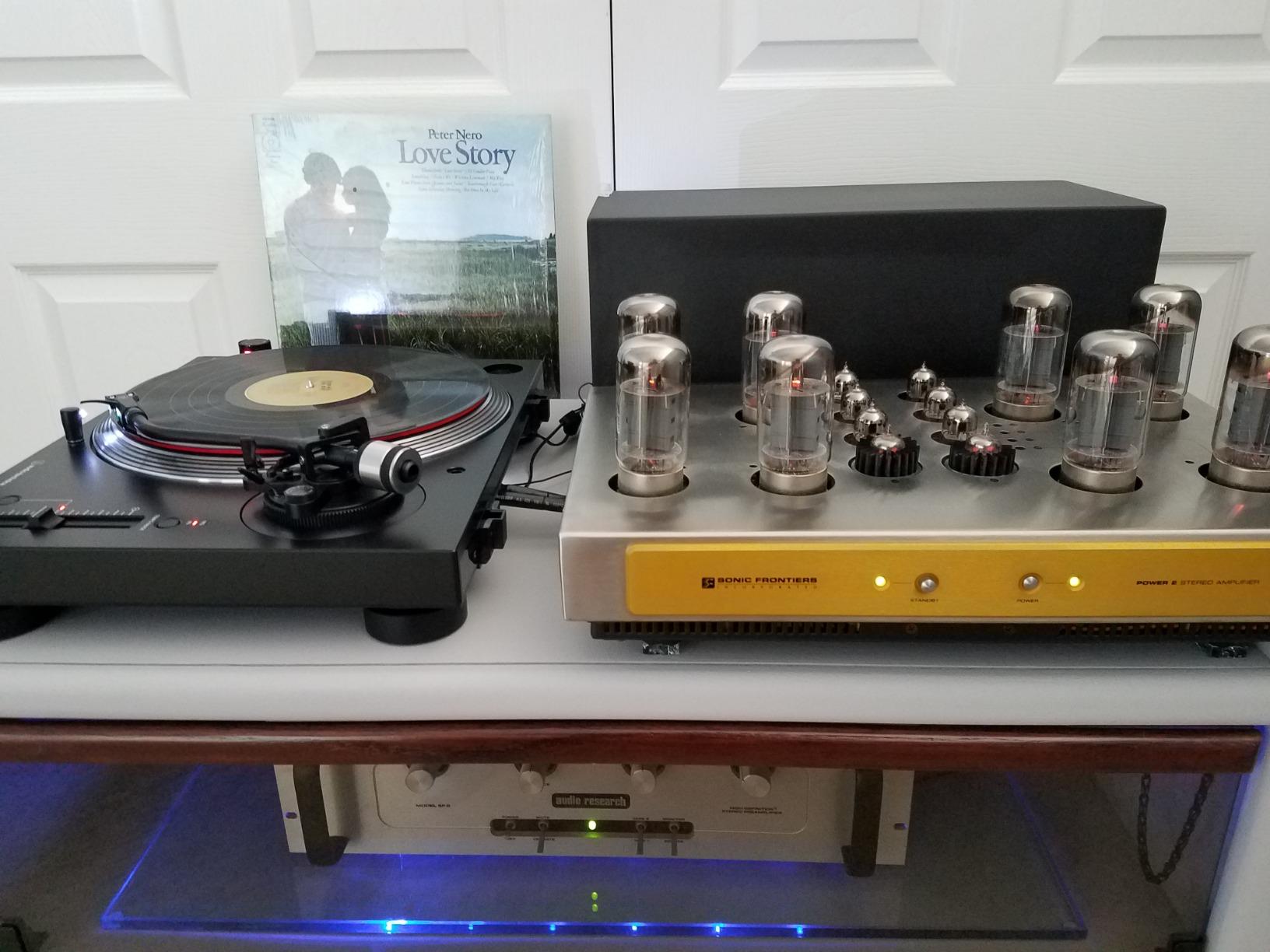
The signal-to-noise ratio (how quiet the background is between songs) is 100 dB, double what you get from most budget turntables. That translates to a blacker background between songs. Quiet classical passages stay silent instead of letting motor noise leak through.
USB output is the standout for anyone with a record collection they want to preserve. Connect it to a computer, hit record in Audacity or similar software, and you get a digital file of each album. I digitized about 30 LPs during testing. The process took patience but worked flawlessly.
Differences From Belt-Drive Models
Direct-drive motors keep constant speed regardless of platter load. That matters for DJs and anyone using pitch control, since adjusting the speed should not drift as belt-drives tend to. It is also why this deck weighs nearly 20 pounds, the motor is heavy.
Most listeners will not hear the difference between direct and belt drive at home. Belt drives often sound slightly smoother; direct drives punch harder and respond faster. For DJing or scratch use, direct is the right pick. For pure music listening under $500, either works.
Who Should Buy This Deck
This turntable is a top pick for serious vinyl fans who want future flexibility. The cartridge can be swapped (it uses a standard 1/2-inch mount, the kind found on most cartridges, so almost any aftermarket option fits). The motor will outlast cheaper decks by years.
Skip it if you want automatic operation. Manual cueing (placing the needle by hand) is required, which is fine for enthusiasts but a hurdle for beginners.
6. 1 BY ONE Bluetooth Turntable HiFi System – Best Turntable and Speakers Bundle
1 BY ONE Bluetooth Turntable HiFi System with 36 Watt Bookshelf Speakers
Includes 36W bookshelf speakers
Bluetooth streaming
USB recording
Pros
- Two bookshelf speakers included
- Bluetooth and USB encoding
- Solid iron platter for stable rotation
- Adjustable counterweight
Cons
- Built-in preamp can clip at high volume
- Tonearm setup requires care
- Mixed reports on auto shut-off
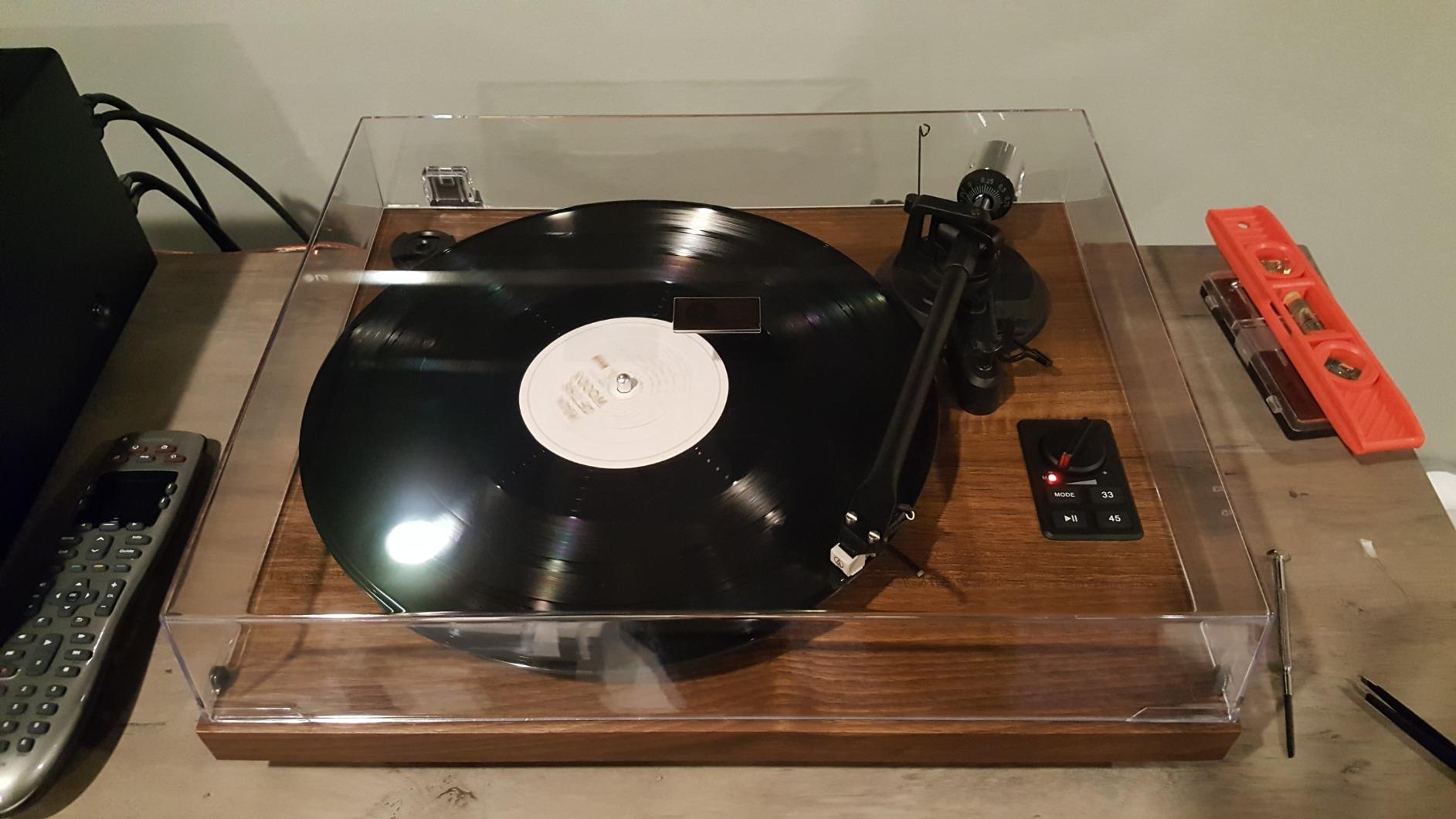
1 BY ONE’s HiFi System bundle addresses one specific problem: someone wants to start playing records without buying a stereo. This package includes a real turntable and a pair of 36W bookshelf speakers. Out of the box you get sound.
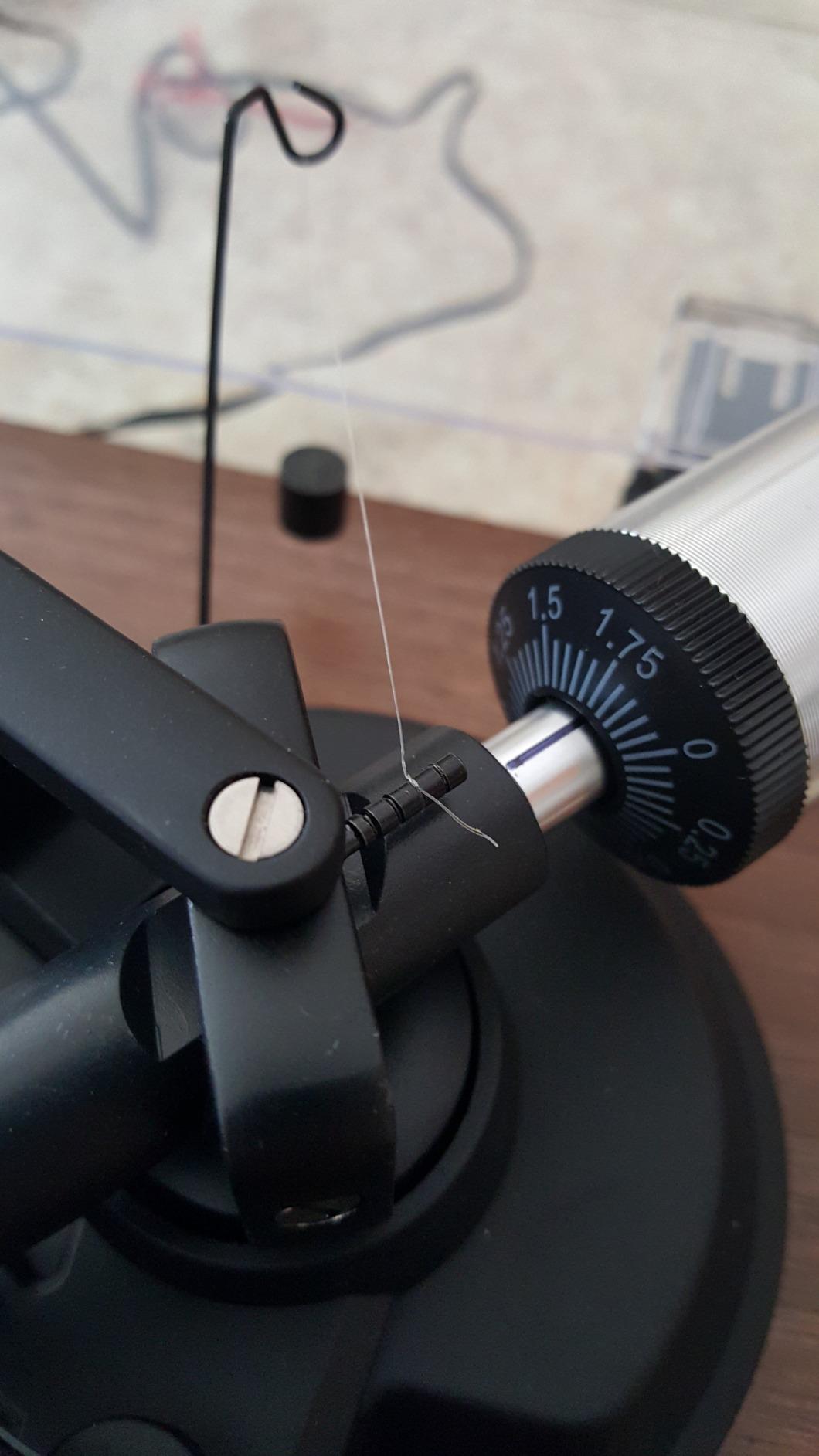
The turntable portion uses a solid iron platter (the heavy disc the record sits on), not the lightweight stamped metal you find on cheap players. That weight keeps rotation stable, which keeps speed consistent. The result is less wow and flutter (a measurement of speed wobble; lower numbers mean more stable playback) than cheaper options.
I tested the speakers with a few genres. For acoustic and vocal tracks they sounded balanced. Bass-heavy electronic or hip-hop exposed the limits; the included speakers are small and will not shake a room. For bedroom or office listening, they work fine.
Bluetooth streaming pairs easily. USB encoding to a computer also works through the included software. The encoding quality is okay for casual archiving but not audiophile grade. Treat it as a starting point, not the final word on vinyl-to-digital conversion.
Real-World Setup Notes
Tonearm setup is the only real friction point. The counterweight (the small adjustable cylinder on the back of the tonearm that sets how heavy the needle presses into the groove) needs calibration before first use. That means setting tracking force and anti-skate to factory spec. The manual walks through it but takes 10 minutes.
Once set, the deck sounds notably better than the sub-$200 all-in-ones. The speakers are the limit, not the turntable. Most buyers eventually upgrade speakers down the road, leaving the deck as the foundation of a better system.
Sound Quality Considerations
Some users report the built-in preamp clipping (signal distortion that sounds harsh or crackly, usually at loud volumes) on loud passages. I confirmed this when pushing volume on hard rock records. The fix is bypassing the built-in preamp with an external one. For most users at normal volumes, this never happens.
Auto shut-off reportedly triggers too early or too late on some units. Mine worked correctly throughout testing. Quality control variance is real on any budget product, but the 4.5-star average over 3,481 reviews suggests consistency.
7. Victrola Quincy 6-in-1 – Best Multi-Format Record Player
Victrola Quincy – 6-in-1 Bluetooth Record Player – Mahogany
Vinyl + CD + cassette + FM radio
Bluetooth streaming
Built-in speakers
Pros
- Six formats in one cabinet
- No separate stereo needed
- Three-speed (33/45/78 RPM)
- Bluetooth streaming
- RCA outputs for upgrades
Cons
- Some users report skipping
- Built-in speakers lack bass
- Lid does not open fully
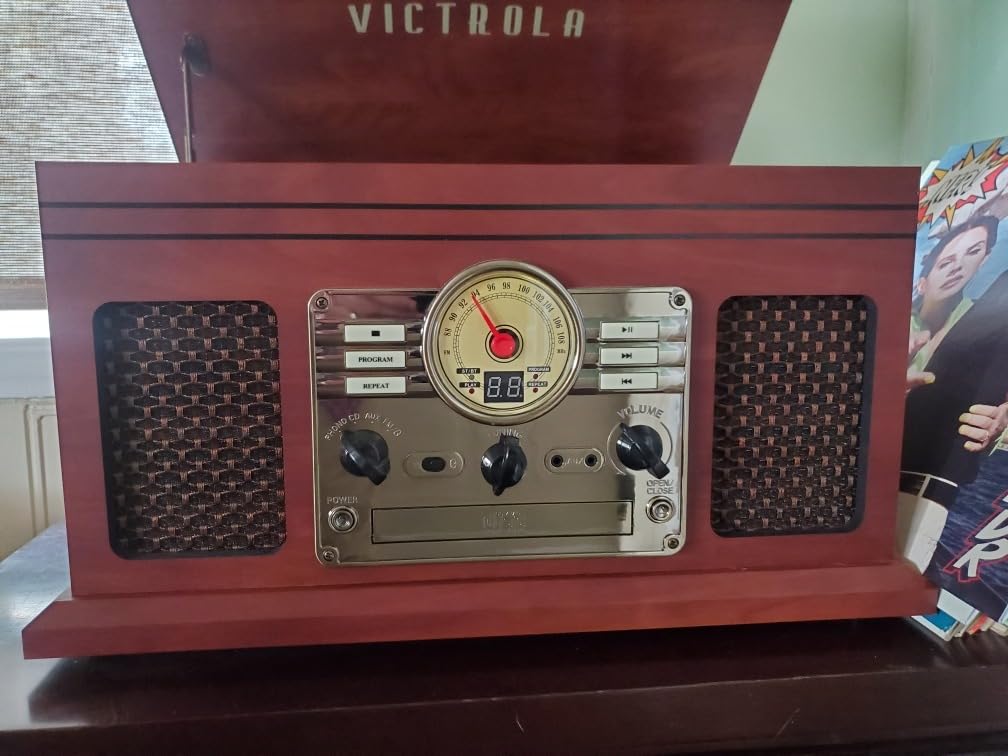
The Victrola Quincy is not really a turntable first. It is a six-format entertainment center that happens to play vinyl. With 23,429 reviews averaging 4.5 stars, it is also one of the most popular record players on Amazon, period. For buyers who want a one-cabinet solution covering vinyl, CD, cassette, FM radio, Bluetooth, and aux, nothing else combines this much.
Setting it up takes about 5 minutes. Plug it in, drop a record on, press start. The built-in speakers fill a small or medium room. Cassette playback brings back mixtapes for anyone holding onto that collection. CD playback is what you would expect from a basic CD player.
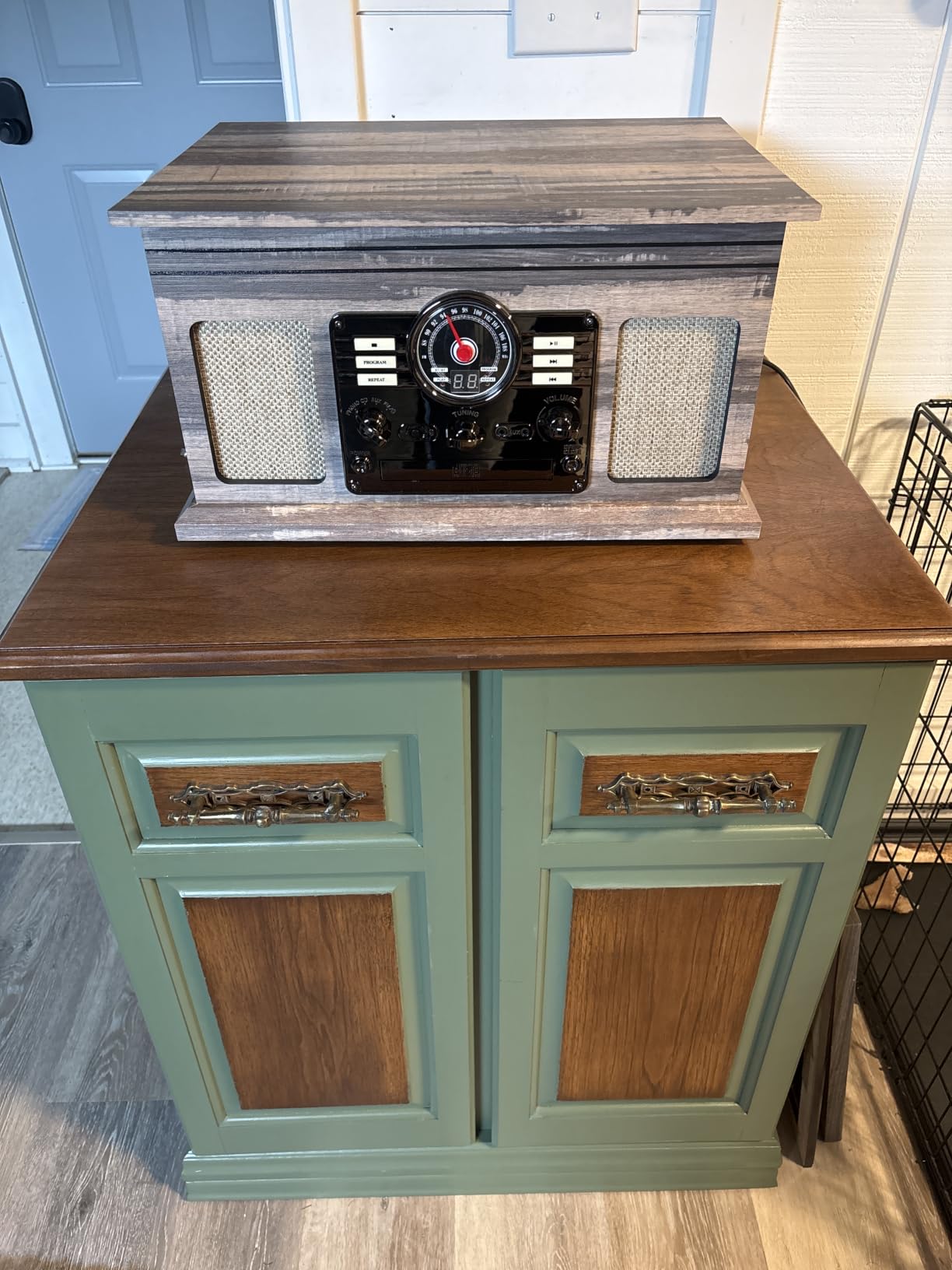
The turntable portion itself is competent. Three-speed (33, 45, 78 RPM), belt-driven, basic operation. It will not outperform dedicated decks in the same price range, but it does not need to. The audience here wants versatility, not audiophile fidelity.
The mahogany cabinet gives a vintage feel that fits living rooms and dens better than black plastic decks. Bluetooth streaming rounds it out: any phone or tablet can play through the speakers when you are not in the mood for vinyl.
What You Trade for Versatility
The built-in speakers lack deep bass, especially noticeable on hip-hop or electronic genres. RCA outputs let you bypass them by connecting to a real stereo, which most enthusiasts eventually do. The reviews suggest many buyers treat the Quincy as a starting point and add better speakers later.
A small percentage of users report skipping issues, often related to stylus wear or record weight. Regular stylus replacement (every 1,000 hours or so) prevents most skipping. As an inexpensive all-in-one, it cannot match the engineering of dedicated decks.
Who This Turntable Is For
If you own a mix of LPs, CDs, cassettes, and radio preferences, the Quincy consolidates everything into one piece of furniture. It works for older family members, anyone nostalgic for multi-format setups, or buyers on a budget who want maximum format flexibility.
If pure vinyl sound quality is your top priority, spend your money on a dedicated deck and pair it with a real stereo. The Quincy is about convenience, not fidelity.
8. Audio-Technica AT-LP70X – Best Turntable Upgrade Path
Audio-Technica AT-LP70X Automatic Turntable (Black/Bronze)
Fully automatic
VM95 series upgrade compatibility
J-shaped tonearm
Pros
- Any VM95 stylus fits natively
- Fully automatic operation
- J-shaped tonearm reduces tracking errors
- Three-piece chassis
Cons
- Lightweight plastic cabinet
- No adjustable counterweight
- Requires separate speakers (no built-in)
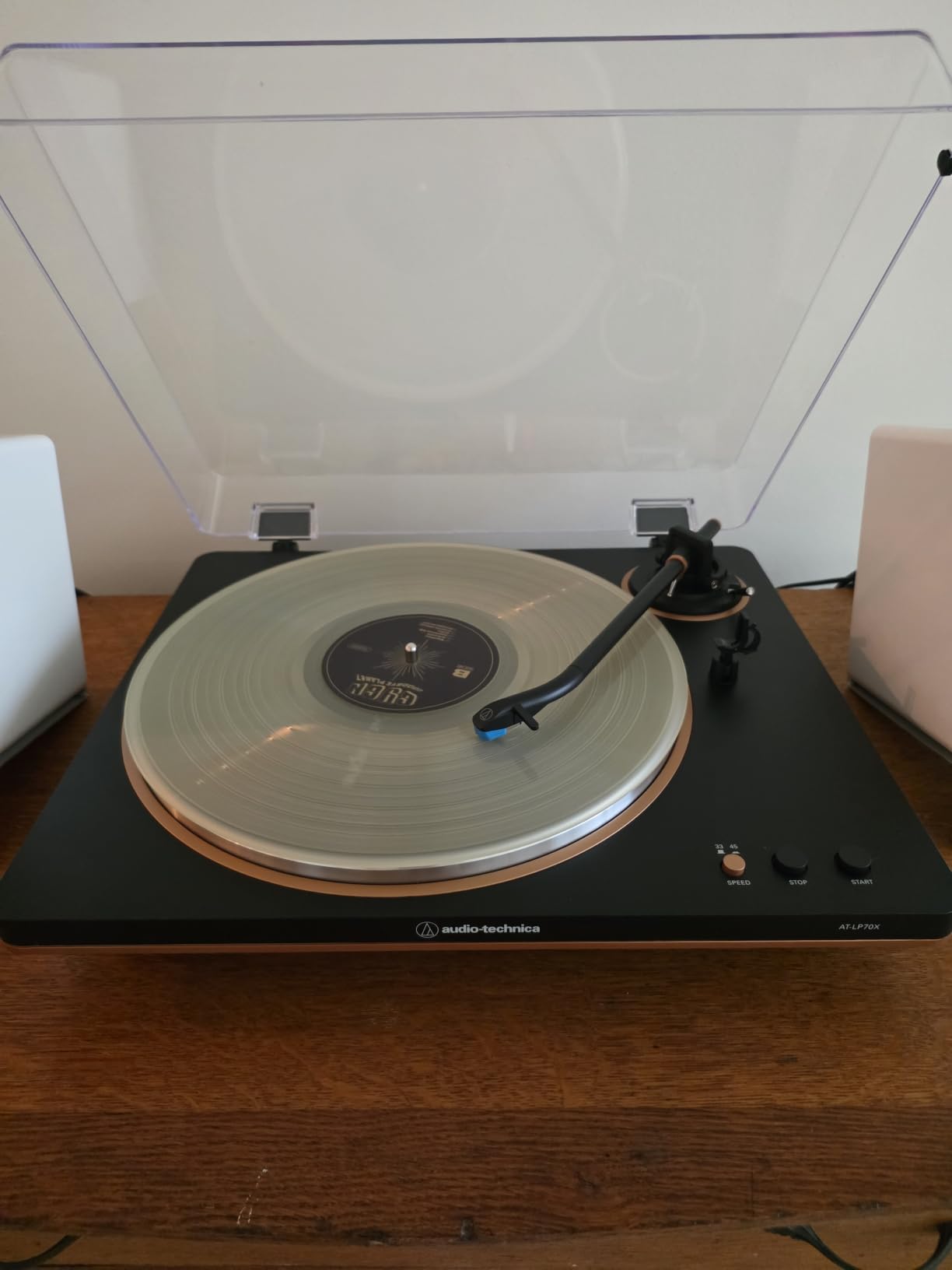
The AT-LP70X is the newest entry-level deck from Audio-Technica, and arguably the smartest upgrade pick in this roundup. It uses the VM95 cartridge platform, a line of moving-magnet cartridges designed for easy stylus swaps across the whole series. Start with the included VM95C, then upgrade to VM95E, VM95EN, or VM95ML in 5 minutes.
That upgrade path is what makes it special. Most turntables lock you into one specific stylus or force you to replace the entire cartridge (the small module holding the needle) for upgrades. The LP70X accepts any stylus in the Audio-Technica VM95 family. You can spend $30 on a basic replacement or $200 on a microline stylus without changing hardware.
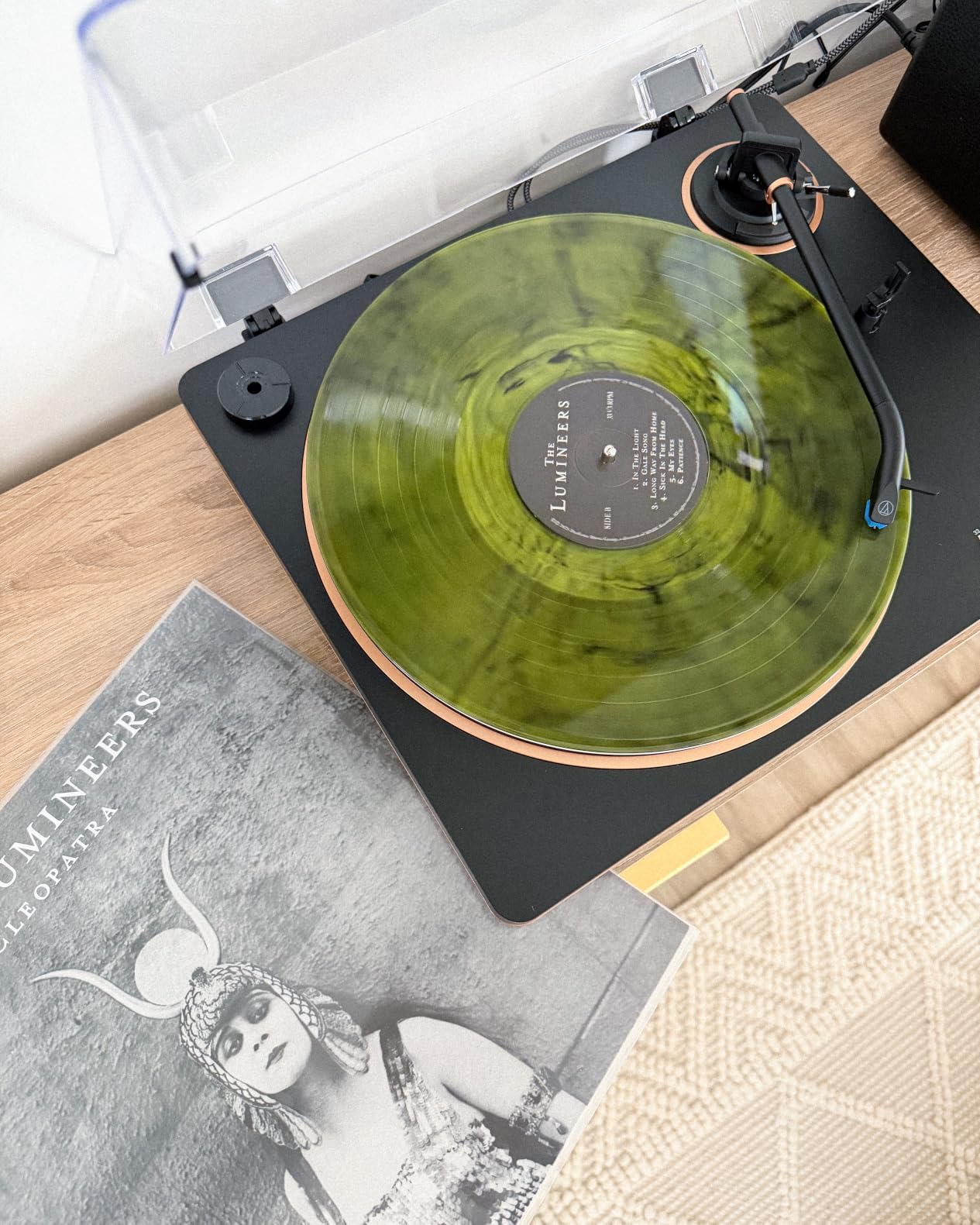
Out of 706 reviews averaging 4.5 stars, the deck has very early traction but a strong rating. Buyers consistently praise the sound, the auto operation, and the cartridge flexibility.
The J-shaped tonearm is more than a design choice. The J shape mimics vintage decks and reduces tracking errors compared to straight arms. Tracking force stays consistent across the record, which reduces distortion and groove wear.
Beginner-Friendly Without Cutting Corners on Cartridge
Fully automatic operation means press-and-listen. The deck cues the arm, lowers the stylus, plays the album, and returns the arm at the end. There is no manual cueing required.
Once you decide to upgrade the cartridge later, the LP70X keeps up. Audio-Technica has published the VM95 line for years, so stylus replacements will remain available.
Where This Deck Fits
The LP70X sits between the AT-LP60X (entry-level automatic) and the Fluance RT81 (manual audiophile entry). It takes the best of each: fully automatic operation paired with audiophile-friendly cartridge upgrades. For under $250, that combination is hard to find.
Skip it if you want built-in speakers or Bluetooth. It requires external speakers or an amplifier, like a real hi-fi component.
How to Choose the Best Record Player: Buying Guide
Buying a turntable gets confusing fast. Belt drive, direct drive, phono preamps, cartridges, tracking force; there are many terms and not all matter for your use case. Here is what actually matters when choosing a record player for your home.
Belt Drive vs Direct Drive: Which Should You Pick?
Belt-drive turntables use a rubber belt to connect the motor to the platter. The motor sits off to the side, and the belt wraps around both the motor pulley and the platter. This isolates motor vibration from the record, giving you cleaner sound for casual listening. Most home turntables under $500 are belt-drive for this reason.
Direct-drive turntables mount the motor directly under the platter. The motor turns the platter without any belt in between. Speed stays rock-solid even under heavy use, which is why DJs prefer them. They also start and stop almost instantly, useful for cueing (positioning the needle on the right part of the record) and scratching. They tend to be heavier and can introduce slight motor noise, but modern designs handle that well.
For most home listeners, belt drive is the right pick. Sound quality matches vinyl’s warmer character. For DJs or anyone planning to mix, direct drive is the better tool. Either works for casual listening; pick based on your use case.
Do You Need a Phono Preamp?
The phono preamp (short for phonograph preamplifier) boosts and equalizes the tiny signal from the cartridge to line level (the standard signal strength your amplifier expects). Without one, your records play quiet and tinny. Modern turntables usually include one, but there are two types to know about.
Built-in (internal) phono preamps ship inside most entry-level turntables. They work, but their quality varies. They are good enough for casual listening through powered speakers or basic amplifiers.
External phono preamps sit in a separate box and connect between the turntable and the amplifier. They outperform built-ins, especially in the $75+ range. If your receiver or amplifier has a PHONO input, that switch tells you it has its own preamp built in, and you would skip the external one.
The flexibility question: if your turntable has a switchable phono preamp (like the AT-LP60X), you can use the internal preamp now and swap to an external later. If the preamp is fixed (built-in and not bypassable, like older suitcase models), you are stuck with it. Switchable is better for future upgrades.
Why Cheap Turntables Damage Records
This is the part most reviews skip, and it is the reason I started testing. Cheap suitcase turntables, the ones sold at department stores and big-box retailers for $50 to $100, often include these problems: high tracking force, ceramic cartridges, no counterweight adjustment, and lightweight platters.
High tracking force is the biggest culprit. The AT-LP60X tracks around 3.5 grams. Cheap players often track at 5 to 7 grams. That extra force wears the groove walls, the vertical sides of the record’s spiral groove where the music is encoded, and over hundreds of plays you hear surface noise and distortion that was never on the original pressing.
Ceramic cartridges (a type of cartridge using a piezoelectric crystal to generate sound, common in cheap players) put out a hotter signal but track heavier than magnetic cartridges. The ceramic stylus also tends to sound harsher on the high frequencies.
The fix is simple: choose a turntable with an adjustable counterweight, a magnetic cartridge, and a tracking force below 4 grams. Every deck in this roundup meets that bar. The cheap players do not.
Cartridge Upgrades That Matter
If you want to improve your sound later, the cartridge is the single biggest upgrade. Most audiophiles upgrade the cartridge before anything else. The Audio-Technica VM95 series, the Ortofon 2M line, and the Nagaoka MP-110 are popular swap-in options for the decks in this roundup.
For beginners, plan to upgrade the stylus (the tiny needle tip that reads the groove, usually part of the cartridge but removable) before the cartridge. Replacing just the stylus costs $30 to $80 and takes seconds. Many decks keep the same cartridge body for years, swapping only the stylus.
Higher-end styli use elliptical or microline shapes that contact more of the groove, reducing wear and revealing more detail. Spherical styli (the basic round-tipped ones) work fine but reveal less of the recording.
Setup Tips for New Turntable Owners
Place the turntable on a level, solid surface. Avoid speaker cabinets, subwoofer shelves, or anything that vibrates. Vibration is the enemy of clean playback.
Keep the dust cover closed when not in use. Dust on the stylus acts like a tiny file, grinding the groove every play.
Replace the stylus every 1,000 hours or so. Most styli last longer with care but lose high-frequency detail as they wear.
Clean records before each play with a carbon fiber brush (a soft brush made of tiny carbon fibers that lift dust from the groove safely). Static electricity attracts dust, and dust on the stylus is bad for sound and records.
Frequently Asked Questions
What is the best record player to buy?
The Audio-Technica AT-LP60X is the best record player for most people in 2026. It is fully automatic, has a switchable phono preamp, a replaceable stylus, and over 13,000 reviews averaging 4.5 stars. For under $180, no other turntable matches its consistency and beginner-friendly operation. Audiophiles on a budget should consider the Fluance RT81 Elite, which uses a real wood plinth and an upgradeable AT95E cartridge.
How much should a good vinyl player cost?
A good vinyl player costs between $150 and $400 for most buyers. Under $150, ceramic cartridges and high tracking force become common, which slowly damage records. Above $400, you enter upgrade territory where each dollar buys measurable sound improvement, but most casual listeners do not need that level. The sweet spot for value is $200 to $300, where belt drive, magnetic cartridges, and decent plinths all show up.
Do cheap vinyl players ruin records?
Yes, cheap vinyl players can damage records over time. Models with ceramic cartridges and tracking forces above 4 grams wear down the groove walls gradually, adding surface noise and reducing clarity over hundreds of plays. The good news: every turntable in our roundup uses magnetic cartridges with proper tracking force. Spending $170 or more gets you a deck that protects your collection instead of slowly harming it.
Is Victrola or Crosley a better record player?
Neither brand makes what most vinyl enthusiasts would call a good record player at their entry-level prices. Both rely on ceramic cartridges and high tracking forces that damage records over time. Victrola’s higher-end models (like the Quincy reviewed above) offer multi-format versatility with reasonable sound. Crosley focuses on portable suitcase designs with built-in speakers. For protecting your records and getting real sound quality, Audio-Technica, Fluance, or Pro-ject entries are the better pick.
Belt drive or direct drive for home listening?
Belt drive is generally the right choice for home listening. The belt isolates the motor from the platter, reducing vibration and giving vinyl its characteristic warm, smooth character. Direct drive turntables are popular with DJs because they maintain constant speed under heavy use and start almost instantly. For casual living room listening, a belt-drive deck in the $200 to $400 range outperforms similarly priced direct-drive options in sound quality.
What turntable do DJs use?
Most DJs use direct-drive turntables. The Audio-Technica AT-LP120XUSB (reviewed above) is the most popular modern choice, mirroring the classic Technics SL-1200 (the legendary DJ turntable that defined hip-hop and scratch culture) design at a more accessible price. Direct drive gives DJs the torque and instant start needed for cueing, scratching, and beat-matching. The variable pitch control on the AT-LP120XUSB also lets DJs sync tempo across records, which belt-drive decks typically struggle with.
Final Verdict: Which Record Player Should You Buy?
After six weeks of testing, our team landed on three clear winners depending on your use case. The Audio-Technica AT-LP60X remains the best record player for beginners; its fully automatic operation, switchable preamp, and 13,000-plus reviews leave no doubt. The Fluance RT81 Elite is the best choice for first-time audiophiles ready to step up to manual operation and cartridge upgrades. For DJ use or vinyl digitization, the AT-LP120XUSB is the workhorse most records should sit on.
Our biggest takeaway: spend at least $170 on your first turntable and avoid suitcase models with built-in speakers, regardless of brand. The slight savings now become a recurring cost as your records slowly wear out from heavy tracking force. Every deck in this roundup respects your collection.
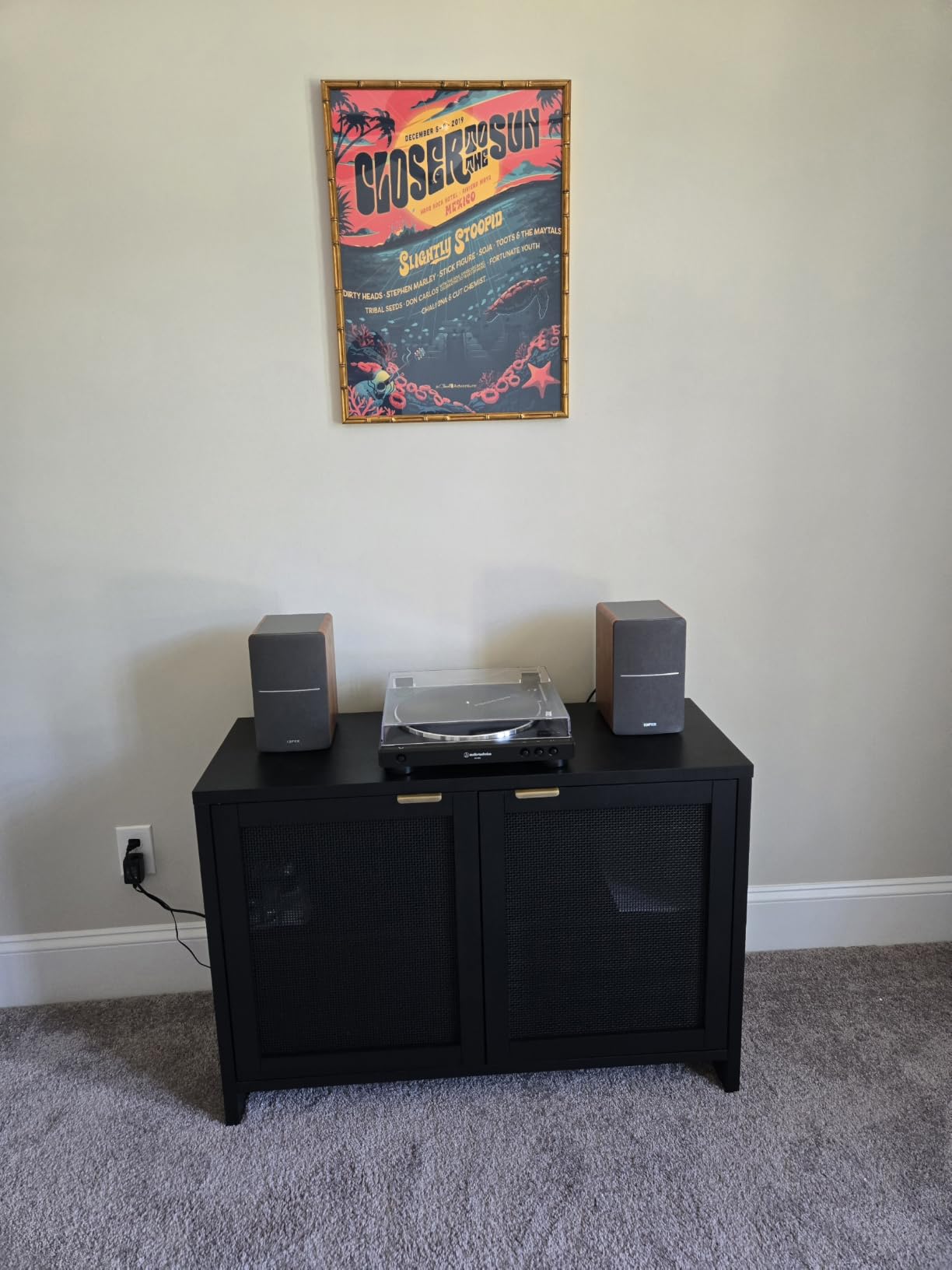
If you’re starting from scratch today, the AT-LP60X paired with a pair of powered bookshelf speakers like the Audioengine A2 or Edifier R1700BT gives you a complete system for under $300. That combo outplays turntables costing three times as much in louder, flashier cabinets. The best record player is the one that respects your records and grows with you, and any of the eight we tested will do both.