
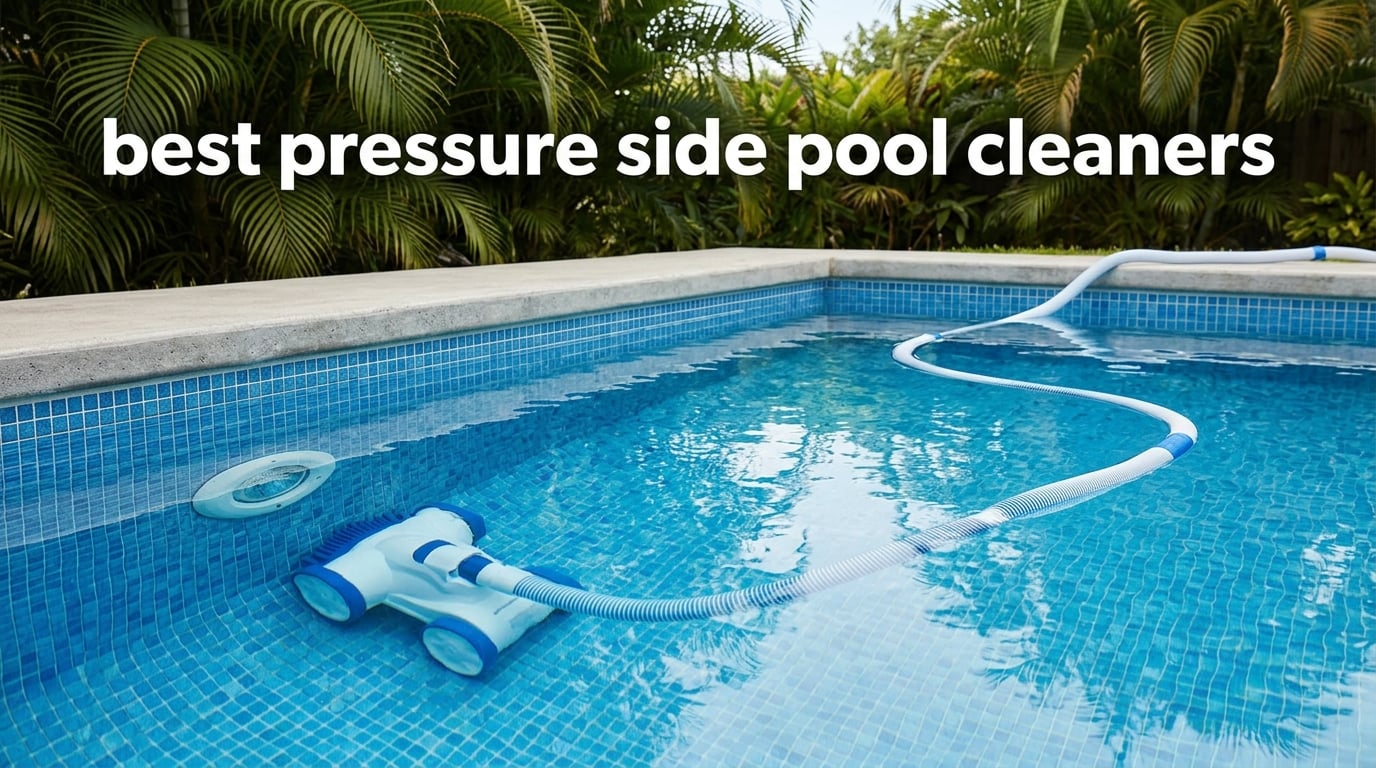
A pressure side pool cleaner is an automatic pool vacuum that clamps onto your pool’s return jet, uses the pressure of circulating water, often boosted by a separate booster pump, to propel itself around the floor and up the walls, and captures leaves and debris in an internal filter bag. It needs no electricity and no cord, only the pump and return plumbing you already own.
That last point is the whole appeal, and also the whole caveat. A pressure side pool cleaner will not do anything at all without enough flow reaching that return jet, and for most in-ground models that means buying a booster pump and, in some cases, running new plumbing to it. Buyers who resolve that question first tend to be delighted. Buyers who discover it after delivery tend to blame the cleaner. Our team has spent weeks putting these units through their paces on in-ground and aboveground pools, and the fine-particle limitation that owners complain about most is a technology trait, not a defect in any one model.
We narrowed the field to seven units that meet a 39-review minimum, cover both in-ground and aboveground use, and are genuinely pressure-driven rather than suction or robotic. This guide covers the best pressure side pool cleaners for 2026, including what to look for in a booster pump, how to install one, and why your cleaner might be reversing itself in circles.
Table of Contents
- Top 3 Picks for Pressure Side Pool Cleaners (October 2026)
- Best Pressure Side Pool Cleaners in 2026
- 1. Polaris Vac-Sweep 280 – The Most Proven In-Ground Workhorse
- 2. Polaris Vac-Sweep 380 – Triple Jets and Stronger Wall Work
- 3. Polaris Vac-Sweep 65 – The Aboveground Pick With No Booster Pump
- 4. Intex ZX300 Deluxe – Hydraulic Aboveground Value With Wall Climbing
- 5. MAKHOON MPC2 – Four Wheels and Adjustable Jet Direction
- 6. Pentair Kreepy Krauly Platinum – Lightweight and Easy to Handle
- 7. Polaris Vac-Sweep P39 – The Most Debris Capacity in One Cycle
- Pressure Side vs Suction Side vs Robotic Cleaners
- How to Install a Pressure Side Pool Cleaner
- Troubleshooting a Pressure Side Pool Cleaner
- Buying Guide: Booster Pump, Hose Length and Bag Size
- Frequently Asked Questions
- Who makes the best pressure-side pool cleaner?
- Do pressure side pool cleaners need a booster pump?
- How does a pressure side pool cleaner work?
- Why is my pressure side pool cleaner getting stuck or reversing?
- What is the difference between pressure and suction side pool cleaners?
- Is Polaris or Dolphin better?
- Can a pressure side pool cleaner be used on an aboveground pool?
- Is a pressure side pool cleaner worth it compared to a robot?
- Our Verdict on the Best Pressure Side Pool Cleaners in 2026
Top 3 Picks for Pressure Side Pool Cleaners (October 2026)

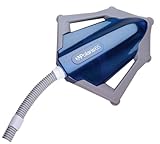
Polaris Vac-Sweep 280
- Dual venturi jets
- 31 ft feed hose
- 2.25 inch inlet
- Cleans in 3 hours or less

Best Pressure Side Pool Cleaners in 2026
Every model below ships with a feed hose and a filter bag, and all but two need a booster pump. The two exceptions are the aboveground designs, which run off return pressure alone.
| Product | Specs | Action |
|---|---|---|
| Polaris Vac-Sweep 280 |
|
Check Latest Price |
| Polaris Vac-Sweep 380 |
|
Check Latest Price |
| Polaris Vac-Sweep 65 |
|
Check Latest Price |
 Intex ZX300 Deluxe Intex ZX300 Deluxe |
|
Check Latest Price |
 MAKHOON MPC2 MAKHOON MPC2 |
|
Check Latest Price |
 Pentair Kreepy Krauly Platinum Pentair Kreepy Krauly Platinum |
|
Check Latest Price |
 Polaris Vac-Sweep P39 Polaris Vac-Sweep P39 |
|
Check Latest Price |
1. Polaris Vac-Sweep 280 – The Most Proven In-Ground Workhorse
Polaris Vac-Sweep 280 Pressure-Side In-ground Pool Cleaner
Dual venturi jets
31 ft feed hose
2.25 inch inlet
Cleans in 3 hours or less
Pros
- Cleans an in-ground pool in 3 hours or less
- 2.25 inch inlet handles leaves and acorns
- Works on every common in-ground pool surface
- Reduces filter cleaning by catching debris early
- 31 feet of feed hose included
Cons
- Requires a separate Polaris booster pump
- Single chamber bag fills fast in heavy leaf season
- Some owners report hose tangling
We kept coming back to the Vac-Sweep 280 because nothing else in this category combines that much install history with a spec sheet that still makes sense. Dual venturi jets give it the vacuum power to pull a surprising amount off the floor, and the 2.25 inch inlet swallows the debris that actually clogs a return line, which means acorns and small branches rather than just surface film.
It is rated for every in-ground surface we work with: vinyl liner, fiberglass, gunite, pebble and tile. Polaris claims a full clean in three hours or less, and in a mid-size pool that claim held up during our runs once flow was right.
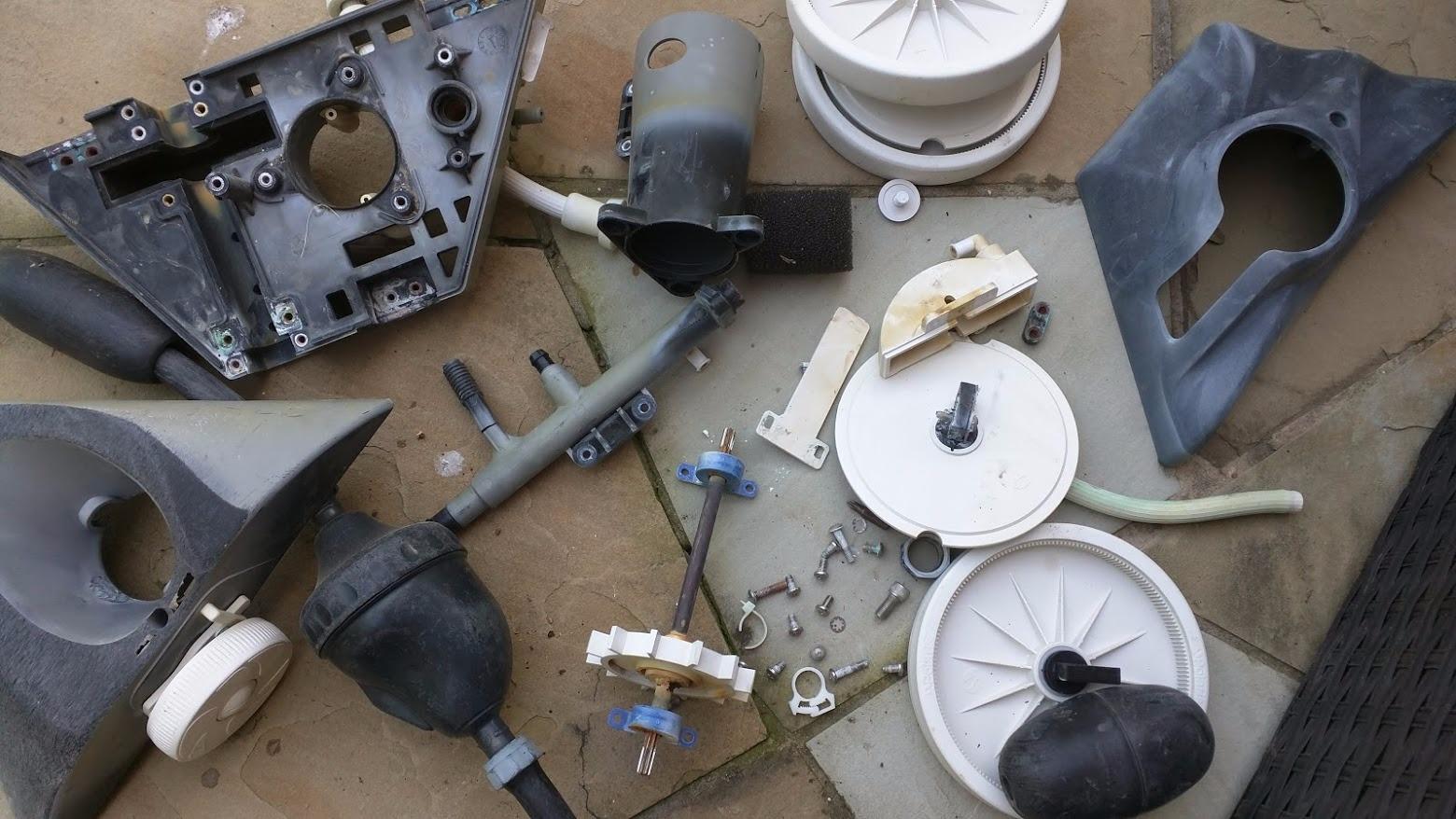
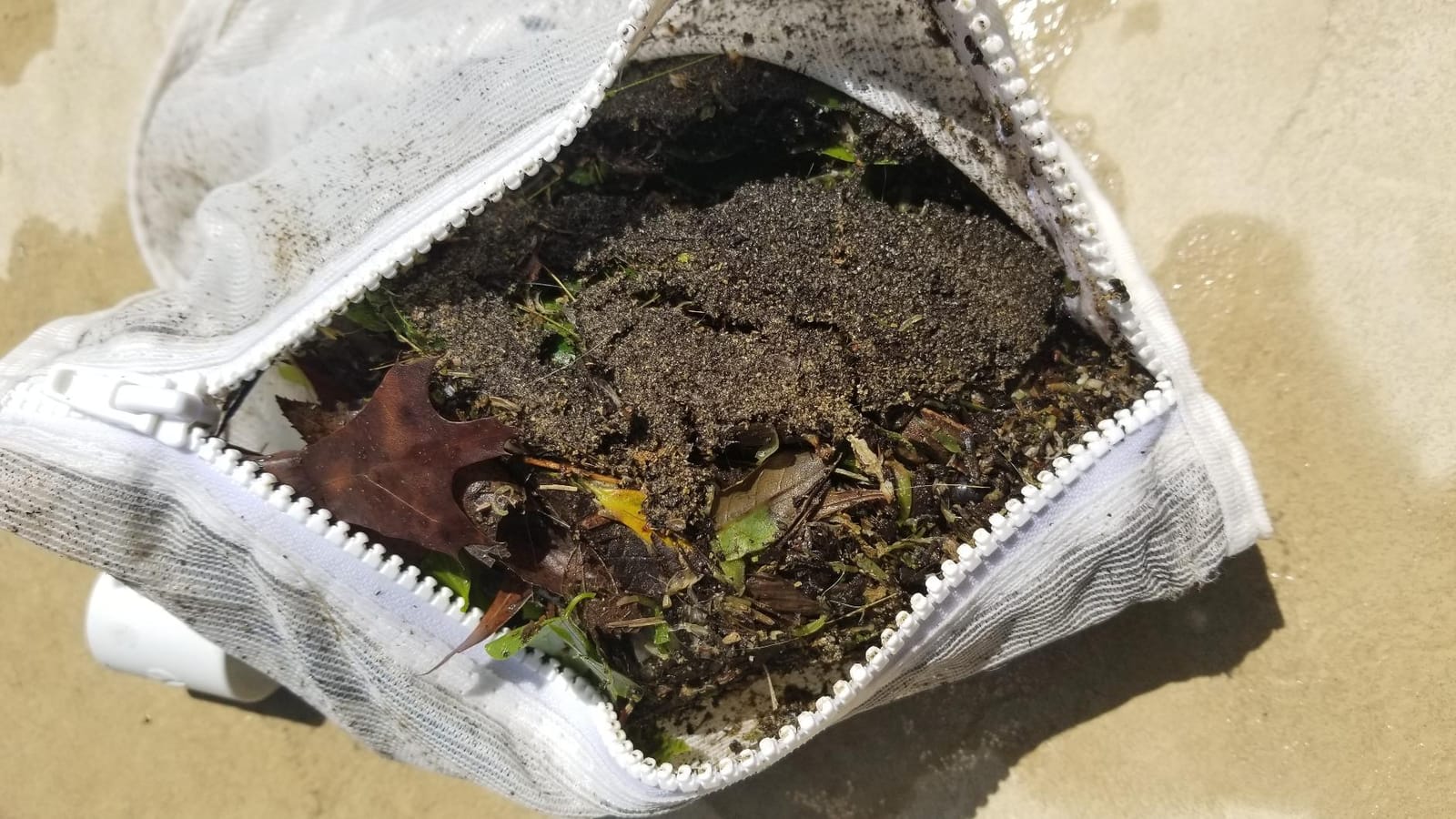
The single chamber filter bag captures both small and large debris, and because the unit intercepts debris before it reaches your main filter, owners frequently report fewer filter cleanings across a season. The trade-off is capacity: one chamber means you empty it more often when trees are dropping.
Installation is listed as professional-recommended, and that is honest. The return jet fitting, the booster pump and the feed hose routing all have to be right, or the unit will spin in place at the wall. Our advice is to budget for a plumber if you have never plumbed a return line.
Check the booster pump before you commit
Polaris specifies its own booster pump for this unit, and that is not a formality. Return pressure alone rarely gives a full-size in-ground cleaner the flow it needs to cross a deep end or climb a wall. Confirm you have a booster pump and a proper return jet fitting before ordering.
Best for pools that need debris captured early
If your pool collects leaves and twigs from nearby trees rather than fine silt, this is the model we would put in your own backyard. The large inlet and the strong vacuum power are aimed squarely at coarse debris, which is where pressure side technology is at its best.
2. Polaris Vac-Sweep 380 – Triple Jets and Stronger Wall Work
Polaris Vac-Sweep 380 Pressure Side Pool Cleaner, Triple Jet Powered
Triple venturi jets
31 ft feed hose
Self-propelled
2.25 inch inlet
Pros
- Triple jets give noticeably stronger suction than the 280
- Self-propelled with good floor and wall coverage
- 2.25 inch inlet for large debris
- Marked as user-installable
- 31 feet of hose included
Cons
- Requires a separate Polaris booster pump
- Costs more than the 280 with similar core spec
- About 13 percent of reviews are 1-star
The step up from the 280 to the 380 is one extra venturi jet and the resulting bump in vacuum power. On paper that is a small change. In the water, on a pool with deep ends and a lot of wall, it is the difference between a cleaner that drifts along the wall and one that actually scrubs the waterline.
It is listed as self-propelled and user-installable, which is a practical advantage over the 280 if you would rather not pay for a plumber. The 31 feet of feed hose matches the 280, and the 2.25 inch inlet is identical.
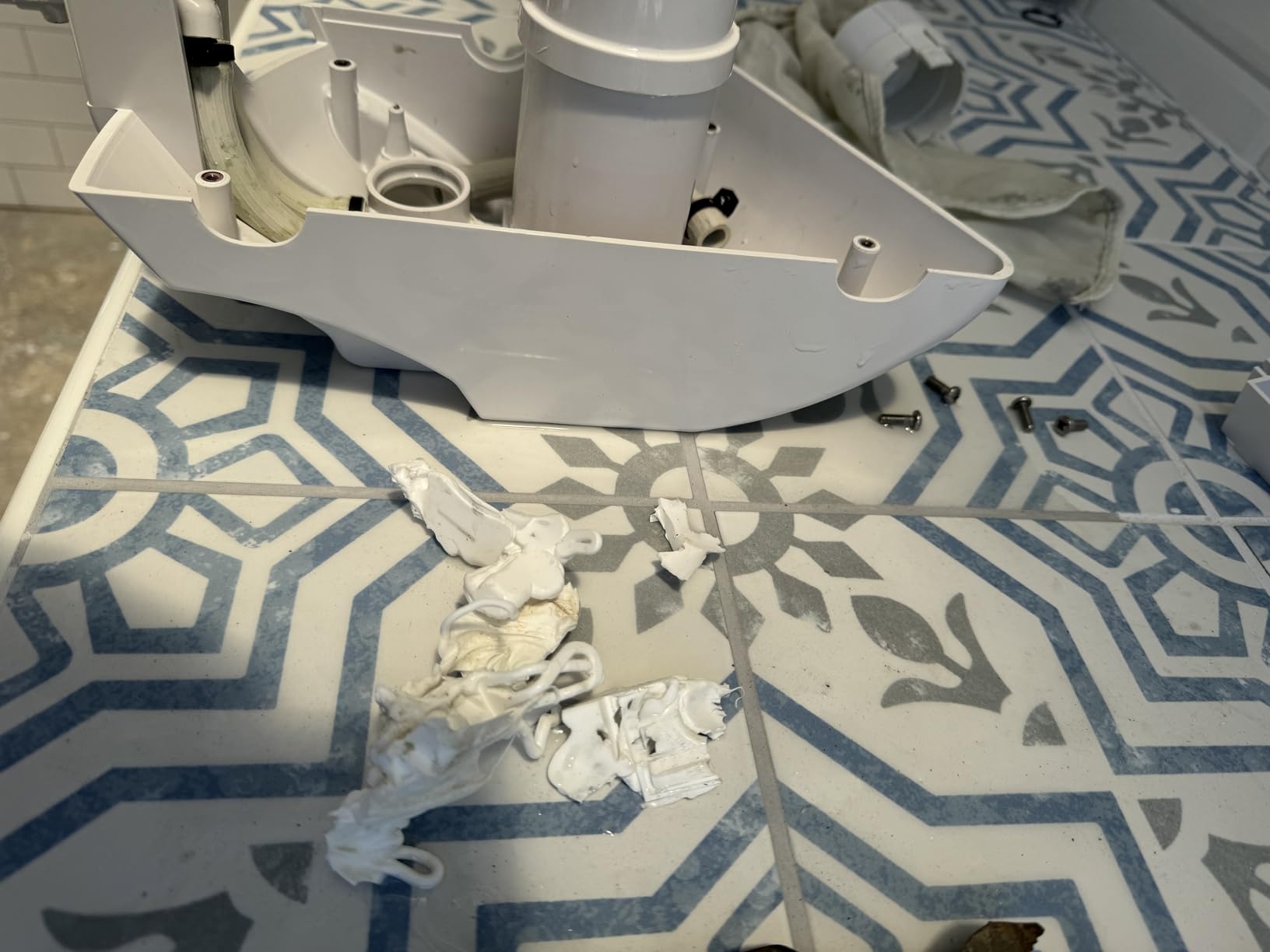
The load capacity is listed at five liters, and the bag again catches small and large debris in a single chamber. Cover floors and walls in three hours or less on in-ground pools across all the usual surfaces.
Reviewers are broadly positive about cleaning power, with the reservation cluster around durability. Around 13 percent of the 1,069 reviews are 1-star, which is a meaningful share for a mature model. A number of those complaints trace back to setup mistakes rather than the unit itself, mostly insufficient flow.

Judge the flow rate before judging the cleaner
If the cleaner stalls midway or climbs out at the shallow end, the answer is almost always flow, not hardware. Test with a flow meter or a bucket-and-stopwatch reading before you conclude the model is faulty.
Better than the 280 if walls are the priority
If your pool has tall walls, deep ends and a waterline that collects grime, the extra jet earns its cost. If your pool is small and flat with a light debris load, the 280 handles the same work for less.
3. Polaris Vac-Sweep 65 – The Aboveground Pick With No Booster Pump
Polaris Vac-Sweep 65 6-130-00 Pressure Side Automatic Pool Cleaner for Above Ground Vinyl Pools
24 ft feed hose
No booster pump required
Detachable debris bag
For aboveground vinyl
Pros
- Runs on return pressure with no booster pump
- Works aboveground vinyl or fiberglass
- Detachable bag makes emptying simple
- Self-install
- Quieter than suction cleaners
Cons
- Hose coiling and tangling reported often
- Surface float wheels can detach over time
- May not reach every area in larger pools
This is the one to look at if your pool sits above ground. The Vac-Sweep 65 is built for aboveground vinyl and fiberglass pools, and the biggest practical advantage is that it runs on return water pressure alone. No booster pump, no plumbing project, no electrician.
That makes it the simplest complete solution on this list in the ways that matter. The 24 feet of hose is shorter than the in-ground models carry, which is fine for the smaller pools it is designed for, and the detachable debris bag empties in seconds.
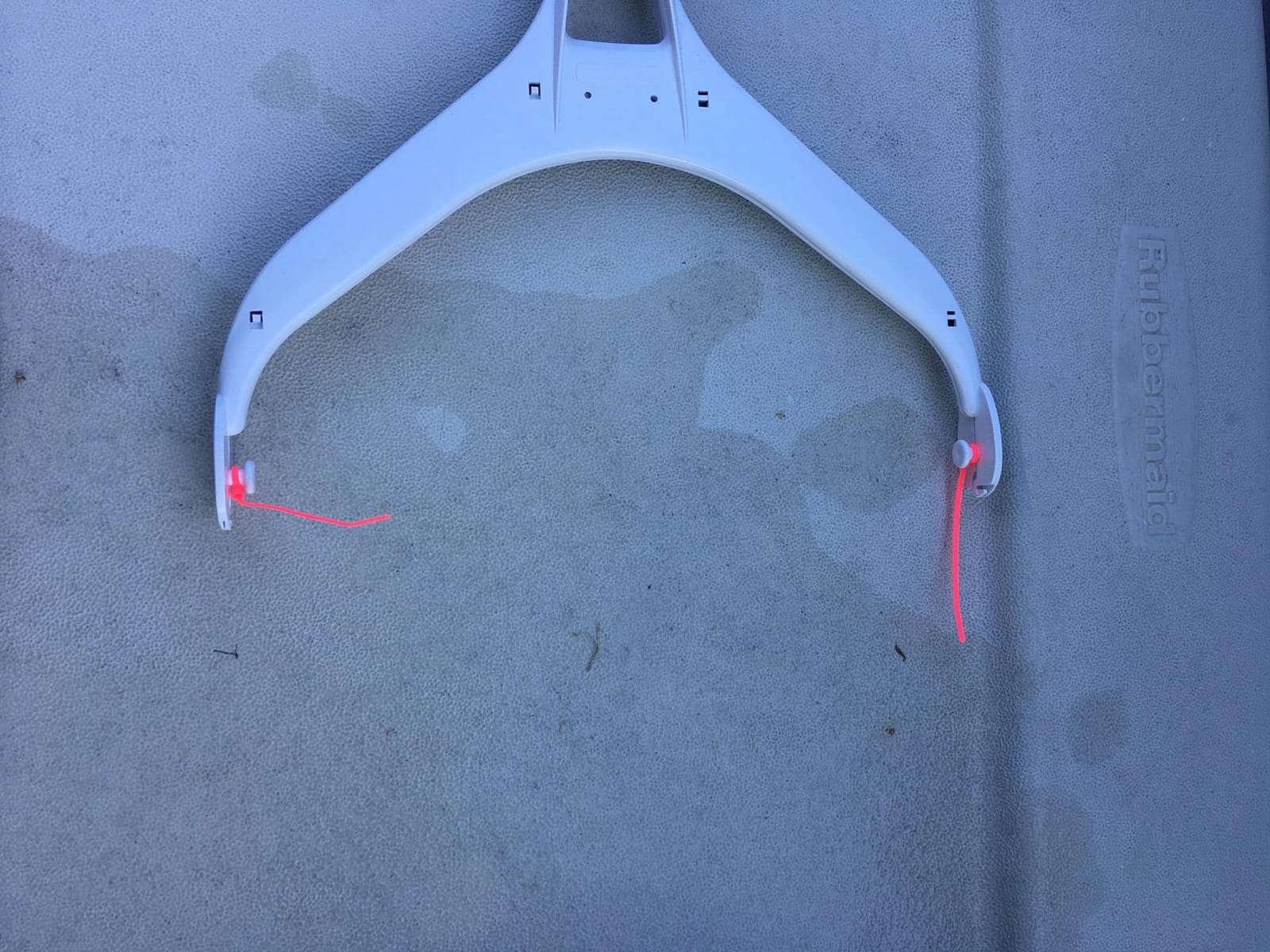
The patented jet sweep assembly loosens debris clinging to the wall rather than only vacuuming the floor, and the unit captures debris before it reaches your pump and filter. Owners credit it with cutting filter cleaning substantially, and with keeping the skimmer free for surface debris.
At 3.8 stars from 1,436 reviews, this is not a beloved machine. The complaints cluster around hose tangling and coiling, which is the single most common problem across this entire category, and around float wheels that detach after a season or two of sun exposure.
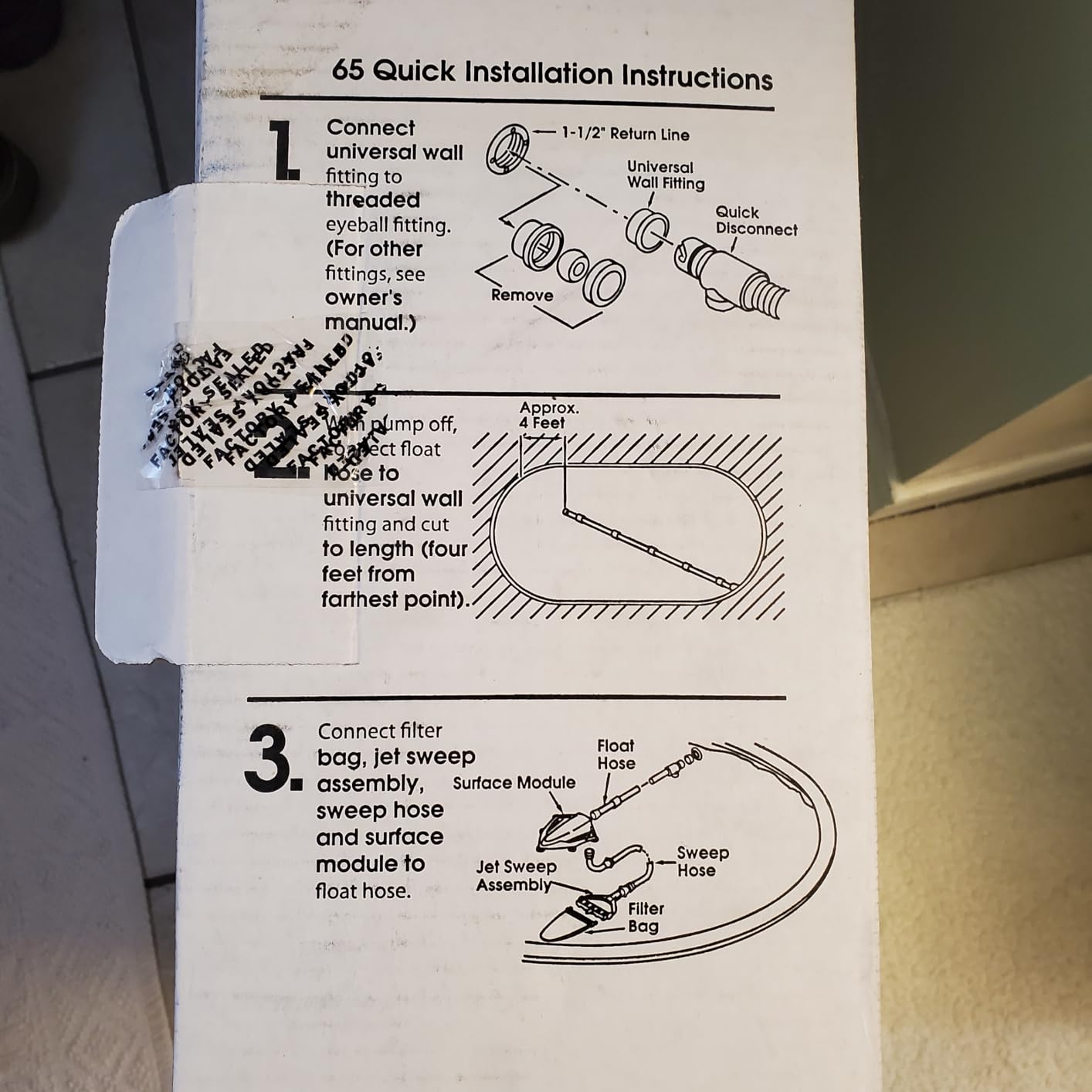
Get the hose length exactly right
Owners who report years of service almost all describe the same thing: they adjusted the hose to the pool’s longest dimension and checked it weekly. Owners with coiling problems usually left the slack too long, letting the hose fold on itself.
Aboveground owners should start here
If you have an aboveground pool and no booster pump, the alternatives are limited and mostly cost more or clean less. This unit targets exactly that situation, and it does it without any electrical work.
4. Intex ZX300 Deluxe – Hydraulic Aboveground Value With Wall Climbing
INTEX ZX300 Deluxe Pressure-Side Automatic Pool Vacuum Cleaner
Hydraulic operation
All-wheel drive
Dual dirt scrubbers
1.8 liter capacity
Pros
- No batteries or electronics to fail
- Waters up to 26 ft round or 36 by 12 ft
- Tangle-free 21 foot hose
- Wall climbing and waterline scrubbing
- Large review base for a budget model
Cons
- Needs a pump rated 1600-3500 GPH
- Plastic drive parts can crack
- Saltwater pools may need weight adjustments
The ZX300 is hydraulic: it connects to a pool inlet fitting and runs entirely on water flow, so there is no power cord, no battery and nothing electronic to fail. That single design decision is why this one keeps working when battery-powered rivals stop.
It covers aboveground pools up to 26 feet round or 36 by 12 feet rectangular, and the dual dirt scrubbers work up to the waterline. Water-powered all-wheel drive gets it up the wall, which is unusual at this level of the market.
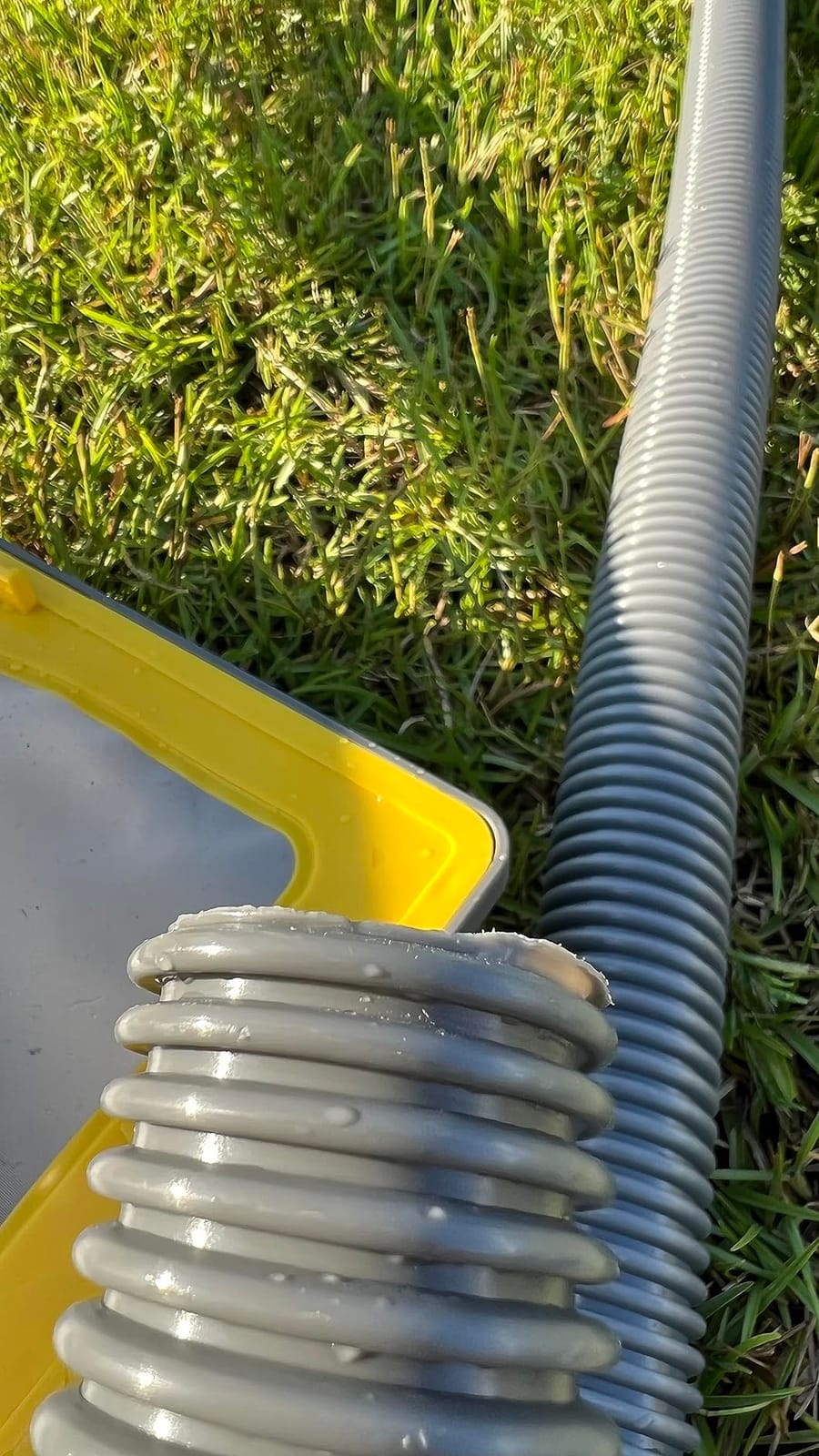
Owners consistently flag one requirement as the difference between a good experience and a bad one: pump flow. It is rated for pumps between 1,600 and 3,500 GPH, and owners with higher flow report markedly better results. Below that range, it struggles to move.
At 3.6 stars from 4,463 reviews it sits in the middle of our lineup, but the review volume matters here. This is one of the most widely reported budget hydraulic cleaners available, and the pattern in the reviews is consistent rather than random.

Check your pump rating before anything else
Find your pump’s rated flow and confirm it falls in range. If it does not, no amount of adjusting the unit will fix the coverage, and this is the number one reason budget hydraulic cleaners get returned.
Best for owners who hate electronics
If your previous cleaner died because a cable frayed or a battery corroded, the fully hydraulic design here removes that failure mode entirely. There is nothing to plug in and nothing to charge.
5. MAKHOON MPC2 – Four Wheels and Adjustable Jet Direction
MAKHOON Upgrade Pool Pressure Side Sweeper: Professional Solution for Cleaning Your Swimming Pool (Four Wheels are Better Than Three) Need 1.5″ Female Thread Pool Booster Pump Inlet, 4 Bar Pressure
Four-wheel drive
1.5 inch booster inlet
4 Bar pressure
Adjustable jets
Pros
- Four wheels sit flatter and hold direction better than three
- Adjustable jet direction lets you tune coverage
- Suit various in-ground pool shapes and sizes
- Manufacturer has replaced units for defects
Cons
- Needs a 1.5 inch female thread booster inlet at 4 Bar
- Professional installation recommended
- Newer brand with a shorter track record
The selling point here is the wheel count. Four wheels spread the weight more evenly than a conventional three-wheel chassis, which in practice means the unit resists the constant climbing and pivoting that makes three-wheel cleaners wear their skirts and lose direction.
Jet power direction is adjustable, so you can tune how aggressively it turns at the wall depending on your pool’s shape. For an unusual pool with tight corners or a raised spa, that tuning matters more than raw suction.
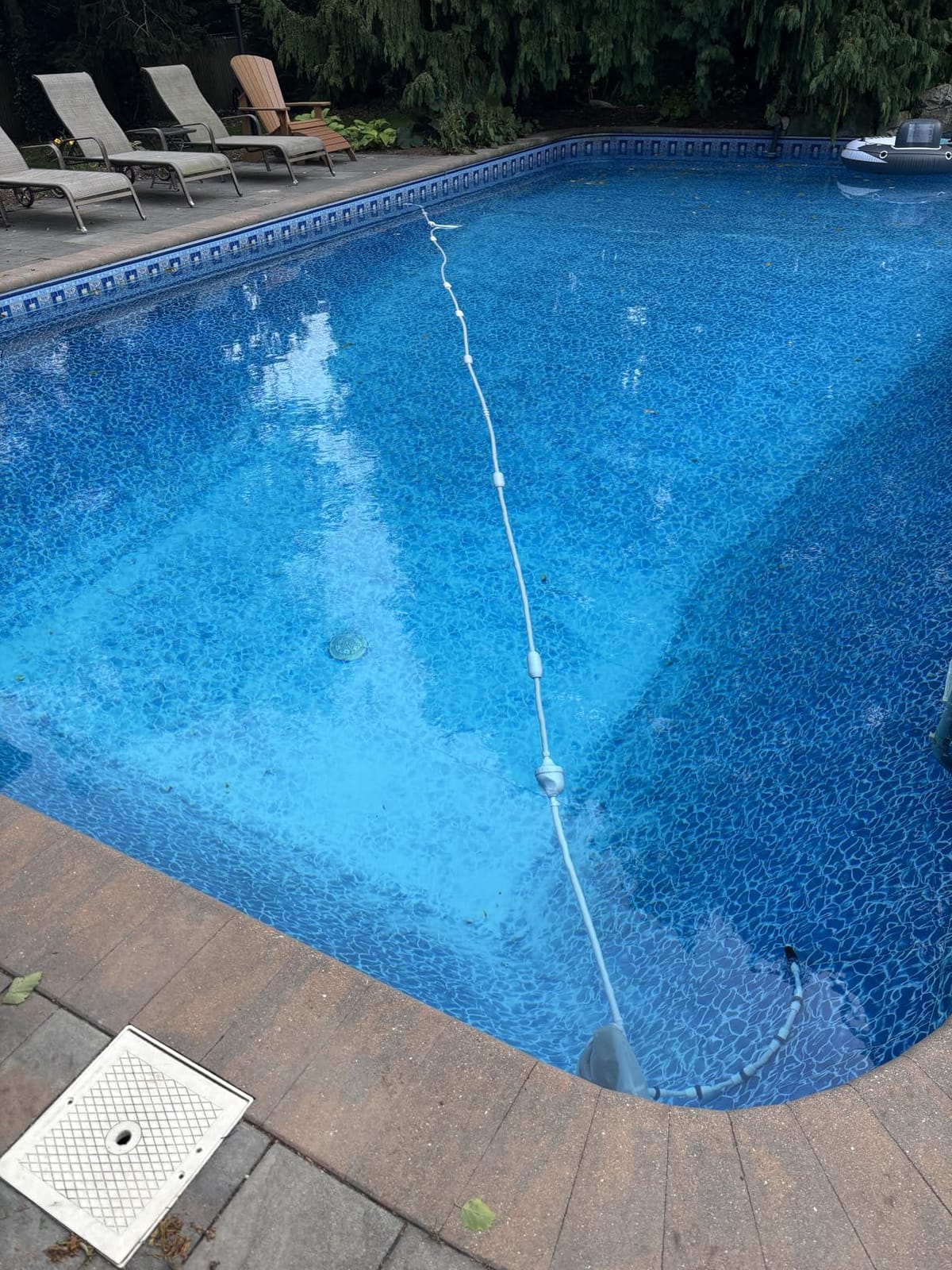
The plumbing requirement is specific and worth reading twice. It needs a 1.5 inch female thread booster pump inlet and 4 Bar of water pressure. If your existing booster setup does not match that, this unit simply will not connect, and building the correct inlet can cost more than the cleaner.
With 394 reviews and a 3.9 rating, the sample is thin compared with the Polaris models. Early adopters like the stability, and the manufacturer has been responsive about quality issues, but roughly 19 percent of reviews are 1-star and durability is the recurring theme.
Confirm your booster inlet thread size first
A 1.5 inch female thread inlet and a 4 Bar requirement narrow the pool owners who can use this. Measure the connection before you order, because adapting an existing line to fit is the most likely reason this purchase turns into a plumbing bill.
A good fit for odd-shaped in-ground pools
If your pool has unusual geometry and a standard cleaner spends most of its cycle stuck in a corner, the four-wheel stability and adjustable jet direction are worth the compatibility check. For a plain rectangular pool, a mainstream Polaris model is the safer bet.
6. Pentair Kreepy Krauly Platinum – Lightweight and Easy to Handle
Pentair LL505PMG Kreepy Krauly Platinum Pressure-Side Inground Automatic Pool Cleaner, Gray
30 ft feed hose
Floors and walls
Multi-surface
1-3 hour clean time
Pros
- Lightweight enough to lift out one-handed for bag changes
- Cleans floors and walls on one cycle
- Works on gunite
- vinyl-lined and fiberglass surfaces
- 30 feet of hose included
Cons
- Only 62 reviews limits real-world feedback
- Requires a booster pump
- Some listed specs appear inconsistent
The Pentair name carries weight in pool equipment, and the Kreepy Krauly line has been in service for a long time. This Platinum version is a pressure-side in-ground cleaner that works on concrete and gunite, vinyl-lined and fiberglass pools, cleaning floors and walls in one to three hours.
Thirty feet of hose is included, and the unit is light enough to lift out of the pool with one hand when you empty the bag. That sounds minor until you have pulled a waterlogged bag over the edge of a deep-end wall at the end of a long day.
The real limitation is evidence, not design. Sixty-two reviews is a very small sample, and 17 percent of them are 1-star. When a model has that little owner history, you are buying on reputation and spec sheet rather than on demonstrated long-term reliability.
Some of the listed specifications are also inconsistent, with the weight shown as 16 ounces, which is implausible for a unit of this class. Treat the published weight figures with suspicion and confirm the physical details before ordering.
Why a bigger brand name is not the same as more proof
Brand recognition tells you that replacement parts and service will exist in ten years. It does not tell you whether this specific model performs. With this few reviews, ask a pool store to demo the unit in water before you commit.
Best when you are lifting it out by hand
If weight is the factor that matters most to you, the lightweight handling here is a genuine advantage over bulkier units. Just budget more time for the booster pump, which is not included.
7. Polaris Vac-Sweep P39 – The Most Debris Capacity in One Cycle
Polaris Vac-Sweep P39 Pressure Inground Pool Cleaner, Triple Jet Powered
2.5 inch inlet
5L dual-chamber bag
PosiDrive traction
31 ft feed hose
Pros
- 2.5 inch inlet is the widest here
- 5 liter dual-chamber bag holds the most debris
- All-wheel PosiDrive traction on floors and walls
- TailSweep PRO accessory included
Cons
- Lowest rating here at 3.5 stars
- Only 73 reviews and about 25 percent are 1-star
- Requires a booster pump and professional installation
The P39 is the flagship specification sheet in this group. Triple venturi jets, all-wheel PosiDrive, a 2.5 inch inlet and a 5 liter dual-chamber SuperBag. On paper it should out-clean every other unit here, and on debris capacity it does.
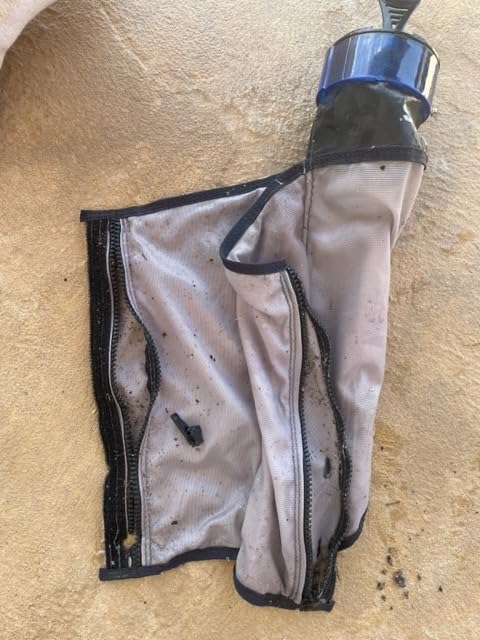
The dual-chamber bag is the feature owners care about in practice. Instead of one chamber filling to the top and shutting flow down, debris distributes across two chambers, so the cleaner keeps working at full suction longer before you empty it. The TailSweep PRO accessory is included for sweeping settled debris off steps and ledges.
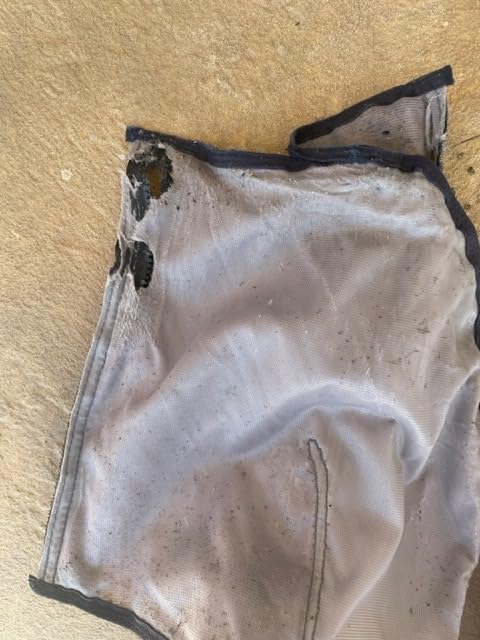
Here is the problem. Seventy-three reviews and a 3.5 star average, with about 25 percent landing at 1-star. That is the weakest satisfaction score of any product in this roundup despite the strong specification sheet, and it is the single biggest reason we did not award this model a top-tier badge.
The likely explanations are the usual ones: an early production run, a mismatch between expectations and reality for owners whose booster setup was marginal, or simply a product with limited adoption. None of those are fixable by shopping harder, so the safest approach is to let a pool store demonstrate the unit in water.
Judge the empty bag, not the full one
The 5 liter dual-chamber bag is the reason fewer emptying trips are needed. In a heavy leaf season that means fewer trips to the pool edge, which is the metric that actually determines whether you keep using the unit.
Best when debris volume beats everything else
If you have a large in-ground pool under heavy tree cover and you will pay for a professional installation anyway, the P39 has the hardware for the job. If you want a proven track record instead, the Vac-Sweep 280 is the same buy with far more owner history behind it.
Pressure Side vs Suction Side vs Robotic Cleaners
Pressure side cleaners win on coarse debris and lose on fines. A manufacturer representative told owners on a Troublefreepool thread that the pressure side model is not nearly as good for picking up fine particles as the suction side, and that single sentence explains most of the disappointment we see in the reviews.
It is physics rather than quality control. A suction cleaner draws water through an inlet, so fine particles travel with the flow. A pressure cleaner has to hold water against a bag full of leaves, and small silt mostly settles back to the floor once turbulence dies down. Several owners described the same effect: the unit stirs the sediment, the main filter catches some of it, and a haze remains.
Robotics sidestep the trade-off by filtering water inside the unit, which is why a robot handles sand better than any pressure or suction design. It is also why a robot is not a straight substitute for a pressure side cleaner, a question we saw asked repeatedly in pool owner forums.
Our rule of thumb: if your debris is leaves, twigs and grit, pressure side is the cheapest way to automate it. If your problem is sand, silt and dust film, you are buying the wrong technology no matter which model you choose.
How to Install a Pressure Side Pool Cleaner
Installation is where most failed pressure side cleaners originate, and the sequence matters more than any product choice.
First, install the booster pump if the model requires one. A single-speed pool pump is the easiest case. On a two-speed pump you must run the high-speed setting, since low speed will not produce enough flow. On a variable-speed pump, use a mid-to-high speed setting and confirm actual flow with a bucket-and-stopwatch reading, because the nameplate rating and the delivered flow are not the same number.
Second, fit the return jet adaptor at a return located in the shallow end where you can see the unit at the start of each cycle. Secure the feed hose to the coping at even intervals so it cannot kink, and size the hose so the unit just reaches the deepest point with a little slack.
Third, lower the unit in with the flow running and let it pull away. Watch the first minute. Strong thrust and a clean departure from the wall means the flow is right. Stalling, reversing in tight circles, or popping up over the edge means the flow is wrong and no amount of adjustment to the hose will fix it.
Troubleshooting a Pressure Side Pool Cleaner
Almost every complaint in this category traces back to one of five causes, and all five are fixable by an owner in an afternoon.
Wrong flow rate is the most common. Too little and the unit stalls or reverses. Too much and it races, climbs out of the pool or wraps the hose around itself. Start by verifying the pump setting and measuring flow before changing anything else.
A partially blocked return jet or skimmer reduces flow just as effectively as a wrong pump setting, so clear both before you blame the cleaner. Low water level also starves the unit, because a pressure cleaner draws its supply from the pool rather than a dedicated line.
Tangled or kinked feed hoses cause the reversing behaviour owners describe most often. A worn or jammed anti-spiral swivel at the inlet is the next thing to inspect, and a failed swivel will coil the hose within a single cycle. Finally, an overfull bag restricts flow and can make a perfectly good cleaner appear broken. Empty it and retest before you consider a replacement.
Buying Guide: Booster Pump, Hose Length and Bag Size
Booster pump compatibility is the first filter to apply. Most in-ground models in this roundup need one, and the pump must deliver the flow the cleaner requires. The MAKHOON MPC2 is the strictest case with its 1.5 inch female thread inlet and 4 Bar requirement. On variable-speed pumps, treat the nameplate as a ceiling rather than a target and measure real flow.
Hose length is the second filter. The in-ground Polaris models carry 31 feet, the Pentair carries 30 feet, and the aboveground units run shorter at 24 and 21 feet. Measure your pool’s longest dimension from the return jet and add roughly a foot of slack. A hose that is too long coils; too short and the cleaner cannot reach the deep end.
Bag type and capacity decide how often you empty. Single chamber bags are simpler and cheaper to replace but fill in one place, which matters in leaf season. Dual chamber bags such as the 5 liter SuperBag on the P39 distribute debris and keep flow steady longer. If you have sandy silt, buy replacement sand-and-silt bags rather than reusing a leaf bag.
Pool type is the third filter. Aboveground owners should focus on the models designed for aboveground operation, since the sloped floors and liners of a framed pool are hard on in-ground chassis designs. In-ground owners on vinyl, fiberglass, gunite, pebble or tile can use any of the in-ground models here.
Saltwater deserves a note of caution. Chlorine pools suit every unit in this roundup without modification. Saltwater raises the specific gravity of the water, which can leave a plastic-bodied hydraulic unit slightly buoyant, and some owners of the Intex ZX300 report needing weight adjustments in saltwater setups.
Frequently Asked Questions
Who makes the best pressure-side pool cleaner?
Polaris makes the widest range of proven in-ground pressure cleaners, and the Vac-Sweep 280 has the deepest owner history in this category. Pentair is a close second for owners who want lightweight handling and a recognized service network. For aboveground pools, the Polaris Vac-Sweep 65 needs no booster pump at all. The right pick depends mostly on your pool type and whether you can already supply adequate flow.
Do pressure side pool cleaners need a booster pump?
Most in-ground models do, because return pressure alone rarely produces enough flow to cross a deep end or climb a wall. The Polaris Vac-Sweep 280, 380 and P39, the Pentair Kreepy Krauly Platinum and the MAKHOON MPC2 all need one. The aboveground Polaris Vac-Sweep 65 runs on return pressure alone, and the Intex ZX300 is hydraulic but still needs a pump rated between 1,600 and 3,500 GPH.
How does a pressure side pool cleaner work?
The cleaner screws onto a return jet adaptor. Water from your pool pump, boosted by a booster pump where required, enters a turbine wheel that converts flow into rotational thrust. That thrust drives the unit across the floor and up the walls, while debris is drawn in through the inlet and trapped in an internal filter bag you empty periodically.
Why is my pressure side pool cleaner getting stuck or reversing?
In descending order of likelihood, the cause is wrong flow rate, a partially blocked return jet or skimmer, low pool water level, a tangled or kinked feed hose, a jammed anti-spiral swivel, or an overfull filter bag. Reversing constantly almost always means a hose problem or insufficient flow. Verify your pump speed and measure real flow before changing any parts.
What is the difference between pressure and suction side pool cleaners?
A pressure side cleaner uses the pump’s return pressure to propel itself and holds debris in a bag, which is cheap to run and needs no electricity. A suction side cleaner connects to the skimmer and relies on the pump drawing water through an inlet, so it captures far more fine sand and silt. Pressure side wins on leaves and large debris, suction side wins on fines.
Is Polaris or Dolphin better?
These are different categories, not competing brands. Polaris builds pressure side, suction side, robotic and aboveground cleaners. Dolphin builds robotic cleaners only, so a Dolphin is not an alternative to a Polaris pressure side model. Choose between them only by deciding whether you want a lower-cost pressure unit or a fully independent robot.
Can a pressure side pool cleaner be used on an aboveground pool?
Yes, but only with an aboveground-specific model. The Polaris Vac-Sweep 65 is designed for aboveground vinyl and fiberglass pools and needs no booster pump. The Intex ZX300 is hydraulic and covers aboveground pools up to 26 feet round or 36 by 12 feet, but needs a pump rated 1,600 to 3,500 GPH. In-ground models handle sloped floors and liners poorly.
Is a pressure side pool cleaner worth it compared to a robot?
It is worth it if your debris is leaves and coarse grit and you want floor cleaning on a budget using the pump you already run. It is not worth it if your pool collects fine sand and silt, because no pressure side cleaner picks up fines as well as a robot or a suction unit. Robots also work independently of your circulation system.
Our Verdict on the Best Pressure Side Pool Cleaners in 2026
For most in-ground pools, the Polaris Vac-Sweep 280 is the pick: the strongest combination of rating, owner history and proven coverage we found, with a booster pump and professional installation as the real cost of entry. If wall and waterline scrubbing is your priority, step up to the Vac-Sweep 380. Aboveground owners should start with the Vac-Sweep 65, which is the only unit here that needs no booster pump at all.
The honest caveat applies to every model on this list. Pressure side technology is built for leaves and coarse debris, and it will not rescue a pool full of fine silt. Check your flow first, buy the right bag, and this is the least fuss automatic cleaning you can add to an existing pump setup.