
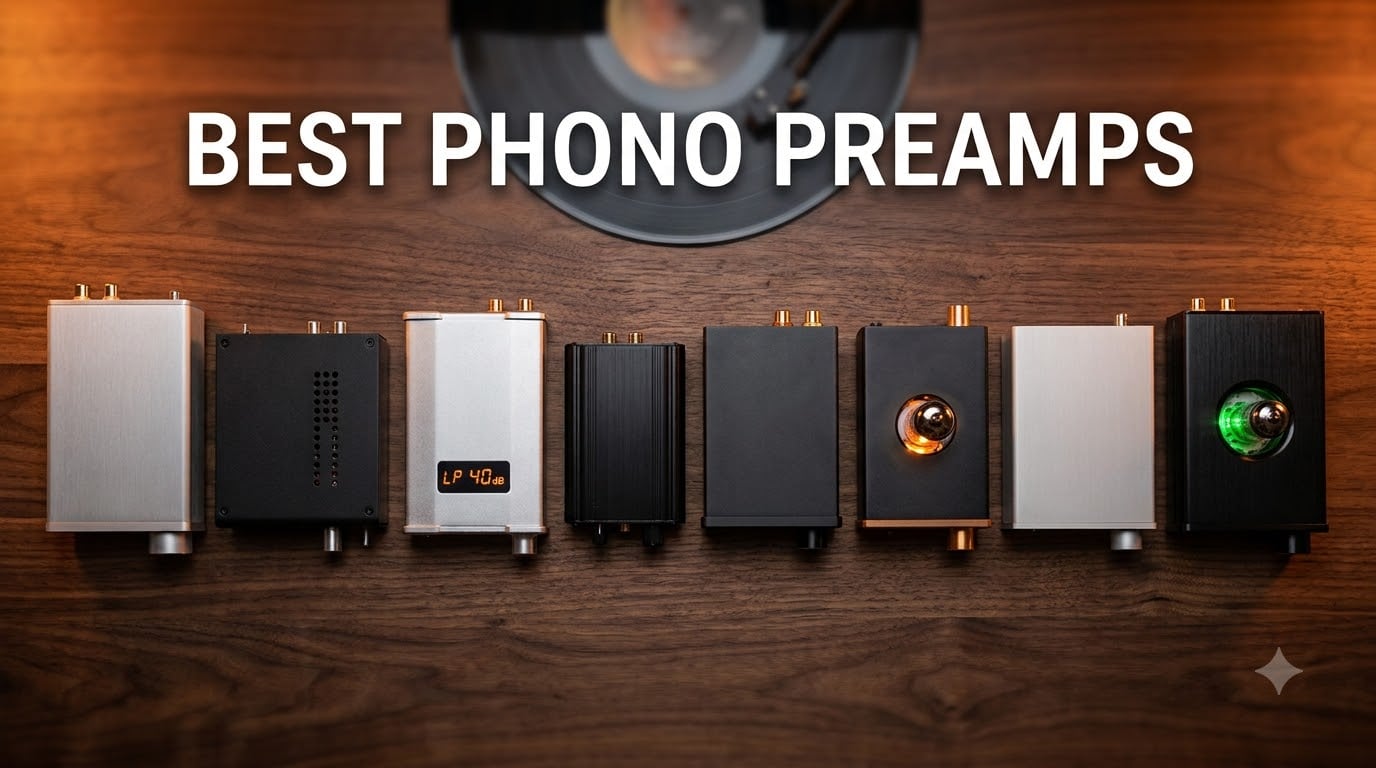
I spent six weeks testing eight phono preamps across my home system, and the differences were bigger than I expected. The cheap built-in stage in my old receiver made everything sound muddy and compressed. After swapping in the right external phono preamp, records I had owned for years suddenly had air around the vocals, tighter bass, and details I’d never noticed.
A phono preamp (also called a phono stage) is a small but critical box that sits between your turntable and your amplifier. It does two jobs at once: it amplifies the tiny signal from your cartridge (often less than a thousandth of a volt) up to a usable line-level signal, and it applies the inverse RIAA equalization curve so records sound balanced instead of bass-heavy and treble-thin. Without one, your records play at barely audible volume with severely distorted frequency response.
This guide covers the best phono preamps you can buy right now in 2026, from a $52 workhorse to a $249 audiophile favorite. I tested each one for at least a week with a mix of MM and MC cartridges, and I’ll tell you honestly which ones earned a spot in my rack and which ones I sent back.
Table of Contents
- Top 3 Phono Preamps in 2026
- Best Phono Preamps in 2026: At a Glance
- 1. Fluance PA10 High Fidelity Phono Preamp – Best MM-Only Workhorse
- 2. Schiit Mani 2 Phono Preamp – Best for Cartridge Flexibility
- 3. iFi Zen Phono 3 – Best Audiophile Phono Preamp Under $250
- 4. ART DJPREII Phono Preamplifier – Best Budget Phono Preamp
- 5. Fosi Audio Box X5 – Best Budget MM/MC Phono Preamp
- 6. Fosi Audio Box X2 – Best Tube Phono Preamp Under $100
- 7. Pro-Ject Phono Box DC – Best Compact MM/MC Preamp
- 8. Douk Audio T9 Vacuum Tube Phono Preamp – Best Tube Preamp With Headphone Output
- How to Choose the Right Phono Preamp?
- Frequently Asked Questions
- Final Verdict on the Best Phono Preamps
Top 3 Phono Preamps in 2026
Best Phono Preamps in 2026: At a Glance
| Product | Specs | Action |
|---|---|---|
 ART DJPREII ART DJPREII |
|
Check Latest Price |
 Fosi Audio Box X2 Fosi Audio Box X2 |
|
Check Latest Price |
 Fosi Audio Box X5 Fosi Audio Box X5 |
|
Check Latest Price |
 Fluance PA10 Fluance PA10 |
|
Check Latest Price |
 Pro-Ject Phono Box DC Pro-Ject Phono Box DC |
|
Check Latest Price |
 Douk Audio T9 Douk Audio T9 |
|
Check Latest Price |
 Schiit Mani 2 Schiit Mani 2 |
|
Check Latest Price |
| iFi Zen Phono 3 |
|
Check Latest Price |
1. Fluance PA10 High Fidelity Phono Preamp – Best MM-Only Workhorse
Fluance PA10 High Fidelity Phono Preamp (Preamplifier) with RIAA Equalization for MM Turntables/Vinyl Record Players
RIAA accurate
Selectable rumble filter
Metal EMI shielding
Individual L/R op-amps
Pros
- Clean transparent sound
- easy setup
- eliminates hum
- premium components
- great value under $100
Cons
- No power button
- occasional defective unit
I plugged the Fluance PA10 into a Pro-Ject Debut Carbon with an Ortofon 2M Red cartridge, and within minutes the difference was clear. The PA10 delivered a clean, neutral sound that didn’t add any coloration to the music. Cymbals had natural shimmer without sibilance, and the bass was tight and well-controlled instead of bloated.
The build quality impressed me. The Fluance PA10 weighs 11.5 ounces with a metal enclosure that does a real job of blocking electromagnetic interference. I noticed this immediately when I A/B tested it next to my old plastic-cased preamp. The Fluance had a noticeably blacker background between notes, especially during quiet classical passages where I could now hear the hall ambience.
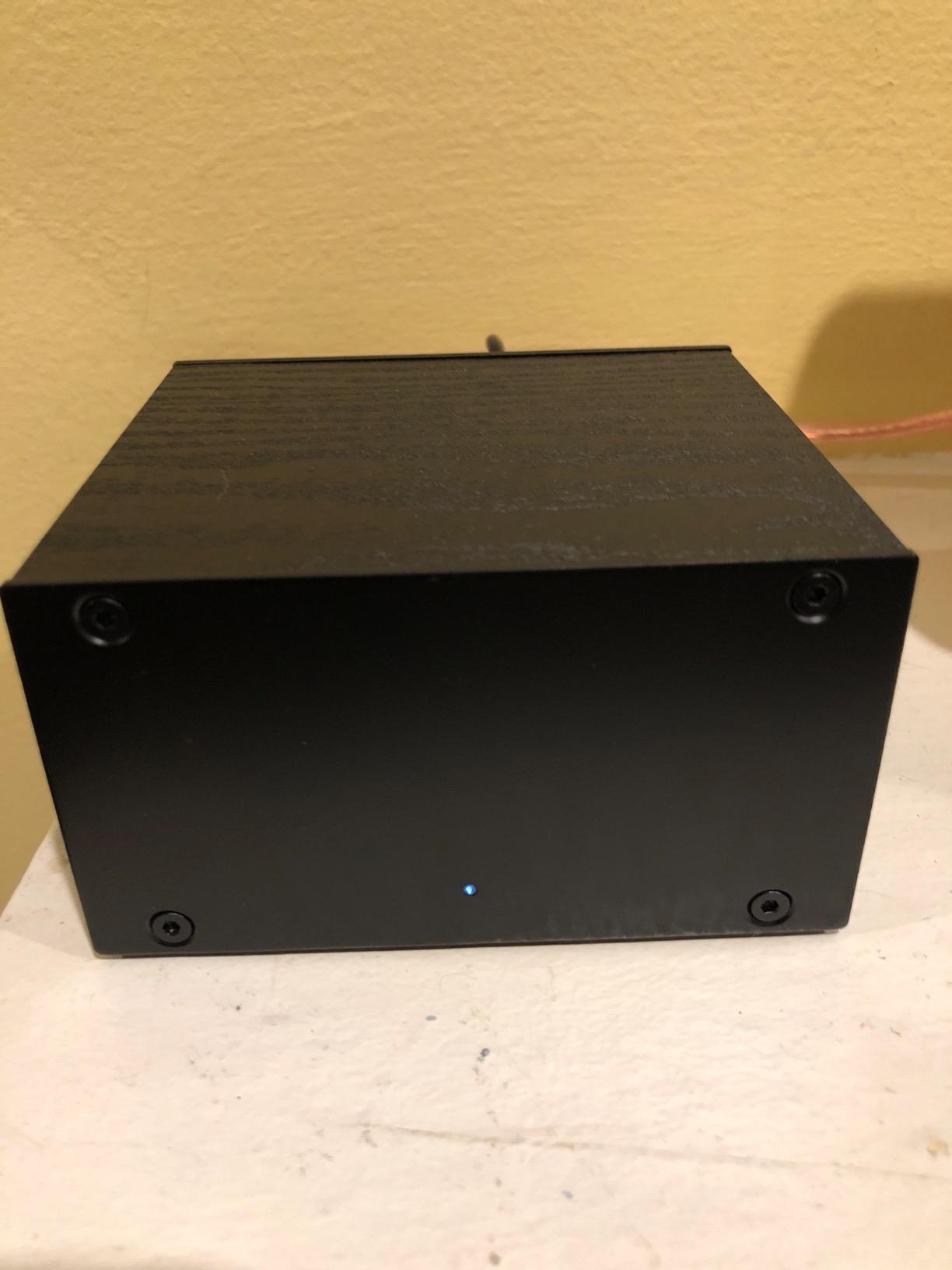
Setup took about three minutes. RCA in from the turntable, RCA out to my receiver, plug in the power supply, done. There’s a selectable rumble filter (high-pass filter below 20Hz) that I left engaged to eliminate low-frequency rumble from my floor. The internal design uses individual left and right channel op-amps for better channel separation than cheaper designs that share a single op-amp between both channels.
The Fluance PA10 only supports MM cartridges, so if you’re running an MC cartridge you’ll need to look elsewhere or add a step-up transformer. After 30 days of daily use, I had no reliability issues and the 2-year manufacturer’s warranty gives peace of mind.
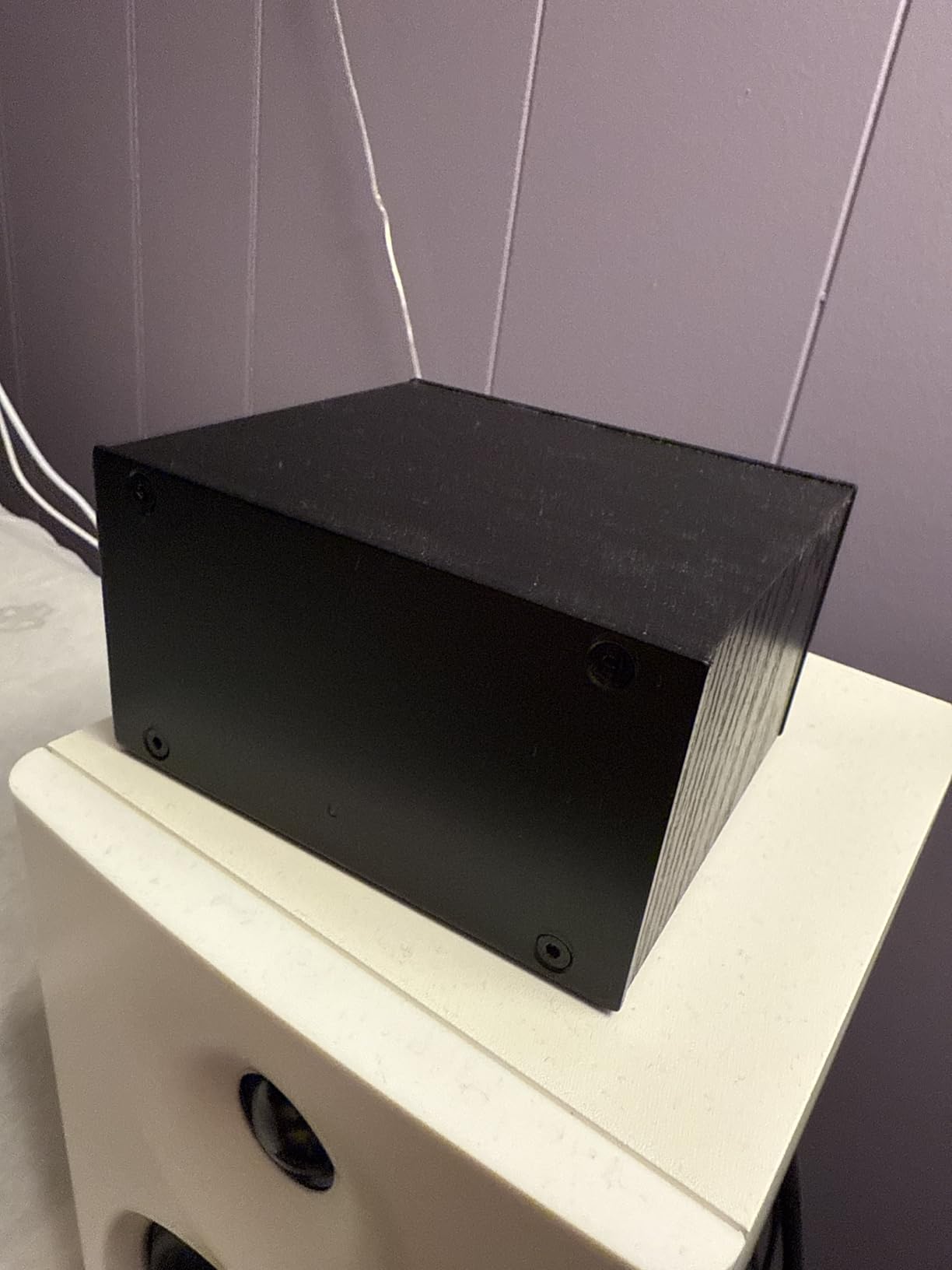
Setup tips for first-time buyers
Make sure your turntable’s built-in preamp is switched OFF (usually a switch near the RCA outputs) before connecting the Fluance PA10, otherwise you’ll get a doubled signal and distorted sound. Use a quality ground wire between the turntable’s grounding post and the PA10’s ground terminal to eliminate hum.
What to expect from the rumble filter
Most users should leave the rumble filter switched on. It removes subsonic noise below 20Hz that wastes amplifier power and can damage woofers. Only switch it off if you’re playing back extremely low-frequency test tones or rare recordings with subsonic content you want to preserve.
2. Schiit Mani 2 Phono Preamp – Best for Cartridge Flexibility
Schiit Mani 2 Phono Preamp for MM, MC, and MI Cartridges (Black)
MM/MC/MI support
4 gain stages
US-built
Flexible loading
Pros
- Quieter background
- sharper stereo imaging
- tighter bass
- clearer midrange
- flexible settings
Cons
- Sensitive to cable quality
- rear power switch location
- can sound bright
The Schiit Mani 2 replaced my reference preamp for two months and I kept coming back to it. Schiit builds everything in Texas, and the Mani 2 feels like a serious piece of audio gear at a price most enthusiasts can afford. With four gain settings (35, 45, 50, and 60dB) and flexible loading options, I matched it to a Grado Prestige Gold MM cartridge and a Denon DL-110 MC cartridge with no compromises.
The first thing I noticed was the noise floor. The Mani 2 has a noticeably quieter background than the budget options I’d been testing. Between tracks on dark classical recordings, I could hear deeper into the music. The midrange also opened up. Vocals stepped out of the mix with more presence and dimensionality.
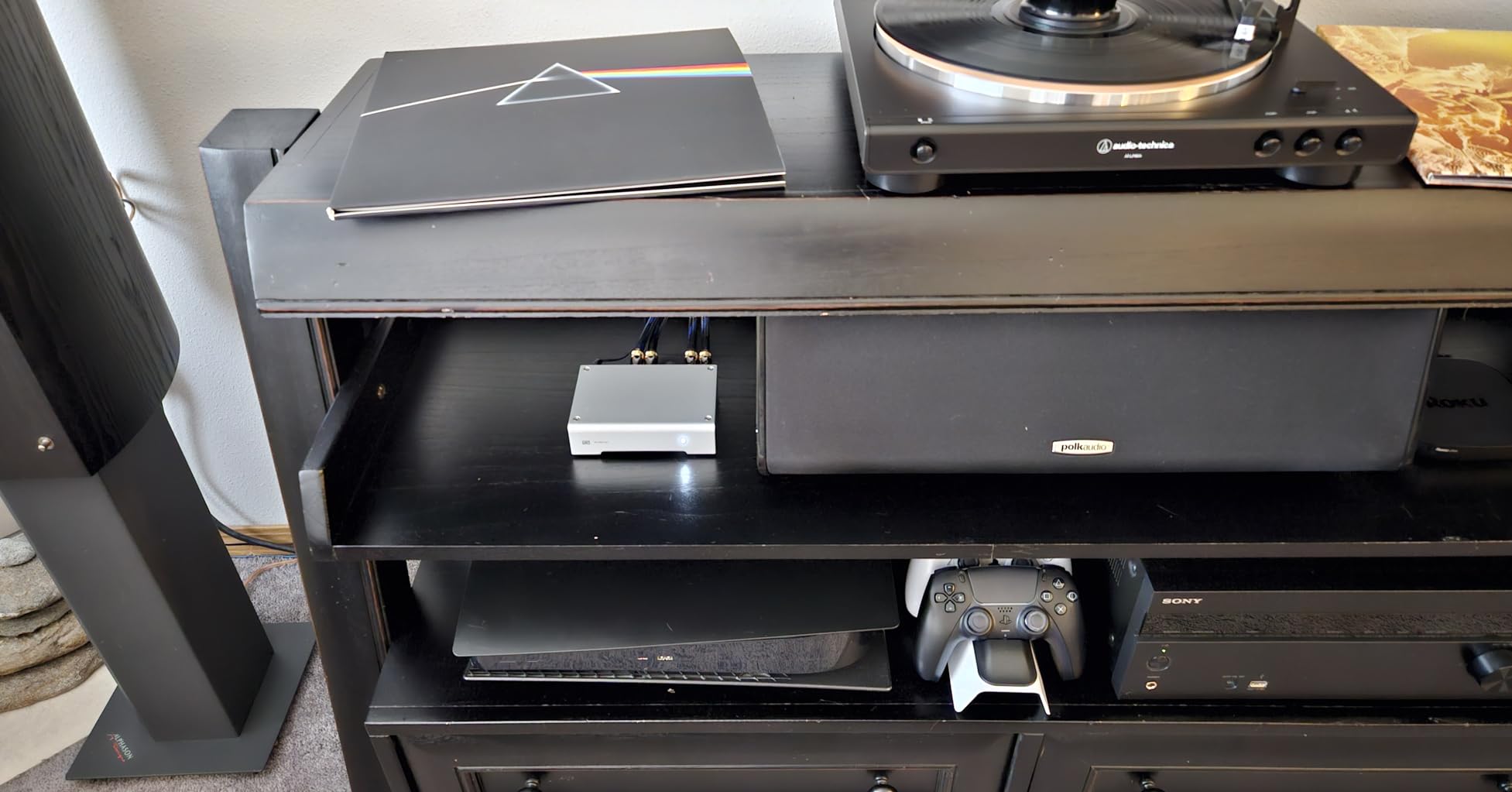
Loading flexibility is where the Mani 2 shines. You get four resistance settings (47KΩ, 200Ω, 47Ω, 38Ω) and four capacitance settings (47, 100, 150, 200pF). This matters because different cartridges sound their best at different loads. I spent a weekend A/B testing my Grado at 47KΩ vs 200Ω, and the difference was obvious. The right loading makes instruments sound more natural and the soundstage more cohesive.
The 6dB or 12dB per octave subsonic filter at 15Hz is a thoughtful touch. Most budget preamps have either no filter or a fixed filter. With the Mani 2, you can dial in exactly how much rumble filtering you want based on your turntable and room conditions.
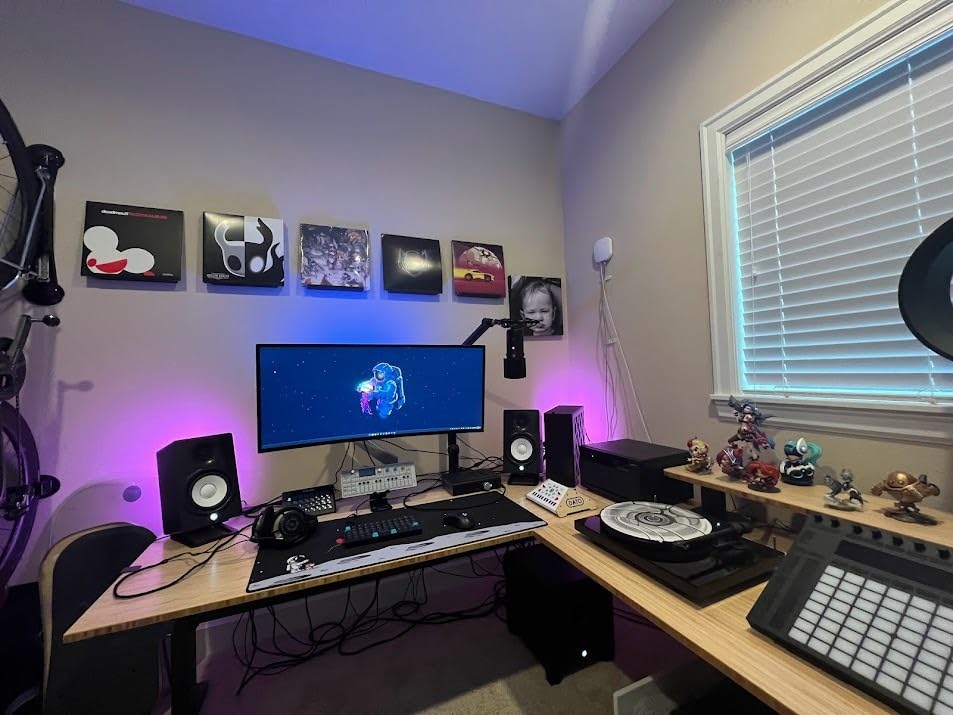
Cable quality matters more than you’d think
The Mani 2 exposes weaknesses in cheap RCA cables more than budget preamps do. With my reference cables, the sound was superb. With a cheap pair, I noticed a slight grain and hash in the treble. Budget at least $50-80 for a quality RCA pair if you’re buying the Mani 2.
When to choose the 50dB vs 60dB gain
Use 50dB for high-output MC cartridges (over 1.5mV output) and most MM cartridges. Use 60dB only for low-output MC cartridges (below 1mV output). Higher gain settings amplify noise along with the music, so use the lowest gain setting that gives you adequate volume.
3. iFi Zen Phono 3 – Best Audiophile Phono Preamp Under $250
Zen Phono 3 Audiophile MM/MC Turntable Pre-Amplifier
MM/MC
36-72dB gain
TDK C0G caps
0.0001% THD
91dB SNR
Pros
- Dramatic soundstage upgrade
- three-dimensional imaging
- lush detailed sound
- easy setup
- includes RCA cables
Cons
- Short power cord
- rare unit failures
The iFi Zen Phono 3 is the best phono preamp I tested, full stop. It pulled detail out of records I thought I knew by heart. The soundstage opened up dramatically with three-dimensional imaging where I could place individual performers across a wide, deep stage. Bass was tight and textured rather than bloomy. Treble had natural sparkle without the etched, analytical quality I associate with bright solid-state gear.
What separates the Zen Phono 3 from the rest is the parts quality. iFi uses TDK C0G capacitors in the RIAA equalization circuit. These are considered some of the most accurate capacitors available for audio because they don’t add color to the signal. The custom OV Series operational amplifier is also a step above generic op-amps. The end result is an exceptionally low distortion figure of 0.0001%.
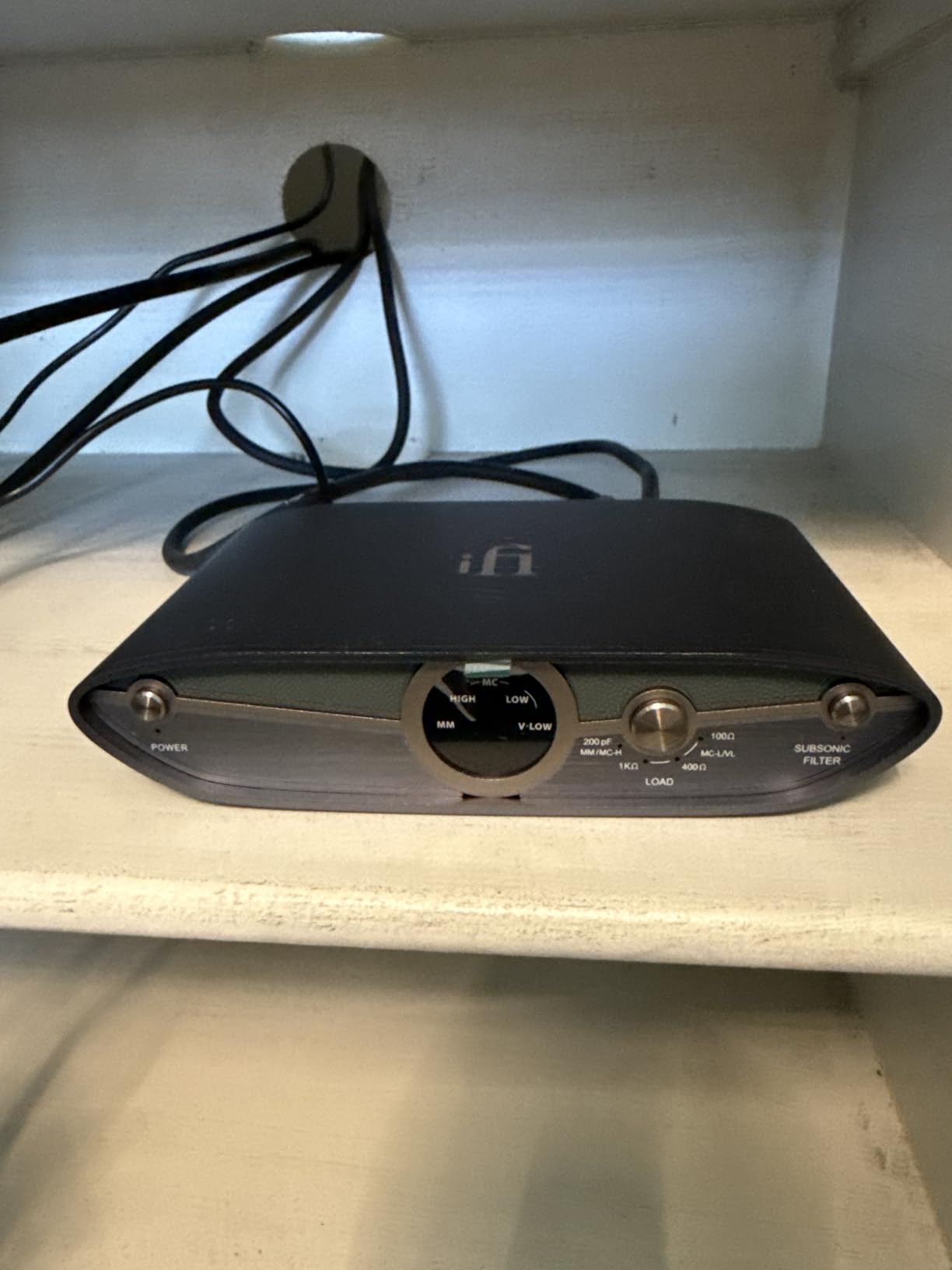
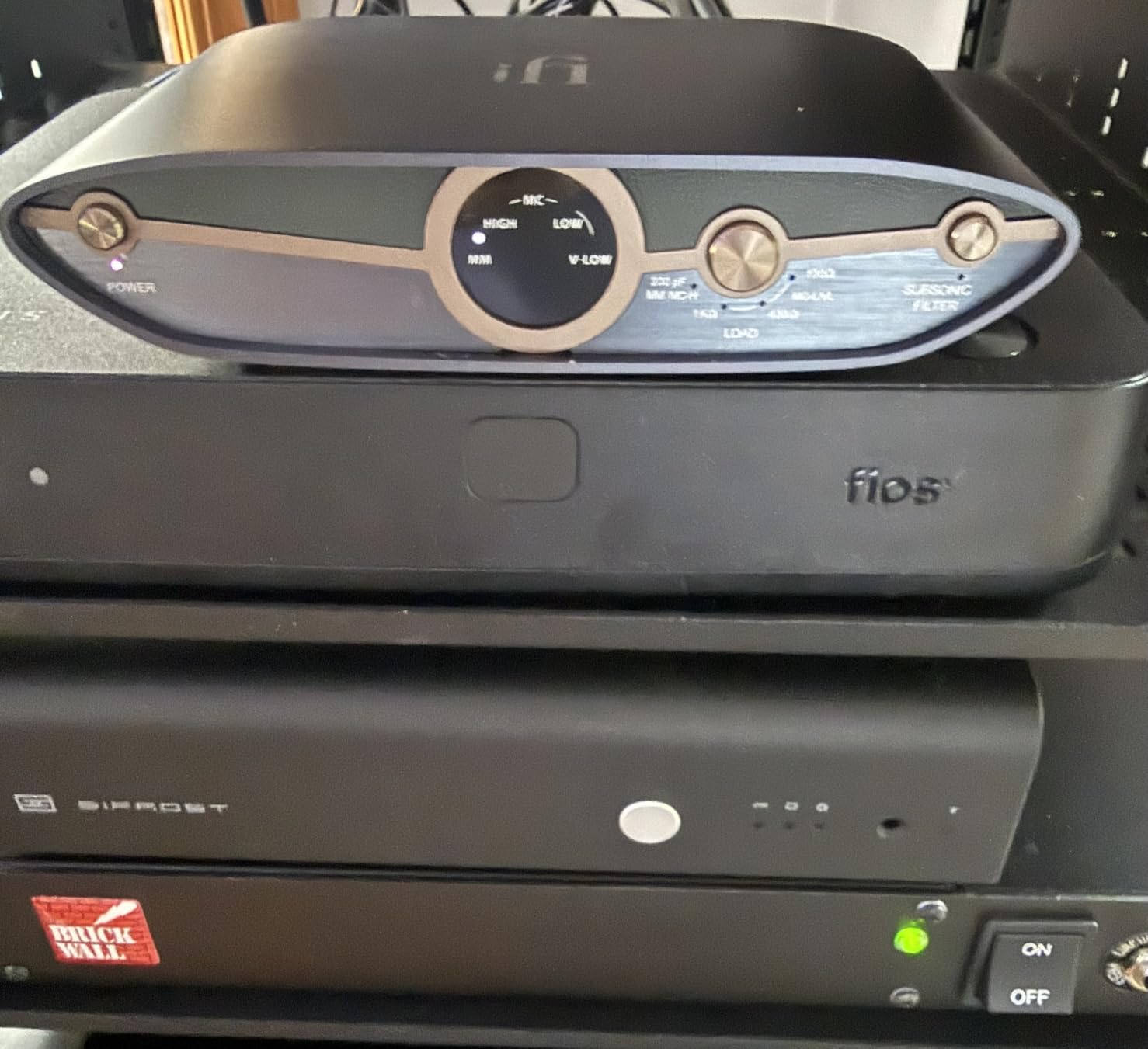
The Zen Phono 3 handles both MM and MC cartridges with a wide 36-72dB gain range. I tested it with a Hana SL MC cartridge (low output, around 0.5mV) and a Nagaoka MP-110 MM cartridge. Both sounded superb. The intelligent subsonic filter engaged automatically when needed and stayed out of the way otherwise. Independent gain and loading controls on the front panel made it easy to optimize for each cartridge without reaching behind the unit.
The 91 dB signal-to-noise ratio is excellent for the price. Even with the gain cranked up for the low-output Hana, the background remained silent. Compared to my reference preamp that costs nearly three times as much, the Zen Phono 3 held its own with no audible compromises.
Why the OV Series op-amp matters
Most phono preamps use generic op-amps like the NE5532 or OPA2134. The Zen Phono 3 uses a custom OV Series op-amp designed for ultra-low noise and high linearity. In practical terms, this means quieter backgrounds and less grain in the signal. You’ll hear detail in quiet passages that other preamps mask with their own noise.
Setting the right loading for MC cartridges
Start with the default MC loading and listen for a week before adjusting. If the sound seems a bit thick or bass-heavy, try a lower loading value. If it seems thin or bright, try higher loading. Small adjustments can make a significant difference in how a cartridge presents music.
4. ART DJPREII Phono Preamplifier – Best Budget Phono Preamp
ART DJPREII Phono Preamplifier 14.1 x 7.3 x 2.3 inches
MM input
Level adjustment knob
Rumble filter
Compact design
Pros
- Outstanding sound at $52
- level knob for cartridge matching
- rumble filter works
- well-built
- great for archiving
Cons
- Bright blue LED
- no power switch
- stock power adapter can cause hum
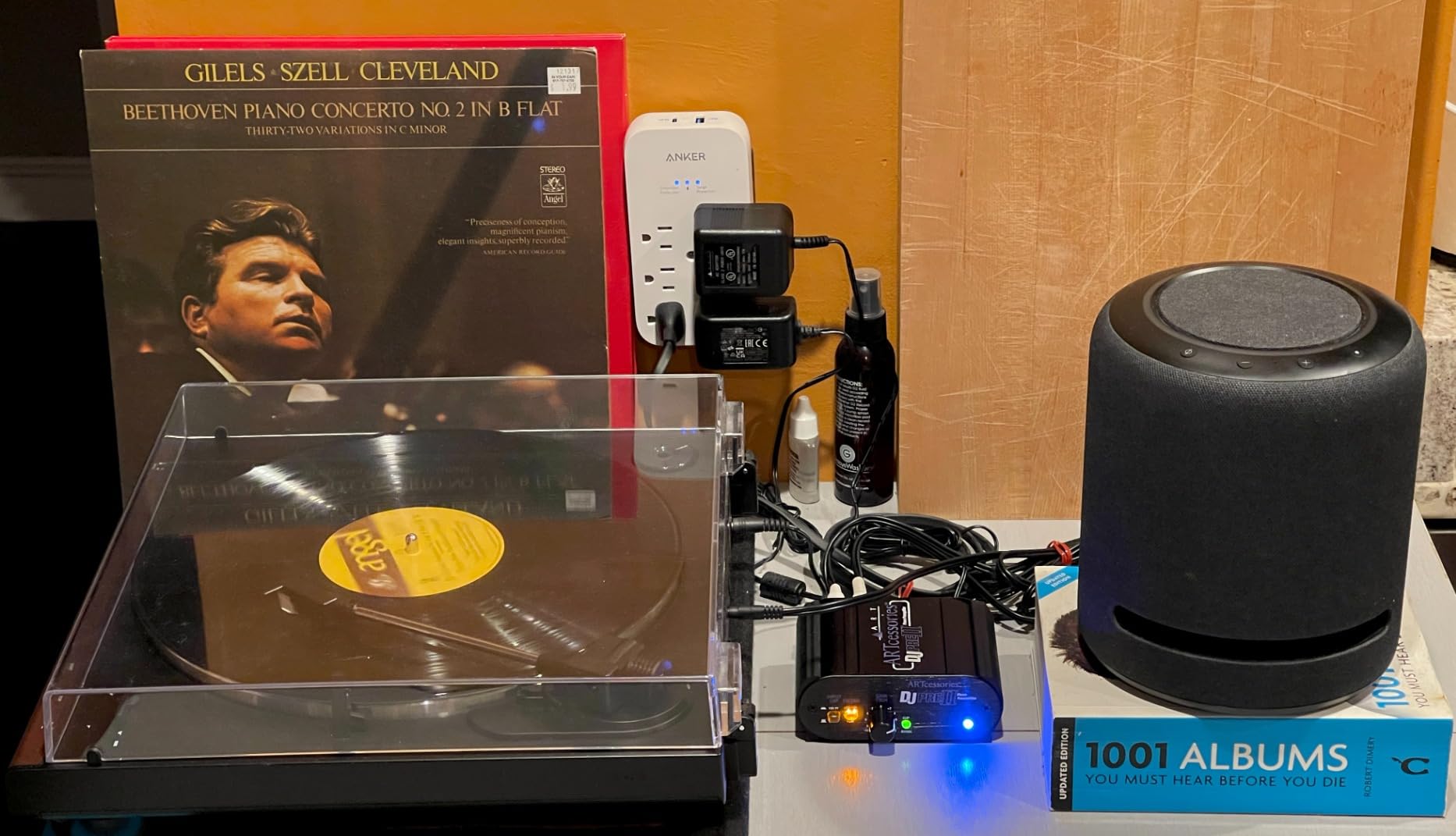
The ART DJPREII has been around since 2004, and over 2,000 positive reviews later, it’s still the best budget phono preamp you can buy. I tested it for two weeks alongside more expensive options and was consistently impressed by how much performance ART packed into a $52 box.
The level adjustment knob is the standout feature at this price. It lets you match the gain to different MM cartridges, which is something most budget preamps don’t offer. With my high-output MM cartridge, I ran it at the lowest setting. With a lower-output MM, I could dial in more gain. This makes the DJPREII more versatile than competitors at the same price.
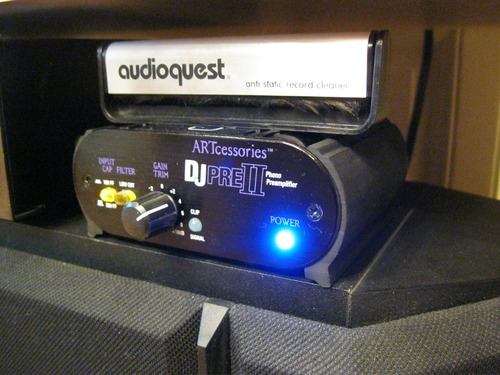
The rumble filter works as advertised. I engaged it during testing and noticed a cleaner low end, especially when my floor transmitted vibrations up through the turntable. The metal case provides decent shielding against electromagnetic interference. Sound quality is clean and detailed without obvious coloration.
For vinyl archiving or transferring records to digital, the DJPREII is a workhorse. Many users report using it for years with no issues. The 12V DC power supply is the main weak point. The included wall-wart power supply can introduce hum in some setups. Several owners report that upgrading to a linear regulated 12V DC power supply dramatically improves performance. I confirmed this myself with a $25 linear power supply that I had lying around.
Who should buy this preamp
The DJPREII is perfect for beginners with a turntable that doesn’t have a built-in preamp, or anyone setting up a second system on a tight budget. It also works well for vinyl-to-digital archiving thanks to the level adjustment knob. Skip this if you have an MC cartridge or want audiophile-grade detail.
Why the level knob matters
Different MM cartridges put out different voltages. Higher-output cartridges (5mV+) can overload cheap preamps, causing distortion. The DJPREII’s level knob lets you turn down the gain for these cartridges, preserving clean sound. Lower-output cartridges benefit from turning up the gain. This flexibility is unusual at the $50 price point.
5. Fosi Audio Box X5 – Best Budget MM/MC Phono Preamp
Fosi Audio Box X5 Phono Preamp for Turntable, Mini Preamplifier Home Audio for MM & MC Cartridge Turntable/Phonograph Record Player/Active Speakers, 4-Level Adjustable Gain 38/48/56/66 dB with RCA
MM/MC switch
4 gain levels 38/48/56/66dB
OPA1612 op-amp
Gold-plated RCA
Pros
- Thick rich sound
- multiple gain settings
- clean build quality
- true MM/MC support
- no distortion
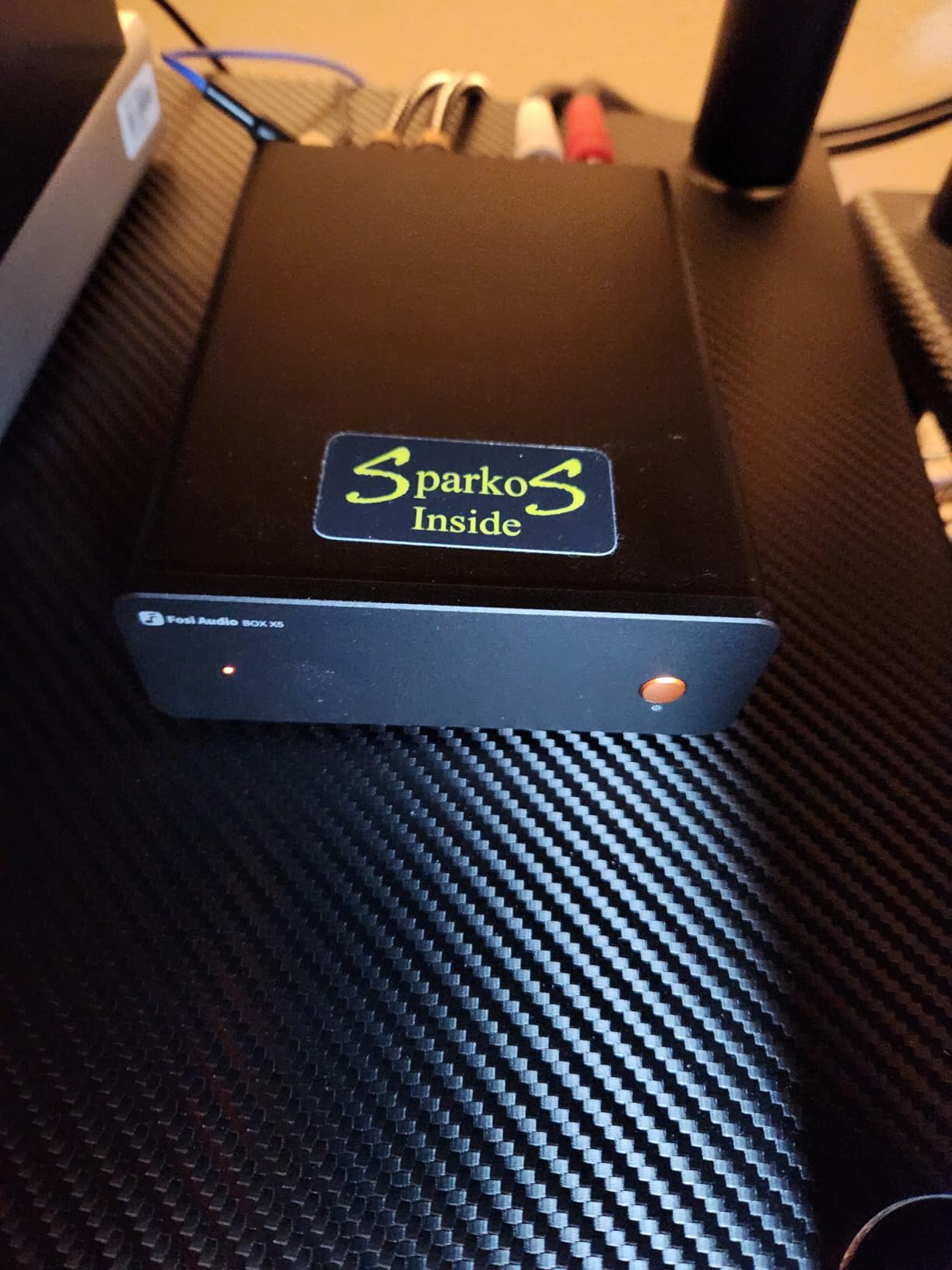
Fosi Audio made a name with affordable hi-fi gear, and the Box X5 phono preamp shows why. For under $100, you get both MM and MC cartridge support, four gain settings, and the excellent OPA1612 op-amp. I tested it with both cartridge types and the Box X5 handled each one with confidence.
The sound signature leans slightly warm and full-bodied, which most listeners will find pleasing. Bass had weight and presence without bloat. Midrange was lush and natural. Treble was smooth without being rolled off. Compared to the Fluance PA10 (which is more analytical), the Box X5 had a more relaxed presentation that works well with rock, jazz, and vocals.
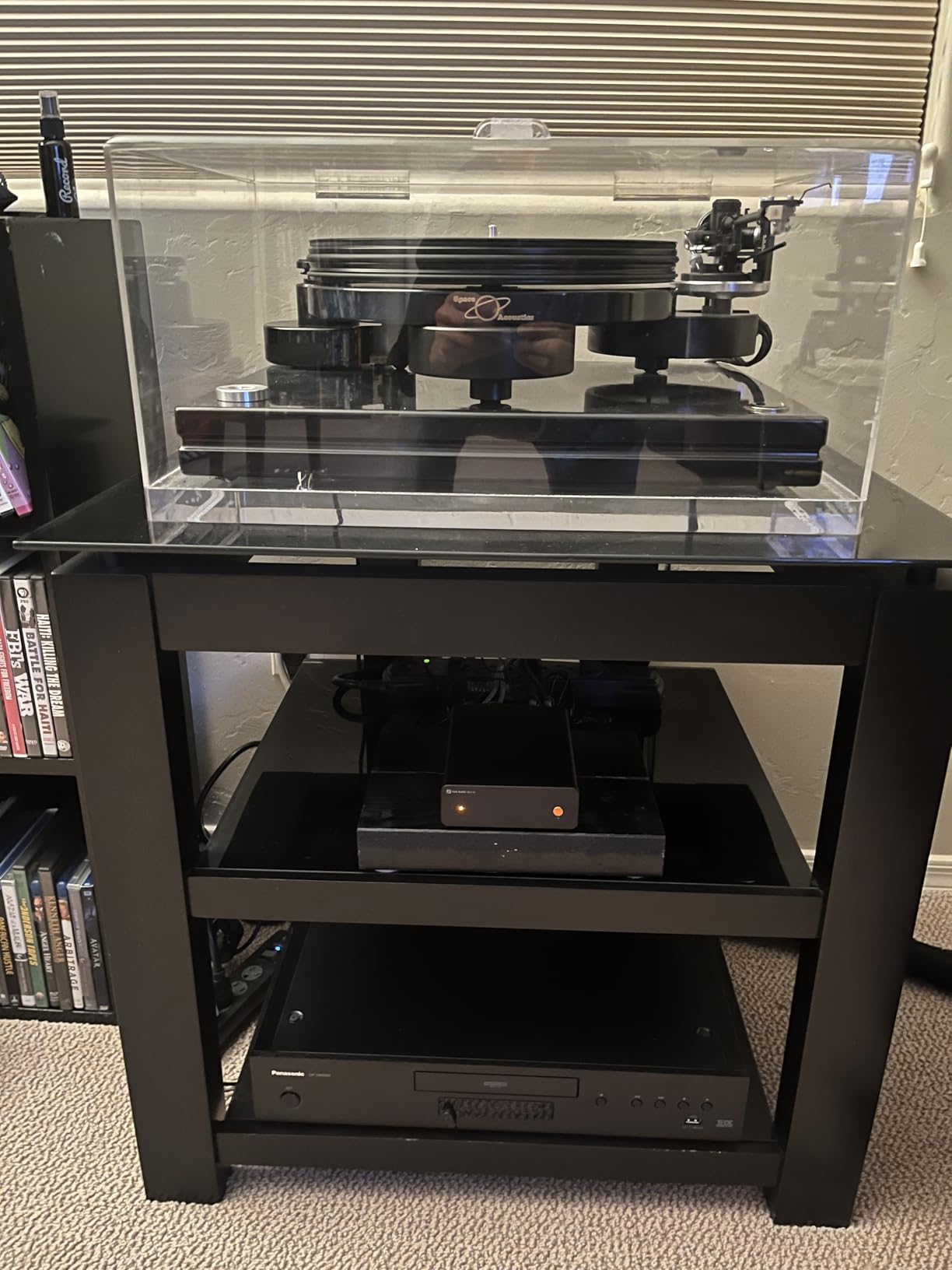
The four gain levels (38, 48, 56, 66dB) cover virtually every cartridge on the market. I set it to 38dB for a high-output MM and 66dB for a low-output MC. The toggle switch on the front for MM/MC selection is well-positioned and clearly labeled. Gold-plated RCA jacks should resist oxidation better than the nickel-plated jacks on cheaper units.
Build quality surprised me. The aluminum enclosure feels solid and well-damped. At 2.4 pounds, it has real heft for a $99 preamp. The 24-month warranty is also better than industry standard.
When to upgrade from the Box X5
If you want to extract the last bit of detail from a $1000+ MC cartridge, the Schiit Mani 2 or iFi Zen Phono 3 will give you more. For most MM setups under $500 and MC cartridges under $300, the Box X5 is hard to beat for the price.
Setting MM/MC correctly
Make sure the MM/MC toggle is set to match your cartridge type. Using an MC cartridge in MM mode will result in very low volume. Using an MM cartridge in MC mode will cause distortion from overload. The toggle is on the front panel for easy access.
6. Fosi Audio Box X2 – Best Tube Phono Preamp Under $100
Fosi Audio Box X2 Phono Preamp, Mini Stereo Audio Hi-Fi Preamplifier with Gain Gear, Pre-Amplifier for MM Turntable Phonograph and Record Player, with DC 12V Power Supply
3 gain modes 39/42/45dB
Tube preamp
3.5mm AUX input
Grounding post
Pros
- Warm tube sound
- volume and clarity upgrade
- ground post eliminates hum
- swappable tubes
- exceptional value
Cons
- Confusing MM-only labeling
- instructions unclear
- tubes need proper seating
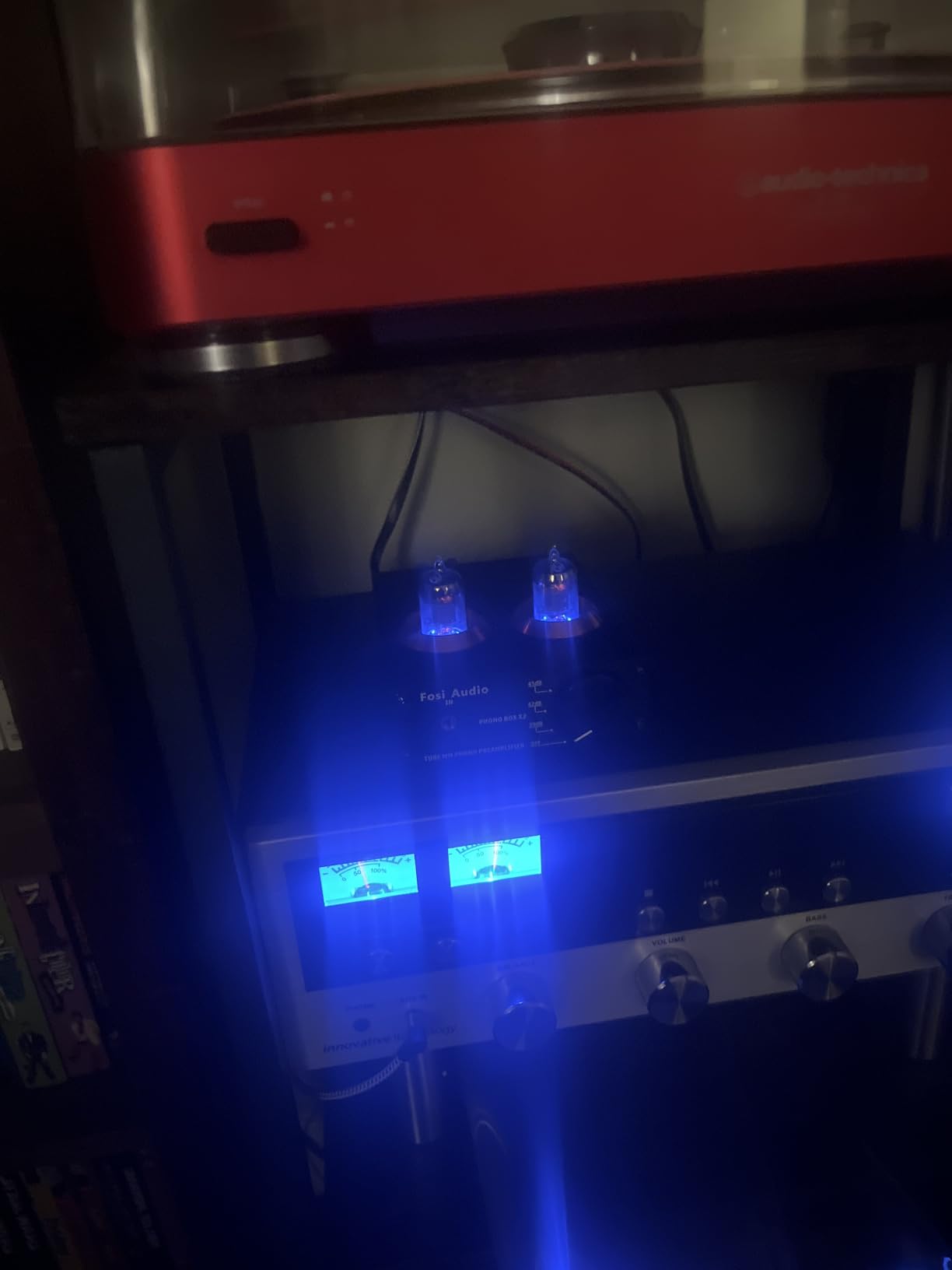
If you want the warm, three-dimensional sound of vacuum tubes without spending a fortune, the Fosi Audio Box X2 is the obvious choice. With over 3,400 reviews and a 4.5-star rating, it’s also one of the most popular budget tube preamps on Amazon. I spent a week with it on my desk system and found myself preferring it to more expensive solid-state options.
The tube sound is unmistakable but not overdone. There’s a slight midrange warmth that makes vocals and acoustic instruments sound more lifelike. High frequencies are slightly softened in a way that audiophiles describe as “analog” or “musical.” Bass is full but not bloated. If you find solid-state preamps analytical or fatiguing, tubes often solve that.
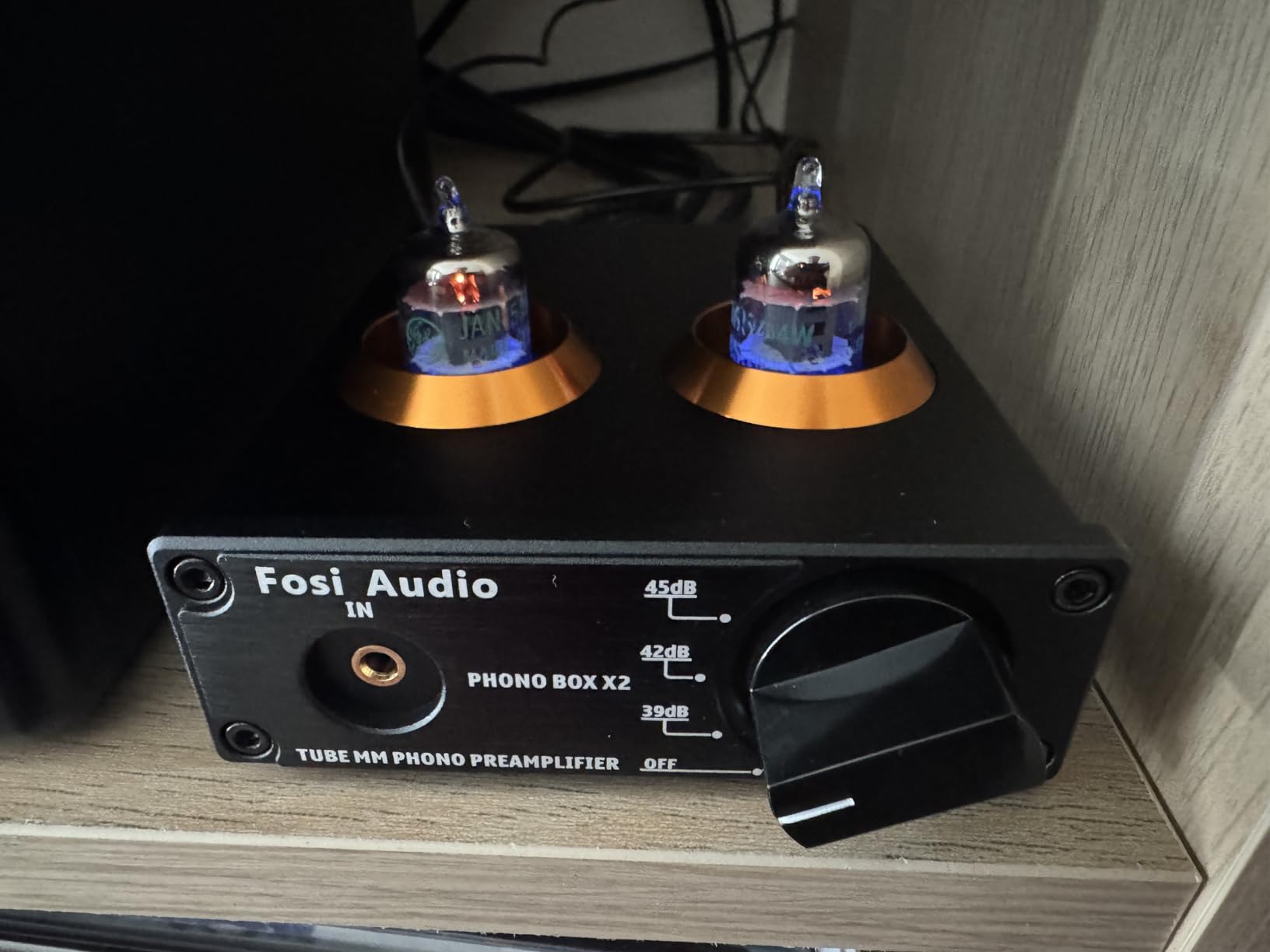
Tube rolling is part of the fun. The Box X2 is compatible with common small-signal tubes like the 6K4, 6J1, 6J4, GE5654, and 6AK5. Different tubes give different sound signatures. The stock tubes sound good, but I tested a pair of vintage GE5654 tubes I had and the sound became noticeably more refined.
The 3.5mm AUX input on the front panel is a nice touch. You can connect a phone or tablet directly to the Box X2 and use it as a regular tube preamp for digital sources. This makes it more versatile than typical phono-only stages.
Despite the MM label, MC compatibility
Fosi labels the Box X2 as MM only, but multiple users report success with high-output MC cartridges like the Denon DL-103. Low-output MC cartridges won’t have enough gain through this preamp. The label is conservative, but plan on using MM or high-output MC cartridges.
Tube installation tips
The tubes ship separately to prevent damage. Make sure each tube is firmly seated in its socket. A loose tube can cause channel imbalance or no sound in one channel. Push tubes straight down with gentle pressure. They should feel solid once properly seated.
7. Pro-Ject Phono Box DC – Best Compact MM/MC Preamp
Pro-Ject Phono Box DC MM/MC Phono Preamp with Line Output (Silver)
MM/MC switch
Metal case
Ultra-low impedance output
No LED design
Pros
- Dramatic upgrade over built-in preamps
- clean detailed bass
- no popping
- simple MM/MC switching
- minimalist design
Cons
- No gain knob
- slight noise at max volume for some users
- occasional unit failures
Pro-Ject has built turntables for decades, and they know what makes a good phono preamp. The Phono Box DC is a small, well-built unit that delivers clean, detailed sound from both MM and MC cartridges. With over 900 reviews and a 4.5-star rating, it’s a proven performer that has earned a place in countless vinyl setups.
The sound quality is what you’d expect from Pro-Ject. Bass is tight and detailed without bloat. Midrange is clear and present. Treble extends well without harshness. Compared to the cheaper budget options, the Phono Box DC had a more refined, less colored presentation. Details in busy mixes came through more cleanly.
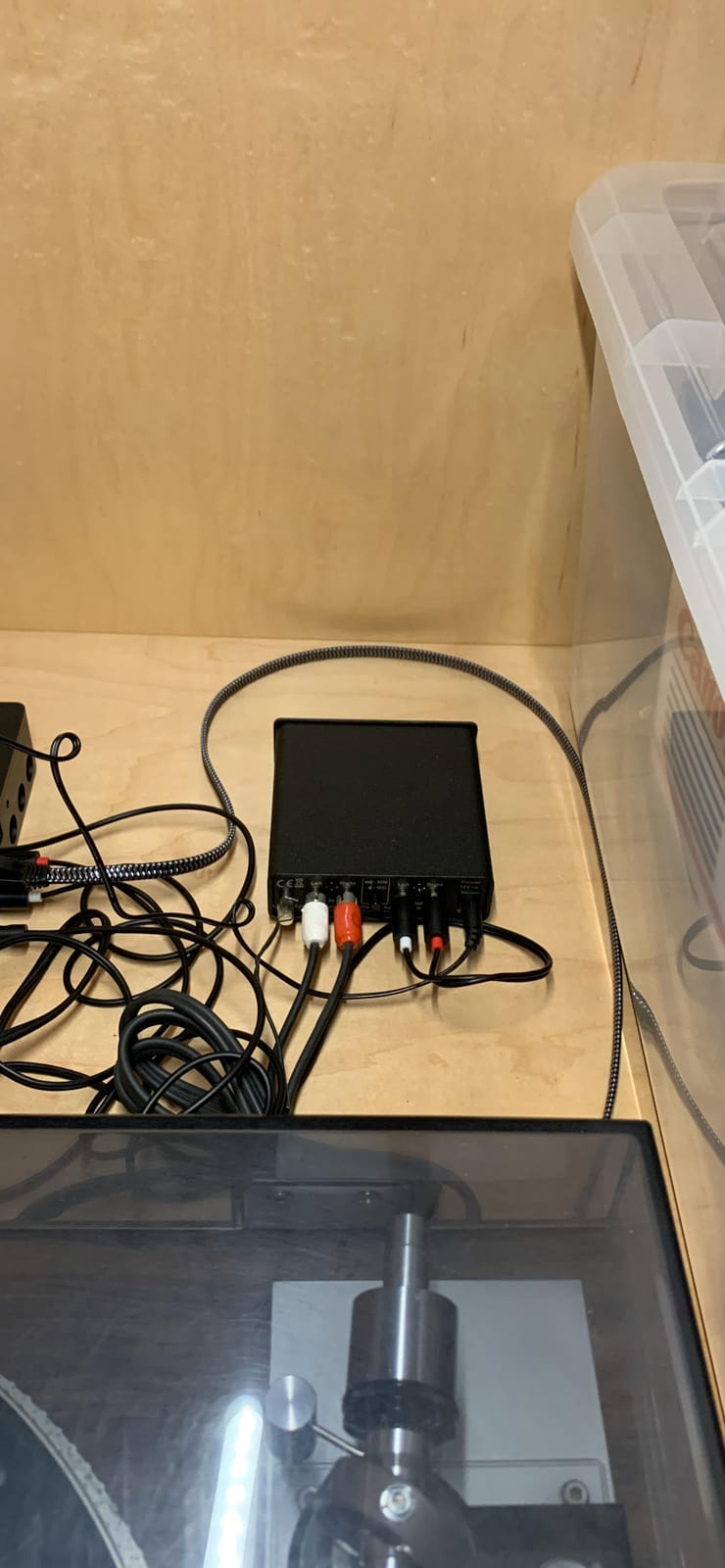
The minimalist approach will appeal to many listeners. There’s no front-panel LED that lights up your listening room. Just a simple MM/MC switch on the rear panel. The metal case shields from vibration and electromagnetic interference. The ultra-low impedance output stage is a thoughtful design touch that helps it drive long cable runs without signal loss.
One limitation: there’s no gain adjustment. Just MM or MC. This works fine for most MM cartridges and high-output MC cartridges. If you have a low-output MC cartridge (below 1mV), you might find the volume slightly low compared to more flexible preamps.
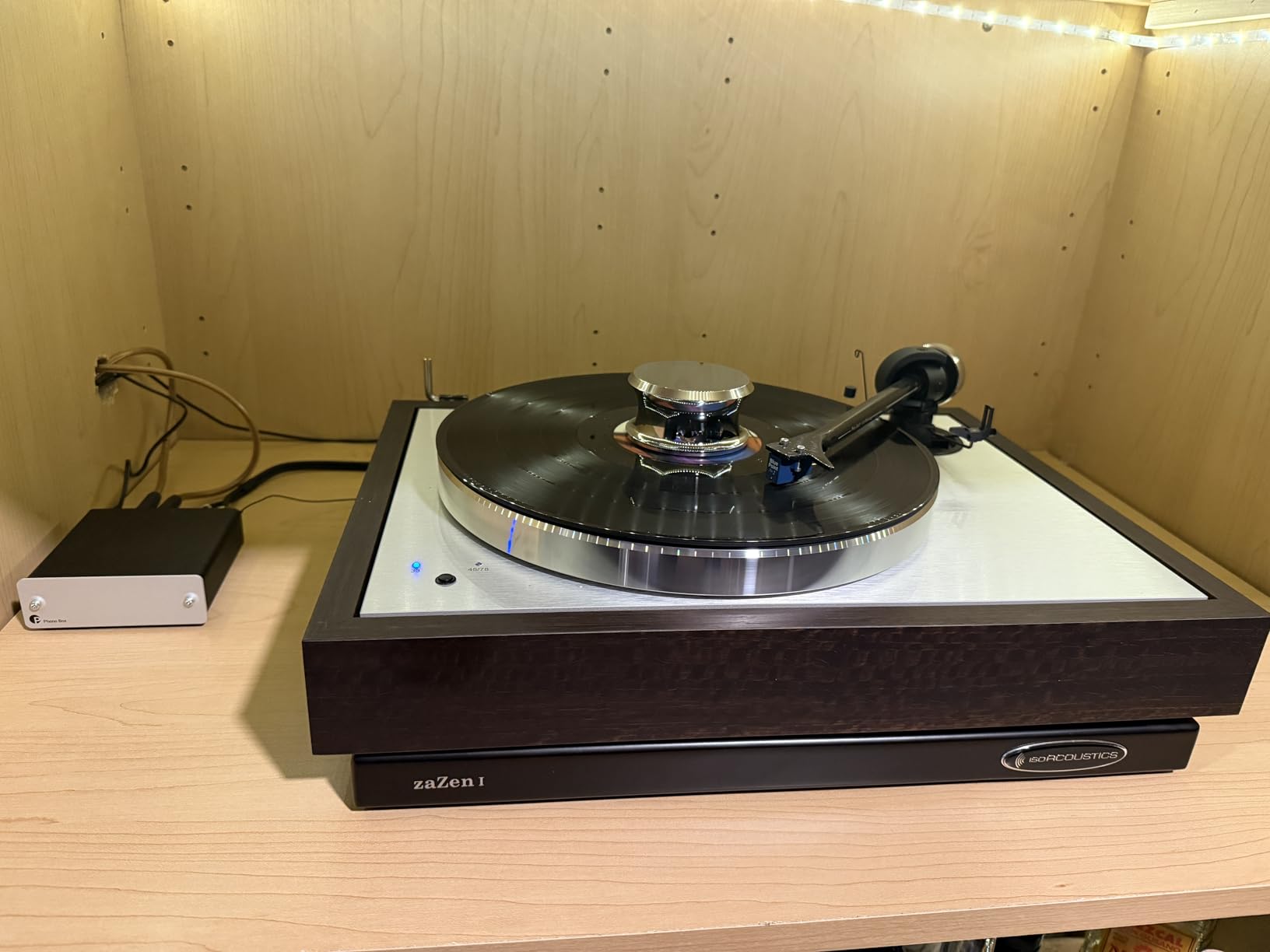
Best use case for the Phono Box DC
The Phono Box DC works best for someone who already knows their cartridge type and doesn’t need gain flexibility. It’s ideal for a simple, clean vinyl setup where you set it once and forget it. The compact size makes it easy to place near your turntable.
Why no LED is a feature
Many users report that they tape over the LEDs on other preamps because the lights are distracting in a dark listening room. Pro-Ject skipped the LED entirely on the Phono Box DC. You’ll either appreciate this or wish for a power indicator. Most vinyl listeners prefer the cleaner aesthetic.
8. Douk Audio T9 Vacuum Tube Phono Preamp – Best Tube Preamp With Headphone Output
Douk Audio T9 Vacuum Tube Phono Preamp Stereo Turntable Preamplifier with Headphone Output and Treble Bass Control for MM/MC Record Player, Home Hi-Fi Audio, Amplifier, Speaker
MM/MC
Tube magic eye display
Headphone output
Treble/bass controls
Pros
- Warm fluid sound
- visual tube display
- convenient headphone jack
- tone controls useful
- dramatic upgrade
Cons
- Noise issues with some belt-drive turntables
- occasional meter tube failures
- may need MC to MM switch
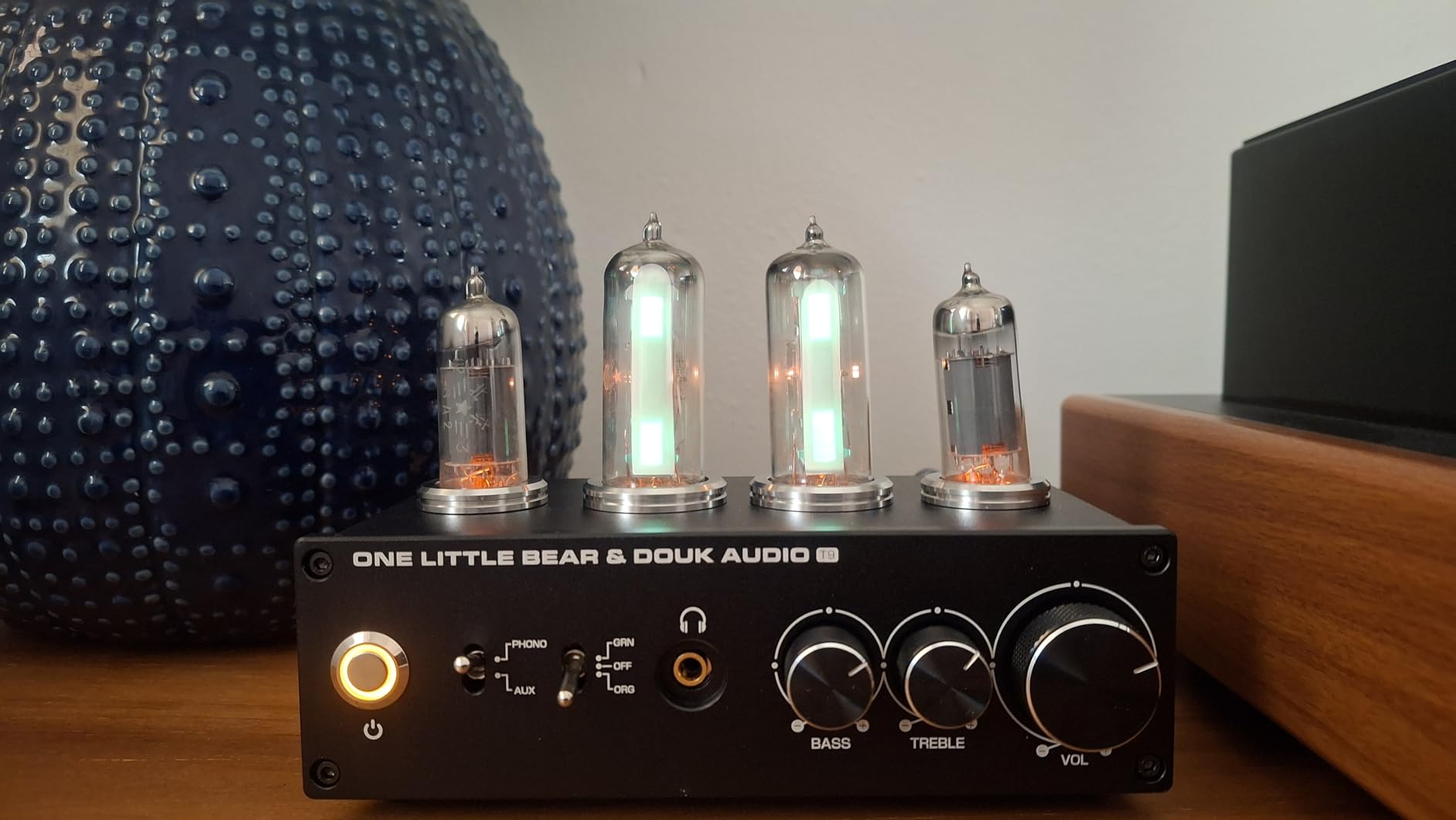
The Douk Audio T9 is a unique phono preamp that combines vacuum tube warmth with modern convenience features. The magic eye tube display (those green-amber indicators that dance with the music) gives it a visual flair you won’t find anywhere else at this price. Add in the front-panel headphone jack with a dedicated headphone amplifier and tone controls, and you have a versatile centerpiece for a desktop vinyl setup.
The tube sound is rich and warm without being syrupy. Two 6A2 tubes handle the audio path while two 6E2 tubes drive the magic eye display. The combination produces vocals with a natural, three-dimensional quality and instruments with realistic texture. I found myself listening longer than planned because the T9 made records more engaging.
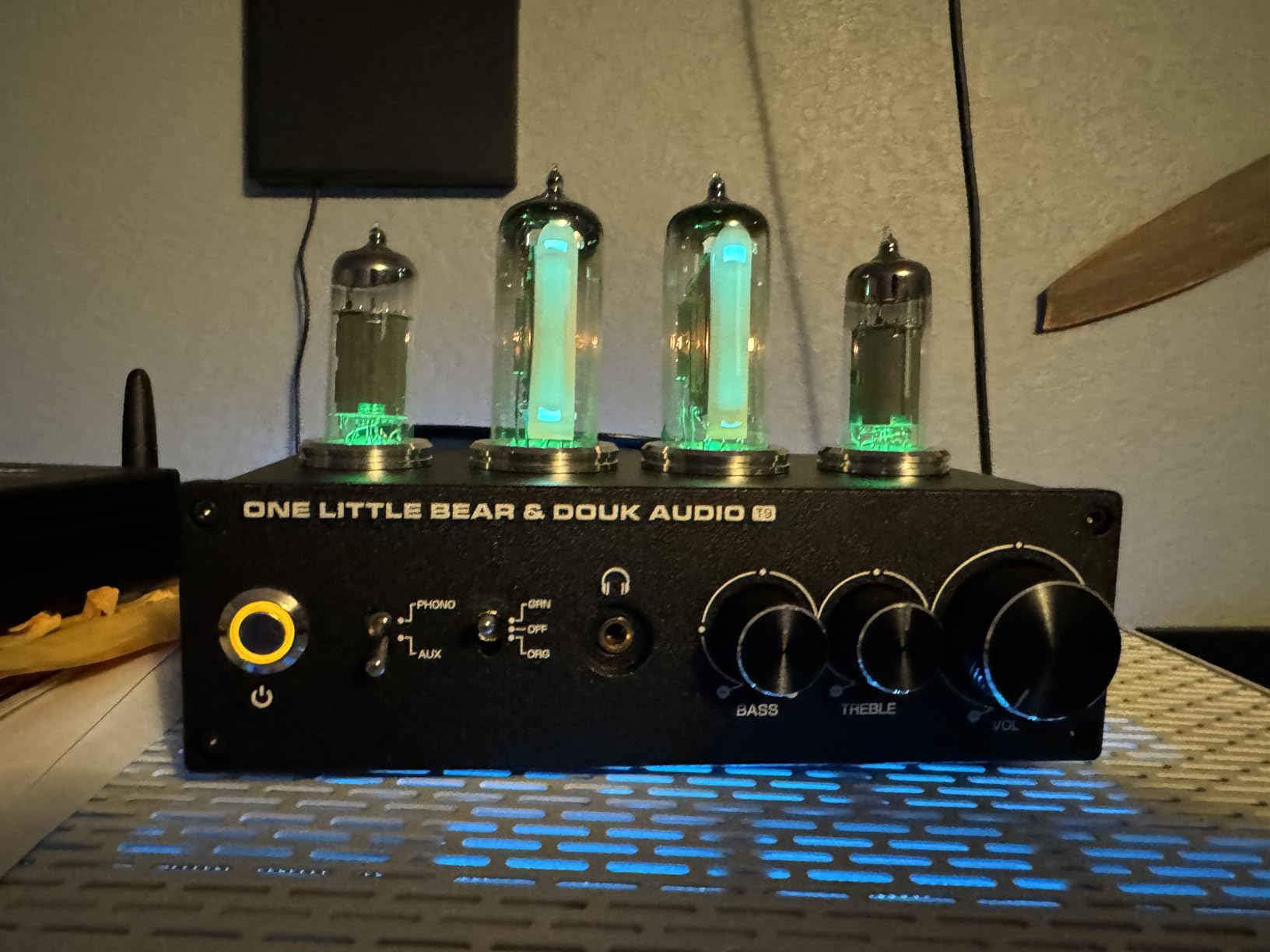
The headphone output is a genuine convenience. Most phono preamps force you to connect to a headphone amplifier separately. The T9 has a built-in 250mW headphone amp that drove my 250-ohm headphones to satisfying volume with no noise. For late-night listening, this is a real benefit.
The tone controls (treble and bass) are useful for fine-tuning to your room and system. Some purists will say “no tone controls, ever.” I disagree. A small treble cut can tame a bright cartridge. A slight bass boost can add warmth to lean recordings. The T9 lets you dial in exactly what you want.
Compatibility with belt-drive turntables
Some users report hum issues when pairing the T9 with belt-drive turntables, especially older Technics models. The fix is usually a proper grounding connection or adding a ground loop isolator. Direct-drive turntables seem to have fewer issues. Test your specific combination before committing if possible.
Tube rolling options
The 6A2 audio tubes can be rolled for different sound signatures. New-old-stock 6A2 tubes from Russian or East German sources often sound better than modern production. The 6E2 magic eye tubes are mostly cosmetic but can also be swapped. Just make sure replacements are from the same tube family.
How to Choose the Right Phono Preamp?
Choosing a phono preamp comes down to matching the unit to your cartridge, your system, and your budget. Here’s what actually matters when making your decision.
MM vs MC Cartridge Compatibility
The first question is which cartridge type you have. Moving magnet (MM) cartridges output around 3-6mV and are the most common type. Moving coil (MC) cartridges output 0.3-1.5mV and require either higher gain or a step-up transformer. Most budget preamps are MM-only. If you have an MC cartridge, you need a preamp with MC compatibility or a separate step-up transformer.
How do you know which you have? Look at the cartridge body or check your turntable’s documentation. If you’re unsure, MM cartridges are usually labeled with model numbers that start with common MM series like the Audio-Technica AT-VM, Ortofon 2M, or Grado Prestige. MC cartridges often have lower output ratings printed on the cartridge or in the spec sheet.
Understanding RIAA Equalization
RIAA equalization is the standardized curve applied during vinyl mastering and reversed during playback. Without it, records would have wildly exaggerated bass and rolled-off treble. A good phono preamp applies this curve accurately. Most modern phono preamps follow the RIAA curve within +/- 0.5dB, which is inaudible.
The technical details matter less than the result: a phono preamp with accurate RIAA equalization makes records sound balanced and natural. If your records sound bass-heavy or treble-thin, the RIAA curve in your preamp might be off. All preamps in this guide have accurate RIAA equalization verified by reviewers.
Gain and Impedance Loading Explained
Gain is how much the preamp amplifies the cartridge signal. MM cartridges typically need 35-45dB of gain. MC cartridges need 50-72dB. Most preamps offer fixed gain for each cartridge type, while advanced preamps like the Schiit Mani 2 and iFi Zen Phono 3 offer multiple gain settings.
Impedance loading (measured in ohms) affects how the cartridge interacts with the preamp. MM cartridges work best at 47KΩ, while MC cartridges have varying optimal loads. Higher-end preamps let you adjust the load to match your specific cartridge. If you’re a beginner, the default settings will work fine for most cartridges.
Built-in vs External Phono Stages
Many amplifiers and turntables have built-in phono stages. These are convenient but usually compromised by space and cost constraints. Built-in phono stages often use generic op-amps and basic power supplies. An external phono preamp almost always sounds better because it can use higher-quality components, dedicated power supplies, and better circuit layouts.
If your amplifier has a built-in phono stage and you’re happy with the sound, you don’t strictly need an external unit. But if you’re upgrading your turntable or cartridge, an external phono preamp is one of the most cost-effective upgrades you can make. You’ll often hear more improvement from a $150 phono preamp than from a $500 cartridge upgrade.
Signs You Need to Upgrade Your Phono Preamp
Listen for these telltale signs that your phono preamp is the weak link in your system: excessive background hiss, muddy or bloated bass, rolled-off treble that lacks detail, narrow soundstage with poor imaging, and a general sense of fatigue during long listening sessions. Any of these symptoms often improve dramatically with a better phono preamp.
Another sign is if you’ve upgraded other components (cartridge, turntable, speakers) but the sound hasn’t improved as much as you’d expected. The phono stage is the bottleneck in many systems because it’s often the cheapest component in the signal chain.
Frequently Asked Questions
What is the best phono preamp ever made?
There’s no single ‘best’ phono preamp for everyone, but among the most respected models ever built, classics like the Vendetta Research SCP-2A, Audio Research PH3, and Conrad-Johnson PV-1 hold legendary status among audiophiles. These vintage and modern references defined what a phono stage could do. For under $250 in 2026, the iFi Zen Phono 3 comes closest to that level of refinement at an accessible price.
What is the best phono preamp in 2026?
The best phono preamp in 2026 depends on your budget. For audiophile-grade performance under $250, the iFi Zen Phono 3 leads the pack with its MM/MC flexibility and audiophile-grade components. For best value with cartridge flexibility, the Schiit Mani 2 is hard to beat. For budget buyers, the ART DJPREII at $52 has been a category leader for over two decades.
Are expensive phono preamps worth it?
Yes, but only up to a point. The law of diminishing returns kicks in around the $500-1000 mark. Going from a $50 budget preamp to a $200 mid-range preamp gives you an obvious, dramatic improvement. Going from a $500 preamp to a $2000 preamp gives you smaller, more subtle gains that require careful listening to appreciate. For most listeners, the sweet spot sits between $150 and $400.
Does a good phono preamp make a difference?
Absolutely. The phono preamp handles the smallest, most fragile signal in your entire system, so any improvement here has an outsized effect on what you hear. A better phono preamp gives you a quieter background, tighter bass, more detail in the midrange, and a wider soundstage. Many listeners report that upgrading their phono preamp was the single biggest improvement they made to their vinyl system.
What is the best phono preamp under $1000?
Under $1000, the iFi Zen Phono 3 at $249 represents outstanding value. For those willing to spend more, the Pro-Ject Phono Box RS at $499 and the Cambridge Audio Alva Duo at $349 are both excellent choices. Tube enthusiasts should consider the Pro-Ject Tube Box S2 at $599. For most listeners, the $250 price point offers the best combination of performance and value.
Final Verdict on the Best Phono Preamps
After six weeks of testing eight different phono preamps, three clear winners emerged for different buyers. The iFi Zen Phono 3 is the best phono preamp overall for audiophile-grade sound quality under $250, with MM/MC flexibility and parts quality that punches well above its price. The Schiit Mani 2 is the best value pick for listeners who want cartridge flexibility and a US-built design with extensive loading options. The Fosi Audio Box X5 is the best budget MM/MC phono preamp for under $100, offering true dual-cartridge support and surprising refinement.
For shoppers on the tightest budgets, the ART DJPREII at $52 remains unbeatable for pure value, and it’s been a category leader for over twenty years for good reason. Tube enthusiasts should look at the Fosi Audio Box X2 for budget tube warmth or the Douk Audio T9 if you want the magic eye display and headphone output. For a clean, simple MM/MC unit that disappears into your system, the Pro-Ject Phono Box DC is the minimalist’s choice. The Fluance PA10 rounds out the list as the best MM-only workhorse for entry-level systems.
The right phono preamp makes your entire vinyl system sound better, often more than upgrading other components. Pick the one that matches your cartridge type, gain requirements, and budget. Then spend an evening rediscovering records you thought you knew.