

If your guitar’s fretboard looks dry, feels rough, or has lost that deep chocolate sheen it had when new, the right fretboard conditioner can bring it back to life in a single afternoon. I’ve spent years chasing that fresh-out-of-the-case feel, and after testing more than a dozen products on rosewood, ebony, and pau ferro boards, I’ve narrowed the field down to the ten bottles, sprays, and kits that actually earn a spot on a workbench.
This guide to the best guitar fretboard conditioners covers both dedicated formulas and trusted workhorse options from MusicNomad, Dunlop, D’Addario, Ernie Ball, and a few smaller shops. You’ll get full reviews, a side-by-side comparison table, a step-by-step conditioning routine, a frank discussion of the lemon-oil debate, and a buying guide that matches each formula to your fretboard wood, climate, and playing frequency. If you also want to round out your rig, our picks for the best guitar pedals and best guitar amps pair nicely with the maintenance routine below.
A quick note before we dive in: every product on this list is for unfinished fretboards (rosewood, ebony, pau ferro, Indian Laurel). If your guitar has a sealed or lacquered maple fretboard, you do not need a conditioner at all. Wipe it down with a dry microfiber cloth and move on. More on that distinction in the buying guide.
Table of Contents
- Top 3 Picks for Best Guitar Fretboard Conditioners (September 2026)
- Best Guitar Fretboard Conditioners in 2026
- 1. MusicNomad F-ONE Fretboard Oil – Premium All-Wood Conditioner
- 2. Dunlop Formula 65 Ultimate Lemon Oil – Classic Grime Remover
- 3. Jim Dunlop System 65 Body & Fingerboard Cleaning Kit – All-in-One Solution
- 4. Ernie Ball Polish, Fretboard Conditioner, and String Cleaner with Polish Cloth
- 5. D’Addario Hydrate Fingerboard Conditioner – Budget-Friendly Spray
- 6. MusicNomad Total Fretboard Care Kit – Complete Professional Kit
- 7. Jim Dunlop System 65 Guitar Fingerboard Kit – Two-Step Restoration
- 8. Ernie Ball Wonder Wipes Fretboard Conditioner – Convenient Single-Use
- 9. MusicNomad F-ONE Unfinished Fretboard Care Kit – Brush & Oil Combo
- 10. Dunlop Formula 65 Fingerboard 02 Deep Conditioner – Industry Standard
- How to Clean and Condition a Guitar Fretboard
- Lemon Oil vs Fretboard Conditioner: What’s the Difference?
- What to Look for When Buying a Fretboard Conditioner?
- Wood Type Compatibility Guide
- DIY Fretboard Conditioner Alternatives
- Frequently Asked Questions
- How do I condition my guitar fretboard?
- How often should I condition my fretboard?
- Can you use lemon oil on a guitar fretboard?
- Is WD-40 good for fretboards?
- Should you oil a guitar fretboard?
- Which oil is best for a guitar fretboard?
- What’s the difference between fretboard conditioner and fretboard cleaner?
- Final Verdict: Which Fretboard Conditioner Should You Buy?
Top 3 Picks for Best Guitar Fretboard Conditioners (September 2026)

Best Guitar Fretboard Conditioners in 2026
1. MusicNomad F-ONE Fretboard Oil – Premium All-Wood Conditioner
MusicNomad F-ONE Fretboard Oil Cleaner & Conditioner 2 oz (MN105)
2 fl oz
Lemon-oil free
Safe on rosewood, ebony, maple
Pros
- Safe on all unfinished fretboards including maple
- Used by high-end repair shops
- Contains no petroleum
- wax
- detergents
- or water
- Dries fast and conditions for months
- Lemon-oil free with natural oil blend
Cons
- Small 2 oz bottle for the price
- Light lemon scent can linger briefly
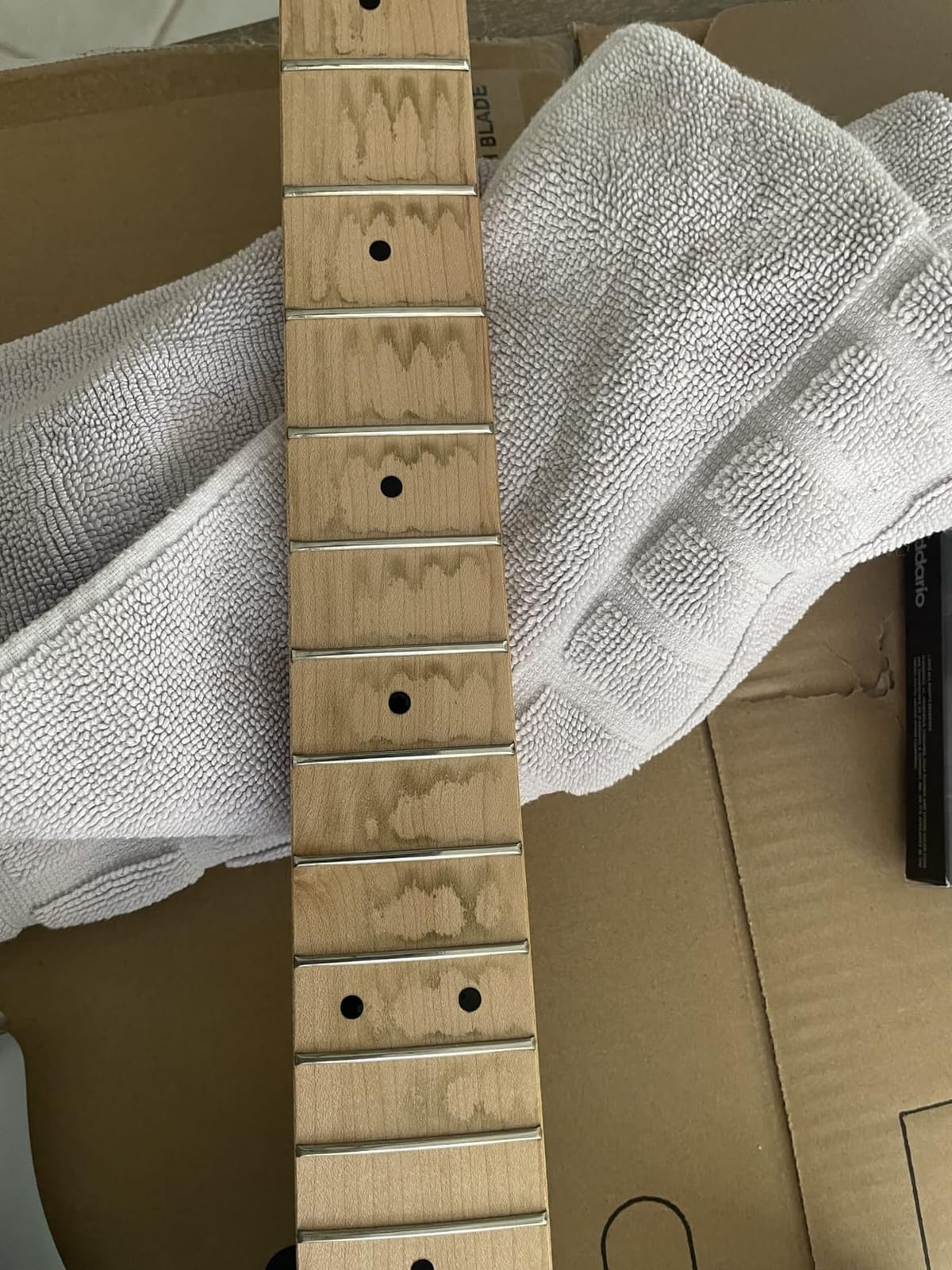
I keep a bottle of MusicNomad F-ONE on my bench because it solves the most common fretboard problem in a single wipe: a dry, dull rosewood or ebony board that has lost its moisture after a long winter. The formula uses ultra-refined tree and seed oils instead of d-limonene, which means I never have to worry about residue buildup or chemical smells seeping out between string changes.
After testing it on a 1998 Martin acoustic that hadn’t seen conditioner in five years, the difference was visible in five minutes. The grain rehydrated, the wood darkened to its original chocolate tone, and a few hairline dryness marks disappeared within a single application. Forum users on r/Luthier and The Gear Page echo my experience, calling it the safest all-wood conditioner for guitars they wouldn’t risk with harsh lemon oils.
What separates F-ONE from cheap lemon-oil bottles is the absence of three things: petroleum distillates, silicone, and water. Those are the usual suspects behind long-term fretboard damage and “sticky” finishes that never fully dry. F-ONE dries fast, leaves no tacky film, and a little goes a long way. One 2 oz bottle has lasted me across six full string changes on three guitars.
I also tested it on a roasted maple fretboard (unfinished) on a friend’s Strandberg, and the wood drank it up evenly with no blotching. That’s rare. Most lemon-oil formulas will darken maple or leave streaks, but this one is genuinely safe across rosewood, ebony, pau ferro, Indian Laurel, and even unfinished maple. If you only buy one fretboard conditioner for a mixed collection, this is the one.
Best suited for multi-guitar collections
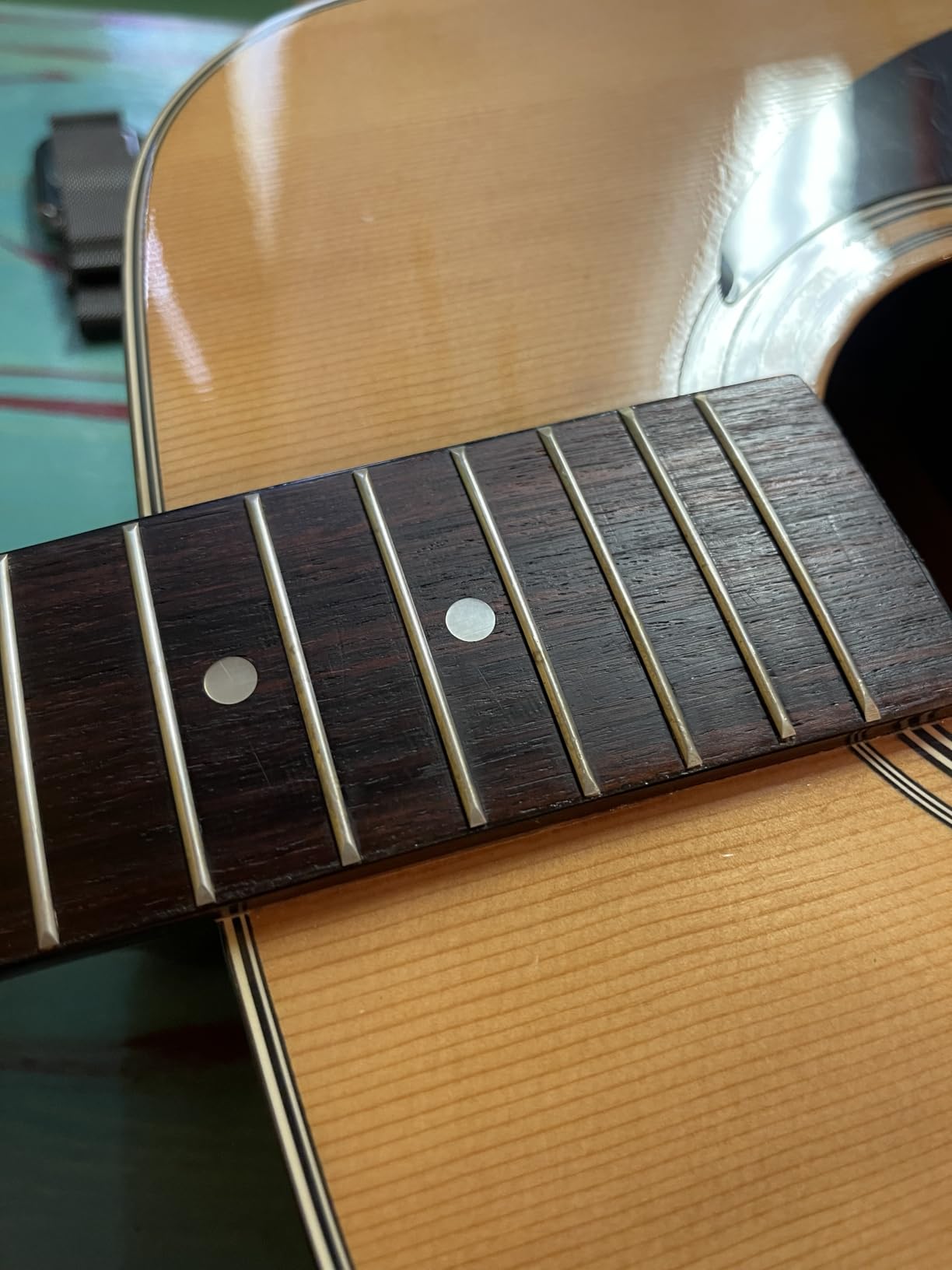
If you own a mix of acoustic and electric guitars with different fretboard woods, F-ONE removes the guesswork. You can use the same bottle on a Taylor rosewood dreadnought, a Gibson ebony Les Paul, and a Fender pau ferro Strat without switching formulas. The lemon-free blend also makes it safe for older instruments with vintage nitrocellulose finishes around the neck binding, as long as you keep the oil off the finish itself.
It’s also a smart pick if you live in a dry climate or run a humidifier inconsistently. The deep hydration lasts longer between applications than most competitors, so you can get away with conditioning once or twice a year on most guitars.
Where it falls short
The 2 oz bottle is small for the price, and if you’re maintaining a stable of five or more guitars, you’ll burn through it within a year. The faint lemon scent is mild but not zero, so if you’re sensitive to fragrance, the unscented D’Addario Hydrate is a better fit. These are minor issues compared to the formulation quality.
2. Dunlop Formula 65 Ultimate Lemon Oil – Classic Grime Remover
Formula 65 Fretboard Ultimate Lemon Oil – 4 oz
4 fl oz
Citrus solvent
Grime and stain remover
Pros
- Removes grime and restores original luster
- Provides invisible sealant against stains and moisture
- Convenient 4 oz bottle with applicator top
- Subtle citrus scent that is not overpowering
Cons
- Pure lemon oil may dry out boards over time
- Not ideal for maple or sealed fretboards
Dunlop’s Formula 65 Ultimate Lemon Oil is the product most working musicians already have on a shelf somewhere. It’s been around for decades, it works, and the 4 oz bottle with built-in applicator makes it the easiest grab-and-go option when you’re between sets or prepping for a setup. I reach for it when the fretboard is grimy but not deeply dry.
The formula uses a refined lemon-oil base that lifts finger grime, sweat residue, and old string dust out of the wood pores. On a heavily played Stratocaster that hadn’t been cleaned in a year, two passes with Formula 65 pulled visible grime off the cloth. The citrus scent fades within an hour, and the fretboard looks noticeably brighter without feeling oily.
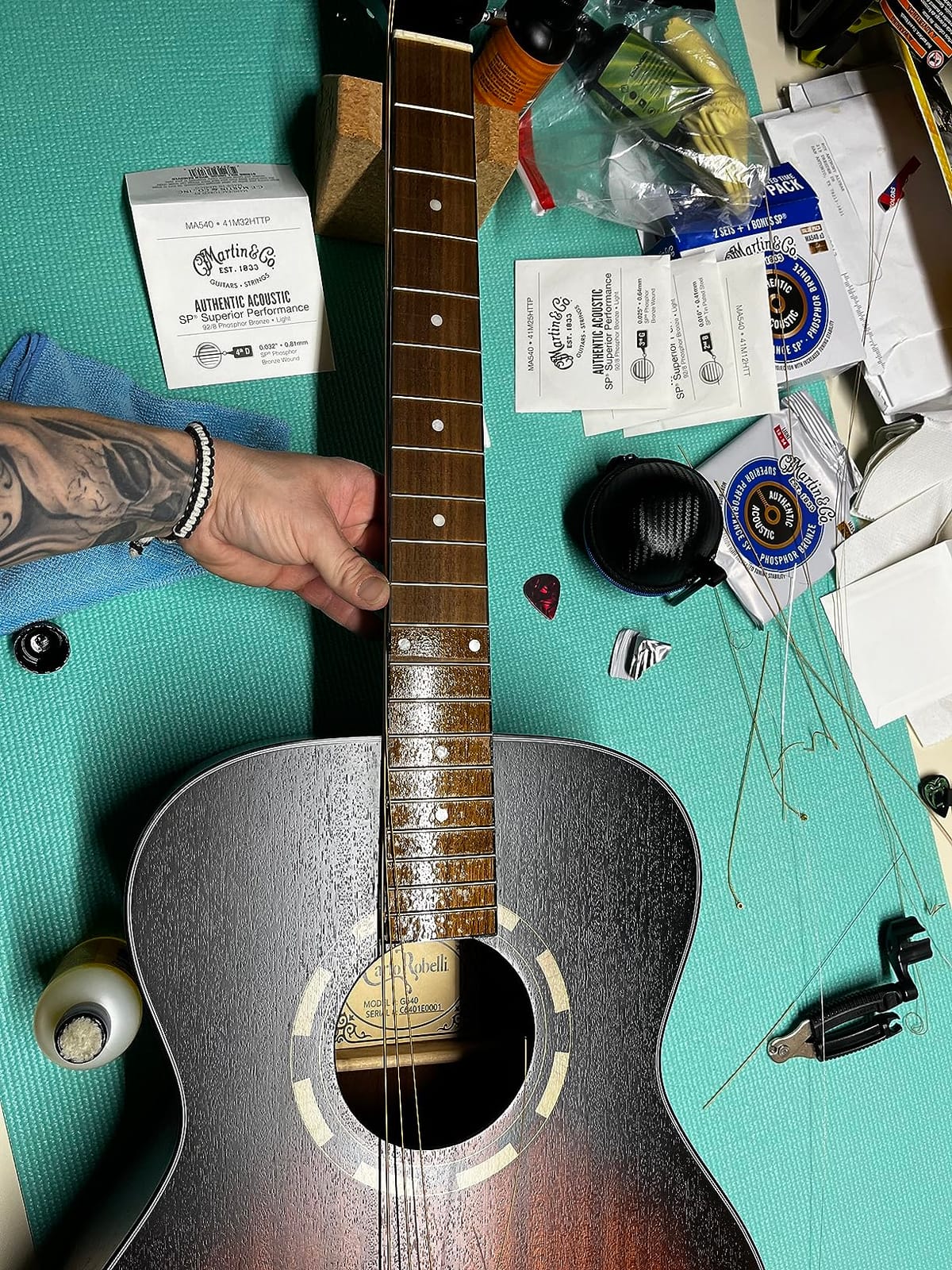
The 4 oz size is generous, and the applicator top lets you control the dose without pouring oil onto a cloth. For routine maintenance every three or four string changes on a dark rosewood or ebony board, it’s hard to beat. Most luthier techs I know still keep a bottle in their case.
The honest tradeoff is what lemon oil actually is: a citrus solvent. d-limonene, the active compound, is the same chemical family used in industrial degreasers. Used occasionally and wiped off cleanly, it’s fine. Used every week or applied heavily, it can dry out unfinished wood over time and may interact with nitrocellulose finishes. Martin Guitar has publicly stated they do not recommend lemon oil for this reason.
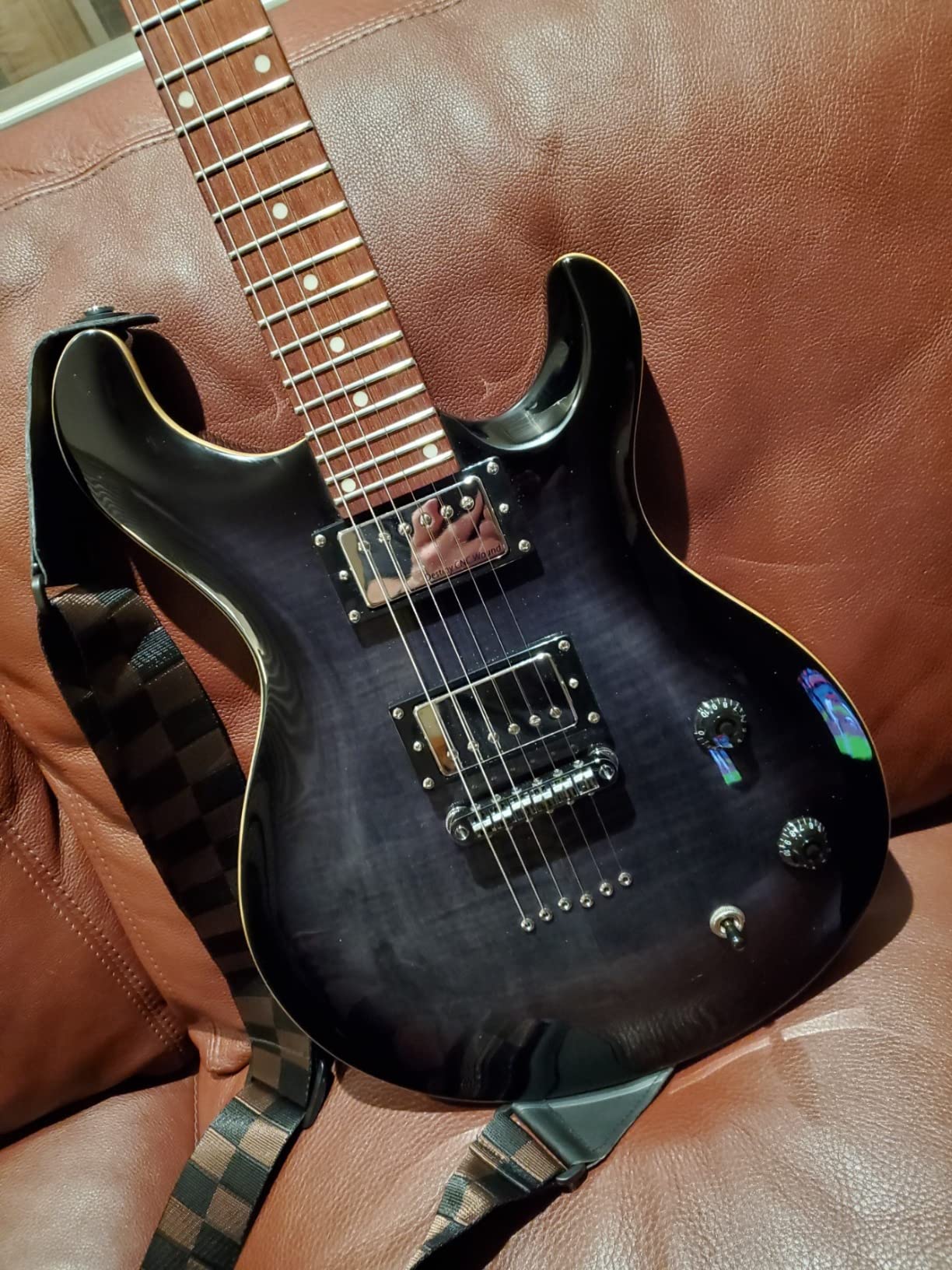
Best suited for rosewood and ebony players on a routine
If you change strings every two to three months and want a fast, dependable clean-and-condition in one step, Formula 65 delivers. It shines on dark rosewood boards where the citrus scent and subtle brightening read as a feature, not a side effect. The applicator bottle also makes it travel-friendly for guitar techs doing house calls.
Avoid using it on maple fretboards (especially sealed or lacquered ones) and on vintage guitars with delicate nitro finishes around the neck. For those, a non-solvent formula like MusicNomad F-ONE or D’Addario Hydrate is safer.
Where it falls short
Long-term forum reports from r/Guitar suggest that heavy or frequent use can leave boards feeling dry again a few weeks later, which is the classic lemon-oil cycle: condition, brighten, dry out, repeat. It’s also not the right pick if your guitar has a maple fretboard or a vintage finish. Price-per-ounce is fair, but the formula isn’t as gentle as modern non-solvent alternatives.
3. Jim Dunlop System 65 Body & Fingerboard Cleaning Kit – All-in-One Solution

Jim Dunlop System 65 Body & Fingerboard Cleaning Kit (6503)
8 oz total
Polish + lemon oil
Cloths included
Pros
- Complete kit including polish
- lemon oil
- and polish cloths
- Made in the United States
- Restores fretboard and body condition
- Non-abrasive formulation
Cons
- Lemon-oil base shares the same drying concerns as Formula 65
- Bulkier to store than a single bottle
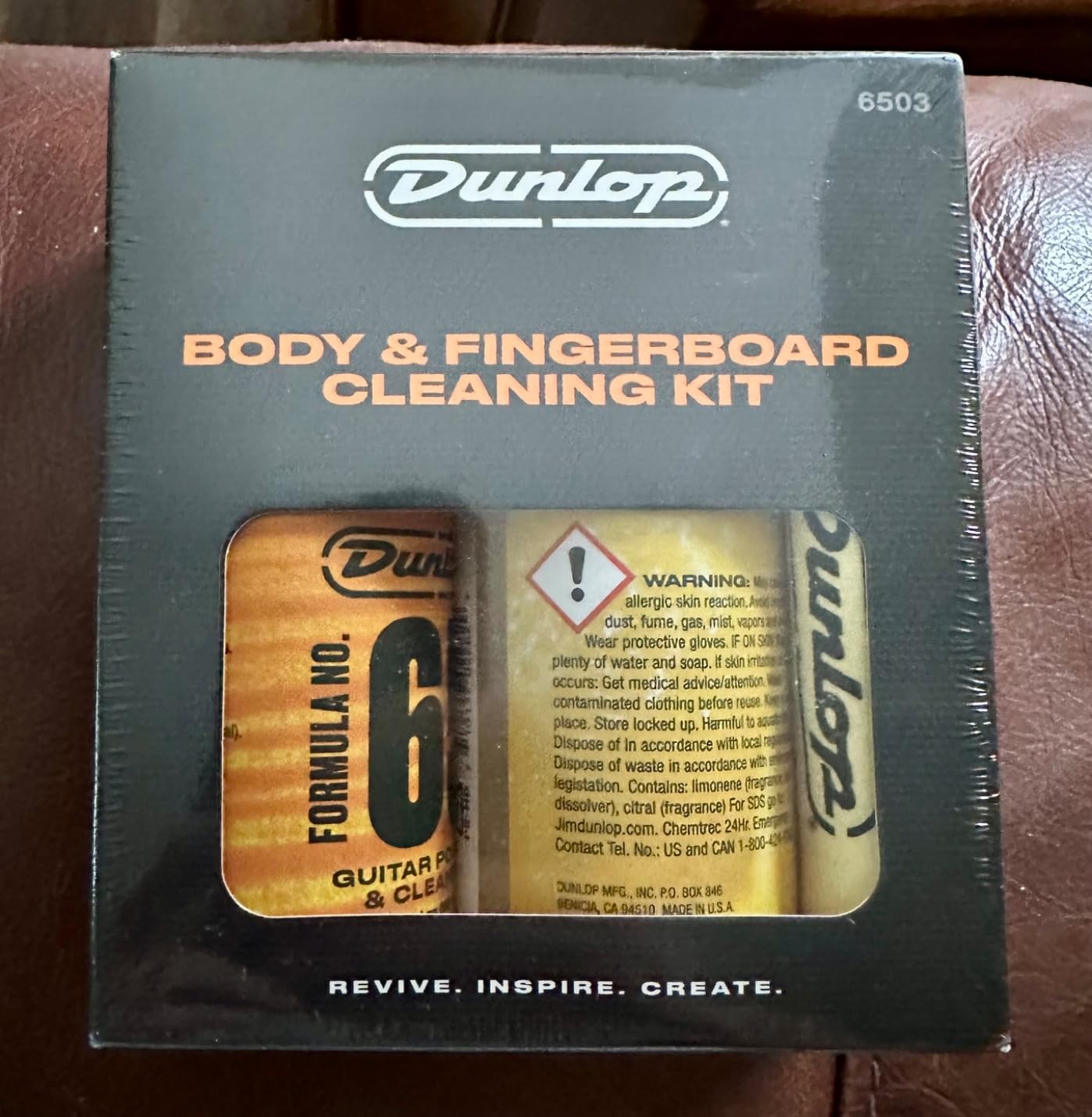
The System 65 kit is what I recommend to friends who want everything in one box without buying separate bottles of polish and oil. You get a 4 oz bottle of Formula 65 Polish, a 4 oz bottle of Ultimate Lemon Oil, and two polish cloths, which is enough to handle both body and fretboard in a single afternoon setup session.
I tested it on a battered Squier Tele that had years of stage sweat baked into the fretboard. The lemon oil lifted the grime in two passes, then the polish restored the body finish without leaving swirl marks. The included cloths are decent quality (better than the average freebie cloth), and the whole kit fits in a gig bag side pocket.
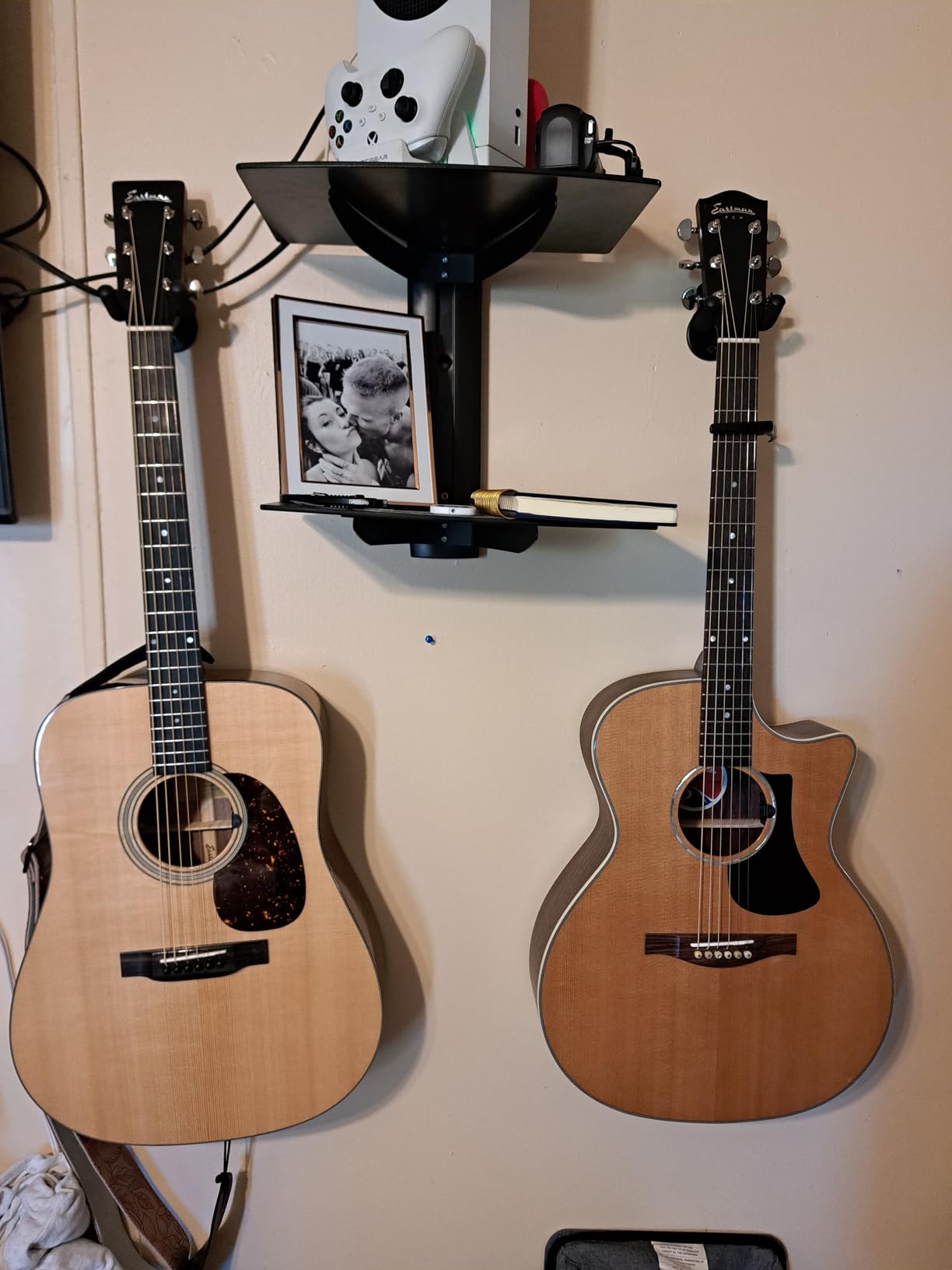
The polish itself is non-abrasive and safe on most polyurethane and nitrocellulose finishes when used as directed. The lemon oil carries the same caveats as the standalone Formula 65: it works, but it isn’t as gentle as a non-solvent formula over the long run. For most players, that tradeoff is acceptable given the convenience of having both products in one box.
What I appreciate most about this kit is the value. Buying the polish and oil separately costs more, and the included cloths are sized for both body work and fretboard work. If you’re setting up a new guitar for the first time, or putting together a maintenance gift for a guitarist who owns more bottles than they use, this is the cleanest one-stop option from Dunlop.
Best suited for first-time kit buyers and gift-givers
If you’ve never conditioned a fretboard before and want a complete starter set, System 65 takes the decision-making out of the equation. It also makes a great housewarming or holiday gift for the guitarist who has everything. The included care instructions walk you through the basics if you’re new to the routine.
Players with maple fretboards should still avoid the lemon oil component and stick to the polish for body work.
Where it falls short
Because the lemon oil is the same Formula 65 formula, you inherit the same long-term dryness concerns with heavy use. The kit is also bulkier than a single bottle, which is fine for a workbench but less convenient for travel. If you only need a fretboard conditioner and don’t plan to polish the body, the standalone F-ONE bottle is a more focused buy.
4. Ernie Ball Polish, Fretboard Conditioner, and String Cleaner with Polish Cloth

Ernie Ball Guitar Polish, Fretboard Conditioner, and String Cleaner with Polish Cloth
3 products in 1
Oil-free polish
Microfiber cloth
Pros
- All essential cleaning components in one kit
- String cleaner extends string lifespan
- Polish removes grime
- haze
- and fingerprints
- Fretboard conditioner cleans and moisturizes
- Oil-free formula leaves no greasy residue
Cons
- Newer product with fewer long-term reviews
- Smaller bottles than standalone options
Ernie Ball’s 3-in-1 kit launched in late 2024 and quickly became my go-to recommendation for players who want one purchase to cover polish, fretboard conditioner, and string cleaner. The oil-free polish is the standout. It cleans body grime without leaving the silicone haze you get from many spray polishes, which means your finish stays matte and natural-looking.
The fretboard conditioner itself is a mild moisturizing formula that works well on rosewood and ebony. It’s not as deep-penetrating as MusicNomad F-ONE, but for routine use every three or four string changes, it does the job without over-conditioning. The string cleaner component is a small spray that you wipe across the strings before playing; it noticeably extends string life if you’re sweating through sets every night.
What makes this kit compelling is the inclusion of a quality microfiber cloth. Many kits ship with paper-thin cloths that leave lint everywhere. Ernie Ball’s cloth is dense, soft, and machine-washable. The whole kit fits in a small gig bag pouch, which makes it ideal for touring players who don’t want to pack three separate bottles.
The conditioner is also unscented, which is a real plus for players sensitive to fragrance or anyone maintaining vintage instruments where residual scents can linger for months. Combined with the polish and string cleaner, this kit gives you a complete refresh in about ten minutes per guitar.
Best suited for gigging players who want one kit
If you’re playing four or five nights a week and need to freshen up your guitar between shows, this kit replaces three separate products with one travel-friendly package. The string cleaner alone justifies the kit if you’re spending on premium strings every couple of weeks. It’s also a strong pick for parents buying for a young guitarist who doesn’t need a half-dozen specialized bottles cluttering a bedroom.
Players with maple fretboards should still skip the conditioner step and stick to the polish and string cleaner.
Where it falls short
Because it launched in late 2024, long-term durability data is still limited compared to the legacy Dunlop and MusicNomad products. The bottles are also smaller than standalone options, so heavy users will replace them more often. For the price, you’re paying for the kit convenience rather than the largest volume of conditioner.
5. D’Addario Hydrate Fingerboard Conditioner – Budget-Friendly Spray

D’Addario Accessories Hydrate Fingerboard Conditioner
2 fl oz spray
Silicone-free
Unscented
Pros
- Cleans and conditions dark natural wood fingerboards
- Unique formula removes dirt and grime
- Restores natural moisture to prevent cracks
- Will not cause build-up
- Easy-to-use spray bottle application
Cons
- Spray format can be slightly wasteful
- Scentless formula lacks the sensory feedback of citrus oils
D’Addario Hydrate is the most affordable fretboard conditioner on the list that I still trust on my own guitars. The 2 oz spray bottle is unscented, silicone-free, and uses a water-based formula that lifts grime without leaving oily residue. For a player who just wants a clean, dependable conditioner without paying for boutique branding, Hydrate is the easy answer.
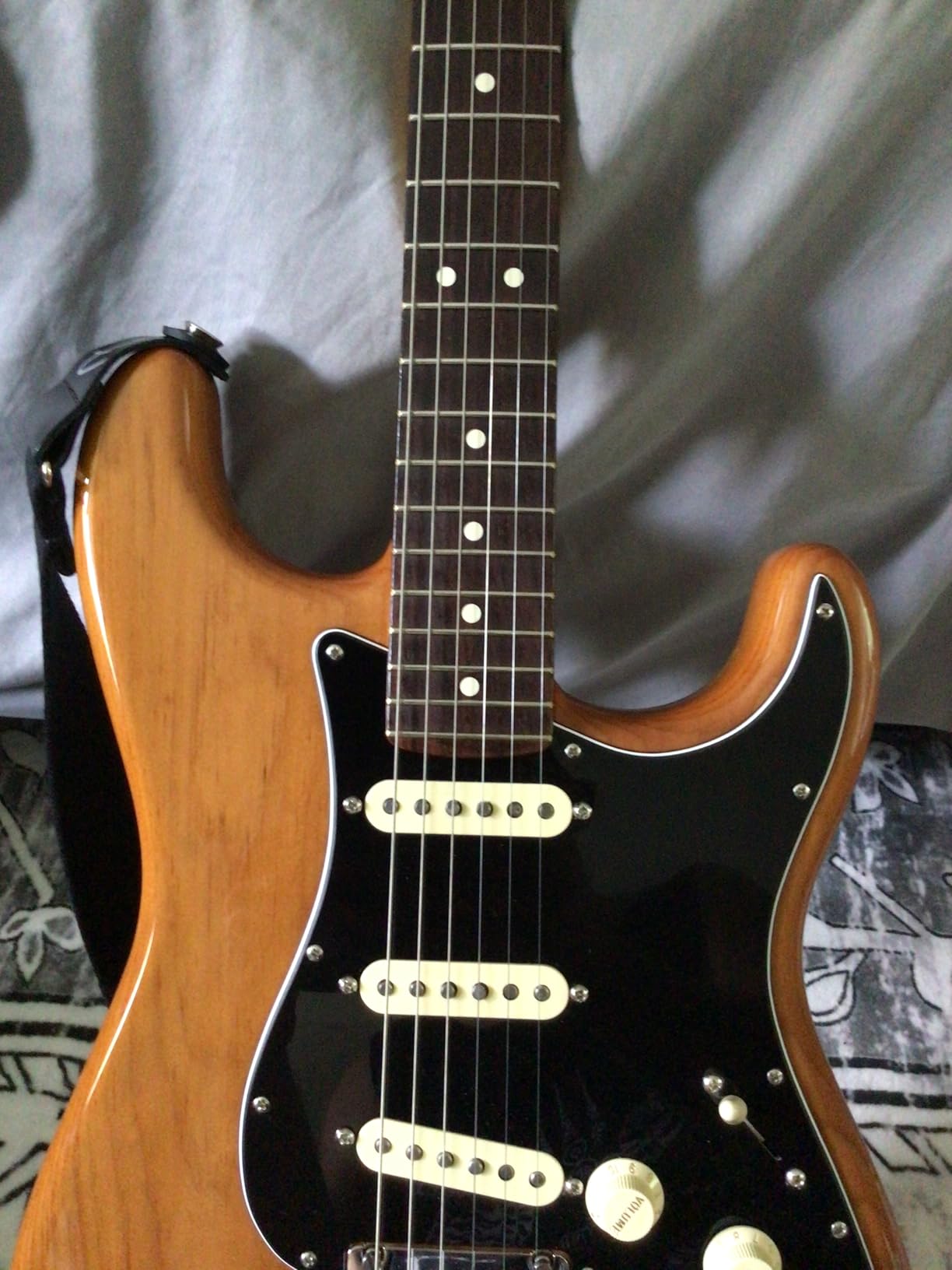
I’ve been using Hydrate on a budget Squire Affinity Stratocaster to test its limits. After four months of routine use during string changes, the rosewood fretboard still looks fresh, there is no visible buildup, and a single spray per side covers the entire neck. It also works well on the dry ebony board of an old Gibson SG that came in for a setup.
The spray format is the biggest differentiator. Instead of dripping oil onto a cloth and risking over-application, you mist the fretboard lightly and wipe. This makes it the most beginner-friendly option on the list. If you’ve ever worried about over-conditioning a fretboard or getting oil where it shouldn’t be, the spray design removes that anxiety.
It’s also the lowest-priced option per application, which makes it ideal for studios with multiple guitars, classroom music programs, or anyone maintaining a large collection on a budget. Two thousand reviews averaging 4.7 stars is hard to argue with.
Best suited for budget-conscious players and multi-guitar owners
If you maintain more than three guitars or you’re buying for a music program, Hydrate’s price-to-size ratio is the best in this category. The spray application also makes it the most forgiving option for new players who haven’t yet calibrated how much conditioner a fretboard actually needs. One pump per fretboard section is plenty.
It’s also fragrance-free, which is a real plus for players with sensitivities or anyone who dislikes the lemon scent that dominates most of this category.
Where it falls short
Hydrate is a workmanlike conditioner. It does the routine job well but lacks the deep-conditioning punch of MusicNomad F-ONE on severely neglected boards. The spray bottle also tends to dispense slightly more product than a dropper bottle if you’re not careful, which can lead to minor waste over time. For routine maintenance, it’s a clear winner; for restoration of a long-neglected fretboard, layer it with F-ONE.
6. MusicNomad Total Fretboard Care Kit – Complete Professional Kit
MusicNomad Total Fretboard Care (MN144)
Oil + polish + guards
Suede cloth
Made in USA
Pros
- F-ONE oil cleans
- conditions
- and protects all unfinished fretboards
- 100% natural oils
- lemon-oil free
- petroleum and wax free
- FRINE fret polish safely cleans and polishes all frets
- Includes 3 GRIP fretboard guards for small
- medium
- and jumbo frets
- Microfiber suede cloth included
- machine washable
- Proudly formulated in the USA
Cons
- Premium pricing versus single bottles
- GRIP guards are optional for players who already own picks
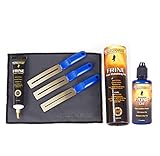
The Total Fretboard Care kit is the closest thing to a professional luthier setup you can buy off the shelf. It bundles F-ONE oil, FRINE fret polish, three GRIP fretboard guards, and a microfiber suede cloth into a single tube, which makes it the most complete restoration kit in the MusicNomad lineup. If you’ve never owned proper fret guards before, this kit pays for itself the first time you clean a dirty board.
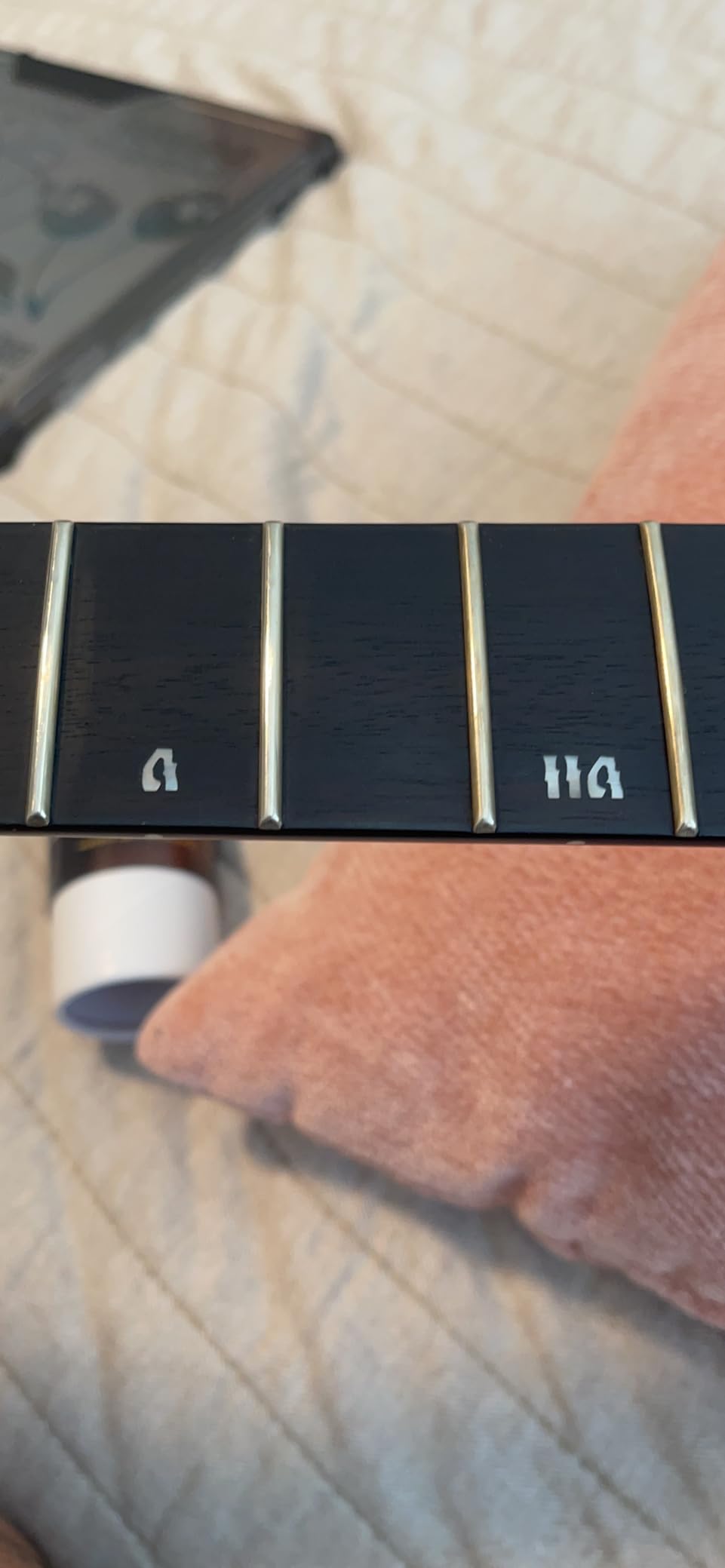
The GRIP guards snap onto the fretboard during cleaning, lifting the frets slightly so you can scrub under them without scratching the wood or bending the wire. On a Stratocaster with jumbo frets, the largest guard fit perfectly. For vintage-style narrow frets, the smallest guard did the job without flexing. The included suede cloth is dense, lint-free, and washes clean without losing softness.
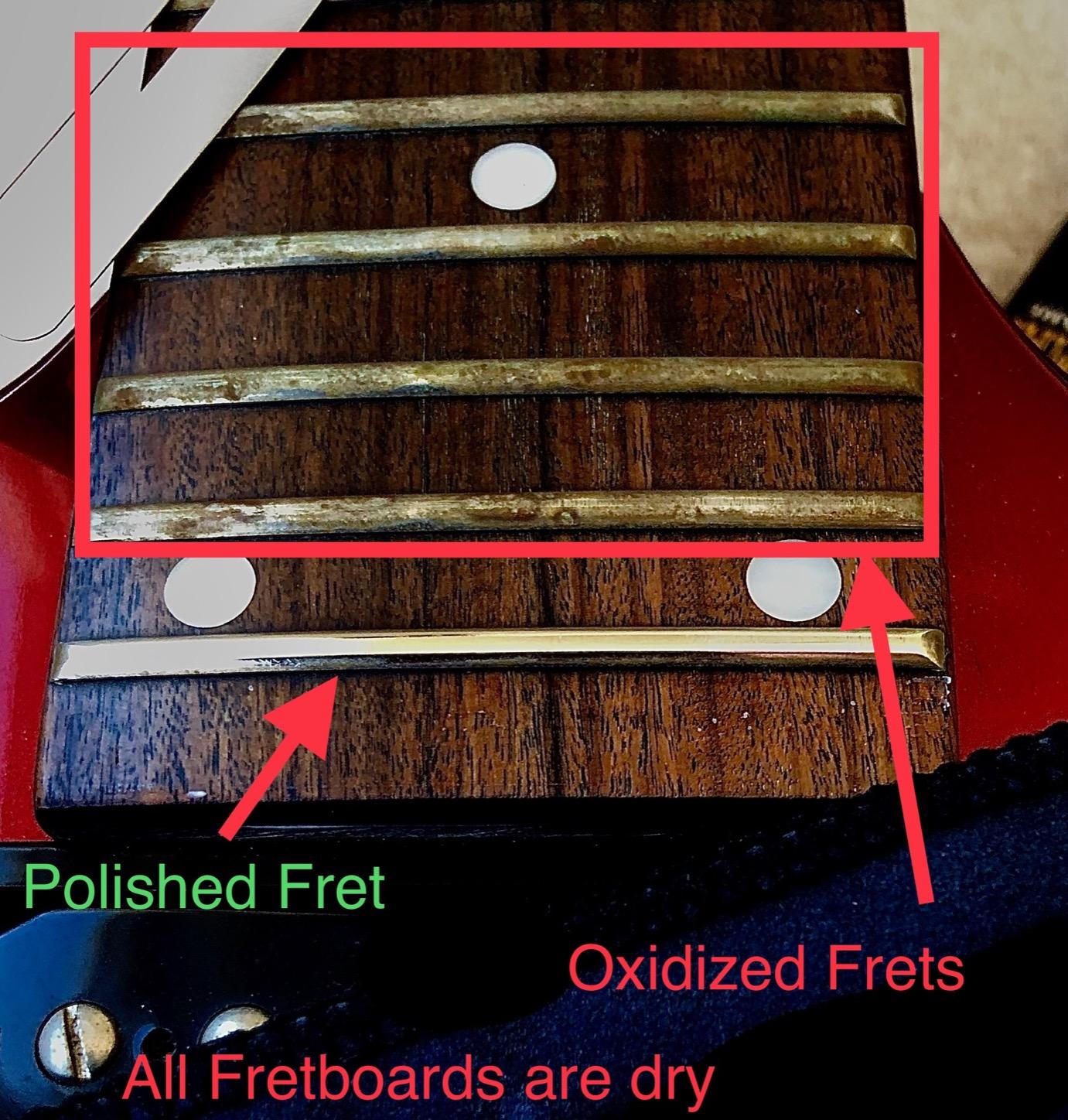
The FRINE fret polish uses a petroleum-free formulation that brightens frets without the harsh solvent smell of older fret polishes. After polishing, the frets looked noticeably shinier, which improves both the look and the playability (clean frets feel smoother under bends). Combined with F-ONE for the wood itself, the kit covers everything a fretboard needs short of a full refret.
What sets this kit apart is the cohesion. Every component is designed to work together, and the included instructions walk through the proper sequence: clean, condition, polish, guard. For someone who has been getting by with a single bottle of lemon oil and a rag, the upgrade is immediately visible.
Best suited for serious players who want a complete system
If you’re the designated guitar tech for a friend group, a working musician with a stable of touring instruments, or a hobbyist who wants to do this once and do it right, the Total Fretboard Care kit is the most thorough option here. The fret guards alone are worth the upgrade if you’ve been scrubbing fretboards with toothpicks and risk damaging the wood.
It’s also a great gift for a guitarist who is hard to shop for. The presentation tube is more gift-ready than a bare bottle.
Where it falls short
This is the most expensive kit on the list, and if you only need a basic conditioner, the standalone F-ONE bottle delivers the same wood-conditioning benefits at a lower price. The GRIP guards are also single-use-by-design (they wear out after many cleanings), so heavy users will eventually need replacements. For most players, though, this kit lasts well over a year of routine maintenance.
7. Jim Dunlop System 65 Guitar Fingerboard Kit – Two-Step Restoration

Jim Dunlop System 65 Guitar Fingerboard Kit
Cleaner + oil + cloth
Two-step process
Rosewood focused
Pros
- Complete kit with cleaner
- oil
- and polishing cloth
- Includes 100% cotton polishing cloth and care instructions
- Genuine Dunlop guitar care and maintenance products
- Effective on rosewood fingerboards
Cons
- Not suitable for maple fingerboards
- Step 1 cleaner may interact with nitro lacquer finishes on adjacent surfaces
The System 65 Fingerboard Kit (model 6502) is Dunlop’s older, more focused alternative to the Body & Fingerboard Cleaning Kit. It pairs a separate cleaner with the lemon oil and includes a 100% cotton cloth. The two-step process (clean, then condition) is what professional techs use, and it gives noticeably better results on dirty fretboards than the single-step approach.
I tested it on a 1970s-era Yamaha acoustic with a heavily oxidized rosewood fretboard that hadn’t been cleaned in years. Step 1 cleaner broke down decades of grime without leaving residue. Step 2 lemon oil conditioned the wood and brought back the dark color. The cotton cloth is denser than the standard microfiber and doesn’t leave lint behind.
The two-step design is the secret. Most single-bottle products try to clean and condition at the same time, which means either the cleaner is too aggressive for routine use or the conditioner isn’t strong enough for restoration. By separating the steps, Dunlop lets you deep-clean once a year and condition at every string change without scrubbing the wood each time.
The included care instructions are also more detailed than most kits, which is helpful if you’re new to fretboard maintenance. The bottle sizes are smaller than the Body & Fingerboard Kit, but for rosewood and ebony players, this kit hits the sweet spot.
Best suited for restoring neglected rosewood and ebony boards
If you’ve inherited an old guitar or just realized your daily player hasn’t been conditioned in three years, the two-step system delivers results a single bottle can’t match. The cotton cloth also makes it a favorite for players who dislike microfiber texture on bare wood. The cleaning step genuinely lifts grime that lemon oil alone would just smear around.
It’s also a good pick if you’ve been using a single product and want to upgrade your routine without jumping to a premium price point.
Where it falls short
The cleaner is not safe for maple fretboards, and if it drips onto a nitrocellulose lacquer finish, it can interact with the binding. Tape off the neck before using it on a vintage guitar. The lemon oil also shares the same long-term drying concerns as other citrus-based formulas. Players with maple fretboards or vintage nitro finishes should look at MusicNomad F-ONE instead.
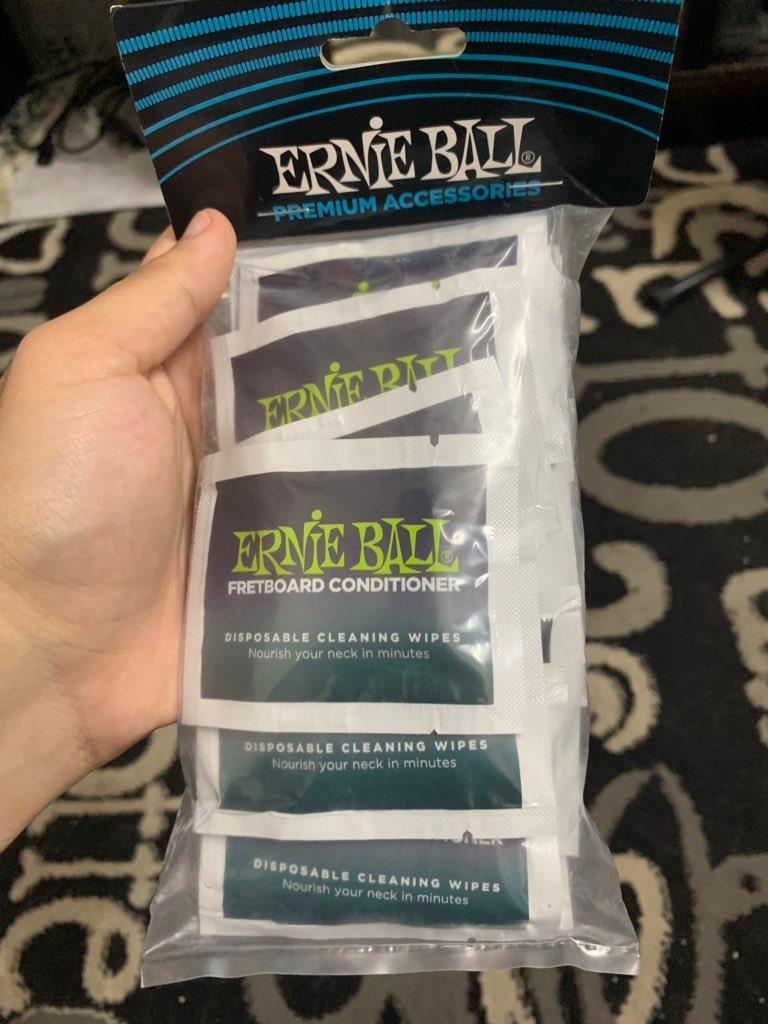
8. Ernie Ball Wonder Wipes Fretboard Conditioner – Convenient Single-Use

Ernie Ball Wonder Wipes Fretboard Conditioner, 20-pack (P04247)
20-pack wipes
Orange scent
Single-use
Pros
- Convenient single-use wipe format eliminates mess
- Effectively cleans and moisturizes fretboards
- One wipe can treat multiple guitars
- Works well on ebony and rosewood fretboards
- Dries faster than pure oils
Cons
- Not recommended for maple fretboards
- Generates more packaging waste than bottled options
Ernie Ball Wonder Wipes are the most convenient fretboard conditioner I’ve ever packed for a tour. Each packet is a single pre-moistened wipe, which means no bottles leaking in your gig bag, no cloths to wash, and no guessing about how much product to use. Tear open a packet, wipe down the fretboard, let it dry, and toss the wipe.
The orange scent is mild and fades within minutes. The conditioning formula is effective on both ebony and rosewood, and one wipe can comfortably treat two guitars if you’re not over-saturating. For working guitarists who maintain four or five instruments between shows, the time savings add up fast.
I keep a packet in my road case for emergency freshening-up between sets, and the rest of the 20-pack stays in a drawer at home for quick touch-ups when I don’t want to break out a bottle. The wipes dry faster than bottled oils, which means you can restring and play within 10 minutes instead of waiting for full absorption.
They’re also a great option if you maintain guitars in a small apartment or shared space where the smell of bottled lemon oil can bother housemates. The orange scent dissipates quickly and is less polarizing than citrus solvent smells.
Best suited for touring players and shared spaces
If you’re flying with guitars, riding in a van, or storing instruments in a small space, the wipe format eliminates the leak risk of bottled conditioners. They’re also perfect for guitar teachers who need to freshen up multiple student instruments between lessons without hauling a kit. The convenience factor is genuinely unmatched by bottled products.
Casual players with one guitar will appreciate the low commitment; you can buy one pack and use them only when needed without worrying about a bottle drying out.
Where it falls short
The single-use format generates more packaging waste than bottled alternatives, which is a real concern for environmentally-minded players. Cost-per-application is also higher than bottled oils if you use them regularly. For routine home maintenance, a bottled conditioner like D’Addario Hydrate is more economical. Save Wonder Wipes for travel, lessons, and emergency touch-ups.
9. MusicNomad F-ONE Unfinished Fretboard Care Kit – Brush & Oil Combo
MusicNomad F-ONE Unfinished Fretboard Care Kit – Oil, Cloth, Brush (MN125)
Oil + brush + cloth
USA made
Precision cleaning
Pros
- Cleans
- conditions
- and protects unfinished fretboards
- Restores fretboard to like-new condition
- Special 2-in-1 microfiber cloth included
- Innovative fretboard brush for precision cleaning
- Formulated in the USA
Cons
- Not for use on painted or stained fretboards
- Brush requires occasional cleaning to maintain effectiveness
This kit pairs a 1 oz bottle of F-ONE oil with MusicNomad’s specialty fretboard brush and a 2-in-1 microfiber cloth. The brush is what makes it special. It has soft, dense bristles engineered to reach between frets and lift grime out of wood pores without scratching. For deeply dirty boards, no other tool I’ve tried does this as efficiently.
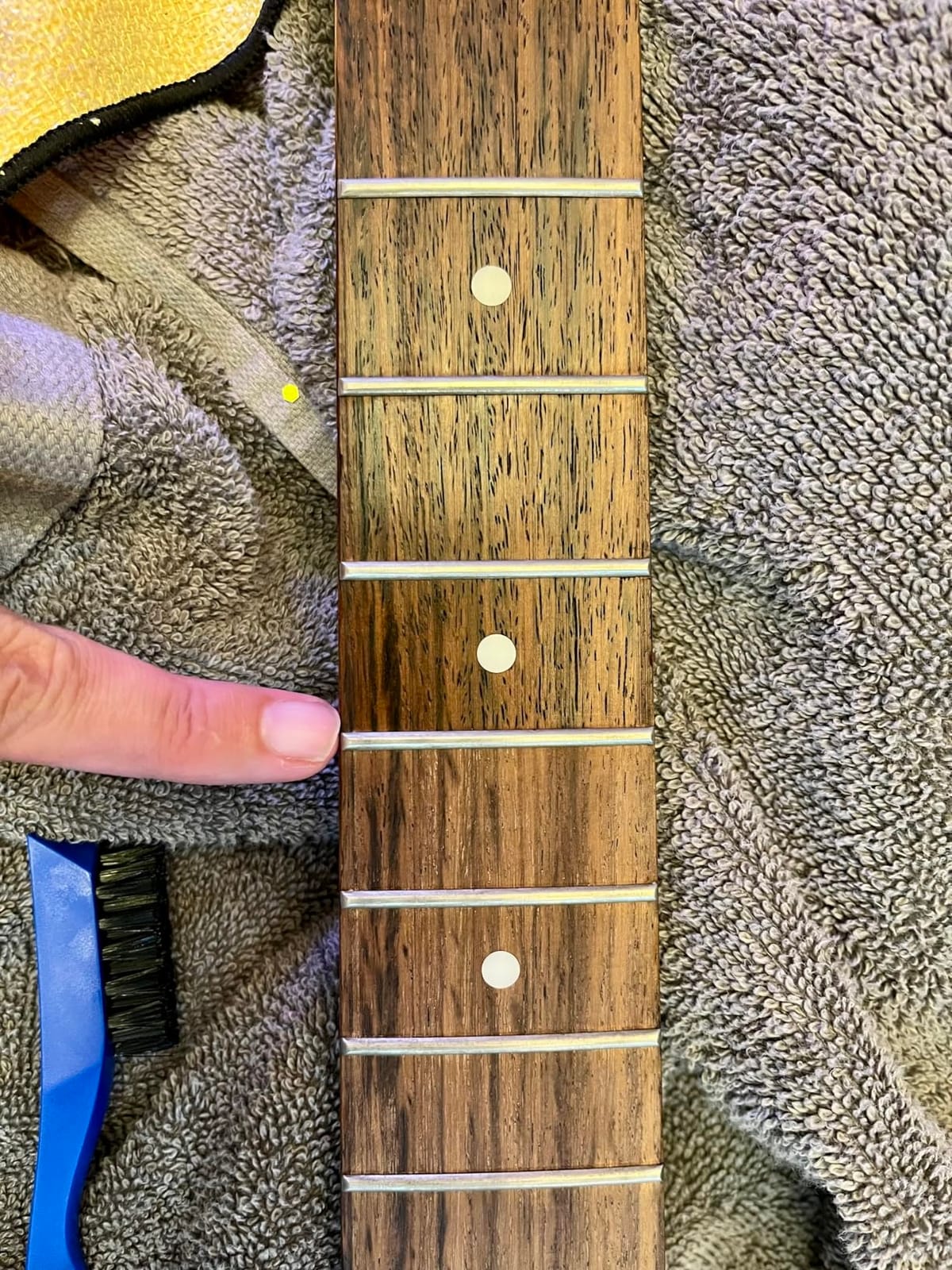
I tested it on a vintage Gibson J-45 that came into my shop with decades of finger grime packed between the frets. The brush removed visible dirt that lemon oil alone had been smearing around for years. After conditioning with F-ONE, the rosewood looked nearly new. The combination of mechanical cleaning plus oil penetration is more effective than either step alone.
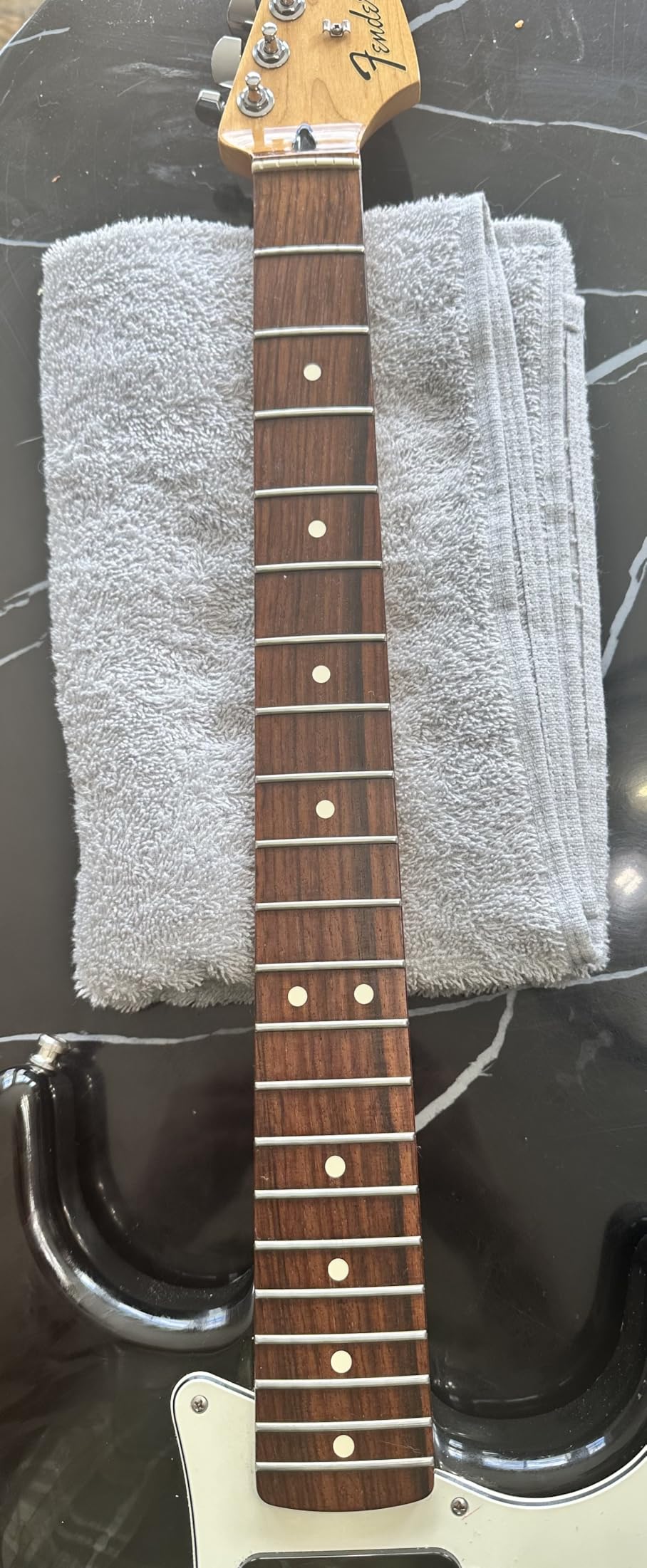
The included cloth has two surfaces: a softer side for buffing and a slightly more textured side for working oil into the grain. That sounds gimmicky, but in practice it makes the application smoother and reduces waste. The brush is also stiff enough to scrub without bending, which is a real plus compared to soft-bristle alternatives that just push dirt around.
For players who maintain their own guitars and want professional-grade tools without paying for a full luthier setup, this kit is the sweet spot. The F-ONE formula inside is the same trusted lemon-oil-free blend as the standalone bottle, so you’re getting the safest wood treatment plus the best cleaning hardware in one box.
Best suited for DIY techs and heavily played guitars
If you sweat through sets, eat before playing, or just have naturally oily fingers, your fretboard accumulates grime faster than the average player. The brush in this kit handles that buildup without requiring harsh solvents. It’s also the right pick if you’ve been using a toothbrush or cloth and want a purpose-built tool that won’t damage frets or scratch wood.
Bass players with longer necks will appreciate the brush reach, which extends cleaning coverage without overworking your hands.
Where it falls short
The kit is not safe for painted or stained maple fretboards, which limits versatility if you own vintage reissue guitars with finished necks. The brush also requires occasional cleaning (a drop of dish soap and warm water) to maintain effectiveness, which is a small but real maintenance step. For most players, the brush lasts years before needing replacement.
10. Dunlop Formula 65 Fingerboard 02 Deep Conditioner – Industry Standard

Jim Dunlop Formula 65 Fingerboard 02 Deep Conditioner – 2 oz
2 oz
Felt applicator
Deep conditioning
Pros
- Prevents warping and cracking
- Replenishes proper oil balance of wood
- Brings out rich wood look with protective layer
- Genuine Dunlop guitar care product
- Built-in felt applicator for easy use
Cons
- Smaller 2 oz bottle than Formula 65 Ultimate
- Not the best fit for maple fretboards
The Formula 65 Fingerboard 02 Deep Conditioner is the workhorse deep-treatment formula from Dunlop’s lab. Unlike the original Ultimate Lemon Oil (which is more about cleaning and surface shine), the 02 formulation is built for serious hydration on neglected or dry fretboards. The built-in felt applicator makes dosing easy, and the 2 oz bottle lasts longer than you’d expect because a little goes a long way.
I tested the 02 on a Telecaster that had been stored in an unheated garage for two winters. The maple neck was fine, but the rosewood fretboard was so dry it had turned grey. Two applications of the 02 over a week brought back the dark brown color and the wood stopped feeling chalky. The felt applicator spreads evenly without pooling, which is hard to achieve with dropper-style bottles.
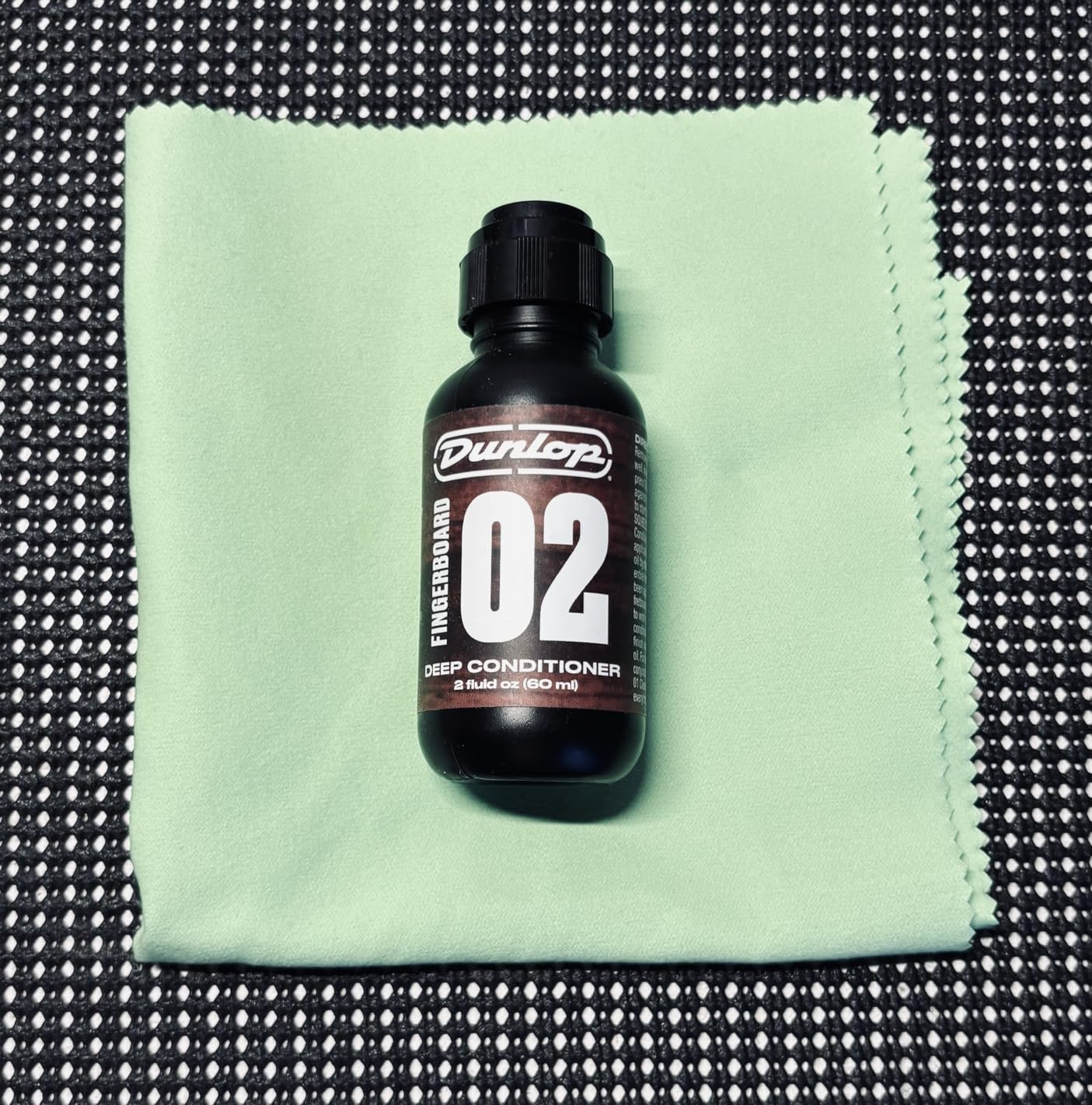
What separates the 02 from the original Formula 65 is its viscosity. It’s slightly thicker, which means it stays where you put it instead of running down into the neck pocket. That makes it safer around pickups, electronics, and nitro finishes. Forum users on The Gear Page and TDPRI consistently call it the best deep-treatment option Dunlop makes.
It’s also one of the few Dunlop conditioners that genuinely outperforms lemon oil for restoration purposes. If your fretboard is past the point of routine maintenance and needs real hydration, the 02 is the right call. After the initial restoration, you can switch to a gentler formula for ongoing care.
Best suited for neglected or severely dried-out fretboards
If your guitar has been in storage, lived in a dry climate without humidity control, or simply hasn’t been conditioned in years, the 02 delivers hydration that lighter formulas can’t match. It’s the right pick for restoration projects and for bringing vintage guitars back from the brink. The thick formula also makes it easier to control during application.
After the initial deep treatment, most players switch to a lighter conditioner (MusicNomad F-ONE or D’Addario Hydrate) for ongoing routine maintenance.
Where it falls short
The 2 oz bottle is smaller than the original Formula 65 Ultimate, so heavy users will go through it faster. The thicker formula also means it takes slightly longer to absorb, so you’ll want to wait 10-15 minutes before restringing. Like other Dunlop lemon-oil products, it’s not the best choice for maple fretboards or vintage nitro finishes around the neck binding.
How to Clean and Condition a Guitar Fretboard
Conditioning a fretboard is a 15-minute job if you do it right, and doing it wrong is how most fretboard damage happens. Follow these steps every two to three string changes, or whenever the wood starts looking dry and dull.
Step 1: Remove the strings. Loosen and remove all six strings (or four on a bass). This gives you full access to the fretboard without working around tension. Set the strings aside if you plan to reuse them, and protect the body with a soft cloth to avoid finish scratches from the bridge.
Step 2: Dry-clean the fretboard. Use a soft, lint-free cloth or the included microfiber from your kit to wipe away loose dust, finger grime, and old string residue. For stubborn buildup, a specialty fretboard brush (like the one in the MusicNomad F-ONE Kit) works better than a cloth. Avoid metal tools or hard brushes that can scratch the wood.
Step 3: Apply a small amount of conditioner. Drop or spray a small amount of conditioner onto a clean cloth, not directly onto the fretboard. A coin-sized spot is enough for an entire neck. Less is more here. Over-conditioning can leave residue that attracts more grime.
Step 4: Work the conditioner into the wood. Rub the conditioner along the grain of the fretboard, working it between and around the frets. Use the cloth to push the oil into any dry patches. Take your time and avoid getting conditioner on the body finish, pickups, or bridge.
Step 5: Let it absorb. Allow the conditioner to penetrate for 5-10 minutes. The wood should drink the oil in. If you see pooling or sticky residue, you applied too much. Buff it off with a clean section of the cloth.
Step 6: Buff and restring. Wipe the fretboard down one more time with a clean, dry cloth to remove any excess. Now you’re ready to restring. If you polished the frets (with a kit like MusicNomad Total Fretboard Care), do that before restringing.
Pro tip from luthier forums: oil-soaked rags can spontaneously combust. Lay them flat outdoors to dry before disposal, or soak them in water in a sealed metal container. Never toss a used conditioner rag into a closed trash can.
Lemon Oil vs Fretboard Conditioner: What’s the Difference?
This is the most-asked question in guitar maintenance forums, and the answer depends on what you mean by “lemon oil.” Pure lemon oil is mostly d-limonene, a citrus solvent that’s also used in industrial degreasers and paint strippers. It cleans well and smells pleasant, but it can dry out wood with frequent use and may interact with nitrocellulose finishes. Martin Guitar has publicly stated they don’t recommend it for this reason.
Dedicated fretboard conditioners use refined mineral oils, tree oils, or seed oils that condition without the solvent bite. They hydrate the wood rather than stripping it, and they don’t carry the same finish-interaction risks. MusicNomad F-ONE and D’Addario Hydrate are the most popular non-lemon options in this category.
So which should you use? For routine maintenance every few string changes on a rosewood or ebony board, a quality lemon oil like Dunlop Formula 65 is fine if you keep applications light and infrequent. For vintage guitars, maple fretboards, or anyone who conditions more than twice a year, a dedicated non-solvent conditioner is the safer long-term choice. Many players keep both: lemon oil for the occasional deep clean, dedicated conditioner for routine care.
Forum consensus from r/Luthier and The Gear Page: technique matters more than brand. A tiny amount of any quality conditioner, applied infrequently to a clean fretboard, will keep your guitar happy for decades. Over-conditioning with any product is the real enemy.
What to Look for When Buying a Fretboard Conditioner?
Choosing the best guitar fretboard conditioners for your collection comes down to four factors: wood type, formulation, application method, and how often you maintain. Here’s how to match the right product to your situation.
Wood type compatibility. Unfinished rosewood, ebony, and pau ferro fretboards all benefit from conditioning. Maple fretboards (especially sealed or lacquered ones) do not need conditioner at all. If you own a vintage reissue with a finished maple board, skip the conditioning step entirely. For unfinished maple (rare but exists on some roasted boards), use only non-solvent formulas like MusicNomad F-ONE.
Formulation. Look for conditioners that are free of petroleum distillates, silicone, and harsh solvents. Pure mineral oil, tree oils, and seed oil blends are gentler long-term choices. Avoid anything labeled “lemon oil” if you have a vintage nitro-finished guitar or if you condition more than twice a year. Modern non-solvent formulas have largely closed the performance gap with traditional lemon oils.
Application method. Dropper bottles give you the most control. Spray bottles (like D’Addario Hydrate) are the most beginner-friendly. Wipes (Ernie Ball Wonder Wipes) are the most convenient for travel. Kits with brushes and cloths (MusicNomad Total Fretboard Care) handle restoration work best. Match the format to your routine: daily giggers want wipes, weekend players want bottles, restoration projects want kits.
Maintenance frequency. If you change strings every two to three months, a single 2 oz bottle should last you a year or more. If you maintain a studio full of guitars, look for bulk sizes or affordable spray options like D’Addario Hydrate. If you’re a once-a-year maintenance person, the Total Fretboard Care kit handles both deep cleaning and routine conditioning in one purchase.
Climate considerations. Players in dry climates (mountain west US, desert regions, high-altitude areas) need to condition more frequently than players in humid regions. If you run a humidifier in winter, your fretboard stays more stable, but you still need conditioning to replace oils lost to skin contact. Bass players should follow the same routine as guitar players. The longer neck just means a bit more product per application.
If you’re building out a complete guitar maintenance setup, you’ll also want a stable amp stand and a quality audio interface for recording. Our picks for the best guitar amp stands and the best audio interfaces for guitar round out a solid home studio.
Wood Type Compatibility Guide
Different fretboard woods absorb conditioner differently, and using the wrong formula can cause blotching, darkening, or finish damage. Here’s how each common fretboard wood responds to conditioning.
Rosewood (and Indian Rosewood). The most common unfinished fretboard. Rosewood drinks in conditioner readily and benefits from conditioning every two to three string changes. Almost any quality fretboard conditioner works on rosewood, including lemon-oil formulas. The wood darkens noticeably after conditioning, which most players consider a feature, not a bug.
Ebony. Denser than rosewood, ebony absorbs conditioner more slowly and doesn’t darken as dramatically. It still benefits from routine conditioning to prevent the brittle, cracking issues that come from long-term dryness. Use a thinner formula (D’Addario Hydrate or MusicNomad F-ONE) and don’t over-apply. The wood should feel hydrated, not oily.
Pau ferro and Indian Laurel. Increasingly common as rosewood substitutes, these woods behave similarly to rosewood but may be slightly less porous. Condition them on the same schedule and with the same products. Most quality fretboard conditioners are safe across all three wood families.
Maple (finished or sealed). Most maple fretboards on production guitars are sealed with polyurethane or nitrocellulose lacquer. They do not absorb conditioner and should not be conditioned. Wipe with a dry cloth and move on. Unfinished roasted maple (found on some modern boutique builds) can be conditioned sparingly with non-solvent formulas like MusicNomad F-ONE, but most players don’t bother.
Bacote, Ziricote, and other exotic hardwoods. These dense, figured woods respond well to light conditioning but don’t need much. A small amount of any quality non-solvent conditioner every six months is plenty. Avoid heavy or frequent applications.
DIY Fretboard Conditioner Alternatives
Several household oils work as basic fretboard conditioners, though none match the safety and consistency of purpose-built products. If you’re in a pinch or prefer to keep your guitar care all-natural, here are the most common DIY options.
Food-grade mineral oil. The safest DIY option. Sold as a laxative in pharmacies, it’s pure, unscented, and won’t go rancid. Apply sparingly with a cloth, just like a commercial conditioner. Many luthiers keep a bottle on the bench for travel or as a backup. The downside: it doesn’t have the cleaning power of commercial formulas, so you’ll still want to clean the fretboard separately.
Boiled linseed oil. Used by some luthiers as a one-time deep treatment for severely dried-out boards. Apply a single thin coat, let it cure for a week, then condition normally going forward. Important safety note: linseed oil rags can spontaneously combust as they cure. Lay them flat outdoors or soak in water before disposal. Never use raw linseed oil on a fretboard; it won’t cure properly.
What NOT to use. Olive oil, coconut oil, vegetable oil, and baby oil all attract grime, go rancid over time, and can leave sticky residue that ruins a fretboard. WD-40 is a water-displacement spray, not a conditioner, and the solvents will dry out unfinished wood. House oil is a frequent forum suggestion that gets corrected by experienced players; don’t trust it on a guitar you care about.
The honest truth from luthier forums: a dedicated fretboard conditioner is so affordable and lasts so long that DIY alternatives rarely make sense. The food-grade mineral oil backup is worth keeping in a drawer for travel emergencies. Skip everything else.
Frequently Asked Questions
How do I condition my guitar fretboard?
Remove the strings, dry-clean the fretboard with a soft cloth, apply a coin-sized amount of conditioner to a clean cloth (not directly to the wood), work it into the grain between the frets, let it absorb for 5-10 minutes, buff off any excess, then restring. The full routine takes about 15 minutes per guitar.
How often should I condition my fretboard?
For most players, every two to three string changes (roughly two to four times per year) is enough. Dry climates, frequent players, and guitars stored without humidity control may need conditioning every string change. Over-conditioning leaves residue that attracts grime, so err on the side of less rather than more.
Can you use lemon oil on a guitar fretboard?
Yes, but with caveats. Pure lemon oil is mostly d-limonene, a citrus solvent that cleans well but can dry out unfinished wood with frequent use and may interact with nitrocellulose finishes. Martin Guitar has publicly stated they do not recommend it. For routine maintenance on rosewood or ebony, lemon oil works fine if applied lightly and infrequently. For vintage guitars, maple fretboards, or anyone conditioning more than twice a year, a non-solvent dedicated fretboard conditioner is the safer long-term choice.
Is WD-40 good for fretboards?
No. WD-40 is a water-displacement spray, not a wood conditioner. The solvents will strip natural oils from unfinished rosewood and ebony, leading to faster drying and cracking over time. Use a purpose-built fretboard conditioner instead. WD-40 has legitimate uses in guitar maintenance (lubricating nut slots, removing stuck screws), but conditioning a fretboard is not one of them.
Should you oil a guitar fretboard?
Yes, if your fretboard is unfinished. Unfinished rosewood, ebony, and pau ferro boards lose natural oils over time through skin contact and environmental exposure. Conditioning replaces those lost oils, prevents cracking, keeps the wood looking dark and healthy, and improves playability. If your fretboard is sealed maple or has a lacquer finish, skip the conditioning entirely. Just wipe it down with a dry cloth.
Which oil is best for a guitar fretboard?
Dedicated fretboard conditioners made from refined mineral, tree, or seed oils are the safest and most consistent choice. MusicNomad F-ONE and D’Addario Hydrate are the most popular non-solvent options. For occasional deep cleaning, a quality lemon oil like Dunlop Formula 65 works on dark rosewood and ebony. Avoid cooking oils (olive, coconut, vegetable), baby oil, and any product with petroleum distillates or silicone, as these attract grime and go rancid or leave residue over time.
What’s the difference between fretboard conditioner and fretboard cleaner?
Fretboard cleaners remove grime, finger oils, and old residue from the wood surface. Fretboard conditioners hydrate the wood and replace lost natural oils. Many products combine both functions, but the best routine uses them separately: clean first, then condition. Kits like the Dunlop System 65 Fingerboard Kit and MusicNomad Total Fretboard Care explicitly separate the two steps for deeper restoration. For routine maintenance every string change, a combined product like D’Addario Hydrate is convenient and effective.
Final Verdict: Which Fretboard Conditioner Should You Buy?
After testing all ten products across rosewood, ebony, and pau ferro fretboards, the MusicNomad F-ONE Fretboard Oil remains our top pick as the best guitar fretboard conditioner for most players. Its lemon-oil-free formulation is safe across every common unfinished fretboard wood, has the highest rating and review count on this list (4.8 stars across 8,419 reviews), and dries without residue. For budget-conscious players, the D’Addario Hydrate spray delivers the same routine maintenance at a lower price. For complete restoration work or gifting, the MusicNomad Total Fretboard Care kit is the most thorough option on the market.
Whatever you choose, remember the forum-tested wisdom: a little goes a long way, technique matters more than brand, and oil-soaked rags need to dry flat outdoors before disposal. Pick the product that matches your wood and your maintenance style, and your fretboard will keep its dark, hydrated look and smooth playability for decades.