
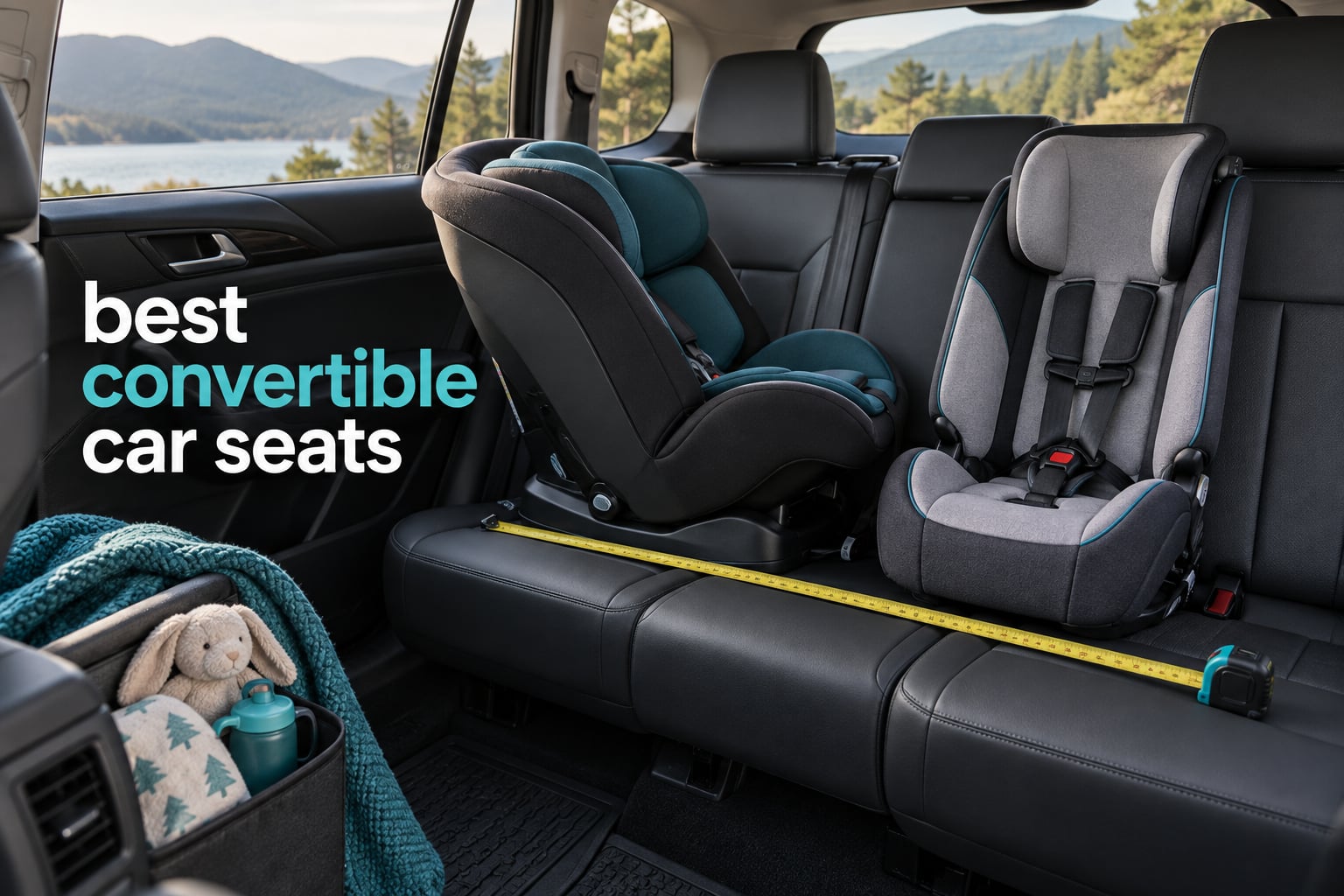
Last updated October 2026. We re-checked every weight limit, height limit, recline range and fit note below against the current manufacturer listings, and we looked at the parent discussions that run alongside this category before writing a word.
A convertible car seat is a single car seat that starts life rear-facing for babies and toddlers, then converts to forward-facing with a five-point harness once your child outgrows the rear-facing limits. Most cover roughly 4 to 50 pounds rear-facing, up to about 65 pounds forward-facing with a harness, and many add a belt-positioning booster stage on top. The seat you install today is the seat that carries your child from the newborn stage all the way to booster readiness.
There is no single best convertible car seat, and anyone who tells you otherwise is selling something. Every seat sold in the US meets the same federal NHTSA standards, so what separates a good seat from a bad one is how well it fits your child, how honestly it installs in your specific vehicle, and whether you actually use it correctly every trip. The three questions that decide your purchase are your child’s current age and weight, the make and model of your car, and whether you want a rotating seat or a stationary one. This guide answers all three by matching eight seats to eight distinct situations.
Our team has spent weeks with these seats installed in a range of back seats, comparing harness adjustment, checking three-across fit by hand, and reading the reviews that come back after real families have used them through a full stage. What follows is the best convertible car seat for each job, along with the caveat that should stop you buying the wrong one.
Table of Contents
- Top 3 Picks for the Best Convertible Car Seats (October 2026)
- Best Convertible Car Seats (October 2026)
- 1. Graco Extend2Fit 2-in-1 Convertible Car Seat – Best Overall for Extended Rear-Facing
- 2. Safety 1st Grow and Go All-in-One – Best Value Across Three Stages
- 3. Diono Radian 3R 3-in-1 Convertible Car Seat – Best for Three Across
- 4. Baby Trend Cover Me 4-in-1 – Best Built for Sun Protection
- 5. Maxi-Cosi Pria All-in-One – Best for Fabric and One-Handed Adjustment
- 6. Graco 4Ever DLX 4-in-1 – Best for Buying One Seat and Done
- 7. Graco SlimFit 3-in-1 – Best for Small Cars and Sculpted Benches
- 8. Safety 1st Ellaris 3-in-1 – Budget Pick for Lightweight Travel
- Buying Guide: How to Choose a Convertible Car Seat Without Regret
- Convertible, all-in-one, or harness-to-booster: the decision rule
- Rear-facing limits and what the AAP actually recommends
- LATCH, the seat belt, and the top tether
- How to measure your back seat before you buy
- Where convertible car seats fall short
- Recalls, expiration dates and used seats
- Flying with a convertible seat
- Comfort and convenience specs worth paying for
- Frequently Asked Questions
- The Best Convertible Car Seat for 2026 and Why
Top 3 Picks for the Best Convertible Car Seats (October 2026)

Graco Extend2Fit 2-in-1
- Rear-facing to 50 lb
- 4-position leg extension panel
- No-rethread harness

Best Convertible Car Seats (October 2026)
| Product | Specs | Action |
|---|---|---|
| Graco Extend2Fit 2-in-1 |
|
Check Latest Price |
| Safety 1st Grow and Go |
|
Check Latest Price |
| Diono Radian 3R 3-in-1 |
|
Check Latest Price |
 Baby Trend Cover Me 4-in-1 Baby Trend Cover Me 4-in-1 |
|
Check Latest Price |
 Maxi-Cosi Pria All-in-One Maxi-Cosi Pria All-in-One |
|
Check Latest Price |
 Graco 4Ever DLX 4-in-1 Graco 4Ever DLX 4-in-1 |
|
Check Latest Price |
 Graco SlimFit 3-in-1 Graco SlimFit 3-in-1 |
|
Check Latest Price |
 Safety 1st Ellaris 3-in-1 Safety 1st Ellaris 3-in-1 |
|
Check Latest Price |
1. Graco Extend2Fit 2-in-1 Convertible Car Seat – Best Overall for Extended Rear-Facing
Graco Extend2Fit 2-in-1 Convertible Car Seat, Gotham
Rear-facing 4-50 lb
Forward-facing 26.5-65 lb
Up to 5 inch leg extension
No-rethread harness
Pros
- Extension panel adds real legroom for long rear-facing stretches
- One-motion headrest and harness adjustment
- Light enough to move between cars one-handed
- Clear instructions and straightforward install
Cons
- Wide profile will not fit three across
- Covers need near-total disassembly to clean
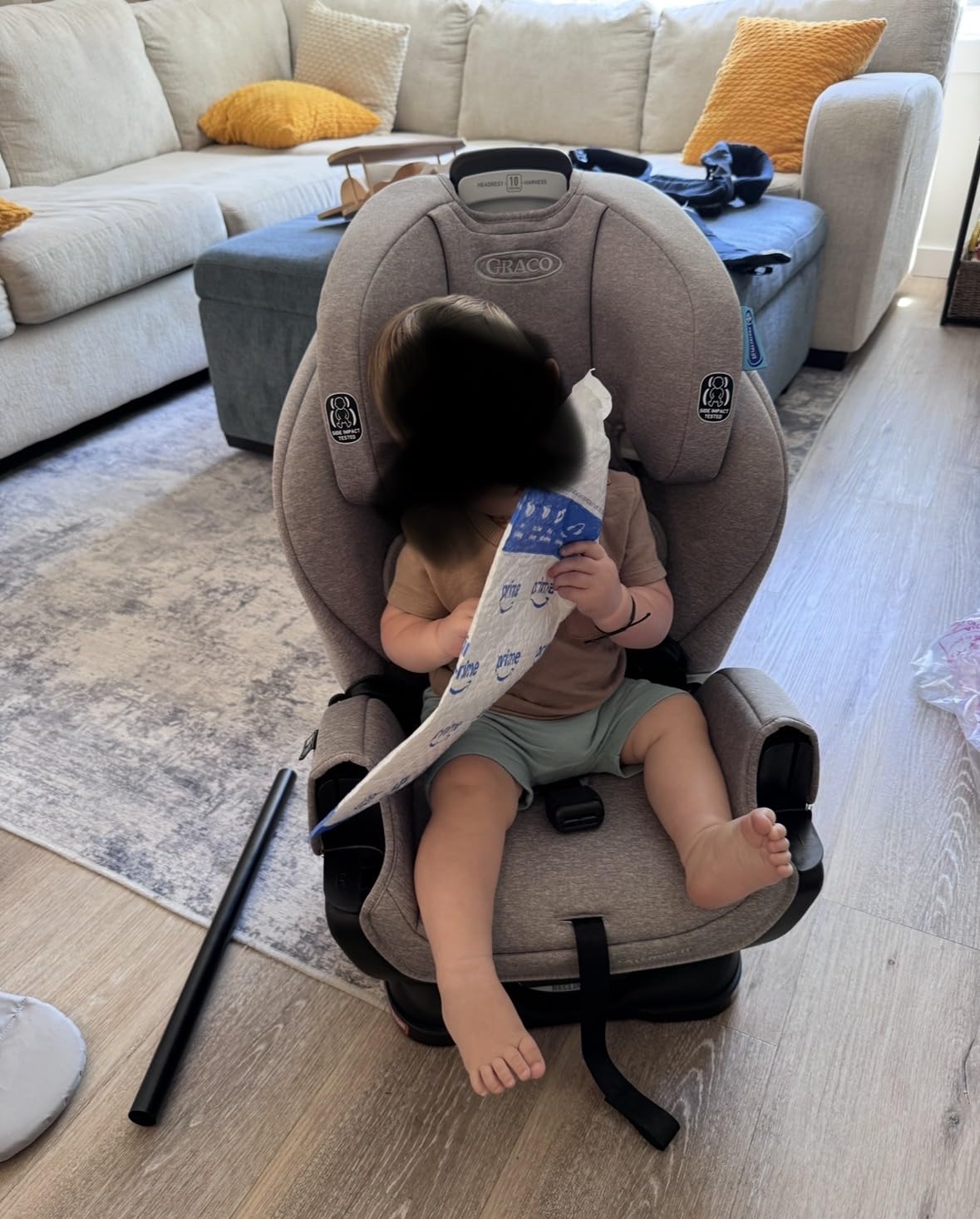
The number that justifies this seat is 5 inches. The Extend2Fit carries a 4-position adjustable extension panel that adds up to that much extra legroom, which is what allows it to keep a child rear-facing all the way to 50 pounds rather than at 40. If your plan is to stay rear-facing as long as the American Academy of Pediatrics recommends, that panel is the whole reason to spend the extra money over a standard 2-in-1.
Behind the panel, the seat does the ordinary things well. The Simply Safe Adjust harness moves the headrest and the harness straps together in one motion, so daily adjustments take seconds rather than a rethreading session. Installation is straightforward, with clear instructions, and at under 20 pounds the seat is light enough to carry between two vehicles without a fight.
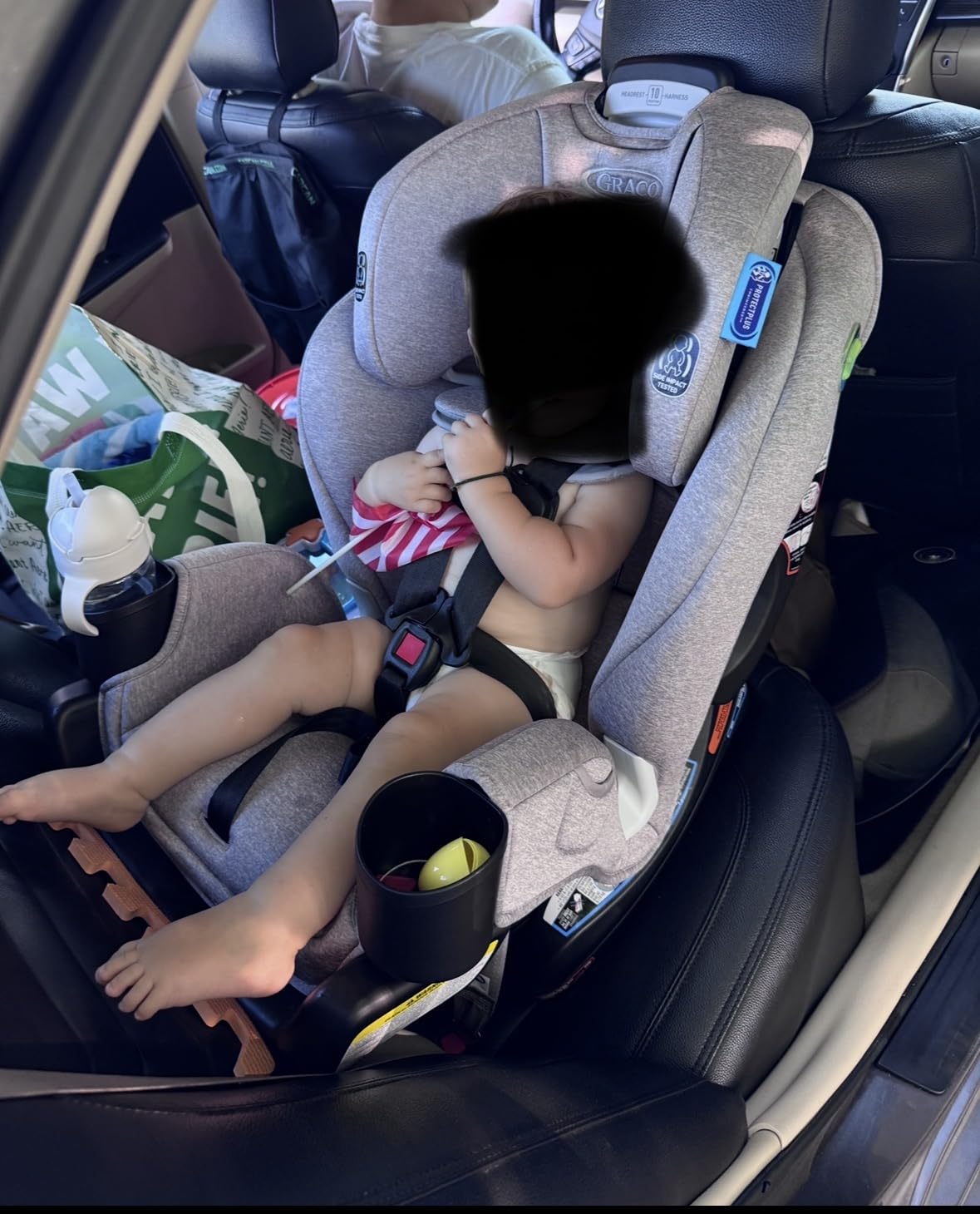
In our testing the seat installed rear-facing in the back row of a midsize sedan without pushing the front passenger seat forward at all, which is not true of most extended convertibles. The recline indicator is easy to read at a glance, and once the panel is extended the shell stays flat rather than angling upward, so a long nap stays a long nap. Parents on r/beyondthebump describe it as a CPST favourite specifically for extended rear-facing, and that sentiment repeats often enough that we agree with it.
The honest drawback is width. This is not a slim seat, and it will not combine with two others across a back row. The second is cleaning: the covers have to be substantially disassembled to get them out, and the area around the cup holders catches crumbs. If you have two children and a narrow back bench, the SlimFit later in this guide is the better purchase.
How long you can stay rear-facing in it
Rear-facing runs from 4 pounds to 50 pounds, with a 4-position extension panel that you raise as your child’s legs outgrow the shell. Most families set the extension once around the 30 to 35 pound mark and then forget about it, which is the intended behaviour.
Height matters more than weight in the later stages. Check the seat’s height indicator lines at the child’s head and shoulders, and treat the top line as a hard stop even if your child is still under 50 pounds.
Who should skip the Extend2Fit
Skip it if you need three seats across, or if your back seat is a deeply sculpted bench where a wide shell cannot sit flat. It is also the wrong call if your child is a tall toddler already near the top of the forward-facing range, since the harness does not extend past 65 pounds forward-facing.
Anyone moving the seat between two cars on a weekly basis will find the weight manageable, but anyone hauling it through an airport will want something lighter.
2. Safety 1st Grow and Go All-in-One – Best Value Across Three Stages
Safety 1st Grow and Go All-in-One Convertible Car Seat, Black Phantom
Rear-facing 5-40 lb
Forward-facing 30-65 lb
Booster 40-100 lb
QuickFit harness
Pros
- Covers three usable stages in one seat
- QuickFit harness makes daily changes fast
- Seat pad snaps off for machine washing
- Installs with belt or anchors for easy transfers
Cons
- Bulky footprint in a tight back seat
- Removable baby pillows are an extra piece to track
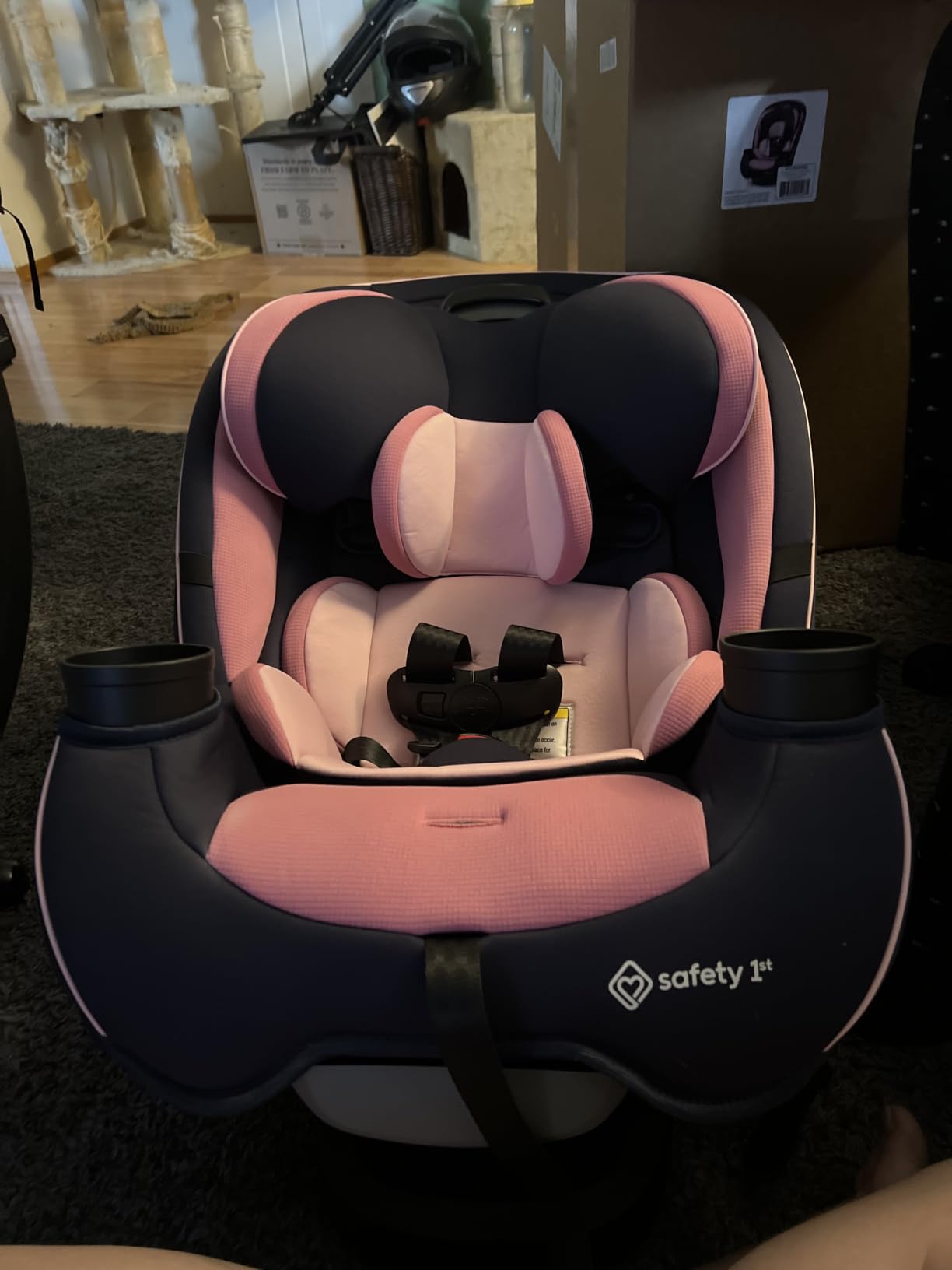
Three modes, one seat, and a 4.7 rating across more than 35,000 reviews is a difficult combination to argue with. The Grow and Go runs rear-facing from 5 to 40 pounds and 19 to 40 inches, forward-facing with a harness from 30 to 65 pounds and 34.4 to 49 inches, then converts to a belt-positioning booster for 40 to 100 pounds and 43.4 to 52 inches.
The QuickFit harness is the feature we used most. It tightens and loosens in a single pull without taking straps out of the shell, which matters far more than it sounds when you are doing it in a parking lot in the rain. The seat pad snaps out and goes straight into a washer and dryer, and both cup holders are dishwasher-safe, so cleanup is genuinely low-effort for a seat that will absorb a decade of spills.
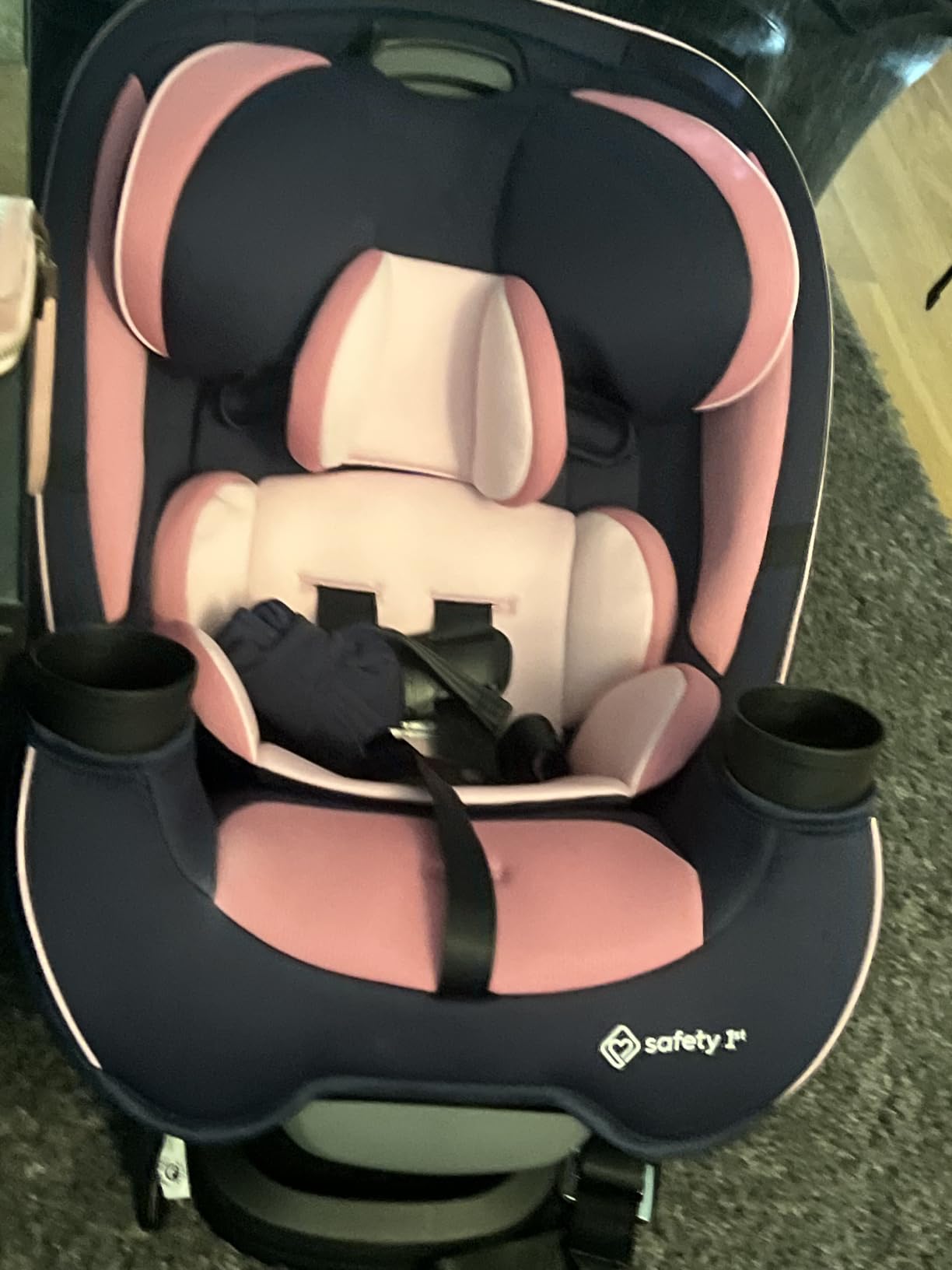
Installation accepts either the vehicle seat belt or the lower anchors, which makes it a good seat for a two-car household. In our back-row testing it installed flat in the outboard position of a compact sedan with a modest push on the front seat, and the 3-position recline gave enough range to hit a proper angle rear-facing without a rolled towel.
The catch is footprint. Parents fitting multiple children in one row flag the width as the reason it does not work for them, and we agree. There is also the set of removable Grow-With-Me baby pillows, which are genuinely comfortable for the first year but become another loose piece in your garage once your child outgrows them.
Whether it covers the full booster stage
The booster stage runs from 40 to 100 pounds with a 43.4 to 52 inch height range, which is the standard envelope for a high-back belt-positioning booster. It does not include a backless booster, so you will be replacing the seat when your child is ready for one.
Measure your child’s shoulders against the headrest before you assume the booster mode is reachable. Plenty of families who bought this seat three-stage still end up buying a backless booster a year earlier than expected.
Who should skip the Grow and Go
Skip it if you are installing three seats across, or if your vehicle has a shallow back seat where a bulky shell will not sit flat. It is also a poor fit for a child who is already tall for their weight, since the forward-facing harness tops out at 65 pounds.
Buy the 4Ever DLX instead if you want to remove a seat purchase entirely, because that model adds a backless stage out to 120 pounds.
3. Diono Radian 3R 3-in-1 Convertible Car Seat – Best for Three Across
Diono Radian 3R, 3-in-1 Convertible Car Seat, Rear Facing & Forward Facing, 10 Years 1 Car Seat, Slim Fit 3 Across, Jet Black
4 modes from 5-120 lb
Rear-facing to 50 lb
Slim 3-across profile
FAA approved
Pros
- Genuinely fits three across a sedan or compact SUV
- Reinforced steel core shell feels solid after a collision
- One seat from birth through booster
- Cover removes easily and folds flat for travel
Cons
- Very heavy
- easy to misuse the mode-dependent configurations
- Steep rear-facing recline can demand front-seat movement
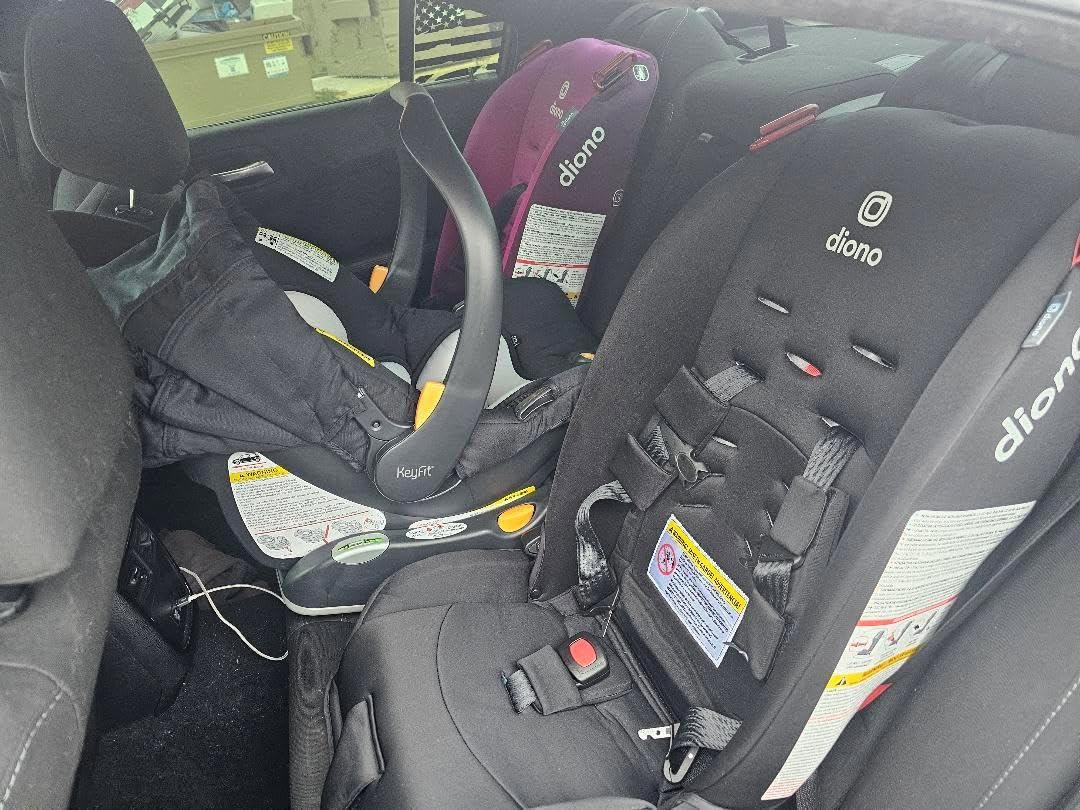
Only two real contenders in this group can go three across a back row without arguments, and this is one of them. The Radian 3R is engineered on a slim profile with a reinforced automotive-grade high-strength steel core shell, which is unusual: most seats in this category use injection-moulded plastic, and the steel here is both the durability story and the reason the seat is heavy.
The range is the widest of anything we tested. Four modes cover 5 to 120 pounds: rear-facing harness, forward-facing harness, high-back booster and backless booster, with rear-facing capability held to 50 pounds. Owners treat it as roughly a 10-year, one-seat purchase, and the ComfortPlus memory foam is included rather than sold as an accessory.
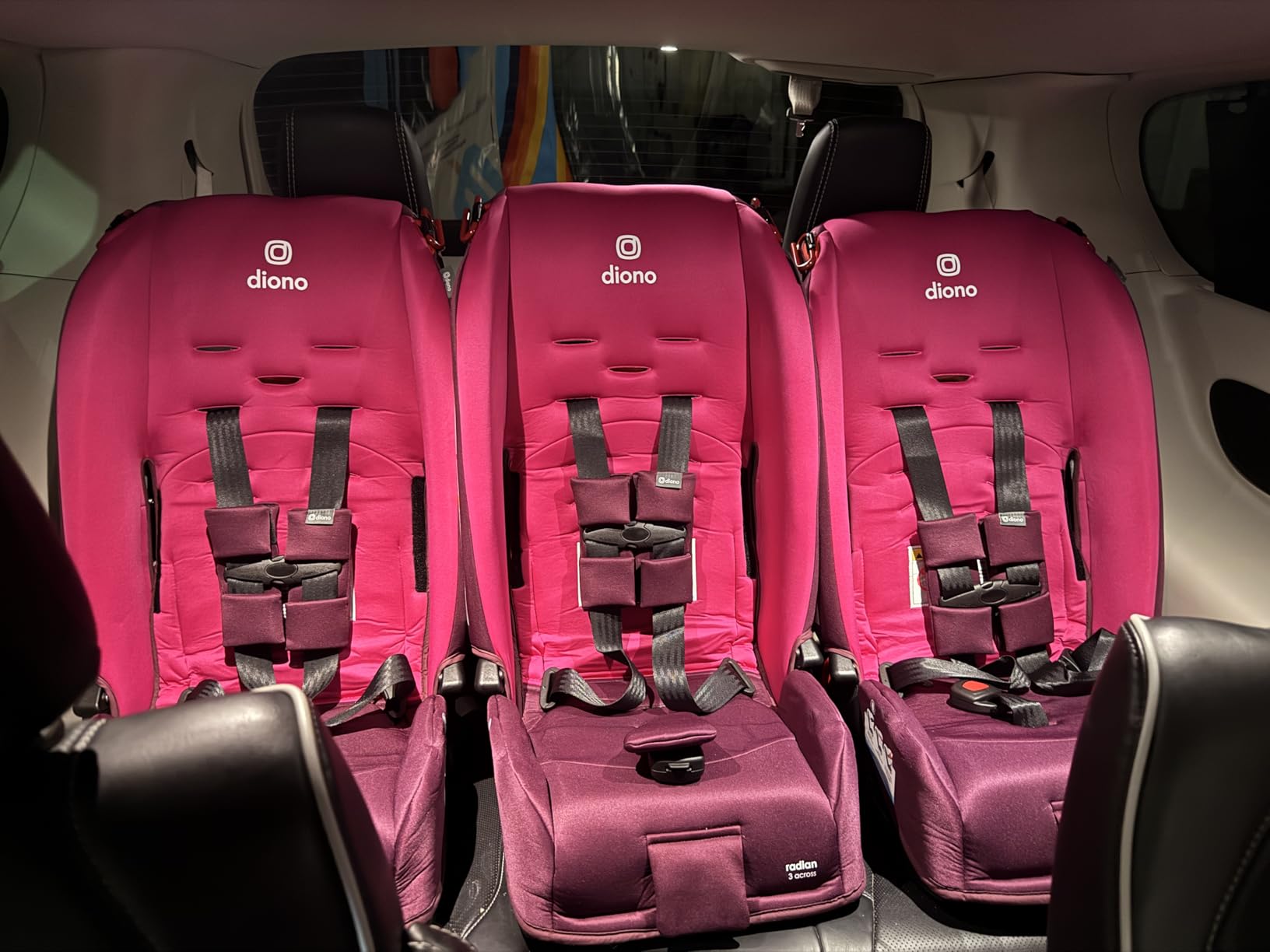
It folds flat, and it is FAA approved for airline use, so it works as a travel seat as well as a car seat. Our three-across test in a midsize sedan produced a workable fit with two narrower seats beside it, which is the scenario most families are actually trying to solve. Repeat buyers in owner reviews frequently mention buying a second one for a grandparent’s car, which tells you how much the single-seat longevity appeals to multi-car households.
Now the difficult part, because this seat has real sharp edges. The mode switching depends on facing direction and child weight, and parents report that it is easy to configure incorrectly if you skip the manual. The weight makes moving it between vehicles a genuine effort rather than a one-hand lift. The rear-facing recline is steep, and in some vehicles it demands sliding the front seat well forward.
Fit rules for the center position
In the center position, a fixed vehicle headrest can restrict the installation and in some configurations the seat can only be used rear-facing. Check your specific vehicle’s headrest before committing to a centre install rather than an outboard one.
Because the configurations vary by mode, we strongly recommend a certified Child Passenger Safety Technician check after the first install. Owner consensus in the reviews makes the same recommendation.
Who should skip the Radian 3R
Skip it if you move your child between vehicles daily or carry a seat through airports regularly; the weight is the single most repeated complaint. It is also the wrong choice for a newborn who needs a very flat rear-facing recline out of the box.
If you only need one seat and your back row is roomy, the Extend2Fit is lighter, simpler and has far fewer ways to misconfigure it.
4. Baby Trend Cover Me 4-in-1 – Best Built for Sun Protection
Baby Trend Cover Me™ 4-in-1 Convertible Car Seat
4-in-1 from 4-100 lb
18.25 inch width
UPF 50+ canopy
Zero-recline-radius base
Pros
- Integrated UPF 50+ canopy with flip-out side visors
- Zero-recline-radius base preserves front-seat legroom
- No-rethread harness with integrated headrest
- Fits three across in most vehicles at 18.25 inches
Cons
- Canopy and extra padding add bulk
- Plenty of fabric and seams to clean after blowouts
Almost no convertible car seat has a canopy, which is why the Cover Me stands apart. The integrated adjustable canopy carries UPF 50+ sun protection fabric and pairs with flip-out side visors, so you can block direct sun from the front and the side of the seat. For families in hot climates who dread the late-afternoon drive home, reviewers single this out as the reason they bought the seat in the first place.
The second differentiator is the base. A zero-recline-radius base with three positions, plus two extra forward-facing recline positions and an integrated recline flip foot, keeps the shell flatter than a conventional base and preserves front-seat legroom. In our testing it made the smallest dent in the back of the front passenger seat of any extended convertible here.
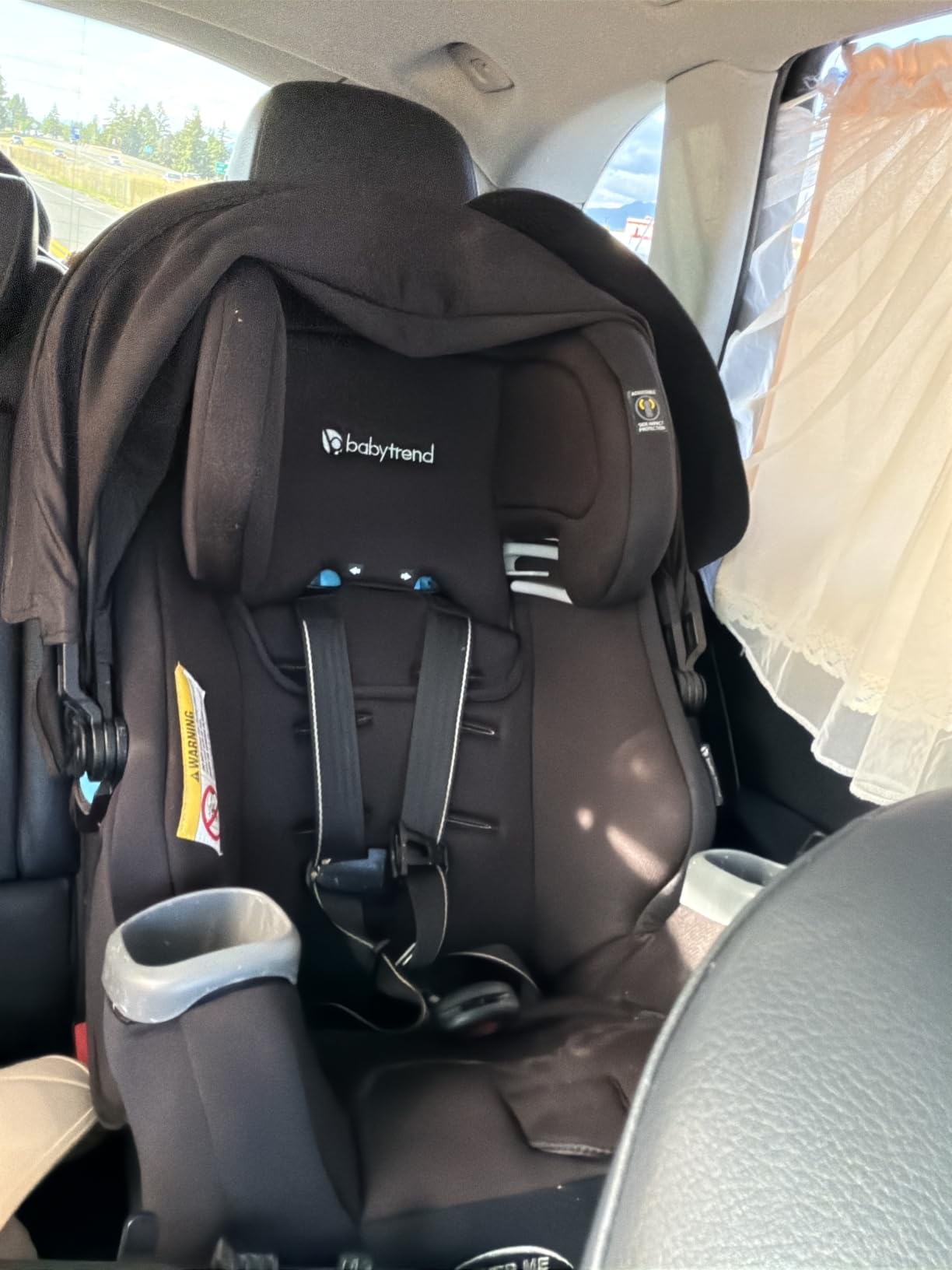
It is also a genuine 4-in-1. The seating system covers rear-facing infant from 4 to 18 pounds, rear-facing toddler from 18 to 40 pounds, forward-facing harness from 30 to 65 pounds, and belt-positioning booster from 40 to 100 pounds. At 18.25 inches at its widest it fits three children across in most vehicles, and the super deep side wings handle side-impact protection.
Against that, the seat is fabric-heavy. The polyester build plus the canopy plus the extra padding makes this the bulkiest-looking seat in the group, and after a bottle blowout you will be cleaning more seams than any of the plainer designs. Comfort is a real strength; so is mess.

Whether the canopy works in an airplane seat
The canopy does not make this seat airline-friendly. It is not marketed as FAA approved, and at its width it is not the seat you would choose for a narrow cabin row. Buy it for the car, not the plane.
If flying is a regular part of your year, look at the Ellaris or the Radian 3R instead, both of which are built for travel first.
Who should skip the Cover Me
Skip it if the amount of fabric is a deal blocker, or if your child is a heavy eater and you already dread washing car seat covers. It is also not the seat for a rear-facing newborn who needs a very flat angle without help, since the base positions still need adjusting.
Choose the SlimFit instead if 3-across is your priority and the canopy is not.
5. Maxi-Cosi Pria All-in-One – Best for Fabric and One-Handed Adjustment
Maxi-Cosi Pria All-in-One Convertible Car Seat, Infant to Toddler Car Seat, Easy-Install Harness, Machine-Washable Cover, 5-100 lbs, SeaDrift
Rear-facing 5-40 lb
Forward-facing 30-65 lb
Booster 40-100 lb
3 recline positions
Pros
- One-handed QuikFit headrest and harness adjustment
- PureCosi fabrics with no added fire retardant treatment
- Machine-washable and dryer-safe cover
- Removable infant pillows
Cons
- Lowest rated in this lineup
- Premium pricing for a 3-stage seat
- Fit varies by child
The distinguishing spec is the QuikFit system, an integrated headrest and harness that adjust together with one hand. In practice it is the fastest daily adjustment in this group, because you can raise the harness to the child’s shoulders and tighten the straps in a single motion without taking a strap out of the shell.
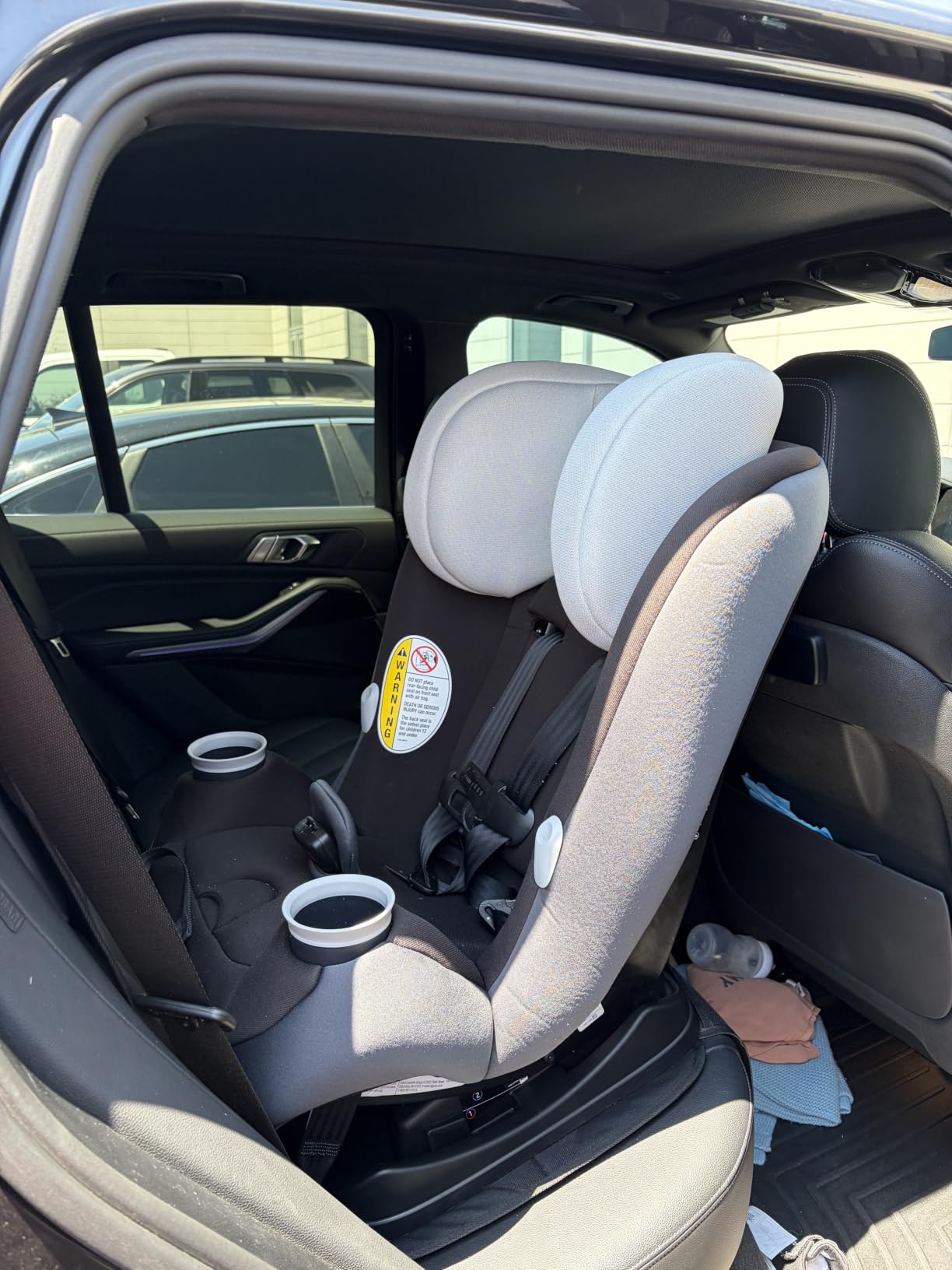
Material quality is the other draw. The PureCosi fabrics are made without added fire retardant treatment, and the Ecocare fabric is 100 percent recycled from plastic bottles. The cover is machine-washable and dryer-safe, both cup holders are removable and dishwasher-safe, and the LATCH connectors are one-click. Three recline positions through the ReclineFit system gave us enough range to settle the angle in two different vehicles without a towel hack.

The stage coverage is standard: rear-facing 5 to 40 pounds and 19 to 40 inches, forward-facing 30 to 65 pounds and 34.4 to 49 inches, belt-positioning booster 40 to 100 pounds and 43.4 to 52 inches. Plush removable infant pillows come out as the child grows, and the seat meets the federal side impact standard.
Here is the honest part. At a 4.6 rating with more than 5,400 reviews, this seat carries the largest share of one and two-star feedback in the lineup, at roughly 4 percent one-star. Buyers also point out that the price sits at the higher end for a three-stage seat, and that real fit varies child to child, so not every child fills the listed height and weight ranges. Most owners still describe it as comfortable and well built.
How the recline positions behave in practice
Three positions are enough to reach a correct rear-facing angle in most sedans and SUVs, and unlike foam-trim methods you can ratchet the seat back out once your child is big enough to sit more upright. That makes it a good fit for children who outgrow a deep recline early.
Check the level indicator before you drive, not after, because the indicator reads differently once the child is strapped in.
Who should skip the Pria
Skip it if you are buying on rating evidence alone and want the most bulletproof review record in the group, because this is the lowest rated pick here. It is also the wrong pick for a family on a strict budget, since two seats in this roundup sit well below it.
If you care more about a slim profile than fabric feel, the SlimFit or the Radian 3R are the stronger fits.
6. Graco 4Ever DLX 4-in-1 – Best for Buying One Seat and Done
Graco 4Ever DLX 4-in-1 Convertible Car Seat, Charlie
Rear-facing 4-40 lb
Forward-facing 26.5-65 lb
Backless booster 40-120 lb
10 headrest positions
Pros
- Only pick here with a backless booster stage to 120 lb
- 10 headrest and 6 recline positions give the widest fit range
- No-rethread harness moves headrest and harness together
- ProtectPlus side and frontal impact engineering
Cons
- Most expensive convertible seat in this group
- Full-featured size works against small vehicles and 3-across
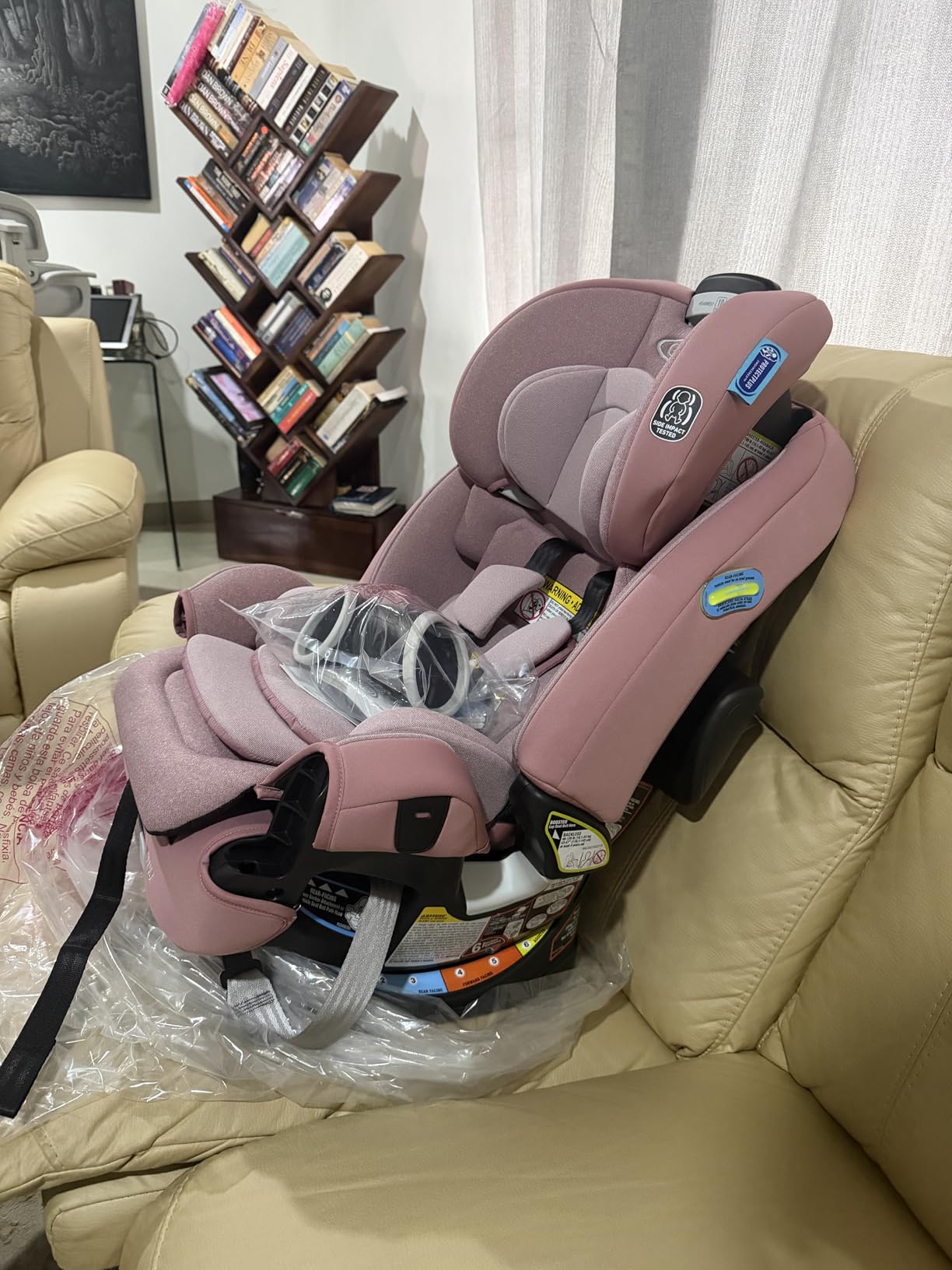
The 4-in-1 mode set is what earns this seat its place. It runs rear-facing with a harness from 4 to 40 pounds, forward-facing with a harness from 26.5 to 65 pounds, then a high-back booster from 40 to 100 pounds and a backless booster from 40 to 120 pounds. No other seat in this roundup carries a backless stage, which is the difference between buying one seat for the next decade and buying two.
Fit adjustment is the widest available here. Ten headrest positions and six recline positions mean the seat can follow a child from a newborn to a 120 pound booster without a second purchase, and the Simply Safe Adjust harness moves the headrest and harness together in one motion rather than requiring rethreading. The ProtectPlus engineering covers both side and frontal impact testing.

Owner sentiment treats this as the buy-once option, and the share of five-star reviews is the highest of any seat we looked at. At 4.8 stars from more than 2,500 reviews, the review volume is lower than the Extend2Fit’s, so you are relying on a smaller body of owner experience.
The cost is size and weight. This is the largest, heaviest and most expensive seat in the group, and parents who fitted it in a small sedan report the front passenger losing real legroom. It is a poor choice for a three-across layout.
What the backless booster stage actually saves
A backless booster mode lets you keep the same seat from roughly age 6 until your child meets the vehicle’s seat belt fit test, often around 10. That removes one purchase and one reinstall from your timeline, and it is the single clearest reason to spend more here.
Use the high-back mode until your child is ready, since the added head support is still safer for younger boosters.
Who should skip the 4Ever DLX
Skip it if your vehicle has a tight back seat, if you need three across, or if you expect to hand the seat down to a second family after a year. Everything it adds is size, and size is exactly what you give up.
The Extend2Fit delivers the better extended rear-facing story for far less bulk if you do not plan to use a backless booster.
7. Graco SlimFit 3-in-1 – Best for Small Cars and Sculpted Benches
Graco Slimfit 3-in-1 Convertible Car Seat, Jarret
Rear-facing 5-40 lb
Forward-facing 26.5-65 lb
10 percent narrower
Highback booster 40-100 lb
Pros
- Slim enough for three across or sculpted rear benches
- Lightweight and easy to carry through an airport
- Installation stays secure without sliding
- No-rethread harness and headrest
- Covers remove and clean easily
Cons
- Side openings let air conditioning blow onto legs
- Dense padding runs warm in hot weather
- Rear-facing recline may need help for a newborn
The 10 percent narrower design comes from dual integrated cup holders that rotate out of the way rather than sticking out from the shell. That is the whole trick, and it is why this seat fits three across in a sedan and sits properly in the deeply sculpted rear bench of a sports car, two scenarios that defeat most convertible seats.
It is also light. Parents moving a seat between two cars, or carrying one through an airport, single this out as the deciding factor. The installation is straightforward, the anchors grip without the seat sliding, and the Simply Safe Adjust harness moves the headrest and harness together without rethreading. Ten headrest positions give a good fit range for a 3-in-1.
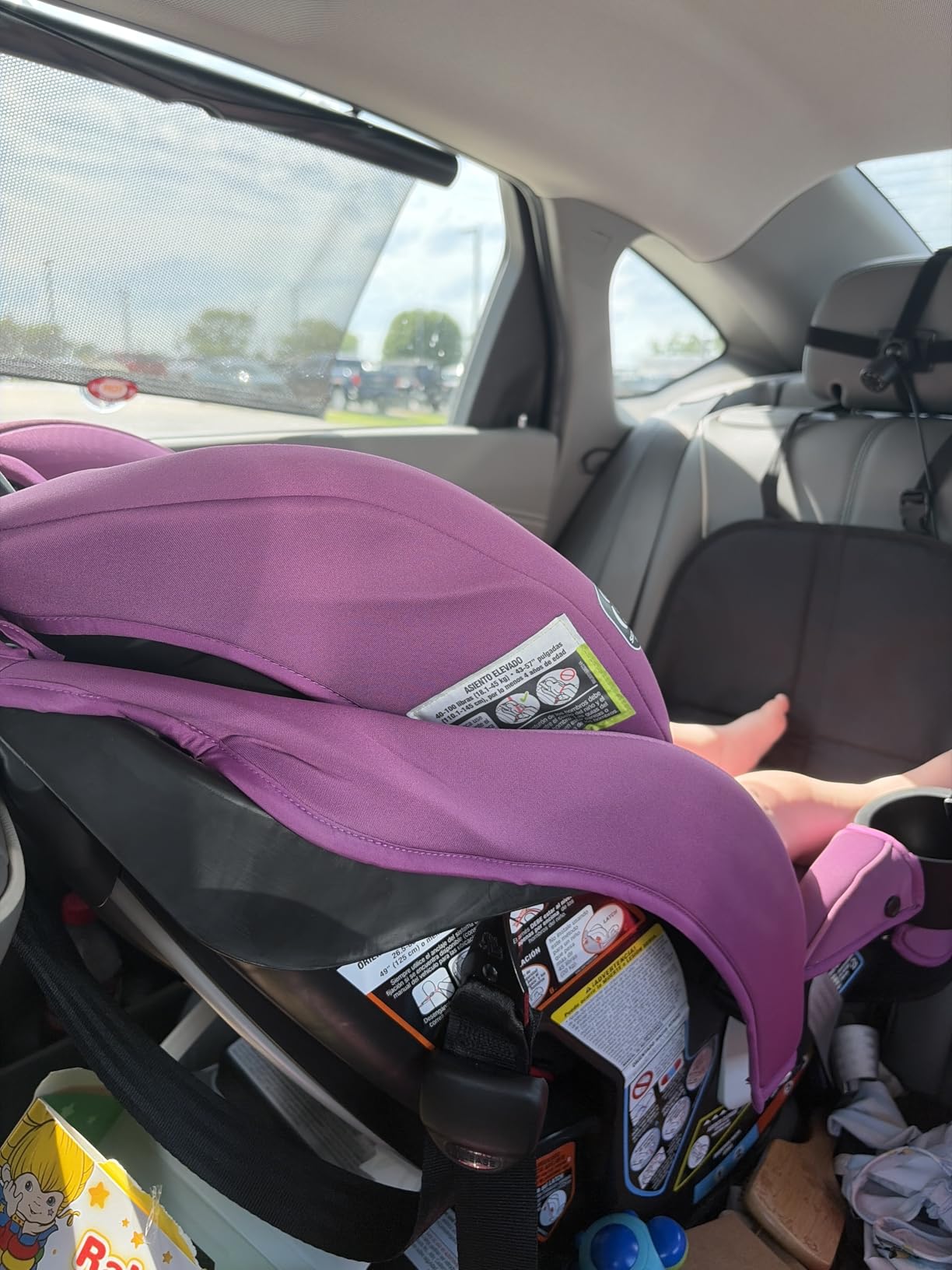
Stage coverage is rear-facing 5 to 40 pounds, forward-facing 26.5 to 65 pounds, then a high-back belt-positioning booster from 40 to 100 pounds. Travel owners note that the low weight pairs well with a standard car seat bag. The covers come off easily and clean well, and the rotating cup holders free up back seat space when nobody is holding a drink.
The honest complaints are comfort-related. Side openings let air conditioning blow directly onto a child’s legs, and the dense padding runs warm in hot weather. It is a practical seat, not a plush one. Parents also note that the rear-facing recline may not go far enough back for a newborn without a second pair of hands.
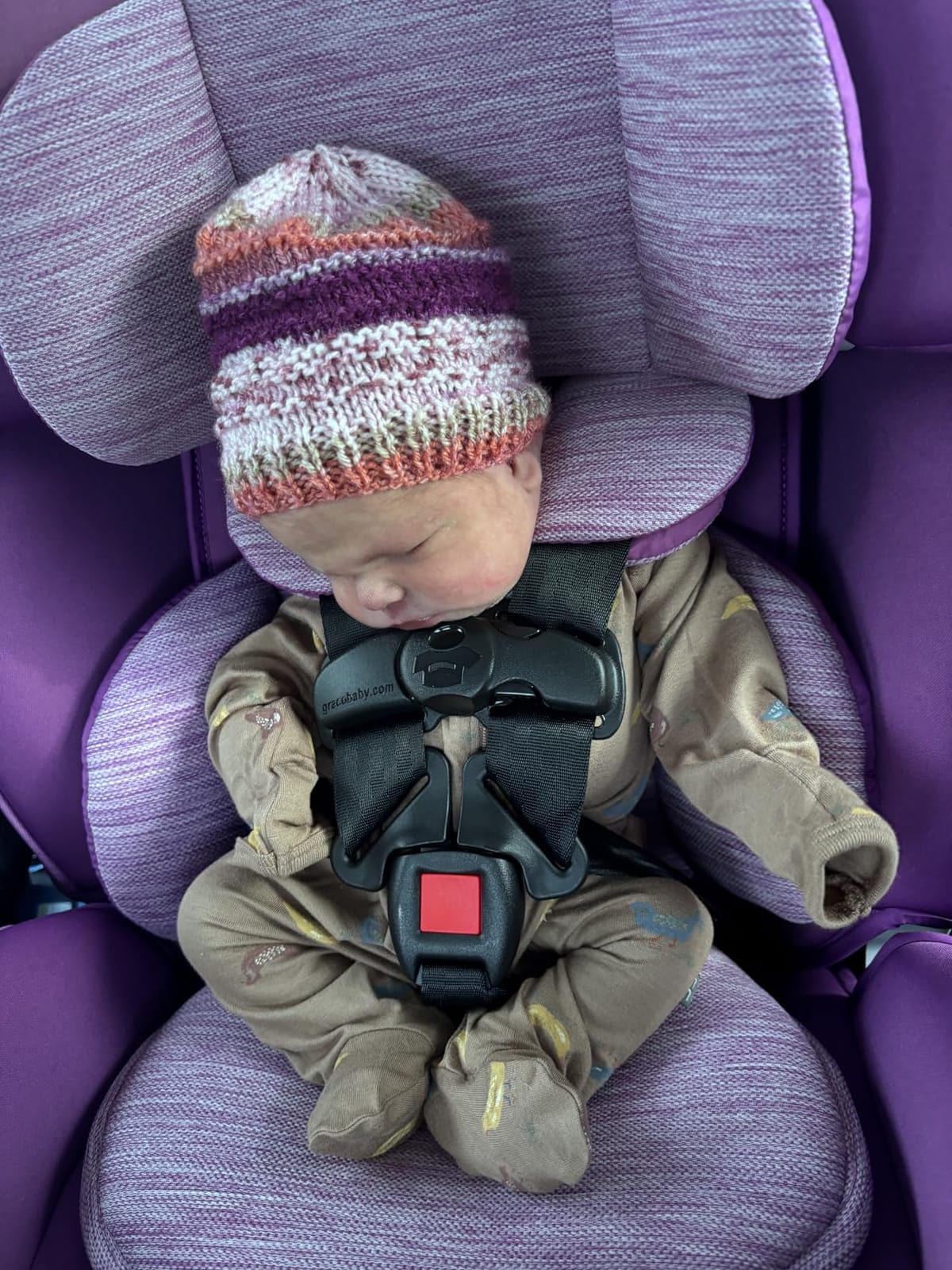
Whether it really fits three across
It does in a sedan or a compact SUV, and that is a genuine rarity at this feature level. You will still want to test it in your own vehicle before you rely on it, because sculpted bolsters and seat belt geometry vary widely even within one model year.
Measure the back row width and add the two neighbouring seat widths before you commit. Our method is in the buying guide below.
Who should skip the SlimFit
Skip it if you are buying a seat for a newborn and cannot manage the recline setup with a second person. It is also the wrong call for a child who is sensitive to cold air or heat, given the venting and padding feedback.
If premium fabric matters more than width, the Pria is the alternative; if raw durability matters more than either, the Radian 3R wins.
8. Safety 1st Ellaris 3-in-1 – Budget Pick for Lightweight Travel
Safety 1st Ellaris 3-in-1 Convertible Car Seat, Slim Fit Design, Rear & Forward-Facing, 5-Position Headrest, Travel-Friendly with Machine-Washable Seat Pad, Smokey Haze
Rear-facing 5-40 lb
Forward-facing 30-65 lb
5-position headrest
Airplane ready
Pros
- Lowest entry point in the group
- Lightweight and easy to move between vehicles
- 5-position headrest adjusts without rethreading
- Machine-washable and dryer-safe pad
Cons
- Wider than its slim-fit naming suggests
- Headrest has noticeably more play than Graco units
- Strap tension button is hard to reach at first
At 4.3 stars this is the lowest rated seat here, and we would rather say that plainly than hide it. What you get for the lowest entry point in the group is a competent 3-in-1: rear-facing infant from 5 to 30 pounds, rear-facing toddler from 30 to 40 pounds, and forward-facing with a harness from 30 to 65 pounds, with a 5-position adjustable headrest and harness.
It is lightweight and slim enough for travel, and it is marketed as airplane ready with a compact design, which makes it the practical pick for a family that flies more than it tailgates. The seat pad is machine-washable and dryer-safe, both cup holders are removable and dishwasher-safe, and the hook-style LATCH connectors make installation quick.

Budget buyers report being pleasantly surprised by the build and comfort, and the light weight is a real benefit for multi-car households. Our install was straightforward and buckling a child in was easy from the start, which is more than some seats in this list manage.
The critical reviews are consistent and worth repeating. Despite the slim-fit naming, the seat is wider than expected and will not replace a genuinely narrow three-across seat. The headrest feels wiggly, with more play than a Graco adjustable headrest, and the strap tension button is hard to reach until the fabric wears in. About 8 percent of reviews are one-star and 5 percent two-star.
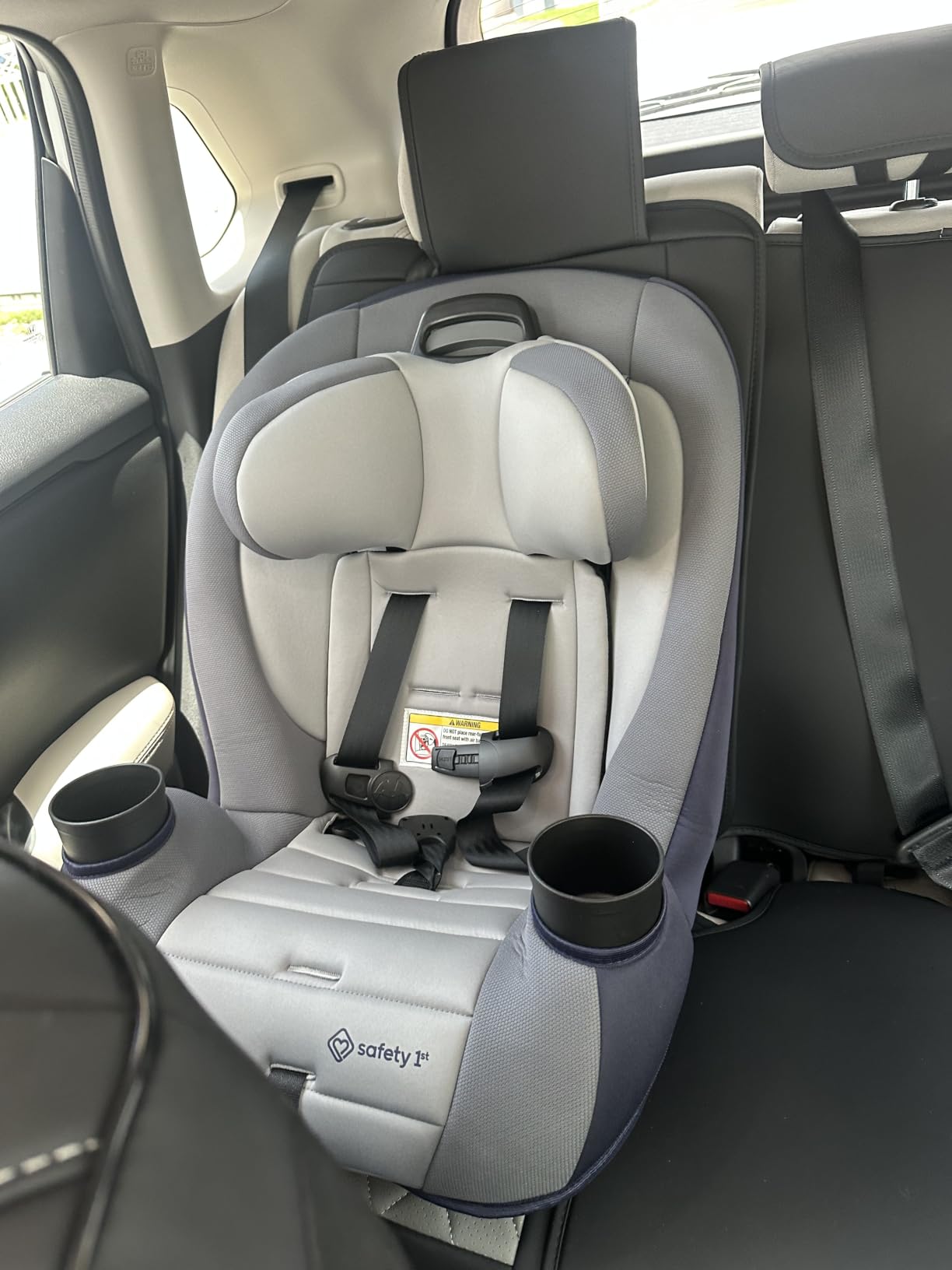
How it handles a growing child
The 5-position headrest covers a usable range, but it tops out at 65 pounds forward-facing with no booster stage at all. Plan on a second purchase when your child is ready for a belt-positioning booster.
If you would rather spend once, the 4Ever DLX covers rear-facing, forward-facing, high-back and backless stages in a single seat.
Who should skip the Ellaris
Skip it if headrest adjustability matters to you, if you need three across, or if you plan to keep the seat past the forward-facing harness stage. It is also not the choice for a tall toddler who will run out of harness height before 65 pounds.
The SlimFit is the step up if you want a similar light, compact footprint with a better headrest and three-across fit.
Buying Guide: How to Choose a Convertible Car Seat Without Regret
Convertible, all-in-one, or harness-to-booster: the decision rule
A convertible seat has two modes: rear-facing harness, then forward-facing harness. A 3-in-1 adds a belt-positioning booster as a third mode, which is where most families end up anyway. A 4-in-1 adds a backless booster, giving you the longest total runway at the cost of more bulk.
Choose a 2-in-1 if your child is a large baby who will move to forward-facing early. Choose a 3-in-1 as the default for most families. Choose a 4-in-1 only if you want to avoid a second purchase and your back seat has the room.
Do not confuse a belt-positioning booster with a child seat. A booster is a backrest and a belt guide, not a restraint with its own harness, and it is only safe once your child is ready for the vehicle’s seat belt.
Rear-facing limits and what the AAP actually recommends
Every seat in this roundup rear-faces to at least 40 pounds, and the Extend2Fit, the Radian 3R and the 4Ever DLX all reach 50. The American Academy of Pediatrics recommends keeping a child rear-facing until they reach the maximum height or weight limit of the specific seat, which on many of these models is well past age two and out to 50 pounds.
Height beats weight as a stopping point. Check the seat’s height indicator and treat the top line as a hard ceiling. When you do switch, the AAP and NHTSA both recommend keeping the child harnessed forward-facing until the maximum forward-facing harness limit rather than moving to a booster early.
LATCH, the seat belt, and the top tether
Lower anchors and tethers for children, usually called LATCH, connect the seat to dedicated anchor points in the bight of the rear bench. The vehicle seat belt is the alternative method, and a lockoff routes the belt through the shell to hold it tight. Most families use LATCH for convenience and the belt when the child is heavier or the anchors sit awkwardly.
Rule of thumb: once the combined weight of the seat and your child reaches roughly 65 pounds, check the seat manual because the manufacturer may specify the vehicle belt instead. LATCH is not required to use a top tether, but the top tether should always be used in forward-facing installs because it reduces rotation in a crash.
How to measure your back seat before you buy
Vehicle-specific fit is the single biggest source of regret in this category, and generic width numbers rarely settle it. Take a tape measure and do these five checks in your driveway before you commit to anything.
1. Back row width. Measure the flat bench width from one seat belt buckle to the other. To test three-across, add the widths of the three seats you intend to use. If that total exceeds the bench width, buy the two slim seats and one standard seat, not three standard ones.
2. Seat depth rear-facing. Measure front seat back to back seat back in your typical position. If it is tight, the shell will push the front passenger forward or force an upright, incorrect rear-facing angle. The Baby Trend’s zero-recline-radius base and the Grow and Go’s 3-position recline were the two that disturbed the front seat least in our testing.
3. Side bolster shape. Press the shell against the outboard bolster and check for a gap. Deeply sculpted benches, common in sports cars and many coupes, will not hold a full-width seat flat, which is where the SlimFit earns its place.
4. Anchor accessibility. Kneel in the back seat and confirm you can reach both lower anchors and the top tether anchor without contorting. If you cannot, plan on installing with the vehicle belt instead.
5. Reinstall in a real second car. If you share a seat between two vehicles, time the full install in both. Anything that takes more than a few minutes will stop happening, and a seat that is rarely installed is a seat that is rarely correct.
Where convertible car seats fall short
Convertible seats have real downsides, and buying one anyway without acknowledging them is how installs go wrong. The first is bulk: a shell with an extension panel and head wings is deep, and rear-facing it can cost the front passenger several inches of legroom.
The second is 3-across fit. Most convertibles will not combine across a back row, so families with two or more children either need a slim seat or a larger vehicle. The third is stroller compatibility: unlike an infant carrier, a convertible car seat does not click into most strollers, so you will be lifting the child out.
The fourth is harness height running out for tall toddlers who are already near the upper weight limit, a complaint that shows up repeatedly in parent discussions. The fifth is the one-time transition cost when a child outgrows an infant carrier early, because you may be buying a second seat sooner than planned. The sixth is cleaning: covers with more seams and more padding take longer to wash.
Recalls, expiration dates and used seats
Check the manufacturer’s model number against the NHTSA recall database before you buy, and again if you buy a used seat. Recalls are published by model and by date range, so a seat with a clean record can still be affected if production fell inside a window.
Every seat carries a manufacture date and an expiration date, usually six to ten years from manufacture. Find the label on the shell and add it to your own reminders. A seat past its expiration date has not been tested for the degraded foam and plastics that come with heat cycles in a parked car.
Used seats are broadly distrusted in parent communities for good reason. You cannot verify crash history, expiration, or whether labels and manuals are intact. Buy new unless a seat is demonstrably recent, complete, and inexpensive enough that the risk is acceptable to you.
Flying with a convertible seat
Two seats here are built with travel in mind. The Diono Radian 3R is FAA approved and folds flat, and the Ellaris is lightweight and marketed as airplane ready with a compact profile. Approved does not mean it will fit: airline cabin seats commonly run 17 to 18.5 inches wide, so measure before you fly and bring a gate-check plan.
On the aircraft you generally install with the vehicle seat belt, not lower anchors, since most planes have no anchor points. Bring the manual, because the belt path on a convertible is specific to the model.
Comfort and convenience specs worth paying for
Machine-washable and dryer-safe covers are the single most appreciated convenience feature in owner feedback, and they are worth more than most parents expect. Dishwasher-safe cupholders are small but constant wins, and a no-rethread harness is close to essential once your child is tall enough to need frequent adjustment.
Flame-resistant fabric without added chemicals is a growing purchase driver, and the Pria addresses it directly with PureCosi fabrics made without added fire retardant treatment. Canopies are rare in this category but genuinely useful for sun protection.
If you are also planning to refresh the rest of the cabin while you are in there, our guides to the best car stereos and the best car speakers cover the audio side, and we have tested the best car battery chargers for the parts that keep the whole thing running.
Frequently Asked Questions
What are the best car seats for convertible cars?
No specific car is required for any of these seats. What matters is your back seat shape, not whether the vehicle is a convertible. For a low-slung convertible with a shallow back seat, the Graco SlimFit or the Diono Radian 3R sit properly against sculpted bolsters where wider convertibles will not lie flat.
What are the downsides of convertible car seats?
The main ones are a bulky footprint that costs front-seat legroom rear-facing, poor three-across fit in most models, no stroller compatibility unlike an infant carrier, harness height that can run out for tall toddlers near the upper weight limit, more seams to clean, and a one-time transition cost when a child outgrows an infant seat early.
What is the number one safest car seat?
There is no number one. Every car seat sold in the US meets the same federal NHTSA standards, so the safest seat is the one that fits your child, installs correctly in your specific vehicle, and is used correctly every single time. A perfect seat installed badly is less safe than a basic seat installed well.
Can a toddler stay rear-facing after age 2?
Yes, and the American Academy of Pediatrics recommends it. Keep a child rear-facing until they reach the maximum height or weight limit of the specific seat, which on many convertibles is 40 to 50 pounds and often well past age two. Height is the limit that usually arrives first, so check the indicator lines on the shell.
When should I switch from an infant car seat to a convertible?
When your child outgrows the infant seat by height or weight, whichever comes first, not on a birthday. Most families also wait until the infant carrier is no longer comfortable and the child is sitting well, since an infant seat is not designed to carry a large baby. The convertible carries them from birth on many models.
When does a car seat expire and can I buy one used?
Seats typically expire six to ten years from the manufacture date printed on the shell, and heat damage accelerates the loss of foam and shell integrity. Used seats are broadly distrusted because crash history and expiration cannot be verified, and missing labels or manuals are common. Buy new, and check the model number against the NHTSA recall database.
The Best Convertible Car Seat for 2026 and Why
The Graco Extend2Fit is the best convertible car seat overall in 2026. Its 4-position extension panel adds up to 5 inches of legroom, it holds 50 pounds rear-facing, and the no-rethread harness moves headrest and straps together in a single motion, which is the combination we would want in our own back seat.
Match the other picks to your actual problem. The Safety 1st Grow and Go is the value choice across three stages, the Diono Radian 3R and Graco SlimFit solve three-across and small back seats, the Baby Trend Cover Me wins on sun protection, the Maxi-Cosi Pria on fabric and one-handed adjustment, the Graco 4Ever DLX if you want one seat through booster, and the Safety 1st Ellaris if a low entry point and travel weight come first.
Whatever you choose, measure your back seat before you buy, check the recall record, and get a certified Child Passenger Safety Technician to check your first install. Those three steps matter more than any ranking on this page.