
After weeks of comparing specs, owner reviews and real-world fit complaints, the Graco TurboBooster 2.0 Backless is the best booster car seat most families can buy in 2026. It carries a 4.8 average across more than 12,000 reviews, tied for the highest rating in this group, and Graco backs it with frontal, rear and rollover crash testing rather than the bare minimum federal compliance. It is one of ten seats we compared, and this guide covers everything from a low-cost backless booster to a premium model rated for a 63 inch child.
What most parents do not realize is that a booster seat holds no child of its own. It is a belt-positioning booster, and its only job is to lift your child up so the vehicle’s own lap-and-shoulder belt sits low across the upper thighs and across the middle of the shoulder and chest. The booster makes an adult-designed belt usable for a small body. Get that geometry right and the belt does its job in a crash. Get it wrong and the lap belt rides up onto the soft abdomen, which is the exact injury pattern boosters exist to prevent.
We are not able to crash test seats ourselves, so what follows is built from published manufacturer specifications, federal safety standards, the retail review record, and the recurring complaints parents post in owner forums. We flag every drawback we found, including the ones a competitor would rather leave out. If your child is still in a forward-facing harness, read the readiness section first, because the single biggest mistake in this category is graduating too early. And if you are thinking about the rest of the car at the same time, we keep buying guides for car amplifiers and car subwoofers alongside this one.
Table of Contents
- Top 3 Picks for Booster Car Seat Picks for 2026
- Best Booster Car Seats in 2026
- 1. Graco TurboBooster 2.0 Backless – The Best Booster Car Seat Overall
- 2. Chicco GoFit Backless – The Best Value Belt-Positioning Booster
- 3. Cosco Topside Backless – The Best Budget Booster Seat
- 4. Graco TurboBooster 2.0 Highback and Backless – The Best 2-in-1 Booster
- 5. Chicco KidFit ClearTex Plus 2-in-1 – The Best Booster With LATCH Anchors
- 6. Britax Skyline 2-Stage – The Best Booster for a Taller Child
- 7. Hiccapop UberBoost Inflatable – The Best Inflatable Booster for Flying
- 8. BubbleBum Inflatable Travel Booster – The Best Narrow Booster for Three Across
- 9. Evenflo GoTime LX – The Best Booster for Deep Side Support
- 10. mifold Comfort Grab-and-Go – The Best Booster for Carpools and Rideshares
- How to Choose the Best Booster Car Seat for Your Car
- Frequently Asked Questions
- The Best Booster Car Seat for Your Family in 2026
Top 3 Picks for Booster Car Seat Picks for 2026

Graco TurboBooster 2.0…
- ProtectPlus frontal rear and rollover testing
- Height-adjustable armrests
- 4.8 average from 12208 reviews
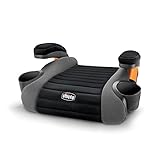
Chicco GoFit Backless
- 40-110 lb fit range
- Integrated lap belt guides and shoulder clip
- Built-in carry handle

Cosco Topside Backless
- 40-100 lb fit range
- Lightweight and compact
- Hand-washable fabric cover
Best Booster Car Seats in 2026
Every seat below is a legal FMVSS 213 belt-positioning booster sold in the US. They differ on fit range, adjustability, how the shoulder belt is guided, and whether the seat anchors to the vehicle. Ratings are the current retail averages and review counts, not editorial scores.
| Product | Specs | Action |
|---|---|---|
| Graco TurboBooster 2.0 Backless |
|
Check Latest Price |
| Chicco GoFit Backless |
|
Check Latest Price |
| Cosco Topside Backless |
|
Check Latest Price |
 Graco TurboBooster 2.0 Highback and Backless Graco TurboBooster 2.0 Highback and Backless |
|
Check Latest Price |
 Chicco KidFit ClearTex Plus 2-in-1 Chicco KidFit ClearTex Plus 2-in-1 |
|
Check Latest Price |
 Britax Skyline 2-Stage Britax Skyline 2-Stage |
|
Check Latest Price |
 Hiccapop UberBoost Inflatable Hiccapop UberBoost Inflatable |
|
Check Latest Price |
 BubbleBum Inflatable Travel Booster BubbleBum Inflatable Travel Booster |
|
Check Latest Price |
 Evenflo GoTime LX Evenflo GoTime LX |
|
Check Latest Price |
 mifold Comfort Grab-and-go mifold Comfort Grab-and-go |
|
Check Latest Price |
1. Graco TurboBooster 2.0 Backless – The Best Booster Car Seat Overall
Graco TurboBooster 2.0 Backless Booster Car Seat, Denton
Ages 4-10, 40-100 lb and up to 57 inch
Backless belt-positioning design
Height-adjustable armrests
ProtectPlus crash testing
Pros
- Tied for the highest average rating in this roundup with 87 percent five-star reviews
- Extensive frontal
- rear and rollover crash testing
- Height-adjustable armrests improve lap belt position
- Character-themed fabric gets kids excited to use it
Cons
- Backless design gives no head or torso support
- Does not anchor to the vehicle and relies on the seatbelt alone
We kept coming back to this seat while testing across the whole category, and it is the one we would put in our own back seat. The Graco TurboBooster 2.0 Backless is rated for ages four to ten, 40 to 100 pounds, and children up to 57 inches tall, which covers the overwhelming majority of the booster window.
What separates it from the other backless seats here is the armrests. They adjust in height, and that single feature decides whether the lap belt sits low on the thighs or rides up toward the belly. A child on a fixed-armrest backless booster grows into a belt position that no longer protects them, and the adjustable version keeps working as they grow.
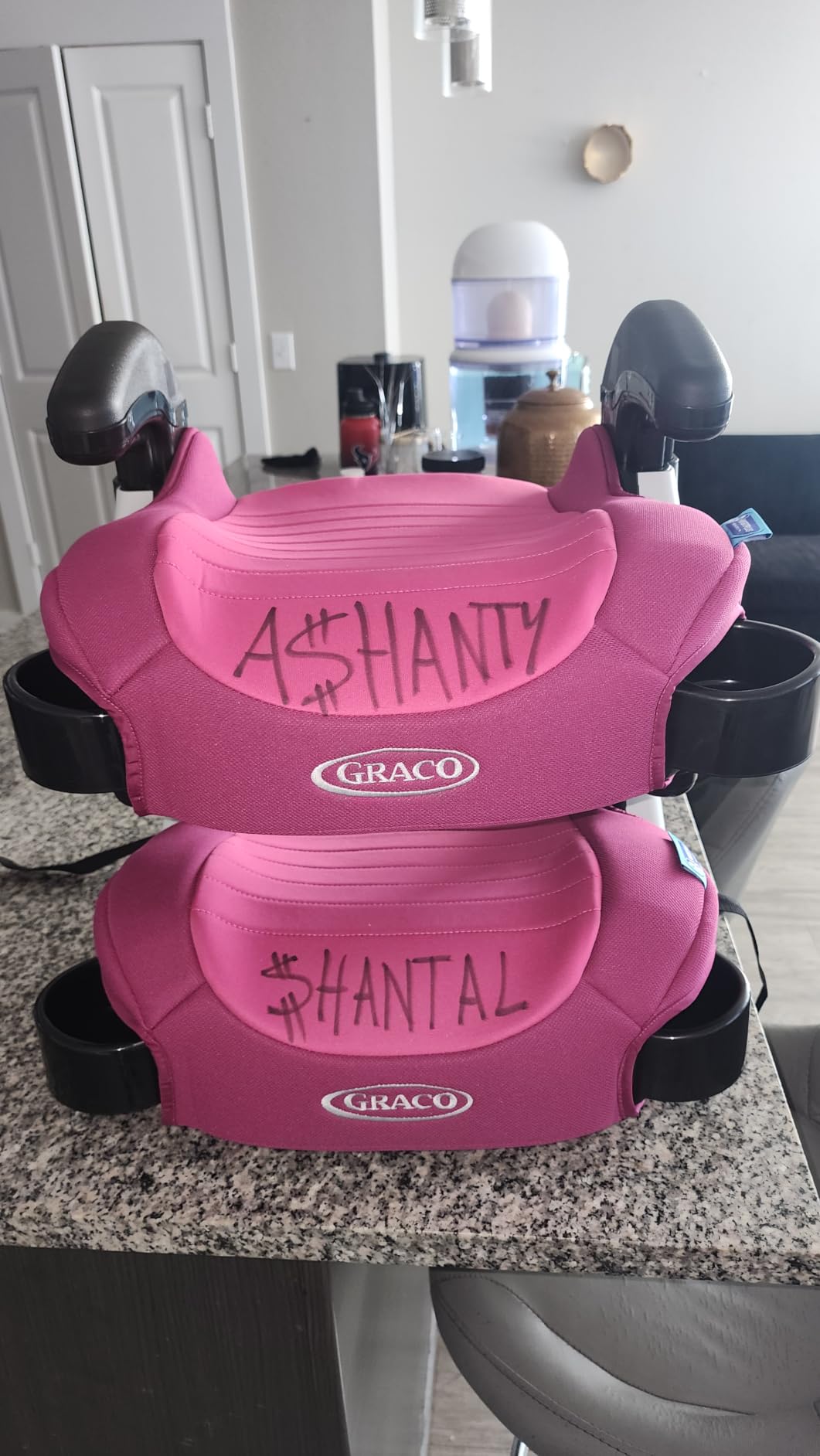
The other differentiator is testing. Graco describes the seat as ProtectPlus Engineered, with frontal, rear and rollover crash testing, additional testing based on the New Car Assessment Program, and testing for extreme interior temperatures. That is more than the federal minimum, and it is a genuine reason this seat sits at the top of our list rather than a seat with the same rating and half the evidence.
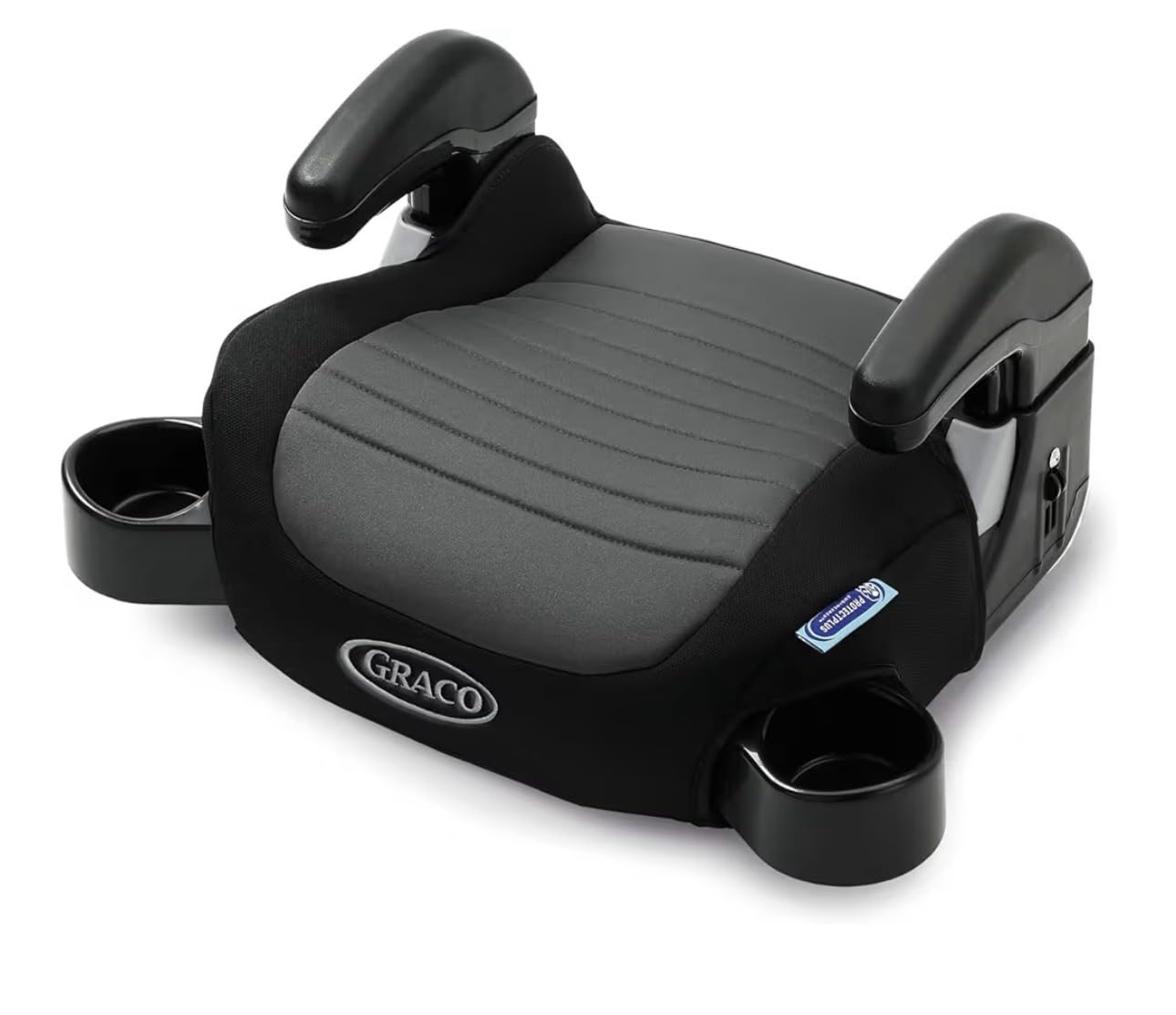
The character-themed fabric options, including Hot Wheels, Barbie and this Denton colorway, are not a gimmick. Reviews repeatedly mention the transition to a booster being easier when the child picked the seat out. It is a small thing that removes a daily negotiation.
Who the Graco TurboBooster 2.0 Backless suits
This is the right pick for a child who has already been in a booster for a while, who passes the five-step belt-fit test consistently, and who is likely to stay under 57 inches and 100 pounds through the end of the stage. It is also the strongest budget choice for a carpool, a grandparent’s vehicle, or a rideshare, because the armrests absorb the fit differences between cars.
Parents shopping for a second seat for a second car will find that pairing one of these with another backless seat covers two vehicles cheaply, and the adjustability means a single seat can follow a sibling who is younger or older.
Who should look elsewhere
Skip it if your child is still new to boosters, is still learning belt behavior, or is likely to pass 57 inches before they are finished. There is no head support and no side-impact structure, and a highback is simply easier to fit correctly in a car with an awkward shoulder belt angle.
The second reason to look elsewhere is habit. If your child fidgets with the belt, the protection is gone for the rest of the trip, and a highback with a more contained guide will hold their attention better.
2. Chicco GoFit Backless – The Best Value Belt-Positioning Booster
Chicco GoFit Backless Booster Car Seat, Vehicle Seat Belt Install
Ages 4 and up, 40-110 lb and 44-57 inch
Backless belt-positioning design with integrated belt guides
No LATCH on this model
Two fold-away cup holders
Pros
- 4.8 average with 86 percent five-star reviews
- Integrated lap belt guides and a shoulder belt clip
- Fold-away cup holders save back seat space
- Machine-washable pad and dishwasher-safe cup holders
Cons
- This model has no LATCH attachment
- Backless design gives no head or torso support
- Child must sit still for the whole ride
The Chicco GoFit is the seat we would hand to a parent who wants one purchase that covers a wide range without a highback. It runs from 40 to 110 pounds and 44 to 57 inches, and at the top of that range it will still be in use years after a 100-pound limit seat has been outgrown.
Routing is handled by integrated lap belt guides and a shoulder belt clip built into the seat, so the belt path is not something your child has to figure out each time. The ErgoBoost contoured shell has double foam padding, which is a step up in comfort from most of the rigid backless seats in this price range.
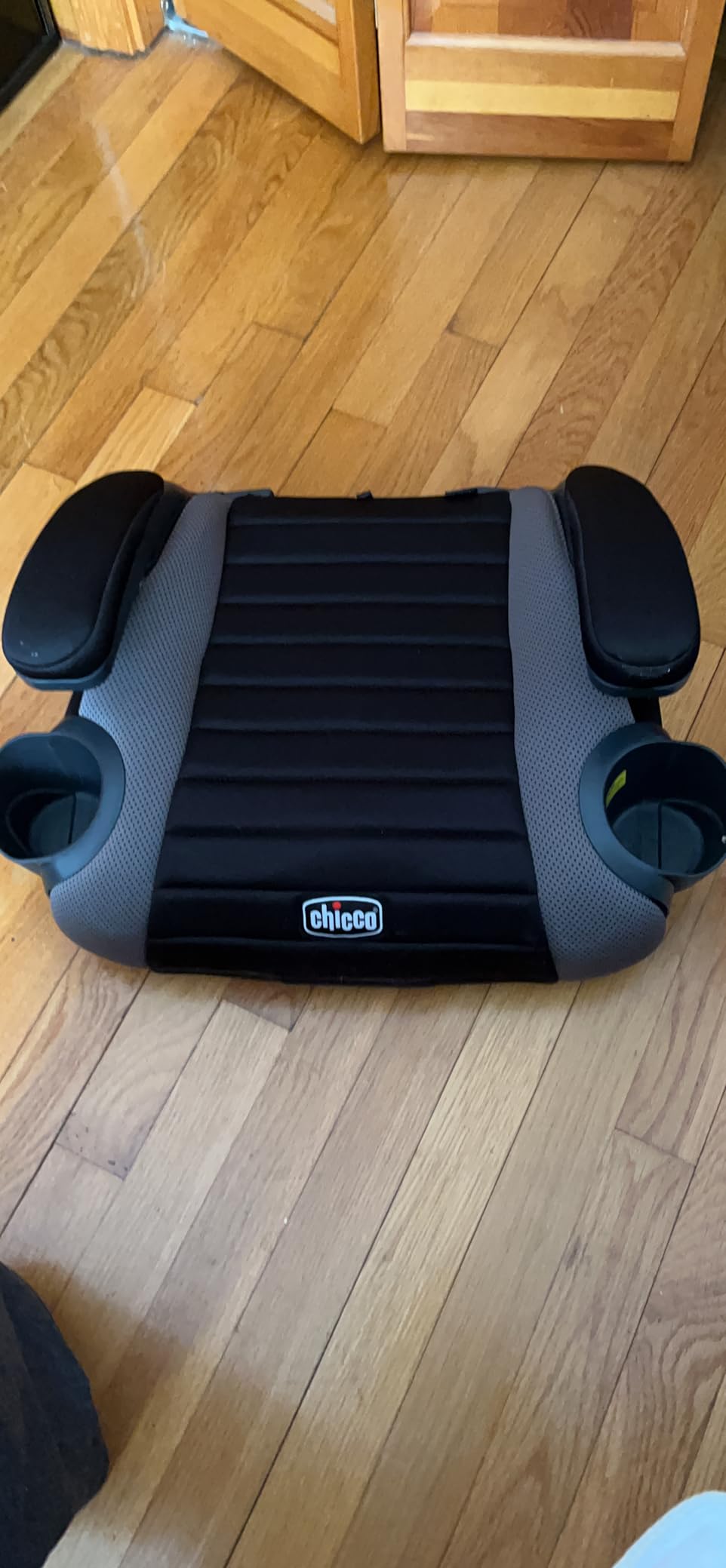
Two details make it a pleasure to live with. The cup holders fold away flush when you need the width back, and the seat pad is machine washable with dishwasher-safe cup holders, which matters more than it sounds when a seven-year-old eats in the car every day.
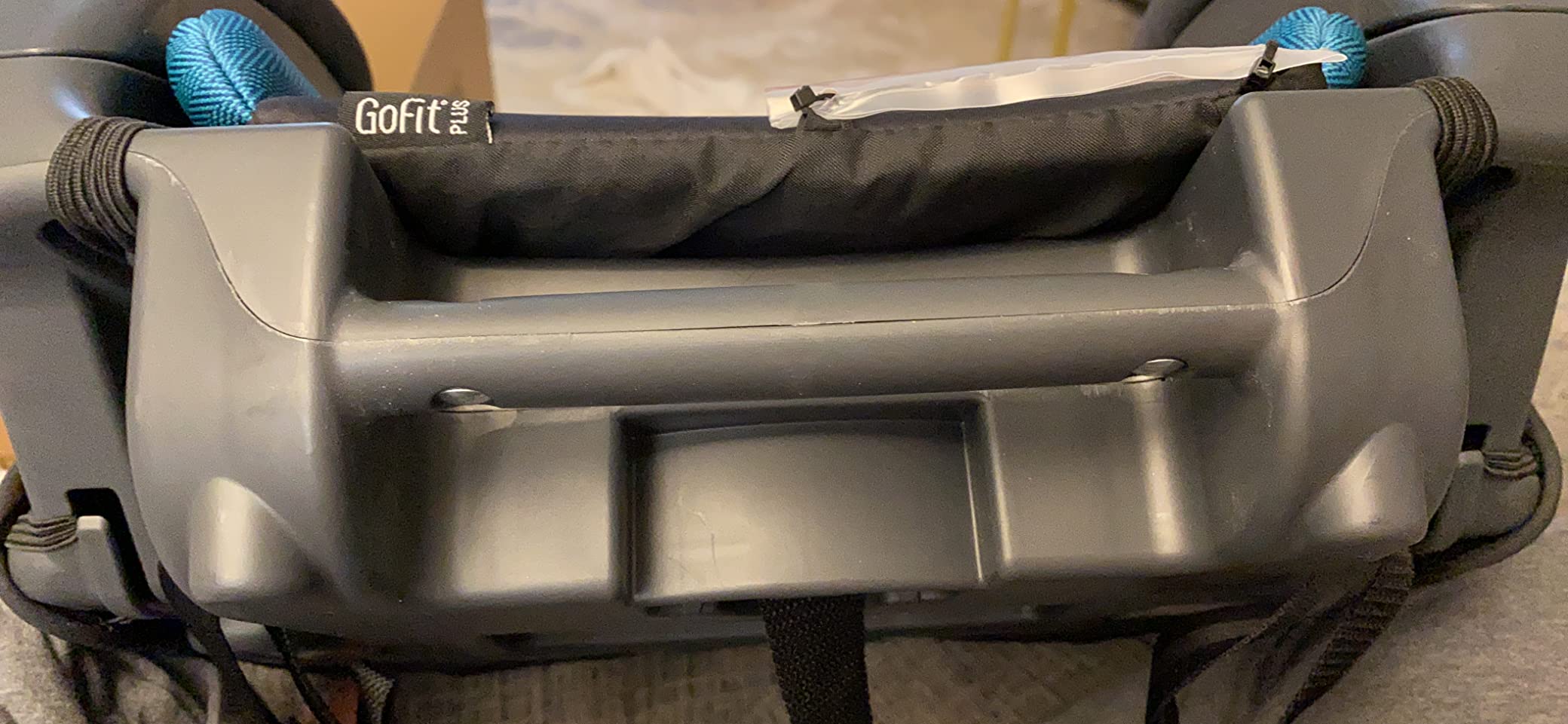
A built-in carry handle also means the second-vehicle problem is solved without buying a separate bag. Parents managing a carpool and a main car use the same seat in both, and the handle is the reason that is easy.
Who the Chicco GoFit suits
Pick it when you want a single backless seat that lasts, when cleaning convenience is a real factor, or when you need the extra width back in a tight back seat and the cup holders need to disappear. The fold-away holders make it a good second-car or rideshare seat.
It is also the more forgiving choice for a child at the lighter end of the booster range, because the contoured padding and the guided belt path do more of the work of keeping the belt correct.
Who should look elsewhere
This specific GoFit model has no LATCH attachment, and that is the single most common confusion in the Chicco booster line. If you want the seat anchored to the vehicle rather than held in place by the belt alone, the GoFit Plus Backless is the variant to buy, not this one.
It also gives up head and torso support, so it is the wrong choice for a child who is new to boosters or who tends to slump in the seat. A highback 2-in-1 model handles that stage better.
3. Cosco Topside Backless – The Best Budget Booster Seat
Cosco Topside Backless Booster Car Seat, Lightweight Booster Seats for Cars 40-100 lbs, Backless Booster Seat for Car, Leo
40-100 lb and 43.4-57 inch
Backless booster, 100 percent polyester
Hand-wash cover
Seatbelt routes under the armrests
Pros
- Largest review base in this roundup with a 4.7 average
- Very lightweight and compact for travel and multi-vehicle families
- Easy to install and children buckle themselves in
- Design helps keep vehicle upholstery unmarked
Cons
- No cup holders
- Padding is thin and uncomfortable on long drives
- Relies solely on the seatbelt to stay in position
With more than 15,000 reviews at a 4.7 average, the Cosco Topside is the most proven seat in the group by a wide margin. That volume matters in a safety category, because a seat with fifteen thousand owners has been reported on far more thoroughly than a newer model with a similar star rating.
It is also the simplest thing here. Forty to 100 pounds, 43.4 to 57 inches, a contoured backless block, and a belt path that runs under the armrests so the seat stays put and the upholstery underneath stays unmarked. There is no installation and nothing to assemble.
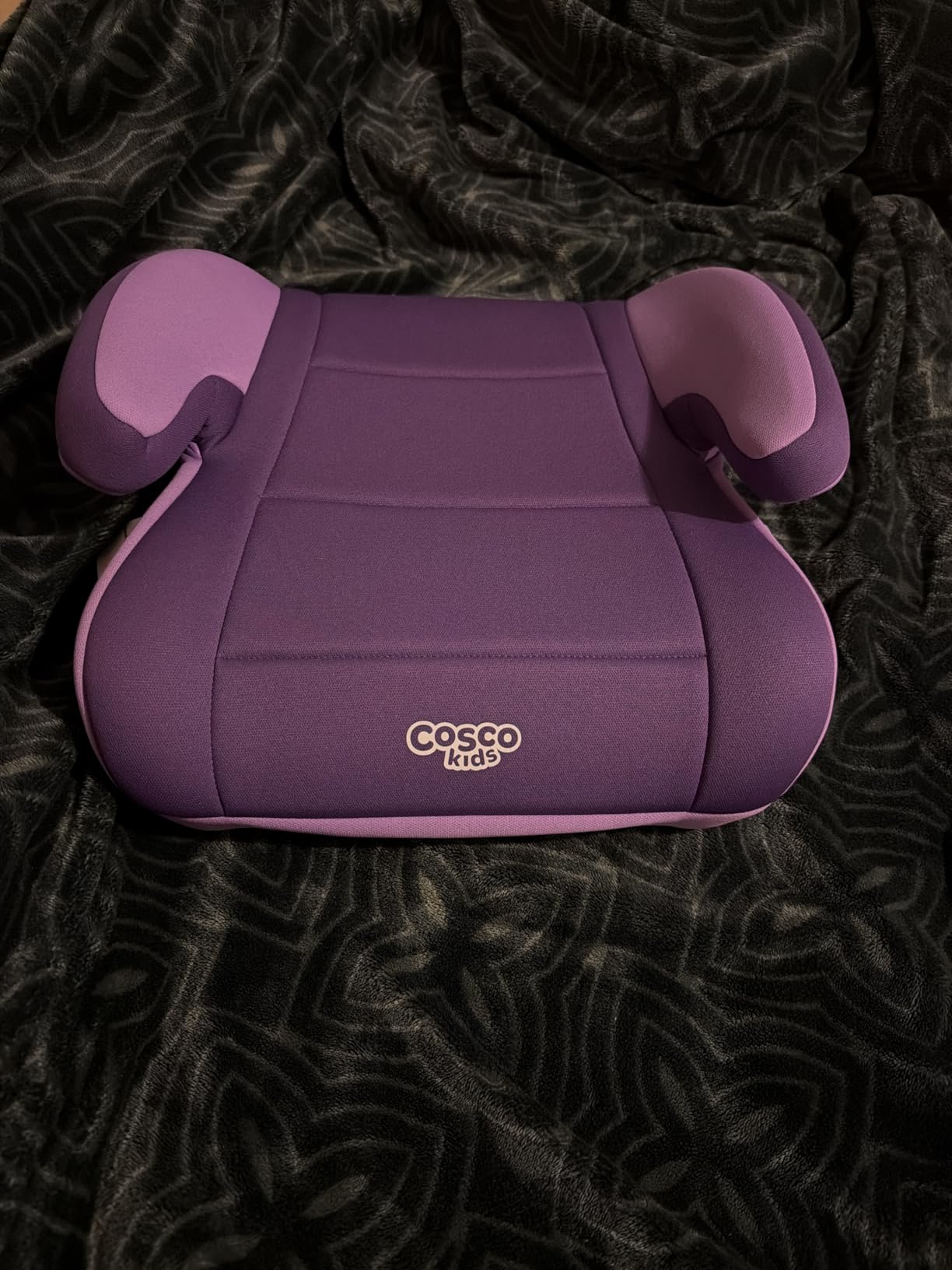
The weight is the quiet advantage. Families who need the same booster in two cars, or who fly with it, can carry this one without thinking about it. That is why it keeps appearing in carpool and travel threads even when more expensive seats are recommended elsewhere in the same discussion.
Where it falls short is refinement. There are no cup holders, and the extra-plush padding that the listing describes is still thinner than the foam in the Chicco or Evenflo seats in this roundup, which shows up as discomfort on longer drives.
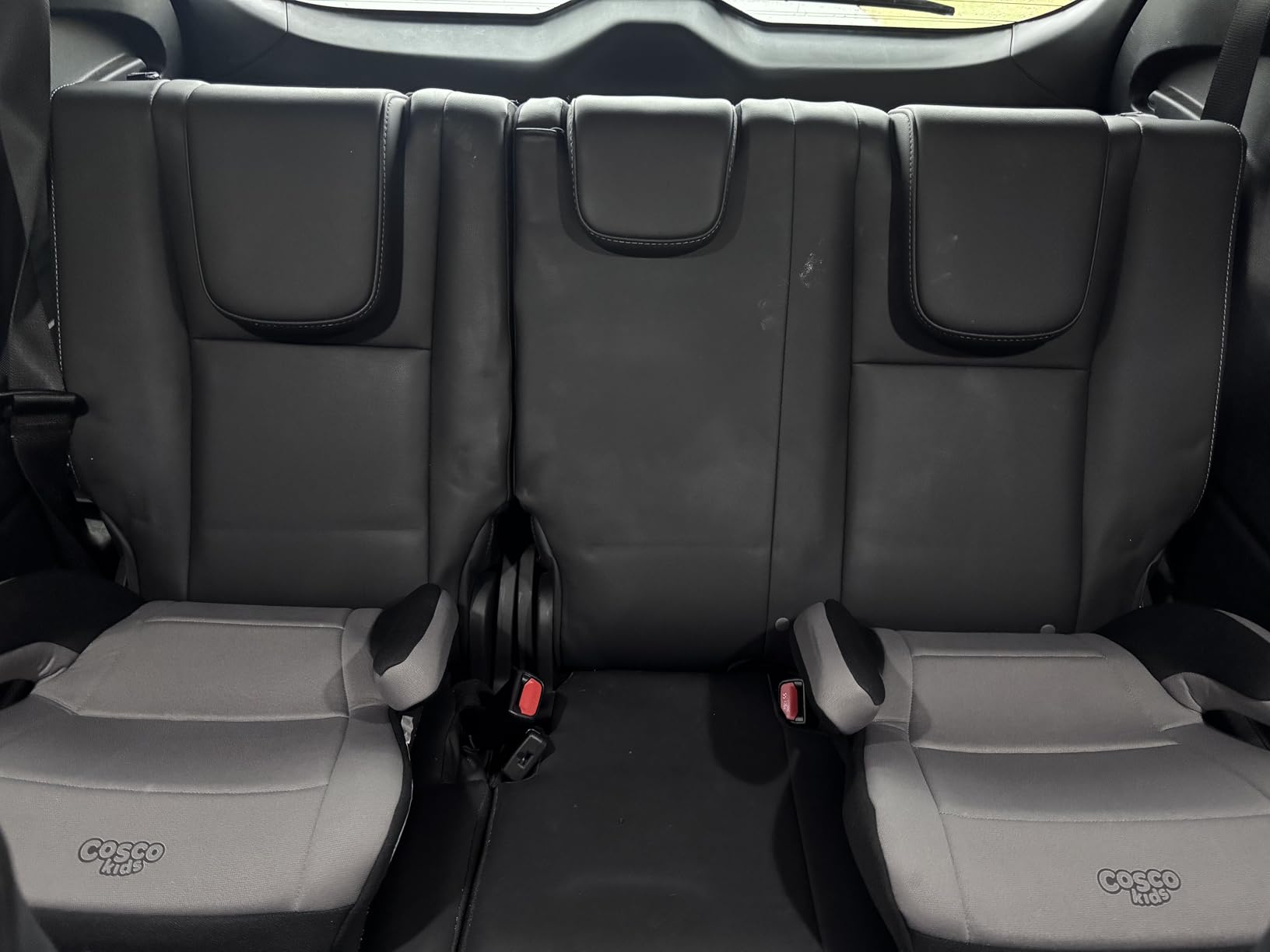
Who the Cosco Topside suits
It is the right pick for a child who is comfortable in a booster, for a second car where the seat lives permanently, and for anyone who wants the simplest way to cover the whole stage with a single proven design. It is also a sensible second seat when you already own a highback for daily use.
Because it needs no installation, it is the easiest booster to hand to a babysitter, a grandparent, or a carpool driver who is not going to read an instruction manual.
Who should look elsewhere
If your child is tall for their age, the 57 inch ceiling and 100 pound limit will arrive sooner than the stage ends, and a seat rated higher is cheaper than buying twice. The Britax Skyline covers 40 to 120 pounds and 63 inches for exactly that reason.
Long journeys are also the weak spot. Without cup holders and with thin padding, a two-hour drive is where this seat’s limitations show first. A higherback model with a headrest is a better home for a heavy sleeper.
4. Graco TurboBooster 2.0 Highback and Backless – The Best 2-in-1 Booster
Graco TurboBooster 2.0 Highback & Backless Booster Car Seat, Declan
2-in-1 highback that converts to backless
40-100 lb
Adjustable headrest and height-adjustable armrests
Retractable cup holders
Pros
- Converts highback to backless so one seat lasts the full stage
- Enough recline for a sleeping child to rest their head
- Retractable cup holders hold water bottles
- Open-loop belt guides keep the belt off the neck
Cons
- Does not anchor to the vehicle
- Armrest design means younger children still need help buckling
- Some children find the padding thin
If you buy one booster and want it to cover the entire stage, this is the shape of seat to buy. The backrest comes off and the same frame becomes a backless booster, so you are not choosing between a seat for now and a seat for later.
The highback mode is where the value sits. The adjustable headrest and height-adjustable armrests work together with open-loop belt guides, and owners consistently report the top of the shoulder belt being held well away from the child’s neck, which is the most common failure in this category.
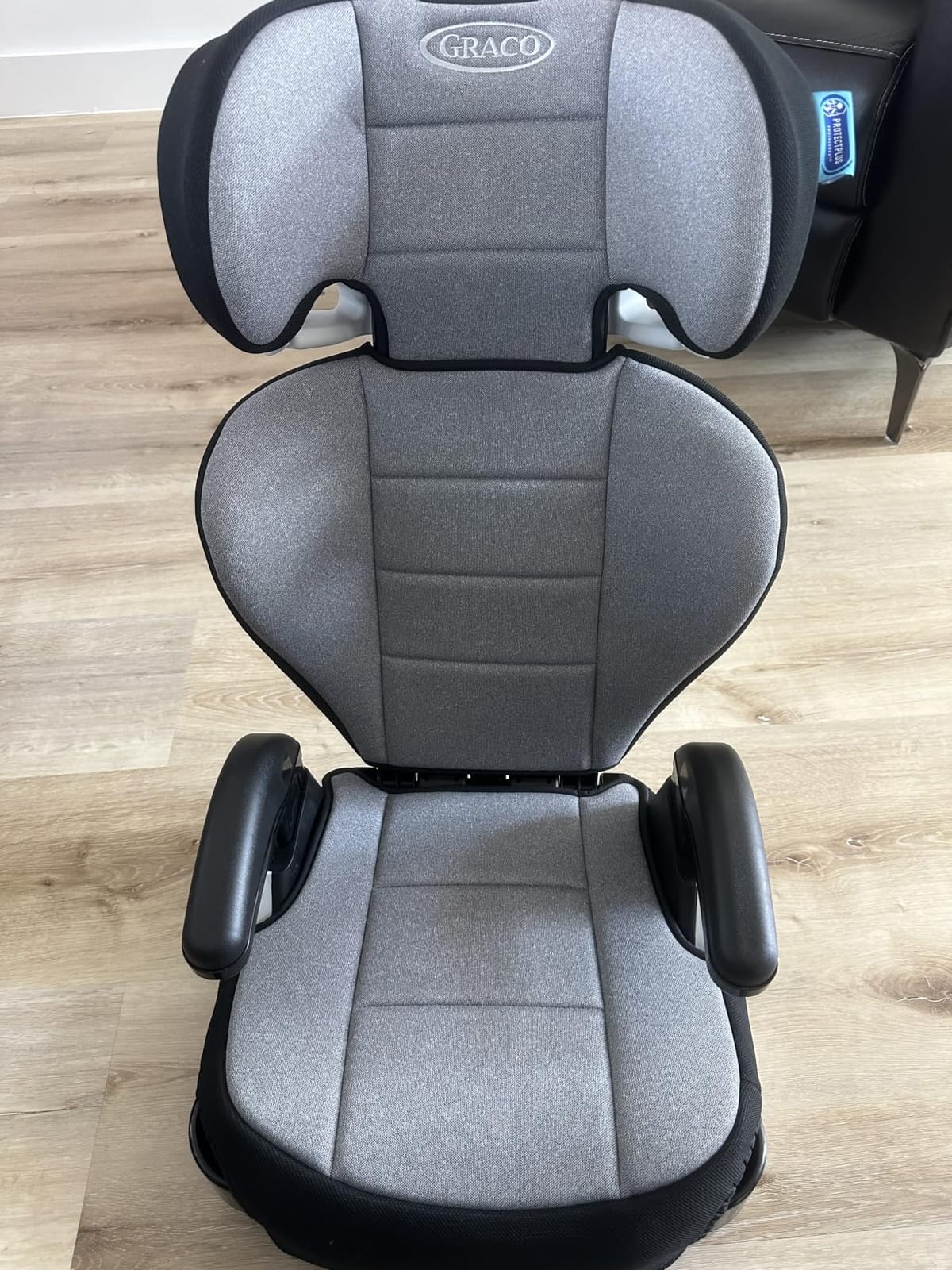
The recline is the sleeper feature. Several reviewers describe the backrest reclining enough that a sleeping child’s head rests naturally to the side instead of tipping forward, and one owner mentions having tried seven or eight other models before this one. For a child who falls asleep at forty minutes, that is a real quality-of-life difference.
Retractable hide-away cup holders are deeper than they look in photos and will actually hold a water bottle, which is more than most boosters at this level manage.
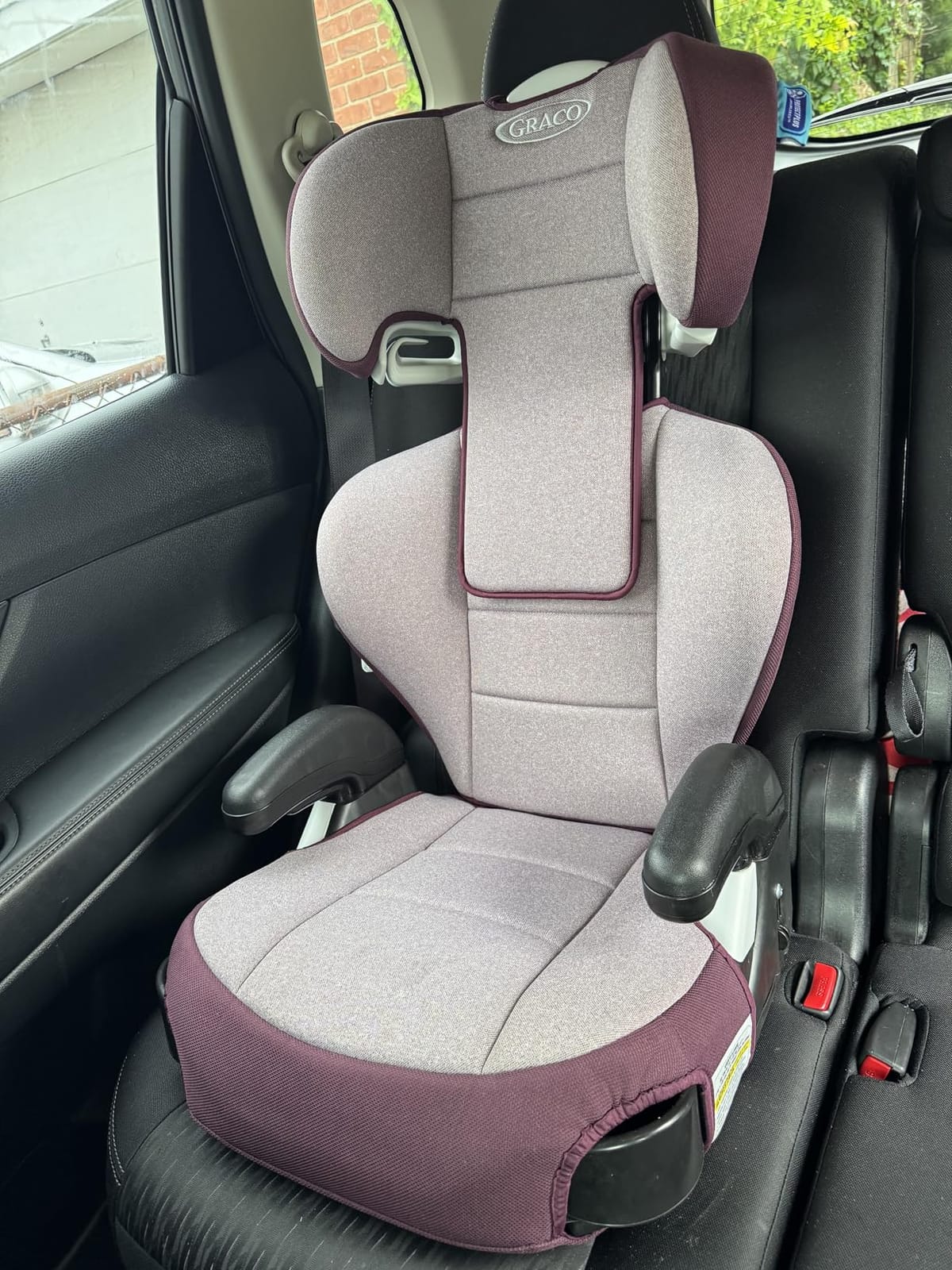
Who the Graco TurboBooster 2.0 Highback suits
It suits a child moving out of a harness now who will still need a booster for several more years, and any family with one seat budget across two vehicles. Removing the back is a quick job, so the backless phase costs nothing extra.
The open-loop guides are also the reason to pick it over a closed-loop design: a child can thread the belt and largely buckle themselves in, which cuts down on the daily friction that leads to shortcuts.
Who should look elsewhere
There is no anchor to the vehicle, so the seat depends on the belt alone for positioning. Parents who want the booster physically locked in place should look at the Chicco KidFit, which is the one LATCH-equipped model in this roundup.
Younger children still need help with the buckle because of the armrest design, so it is not the answer for a child who is brand new to boosters and not yet confident with the belt.
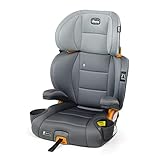
5. Chicco KidFit ClearTex Plus 2-in-1 – The Best Booster With LATCH Anchors
Chicco KidFit ClearTex Plus 2-in-1 Belt-Positioning Booster Car Seat
Highback with removable backrest for backless mode
10-position headrest from the waist
LATCH with SuperCinch one-pull tightener
ClearTex flame retardant-free fabrics
Pros
- Only LATCH-anchored booster in this roundup for the tightest install
- Quick-release LATCH with a one-pull tightener for fast swaps
- Backrest removes so one seat covers the full stage
- All fabrics including armrests are removable and machine washable
Cons
- Quick-release LATCH can release when the seat base is pulled
- One of the higher-priced seats in this roundup
- Belt-positioning only
- so a child able to unbuckle may not stay secured
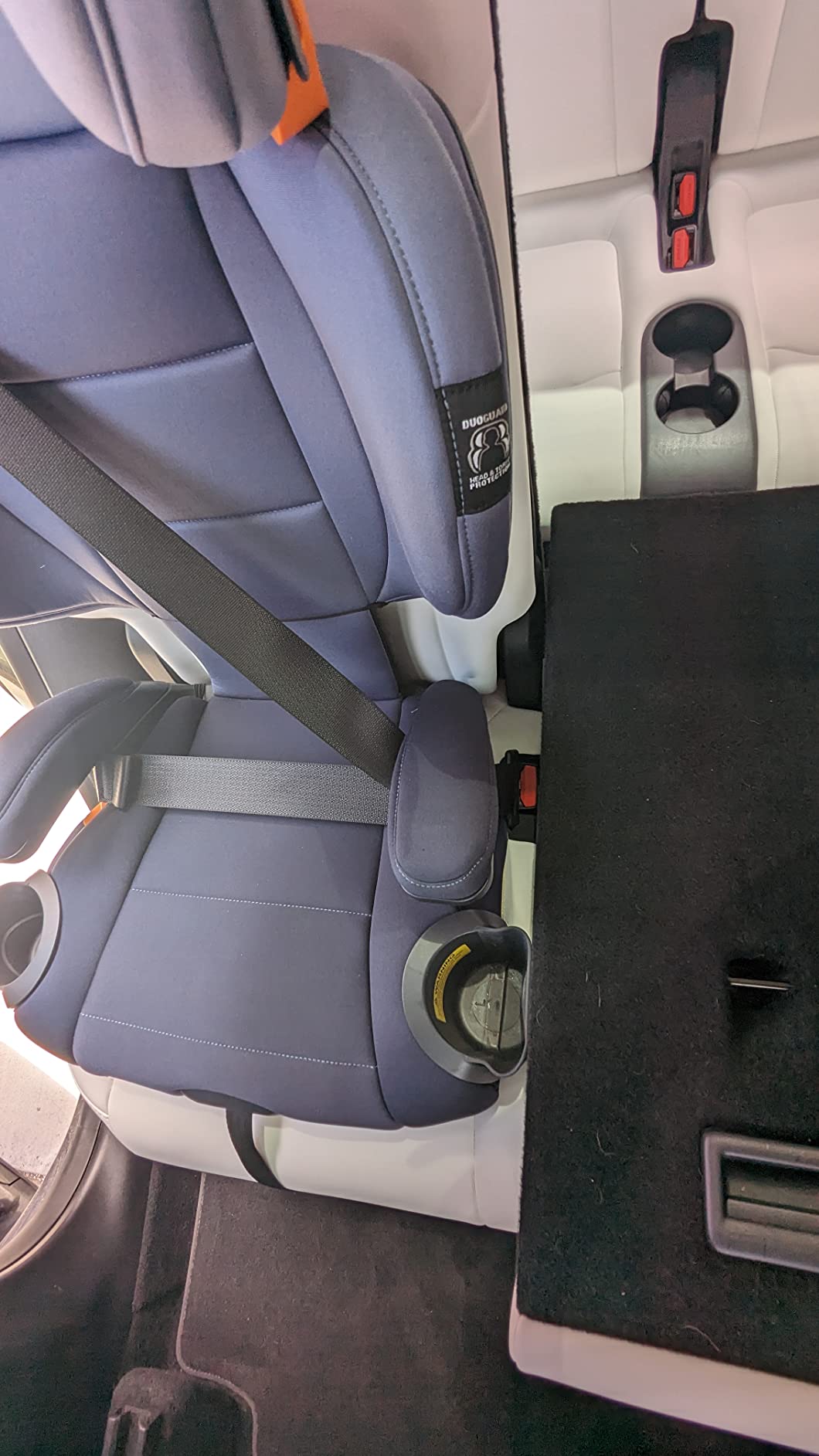
This is the one booster here that anchors to the vehicle. Premium LATCH connectors with a SuperCinch one-pull tightener pull the seat snug against the vehicle cushion, and a quick-release latch means you can pull it off in seconds to move between vehicles.
That anchoring is the reason it is a different category rather than a better version of the same thing. With the other nine seats, the belt positions the child and holds the seat. Here, the belt positions the child and LATCH holds the seat, which removes a variable entirely.
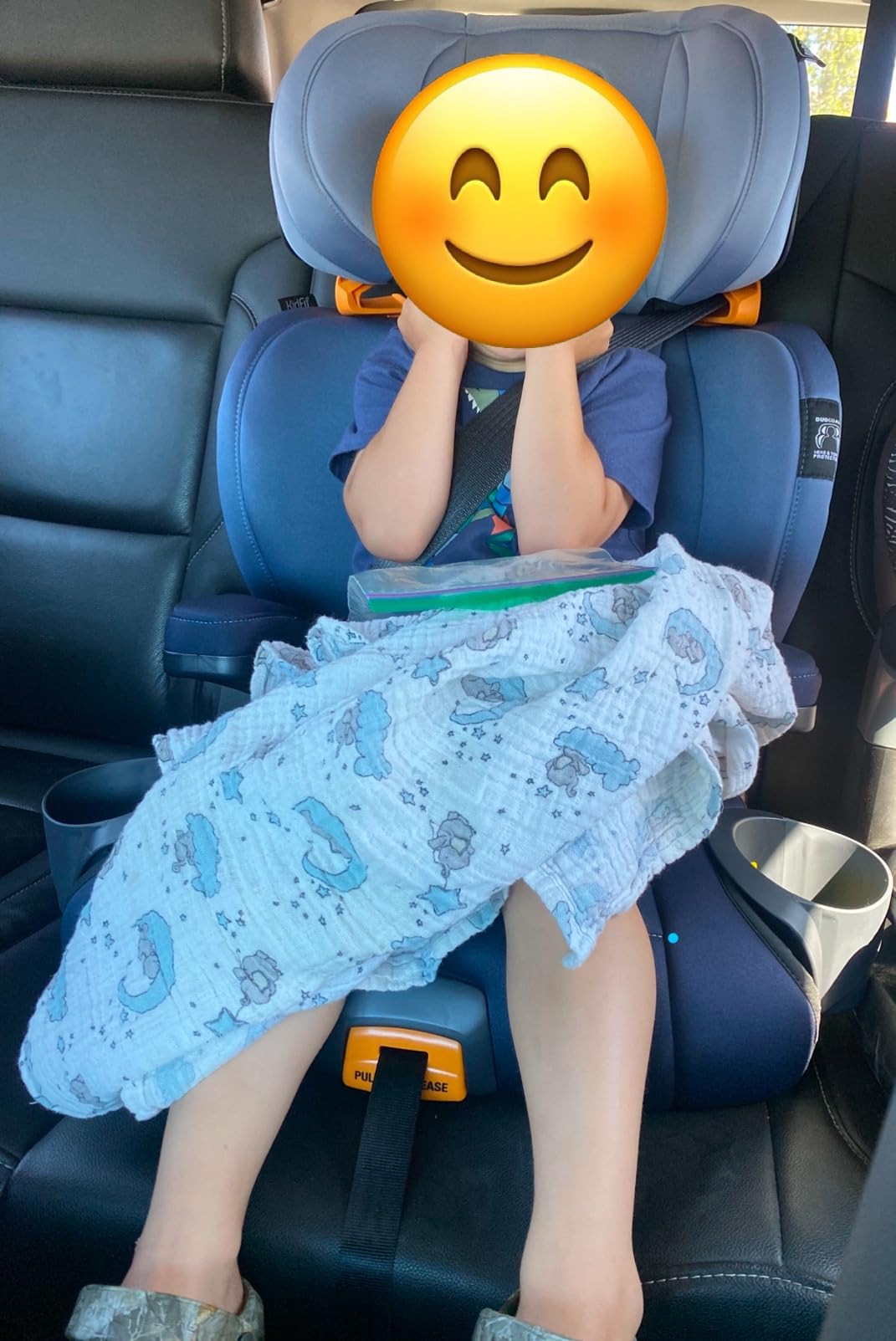
The DuoGuard head and torso support runs through ten height positions adjusted from the waist, so the belt guides stay in the right relationship to the shoulder as your child grows without you re-routing anything. The two-position recline backrest mimics the angle of the vehicle seat, which is what makes the headrest useful for a sleeping child.
The ClearTex fabrics carry no added flame retardant chemicals while still meeting federal flammability standards, and every fabric including the armrests removes and machine washes. Parents who have dealt with sticky spills on a fixed cover will appreciate that more than any feature on the spec sheet.
Who the Chicco KidFit ClearTex Plus suits
It suits a family moving between two or three vehicles, a carpool where the seat is handed between drivers, and any parent who wants the seat physically attached rather than resting on the upholstery. The slim profile and collapsing cup folders also free up back seat room.
It is the strongest single-seat answer for a child who will be in boosters for years, because the removable backrest means you are not buying a second seat later.
Who should look elsewhere
Be aware of the quick-release latch behaviour. Several owners report that pulling on the seat base can disengage the latch unintentionally, and some of them cut the release cord to stop it. Test the install in your own car before you commit.
It is also among the most expensive seats in this roundup, and it is belt-positioning only, so a child who can reach the buckle can undo the protection. If your child is at the older end of backless readiness, the anchored benefit matters less than the price.
6. Britax Skyline 2-Stage – The Best Booster for a Taller Child
Britax Skyline 2-Stage Belt-Positioning Booster Car Seat, Dusk – Highback and Backless Seat
Highback and backless, 40-120 lb and up to 63 inch
Protective shell with foam-lined headrest
One-hand 10-position headrest
Color-coded belt guides
Pros
- Rated to 120 lb and 63 inch
- the widest height range in this roundup
- Protective seat shell plus foam-lined headrest manage impact energy
- One-hand 10-position headrest adjustment
- Color-coded belt guides make correct routing obvious
Cons
- Most expensive seat in this roundup
- Seat cushion runs thin on long trips
- Cup holders are basic next to premium boosters
- Belt-positioning only with no LATCH
Height is the reason most parents end up buying twice, and the Britax Skyline is the seat in this roundup that is designed to prevent that. It is rated to 120 pounds and 63 inches tall, which is six inches of headroom above a standard 57 inch backless booster.
For a tall-for-their-age child that gap is the whole point. A seat they outgrow at eight means another purchase, another installation window, and a period where they are either in a seat that no longer fits or riding without one. The 2-stage frame converts from highback to backless when the range is used up.
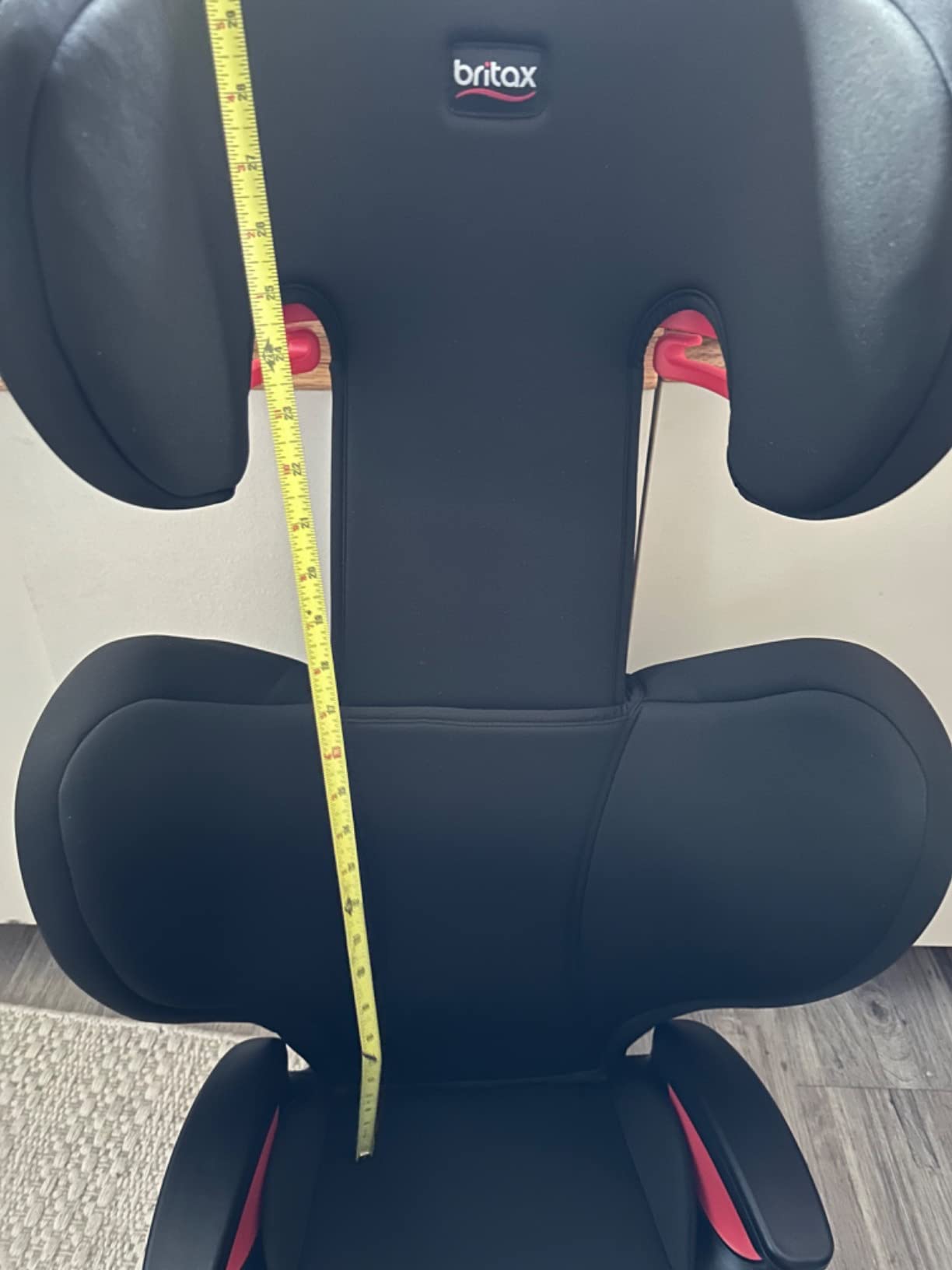
Energy management is handled in two layers, a protective seat shell and a foam-lined headrest, which is the construction you would expect at this level. The headrest adjusts through ten positions with one hand, which matters when you are doing it alone in a parking lot.
The color-coded belt guides are a small design decision with a real effect. Parents report that the correct routing is obvious from the colors alone, which means they set it right the first time instead of debugging a badly routed belt.
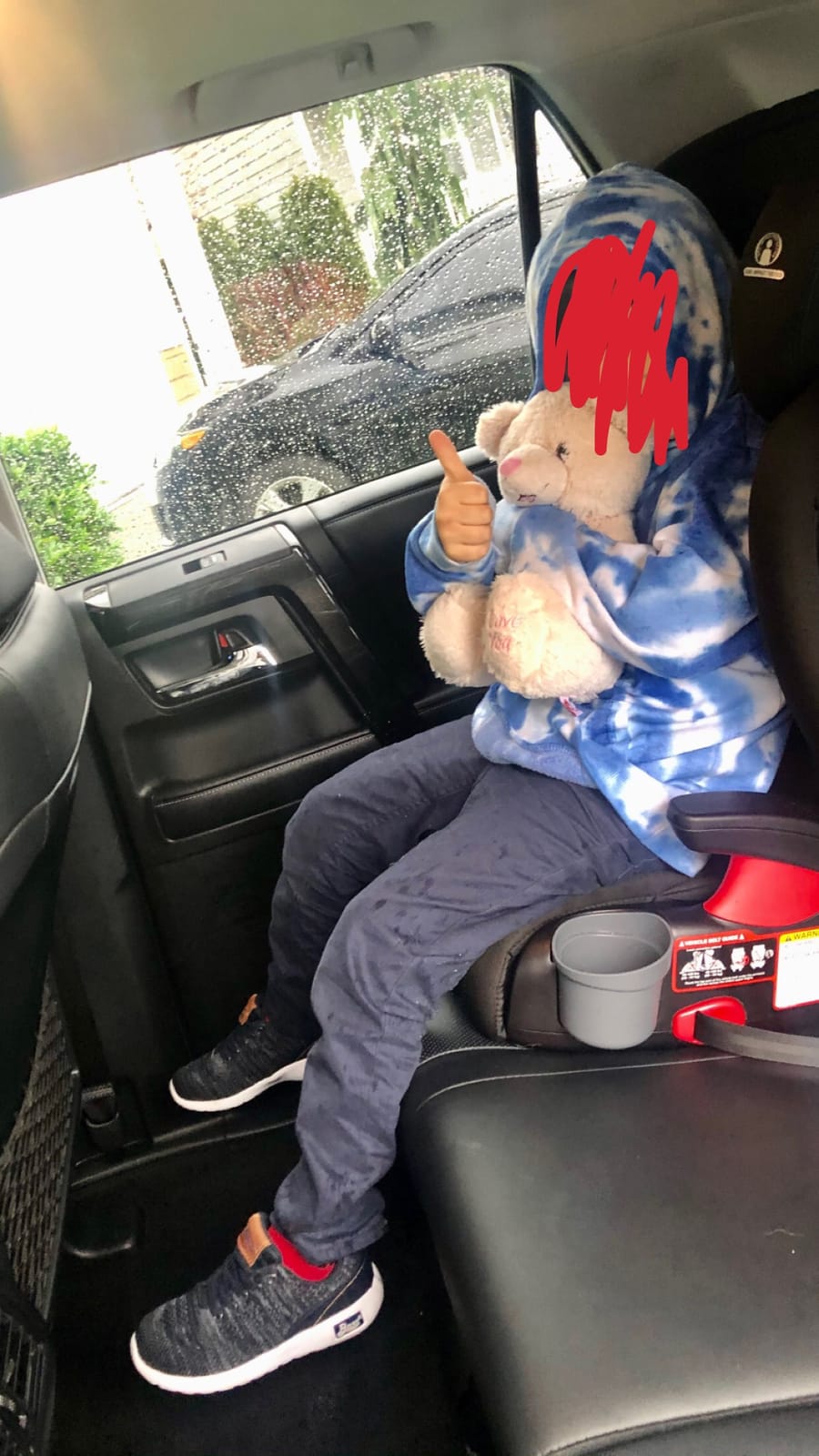
Who the Britax Skyline suits
It suits a child who is already tall, a family with a history of children growing quickly, and anyone who plans to keep the same seat for a sibling later. A 63 inch rating also tends to be a better match for a vehicle with a high seat pan, where the shoulder belt angle sits awkwardly low.
It is also light enough to move between two cars without drama, which matters more here because you are more likely to want it in both.
Who should look elsewhere
Owners are consistent about the trade-off: the seat cushion runs thin and can be uncomfortable over long distances, and the cup holders are the least impressive feature on any seat in this roundup. If your family does long highway drives, comfort is the argument against it.
There is no LATCH anchoring, and it sits at the top of the price range here. If your child is clearly average height, you are paying for range you may never use.
7. Hiccapop UberBoost Inflatable – The Best Inflatable Booster for Flying
UberBoost Inflatable Booster Seat for Car, Travel Booster Seat, Black/Gray
Inflatable backless booster
Meets or exceeds FMVSS 213
Deflates into the included travel bag
Narrow enough for three across
Pros
- Inflates in under 20 seconds and packs into a suitcase
- backpack or purse
- Narrow enough for three across a back seat
- Non-skid base holds steady on leather and cloth
- Meets or exceeds FMVSS 213 federal standards
Cons
- Less supportive than a rigid highback on long drives
- Air cushion can lose firmness over time
- 78 percent five-star share sits below the rigid backless seats here
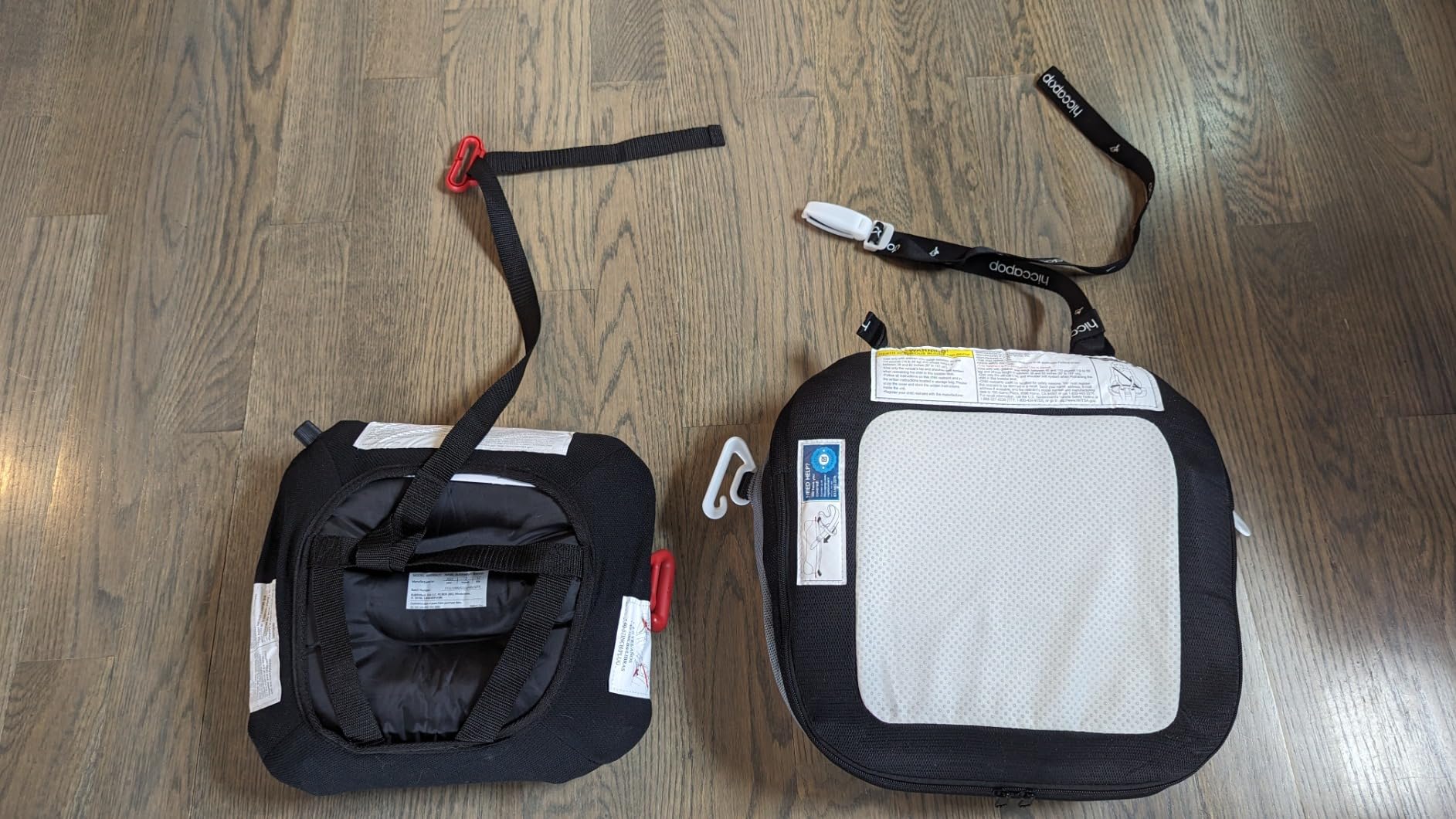
The UberBoost answers a problem no rigid booster can: getting a booster through an airport, into a taxi, or into the glove box of a rental car without a second seat. It inflates by mouth in under twenty seconds and deflates into the included travel bag.
It is not a novelty. It meets or exceeds FMVSS 213, the federal standard every child restraint sold in the US has to meet, and it uses a non-skid base that holds position on leather, vinyl or cloth without marking the upholstery.
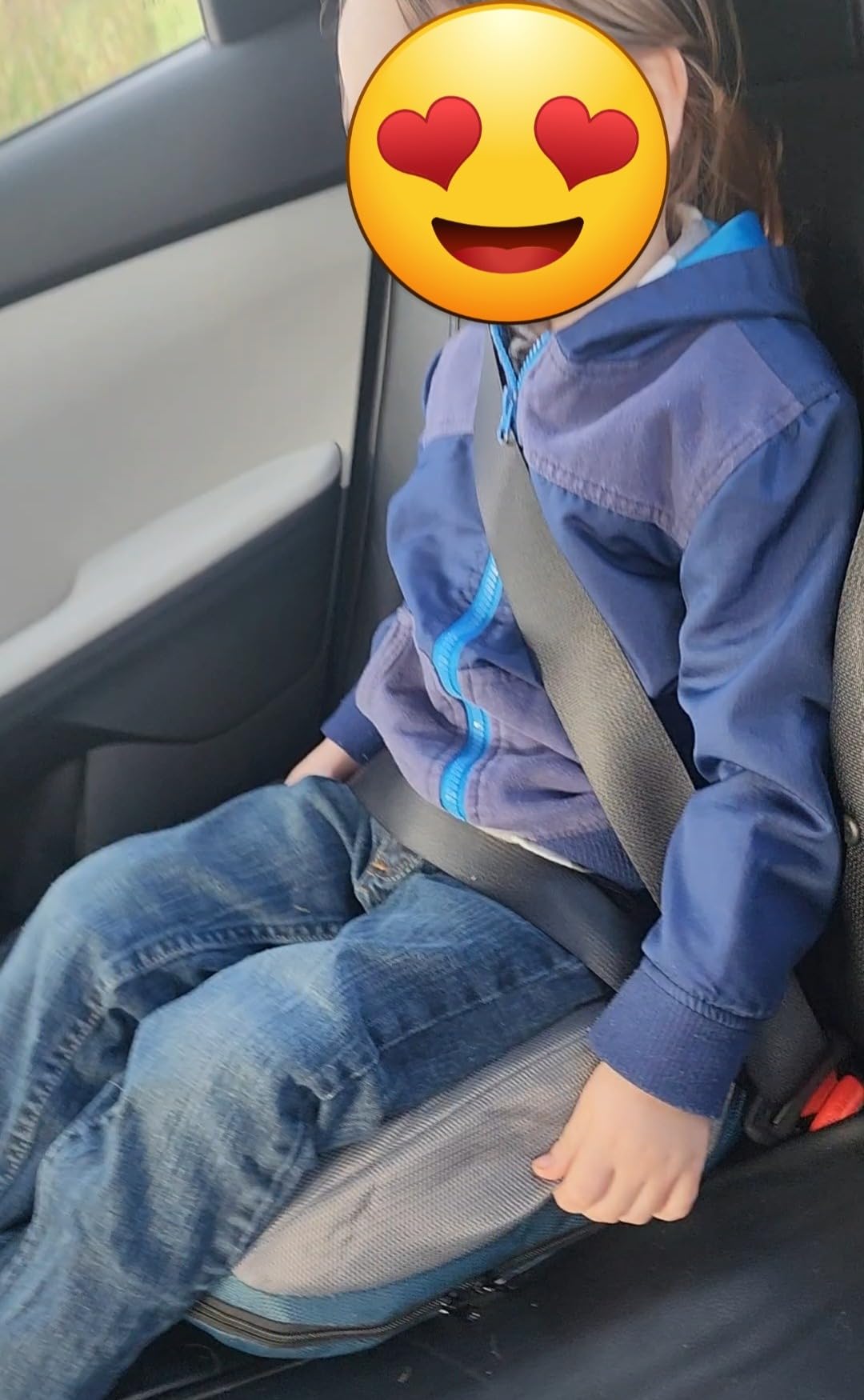
The narrow profile is the second advantage. Parents fitting three children across a back row, whether in a small sedan or a three-across SUV, get a third seat into a space that a rigid booster would not fit. Positioning clips hold the belt across the lap rather than letting it slide.
It is a buoyant, cushioned design, and small children describe it as comfortable. For children who dislike the hard plastic feel of a rigid backless seat, that is often the difference between cooperation and complaint.
Who the Hiccapop UberBoost suits
It suits families who fly, who use rideshares or taxis regularly, who carpool, and who need a third seat across the back. If you already own a highback for daily driving, this is a lightweight companion rather than a replacement.
It is also a good first booster for a child who is ready for backless mode but is wary of hard plastic, since the soft cushion makes the transition easier to accept.
Who should look elsewhere
It gives up support compared with a rigid seat, and that is the most common thread in the reviews. Over a long drive there is no head or side structure, and children who slump or fall asleep are less well held than in a highback.
The air cushion can also lose firmness over time, so it needs checking before every trip. And it is only appropriate for a child who has already demonstrated they can sit properly in a booster, because it does nothing to contain a distracted child.
8. BubbleBum Inflatable Travel Booster – The Best Narrow Booster for Three Across
BubbleBum Inflatable Travel Booster Car Seat – Narrow Backless
Inflatable backless booster, 40-110 lb
Independently crash tested to exceed FMVSS 213
Deflates to 12 x 6 x 4 inches
Narrow profile fits three across
Pros
- Independently crash tested to exceed FMVSS 213
- Inflates in about 20 seconds with no pump needed
- Deflates to 12 x 6 x 4 inches and fits in a carry-on
- Narrow profile allows three children across the back row
- Surface wipes clean after snacks
Cons
- A 4.3 average with 6 percent one-star reviews and 67 percent five-star
- Weakest satisfaction spread in this group
- Air cushion offers less support than a rigid booster over long drives
The BubbleBum is the most capable of the inflatable seats in terms of certified range, and it is rated for 40 to 110 pounds and ages four to eleven, which is wider than most backless boosters of any type. For a family with a heavier child, that matters.
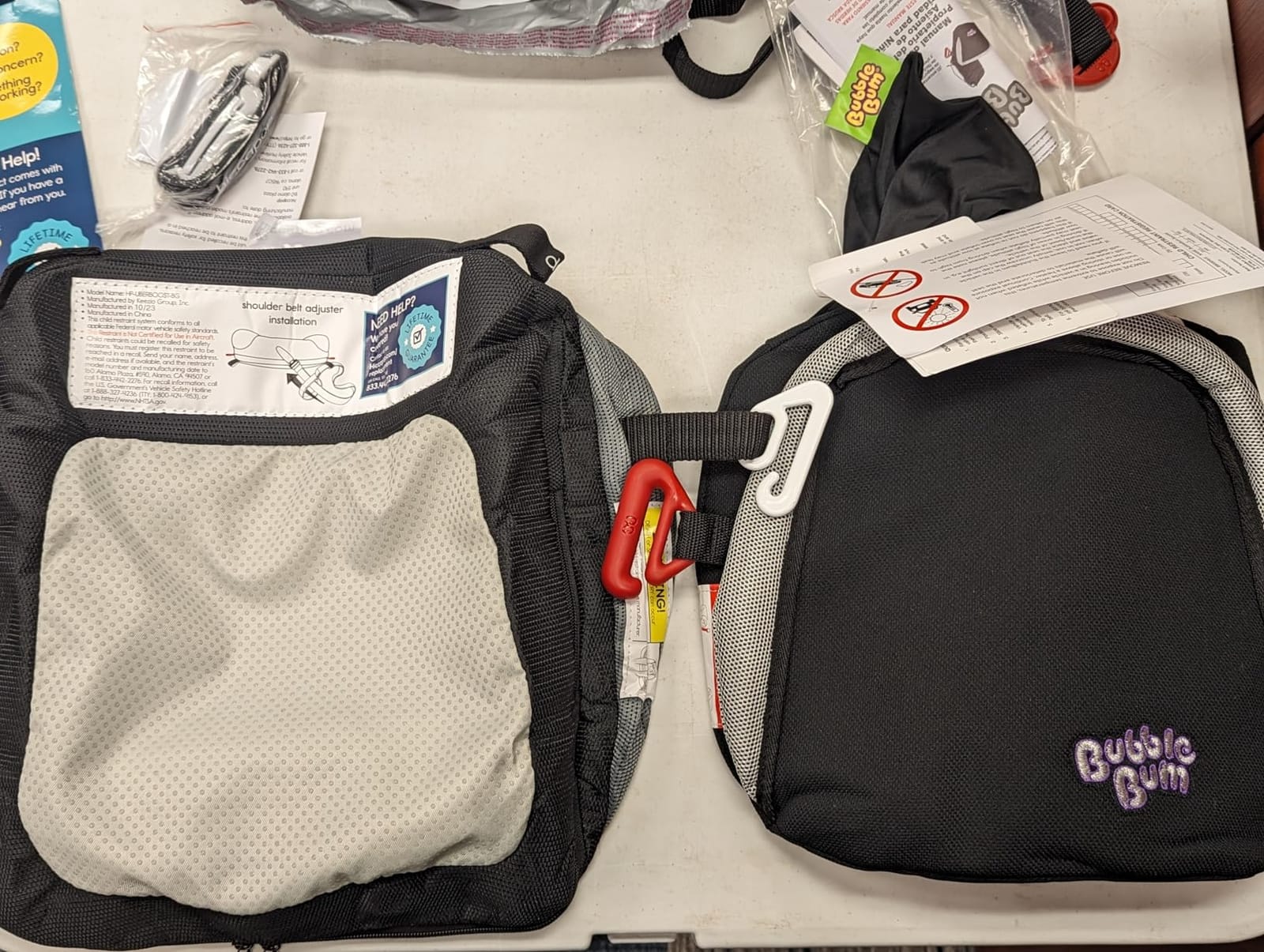
It inflates by mouth in about twenty seconds and deflates to 12 by 6 by 4 inches, which fits in a purse, a backpack or a carry-on. Parents planning a big trip where luggage space and carpool logistics decide the purchase single it out for exactly that reason.
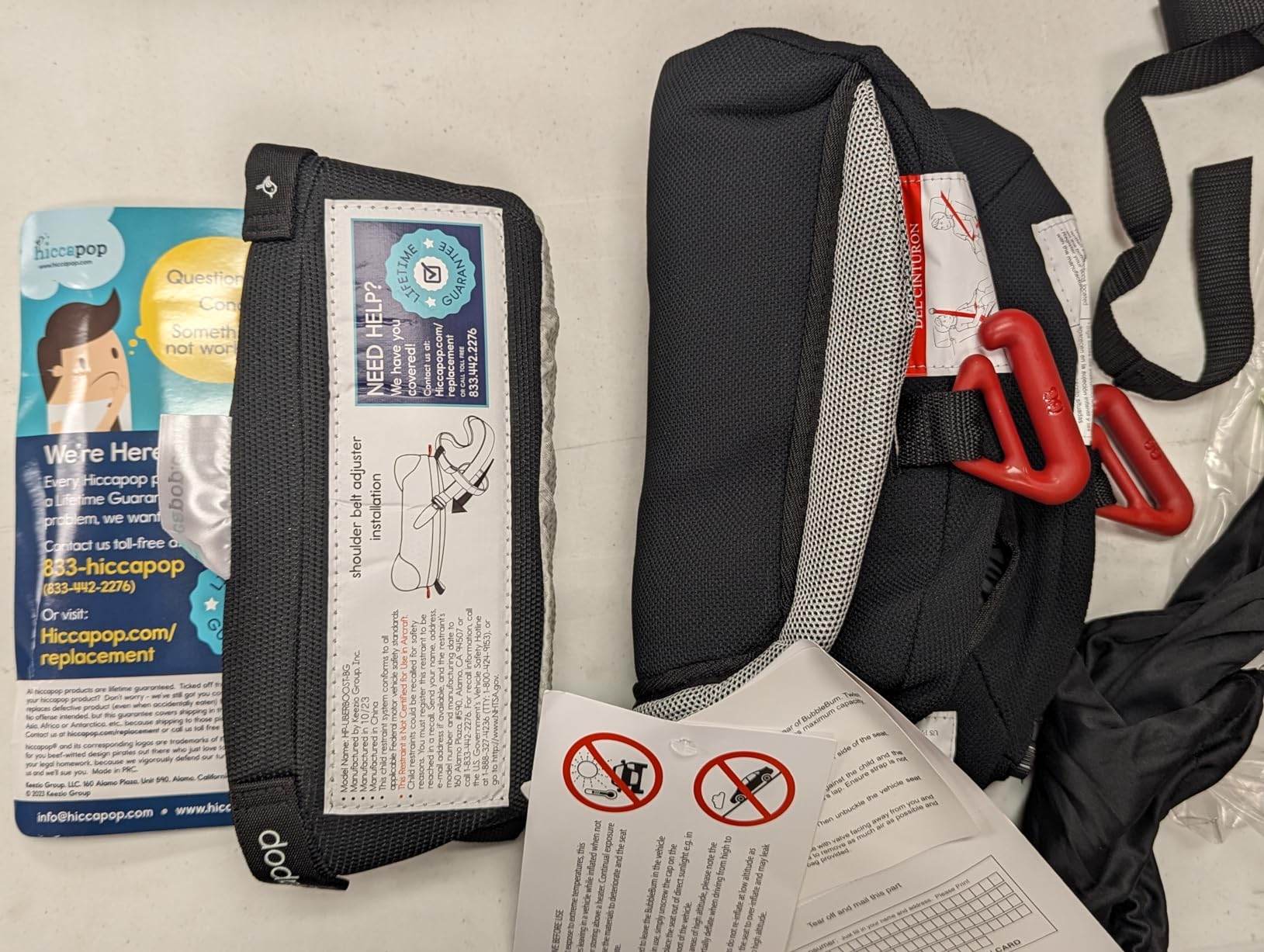
It is also independently crash tested to exceed FMVSS 213, which is a stronger claim than the standard itself, and the surface wipes clean with a damp cloth after a spilled snack. That last detail sounds trivial until you own a booster for a seven-year-old.
The narrow slim profile is the reason it appears in three-across conversations. It is one of the few boosters here that will reliably give a family a third position in a normal back seat.
Who the BubbleBum suits
It suits three-across families, frequent travelers, and anyone who wants a single booster that lives in a bag rather than in a car. The 110 pound ceiling also makes it the better inflatable choice for a larger child.
If you are combining it with a rigid highback for a younger sibling, the weight and height ranges are close enough that one spare seat covers both kids in different vehicles.
Who should look elsewhere
The rating is the lowest of the two inflatable seats here at 4.3, with 6 percent one-star reviews and only 67 percent five-star, and the recurring themes in those reviews are comfort and long-term durability of the air cushion. Treat it as a travel accessory, not a daily seat.
It is also backless with no back support at all, so it should only be used by a child who is already comfortable and consistent in a booster. A new booster user needs the guidance of a highback.
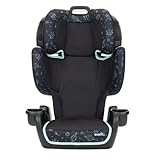
9. Evenflo GoTime LX – The Best Booster for Deep Side Support
Evenflo GoTime LX Booster Car Seat (Astro Blue)
Highback and backless, 40-120 lb, ages 5 and up
7-position one-hand height adjustment
Deep design with overlapping head and body sides
Meets or exceeds federal safety standards
Pros
- Overlapping head and body side walls add genuine side-impact support
- 7-position headrest adjusts one-handed as the child grows
- Converts from highback to backless
- Lightweight and easy to move between vehicles
Cons
- Arrives unassembled with tight-fitting plastic pieces
- Minimal padding and a ridged hard back panel
- Back pieces are hard to disassemble without damaging the plastic
- Manual storage spot has no clip or compartment
The GoTime LX is the pick when side support is the deciding factor. Its deep design uses overlapping head and body side walls, which is more structure around the torso and head than most of the shells in this roundup, and it runs from 40 to 120 pounds for ages five and up.
It is also a 2-mode seat, so the back comes off and it becomes a backless booster. The headrest adjusts through seven positions with one hand as the child grows, and two built-in cup holders sit within reach of a child rather than beside them.
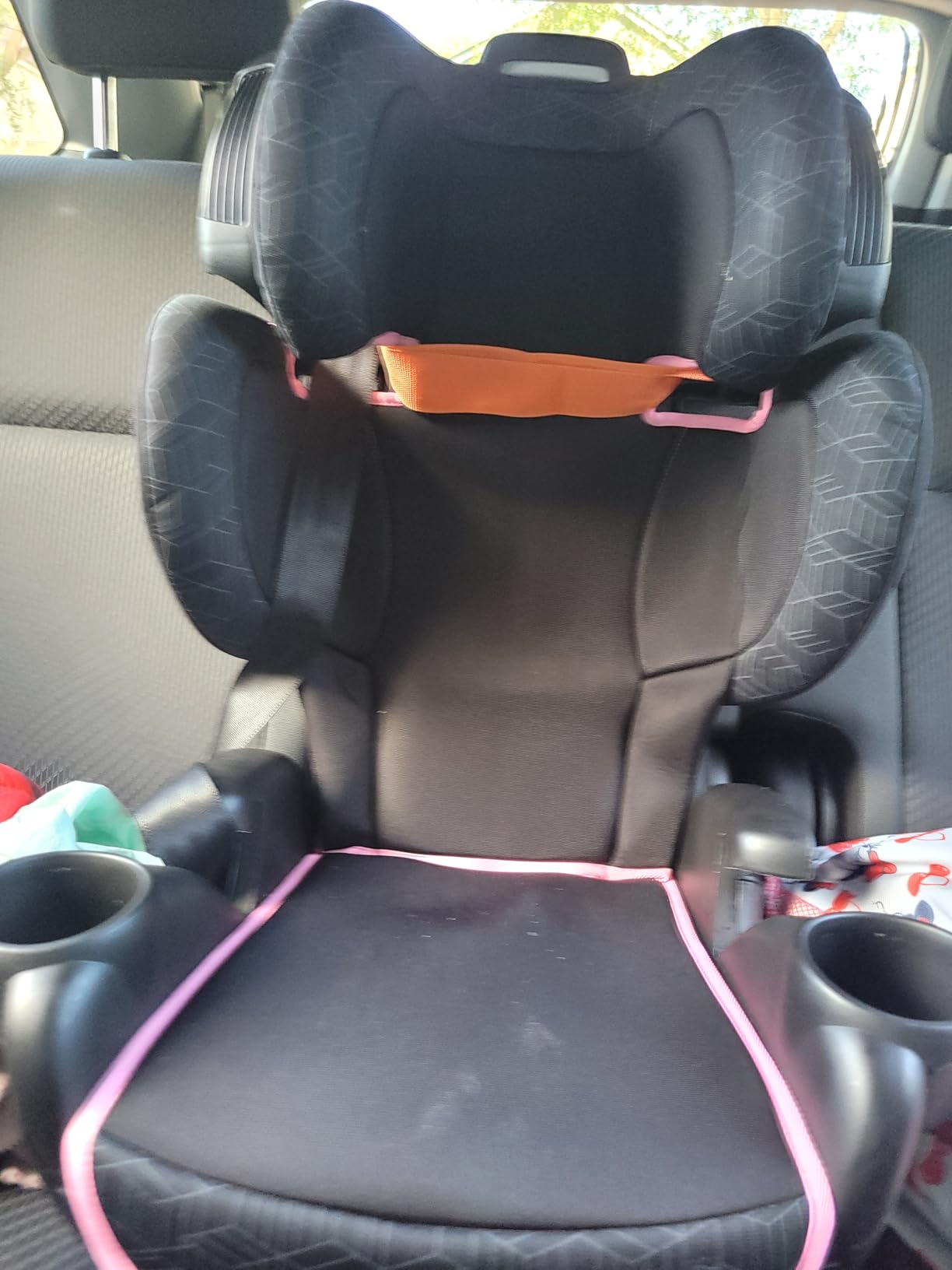
Owners consistently describe it as a solid budget highback for occasional use, and specifically recommend it for a babysitter, a rideshare, or short trips. The weight is genuinely low, which is why it moves between vehicles without any planning.
It meets or exceeds all applicable federal safety standards, and the removable seat cover handles the cleaning side of ownership adequately.
Who the Evenflo GoTime LX suits
It suits a child who is new to boosters and needs structure to sit in, a family with a narrower back seat where a highback’s depth is manageable, and anyone who wants a two-mode seat for a wide weight range without spending at the top of the market.
For a second-car or holiday-home seat that gets used a few weeks a year, the light weight and simple seven-position adjustment are genuinely appealing.
Who should look elsewhere
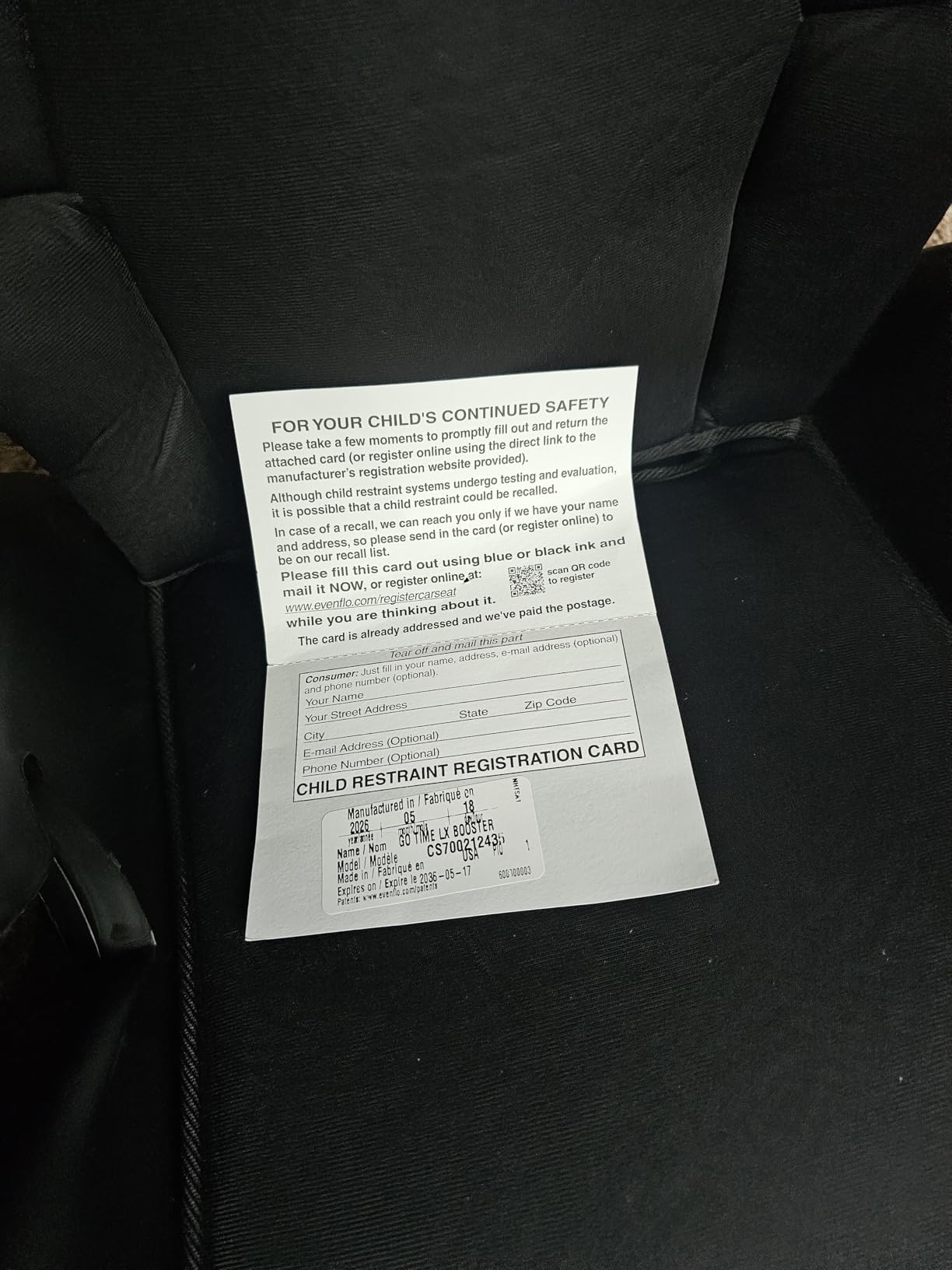
The build is the weakness. It arrives unassembled, some plastic pieces fit very tightly, and the back pieces are hard to disassemble without risking damage. Budget twenty minutes and a small tool for the first setup.
Padding is minimal, and more hard plastic becomes exposed as the headrest is raised, so an older child in this seat may end up against a ridged hard back panel. One of the lowest ratings in this group at 4.3, with 7 percent one-star reviews. If the seat will be used daily for years, a better-padded model is the wiser buy.
10. mifold Comfort Grab-and-Go – The Best Booster for Carpools and Rideshares
New Mifold Comfort Grab-and-go Car Backless Booster Seat-Compact and Portable for Every Day, Carpooling, Travel, Charcoal Grey
Compact backless booster, 40-100 lb and 43.5-59 inch
Fits a regular backpack or glove box
Belt pull-down design with a shoulder belt guide
Anti-slip pads
Pros
- Compacts into a regular backpack or glove box for carpool and rideshare use
- Unique design pulls the adult belt down to the child instead of lifting the child up
- Includes an extra padded Compact Comfort cushion
- Anti-slip pads stop it sliding on the vehicle seat
- No installation needed
Cons
- Lowest average rating here at 4.2 with 8 percent one-star reviews
- Backless design offers no head or torso support
- Most of the shell is hard plastic so comfort depends on the added cushion
The mifold solves a problem none of the rigid seats do. It folds small enough to live permanently in a backpack or the glove box of a car, which means a child can be correctly buckled in a taxi, a rideshare, or a grandparent’s car without leaving a booster seat permanently installed in the second vehicle.
The approach is different from every other booster here. Rather than lifting the child up to meet the belt, the design pulls the adult seat belt down to fit the child, and the updated shell adds anti-slip pads and an easy-to-use shoulder belt guide so the result stays put.
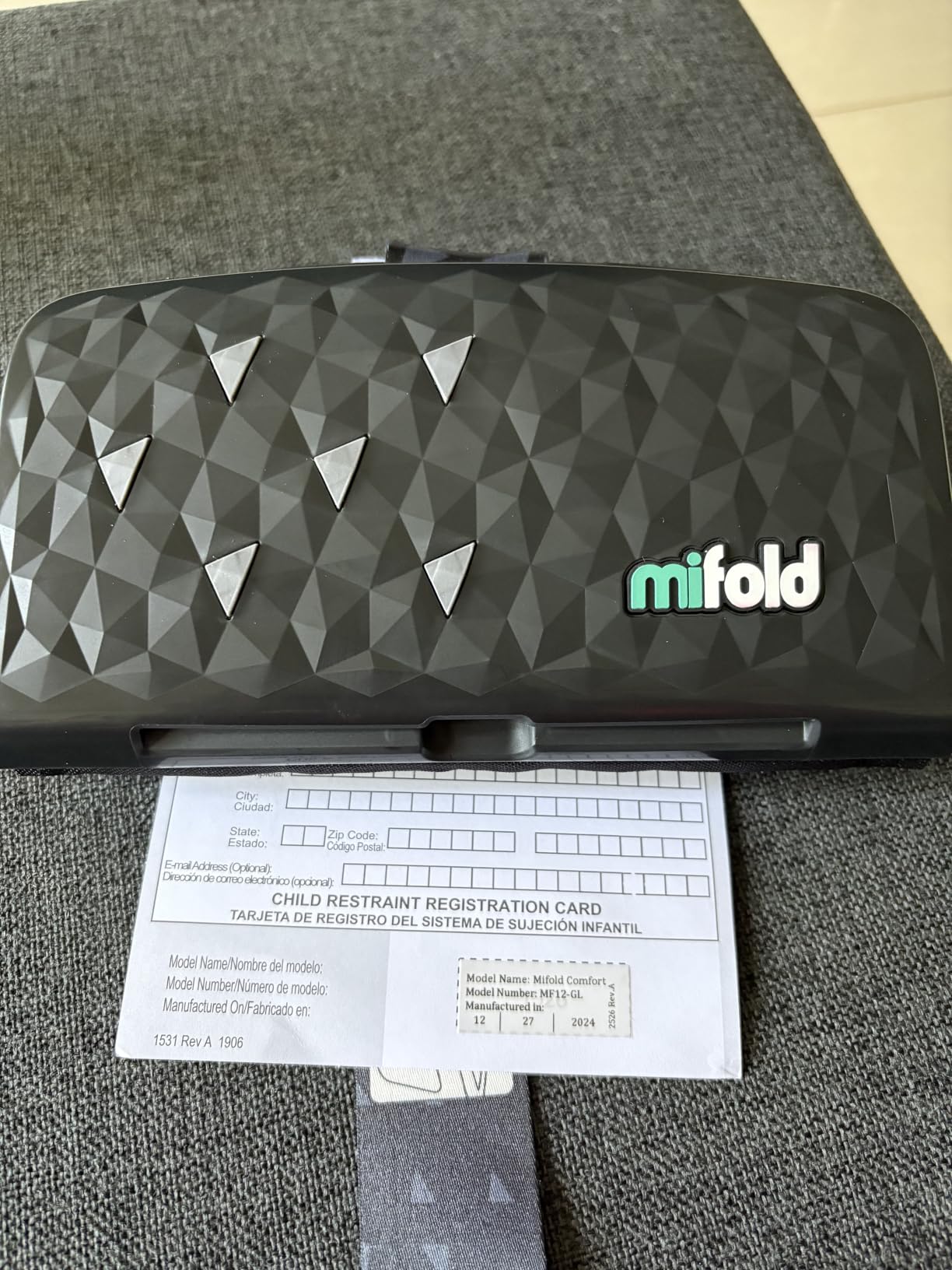
There is no installation at all. It works in any car with a standard three-point belt, which is the whole premise, and the extra padded Compact Comfort cushion is included for longer journeys. The range is 40 to 100 pounds and 43.5 to 59 inches for ages four and up.
At 59 inches the height ceiling is slightly more generous than most backless seats in this roundup, which extends its usable window without moving into highback territory.
Who the mifold Comfort suits
It suits families without a second booster, children who split time between two households, and anyone who uses rideshares or taxis more than once a week. For carpool drivers who do not want to bolt a seat into their own car, it is the practical answer.
It also suits a family with a small back seat, where storing a rigid booster between uses is awkward and a seat in a bag is simply easier.
Who should look elsewhere
It has the lowest average rating in this roundup at 4.2, with 8 percent one-star reviews and only 63 percent five-star. Comfort and build quality are the sticking points, and most of the shell is hard plastic, so comfort depends on the extra cushion being used.
There is no head or torso support, and a backless seat with a pull-down design is a poor first booster for a child still learning belt behavior. It is a tool for a settled booster user who is in the car a lot, not a stage to graduate into.
How to Choose the Best Booster Car Seat for Your Car
The four things that actually decide booster quality
First, the shoulder-belt guide range. A guide that holds the belt across the middle of the shoulder and away from the neck is the single most important function of a highback booster, and the reason a wide-range model can be a better choice than a basic one for a tall child.
Second, lap-belt geometry. The lap belt has to sit low on the thighs, and the armrests are what hold it there. Height-adjustable armrests extend the usable life of a backless seat; fixed ones are the first thing a growing child outgrows.
Third, the fit range and lifespan. Compare the weight limit, the height limit, and the ages covered, and look for the tallest child you can realistically expect, not the child you have today. A seat rated to 63 inches and 120 pounds is the cheapest seat if you have two children close together.
Fourth, everyday practicality: machine-washable covers, cup holders that hold a bottle, and whether you can move the seat between cars in under a minute. These are unglamorous, and they decide whether the seat stays in your car or ends up in a garage.
Check your vehicle before you buy
Boosters are unusually car-dependent, and this is where most returns come from. Sit your child in the booster in your own back seat before you commit, and check three things: whether the shoulder belt crosses at the middle of the chest rather than the neck or outer arm, whether the lap belt stays low on the thighs with the armrests, and whether the head restraint interferes with the headrest.
For three-across, measure the gap between the two outboard head restraints and compare it to the actual width of the seats you are considering. The inflatable seats in this roundup are the ones most likely to fit a third child into a normal back seat.
Remember that fit is car-specific. A child can pass the belt-fit test in a sedan and fail it in a truck with a long seat pan, and a booster that works in one family car may not work in the other. Buying two seats for two vehicles is common, and a portable option is often cheaper than a second rigid install.
What LATCH does on a booster seat
On a booster, the lower anchors do not restrain your child. They anchor the booster seat to the vehicle, and your child is still restrained by the vehicle’s lap-and-shoulder belt. This is the most common misunderstanding in the category, and it matters because parents often assume a LATCH-equipped booster is a harness seat.
It is not. A child who can reach the buckle can undo a LATCH-anchored booster exactly as easily as a belt-positioning one. In this roundup the Chicco KidFit ClearTex Plus is the only model with LATCH, and it is still belt-positioning. Use the anchors to stop the seat moving, never as a substitute for the belt.
Mistakes worth avoiding
Graduating too early is the first. A booster is a step down in structure and a step up in child responsibility, and rushing it usually means buying a second seat sooner.
The second is routing the shoulder belt behind the child’s arm. It must cross the chest, and if the guide is too low for that child, the seat is too small rather than the routing being flexible.
The third is a lap-only seating position. Never use a booster in the middle seat of a car without a three-point belt. The fourth is ignoring the expiration date, which is stamped on the seat and applies to the materials, not to your child’s growth.
Frequently Asked Questions
What is the safest booster seat for a child?
There is no unsafe booster on the US market. Every one sold here must meet the federal FMVSS 213 standard, so safety differences come down to fit rather than certification. The seat that holds the shoulder belt across the middle of the chest and the lap belt low on the thighs, and that fits your child for the whole stage, is the safest one for your family. Buy on belt fit and adjustment range, not on branding.
What age should a child move to a booster seat?
A child moves to a booster only after outgrowing the forward-facing harness, which is commonly around age six or seven. The triggers are reaching the harness weight or height limit, shoulders rising above the top slots, or ears reaching the top of the shell. Maturity matters as much as size: the child must sit back and hold the belt correctly for the entire drive.
What is the best brand of booster car seats?
Chicco, Graco, Evenflo, Britax and Cosco cover most of the category with the widest fit ranges and the largest review records. The premium brands compete on materials and adjustability rather than on a meaningfully different safety standard, since all of them meet the same federal rule. Judge any brand on the specific model’s fit range, belt guide and cleaning features, not on the badge.
Which booster seat is better, Chicco or Graco?
Chicco leads on fabric chemistry and two-in-one convertibility. The KidFit ClearTex Plus uses flame retardant-free ClearTex covers that all remove and machine wash, and its backrest comes off for backless use. Graco leads on price, self-buckling belt guides and built-in crash testing claims. Choose Chicco if cleaning and a convertible matter most, and Graco if belt routing and cost matter most.
Do the lower anchors on a booster restrain my child?
No. On a booster seat, LATCH anchors hold the seat to the vehicle, not the child. Your child is restrained by the vehicle’s lap-and-shoulder belt in every case. Anchoring the booster does stop it sliding around, which improves belt geometry, but a child who can reach the buckle can undo a LATCH-anchored booster just as easily as a belt-positioning one.
The Best Booster Car Seat for Your Family in 2026
After comparing ten boosters across a year of ownership reports, the Graco TurboBooster 2.0 Backless is the best booster car seat overall, with the highest average rating tied alongside the Chicco GoFit, and adjustable armrests that keep the lap belt in the right place as a child grows. For a child new to boosters, the Graco TurboBooster 2.0 Highback and Backless is the smarter first purchase because the back comes off when they are ready.
Buy the Chicco KidFit ClearTex Plus if you want the seat anchored to the vehicle, and the Britax Skyline if your child is tall and you want to avoid buying twice. For the car that only gets used occasionally, the inflatable options or the mifold give you a booster that lives in a bag rather than bolted into a second vehicle.
Before anything else, sit your child in the seat in your own car and run the five-step test: sitting all the way back, knees bent at the edge, lap belt low on the thighs, shoulder belt across the middle of the chest, and held that way for the whole trip. If it passes, you are done. If it does not, the problem is fit, and no amount of research will fix it.
One last thing worth budgeting for: a car seat is a safety purchase, and a used booster with an unknown history is not a saving. If you are also upgrading the cabin around it, our guides to the best car stereos and best car speakers cover the matching hardware for the drive.