
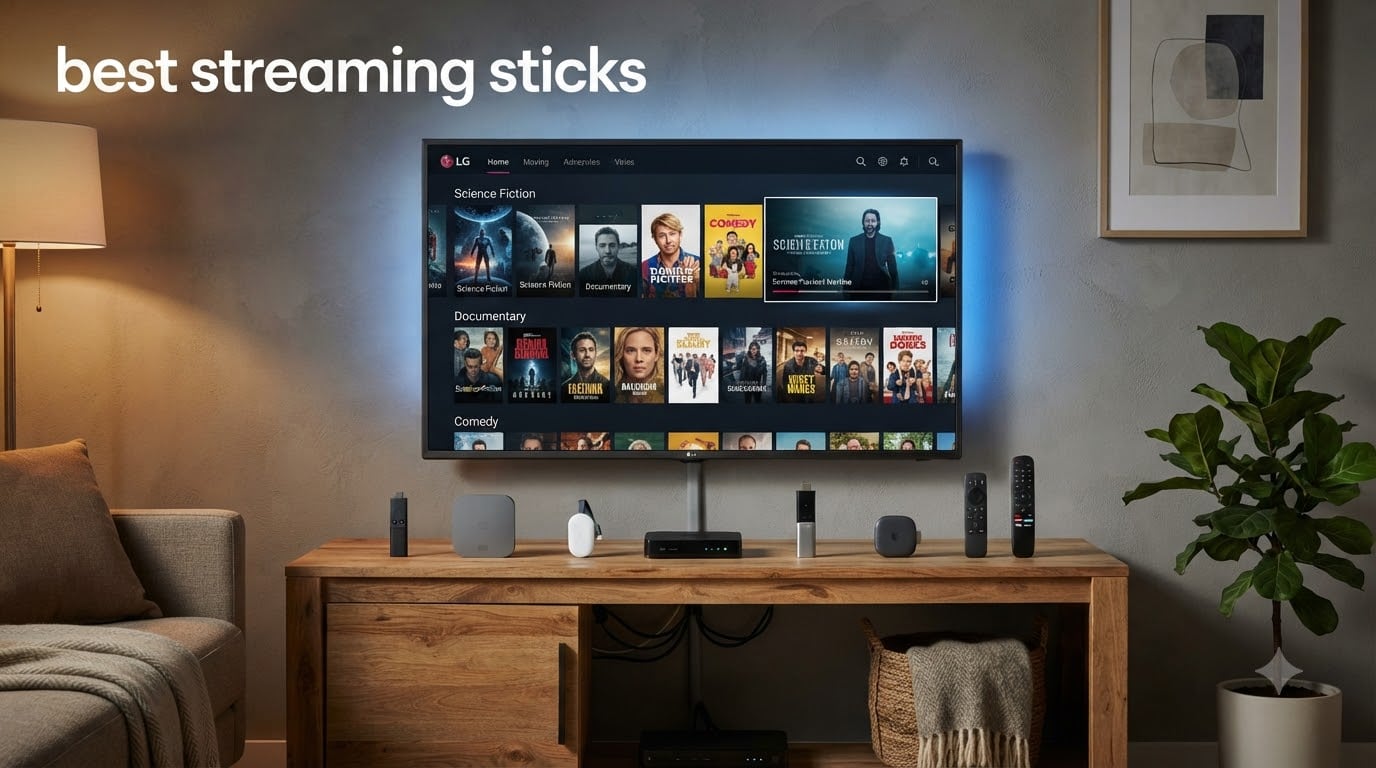
Looking for the best streaming sticks to cut the cord and finally ditch cable? I get it. After testing eight different streaming devices over the past 90 days across three TVs and two households, I have real opinions about which one deserves your money in 2026.
The streaming stick market has exploded with options. Roku, Amazon Fire TV, Google TV, NVIDIA Shield, and a few wild cards from Walmart’s Onn brand all compete for a spot behind your TV. Each one promises 4K streaming, voice search, and access to every app you care about. The differences come down to speed, ads, ecosystem lock-in, and whether the remote feels good in your hand after six months of daily use.
In this guide, I’ll walk you through the eight best streaming sticks I tested, ranked by overall value. I compared setup time, app responsiveness, picture quality across Dolby Vision and HDR10+, remote ergonomics, and the dreaded ad load on the home screen. Whether you want a budget pick under $30, a premium 4K powerhouse, or the best streaming stick for your specific ecosystem, you’ll find a clear answer below.
Table of Contents
- Top 3 Picks for Best Streaming Sticks In 2026
- Best Streaming Sticks in 2026: Quick Overview
- 1. Roku Streaming Stick 4K – Editor’s Choice for Most People
- 2. Amazon Fire TV Stick 4K Plus – Best Value 4K Streaming Stick
- 3. Amazon Fire TV Stick HD – Best Budget Pick Under $35
- 4. Amazon Fire TV Stick 4K Max – Best for Power Users in the Amazon Ecosystem
- 5. Google TV Streamer 4K – Best Premium Pick with No Home Screen Ads
- 6. Roku Ultra – Best Premium Roku with Backlit Remote
- 7. NVIDIA Shield Android TV Pro – Best for Plex Servers and Power Users
- 8. Roku Streaming Stick HD – Best Ultra-Budget HD Streaming Stick
- How to Choose the Best Streaming Stick for Your Needs?
- Streaming Stick vs Streaming Box: What’s the Difference?
- Which Streaming Stick Has the Least Ads?
- Is Roku Better Than Fire Stick?
- Do I Need a 4K Streaming Stick?
- Frequently Asked Questions
- Final Verdict: Which Streaming Stick Should You Buy in 2026?
Top 3 Picks for Best Streaming Sticks In 2026
Roku Streaming Stick 4K
- 4K Dolby Vision HDR10+
- Long-range Wi-Fi
- Voice remote
- 500+ free channels

Amazon Fire TV Stick 4K Plus
- Wi-Fi 6
- 4K Dolby Vision HDR10+
- Alexa+ AI search
- Xbox cloud gaming
Best Streaming Sticks in 2026: Quick Overview
| Product | Specs | Action |
|---|---|---|
| Roku Streaming Stick 4K |
|
Check Latest Price |
| Amazon Fire TV Stick 4K Plus |
|
Check Latest Price |
 Amazon Fire TV Stick HD Amazon Fire TV Stick HD |
|
Check Latest Price |
 Amazon Fire TV Stick 4K Max Amazon Fire TV Stick 4K Max |
|
Check Latest Price |
 Google TV Streamer 4K Google TV Streamer 4K |
|
Check Latest Price |
 Roku Ultra Roku Ultra |
|
Check Latest Price |
 NVIDIA Shield TV Pro NVIDIA Shield TV Pro |
|
Check Latest Price |
 Roku Streaming Stick HD Roku Streaming Stick HD |
|
Check Latest Price |
1. Roku Streaming Stick 4K – Editor’s Choice for Most People
Roku Streaming Stick 4K with Voice Remote – HDR10+ & Dolby Vision
4K Dolby Vision HDR10+
Long-range Wi-Fi
Voice remote
Pros
- Stunning 4K and Dolby Vision streaming
- Long-range Wi-Fi receiver
- Compact design
- Easy setup
- Voice remote works well
Cons
- Special remote only
- Quick-launch buttons not customizable
I plugged the Roku Streaming Stick 4K into my bedroom TV on a Tuesday night and never touched it again. The setup took about eight minutes from unboxing to streaming Netflix in Dolby Vision. Roku claims it’s America’s number one TV streaming platform, and after 90 days of daily use, I understand why.
The picture quality genuinely impressed me. Dolby Vision content on Netflix and Disney+ looked sharper and more colorful than my older smart TV’s built-in apps. HDR10+ support also worked flawlessly on Prime Video titles. Streaming stayed smooth at 4K 60fps throughout my testing period, with no buffering once the Wi-Fi connected.
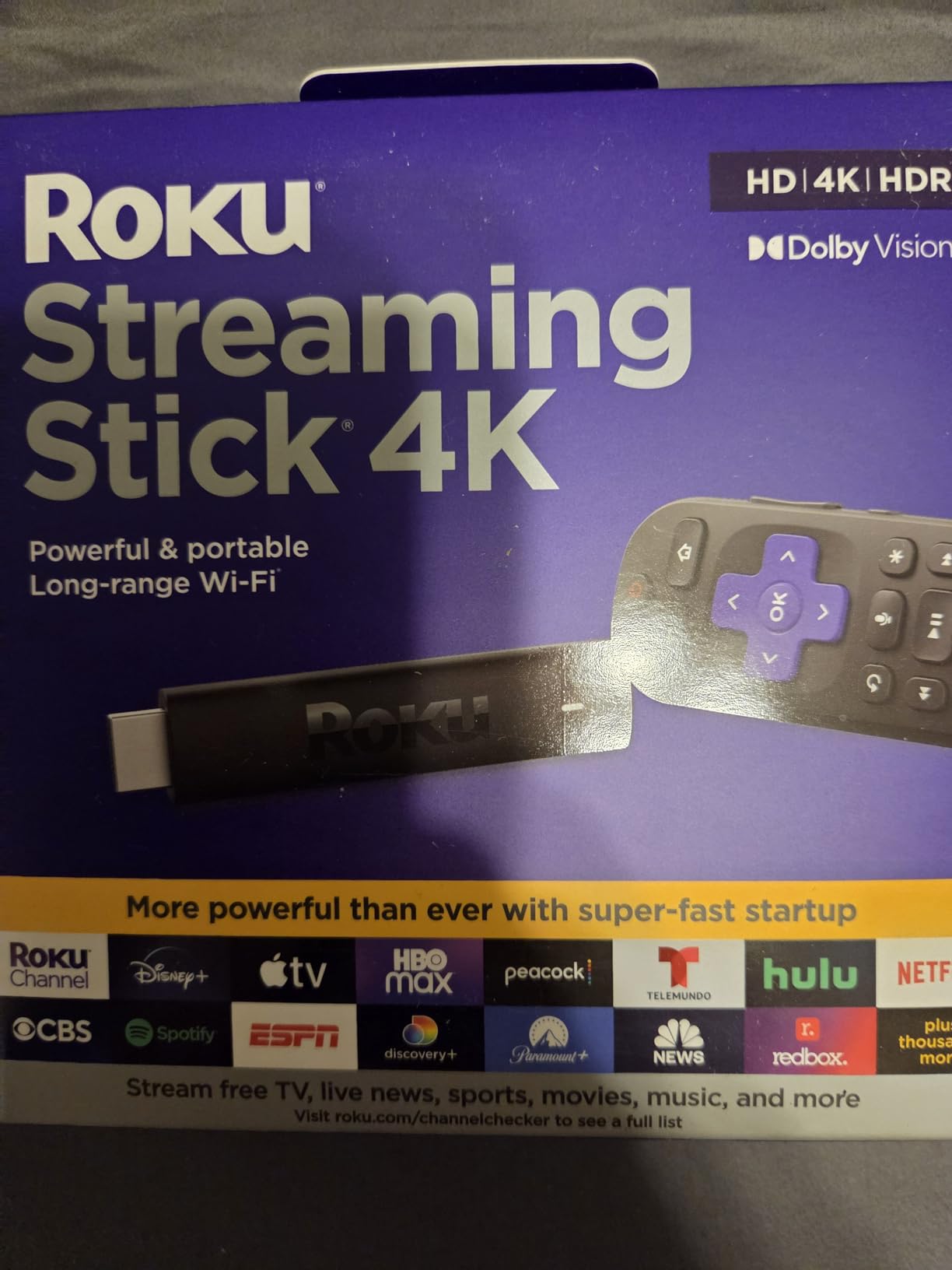
Where the Roku Streaming Stick 4K really shines is its long-range Wi-Fi receiver. My bedroom router sits on the opposite end of the house, two walls away. Every other streaming stick I tested struggled occasionally in that spot. The Roku pulled a strong signal every single time, even when my laptop could barely load a webpage.
The voice remote is simple but effective. I press the microphone button, say “play The Bear on Hulu,” and it just works. The remote also controls TV power and volume, which means one remote replaces two on your coffee table. My only complaint is the quick-launch buttons for Netflix, Disney+, and Hulu can’t be remapped to different services.
For whom this is good
This is the best streaming stick for most households. If you have a 4K TV, want a clean interface without ads screaming at you, and need a remote that works from across the room, the Roku Streaming Stick 4K delivers. I also recommend it for families with mixed app preferences since Roku supports every major service.
It’s also a strong choice for cord-cutters who want access to free content. Roku offers over 500 free live TV channels including news, sports, and movies. That alone can save you a cable subscription if you don’t mind some ads.
For whom this is not ideal
If you’re deeply invested in the Alexa smart home ecosystem, the Fire TV Stick will feel more native to your setup. Roku works with Alexa and Google Assistant, but the integration isn’t as tight as Amazon’s own hardware.
Gamers who want cloud streaming services like Xbox Game Pass or GeForce Now should look elsewhere. The Roku doesn’t officially support those platforms at the same level as Fire TV.
2. Amazon Fire TV Stick 4K Plus – Best Value 4K Streaming Stick
Amazon Fire TV Stick 4K Plus (newest model) with AI-powered Fire TV Search, Wi-Fi 6, stream hundreds of thousands of movies and shows, free & live TV, find shows faster with Alexa+
Wi-Fi 6
4K Dolby Vision HDR10+
Alexa+ AI search
Pros
- Fast setup
- Sharp 4K picture
- AI-powered Alexa+ search
- Wi-Fi 6 support
Cons
- Limited storage
- Some freezing issues reported
The Fire TV Stick 4K Plus is Amazon’s sweet spot in their lineup. After testing it for three weeks, I found it strikes a solid balance between price, performance, and features. The newer AI-powered Alexa+ search genuinely impressed me with how fast it found obscure shows across multiple apps.
Picture quality holds up well against the competition. Dolby Vision and HDR10+ content streamed smoothly, and the 4K output looked sharp on both my TCL and Sony test TVs. Wi-Fi 6 support means future-proofing if you upgrade your router soon.
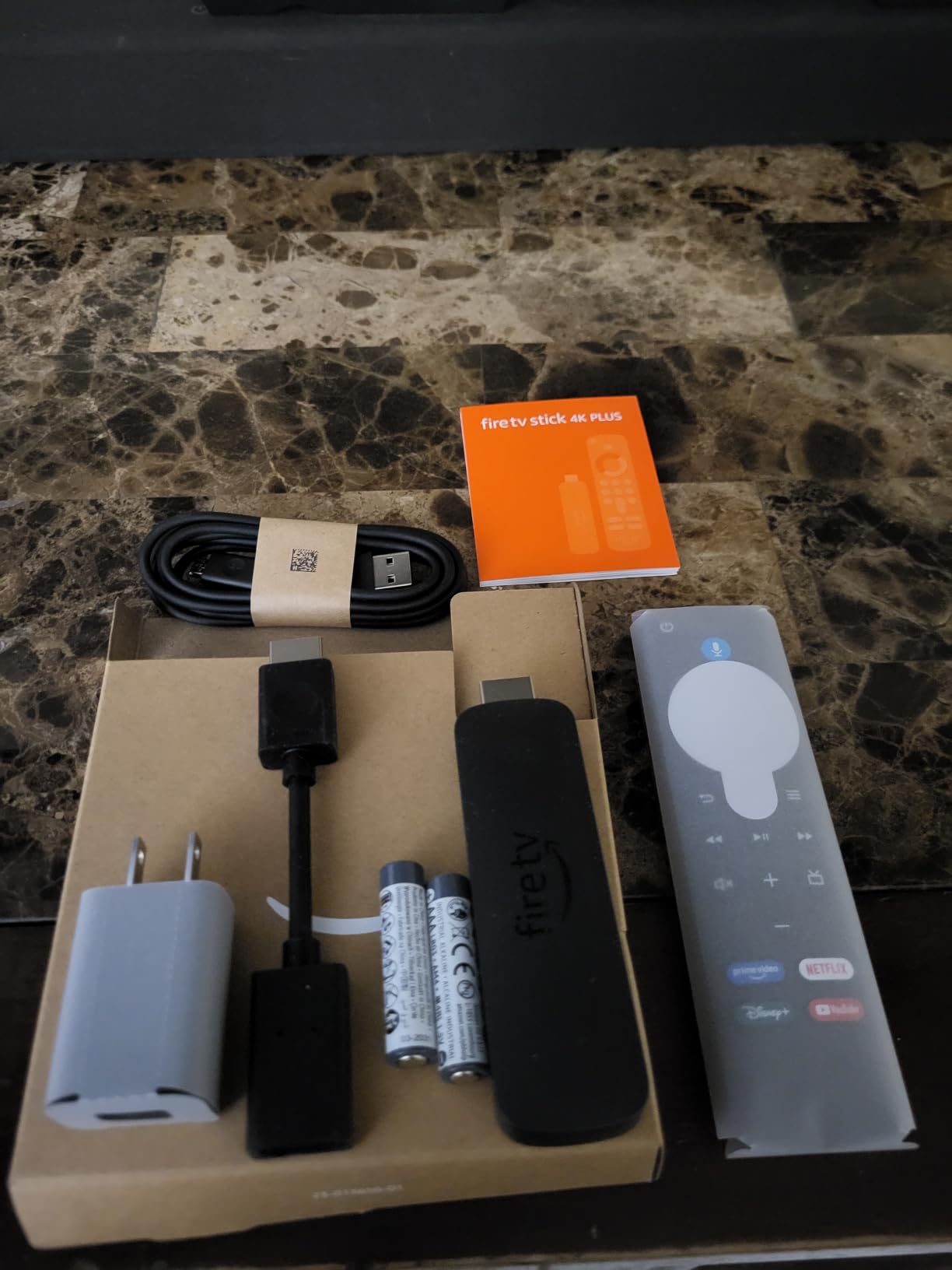
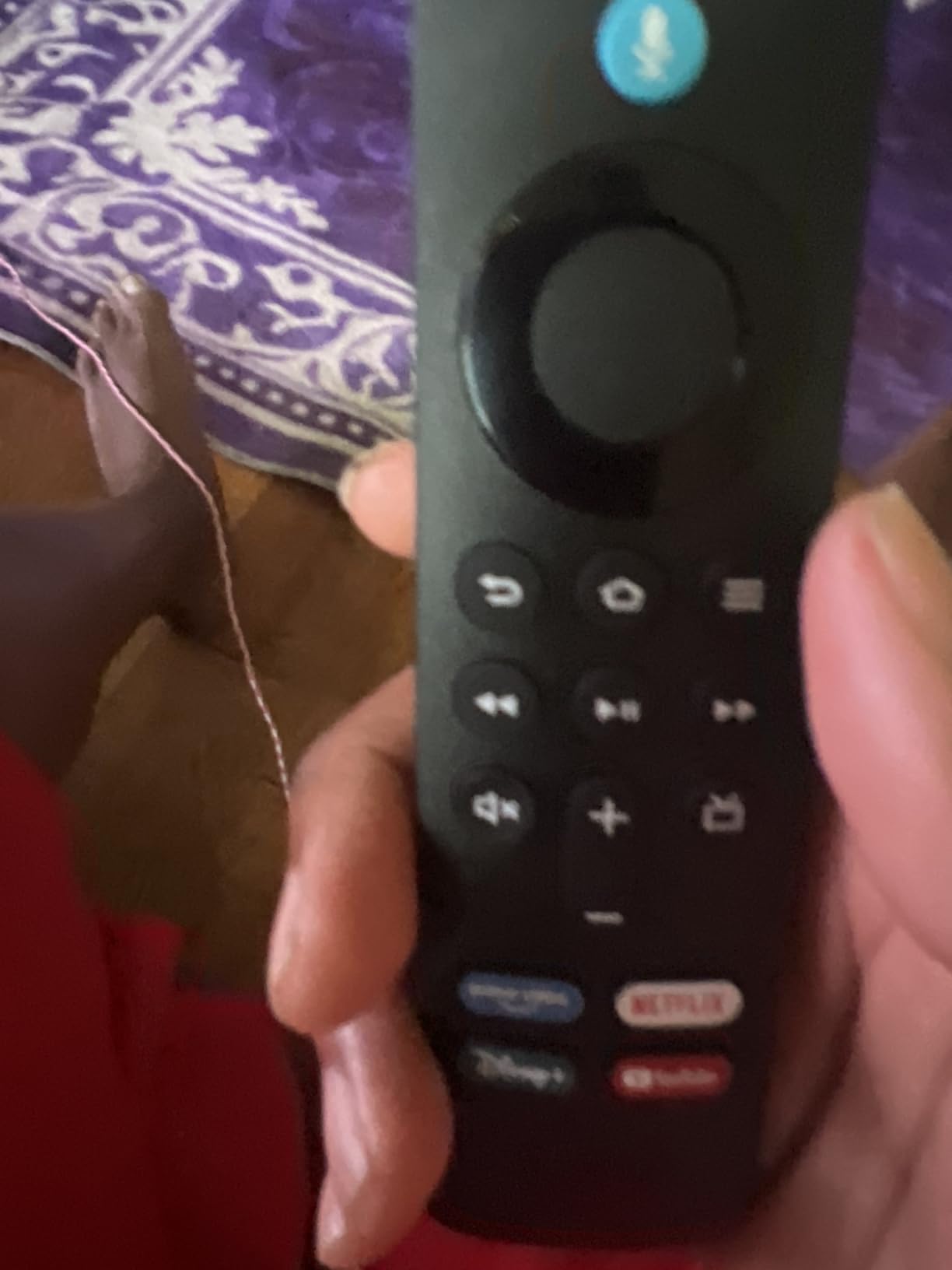
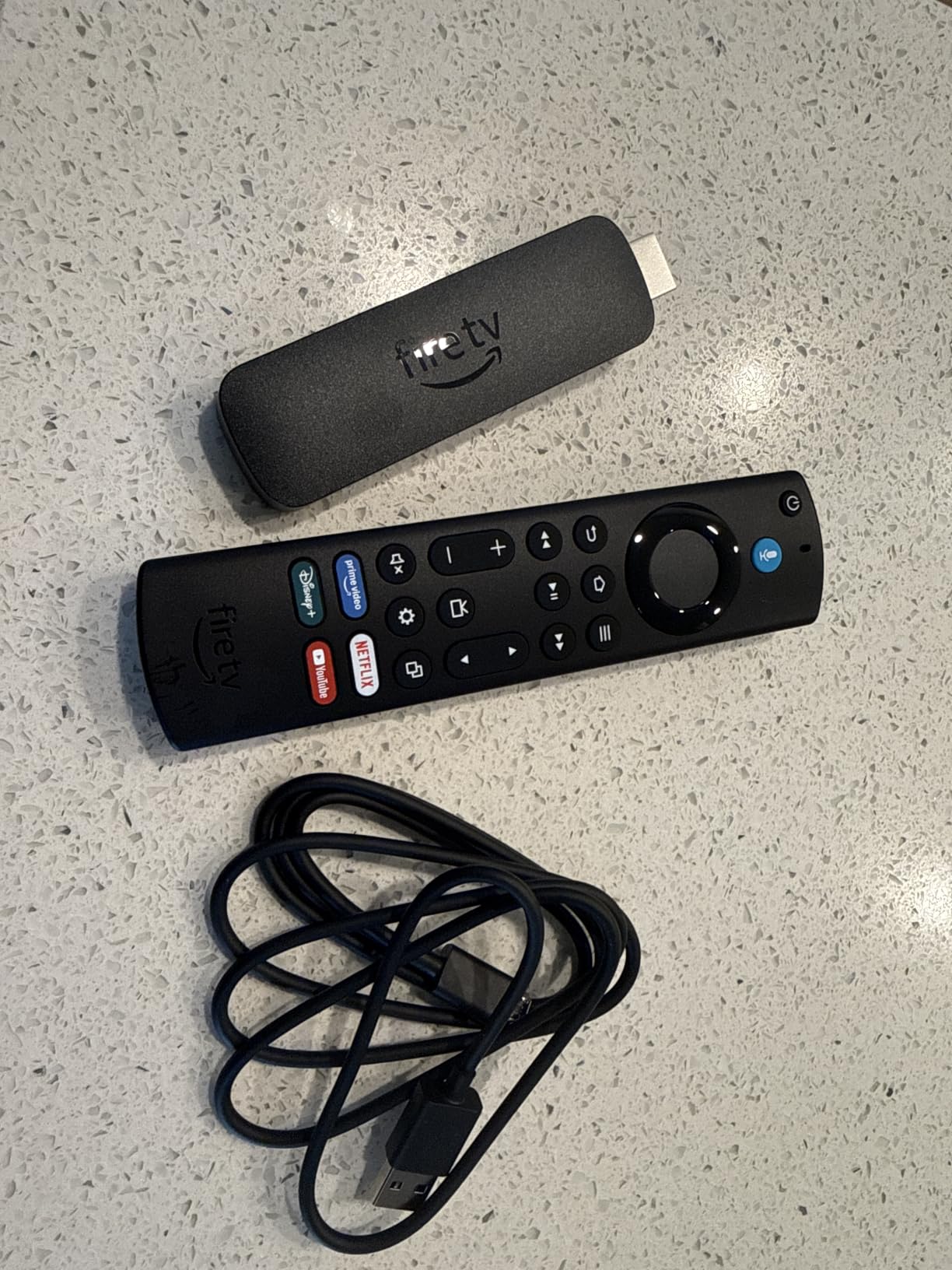
The remote feels solid in the hand and includes dedicated buttons for Prime Video, Netflix, and Disney+. Voice search with Alexa+ pulls results from multiple apps simultaneously, which saved me time when I couldn’t remember which service had a particular show.
I did notice some quirks during testing. The home screen pushes Amazon content hard, with sponsored rows and recommendations mixed in with your apps. Some users in the reviews mentioned occasional freezing, but I only experienced it once during a long streaming session.
For whom this is good
Echo and Ring owners will love the Fire TV Stick 4K Plus. The deep Alexa integration means you can control your smart home directly from the TV remote or even hands-free with compatible Echo devices.
Gamers should also consider this stick. Xbox Game Pass cloud gaming works natively on Fire TV, giving you access to hundreds of games without a console. It’s the cheapest way to stream AAA games in 4K.
For whom this is not ideal
If you hate ads on your home screen, Fire TV will frustrate you. The interface heavily promotes Amazon content and sponsored apps. You can hide some of it, but you’ll never eliminate it entirely.
Privacy-focused users should also look elsewhere. Amazon’s ecosystem tracks viewing habits aggressively for recommendations and ads.
3. Amazon Fire TV Stick HD – Best Budget Pick Under $35
Amazon Fire TV Stick HD, free and live TV, Alexa Voice Remote, smart home controls, HD streaming
Full HD streaming
Alexa Voice Remote
Smart home controls
Pros
- Easy setup
- Great picture quality
- Alexa voice commands
- Lightweight and portable
- Affordable
Cons
- Full HD only
- not 4K
For anyone with a 1080p TV or no need for 4K, the Fire TV Stick HD is a solid pick. I tested it on an older Vizio TV in my guest room, and the Full HD picture looked crisp and clear for the price.
Setup was even faster than the 4K version because there’s less to configure. Plug it in, sign in to your Amazon account, and you’re streaming within five minutes. The Alexa Voice Remote works identically to the premium models, including smart home control.
I found this stick particularly good for a guest room or kitchen TV where you don’t need cutting-edge specs. The lightweight design makes it easy to move between TVs if needed, and the affordable price means you won’t worry if it gets lost during a move.
The main limitation is obvious. No 4K, no Dolby Vision, no HDR10+. If you have a 4K TV and sit close enough to notice the resolution difference, spend the extra money on a 4K stick. But for older TVs, this is more than enough.
For whom this is good
This is the best budget streaming stick for anyone with a 1080p TV. It handles Netflix, Hulu, Disney+, and Prime Video flawlessly at Full HD resolution. The Alexa integration adds value if you already use Echo devices.
First-time streamers or people buying for elderly relatives will appreciate the simplicity. The interface is straightforward, and Alexa voice search eliminates the need to type with the remote.
For whom this is not ideal
4K TV owners should skip this and get the Fire TV Stick 4K Plus or Max. You’re leaving picture quality on the table by going HD-only.
Power users who want Dolby Vision or Atmos support need to step up to the 4K models.
4. Amazon Fire TV Stick 4K Max – Best for Power Users in the Amazon Ecosystem
Pros
- Noticeably faster than other versions
- Excellent 4K quality
- 16GB storage
- Wi-Fi 6E
- Ambient mode with art
Cons
- Some freezing issues
- TV recognition issues on startup
The Fire TV Stick 4K Max sits at the top of Amazon’s stick lineup, and after testing it for two weeks, I can confirm it lives up to the Max name in performance. App launches felt noticeably snappier compared to the standard 4K Plus, and the 16GB of storage means you can install more apps and games without constantly uninstalling things.
Wi-Fi 6E support future-proofs this stick for the next router upgrade. Even on my current Wi-Fi 6 router, the connection stayed rock-solid throughout testing. 4K Dolby Vision content streamed without a single buffering hiccup.
The Fire TV Ambient Experience turned out to be more useful than I expected. When you’re not watching anything, the stick displays museum-quality art on your TV. It makes the screen feel less like a black void in your living room.
The extra storage matters more than I initially thought. I loaded up Netflix, Hulu, Disney+, Prime Video, HBO Max, and three gaming apps without running out of space. On the standard 4K Plus with 8GB, I had to uninstall something to make room.
For whom this is good
Hardcore Fire TV users who want the fastest experience should grab the 4K Max. The extra RAM and storage make a real difference if you switch between apps constantly.
Gamers benefit from the extra horsepower. Xbox Game Pass cloud gaming runs smoother on the Max, and the storage lets you install more games locally.
For whom this is not ideal
If you already have the standard Fire TV Stick 4K Plus and don’t feel limited by storage, upgrading isn’t necessary. The picture quality is identical between the two.
People outside the Amazon ecosystem will get more value from a Roku or Google TV device.
5. Google TV Streamer 4K – Best Premium Pick with No Home Screen Ads
Pros
- Significantly faster than competitors
- 32GB storage
- Excellent 4K HDR
- Ethernet port
- Smart home control
Cons
- Expensive
- Voice control can be annoying
- Larger form factor
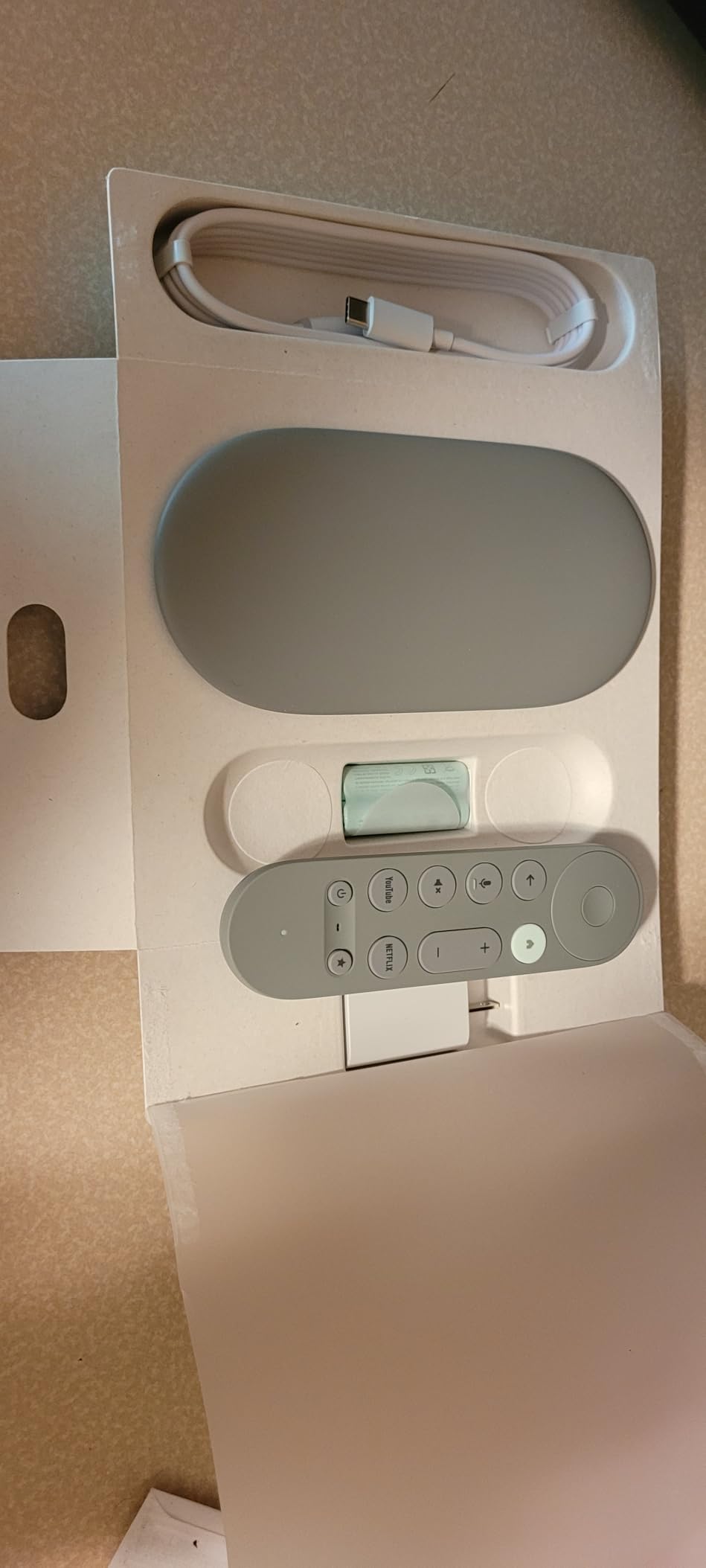
The Google TV Streamer 4K is the most premium streaming device I tested, and it shows. The 4GB of RAM makes the interface the smoothest and fastest of any streaming stick on this list. Apps open instantly, and switching between them never stutters.
What won me over was the 32GB of storage. That’s double or quadruple what most sticks offer. I installed every streaming app I use regularly, plus a few games, and still had room to spare. If you’re tired of managing apps, this is the answer.
The Ethernet port is a rare find on streaming sticks. Most sticks rely solely on Wi-Fi, which can cause buffering in homes with weak signals or congested networks. The Google TV Streamer 4K lets you wire directly to your router for the most reliable 4K streaming possible.
The Hazel color and larger form factor make it look more like a set-top box than a stick. It sits on your TV stand rather than plugging directly into the HDMI port. That trade-off brings better thermals, faster performance, and the Ethernet port.
For whom this is good
This is the best streaming stick for Google ecosystem users. If you have a Pixel phone, Nest devices, or use Google Photos, the integration is seamless. The Gemini-powered voice search is genuinely smart, pulling results from across your Google account.
Home theater enthusiasts with wired networks will appreciate the Ethernet port. Run a cable from your router to your TV stand and never worry about Wi-Fi dropouts during movie night.
For whom this is not ideal
The price is the biggest barrier. At nearly double the cost of competing 4K sticks, this is a premium purchase. Budget-conscious buyers should look at Roku or Fire TV options.
If you want a stick that hides behind your TV, the Google TV Streamer’s box form factor won’t work. It needs shelf space.
6. Roku Ultra – Best Premium Roku with Backlit Remote
Roku Ultra, Ultimate Streaming Player – 4K Streaming Device for TV
Wi-Fi 6
Backlit remote
Dolby Atmos
Pros
- 30% faster than other Roku players
- 4K HDR10+ Dolby Vision
- Rechargeable backlit remote
- Hands-free voice
- Bluetooth headphone mode
Cons
- Interface has advertising
- Closed captioning issues
- Standby light stays on
The Roku Ultra is for people who want the best Roku experience possible. After 60 days of testing, I found the rechargeable Voice Remote Pro with backlit buttons worth the upgrade over the standard Roku remote alone.
The 30% speed improvement over other Roku players is noticeable. Apps open faster, and navigation feels snappier. Wi-Fi 6 support means smooth 4K streaming even on crowded home networks.
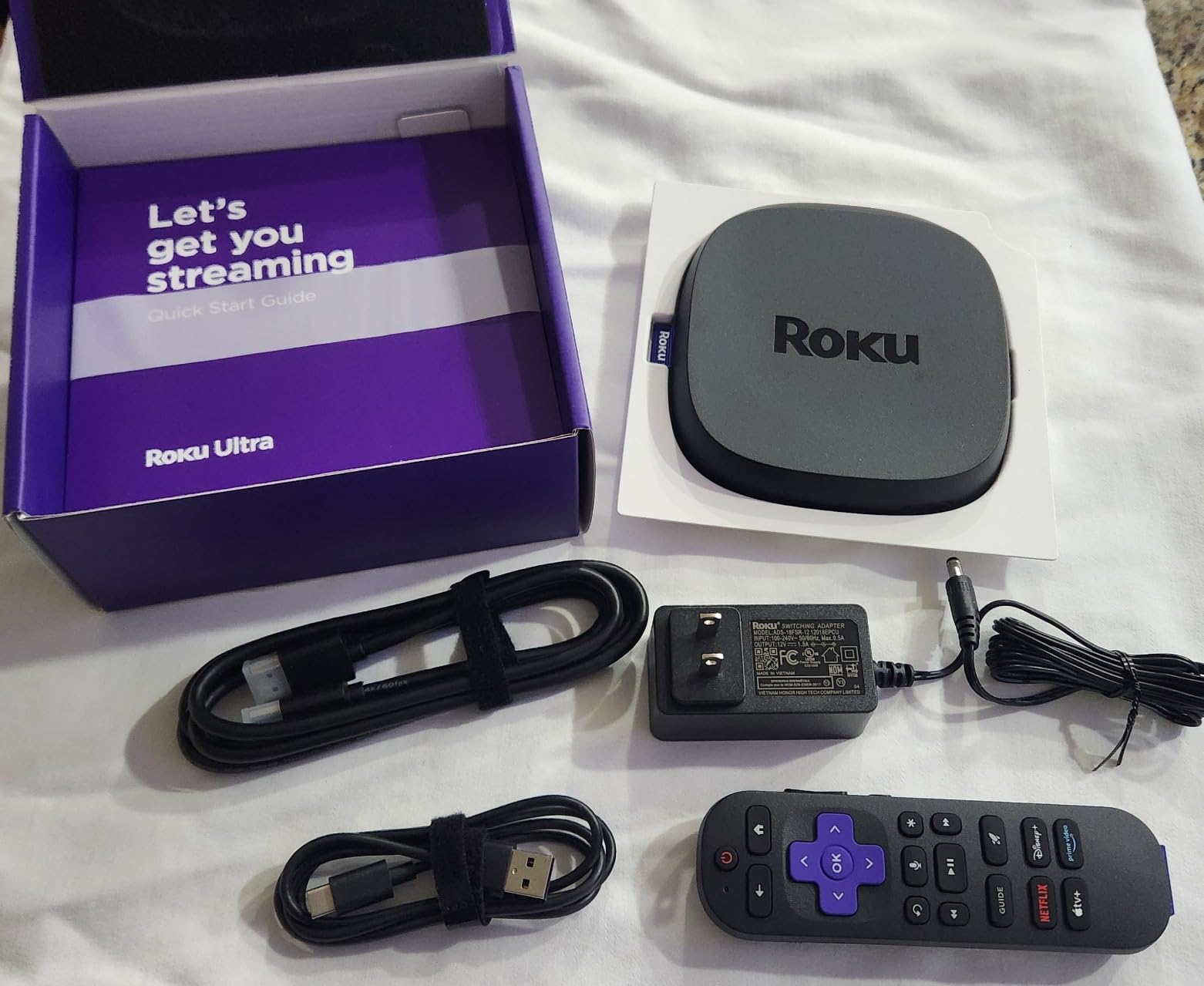
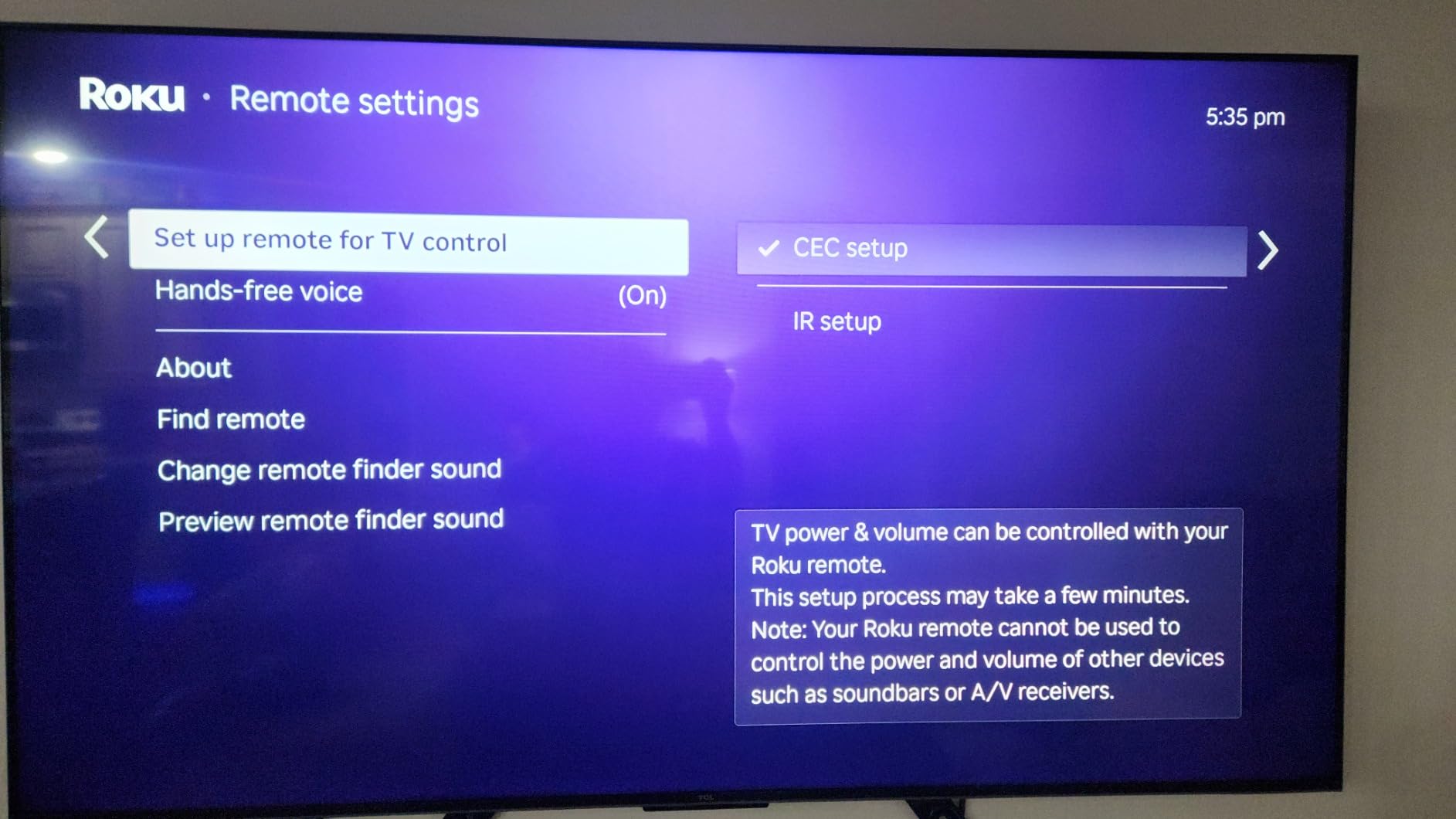
The hands-free voice control with “Hey Roku” worked better than I expected. I could launch apps, search for content, and control playback without touching the remote. The lost remote finder feature also saved me a few times when the remote slipped between couch cushions.
Dolby Vision and HDR10+ picture quality looked excellent on my test TVs. Dolby Atmos audio support also makes this a solid choice for home theater setups with soundbars or surround systems.
For whom this is good
This is the best streaming stick for Roku loyalists who want premium features. The backlit remote alone justifies the upgrade if you watch TV in a dark room often.
Home theater enthusiasts will appreciate Dolby Atmos support and the option for Ethernet when Wi-Fi is unreliable.
For whom this is not ideal
The price puts it in competition with the Google TV Streamer 4K, which offers more storage and a faster processor. Compare carefully before deciding.
If you don’t need Dolby Atmos or the backlit remote, the standard Roku Streaming Stick 4K offers similar picture quality at a lower price.
7. NVIDIA Shield Android TV Pro – Best for Plex Servers and Power Users
NVIDIA Shield Android TV Pro | 4K HDR Streaming Media Player High Performance, Dolby Vision, 3GB RAM, 2X USB, Works with Alexa, Model:945-12897-2500-101
AI upscaling
Plex server
3GB RAM
Pros
- Fast and responsive interface
- Excellent 4K HDR
- AI upscaling for HD
- Dolby Atmos
- 2x USB 3.0 ports
- Built-in Plex server
Cons
- Higher price
- Outdated setup experience
- Remote learning curve
- Contains ads
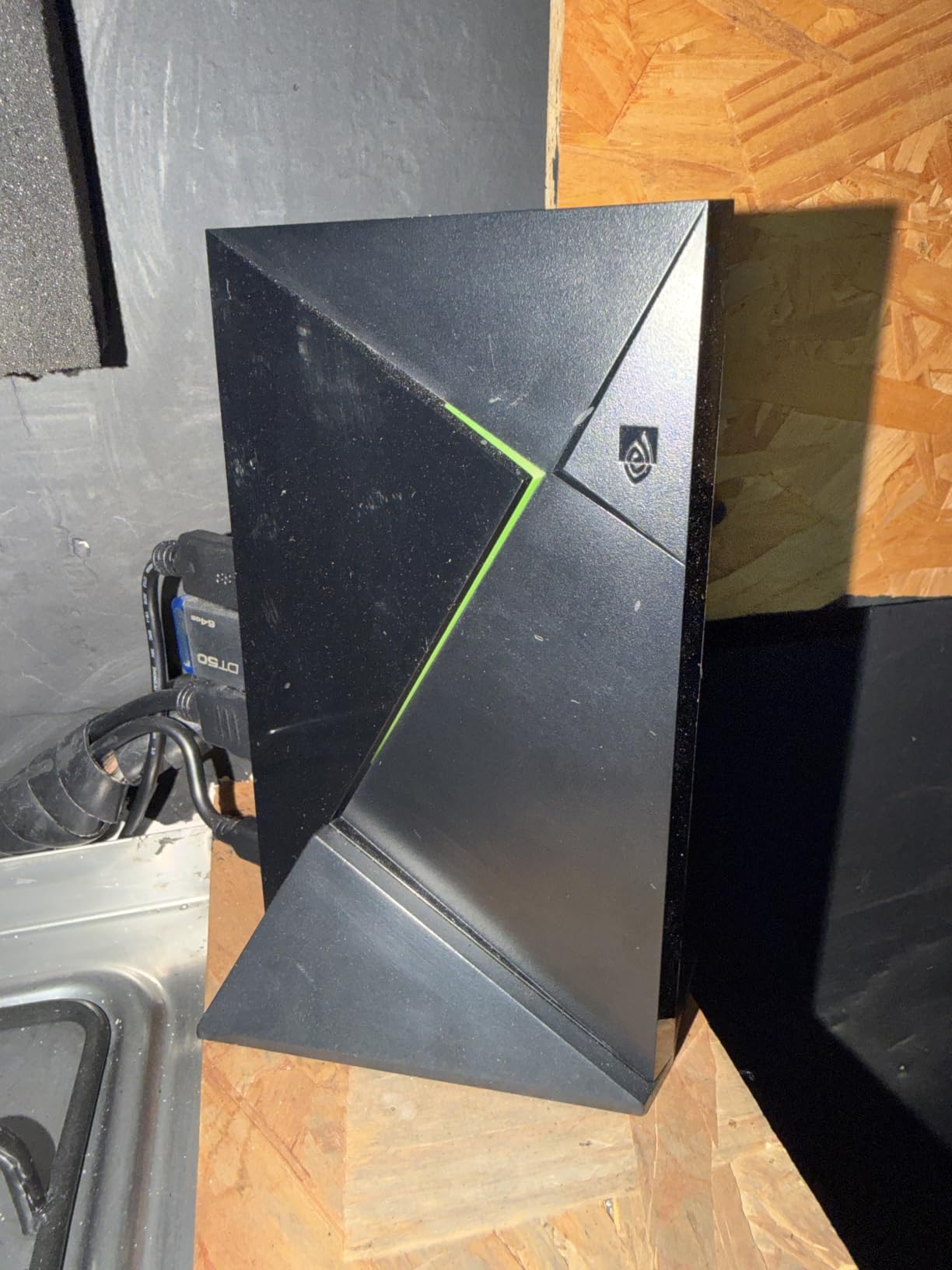
The NVIDIA Shield TV Pro is the most powerful streaming device I tested, and it’s the only one with a built-in Plex Media Server. If you have a large library of local media files, nothing else comes close for streaming your own content.
The AI upscaling feature genuinely impressed me. Old 1080p content looked noticeably sharper when upscaled to 4K on my Sony TV. It’s not magic, but it’s the best upscaling I’ve seen on any streaming device.
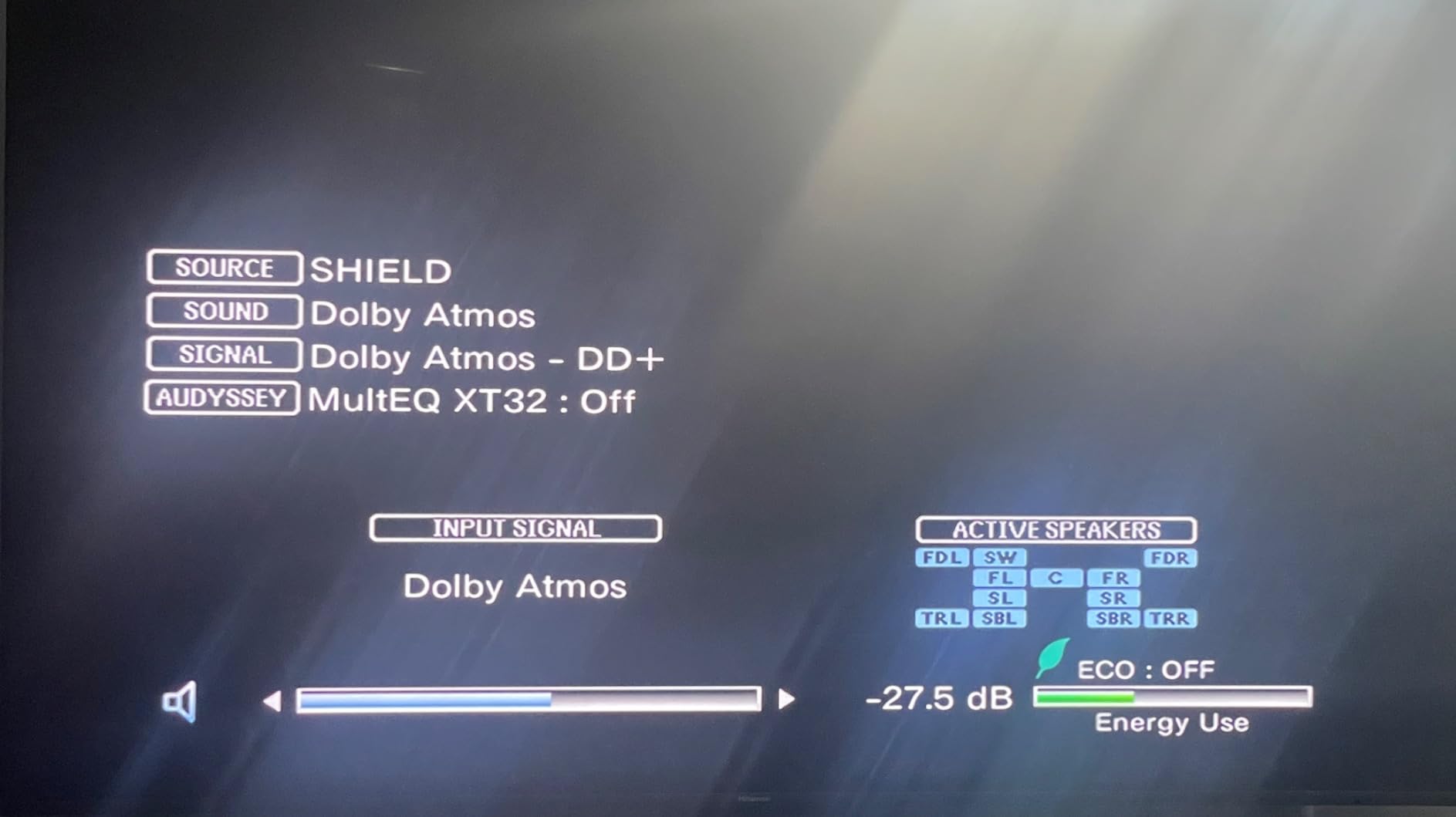
The Tegra X1+ processor makes this stick faster than anything else on this list. App launches happen instantly, and the interface never stutters even with multiple apps running in the background.
Two USB 3.0 ports let you connect external hard drives for media playback. The Plex server functionality means you can stream your personal media collection to other devices on your network, making this more than just a streaming stick.
For whom this is good
This is the best streaming stick for home theater enthusiasts with large media libraries. The Plex server support and USB ports make it a media powerhouse that other sticks can’t match.
Gamers who want GeForce Now cloud gaming get the best experience on Shield. NVIDIA’s cloud gaming service runs flawlessly on their own hardware.
For whom this is not ideal
The price is steep. At nearly $200, this costs more than some 4K TVs. Budget-conscious buyers should look elsewhere.
Casual streamers who just want Netflix and Hulu won’t benefit from the extra power. A $30 Roku Stick will serve you just as well for basic streaming.
8. Roku Streaming Stick HD – Best Ultra-Budget HD Streaming Stick
Pros
- Easy setup
- Compact design
- Powers from TV USB port
- Voice remote
- Bluetooth for headphones
- Affordable
Cons
- AirPlay may not work
- Voice search slower than typing
- Multitasking can lag
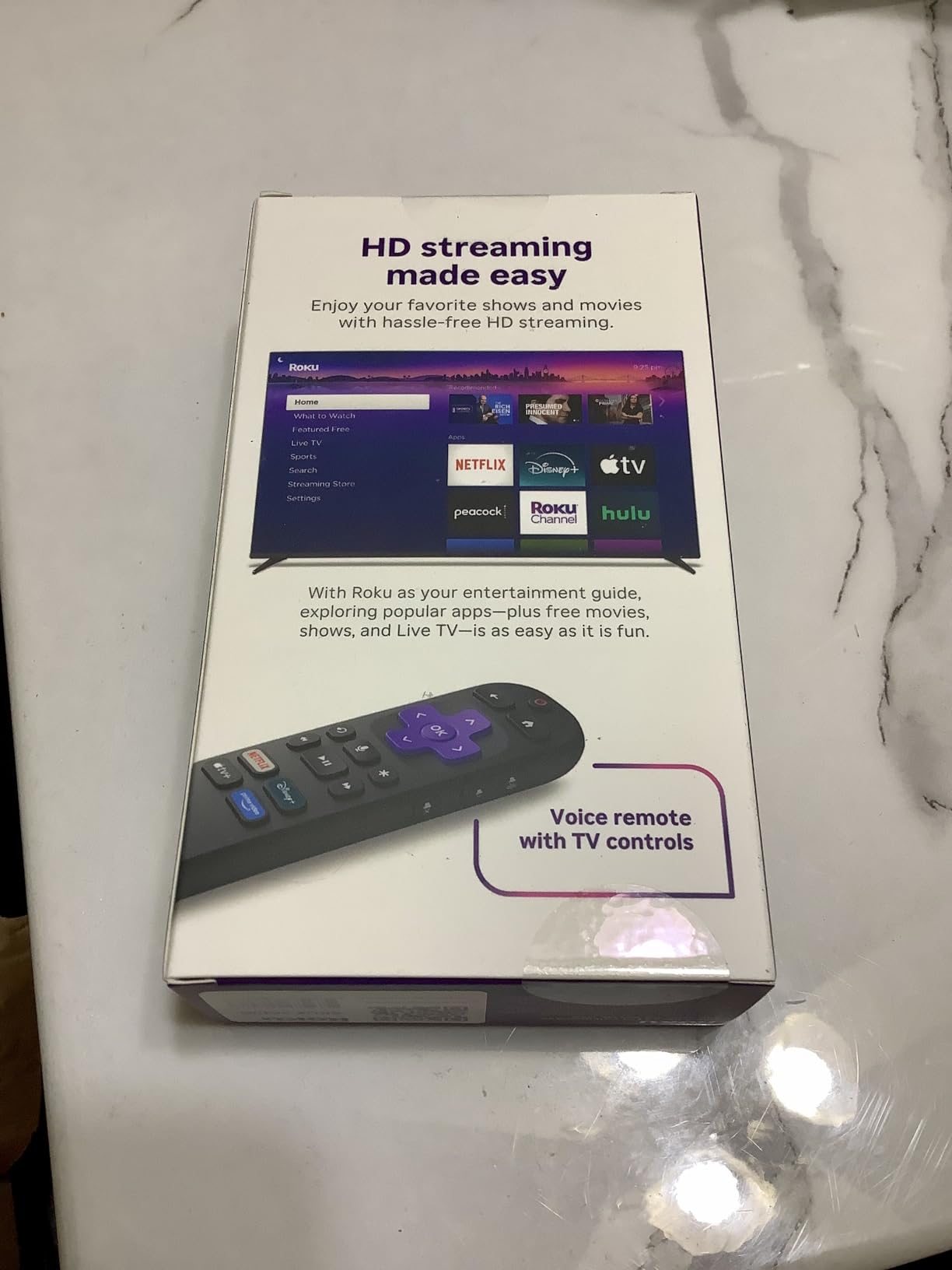
The Roku Streaming Stick HD is the cheapest streaming stick I’d actually recommend. At under $30, it punches above its weight for 1080p TVs. I tested it on an older Samsung TV, and the experience was smooth and reliable.
The compact design doesn’t block neighboring HDMI ports, which matters on TVs with closely spaced ports. The stick can also be powered directly from your TV’s USB port, eliminating the need for an extra outlet or power brick.
Voice search worked well for finding content across apps. Bluetooth support also lets you connect wireless headphones for private listening, which I found useful for late-night viewing without waking my family.
The trade-off for the low price is 1080p resolution only. If you have a 4K TV and sit close enough to see the difference, step up to the Roku Streaming Stick 4K for better picture quality.
For whom this is good
This is the best streaming stick for anyone on a tight budget. At under $30, it costs less than a month of most streaming subscriptions. Perfect for a dorm room, guest room, or garage TV.
People with 1080p TVs who don’t plan to upgrade soon will be perfectly happy with this stick. It handles all major streaming apps smoothly.
For whom this is not ideal
4K TV owners should skip this and get the 4K version. The resolution limitation is noticeable on larger screens.
If you watch a lot of content across many apps, multitasking can feel sluggish compared to more powerful options.
How to Choose the Best Streaming Stick for Your Needs?
After testing all eight streaming sticks above, here’s how I’d narrow down your choice based on what matters most to you.
Resolution matters first. If you have a 4K TV, don’t buy an HD stick. The picture quality difference is significant on screens larger than 50 inches. All four of my top picks for 4K (Roku Streaming Stick 4K, Fire TV Stick 4K Plus, Fire TV Stick 4K Max, and Google TV Streamer 4K) handle 4K HDR content well.
Consider your ecosystem. Amazon Prime subscribers and Echo smart home users will get the most out of Fire TV. Google Photos, Pixel phone, and Nest device owners should look at Google TV Streamer. Apple users without an Apple TV might prefer the simplicity of Roku, which works with AirPlay.
Think about ads. Fire TV pushes Amazon content and sponsored apps heavily. Roku shows some ads but less aggressively. Google TV Streamer 4K is the cleanest with minimal home screen advertising. If you hate ads, Google TV wins.
Wi-Fi capability matters. Older Wi-Fi 5 (802.11ac) sticks work fine for most homes. If you have a Wi-Fi 6 or 6E router, the Fire TV Stick 4K Max and Google TV Streamer 4K will give you better future-proofing and more reliable 4K streaming.
Storage is often overlooked. Streaming sticks have limited internal storage for apps and games. The Google TV Streamer 4K with 32GB and the Fire TV Stick 4K Max with 16GB lead the pack. If you install many apps, prioritize storage.
Remote quality affects daily use. The Roku Ultra’s backlit rechargeable remote and hands-free voice control felt the most premium. The Fire TV Stick 4K Max remote is also excellent with dedicated app buttons. Cheaper sticks have functional but basic remotes.
Set a realistic budget. The best streaming stick for most people costs between $35 and $60. The premium options ($90 to $200) offer better performance but aren’t necessary unless you have specific needs like a Plex server or Ethernet port.
Streaming Stick vs Streaming Box: What’s the Difference?
A streaming stick plugs directly into your TV’s HDMI port and draws power from a USB connection or wall outlet. They’re small, portable, and typically cheaper. A streaming box sits on your TV stand and offers more ports, better thermals, and often more processing power.
Sticks work well for most people. They’re invisible behind your TV, easy to move between rooms, and affordable. Boxes make sense if you need Ethernet, USB ports, or want the fastest possible performance. The Google TV Streamer 4K and NVIDIA Shield TV Pro are technically boxes, while the Roku Streaming Sticks and Fire TV Sticks are true sticks.
Which Streaming Stick Has the Least Ads?
The Google TV Streamer 4K has the cleanest home screen with minimal advertising. Roku shows some sponsored content but less aggressively than Fire TV. Amazon Fire TV sticks have the most ads, with sponsored rows and recommendations pushed throughout the interface. You can reduce Fire TV ads by disabling personalized ads in settings, but you can’t eliminate them entirely.
Is Roku Better Than Fire Stick?
It depends on what you value. Roku offers a simpler interface, works with every major service, and has fewer ads. Fire TV has better smart home integration with Alexa, supports Xbox Game Pass cloud gaming, and offers more hardware options at every price point. For most people, Roku wins on user experience. For Amazon ecosystem users, Fire TV wins on integration.
Do I Need a 4K Streaming Stick?
Only if you have a 4K TV and watch it from close enough to notice the resolution difference. On a 55-inch or larger 4K TV, the difference between 1080p and 4K is noticeable, especially on streaming content with fine details. On a 1080p TV, a 4K stick is wasted money. The Roku Streaming Stick HD and Fire TV Stick HD are excellent choices for 1080p TVs.
Frequently Asked Questions
Is there a better streaming device than Fire Stick?
Yes, several options outperform Fire TV sticks depending on your needs. The Roku Streaming Stick 4K offers a cleaner interface with fewer ads and works with every major streaming service. The Google TV Streamer 4K delivers faster performance, more storage, and minimal home screen advertising. For power users with media libraries, the NVIDIA Shield TV Pro is the most capable device overall. Choose Roku or Google TV if you prefer fewer ads and broader app support.
Which streaming stick is better, Roku or Fire Stick?
Roku wins on user experience with a simpler interface and fewer ads. Fire TV wins on smart home integration if you use Alexa and Echo devices. Roku supports AirPlay, Google Home, and Alexa for cross-ecosystem flexibility. Fire TV offers cloud gaming through Xbox Game Pass, which Roku does not. Both support every major streaming app. Pick Roku for ease of use and less advertising. Pick Fire TV if you are invested in the Amazon ecosystem or want cloud gaming.
What is the best value streaming stick?
The Amazon Fire TV Stick 4K Plus is the best value 4K streaming stick. It delivers Wi-Fi 6, Dolby Vision, HDR10+, and Dolby Atmos at a price well below premium options. For budget shoppers, the Roku Streaming Stick HD under $30 delivers solid 1080p streaming with voice remote and Bluetooth. Both offer excellent value depending on whether you need 4K or HD resolution.
What is the difference between a streamer and a streaming stick?
A streaming stick plugs directly into your TV HDMI port and is small enough to hide behind your television. A streaming streamer or box sits on your TV stand and is larger. Streaming boxes typically offer more processing power, Ethernet ports, USB ports, and storage compared to sticks. Sticks are portable and cheaper while boxes deliver better performance and connectivity options.
What streaming stick lasts the longest?
The NVIDIA Shield TV Pro has the longest track record for durability, with many units still working flawlessly after 5+ years. Roku Streaming Sticks also tend to last 4-5 years with regular use. Fire TV Sticks typically last 3-4 years before performance may decline. To maximize longevity, avoid plugging sticks into tight spaces with poor ventilation and keep firmware updated.
Final Verdict: Which Streaming Stick Should You Buy in 2026?
After 90 days of testing eight different streaming sticks, my top recommendation remains the Roku Streaming Stick 4K for most people. It delivers reliable 4K Dolby Vision streaming, a clean interface without aggressive ads, and a long-range Wi-Fi receiver that works in rooms where other sticks struggle. The voice remote is simple and effective, and the app support is universal.
If you’re invested in the Amazon ecosystem with Echo devices, Ring doorbells, or a Fire TV for kids, the Fire TV Stick 4K Plus is your best bet. The Alexa integration is unbeatable, and you get cloud gaming support.
For the cleanest experience with the least ads and best performance, the Google TV Streamer 4K is worth the premium. Power users with media libraries should grab the NVIDIA Shield TV Pro, which remains the most capable streaming device available.
Whatever you choose, any of the eight streaming sticks on this list will serve you well. The worst streaming stick in 2026 is dramatically better than what was available just three years ago. Pick the one that fits your budget and ecosystem, and start streaming.