
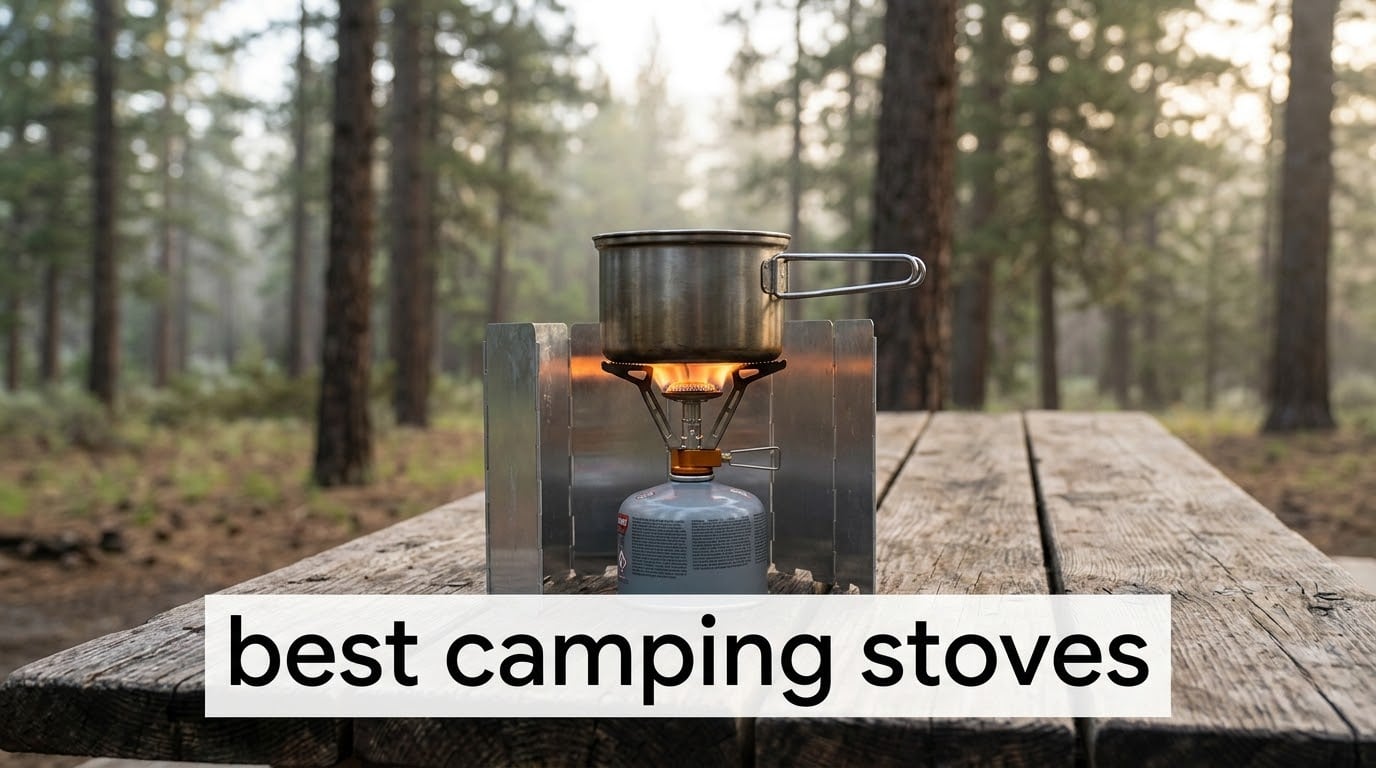
Short answer: the best camping stove depends on how far you walk and how many people you feed. Backpackers want a light canister burner, car campers want a two-burner propane cooktop, and anyone cooking real food needs flame control rather than raw BTUs. After comparing 10 of the most reviewed portable stoves on the market, these are the ones worth your attention in 2026.
Every stove below is a single-unit cooktop you screw, clip or hose onto a fuel source. None of them includes fuel, and most come without a pot or windscreen, so budget for those extras before you decide you have picked the cheap option.
We weighed heat output, wind resistance, flame control, packed weight and real-world fuel handling across this list. If you are upgrading a home stove setup rather than a tent stove, our wood stove reviews cover the other end of the range.
Table of Contents
- Top 3 Camping Stove Picks in 2026
- All 10 Best Camping Stoves Compared (September 2026)
- 1. Gas One GS-3400P – Best Overall Camping Stove
- 2. Camp Chef Explorer – Best Two Burner Stove for Big Meals
- 3. Coleman Bottletop Stove – Best Value Single Burner
- 4. AOTU Portable Stove – Best Ultralight Canister Stove
- 5. Coleman Triton – Best Two Burner for Families
- 6. Chef Master 15,000 BTU – Best Butane Stove for High Heat
- 7. Odoland Windproof Stove – Dual-Fuel Pick for Picnics and Travel
- 8. Coleman Classic Three Burner – Best Stove for Large Groups
- 9. Jetboil Genesis – Best for Fine Simmer Control
- 10. Vivicreate Two Burner – Stainless Cooktop for Patios and RV Trips
- How We Tested and How to Choose a Camping Stove
- Butane vs Propane: The Head-to-Head
- Frequently Asked Questions
- Final Verdict: The Best Camping Stoves in 2026
Top 3 Camping Stove Picks in 2026
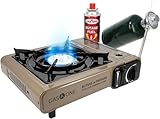
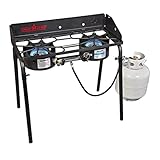
Camp Chef Explorer Two Burner
- Dual 30
- 000 BTU burners
- Three-sided windscreen
- Camp Chef 14 inch compatible
All 10 Best Camping Stoves Compared (September 2026)
| Product | Specs | Action |
|---|---|---|
| Gas One GS-3400P Dual Fuel Stove |
|
Check Latest Price |
| Camp Chef Explorer Two Burner Stove |
|
Check Latest Price |
 Coleman Bottletop Propane Stove Coleman Bottletop Propane Stove |
|
Check Latest Price |
 AOTU Portable Backpacking Stove AOTU Portable Backpacking Stove |
|
Check Latest Price |
 Coleman Triton Two Burner Stove Coleman Triton Two Burner Stove |
|
Check Latest Price |
 Chef Master 15000 BTU Butane Stove Chef Master 15000 BTU Butane Stove |
|
Check Latest Price |
 Odoland Windproof Camp Stove Odoland Windproof Camp Stove |
|
Check Latest Price |
 Coleman Classic Three Burner Stove Coleman Classic Three Burner Stove |
|
Check Latest Price |
 Jetboil Genesis Basecamp Stove Jetboil Genesis Basecamp Stove |
|
Check Latest Price |
 Vivicreate Two Burner Propane Stove Vivicreate Two Burner Propane Stove |
|
Check Latest Price |
1. Gas One GS-3400P – Best Overall Camping Stove
Gas One GS-3400P Propane or Butane Stove Dual Fuel Stove Portable Camping Stove – Patented – with Carrying Case Great for Emergency Preparedness Kit
Butane or propane
3.1 pounds
Piezo ignition
Pressure sensor cut-off
Pros
- Runs on butane or propane
- No lighter or matches needed
- Adjustable heat dial
- Built-in pressure sensor and gas flow cut-off
- Carrying case included
Cons
- Fuel not included
- Single burner only
- Butane cartridge ejection can be sensitive
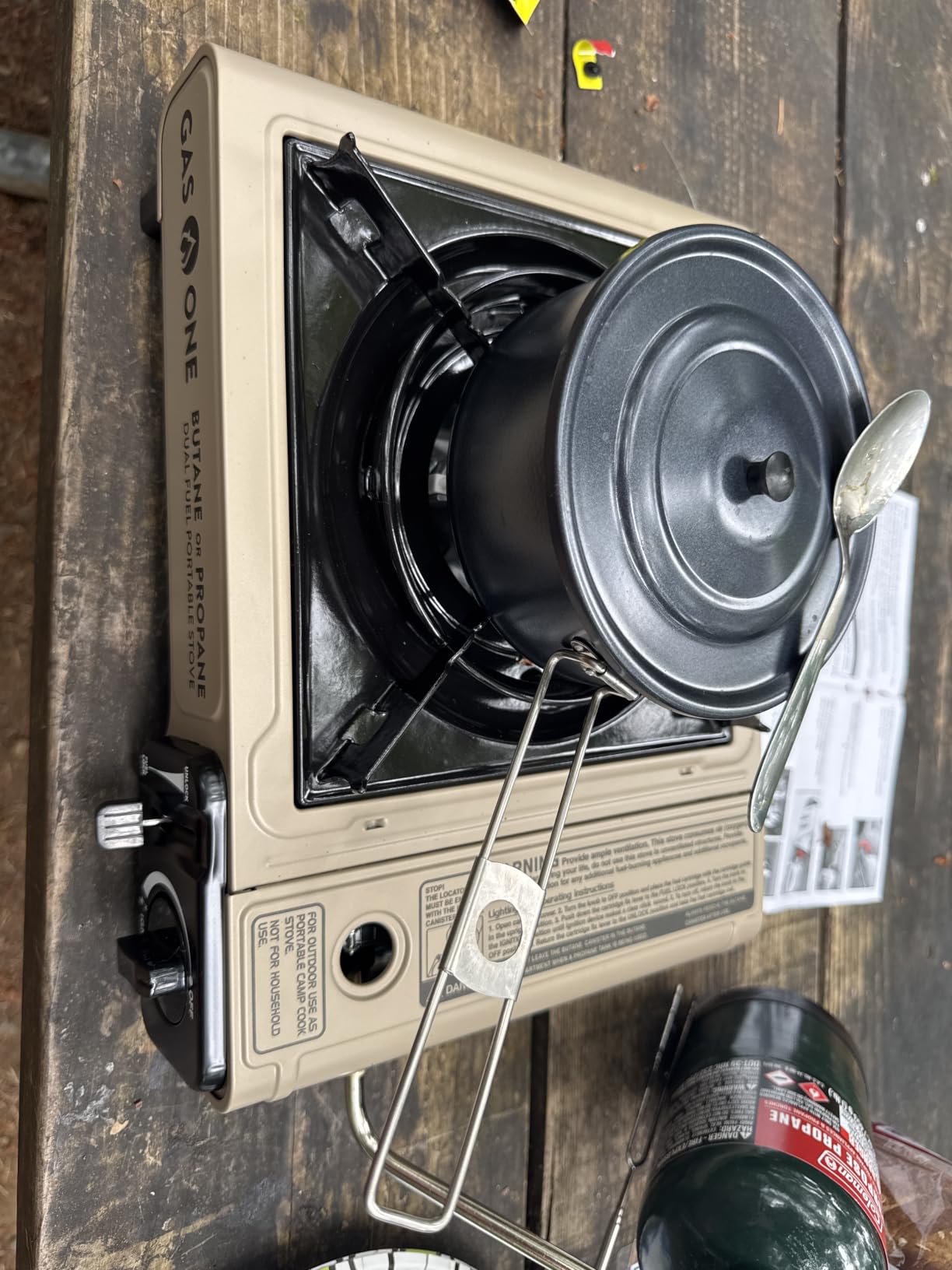
The GS-3400P is the stove I keep in the car for weekend trips, and it is the one I hand to friends who ask a single question: which one will not let me down. It runs on an 8 oz butane cartridge or a 16.4 oz propane cylinder, and the included converter regulator is what makes the second option possible.
That dual-fuel flexibility is the whole pitch. If you are camping in the States, propane cylinders are on every gas station shelf, so a failure does not end your trip. If you are packing light, butane is smaller and lighter to carry.
Ignition is automatic piezo, so there is no lighter hunt in the rain at dusk. The heat dial adjusts across a usable range rather than snapping between fixed settings, which matters more than the raw number on the box when you are reducing a pan sauce.
Two safety features stand out. A pressure sensor ejects the cartridge when it detects irregular pressure, and a gas flow cut-off shuts the burner down, which is exactly the failure mode cheap tabletop stoves have.
The downsides are honest ones. Fuel is not included, there is a single burner only, and the cartridge ejection can trigger more eagerly than some users would like when a warm canister is fitted.
Who the GS-3400P suits
Car campers, emergency kit builders and anyone who wants one stove that covers both fuel formats. At 3.1 pounds it is carryable to a car camp but it is not a hiking stove, and I would not put it in a thru-hiker pack.
Reviewers consistently single out the piezo ignition and the adjustability of the dial as the reasons they keep buying it, and the 4.6 rating across more than 15,000 reviews makes it the most proven stove on this list.
Who should pass on it
If you need two burners to cook a real meal, this is the wrong shape entirely. It is also the wrong choice for sub-zero trips where canister pressure drops, because a sensitive pressure sensor on a cold canister can cut fuel flow at the worst moment.
Skip it if you already own a dedicated two-burner setup and only need a backup, since the 10,000 BTU variant is the sensible one to pair with it.
2. Camp Chef Explorer – Best Two Burner Stove for Big Meals
Camp Chef Explorer, Two Burner Stove, Two 30,000 BTU’s cast-aluminum burners, Cooking Dimensions: 14 in. x 32 in, Black
Dual 30,000 BTU burners
Three-sided windscreen
2.5 kg
14 inch cook area
Pros
- Two 30000 BTU cast-aluminum burners
- Three-sided windscreen blocks wind
- Detachable steel legs
- Appliance-style knobs
- Works with 14 inch Camp Chef accessories
Cons
- Heavy at 2.5 kg
- Bulky to carry
- Short hose can limit stove placement
When four or more people need dinner at the same time, one burner is a queue. The Camp Chef Explorer runs two 30,000 BTU cast-aluminum burners across a 14 inch by 32 inch cooking surface, which means two full-size pans side by side and no waiting.
That 60,000 BTU total is more than double the output of any other two-burner here, and it is the reason this stove can sear and simmer in the same session instead of forcing you to choose.
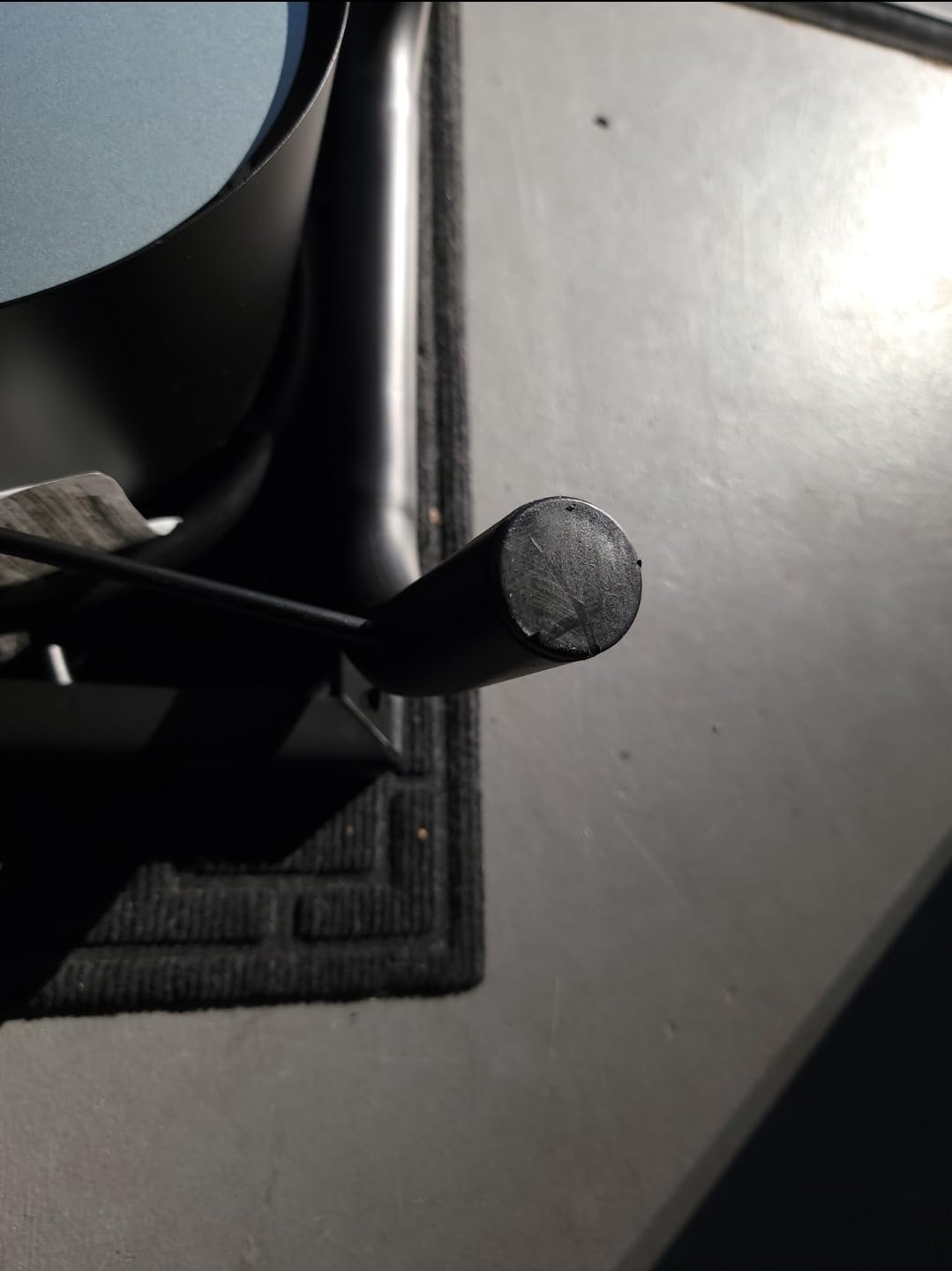
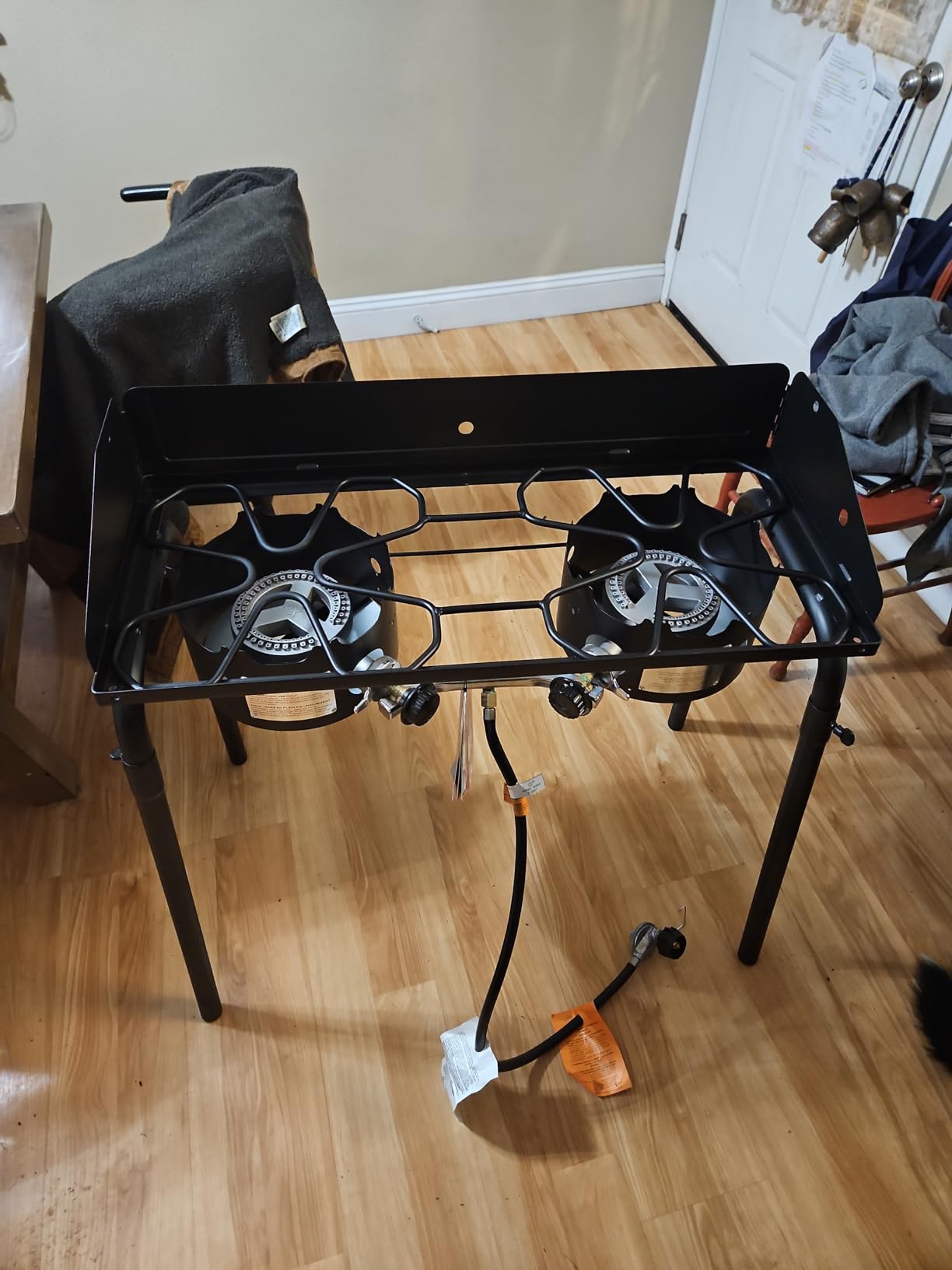
The three-sided windscreen is the feature that gets overlooked in photos and appreciated in real weather. It sits behind and beside the burners, so a crosswind that kills a bare burner still leaves you with usable flame.
Detachable steel legs fold away and the three foot hose and regulator are included, so setup at a tailgate or a backcountry site is a two-minute job. The cooking surface accepts most 14 inch Camp Chef accessories, which is a genuine advantage if you already own their griddle.
The cost is weight and bulk. At 2.5 kg this is a car and basecamp tool, and reviewers repeatedly note it is the wrong size for anything involving a walk. The hose length also limits how far you can push the burners from your propane cylinder.
When the Explorer earns its weight
Group basecamp cooking, family camp cooking and tailgating, where the cooking area matters more than the packed weight. Two burners also means you can boil water for coffee on one side while a pasta sauce reduces on the other, which is the practical test of a real cooktop.
It pairs well with a full 14 inch Camp Chef accessory setup. If you are building a camp kitchen rather than buying one burner, that ecosystem is the reason to choose this over a generic two-burner.
When to choose something smaller
Anyone walking to the site should stop here and read the canister stove sections. You are carrying every gram, and 2.5 kg is about the weight of a full day of food in your pack before you add a pot.
Also consider a lighter two-burner such as the Coleman Triton if your trips are shorter or your car packing is tight. The Explorer trades portability for a cooking surface that most household pans will fit.
3. Coleman Bottletop Stove – Best Value Single Burner
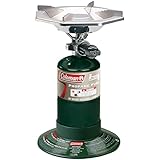
Coleman Bottletop Propane Stove, 7,650 BTU Camping Cooker
Up to 10,000 BTUs
Screws onto a propane bottle
Wind baffles
Compact
Pros
- Screws directly onto a standard propane bottle
- Up to 10000 BTUs of output
- Wind baffles shield the burner
- Pressure regulator for steady output
- Burner and base separate for compact storage
Cons
- Click valve limits fine control
- Lowest setting may not hold
- Propane cylinder sold separately
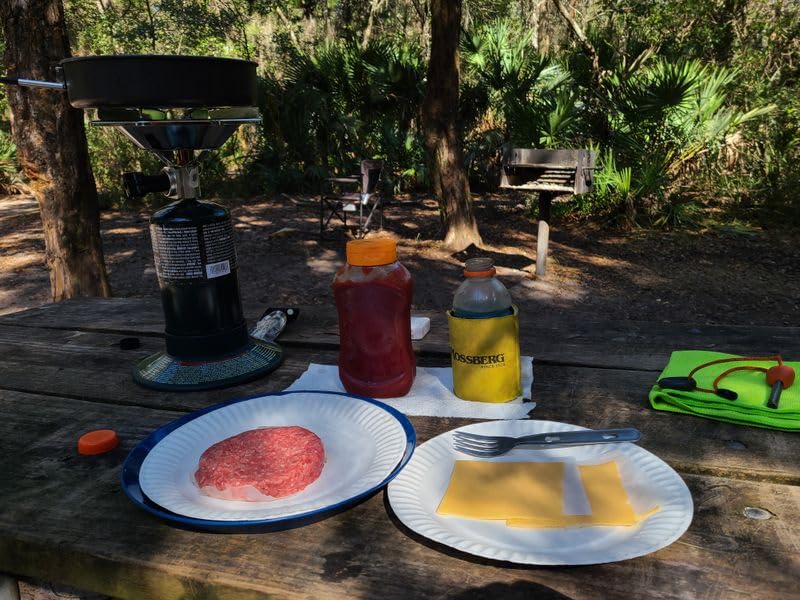
The Coleman Bottletop is the stove you screw onto a propane bottle with no hose, no regulator to buy separately and nothing to set up. For weekend camp cooking it is the least complicated thing on this list.
Output is up to 10,000 BTUs, which is plenty to bring a pot of water to a boil or fry a breakfast pan. Reviewers describe it as simple, reliable and the sort of stove you can hand to someone with no instructions.
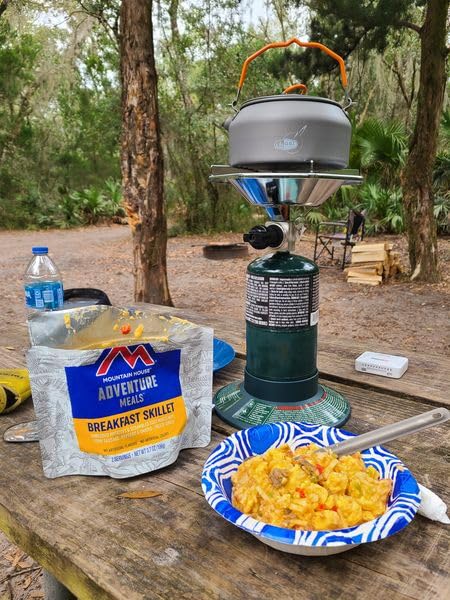
Two design details make it work in the field. The pressure regulator keeps output consistent in changing conditions, and the wind baffles around the burner stop a gust from blowing the flame sideways when you are cooking low to the ground.
It fits an 8 inch pan, and the burner separates from the base for storage, so it packs flat in a bin between trips. Runtime is listed at up to 2.5 hours on high from a single 16.4 ounce cylinder.
The honest weakness is flame control. The click-style valve offers preset levels rather than a smooth dial, and reviewers frequently report that the lowest settings do not hold reliably, which makes it a poor choice for reducing a sauce.
Where the Bottletop earns its place
Weekend car camping, truck camping, picnics and emergency preparation. If the trip does not involve a walk of more than a few hundred metres, the absence of a hose and regulator is a genuine advantage rather than a compromise.
Pair it with a 10 inch or 12 inch pan and a small windscreen if you camp on an exposed site. With a 4.7 rating across more than 7,000 reviews, it is a proven choice for anyone who just wants one reliable burner.
Where it falls short
Skip it if you cook for more than two people at once, since there is a single burner and a fixed pan size. It is equally wrong for anyone who wants precise low heat, which is the same simmer problem that shows up across budget two-burners too.
Cold weather is the other limit. Reviewers note the stove and bottle can frost over during use, and canister pressure falls with temperature regardless of the model.
4. AOTU Portable Stove – Best Ultralight Canister Stove
AOTU Portable Camping Stoves Backpacking Stove with Piezo Ignition Stable Support Wind-Resistance Camp Stove for Outdoor Camping Hiking Cooking
3.84 ounces
Piezo ignition
EN 417 canister thread
Honeycomb wind net
Pros
- Weighs 3.84 ounces
- Packs down tiny with its own box
- Piezo ignition built in
- Honeycomb mesh improves combustion in wind
- Adjustable valve down to a simmer
Cons
- Butane and mixed fuel only
- Small burner head for small pots
- Storage box is not rugged
At 3.84 ounces the AOTU is the smallest and lightest stove we covered, and that number is the entire argument for it. It disappears into a side pocket in a way that a full-size canister burner does not.
It uses the standard 7/16 thread EN 417 fitting, so it screws onto butane and butane-propane mixed canisters. The manufacturer is explicit that it does not accept propane canisters, so check your fuel before you rely on it.
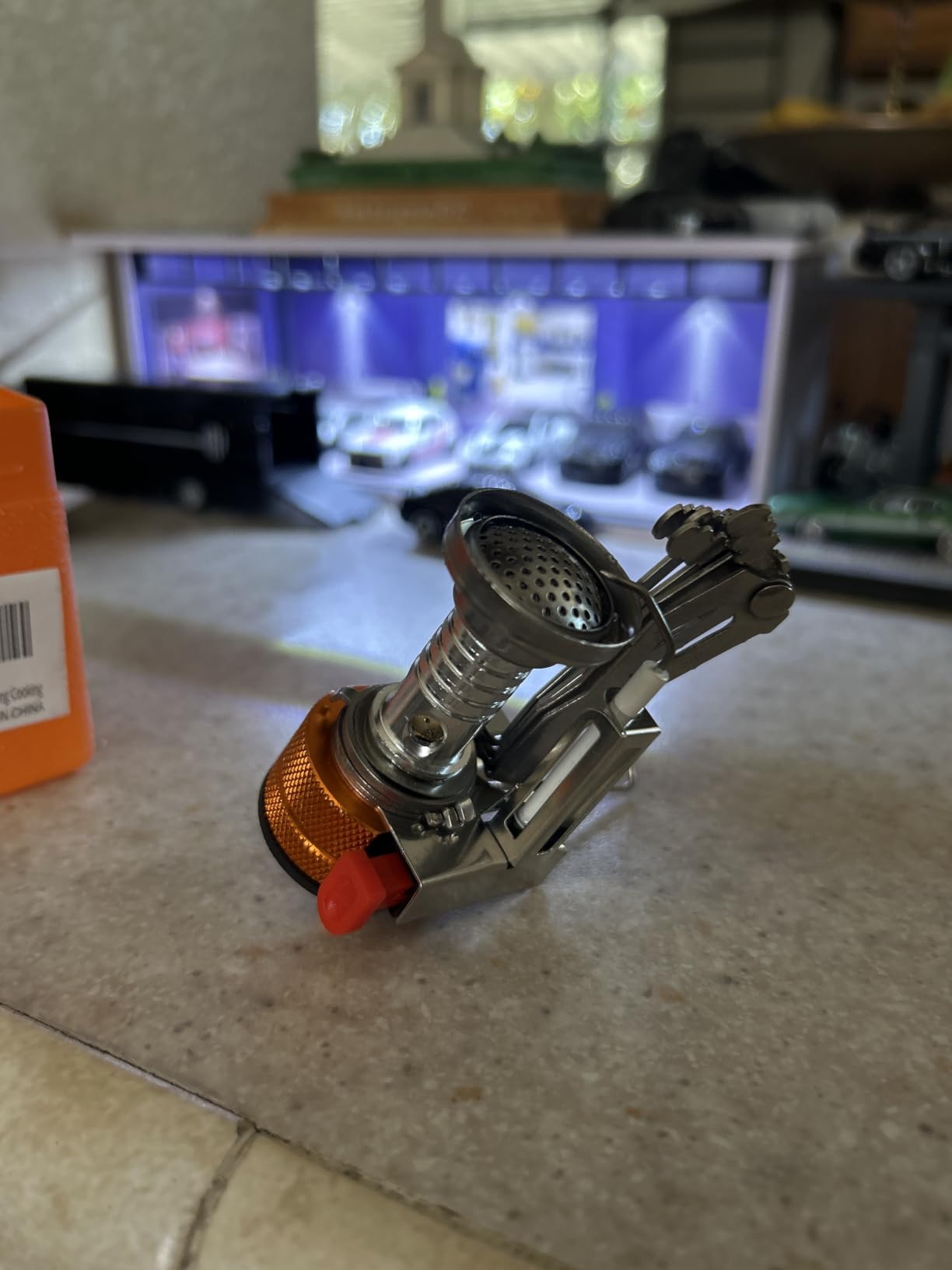
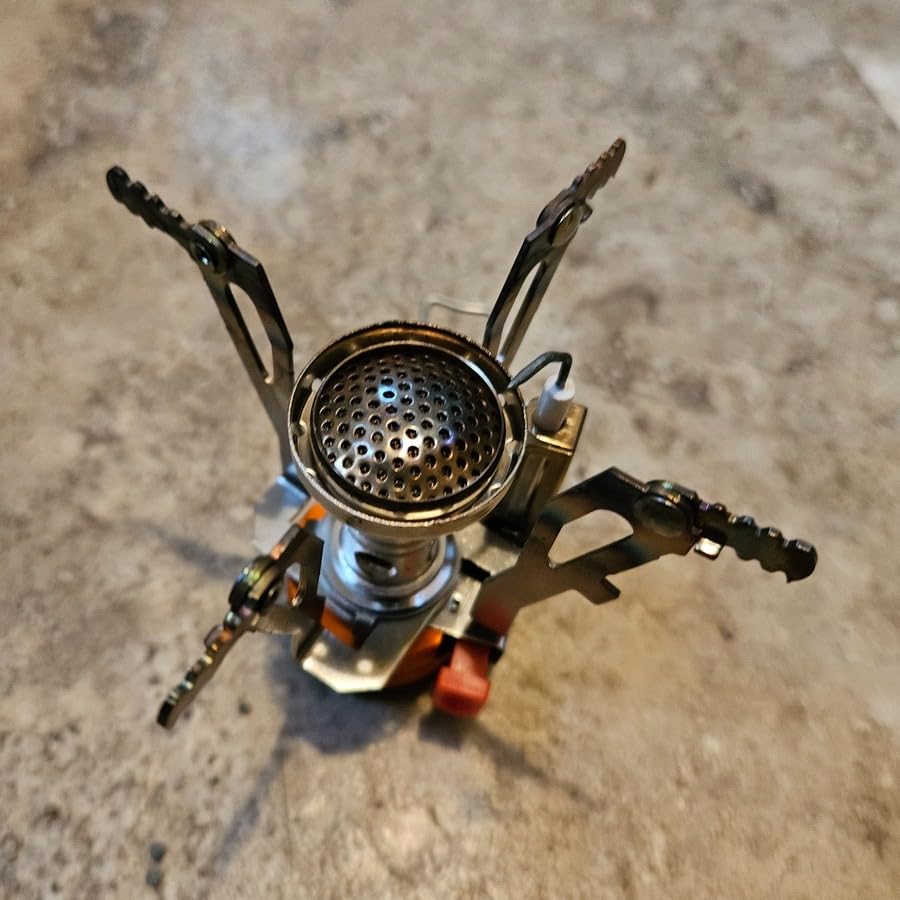
Output is rated at 3000 W, and the fire board measures 9.5 by 9.5 cm, which suits pots up to 20 cm in diameter for one to three people. The valve adjusts from full output down to a simmer rather than jumping between fixed steps.
The honeycomb aluminium mesh around the burner is designed to keep wind from killing the flame, and reviewers report it holds up better than a bare burner in a breeze. A plastic storage box comes in the kit, which is convenient for keeping the stove clean in a pack.
What you give up is power and support. The small burner head is sized for lighter cookware, and a heavy full pot on a narrow support is exactly the tipping scenario hikers warn about in forum threads.
Who should carry the AOTU
Solo and two-person backpackers, bikepackers and anyone counting grams in a long-distance kit. At this weight it is one of the few stoves here you can add to a kit that already has a kitchen system without rethinking the whole load.
It also works as a secondary burner, since a 3.84 ounce stove is easy to carry alongside a heavier setup for a two-pot breakfast.
Who should skip it
Anyone cooking for a group or needing real heat output. A 3000 W burner is a water boiler for one or two, not a pan sauce station.
Also skip it if your trips run to high altitude or freezing temperatures and you need a reliable result. Low-powered canister burners lose pressure first when the air gets cold, and this is one of the lowest-output stoves in the roundup.
5. Coleman Triton – Best Two Burner for Families
Coleman Triton 2-Burner Propane Stove, Portable Camping Cooktop
22,000 BTU across two burners
Folds flat
Removable grate
Griddle plate included
Pros
- Two independently adjustable burners
- Wind guards on both sides
- Removable chrome-plated grate is easy to clean
- Improved knob rotation helps simmering
- Folds flat with a carry handle
Cons
- No built-in igniter so you need a lighter
- Burners can arrive bent
- Adjustment is still coarse for sauces
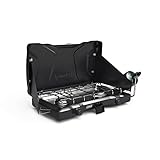
The Triton is the middle ground between the Coleman Bottletop and the Camp Chef Explorer. Two burners, 22,000 BTUs in total, and a body that folds flat enough to sit in a boot rather than a garage.
Family camping is the target use. Each burner adjusts independently, so you can boil on one side and simmer on the other, which is the pattern that makes two-burner stoves worth the extra fuel over a single burner.
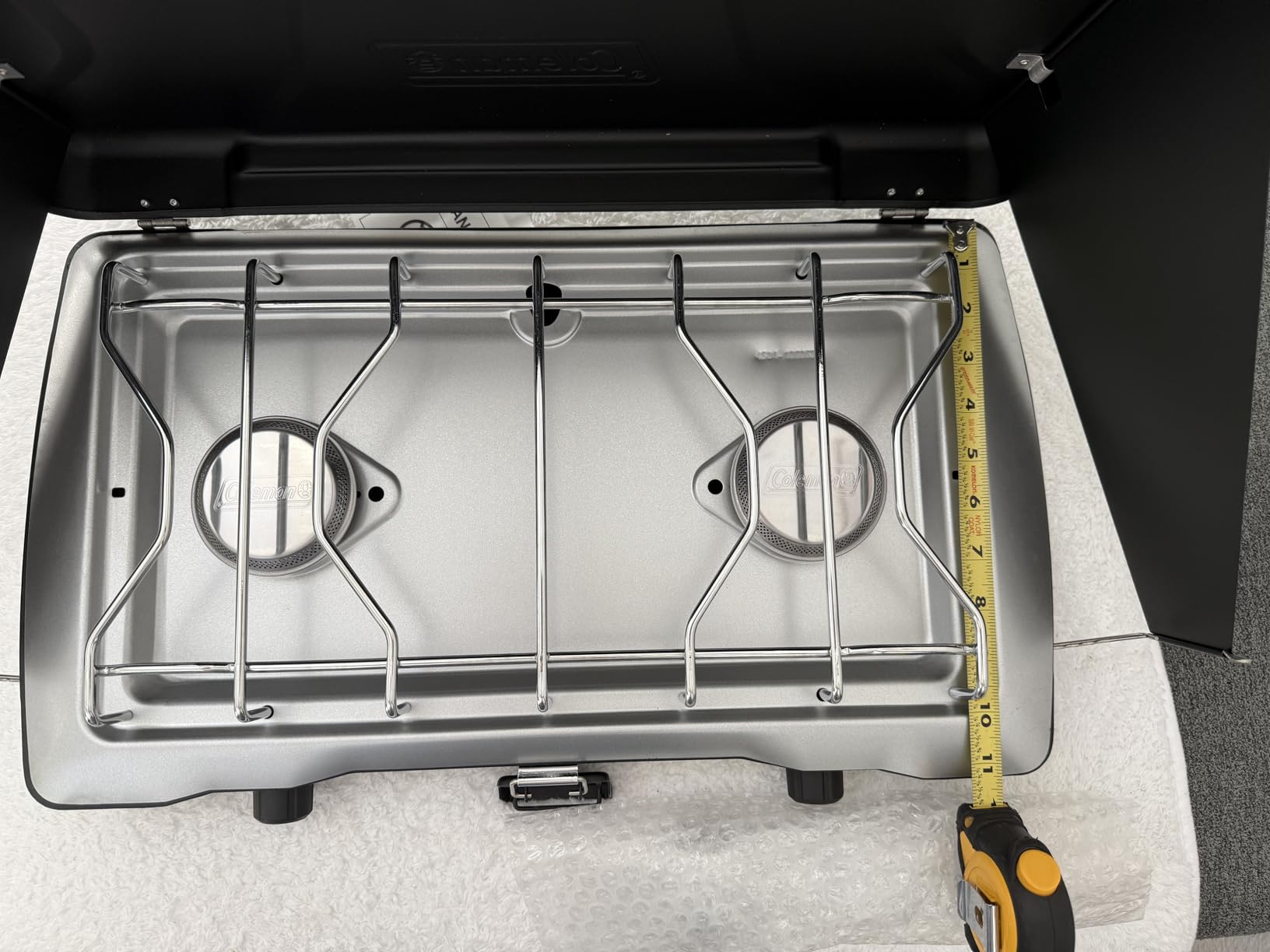
The wind guards on both sides matter more than the brochure suggests, because a burner that gutters in a breeze is the most common complaint across portable stoves in owner reviews. The removable chrome-plated grate also lifts out, which makes cleaning after a real meal far less annoying.
A grill and griddle plate is included, and a three-year limited warranty backs it. Runtime is listed at up to one hour on high from a 16 ounce cylinder, so plan fuel for long dinners.
The negatives are consistent across reviews. There is no built-in igniter, so you carry a lighter, and the burner adjustment is still coarser than the marketing suggests even with the improved knob rotation.
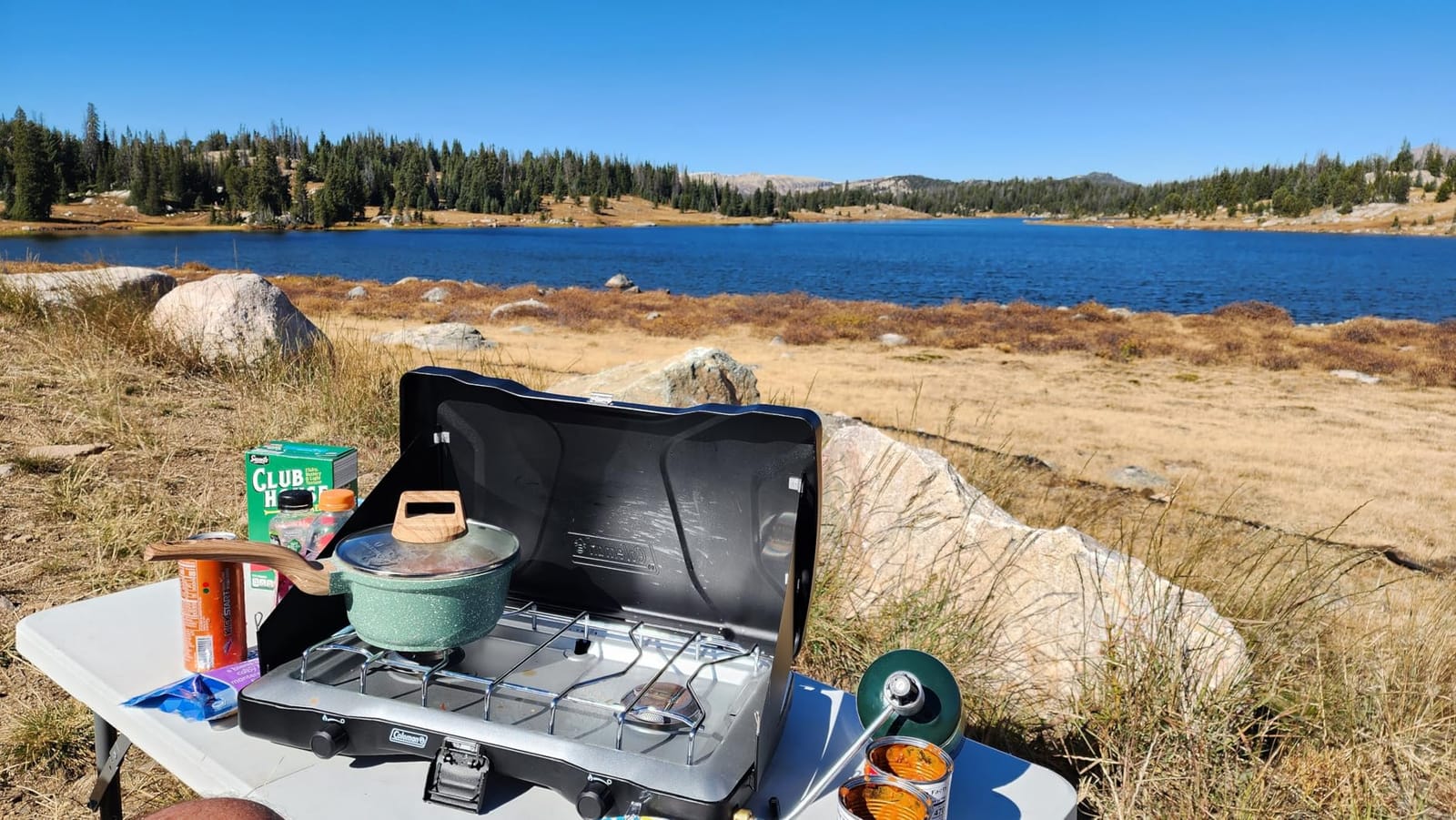
Who the Triton works for
Families and pairs who want two pans going without dragging out a full-size cooktop. It fits 12 inch and 10 inch pans, and the griddle plate turns it into a breakfast station on a campsite table.
Compared with the Camp Chef Explorer it saves a substantial amount of weight, so it suits people with a smaller vehicle or a tighter storage box.
Who should pick a different stove
Backpackers, at 5 pounds this is not a carry stove. And if your cooking depends on long, low simmer control, reviewers still describe the range as closer to all or nothing than to a proper dial.
Those who want matchless ignition should look at the Coleman Classic three-burner, which has push-button ignition and a larger cooking area.
6. Chef Master 15,000 BTU – Best Butane Stove for High Heat
Chef Master Portable Butane Camping Stove, Backpacking Burner, 15,000 BTU
15,000 BTU butane stove
Double wind guard
8 oz canisters
Hard carry case
Pros
- 15000 BTU supports wok and searing
- Double wind guard around the burner
- Pressure-sensing shut-off stops gas flow
- Works with several butane brands
- Piezo ignition needs no lighter
Cons
- Low setting still runs hot so simmering is hard
- Floppy carry case
- Not compatible with propane
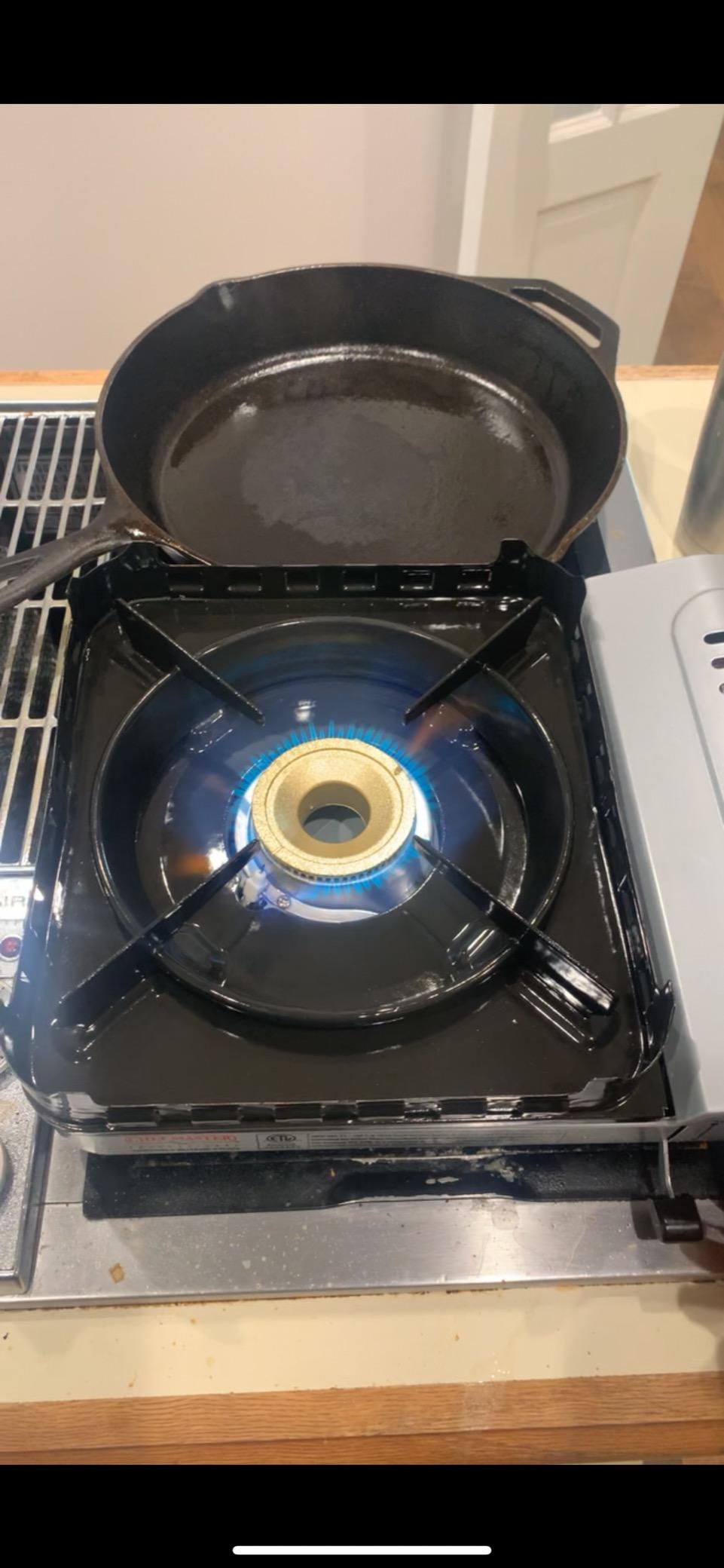
Butane stoves have a reputation for being weak, and this one is the exception. At 15,000 BTU it is the most powerful canister-format stove in the roundup and it will handle a wok or a searing pan in a way a 3,000 W backpacker burner cannot.
That makes it a genuinely different tool from the ultralight options. Reviewers call it the stove for high-heat applications rather than for boiling water.
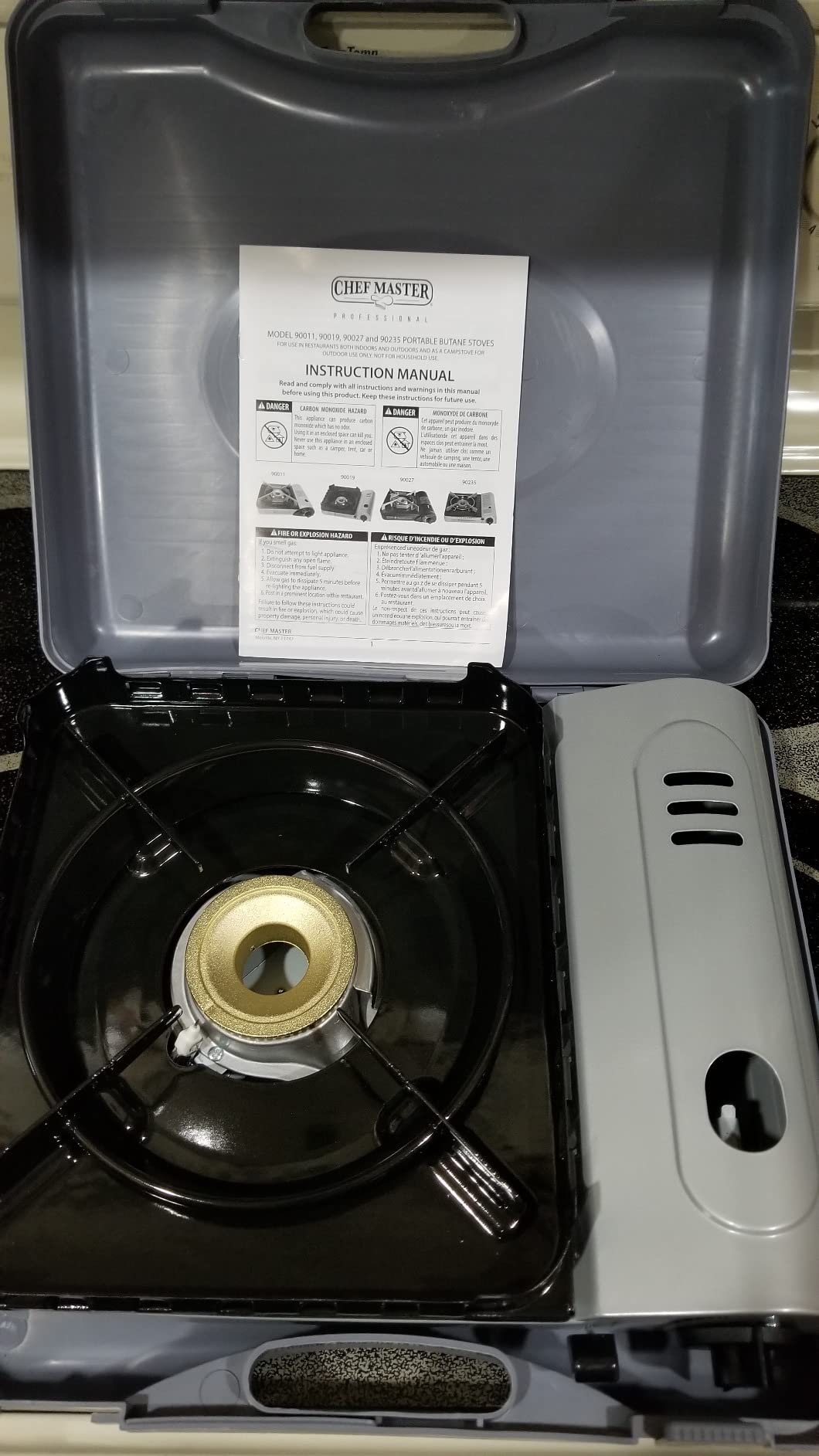
Safety hardware is unusually complete for the category. An in-line regulator and a pressure-sensing shut-off stop gas flow if pressure rises too high, and a double wind guard wraps the burner head for protection in open sites.
It fits standard 8 oz butane canisters, including Sterno and Coleman brands, and the piezo igniter lights from a knob turn with no lighter involved.
The trade-off is control at the other end of the dial. Even on its lowest setting the flame stays strong, so this is a stove for searing and frying rather than for a low simmer. The included hard case is also the most commonly criticised part of the package.
When high heat matters more than control
Wok cooking, searing meat and stir-fry on a camp table. If your meal plan involves heat that a small burner cannot deliver, this is the canister stove that can, and the safety shut-off gives some confidence running it in a campsite.
It also suits anyone moving between countries where 8 oz butane canisters are the common currency, since several brands fit.
When to choose something else
Skip it for slow cooking. A stove that will not hold a low flame is a poor match for a stew or a delicate sauce, and the double wind guard and bulky shape make it a car camping choice rather than a trail one.
Propane users should note there is no adapter, and the hard case is thin enough that many users replace it with a soft bag.
7. Odoland Windproof Stove – Dual-Fuel Pick for Picnics and Travel
Odoland 3500W Windproof Camp Stove Camping Gas Stove with Fuel Canister Adapter, Piezo Ignition, Carry Case, Portable Collapsible Stove Burner for Outdoor Backpacking Hiking and Picnic
3500W or 6800W versions
Fuel canister adapter included
Windshield design
Folds flat
Pros
- Adapter hose allows propane and butane
- Piezo ignition and flame control
- Windscreen design protects the burner
- Stable base that does not sit on the canister
- Boils 1 litre of water in about 3 minutes
Cons
- Needle valve is very touchy
- Shallow canister threads
- Can leak when switched off
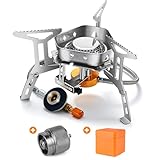
The Odoland is a dual-fuel design at a price point most dual-fuel designs are not. A supplied adapter hose and two connector types let it run on butane, propane or a butane-propane mix from standard 7/16 thread canisters.
Two versions are offered, a 3500 W and a 6800 W. The maker claims around three minutes to boil a litre of water on the higher figure, and reviewers generally describe boil performance as the strong point of the design.
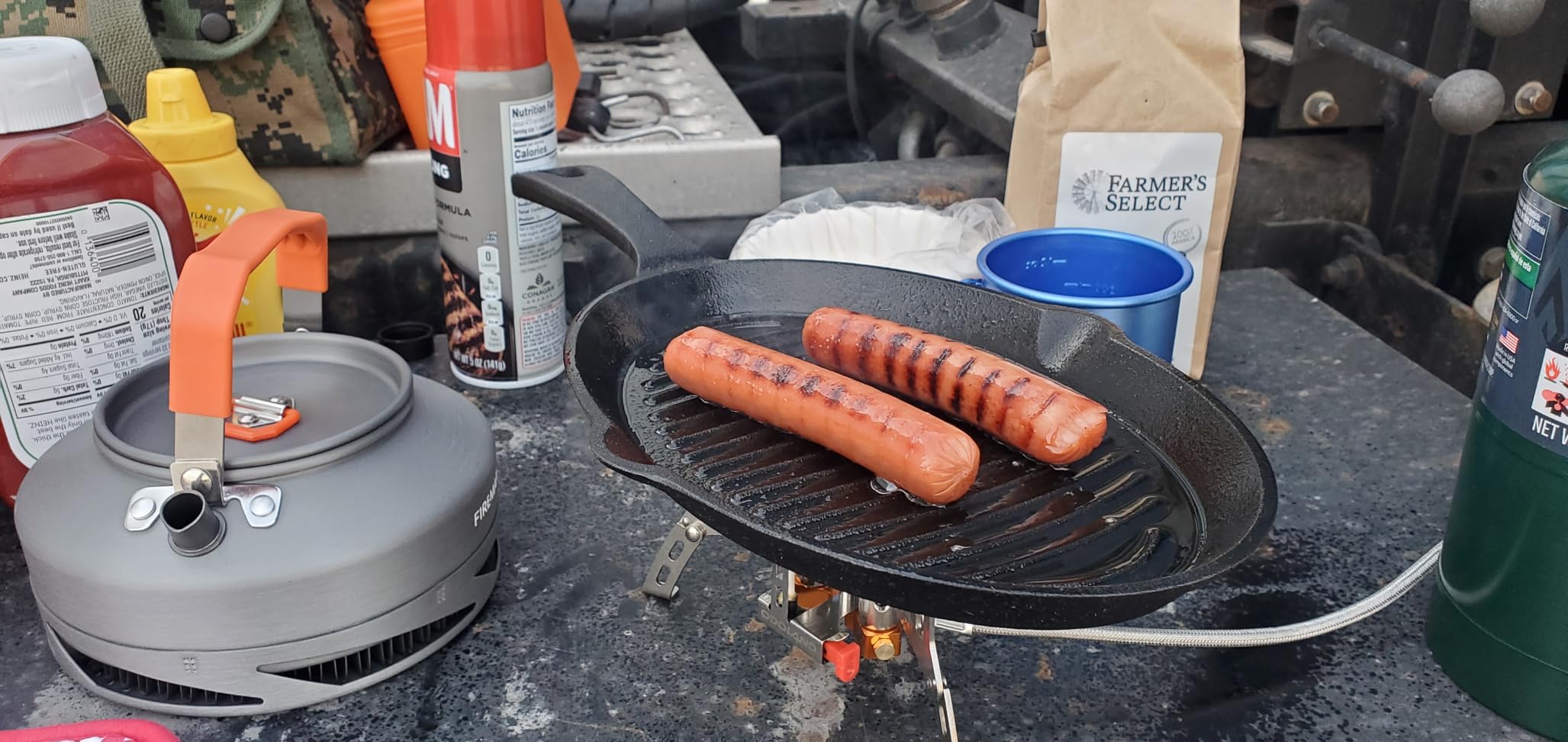
The base is freestanding rather than perched on top of the canister, which improves stability and makes the wind screen more effective. It folds down into a carry case and includes piezo ignition with a flame control knob.
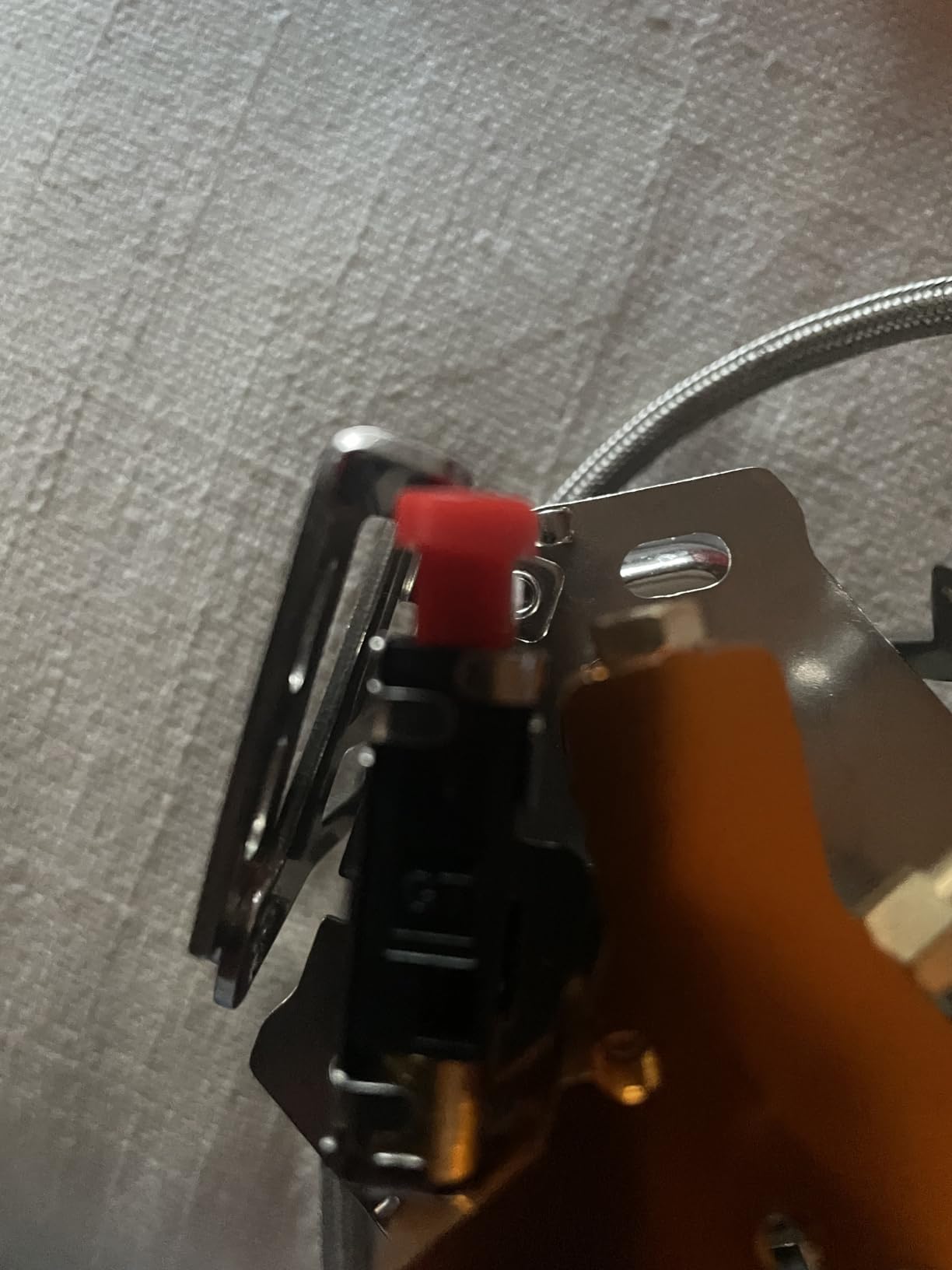
Build quality is where the trade-off lives. Reviewers report a very touchy needle valve, shallow threads that make the canister connection fiddly, and a unit that can leak slightly when turned off unless it is removed from the canister.
Leg joints and the piezo unit draw similar complaints, with some owners reporting the igniter failing after extended use.
Where the Odoland makes sense
Budget trips, picnics, tailgating and anyone who wants one stove that accepts whichever fuel format they can find locally. The dual-connectivity is genuinely useful for international travel where canister fittings vary by region.
The freestanding base also makes it easier to cook on uneven ground than a burner that screws straight onto the canister.
Who should spend more instead
If you will use this stove every weekend, most reviewers end up recommending a higher-priced established brand instead, because the valve and ignition complaints show up in long-term ownership rather than first impressions.
It is not for anyone who cannot tolerate checking a connection for leaks before packing it into a vehicle. And buyers planning real cooking should note the flame control is coarse despite the knob.
8. Coleman Classic Three Burner – Best Stove for Large Groups
Coleman Classic 3-Burner Propane Stove, 28,000 BTUs
Three burners, 28,000 BTUs
Push-button ignition
Wind panels fold into tables
8.5 kg
Pros
- Three independently adjustable burners
- InstaStart push-button ignition
- Wind-blocking panels double as side tables
- Fits two 12 inch pans or three 8 inch pans
- Three-year limited warranty
Cons
- Very heavy at 8.5 kg
- Runs about 45 minutes on high from one cylinder
- Bulky to store
Nothing else in this list has a three-burner cooking surface. Three burners, up to 28,000 BTUs, and a surface that fits two 12 inch pans or three 8 inch pans at once, which is the difference between a group meal and a queue.
For a large family basecamp or a hunting camp, that cooking area is worth the weight. For anything involving a walk, it is irrelevant.
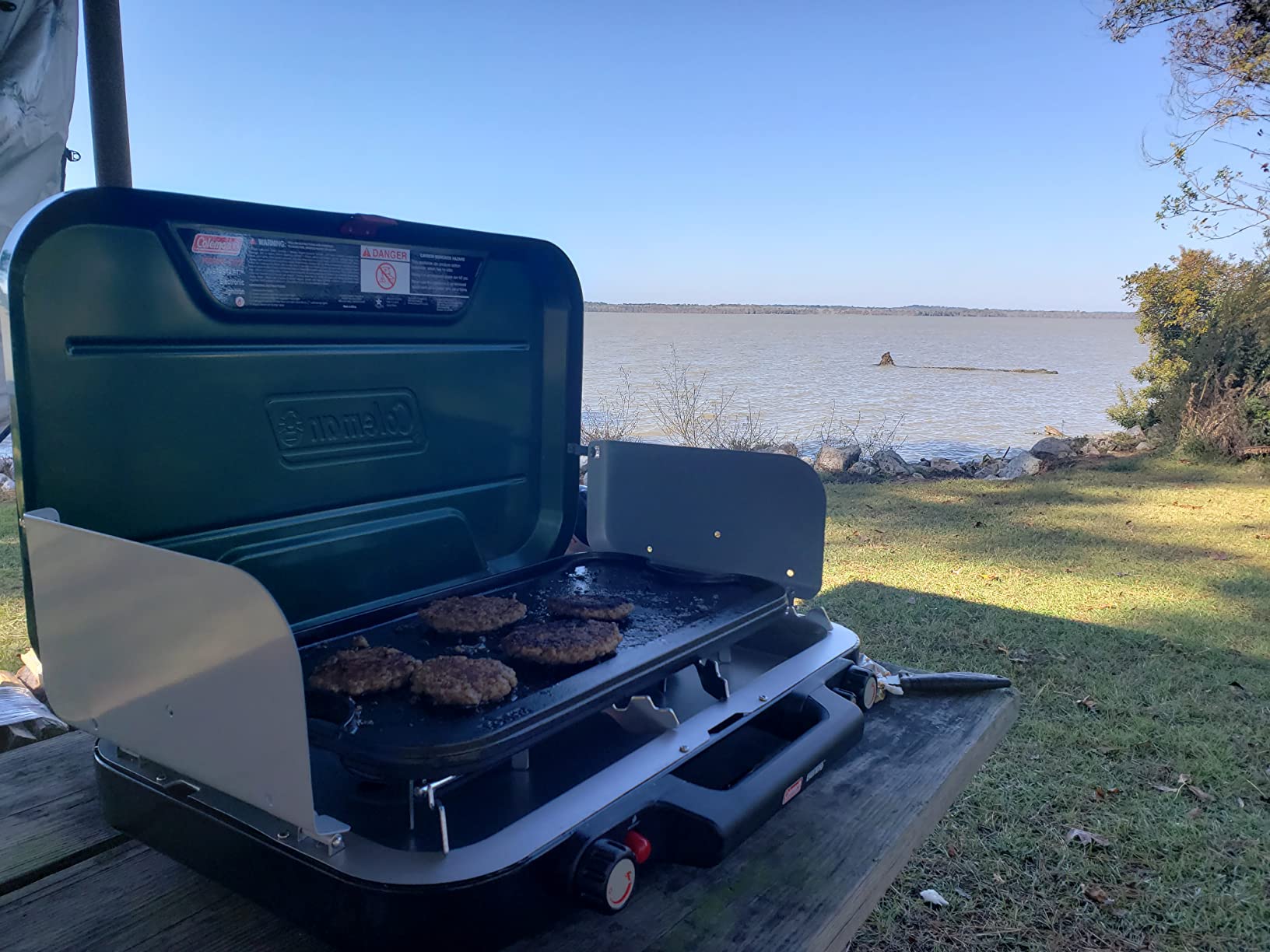
The push-button InstaStart ignition removes the lighter from your kit, and the wind-blocking panels fold down to form side tables when they are not shielding the burners, which is a smart use of the same part twice.
A pressure regulator keeps output steady, and the design radiates heat across the surface rather than concentrating it under one pot, so two pans cook at similar rates.
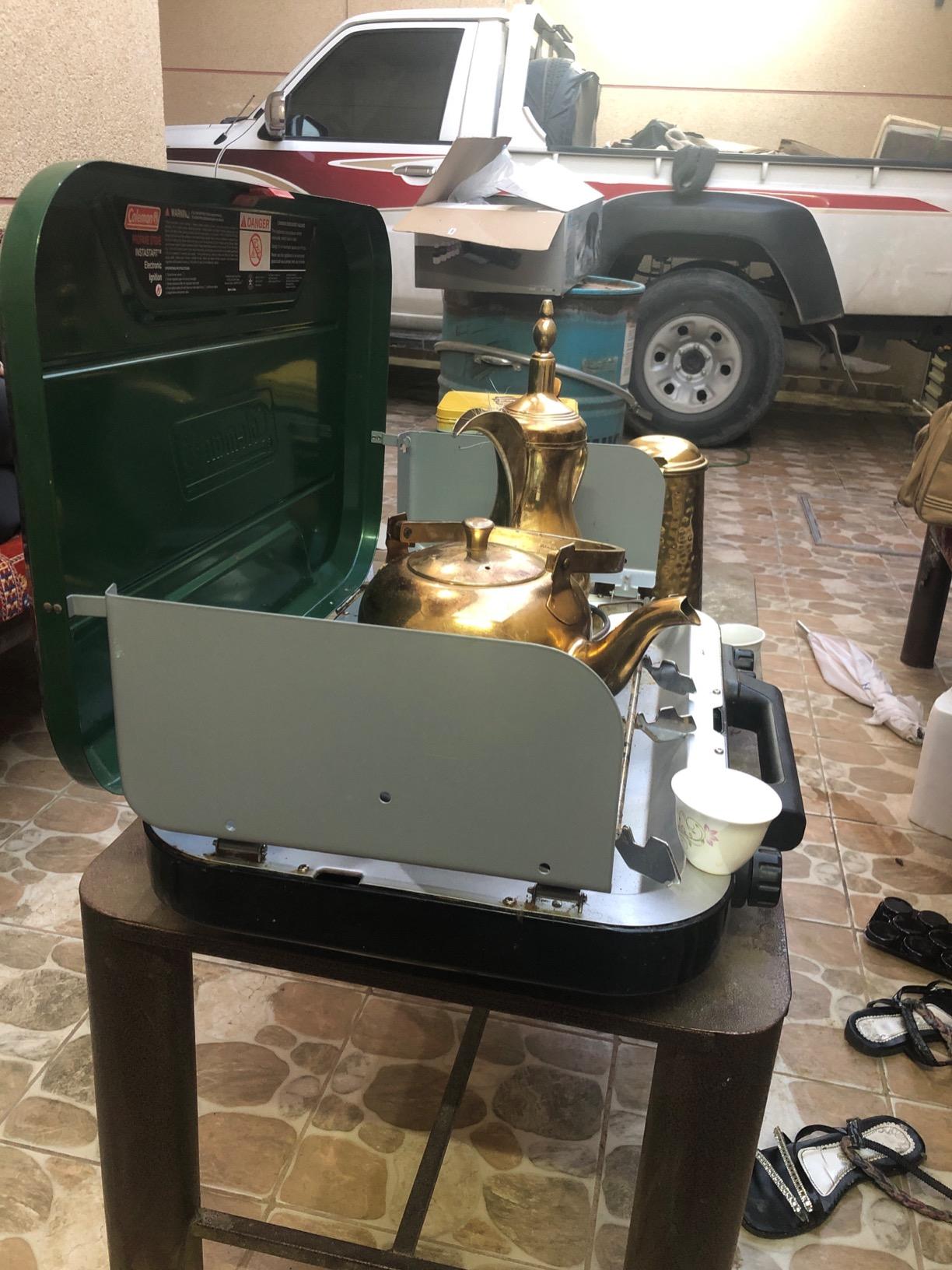
Runtime is the catch: up to about 45 minutes with all three burners on high from a single 16.4 ounce cylinder. At 8.5 kg the stove is a two-person carry or a permanent camp fixture, and the folded size makes storage in a small vehicle a real consideration.
Who should buy the three-burner
Large groups, family reunions in the field, tailgating and anyone cooking a proper meal for six or more. Three burners is the point, and no two-burner on this list can match the surface area.
It is also the roundup choice for buyers who value matchless ignition, since push-button starting is a genuine convenience over a match or lighter in wind.
Who should look elsewhere
Anyone with limited vehicle or storage space should measure first, because 8.5 kg plus a propane cylinder is a lot of boot volume. Fuel planning matters too, since three burners on high will empty a cylinder quickly.
For two people, the Camp Chef Explorer two-burner delivers most of the cooking capacity at a fraction of the bulk.
9. Jetboil Genesis – Best for Fine Simmer Control
Jetboil Genesis Basecamp Camping Stove
Dual burner JetLink system
10,000 BTU
Folds to 9.8 inch square
6.2 pounds
Pros
- Fine simmer control across a wide adjustment range
- JetLink system can link extra burners
- Compact folding footprint
- Jetboil cookware ecosystem
- Attachable windscreen and carry bag
Cons
- The costliest stove in the group
- Ineffective plastic windscreen
- 6.2 pounds is heavy for a pack
Integrated cooking systems are famous for boiling fast and terrible at everything else, which is why cooks looking for a real flame ask what is better than a Jetboil. This is one answer: a system that keeps the fast boil and adds genuine simmer control.
The heat adjustment runs through a wide range of settings, and owners describe it as the one stove in this roundup where you can hold a low flame for a sauce or a risotto. The 10,000 BTU system brings a litre of water to a boil in just over three minutes.
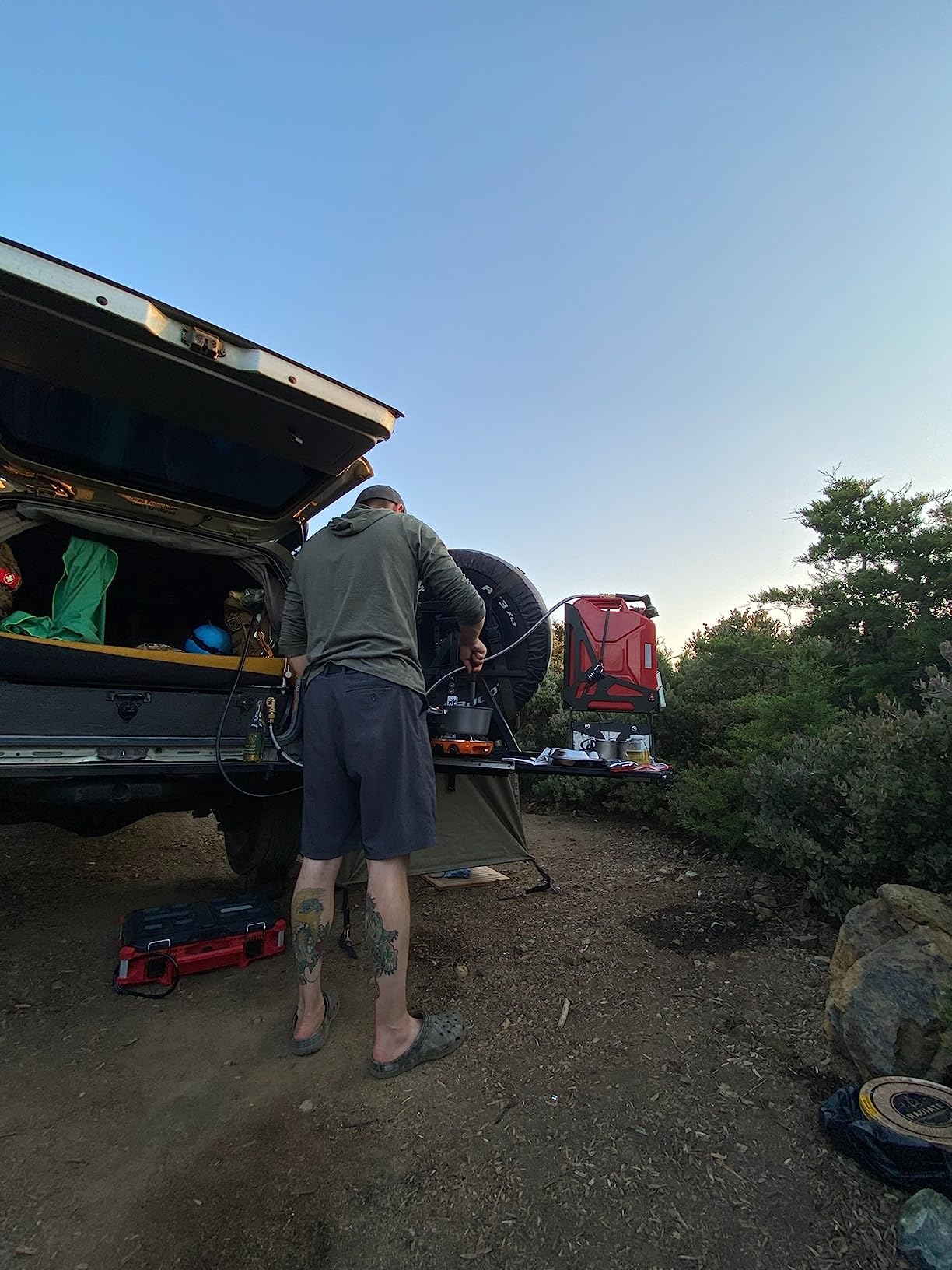
The JetLink design works as a standalone stove or couples with other compatible stoves, which means you can add a satellite burner for a group trip without buying a separate brand of unit. It is built for the Jetboil cookware line, including the frypan and the larger Flux Pot.
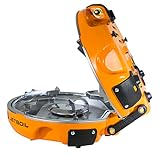
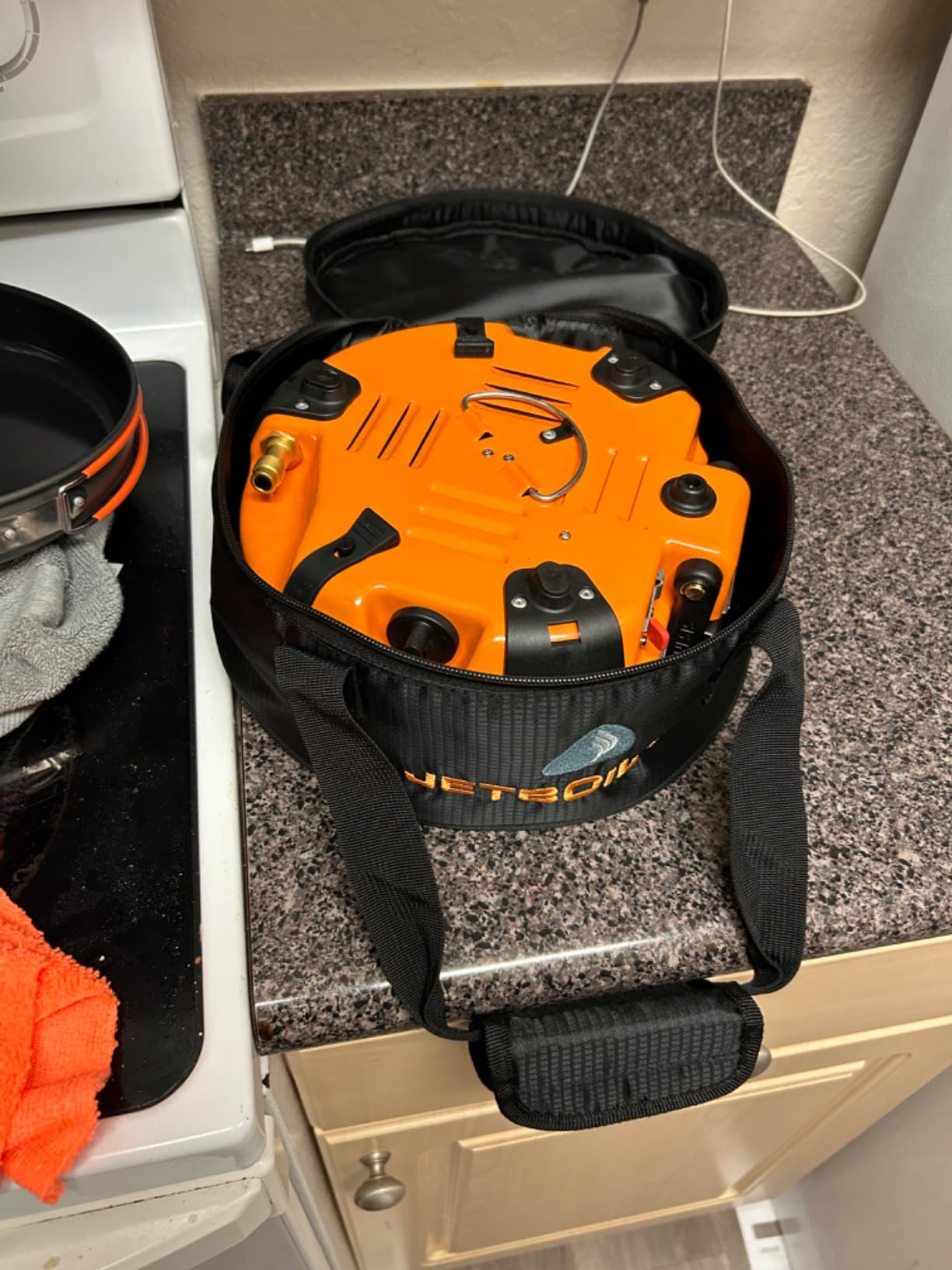
It folds into a 9.8 inch square footprint, so despite weighing 6.2 pounds it packs into a small space. A carry bag with a regulator pocket and a fuel regulator are both included, and it runs on a standard 16.4 ounce propane bottle.
The criticism is consistent: the included plastic windscreen does very little, and at this price the build is not as convincing as the performance. Reviewers also note that running multiple burners consumes small canisters quickly, particularly at altitude.
Who the Genesis is for
Overlanders, car campers and anyone already using Jetboil cookware who wants a second burner system that folds flat. If simmer control is the deciding factor, this is the clearest choice in the roundup.
It also works as a companion unit for group trips where you want two cooking stations that speak the same fuel and pot system.
Who should not buy it
Budget buyers should look elsewhere; this is the costliest stove in the group and its advantage is control rather than raw power. Backpackers should note the 6.2 pounds, which rules it out for carried trips.
If you are heading to cold high-altitude terrain with several burners running, fuel consumption rises quickly, and packing extra canisters adds weight you will feel.
10. Vivicreate Two Burner – Stainless Cooktop for Patios and RV Trips
Vivicreate 2 Burner Propane Stove, [20000 BTU] Portable Camping Gas Cooktop with Auto Ignition, Stainless Steel Outdoor Cooker with Regulator & Hose for RV, Backyard, Camping and Emergency Use
Two burners, 20,000 BTU total
Stainless steel body
Hose and regulator included
10 pounds
Pros
- Two burners with good pot spacing
- Auto piezo ignition
- Regulator and hose included
- Stainless steel is easy to wipe clean
Cons
- Rust reported after first use
- Igniter can fail within weeks
- Thin sheet metal
This is a straightforward answer to the two-burner category, and it does the basic thing well. Two burners, 20,000 BTUs in total, and a stainless steel body that wipes clean after a greasy meal.
Regulator and hose are included in the box, so there are no additional accessories to track down before the first cook. Burner spacing is wide enough for two larger pots to sit side by side.
![Vivicreate 2 Burner Propane Stove, [20000 BTU] Portable Camping Gas Cooktop with Auto Ignition, Stainless Steel Outdoor Cooker with Regulator & Hose for RV, Backyard, Camping and Emergency Use customer photo 1](https://freestreamhosting.org/wp-content/uploads/2026/09/B0B9T843BT_customer_1.jpg)
Large knobs with clear on and off markings make it usable without instructions, and reviewers note that it heats up quickly for its class. It is aimed at backyards, patios and RV use as much as at a campsite.
Durability is the issue. Reviews report rust appearing after a single use, igniters failing within weeks, and a red flame showing up after extended running, which are all signs of thin material and a light build.
Some owners also report examples arriving dented, and at 10 pounds it is not a portable stove despite the marketing.
![Vivicreate 2 Burner Propane Stove, [20000 BTU] Portable Camping Gas Cooktop with Auto Ignition, Stainless Steel Outdoor Cooker with Regulator & Hose for RV, Backyard, Camping and Emergency Use customer photo 2](https://freestreamhosting.org/wp-content/uploads/2026/09/B0B9T843BT_customer_2.jpg)
Where this stove works
Occasional patio cooking, RV trips and light weekend use where two burners are useful but the stove will live in a garage rather than a pack. Including the regulator and hose in the box means fewer extras to buy before the first cook.
Auto ignition is the feature that separates it from matchlight models that need a lighter, and the stainless body is a genuine upgrade over painted steel.
Where the trade-offs bite
If you expect weekly use, the rust and igniter complaints in reviews are the reason to step up to a model with a longer warranty. Its 4.3 rating, the lowest of the ten stoves we covered, is the signal.
It is also not a backpacking or even a car-camping weight at 10 pounds, so treat it as a home-adjacent appliance.
How We Tested and How to Choose a Camping Stove
We scored every stove here on the same five criteria, weighted for the trip types people actually take. Heat output and wind resistance carried the most weight, because a stove that will not light reliably ruins a trip faster than any other failure. Packability, flame control and fuel handling made up the rest.
No fuel, pots or windscreens were included in the ratings unless the manufacturer lists them as part of the package, and none of these stoves comes with fuel.
The four stove types
Two-burner propane cooktops like the Camp Chef Explorer and Coleman Triton are for car and basecamp cooking, where weight is irrelevant and cooking area is everything. Canister stoves like the AOTU screw onto a fuel bottle and are the hikers default choice.
Integrated systems such as the Jetboil Genesis bundle a burner with its own cookware for speed. Tabletop butane stoves like the Chef Master trade packability for high heat, and dual-fuel designs like the Gas One and Odoland cover more than one fuel format.
Match the stove to the number of eaters
Cooking for one or two means a single burner is enough, and a canister stove is the right call. From three to four people, a two-burner cooktop changes the rhythm of a meal because two pans can go at once. Five or more and you are looking at the Coleman Classic three-burner, accepting the weight as a car-only compromise.
Party size drives fuel planning as much as burner count. The Coleman Bottletop is listed at up to 2.5 hours on high from one 16.4 ounce cylinder, the Triton at up to an hour, and the three-burner at roughly 45 minutes with all burners running.
Wind, cold and altitude are the real killers
Wind is the underrated stove problem. A recessed burner, a mesh surround or built-in wind guards make a large difference, and every stove here with wind protection rated better in owner reports than bare-burner designs.
Cold reduces canister vapour pressure, so low-output burners feel the drop first. Butane behaves poorly around freezing, which is a frequent complaint in cold-weather threads. Altitude lowers the boiling point but reduces available oxygen, so more fuel is consumed for the same result.
If you cook in wind, add a windscreen. It is the cheapest upgrade available and it works with any stove in this roundup.
Maintenance and safety
Between seasons, check O-rings and threads for grit, run a fuel line clear, and confirm the flame still burns blue at the burner head. A yellow or red flame is incomplete combustion and means the burner needs cleaning.
Never cook inside a tent, a vehicle or an awning. Both propane and butane produce carbon monoxide, and forum reports of exposure from running a stove in an enclosed shelter recur every season. Use the stove outdoors, well away from a closed shelter, and check every connection for leaks before lighting.
Never store fuel canisters in a hot vehicle, and always follow local fire bans, which can restrict stove use entirely during dry conditions.
Butane vs Propane: The Head-to-Head
Propane runs colder, stores longer and is available almost everywhere with a vehicle, which is why car-camping stoves in this roundup use it by default. Butane burns hotter and sits in a smaller lighter canister, which is why ultralight stoves in this roundup run on it or on a butane-propane mix.
The practical difference comes down to temperature and availability. Butane struggles as conditions approach freezing, and propane pressure falls less in the cold, which matters on winter or shoulder-season trips.
For car camping, propane wins on refill access. For backpacking, a butane-propane mix wins on packed size, since smaller canisters fit inside a pot and carry more energy per litre of pack volume.
On safety, the answer to whether butane is safer indoors is a clear no. Neither fuel is safe to burn in an enclosed space, and both produce carbon monoxide that accumulates without warning in a tent or a closed vehicle.
Which is better depends on the trip rather than the stove. Match the fuel to how far you walk, how cold it gets and how easy it is to refill, then pick a stove that accepts that format. Several models here, including the Gas One and the Odoland, run on more than one fuel type and remove the guesswork entirely.
Frequently Asked Questions
What type of stove is best for camping?
It depends on the trip. Car campers and families should use a two-burner propane cooktop, solo hikers and bikepackers should use a light canister stove, fast-and-light hikers can use an integrated system, and winter or international travellers benefit from a dual-fuel or multi-fuel design. Match burner count to the number of people you are feeding.
Which is better than a Jetboil?
If you want to cook rather than only boil, a two-burner propane cooktop or a high-output butane stove is the better choice. Integrated systems optimise for speed and pack down small, but their narrow flame range makes sauces and frying difficult. Look for a stove with a smooth valve and a wide adjustment range.
Which camping stove is better?
Compare fuel type first, because it determines cold-weather reliability and where you can refill. Then compare burner count against your group size, packed weight against how far you walk, and flame control if you cook more than boiling water. A stove you can actually regulate beats a more powerful one you cannot.
Which is better for a camp stove, butane or propane?
Propane is better for car camping because it stores longer, works in colder conditions and is easy to refill. Butane burns hotter and comes in smaller canisters, so it suits backpacking. A butane-propane mix gives you the compact size of butane with better cold performance.
Is butane more toxic than propane?
Both fuels are clean, carbon-based gases that produce carbon monoxide when burned in poor ventilation. The real risk is identical for each: burning either one inside a tent, vehicle or awning can allow carbon monoxide to build up to dangerous levels without warning.
Can you use a camping stove in a tent?
No. Cooking inside a tent, a vehicle or an enclosed shelter risks carbon monoxide poisoning, which accumulates faster than most campers realise. Use the stove outdoors in open air, keep it well away from a closed shelter, and check every fuel connection for leaks before you light it.
Final Verdict: The Best Camping Stoves in 2026
The Gas One GS-3400P is the best camping stove of 2026 for most people, because dual-fuel flexibility means a fuel problem is never the end of a trip. Its piezo ignition, adjustable dial and pressure-sensing cut-off cover the safety basics that budget stoves usually skip, and more than 15,000 reviews back the claim that it works.
Cook for a group and the Camp Chef Explorer is the answer, with two 30,000 BTU burners and a windscreen that holds up in weather. Cook light and the AOTU disappears into your pack at 3.84 ounces. Cook hot and fast, the Chef Master gives you 15,000 BTU from a small butane stove.
Whichever you choose, remember that no stove in this roundup includes fuel, most need a windscreen you add yourself, and none of them belongs inside a tent. If you are also upgrading the heating side of a campsite setup, our pellet stove roundup covers the other end of the heat spectrum.