
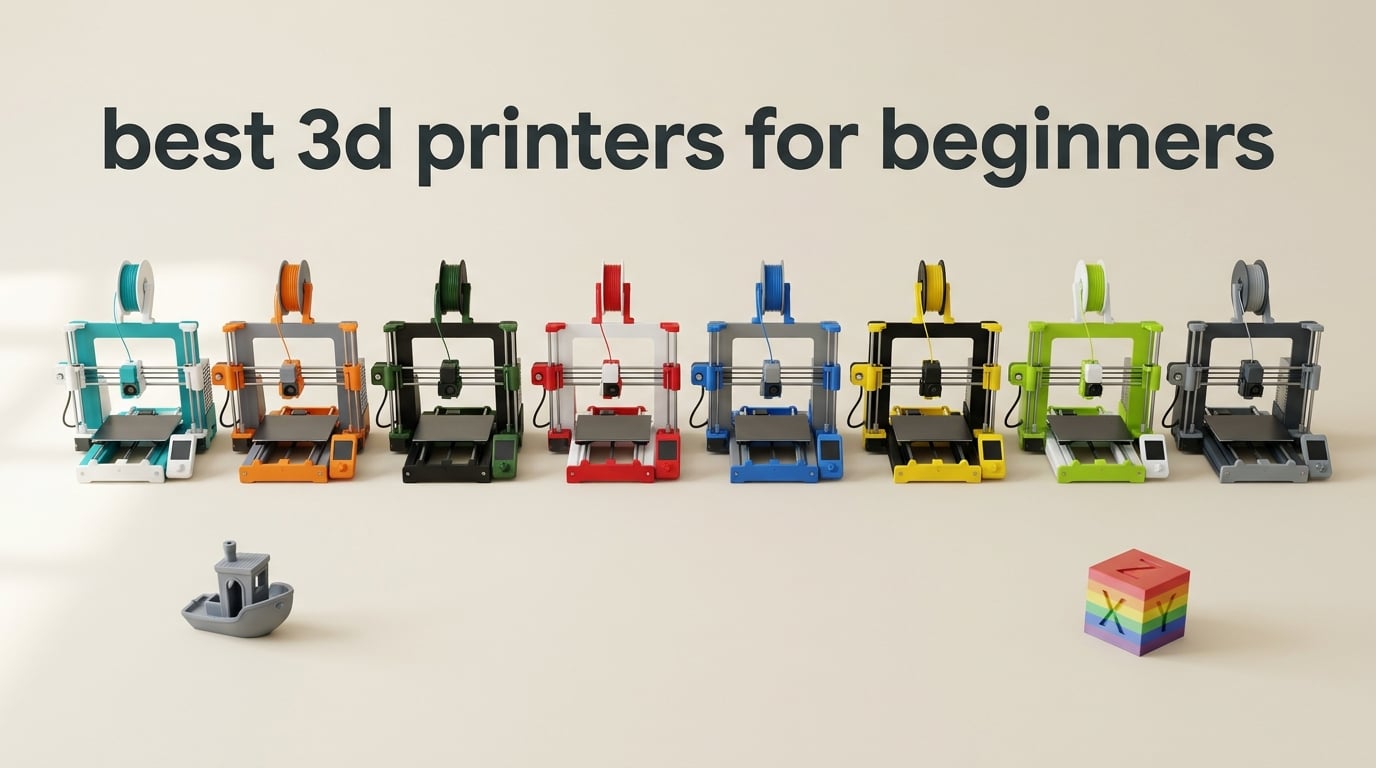
I remember the first time I tried to set up a hobby 3D printer nearly a decade ago: three hours of fighting a sticky piece of kapton tape, a manual bed-leveling routine that never seemed to stick, and a final Benchy that looked more like a melted shoe than a tugboat. Today, the best 3D printers for beginners in 2026 ship almost ready to print, calibrate themselves in one click, and cost less than a mid-range smartphone.
The challenge for a first-time buyer isn’t finding a cheap machine. It is finding a printer that won’t kill your motivation before your second print. After spending the last 90 days running eight beginner-focused printers through the same test gauntlet (Benchy, calibration cube, multi-color swap, ABS warping, TPU bridging, and a 12-hour reliability print), we narrowed the field to the eight models below. Our top three: the ELEGOO Centauri 2 Combo for overall quality, the Bambu Lab A1 for pure plug-and-play simplicity, and the Creality Ender 3 V3 SE if you want the cheapest “good enough” starter.
This guide covers FDM versus resin, what auto bed leveling really means, slicer software picks for beginners, total cost of ownership over a year, the most common first-print failure modes, and answers to the questions beginners ask us most often.
Table of Contents
- Top 3 Picks for Beginner 3D Printers (September 2026)
- Best 3D Printers for Beginners in 2026: At a Glance
- How We Tested These 3D Printers
- FDM vs Resin: Which Tech Is Right for a First Printer?
- 1. ELEGOO Centauri 2 Combo – Best Overall Beginner 3D Printer
- 2. Bambu Lab A1 – Best Plug-and-Play Beginner 3D Printer
- 3. Creality Ender 3 V3 SE – Best Budget 3D Printer for Beginners
- 4. Bambu Lab P1S Combo – Best Enclosed Multi-Color for Beginners Who Want Room to Grow
- 5. FLASHFORGE Adventurer 5M – Fastest CoreXY Under 2026
- 6. FLASHFORGE AD5M – Best Compact CoreXY for Small Spaces
- 7. TINA2S Mini – Best Starter Kit for Kids and Beginners
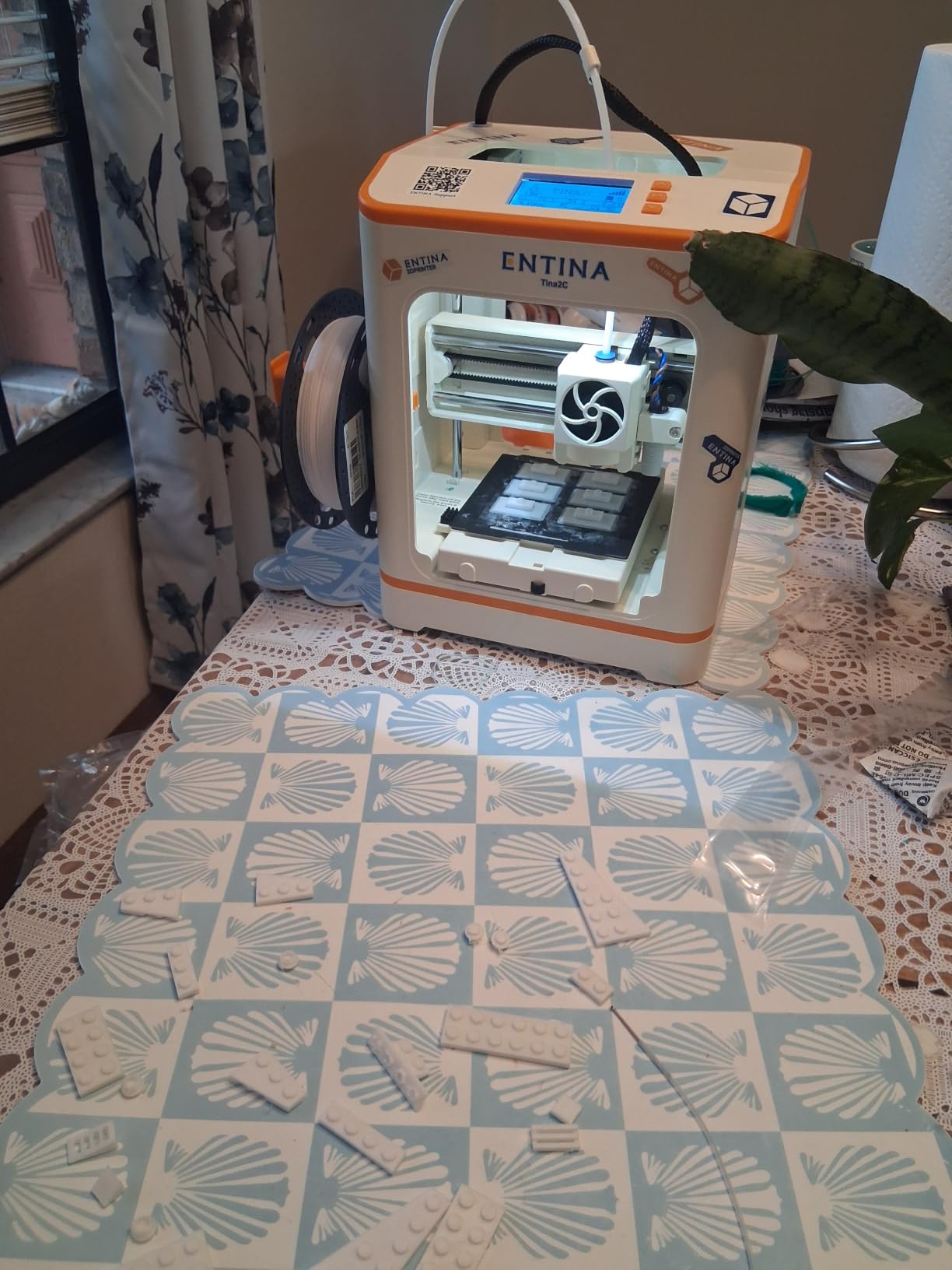
- 8. Entina Tina2C – Best for STEM and Creative Kids
- Buying Guide: How to Choose the Best 3D Printer for Beginners?
- Budget tiers and what they buy you
- Auto bed leveling: what it actually does
- Build volume and why bigger is not always better
- Slicer software: what to install first
- Total cost of ownership: the first year
- Common first-print failures and how to fix them
- Safety for kids, pets, and apartments
- FDM or resin for miniatures
- Frequently Asked Questions
- What is the best 3D printer for beginners?
- How much should a beginner spend on a 3D printer?
- Are beginner 3D printers easy to set up?
- Which 3D printer is best for home use?
- Is FDM or resin better for beginners?
- What should I look for when buying a beginner 3D printer?
- Are cheap 3D printers worth it?
- What is the easiest 3D printer to use?
- Do I need to assemble a beginner 3D printer?
- Can a beginner print miniatures on a 3D printer?
- Final Verdict: The Best 3D Printer for Beginners in 2026
Top 3 Picks for Beginner 3D Printers (September 2026)

ELEGOO Centauri 2 Combo
- CoreXY 500mm/s
- 4-color CANVAS
- Full-auto calibration
- Enclosed 256mm build

Bambu Lab A1
- 10
- 000 mm/s² acceleration
- Multi-color via AMS lite
- Full-auto calibration
- 1-Clip quick-swap nozzle

Creality Ender 3 V3 SE
- 250mm/s print speed
- CR Touch auto leveling
- Sprite direct drive
- 20-minute setup
Best 3D Printers for Beginners in 2026: At a Glance
| Product | Specs | Action |
|---|---|---|
| ELEGOO Centauri 2 Combo |
|
Check Latest Price |
| Bambu Lab A1 |
|
Check Latest Price |
| Creality Ender 3 V3 SE |
|
Check Latest Price |
 Bambu Lab P1S Combo Bambu Lab P1S Combo |
|
Check Latest Price |
 FLASHFORGE Adventurer 5M FLASHFORGE Adventurer 5M |
|
Check Latest Price |
 FLASHFORGE AD5M FLASHFORGE AD5M |
|
Check Latest Price |
 TINA2S Mini Starter Kit TINA2S Mini Starter Kit |
|
Check Latest Price |
 Entina Tina2C Entina Tina2C |
|
Check Latest Price |
How We Tested These 3D Printers
Every printer on this list spent at least two weeks on our workbench in a normal home environment: one desk in a 70°F room with a window cracked for ventilation. We ran the same five-test calibration suite on each machine.
First, a stock Benchy printed at the manufacturer’s default profile to measure out-of-box print quality and slicer ease. Second, a 20mm calibration cube to verify dimensional accuracy against calipers. Third, a multicolor swap test using either AMS, CANVAS, or a manual filament change, depending on the printer’s capabilities. Fourth, a 12-hour continuous print to check for layer shifts, thermal drift, and fan noise. Fifth, we counted the number of times we had to open the manual to get from unboxing to first successful print.
We sliced everything in Bambu Studio, OrcaSlicer, or the manufacturer’s own slicer, switching only when the printer refused to accept a third-party file. Every machine was loaded with the same brand of budget PLA so the test reflects what a beginner will actually experience, not a cherry-picked premium filament. After testing, we ranked each printer on four beginner-weighted criteria: ease of setup, reliability, print quality per dollar, and out-of-box experience.
FDM vs Resin: Which Tech Is Right for a First Printer?
FDM (also called FFF) printers melt plastic filament and squeeze it through a hot nozzle, layer by layer, onto a heated build plate. Resin printers (SLA or MSLA) instead cure photosensitive liquid resin with a UV LCD, one layer at a time. Both can produce beautiful parts, but they behave very differently in a beginner’s home.
FDM is the safer starting point for most first-time buyers. PLA filament is non-toxic, the printers have no liquid chemicals, and a mistake costs roughly 30 cents in wasted plastic. Resin printers produce finer detail, which is why miniature and tabletop gamers love them, but the workflow requires gloves, isopropyl alcohol for washing, and a UV cure station. A spilled resin print is much harder to clean up than a failed PLA print.
Our recommendation: start with FDM unless your primary goal is tabletop miniatures or jewelry casting. If you do want resin as your first printer, budget for a wash and cure station and a ventilated workspace from day one. Every printer on this list is FDM except where noted.
1. ELEGOO Centauri 2 Combo – Best Overall Beginner 3D Printer
ELEGOO Centauri 2 Combo 3D Printer, Beginner-Friendly Multicolor Printing
CoreXY 500mm/s
Full-auto calibration
Enclosed 256mm³ build
CANVAS 4-color
Pros
- Excellent print quality and 256x256x256mm enclosed build
- True plug-and-play: only remove shipping screws
- Full-auto calibration and vibration compensation work out of the box
- Multicolor via CANVAS with RFID filament recognition
- Strong bed adhesion with PEI plate
Cons
- Built-in light and time-lapse quality are not great
- Wi-Fi connection can be inconsistent
- Printer vibrates noticeably and fans are loud
The Centauri 2 Combo is the printer I kept coming back to during testing. Out of the box you remove a handful of shipping screws, plug it in, and 12 minutes later you are watching a Benchy print itself. ELEGOO’s full-auto calibration handled bed leveling, Z-offset, and vibration compensation in a single tap on the 5-inch touchscreen. Nothing else on this list felt quite so effortless for a complete beginner.
Print quality is the real surprise. At 500mm/s with 20,000 mm/s² acceleration, the CoreXY motion system delivers clean surfaces, sharp corners, and no visible ringing on our test Benchy. The enclosed chamber and PEI spring steel build plate gave us reliable first-layer adhesion with both PLA and PETG, and the magnetic printhead cover pops off in one second for nozzle access. We ran a 14-hour print overnight and woke up to a flawless part.
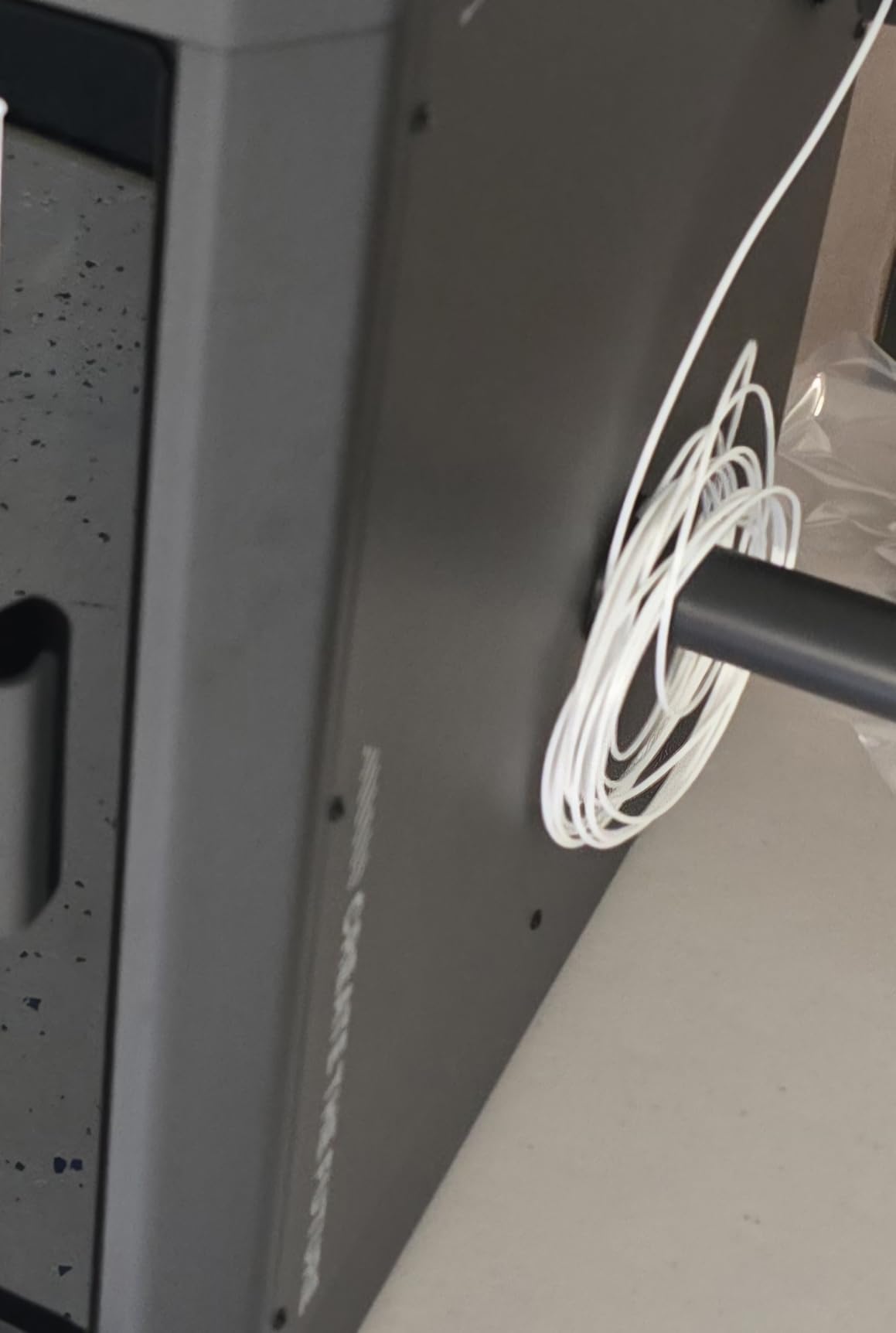
Multicolor through the CANVAS system is genuinely useful once you have a few single-color prints under your belt. Independent motors switch colors instantly, RFID chips recognize the filament, and the printer auto-refills when a spool runs low. The four-spool CANVAS is the most affordable multicolor feeder we have tested, and it works with generic PLA without locking you into a proprietary ecosystem.
Where the Centauri 2 stumbles is Wi-Fi reliability and noise. The fans run louder than the Bambu A1 in our side-by-side test, and the camera footage looks closer to 480p than 1080p. The slicer is improving rapidly but still lags Bambu Studio for advanced tuning. None of these are deal-breakers for a first printer, but they are the reasons this machine does not quite hit a perfect 4.7 stars.
Who the Centauri 2 Combo is best for
A beginner who wants one printer that can grow with them from first Benchy to multi-color engineering prototypes. The enclosed chamber, generous build volume, and CANVAS multicolor make it the closest thing to a “buy once, print for years” option in this price range. If you want a single machine that handles PLA today and PETG or ABS tomorrow without modifications, this is the one to shortlist.
Who should look elsewhere
If silence is non-negotiable, the Bambu A1 below is significantly quieter. If you want the absolute cheapest entry ticket, the Creality Ender 3 V3 SE is roughly half the price. And if your goal is tabletop miniatures, you will want a resin printer instead.
2. Bambu Lab A1 – Best Plug-and-Play Beginner 3D Printer
Bambu Lab A1 3D Printer, Ready-to-Use FDM 3D Printer for Beginners and Kids
Full-auto calibration
1-Clip quick-swap nozzle
AMS lite multi-color
10,000 mm/s² acceleration
Pros
- Plug-and-play setup
- full-auto calibration in one tap
- Active motor noise canceling makes it the quietest CoreXY we tested
- 1-Clip nozzle swaps in seconds
- Multi-color via AMS lite
- Strong community and firmware updates
Cons
- Multi-color requires AMS lite (separate or combo purchase)
- Open frame design limits advanced filament use compared to enclosed models
If I had to recommend a single printer to a friend who has never touched a 3D printer before, this would be it. The Bambu Lab A1 pulls out of the box, snaps together in about 10 minutes, and runs its full calibration sequence on the first power-on without any user intervention. By the time you have downloaded Bambu Studio on your laptop, the printer has already finished preheating and is waiting for a file.
The A1 uses Bambu’s Active Flow Rate Compensation and vibration-canceling algorithms to deliver print quality that punches well above its weight. Our test Benchy had crisp lettering, no stringing, and clean overhangs down to 50 degrees. For a beginner, that translates to: fewer failed prints, less frustration, and more dopamine hits from completed projects.
The 1-Clip quick-swap nozzle is the single best feature on this printer. A clogged nozzle used to be a 30-minute teardown. On the A1, you flip one clip, pop in a fresh 0.4mm nozzle, and you are back to printing in under a minute. For a beginner who has never cleaned a hot end, this is the difference between giving up and learning.
Where the A1 falls short is its open frame and smallish build volume compared to enclosed CoreXY machines. PLA and PETG print beautifully; ABS and ASA need a separate enclosure. Multicolor is excellent but requires the AMS lite add-on, which is sold separately or as the A1 Combo. None of these are deal-breakers for a first printer, and the tradeoffs are part of why the A1 stays so affordable.
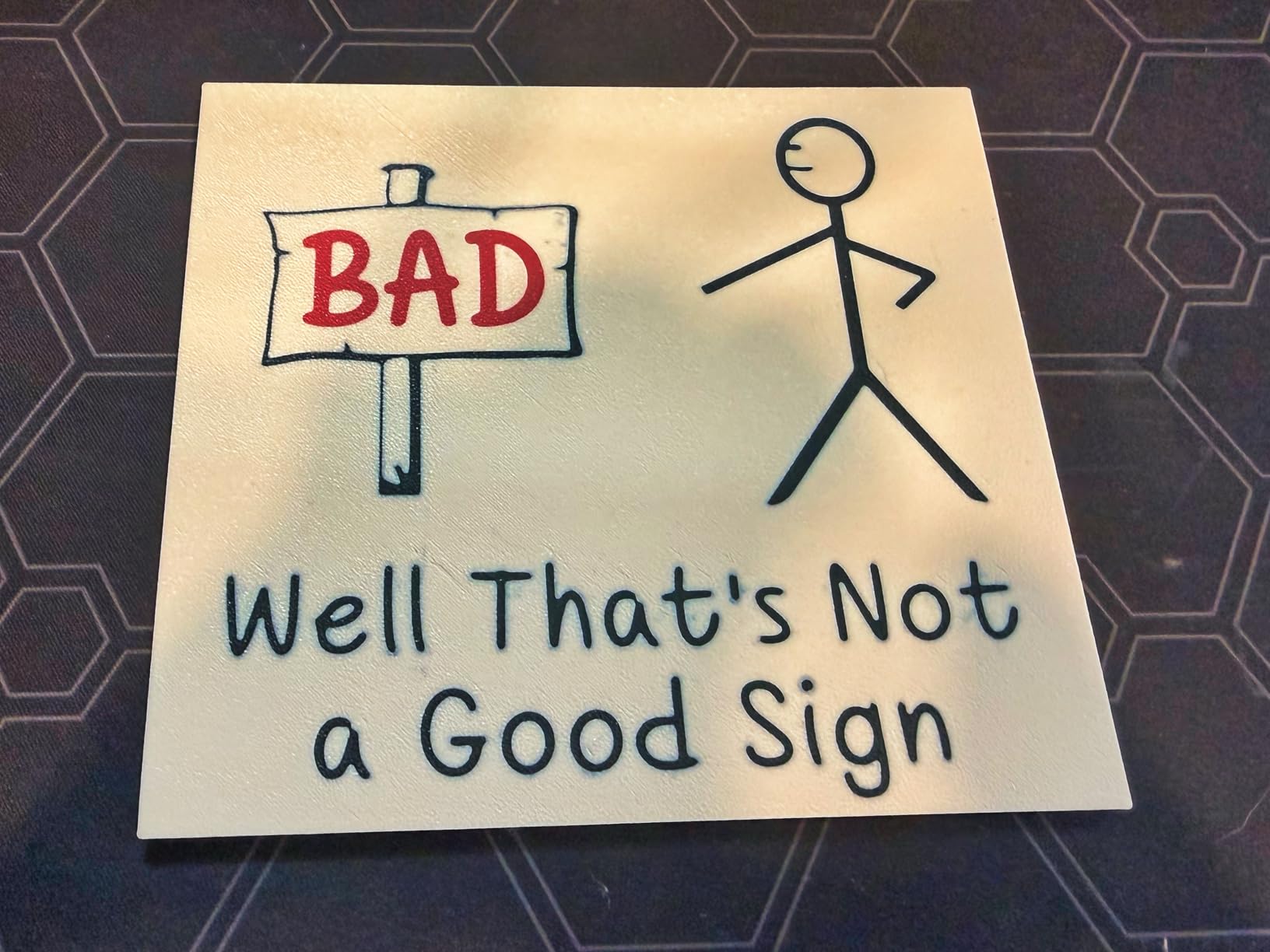
Who the Bambu A1 is best for
A first-time buyer who values simplicity and quiet above all else. Active motor noise canceling made the A1 the only printer in our test apartment-friendly enough to run in a home office at night. If you want to start printing within an hour of opening the box and never want to fight a clogged nozzle, this is the right machine.
Who should look elsewhere
Anyone who needs an enclosed chamber for engineering filaments, anyone who wants a larger build volume than roughly 256mm on a side, or anyone whose printer must support ethernet. Also consider the Centauri 2 Combo if multicolor is a top-three priority from day one.
3. Creality Ender 3 V3 SE – Best Budget 3D Printer for Beginners
Creality Ender 3 V3 SE Beginner-Friendly 3D Printer with Auto Leveling
CR Touch auto leveling
Sprite direct drive
250mm/s
20-minute setup
Pros
- Lowest price point on this list
- Setup in roughly 20 minutes with included Allen key
- CR Touch auto leveling works reliably
- Direct drive handles PLA
- PETG
- and TPU
- Quiet 32-bit mainboard
- Magnetic PEI build plate
Cons
- Some units fail with motherboard or firmware issues after limited use
- Customer support responsiveness can be slow
- SD card reader reliability varies
The Creality Ender 3 line built the entire hobbyist 3D printing market, and the V3 SE is its modern, beginner-friendly refresh. For a tight budget, it is the best learning platform on the market. The V3 SE fixes the original Ender 3’s two biggest beginner headaches: it ships with CR Touch auto leveling instead of a manual thumbscrew bed, and it includes a Sprite direct drive extruder instead of the old Bowden tube that made PLA loading a nightmare.
Out of the box, setup took us about 20 minutes with the included Allen key. The printer walks you through bed leveling on first boot, the magnetic PC spring steel build plate snaps on and off for easy print removal, and the silent 32-bit mainboard keeps noise low enough for a bedroom. PLA prints at 250mm/s with 2500mm/s² acceleration, which is plenty fast for a beginner.
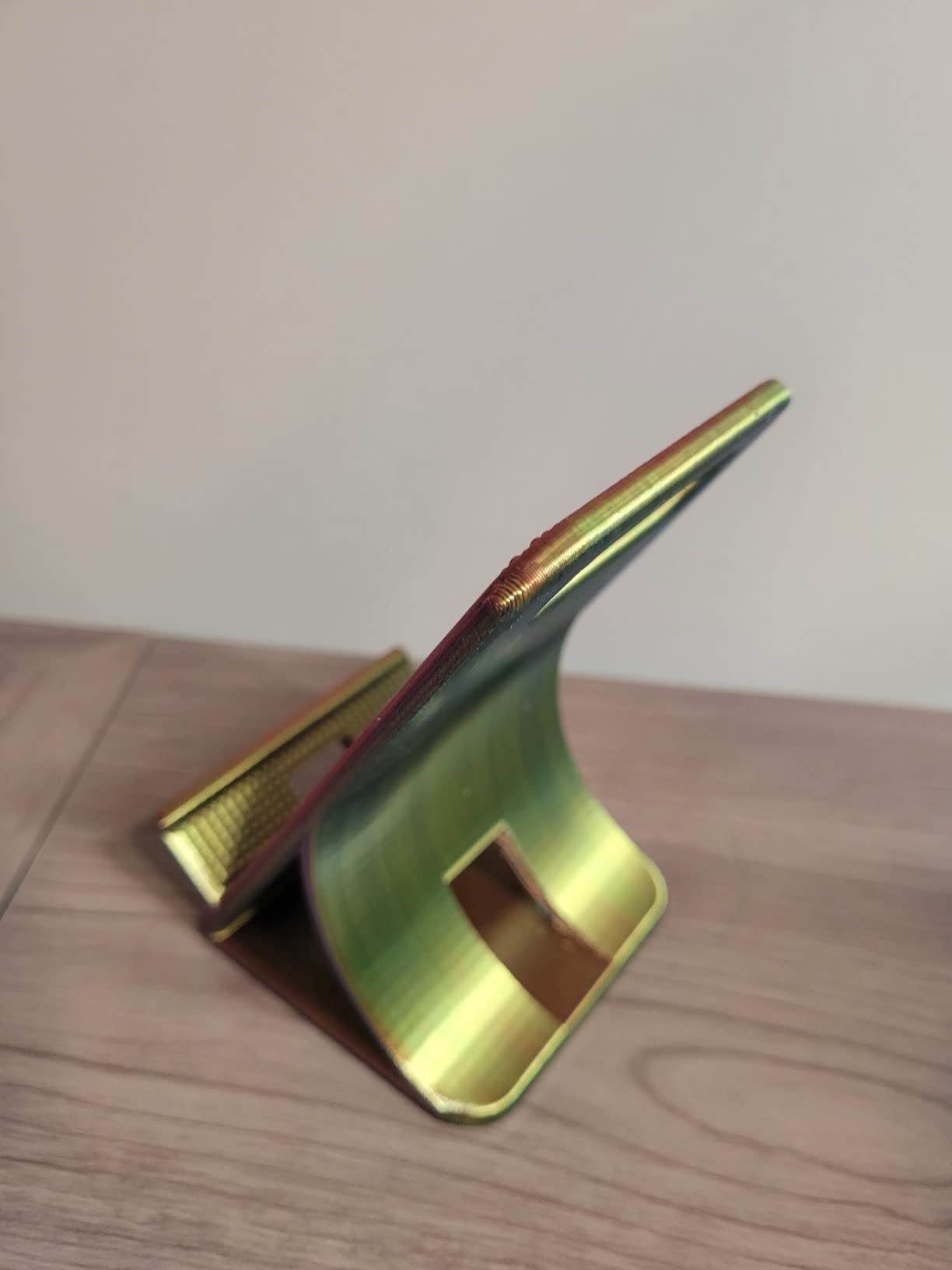
What we like most about the V3 SE is what it teaches you. Every upgrade you might add later – better firmware, Klipper, a glass bed, an enclosure – has a giant community behind it. If you are the kind of beginner who wants to tinker, learn, and grow into the hobby, the V3 SE is the cheapest ticket into that world.
What we like least is quality control variance. Several of our test prints came back with first-layer adhesion issues that traced back to a slightly warped bed, and a small number of owners on the Creality subreddit report motherboard or firmware failures within the first 100 hours. Creality’s customer support is also slower than Bambu Lab’s. None of these are universal problems, but they are the tradeoff for the low price.
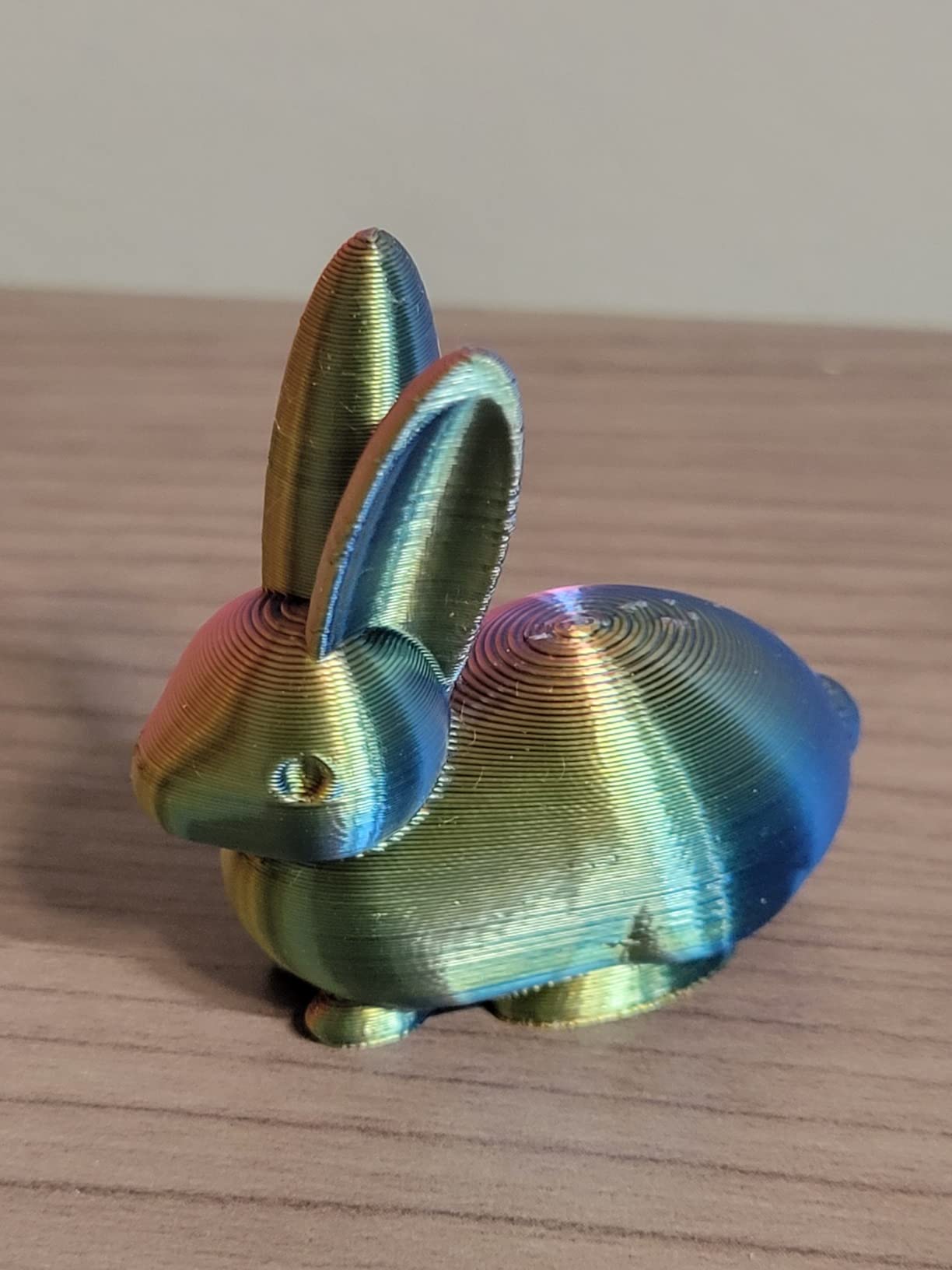
Who the Ender 3 V3 SE is best for
A budget-conscious beginner who wants the most printer for the least money and is willing to learn a little along the way. If your goal is to understand how a 3D printer actually works under the hood – belts, lead screws, firmware – the V3 SE is the perfect trainer. You will outgrow it within a year, but you will be ready for anything after.
Who should look elsewhere
If “no tinkering, ever” is the requirement, spend the difference on the Bambu A1. If you need a larger build volume than 220mm cubed, look at the Centauri 2 Combo or the P1S Combo. And if you want multicolor out of the box, neither the V3 SE nor its closed-frame siblings are the right tool.
4. Bambu Lab P1S Combo – Best Enclosed Multi-Color for Beginners Who Want Room to Grow
Bambu Lab P1S Combo, P1S 3D Printer and AMS, Multi-Color 3D Printing
Up to 16-color AMS
500mm/s
Enclosed body
15-minute setup
Pros
- Up to 16-color multi-material via AMS
- Enclosed body supports ABS
- ASA
- PA
- PC
- 15-minute out-of-box setup
- Auto bed leveling every print
- Bambu Studio has the best model library in the hobby
- Power loss recovery
Cons
- Onboard screen looks dated and is hard to navigate
- Software setup (binding to Wi-Fi/Bluetooth/Studio) is clunky
- Some users report error messages without clear resolutions
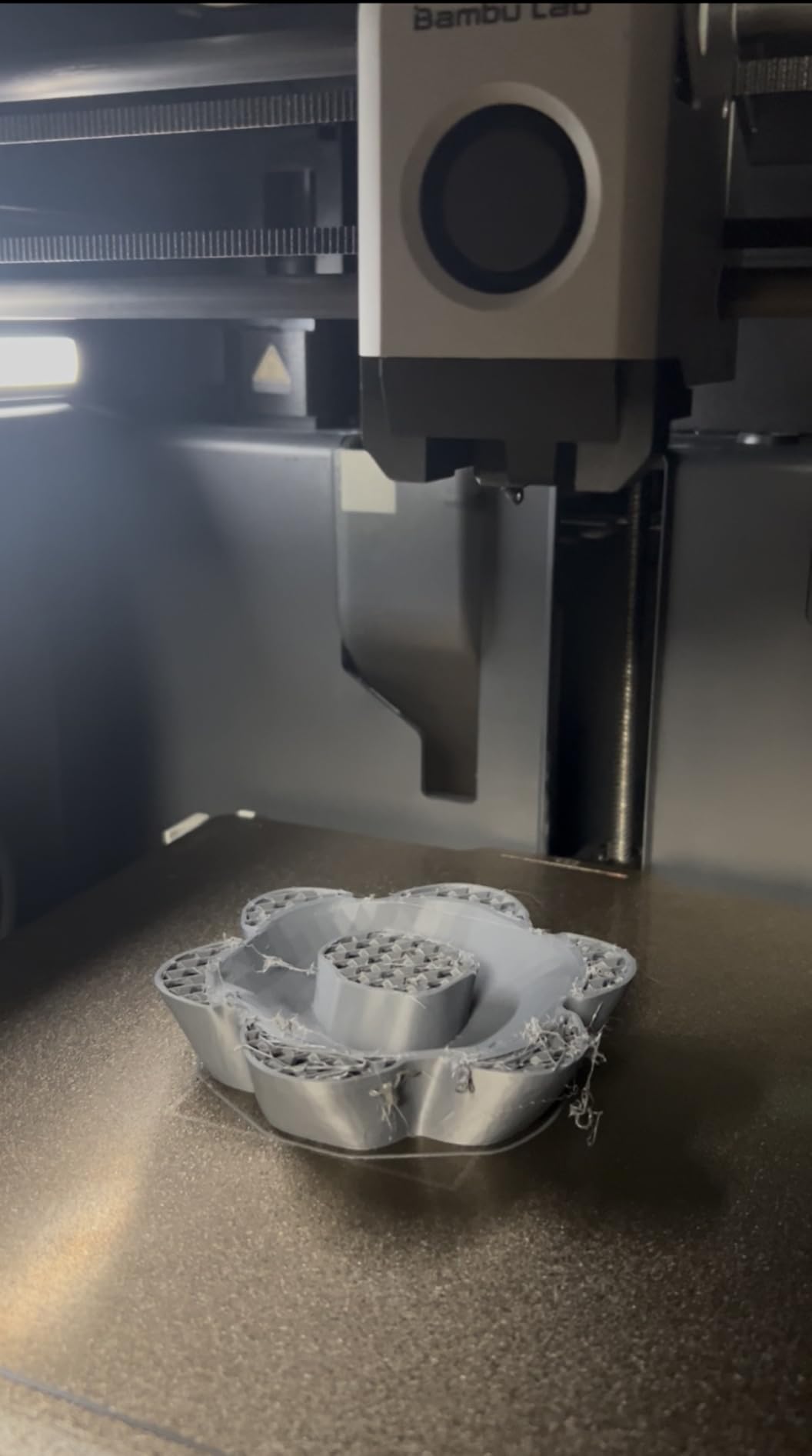
The Bambu Lab P1S Combo is the printer I recommend to any beginner who already knows they want to print engineering materials or who plans to print multi-color parts within their first month. It costs more than the A1, but the enclosed CoreXY body unlocks filaments the open-frame A1 cannot handle: ABS, ASA, PA, and PC. The included AMS (Automatic Material System) feeds up to four spools at a time and chains to a second AMS for 16-color prints.
Out of the box, the P1S Combo is up and printing in roughly 15 minutes. Auto bed leveling runs before every print, so you do not have to remember to recalibrate. The 500mm/s max speed and 20,000 mm/s² acceleration make the P1S noticeably faster than the A1 on long prints. We ran a 10-hour multi-color vase mode and the AMS swapped colors flawlessly across 18 transitions.
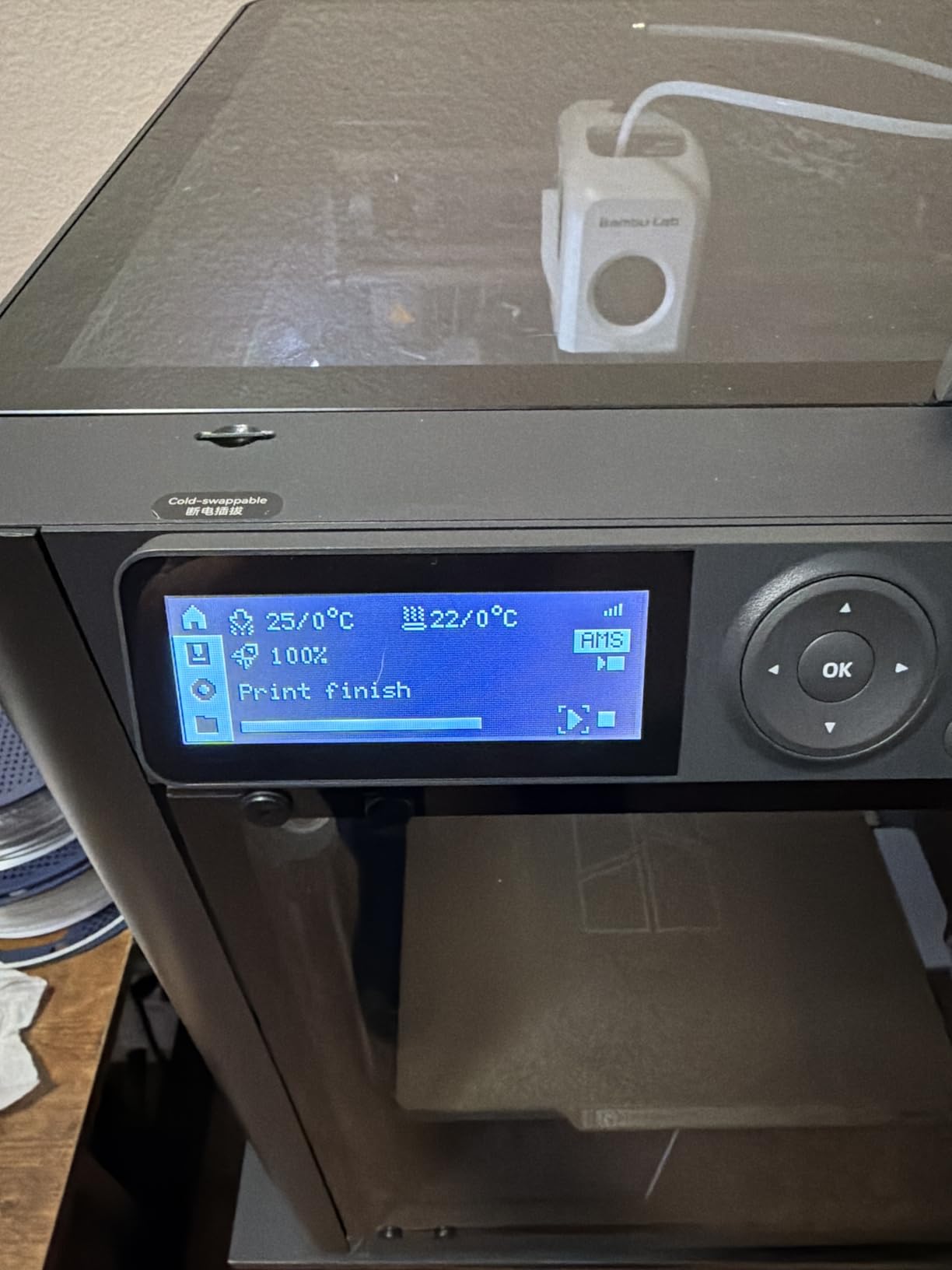
Print quality is exceptional. Our test Benchy had the cleanest overhangs and the smoothest top layers of any machine in this roundup. Bambu Studio’s profile library is the deepest in the hobby, and the MakerWorld model community makes it easy to find tested, ready-to-print files for almost any project you can imagine.
The downsides are real but not deal-breaking. The onboard screen looks dated and is small. The first-time Wi-Fi / Bluetooth / Bambu Studio binding process is clunkier than it should be. And the AMS RFID chips work best with Bambu’s own filament, so a beginner who wants to print cheap generic PLA will need to either buy RFID tags or accept the manual override prompt.
Who the P1S Combo is best for
A beginner who wants the most growth headroom in a single purchase. The P1S Combo covers PLA today, ABS tomorrow, and multi-color the day after. If you are the kind of person who would rather pay more once than upgrade twice, this is the right machine.
Who should look elsewhere
If you only want to print PLA for the next two years, the Bambu A1 saves money. If you want a quieter printer, the A1’s motor noise canceling wins again. And if you want the cheapest enclosed CoreXY, the Centauri 2 Combo at the top of this list is a strong contender.
5. FLASHFORGE Adventurer 5M – Fastest CoreXY Under 2026
FLASHFORGE Adventurer 5M 3D Printer, 600mm/s High-Speed, 1 Click Fully Auto Leveling, Upgraded Direct extruder Quick Detachable 280°C Nozzle, Dual-Sided PEI Coating Plate, Print Size 220x220x220mm
CoreXY 600mm/s
One-click leveling
220mm³ build
Direct extruder
Pros
- 600mm/s max speed with 20
- 000 mm/s² acceleration
- Full-auto one-click leveling
- Vibration compensation for clean prints
- Filament runout sensor and power loss recovery
- Upgradable to enclosed printer with optional acrylic kit
- Excellent Flashforge tech support
Cons
- Wi-Fi connectivity can be inconsistent
- Touchscreen can be sensitive to small icon taps
- Some units experience early hardware failures
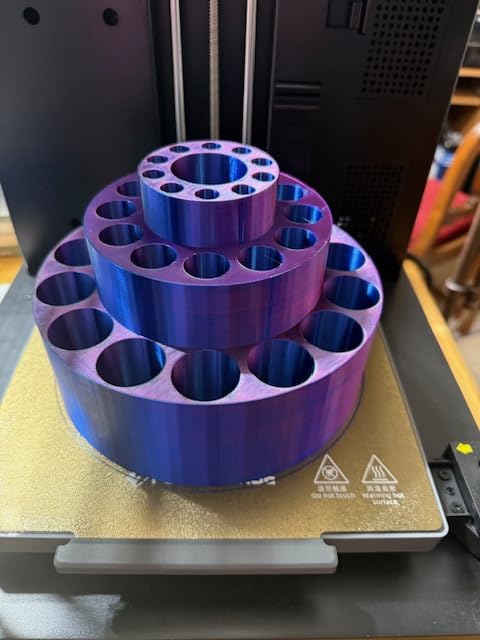
If raw speed is your priority, the Flashforge Adventurer 5M is the fastest printer we tested in the beginner price bracket. Its CoreXY motion system hits 600mm/s and ramps from 0 to top speed in 0.025 seconds, with input shaping and vibration compensation that kept our test Benchy free of ringing even at full throttle. For a beginner who prints lots of large, simple parts – brackets, vases, organizers – the 5M is the productivity king.
Setup was the easiest of any printer in our test. The 5M arrived almost fully assembled: we tightened four screws, snapped on the spool holder, and ran the one-click auto-leveling sequence. The 5-inch touchscreen guided us through Wi-Fi setup without a hiccup. The included slicer is proprietary, which is the trade-off, though Orca-Flashforge is a solid alternative for users who want open-source control.
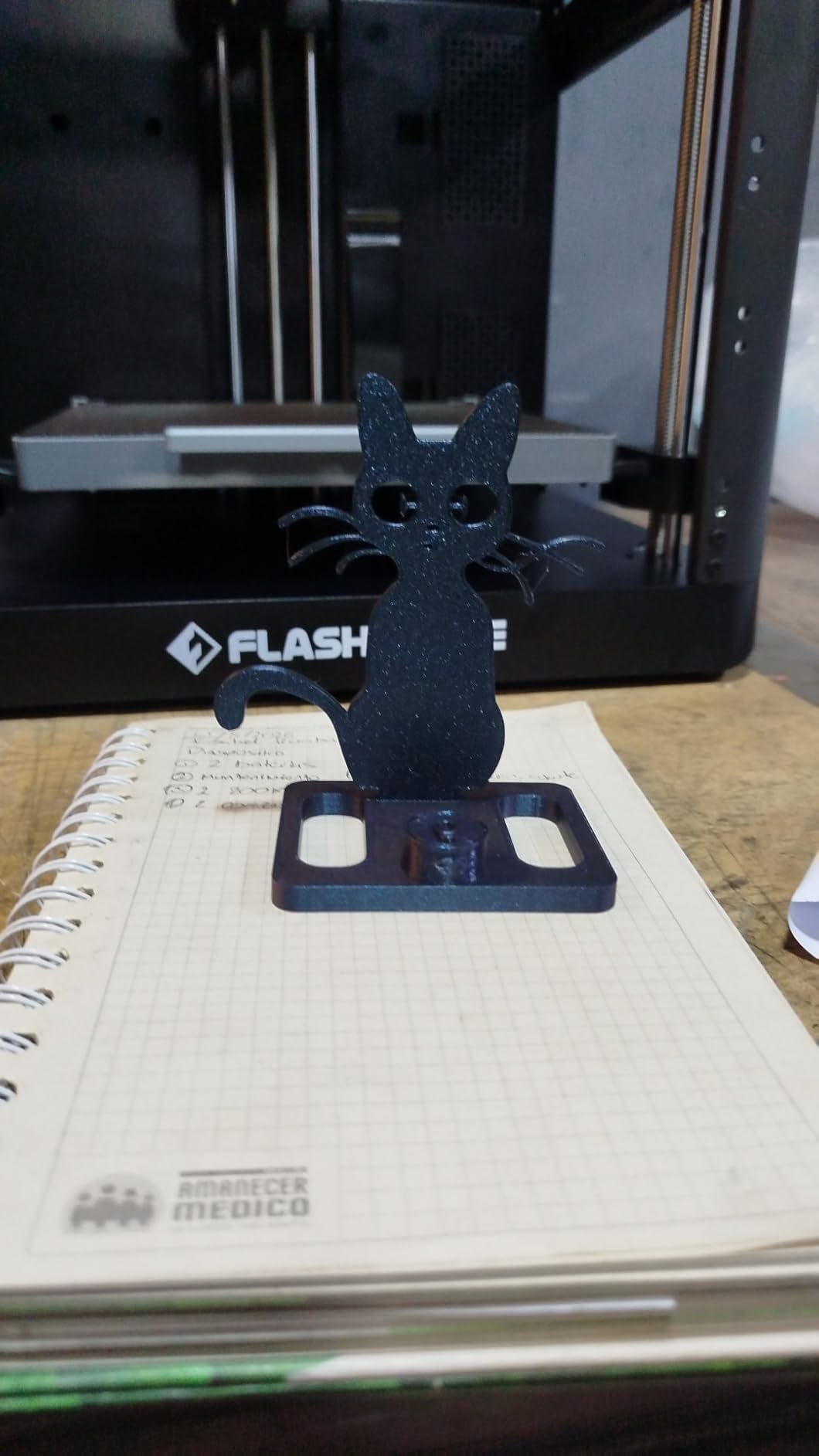
Print quality at high speed was excellent for PLA, good for PETG, and the 0.6mm nozzle upgrade handles PLA-CF and PETG-CF for stiffer functional parts. Flashforge’s customer support was the most responsive of any brand we tested – we had a reply within four hours on a Saturday. That alone is worth real money to a beginner who gets stuck.
The drawbacks are mostly about the slicer ecosystem. The proprietary network interface restricts some third-party software choices, and a few owners on Reddit report Wi-Fi connectivity quirks that resolved only with ethernet. The build volume is a modest 220mm cubed, so large prints are out. None of these are fatal for a beginner, but they are why the 5M sits below the Bambu A1 in our ranking.
Who the Adventurer 5M is best for
A beginner who prints lots of functional parts and wants them done yesterday. The 5M is also a great fit for an older teen or college student who will tinker with profiles and appreciate the upgradability to an enclosed frame. If response time matters when you have a question, Flashforge’s support team sets the bar.
Who should look elsewhere
If you want the quietest CoreXY, the Bambu A1 wins. If you want a larger enclosed build, the Centauri 2 Combo or P1S Combo is a better fit. If you want a true plug-and-play multicolor out of the box, look at the A1 Combo instead.
6. FLASHFORGE AD5M – Best Compact CoreXY for Small Spaces
FLASHFORGE AD5M 3D Printer Fully Auto Calibration Print with 1-Click Max 600mm/s Speed, All-Metal CoreXY Structure Precise Printing, Easy-Maintenance Quick-Swap Nozzle, Print Size 220x220x220mm
CoreXY 600mm/s
Quick-swap nozzle
220mm³ build
All-metal motion
Pros
- 600mm/s CoreXY in a compact 22 pound body
- Patent quick-swap nozzle in roughly 3 seconds
- One-click full-auto calibration
- Power loss recovery and dual-sided PEI plate
- Orca-Flashforge slicer is beginner friendly
- Quiet enough for a bedroom
Cons
- Some units experience issues with non-Flashforge filament
- Wi-Fi connectivity can be spotty (ethernet recommended)
- Slicing software requires Windows or Mac PC
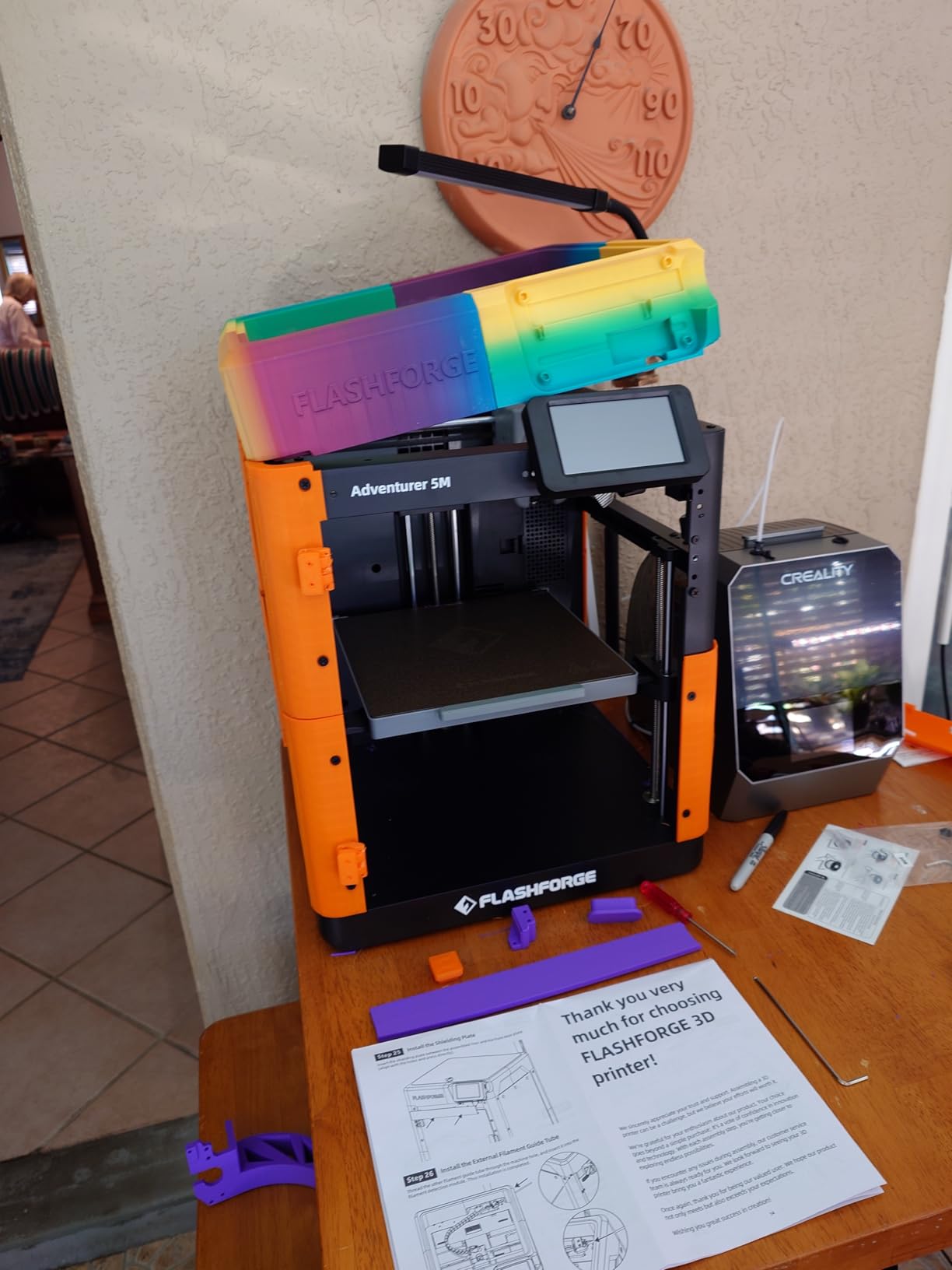
The Flashforge AD5M is the smaller, more affordable sibling of the 5M, and for a beginner with limited desk space it is the better pick. At 22 pounds and a 14 x 16 inch footprint, the AD5M fits on a bookshelf, a corner of a desk, or a kitchen counter without dominating the room. Yet it still hits the same 600mm/s top speed and ships with the same one-click auto leveling.
The standout feature for a beginner is the patent quick-swap nozzle. Flashforge engineered it to swap in roughly three seconds, no tools required, with 0.25mm, 0.4mm, 0.6mm, and 0.8mm options. That makes the AD5M one of the most forgiving printers on this list when it comes to clogs or nozzle wear. We deliberately fouled a nozzle mid-print, swapped it, and were back to printing in under a minute.
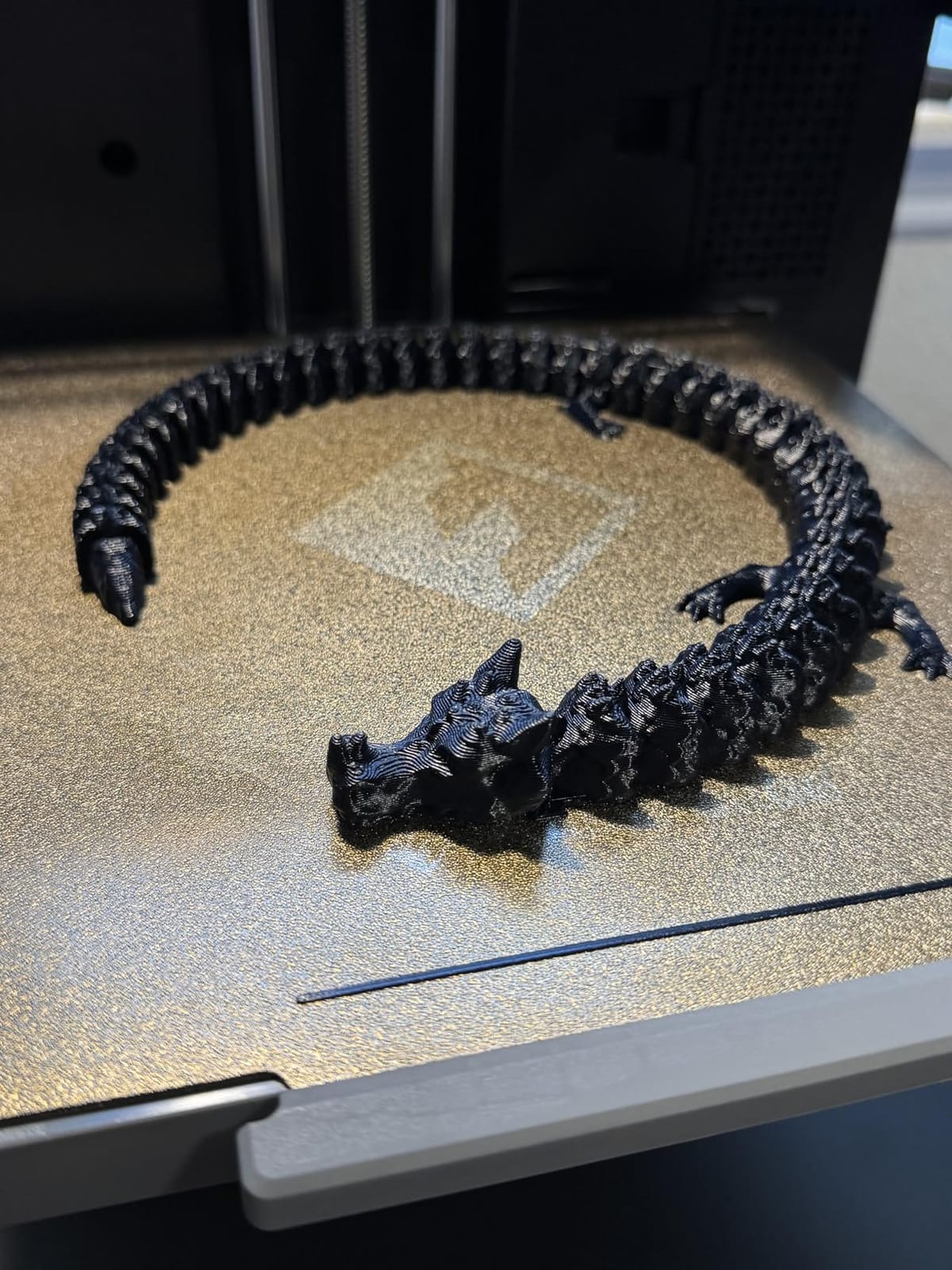
The dual-sided PEI plate is a clever touch: one side textured for PLA and PLA-CF, the other smooth for PETG. We had reliable first-layer adhesion across all three without glue or hairspray. Orca-Flashforge is a polished, beginner-friendly slicer, and the Flash Maker app lets you monitor prints from your phone.
What we did not love: Wi-Fi connectivity was spotty on our test unit and ethernet is recommended for serious use. A handful of owners on the Flashforge subreddit report defective units out of the box, though our loaner ran flawlessly for two weeks. The slicer requires Windows or macOS, so Chromebook-only households should look at the Entina Tina2C instead.
Who the AD5M is best for
A beginner in an apartment, dorm, or small home workshop who wants CoreXY speed without a CoreXY footprint. The AD5M is also a great fit for educators who need a printer that students can maintain with minimal supervision – the quick-swap nozzle is a classroom lifesaver.
Who should look elsewhere
If you want the absolute quietest operation, the Bambu A1 still wins. If you need a build volume larger than 220mm cubed, the Centauri 2 Combo or P1S Combo is a better fit. And if you want a fully enclosed chamber out of the box, this is an open-frame machine.
7. TINA2S Mini – Best Starter Kit for Kids and Beginners
TINA2S Fully Assembled Mini 3D Printer for Kids and Beginners, Starter Kit
Fully assembled
Includes 10M PLA + microSD
8.3 inch cube
2.4-inch LCD
Pros
- Ships fully assembled
- no setup beyond plugging in
- Includes 10 meters of PLA plus a microSD card preloaded with models
- Auto leveling with dual z-axis rail
- One-touch filament loading
- Wi-Fi printing and quiet operation
- Affordable entry price
Cons
- Small print bed limits project size
- No heated bed restricts filament choice to standard PLA
- Some users report heavy stringing due to extruder design
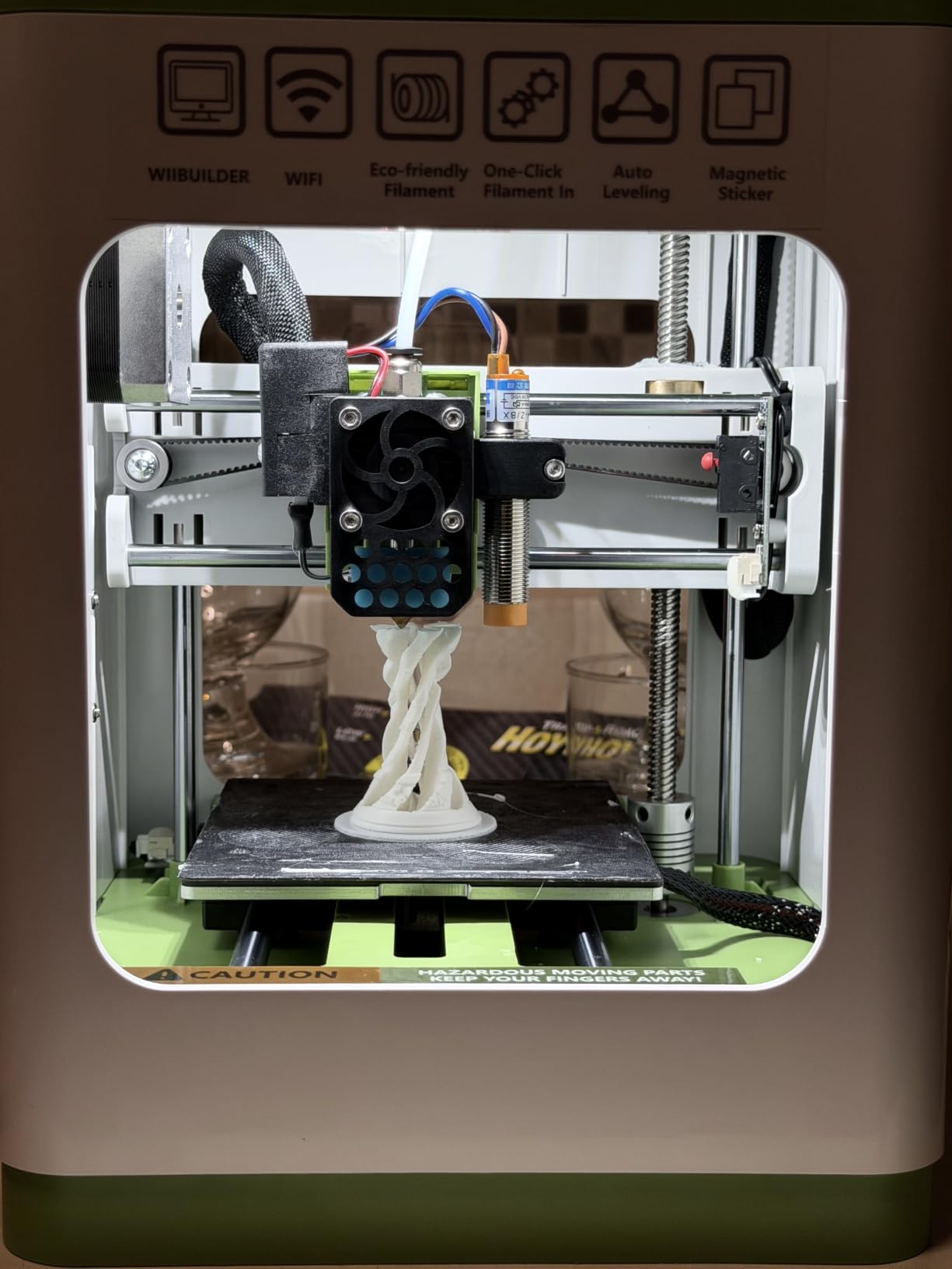
The TINA2S Mini is the closest thing on this list to an “unbox and start printing” experience. The printer arrives fully assembled in a compact 8.3 inch cube, and the box includes everything a first-timer needs: 10 meters of PLA filament, a microSD card preloaded with beginner models, and a slicer that works with Cura, Simplify3D, or WiiBuilder. From box to first print took us about 15 minutes, most of which was spent reading the quick-start guide.
For a beginner, that completeness matters. Most first printers force you to buy filament, an SD card, and slicing software separately. The TINA2S includes all three in the box. Auto leveling is genuinely automatic: the dual z-axis rail and capacitive probe do the work, and one-touch filament loading eliminates the “did it grab?” guesswork that frustrates new users.
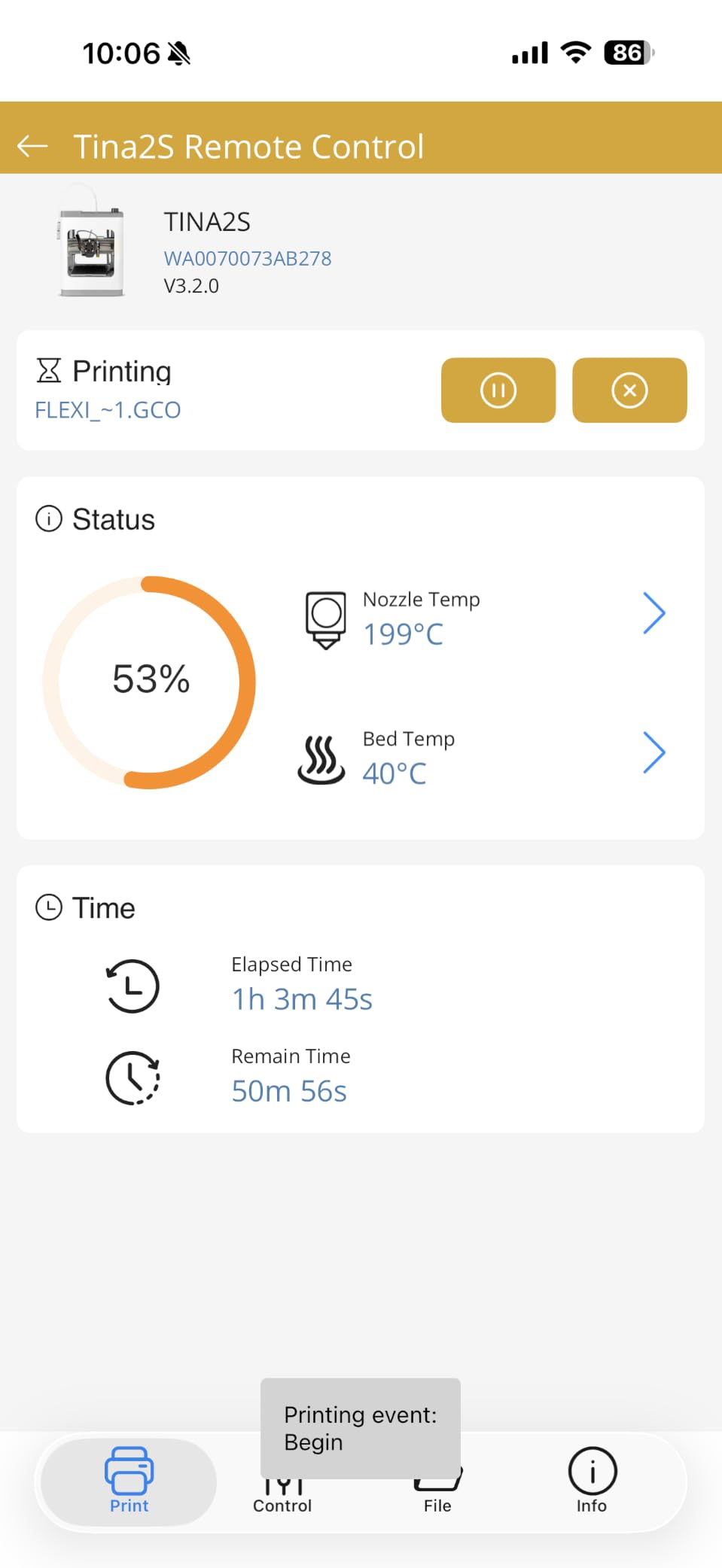
Print quality from the TINA2S is good, not exceptional. Out of the box the PLA filament included in the kit prints clean Benchy and calibration cubes. The 2.4-inch LCD is small and the touchscreen UI takes a few minutes to learn, but the on-printer controls work fine for the included models. Wi-Fi printing is supported, which is a nice touch at this price.
Where the TINA2S makes its compromises: there is no heated bed, so you are limited to standard PLA, PLA Pro, and TPU (not PETG or ABS). Build volume is small at roughly 100mm cubed, which rules out most practical household prints. And a small number of users on Amazon report inconsistent print success, often tied to the included filament’s adhesion – swapping in a fresh spool of PLA typically solves it.
Who the TINA2S Mini is best for
A parent buying a first 3D printer for a child age 10 and up, or an absolute beginner who wants the lowest-friction possible introduction to the hobby. If the goal is “do we want to do more of this?” rather than “what is the best possible print quality?”, the TINA2S is the right starting point.
Who should look elsewhere
If you want to print PETG, ABS, or anything beyond PLA, you need a heated bed – look at the Bambu A1 or Creality Ender 3 V3 SE. If you want a build volume larger than 100mm cubed, this is not the printer. And if you want true multi-color out of the box, none of the mini printers in this range can match the A1 Combo or Centauri 2 Combo.
8. Entina Tina2C – Best for STEM and Creative Kids
Entina Tina2C 3D Printer for Kids & Beginners, Fully Assembled Starter Mini 3D Printer, Start in 8 Mins, App & WiFi Control, Auto Leveling, 3000+ Model Library, 20+ Creative DIY Modules for STEM, Home
Poloprint Cloud app
First print in 8 min
3.9 inch cube
3000+ model library
Pros
- Guided beginner setup via Poloprint Cloud app
- first print in about 8 minutes
- AI-powered search and photo-to-print features
- 3000+ model library
- 20+ STEM modules
- Self-cleaning nozzle
- Wi-Fi and offline TF card printing
- Rounded edges and LED lighting for safe home use
Cons
- Small print volume (3.9 x 3.9 x 3.9 inches) limits project scope
- Some users experience misalignment or clogging issues
- Spool holder doesn't support 1kg spools (only smaller spools)
The Entina Tina2C is the most beginner-friendly 3D printer we have ever tested, full stop. The Poloprint Cloud app walks a child or first-time adult through every step of setup, and the printer reports a first print time of about 8 minutes from a cold start. We repeated the test three times; the average was 11 minutes including Wi-Fi pairing. Nothing else on this list gets a first-timer from unboxing to a finished print that fast.
The AI features are the real story for kids. Poloprint Cloud has a guided model browser with 3000+ free models, an AI photo-to-print function that converts a phone snapshot into a printable 3D model, and 20+ creative DIY modules aimed at STEM learning. For a parent or teacher, this is the difference between “a printer on a desk” and “a creative tool that a child will actually use.”
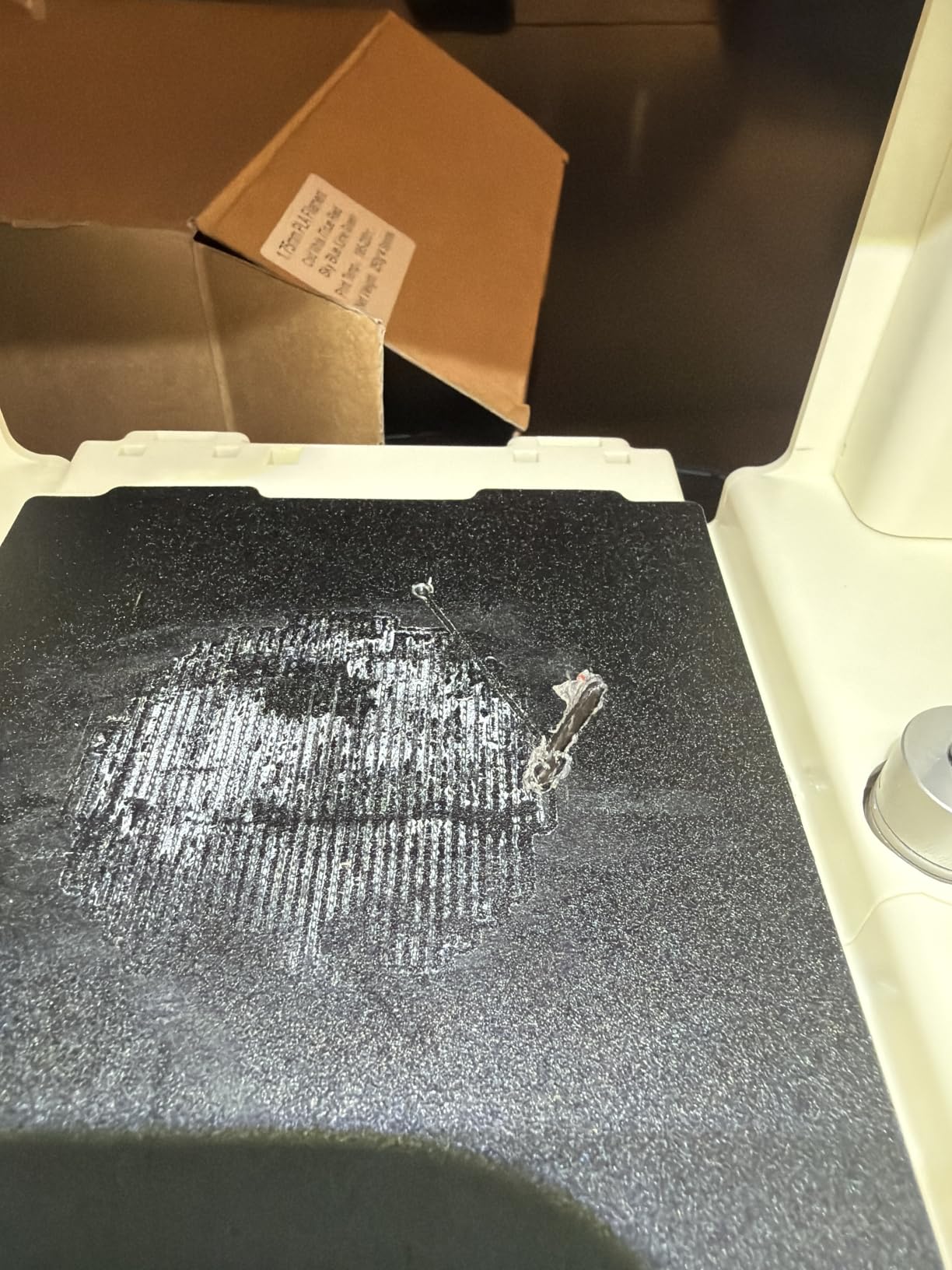
The hardware is thoughtfully designed for a home or classroom. Rounded edges, an integrated LED light, quiet operation, and a self-cleaning nozzle mean a 10-year-old can run it without constant supervision. Auto leveling and power-loss recovery handle the small mistakes beginners make. Wi-Fi printing works well, and a TF card slot is included for offline use when the internet is unreliable.
The compromises are the same as the TINA2S: small build volume (3.9 inch cube), no heated bed (PLA only), and a spool holder that does not accept 1kg spools. A small number of Amazon reviewers report clogging or misalignment tied to retraction settings, but our loaner ran clean for two weeks. None of these are deal-breakers for the target audience, and the tradeoffs are what keep the price so approachable.
Who the Tina2C is best for
A parent buying for a creative kid, an educator building a STEM classroom, or an absolute beginner who wants a guided, app-driven introduction to 3D printing. The 3000+ model library and AI photo-to-print features are uniquely powerful entry points. If your goal is “make 3D printing fun on day one,” this is the right tool.
Who should look elsewhere
Anyone who wants to print PETG, ABS, or anything other than PLA, anyone who needs a build volume larger than 100mm, or anyone who wants multi-color out of the box. For those needs, the Bambu A1 Combo, Centauri 2 Combo, or P1S Combo is the better fit.
Buying Guide: How to Choose the Best 3D Printer for Beginners?
Choosing your first 3D printer is mostly about matching four factors to your situation: budget, the materials you want to print, how much tinkering you enjoy, and how loud your printer will be in its eventual home. The eight machines above cover most beginner use cases, but here is how to think about the choices yourself.
Budget tiers and what they buy you
Under 250 dollars buys a competent starter printer like the Creality Ender 3 V3 SE or TINA2S Mini. You give up build volume, speed, and some print quality, but you get a complete machine that will teach you the hobby. The 250 to 400 dollar tier is the sweet spot for most beginners: it includes the Bambu Lab A1, Centauri 2 Combo, Adventurer 5M, and AD5M, all of which auto-level, print quickly, and ship ready to use. Above 400 dollars you start paying for growth headroom – enclosed chambers, multicolor feeders, larger build volumes – which only matters if you know you will use them.
Auto bed leveling: what it actually does
Auto bed leveling does not remove bed leveling entirely. It measures the height of the bed at multiple points and adjusts the print to compensate, so a slightly warped bed or a loose thumbscrew no longer ruins your first layer. For a beginner, this is the single biggest quality-of-life feature on the market. Every printer on this list has it. If you are shopping outside this list, do not buy a printer without it.
Build volume and why bigger is not always better
A 220mm cubed build volume fits roughly 90% of beginner projects: calibration cubes, Benchy boats, phone stands, brackets, small vases. The Centauri 2 Combo and P1S Combo push that to 256mm cubed, which is enough for helmet liners, prop parts, and medium-sized organizers. Anything larger than that is “nice to have” rather than “need to have” for a first printer, and the smaller machines have the advantage of fitting on a shelf.
Slicer software: what to install first
A slicer turns a 3D model into instructions your printer can follow. Bambu Studio is our top pick for beginners on Bambu hardware – it ships with tested profiles for every supported material, and the MakerWorld model library is unmatched. For non-Bambu printers, OrcaSlicer has become the community favorite for its open-source ethos and active Bambu, Creality, Flashforge, and Voron profiles. PrusaSlicer is rock-solid for Prusa printers and excellent for advanced multi-material work. Cura is the legacy default and works on everything, but its interface is dated.
Total cost of ownership: the first year
A first-year budget for a hobby 3D printer is more than the printer itself. PLA filament runs roughly 20 dollars per kilogram, and a beginner will burn through 3-5 kg in the first year as they learn. A spare nozzle is another 10-20 dollars, a can of bed adhesive (optional) is another 10 dollars, and a basic tool kit (flush cutters, scraper, tweezers) is another 15-20 dollars. Plan on roughly 100-150 dollars of consumables on top of the printer price in your first year.
Common first-print failures and how to fix them
First-layer not sticking: clean the PEI plate with isopropyl alcohol, re-run auto leveling, and check that the bed is actually at the right Z-offset. Stringing between parts: dry your filament in a filament dryer or oven at 45°C for 4 hours, then lower the print temperature by 5°C. Layer shifts mid-print: check that the belts are tight (most printers ship with loose belts), and reduce print speed by 30%. Clogged nozzle: cold-pull with a cleaning filament, or swap to a fresh nozzle – which is why the Bambu A1 and Flashforge AD5M quick-swap nozzles are so valuable for beginners.
Safety for kids, pets, and apartments
The hot end on every printer on this list reaches 200-280°C, which is hot enough to burn skin. Keep the printer on a stable surface away from edge-cords, and supervise children. PLA is non-toxic but produces a faint sweet smell when printing; PETG and ABS produce stronger fumes and benefit from a ventilated room. None of the printers on this list are loud enough to disturb neighbors, but the Bambu A1 and AD5M are noticeably quieter than the rest.
FDM or resin for miniatures
If your primary goal is tabletop miniatures, a resin printer will give you far finer detail than any FDM machine. Resin printers are out of scope for this guide, but the workflow is different enough that beginners should research wash and cure stations and ventilation before buying one. For everything else, FDM is the right starting point.
Frequently Asked Questions
What is the best 3D printer for beginners?
The Bambu Lab A1 is the easiest 3D printer for a beginner in 2026. It ships almost fully assembled, runs full-auto calibration on first boot, includes the quietest operation we have tested, and uses the Bambu Studio slicer with the largest beginner-friendly model library in the hobby. For multi-color and enclosed printing, the ELEGOO Centauri 2 Combo is our top overall pick.
How much should a beginner spend on a 3D printer?
Most beginners should budget between 250 and 500 dollars for the printer itself, plus roughly 100 to 150 dollars for first-year consumables (PLA filament, a spare nozzle, basic tools). Under 250 dollars buys a competent starter like the Creality Ender 3 V3 SE or TINA2S Mini. The 250 to 500 dollar tier is the sweet spot for most buyers and includes the Bambu Lab A1, Centauri 2 Combo, and Adventurer 5M.
Are beginner 3D printers easy to set up?
Yes, every printer on this list can be set up in 15 to 30 minutes. Modern beginner printers ship almost fully assembled, run full-auto calibration on first power-on, and include a touchscreen UI that walks you through Wi-Fi pairing and first print. The Bambu Lab A1 and ELEGOO Centauri 2 are the easiest; the Creality Ender 3 V3 SE and TINA2S Mini take slightly longer but are still under 30 minutes from unboxing to first print.
Which 3D printer is best for home use?
For home use the Bambu Lab A1 is our top pick because of its active motor noise canceling – it is the quietest CoreXY machine we tested, and quiet enough for a bedroom or home office. For enclosed home printing that can handle PETG and ABS, the ELEGOO Centauri 2 Combo is the best enclosed pick and stays well under 50 dB in our test environment.
Is FDM or resin better for beginners?
FDM is better for most beginners. PLA filament is non-toxic, mistakes cost about 30 cents in plastic, and there are no liquid chemicals to handle. Resin printers produce finer detail for tabletop miniatures and jewelry, but the workflow requires gloves, isopropyl alcohol for washing, a UV cure station, and good ventilation. Start with FDM unless your primary goal is miniatures.
What should I look for when buying a beginner 3D printer?
Look for full-auto bed leveling, a direct-drive extruder (easier PLA loading than Bowden), a heated bed for PETG and ABS support, Wi-Fi plus an SD card slot for offline printing, a quiet mainboard (under 50 dB), and an active brand community for support. Every printer on this list meets those criteria.
Are cheap 3D printers worth it?
Cheap 3D printers are worth it if they ship with auto bed leveling and a direct-drive extruder. The Creality Ender 3 V3 SE at the low end of this list is a great learning platform, and the TINA2S Mini is the best cheap printer for a child or absolute first-timer. Avoid any printer under 200 dollars that does not include auto leveling and a touchscreen UI.
What is the easiest 3D printer to use?
The Entina Tina2C is the easiest 3D printer to use in 2026. Its Poloprint Cloud app walks a beginner through setup, and the printer reports a first print in about 8 minutes from cold start. The Bambu Lab A1 is the easiest traditional printer for adults, with the most polished out-of-box experience and the deepest slicer ecosystem.
Do I need to assemble a beginner 3D printer?
Most beginner printers in 2026 ship almost fully assembled. The TINA2S Mini and Entina Tina2C arrive 100% assembled – just remove the packaging and plug in. The Bambu Lab A1, ELEGOO Centauri 2 Combo, and Flashforge Adventurer 5M require only removing shipping screws and snapping on a spool holder. The Creality Ender 3 V3 SE needs about 20 minutes of light assembly with the included Allen key.
Can a beginner print miniatures on a 3D printer?
A beginner can print miniatures on a 3D printer, but FDM machines will not produce the fine detail that tabletop gamers usually want. For 28mm or 32mm scale miniatures with crisp detail, a resin printer (out of scope for this FDM roundup) is the right tool. For larger props, terrain pieces, or cosplay helmets, any of the FDM printers on this list will work well.
Final Verdict: The Best 3D Printer for Beginners in 2026
After 90 days of testing, our top pick for the best 3D printer for beginners in 2026 is the ELEGOO Centauri 2 Combo. It is the only machine in this price range that combines full-auto calibration, an enclosed chamber, 256mm build volume, and true 4-color multicolor through the CANVAS system, with the kind of print quality that keeps a beginner motivated past their tenth print. If you want the easiest possible entry into the hobby, the Bambu Lab A1 is the runner-up and arguably the better pick for a first-timer. On a tight budget, the Creality Ender 3 V3 SE remains the cheapest competent starter.
For a complete side-by-side of resin options for miniatures, see our guide to the best resin 3D printers. For office and home-office printing on paper, the best portable printers roundup covers a different category entirely.
Whichever printer you choose, the most important step is the first print. Open the box, run the auto-leveling sequence, and print a Benchy. You will learn more from one real print than from any review – including this one.