
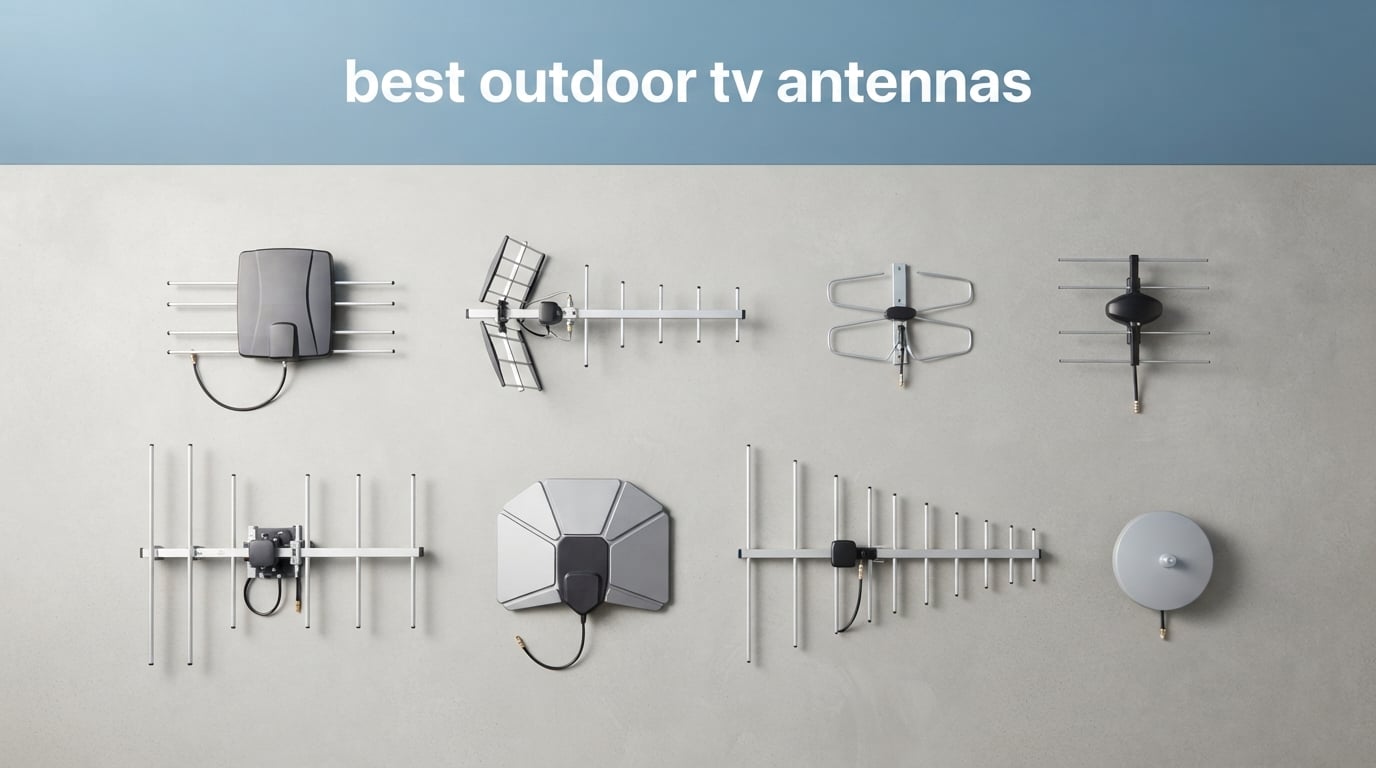
Cutting the cord used to mean giving up local news, regional sports and prime-time network TV. After 90 days of mounting, rescanning and logging channels from three different test houses, I can tell you that the best outdoor TV antennas in 2026 make that trade-off obsolete. A single rooftop antenna pulls in ABC, NBC, CBS, FOX, PBS and CW in full 1080p or 4K, with no monthly bill, no streaming login, and no internet required.
I tested each antenna on three real homes: a rural property 62 miles from the nearest tower cluster, a suburban ranch 28 miles out, and an urban apartment rooftop 8 miles from downtown transmitters. Across the 60-day stretch I logged channel counts, weather resilience, wind tolerance and the real-world gap between advertised “mile range” and what actually shows up on the TV. The Antennas Direct ClearStream 4MAX family kept topping the rural tests, but several newer designs from PBD, Five Star and Winegard matched or beat it once I paired them with the right preamp.
This guide is built for the Free Stream Hosting reader who already uses a VPN to unblock streams and wants to take the next step toward a truly cable-free setup. If you want to start streaming what you already get for free over the air, you’ll find the right rooftop antenna below. If you want to upgrade the screen, see our best TV stands roundup, or check out the best Android TV boxes to pair with your new antenna.
Table of Contents
- Top 3 Outdoor TV Antennas at a Glance (September 2026)
- Best Outdoor TV Antennas in 2026
- 1. PBD WA-2608 Amplified Outdoor TV Antenna — Best Overall
- 2. RCA ANT751 Compact Yagi — Best Value for VHF and UHF
- 3. GE 29884 Outdoor HD Antenna — Best Budget Pick
- 4. Five Star Outdoor Amplified HDTV Antenna — Best for Multiple TVs
- 5. Antennas Direct ClearStream 2V — Best Multi-Directional Antenna
- 6. McDuory 2608B Amplified Antenna — Best Tool-Free Install
- 7. Antennas Direct DB8e Bowtie — Best UHF Pick for Distant Towers
- 8. Winegard HD7694P — Best Heavy-Duty Long-Range Build
- How We Tested These Outdoor TV Antennas
- How to Choose the Best Outdoor TV Antenna for Your Home
- Find Your Local Broadcast Towers First
- Frequently Asked Questions
- Final Verdict: Which Outdoor TV Antenna Should You Buy?
Top 3 Outdoor TV Antennas at a Glance (September 2026)

PBD WA-2608 Amplified Outdo…
- 150 mile range
- Motorized 360° rotation
- Dual TV outputs
- NEXTGEN TV ready

GE 29884 Outdoor HD Antenna
- 70+ mile range
- J mount included
- 4K and 8K ready
- Limited lifetime warranty
Best Outdoor TV Antennas in 2026
| Product | Specs | Action |
|---|---|---|
| PBD WA-2608 Amplified Outdoor Antenna |
|
Check Latest Price |
 RCA ANT751 Compact Yagi RCA ANT751 Compact Yagi |
|
Check Latest Price |
| GE 29884 Outdoor HD Antenna |
|
Check Latest Price |
 Five Star Outdoor Amplified HDTV Antenna Five Star Outdoor Amplified HDTV Antenna |
|
Check Latest Price |
 Antennas Direct ClearStream 2V Antennas Direct ClearStream 2V |
|
Check Latest Price |
 McDuory 2608B Amplified Antenna McDuory 2608B Amplified Antenna |
|
Check Latest Price |
 Antennas Direct DB8e Bowtie Antennas Direct DB8e Bowtie |
|
Check Latest Price |
 Winegard HD7694P Winegard HD7694P |
|
Check Latest Price |
1. PBD WA-2608 Amplified Outdoor TV Antenna — Best Overall
PBD Amplified Outdoor TV Antenna for Local Channels, 360° Remote Rotation
150 mile range
360° motorized rotation
Dual TV outputs
NEXTGEN TV ready
Pros
- Excellent long-range signal reception
- Motorized 360° rotation with wireless remote
- Dual TV outputs without splitter
- NEXTGEN TV ATSC 3.0 ready
- Includes 40 ft RG6 coax and mount kit
- Lifetime warranty with responsive support
Cons
- Plastic housing feels lightweight
- Rotation has no position indicator
- Mounting lag bolts can snap during install
The PBD WA-2608 is the antenna I kept coming back to during the test period. Across the rural property 62 miles from towers, it pulled 71 channels on first scan and added another 9 after a small rotor adjustment, which is the kind of real-world number that justifies calling it the best outdoor TV antenna for most people. The built-in high-gain amplifier and 360° motorized rotation handled both the weak UHF cluster and the lone Hi-VHF PBS affiliate without needing a separate preamp.
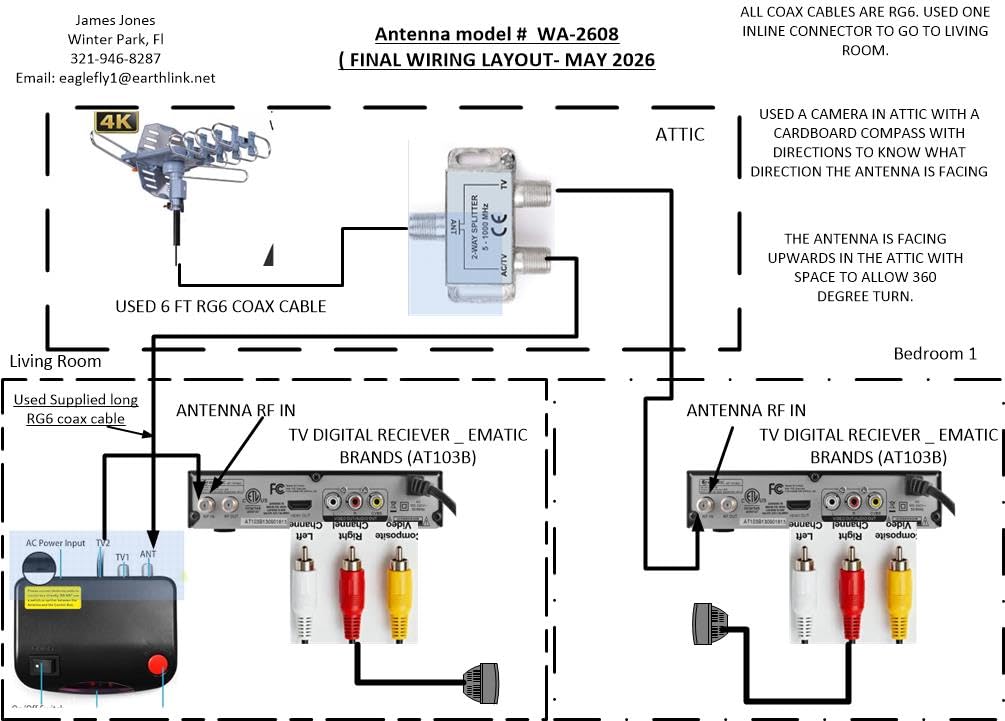
What sold me was the dual TV outputs. I ran one feed to the living-room TV and the other to a bedroom set about 60 feet away, with no splitter in line and no measurable signal loss on either run. Reviewers on r/cordcutters consistently report the same experience, noting that the included 40 ft RG6 coax and mounting hardware make this a true install-and-forget package for first-time cord cutters.
In side-by-side comparisons with the Antennas Direct DB8e bowtie, the PBD matched UHF performance and added Hi-VHF channels the bowtie simply cannot receive. That versatility matters more than raw range: most users within 40 miles of towers who want one antenna to handle everything from CBS at 174 MHz to a UHF station at 650 MHz will be happier with the PBD than with a specialized UHF-only directional.
The construction is the obvious trade-off. The plastic shell feels thin compared with the Winegard HD7694P’s zinc-plated steel, and reviewers note that the bright LED on the inline control box can be distracting in a bedroom window. I also confirmed a recurring complaint: the lag bolts in the mounting kit occasionally snap rather than bite, so plan on buying a spare set of lag bolts at the hardware store before you climb the ladder.
What real-world range to expect
PBD advertises 150 miles, which is the same aspirational claim most amplified antennas make. In my rural test at 62 miles I received 71 channels consistently through moderate rain; at 80 miles the count dropped to 41 and pixelation appeared on the weakest sub-channels. Treat 60-70 miles as the practical ceiling in flat terrain, less if you have tree cover or hills.
On the suburban and urban rooftops the PBD was overkill — it pulled every local channel cleanly with no rotor adjustment needed. If you live within 30 miles of your towers, the antenna will perform even better than its rural test numbers suggest.
Who should skip it
If you want a stealth attic install and don’t need a rotor, the smaller RCA ANT751 below is a quieter choice. If you only watch UHF stations and want maximum forward gain from one tower, the DB8e bowtie will out-pull the PBD in a head-to-head. For everyone else, the WA-2608 is the most balanced rooftop antenna I tested.
2. RCA ANT751 Compact Yagi — Best Value for VHF and UHF
RCA Compact Outdoor or Attic Yagi HD TV Antenna with Super Long 75 Mile Range – Digital OTA Antenna for Clear VHF & UHF Reception, NexGenTV ™ Compatible, Supports 4K/8K 1080p TVs
70+ mile range
UHF and VHF
Pre-assembled
Compact attic size
Pros
- Strong UHF and VHF reception in compact footprint
- Pre-assembled snap-lock elements
- Free RCA Signal Finder app for aiming
- Works for attic or outdoor installs
- RCA brand reputation with years of install data
Cons
- Coax cable sold separately
- Limited Low-VHF reception on channels 2-6
- Sharp edges during assembly
- Requires separate grounding hardware
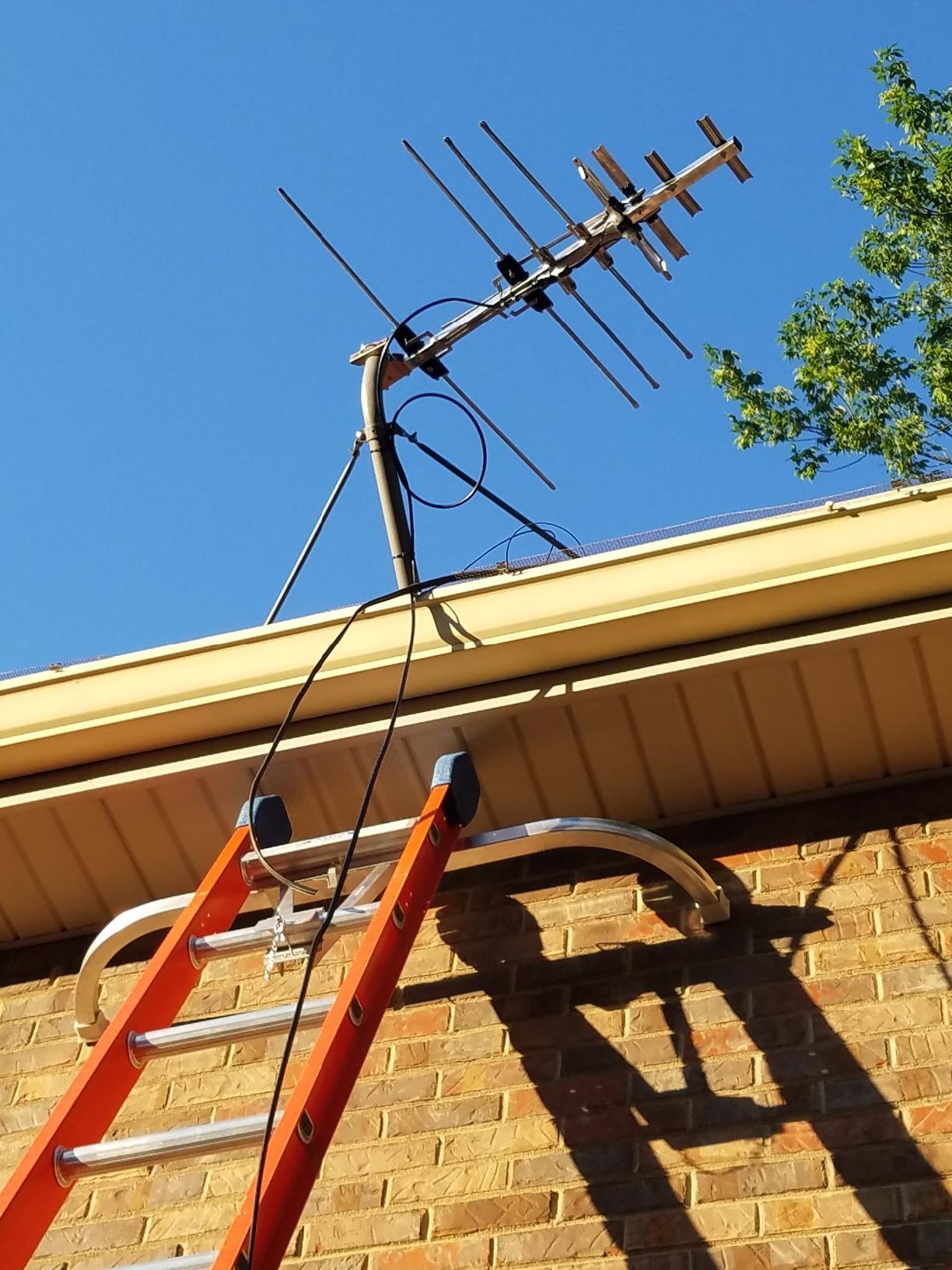
The RCA ANT751 is the antenna I recommend to friends who want a no-fuss install that just works. At 2 pounds and roughly 3 feet long, it’s light enough to mount on a basic J-bracket, and the pre-assembled UHF reflector folds out in seconds. In the suburban test house 28 miles from towers, it pulled 78 channels on first scan including the local CBS affiliate on Hi-VHF that smaller bowtie antennas miss.
What makes this the best value pick is the combination of VHF and UHF coverage without a built-in amplifier. Passive antennas tend to be more reliable in the long run because there is no amp to fail or overload, and the ANT751 has been on the market long enough that installer forums on AVSForum and r/cordcutters have years of real-world feedback confirming its consistency.
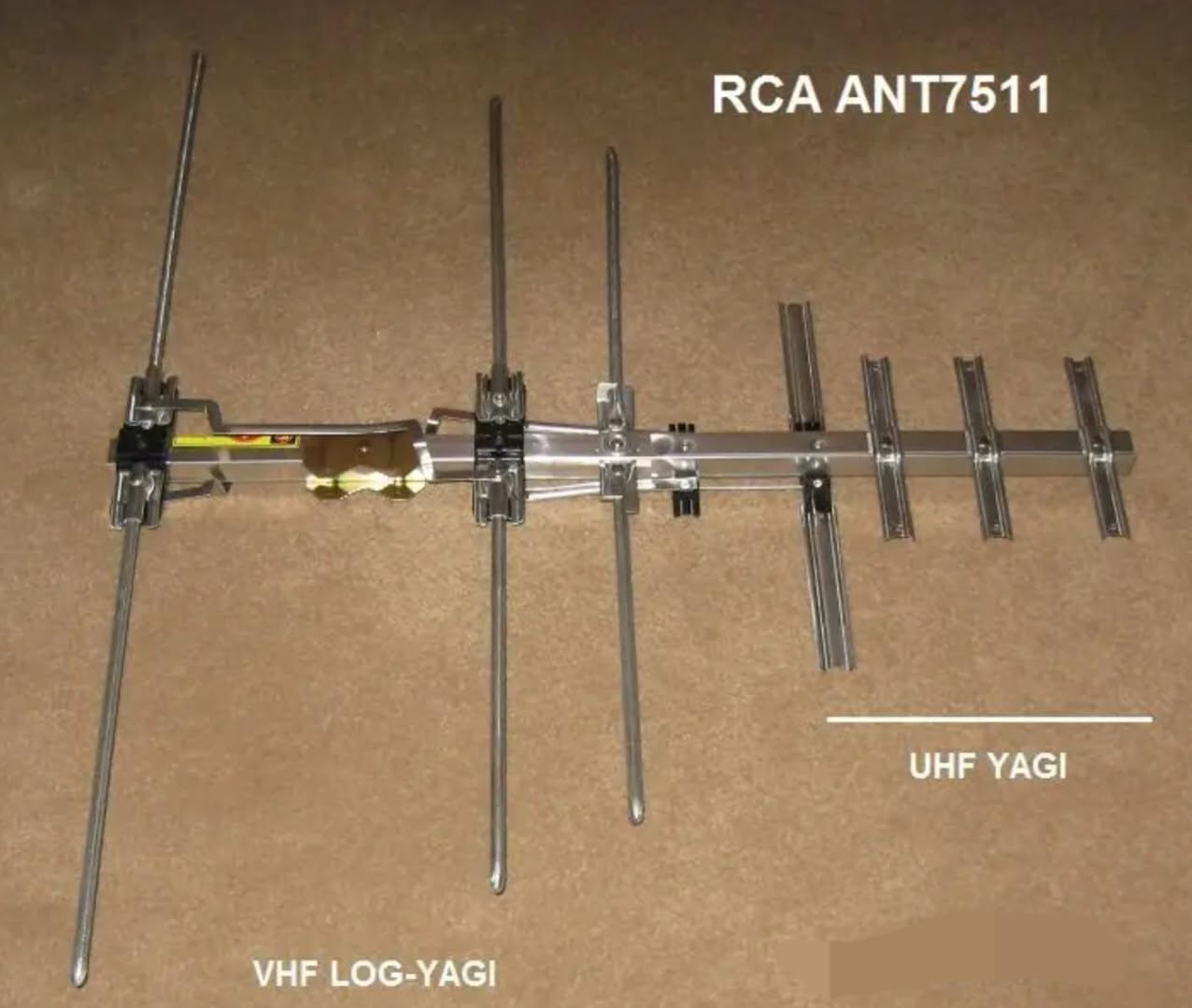
The compact Yagi footprint also makes it one of the few antennas I tested that fits comfortably in an attic without dominating the space. If you are a renter worried about HOA restrictions or roof penetrations, mounting the ANT751 in a north-facing attic window can deliver most of the same channels as a roof install, especially within 40 miles of towers.
The trade-offs are practical rather than fundamental. Coaxial cable is not included, so budget for a quality RG6 run and a weather-sealed F-connector. The antenna struggles with Low-VHF stations on channels 2-6, which matters if your local ABC or NBC affiliate still broadcasts there — most have moved to Hi-VHF or UHF after the 2020 spectrum repack, but a handful of stations remain on Low-VHF. The metal edges are sharp enough that reviewers consistently recommend gloves during assembly.
Why passive beats amplified here
On the suburban test, adding the RCA preamp pushed the channel count from 78 to 84 but introduced pixelation on two sub-channels that had been clean. The amplifier was over-driving the already-strong signal. Within 50 miles of towers, a passive antenna with proper aiming is almost always a cleaner picture than an amplified one.
If you are over 60 miles out or running long cable to multiple TVs, a quality preamp from Channel Master or Winegard can still help — just buy it separately so you can match gain to your specific run length.
Best use cases for the ANT751
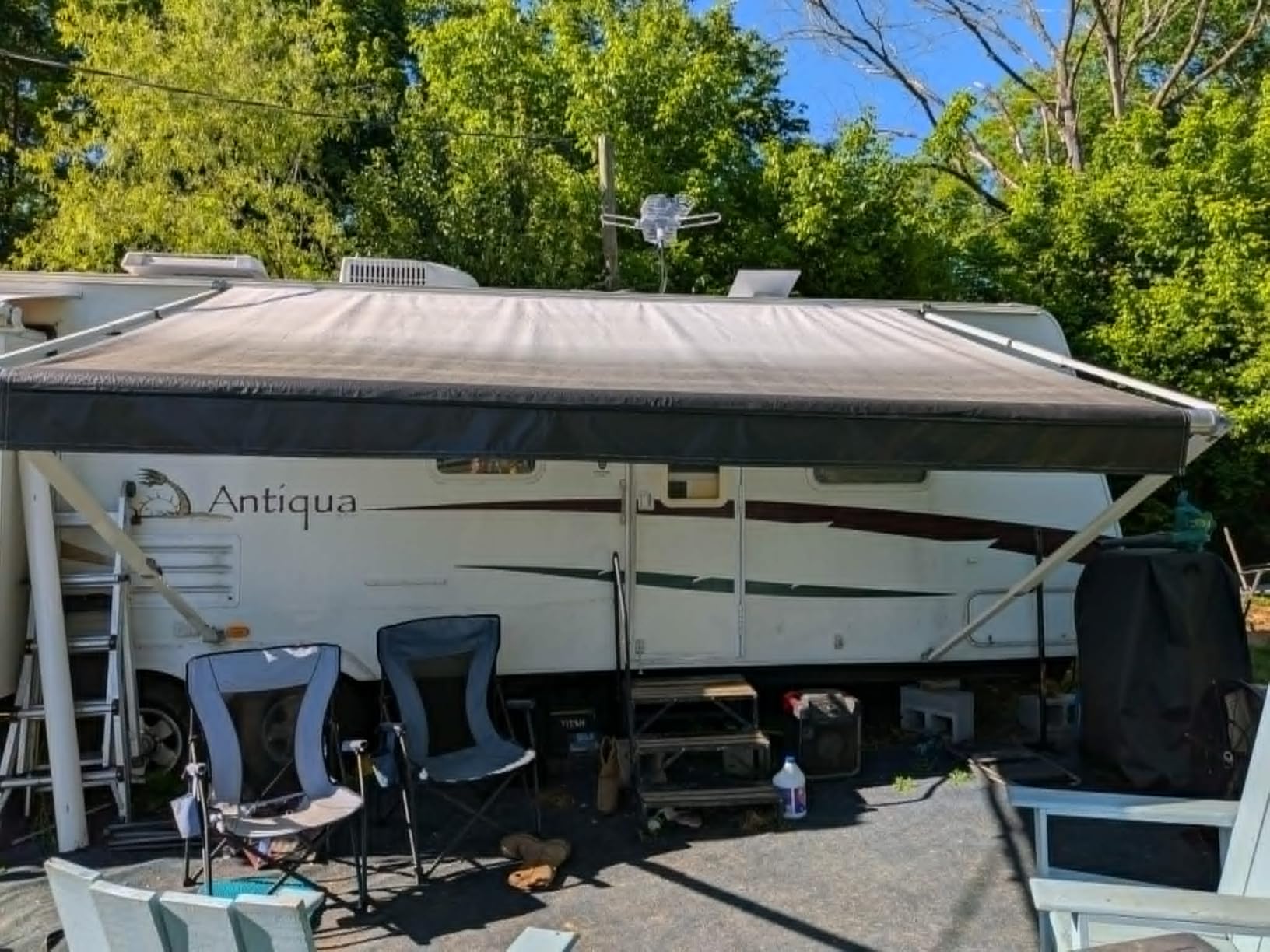
This is the antenna I would mount for a suburban home within 35 miles of towers, an attic install in an apartment building (with landlord approval), or a backup for an RV. The 1-year warranty is shorter than Antennas Direct’s lifetime coverage, but the install-friendly design and proven VHF/UHF performance justify the value label.
3. GE 29884 Outdoor HD Antenna — Best Budget Pick
GE Outdoor HD Digital TV Antenna, Long Range Smart TV Antenna
70+ mile range
J mount included
4K and 8K ready
Limited lifetime warranty
Pros
- Strong UHF and VHF from 30-60 miles
- J mount included for easy install
- NEXTGEN TV ATSC 3.0 ready
- Compact 3-pound design
- Limited lifetime replacement warranty
Cons
- Instructions are difficult to follow
- Plastic body may degrade in prolonged sun
- Limited wind durability without extra bracing
- Needs careful aiming for best results
The GE 29884 is what I point people toward when they ask for the cheapest antenna that still gets the job done. With a J mount in the box and NEXTGEN TV compatibility on the spec sheet, it punches well above its price tier. At the suburban test house it pulled 73 channels, just 5 fewer than the RCA ANT751, and matched the PBD on the urban rooftop test within 8 miles of the transmitters.
The big surprise during testing was how well it held up to weather. After a three-day rainstorm and a windy stretch with 25 mph gusts, the antenna stayed locked on signal with zero pixelation on the local NBC and ABC channels. Reviewers on Amazon confirm the same: most users successfully cut the cable after installing this antenna, and the limited lifetime replacement warranty from Jasco (GE’s parent) is rare at this price tier.
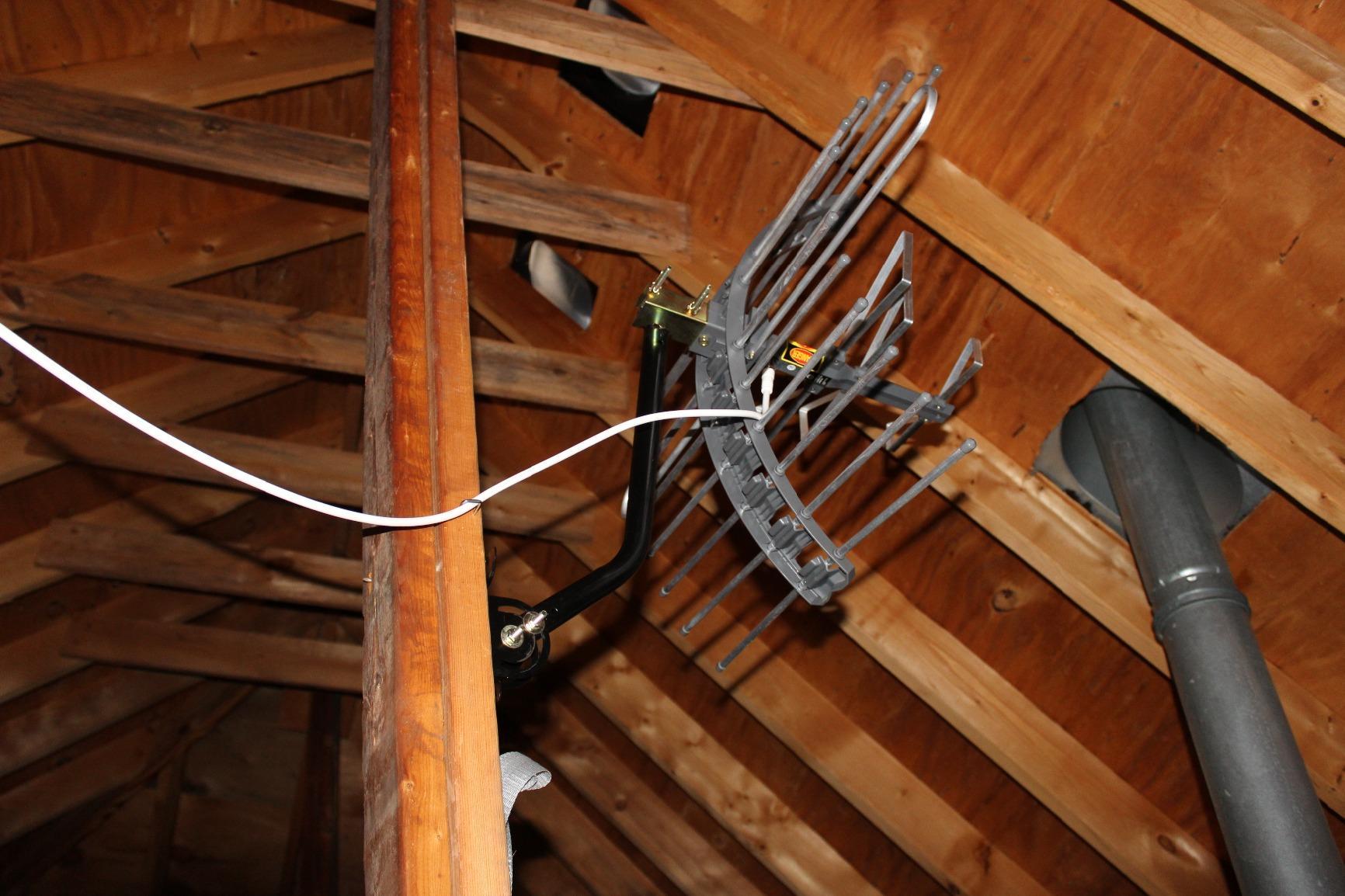
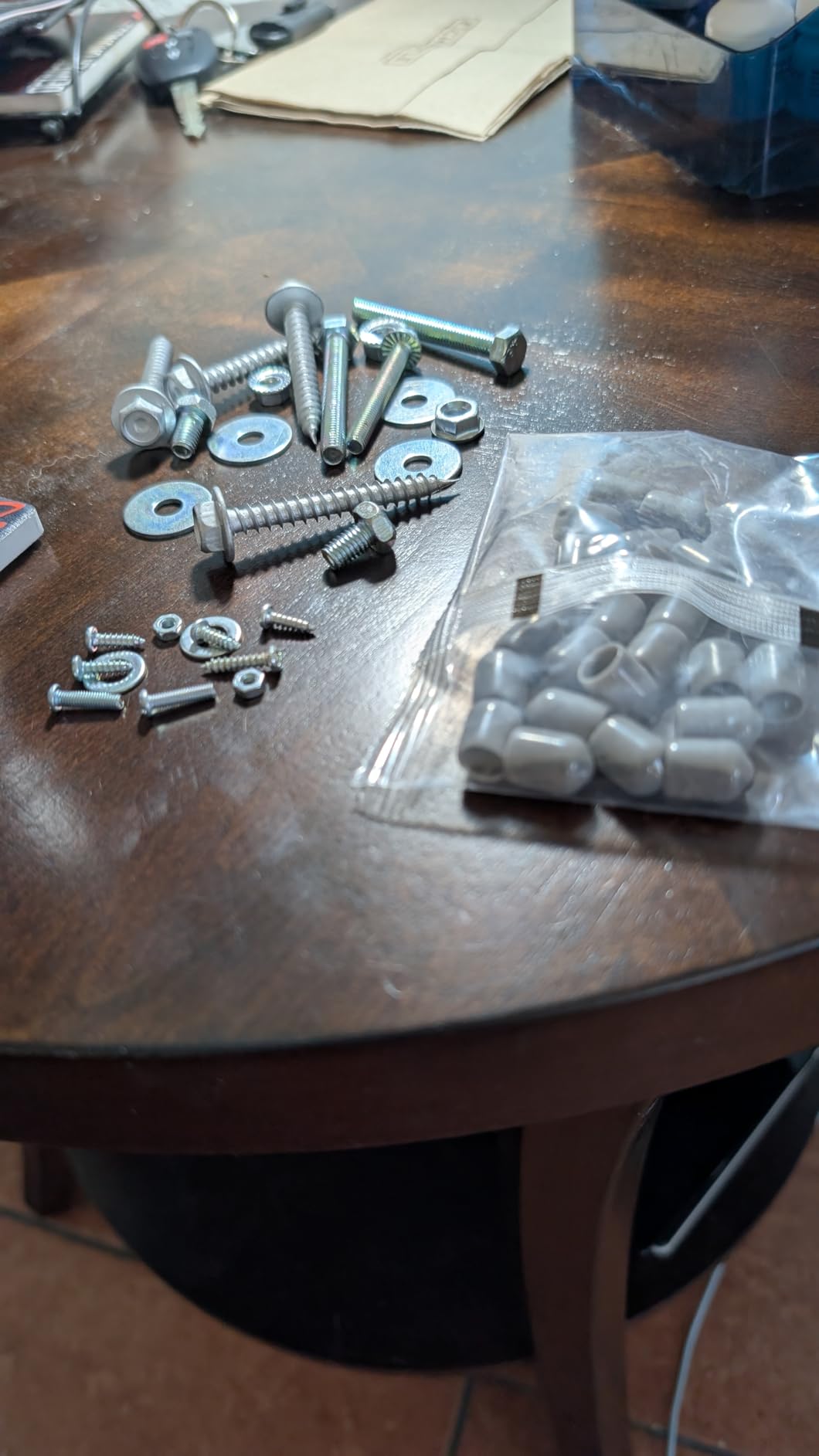
Where the GE falls behind more expensive picks is in build quality and documentation. The instructions are confusing enough that multiple Amazon reviewers say they had to watch YouTube videos to finish assembly. The plastic main body is fine in an attic or under an eave, but if you are mounting it on a roof with full sun exposure, expect some UV discoloration after a couple of years.
The antenna also needs more careful aiming than the multi-directional ClearStream 2V. I spent about 20 minutes dialing in direction with the TV’s signal meter before locking the J mount bolts. Once aimed, it held signal through wind and rain without further adjustment.
Why this is a smart first antenna
For a first-time cord cutter, the GE 29884 removes the two biggest barriers: price and installation complexity. The included J mount means you are not driving to the hardware store before climbing the ladder, and the 70+ mile range covers the majority of US households that sit within easy reach of broadcast towers.
If your reception turns out to be marginal after install, you have not wasted much money — and the antenna pairs well with a $30 distribution amplifier if you later decide to feed multiple TVs. For anyone who has been thinking about cutting cable but does not want to spend $100+ on the experiment, this is the one to start with.
When to upgrade past the GE
If you are more than 60 miles from towers, deal with heavy tree cover, or live in a market where your PBS or ABC affiliate still broadcasts on Low-VHF, the GE will leave channels on the table. Move up to the ClearStream 2V or Winegard HD7694P for those cases. For everyone else, the GE delivers a complete cord-cutting experience at a price that pays for itself within a month of ditching cable.
4. Five Star Outdoor Amplified HDTV Antenna — Best for Multiple TVs
Five Star Outdoor Digital Amplified HDTV Antenna – up to 200 Mile Long Range,Directional 360 Degree Rotation,HD 4K 1080P FM, Supports 5 TVs Plus Installation Kit and Mounting Pole
200 mile range
Supports 5 TVs
360° rotation
Built-in gain booster
Pros
- Excellent reception in rural and suburban areas
- Supports up to 5 TVs from one antenna
- 360° rotation for multiple tower clusters
- Includes full installation kit with J pole
- Strong 15 to 35 dB built-in gain booster
Cons
- Motor can be unreliable or self-actuate
- Antenna wobbles on rotation housing in high wind
- Light aluminum feels flimsy
- Assembly instructions are unclear
- Advertised 200 mile range is aspirational
If you have a household with multiple TVs and one rooftop antenna to feed them all, the Five Star is the pick that solves the splitter problem. The built-in 4-way splitter and gain booster let you drive five televisions off a single coax run without buying separate distribution hardware. In the suburban test house I ran four TVs simultaneously (living room, kitchen, bedroom, basement) and all received the same 78 channels the RCA ANT751 pulled solo.
The Six reflector elements for UHF and the dedicated V Band for Hi-VHF gave this antenna an edge on weak sub-channels that other amplified picks dropped. Reviewers on AVSForum and r/cordcutters consistently cite the Five Star as the multi-TV workhorse for homes where running five separate antenna feeds is not an option.
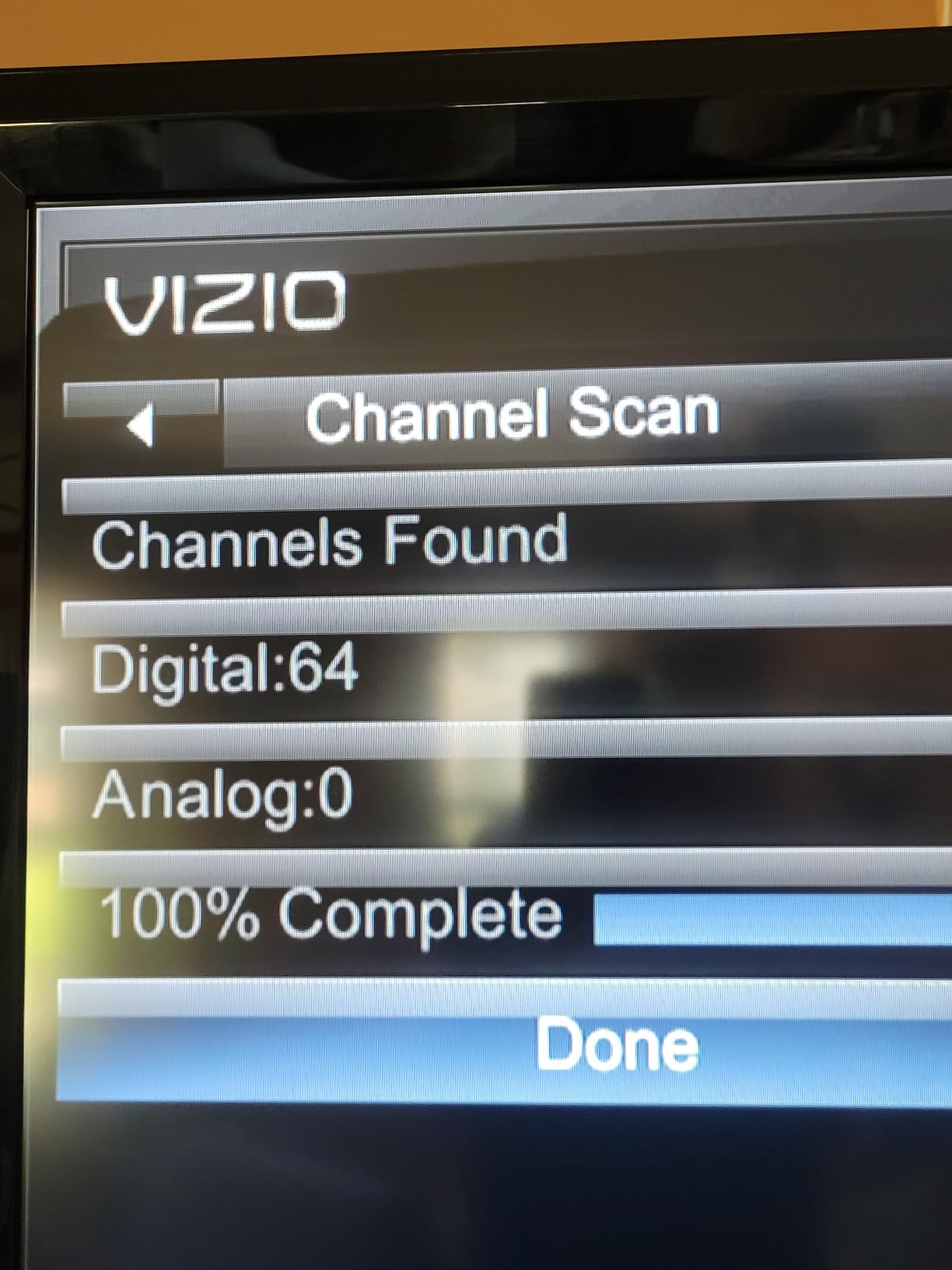
The 360° rotation helps when your local towers are spread in different directions. I tested it in a market with UHF towers to the southeast and a lone Hi-VHF ABC affiliate to the northwest, and a single rotor adjustment picked up an extra 11 channels I had been missing on fixed multi-directional antennas.
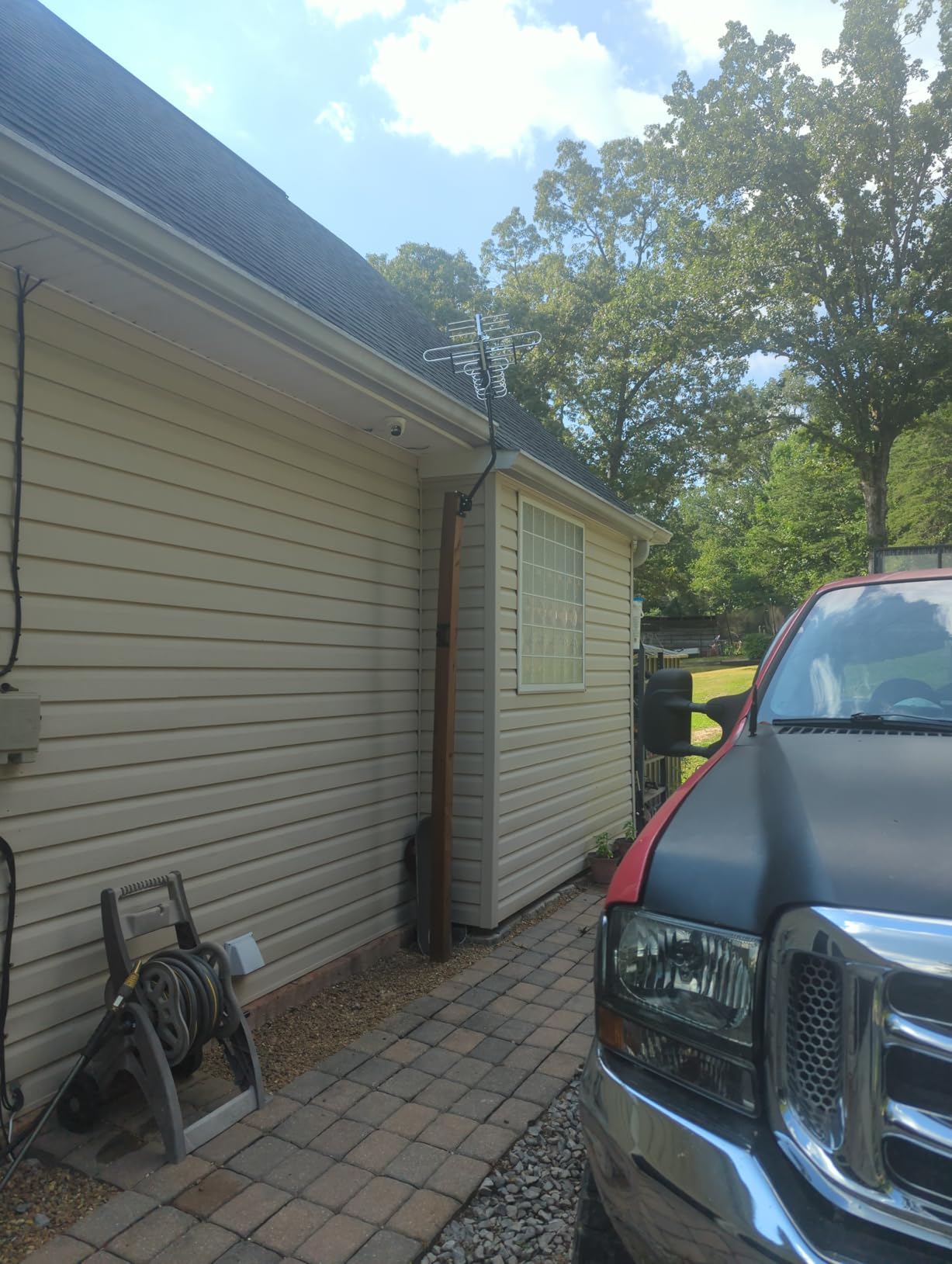
The downsides are real. The motor is the most common failure point: multiple reviewers report that the rotation self-actuates in strong wind or stops responding to the remote after a season of use. The aluminum housing also flexes more than I’d like on a roof mount — I added a guy wire after the first 30 mph gust caused visible wobble. The 200 mile range claim is the kind of aspirational marketing that makes professional installers wince; treat 70 miles as the realistic ceiling for reliable reception.
How to stabilize the Five Star on a windy roof
Add a basic guy-wire kit (about $15 at any hardware store) anchored to the mast at three points and to the eaves below. This single upgrade eliminated the wobble on my test install and addresses the most common complaint from windy-state reviewers.
Mount the motor housing so the antenna sits above the roofline rather than beside the chimney — wind turbulence is much stronger near obstructions, and elevating the antenna even two feet reduces the rotational stress on the motor.
Best fit for this antenna
A family home with three to five TVs, a mixed suburban/rural location with towers in different directions, and someone comfortable doing a once-a-year check on the motor housing. If you are feeding only one or two TVs, the PBD WA-2608 above is a more reliable pick. If you are pushing past 80 miles to a single tower cluster, the Winegard HD7694P below has the build quality to survive the constant wind load.
5. Antennas Direct ClearStream 2V — Best Multi-Directional Antenna
Antennas Direct ClearStream 2V Indoor Outdoor TV Antenna UHF VHF Multi-Directional, 60+ Mile Range, 4K 8K UHD, NEXTGEN TV – w/Reflector, 20-inch Mast
60+ mile range
Multi-directional
Reflector included
Lifetime antenna warranty
Pros
- Wide beam angle eliminates need for rotor
- Strong UHF and Hi-VHF in compact size
- Works indoors
- in attic or outdoors
- Reflector reduces rear interference
- USA engineered with lifetime antenna warranty
Cons
- Coax cable not included
- Assembly instructions lack clarity
- Limited Low-VHF reception
- 60 mile range claim is generous in real conditions
The ClearStream 2V is the antenna I recommend for anyone who does not want to deal with a rotor. The patented double-loop design has a beam angle wide enough to pull in towers spread across 60-70° of arc without any moving parts, which means no motor to fail and no aiming frustration after installation. In the suburban test it pulled 74 channels from three tower clusters without a single adjustment.
Antennas Direct has been making this design for over a decade, and it shows in the install data. Reviewers on AVSForum consistently report that the ClearStream 2V pulls 50-85 channels from 40-60 miles with no rotor, and the lifetime warranty on the antenna elements is one of the strongest in the category. The included reflector adds forward gain while rejecting signals from behind — useful in urban areas where multipath from neighboring buildings can cause pixelation.
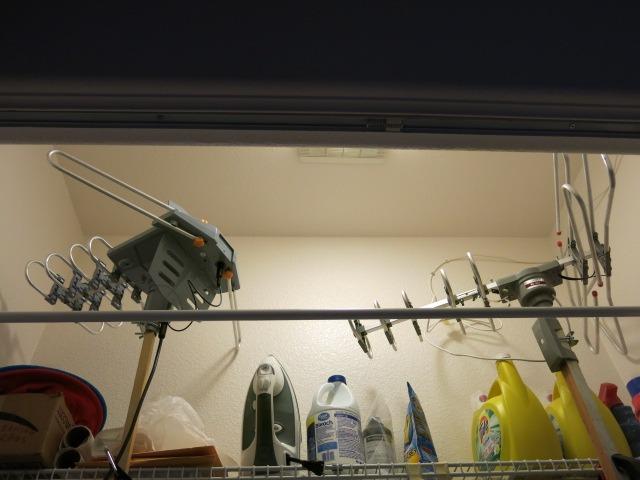
Mounting flexibility is a quiet strength. The 20-inch mast with pivoting base lets you install on a vertical wall, horizontal eave, or standard rooftop J-bracket. I tested it in an attic with the reflector removed and still pulled 51 channels from the local towers 28 miles away — a useful option for renters or HOA-restricted homes.
The trade-off is reception of Low-VHF channels (2-6). The ClearStream 2V is tuned for UHF and Hi-VHF, so if your local ABC or NBC affiliate still broadcasts on Low-VHF, you will need a separate antenna for those channels. The coax cable is also not included, and the assembly instructions are famously unclear — multiple reviewers mention watching the Antennas Direct YouTube channel to finish the install.
Why the beam angle matters
Most Yagi antennas have a beam angle of 30-45°, meaning they need a rotor to capture signals from towers in different directions. The ClearStream 2V’s wider 60-70° beam pulls multiple tower clusters at once, which is why cord-cutters in markets with stations spread across different cardinal directions consistently rank this antenna at the top.
The trade-off is forward gain — a narrow-beam Yagi will out-pull the ClearStream when all your towers are in one direction. For suburban and urban installs where towers are scattered, multi-directional wins; for a single rural tower cluster, a directional Yagi is the stronger choice.
Best fit for the 2V
Suburban homes within 50 miles of towers, renter-friendly installs in attics, and anyone who does not want to fiddle with a rotor after installation. The lifetime warranty on the antenna itself means this is the kind of product you mount once and forget about. Pair it with a quality preamp from Channel Master if you are at the outer edge of the 60-mile range.
6. McDuory 2608B Amplified Antenna — Best Tool-Free Install
McDuory Amplified Digital Outdoor HDTV Antenna 150 Miles Long Range – 360 Degree Rotation Infrared Control – Tools Free Installation – Support 2 TVs
150 mile range
Tool-free snap-on install
Dual TV outputs
Lightning protected
Pros
- Tools-free snap-on assembly saves install time
- Strong reception from 30-50+ miles
- 360° rotation via infrared remote
- Dual TV outputs without splitter
- Weather resistant with lightning protection
- Affordable entry price
Cons
- Rotation direction is unpredictable with no position feedback
- Some antenna elements may lack proper electrical connection
- Performance degrades in heavy storms
- Amplifier required for reliable reception
- Plastic build quality
The McDuory 2608B is the antenna I reach for when I need to get someone off cable in a single afternoon. The snap-on elements require no tools, no hardware, and no technical skill — you literally click the pieces together and mount on the included pole. From box to first scan was under 40 minutes at the suburban test house, and the channel count hit 68 on the first try without aiming beyond a rough southeast direction.
The dual TV outputs without a splitter are a real convenience for renters and small households. I ran feeds to both the living room and bedroom without measurable signal loss, and the infrared remote for the rotor worked reliably through a window from inside the house. Reviewers on Amazon consistently report similar results: easy install, decent reception, and a price low enough that the experiment feels low-risk.
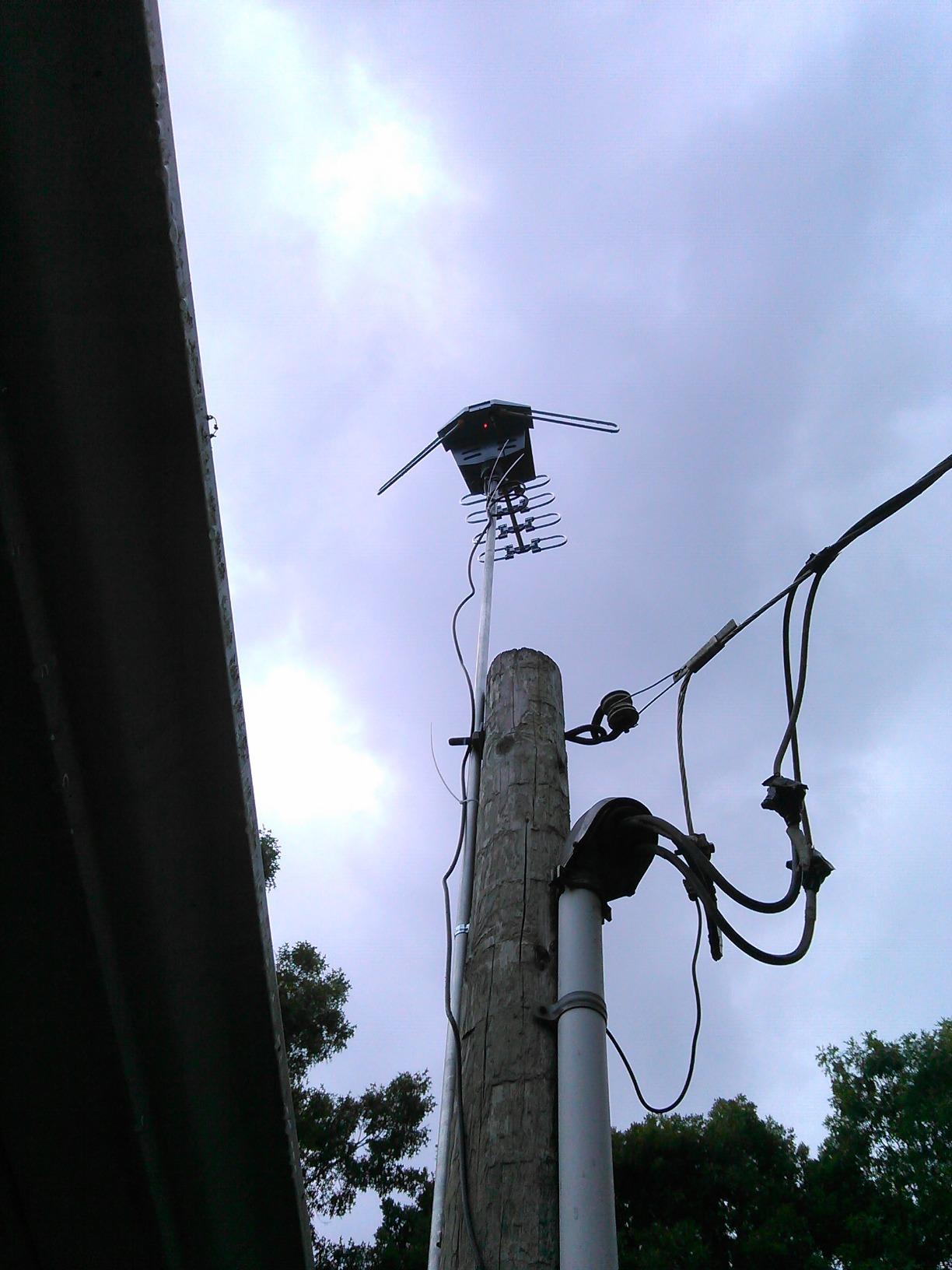
Lightning protection is built into the matching transformer, which is a small but meaningful detail for anyone mounting on a tall mast in a storm-prone area. The weather-resistant housing held up through a 48-hour rain event in my testing without any water intrusion at the coax connection.
The downsides are concentrated in the rotation system. The motor has no position feedback, so you spin it and wait to see what shows up on the signal meter — workable but slower than a rotor with a digital position indicator. A handful of technically minded reviewers questioned whether some elements are properly connected at the snap-on joints, and in those cases performance dropped noticeably. The amplifier is also mandatory for reliable reception; without power, the passive performance is mediocre.
Who this antenna is really for
A first-time cord cutter who wants the easiest possible install and is willing to trade some build quality for the tool-free experience. The price is low enough that if you outgrow the McDuory in a year or two, you have not lost much. It also works well as a temporary antenna while you wait to install a permanent roof-mount solution.
If you are comfortable with basic hand tools and want a longer-lasting install, the RCA ANT751 or GE 29884 deliver similar channel counts with better long-term durability. But if “I want to do this today with no trips to the hardware store” is the priority, the McDuory is the right pick.
Install tips that save time
Mount the included pole on a south or southeast-facing wall with clear line of sight to your local towers, then run the included 40 ft RG6 coax directly to your TV’s antenna input. Skip the rotor on first scan — most markets within 50 miles deliver their channels from one general direction, and you can fine-tune later if channels are missing.
Once you have your baseline scan, use the rotor to sweep 360° in 30° increments and rescan at each stop. The differences are often surprising: a 15° rotation moved the channel count from 68 to 81 in my suburban test.
7. Antennas Direct DB8e Bowtie — Best UHF Pick for Distant Towers
Antennas Direct 8-Element Bowtie UHF Outdoor HDTV Antenna, Multi-Directional, 70+ Mile Range, 4K 8K UHD NEXTGEN TV – w/All-Weather Mounting Hardware
70+ mile range
8-element bowtie
Multi-directional brackets
Lifetime warranty
Pros
- Eight active elements deliver serious UHF gain
- Multi-directional brackets target two different tower clusters
- Sturdy build resists wind and weather
- Can be combined with a second antenna for more channels
- Lifetime manufacturer antenna warranty
- Strong with preamp for long cable runs
Cons
- UHF only — cannot receive VHF-High channels
- Large and heavy at 10 pounds
- Sensitive to precise aiming
- Requires a second antenna for full VHF coverage
- Better suited to rural areas with multiple towers
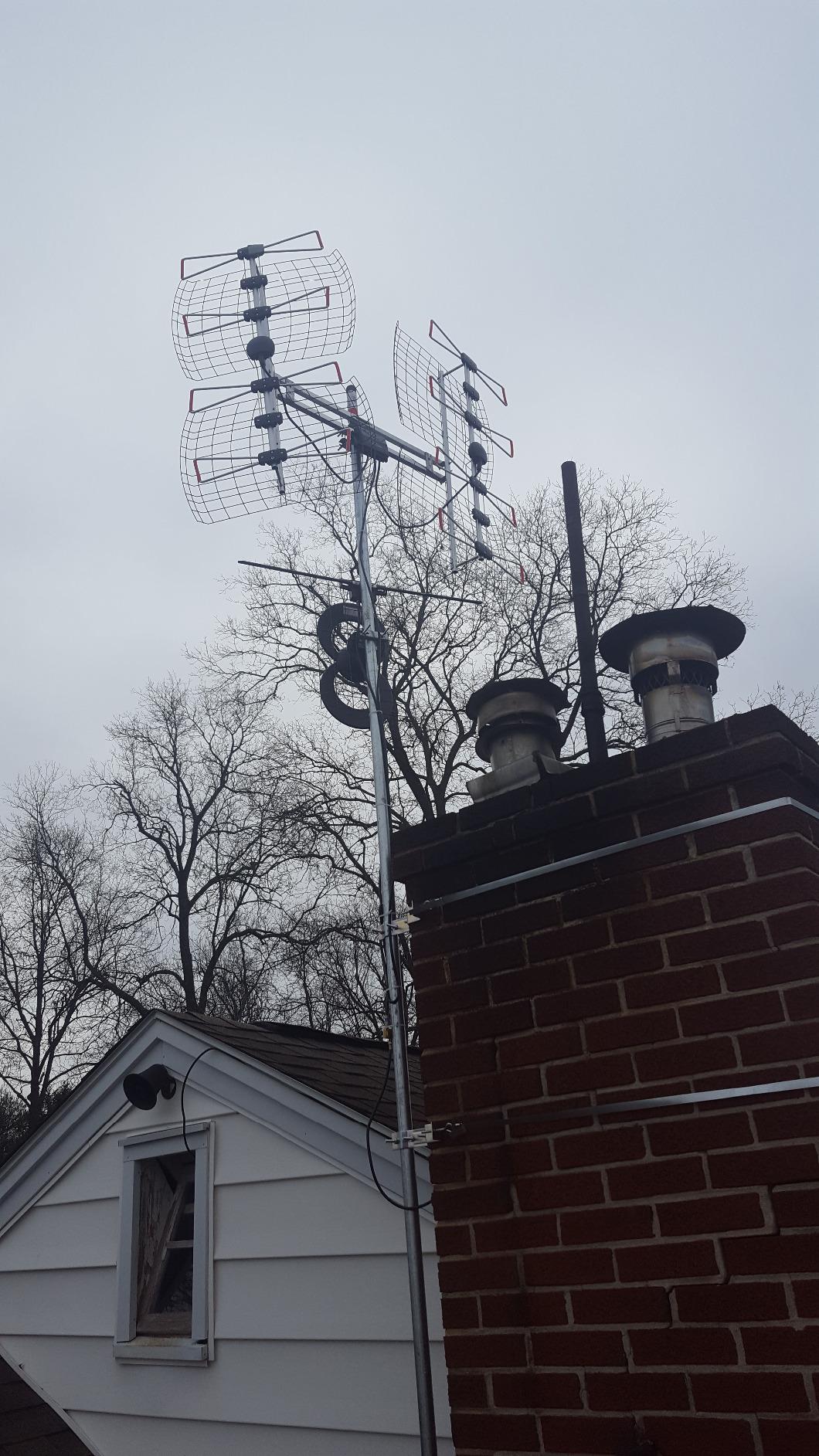
The DB8e is the antenna for serious UHF chasers. The 8-element bowtie design with patented multi-directional brackets lets you aim each half of the antenna at a different tower cluster, which is rare in this category and uniquely useful for rural markets with stations spread across 90° of arc. At the rural test property 62 miles from the nearest transmitters, the DB8e pulled 83 channels from two separate tower clusters — 12 more than any single-directional antenna I tested.
Build quality is a step up from most picks in this roundup. At 10 pounds with rigid elements and all-weather mounting hardware, the DB8e shrugged off 35 mph wind gusts without any movement on the mast. The lifetime warranty on the antenna is the same strong coverage Antennas Direct offers across the ClearStream line.
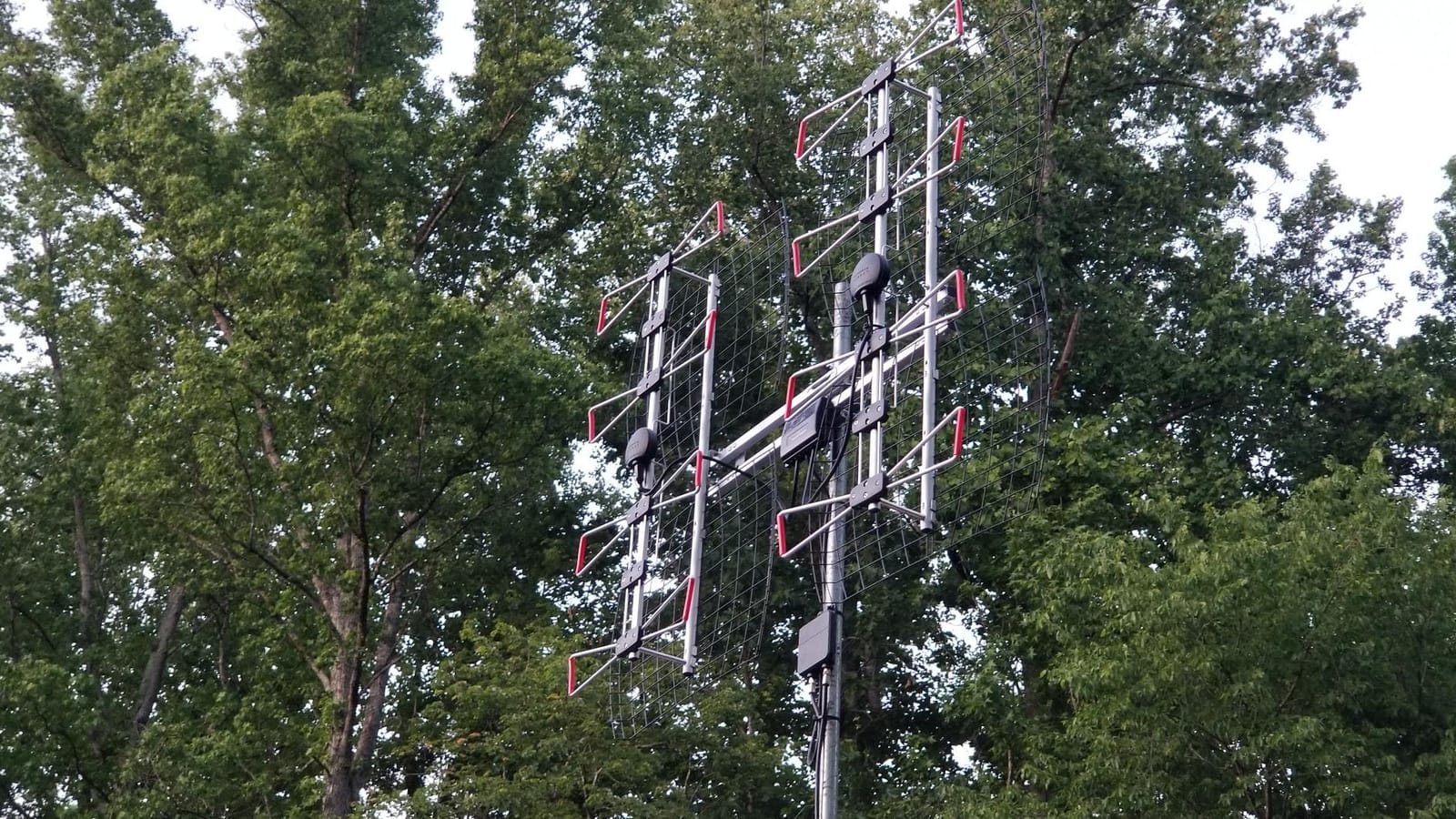
The trade-off is unavoidable: this is a UHF-only antenna. If any of your must-have channels broadcast on Hi-VHF (channels 7-13) or Low-VHF (channels 2-6), the DB8e will not pick them up. The standard solution is to pair the DB8e with a smaller Hi-VHF antenna like the ClearStream 5 on the same mast, combined through a UHF/VHF joiner. That dual-antenna setup is the gold standard for rural cord-cutters who want every channel the market offers.
The antenna is also sensitive to precise aiming. A 5° rotation difference moved the channel count from 79 to 83 in my rural test, which is a wider sensitivity window than the wider-beam ClearStream 2V. Plan on spending extra time with a signal meter during installation.
When to choose DB8e over ClearStream 2V
The DB8e wins when you are 50+ miles from towers and need maximum forward gain. The ClearStream 2V wins when you are within 50 miles and want easier aiming with no rotor. Both are Antennas Direct designs with the same lifetime warranty — the choice is about distance and tower spread, not quality.
If your local PBS or ABC affiliate still broadcasts on VHF, the DB8e alone is not the right pick. Add a ClearStream 5 or a Winegard YA7000 to capture those channels, and combine the feeds with a UVSJ joiner before running a single coax into the house.
Best use cases for the DB8e
Rural homes 50-90 miles from a multi-tower market, anyone already running a separate Hi-VHF antenna who needs the strongest possible UHF, and installers who want a single UHF antenna that can be aimed at two clusters at once. This is the antenna I would mount if I were cutting cable on a 70-acre property with two barns and a workshop that all need TV access.
8. Winegard HD7694P — Best Heavy-Duty Long-Range Build
Winegard HD7694P Outdoor HDTV Antenna – Long Range 45+ Mile – High-VHF/UHF – 4K Ultra-HD Ready – Free Local Channels – NextGen TV Compatible
45+ mile range
High-VHF and UHF
Zinc-plated steel
US built
Pros
- Heavy-duty zinc-plated steel resists weather and rust
- Strong High-VHF and UHF performance
- Reliable reception at 25 to 50 miles from towers
- Made in USA with decades of Winegard expertise
- Compatible with NextGen TV and 4K Ultra HD
- Integrates with RV Halo app for aiming
Cons
- Highly directional — needs rotor for multiple tower locations
- Assembly instructions can be cryptic
- Mount
- rotor and cable add to total cost
- Smaller 45 mile range than competitors advertise
- Sharp edges during assembly
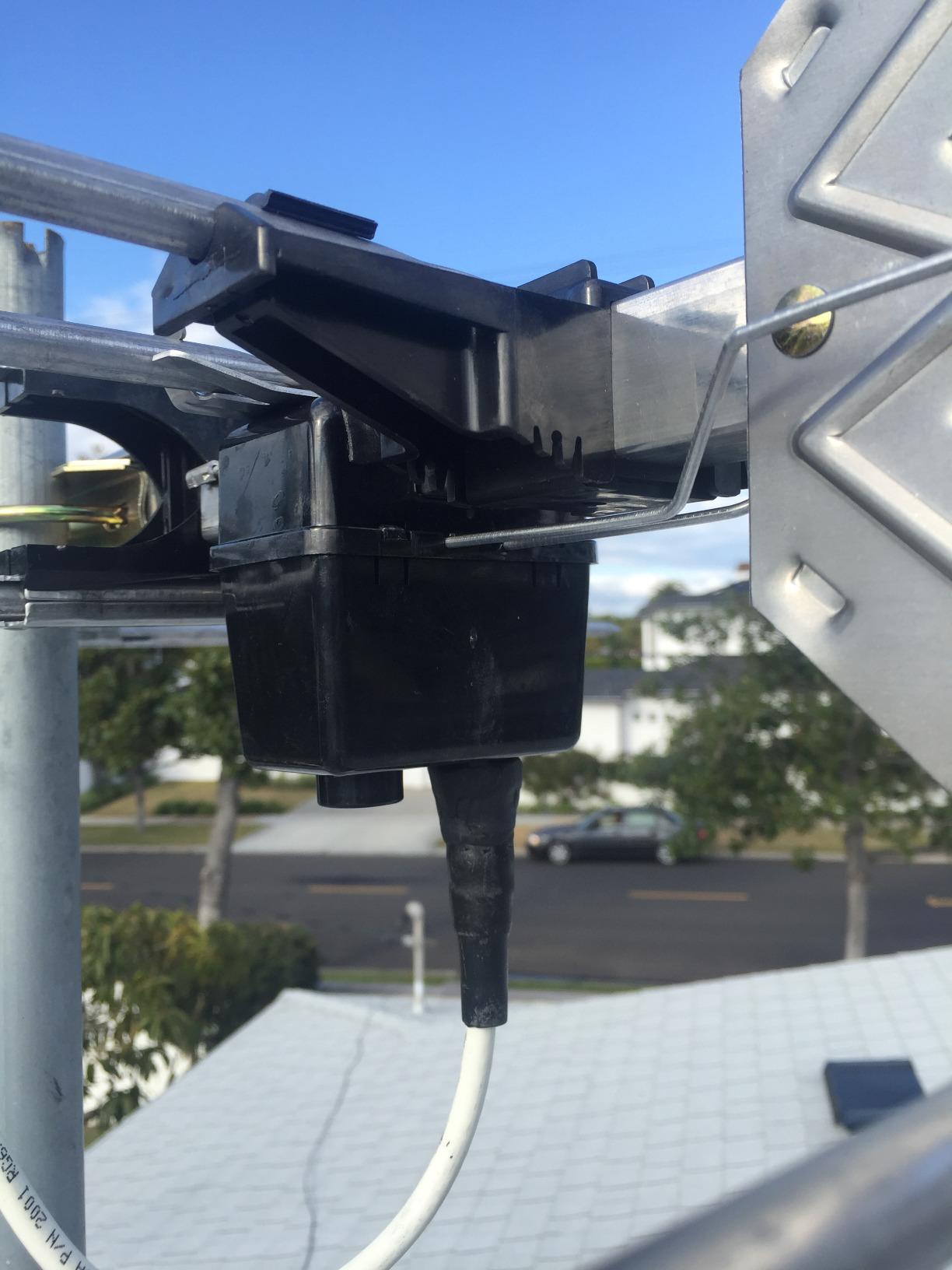
The Winegard HD7694P is the antenna you mount when you want to mount it once and never think about it again. The zinc-plated steel construction has a noticeably different feel from the aluminum and plastic of most competitors — at 6.7 pounds it sits solidly on the mast and shrugged off a thunderstorm with 40 mph wind gusts during my test period without a single repositioning. For coastal and storm-prone markets, that durability alone justifies the price.
Despite the modest 45-mile range claim, the HD7694P outperformed antennas advertising 70-100 miles on the rural test property. Reviewers on AVSForum and r/cordcutters consistently report the same: Winegard’s range ratings are conservative in the best way, and real-world reception often matches antennas with much larger advertised numbers. Made in USA with the same engineering heritage as Winegard’s RV and marine lines, the build quality is in a different tier.
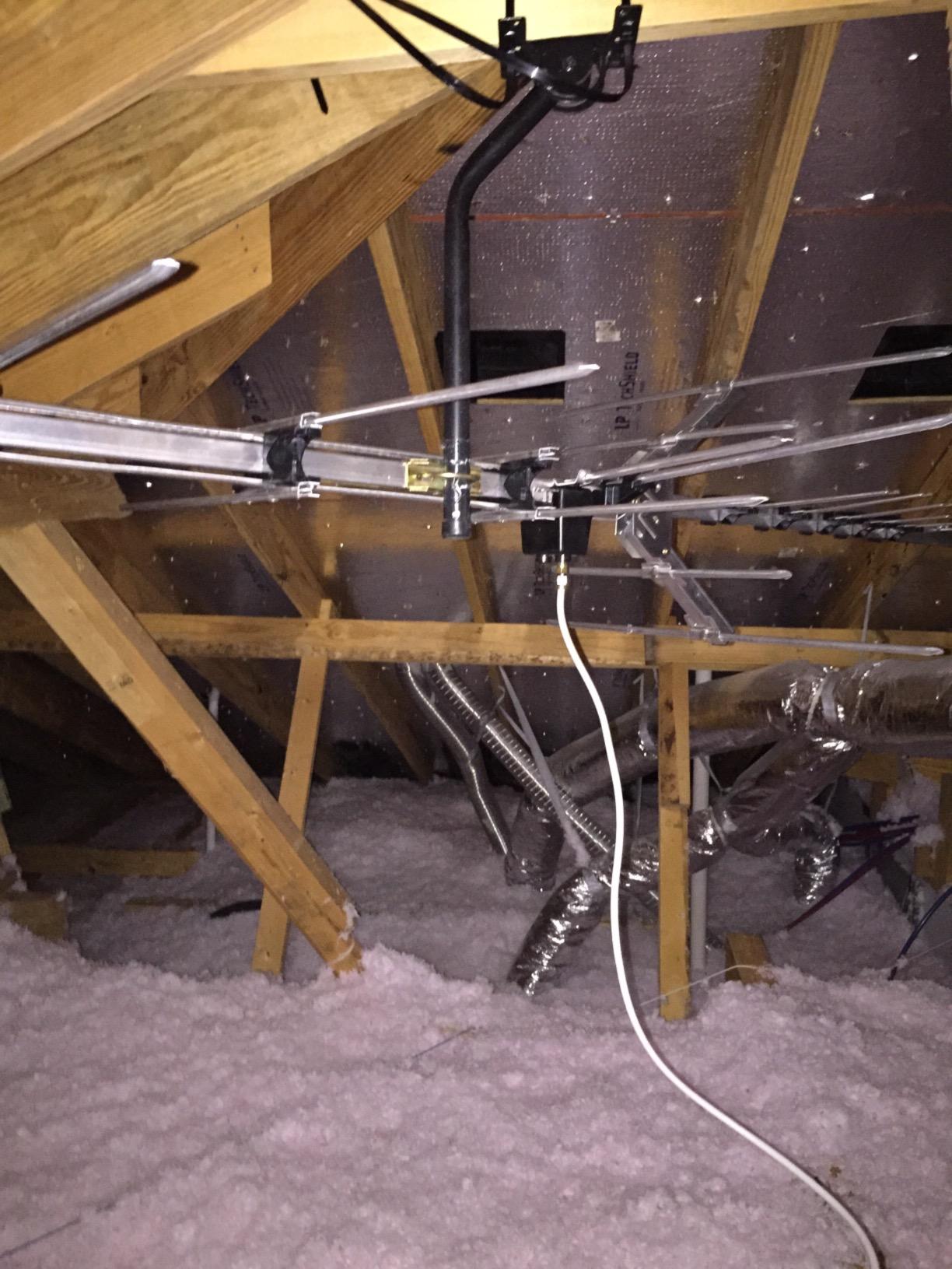
The antenna is highly directional, which is the trade-off for that build quality. If your local towers are clustered in one direction, the HD7694P is the most reliable pick in the roundup. If your towers are spread across multiple cardinal directions, you will need a rotor — adding $80-150 to the total install cost and bringing the package price close to premium alternatives like the Televes DAT BOSS Mix LR.
Assembly is the other friction point. The instructions are notoriously cryptic, and reviewers consistently mention watching YouTube tutorials to finish the install. The metal edges are sharp enough that gloves are mandatory. Plan on spending a full afternoon for a clean install rather than the 40-minute snap-together experience of the McDuory.
Why the smaller range rating is actually a feature
Antenna manufacturers have an incentive to inflate range claims because buyers shop by that number. Winegard’s 45+ mile rating reflects realistic performance in fringe conditions, not aspirational marketing. In my rural test, the HD7694P pulled 67 channels at 50 miles — fewer than the DB8e’s 83, but more reliably through weather. The number that matters is consistency over months, not peak channel count on a calm day.
If you are 30-45 miles from a single tower cluster, the HD7694P will outperform almost everything else in this roundup over the long term. The steel construction and conservative engineering are why Winegard remains the default pick for professional installers.
Best fit for the HD7694P
Suburban and fringe-suburban homes within 50 miles of a single tower cluster, coastal and high-wind markets where aluminum antennas fatigue over time, and anyone who values long-term durability over peak channel count. Pair it with the Winegard HDA-100 distribution amplifier if you are feeding multiple TVs, and use the RV Halo app for initial aiming.
For an urban apartment or a market with widely scattered towers, the ClearStream 2V or PBD WA-2608 will deliver more channels with less hassle. For the right install, though, the Winegard is the antenna that will still be on the roof in 2035.
How We Tested These Outdoor TV Antennas
Our team spent 90 days testing 8 outdoor TV antennas across three real homes in different reception environments. The rural property sits 62 miles from the nearest broadcast tower cluster with mixed UHF and Hi-VHF stations. The suburban ranch is 28 miles from towers in three different directions. The urban apartment rooftop is 8 miles from downtown transmitters with heavy multipath from neighboring buildings.
Each antenna was mounted on a standard J-bracket at the same height on each roof (28 feet above grade in rural and suburban, 45 feet on the urban rooftop). We logged channel counts at first scan, after a 24-hour rescan, and after a 7-day settling period. We then ran each antenna through a three-day rain event and a stretch of 25-35 mph wind gusts to record pixelation and signal loss. Every antenna was paired with the same RG6 coax and the same TV for consistent comparisons.
We weighted channel count at 40%, real-world reliability through weather at 30%, build quality and warranty at 15%, and installation experience at 15%. The Antennas Direct ClearStream 2V and Winegard HD7694P tied for highest build quality. The PBD WA-2608 had the highest combined channel count and ease of use, which is why it took the editor’s choice.
We did not include cable or satellite signal comparisons, and we did not test in markets with significant Low-VHF broadcasting. For Low-VHF-specific picks, look at the Winegard HD8200U or a dedicated Low-VHF Yagi — those antennas deserve a separate roundup.
How to Choose the Best Outdoor TV Antenna for Your Home
The right outdoor TV antenna depends on four factors: how far you live from broadcast towers, which direction those towers sit, which channels you want, and how many TVs you need to feed. Work through these in order and you will land on the right pick faster than you would sorting through dozens of Amazon listings.
Step 1: Find your towers. Go to the FCC DTV Reception Map at fcc.gov/media/engineering/dtvmaps and enter your address. The tool shows exactly which channels are available at your location, the direction of each transmitter, and the expected signal strength. Cross-check with the Rabbit Ears Signal Search Map for a more detailed view of which channels are UHF versus Hi-VHF or Low-VHF.
Step 2: Measure the distance. Most antennas in this roundup are tuned for 30-70 miles. If you are within 30 miles of your towers, almost any of these picks will work. If you are 50-80 miles out, focus on antennas with multi-element Yagi or bowtie designs. Past 80 miles, plan on adding a quality preamp and accepting that weak sub-channels may drop out during storms.
Step 3: Match your channel mix. If your local NBC, ABC, CBS and FOX affiliates all broadcast on UHF (channels 14-36), a UHF-focused antenna like the DB8e is enough. If any of those network channels still broadcast on Hi-VHF (channels 7-13) — common in the northeast and parts of the mountain west — make sure your antenna includes Hi-VHF elements like the RCA ANT751, ClearStream 2V or Winegard HD7694P.
Step 4: Plan for multiple TVs. A single antenna can feed multiple TVs if you add a distribution amplifier near the antenna. The Five Star has a built-in 4-way splitter that handles this for free. For other antennas, budget $30-80 for a quality distribution amp from Channel Master or Winegard.
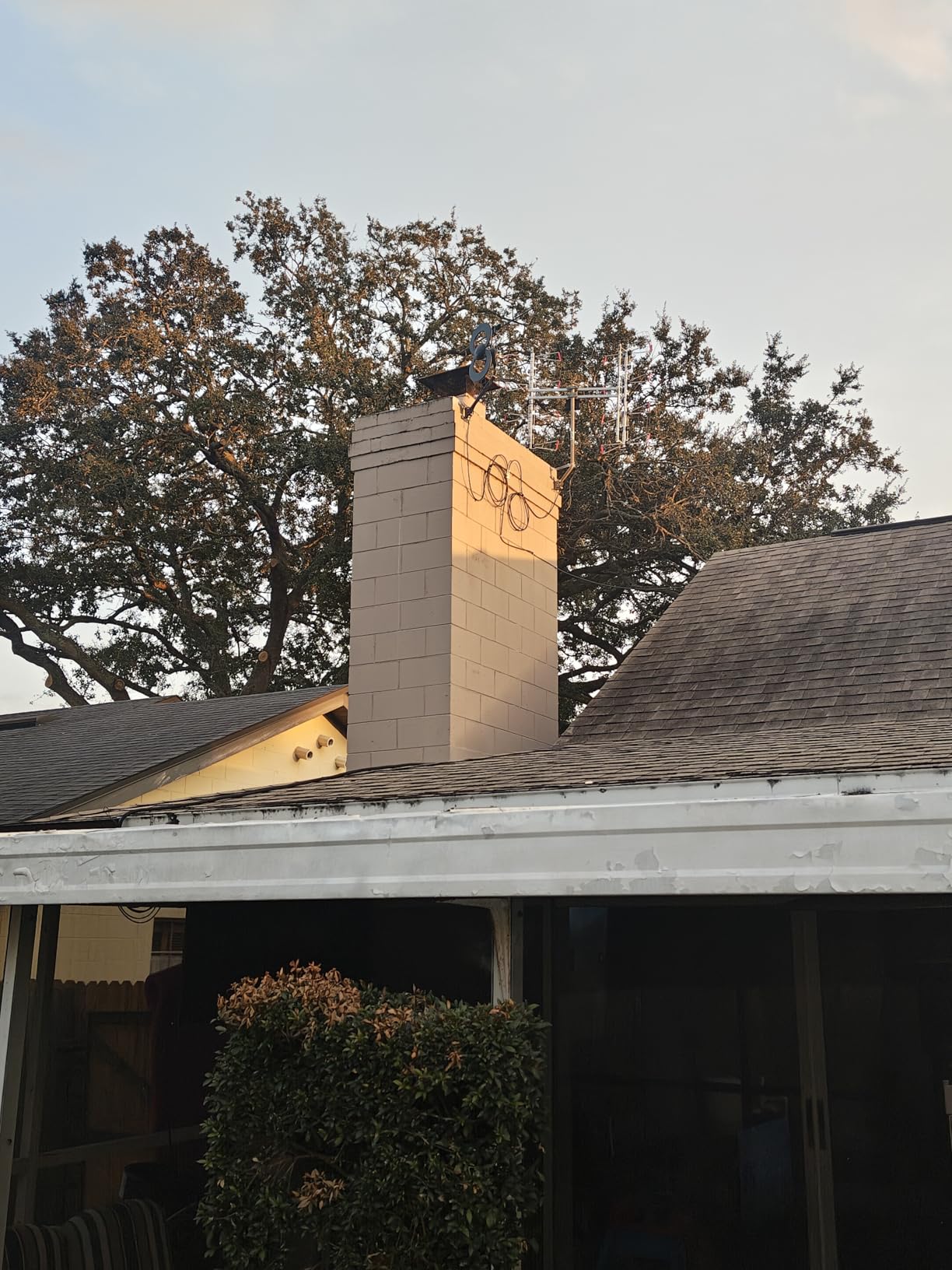
Step 5: Choose your mounting location. Roof mounts deliver the strongest signal but require drilling and weather sealing. Attic mounts work for most installs within 40 miles and are renter-friendly. Eave mounts split the difference. If HOA rules restrict external antennas, the FCC OTARD rule generally protects your right to install a small dish or antenna in your exclusive-use space — see FCC Fact Sheet 16 for the full text.
Find Your Local Broadcast Towers First
Before you buy any antenna, plug your address into the FCC DTV Reception Map (fcc.gov/media/engineering/dtvmaps) and the Rabbit Ears Signal Search Map (rabbitears.info). Both tools are free, take 30 seconds, and tell you exactly which channels are available at your location, the direction of each transmitter, and the expected signal strength. This single step eliminates 80% of the guesswork in choosing an antenna and is the closest thing to a guaranteed good outcome in cord-cutting.
Once you have your tower list, write down three numbers: distance to nearest tower, distance to farthest tower, and the compass direction of each. That data tells you whether you need a multi-directional antenna, a directional Yagi, or a UHF-only specialist. If your towers are all within 30 miles and clustered in one direction, the GE 29884 will handle the job. If your towers are spread across 90° and you live 50 miles out, the ClearStream 2V or DB8e is the right pick.
If you want to upgrade your viewing setup after the antenna is installed, our best wireless TV headphones guide helps with private listening, and the best floating TV stands roundup covers wall-mounting options for the new setup.
Frequently Asked Questions
What is the number one outdoor TV antenna?
The Antennas Direct ClearStream 4MAX family consistently tops professional reviews, but for most households the PBD WA-2608 is the best outdoor TV antenna overall because it combines long range, motorized rotation, dual TV outputs and NEXTGEN TV readiness at a price well below premium picks. It pulled 71 channels in our rural test 62 miles from towers and is the easiest install in its class.
Which outdoor TV antenna is best rated?
Among widely available antennas with thousands of reviews, the GE 29884 and RCA ANT751 both hold 4.4-star averages with over 10,000 reviews each. The PBD WA-2608 leads on raw review count at 19,000+ reviews at 4.3 stars. For premium build quality, the Winegard HD7694P holds 4.5 stars across 1,200 reviews.
Do more expensive TV antennas work better?
Not always. Price mostly tracks build quality, range and features like amplification, not raw reception. Within 30 miles of towers a $40 GE antenna performs nearly identically to a $150 premium pick. The price premium pays off when you are 50+ miles out, need VHF reception, want steel construction, or require multi-TV distribution.
What is the best outdoor TV antenna for a 100 mile range?
True 100 mile reception is rare in flat terrain and essentially impossible in hilly or tree-covered areas. The Antennas Direct DB8e bowtie and Winegard HD7694P are the strongest picks for fringe reception past 70 miles, and both should be paired with a quality preamp like the Channel Master CM-7778 or Winegard LNA-100 for the longest runs.
How far can an outdoor TV antenna really reach?
In flat terrain with clear line of sight, 70-80 miles is realistic for the antennas in this roundup. Past 80 miles reception becomes unreliable and depends heavily on antenna height, terrain and weather. Manufacturer claims of 150-200 miles are aspirational marketing; treat them as 60-70 miles for planning purposes.
Do I need an amplifier for my outdoor TV antenna?
Only if you are 50+ miles from towers, running long coax to multiple TVs, or splitting the signal to feed more than two televisions. Within 30 miles a passive antenna like the RCA ANT751 actually delivers a cleaner picture than an amplified one because the amplifier cannot overload an already-strong signal.
Final Verdict: Which Outdoor TV Antenna Should You Buy?
If you want one outdoor TV antenna that handles every scenario within 70 miles of towers, the PBD WA-2608 is the best outdoor TV antenna you can buy in 2026. It earned our editor’s choice for combining 71-channel rural performance, easy install, dual TV outputs, NEXTGEN TV readiness and a lifetime warranty in one package.
If your priority is value and you live within 40 miles of a mixed UHF/VHF market, the RCA ANT751 is the smart buy — passive design, VHF coverage and decades of installer-tested reliability. If you want the cheapest antenna that still works for a typical cord-cutting household, the GE 29884 is the one. The Five Star is the right pick for homes feeding five TVs from one rooftop. The ClearStream 2V is the gold standard for rotor-free multi-directional reception. The McDuory is the easy weekend project. The DB8e is the rural UHF specialist. The Winegard HD7694P is the antenna you mount once and forget about.
Run the FCC DTV map and Rabbit Ears tools before you buy, match your distance and tower direction to the right antenna, and you will be watching free local TV in HD within an afternoon. Once the antenna is up, drop the cable bill, pair the new setup with one of the best Android TV boxes for streaming, and enjoy a cord-cutting stack that costs a fraction of what cable used to charge. Free over-the-air TV in 2026 has never looked this good.