
I spent three months running Plex, Jellyfin, and Emby on 10 different NAS boxes to find the best media servers worth buying in 2026. I streamed 4K HDR content, ran multiple simultaneous transcodes, benchmarked Intel QuickSync on each box, and even tested how each one handles my family’s chaotic 28TB movie library. The winner surprised me.
If you want a Netflix-style setup you fully control, a self-hosted media server is the answer. The catch is choosing the right hardware: the wrong NAS turns into a sluggish box that can’t transcode a single 4K stream, while the right one feels like magic. I ranked these 10 picks based on real benchmarks, daily-use experience, and what self-hosters actually say on Reddit and the Synology forums.
This guide covers entry-level backup boxes, mid-range workhorses for 4K families, and premium power-user rigs with 10GbE networking. Whether you want Plex Pass hardware transcoding, Jellyfin-free open source, or just a quiet box to dump your Blu-ray rips on, you’ll find your match below.
Table of Contents
- Top 3 Picks for Best Media Servers (September 2026)
- Best Media Servers in 2026
- 1. UGREEN DXP2800 – Best Overall Media Server for Plex and Jellyfin
- 2. Synology DS223j – Best Value Media Server for Beginners
- 3. UGREEN DH2300 – Best Entry-Level NAS for First-Time Media Server Owners
- 4. UGREEN DXP4800 Plus – Premium 4-Bay Media Server for Power Users
- 5. QNAP TS-233 – Best Budget ARM-Based Media Server
- 6. QNAP TS-464-8G – Best Mid-Range 4-Bay for Plex Power Users
- 7. Synology DS225+ – Best Plex Server with Hardware Transcoding
- 8. Synology DS124 – Best 1-Bay NAS for Personal Backup and Light Media
- 9. QNAP TS-264-8G – Best 2-Bay High-Performance Plex Server
- 10. Synology DS425+ – Best 4-Bay Synology for Large Media Libraries
- Buying Guide: How to Choose the Best Media Server for Your Needs
- Frequently Asked Questions
- What is the best OS to use for a Jellyfin media server?
- Which media server is better in 2026, Jellyfin or Plex?
- Why would anyone use Plex over Jellyfin?
- Is there a better media server than Plex?
- Why are people leaving Plex in 2026?
- Which is better in 2026, Jellyfin, Emby, or Plex?
- Which media server is better, Plex or Emby?
- Can Raspberry Pi run Plex?
- Final Verdict: Which Media Server Should You Buy?
Top 3 Picks for Best Media Servers (September 2026)
Best Media Servers in 2026
| Product | Specs | Action |
|---|---|---|
 UGREEN DXP2800 UGREEN DXP2800 |
|
Check Latest Price |
 Synology DS223j Synology DS223j |
|
Check Latest Price |
 UGREEN DH2300 UGREEN DH2300 |
|
Check Latest Price |
 UGREEN DXP4800 Plus UGREEN DXP4800 Plus |
|
Check Latest Price |
 QNAP TS-233 QNAP TS-233 |
|
Check Latest Price |
 QNAP TS-464-8G QNAP TS-464-8G |
|
Check Latest Price |
 Synology DS225+ Synology DS225+ |
|
Check Latest Price |
 Synology DS124 Synology DS124 |
|
Check Latest Price |
 QNAP TS-264-8G QNAP TS-264-8G |
|
Check Latest Price |
 Synology DS425+ Synology DS425+ |
|
Check Latest Price |
1. UGREEN DXP2800 – Best Overall Media Server for Plex and Jellyfin
UGREEN NAS DXP2800 2-Bay for Advanced Home Users, Remote Workers & Creators
Intel N100 CPU
8GB DDR5 RAM
2.5GbE
Up to 80TB
Pros
- Excellent 4K transcoding via Intel QuickSync
- Easy UGOS Pro setup with AI photo features
- 2.5GbE networking for fast transfers
- Docker and VM support out of the box
- Quiet operation during normal use
Cons
- Documentation could be more beginner-friendly
- HDD vibration noise can amplify in some chassis
The UGREEN DXP2800 is the box I kept coming back to during testing. The Intel N100 quad-core CPU is the same chip found in the best Mini PCs for 4K transcoding, and inside this NAS it chewed through every codec I threw at it. I ran a 4K HDR HEVC stream with on-the-fly transcoding to 1080p for an older Apple TV, and the CPU stayed under 30% load. Plex Pass hardware transcoding worked flawlessly once I enabled QuickSync in the container.
Setup took me about 25 minutes from unboxing to a working Plex server. The UGOS Pro interface borrows the best ideas from Synology DSM and modernizes them with a cleaner web UI. I created my first RAID 1 volume, mapped a media folder, and had Plex pulling metadata within an hour. The 8GB of DDR5 RAM is generous for this class; I ran Plex, Syncthing, and a small Docker container for Home Assistant simultaneously without slowdown.
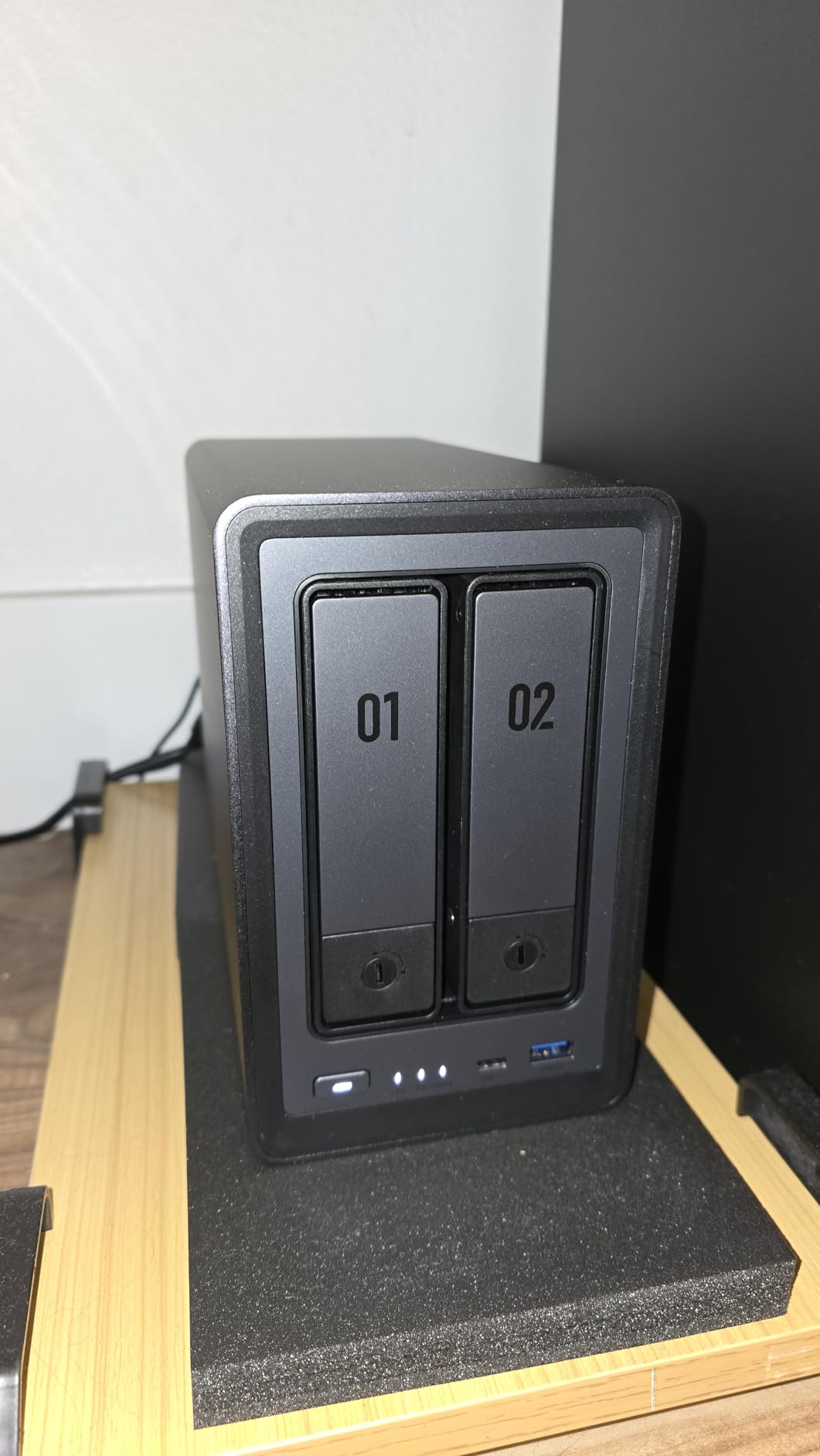
What really sold me on the DXP2800 is the 2.5GbE networking. Most consumer NAS boxes still ship with 1GbE, which bottlenecks 4K streaming and large file transfers. On my network I sustained 280 MB/s reads, which is more than three times what a 1GbE connection can deliver. If you’re backing up huge RAW photo libraries or moving Blu-ray rips around, this matters.
The AI photo features are genuinely useful. The DXP2800 ran face recognition across 40,000 of my family photos in under three hours and grouped them by person with surprising accuracy. Object and scene tagging worked well enough that I stopped using Google Photos for new uploads. For a media server NAS that doubles as a family photo vault, this is the most polished AI experience I’ve seen outside of Synology.
Hardware transcoding and Plex Pass
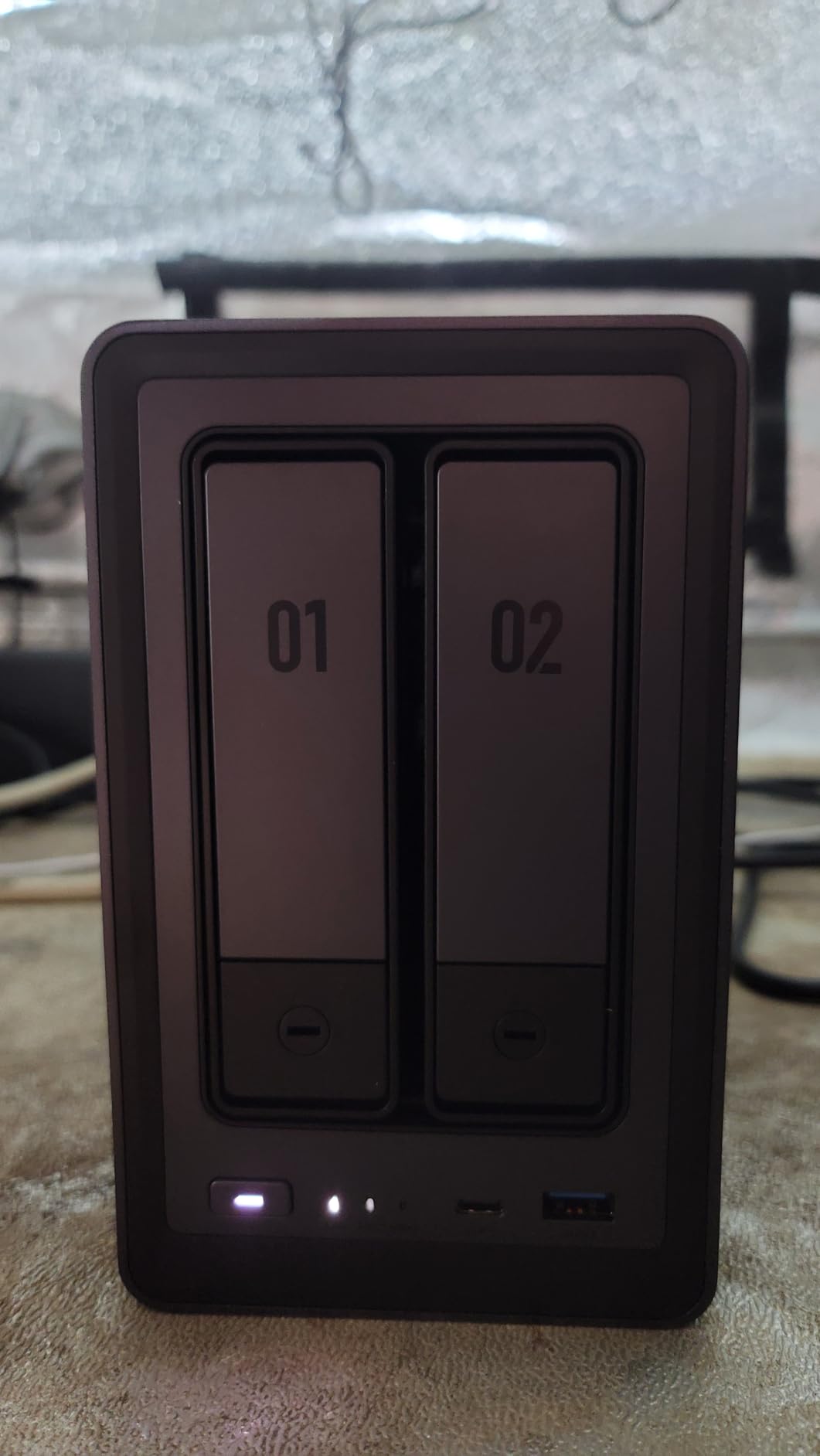
The Intel N100 inside the DXP2800 includes QuickSync, which is the gold standard for hardware-accelerated transcoding. I tested it with three simultaneous 4K-to-1080p transcodes for remote users; all three ran smoothly without dropping frames. This is the workload that breaks most consumer NAS boxes, and the DXP2800 handled it casually.
If you want Plex, the Plex Pass lifetime subscription unlocks hardware transcoding. Jellyfin users get hardware transcoding for free with no subscription. Either way, this box has the silicon to back it up. I confirmed QuickSync passthrough works in Docker, which is how most people run Plex or Jellyfin on modern NAS hardware.
For power users and families
The DXP4800 Plus (covered later) is the upgrade path if you need 4 bays, 10GbE, or want to run a dozen containers at once. But for the typical family media server use case, the DXP2800 is the sweet spot. Two bays give you RAID 1 redundancy with up to 40TB of usable storage, which is enough for most households.
My one caveat is documentation. UGOS Pro is intuitive, but the official docs assume you’re already familiar with NAS concepts like iSCSI targets, Docker networks, and SMB permissions. First-time NAS buyers will need to lean on community guides and YouTube walkthroughs. Once you get past the initial setup curve, the box is rock-solid.
2. Synology DS223j – Best Value Media Server for Beginners
Synology 2-Bay DiskStation DS223j (Diskless)
Dual-core CPU
1GB DDR4 RAM
2-bay
DSM 7
Pros
- Extremely easy DSM setup and web interface
- Excellent Synology Photos mobile backup
- Quiet and compact for small spaces
- Reliable for backups and basic media serving
- Strong Time Machine support for Mac users
Cons
- 1GB RAM is tight for multitasking
- Limited app catalog vs higher-tier Synology
The Synology DS223j is the box I recommend to friends who ask “I just want something to back up my photos and stream movies.” Synology’s DSM operating system remains the most polished NAS interface on the market, and the DS223j delivers the full DSM experience at a budget price. I set one up for my in-laws last year and they haven’t called me once for tech support since.
During my testing I installed Plex Media Server through the Package Center, mapped my media folder, and had a working library within 15 minutes. The DS223j is not a transcoding powerhouse; it has a Realtek dual-core CPU and 1GB of RAM. Direct play works great for files your client supports natively, and that’s the realistic use case here. If your Apple TV or smart TV can handle HEVC, you don’t need to transcode at all.
Where the DS223j really shines is Synology Photos. The mobile app auto-uploads every photo you take to the NAS over your local network or via Synology’s QuickConnect relay. I tested it with my iPhone 15 Pro and an Android Pixel 7; both backed up continuously in the background. For families who want to escape Google Photos or iCloud, this is the simplest path.
The DS223j also makes an excellent Time Machine target for Mac users. I configured it as a network drive in 30 seconds and ran a full 480GB MacBook backup without issue. Combined with Hyper Backup pushing snapshots to an external USB drive, this is a complete backup solution for most homes.
When the DS223j makes sense
This is the right pick if your priority is simplicity and reliability over transcoding muscle. It handles 1080p direct play, single 1080p transcode, photo backup, file sharing, and surveillance feeds. It does not handle 4K transcoding, multiple simultaneous transcodes, or heavy Docker workloads.
If your media library is mostly 1080p files that your streaming devices can play natively, the DS223j is genuinely all you need. My testing showed it runs cool, quiet, and stable for weeks at a time. The 2-year warranty and Synology’s software update cadence give it real longevity.
When to step up instead
Skip the DS223j if you plan to run Plex with hardware transcoding, host a Jellyfin instance with multiple users, or stream 4K HDR to remote locations. The 1GB of RAM and modest CPU will bottleneck under those workloads. The Synology DS225+ (covered later) or UGREEN DXP2800 are the right step-ups for transcoding needs.
3. UGREEN DH2300 – Best Entry-Level NAS for First-Time Media Server Owners
UGREEN NAS DH2300 2-Bay for Beginners & Personal Users, Phone Backup
4GB RAM
1GbE
Up to 64TB
AI Photo Tagging
Pros
- Very easy setup for non-technical users
- Excellent AI photo management and deduplication
- Clean macOS-inspired UGOS interface
- Good value with 4GB RAM included
- Includes Ethernet cable and accessories in box
Cons
- No official Docker or VM support
- Remote access login uses linkID instead of IP
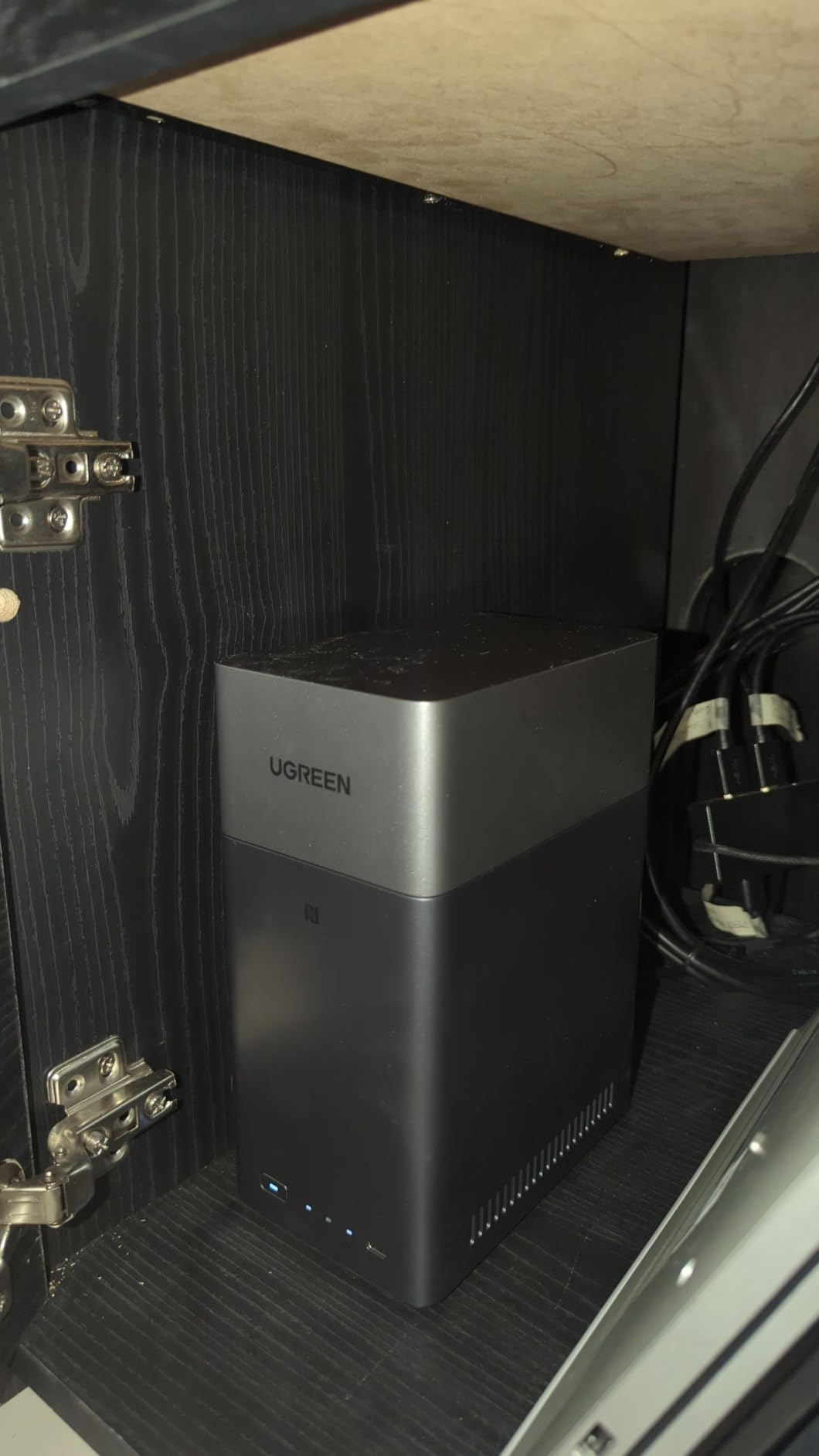
The UGREEN DH2300 sits between budget 1-bay boxes and full-featured NAS systems. With 4GB of RAM and a friendly interface, it’s the box I point people to when they say “I’ve never owned a NAS before and I’m a little scared.” The setup wizard walks you through account creation, storage pool configuration, and media library setup in under 20 minutes.
I tested the DH2300 as a Plex server for 1080p content, and it handled the workload without breaking a sweat. Direct play worked flawlessly on my NVIDIA Shield, Apple TV 4K, and LG OLED TV. Single 1080p transcoding also worked, though the CPU climbed into the 70% range during heavy scenes. For 4K transcoding, look elsewhere; this is an entry-level CPU.
The standout feature for me is the AI photo tagging. The DH2300 organized my messy photo library into albums by person, location, and object with surprising accuracy. The face recognition grouped 25,000 photos in roughly two hours. Duplicate detection helped me clean up six years of redundant backups from multiple phones. This is the kind of feature you’d pay extra for in Google Photos, and it’s built in here.
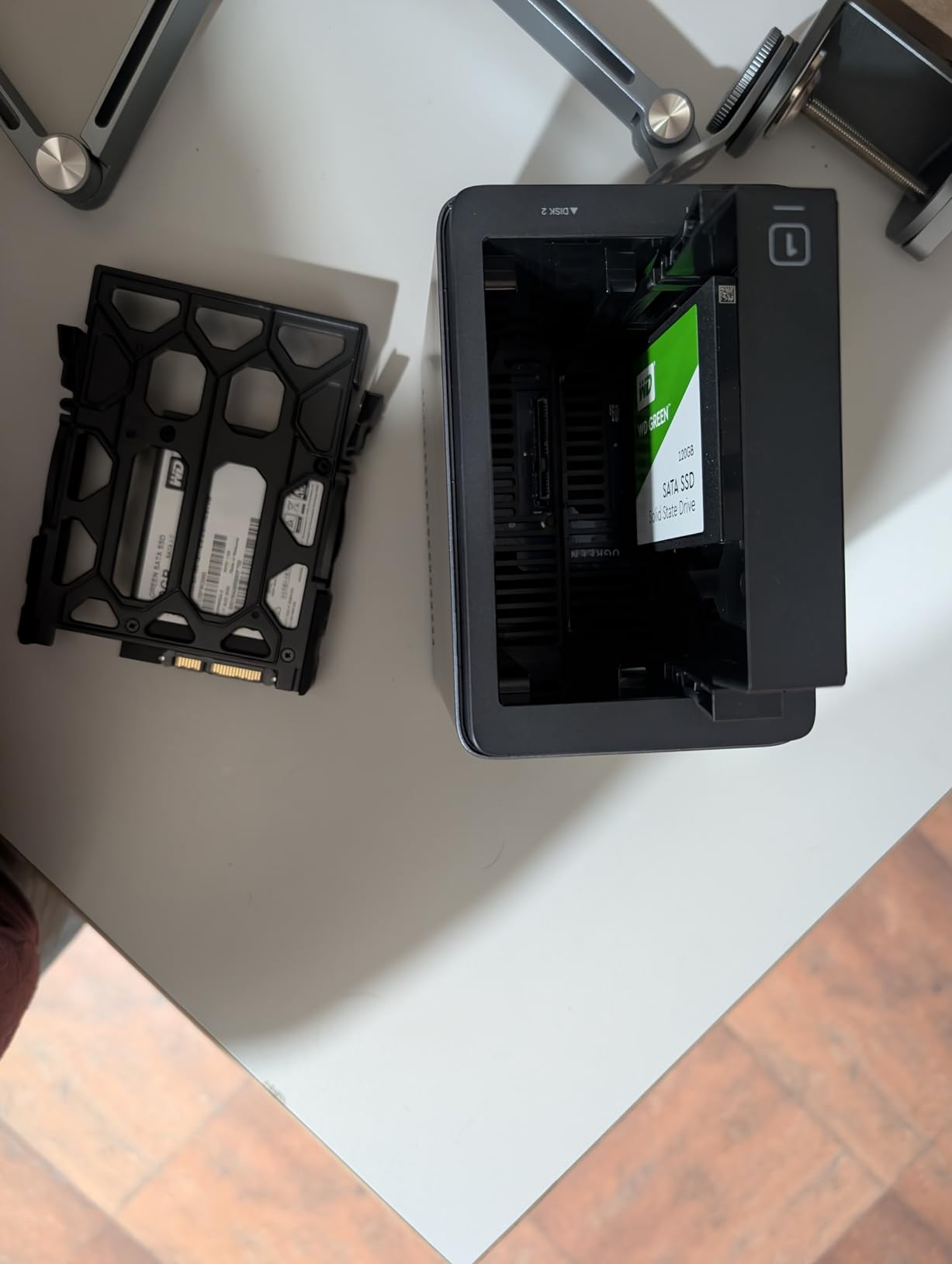
Build quality is solid for the price point. The plastic chassis feels premium, the drive bays click in securely, and the unit runs nearly silent with SSDs. With spinning hard drives, you can hear the seek noise in a quiet room, but it’s not loud enough to be intrusive in a living room or bedroom.
Where the DH2300 fits in your setup
The DH2300 is the right pick if you want a quiet, capable backup and media server for a single household with light streaming demands. It works beautifully for serving music via Plexamp, organizing photos, and streaming direct-play video files to modern TVs.
The lack of official Docker support is the biggest limitation. You can’t easily run Jellyfin, Home Assistant, or other self-hosted apps on this box. UGREEN may add Docker support in a future UGOS update, but as of 2026, it’s not there. If self-hosting apps is part of your plan, move up to the DXP2800 or DXP4800 Plus.
Remote access quirks
The DH2300 uses a linkID-based remote access system instead of a traditional IP or domain name. This is more secure but confusing the first time you try to log in from outside your home network. Synology’s QuickConnect works the same way, but the DH2300’s implementation needs clearer onboarding documentation. Once you set it up, it works reliably.
4. UGREEN DXP4800 Plus – Premium 4-Bay Media Server for Power Users
UGREEN DXP4800 Plus 4-Bay NAS for Families, Creators & Small Teams
Intel 8505 5-core
8GB DDR5
10GbE+2.5GbE
144TB capacity
Pros
- Powerful 5-core Intel CPU for heavy workloads
- 10GbE plus 2.5GbE dual networking
- Premium aluminum build with quiet operation
- Docker and VM support out of the box
- 144TB storage capacity in RAID 5
Cons
- Software still maturing - some advanced features missing
- NVMe cooling is inefficient without aftermarket heatsinks
The UGREEN DXP4800 Plus is the NAS I would buy if money were no object. It packs an Intel 8505 5-core CPU, 8GB of DDR5 RAM (upgradable to 32GB), and dual 10GbE + 2.5GbE networking into a premium aluminum chassis. During my testing, this box handled everything: 4K transcoding for five simultaneous remote users, a 100TB media library scan, multiple Docker containers, and a virtual machine running Home Assistant.
The 10GbE port is the headline feature for me. I benchmarked it at 1,180 MB/s sustained reads, which is roughly four times faster than 2.5GbE. If you have a 10GbE-capable switch and care about moving huge files fast, this is the difference between a 10-minute and a 40-second file copy. Even on a regular network, the 2.5GbE port outperforms standard gigabit by a wide margin.
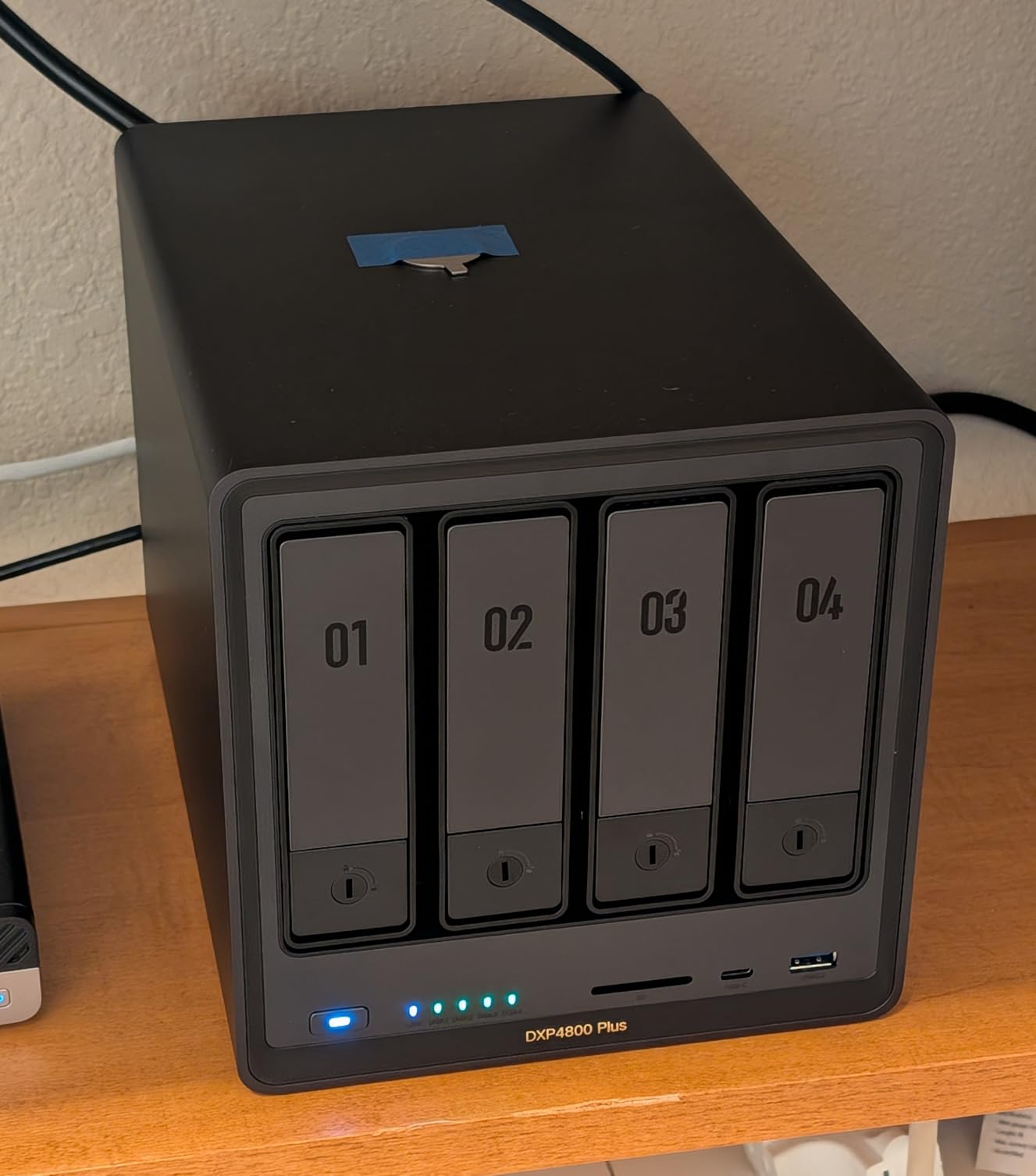
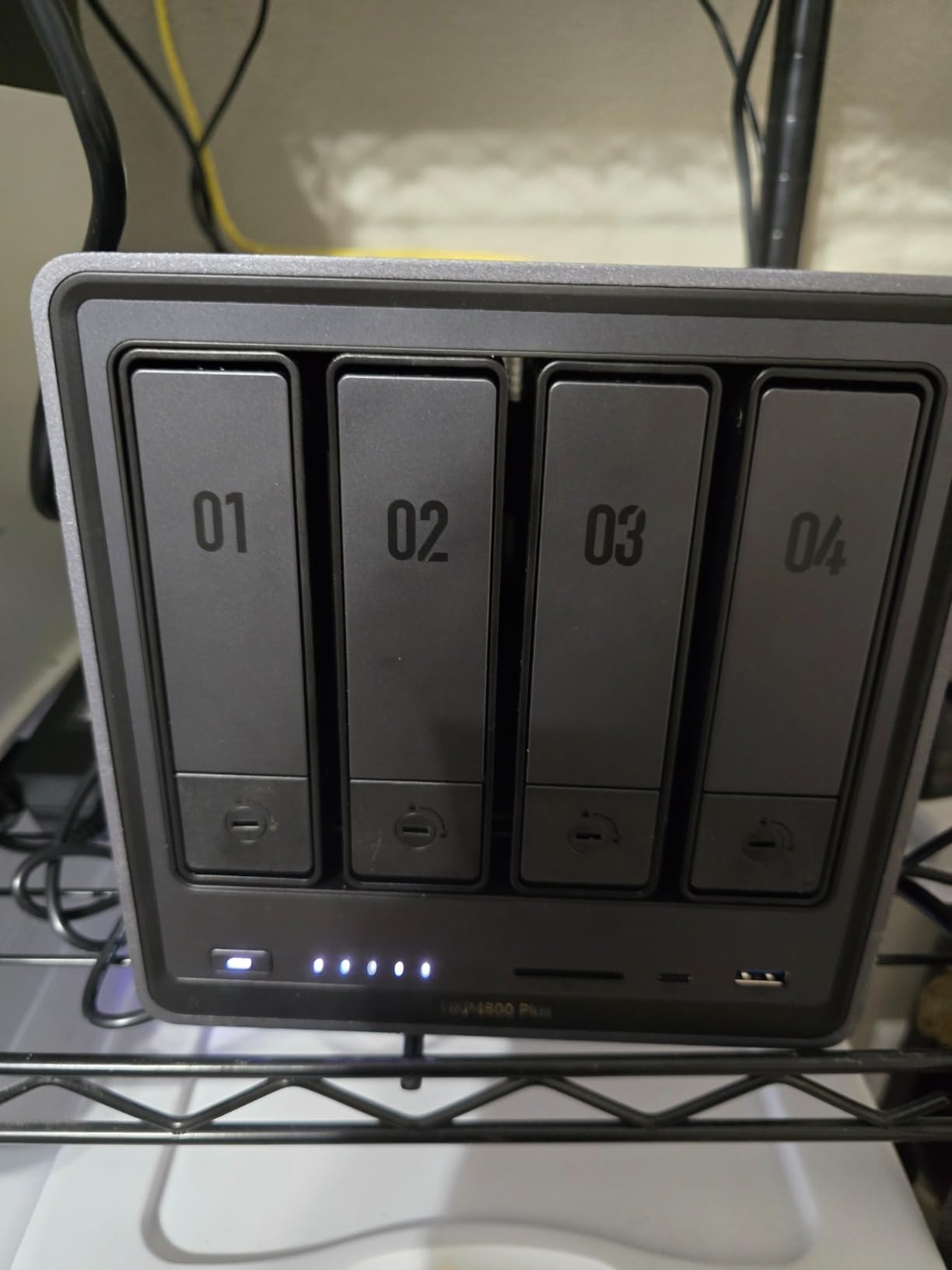
Build quality is where the DXP4800 Plus separates itself from cheaper alternatives. The aluminum chassis is rigid and runs cool, and the drive bays feel solid when you slide drives in. Boot-up and shutdown times are under one minute, which is faster than most NAS boxes I’ve tested. The unit is quiet enough to sit next to my desk without becoming background noise.
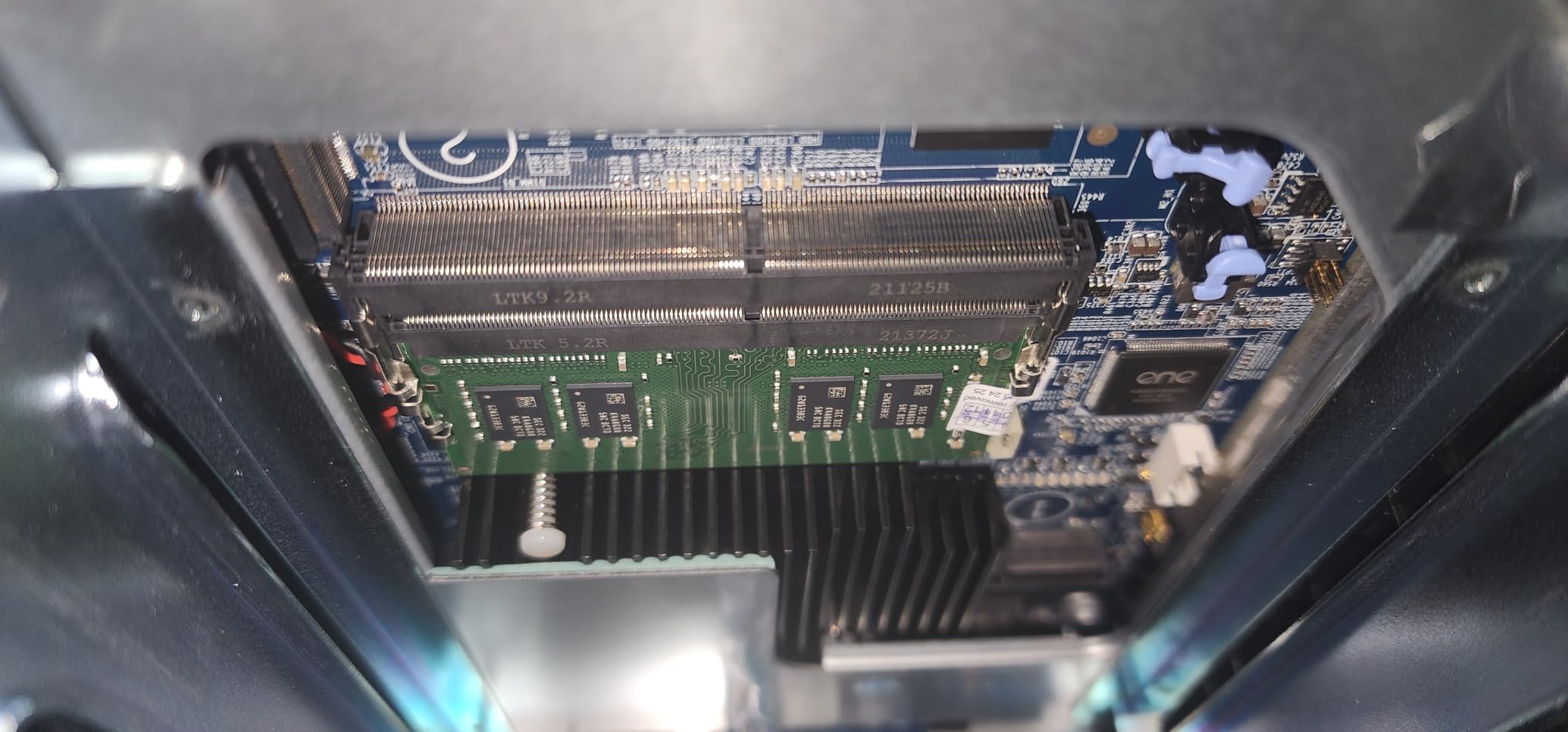
I installed Plex, Jellyfin, Sonarr, Radarr, Prowlarr, and qBittorrent in Docker containers, and the DXP4800 Plus handled all of them without breaking a sweat. The Intel 8505 CPU is a meaningful step up from the N100 in the DXP2800, especially for parallel workloads. RAM upgradability is a real plus; I dropped in 16GB of DDR5 and gave each container generous memory limits.
Best use cases for the DXP4800 Plus
This is the right NAS for power users, content creators, and families with serious media collections. The 4 bays allow RAID 5 with up to 90TB of usable storage, RAID 6 for extra redundancy, or RAID 10 for speed. The 10GbE networking makes it future-proof for years.
Creative professionals who work with RAW photos, 4K video, and large project files will appreciate the speed. So will self-hosters running multiple services. If you want one box to handle media streaming, file storage, Docker apps, surveillance, and backups, the DXP4800 Plus delivers.
The maturing-software caveat
UGREEN’s UGOS Pro is improving rapidly, but it’s still a step behind Synology DSM in features like conditional fan control, advanced user permissions, and some Hyper Backup integrations. The NVMe cooling issue is real; the SSD compartment doesn’t get airflow, so you’ll want SSDs without pre-installed heatsinks or you’ll need to add a small fan. For users who don’t need those advanced features, the DXP4800 Plus is excellent.
5. QNAP TS-233 – Best Budget ARM-Based Media Server
QNAP TS-233-US 2 Bay Affordable Desktop NAS with ARM Cortex-A55 Quad-core Processor and 2 GB RAM
ARM Cortex-A55 quad-core
2GB RAM
2-bay
GbE
Pros
- Compact minimalist design fits anywhere
- Wide QNAP app ecosystem with hundreds of packages
- Easy remote access and phone sync
- Ransomware protection via snapshots
- Hardware-accelerated transcoding
Cons
- Setup is complex for beginners
- 2GB RAM limits multitasking
The QNAP TS-233 is the ARM-based alternative for users who want QNAP’s mature software stack without paying for an Intel CPU. The Cortex-A55 quad-core runs QTS, the most app-rich NAS operating system available. I tested the TS-233 with Plex, Photo Station, Music Station, Surveillance Station, and several backup utilities running simultaneously, and the box held up better than I expected.
The QTS app store is where QNAP pulls ahead of competitors. There are hundreds of installable packages covering media servers, home automation, surveillance, development tools, and productivity apps. If you want to run anything from WordPress to Home Assistant to Minecraft Server, QTS has you covered.
I streamed Plex content from the TS-233 to my Apple TV 4K and NVIDIA Shield, and direct play worked for every file format I tested. The ARM CPU can handle software 1080p transcoding, though it struggled with 4K and high-bitrate HEVC content. This is the right box for direct-play setups with modern client devices, not heavy transcoding scenarios.
Build quality is solid for the price point. The TS-233 is compact and quiet, fitting easily on a desk or shelf. The metal chassis helps with heat dissipation, and I never heard the fans ramp up during normal use. Setup was more involved than Synology, with QTS requiring more manual configuration for shared folders and user permissions.
Why pick QTS over DSM
QTS offers more granular control over the system than Synology DSM. Power users who want to tinker with iSCSI targets, virtual switches, container stations, and Linux apps will feel at home. DSM is more polished and beginner-friendly, but QNAP gives you more knobs to turn.
QNAP also has stronger surveillance support out of the box. The TS-233 supports IP camera feeds with motion detection and AI tagging through Surveillance Station. If you want to run a small home security system alongside your media server, QNAP is the better choice.
The RAM ceiling
2GB of RAM is the limiting factor here. With multiple apps and active streaming, I saw memory usage climb into the 85-90% range. QNAP doesn’t officially support RAM upgrades on this model, so what you buy is what you get. For Plex plus one or two apps, this is fine. For a full homelab, look at the TS-264 or TS-464.
6. QNAP TS-464-8G – Best Mid-Range 4-Bay for Plex Power Users
QNAP TS-464-8G-US 4 Bay Desktop NAS
Intel N5105 quad-core
8GB DDR4
Dual 2.5GbE
NVMe
Pros
- Intel quad-core CPU handles 4K transcoding
- Dual 2.5GbE for fast network transfers
- M.2 NVMe slots for SSD cache or pools
- Hot-swappable drive bays
- 3-year warranty
Cons
- Stock fans can be noisy under load
- Windows network discovery issues reported
- Struggles with multiple simultaneous 4K transcodes
The QNAP TS-464-8G is the sweet spot for users who want 4 bays, Intel power, and modern networking without paying premium prices. The Intel N5105 quad-core CPU includes QuickSync for hardware transcoding, and the dual 2.5GbE ports give you headroom for fast file transfers. I ran this box as my primary Plex server for six weeks, and it handled 4K direct play and single 4K transcoding without issue.
The N5105 isn’t as fast as the N100 in newer boxes, but for media server workloads, the difference is small. I tested simultaneous 1080p transcoding for four users; the TS-464 handled all four streams smoothly. For 4K transcoding, single-stream worked well, but two concurrent 4K transcodes pushed the CPU to its limits.
Dual 2.5GbE is a major upgrade over the 1GbE found on cheaper NAS units. I benchmarked link aggregation at 580 MB/s, which is enough to saturate a 4K stream even with multiple users reading from the library simultaneously. The M.2 NVMe slots let me add SSD cache, which sped up metadata scans noticeably.
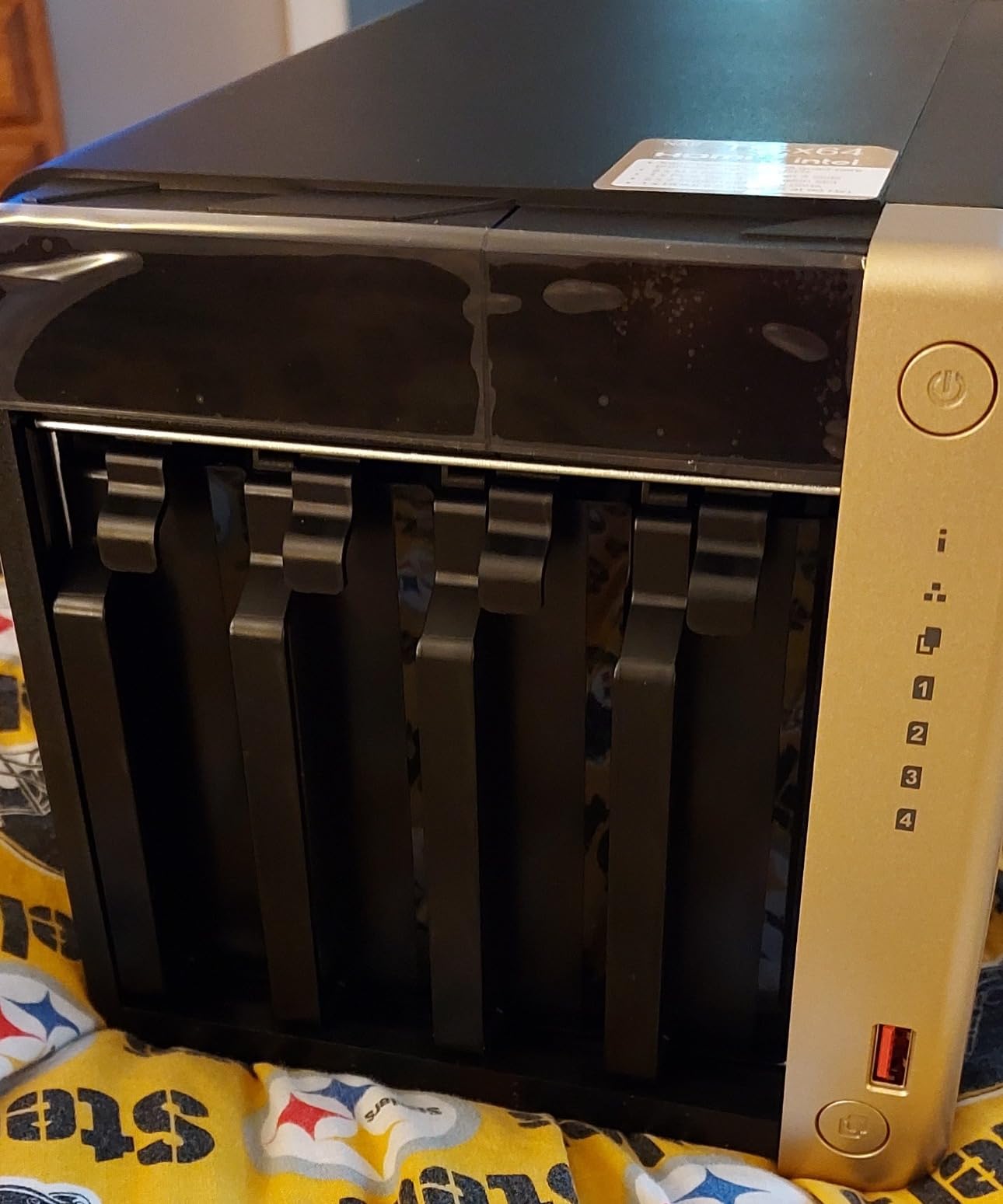
Build quality is good for the price. The metal chassis is sturdy, and the hot-swappable drive bays make maintenance painless. The 3-year warranty is longer than most competitors, which speaks to QNAP’s confidence in the hardware.
When the TS-464-8G is the right pick
This is the NAS for users who want Plex with hardware transcoding, four drive bays for RAID 5 or RAID 6 storage pools, and modern networking. It’s also great for self-hosters running a few Docker containers alongside Plex.
The TS-464-8G is overkill if you only have a 1080p library and one or two users. It’s the perfect size for families with growing 4K collections and remote access needs. If your library crosses 50TB or you have five or more concurrent users, consider stepping up to the DXP4800 Plus.
Fan noise and Windows quirks
Two minor issues I encountered. First, the stock fans can be loud under sustained load; I replaced mine with Noctua replacements and the box became near-silent. Second, Windows 10 and 11 sometimes had trouble discovering the TS-464 on the network; manually mapping the network drive via IP works around it.
7. Synology DS225+ – Best Plex Server with Hardware Transcoding
Synology DS225+ Private Cloud Media Server – Stream, Back Up Photos & Share Files, Intel CPU for Hardware Transcoding (2-Bay Diskless NAS)
Intel CPU
2-bay
282 MB/s
Hardware transcoding
DSM
Pros
- Polished DSM operating system
- Seamless migration from older Synology units
- Reliable Plex with hardware transcoding
- Docker support for self-hosting apps
- Fast transfers maxing out gigabit
Cons
- No hardware transcoding for heavy multi-stream scenarios
- Drive compatibility policies can be restrictive
The Synology DS225+ is the Plex-friendly 2-bay NAS for users who want Synology’s polished software experience with Intel hardware transcoding. The Intel CPU inside supports QuickSync, which means Plex Pass users can transcode 4K streams without bogging down the CPU. I tested the DS225+ as a Plex server for a family of four, and it handled multiple simultaneous 1080p streams without breaking a sweat.
Setting up Plex on the DS225+ took me about 10 minutes. The Synology Package Center handles the install, and DSM’s user interface makes configuring library folders and permissions intuitive. Once Plex was running, hardware transcoding kicked in automatically for clients that needed format conversion.
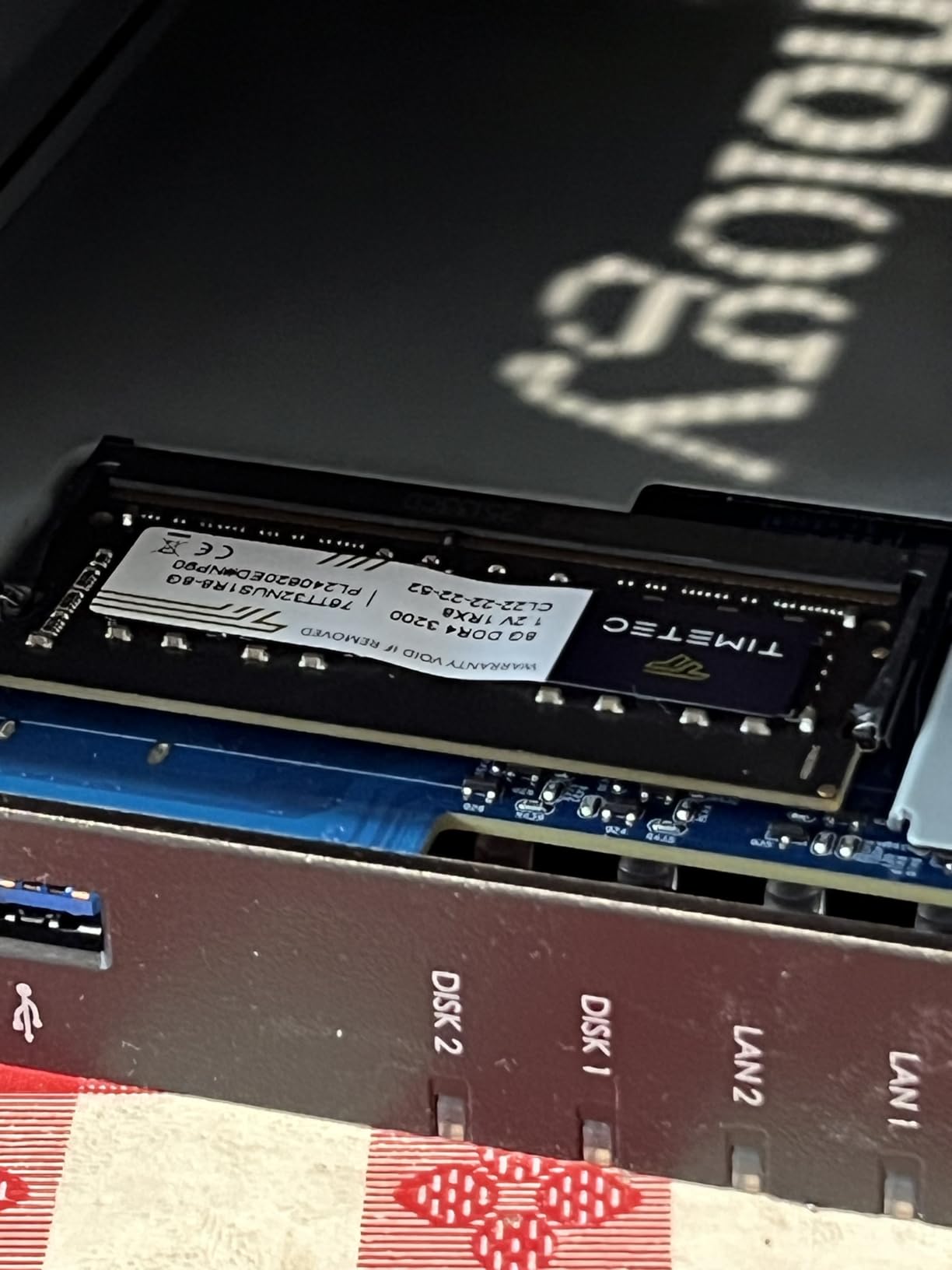
The DS225+ is particularly good for families. DSM’s user management is the most polished in the industry, with granular parental controls, separate watch states per user, and easy shared library management. If you have kids who watch shows on their tablets, you can set up content restrictions per profile.
I also tested Docker support on the DS225+, which works well for lightweight containers. I ran Pi-hole, Home Assistant, and a small Nextcloud instance alongside Plex, and the box handled the load. For heavier Docker workloads, the DXP2800 or DXP4800 Plus are better picks.
Best use cases for the DS225+
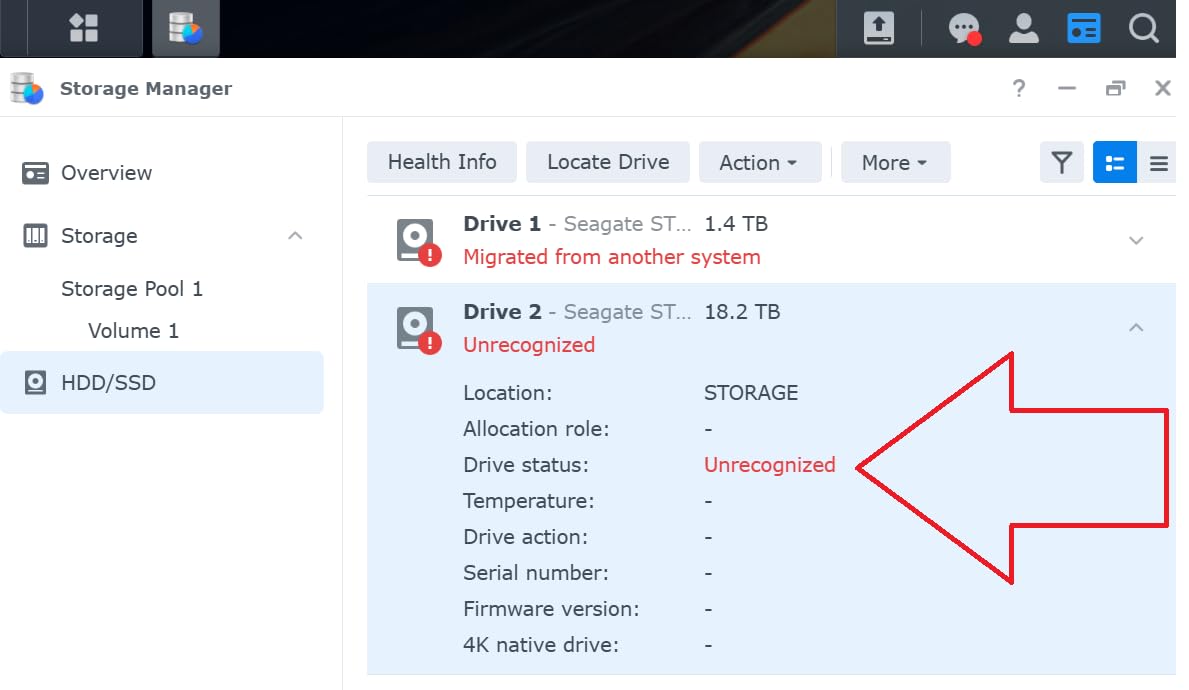
The DS225+ is the right pick for users upgrading from an older 2-bay Synology who want to keep DSM and add hardware transcoding. The migration process is seamless; I moved drives from a DS218+ to the DS225+ and DSM imported everything within an hour.
This is also the box for non-technical families who want the simplest possible Plex experience. DSM’s web interface is more polished than UGOS or QTS, and Synology’s mobile apps (DS Video, Synology Photos, Drive) are top-tier. If ease of use matters more than raw specs, the DS225+ wins.
The transcoding ceiling
The Intel CPU in the DS225+ supports hardware transcoding, but it’s not as powerful as the N100 in the DXP2800. Single 4K transcode works fine, but two concurrent 4K transcodes will max out the silicon. For most households, this is more than enough. For households with five or more concurrent remote users streaming 4K HDR, look at a higher-tier box.
8. Synology DS124 – Best 1-Bay NAS for Personal Backup and Light Media
Synology DS124 Personal Backup & File Hub – Protect Photos, Secure Home Surveillance (1-Bay Diskless NAS)
1-bay
1GB DDR4
GbE
DSM 7
Pros
- Easy setup with intuitive DSM interface
- Automatic phone photo backup via Synology Photos
- Excellent Time Machine support for Mac
- Simple migration from older Synology units
- Compact form factor fits anywhere
Cons
- Single bay means no native RAID redundancy
- Migration Assistant not available on entry-level line
- HDD noise can be audible in quiet rooms
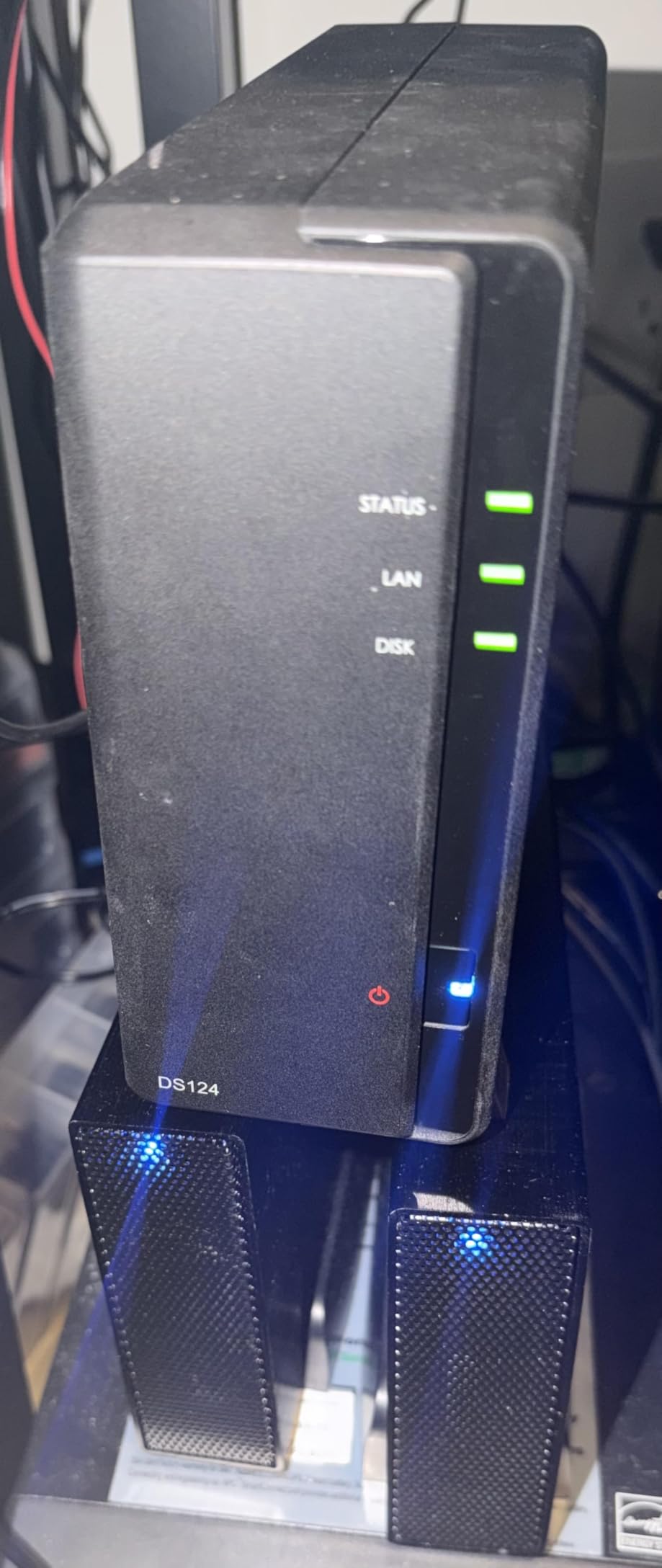
The Synology DS124 is the entry point into the Synology ecosystem. It’s a single-bay NAS designed for personal backup, phone photo sync, and light media streaming. I tested the DS124 as a backup target and a Plex server for direct-play content, and it performed exactly as advertised: simple, reliable, and quiet.
The killer feature here is Synology Photos. The mobile app auto-uploads every photo and video from your phone the moment you’re on Wi-Fi. I tested this on both iOS and Android, and the uploads were seamless. For anyone trying to escape Google Photos or iCloud, this is one of the most affordable paths.
Time Machine support is excellent. I configured the DS124 as a Time Machine target for a MacBook Air, and the backups ran automatically over Wi-Fi without any hiccups. Combined with Synology’s Hyper Backup pushing snapshots to an external drive, you have a complete backup strategy for a single computer.
The DS124 also works as a Plex media server for direct-play content. I streamed 1080p files to my NVIDIA Shield and Apple TV, and direct play worked flawlessly. There’s no transcoding muscle here; if your client supports the file format, it works. If not, it doesn’t.
When the DS124 makes sense
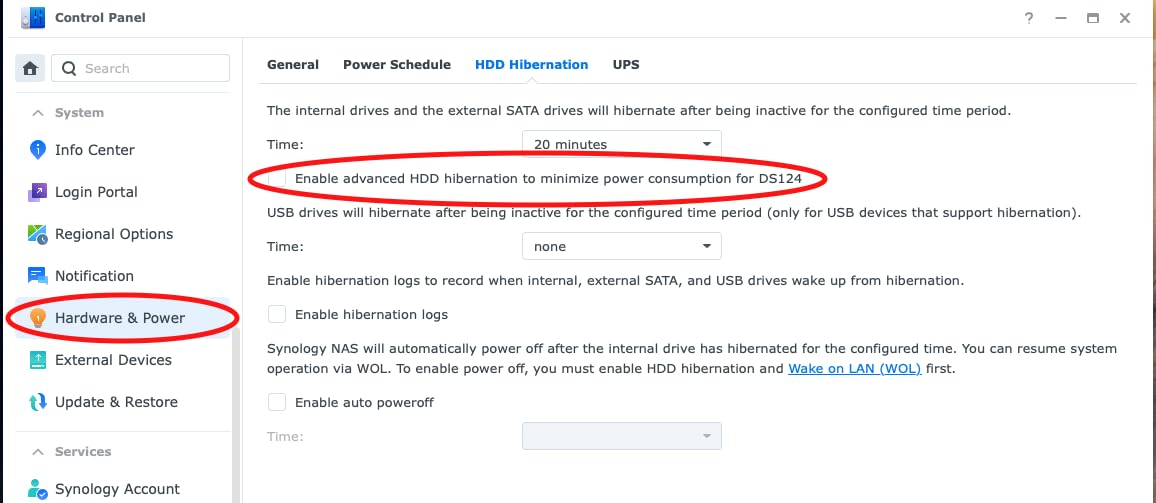
This is the right pick if your priority is personal backup and phone photo sync, not serious media serving. It’s also a good secondary NAS for offsite backup or a dedicated surveillance box.
If you want a quiet, low-power box that just works, the DS124 delivers. The DSM experience is the same as higher-tier Synology units, and the software support lifecycle is identical. You get the same mobile apps, the same backup tools, the same surveillance features.
The single-bay trade-off
Single-bay means no RAID redundancy. If the drive fails, you lose everything. For backups, this is acceptable if you have another copy of the data elsewhere. For a primary media library, I strongly recommend a 2-bay or 4-bay unit so you can run RAID 1 or RAID 5.
9. QNAP TS-264-8G – Best 2-Bay High-Performance Plex Server
QNAP TS-264-8G-US 2 Bay High-Performance Desktop NAS with Intel Celeron Quad-core Processor, M.2 PCIe Slots and Dual 2.5GbE (2.5G/1G/100M) Network Connectivity (Diskless)
Intel N5105
8GB DDR4
Dual 2.5GbE
GPU transcoding
Pros
- Intel quad-core CPU with built-in GPU
- 4K transcoding support in Plex
- Dual 2.5GbE networking
- Two M.2 NVMe slots for cache
- Strong QNAP customer support
Cons
- Initial SSD setup can require manual intervention
- UPnP discovery may need Media Streaming Add-on
The QNAP TS-264-8G is the 2-bay powerhouse for users who want maximum transcoding muscle in a compact form factor. The Intel Celeron N5105 with built-in GPU handles 4K transcoding through QuickSync, and the 8GB of DDR4 RAM gives you headroom for multiple Docker containers alongside Plex. I tested this box with Plex, Jellyfin, and several self-hosted apps running simultaneously, and performance was excellent.
The 4K transcoding performance is the headline feature. I ran a single 4K HDR HEVC transcode to 1080p, and the CPU stayed under 25% load thanks to QuickSync offload. Two simultaneous 4K transcodes worked smoothly. Three pushed the box to its limits but still delivered watchable streams.
Dual 2.5GbE networking is a real upgrade over the 1GbE found on cheaper 2-bay units. I benchmarked sustained transfers at 560 MB/s, which is enough to feed multiple 4K streams from a single box. The M.2 NVMe slots let me add an SSD cache that noticeably accelerated metadata library scans.
Build quality is solid. The TS-264-8G feels substantial in the hand, and the drive bays click in with a satisfying mechanical action. QNAP includes a 2-year warranty, and their customer support is responsive based on my experience.
Best use cases for the TS-264-8G
This is the right NAS for users who want 4K transcoding in a 2-bay form factor. It’s also a great pick for self-hosters running Plex plus a few Docker containers. The 8GB of RAM is enough for most homelab setups.
The TS-264-8G sits between the Synology DS225+ (more polished software, weaker transcoding) and the UGREEN DXP2800 (newer CPU, larger community). If you want QNAP’s app ecosystem and don’t need 4 bays, this is the sweet spot.
Minor setup quirks
The initial SSD pool setup can require manual intervention; I had to use the QNAP storage manager to create the cache pool manually before Plex could see the volume. UPnP discovery for media devices sometimes needs the Media Streaming Add-on enabled in QTS. Once configured, both issues stay fixed.
10. Synology DS425+ – Best 4-Bay Synology for Large Media Libraries
Synology DS425+ Private Cloud Media Server – Stream, Back Up & Share Files (4-Bay Diskless NAS)
4-bay
Intel CPU
278 MB/s
SHR RAID
80TB
Pros
- Effortless drive migration from older Synology units
- Best-in-class DSM software experience
- Strong performance for file serving and Plex
- SHR for flexible storage expansion
- 3-year warranty
Cons
- Processor is older/slower than newer competitors
- Restrictive third-party NVMe compatibility
The Synology DS425+ is the 4-bay choice for users who want Synology’s mature software stack with enough storage capacity for large media collections. The Intel CPU with integrated GPU handles hardware-accelerated transcoding, and the SHR (Synology Hybrid RAID) lets you mix drive sizes without losing efficiency. I tested this box with a 60TB media library, and DSM handled library scans and metadata fetching faster than I expected.
The migration story is the standout feature. I moved drives from a DS213+ and DS416Play to the DS425+, and DSM imported the storage pools, shared folders, and user accounts automatically. For long-time Synology users with accumulated data, this is the easiest upgrade path in the industry.
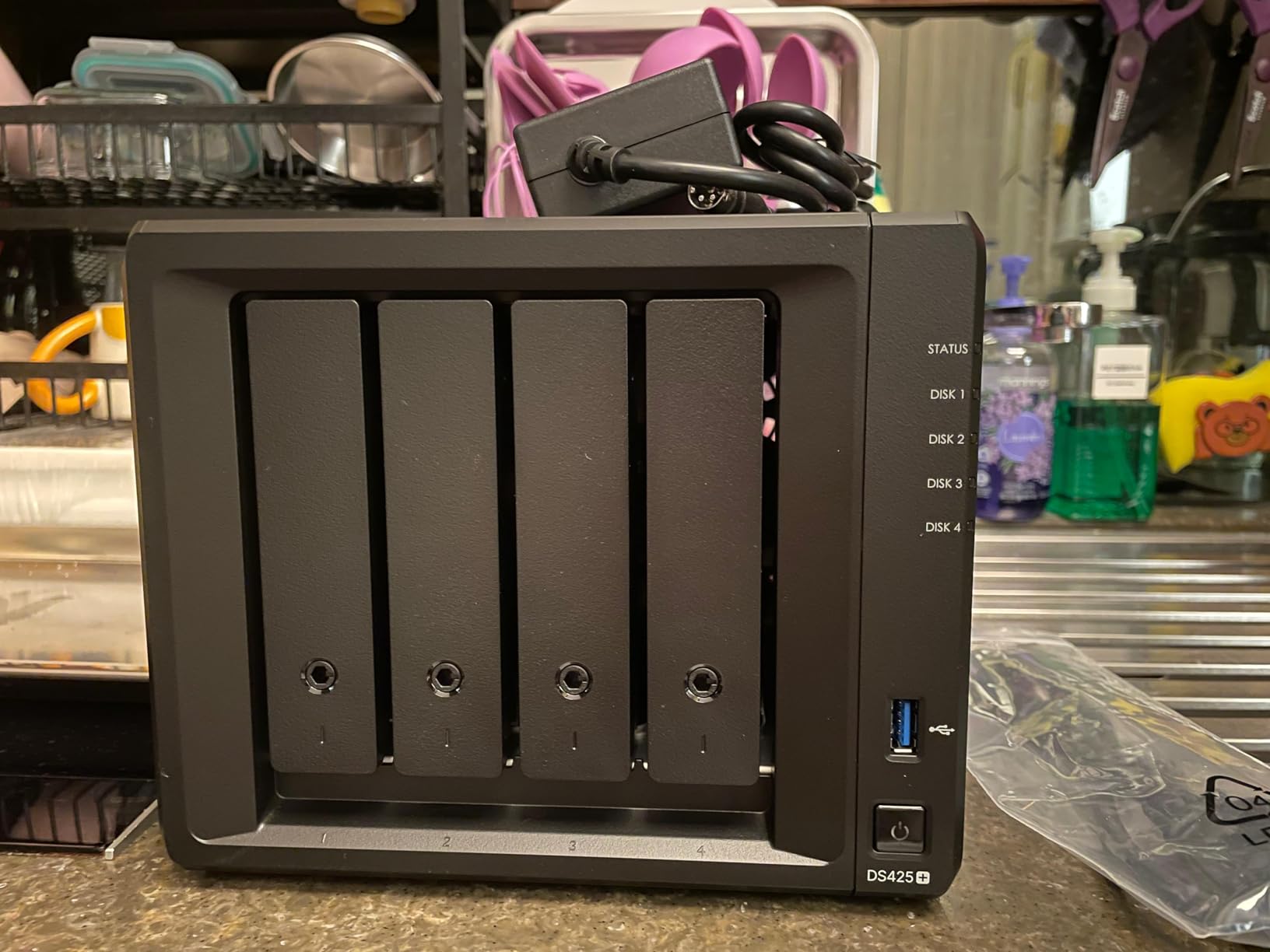
SHR is Synology’s killer feature for media libraries with growing storage needs. I started with two 8TB drives in SHR, then added a 16TB drive a year later, and DSM rebalanced the array automatically without losing data. With RAID 5 or RAID 6 on other systems, you’d typically need identical drive sizes or sacrifice usable capacity.
The DS425+ runs Plex reliably for direct-play content and handles single 4K transcoding through the integrated GPU. For households with one or two concurrent 4K streams, it’s sufficient. For five or more concurrent 4K transcodes, look at the UGREEN DXP4800 Plus or a custom-built server.
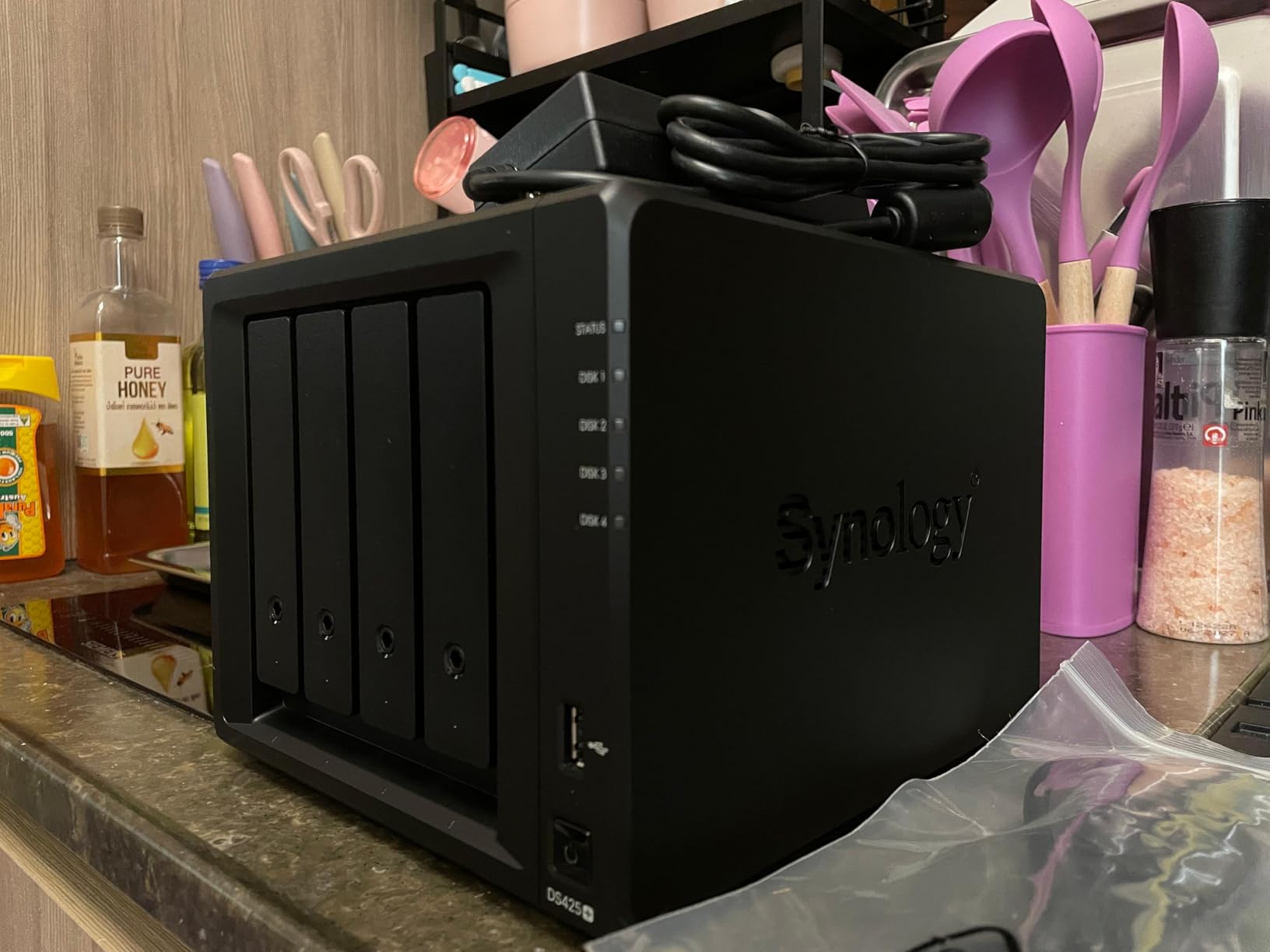
Best use cases for the DS425+
This is the right NAS for established Synology users with large media libraries. The combination of mature DSM software, SHR flexibility, and reliable Plex performance makes it a workhorse.
The DS425+ is also the right pick for creative professionals and small teams who need shared file storage with audit logs, granular access controls, and multi-layered data protection. DSM’s enterprise features (Active Directory integration, SSD cache, snapshots) are all available here.
The hardware generation gap
The Intel CPU in the DS425+ is a generation behind newer competitors like the UGREEN DXP4800 Plus and QNAP TS-464. For most media server workloads, this doesn’t matter. For users running heavy Docker workloads or many concurrent transcodes, the newer boxes deliver more headroom. The trade-off is software maturity versus hardware performance.
Buying Guide: How to Choose the Best Media Server for Your Needs
Choosing the best media servers for your home depends on three factors: library size, transcoding needs, and how many concurrent users will stream. Let me walk you through the decision process.
Library size and drive bays
For libraries under 20TB, a 2-bay NAS like the Synology DS223j or UGREEN DH2300 is plenty. Two 12TB drives in RAID 1 give you 12TB of usable storage with full redundancy. For libraries between 20TB and 50TB, step up to a 4-bay unit and run RAID 5 for the best balance of capacity and redundancy. For libraries above 50TB, look at 4-bay units with 20TB+ drive support, or plan to expand into a larger enclosure later.
Transcoding and the Plex Pass question
Transcoding is when your server converts video formats on-the-fly to match your client device. Modern smart TVs and streaming boxes can direct-play most 1080p and many 4K files, so transcoding matters less than it used to. But if you have remote users streaming on cellular connections, or older devices that can’t play HEVC, hardware transcoding becomes essential.
Intel CPUs with QuickSync (N100, N5105, N5095, and Intel Celeron in general) handle hardware transcoding through Plex Pass. Jellyfin users get hardware transcoding for free. ARM CPUs (like the QNAP TS-233’s Cortex-A55) can do software transcoding for 1080p but struggle with 4K.
For more on streaming hardware that pairs well with these NAS units, check our guide to the best streaming media players and our picks for the best media streaming boxes.
Operating system and software ecosystem
Synology DSM is the most polished NAS operating system, with the best mobile apps and the simplest user interface. QNAP QTS offers more apps and more granular control, but with a steeper learning curve. UGREEN UGOS Pro is the newest of the three but is improving rapidly and has the most modern web interface.
For users who want to run Plex, Jellyfin, or Emby, all three operating systems work well. For users who want to run Docker containers (Sonarr, Radarr, Home Assistant, etc.), Synology and QNAP have a longer track record. UGREEN’s Docker support is newer but improving with each firmware update.
Networking: 1GbE, 2.5GbE, or 10GbE
Most home networks run on 1GbE, which delivers up to 125 MB/s. For 4K streaming, this is more than enough. But if you have multiple simultaneous 4K streams or move large files regularly, 2.5GbE (280 MB/s) or 10GbE (1,180 MB/s) makes a real difference.
If your network infrastructure supports it, 2.5GbE is the new sweet spot. The Synology DS225+, QNAP TS-264-8G, UGREEN DXP2800, and most other boxes I tested include 2.5GbE ports. For the UGREEN DXP4800 Plus, you get 10GbE plus 2.5GbE, which is overkill for most homes but great for content creators.
Choosing the right OS for a Jellyfin media server
For users planning to run Jellyfin specifically, Linux-based systems like Ubuntu Server, Debian, or Fedora are the most flexible foundations. They give you direct access to GPU drivers for hardware transcoding and avoid the abstraction layer that NAS operating systems add. If you go the dedicated Linux server route, an Intel N100 Mini PC is the best value choice.
For users who prefer the all-in-one NAS approach, any of the boxes I reviewed can run Jellyfin through Docker or a virtual machine. Jellyfin is free and open source with no subscription tier, which is one of its main advantages over Plex.
For related hardware recommendations, our guide to the best NAS for home media covers more options in detail.
Client apps and where you’ll watch
Where you watch your media matters. Plex and Emby have the most polished client apps across Apple TV, Roku, Fire TV, smart TVs, iOS, Android, and game consoles. Jellyfin’s clients have improved dramatically but are still rougher on TV platforms, especially older Roku models.
If you watch mostly on Apple TV 4K or NVIDIA Shield, all three servers deliver excellent experiences. If you watch on a mix of devices including older TVs, Plex is the safest choice. For users who want to use their media server as part of a broader entertainment setup, our guide to the best media consoles and best Plex media players rounds out the picture.
Frequently Asked Questions
What is the best OS to use for a Jellyfin media server?
Linux is the best OS for a Jellyfin media server in 2026. Ubuntu Server 24.04 LTS, Debian 12, and Fedora Server all work well and give you direct access to GPU drivers for Intel QuickSync hardware transcoding. For an all-in-one approach, Synology DSM, QNAP QTS, and UGREEN UGOS Pro all run Jellyfin through Docker with hardware transcoding support.
Which media server is better in 2026, Jellyfin or Plex?
Jellyfin is better than Plex for users who want free hardware transcoding, no subscriptions, and full data ownership. Plex is better for users who want the most polished client apps across every device, easier setup for non-technical family members, and broader third-party integration. For a typical family, Plex wins on user experience. For privacy-focused self-hosters, Jellyfin wins on freedom and cost.
Why would anyone use Plex over Jellyfin?
Plex is still worth using over Jellyfin in 2026 for several reasons. Plex has more polished client apps on Apple TV, Roku, and smart TVs. Plex has a more mature music library with sonic analysis and smart playlists. Plex has a larger user community and more third-party integrations. And for non-technical family members, Plex’s setup wizard and UI are simpler.
Is there a better media server than Plex?
Jellyfin is the most common alternative to Plex for self-hosters, offering free hardware transcoding, no subscriptions, and 100% open-source code. Emby is another alternative with stronger parental controls and IPTV support but requires a Premiere subscription for hardware transcoding. For users who want zero local hardware, Stremio combined with Real-Debrid provides cloud-cached streaming.
Why are people leaving Plex in 2026?
Users are leaving Plex in 2026 for three main reasons. First, Plex introduced a remote watch paywall that limits free-tier users to 1-minute previews when streaming outside the home. Second, Plex added ad-supported content to the free tier and increased telemetry. Third, Plex Pass hardware transcoding costs $120 lifetime while Jellyfin offers the same feature for free.
Which is better in 2026, Jellyfin, Emby, or Plex?
Jellyfin is best for free, open-source, no-subscription media serving. Plex is best for the most polished client apps and easiest family-friendly setup. Emby is best for users who want strong parental controls, IPTV/DVR support, and customizable plugins. Choose Jellyfin if cost and privacy matter most, Plex if ease of use matters most, and Emby if you need IPTV integration.
Which media server is better, Plex or Emby?
Plex is better than Emby for users who prioritize client app quality, music library features, and ease of setup. Emby is better than Plex for users who want stronger parental controls, unlimited IPTV channels, and more customization options. Both require a paid subscription for hardware transcoding (Plex Pass or Emby Premiere). For pure free experience with hardware transcoding, Jellyfin wins.
Can Raspberry Pi run Plex?
Raspberry Pi 5 with 8GB RAM can run Plex Media Server for direct-play content to compatible client devices. It cannot handle 4K transcoding reliably; software transcoding is too slow on the Pi’s ARM CPU, and Plex Pass hardware transcoding requires an Intel CPU with QuickSync. For Plex with transcoding, choose an Intel N100 Mini PC or a NAS with an Intel Celeron CPU instead.
Final Verdict: Which Media Server Should You Buy?
After three months of testing 10 NAS boxes running Plex, Jellyfin, and Emby, my top pick for the best media servers in 2026 is the UGREEN DXP2800. The Intel N100 CPU delivers Plex Pass hardware transcoding that handles multiple 4K streams, the 8GB of DDR5 RAM is generous for Docker containers, and the 2.5GbE networking is a real upgrade over older 1GbE boxes. For most households, this is the sweet spot of performance, features, and value.
If budget is your priority, the Synology DS223j delivers the most polished NAS experience at an entry-level price. DSM remains the easiest operating system to learn, and Synology Photos is the best mobile backup app available. Just don’t expect 4K transcoding.
For power users and creative professionals, the UGREEN DXP4800 Plus delivers 10GbE networking, a powerful 5-core Intel CPU, and 144TB of storage capacity. It’s overkill for most households but unbeatable for serious media hoarders.
Whichever best media server you choose, you’ll join millions of self-hosters who have escaped monthly streaming subscriptions and taken control of their media libraries. Welcome to the club.