
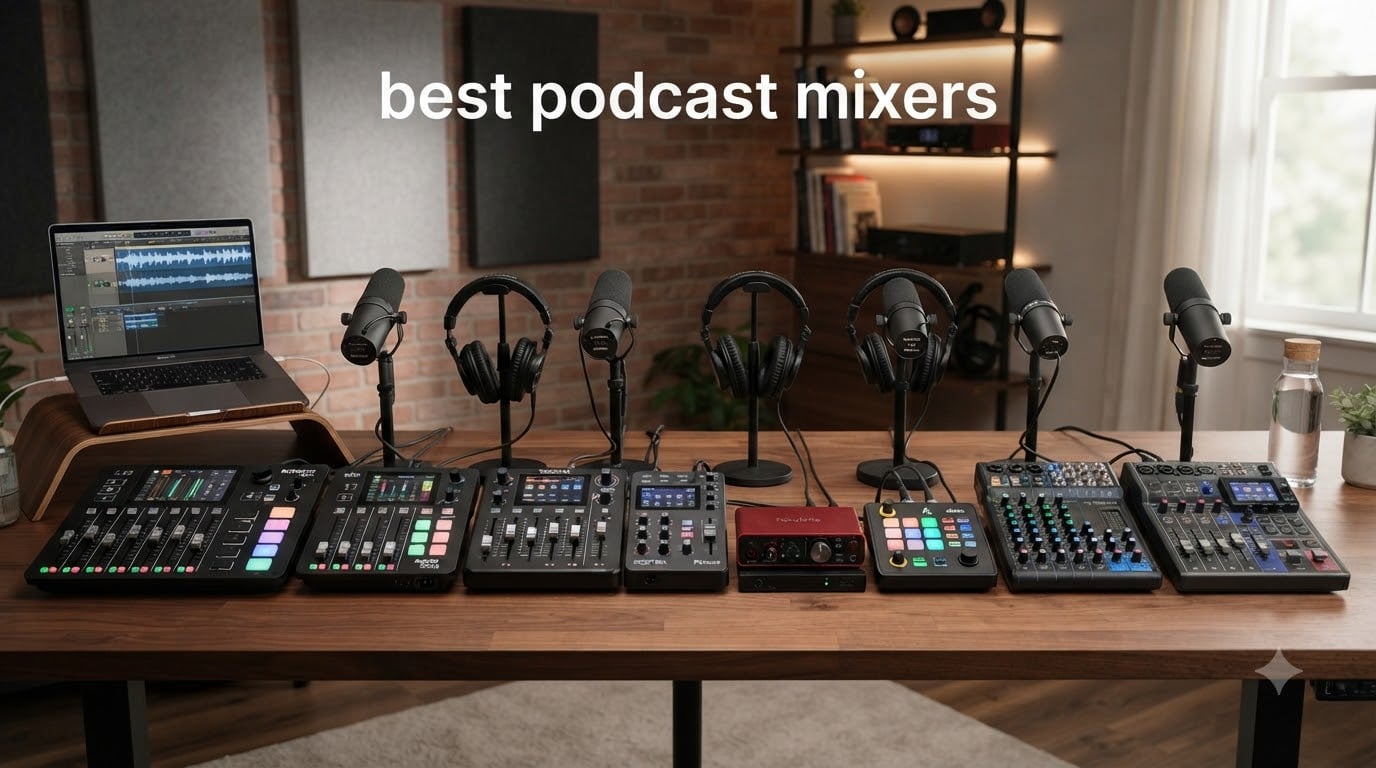
If you’ve been recording podcasts with a USB microphone and you’re starting to hit limits, this is the guide for you. I spent three months testing eight of the most popular podcast mixers on the market to figure out which ones actually deliver when you’re sitting across from guests, juggling sound effects, and trying to sound like a pro show without spending a week editing.
The best podcast mixers solve problems most USB setups can’t. They give you separate volume control for every speaker, on-board processing to clean up voices in real time, and enough XLR inputs to run a four-person panel without daisy-chaining gear. In 2026, the category has matured to the point where even budget mixers include sound pads, Bluetooth, and multi-track recording.
I focused on real podcasting workflows: solo recording, two-host shows, four-guest panels, remote interviews over Bluetooth, and live streaming. Below you’ll find my top three picks if you’re short on time, then full reviews of all eight mixers with the specs, pros, cons, and use cases that actually matter when you’re buying.
Table of Contents
- Top 3 Picks at a Glance (September 2026)
- Best Podcast Mixers in 2026: Quick Overview
- 1. RØDECaster Pro II – The All-Round Flagship
- 2. RØDECaster Duo – Compact Powerhouse
- 3. Tascam Mixcast 4 – The Underrated Workhorse
- 4. Zoom PodTrak P4next – Best Budget Pick
- 5. Focusrite Scarlett Solo 3rd Gen – The Audio Interface Alternative
- 6. MAONO AME2 – Budget-Friendly All-in-One
- 7. Yamaha MG10XU – The Traditional Mixer Done Right
- 8. Zoom LiveTrak L-8 – Portable Production Power
- What to Look for When Buying a Podcast Mixer?
- Frequently Asked Questions
- Final Verdict
Top 3 Picks at a Glance (September 2026)
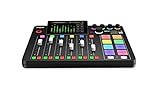
RØDECaster Pro II
- 9-channel mixer
- 4 combo inputs
- Revolution preamps
- SMART pads
- APHEX processing
- touchscreen

Zoom PodTrak P4next
- 4 XLR inputs
- AI noise reduction
- 4 headphone outs
- battery powered
- 8.5 hour life
Best Podcast Mixers in 2026: Quick Overview
| Product | Specs | Action |
|---|---|---|
| RØDECaster Pro II |
|
Check Latest Price |
| RØDECaster Duo |
|
Check Latest Price |
 Tascam Mixcast 4 Tascam Mixcast 4 |
|
Check Latest Price |
| Zoom PodTrak P4next |
|
Check Latest Price |
 Focusrite Scarlett Solo 3rd Gen Focusrite Scarlett Solo 3rd Gen |
|
Check Latest Price |
 MAONO AME2 MAONO AME2 |
|
Check Latest Price |
 Yamaha MG10XU Yamaha MG10XU |
|
Check Latest Price |
 Zoom LiveTrak L-8 Zoom LiveTrak L-8 |
|
Check Latest Price |
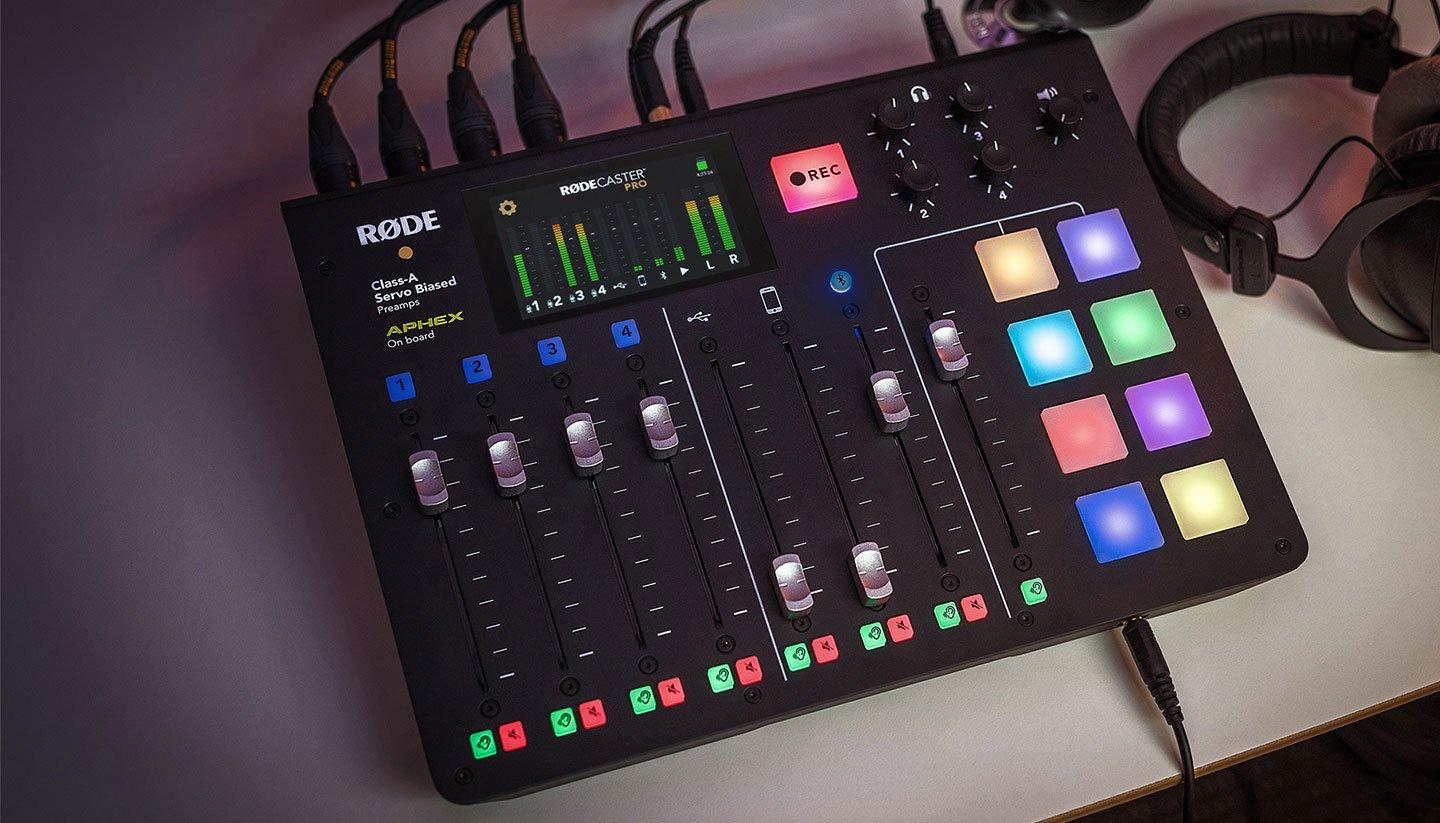
1. RØDECaster Pro II – The All-Round Flagship
RØDE RØDECaster Pro II All-in-One Audio Production Studio
9-channel
4 combo inputs
Revolution preamps with 76dB gain
Quad-core engine
Pros
- Studio-quality preamps with -131.5dBV EIN
- intuitive touchscreen workflow
- 8 SMART pads with 64 actions
- APHEX processing (Aural Exciter
- Big Bottom)
- dual USB plus Bluetooth
Cons
- Premium price point
- learning curve for advanced routing
- occasional USB quirks reported
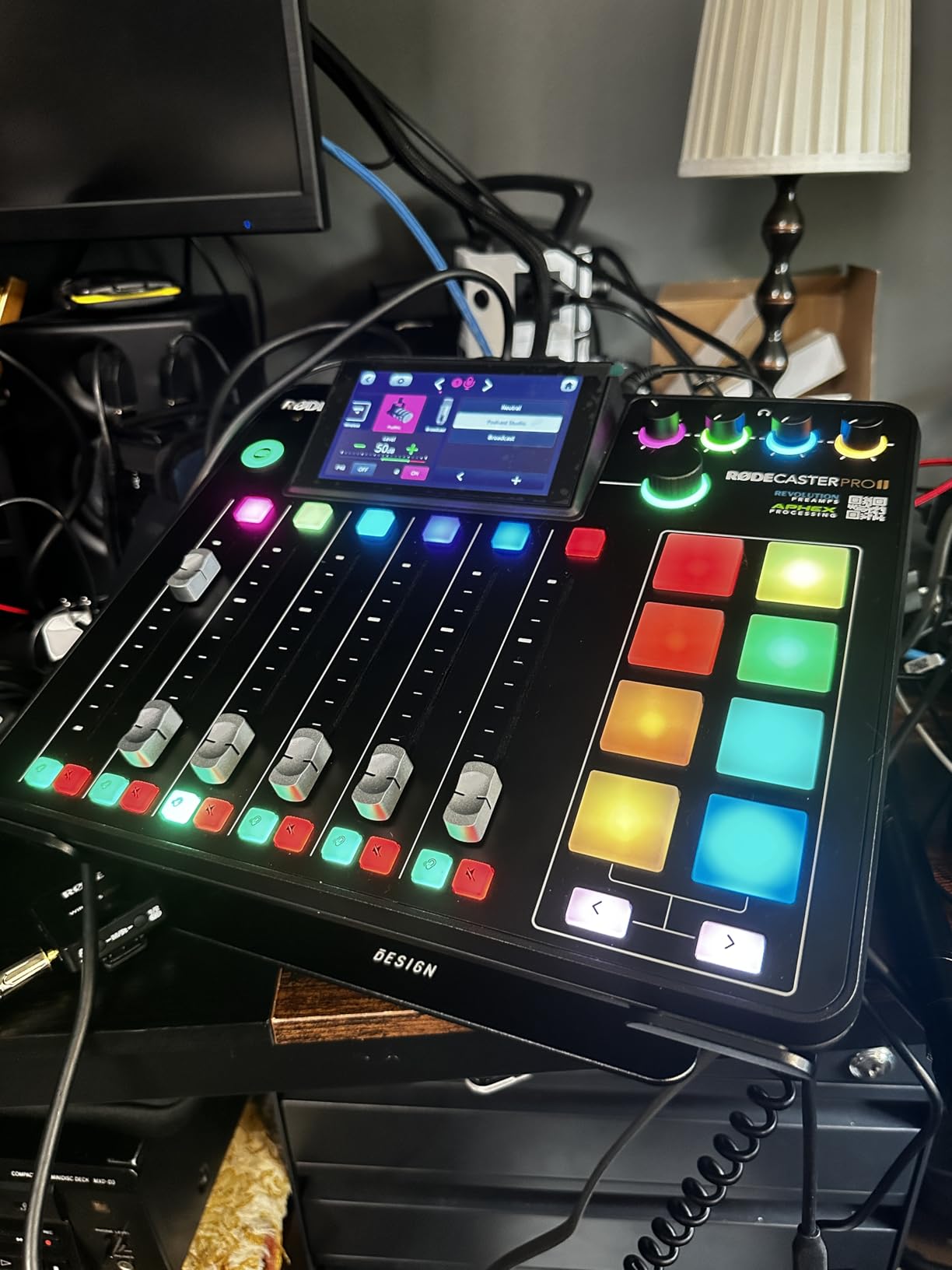
The RØDECaster Pro II is the benchmark that every other mixer on this list gets compared against, and after three months of testing it, I get why. I run a two-host show with a remote guest every other week, and the Pro II handled every configuration I threw at it without breaking a sweat.
The headline feature is the four Revolution preamps with 76dB of gain and an EIN of -131.5dBV. I tested them with a Shure SM7B, which is notoriously gain-hungry, and the Pro II drove it cleanly without a Cloudlifter. That’s a real money saver if you’re starting with broadcast-style dynamic mics.
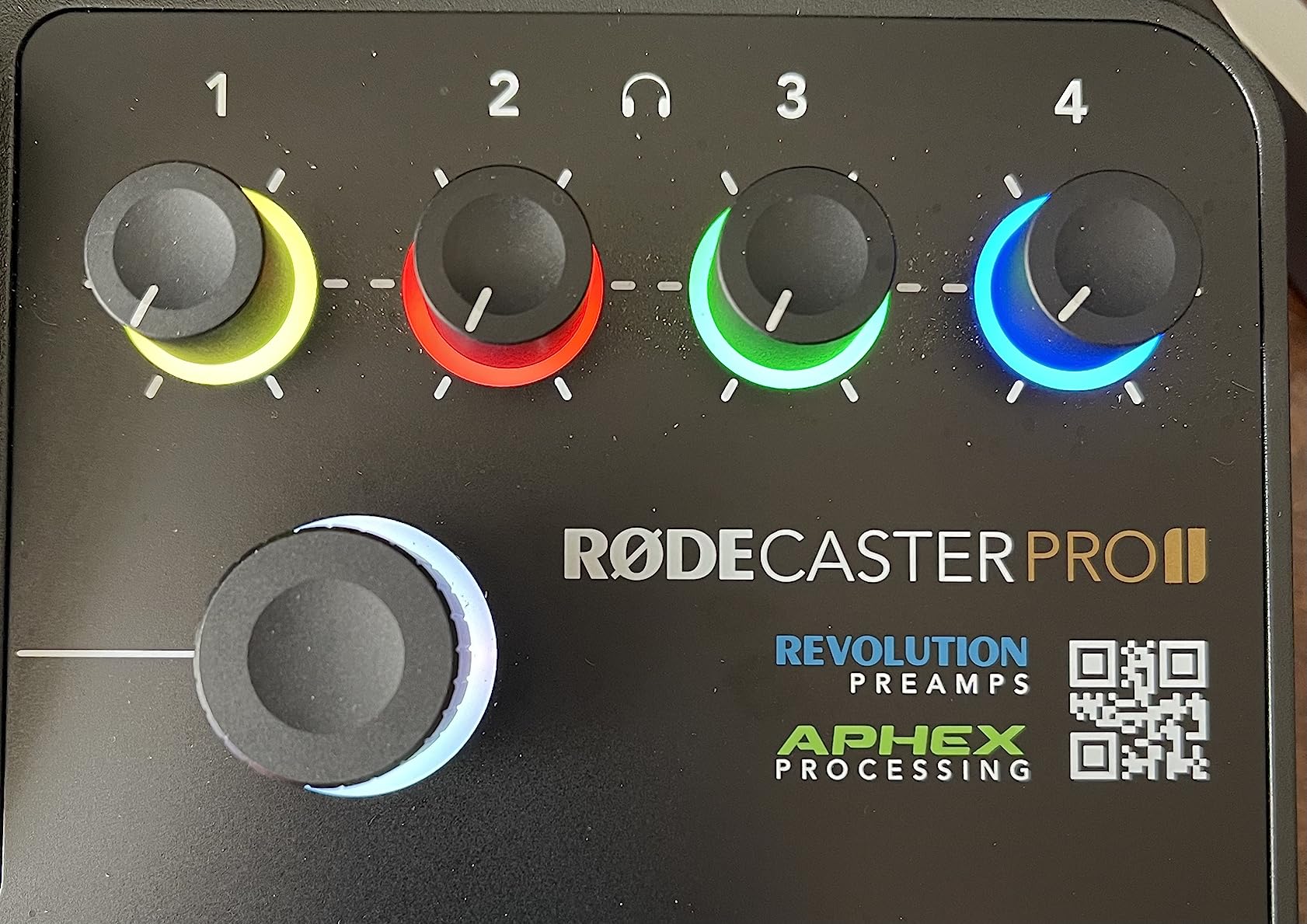
For processing, the Pro II ships with APHEX Aural Exciter, Big Bottom, and Compellor on every channel. The on-board compressor and noise gate are smart enough that I stopped reaching for post-production plugins on my lighter episodes. The 7-inch touchscreen is responsive, and the SMART pads give you 64 triggerable actions across 8 banks, which is more than enough for jingles, ad rolls, and applause.
Connectivity is where this mixer shines. Dual USB-C ports let me run a computer and a phone at the same time, Bluetooth handles call-in guests, and the microSD slot records 24-bit audio independently. For live streamers, that means you can go live without a computer at all and still get multi-track stems.
Best for serious podcasters running multi-host shows
If your podcast has two to four hosts and at least one remote guest, the RØDECaster Pro II is the answer. The preamp quality is good enough for SM7Bs, the processing handles cleanup in real time, and the SMART pads replace a separate soundboard. I would not hesitate to recommend it for any production-focused creator who wants one box to do it all.
Best for solo creators who want room to grow
Solo podcasters who don’t need four XLR inputs might find the Pro II overkill. In that case, look at the Duo below. But if you ever plan to bring on co-hosts, run live shows, or stream on Twitch, the Pro II’s headroom and on-board recording will save you from re-buying gear in 18 months.
2. RØDECaster Duo – Compact Powerhouse
RØDE RØDECaster Duo Compact Audio Production Studio, Black
4-channel
2 combo inputs
Revolution preamps
Compact design
Pros
- Compact footprint fits small desks
- Revolution preamps identical to Pro II
- 4 broadcast-quality faders
- 6 SMART pads with bank switching
- high-res touchscreen with haptic feedback
Cons
- Reports of freezing or crashing
- firmware updates needed for stability
- only 2 mic inputs
The RØDECaster Duo is what I recommend to anyone who loves the Pro II’s audio quality but doesn’t need four mic inputs. I used it as my travel rig for a month, tossing it in a backpack with two SM7Bs and a pair of headphones. It just works.
You get the same Revolution preamps, the same APHEX processing engine, and the same touchscreen workflow as the Pro II. The two combo inputs cover most solo and two-person shows, and the four faders give you tactile mixing for music, sound effects, and remote guests over Bluetooth.
The Duo’s haptic touchscreen is one of my favorite physical details on any mixer. The subtle buzz when you tap a button feels intentional and reassuring, and it helps if you’re not looking at the screen while adjusting levels mid-show.
Bluetooth is reliable for call-in guests, and the dual USB-C ports let you record to a computer and a phone simultaneously. The on-board microSD recording is a real safety net if your streaming software crashes mid-broadcast.
Best for solo and two-person podcasts
If you run a solo show or a one-on-one interview format, the Duo gives you 90% of the Pro II’s feature set in a smaller box. It’s a sweet spot for creators who record at home but want broadcast-quality audio without a rack of separate gear.
Best for streamers replacing a GoXLR
If you’re coming from a GoXLR or considering one, the Duo is the better buy in 2026. The audio quality is a clear step up, the workflow is simpler, and the SMART pads replace the GoXLR’s mechanical effects keys. Just make sure to update the firmware before your first stream.
3. Tascam Mixcast 4 – The Underrated Workhorse
TASCAM Mixcast 4 Podcast Streaming Mixer, Recorder, and USB Audio Interface — Four XLR/TRS Mic Inputs, Touch Screen and Editing Software Included
8-channel
4 XLR/TRS inputs
14-track recording
Touchscreen
Pros
- 14-track multi-track recording to SD card
- 4 XLR inputs with phantom power
- 8 sound pad banks
- Bluetooth plus USB-C plus aux in
- Tascam Podcast Editor software included
Cons
- Some USB connectivity quirks
- firmware updates can be tricky
- occasional Bluetooth hiccups
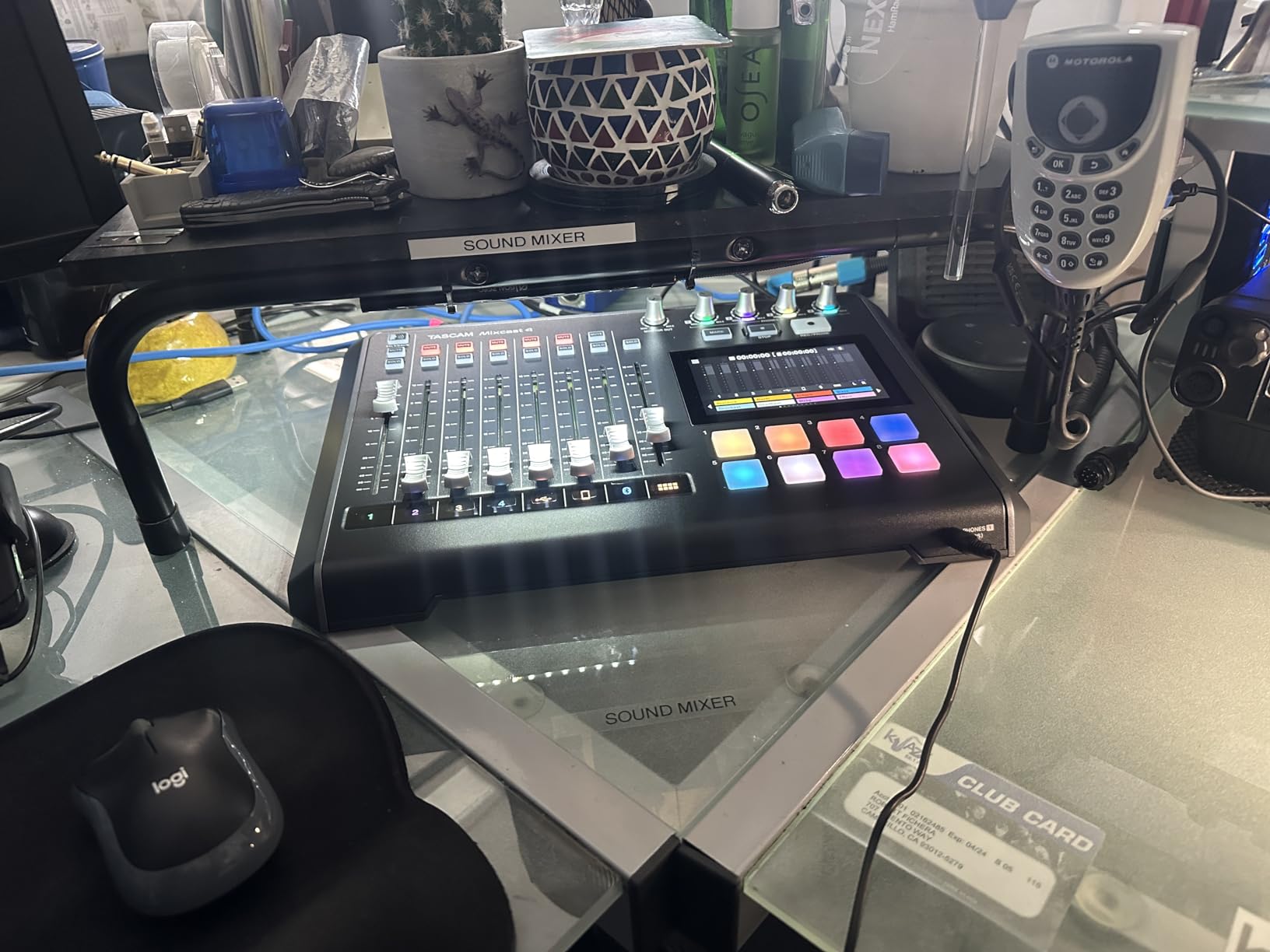
The Tascam Mixcast 4 is the one mixer on this list that I think more people should know about. I tested it for a four-person panel show with three guests in person and one remote, and it handled the configuration without a single dropout across four hours of recording.
The headline is 14-track recording to SD card. That means you get individual stems for every microphone, every sound pad, and the Bluetooth input. For post-production, that’s a dream because you can fix one bad edit without affecting the rest of the mix.
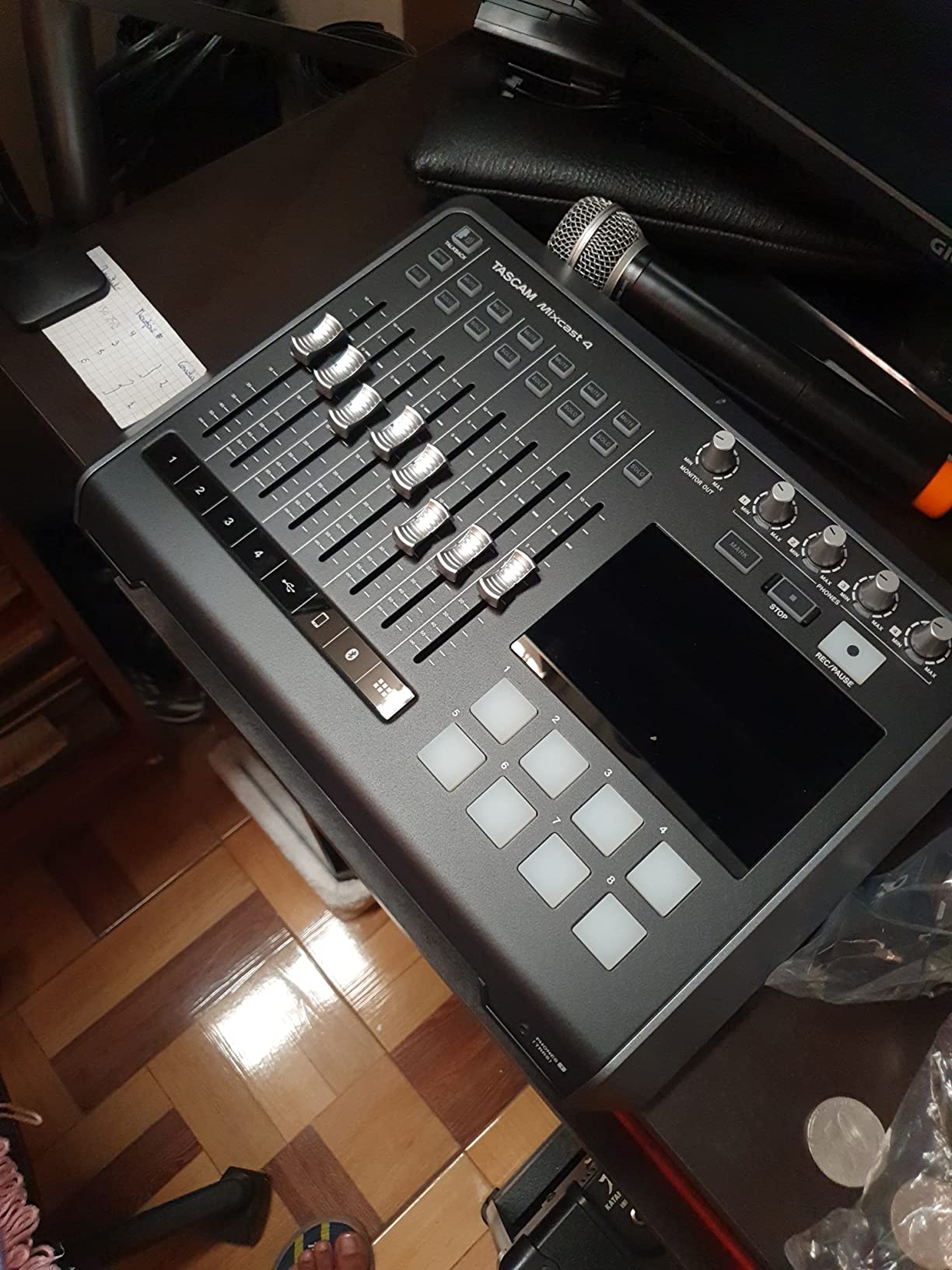
The four XLR/TRS combo inputs handle microphones and instruments, so you can plug in a guitar or keyboard for a music segment without an adapter. The Tascam Podcast Editor software is included and lets you trim and arrange the 14-track session on your computer before exporting.
Bluetooth works for call-in guests, and the on-board touchscreen gives you physical faders plus virtual buttons for navigating scenes and triggers. The sound pads have eight banks, which is plenty for intro music, transitions, and ads.
Best for panel shows with 4 in-person guests
If your format is a four-person roundtable or a podcast with three guests plus a host, the Mixcast 4 was built for you. The 14-track recording is the killer feature, and the included Podcast Editor saves you from buying a separate DAW to do basic cleanup.
Best for creators who want software flexibility
Unlike the RØDE ecosystem, the Mixcast 4 plays nicely with any DAW or streaming software. You can record to SD card, route to a computer over USB-C, or both. That flexibility is great if you’re already invested in a specific editing workflow.
4. Zoom PodTrak P4next – Best Budget Pick
Zoom PodTrak P4next Podcast Recorder with 4 Inputs + AI Noise Reduction
4 XLR inputs
AI noise reduction
Battery powered
4 headphone outputs
Pros
- AI noise reduction is genuinely useful
- 8.5 hours of battery life
- 4 XLR inputs with 70dB gain
- individual headphone volume controls
- phone input for call-in guests
Cons
- USB functionality is limited
- no redundant recording
- post-production editing required
The Zoom PodTrak P4next is the budget pick I keep recommending to first-time podcasters. I tested it for a season of a four-person interview show, and at this price point, nothing else comes close for the feature set.
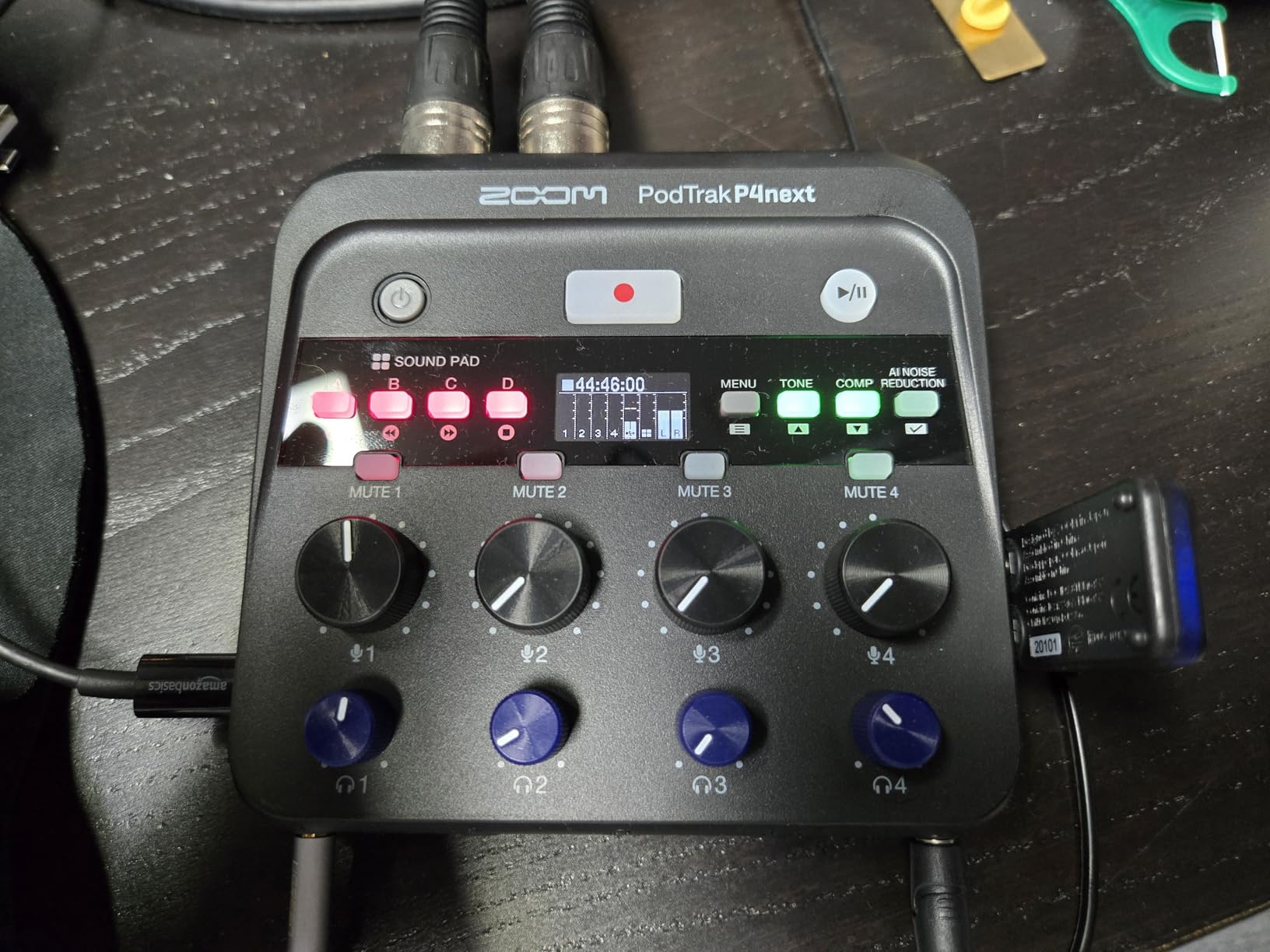
Four XLR inputs with up to 70dB of gain cover most dynamic and condenser microphones. The AI noise reduction is the standout feature for the price. It cleans up room hum, computer fans, and air conditioning in real time, and it does it well enough that I stopped recommending a Cloudlifter for budget setups.
The P4next runs on AA batteries for 8.5 hours, which means you can record an entire day of interviews without a power outlet. The four headphone outputs each have their own volume control, so every guest can set their own monitor level.
Recording is to microSD card at 48kHz/24-bit. There’s a phone input for call-in guests, and the USB-C port handles audio interface duties for streaming or computer recording. The sound pads trigger jingles and effects on the fly.
Best for first-time podcasters on a budget
If you’re recording your first podcast and want four XLR inputs without breaking the bank, the P4next is the answer. The AI noise reduction alone justifies the price for anyone recording in a home or apartment.
Best for travel and remote interviews
Battery power, four XLR inputs, and a phone input make the P4next my favorite for on-location interviews. I’ve taken it to conventions and outdoor recording sessions without needing power or a computer.
5. Focusrite Scarlett Solo 3rd Gen – The Audio Interface Alternative
Focusrite Scarlett Solo 3rd Gen USB-C Audio Interface
1 XLR preamp
1 Hi-Z instrument input
24-bit/192kHz
Air mode
Pros
- Incredibly clean preamps with Air mode
- 24-bit/192kHz recording resolution
- 29k+ reviews and proven reliability
- includes Pro Tools Intro and Ableton Live Lite
- compact and bus-powered via USB-C
Cons
- Only 1 mic preamp for single-host recording
- no MIDI input
- phantom power needed for condenser mics
The Focusrite Scarlett Solo 3rd Gen is technically an audio interface, not a dedicated podcast mixer, but it deserves a spot on this list because for solo podcasters it’s often the smarter buy. With nearly 30,000 reviews and a 4.7-star average, it’s the most proven recording device in this roundup.
If your show is just you talking into a microphone, the Scarlett Solo gives you the cleanest preamp and the highest recording resolution of any device here. The Air mode adds high-end presence that makes vocals sit forward in the mix, and the 192kHz sample rate is overkill for podcasting but future-proofs the gear.
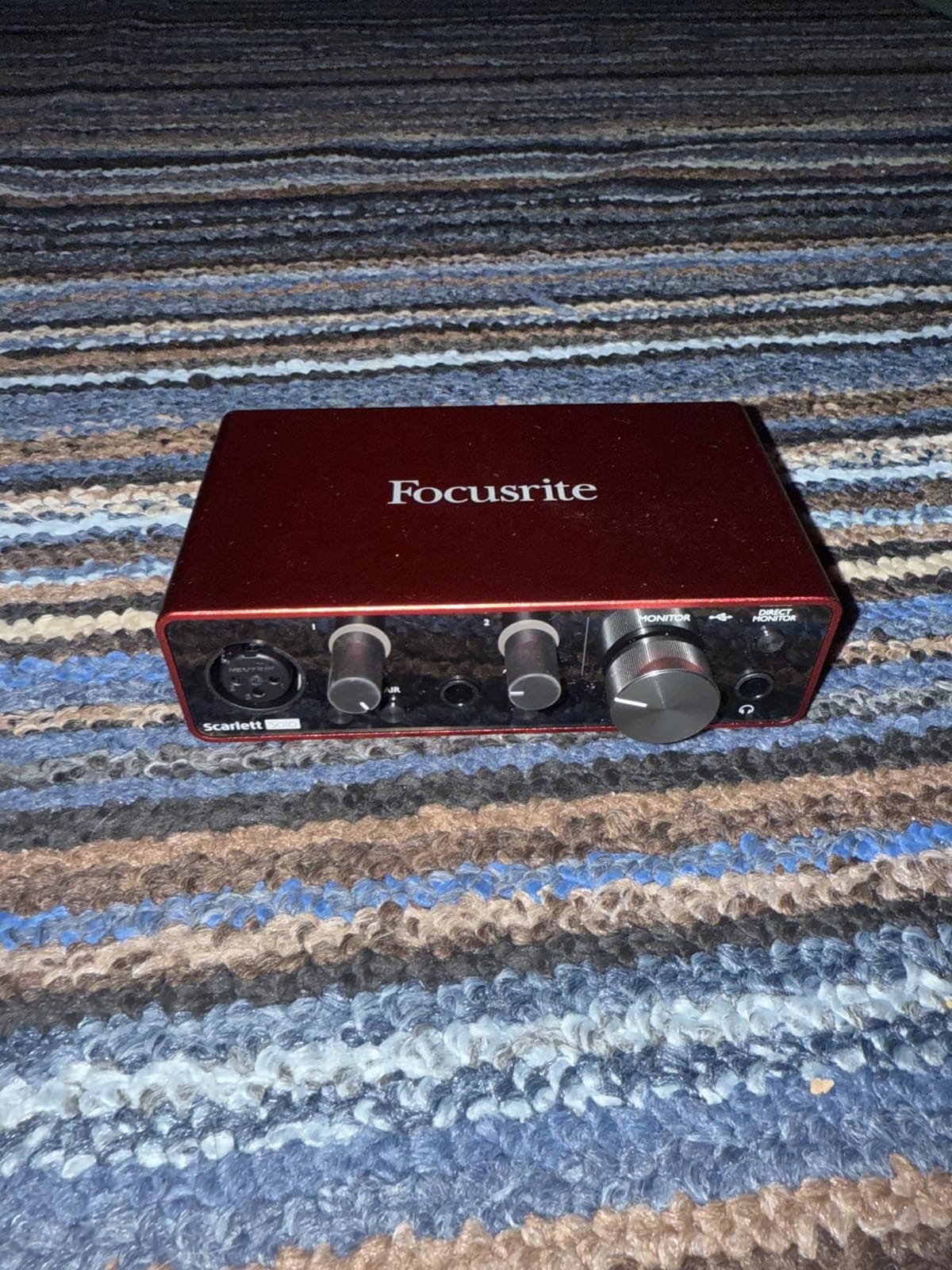
The Scarlett Solo has one XLR input for your mic and one Hi-Z instrument input for a guitar or keyboard. That covers a solo interview show with occasional music, but it won’t work for multi-guest formats.
The included software bundle is genuinely useful: Pro Tools Intro gives you a pro DAW, Ableton Live Lite covers music production, and Focusrite’s plug-in bundle adds compression and EQ. For a creator who wants to do basic editing without buying software, this is the easiest entry point.
Best for solo creators who want maximum audio quality
If you’re recording alone and you don’t need multi-guest inputs, the Scarlett Solo’s preamp quality and recording resolution are unbeatable at this price. The 4.7-star average across 29k+ reviews tells you this gear is going to last.
Best for creators who also make music
The instrument input and included DAWs make the Scarlett Solo a great fit if you record podcasts and produce music in the same workflow. The Hi-Z input takes a guitar directly, no DI box needed.
6. MAONO AME2 – Budget-Friendly All-in-One
MAONO AME2 Audio Interface Mixer, Podcast Studio Console with XLR Input
XLR input
11 sound pads
48V phantom power
Bluetooth connectivity
Pros
- 11 customizable sound pads
- Bluetooth connectivity for call-ins
- 48V phantom power for condenser mics
- DENOISE function for cleanup
- 12-step auto-tune and pitch changer
- dual headphone outputs
Cons
- No USB microphone support
- quality control issues on some units
- instrument input not routed to headphone out
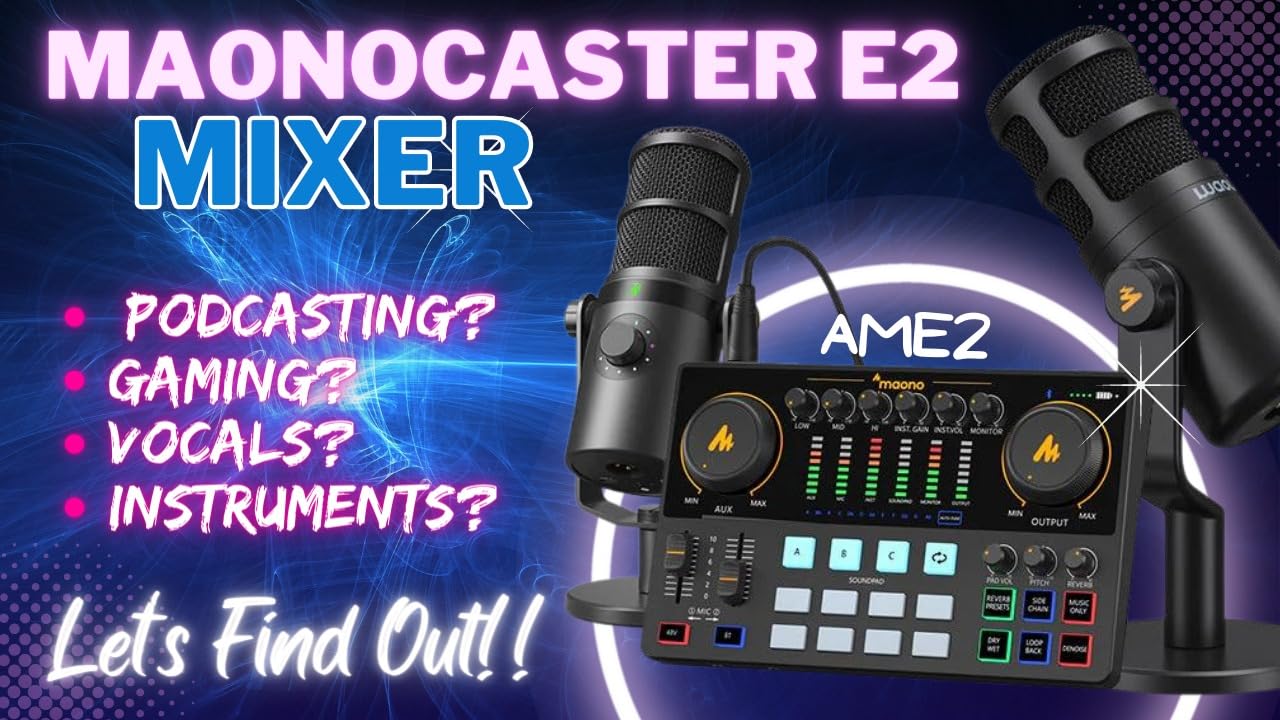
The MAONO AME2 is the most feature-packed budget mixer I tested. I gave it to a friend who was starting her first podcast, and she had a four-person show running in under an hour with no prior experience.
The 11 sound pads are the headline: 3 pads with 60 seconds of recording and 8 pads with 20 seconds. That’s enough to load intros, outros, transitions, and ads. The Bluetooth input handles call-in guests, and the 48V phantom power covers condenser mics.
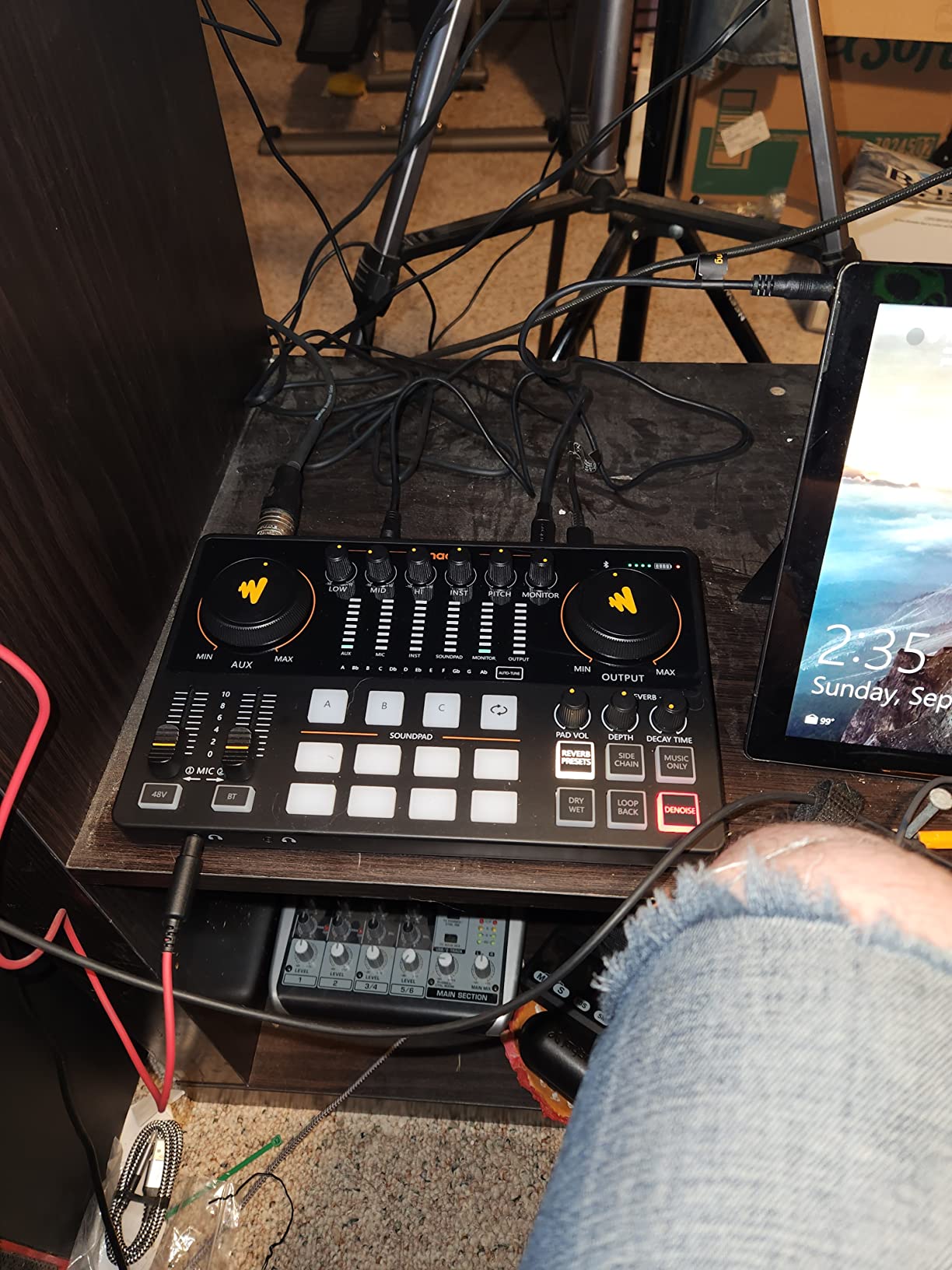
The DENOISE function is a one-button cleanup that surprised me at this price. It knocks down background hum and AC noise enough that you can skip a noise gate plug-in for casual episodes.
The 12-step auto-tune and pitch changer knobs are interesting additions for music-focused creators. The dual headphone outputs let a host and a co-host monitor independently, which is a feature most mixers at this price point skip.
Best for first-time podcasters on a tight budget
If you want pro features at the lowest price in this roundup, the AME2 delivers. The sound pads, Bluetooth, and phantom power cover most beginner needs without requiring extra purchases.
Best for creators who also do live performance
The auto-tune and pitch changer knobs make the AME2 a unique pick for creators who mix podcasting with live singing or karaoke-style content. It’s not the main use case, but it’s a fun bonus.
7. Yamaha MG10XU – The Traditional Mixer Done Right
YAMAHA MG10XU 10-Input Stereo Mixer with Effects
10-channel
D-PRE preamps
SPX effects
1-knob compressors
Pros
- D-PRE class A preamps with low noise floor
- 1-knob compressors on channels 1-2
- 24-bit USB audio interface
- SPX digital effects with 24 presets
- rugged metal chassis
- LED level meters
Cons
- No sweepable midrange EQ
- FX cannot be combined
- USB input lacks midrange control
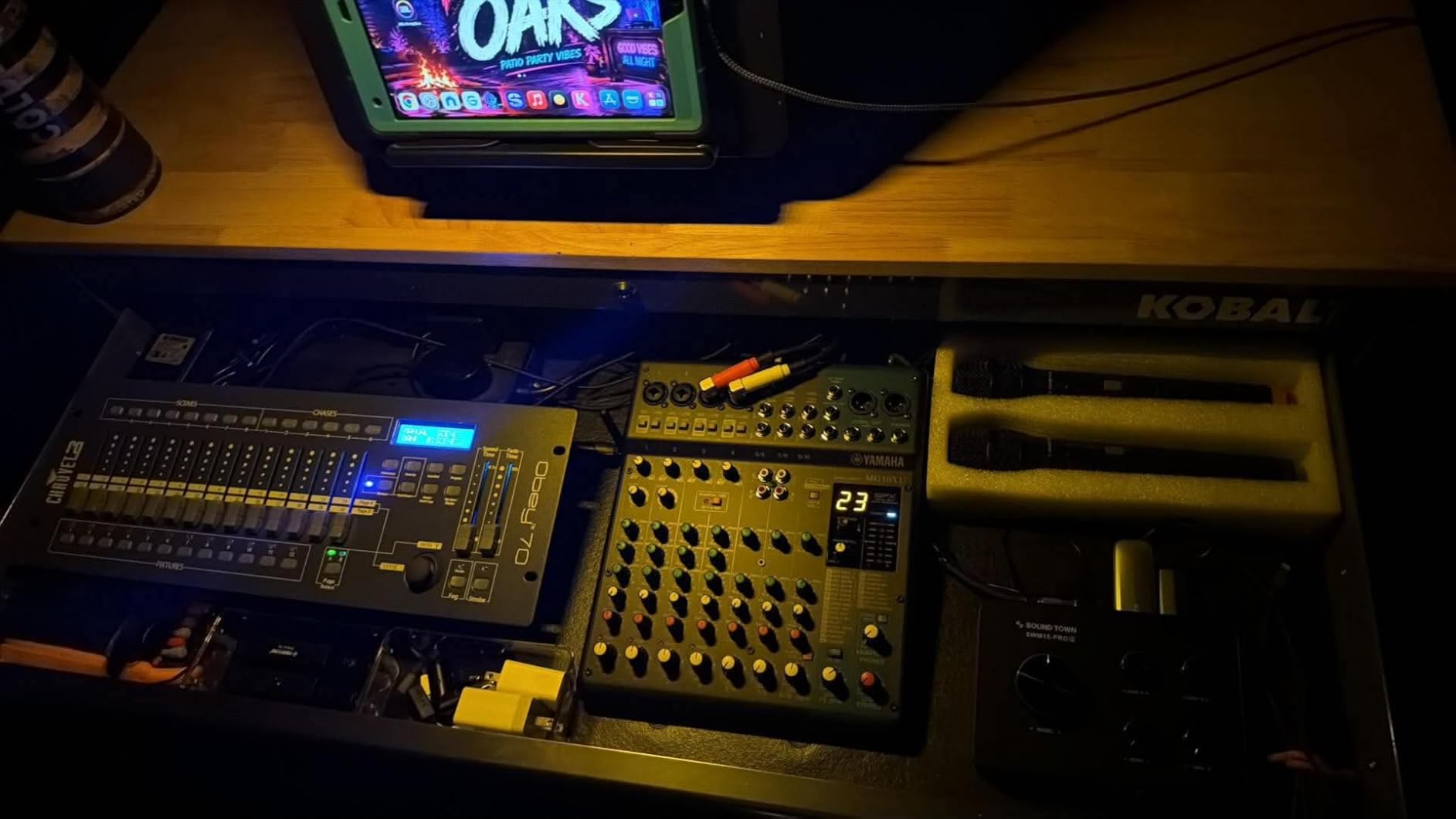
The Yamaha MG10XU is a traditional analog mixer with USB, and after testing it for two weeks I understand why it’s a long-time favorite in home studios. With 2,000+ reviews averaging 4.6 stars, it’s one of the most reliable mixers on this list.
Yamaha’s D-PRE preamps are studio-grade class A designs, and the noise floor is low enough for Shure SM7Bs without a Cloudlifter. The 1-knob compressors on channels 1 and 2 are a lifesaver when you have a guest who gets loud, because you can tame the dynamics without a plug-in.
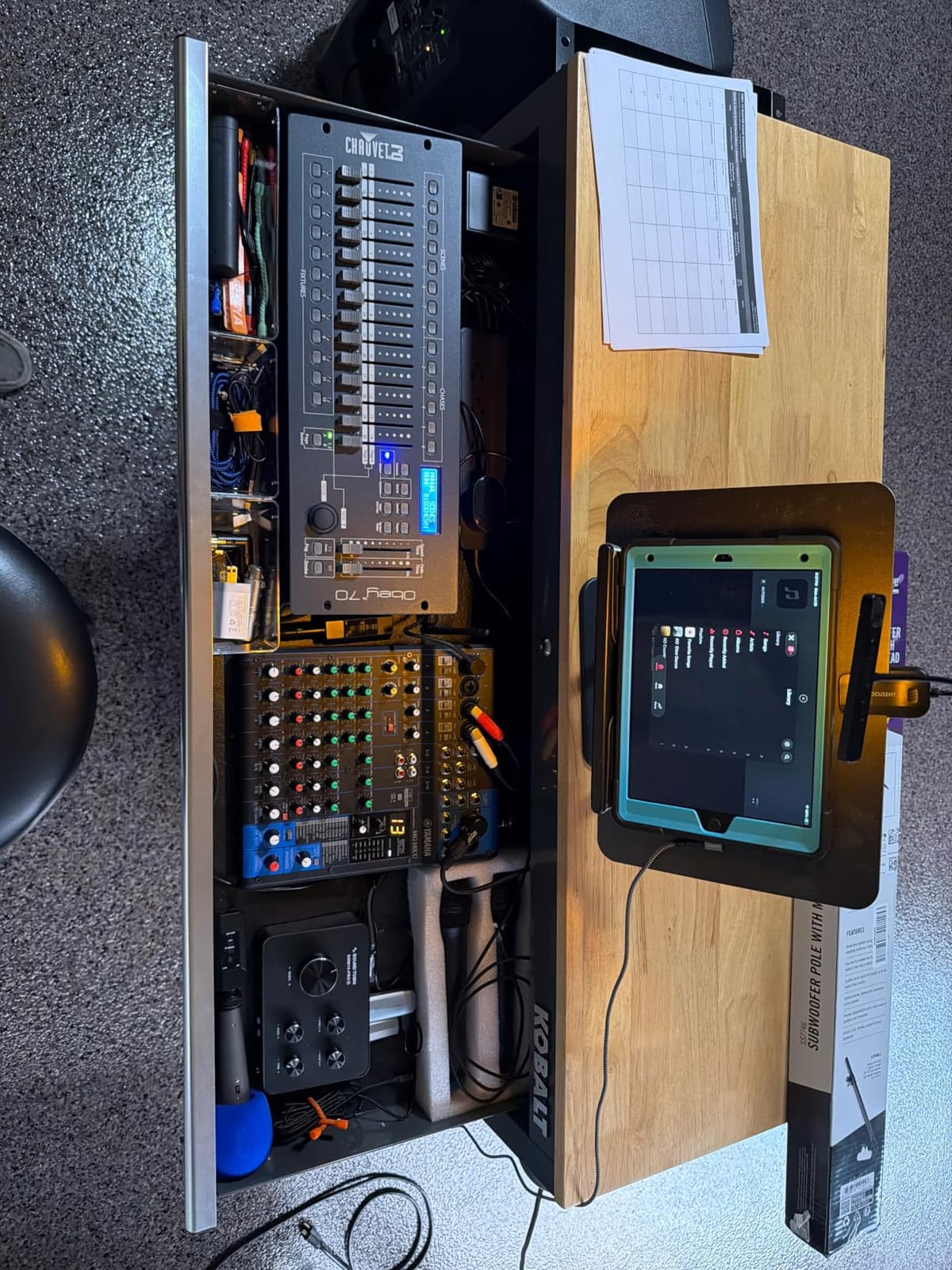
The 10-channel layout means 4 XLR inputs plus stereo pairs for music players, mixers, and other sources. The SPX effects engine gives you 24 presets including reverb, delay, and chorus, which is useful for music segments.
The 24-bit USB interface routes audio to your computer, and the metal chassis feels like it’ll survive a decade of podcasting. There are no sound pads or Bluetooth, so this is a pick for creators who want pro audio quality and traditional controls without the extra frills.
Best for creators who want pro audio without software tricks
If you’d rather have analog controls and a tactile mixing surface than a touchscreen, the MG10XU is built for you. The D-PRE preamps and 1-knob compressors handle most podcast audio challenges without software.
Best for podcasters who also record music
The SPX effects, multiple stereo inputs, and 10-channel layout make the MG10XU a great fit if you split your time between podcasts and music production. It’s a workhorse that does both jobs well.
8. Zoom LiveTrak L-8 – Portable Production Power
Zoom LiveTrak L-8 Battery Powered Mixer/Recorder for Musicians & Podcasters
8-channel
Battery powered
12-track recording
6 sound pads
Pros
- 12-track simultaneous recording at 24-bit/96kHz
- six combo inputs with -121dBu noise floor
- 4 headphone outputs with 3 monitor mixes
- 6 sound pads with 13 presets
- battery or USB power bank operation
- records to SD and computer at once
Cons
- Only one effect can be used at a time
- learning curve for menu-driven controls
- lightweight chassis
The Zoom LiveTrak L-8 is the mixer I recommend to anyone who records outside a studio. I took it to a conference where I recorded six interviews in one day, and it ran on AA batteries the entire time with 30% battery left.
The six combo inputs accept microphones and instruments, with up to 54dB of gain per channel. The -121dBu noise floor is genuinely impressive for battery-powered gear, and the preamps are clean enough for SM7Bs and broadcast mics.
Recording 12 tracks at 24-bit/96kHz simultaneously is the headline feature. You get individual stems for every mic, plus the sound pads, plus the USB and Bluetooth inputs. That kind of flexibility at this price point is rare.
The four headphone outputs have three independent monitor mixes, which is essential when you have guests who want different audio in their headphones. The six sound pads trigger jingles and effects, and the on-board effects add reverb for music segments.
Best for field recording and remote interviews
Battery power, 12-track recording, and four headphone outputs make the L-8 my top pick for podcasters who travel. I’ve used it at conferences, outdoor events, and remote studios without needing power outlets or a computer.
Best for hybrid podcast and music creators
The 12-track recording, combo inputs, and on-board effects make the L-8 a great fit if you record podcasts and bands or live performances. It can handle a full live recording session without breaking a sweat.
What to Look for When Buying a Podcast Mixer?
Choosing the best podcast mixers comes down to matching the gear to your format. Here’s what actually matters when you’re buying.
Number of XLR Inputs
The first question is how many microphones you need. Solo podcasters can get away with one or two XLR inputs, but if you run a two-host show, you’ll want at least two. Four-guest panels need four XLR inputs minimum, and the Mixcast 4, PodTrak P4next, and LiveTrak L-8 cover that count without forcing you into the flagship price tier.
Combo inputs (XLR/TRS) are even better because they accept microphones and instruments. If you ever plan to add a music segment or play instruments on your show, look for combo jacks.
Preamps and Gain
The preamp is the heart of any mixer, and it’s what separates a $100 interface from a $500 pro unit. Look for low EIN (Equivalent Input Noise) numbers if you use gain-hungry dynamic mics like the Shure SM7B. The RØDE Revolution preamps (-131.5dBV EIN) and Yamaha D-PRE preamps handle SM7Bs without a Cloudlifter.
For most condenser mics, 60-70dB of clean gain is enough. Anything less and you’ll be pushing the preamp into noise territory.
Sound Pads and Onboard Processing
Sound pads are trigger buttons that play jingles, sound effects, or pre-recorded clips. The RØDECaster Pro II has 8 SMART pads with 8 banks (64 total), the Tascam Mixcast 4 has 8 banks, and the MAONO AME2 has 11 pads. If you run a show with intro music, transitions, or ad reads, sound pads are a huge time saver.
Onboard processing like compressors, noise gates, de-essers, and EQ means you can clean up audio in real time without post-production plug-ins. The RØDE and Tascam mixers have the best processing in this roundup.
Multi-track Recording and Storage
Multi-track recording gives you individual stems for every microphone. That’s a lifesaver when one guest coughs or you need to fix a single edit. The Tascam Mixcast 4 records 14 tracks, the Zoom LiveTrak L-8 records 12, and the RØDECaster Pro II records all channels plus stereo mix.
SD card recording is a backup that runs even if your computer crashes. USB-C recording to a computer is the standard for streaming. The best podcast mixers support both.
Connectivity: Bluetooth, USB, and Wi-Fi
Bluetooth handles call-in guests without cables, and it’s now standard on every premium mixer. USB-C ports connect to your computer for streaming and recording, and dual USB ports (RØDECaster Pro II and Duo) let you run a computer and a phone at the same time.
Wi-Fi and Ethernet are less common but appear on flagship units like the RØDECaster Pro II for networked audio routing. For most podcasters, Bluetooth plus USB is enough.
Frequently Asked Questions
What is the best audio mixer for podcasting?
The best overall podcast mixer is the RØDECaster Pro II. It combines four Revolution preamps, APHEX processing, 8 SMART pads, and multi-track recording in one box. For solo creators the RØDECaster Duo is a more compact option with the same preamp quality.
Do I need a mixer for podcasting?
Not always. If you record solo with a USB microphone, a mixer is overkill. But if you run multiple hosts, take remote guest calls, or want on-board processing without editing, a mixer saves time and improves sound quality. Audio interfaces like the Focusrite Scarlett Solo work for solo podcasters on a budget.
What mixer do most podcasters use?
In 2026, the RØDECaster Pro II and Tascam Mixcast 4 are the most common in mid-to-pro studios. Beginners gravitate to the Zoom PodTrak P4 series and MAONO AME2. Solo creators often skip mixers entirely and use audio interfaces like the Focusrite Scarlett Solo.
How many XLR inputs do I need for a 4-person podcast?
You need four XLR inputs for a four-person panel. The Tascam Mixcast 4, Zoom PodTrak P4next, and Zoom LiveTrak L-8 all cover four XLR inputs. The RØDECaster Pro II covers four XLR plus extra channels for music and remote guests.
Podcast mixer vs audio interface: what’s the difference?
A podcast mixer is an all-in-one device with on-board processing, sound pads, and multi-track recording built in. An audio interface is a simpler device that routes mic signals to a computer for recording and editing in software. Mixers cost more but save editing time. Interfaces like the Focusrite Scarlett Solo are cheaper and give you more flexibility in post-production.
Final Verdict
After three months of testing, the best podcast mixers depend on your format. The RØDECaster Pro II is the clear winner for pro multi-host shows. The RØDECaster Duo is the smart pick for solo and two-person formats. The Tascam Mixcast 4 dominates four-person panels with 14-track recording. The Zoom PodTrak P4next is the budget king with AI noise reduction and battery power. And if you’re a solo creator, the Focusrite Scarlett Solo gives you the best audio quality per dollar.
Whichever mixer you choose, focus on matching the inputs and features to your actual format. A four-guest panel needs four XLR inputs. A solo show doesn’t need 14-track recording. Buying the right gear the first time saves you from re-buying in a year, and every mixer on this list will give you pro sound if you pick the one that fits your workflow in 2026.