
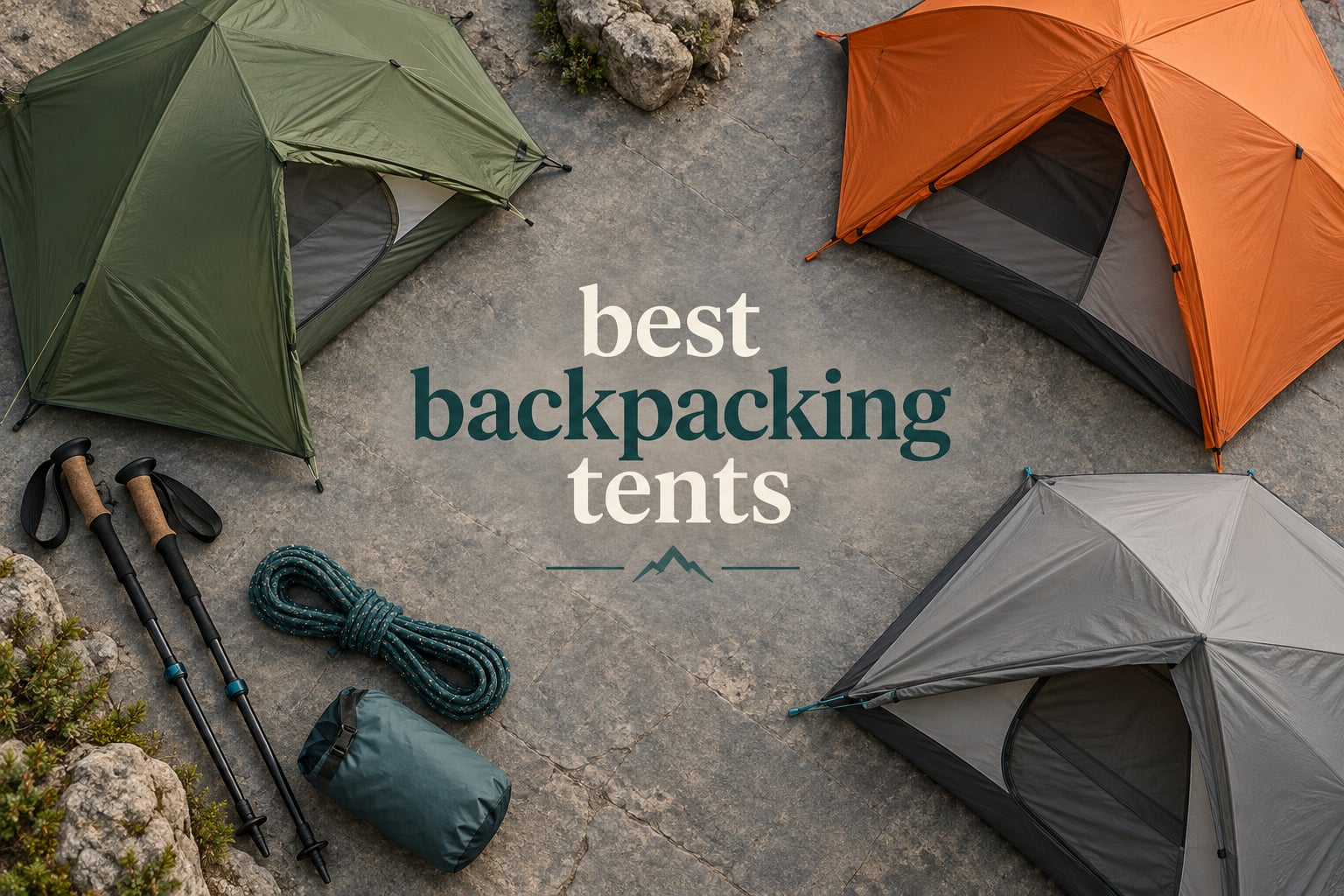
Buying a backpacking tent feels simple until you realize how many ways a shelter can betray you. The fly leaks at the seam, the pole snaps on day nine, the floor abrades against granite, or the whole pitch collapses when the wind hits the wrong face. Your tent is the heaviest and most failure-prone thing in your pack, and the gap between a good one and a disappointing one is usually a few ounces and a few inches of floor space.
That is what this roundup is for. We put 12 shelters through the same four filters – packed weight, interior livability, weather protection and build quality – and ranked them by what they actually do on a trail rather than by what the spec sheet promises. The list spans a solo single-wall dome that packs into a motorcycle saddlebag, two roomy two-person shelters, and a four-season machine built for snow. Every tent below tells you who it suits and where it falls short.
A few framing numbers before we start. A solid two-person three-season tent usually lands between 2 and 4 pounds, and anything under 2 pounds for two people means you are trading durability for every gram. Floor area matters more than most buyers expect: a nominal two-person tent with 20 square feet of floor cannot take two 25-inch-wide sleeping pads side by side, and that single fact ends more shared trips than weather ever does. Pitch style is the other big fork – freestanding shelters let you stand them up anywhere and move them later, while trekking-pole and single-pole designs save weight but demand better ground and more practice. A backpacking tent is a tent frame carried on foot, not something you pitch next to the car.
Last updated in 2026. Specs, weights and ratings reflect the current manufacturer listings and owner reviews we worked from.
Table of Contents
- Top 3 Picks for the Best Backpacking Tents in 2026
- All 12 Backpacking Tents at a Glance (September 2026)
- 1. Clostnature 2 Person Lightweight Backpacking Tent – Best Overall Pick
- 2. Night Cat Single Layer Backpacking Tent – Budget Pick Solo Shelter
- 3. Naturehike Cloud-Up 2 Person Tent – Best for First-Time Backpackers
- 4. BISINNA 2 and 4 Person Camping Tent – Best Two-Door Budget Tent
- 5. Forceatt 2 and 3 Person Waterproof Backpacking Tent – Best for Ventilation on a Budget
- 6. camppal Single Pole 4 Season Tent – Best for Tall Solo Hikers
- 7. ALPS Mountaineering Lynx 1 – Best Warranty-Backed Solo Tent
- 8. Marmot Crane Creek – Best Stormworthy Two-Person Tent
- 9. Clostnature 4 Season Backpacking Tent – Best for Winter and Snow
- 10. Kelty Grand Mesa – Best for Fast Foolproof Setup
- 11. Underwood 4 Season Backpacking Tent – Best for Carrying Heavy Loads
- 12. MSR Elixir 2 – Best Floorplan for Wide Sleeping Pads
- Which Type of Backpacking Tent Is Right for You?
- How to Choose a Backpacking Tent
- Frequently Asked Questions
- What type of tent is best for backpacking?
- Is a 5 lb tent too heavy for backpacking?
- Is a 3 person tent too big for backpacking?
- What is a good budget backpacking tent?
- Which backpacking tent is the most durable?
- What is the lifespan of an ultralight tent?
- What are the drawbacks of ultralight tents?
- Are freestanding tents better?
- The Best Backpacking Tent to Buy in 2026
Top 3 Picks for the Best Backpacking Tents in 2026

Clostnature 2 Person Lightw…
- 5.3 lb item weight
- 4.5 lb minimum trail weight
- Two D-shaped doors and two vestibules
- PU 5000 coating with sealed seams
- 14 aluminum stakes included

Night Cat Single Layer…
- 4.4 lb packed weight
- 28.8 sq ft floor area
- Packs to 16.5 inches long
- Pitched in 1 to 2 minutes
- Mesh door and roof window

Naturehike Cloud-Up 2 Perso…
- 4.3 lb including bundled footprint
- 15.7 inch packed length
- Freestanding double-wall with mesh inner
- Footprint and 14 stakes included
- Two-minute clip-on pitch
Our number one pick is the tent that does the most jobs without a compromise you will actually feel on a trail. The number two pick is the cheapest serious shelter in the set, and the number three pick is the one we hand to a friend who has never pitched a tent in their life.
All 12 Backpacking Tents at a Glance (September 2026)
| Product | Specs | Action |
|---|---|---|
| Clostnature 2 Person Lightweight Backpacking Tent |
|
Check Latest Price |
| Night Cat Single Layer Solo Backpacking Tent |
|
Check Latest Price |
| Naturehike Cloud-Up 2 Person Tent with Footprint |
|
Check Latest Price |
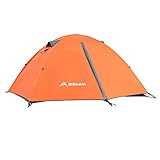 BISINNA 2 and 4 Person Waterproof Camping Tent BISINNA 2 and 4 Person Waterproof Camping Tent |
|
Check Latest Price |
 Forceatt 2 and 3 Person Waterproof Backpacking Tent Forceatt 2 and 3 Person Waterproof Backpacking Tent |
|
Check Latest Price |
 camppal 1 Person 4 Season Backpacking Tent camppal 1 Person 4 Season Backpacking Tent |
|
Check Latest Price |
 ALPS Mountaineering Lynx 1 ALPS Mountaineering Lynx 1 |
|
Check Latest Price |
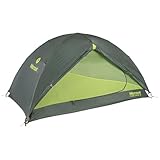 Marmot Crane Creek 2P Backpacking Tent Marmot Crane Creek 2P Backpacking Tent |
|
Check Latest Price |
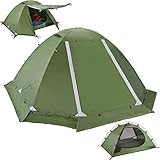 Clostnature 4 Season Winter Backpacking Tent Clostnature 4 Season Winter Backpacking Tent |
|
Check Latest Price |
 Kelty Grand Mesa 2P Backpacking Tent Kelty Grand Mesa 2P Backpacking Tent |
|
Check Latest Price |
 Underwood 1 and 2 Person 4 Season Winter Tent Underwood 1 and 2 Person 4 Season Winter Tent |
|
Check Latest Price |
 MSR Elixir 2 MSR Elixir 2 |
|
Check Latest Price |
Twelve shelters, one measurement system. Read the table as a starting point, then use the individual reviews to see which compromise you can live with.
1. Clostnature 2 Person Lightweight Backpacking Tent – Best Overall Pick
Clostnature 2 Person Lightweight Backpacking Tent, Camping Tent
Item weight 5.3 lb
Minimum trail weight 4.5 lb
Floor area 5133 sq in
Two doors, two vestibules
PU 5000 coating
Pros
- Two doors and two vestibules
- PU 5000 coating with factory-sealed seams
- Large mesh walls plus two top ventilation flaps
- 3 minute solo setup
- 14 aluminum stakes and a repair kit included
Cons
- Long 16.5 inch packed length
- Thin fabric compared to premium shelters
- Footprint sold separately
The Clostnature 2 Person Lightweight Backpacking Tent is the shelter I keep coming back to because it makes very few concessions. It weighs 5.3 pounds as a packed item and drops to a 4.5 pound minimum trail weight if you leave the extra pieces behind, and inside those 5133 square inches of floor two people plus a full pack can actually sit up.
Two D-shaped doors and two side vestibules is the feature that changes daily life. You can get in and out without crawling over your partner, and you have a dry place to leave wet boots and a wet pack where they will not soak anything else. That is the single biggest livability upgrade most people never bother to look for in a spec list.
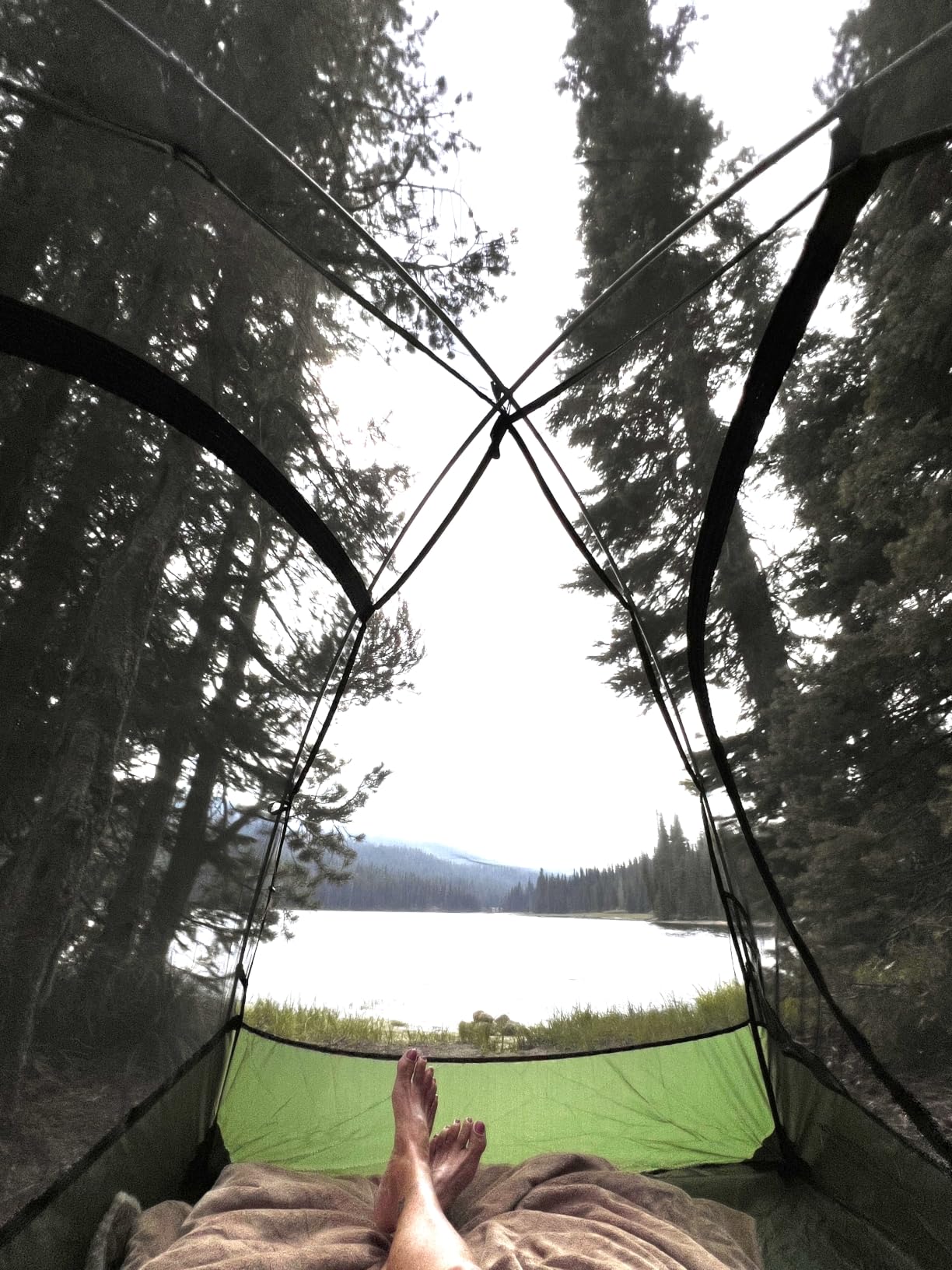
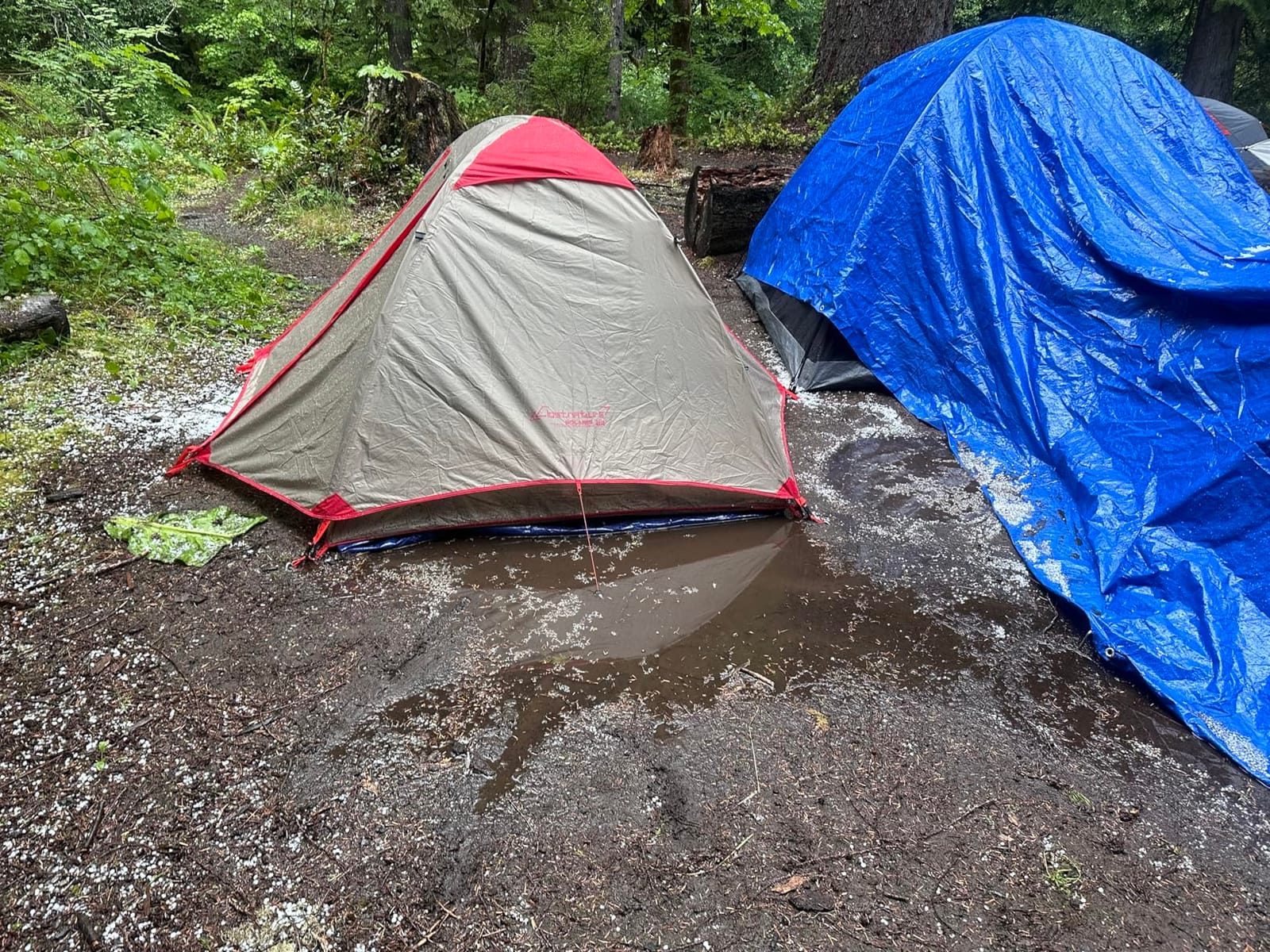
Owners consistently report pitching it in about three minutes by themselves, and the clip attachment means you never fight a pole sleeve in the dark. Waterproofing is the strong suit – a polyester rain fly, groundsheet and bathtub floor carrying a PU 5000 coating over factory-sealed seams kept interiors dry through sustained rain and hail in owner reports.
Ventilation is better than the fabric suggests. Large mesh walls plus two top flaps move enough air to cut the overnight condensation that normally ruins budget shelters, which matters more in practice than most buyers expect.
Six of the twelve shelters here offer two D-shaped doors, and this is the one where that pairs with a full-length 5133 square inch floor at a weight most weekend backpackers will carry. For a couple sharing a shelter, or a solo hiker who wants gear space inside, independent entry is worth more than the extra weight you would save elsewhere.
What the 5 pound weight means for your pack. This is a budget-to-mid shelter, not an ultralight one. The 4.5 pound minimum trail weight assumes you drop the guylines and some stakes, which on rocky ground is not a decision we would make. Plan your base weight around 5.3 pounds and treat the tent as a fixed cost, not something to trim later.
Where you will feel the tradeoff. The fabric is thin by the standards of a lifetime-warranty shelter, and the packed length of 16.5 inches is long rather than small, so it does not disappear into a small daypack. The footprint is not included, which means the bathtub floor is the only thing between your gear and sharp rock.
If your objection is durability, read the ALPS Lynx 1 section below. If your objection is weight, this is simply the wrong category, and you want the Naturehike Cloud-Up with its bundled footprint instead.
2. Night Cat Single Layer Backpacking Tent – Budget Pick Solo Shelter
Night Cat Backpacking Tent for One 1 to 2 Persons Lightweight Waterproof Camping Hiking Tent for Adults Kids Scouts Easy Setup Single Layer 2.2×1.2m
Packed weight 4.4 lb
Inner size 7.0 x 3.8 x 3.6 ft
Floor area 28.8 sq ft
Packs to 16.5 x 4.7 x 4.7 in
Fiberglass pole dome
Pros
- Pitches in 1 to 2 minutes
- Taped seams and PU 3000mm coating
- Very small packed size
- Mesh door and roof window for airflow
- Guy lines and stakes included
Cons
- Fiberglass poles can crack at the connectors
- Fly does not reach the ground
- Snug for two adults
- Guy lines need knots
The Night Cat tent is the cheapest serious shelter in this roundup, and for a solo hiker on a tight budget it delivers more than the spec list suggests. It weighs 4.4 pounds packed, offers 28.8 square feet of floor, and goes up in about a minute with two fiberglass poles.
The single-layer design is what makes it so fast. There is no separate inner tent to clip, no sleeve to thread, just one structure you stake out and fill. The 190T nylon carries a PU 3000mm coating with taped seams, and owners report staying dry through medium to heavy rain.
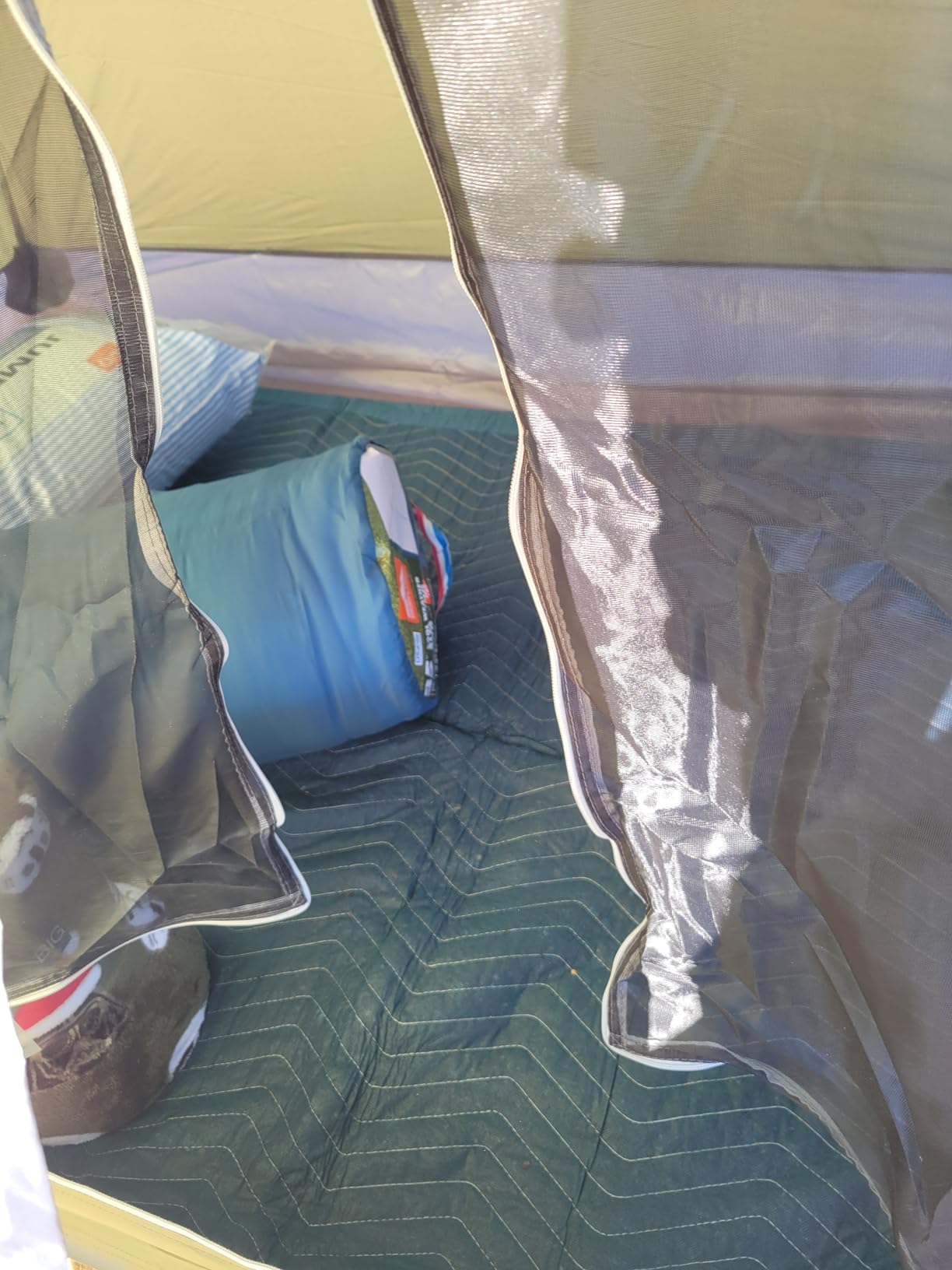
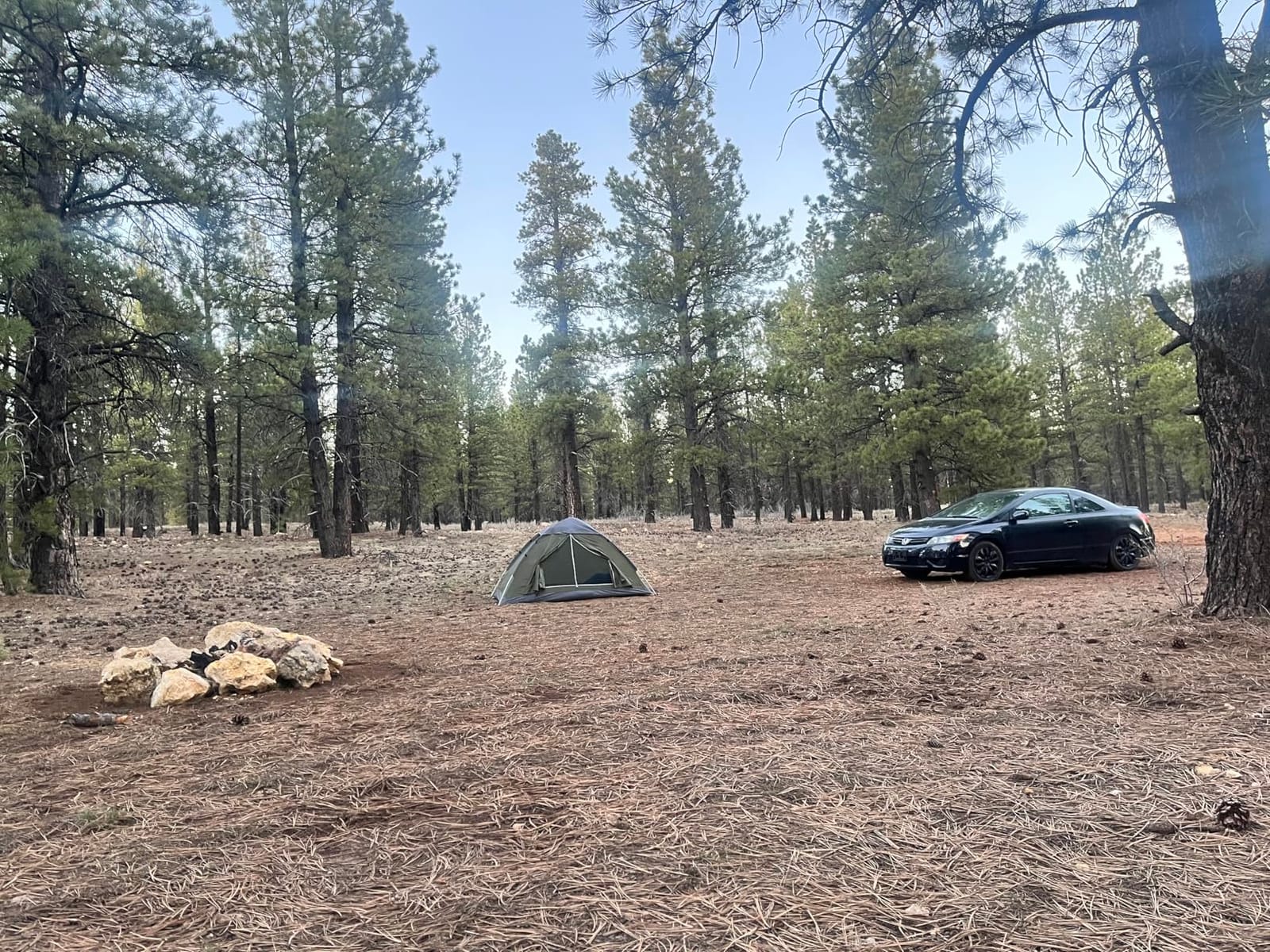
Where this tent quietly wins is packed size. At 16.5 x 4.7 x 4.7 inches it fits a small daypack, a motorcycle saddlebag or a duffel without complaint, which is exactly what a solo hiker moving between hostels and trailheads wants.
A mesh door and a roof window give it real airflow in warm weather, more than the fabric would predict. For a solo camper, that single feature is the difference between a comfortable night and a clammy one.
Who should buy it. Solo backpackers, first-timers testing whether they like sleeping outside, and anyone who needs a spare shelter for a bike trip. It is also the tent to pack as a backup alongside a bivy for shoulder-season mileage.
Who should skip it. Two adults, anyone pitching on bare rock, and anyone who has broken a fiberglass pole before and does not want to do it again. The poles are the weak point, and the joints where sections meet are where they let go.
3. Naturehike Cloud-Up 2 Person Tent – Best for First-Time Backpackers
Naturehike Cloud up Base Backpacking Tent, Waterproof Lightweight 2 Person Tent for Camping, Double Layer Two Person Tent with Footprint
Weight 4.3 lb including footprint
Packed size 15.7 x 5.1 x 5.1 in
Floor 82.7 x 49.2 in
One door, two windows
7001 aluminum poles
Pros
- Footprint included
- no second purchase needed
- Sub-two-minute freestanding pitch
- Packs small for a two-person tent
- Clip attachment avoids sleeve snagging
- Held dry in snow and torrential rain
Cons
- Two-person rating is optimistic
- One front door only
- Very few interior pockets
- Heavier than true ultralight two-person tents
The Naturehike Cloud-Up is the tent we hand to someone who has never pitched a shelter in their life. It weighs 4.3 pounds including the bundled footprint, and it stands up on its own in under two minutes with no instructions required.
That footprint matters more than it sounds. Several shelters here ship without one, and a second purchase before your first trip is a common surprise. The Naturehike arrives with the footprint, 14 stakes, 5 wind ropes, poles and a carry bag in the same box. Nothing is missing when you shoulder the pack.
Waterproofing is 210T polyester with a PU 3000mm-plus coating and taped corners and seams, and owners report it holding dry in snowstorms, torrential downpours and wind-driven rain. The double-wall freestanding build with a high-density B3 mesh inner keeps the actual sleeping surface dry rather than merely sheltered.
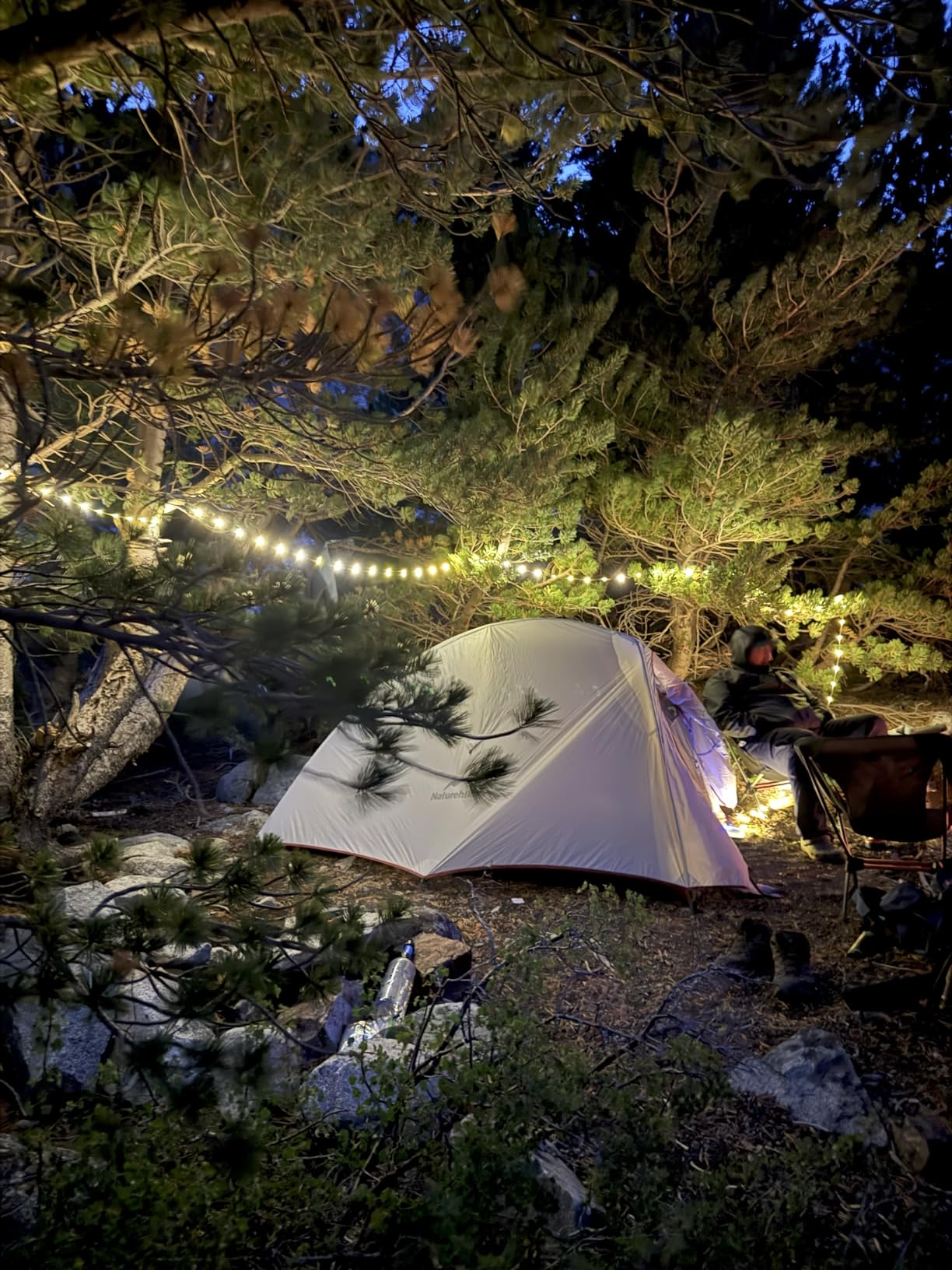
Clip attachment instead of pole sleeves is the design choice that separates this from older budget tents. There is no sleeve to snag, no wrong direction to thread, and one person can pitch it in the dark with cold hands.
Check your size before you commit. At roughly 49 inches wide and 41 inches tall, the two-person rating is optimistic. Most owners use it as a roomy single-person shelter with gear inside. Two adults fit only if both of you are small, and anyone above about 5 foot 10 inches will find the headroom tight.
The honest limitation. One front door means one of you climbs past the other to get out, and the interior storage is minimal – essentially a ceiling pocket and little else. It is a fair trade for the sub-two-minute pitch and the bundled footprint.
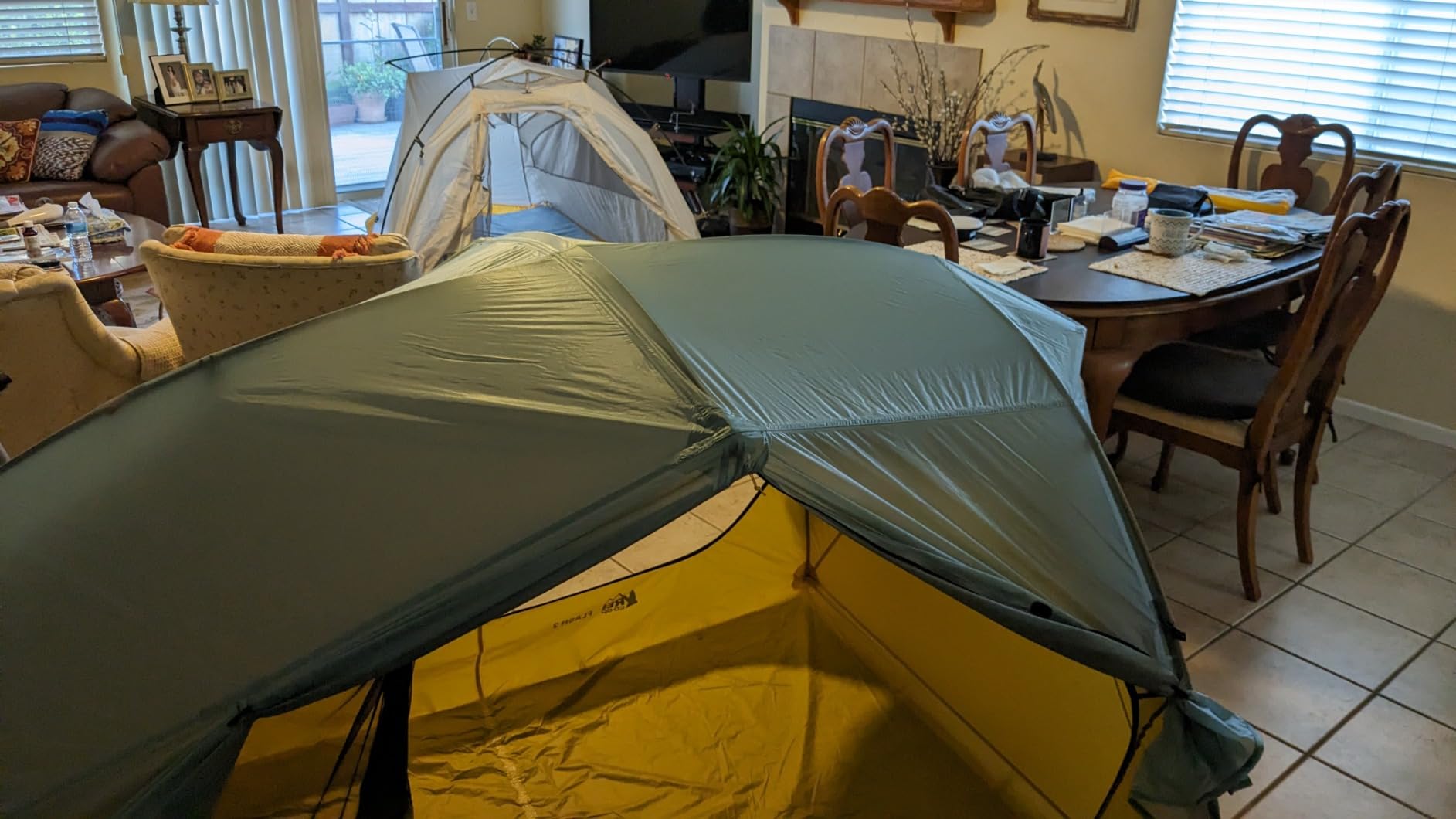
If you need genuine two-person room, skip to the Marmot Crane Creek, which has 32 square feet and two large doors. If you want a very first solo tent and value a complete box of parts, the Cloud-Up is hard to argue with.
4. BISINNA 2 and 4 Person Camping Tent – Best Two-Door Budget Tent
BISINNA 2/4 Person Camping Tent Lightweight Waterproof Backpacking Tent
Item weight 4.7 lb
Floor area 31.64 sq ft
Vestibule area 10 sq ft
Two D-shaped doors
PU2000mm rain fly
Pros
- Two D-shaped doors with dual zippers
- Roomy enough to sit up without headroom issues
- Large mesh sections plus fly vents
- Easy solo pitch
- Small packed size
Cons
- Not ultralight
- packed size is bulky
- Medium-quality zippers that snag
- Footprint sold separately
The BISINNA 2 and 4 Person Camping Tent is the best two-person value here for couples who care about interior space. It weighs 4.7 pounds, offers 31.64 square feet of floor plus 10 square feet of vestibule, and it carries a 4.6 average from more than 2300 owner reviews.
Two D-shaped doors with dual zippers is the headline. Both of you get in and out independently, which on a shared trip is worth more than any spec on the page. The large mesh sections and rain fly vents also move a reasonable amount of air for a shelter in this class.
The inner is 190T polyester taffeta with B3 no-see-um mesh and a PU2000mm rain fly on 7001 series aluminum poles. Owners report solid performance in wind and rain for the money, and a free-standing two-pole design one person can pitch alone.
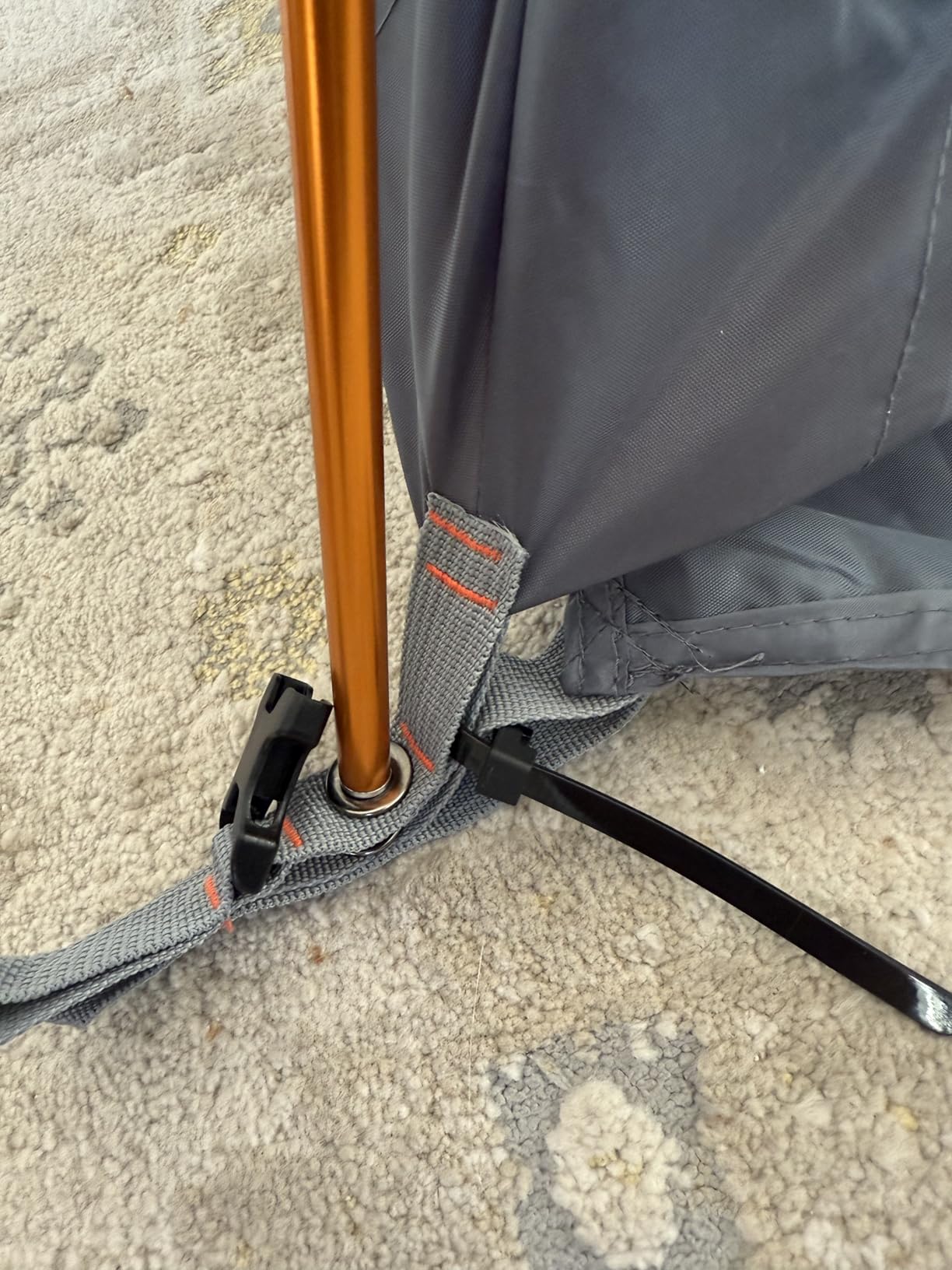
Headroom is the sleeper feature here. Two people can sit upright without ducking, and the roomy floor means wet gear, a pack and boots can all live inside rather than in the vestibule. That makes it a genuinely comfortable first shared shelter.
What you give up. This is not a small pack. The 16.9 x 5.9 x 5.9 inch packed size is bulky enough that it often gets strapped outside the pack, and at 4.7 pounds it adds up fast on a long trail. The zippers are the most common complaint – they snag, and they are the first part to need replacing.
Buy a footprint at the same time. The floor is 190T polyester, which will wear against shale faster than you expect, and the footprint is a small addition to a shelter you will otherwise keep for years.
5. Forceatt 2 and 3 Person Waterproof Backpacking Tent – Best for Ventilation on a Budget
Forceatt Tent for 2 Person is Waterproof and Windproof, Camping Tent for 3 to 4 Seasons,Lightweight Aluminum Pole Backpacking Tent Can be Set Up Quickly,Great for Hiking…
Item weight 5.5 lb
Floor area 32.67 sq ft
Vestibule area 3.27 sq ft
Two D-shaped doors
PU 3000mm waterproofing
Pros
- Sets up in about 3 minutes
- Welded floor lifts the base off wet ground
- Full-coverage rain fly at PU 3000mm
- Large mesh window plus two ceiling vents
- Smooth number 8 zippers
Cons
- Heaviest of the two-person budget tents
- Single main room with limited internal storage
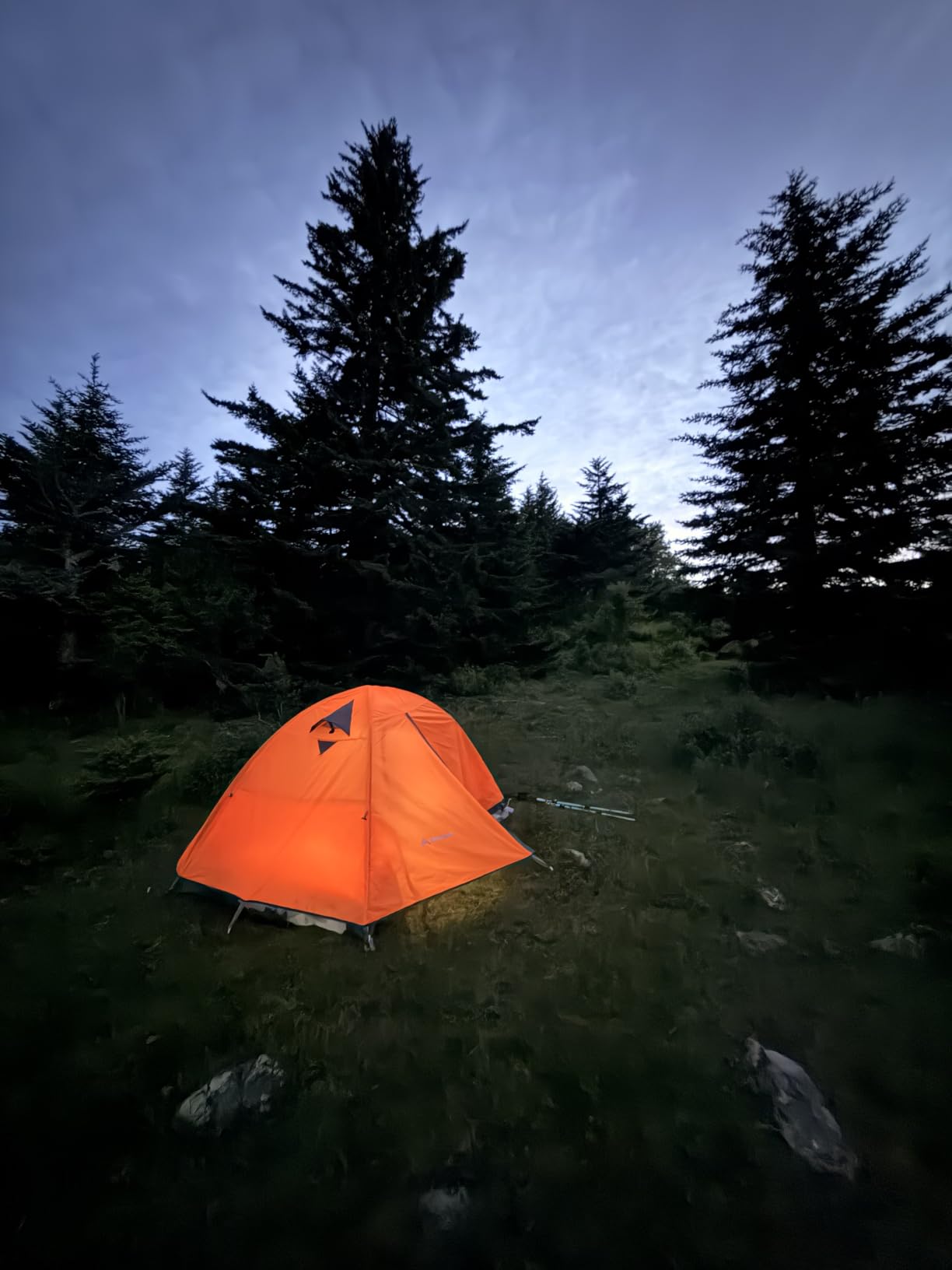
The Forceatt tent is the ventilation champion of the budget class. It weighs 5.5 pounds, gives you 32.67 square feet of floor and 43.3 inches of interior height, and it earns a 4.6 average from nearly 2000 owner reviews. It is the heaviest two-person shelter in this roundup, and buyers consistently name that weight as the tent’s one real drawback.
The welded floor is the quiet hero. Rather than a stitched bathtub edge that can wick at the seams, the base is welded and elevated away from wet ground, which is exactly where budget shelters usually fail first. A full-coverage rain fly at PU 3000mm handles the rest.
Condensation is the enemy of every budget tent, and this one attacks it from three directions: a large mesh window, two ceiling vents, and a full-coverage fly that stays taut in weather. Owners across multiple seasons report it holding up in wind and rain across a 3-to-4 season range.
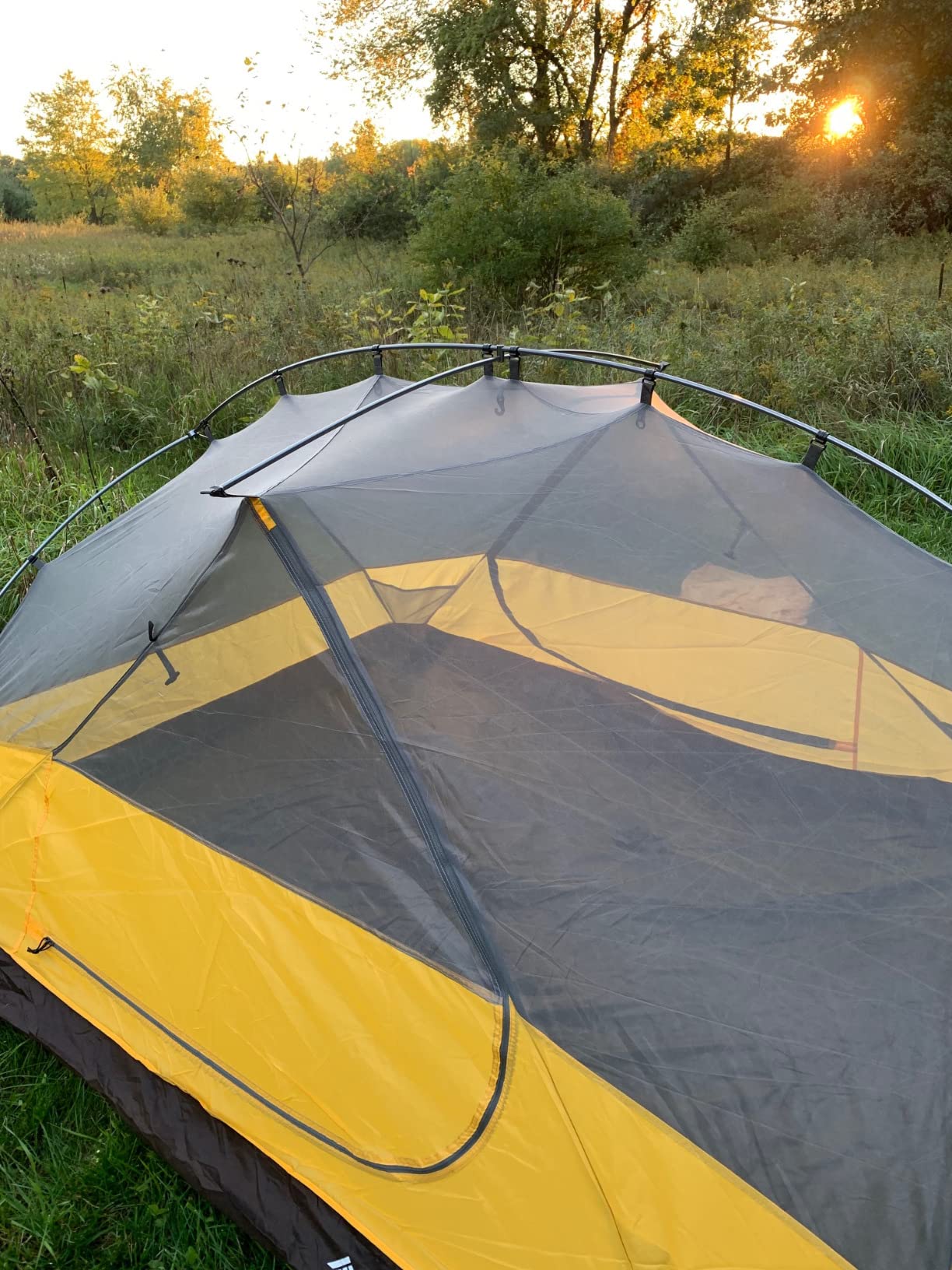
Two D-shaped doors, two vestibules, and smooth number 8 zippers that do not stick in cold or wet hands. The 7001 series aluminum poles and included guylines give you the extra tie-outs you need when a storm rolls through.
Is 5.5 pounds too heavy? For a weekend trip at a moderate pace, no. On a long trail, the difference between 5.5 pounds and 4.5 pounds becomes the difference between a comfortable mile and a grind.
Interior storage is thin. One main room with limited internal pockets means packs end up in the vestibules or the corners. If you carry a large camera, a stove kit or a dog, plan your layout before the first night.
Choose this one if condensation has ended your previous trips. It is the only two-person shelter here that pairs a welded floor with two ceiling vents, and that combination does more for sleep quality than an extra pound of weight does.
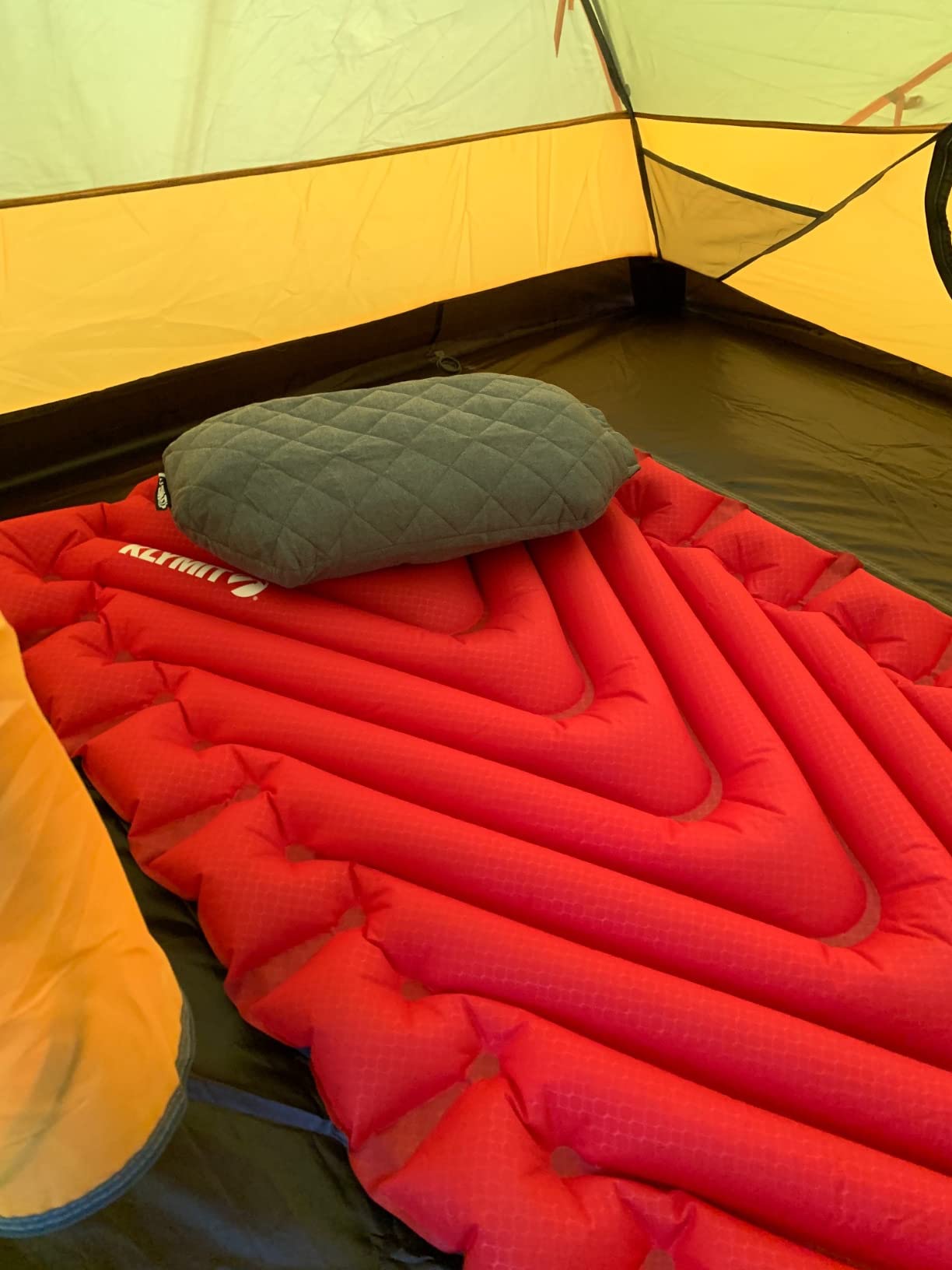
6. camppal Single Pole 4 Season Tent – Best for Tall Solo Hikers
camppal 1 Person Tent for Camping Hiking Mountain Hunting Backpacking Tents 4 Season Resistance to Windproof Rainproof and Waterproof
Item weight 3.75 lb
Inner length 8.2 ft
Floor area 24.19 sq ft
3500 to 4000mm fabric
3 minute single-pole setup
Pros
- 8.2 foot interior length fits tall sleepers
- Fastest single-ridge-pole pitch in the set
- 3500 to 4000mm fabric with seam taping
- Packs very small for a four-season shelter
- Fire retardant to CPAI-84 standard
Cons
- Not freestanding
- the pole must be held while pitching
- Very narrow coffin-like interior
- Runs hot in warm weather
The camppal 1 Person Tent solves a problem almost every two-person tent ignores: length. Its inner measures 8.2 feet, and that extra 14 inches over a standard solo shelter is the difference between a full night of sleep and a night spent with your feet pressed against the wall.
It weighs 3.75 pounds packed, making it the lightest shelter in this roundup, and the single aluminum ridge pole means a three-minute setup. Owners report it holding up in torrential rain, storms and cold desert nights.
Fabric is rated 3500 to 4000mm with seam taping at the zipper, velcro wraps and floor corners, and it meets the CPAI-84 fire retardant standard. Those are real four-season numbers rather than a label.
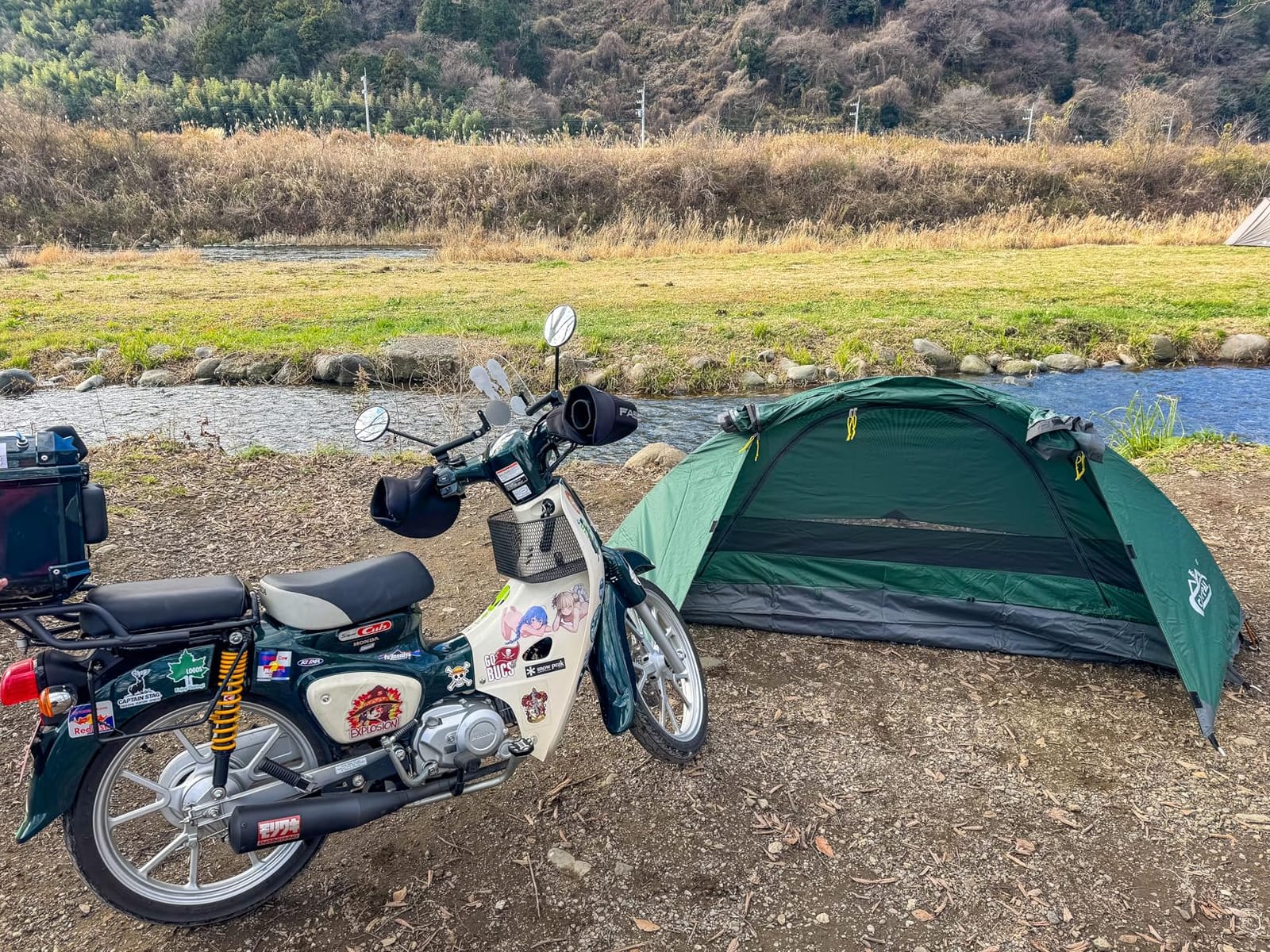
Why length beats width for tall hikers. A 2.95 foot wide interior is genuinely narrow – you cannot change clothes inside it. But width is negotiable and length is not, and for a 6 foot 3 inch sleeper the 8.2 foot floor is the part that decides whether you sleep well. The outer extends further for a porch area and shelter from wind-driven rain.
The pitching catch. This tent is not freestanding. The single ridge pole must be held in place while you stake and tension, which takes getting used to – especially on rock, where you are balancing the pole one-handed. That is a genuine learning curve, and it is the reason we rank it sixth rather than higher on a lighter specification sheet.
Ventilation is the other limitation. In summer heat the enclosed shape traps warmth, so this is a spring and fall shelter in warm climates rather than a three-season all-rounder.
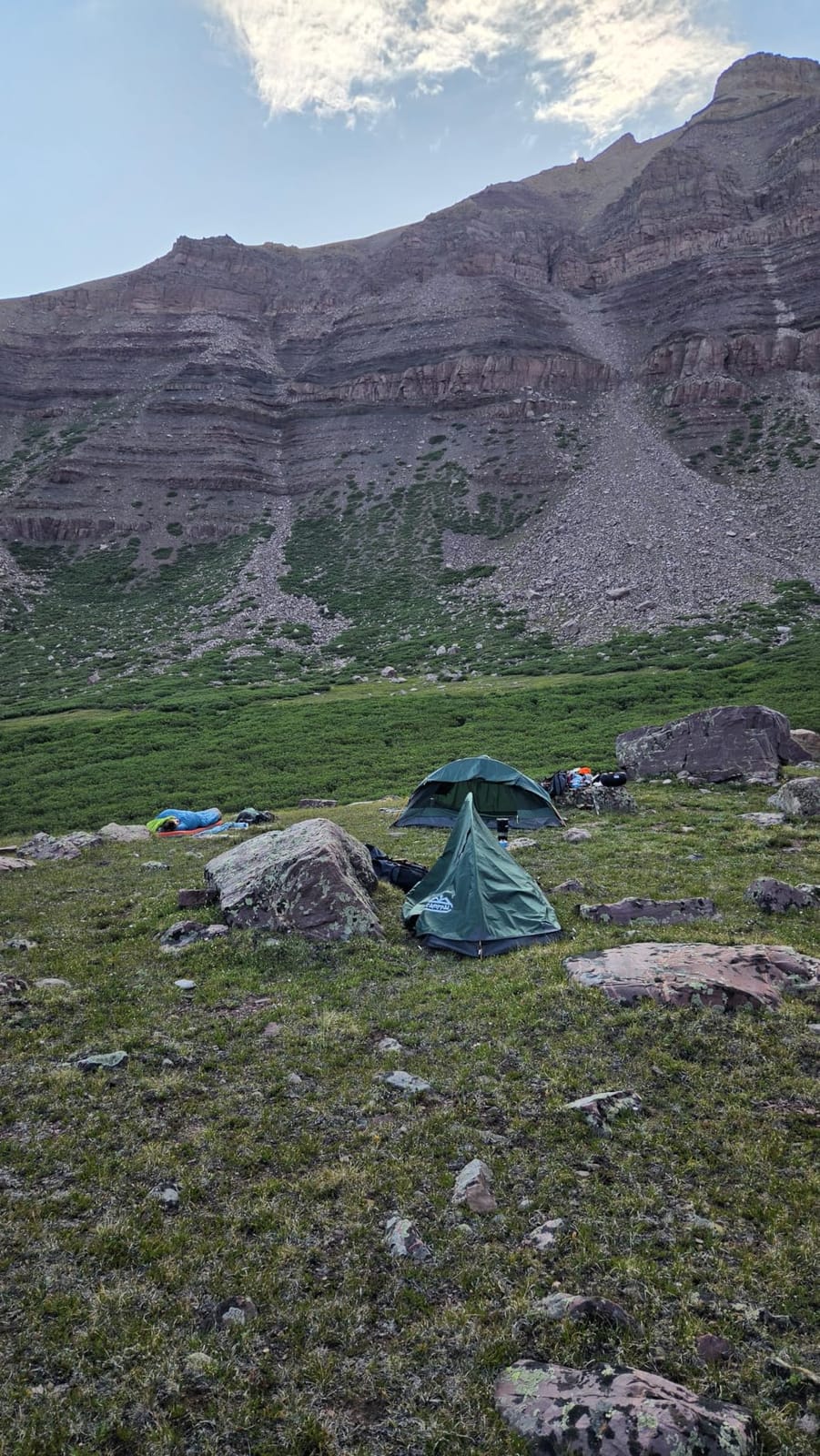
If you are a tall solo hiker who camps in cold or shoulder-season conditions and does not mind a slower pitch, this is the best-fitting shelter here. If you change sites often or share with a partner, choose a freestanding two-person model instead.
7. ALPS Mountaineering Lynx 1 – Best Warranty-Backed Solo Tent
ALPS Mountaineering Lynx 1-Person Tent – Lightweight, Easy Setup, Waterproof, Freestanding Backpacking Tent with Durable Aluminum Poles and Ample Ventilation
Item weight 4 lb 1 oz
Minimum weight 3 lb 5 oz
Floor area 20 sq ft
Center height 3 ft
Base size 7 ft 6 in x 2 ft 8 in
Pros
- Established US brand with a limited lifetime warranty
- Two-pole freestanding aluminum setup
- Half-mesh walls for airflow and less condensation
- Vestibule plus mesh pockets and gear loft
- Factory-sealed 75D 185T fly
Cons
- 2 ft 8 in width is tight above about 5 ft 10 in
- Lower waterproof ratings than PU-coated budget rivals
The ALPS Mountaineering Lynx 1 carries a 4.7 average across 906 owner reviews, the highest owner rating of any solo tent in this roundup, and it comes with a limited lifetime warranty that most rivals in the category cannot match.
That warranty is the quiet value. In a category where forum users describe being afraid to damage expensive ultralight fabric, a brand that stands behind a tent for life changes the calculation entirely. A simple zipper failure at season four becomes a repair conversation rather than a repurchase.
Construction is a freestanding two-pole aluminum frame with a 75D 185T factory-sealed rain fly at 1500mm and a 75D poly taffeta floor at 2000mm. Packed size is 17 inches long, floor area 20 square feet, center height 3 feet.
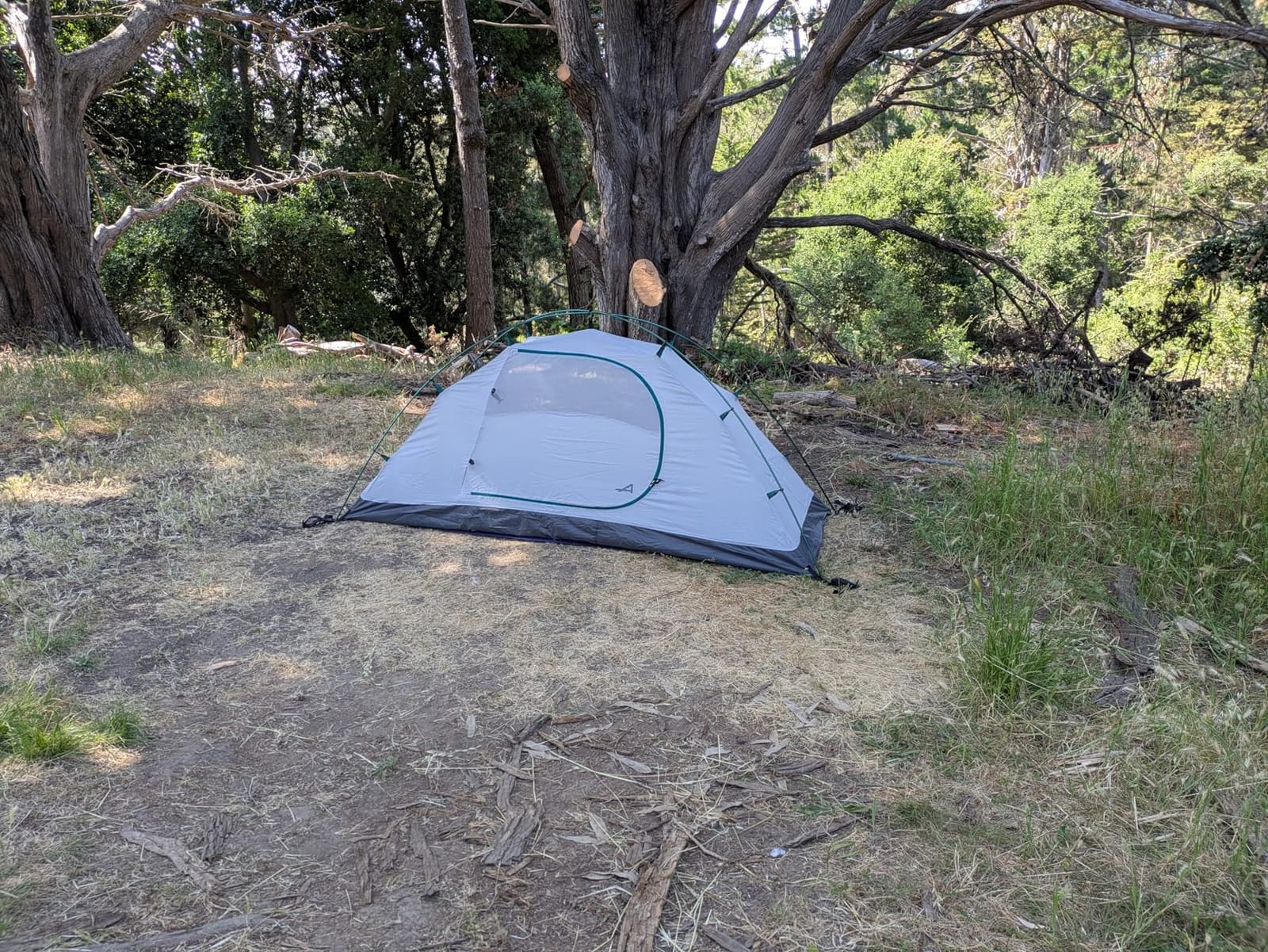
Half-mesh walls are the sleeper feature. They cut condensation substantially compared with a solid inner, and combined with the single vestibule, mesh storage pockets and gear loft, the interior stays organized for a solo kit.
The width is the real constraint. At 2 feet 8 inches, anyone taller than about 5 foot 10 inches will feel the walls. That is a narrower floor than the 7 foot 6 inch length suggests, and it is the reason this tent suits one person and one person only.
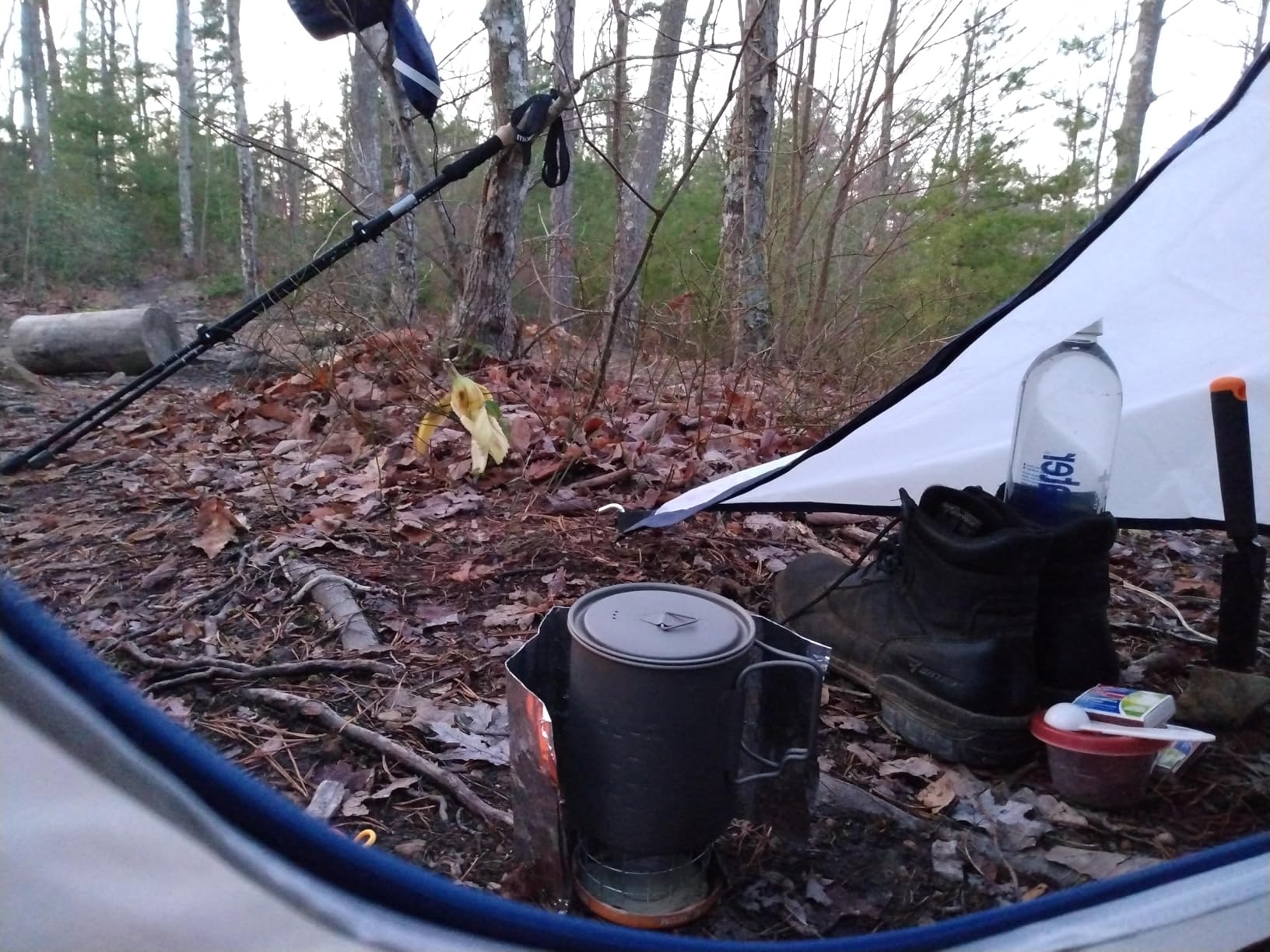
The 1500mm fly and 2000mm floor ratings sit below the PU 3000mm and 5000mm figures on the budget tents here. In sustained mountain rain you would want a footprint and careful pitch tension. For ordinary three-season weekends, the sealed seams and the build quality carry it.
Owners consistently rate the Lynx highly on build quality, ventilation and packability, and mention brand-backed warranty support as the deciding factor. If you plan to keep one tent for a decade, this is the one in the set built to survive the upgrade cycle.
8. Marmot Crane Creek – Best Stormworthy Two-Person Tent
Marmot Crane Creek 2P Tent | Marmot Tent, Two-Person, Lightweight and Durable for Backpacking, Camping, Mountaineering in Fall
Item weight 2400 g
Floor area 32 sq ft
Peak height 43 in
Floor 88 x 51.3 in
Two 6 sq ft vestibules
Pros
- Withstood severe wind
- snow and hail over a 150 mile trip
- Two large D-shaped doors and two vestibules
- Two-minute solo pitch once you know the routine
- Roomy enough to change clothes inside
- PFAS-free with a limited lifetime warranty
Cons
- Not ultralight
- the fly alone adds about a pound
- Thin floor fabric
- Aluminum stakes bend easily in rock
The Marmot Crane Creek is the sturdiest two-person shelter here, and one owner report describes it withstanding high winds, snow, hail and sideways rain across a 150-mile trip. It weighs 2400 grams packed and offers 32 square feet of floor at 43 inches of peak height.
The 88 by 51.3 inch floor is genuinely rectangular rather than tapered, which is the reason we recommend it for couples. Tapered two-person floors force a squeeze at the shoulder; a straight-sided floor lets you and your partner sit up, change clothes and keep a full pack inside without rearranging the night.
Two large D-shaped doors and two overhead vestibules of 6 square feet each make it easy to share, and the seam-tapped floor plus seam-tapped polyester fly with 7000 series aluminum poles form a properly sealed shell. Marmot backs it with a limited lifetime warranty and PFAS-free construction.
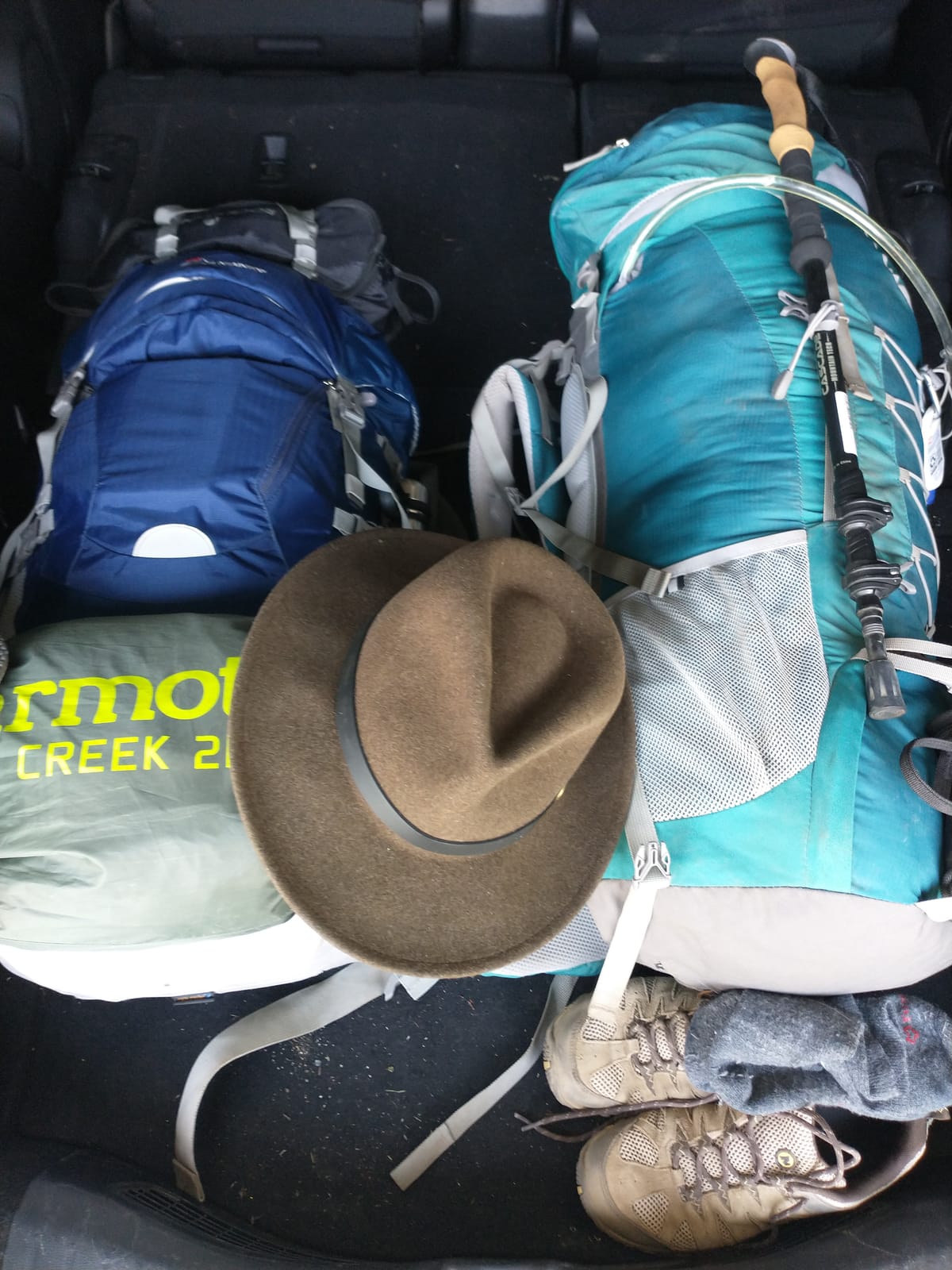
Once you learn the routine, owners report a two-minute solo pitch. For a shelter this substantial that is quick, and it means you can pitch before dark without rushing.
Buy the footprint. The near-unanimous owner recommendation on this tent is to add a separate footprint, because the floor fabric is thin relative to the rest of the build. It is sold separately and it is the cheapest way to extend the life of an otherwise excellent shelter.
It is not an ultralight tent. At 2400 grams the rain fly alone adds about a pound, and only 4 guylines and 6 aluminum stakes are included. Those stakes bend in rock, so bring your own if you camp on granite. Snug for two adults unless you are a couple is the other consistent note.
Choose this if your trips involve exposed terrain, shoulder-season storms or a partner you want to sleep comfortably beside. The durability case, backed by a lifetime warranty and the heaviest fabric in the set, is the strongest here.
9. Clostnature 4 Season Backpacking Tent – Best for Winter and Snow
Clostnature 4 Season Backpacking Tent – 2 Person Cold Weather Winter Tent
Item weight 6.3 lb
Minimum trail weight 5.33 lb
Floor area 5133 sq in
Snow flaps included
Three-minute freestanding setup
Pros
- Kept campers dry in 20 degree Fahrenheit conditions
- Snow flaps and factory-sealed seams
- Two double-layer doors and two vestibules
- Easy three-minute freestanding pitch
- Roomy enough for two people
- a dog and gear
Cons
- Thin rain fly fabric that tears if handled roughly
- Bundled aluminum stakes bend on hard ground
- Fly will not refit its own stuff sack after a trip
- Runs hot in summer
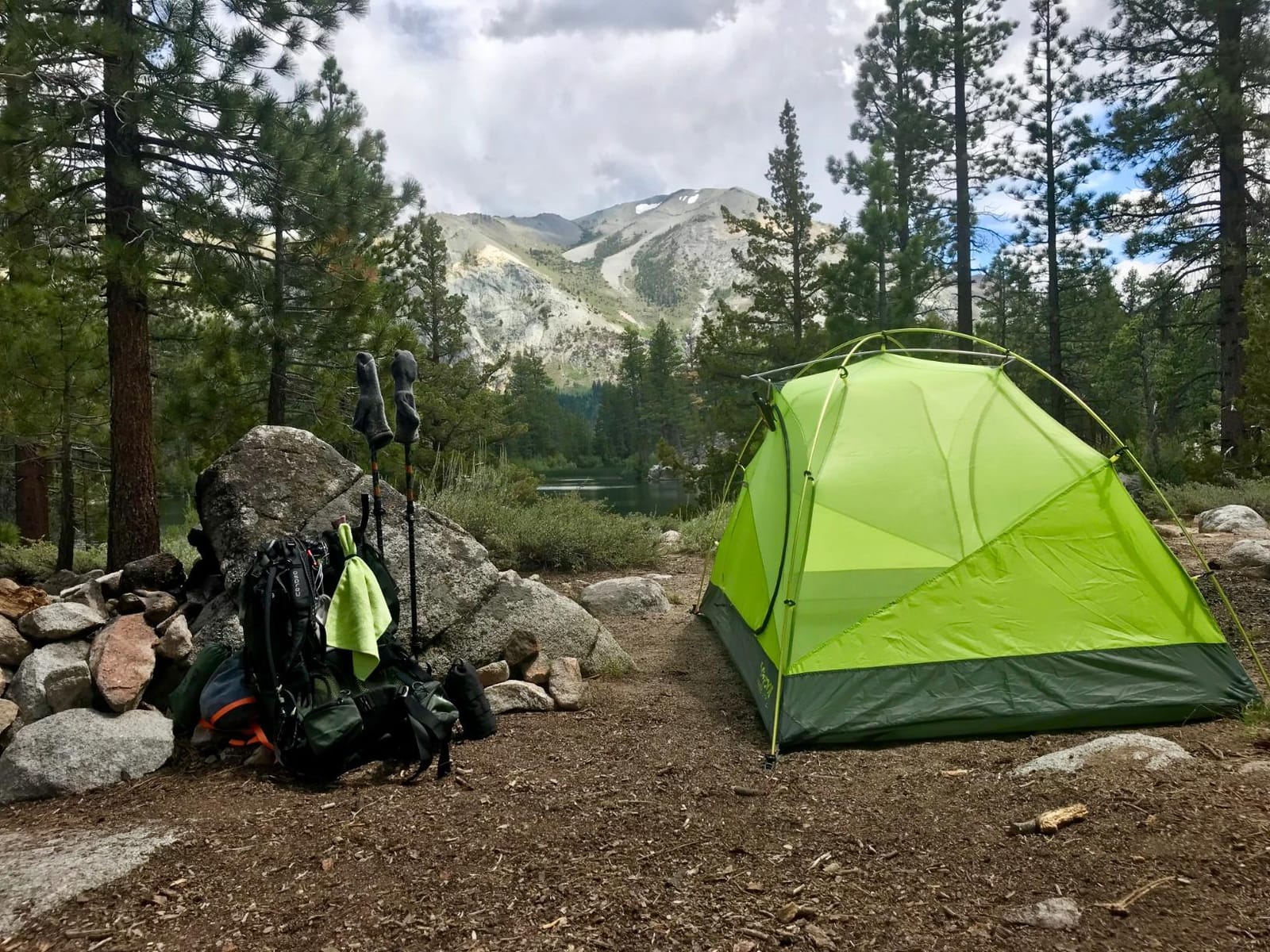
The Clostnature 4 Season Backpacking Tent is the heaviest shelter in this roundup at 6.3 pounds, dropping to 5.33 pounds at minimum trail weight. That weight buys real winter capability – owners report staying dry and warm in 20 degree Fahrenheit conditions.
Snow flaps are the feature that separates it from a three-season tent with four-season aspirations. They block spindrift at the base of the fly, which is the direction-driven snow that soaks through ordinary tents in alpine and above-treeline conditions. Combined with a PU-coated four-season fly, groundsheet and bathtub floor over factory-sealed seams, it holds in weather that wets out lighter shelters.
Two double-layer doors – mesh and fabric – plus two vestibules mean two occupants can move independently. Owners also highlight how easy it is to pitch in the dark with gloves on, which matters when you are arriving at camp after a long cold day.
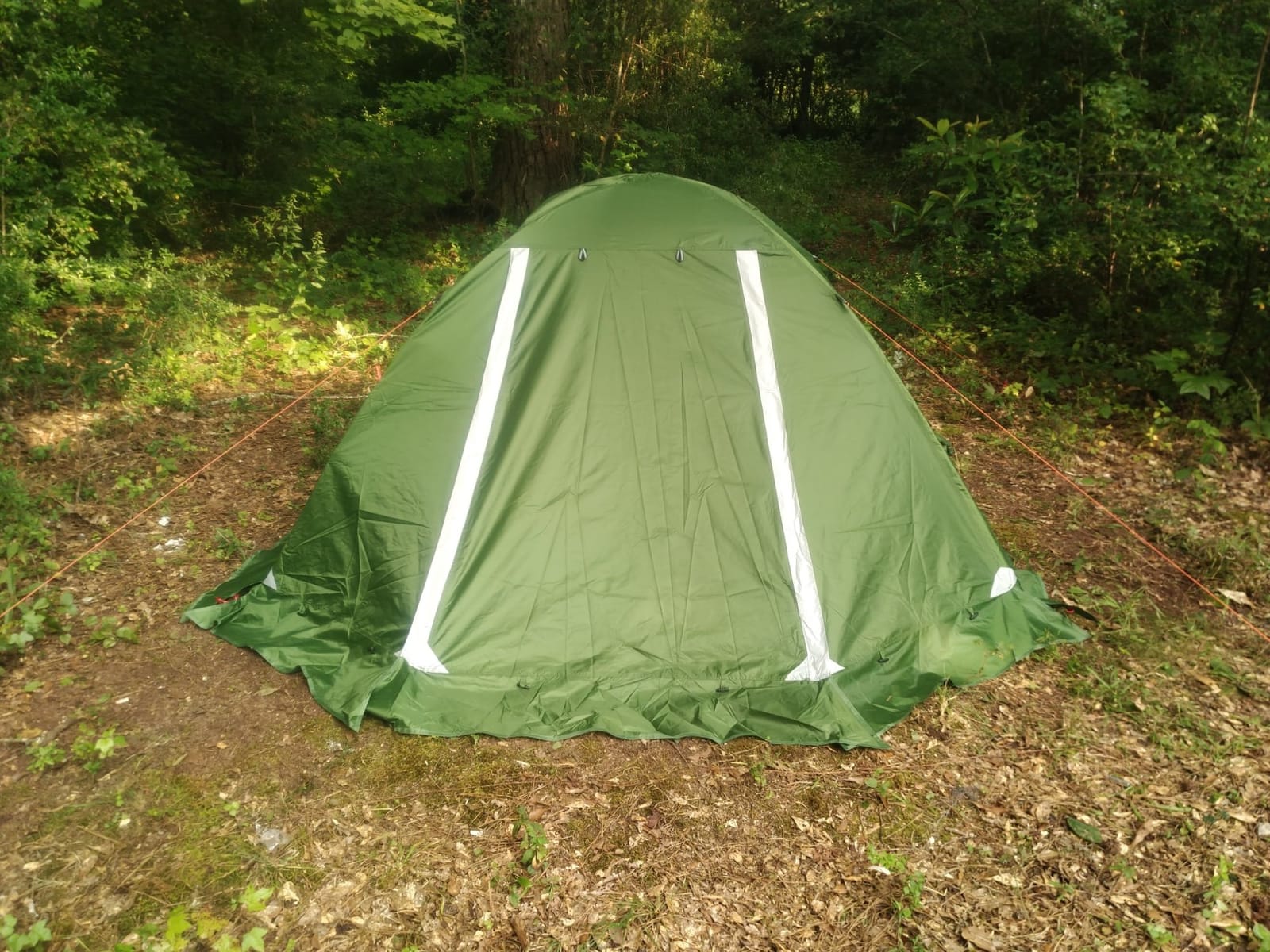
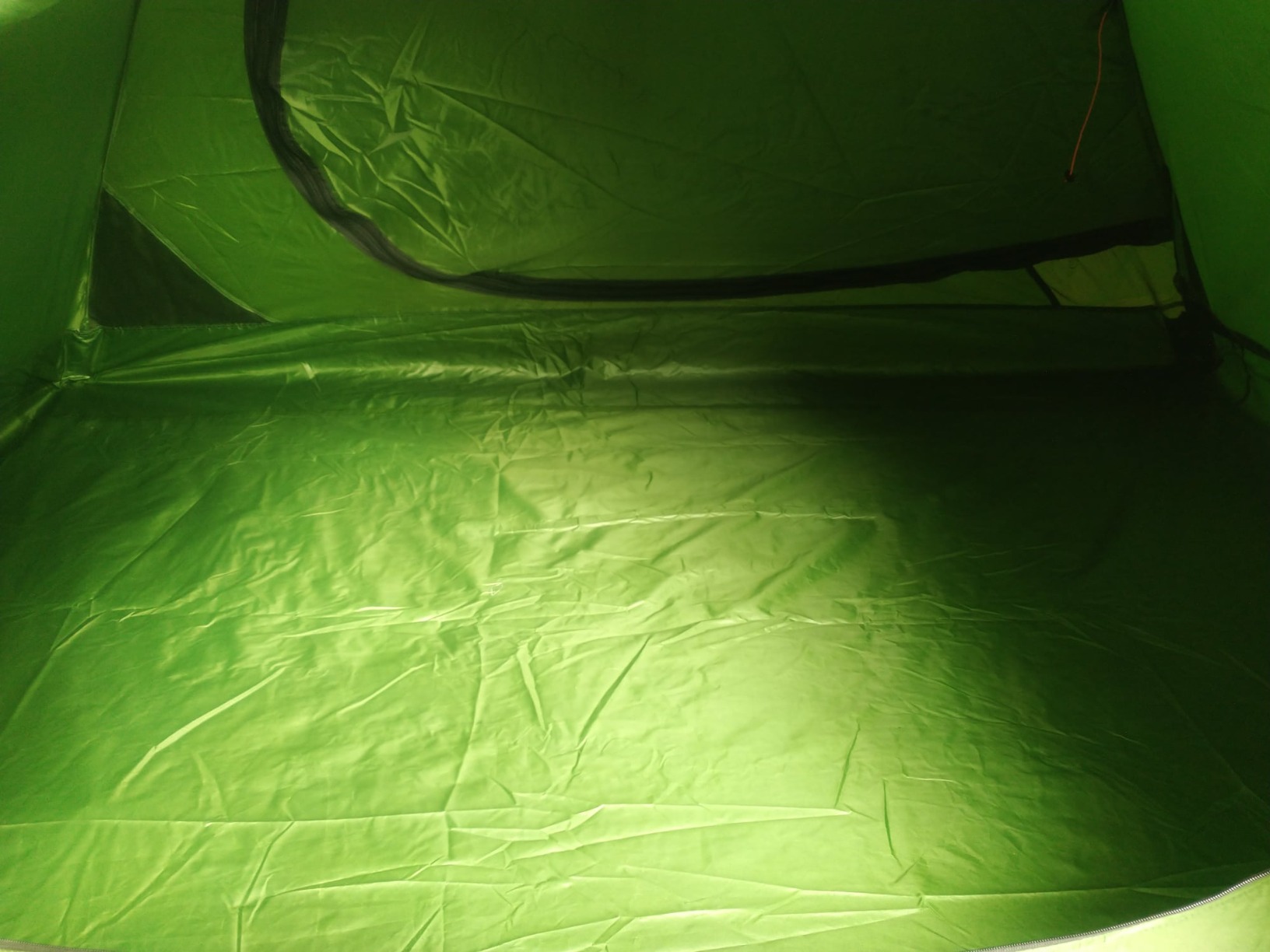
The 86.6 by 59 by 45.8 inch interior with 5133 square inches of floor is roomy enough for two people, a dog and a full gear load. That is the shelter in this roundup most practical for hiking with a dog, since the vestibules give an animal a covered place to wait while you cook.
Six pounds is six pounds. This is not a fast-and-light shelter and it should not be bought for that reason. It earns its weight only on winter routes, shoulder-season storms and cold desert trips. For summer backpacking the enclosed shape traps heat, and owners report it running uncomfortably warm.
Two small failures to know about. The fly fabric is thin and tears if grabbed roughly, and the bundled aluminum stakes bend in hard ground – bring your own. The fly also will not fold back into its own stuff sack after a trip, so plan on a separate bag.
10. Kelty Grand Mesa – Best for Fast Foolproof Setup
Kelty Grand Mesa Backpacking Tent, 2 or 4 Person, Aluminum Poles (2P)
Item weight 4.8 lb
Floor 85 x 57 in
Peak height 44 in
Interior area 30 sq ft
Packed size 16 x 7 x 7 in
Pros
- Five-minute setup with Quick Corners
- Color-coded clips and a quick buckle fly
- Stayed dry through sideways rain and multi-day storms
- Durable poles and stakes with no leaks after many trips
- EZ-Zip vestibule keeps boots out of the rain
Cons
- Smaller inside than the two-person label suggests
- Bulkier packed size than most
- Footprint sold separately
- Vestibule does not reach the ground
The Kelty Grand Mesa is the pick when setup speed and predictability matter more than packed size. It weighs 4.8 pounds, offers 30 square feet of floor at 44 inches of peak height, and goes up in about five minutes using Kelty Quick Corners and color-coded clips.
Color-coded clips are a small detail with a large effect. You are not squinting at a dark tent in a headlamp beam trying to work out which buckle goes where, and the buckle rain fly attachment is fast and secure once you have done it twice.
The 68D polyester floor and rain fly carry a 3300HH waterproof coating over fully taped seams, and owners report staying bone dry through sideways rain and multi-day storms across repeated trips. Poles, stakes and fabric are reported as durable with no leaks developing over time.
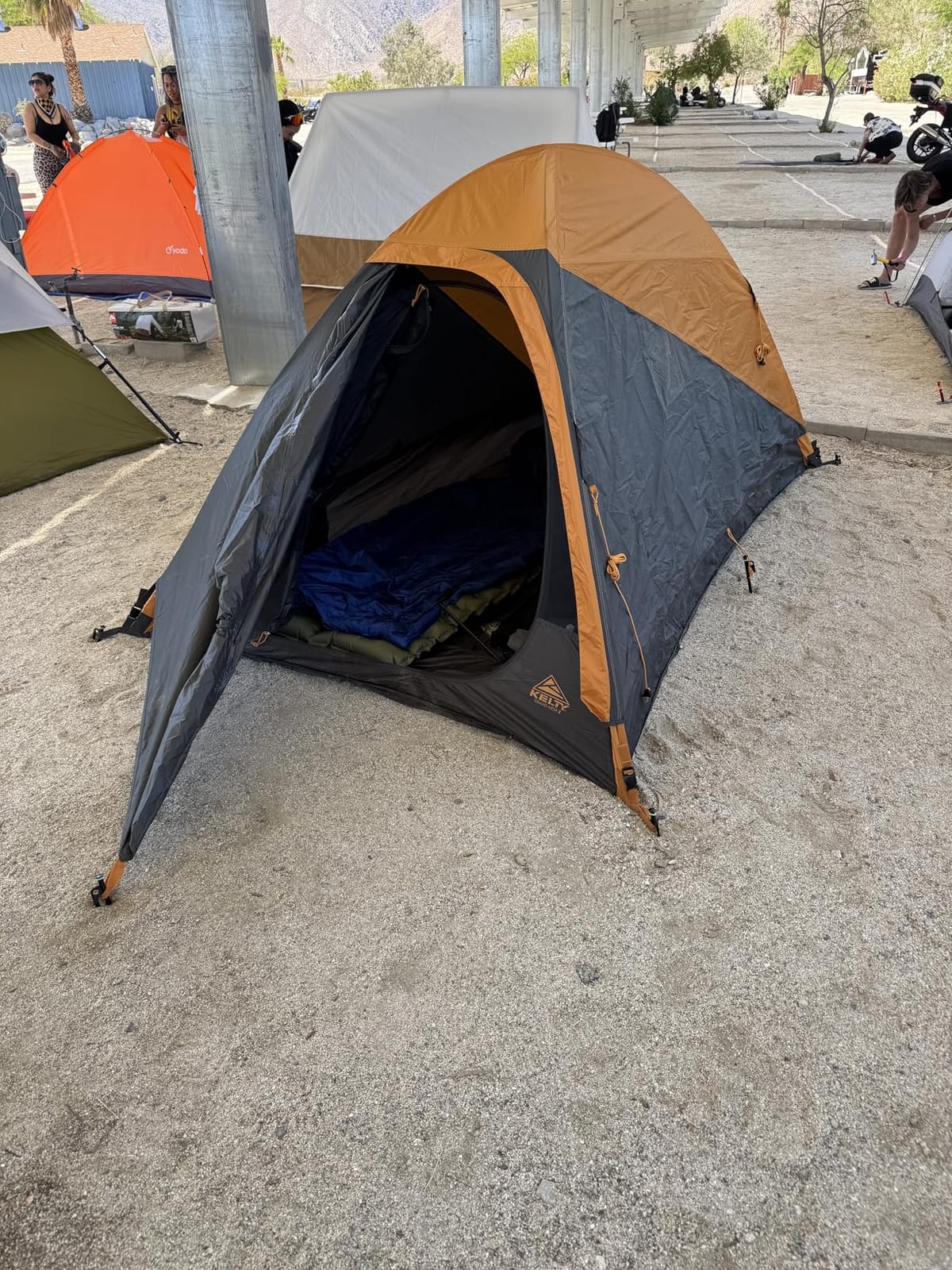
The freestanding frame means you can stand it up, walk around the site and reposition it. On a hard ground camping area where good pitches are scarce, being able to move the tent without repitching is a real convenience.
It is smaller inside than 2P suggests. Owners report that a 6 foot sleeper touches both ends, and many use it as a roomy solo tent. Treat the two-person rating as a snug fit for two small adults rather than a comfortable one.
The tradeoffs are physical. The 16 x 7 x 7 inch packed size is bulkier than most backpacking tents, and the 3 square foot vestibule does not reach the ground, so wet boots sit under an open edge. The ground sheet is sold separately, and the zippers pull hard the first few times you tension them.
For a first backpacking tent shared by two, or a reliable workhorse for repeat weekend trips, the Grand Mesa does more than it costs. The construction holds up, the waterproofing holds, and the pitch is repeatable by anyone.
11. Underwood 4 Season Backpacking Tent – Best for Carrying Heavy Loads
2 Person 4 Season Backpacking Tent, Lightweight Waterproof Winter Tent
Item weight 5.73 lb
Floor 59.1 x 86.6 in
Center height 45.3 in
Packed size 5.9 x 16.54 in
Freestanding, 4 aluminum poles
Pros
- Held up on real winter and motorcycle trips at low cost
- PU 5000mm full-cover fly with reinforced corners
- Easy setup and takedown
- Compacts well into the original bag
- Good pegs that have not bent in rocky soil
Cons
- Fly can be hard to stretch taut
- leaving wrinkle lines for water to follow
- Floor is not tarp material so a groundsheet is needed
- Limited ventilation in hot weather
- Tight for two people
The Underwood 1 and 2 Person 4 Season Tent is 5.73 pounds with a 45.3 inch center height and 5115 square inches of floor, and it has a 4.6 average from 384 owner reviews. The distinguishing number there is the review count – this is a smaller sample, so treat the rating as encouraging rather than settled.
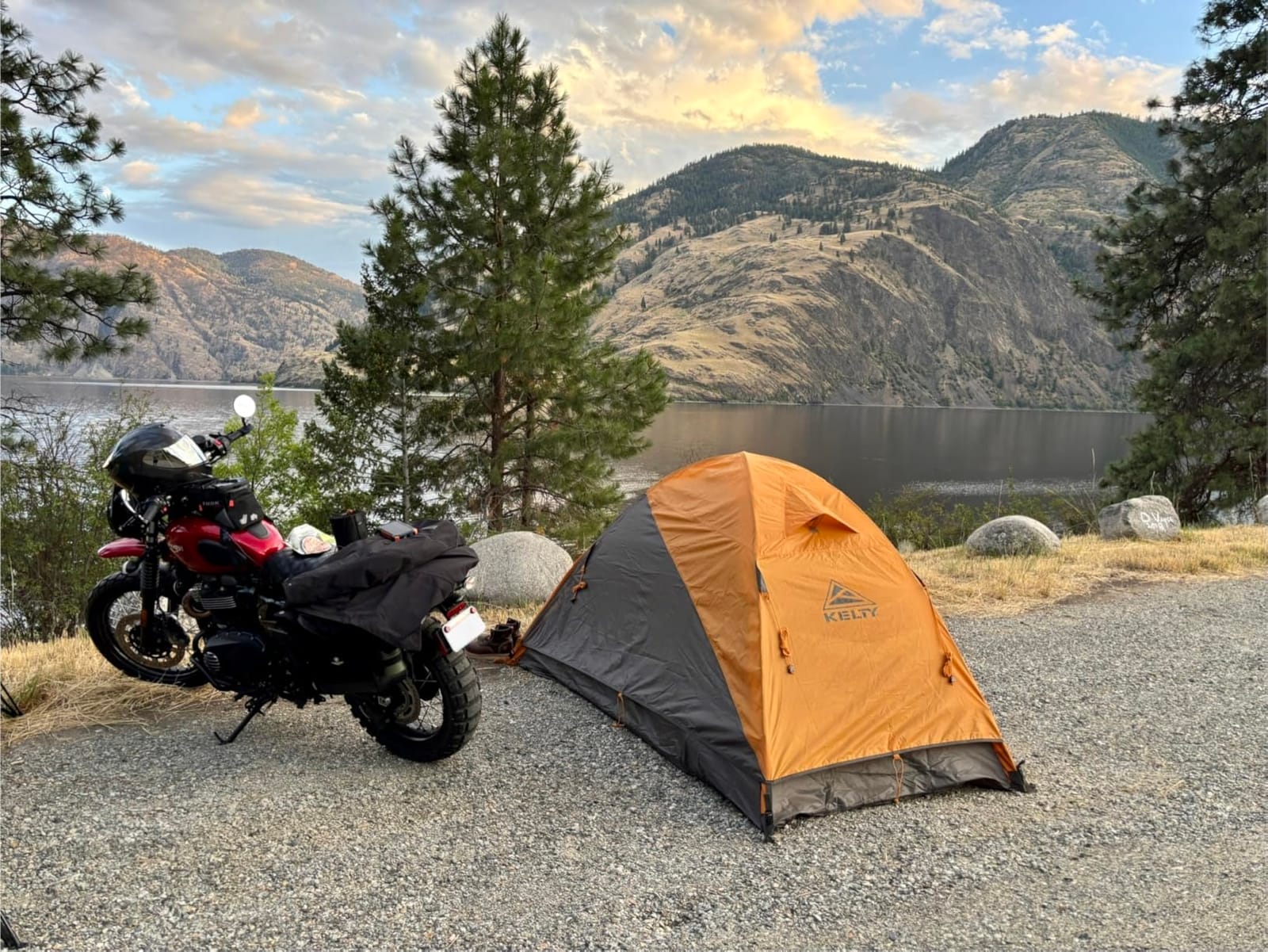
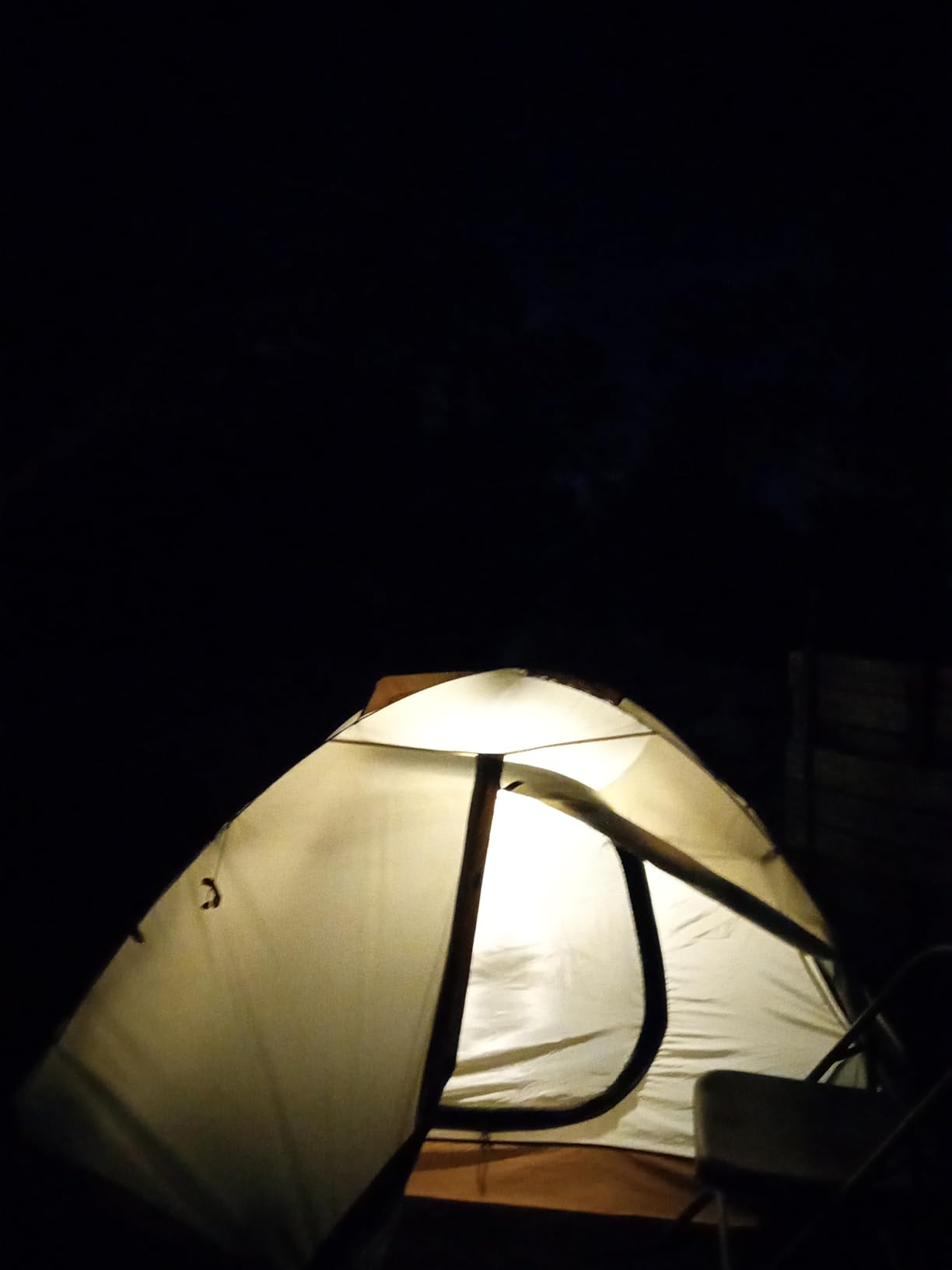
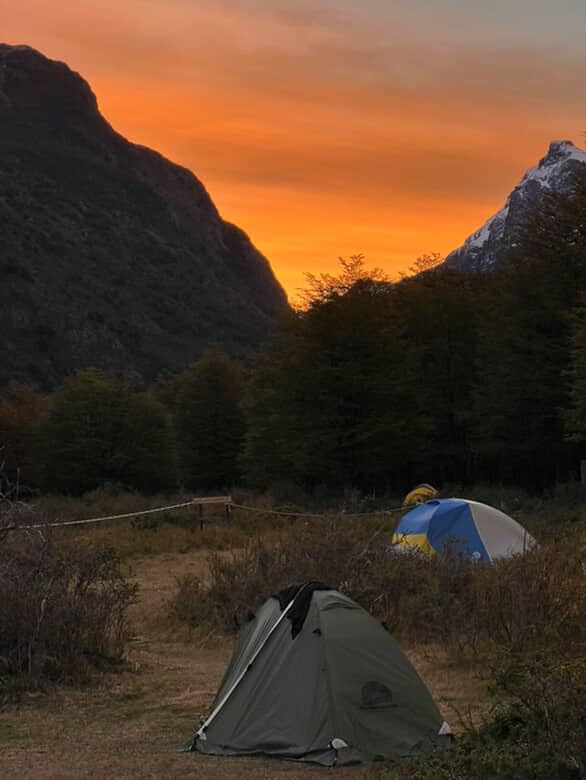
What owners do report consistently is that it holds up. One trekking user kept it dry through Patagonian rain and snow, and motorcycle campers mention multi-day winter trips. The PU 5000mm full-cover fly with doubled, reinforced corners is built for wind-driven weather rather than calm drizzle.
It is a freestanding four-pole structure with duraflex fasteners, a two-way zipper door, a camping light hook and an interior mesh pocket, and the included pegs are reported to survive rocky soil without bending – which is not true of the stakes bundled with most shelters here.
The fly tension is the one real complaint. Owners report the rain fly can be hard to stretch taut, and the wrinkles that leave behind are where water follows rather than sheds. That is a technique issue as much as a design one, and it improves with practice and guying.
Plan for a separate groundsheet. The floor is not tarp material, so in wet conditions you add a footprint that this shelter does not include. Budget for it before the trip, not at the trailhead.
At 59.1 inches wide it is tight for two adults, and owners generally describe it as a spacious one-person tent. Ventilation is also limited, so it is a cold-weather tool rather than a summer shelter. If you ride a motorcycle or hike in Patagonia-style conditions on a limited budget, that trade set is exactly right.
It packs to 5.9 by 16.54 inches and stows easily into the original bag, which matters more for repeat trips than for a single weekend.
12. MSR Elixir 2 – Best Floorplan for Wide Sleeping Pads
MSR Elixir 2-Person Lightweight Backpacking Tent
Item weight 5.1 lb
Minimum trail weight 5 lb 2 oz
Floor 52 x 84 in
Headroom 41 in
30 sq ft floor, 15 sq ft vestibule
Pros
- True rectangular floor with near-vertical walls fits wide rectangular pads
- Strategically placed mesh panels move air and cut condensation
- All-metal corner hardware and straight-pull zippers
- Gear loft plus end pockets with cable ports
- Dedicated footprint available and Gear Shed compatible
Cons
- Heaviest and most expensive option in this group
- Out of reach for ultralight budgets
The MSR Elixir 2 is the most capable shelter here for two people who both sleep on wide rectangular pads. It weighs 5.1 pounds, offers a 52 by 84 inch floor with 41 inches of headroom, and delivers a 4.7 average from 196 owner reviews – the highest rating in the set, on the smallest sample.
The floorplan is the reason to buy it. Nearly vertical walls mean two 25-inch-wide pads fit side by side without the shoulder squeeze that ends shared trips on tapered tents. A lot of owners of budget two-person shelters report exactly that problem, and this is the direct answer to it.
15 square feet of vestibule space is the largest covered storage here, split across two doors so neither person has to squeeze past the other. Combined with a gear loft and end pockets with cable ports, it handles a full kit without putting wet bags in the sleeping area.
Ventilation is handled with strategically placed mesh panels that move air and cut condensation while still retaining heat, which is a better balance than simply removing fabric. The all-metal corner hardware and straight-pull zippers are the durability story – they are the parts that fail first on cheaper tents, and they are workable with gloves in the dark.
What the rating does not tell you
A 4.7 rating is only as meaningful as the sample behind it, and 196 reviews is the thinnest in this roundup by a wide margin. The build quality, hardware and floorplan are what justify the pick, not the star average alone.
Where the weight and cost bite
At 5.1 pounds and a 3 year manufacturer warranty, this is the heaviest and most expensive shelter here, and it is out of reach for anyone optimizing strictly for pack weight. That is a fair trade for a floor plan that actually fits two adults.
PFAS-free waterproofing on more durable fabrics is a meaningful update for anyone who will keep this tent for many seasons. A dedicated footprint is available and compatible with the MSR Gear Shed, and given the 1500 to 3000mm waterproofing range we would use one on abrasive ground.
Among the 12 best backpacking tents here, this is the one to buy when you are done compromising on interior space. For solo use it is overkill – for two people on wide pads, it is the correct answer.
Which Type of Backpacking Tent Is Right for You?
The fastest way to pick the wrong tent is to start from a brand or a marketing label. Start from the trip instead. Four questions settle nearly every purchase, and each one narrows the list fast.
How long are you out, and how often? A one or two night weekend in mild weather is a completely different problem from a season on the AT or PCT. Short trips reward convenience, room and a fast pitch, because you will not save meaningful weight on a car-adjacent trailhead. Long trips reward low weight, small packed size and a design you can pitch in wind without a fight.
How many people, and how wide are your pads? This is the question most guides skip. Standard pads are 20 inches wide, wide pads are 25 inches. Two 25-inch pads need 50 inches of floor width plus wall clearance, which many nominal two-person tents do not have. Measure shoulder to shoulder, not pad to pad, and check the floor width at your hip height rather than at the base.
What is the weather actually like where you camp? A three-season tent handles warm nights and ordinary rain. A 3.5-season rating means better venting, partial coverage and stronger poles for gusty ridgelines. A four-season tent means snow flaps, heavy fabric and often a much heavier pack – useful above treeline, in winter, or in the desert, wasteful everywhere else.
Do you already own trekking poles? If you carry poles anyway, a trekking-pole shelter saves the weight of a separate pole set. If you do not, you will use your poles as the tent’s pole set regardless, which means learning a different pitch on a night when you are tired. Forum consensus is that buyers with poles lean hard toward trekking-pole tents, and buyers without poles are better served by a freestanding shelter.
Once those four answers are in, the decision path below usually lands on a single shelter.
If you are brand new to backpacking and going out for one or two nights: start with the Naturehike Cloud-Up. It pitches in under two minutes, arrives with a footprint, and will not punish you for not knowing what you are doing.
If you are solo and buying your first tent on a tight budget: the Night Cat single-layer dome is the cheapest real shelter here and packs small enough for a bike trip. If you want the same weight class with a company behind it, the ALPS Lynx 1 adds a limited lifetime warranty.
If you are solo and 6 foot 3 inches or taller: the camppal single-pole tent is the only one here built around an 8.2 foot interior. Accept the slower non-freestanding pitch and the narrow profile in exchange for actually fitting.
If you are a couple with standard 20-inch pads: the BISINNA is the best value, with two doors and enough floor to sit up. Add a footprint at purchase.
If you are a couple with wide 25-inch pads, or you are one person who hates a squeezed floor: the Marmot Crane Creek gives you a straight-sided 88 by 51.3 inch floor, and the MSR Elixir 2 gives you 52 inches of width plus 15 square feet of vestibule. Pick on how much weight you will carry, not on which is better built.
If condensation has ended past trips: the Forceatt is the answer in this price range, because a welded floor, a large mesh window and two ceiling vents do more than extra weight does. Expect 5.5 pounds in return.
If you camp above treeline, in winter, or in shoulder-season storms: the Clostnature 4 Season tent with its snow flaps is the strongest cold-weather option here. At 6.3 pounds, only buy it if the conditions earn it.
If you want a lifetime shelter you keep for a decade: the ALPS Lynx 1 or the Marmot Crane Creek, both backed by limited lifetime warranties, are the two buys that age well.
How to Choose a Backpacking Tent
How we picked these 12
Every shelter here was weighed against the same four criteria, and the criteria are deliberately unglamorous. Packed weight is the real carried number, not the minimum trail weight printed in the small print. Livability is floor width, length, peak height and vestibule area, judged at the body positions that decide whether you sleep well. Weather protection is the fabric coating, the seam treatment, the fly coverage and the pole spec, read as a system rather than a single number.
Owner review volume mattered too, because a 4.7 average across 196 reviews tells you less than a 4.6 average across more than 2300. We flagged that difference where it applied, and we flagged shelters whose main advantage was simply a long packed length.
Trail weight versus packaged weight
Trail weight is the honest number for pack planning. It is the tent complete, ready to pitch. Packaged or minimum weight is the same tent with stakes, guylines, repair kit or a footprint removed, and it assumes ideal ground and a confident pitch. Three shelters here quote both: the Clostnature 2 Person at 5.3 pounds packaged and 4.5 pounds minimum, the Clostnature 4 Season at 6.3 and 5.33, and the ALPS Lynx 1 at 4 pounds 1 ounce and 3 pounds 5 ounces.
That figure is the reason we plan base weight on the packaged number. If you are pitching on rock or in wind, you will want every stake anyway, and the minimum figure is not a saving you will actually keep.
Capacity and sleeping pad width
A two-person tent is a floor area, not a sleeping spot count. The Clostnature 2 Person and the Clostnature 4 Season both offer 5133 square inches, the Underwood offers 5115 square inches, and the Forceatt offers 32.67 square feet – roughly 2940 square inches, so a raw number comparison only tells you so much.
What matters is the shape and the width. The MSR Elixir 2 has a 52 inch wide rectangular floor with near-vertical walls, which is the only layout here that comfortably takes two 25-inch pads side by side. The ALPS Lynx 1 at 2 feet 8 inches wide is a solo shelter by any honest reading. The Naturehike Cloud-Up at roughly 49 inches wide and 41 inches tall is generously sized for one person and tight for two, and most owners treat it as a roomy single.
For anyone above about 5 foot 10 inches, length matters as much as width. Measure your shoulders and your height, then check the tent’s interior length rather than the product photo.
Freestanding, semi-freestanding or trekking pole
A freestanding tent holds its shape unassisted. You can stand it, walk around the site, move it if the ground is bad and pitch in any order. Most of this roundup is freestanding, including the Clostnature 2 Person, the Kelty Grand Mesa and the Forceatt.
A non-freestanding shelter must be held or staked as you build it. The camppal single-pole tent is the clearest example – it needs the ridge pole held in place while you tension, which is a real learning curve. The gain is weight and packed simplicity.
Trekking-pole shelters use your own poles as the structure. They are the lightest option and the least forgiving, and they need a site with more open space. If you already carry poles, the weight argument is strong. If you do not, the learning curve usually costs you more than the ounces you save.
On camping with a dog, freestanding is the practical answer regardless of weight. You can pitch the tent, decide where the dog sleeps and move it, rather than choosing the site around the pitch.
Denier, fabric and lifespan
Denier measures thread thickness, and thicker is generally tougher. The ALPS Lynx 1 uses 75D 185T fabric for both fly and floor, the Kelty Grand Mesa uses 68D polyester, and the budget shelters here run 190T to 210T polyester. Fly fabric takes the weather, but the floor takes abrasion, and the floor is the piece that fails first.
Lifespan depends more on care and hardware than on denier. Owners on forums describe ultralight mesh developing holes in the early life of a tent, and the fear of puncturing expensive fabric is real. The practical response is a footprint on abrasive ground, care around zippers, and a brand with a warranty that covers the failure. Tents here with limited lifetime warranties include the ALPS Lynx 1, the Marmot Crane Creek and, on a shorter term, the MSR Elixir 2 at three years.
Poles matter as much as fabric. Aluminum 7001 series poles are the standard in this roundup and are tough; fiberglass, as on the Night Cat tent, is cheap and light but can crack at the metal connectors. That is the single most common hardware complaint in owner reviews across the budget tents.
Weather protection and managing condensation
Condensation, not rain, is what ends most backpacking trips. It forms when warm moist air from your body hits a cold fabric surface, which happens on every mild night in a closed shelter. The tents here attack it in three ways: mesh area, vents and fabric choice.
The Forceatt has a large mesh window plus two ceiling vents. The Clostnature 2 Person has large mesh walls plus two top ventilation flaps. The MSR Elixir 2 places mesh panels strategically to move air while retaining heat. The ALPS Lynx 1 uses half-mesh walls. Against that, the Clostnature 4 Season, the camppal and the Underwood are all described by owners as running hot.
Pitching helps more than any of them. Tension the fly taut and the fabric stops sagging, because water runs along a wrinkle and condensation forms on a slack one. Leave the fly off or rolled back for the first twenty minutes after you get in, before your body heat saturates the air. Store wet gear outside rather than inside, and a sleeping pad with good insulation under you keeps the floor from becoming the cold surface that drives more moisture back into the tent.
For waterproofing, the coatings here run from 1500mm on the ALPS fly to PU 5000mm on the Clostnature 2 Person and the Underwood fly. Sealed seams matter more than the headline number, because water finds the stitch holes before it finds the fabric.
Vestibules, storage and the hidden costs
Vestibule area is covered space for wet boots, a pack and cooking gear, and it protects your sleeping area from the mess. The MSR Elixir 2 leads with 15 square feet across two vestibules. The Marmot Crane Creek gives two 6 square foot vestibules. The BISINNA offers 10 square feet. At the other end, the Forceatt has 3.27 square feet and the Kelty Grand Mesa has 3 square feet over a vestibule that does not reach the ground.
Then there are the costs nobody puts on the label. Stakes are not always included – the Marmot Crane Creek ships with 6, and the Naturehike Cloud-Up with 14. Footprints are sold separately for the Clostnature 2 Person, the BISINNA, the Kelty Grand Mesa, the Marmot and the MSR, and a footprint typically adds meaningful weight to your base. Sealed seams on budget tents can need refreshing after a few seasons, and cheap zippers and poles are the parts that wear out first.
Budget all of that before you buy, not after. A cheap tent that needs a footprint, a full stake set and a replacement pole set in year two is not the cheap option, and that is the calculation most first-time buyers skip.
For hikers with a dog, the practical filters are floor area, how enclosed the shelter is and whether it is freestanding. The Clostnature 4 Season is roomy enough for two people, a dog and gear, with vestibules that give the animal a covered place to wait. Double-wall tents with mesh inner tents also keep fur off the sleeping surface, which matters more than most spec sheets admit.
Frequently Asked Questions
What type of tent is best for backpacking?
The best type depends on your trip, not on a brand. Most backpackers are best served by a freestanding two-person double-wall tent between 4 and 5 pounds, because it pitches anywhere, moves when the site is bad, and survives ordinary three-season weather. Solo hikers on a budget can drop to a single-layer dome around 4.4 pounds. Thru-hikers and fast-and-light hikers should look at trekking-pole shelters, which trade wind tolerance and ease for the lowest weight available.
Is a 5 lb tent too heavy for backpacking?
It depends on the rest of your kit and the length of your trip. On a weekend at moderate distances, a 5 pound tent is fine and you will barely notice it. On a long trail, five pounds of tent is a large share of a realistic base weight and it adds up across weeks of mileage. Most experienced hikers would rather buy a tent one pound heavier with a better floor plan and a warranty than shave that pound and fight a cramped pitch every night.
Is a 3 person tent too big for backpacking?
For two people, often yes. Three-person tents carry the weight and volume of a third person without giving two of you more usable room, because the extra floor space usually goes into padding rather than shoulder clearance. Choose a 3P only if you are genuinely carrying three people plus gear, or if you want a solo shelter with room for a dog and a large camera kit. Two adults are better served by a rectangular two-person floor with near-vertical walls.
What is a good budget backpacking tent?
The BISINNA 2 and 4 Person tent is a strong budget answer for couples: 31.64 square feet of floor, 10 square feet of vestibule and two D-shaped doors with dual zippers, at 4.7 pounds. Solo buyers on a tight budget can get a usable single-layer dome for less from the Night Cat, which packs to 16.5 inches and pitches in a minute. Whatever you choose at this level, buy a footprint at the same time and expect to replace zippers eventually.
Which backpacking tent is the most durable?
Look for pole material, fabric denier and warranty length together rather than a single number. The ALPS Lynx 1 and the Marmot Crane Creek both carry limited lifetime warranties and use 75D or heavier fabric, which is the strongest durability case in this roundup. The Forceatt uses a welded bathtub floor, which removes the seam line that usually leaks first. Tents built on 190T to 210T polyester with fiberglass poles are the least durable, regardless of how they look.
What is the lifespan of an ultralight tent?
It depends far more on ground conditions and care than on the advertised spec. A light tent pitched on abrasive rock without a footprint will wear through a floor in a fraction of its potential life, while the same tent on good ground with a footprint can stay in service for many seasons. Zippers and poles usually fail before fabric does, which is why tents with all-metal hardware and a lifetime warranty hold value better than lighter ones. Expect the fabric itself to be the last thing you replace.
What are the drawbacks of ultralight tents?
The main drawbacks are durability, weather tolerance and condensation. Thin fabrics puncture and tear more easily, single-wall designs put damp fabric against your face, and minimal mesh means more overnight condensation because warm air has nowhere to go. They also pack small but often need stakes or patches you have to buy separately, which erodes the weight saving. The honest view is that ultralight gear can be taken too far, and a tent one pound heavier is often the better buy.
Are freestanding tents better?
Freestanding tents are better for most people, and worse for a few. They stand up unassisted, so you can pitch in any order, move the tent if the ground turns out to be bad, and pack it in a car in the dark. They cost more weight than non-freestanding and trekking-pole designs, which is why thru-hikers often accept the trade. If you already carry trekking poles, own a dog, or change campsites often, freestanding is the easier choice.
The Best Backpacking Tent to Buy in 2026
The Clostnature 2 Person Lightweight Backpacking Tent takes our top spot among the best backpacking tents of 2026. It is the only shelter here that pairs two D-shaped doors, two vestibules and a full 5133 square inch floor at a weight most weekend backpackers will carry without noticing. Two D-shaped doors, a PU 5000 coating over factory-sealed seams, a 3-minute solo pitch and 14 included stakes make it a complete kit rather than a starting point.
The rest of the field is sorted by need. The Night Cat single-layer dome is the cheapest real shelter for solo budget hikers. The Naturehike Cloud-Up is the safest first tent, with a bundled footprint and a two-minute pitch. The BISINNA and the Forceatt cover couples, and the Forceatt wins on ventilation. The camppal single-pole tent fits tall solo hikers at 8.2 feet of length. The ALPS Lynx 1 and the Marmot Crane Creek are the two lifetime-warranty buys worth keeping for a decade. The Clostnature 4 Season handles winter and snow. The Kelty Grand Mesa pitches fast and predictably. The Underwood four-season is built for heavy loads and motorcycle trips. The MSR Elixir 2 is the only shelter here whose rectangular floor comfortably fits two wide sleeping pads.
Whichever you choose, measure your sleeping pads before you order, add a footprint if the floor is thin, and plan your base weight on the packaged number rather than the minimum trail weight. Those three steps prevent more bad tent purchases than any amount of spec reading.